


































Article Contents:
- What is a pilaster and why is it underrated
- Pilaster and column: what's the difference
- Architectural logic: slat rhythm and vertical accent
- Three types of interaction between slats and pilasters
- Polyurethane pilaster: material, parameters, possibilities
- Types of pilasters: classification by style
- Where to use pilasters together with slat panels
- TV area and fireplace wall
- Bedroom Headboard
- Entrance Hall and Foyer
- Study: Work Atmosphere Through Architecture
- Banquet Hall, Restaurant, Meeting Room
- How to Design Openings, Niches, Ends, and Portals
- Doorway as a Portal
- Window Niche
- Niches and Built-in Shelves
- End Wall
- Capital: The Crown of a Pilaster and the Question of Style
- Doric Capital
- Ionic capital
- Corinthian capital
- Minimalist capital
- Wall molding: context and interaction with battens
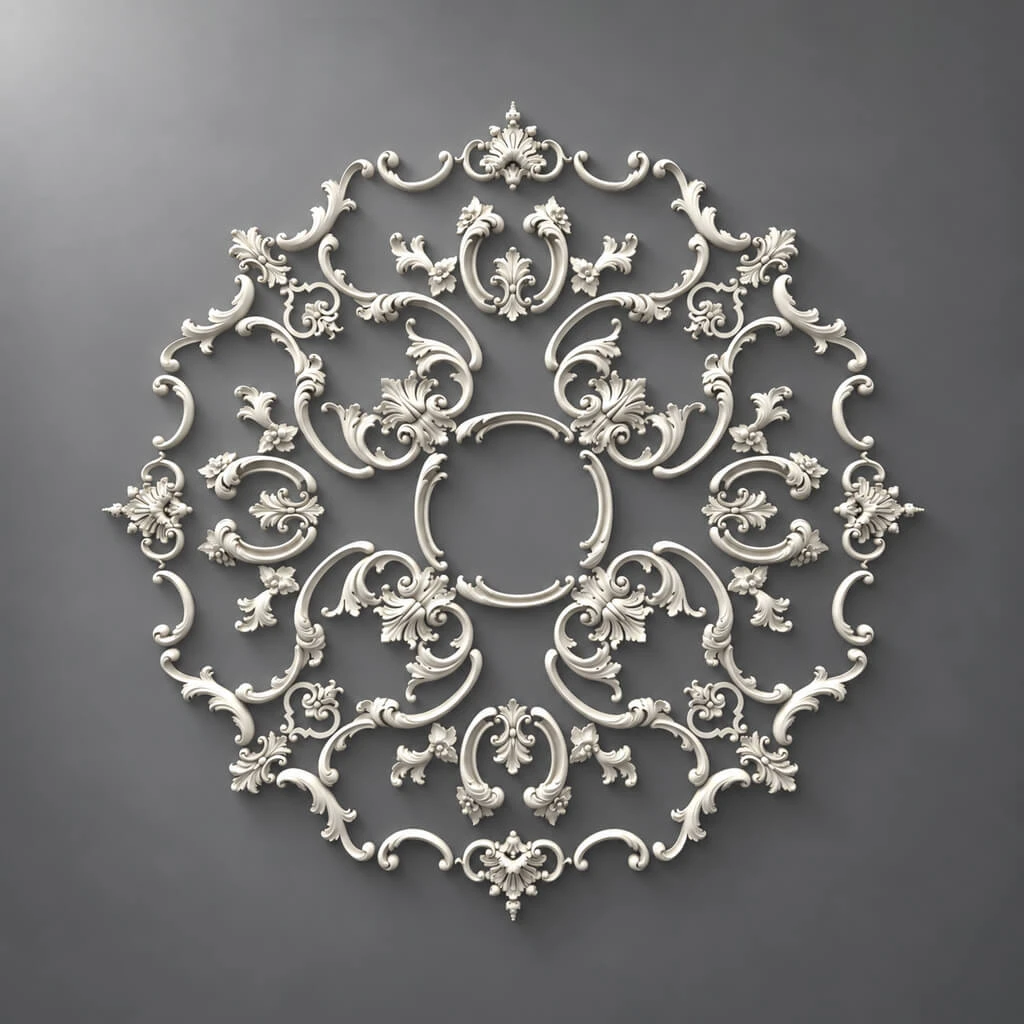
- Medallion as a central accent
- Frieze and border
- Keystone over an opening
- Errors in scale, height, and relief
- First error: too thin pilaster
- Second error: too flat pilaster
- Error three: mismatch between ceiling height and pilaster size
- Error four: a single pilaster instead of a pair
- Error five: mixing orders
- Error six: mismatch between pilaster and slat styles
- Scenarios for modern and classic interiors
- Scenario 1: Modern neoclassicism in the living room
- Scenario 2: Classic bedroom with a headboard alcove
- Scenario 3: Loft with industrial notes
- Scenario 4: Neoclassical study with a library wall
- Pilaster installation: sequence and nuances
- Marking
- Foundation Preparation
- Fastening
- Final Painting
- FAQ: Answers to Popular Questions
- About the Company STAVROS
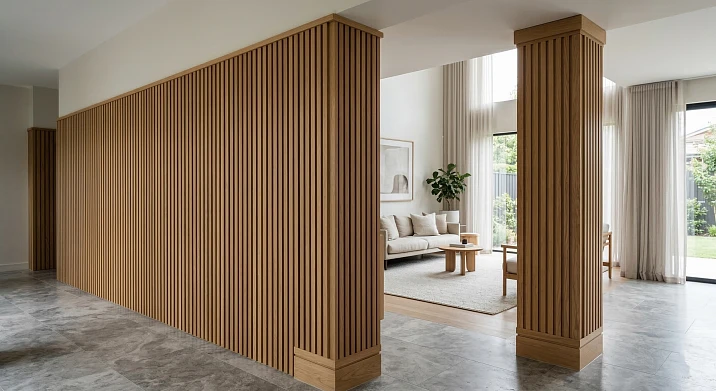
There are types of interiors that evoke a strange, almost physical sensation of order and dignity. You enter a room—and it accepts you. The walls do not merely enclose space; they organize it, set a rhythm, and place accents. This is not a random result of expensive renovation. It is the work of architectural logic, based on the understanding of the vertical as the main principle of wall organization.
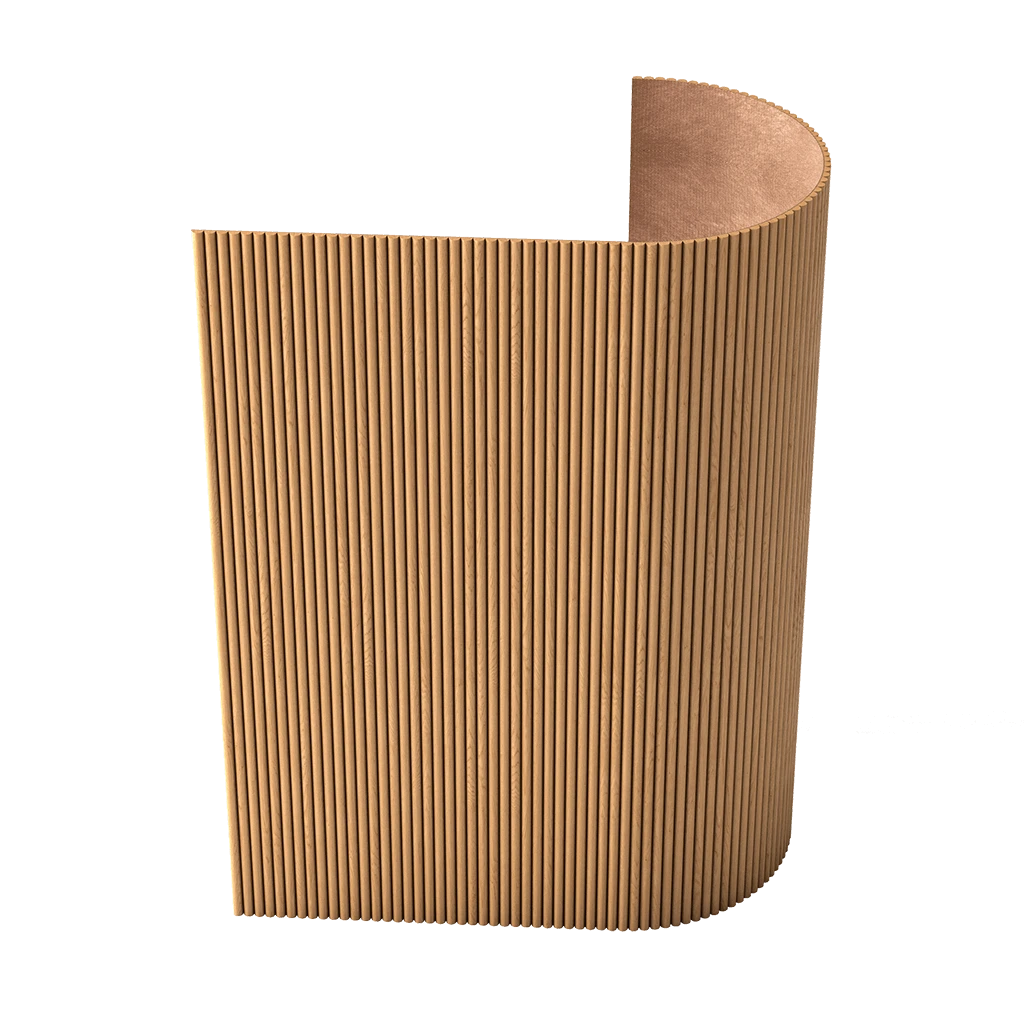
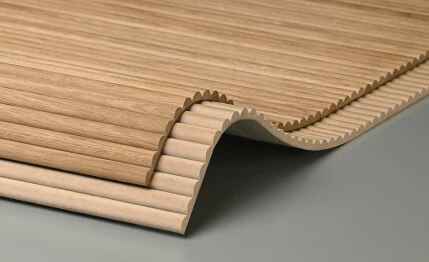
slatted panels for wall finishingcreate rhythm. A pilaster creates an accent. Together they form a system in which the wall ceases to be a neutral background and becomes a full-fledged participant in the interior composition. It is precisely this union—strict, precise, capable of working in both modern and classical spaces—that will be discussed in this article.



What is a pilaster and why is it underrated
Let's start with an honest definition, because many have heard the word 'pilaster,' but understand it differently.
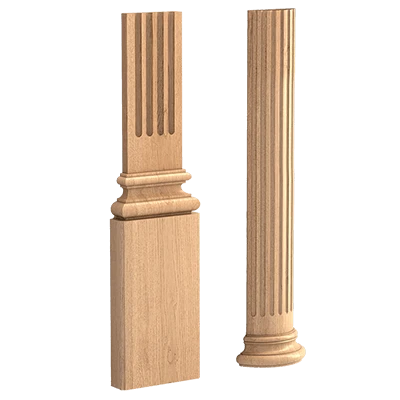
A pilaster is a flat, vertical, projecting part of a wall or a decorative applied element that imitates a column. It has the same parts as a real column: a base (lower support), a shaft (body), and a capital (top). In classical architecture, the pilaster served a structural function. In modern interiors, it performs decorative and organizing functions: it denotes vertical accents on the wall, demarcates zones, and creates portal effects.
Why is the pilaster underrated? Because most people perceive it as a 'classical' element, suitable only for interiors in Baroque or Empire style. This is a deep misconception. A modern pilaster made of polyurethane with a minimalist profile, without stucco decorations, in a monochrome white or gray color—is an architectural tool that works organically in modern, neoclassical, and even Scandinavian interiors.


Pilaster and column: what's the difference
A column stands separately. A pilaster is attached to a wall or is a projection of it. For residential interiors, this is fundamental: a column occupies usable space and visually divides it. A pilaster is located in the plane of the wall and practically does not reduce the usable area—in a standard version, it protrudes 40–80 mm from the wall plane.
decorative polyurethane elementsin the form of a pilaster—is the optimal solution for residential interiors. Polyurethane is lightweight (significantly lighter than plaster), not afraid of moisture, does not crack with temperature fluctuations, is easy to cut and glue, and perfectly accepts any paint. A polyurethane pilaster is installed in a few hours without special construction equipment.
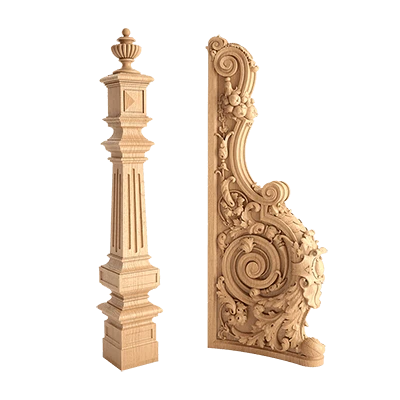
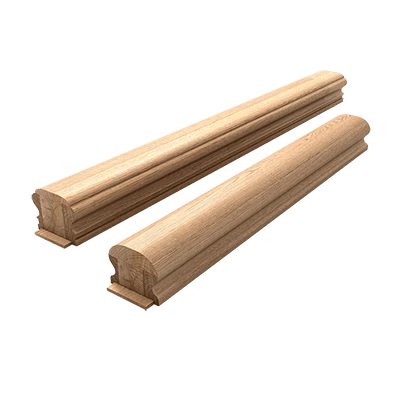
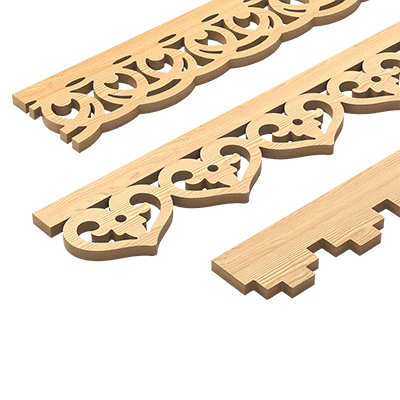
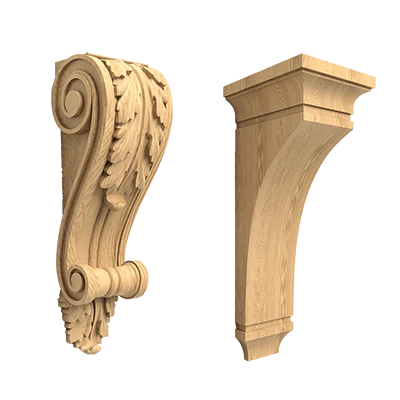
Our factory also produces:





Architectural logic: slat rhythm and vertical accent
To understand whyslatted panels for wall finishingand the pilaster work together, we need to understand the principle that unites both elements.
A slatted surface is a repeating rhythm. It creates a regular vertical or horizontal structure that is evenly distributed across the wall surface. This rhythm is convincing but monotonous. There is no hierarchy, no 'strong' or 'weak' points—all slats are equivalent.
The pilaster introduces an accent into this rhythm. It highlights one vertical from the regular row and makes it the main one. The eye, moving along identical slats, gets a stopping point. The space between two pilasters becomes a separate architectural field, bounded and therefore more significant.
This is a principle that has been used in architecture for millennia: regular rhythm plus an accent vertical. In a Greek temple—columns plus a wider intercolumniation at the entrance. In a Baroque palace—the pilaster rhythm of the facade plus reinforced corner pilasters. In a modern interior—slatted panels plus pilasters on the sides of an accent zone.
Get Consultation
Three types of interaction between slats and pilasters
Framing interaction. Pilasters stand on the sides of a slatted fragment and frame it, like a frame frames a picture. The slatted surface inside this frame gains completeness and independence. This type of interaction is the most common and easiest to execute.
Rhythmic interaction. Pilasters are spaced with the same pitch as large slats or groups of slats. A double rhythm is created—fine (slats) and coarse (pilasters). The eye reads both layers simultaneously and perceives the surface as complexly organized, rich.
Contrasting interaction. A strict classical pilaster with a capital next to laconic rectangular slats. Classic and contemporary in dialogue. This type requires precise management of scale and color—but when executed correctly, it creates the most original result.
Polyurethane pilaster: material, parameters, possibilities
Before analyzing application scenarios, it's worth taking a closer look at the material that is currently optimal for making pilasters in residential interiors.
polyurethane decor— is an injection-molded material with a density of 150–200 kg/m³. It visually mimics plaster or stone but surpasses them in practical characteristics.
Lightness. A polyurethane pilaster 2.5 m high weighs 3–6 kg — depending on the profile width. A plaster equivalent would weigh 30–50 kg and require reinforced mounting.
Moisture resistance. Polyurethane does not absorb water, does not swell, and does not rot. Pilasters made of this material are permissible even in high-humidity rooms — provided there is normal ventilation.
Thermal resistance. Polyurethane does not crack under temperature fluctuations in the range of −40...+70 °C. This is important for country houses, where rooms may freeze during prolonged absence of the owners.
Ease of processing. A polyurethane pilaster can be cut with a hacksaw for metal or a sharp utility knife. On-site trimming, adjustment to non-standard ceiling height — all this is done with tools available in any home.
Paintability. Polyurethane accepts any water-based, alkyd, and acrylic paints without restrictions. Matching one color with other interior elements is achieved by precise selection via RAL or NCS.
Types of pilasters: classification by style
-
Classical with order capitals (Doric, Ionic, Corinthian) — for classical and neoclassical interiors;
-
Simplified with laconic capitals (rectangular shelf, soft ogee line) — for modern classic and neoclassicism in a contemporary interpretation;
-
Minimalist without a capital (only shaft and base, rectangular profile) — for modern interiors, loft, contemporary minimalism;
-
With fluting (vertical grooves on the shaft) — for Empire, Neoclassical styles;
-
Smooth — a universal option for any style with the correct proportion selection.
Where to use pilasters with slatted wall panels
Pilasters and slatted wall finishes — a pairing suitable for several specific application scenarios. Let's examine each in detail.
TV zone and fireplace wall
Perhaps the most striking application of this duo is an accent wall in the living room, where pilasters on the sides of the slatted panel form a portal composition around the television or fireplace.
Slatted panels in the living room interiorwork here as the background plane. Pilasters — as vertical accents, delimiting the wall field. An entablature (horizontal element above the pilasters) or simply a wide horizontal molding completes the portal from above. The result — an architectural frame around the room's main object.
Practical parameters for this scenario:
-
Pilaster width: 80–120 mm (depending on wall width and room scale);
-
Pilaster projection from the wall: 20–40 mm (sufficient to create shadow without occupying significant space);
-
Height: from floor to ceiling (full pilaster with base and capital) or from lower molding to ceiling cornice;
-
Slats inside the portal: from floor to the level where the area above the TV begins, or from floor to ceiling.
Headboard in the bedroom
slatted panels in the bedroomAbove the bed headboard is a very popular solution. Adding two pilasters on the sides of this area turns the decorative wall fragment into a full-fledged architectural alcove—a niche-like space that psychologically 'hugs' the bed and creates a sense of security.
For the bedroom, pilasters should be restrained. The optimal choice is a smooth shaft without fluting with a minimalist capital in the form of a simple shelf. Pilaster height—from floor to ceiling or only within the headboard area (from mattress level + 200 mm to ceiling).
Hallway and hall
Slatted panels in the hallwayAlong corridor walls plus pilasters marking the transition from the hallway to living areas—this is an architectural 'greeting.' Pilasters at the entrance to the living room or at the start of the corridor create a kind of gateway—a psychological boundary between the functional and living zones of the apartment.
In the hallway, pilasters should be practical: without overly complex relief (to avoid dust accumulation), with a durable finish (varnish or resistant paint), wide enough not to get lost against the slatted wall.
Study: work atmosphere through architecture
In a home study, pilasters on the sides of the work area create something akin to a chairman of the board's office—that serious, substantial space where thought works better.slatted panels for wall finishingIn a dark tone (tobacco, walnut, wenge) within pilaster framing—this is a declaration of a serious attitude toward work.
Pilasters in the study allow for a richer profile: fluting on the shaft, a classical capital with egg-and-dart ornamentation or with an acanthus leaf — depending on the degree of classicism in the interior.
Banquet hall, restaurant, meeting room
Public spaces — restaurants, banquet halls, meeting rooms in offices — were among the first to master the combination of slatted panels and pilasters. Here, the scale allows for the use of pilasters with the maximum shaft diameter and a capital in the full order.Moldings decorationIn such spaces, it works at full capacity: high ceilings provide space for proportions, large areas — for rhythm repetition.
How to design openings, niches, ends, and portals
A pilaster is an indispensable tool where a wall meets an opening: a doorway, window, or niche. It is here that its architectural role is maximized.
Doorway as a portal
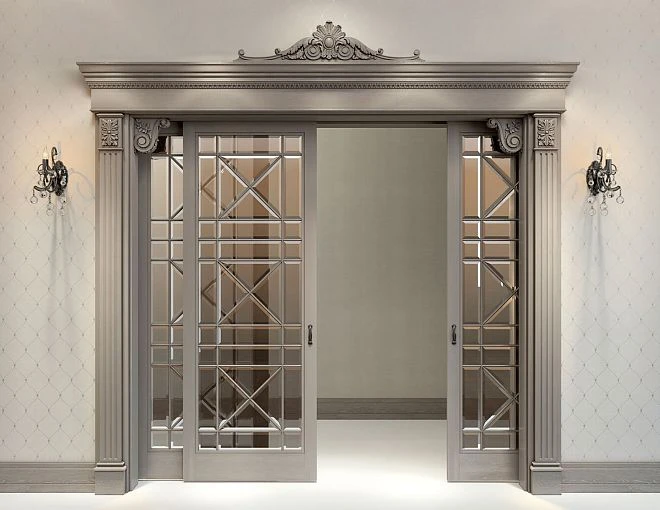
A classical portal is a doorway framed by two pilasters and a horizontal architrave (lintel) above them. This is one of the oldest architectural techniques that never ages simply because it reflects a basic human need to frame a transition.
decorative polyurethane elementsThey allow you to create a full-fledged portal in a few hours: two pilasters on the sides of the opening, a horizontal molding-architrave above them, possibly with a keystone in the center of the upper lintel. This is an architectural statement at a cost significantly lower than it seems.
When located next to such a portal areslatted panels for wallsPilasters serve as a transitional element: they belong both to the slatted plane (by their projection depth) and to the architecture of the opening (by their classical form). This creates a smooth transition from the decorative surface to the architectural framing.
Practical rule: the width of a pilaster at a doorway should not be less than the width of the door casing. If the casing is 80 mm, the pilaster should be no narrower than 90–100 mm. Otherwise, the pilaster will appear 'stuck on' to the casing rather than as an independent architectural element.
Window niche
A window in an internal wall niche is a complex element in terms of finishing. The depth of the reveal creates a transition between two planes that requires framing. Pilasters on the sides of the window opening are one of the most expressive ways to create this framing.
Slopes made of slatted panelscombined with pilasters around the perimeter of the window opening, create a window portal—a distinct architectural object that transforms an ordinary window into an accent element of the facade wall.
Niches and built-in shelves
Wall niches for built-in shelves, decorative objects, or lighting are another application point for pilasters. Pilasters on the sides of a niche frame it and make it a complete architectural volume. Inside the niche—Rafter panelsas a background, which adds depth and texture.
It is especially effective when the slats inside the niche are oriented differently than on the rest of the wall. Vertical slats on the wall—horizontal inside the niche. Or dark-toned slats on the wall—light-toned inside the niche. The contrast emphasizes the depth.
End wall
The end wall in a long corridor or at the end of an enfilade of rooms is a focal point. Here, pilasters plus slatted panels work as a decorative 'curtain': they create the illusion that a more significant space continues behind the wall.
Two pilasters with an architrave on the end wall, between them - a slatted background with ambient lighting, in the middle - a mirror or decorative object. A classic technique that increases the perceived depth of the corridor and makes it complete.
Capital: the crown of the pilaster and a question of style
Capital— the upper finishing part of the pilaster. It is precisely this that determines the stylistic affiliation of the element and its appropriateness in a particular interior.
Doric capital
The simplest of the order capitals. Only an abacus (square slab) and an echinus (semicircular cushion). Severity, restraint, masculine strength. The Doric capital is appropriate in interiors with a claim to seriousness: studies, libraries, business spaces.
The situation is similar withslatted panels for wall finishingin dark tones, a Doric pilaster in white or light gray is one of the most convincing classical combinations in a modern interior.
Ionic capital
The Ionic capital with characteristic volutes (scrolls) is a more ornate and soft option. It carries a sense of sophistication and elegance. Appropriate in living rooms, bedrooms, formal areas. With slatted panels in light tones - in neoclassicism, with slats in natural oak - in modern classicism.
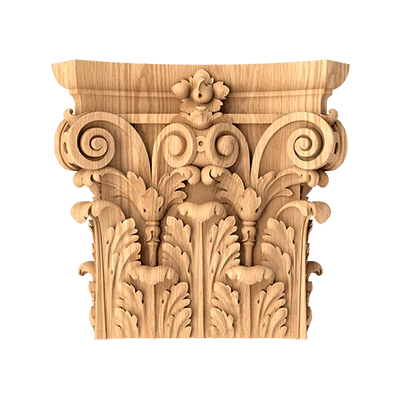
Corinthian capital
The most ornate one - with acanthus leaves. For formal spaces with high ceilings (from 3.2 m). Next to slatted panels, it requires special delicacy: the rich decor of the capital and the active slatted rhythm can compete. The solution is slats in a neutral single tone without backlighting, and all the decorative load is on the pilaster.
Minimalist capital
A simple rectangular shelf or a small cavetto in the upper part of the pilaster. This is a modern interpretation of a classical element. Such a capital is appropriate in any interior, does not claim historical stylization, and at the same time retains the structural function of completing the vertical.
Wall molding: context and interaction with slats
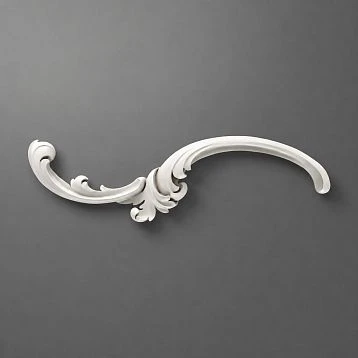
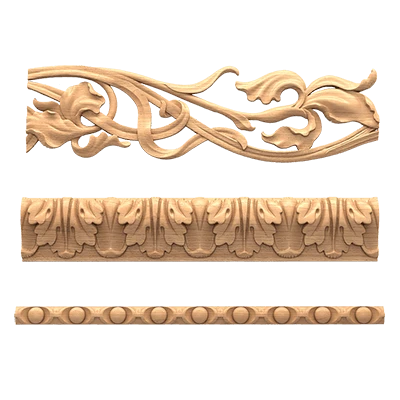
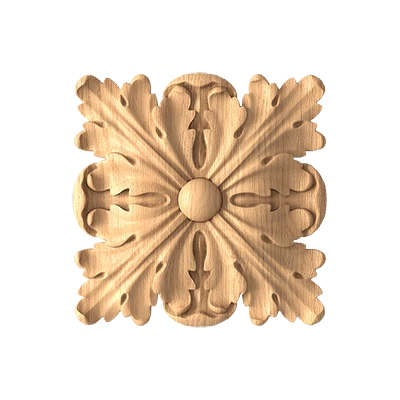
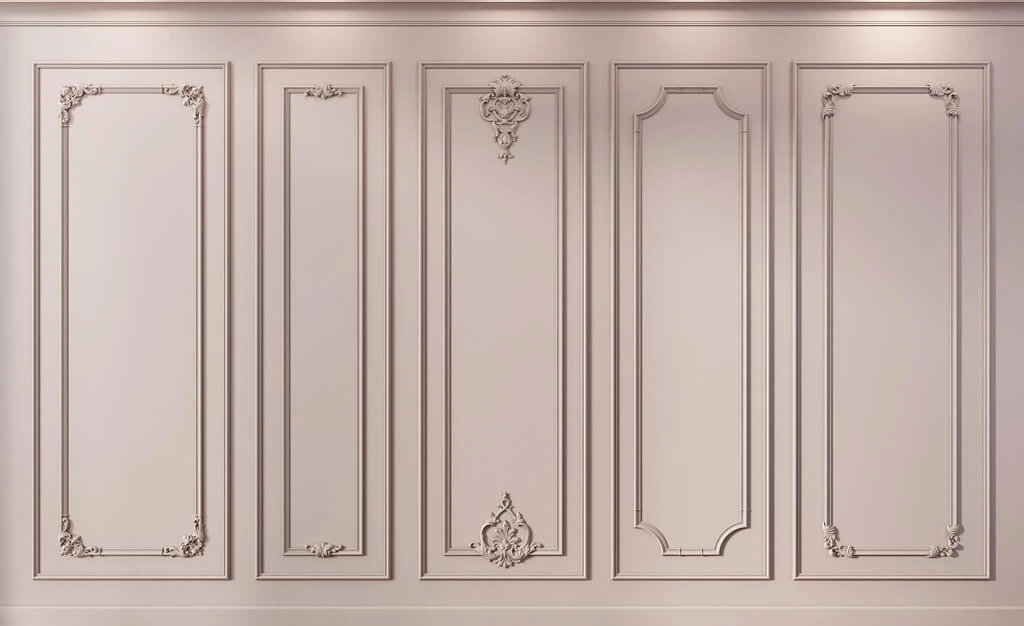
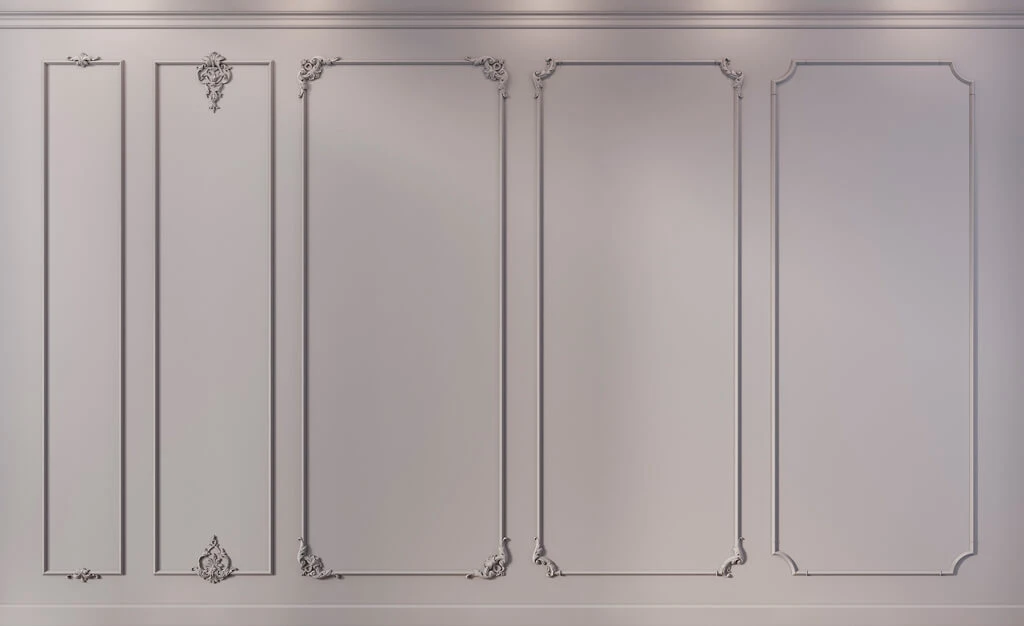
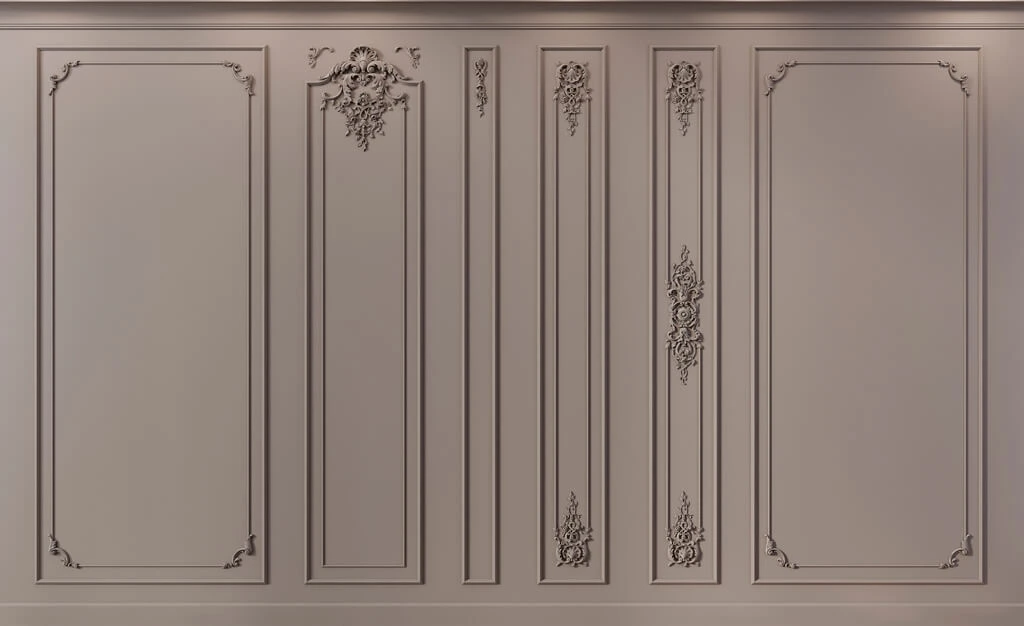
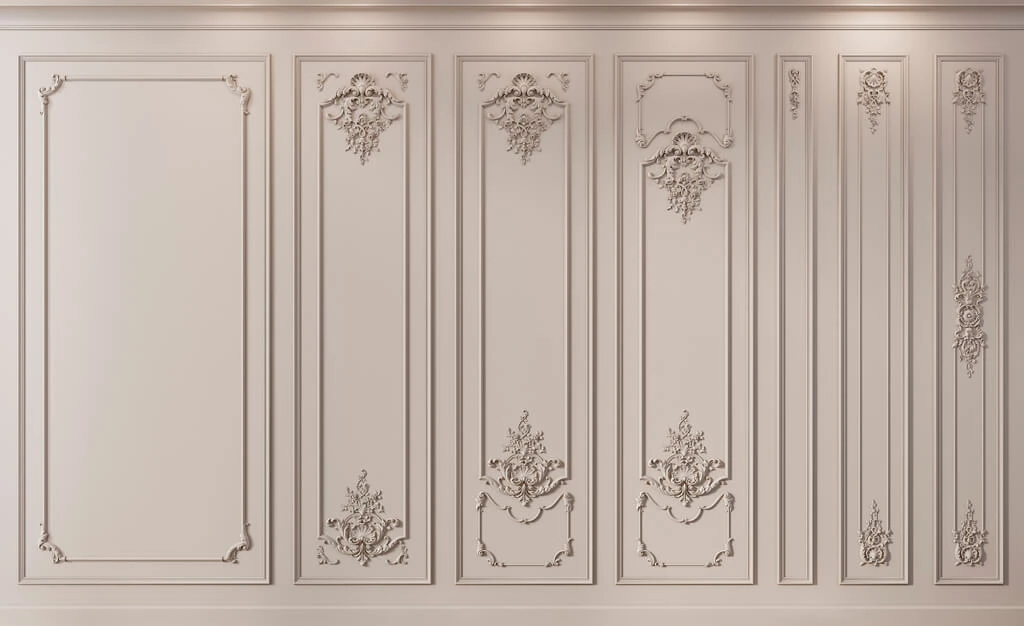
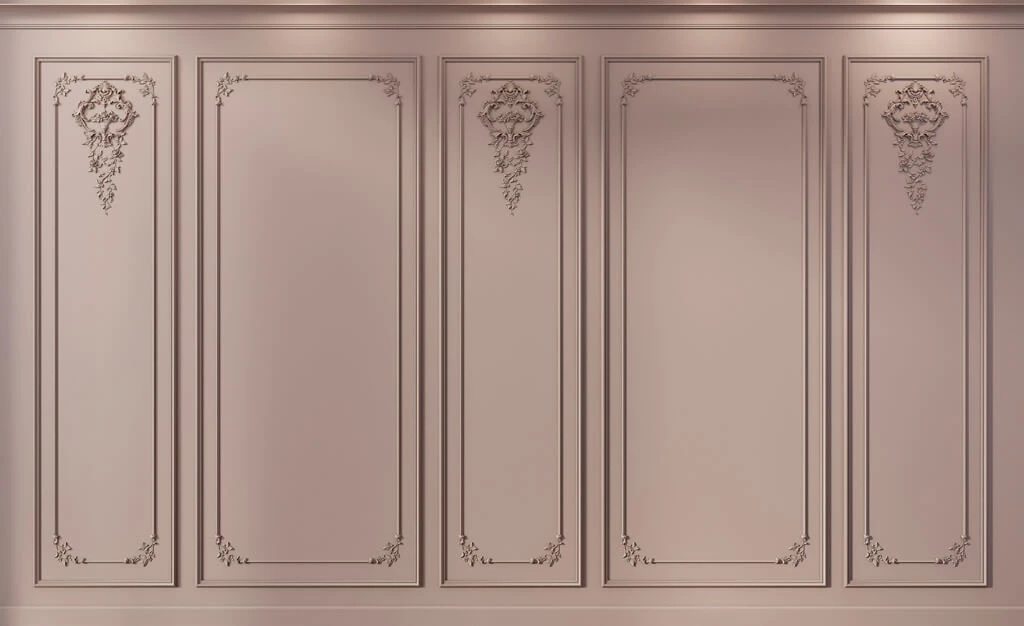
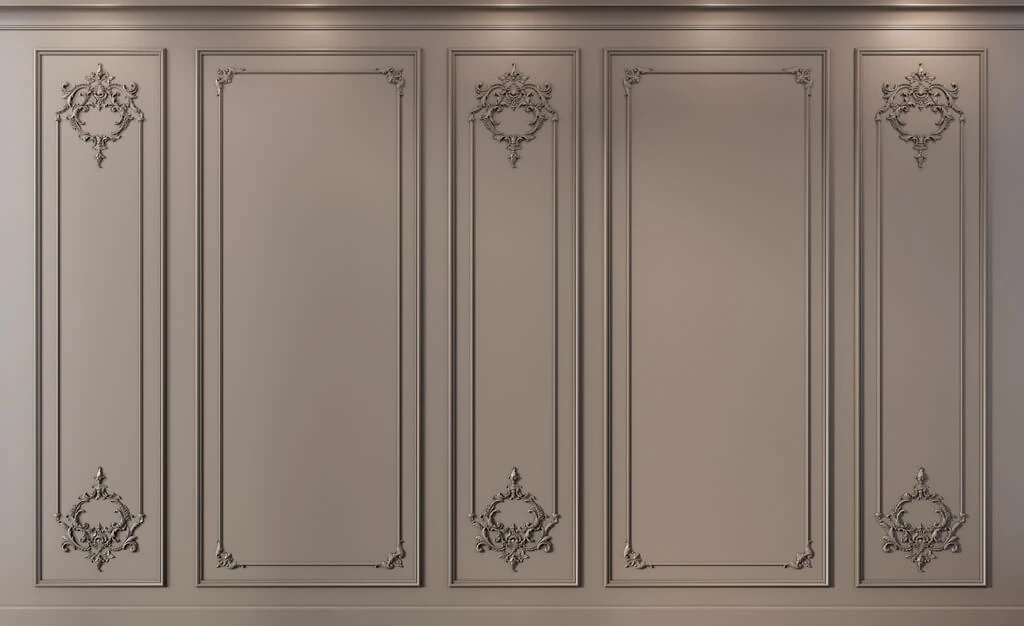
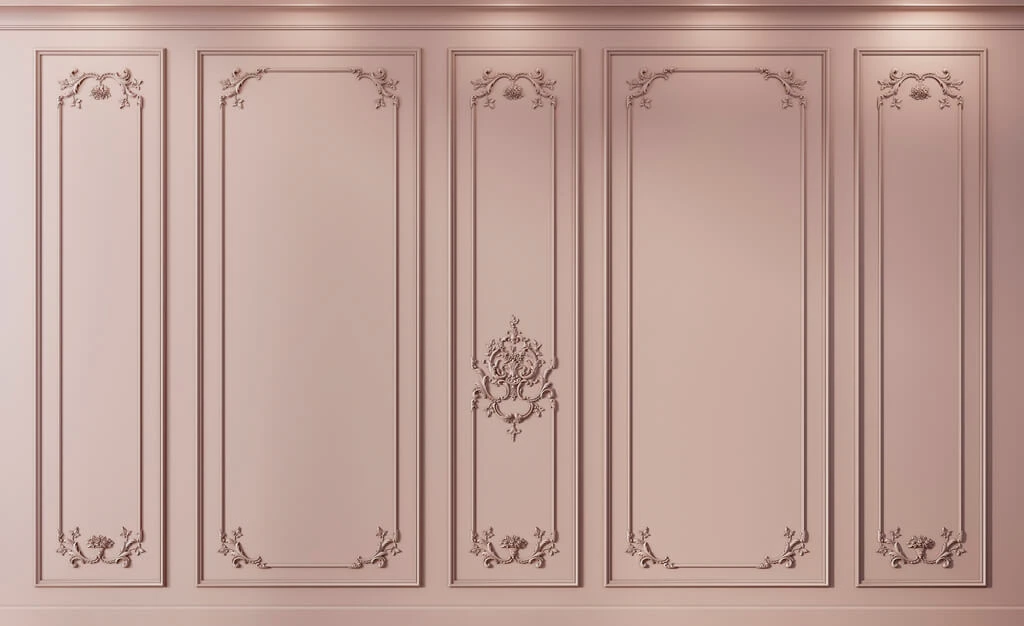
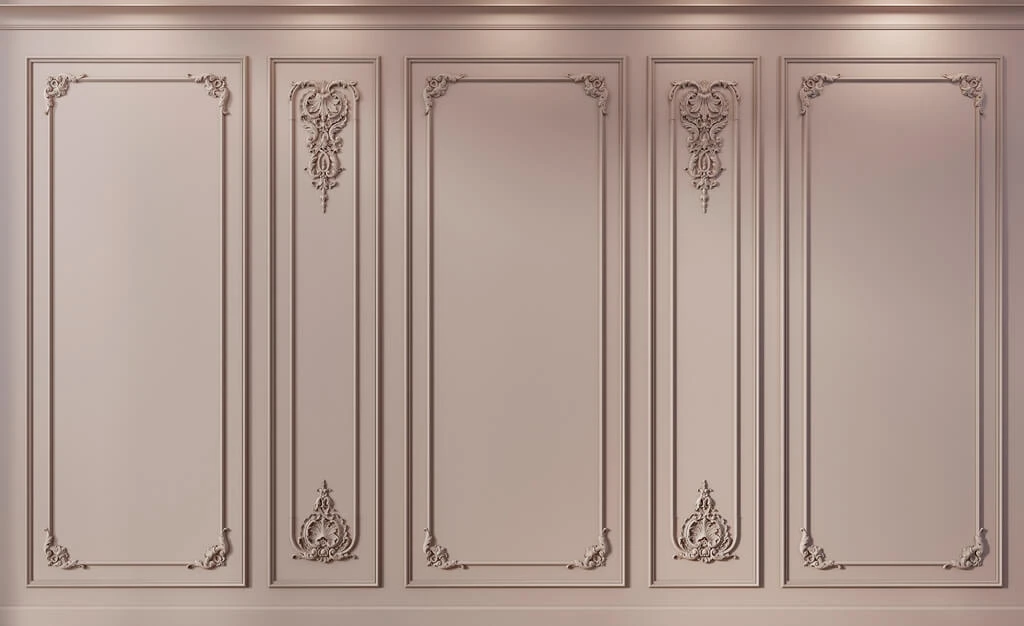
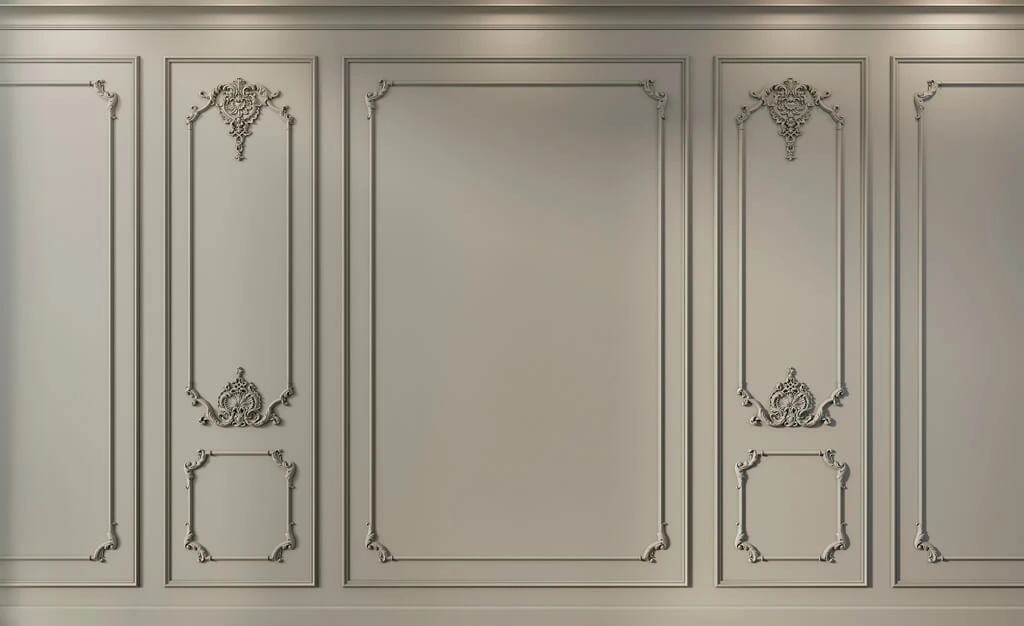
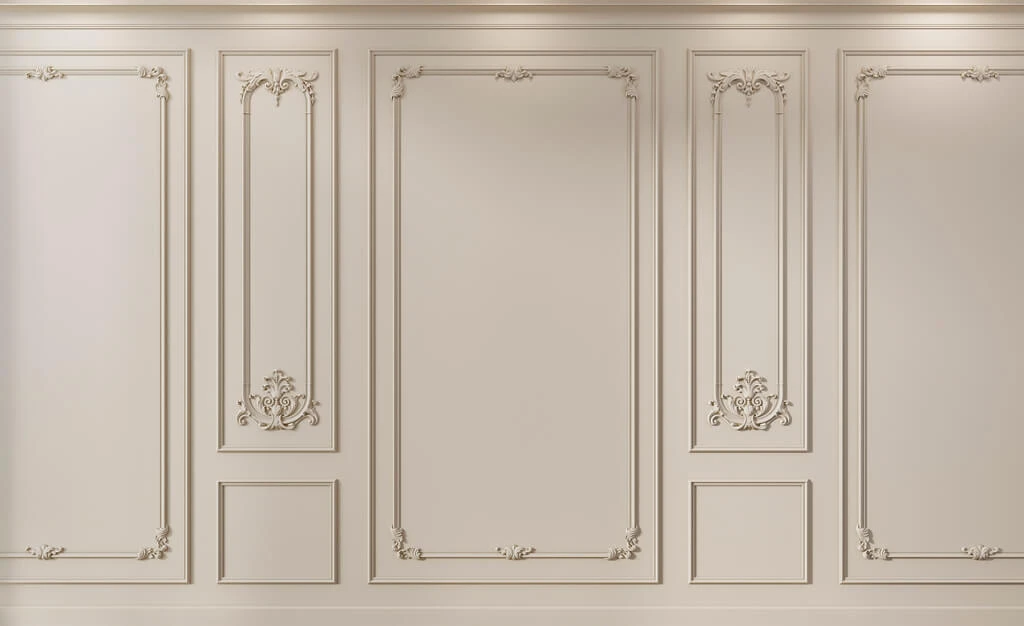
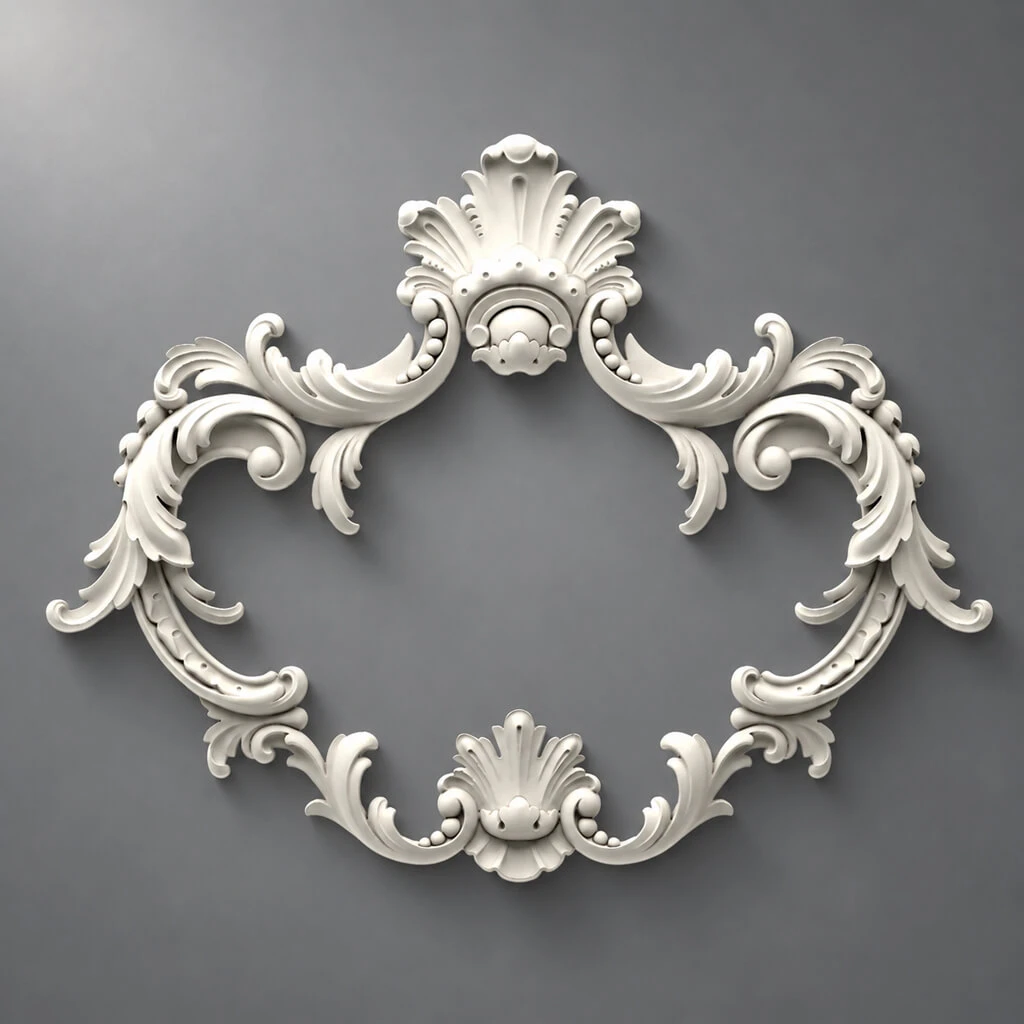
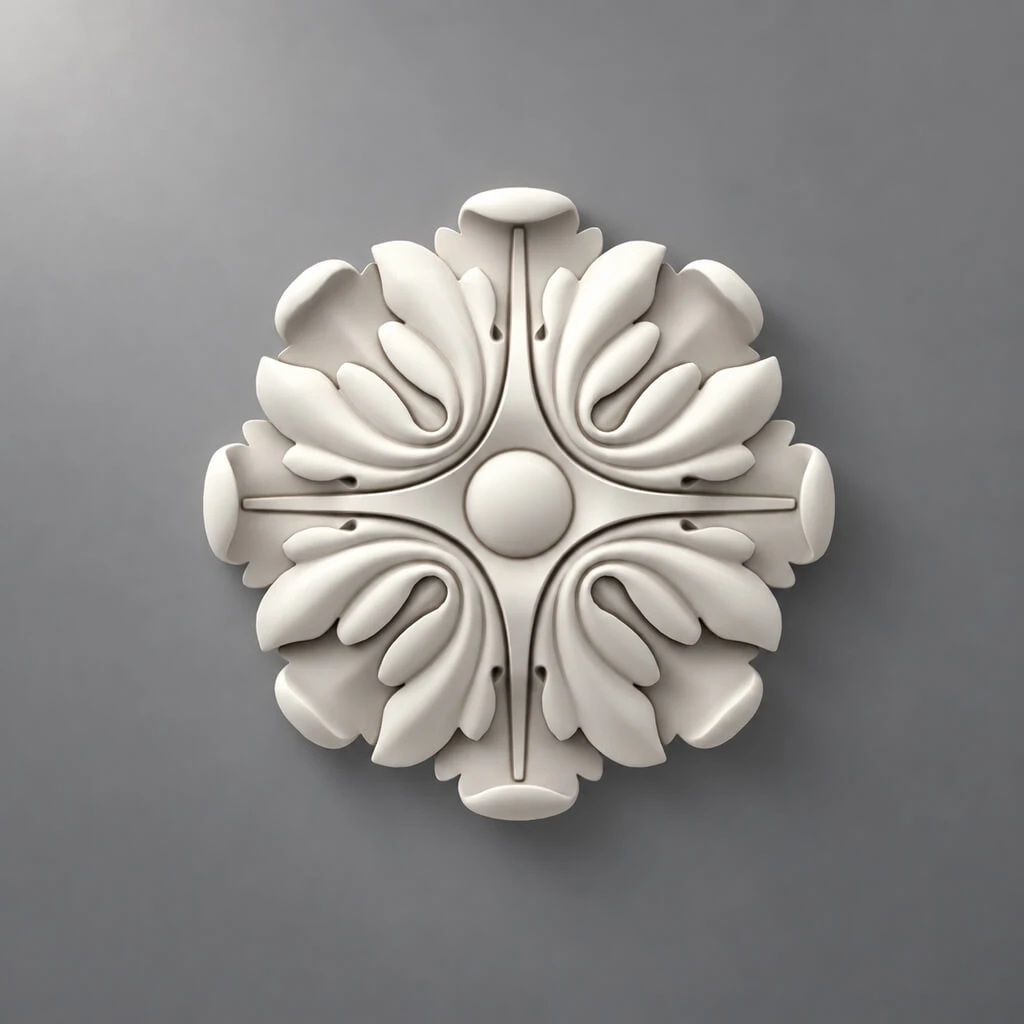
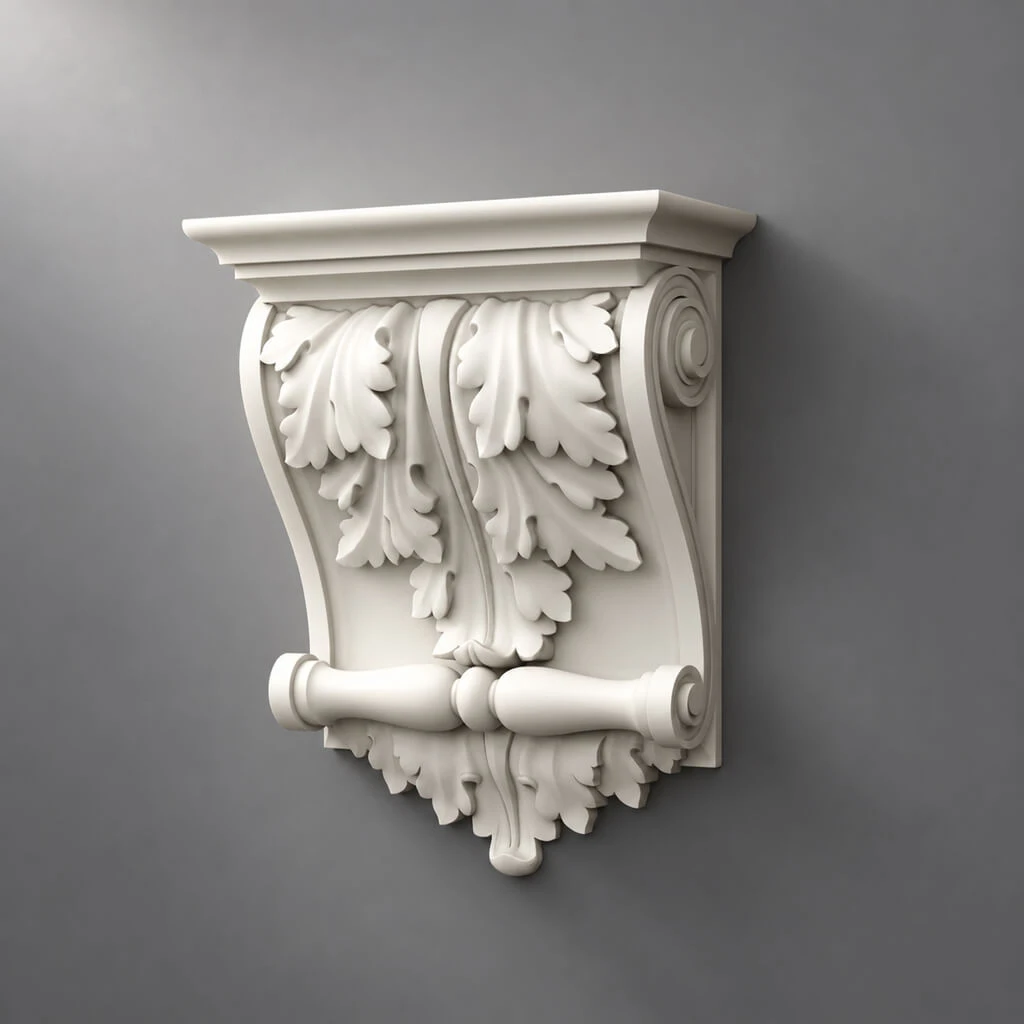
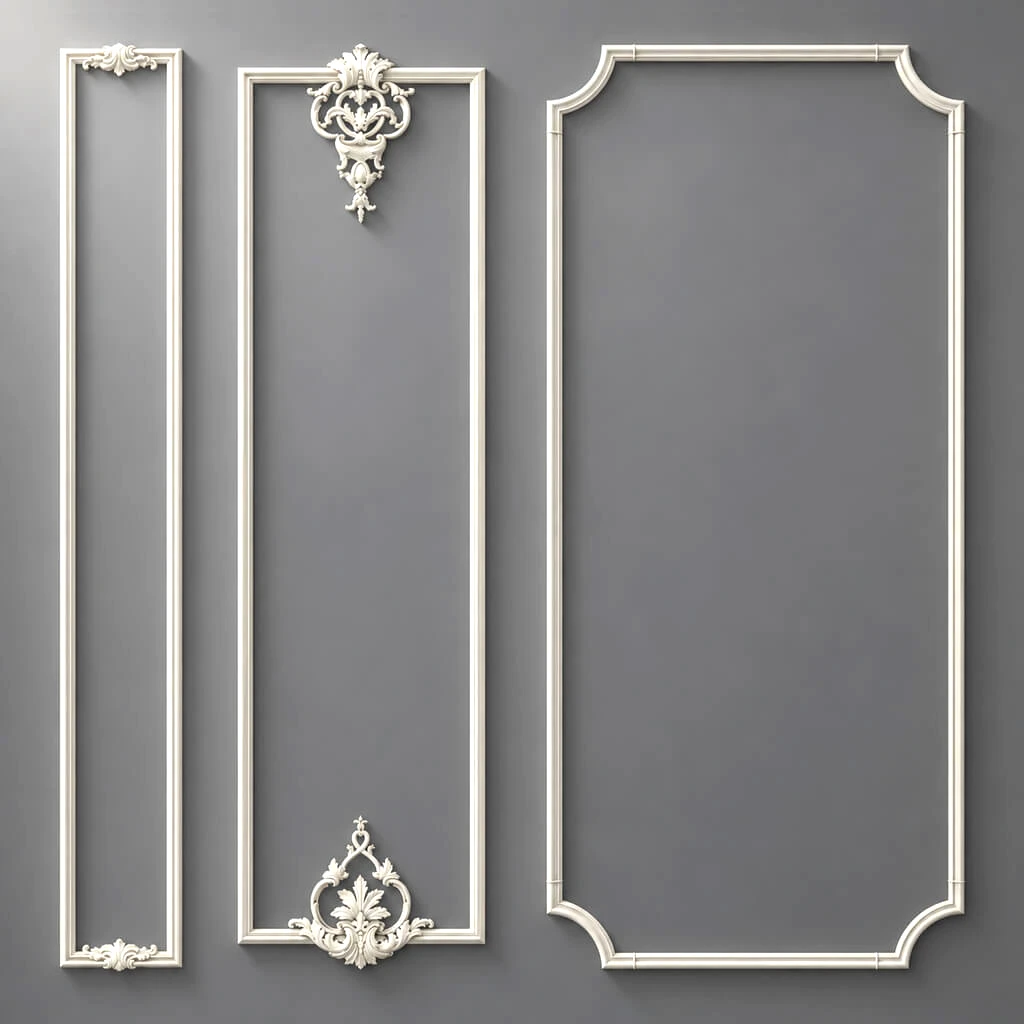
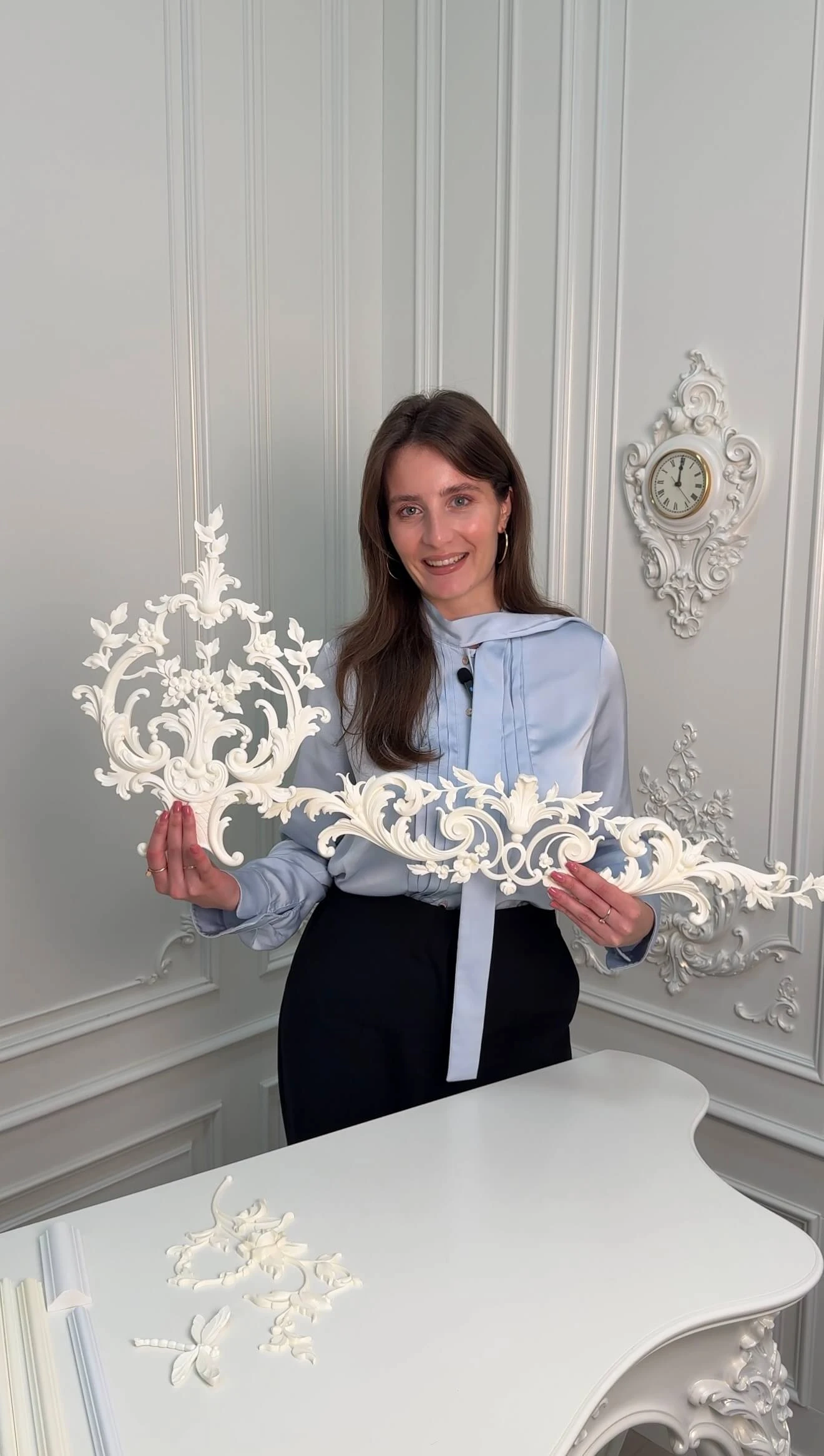
Wall molding— a broader concept than just a pilaster. This is the entire spectrum of applied decorative elements of a relief nature: medallions, rosettes, garlands, cartouches, coffers, friezes, keystones. In combination with slatted panels, stucco decor works as a 'jewel' against a structured surface.
Medallion as a central accent
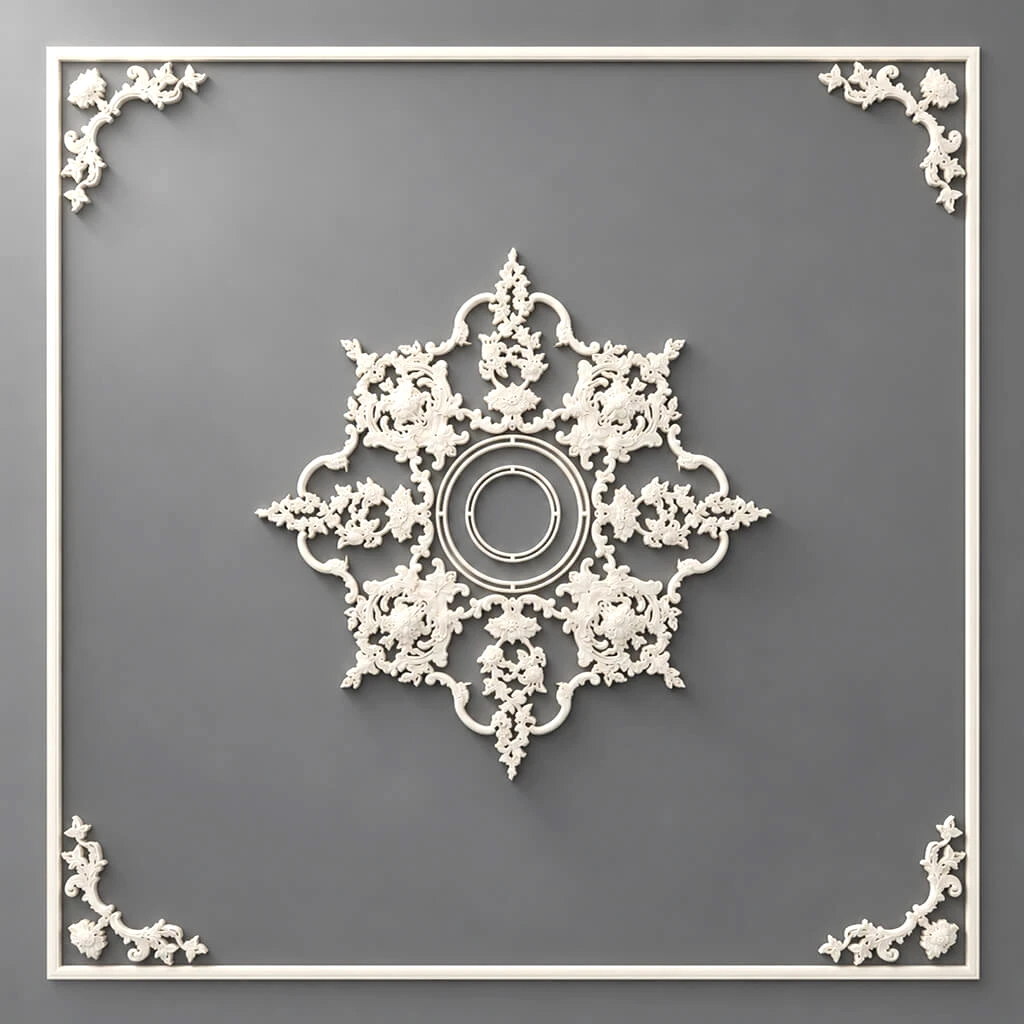
A decorative medallion installed in the center of a slatted wall or above a portal with pilasters creates a focal point — strong, unexpected, memorable. This is a small detail with a big effect: the slats create the background, the medallion is the semantic center.
The size of the medallion should correspond to the space of the wall. For a field 2 m wide, the optimal diameter of the medallion is 300–500 mm. A smaller medallion gets lost against the slatted texture, a larger one dominates to the point of absurdity.
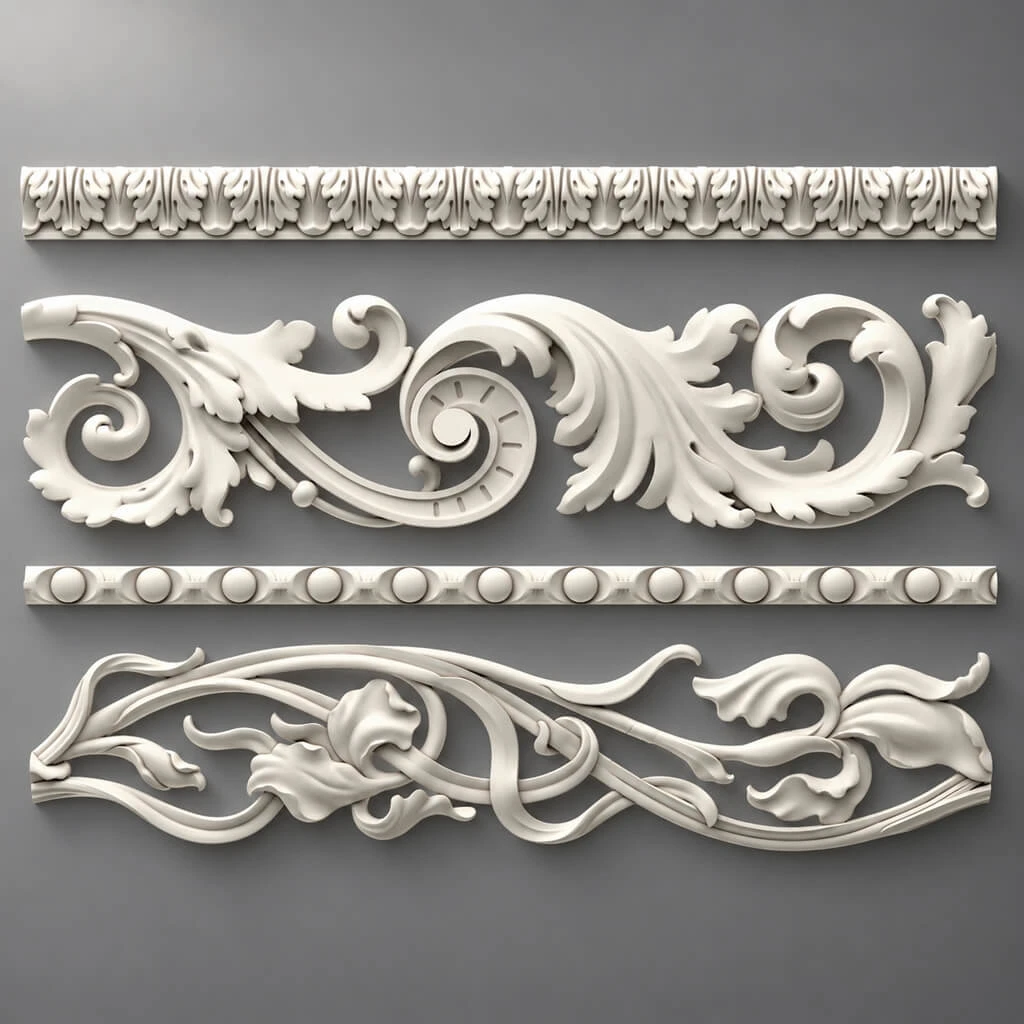
Frieze and border
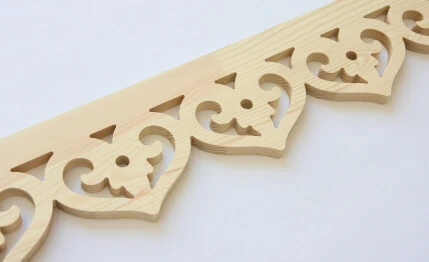
A decorative frieze—a horizontal band of stucco ornament—can replace or complement a cornice at the top of a slatted wall. This is a less strict, more decorative solution than a plain profiled cornice.
Moldings decorationIn the form of an ornamental frieze above slatted panels—a characteristic technique for Art Deco and Neoclassicism. The geometric pattern of the frieze echoes the geometric rhythm of the slats and creates a unified decorative program for the wall.
Keystone above the opening
A keystone—an imitation of a wedge-shaped stone at the apex of an arch or horizontal lintel—adds an additional accent to a door or window portal with pilasters. It is a small element with a strong architectural signal: the presence of a keystone indicates that the design of the doorway is deliberate, not accidental.
Errors in scale, height, and relief
Working with pilasters and slatted panels requires precise control of proportions. Mistakes here are unforgiving—they are too visible. Let's examine the most common ones.
First error: too thin a pilaster
A pilaster 40–50 mm wide next to slatted panels with a spacing of 60–80 mm simply isn't perceived as an architectural element. It is seen as just another slat—only slightly wider. For a pilaster to fulfill its organizing role, its width should exceed the total width of at least three slats including the gaps.
Practical rule: the minimum width of a pilaster is the total width of three slats with two gaps. If a slat is 25 mm and the gap is 50 mm—the minimum pilaster width is 175 mm (25+50+25+50+25). Better—200 mm or more.
Second error: too flat a pilaster
A pilaster projection of 5–10 mm from the wall practically creates no shadow and is not perceived as volume. A pilaster should project enough to cast a distinct shadow under side lighting. The minimum functional projection is 25–30 mm. The optimal projection is 40–60 mm.
It is important that the pilaster projection is greater than the depth of the slatted panel. If the slats project by 20 mm and the pilaster by 25 mm, it will barely be discernible against the slatted background.
Mistake three: mismatch between ceiling height and pilaster size
A pilaster with a rich Corinthian capital and a wide base in a room with a 2.6 m ceiling looks cramped. It literally lacks breathing space. Full-scale order pilasters are designed for rooms with ceilings from 3 m. For standard apartments with ceilings of 2.5–2.7 m, it is better to choose pilasters with simplified capitals or without them altogether.
Alternative for low-ceilinged rooms: pilasters without a capital (only the shaft and base) or pilasters installed not at full height, but only in the lower third of the wall as a lower framing element.
Mistake four: a single pilaster instead of a pair
A pilaster is an element that works in a pair or a row. A single pilaster on a wall looks random and incomplete. Always aim for symmetry or a rhythmic row. Two pilasters frame a niche or an accent zone. Four create a portico. Six create a rhythmic arcade along a long wall.
Mistake five: mixing orders
Ionic pilasters in one corner, Corinthian in another. This is architectural anarchy, which has no justification in either classical tradition or modern design. All pilasters in one room should be from the same order and the same type of capital.
Mistake six: mismatch between pilaster style and slats
A classical pilaster with a Corinthian capital next to loft-style slats—a clash of languages. Strict minimalist slats with a rectangular profile next to an ornately decorated pilaster—the same thing. The stylistic vector of the pilaster must be in the same coordinate system as the slatted panels.
Scenarios for modern and classical interiors
Let's examine specific interior scenarios where the combination of slatted panels and pilasters works most convincingly.
Scenario 1: Modern neoclassicism in the living room
Task: create an accent TV wall with a sense of classical completeness without excessive decor.
Slatted panels:MDF for Paintingcolor—warm light gray, vertical, 60 mm spacing, floor to ceiling;
Pilasters: polyurethane, smooth shaft, simplified capital with one shelf, width 120 mm, projection 35 mm, color—the same warm gray (monochrome);
Cornice: horizontal polyurethane molding, height 80 mm, connects both pilasters at the top as an architrave;
Baseboard: wooden, height 90 mm, matching the entire system;
Lighting: hidden LED strip in the top molding, warm white.
Result: a monochrome architectural system where all elements are unified by color, and differences are discernible only through profiles and reliefs. The TV in the center appears as an element placed within a classical portal.
Scenario 2: Classic bedroom with a headboard alcove
Task: create a bed headboard as a standalone architectural alcove.
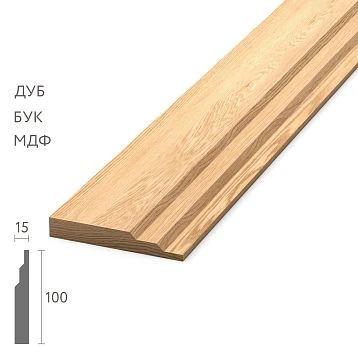
Slatted panels:from solid oak, finish — natural light oak, vertical, 50 mm spacing;
Pilasters: polyurethane with Ionic capitals, width 100 mm, projection 30 mm, painted white;
Horizontal molding: above the pilasters, white, width 70 mm;
Cornice: along the ceiling, polyurethane, classical profile, white;
Baseboard: wooden, oak of the same tone as the slats, height 80 mm;
Result: the headboard appears as a built-in alcove with clearly defined architectural boundaries. Warm oak inside, white pilasters — as an architectural frame. A sense of expensive coziness without excessive decor.
Scenario 3: Loft with industrial notes
Task: add architectural structure to a loft interior without transitioning to classicism.
Slatted panels: MDF for painting, color — dark gray anthracite, vertical orientation, wide spacing 120 mm;
Pilasters: polyurethane, absolutely smooth shaft, without capital (only a small rectangular stop at the top and bottom), width 140 mm, projection 40 mm, color — the same anthracite;
No cornice — the ceiling remains exposed;
Baseboard: metal profile or wooden in a dark tone, 60 mm;
Lighting: recessed spotlights, directed vertically downwards along the pilasters — create dramatic vertical light strips.
Result: a modern, masculine, laconic interior. Here, the pilasters are not classical decor, but architectural verticals creating the structure of a dark wall.
Scenario 4: Neoclassical study with a library wall
Task: create a study wall with bookshelves and architectural structure.
Batten panels: on the lower third of the wall (height 90 cm),MDF for Paintingin dark green or dark blue;
Separator molding: along the upper boundary of the lower batten zone;
Upper wall zone: shelves with books and collection items;
Pilasters: divide the library wall into sections 80–100 cm wide, each section is a separate "cabinet." Polyurethane with simplified Doric capitals, the same dark tone;
Cornice: under the ceiling, massive, 140 mm, matching the overall system tone.
Result: a study in the spirit of 19th-century English libraries, adapted for modern living space. The combination of the lower batten belt and the pilaster library system creates an interior with a very high perceived quality.
Pilaster installation: sequence and nuances
Installing a polyurethane pilaster does not require a professional crew, but it does require precision.
Marking
First and foremost: symmetrical marking. Pilasters must stand strictly vertical (checked with a level) and be positioned symmetrically relative to the center of the accent zone. A deviation of even 5 mm is visually noticeable.
Foundation Preparation
The wall for the pilaster must be level, dry, and clean from dust and grease. If the wall is uneven, create a level base using a layer of putty or a thin sheet of plywood. A polyurethane pilaster can compensate for minor irregularities due to the adhesive, but striving for a perfectly flat base is essential.
Fastening
The primary method is adhesive based on acrylic mounting compound or specialized polyurethane adhesive. Additionally, use several countersunk screws at hidden points (at the base and capital), which are then filled with putty and painted over.
Press the pilaster against the wall and secure it with tape or braces for 30–40 minutes until the adhesive sets. Joints at the wall and where it meets other elements (cornice, molding, baseboard) are treated with acrylic sealant of the desired color.
Final painting
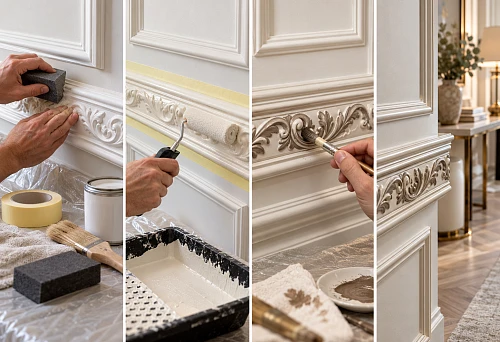
The polyurethane pilaster is primed with a special polyurethane primer or water-based primer. Then, apply 2 coats of finish paint in the chosen shade. Paint the relief elements of the capital with a brush, and the smooth shaft with a roller with a 4–6 mm nap.
FAQ: Answers to popular questions
Is it possible to install pilasters on a slatted surface instead of a bare wall?
Technically possible, but not recommended for heavy pilasters. It is most reliable to attach the pilaster to the load-bearing wall, and the slatted panel is mounted flush against the pilaster or with a small gap, which is covered with a thin corner molding.
What should be the width of a pilaster for a wall 4 meters long?
For a 4 m wall with two corner pilasters and a central accent area, the optimal pilaster width is 120–150 mm. For a 4 m wall with three spans between pilasters, 100–120 mm. General rule: the total width of all pilasters should not exceed 20% of the wall length.
Is a capital needed on a pilaster in a modern minimalist interior?
No. A pilaster without a capital is a fully valid modern option. A flat rectangular stop or simply a straight cut at the level of the ceiling cornice is sufficient to create an architectural vertical without referencing historical orders.
How to combine pilasters with horizontal slat panels?
With horizontal slats, pilasters work as a vertical counterpoint—they interrupt and structure the horizontal rhythm. In this case, pilasters should be somewhat wider (by 20–30%) than with vertical slats to visually 'outweigh' the horizontal movement.
Can a pilaster be painted a different color than the slat panels?
Yes, and it is often design-justified. White or light pilasters against dark slat panels are a classic contrasting solution. Pilasters matching the color of the slats is a monochrome solution. Both options work. A third color for the pilaster (different from both the slats and the wall) is a risk, requiring a very confident design decision.
What pilaster height is suitable for a 2.6 m ceiling?
For a 2.6 m ceiling, the pilaster is installed from the base (starting at the level of the top edge of the baseboard or from the floor) to the ceiling cornice. A simplified or absent capital is recommended. The working height of the shaft is about 2.3–2.4 m with an 80 mm cornice and an 80 mm baseboard.
Is special care needed for polyurethane pilasters?
Minimal: periodic wiping with a dry or slightly damp cloth. When repainting—light sanding with fine sandpaper, priming, painting. Polyurethane does not crack, rot, or require special protective coatings. Service life under normal use is 30–50 years.
About the company STAVROS
All tools for creating the systems described in this article are—slatted panels for wall finishing—made of solid oak and MDF, pilasters,Wall moldingCapitals, decorative moldings, and cornices made of polyurethane are available in the full range from STAVROS.
STAVROS is a Russian manufacturer of wooden moldings and polyurethane decor with its own full-cycle production. The catalog includes over 4000 items: solid wood and MDF slatted panels, polyurethane pilasters with bases and capitals of various orders, cornices, moldings, medallions, friezes,Relief Decorationfor walls, ceilings, and facades.
STAVROS manufactures products to custom sizes and drawings, provides consultations on selecting finishing systems, and delivers products throughout Russia. If your goal is to create an interior where the vertical of the wall speaks of character, not just encloses space, start with the right materials. Start with STAVROS.