Article Contents:
- Why a sofa group cannot be assembled in parts
- Wooden legs: a function that is visible
- Wooden legs for a sofa: what is important when choosing
- Legs for a coffee table: when details become an accent
- Legs for armchairs: symmetry of the sofa group
- Table: choosing wooden legs for a sofa group
- Furniture supports: a broad category for different tasks
- Supports for cabinets and consoles
- Furniture decor: overlays and details that elevate the level
- Furniture handles: the detail you touch
- Polyurethane decor in the sofa area: architecture instead of decoration
- Moldings behind the sofa: a frame for furniture
- Cornice: the top horizontal line that ties everything together
- Baseboard: the bottom horizontal line that holds furniture
- Decorative polyurethane elements: point accents
- How to combine wood and polyurethane into a single system
- Color as a unifying tool
- Contrast option: exposed wood and white polyurethane
- Scale: proportion of details
- Rhythm: how profiles echo each other
- Ready-made sets for the sofa area
- Light classic living room
- Dark sofa group with wooden accents
- Sofa area with console and mirror
- Sofa group in a study-living room
- Installation: from legs to moldings
- Attaching legs to the sofa and table
- Installing moldings: precision and patience
- Complete shopping list for a classic sofa group
- Mistakes when assembling a sofa group
- Choosing legs only by appearance
- Putting too thin legs on a massive sofa
- Not matching the coffee table with the sofa in style
- Overloading the wall behind the sofa with large stucco
- Mixing different wood tones without a system
- Forgetting the bottom and top line
- Buy moldings without a diagram
- FAQ: questions about the sofa group and classic decor
- About the Company STAVROS
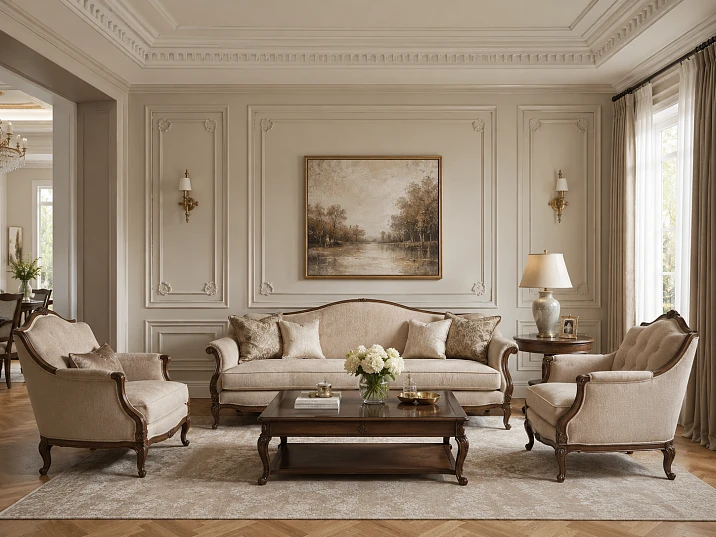
Look at the living room again — soberly, without discounts for the fact that 'everything is bought and placed.' The sofa stands separately, the coffee table lives its own life, the armchairs look the other way — and the stucco on the wall is in no way connected to what is happening at the floor and furniture level. This is not an interior. This is a set of items in one room.
A classic-style sofa group is first and foremost a system. The sofa, armchairs, coffee table, cabinets, wall decor, and moldings must exist as a single composition where each element supports the adjacent one. Wooden legs for sofas and armchairs echo legs for a coffee table. Moldings made of polyurethane on the wall behind the sofa connect the furniture with the room's architecture. The baseboard holds the bottom line. The cornice holds the top line. And all of this together creates a feeling that cannot be explained in words, but which everyone immediately senses: "this is well thought out."
This article is about how to assemble such a system. What to buy, in what order to think, what mistakes to avoid, and why Classic Furniture only works when its details speak the same language as the decor around it.
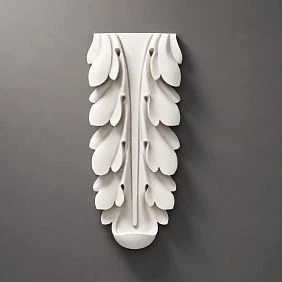
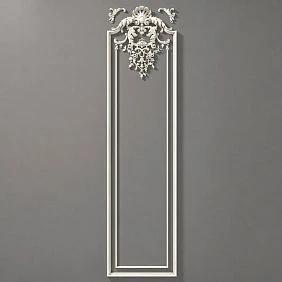
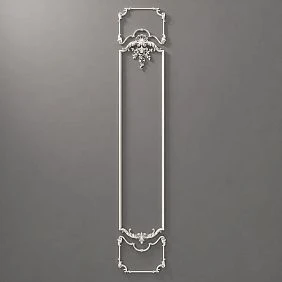
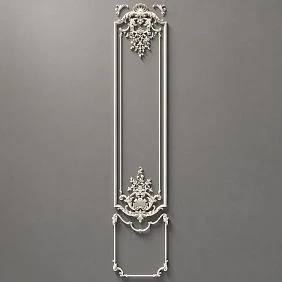
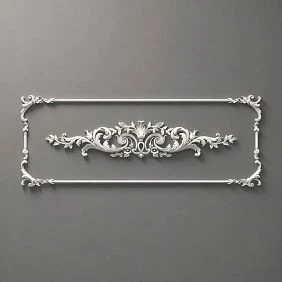
Why a sofa group cannot be assembled piece by piece
This is not theory. It is an observation confirmed in every second interior assembled "as the situation demands."
A sofa is bought—good, with the right shape, on decent legs. Then armchairs, from a slightly different manufacturer, legs similar but not the same. A coffee table on metal supports because "it looks modern." Then stucco is hung on the wall because "we wanted classic," and it ends up being completely out of scale with the furniture below.
The result is a living room that looks random. Not expensive. Not well thought out. Just random.
A classic sofa group works differently. Here everything is built from a single solution:
-
unified style and scale furniture legs for the sofa, armchairs, and coffee table;
-
unified molding profile on the walls — in scale, proportionate to the furniture;
-
unified color system — wood, white, neutral or dark tone, but consistent everywhere;
-
unified bottom line: the baseboard supports the legs, the cornice completes the top.
Only with this approach does the living room become not a collection of items, but an interior.




Wooden legs: a function that is visible
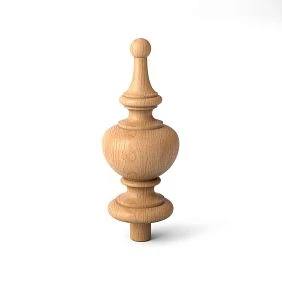
Wooden legs — this is the point of contact between furniture and space. The leg stands on the floor, lifts the body above it, creating a feeling of lightness or solidity. It is the leg that determines how "classic" a sofa or armchair looks.
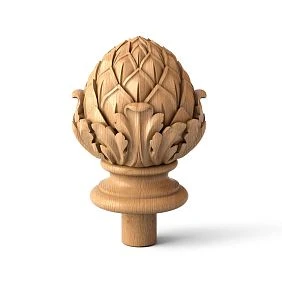
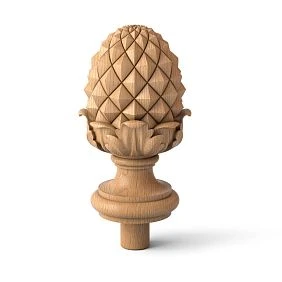
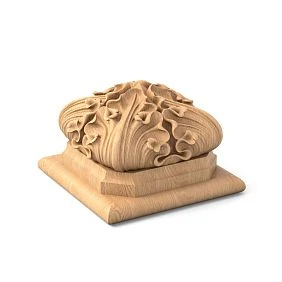
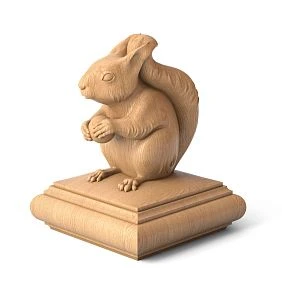
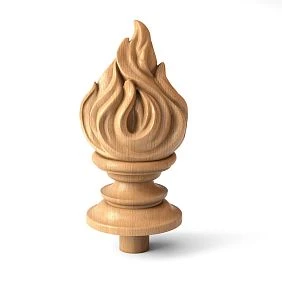
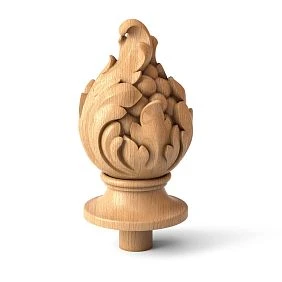
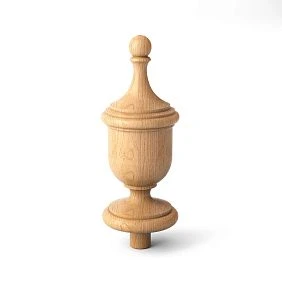
Our factory also produces:
Wooden legs for a sofa: what is important when choosing
The sofa is the heaviest item in the sofa group. The load on a sofa leg, depending on the weight of the structure and users, can reach 50–80 kg per support. This means that Wooden legs for sofas should be:
-
from hard wood — beech, oak, birch. Soft pine for sofa legs is a wrong choice: under load it deforms and cracks;
-
with a proper threaded connection — M8 or M10 stud, screwing into the wooden leg and into the embedded nut of the sofa base;
-
with a diameter sufficient to bear the load: for a classic sofa — a leg at least 40–50 mm wide at the base;
-
with a height proportionate to the seat height: standard leg height for a sofa is 60–100 mm depending on the frame height.
The shape of the leg for a classic style is turned, with a profile. It can be a tapered leg with a heel, a "wine glass" with a waist, a leg with decorative rings. Important: the shape should be moderate. A leg with excessive relief takes the sofa into baroque. A calm turned shape is the language of modern classics.
Get Consultation
Legs for a coffee table: when details become an accent
A coffee table is the center of the sofa group. It stands between the sofa and the TV area or between the sofa and armchairs, and is seen from all sides. Legs for coffee table — this is what is most visible, because unlike a sofa, the table is not hidden by upholstery underneath.
Here you can allow a bit more decorativeness. A turned leg for a table can have a more expressive silhouette: a more developed profile, more contrasting rings. Height of a coffee table leg: 35–50 mm depending on the tabletop thickness and desired table height.
Principally: the legs for the table should match the style of the sofa legs. Not necessarily identical — but from the same style family. If the sofa legs are tapered with a heel made of beech under white paint, the table legs should also have a heel element, in the same finish.
Legs for armchairs: symmetry of the sofa group
In a classic sofa group, armchairs form a pair on either side of the coffee table. Their legs are symmetrical points that visually "hold" the group at the edges. Mismatched armchair legs with sofa legs disrupt the symmetry of the entire group.
For armchairs, legs can be slightly slimmer than for the sofa: the sofa is heavier, its legs are a bit more massive. The armchair is lighter — the leg can be more elegant. But the profile and finish are uniform.
Table: choosing wooden legs for a sofa group
| Item | Leg height | Diameter/width at the base | Profile | Wood species |
|---|---|---|---|---|
| Sofa | 60–100 mm | 40–55 mm | Turned, moderate | Beech, oak |
| Chair | 60–90 mm | 35–45 mm | Turned, elegant | Beech, oak |
| Coffee table | 35–50 mm | 30–40 mm | More decorative | Beech, oak, birch |
| Cabinet | 50–80 mm | 35–50 mm | Moderate | Beech |
| Console | 80–130 mm | 30–40 mm | Expressive | Oak, beech |
Furniture supports: a broad category for different tasks
furniture legs — this is a broader concept than just legs. A support can be cylindrical, beveled, chamfered, profiled, made of wood of different species and formats. In the context of a sofa group, supports are used not only in the sofa and table — but also in the side tables, the console, and the open sections of the wall unit, if present.
Supports for side tables and console
A wall side table is a small but important piece of the sofa group. Its legs are visible, but it does not bear as much load as the sofa. Here you can choose a support with a slightly more expressive shape: for example, a turned support with smooth transitions, 60–80 mm high.
A console in the sofa area — if present — carries mainly a decorative load. For a console, supports can be higher (100–130 mm) and more decorative. A console on elegant legs in the neoclassical style is one of the best accents in a classic living room.
Furniture decor: overlays and details that 'elevate' the level
Classic-style furniture differs from ordinary furniture in its details. This includes not only the shape of the legs, but also decor for furniture — wooden overlays on the fronts of side tables, on the sides of the sofa, on the tabletop of the coffee table.
A wooden overlay can be:
-
a central wooden medallion on the front of the side table;
-
corner frame overlays on the sides of the armchair;
-
decorative molding along the perimeter of the table facade;
-
a wooden frame on the side wall of the sofa.
decorative elements for furniture made of natural wood create relief, shadow and a sense of handcraft — exactly what distinguishes classic furniture from mass-produced products. Overlays are glued to finished furniture, easily painted to match the body color and do not require professional tools for installation.
Furniture handles: the detail that is touched
In a classic sofa group, cabinets and tables often have drawers or doors — and therefore handles. Furniture Handles in a classic style — wooden or metal with a moderate profile. For a sofa group in a light interior — white or cream wooden handles. For dark wooden furniture — handles with dark stain or gilded metal.
Polyurethane decor in the sofa area: architecture instead of decoration
The wall behind the sofa is the main decorative plane of the living room. It is the first thing that appears in photos, it is what people entering look at. Leaving it empty means losing the main tool. Overloading it produces the opposite effect: not an expensive interior, but a bulky one.
Polyurethane moldings in the sofa area — this is not a "wall decoration". It is an architectural operation to integrate furniture into the space.
Moldings behind the sofa: a frame for furniture
A classic technique is to create a framed panel layout on the wall behind the sofa. Molding rectangles, symmetrically placed on the wall, create "architecture wallpaper": a subtle structure that doesn't overload the wall but makes it significant.
The width of the molding for the wall behind the sofa is 20–35 mm. This is enough to create shadow and a readable structure, but not so much that the molding competes with the sofa. The number of frames is 2–3 horizontally, proportionate to the width of the sofa. The height of the frames is 60–70% of the wall height.
Key parameter: the scale of the frame moldings on the wall should be proportionate to the scale of the furniture legs. If the sofa legs are thin and elegant, the wall moldings are also thin. If the legs are massive with a developed profile, the moldings are wider.
Polyurethane wall decor — a broad category that includes not only moldings but also ready-made frame elements, decorative architectural details, corner inserts, and special profiles for creating wall structures. All are mounted with glue, primed, and painted in a single tone with the rest of the decor.
Cornice: the upper horizontal line that ties everything together
A cornice around the perimeter of the living room is a mandatory element of a classic sofa area. It creates the upper architectural frame of the room: visually "closes" the space from above and makes the walls appear taller due to a clear transition to the ceiling.
For an apartment with a 2.7 m ceiling, a cornice height of 70–90 mm with a moderate projection. For ceilings of 2.8–3.0 m, 90–110 mm. The cornice profile for a classic sofa area: calm, with elements of a scotia or ogee, without elaborate ornamentation.
Cornice made of moldings from polyurethane is mounted around the perimeter — this is a mandatory condition. Only on one wall, the cornice looks like an unfinished solution.
Baseboard: the lower horizontal line that holds the furniture
The baseboard is the detail that is often bought last and chosen "by default." This is a mistake that costs a lot in terms of impression.
In a classic living room with a sofa group, the baseboard should be proportionate: for a standard apartment with a ceiling of 2.7 m — 80–100 mm. The profile should have a heel or a curve, echoing the profile of the cornice. The color should match the moldings and cornice.
The right baseboard visually "places" the furniture in its place. A sofa with 80 mm legs against a 100 mm baseboard looks different than the same sofa against a 40 mm baseboard: in the first case — organic and solid, in the second — it "hovers" above the floor without an architectural foundation.
Decorative elements made of polyurethane: point accents
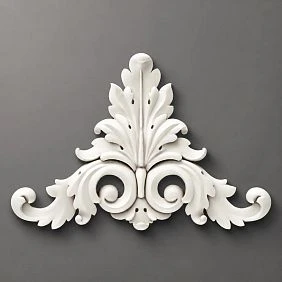
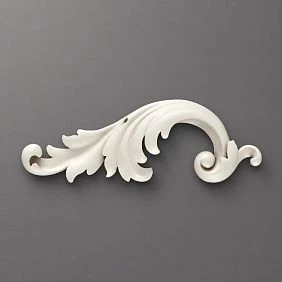
decorative polyurethane elements — these are corner inserts at the intersections of frame moldings, overlays above the console, small decorative medallions, keystones above mirrors and openings.
In the sofa area: corner inserts at the intersections of frame moldings on the wall behind the sofa — four per frame. If there are three frames — twelve corner inserts. This is a small detail that is not noticed as a separate element, but it makes the joints of the moldings perfectly clean and adds a light classic accent.
Ceiling rosette: only if there is a central chandelier and ceilings are not lower than 2.7 m. In soft classic — small, geometric, with a diameter of 35–50 cm.
How to tie wood and polyurethane into a single system
The main question that arises when assembling a sofa group: how to make the wooden legs of the furniture and the polyurethane moldings on the walls look like a single whole, and not like two different solutions?
The answer consists of three components: color, scale, rhythm.
Color as a unifying tool
Uniform painting is the most straightforward way to connect wood and polyurethane. Wooden legs painted white and white wall moldings create a monochrome system where the boundary between materials disappears. Only the form remains: the profile of the leg and the profile of the molding. And this is where the subtle play begins.
If a uniform paint finish is chosen, it is important to use the same paint or a very close shade. White RAL 9010 on the legs and ivory RAL 9001 on the moldings is already a noticeable discrepancy in daylight. Check samples.
Contrast option: exposed wood and white polyurethane
Varnished wooden legs with visible wood texture and white wall moldings create a deliberate contrast. Natural warm wood and pure white polyurethane create a play of tactile and visual elements. It works provided the contrast is intentional and supported by other details: wooden flooring of the same tone, wooden door frames.
Scale: proportionality of details
A thin 30 mm leg and a wide 60 mm molding on the wall is a disproportion. A massive 50 mm leg and a thin 15 mm molding is also disproportionate. The scale of wooden furniture details and polyurethane wall decor should be commensurate.
Practical rule: the width of the wall molding should be approximately equal to the width of the furniture leg at the base, or slightly less. This creates a sense of proportionality and consistency.
Rhythm: how profiles echo each other
A turned leg with a heel — a wall molding with a heel. A leg with a cove — a baseboard with a cove. A cornice with the same elements. This is not a coincidence — it is a conscious repetition of the profile motif that creates a sense of system. This is how the best classic interiors work: details of different scales repeat the same profile motifs at the floor, furniture, wall, and ceiling levels.
Ready-made sets for the sofa area
Light classic living room
The most popular scenario: a light sofa on white turned legs, armchairs with the same legs, a coffee table with decorative white supports, white moldings on the wall behind the sofa.
What to buy:
-
Wooden legs for sofas — turned, beech, for white paint, height 80 mm;
-
Legs for coffee table — from the same category, height 40 mm;
-
furniture legs for armchairs and cabinets — in a unified style;
-
Moldings made of polyurethane — width 25–30 mm, for frame panels on the wall;
-
polyurethane cornice — height 80 mm;
-
baseboard — 90–100 mm;
-
decorative polyurethane elements — corner inserts;
-
decor for furniture — wooden overlays for cabinets if necessary;
-
glue, primer, paint in a single color.
Dark sofa group with wooden accents
Dark velvet or leather sofa, armchairs with oak legs stained dark, coffee table with legs of the same tone. Wall moldings — white or wall-colored, with a calm profile.
Here it is essential: stucco should not overload the space in a dark interior. Moldings — thin (20–25 mm), frames — laconic, decorative overlays — minimal. Dark furniture itself creates weight — moldings should only structure the wall without adding heaviness.
What to buy:
-
Wooden legs for sofas — made of oak, stained dark, height 80–100 mm;
-
Legs for coffee table — oak, of the same tone;
-
Moldings made of polyurethane — thin, matching the walls;
-
cornice and baseboard — proportionate, matching the moldings;
-
minimum decorative overlays.
Sofa area with console and mirror
Console against the wall, mirror above it, sofa perpendicular or parallel — this is a configuration for a living room with a complex layout. Console on elegant furniture supports height 100–130 mm creates a vertical accent. Molding frame around the mirror, decorative polyurethane elements above it — a local classical composition.
Important: the console and mirror area is a separate accent, not competing with the wall behind the sofa. Having both the wall behind the sofa and the wall with the console active at the same time is already overload. One wall is the main decorative accent, the other is a neutral background.
Sofa group in the study-living room
A study combined with a sofa area is a common solution in modern apartments. Here the furniture should be "functional": strict legs made of dark oak, a coffee table with a wooden top, geometric moldings without floral elements.
Polyurethane moldings in the study-living room: a strict profile, frame panels without corner decorations, a cornice of moderate height. Polyurethane decor here creates architectonic quality, not decorativeness.
Installation: from legs to moldings
Attaching legs to the sofa and table
Wooden legs for the sofa are attached via an M8 or M10 stud. Standard scheme: a metal stud with a washer is screwed into the leg, the other end of the stud is screwed into an embedded nut mounted in the sofa base. The threaded connection is reliable and allows replacing the leg if necessary.
For the coffee table, legs are attached to the base of the slab using standard furniture screws or a stud, if the tabletop thickness allows. If the slab thickness is less than 25 mm — special support plates for load distribution.
Installing moldings: precision and patience
installing polyurethane molding — a process requiring a preliminary layout and checking the horizontal with a level. Main stages:
-
Marking the frame layout on the wall: pencil outlines with level checking.
-
Cutting moldings: at 45° for corner joints or using ready-made corner inserts.
-
Applying glue: special mounting adhesive for polyurethane. Details on glue selection and technology — in the article what to glue polyurethane molding with.
-
Joints — acrylic sealant with sanding.
-
Adhesion primer — mandatory.
-
Two coats of finish paint with sanding between them.
Complete shopping list for a classic sofa group
Wooden furniture elements:
-
Wooden legs for sofas — 4–6 pieces depending on the design;
-
Legs for coffee table — 4 pieces;
-
furniture legs for armchairs — 4 × 2 = 8 pieces;
-
furniture legs for cabinets — according to the diagram;
-
decor for furniture — wooden overlays on facades;
-
Furniture Handles — according to the number of doors and drawers.
Polyurethane decoration:
-
Moldings made of polyurethane — frame panels on the wall + 15% spare;
-
cornice — along the perimeter of the living room;
-
baseboard — along the perimeter;
-
decorative polyurethane elements — corner inserts + accent points;
-
Polyurethane wall decor — if additional architectural details are needed.
Fasteners and consumables:
-
M8/M10 studs for sofa legs;
-
Assembly adhesive for polyurethane;
-
acrylic sealant;
-
adhesion primer — for polyurethane;
-
wood primer — for wooden legs;
-
finish paint — uniform shade;
-
varnish — if wooden legs with open texture;
-
spare of all elements 10–15%.
Errors when assembling a sofa group
Choosing legs only by appearance
A beautiful thin leg on a heavy three-seater sofa means either deformation after a few months or a chip within the first year. Load is the first parameter. Shape is the second.
Installing too thin legs on a massive sofa
A sofa weighing 80–100 kg on legs with a diameter of 25 mm is a design error. For a heavy sofa — legs with a diameter of at least 40–50 mm at the base, made of hardwood.
Do not match the coffee table with the sofa in style
A sofa with classic turned legs and a table on metal tubular supports is a stylistic break that cannot be 'glued together' with wall moldings. The style of furniture legs should be uniform for the entire group.
Overload the wall behind the sofa with large stucco
Large overlays, multi-tiered rosettes, wide moldings with deep relief — all this on the wall behind the sofa creates competition with the furniture itself. Moldings should be a background for the sofa, not the main object.
Mix different wood shades without a system
Light beige sofa legs, dark coffee table legs, medium chair legs — this is chaos that nothing can compensate for. Either a uniform color or a uniform stain tone.
Forget the bottom and top lines
Wall moldings without baseboard and cornice are an unfinished solution. The vertical structure of the wall (frames) without horizontals (baseboard at the bottom, cornice at the top) lacks support and looks 'hanging' in space.
Buying moldings without a diagram
Without an exact frame diagram with dimensions — first trip to the store, second trip 'for more', third — 'still not enough'. Make a diagram before ordering.
FAQ: questions about the sofa group and classic decor
Which legs to choose for a classic-style sofa?
Wooden legs Made from hardwood — beech or oak. Turned shape with a moderate classic profile. Height 60–100 mm. Base diameter at least 40 mm for a heavy sofa. Finish — paint or varnish depending on the interior concept.
Can wooden legs be combined with polyurethane stucco molding?
Yes, and this is the right approach. Wood works in furniture — legs, supports, handles, decorative overlays. polyurethane decor — in architectural finishing: moldings, cornice, baseboard, frame panels on walls. They are united by a single color, proportionate scale, and a consistent profile motif.
What to buy for a classic sofa area?
Wooden legs for sofas, Legs for coffee table, furniture legs for armchairs and side tables, decor for furniture, Moldings made of polyurethane for walls, cornice, baseboard, decorative elements, glue, primer, paint, and spare.
Is it necessary to decorate the wall behind the sofa with stucco molding?
This is a strong technique, but not mandatory. The main thing is to be neat: thin moldings proportionate to the furniture, frames symmetrical, few decorative overlays. The goal is the architectural structure of the wall, not its "decoration."
How to choose legs for a coffee table to match the sofa?
The legs don't have to be identical, but they should be from the same style family: the same wood species or the same finish color, a similar profile. Legs for coffee table they can be slightly more decorative than the sofa legs.
How to calculate the number of legs for replacement?
Sofa — typically 4–6 legs (depending on size). Armchair — 4 legs. Coffee table — 4 legs. Plus 10% spare in case of installation defects or damage during replacement.
Can I replace the legs on an already purchased sofa?
Yes, if there are embedded nuts in the sofa base — it's a standard procedure. If there are no nuts, you will need to install furniture nuts manually, which is easy with basic tools.
About the company STAVROS
The entire range for assembling a classic sofa group — from wooden legs for a sofa и legs for a coffee table to of polyurethane moldings и furniture decorative elements — is manufactured and supplied by STAVROS.
STAVROS is a Russian manufacturer of products made from natural wood and polyurethane for the furniture industry and architectural finishing. The catalog includes wooden legs of all formats and styles, furniture supports, handles, wooden decor, as well as a full range of moldings from polyurethanemoldings, cornices, baseboards, corner inserts, decorative overlays.
Founded in St. Petersburg in 2002. Completed projects include the Hermitage, Konstantinovsky Palace, Alexander Palace, and Trinity Cathedral. Working with historical interiors has established a standard of profile precision and quality applied to every product — from architectural stucco to furniture legs.
Order wooden sofa legs and polyurethane moldings, select a set for a sofa group, and get advice on style solutions — on the STAVROS website. Contact us to confirm shipping to your destination., orders from one piece, assistance in selecting profile and scale.