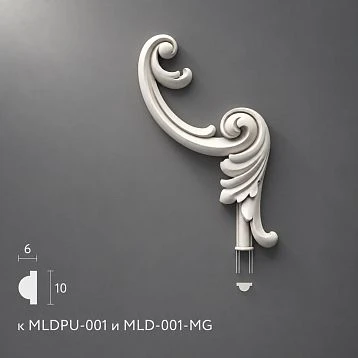
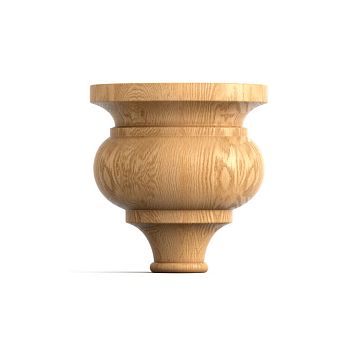
Article Contents:
- Short answer: when you need a wooden cornice
- What is a wooden cornice
- Where wooden cornices are used
- For a Wardrobe
- For Kitchen
- For the sideboard and display case
- For a chest of drawers, nightstand, and console
- For interior
- How a wooden cornice differs from molding, baguette, and trim
- How to choose the size of a wooden cornice
- How to choose a cornice profile
- Wooden cornice for classic furniture
- Wooden cornice for the kitchen
- Cornice for furniture restoration
- How to combine a wooden cornice with other decor
- Cornice for painting, varnish or stain
- Mistakes when choosing a wooden cornice
- What to buy together with a wooden cornice
- FAQ: questions about wooden cornices
- About the Company STAVROS
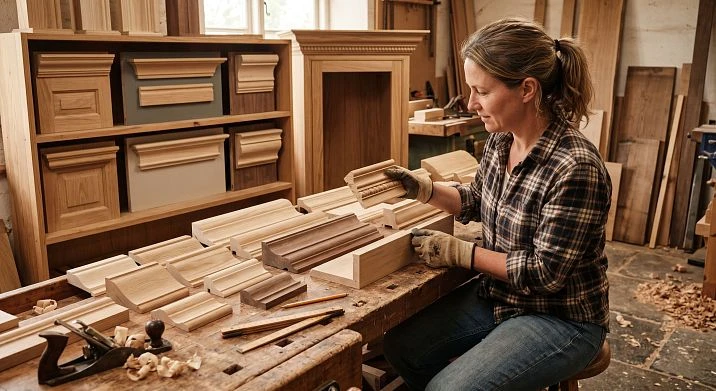
There is a moment when a cabinet or kitchen suddenly "falls into place" — and the interior comes together. This is the moment when the top profile of the furniture gains completeness: a horizontal solid wood cornice puts a period where there was previously an unfinished phrase. It is wooden cornice makes furniture furniture, not just a set of cabinets.
The topic of wooden cornices for furniture and interiors is one of those that seems simple until you start choosing. Then it turns out: there are many profiles, different sizes, styles don't match, and "just picking one" doesn't work. This article provides a systematic breakdown: from purpose to coating, from size calculation to combination with moldings, handles, and brackets.
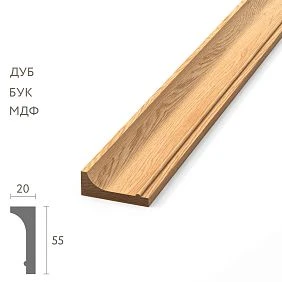
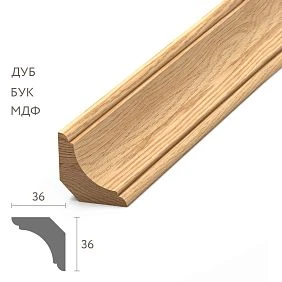
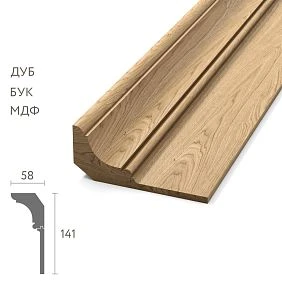
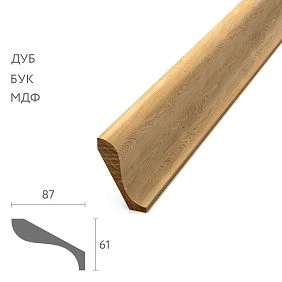
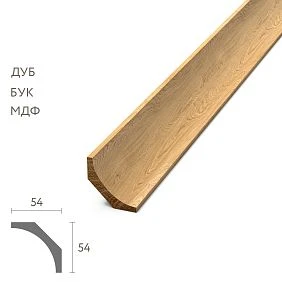
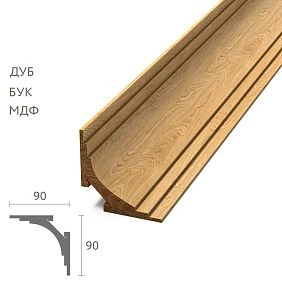

Short answer: when a wooden cornice is needed
Directly and without preamble — here are the situations in which wooden cornice required:
-
The top of a cabinet, kitchen, sideboard, or display case looks unfinished. The body cut without a profile is a technical boundary, not an architectural one. A cornice turns it into a completion.
-
Furniture is assembled in a classic or neoclassical style. A cornice is a mandatory element of a classic silhouette. Without it, furniture loses its character.
-
It is necessary to connect the furniture with moldings, baseboards, and other wooden decor. A cornice is the "upper rhyme" to a wooden skirting board the bottom and to solid wood moldings on the walls.
-
Old furniture is being restored. A cornice restores a lost decorative top element or replaces a damaged profile.
-
The interior is built on wooden solid wood trim. The cornice fits organically into this system.




What is a wooden cornice
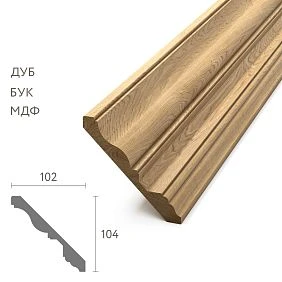
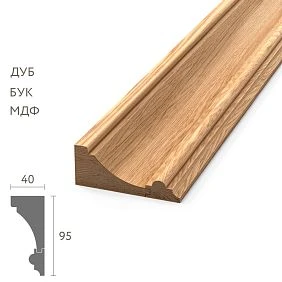
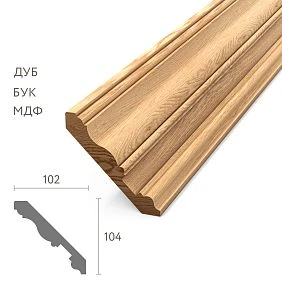
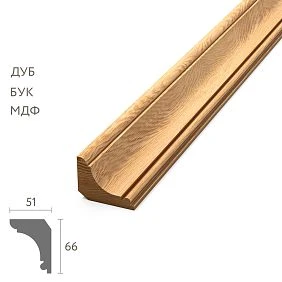
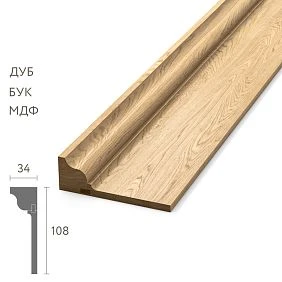
The word "cornice" in architecture has a precise meaning: it is a protruding horizontal profile that crowns a wall, column, or object. In furniture, it is the same: wooden cornice for furniture — this is a profiled rail made of natural solid wood, which is installed at the top of a wardrobe, kitchen, sideboard, or other piece of furniture and functions as a finishing decorative element.
A cornice differs from a regular rail in that it has a pronounced cross-sectional profile: steps, bevels, curves, protrusions. It is this profile that creates the play of shadows, a readable silhouette, and a decorative character. A simple rectangular rail without a profile is not a cornice; it is a board.
How Cornice from solid wood differs from molding? In shape, they can be similar, but their purpose and placement are different. A cornice is a horizontal finishing element at the top; it often protrudes beyond the plane of the facade and works as the "crown" of the furniture. solid wood molding — is more universal: it can run horizontally, vertically, and create frames on walls and facades.
The cornice is made from birch, alder, or pine, depending on the manufacturer. It is supplied without coating, allowing it to be painted any color along with the furniture. The standard length is 2.5–3 meters per run, which covers most standard wardrobes and kitchen sections.
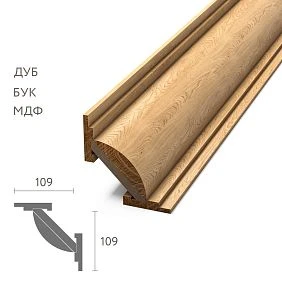
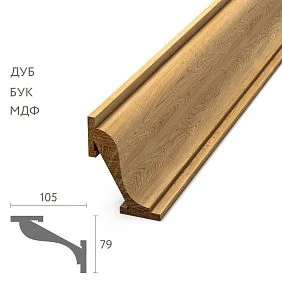
Our factory also produces:
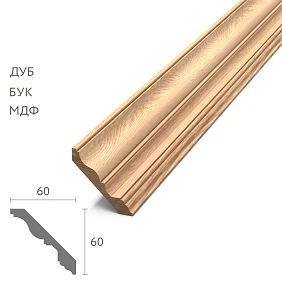
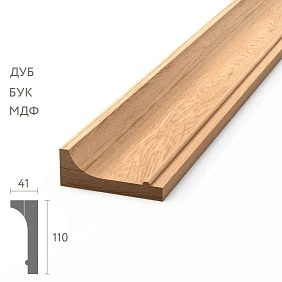
Where is a wooden cornice used
Get Consultation
For a cabinet
Wardrobes, built-in furniture, libraries, dressing areas — all these items benefit from the correct top profile. Cabinet cornice is installed along the entire top perimeter or only on the front and visible side sides.
When there is a cornice, the wardrobe is "closed" from above, and its silhouette becomes architectural. When there is no cornice, the gaze hits the open cut of the body, and the item looks unfinished, regardless of the quality of the facades and handles.
For tall wardrobes (from 220 cm), the cornice is especially important: with high ceilings, it creates a correct transition between the furniture and the ceiling plane. The profile can be wide — 60–100 mm, which emphasizes the monumentality of the item.
For Kitchen
The kitchen is the most obvious and most common application of a wooden cornice. Wooden cornice for the kitchen is installed along the top horizontal line of wall cabinets and creates a single line that connects all modules into one composition.
Without a cornice, the top row of kitchen cabinets looks like separate "boxes" strung on the wall. The cornice unites them into a single horizontal line — and the kitchen becomes a kitchen, not a set of modules.
In classic and neoclassical kitchens, the cornice is an architectural element. It can be shaped, with a relief profile, combined with decorative brackets at the ends. This is no longer just a finish — it is a decorative program.
For a kitchen cornice, the coating is important: varnish or enamel resistant to steam and temperature changes. An open wood surface without coating in the kitchen is a mistake.
For the sideboard and display cabinet
A sideboard is an item with a claim to grandeur. A display case with glass — even more so. Both require a finished top element. Wooden cornice for a sideboard creates status: when there is a protruding profile on top, the sideboard acquires an architectural crown that makes it an object, not just a box with doors.
For a display case, the cornice is especially important when lighting: the cornice hides the LED strip and creates soft, diffused lighting without a visible source. This is a classic design technique that works both as decor and as a function.
For buffets with a two-level construction (lower closed body + upper open or glazed part), the cornice is installed in two zones: as a transition profile between levels and as a finish for the upper part.
For a chest of drawers, nightstand, and console
This is a less obvious application, but it exists. For a classic-style chest of drawers, the cornice can work as an upper decorative profile that extends beyond the body plane and creates the item's "hat." The width in this case is moderate, 30–50 mm.
For a TV stand or bedside table wooden cornice it is used less often, but when restoring old furniture, it is often the restoration of the upper profile that gives the greatest visual effect.
A console in a classic interior with a cornice along the upper perimeter is already a true piece of interior design, not just a stand.
For interior
A wooden cornice is used not only on furniture but also in the interior as an independent element. A cornice molding along the perimeter of the walls at ceiling level is a classic technique that visually raises the ceiling height and creates an architectural framing of the room.
in combination with wooden moldings on the walls, baseboards on the floor and wooden cornice In paintings, the cornice along the ceiling completes the full system of wooden moldings in the interior.
How a wooden cornice differs from molding, baguette, and layout
Let's break down the table — this is the clearest way.
| Element | Main application | Features |
|---|---|---|
| Wooden cornice | Top of furniture, kitchen, cabinet, sideboard, decorative finish | Protruding profile, the "crown" of an object |
| Solid wood molding | Wall frames, furniture facades, decorative lines | Overlay, without a structural protrusion |
| Molding | Paintings, mirrors, panels, interior frames | Internal groove for insertion |
| Layout | Joints, facades, frames, furniture panels | Narrow, flat, linear molding |
| Rail | Walls, partitions, furniture decor | Simple, without complex profile |
| Baseboard | Bottom joint of wall and floor | Works from below, "mirror" of the cornice |
The most important question that is asked regularly: how is a cornice different from a molding? The fundamental difference is in the location and shape of the protrusion. The cornice crowns furniture or a wall, it protrudes forward beyond the plane of the facade or wall, creating a horizontal shadow from below. Molding is an overlay profile that runs along the plane without such a protrusion. Externally, they can be similar, but the cornice "overhangs", the molding "lies".
wooden floor — an even narrower and flatter element without a pronounced profile: it works as a line on the facade, forming frames. Wooden Picture Frame — a profile with a groove for glass or canvas, it is for frames, not for furniture finishing.
Understanding these differences is the basis of a competent choice. Buying a molding instead of a cornice or vice versa means getting the wrong result with the right materials.
How to choose the size of a wooden cornice
Size is the first practical decision that is made before everything else.
Height of the cornice profile and height of the furniture. For a cabinet 220–240 cm high, a cornice 60–90 mm high looks proportionate. For lower furniture — 180–200 cm — a profile of 40–60 mm is sufficient. Proportion: the height of the cornice is approximately 1/30–1/40 of the height of the furniture.
Cornice overhang depth. Overhang is the distance the cornice extends beyond the facade plane. Standard overhang is 20–40 mm. A deeper overhang creates a more pronounced shadow and a more "architectural" look. For kitchen cabinets, the overhang should not be excessive: a cornice that protrudes too much becomes a "hood" where dust settles.
Scale of the kitchen and room. Small kitchen with low ceilings (up to 260 cm) — neat cornice, 30–50 mm. Spacious kitchen with 300 cm ceilings — you can afford a profile of 70–100 mm. The scale of the cornice should match the scale of the space.
Combination with other elements. If the room has with a classic profile creates a sense of solidity, reliability. a height of 80 mm — the cornice on the furniture should not be smaller. Both elements — the plinth and the cornice — set horizontal accents of the space, and their scale should be coordinated.
Distance between furniture and ceiling. If the cabinet goes up to the ceiling — the cornice covers the gap and creates a smooth transition. If the furniture is below the ceiling — the cornice visually "lifts" it, making the transition to the ceiling organized rather than random.
Run length. One standard cornice section is 2.5–3 meters. If the kitchen or cabinet is longer — joints will be required. Cornice joints are made at 45 degrees (in corners) or butt-jointed with masking (on straight sections). A properly executed joint is almost invisible after painting.
How to choose a cornice profile
The profile is the soul of the cornice. It determines how the item looks from a distance, how it behaves under lighting, and what style it fits into.
Simple smooth profile. Rectangular cross-section with minimal chamfers. Suitable for modern classic, neoclassical, Scandinavian style. It works due to correct proportion and clean material, not due to ornament.
Profile with quarter round or cove. A concave or convex rounded edge along the bottom. A classic furniture profile of medium expressiveness. For neoclassical kitchens and cabinets — a good compromise between simplicity and decorativeness.
Shaped profile. Complex cross-section with multiple steps, bevels, and rounded edges. For classic cabinets, sideboards, libraries. Works well with pronounced lighting: the steps of the profile create a play of shadows that is visible from any point in the room.
Relief cornice. Decorative relief on the front plane: bead molding, diamonds, ornamental band. Maximum decorative register. For classic interiors with carved inlays, turned legs и brackets.
Narrow cornice. Profile height 25–40 mm. For small furniture, bedside tables, wall cabinets in small kitchens, lightweight sideboard extensions. Delicate finish without pretension.
Wide cornice. Profile height 70–100 mm and more. For large cabinets, libraries, kitchen portals. Architectural scale — when the cornice must be visible and readable from a distance.
Paintable cornice. Any of the listed profiles in an unpainted state is a blank for self-painting. A wooden cornice without coating made of birch or alder is a dense, uniform surface that accepts enamel, varnish, and stain well.
Wooden cornice for classic furniture
Classic furniture without a cornice is furniture without a finish. Imagine a speech that is abruptly cut off in the middle of an important thought. That is exactly how a classic cabinet without a top profile is perceived.
Wooden cornice for classic furniture forms the upper silhouette of the item. It is the detail that is visible from a distance, that sets the 'weight' and 'status' of the furniture. A wide shaped cornice on a sideboard or library is not just a plank on top, it is an architectural detail.
for classic furniture the cornice always works in the system:
-
At the top — a cornice that crowns the piece.
-
On the facades — wooden floor in frame inserts and Decorative Inserts as accents.
-
On the sides — Decorative brackets, visually supporting the cornice.
-
At the bottom — turned Wooden legs, which "lift" the furniture.
When all these levels are coordinated in one style and tone — the furniture ceases to be a set of details and becomes a piece with character.
An important principle: the cornice profile should not contradict the style of other details. A relief ornamental cornice against a background of geometric handles and minimalist legs is a style conflict. The cornice, handles, legs, and overlays should be in the same decorative language.
Wooden cornice for the kitchen
The kitchen is a space where all details are constantly visible and at close range. That is why wooden cornice for the kitchen should be chosen with particular care: both in shape, size, and finish.
Classic kitchen with a cornice. Upper cabinets with with wooden cornices along the upper perimeter, with facade layout in frame inserts, with wooden handles in a single tone — this is a complete image. Each detail supports the other, and together they create a kitchen that is perceived as a cohesive work.
Cornice and brackets in the kitchen. Decorative Bracket Along the ends of the upper cabinets combined with a cornice is a classic technique. The bracket visually "holds" the cornice, creating the illusion of structural support. This is an architectural gesture that transforms the kitchen from a functional space into a space with character.
Portal for the range hood. In classic kitchens, a decorative portal for the range hood is often arranged above the stove. The cornice is one of the elements of this portal, along with side pilasters and brackets. The portal cornice can be wider and more massive than the cabinet cornice — here it works as an architectural "frame" for the functional area.
Care for a wooden cornice in the kitchen. The surface of the cornice in the kitchen should be coated with a durable varnish or enamel. A matte surface collects fewer stains and is easier to wipe. The horizontal plane of the cornice is an area where dust settles: it needs to be wiped with a damp cloth without abrasive agents.
Joints in the kitchen. If the kitchen is corner-shaped, the cornice needs to be joined at the corner. A 45-degree joint is the standard and correct option. Cutting the cornice at an angle without a miter box and precise tools means getting an ugly seam that will ruin the entire result.
Cornice for furniture restoration
This is where a wooden cornice shows itself unexpectedly vividly. An old Soviet cabinet with cracked veneer, an old sideboard with a lost top profile, a grandmother's display cabinet without a "crown" — all of this can be brought back to life.
Updating an old cabinet. Repaint the facades, add new Wooden handles, install Wooden legs instead of old supports and finish with a cornice along the top perimeter — this is a complete update without replacing the body. The result is an item that looks like new but costs an order of magnitude less than replacement.
Restoration of a sideboard or display cabinet. If an old sideboard has lost its top profile, it is replaced with a new cornice that matches the style. The profile is selected based on the character of the furniture: if it is an Empire-style sideboard, the cornice should be monumental and strict; if Art Nouveau, softer and smoother.
Replacement of a damaged profile. A solid wood cornice, unlike veneered MDF, can be repaired: filled, sanded, repainted. If a section is damaged, it is replaced, not the entire cornice.
Adding a classic silhouette to simple furniture. A simple cabinet without a top profile that needs a classic look — cornice plus overlay on the fronts plus legs. This is a transformation that takes a few hours but radically changes the item's appearance.
Matching the new cornice with other details. During restoration, the new cornice is painted together with the fronts in a single tone. If the fronts have already been repainted, the cornice is selected in their color or slightly darker for emphasis.
How to combine a wooden cornice with other decor
The cornice is not an autonomous detail. It works in a system. Let's consider all key connections.
Cornice + Brackets. Classic pair. The cornice completes the furniture horizontally, brackets support it on the sides and ends. For classic kitchens, sideboards, and portals — a mandatory combination. The style and scale of the bracket must match the cornice profile.
Cornice + Decorative Inserts. Cornice on top + overlays on the fronts = complete decorative program for the furniture. This combination turns any cabinet into a classic piece. Important: the carving style of the overlays and the relief of the cornice must be coordinated.
Cornice + Moldings from solid wood. Moldings on the walls in the same tone and similar profile as the cornice on the furniture — this is a technique that connects the furniture with the interior. The furniture ceases to be 'placed' in the room and begins to 'grow' out of it.
Cornice + Wooden baseboardThe baseboard along the floor and the cornice along the top of the furniture — the upper and lower horizontals of the space. In a unified tone, this creates an architectural rhythm that organizes the room.
Cornice + Wooden Picture FrameIn classic interiors, the frames of mirrors, paintings, and panels in the tone of the cornice — this is a complete wooden program for walls and furniture. The cornice holds the furniture, the baguette holds the artworks on the walls, and together they create a classic interior with a unified wooden register.
Cornice + Wooden handles и LegsThe cornice at the top, the legs at the bottom — this is the vertical rhythm of the furniture: 'lifted' by the legs, 'completed' by the cornice. Handles in a unified tone connect the functional and decorative components. wooden hook handle + a cornice in the same tone — a ready-made style pair.
Cornice + layout for furniture facadesThe layout creates frame inserts on the facades — a classic technique familiar from cabinets and sideboards of the century before last. The cornice crowns this system from above. Together — a complete picture of classic furniture.
Cornice for painting, varnish, or stain
Choosing the final coating for wooden cornice — this is a decision made before installation and determines the final quality of the result.
Under enamel. The most common option for classic and neoclassical furniture. The birch or alder cornice without coating is sanded (P150 → P220), primed, then covered with two layers of enamel. Color — any from the palette: white, cream, gray, pastel.
Key advantage: the cornice is painted in exactly the same color as the facades — from the same can. No "tone mismatch" with the right approach.
Technological rule: paint before installation. A cornice glued and painted in place gives a worse result: it's harder to ensure an even tone, corners are poorly painted, and paint gets on adjacent surfaces.
Under clear varnish. If the furniture is finished in natural wood — the cornice is coated with the same varnish. Matte polyurethane varnish is the most durable and practical coating. Glossy varnish on horizontal cornice surfaces collects dust more noticeably.
Important: the wood grain on the cornice should be close to that of the main furniture. If the cornice is birch and the body is painted MDF — under varnish they look like different materials. Under enamel — they look like a single whole.
Under stain. If you need to darken or even out the tone of the cornice to match existing furniture, floor, or doors — stain before varnish. Birch under dark walnut, alder under cherry — working options. Rule: test on a small end piece before full treatment, because each batch of wood absorbs stain slightly differently.
Contrast cornice. Furniture body under white enamel, cornice under dark varnish — this is a design technique that creates a visual "cap" and emphasizes the upper silhouette of the furniture. It works provided the contrast is thought out: the same dark tone is present in the legs and handles — then it's a system, not a coincidence.
Joints of corner elements. When painting a cornice with 45-degree corner joints, it's important to cover the joint ends evenly. The end grain of wood is more porous, it absorbs paint faster — it needs an extra layer of primer. Otherwise, after painting, the joint will stand out with a darker tone.
Mistakes when choosing a wooden cornice
An honest list — each of these mistakes actually occurs and actually costs a redo.
Choosing a cornice only by photo. Photos are lighting, processing, and shooting angle. In reality, the profile may look different — more or less pronounced. Look at the actual cross-section dimensions.
Do not ignore furniture height. A 80 mm cornice on a 180 cm tall cabinet is almost 4.5% of the total height. It may look heavy. A 30 mm cornice on a 230 cm tall cabinet will get lost. Proportions matter.
Installing too massive a profile on a small cabinet or nightstand. A large cornice on a small kitchen top cabinet creates visual overload. The scale of the cornice should match the scale of the item.
Choosing too thin a cornice for a large kitchen. A long row of upper cabinets with a narrow 20 mm cornice — the profile 'disappears', there is no finish, the furniture looks incomplete.
Not coordinating the cornice with handles, overlays, and legs. A cornice with a relief ornament + minimalist metal handles + simple square legs creates a style conflict. Details must be coordinated.
Forgetting about painting. Buy a cornice, install it, and only then remember that it needs to be painted together with the facades. Result: the cornice is painted separately, the shade doesn't match, rework.
Not checking joints and corners. Corner joints of cornices in kitchen boxes or built-in cabinets are a complex area. An incorrectly calculated angle results in an ugly seam that is constantly visible.
Confusing a cornice with a molding. Buying a molding without a projection and trying to use it as a cornice results in a flat strip instead of an expressive profile. These are different elements.
Buying a cornice separately from the overall furniture composition. A cornice is not an independent purchase, but a system element. Buy it together with handles, overlays, legs, and layout — to see the overall picture before installation.
What to buy together with a wooden cornice
For those who build a system, not assemble individual parts:
wooden cornice — the main finishing element of furniture, the upper profile of a cabinet, kitchen, sideboard.
Wooden cornice — molding MLD-044 — alternative profile for a more delicate finish.
Moldings from solid wood — for decorative frames on walls and furniture facades.
Decorative Bracket — to support the cornice at the ends and sides.
Furniture Bracket — functional support for shelves and cornice structures.
wooden furniture appliqués — decorative accent on facades in a unified system with the cornice.
decor for furniture — full range of decorative elements.
wooden furniture handles — functional element matching the cornice color.
wooden hook handle — for cabinet facades and kitchen doors.
wooden button handle — for drawers of cabinets and small facades.
wooden furniture legs — lower decorative level in a system with a cornice.
wooden floor — for frame inserts on facades.
Wooden profile and layout for furniture fronts — full range of moldings.
with a classic profile creates a sense of solidity, reliability. — lower horizontal element matching the cornice.
Wooden Picture Frame — for picture and mirror frames in the same system.
Classic Furniture — finished items with wooden cornices and decor.
FAQ: questions about wooden cornices
What is a wooden cornice for?
wooden cornice used as a decorative finish for the top of cabinets, kitchens, sideboards, display cases, libraries, and classic interior compositions. It creates a complete silhouette for furniture and connects it with the overall wooden decor of the space.
How is a wooden cornice different from a molding?
Cornice — the finishing protruding profile, the 'crown' of furniture. solid wood molding — an overlay profile without a pronounced protrusion, used on walls and furniture facades. They may look similar, but their purpose and placement differ.
Can a wooden cornice be used in the kitchen?
Yes, this is one of the most common applications. Cornice for kitchen is installed along the upper perimeter of wall cabinets. In the kitchen, the cornice must be coated with varnish or enamel to resist steam and dirt.
How to choose the size of a wooden cornice for a cabinet?
Aim for a ratio of 1/30–1/40 of the furniture height. For a 220 cm cabinet, a cornice of 55–75 mm. The overhang beyond the facade plane is 20–40 mm. The cornice should be proportionate to the furniture: not too thin and not too massive.
Can a wooden cornice be painted?
Yes. Cornice from solid wood without coating is ready for painting with enamel, varnish, or stain. Sanding + primer + two coats of enamel is the standard technique. Painting must be done before installation for the best coating quality.
What does a wooden cornice pair best with?
С moldings, baseboards, brackets, decorative inlays, wooden handles и legs — in a unified tone and style.
About the company STAVROS
Furniture without a cornice is furniture without completion. With a properly selected solid wood cornice, even a simple body acquires character, silhouette, and classic dignity. STAVROS produces wooden cornices for furniture from birch and alder — with a precise profile, smooth surface, and geometry that requires no adjustment.
STAVROS's assortment includes a complete system of wooden furniture decor: Moldings, Brackets, applique, Handles, Legs, Baseboards и Pogonazh iz massiva. Everything — in one place, from one material, for a unified result.
STAVROS is a manufacturer of wooden decor for furniture and interiors, trusted by professionals and discerning private clients.