

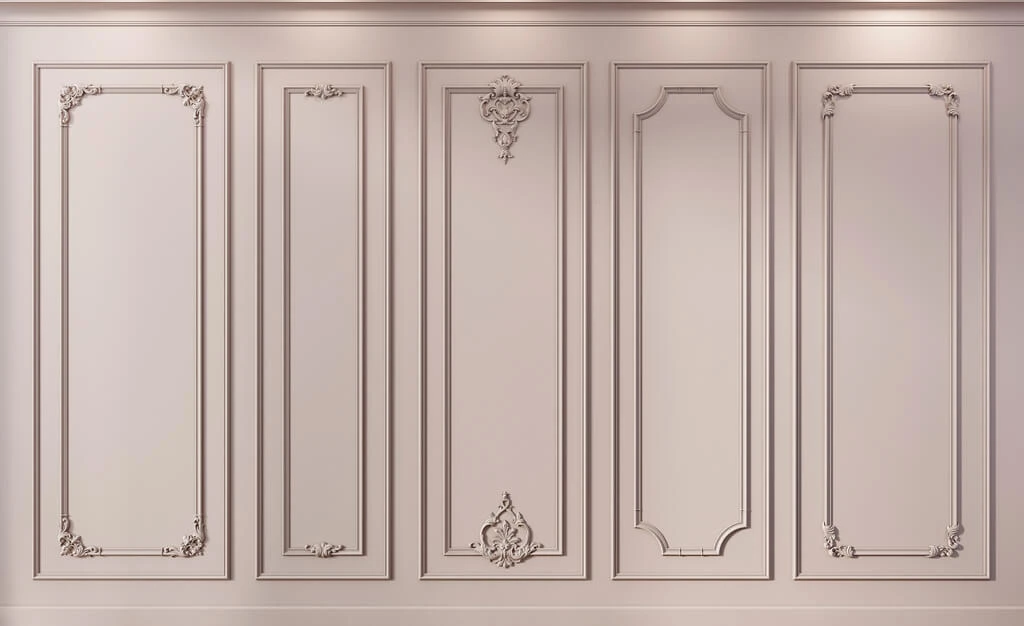
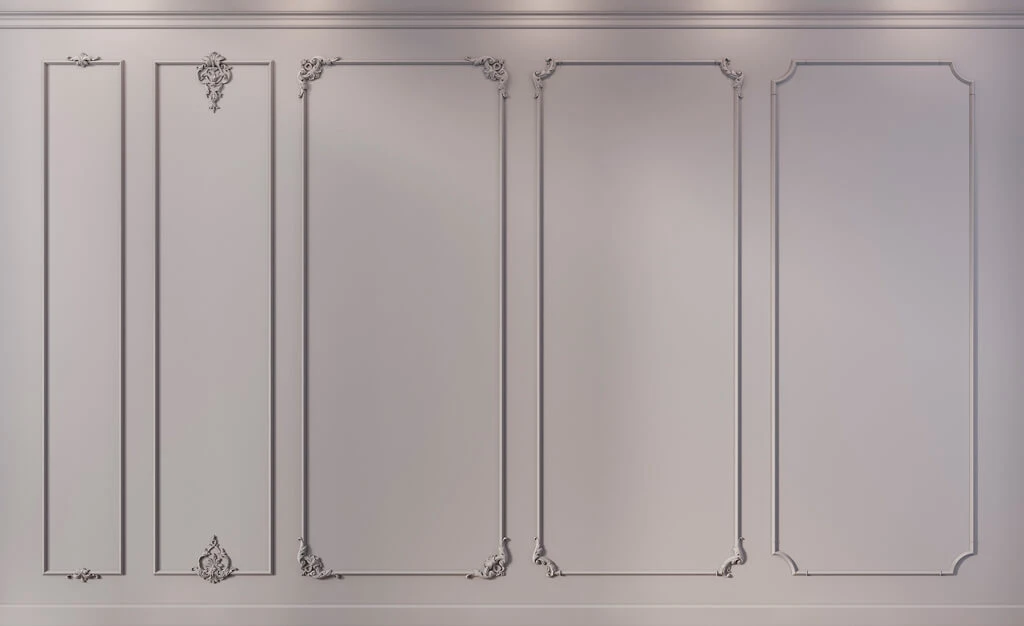
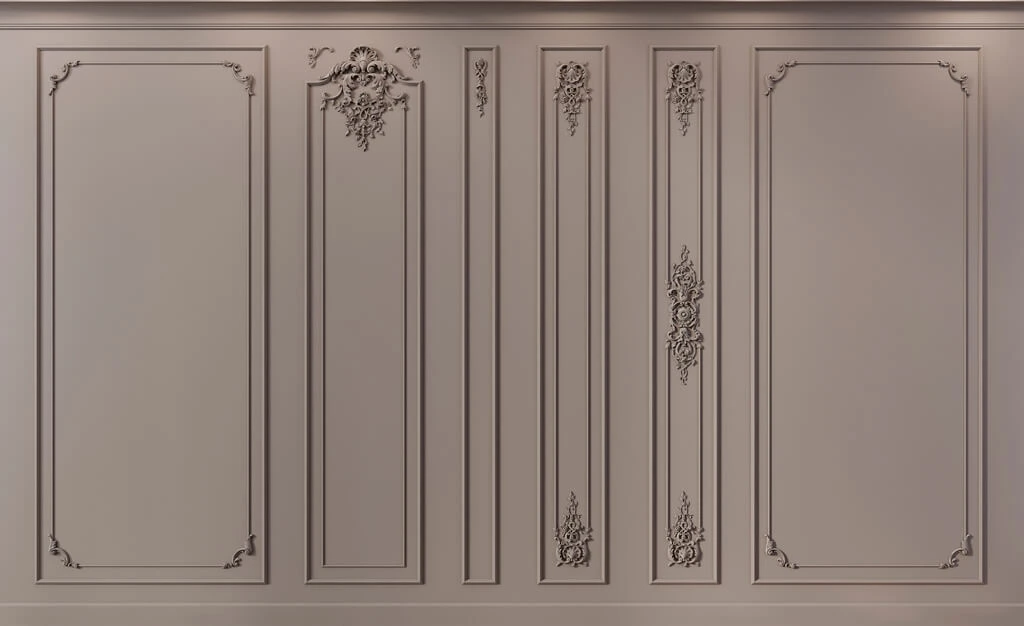
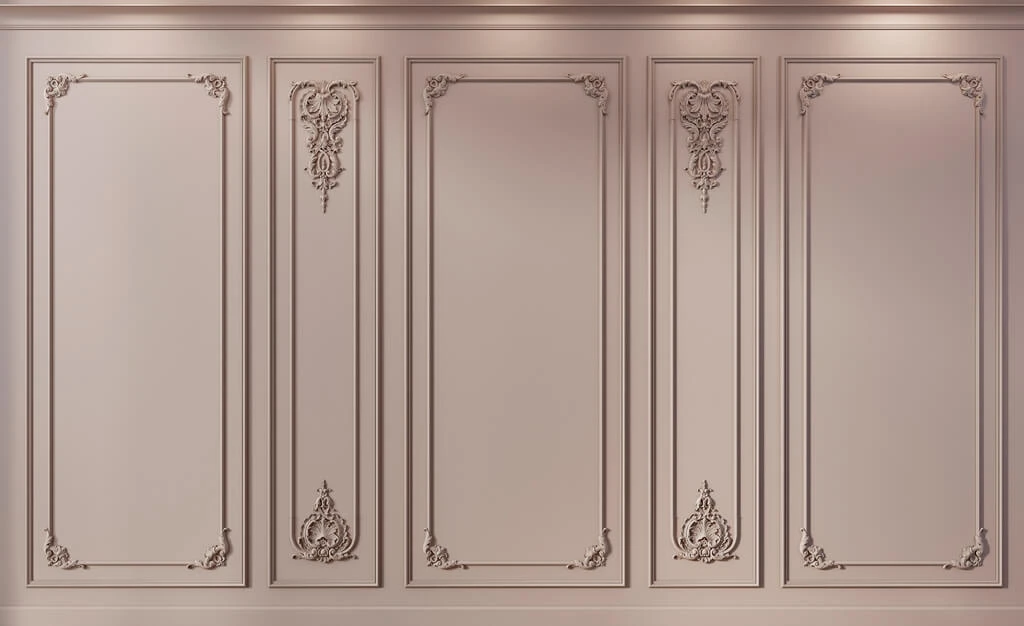
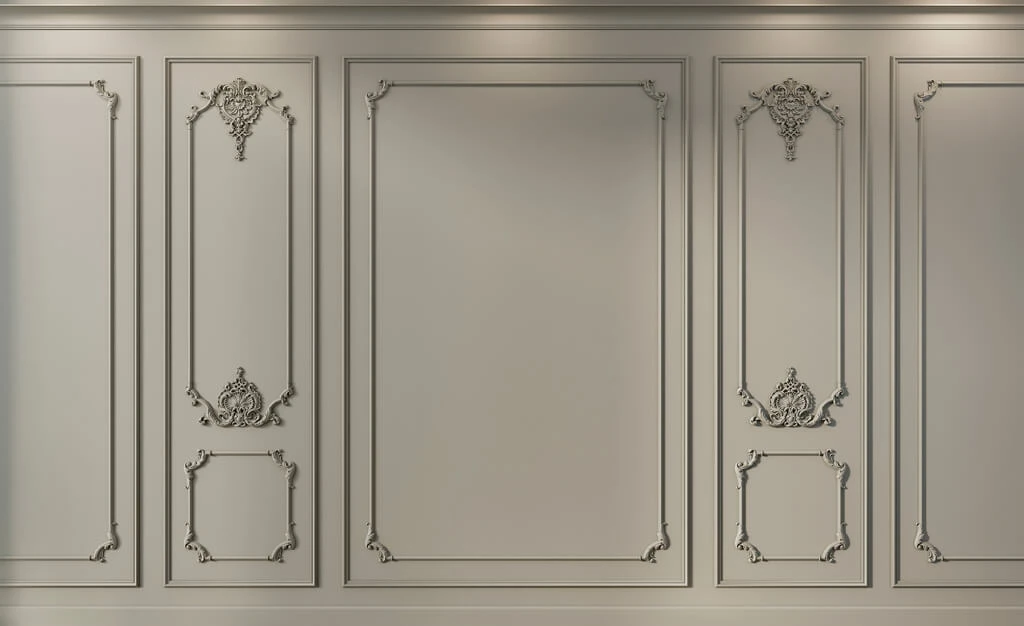
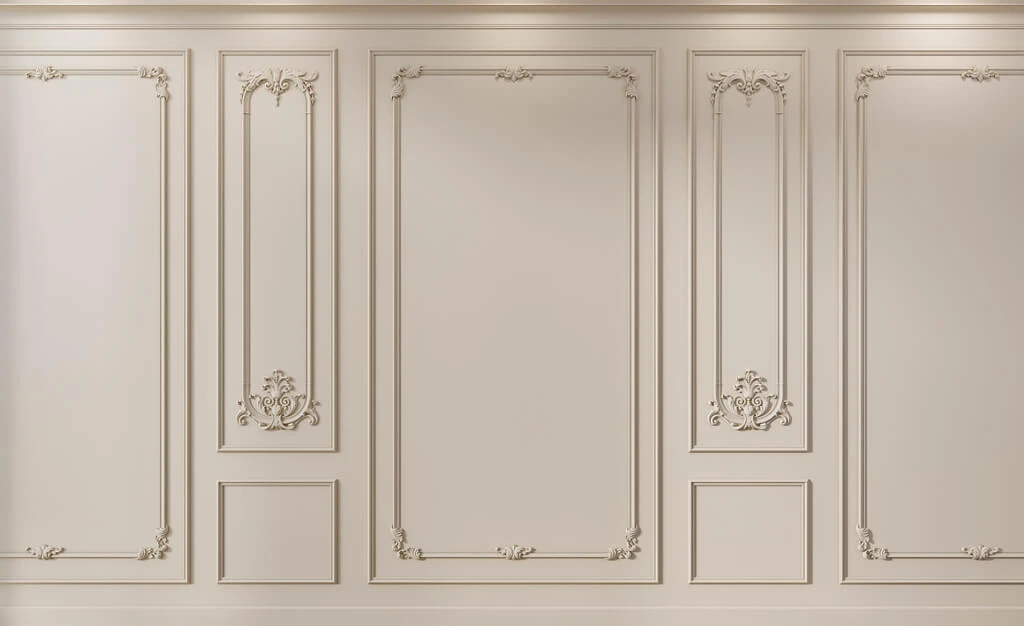
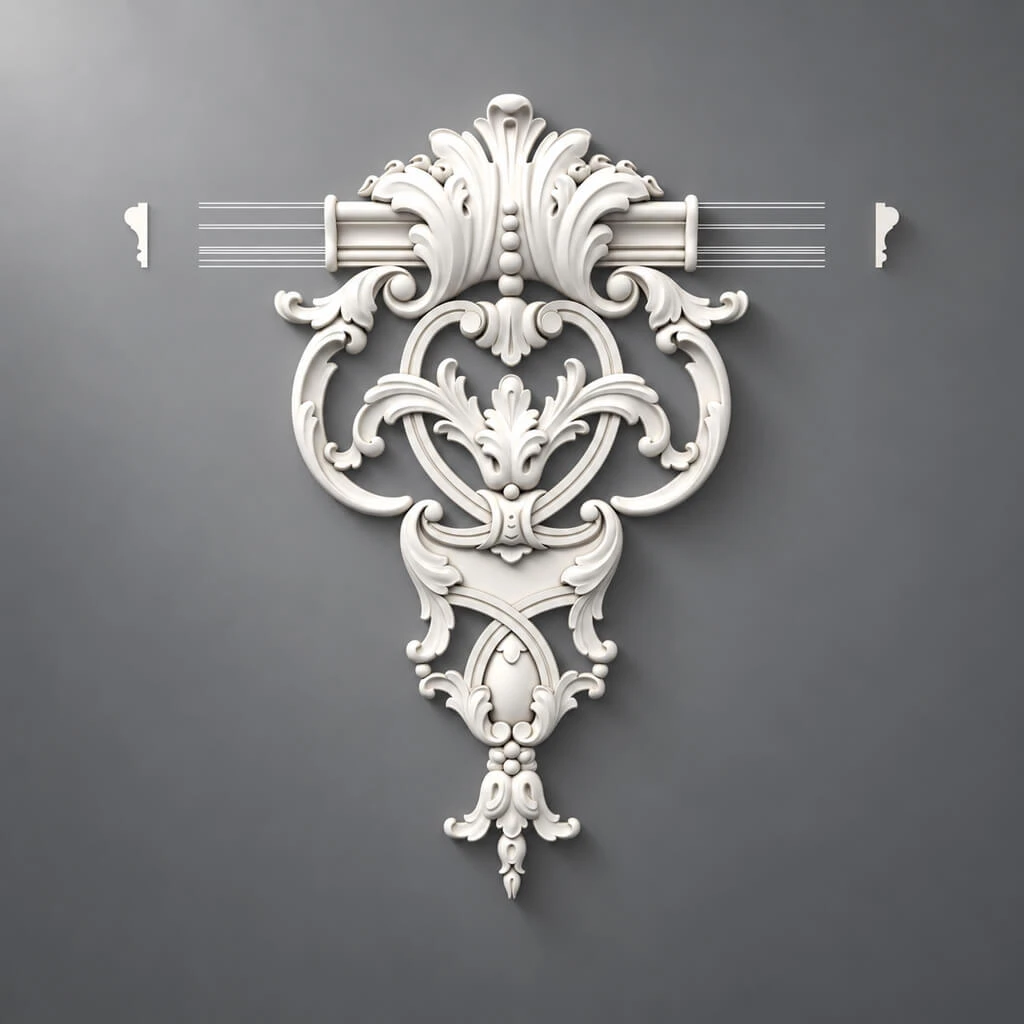
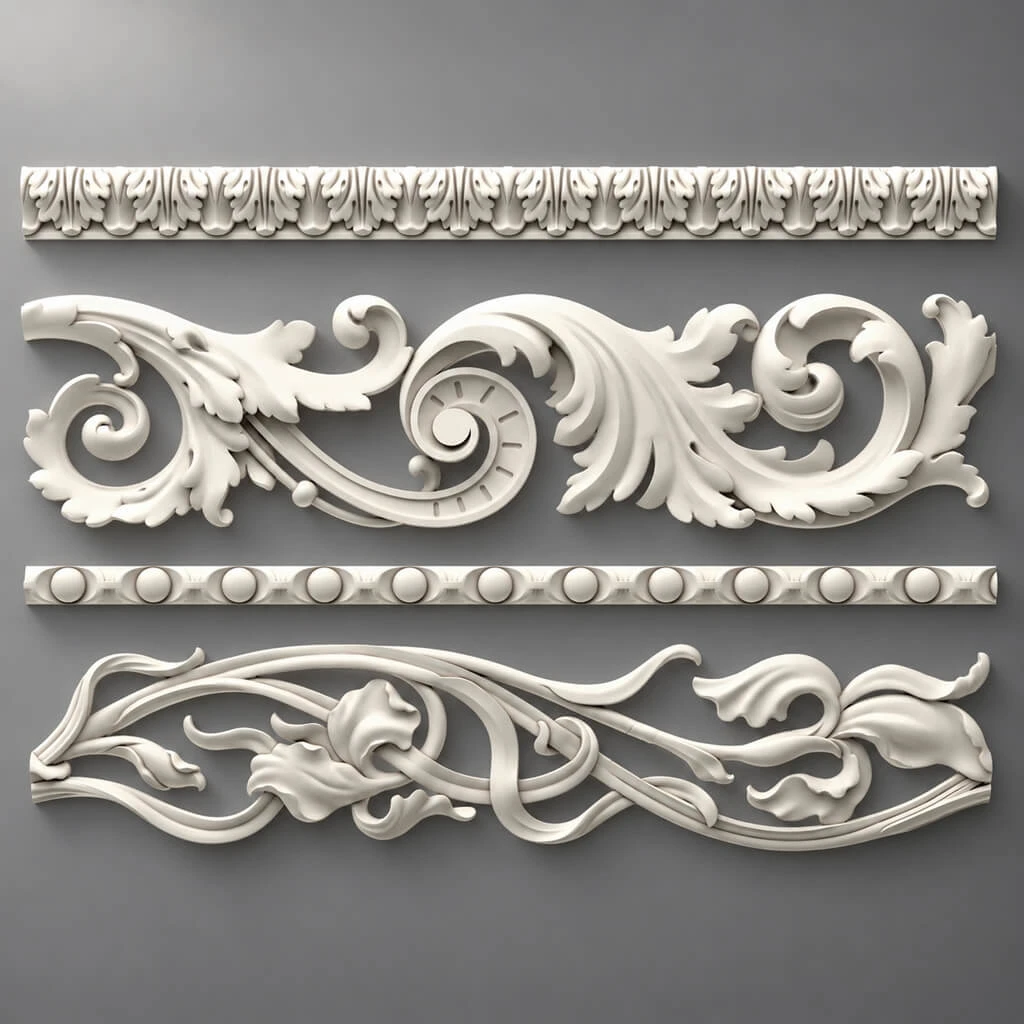

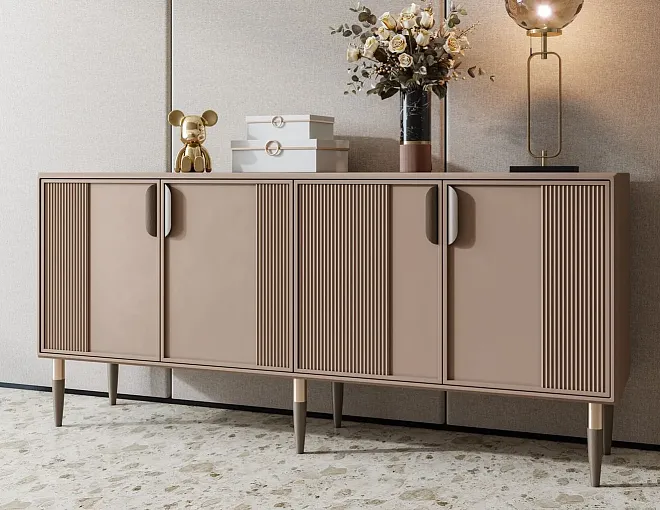

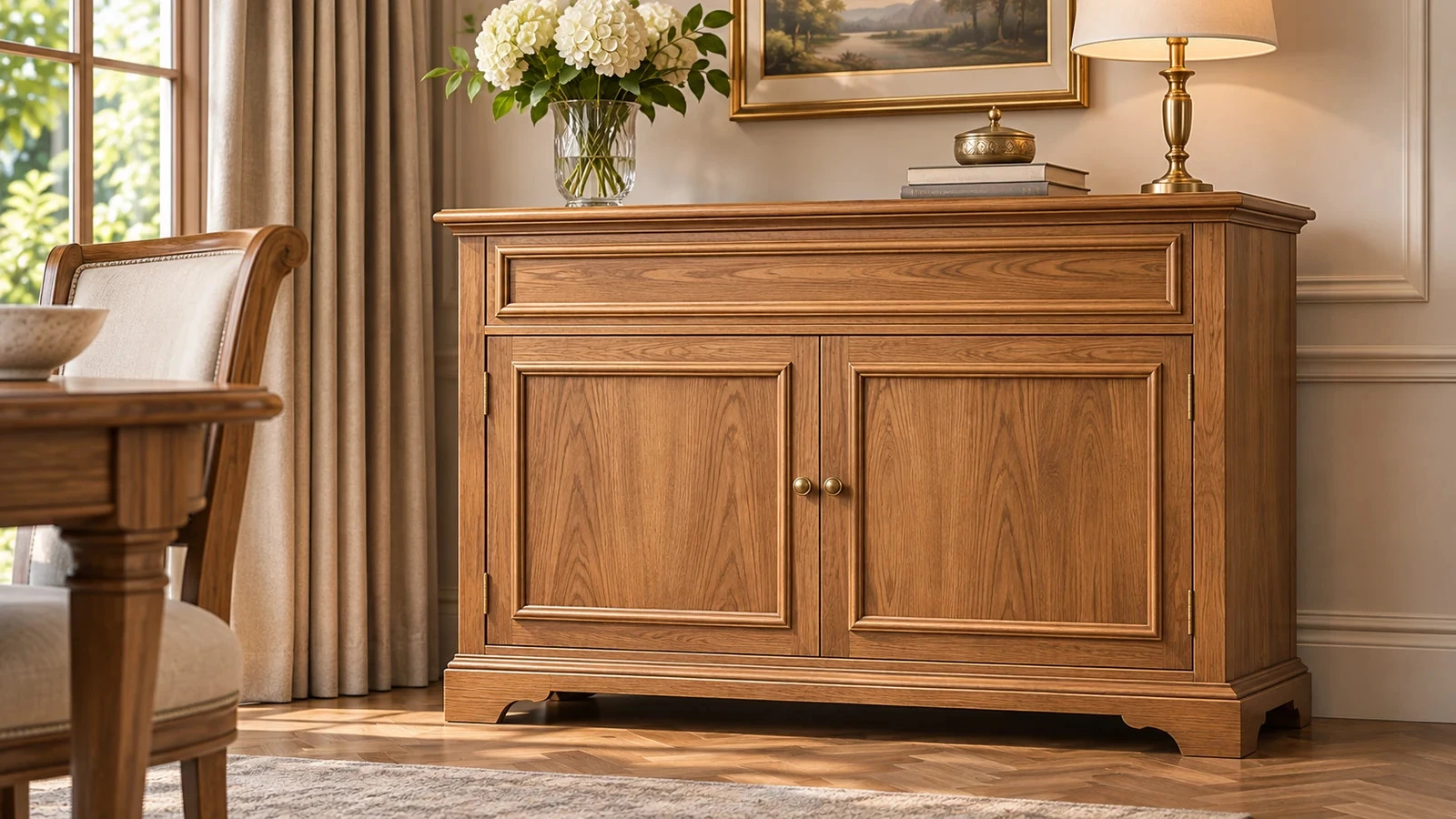
The 1400 mm wide sideboard already has two solid doors, and above them a separate decorative panel is provided that must be removed for maintenance. Each door should get a neat rectangular frame without milling the facade itself. The upper panel needs to be framed differently: its insert must fit into the provided rebate of the wooden profile rather than simply lie under the applied ornament. At first glance, ordering a few metres of identical strips is enough for such a job. However, the two types of joint impose different requirements on the moulding shape, and the same wood species does not make different sections interchangeable.
For this conditional project in Vladikavkaz, two STAVROS articles are suitable: the decorative MLD-015 with a 20 × 16 mm section and MLD-019.1 with a rebate and a 17 × 12 mm section. Both are available in solid beech and oak, 2400 mm long. Let us work out how to distribute the twelve parts between them, check the dimensions before purchase, and obtain a finished furniture composition. At the same time, the frame dimensions should not be confused with the door size, nor the profile overall dimensions with the rebate size: it is precisely these differences that determine whether the assembled product will work as intended.
Where to buy wooden mouldings in Vladikavkaz
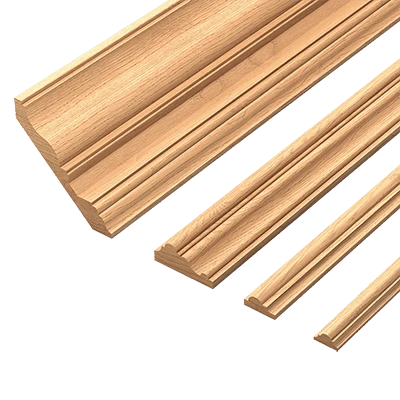
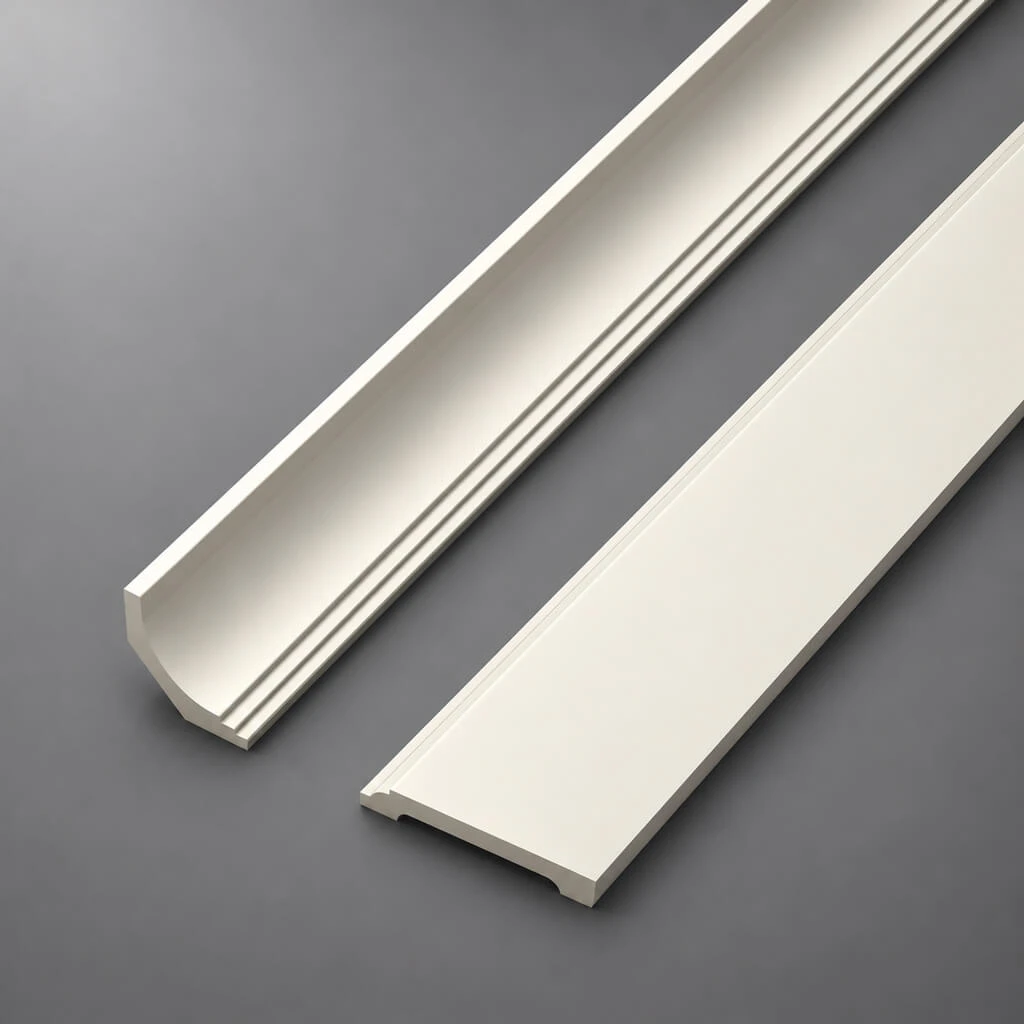
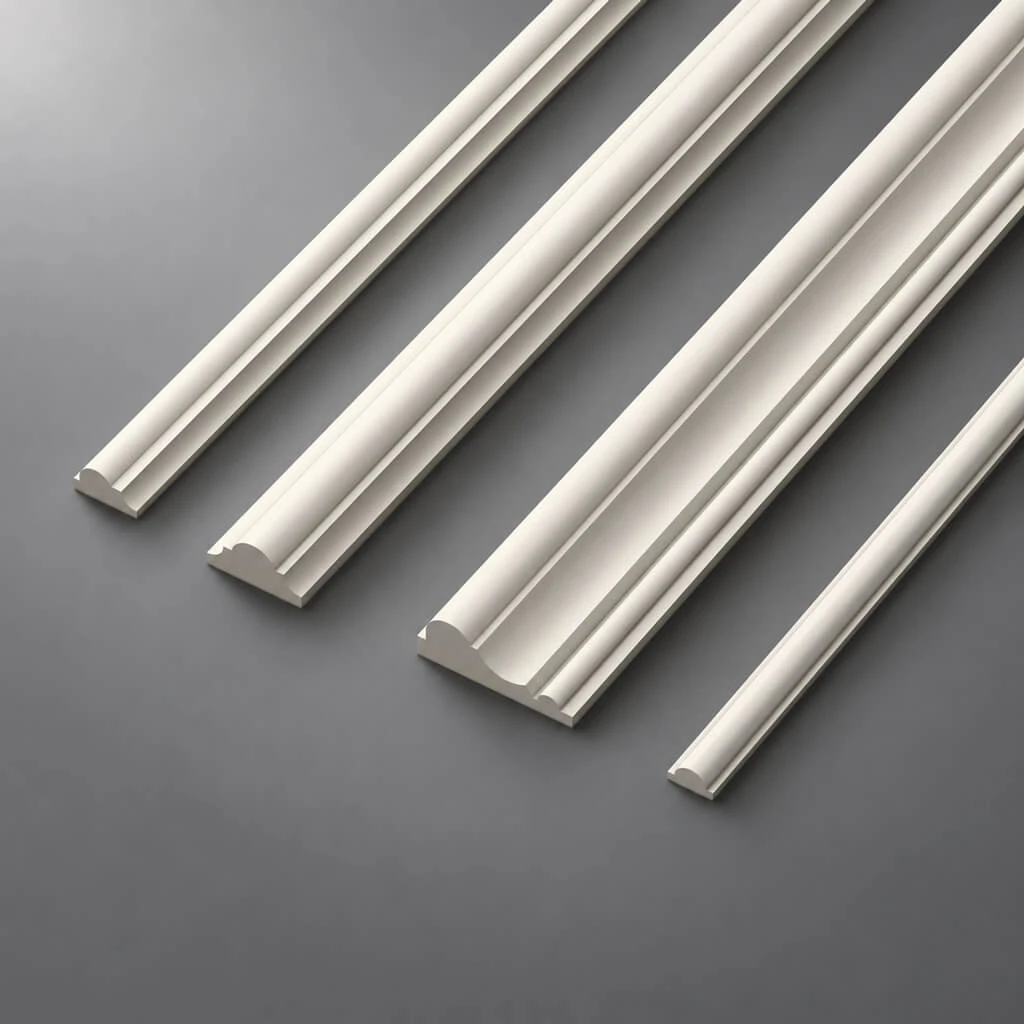
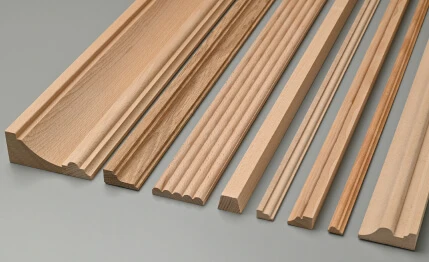
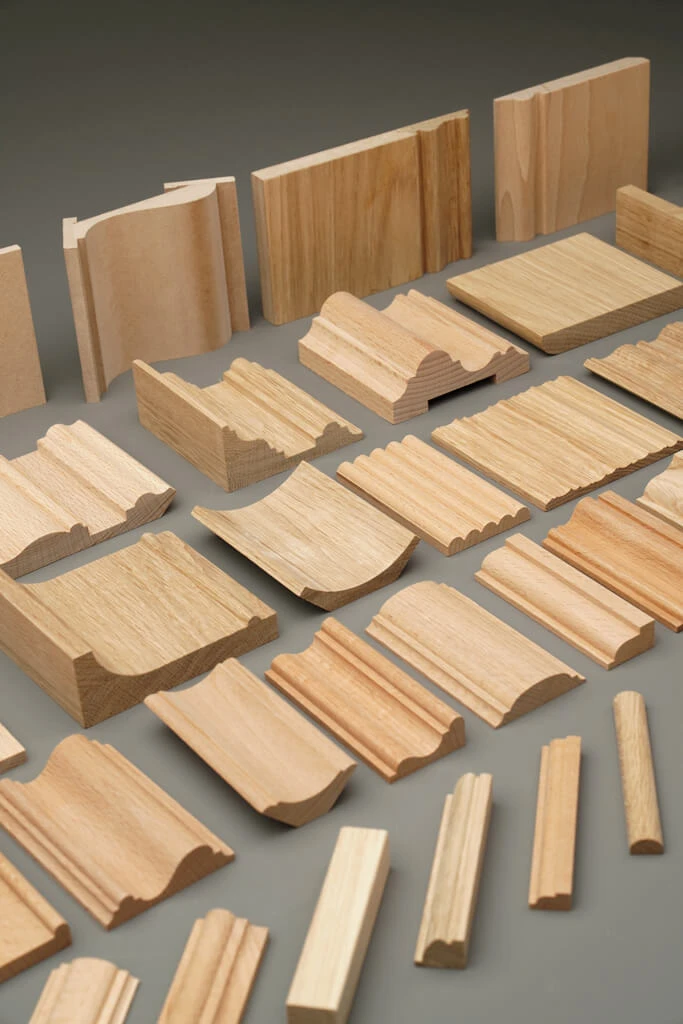
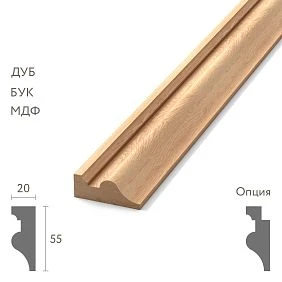
Furniture moulding is best selected by section shape rather than by the general label “wooden strip”. In a photograph, two models may appear similar, especially if only the front surface is visible, whereas their reverse sides differ fundamentally. In STAVROS mouldings catalogue you can compare solid wood products and open the cards with dimensions. For a specific frame, the end view of the profile is especially useful: it helps determine the contact surface, the protrusion above the furniture plane, and the presence of additional rebates.
If required Buy wooden molding, first prepare a brief description of the furniture task. Indicate whether the profile will be glued onto a solid door or must frame a separate insert. Record the intended wood species, the outer dimensions of the finished frame, and the number of identical elements. Based on this data, it is easier to select not only the right article but also the length of the factory blank. In Vladikavkaz, an order can be placed through the official online catalogue with delivery; a local warehouse is not assumed for this method of purchase.
One should not compare the cost of a beech or oak strip with the lowest figure in a neighbouring card without checking the material option. For a number of products, the factory length and price change depending on the version. Our calculation uses exclusively wooden blanks 2400 mm long. The section dimensions and prices relate specifically to these options. After choosing the material, add a separate line to the specification for each article, even when both will be painted the same colour. This way, when preparing the order and upon acceptance, there will be no situation where one product is mistakenly replaced by another.
For furniture restoration, it is additionally useful to attach a photograph of the facade and a photo of the end of the old profile, if it has survived. When making a new sideboard, it is better to provide a drawing and a coating sample. A photograph does not determine dimensions with sufficient accuracy, so the width of the area for the applied moulding, the position of the handles, and the protrusion of the doors should be measured. This approach is especially important when ordering from another region: it is more convenient to agree on a technical detail in advance than to redo wooden elements that have already been finished.
How wooden moulding changes the appearance of a sideboard
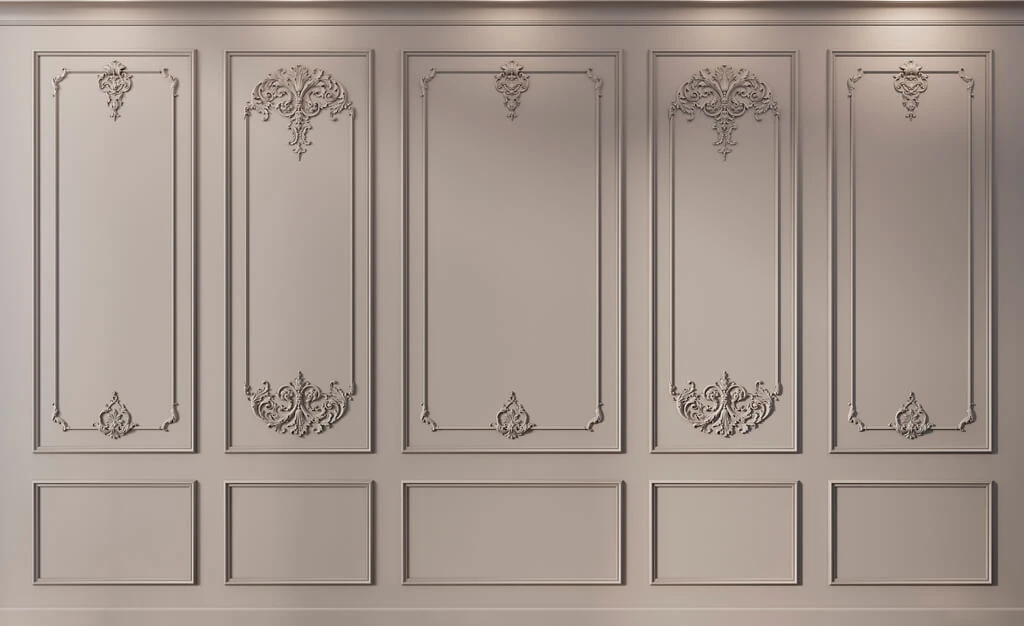
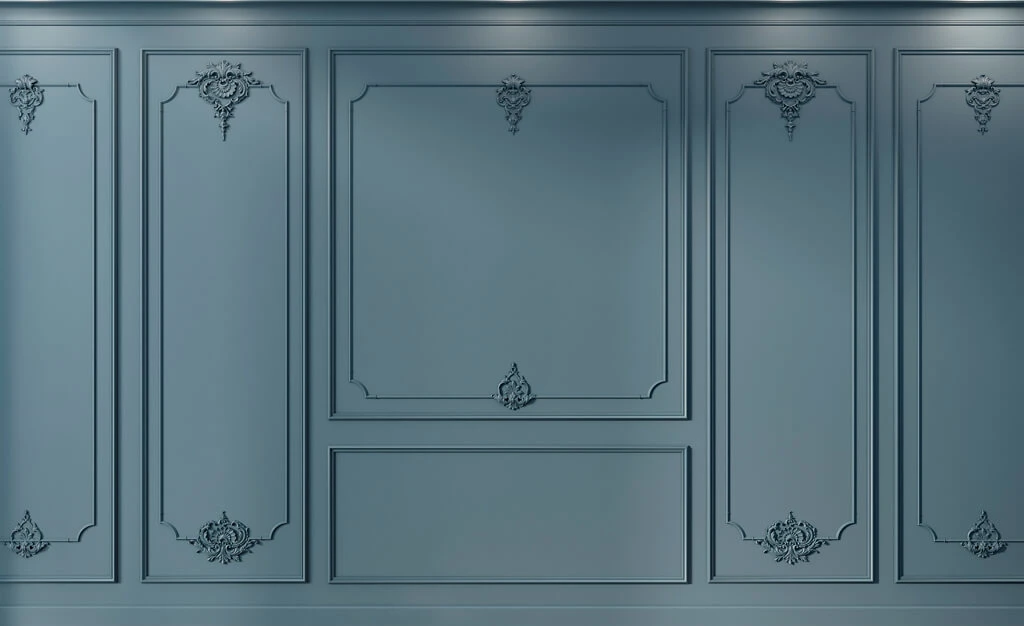
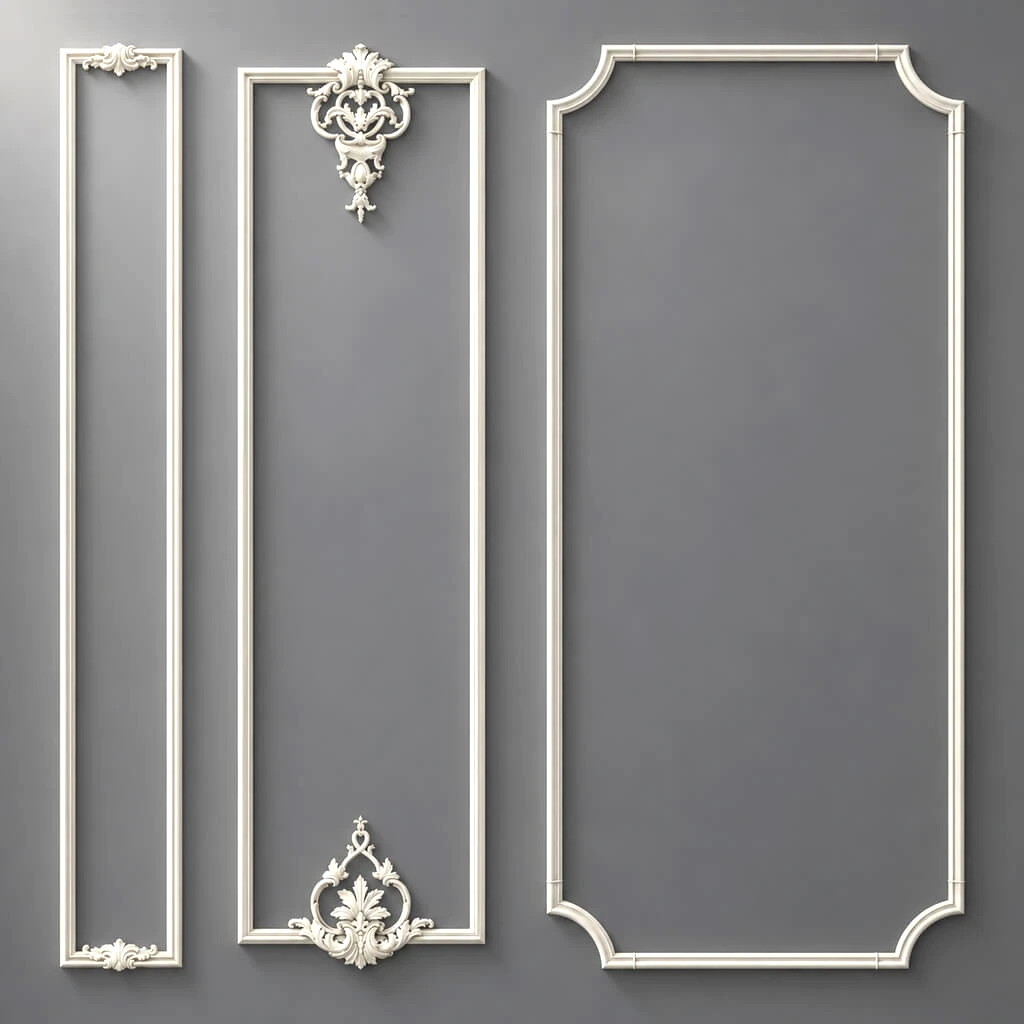
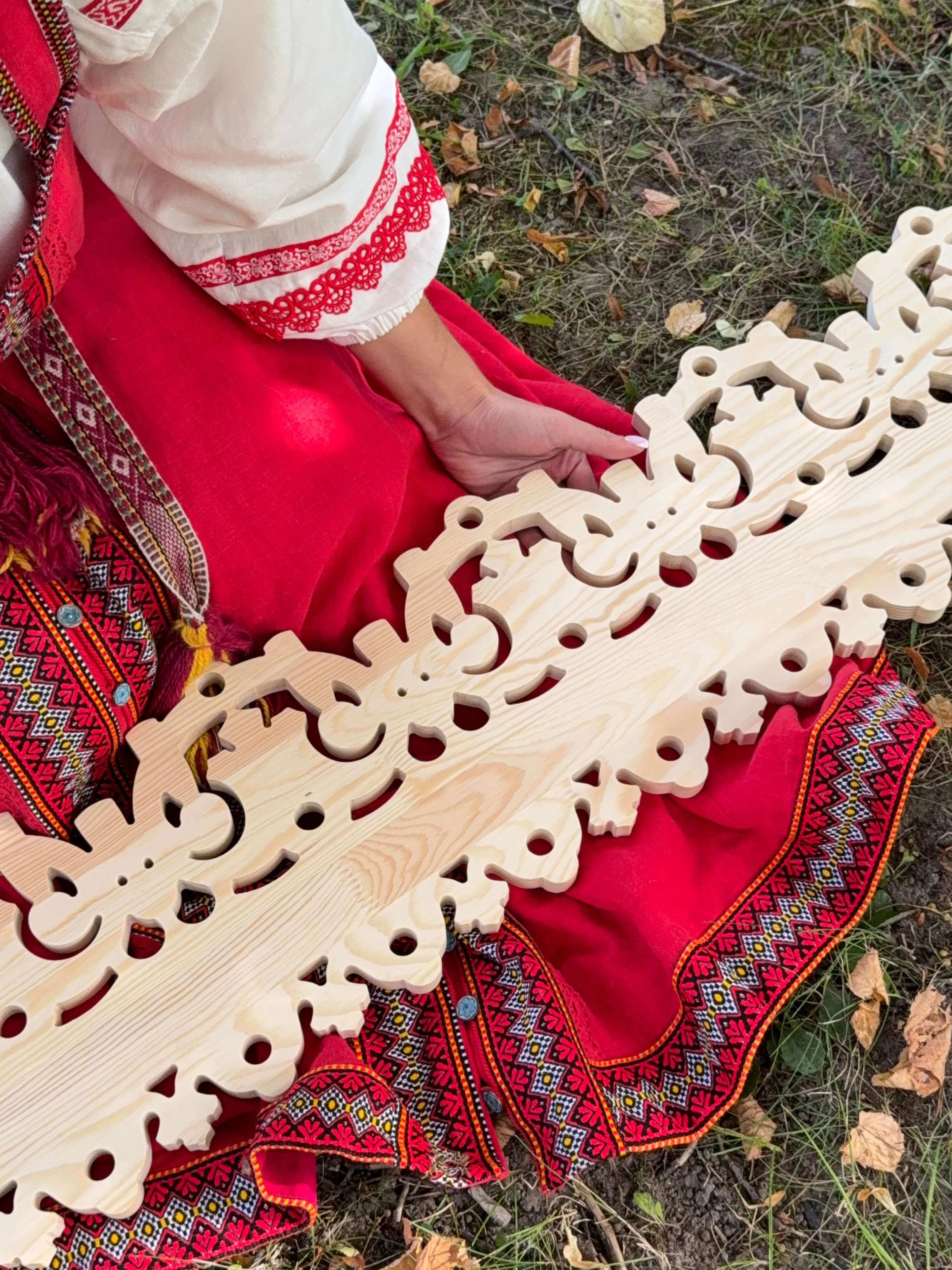
A simple smooth facade is perceived as a single surface. A rectangular frame allows it to be divided into a central field and a peripheral band. If the top and bottom marks coincide on adjacent doors, the furniture acquires architectural order. The effect is especially noticeable on a wide sideboard standing separately against the dining room wall: the viewer sees it as a whole, and even a slight mismatch in the levels of the two frames becomes obvious. Therefore, the composition of all three elements is determined first, rather than cutting an ornament for each door independently.
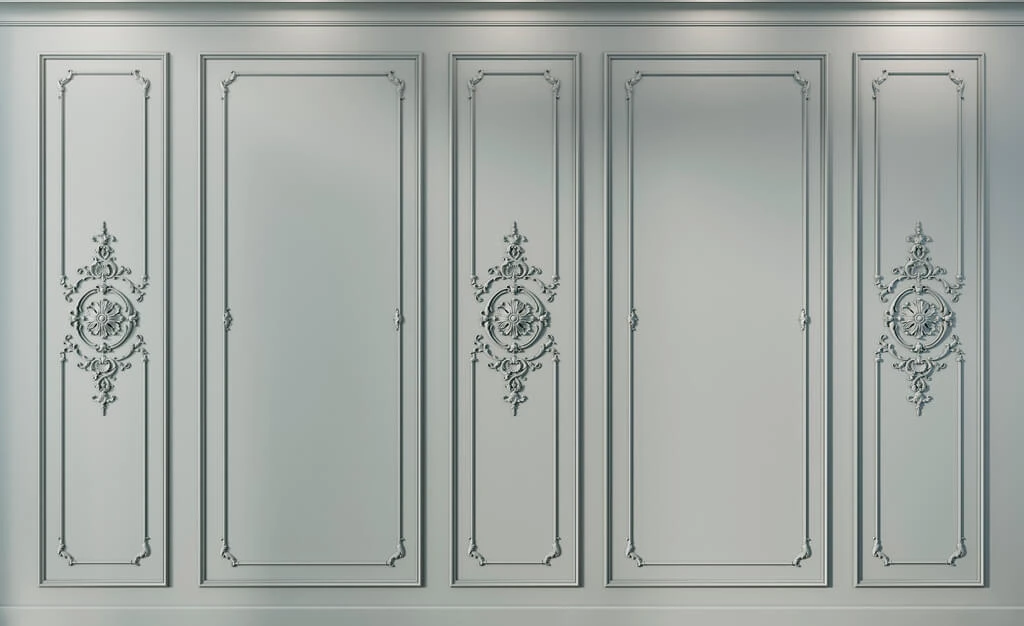
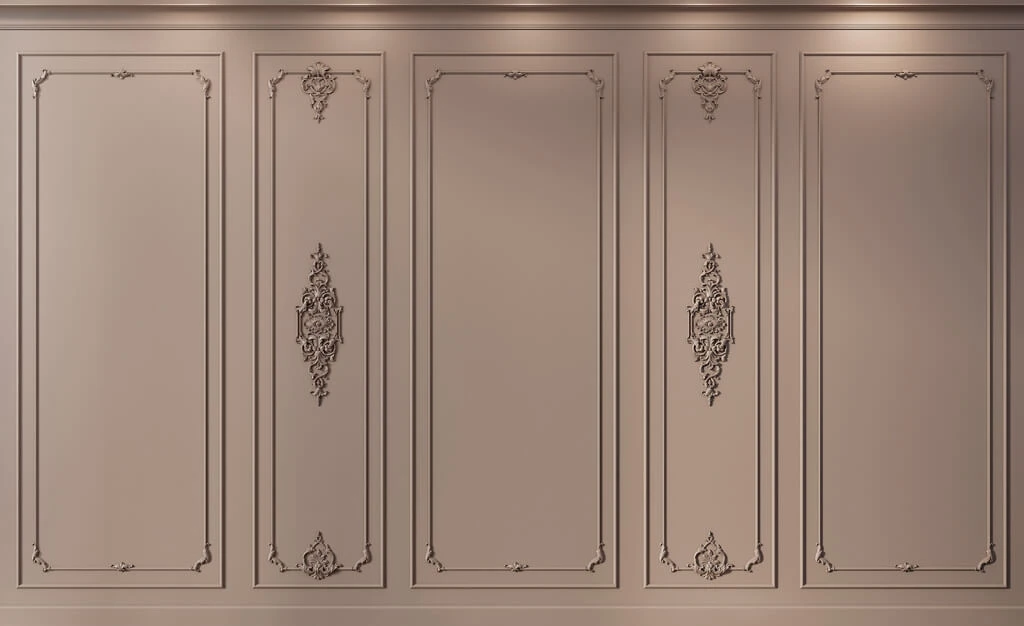
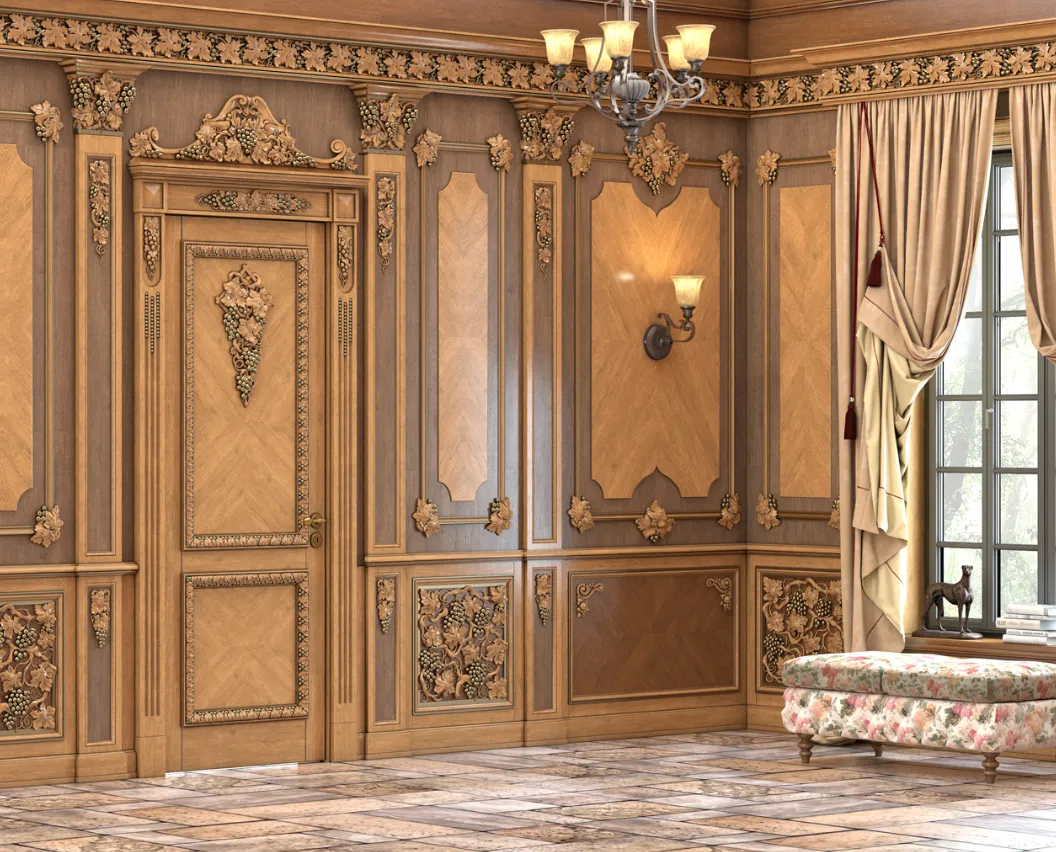
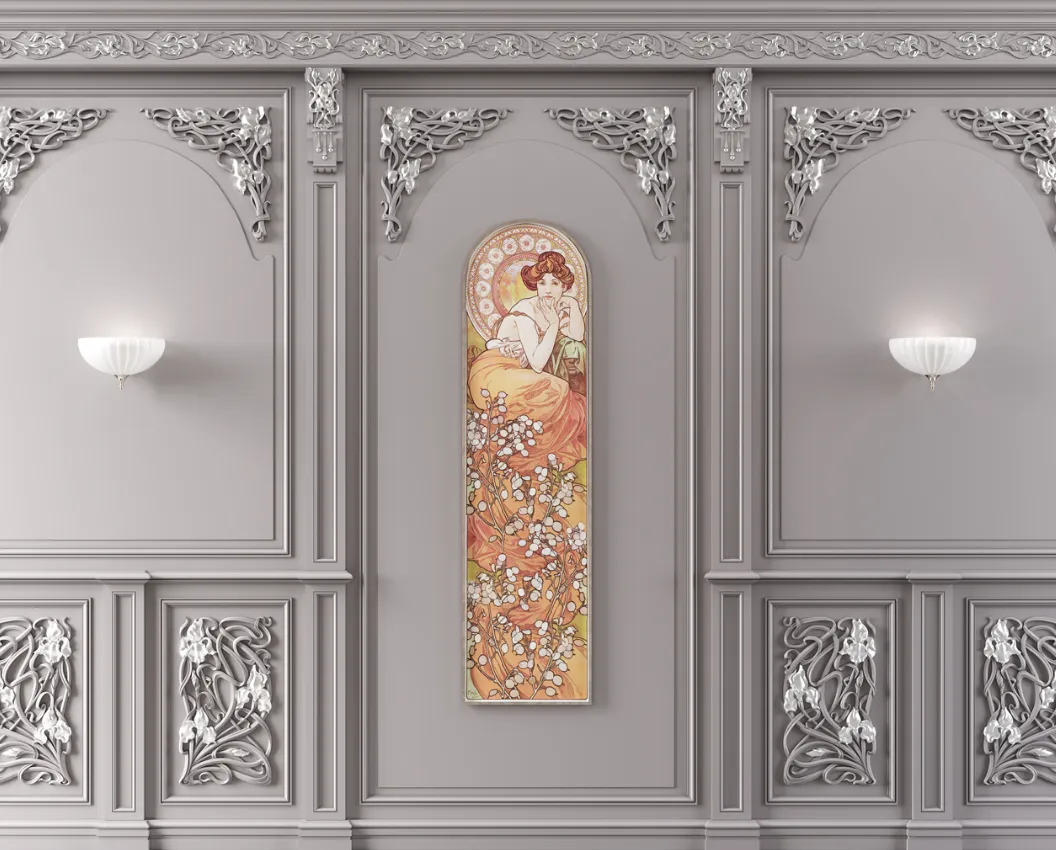
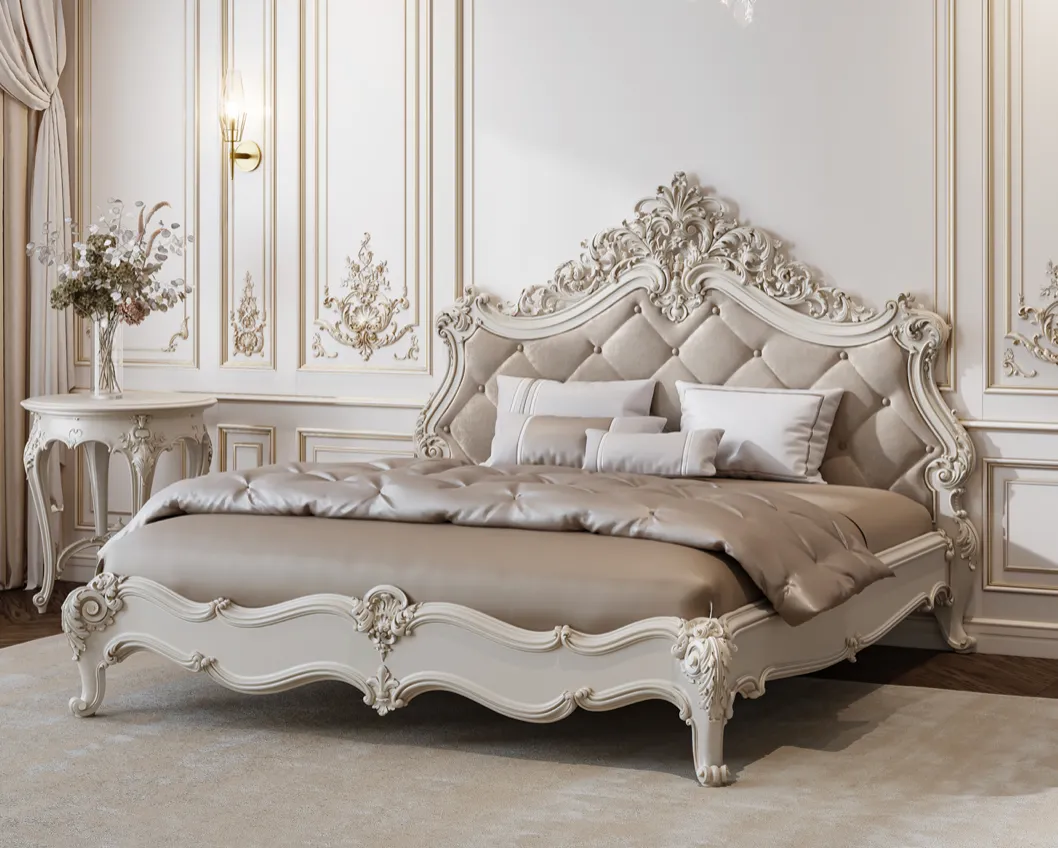
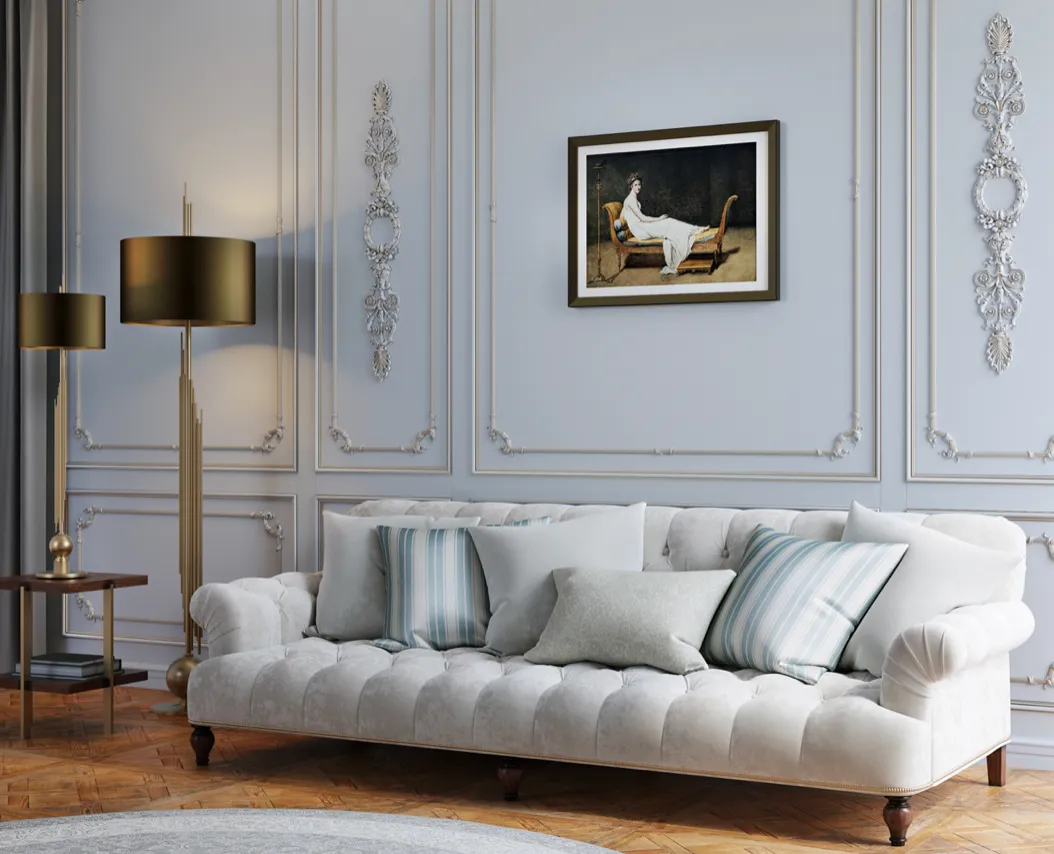
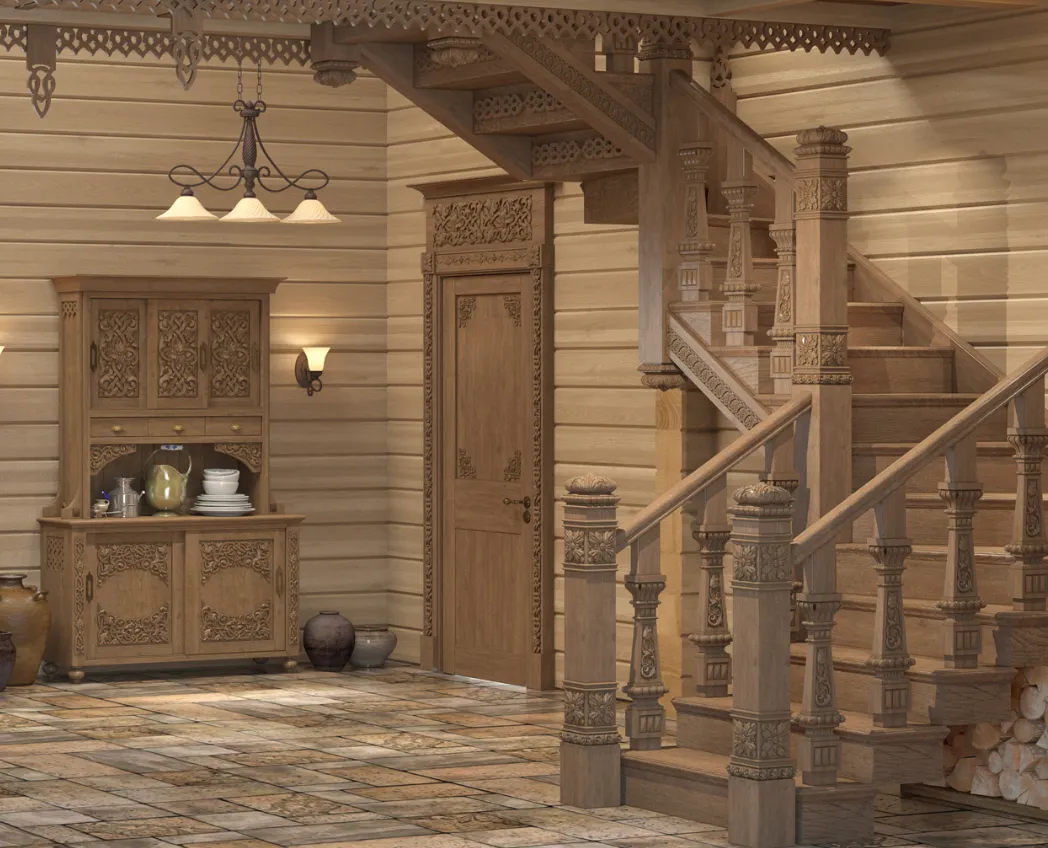
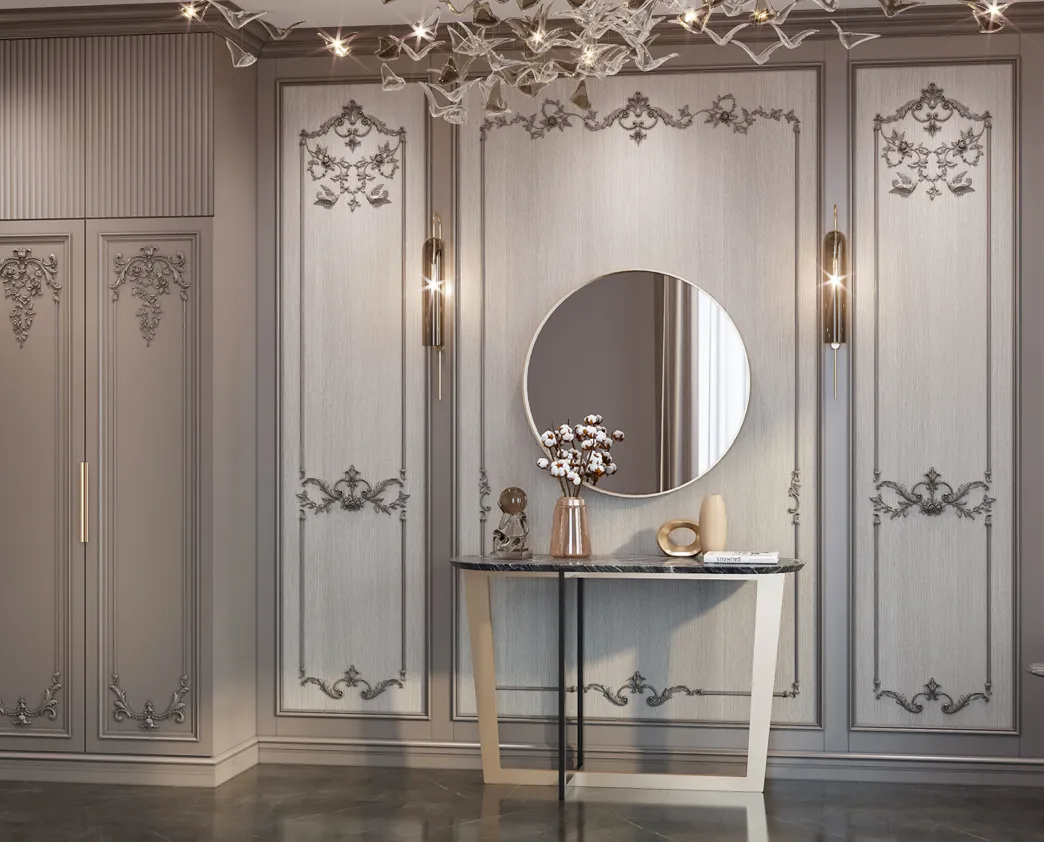
A wooden overlay works through its own volume. Side light from a window creates a shadow along the relief, and the finish emphasizes the transition between the door plane and the protrusion. In an interior with a natural floor and calm walls, this technique allows the main body to remain laconic while preserving the character of classic furniture. In a painted dining room, the same principle is applied differently: the body and profile can be the same color, and the pattern becomes visible thanks to light and shadow, without contrasting edging.
For such a finish Wooden moldings for furniture are chosen taking into account the placement of hardware. If a handle falls on the convex part of the frame, its base may not sit flush against the facade. If the profile comes too close to the hinge side, the door may catch the adjacent element when opening. On the lower part of the sideboard, the plinth protrusion is taken into account; on the upper part, the overhang of the countertop. For these reasons, the area of the central field should not be increased to the maximum size, leaving only a narrow strip at the edges.
A removable panel should be considered as an independent furniture assembly. It may cover a decorative recess in the body or an unused technical space, but its purpose and method of retention are set by the furniture design. The frame around the insert must not be glued to the fixed walls of the sideboard at the same time as the panel itself. Otherwise, the visible finish will become an obstacle when removing the part. Preserving serviceability is more important than the desire to hide every seam. With proper layout, a small structural gap is perceived as an intended line rather than an installation defect.
The same decoration method is useful for a display cabinet with a blind lower compartment, a chest of drawers in the living room, or a sideboard with a separate insert. However, the dimensions of our sideboard cannot be automatically transferred to other furniture. On a drawer, for example, a protruding profile may restrict the hand grip; on a display cabinet door, glass retention must be taken into account; and on a wardrobe with hinged facades, it is especially important to check the full travel of the leaves.
Wooden moulding MLD-015 for blind doors
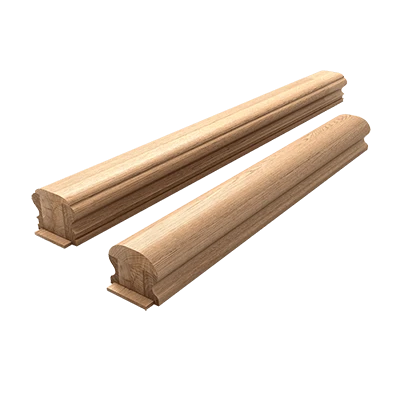
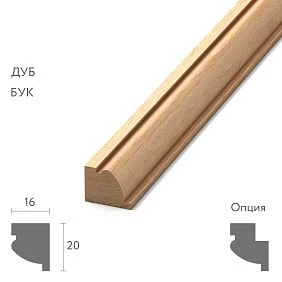
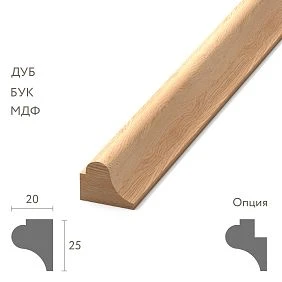
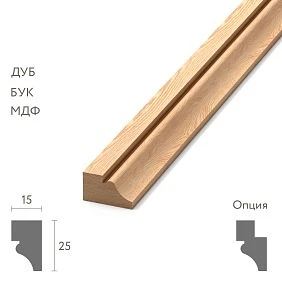
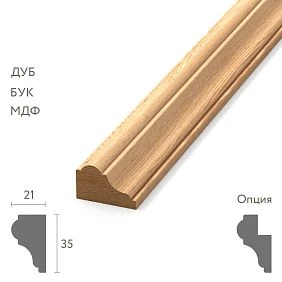
MLD-015 is 20 mm wide and 16 mm thick; in the wooden version, its factory length is 2400 mm. The STAVROS product card lists beech and oak, Prestige sanding quality, and options for re-gluing under enamel and under tinting. This allows you to choose the version depending on whether the wood texture will be hidden by opaque paint or remain visible. The specific type of supplied blank must be confirmed when placing an order, since the name of the species alone does not describe the location of all wood joints.
In our example, MLD-015 is intended for two closed rectangular frames applied to existing blind planes. The outer size of each frame is 480 × 740 mm. The overlay does not serve as the door frame and does not replace its original construction. If the old facade is damaged, the hinge fastening is loose, or there is deep delamination of the base, these defects must be repaired regardless of the decorative purchase. The moulding can emphasize the shape of the furniture, but it is not designed to restore load-bearing joints.
When deciding buy wooden moulding MLD-015, study the factory drawing and check where its working bearing part is located. At a thickness of 16 mm, the frame will noticeably protrude above the facade surface. This does not necessarily mean that the handle must protrude another 16 mm: the distance between it and the profile depends on their position. It is important that during daily opening you do not have to catch your hand on a sharp transition, and that the handle fasteners remain accessible from the back of the door.
A width of 20 mm allows you to estimate the size of the central field in advance: if the outer size of the rectangle is 480 × 740 mm and the profile is positioned with its full width inward of the frame, the nominal inner field will be 440 × 700 mm. This is a geometric estimate based on the outer dimension, not a description of the area of the flat section of the relief. The actual visible boundary may differ depending on the cross-section pattern. When marking out, use a profile sample to avoid errors at the transition between the flat and three-dimensional parts.
As of 24 November 2026, the price of one 2400 mm long strip is 1130 rubles in beech and 1560 rubles in oak. For two frames, three such items are sufficient with a correctly prepared cutting map. The product page also states the possibility of an additional rebate cut to technical specification when ordering from one hundred pieces, at a price of 185 rubles per item on the date checked. For a single sideboard this condition is significant: such modification of three strips should not be planned as a standard service. For a separate insert, it is better to consider straight away a profile in which the rebate is provided by design.
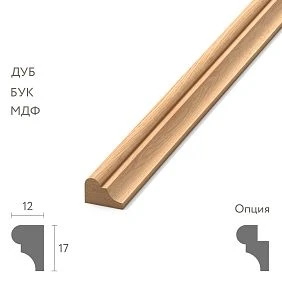
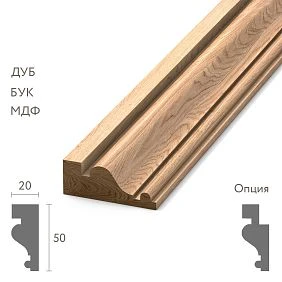
Wooden moulding with rebate MLD-019.1
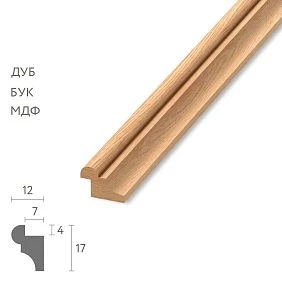
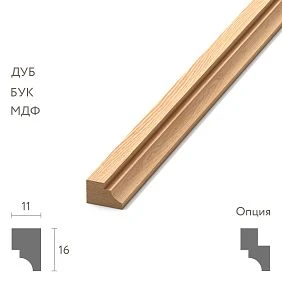
MLD-019.1 is a profile with a rebate, that is, with a longitudinal cutout that creates a seating ledge. The nominal outer cross-section dimensions are 17 × 12 mm. Wooden versions in oak and beech are supplied in 2400 mm lengths. This item is chosen for framing a separate removable panel, not for duplicating applied frames on doors. Thanks to the rebate, it becomes possible to consider an option with overlap of the edge of a standalone insert, if its parameters correspond to the drawing.
A rebate is not equivalent to a through groove and is not a ready-made clamping device. Its open side and bearing shelf determine the direction in which the insert is installed. During design, it is necessary to establish from which side the panel will enter the frame, which parts obstruct removal, and how the whole assembly will be held on the carcass. It is not enough simply to know the outer width of the profile. The width of the ledge, its depth, the remaining material thickness at the rebate and the shape of the adjoining surface are required. These dimensions should be obtained from the factory drawing of MLD-019.1 and checked on a real sample. Arbitrary values must not be substituted for them.
Before buy wooden moulding with rebate, determine the material and thickness of the insert. In a wooden panel, not only the nominal size of the blank matters, but also the change in dimensions with fluctuations in humidity, especially across the grain. If the insert is to be held with the possibility of slight movement, its edges must not be rigidly clamped on all sides. The type of joint is chosen based on the whole structure, not only on the beauty of the face profile. If necessary, the removable frame and insert are designed by a furniture maker who knows the properties of the chosen material.
For the calculated sideboard, the outer size of the frame is 1120 × 340 mm. It defines the lines of the long and short cuts. The visible opening, provided that the full 17 mm width is directed inward, will nominally be 1086 × 306 mm. But the size of the insert itself will depend on the seating rebate, the clearances provided and the method of retention. You cannot order an insert measuring 1086 × 306 mm simply because this figure was obtained by subtracting two profile widths. First a dry assembly is carried out and the actual seating field is measured.
The price of a wooden strip as of November 24, 2026 is 1,120 rubles for beech and 1,410 rubles for oak. When selecting the material in the product card, you must specify the solid wood version with a length of 2,400 mm. The frame in question requires two factory-made strips. The price includes the profile itself; the insert, the fasteners of the removable assembly, the finish, and the assembly work are separate items.
How a standard molding differs from a profile with a rebate
A standard overlay molding and a product with a rebate can be compared by purpose, not only by the price per linear meter. For the door, there is a solid base that is already a functional front. Here, a decorative contour must be placed and securely fixed to the surface. For a separate frame around the insert, an additional geometric task must be solved: the edge of the panel must occupy the calculated position relative to the face of the decor. That is precisely why the two SKUs are used on different parts of our sideboard.
| Parameter | MLD-015 | MLD-019.1 |
|---|---|---|
| Purpose in the project | Overlay door frames | Removable panel frame |
| Width | 20 мм | 17 мм |
| Thickness | 16 мм | 12 мм |
| Wooden strip length | 2400 мм | 2400 мм |
| Materials in the calculation | Beech, oak | Beech, oak |
| Feature | Decorative profile | Longitudinal rebate |
| Outer frame | 480 × 740 mm | 1120 × 340 mm |
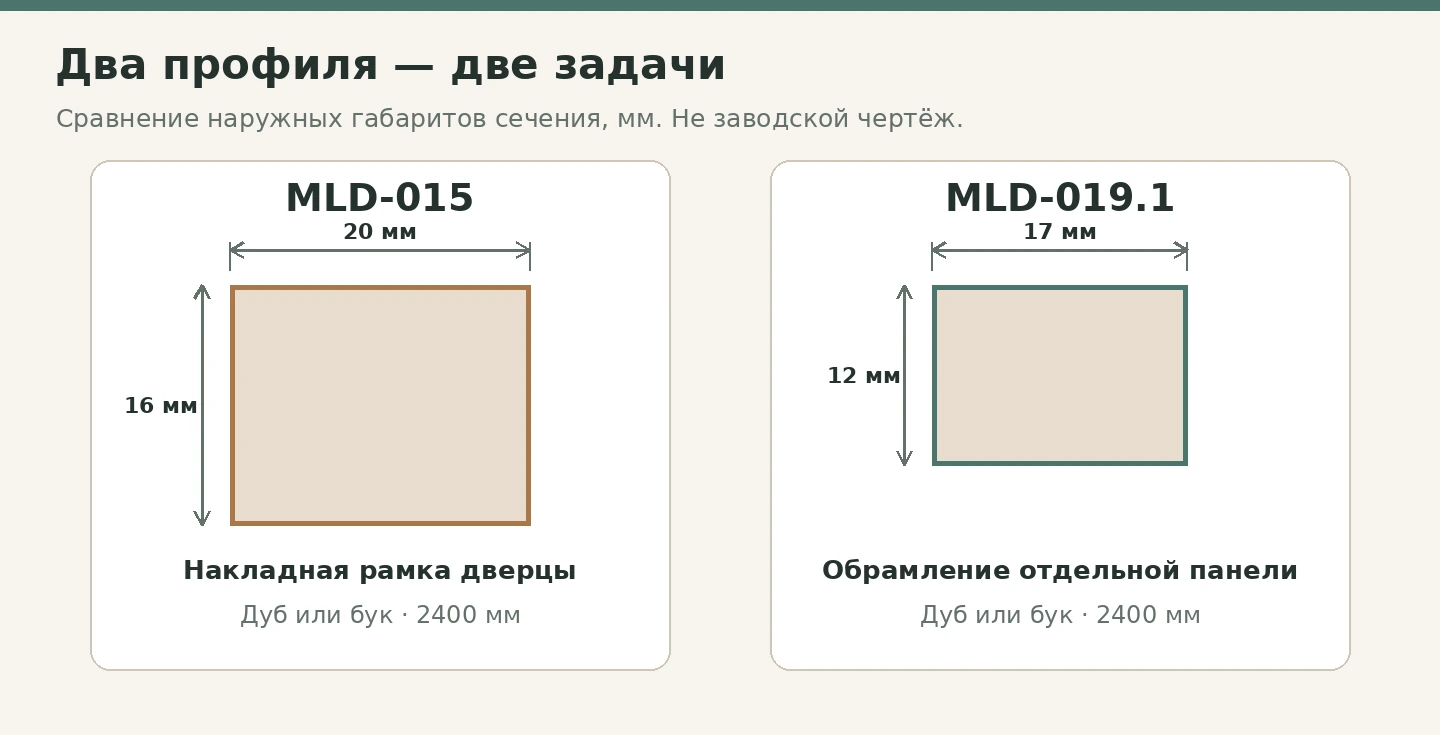
MLD-015 and MLD-019.1 differ by three millimeters in width and four millimeters in thickness. These values seem small, but when switching from one type of trim to another, the surface changes level. If you try to replace one long side of the upper frame with an offcut from the lower door, the corner will no longer be aligned across the entire section. Even if the face line is adjusted by sanding, the missing or differently positioned rebate will disrupt the fit of the insert.
Two identical frames on the doors must be made from the same profile. The upper contour may have a different pattern if the difference is meaningful: it performs an independent function and is separated from the lower fronts by structural seams. This solution is appropriate when the vertical boundaries of the doors support the symmetry of the cabinet, and the horizontal panel ties the composition together. To assess the transition, it is useful to make a trial layout of short sections on the furniture. You should look from a normal distance, not only up close: different widths are sometimes perceived as harmonious, whereas a difference in thickness can create an unwanted shadow.
When replacing damaged trim on an existing sideboard, first find out why the previous profile had a rebate. Perhaps the old decorative element covered the edge of the insert, and a plain batten will not provide the required overlap. If, however, there is a solid surface under the old frame and there is in fact no insert, there is no need to complicate the construction. Inspecting the back of the furniture and a drawing will help distinguish these cases without damaging the parts.
Oak or beech mouldings: how to choose the material
Oak is chosen when a pronounced natural texture is important and the finish involves a clear or semi-transparent coating. In an open wood grain pattern, the joints of the four elements become part of the composition. On a single door, it is worth selecting adjacent sections by grain direction and tone. This does not mean that all the strips will necessarily be identical: natural solid wood has natural variations. For a light oak sideboard, it is better to match a sample of the future finish with the already finished furniture than to choose a shade from a photo on a screen.
Beech is often considered for opaque enamel when the main expressive means is the shape of the profile. Its wood grain is usually calmer, and after applying an opaque coating the difference from oak becomes less significant for the overall appearance. However, the final quality also depends on surface preparation, primer and the painting technology itself. You cannot expect enamel to hide a poorly made corner joint, a deep tool mark or protruding dried glue.
If planning oak furniture moulding, choose a wooden version of the same species for the upper panel. This will reduce the risk of a sharp visual difference between the three frames with a clear finish, although it does not guarantee an absolute colour match. For a painted sideboard, different species can technically be considered, but only after checking the compatibility of the entire finishing system and the operating conditions. In the main estimate we compare fully beech and fully oak sets so that the buyer can easily understand the difference in cost.
A separate issue is the quality of the lamination. The product pages for both mouldings offer options for enamel and for tinting. You should not draw conclusions about the structure of the blank from the word “solid” alone: the choice of version is important, especially if the wood grain remains visible. When ordering a finish with an open texture, agree in advance on the acceptable appearance of joints and transitions. A finish sample made on a short section of the relevant material shows the result more accurately than a colour chart.
The practical choice also depends on the furniture you already have. If the doors have a natural oak finish, compare not only the colour but also the direction of the grain. If the cabinet was painted long ago, first assess the condition of the old layer and whether a new system can be applied. During restoration it is sometimes more sensible to repaint both doors completely so that the new moulding does not stand out as a separate strip. For a new sideboard, it is easier to prepare all three frames and the insert at the same time, using one agreed finishing scheme.
Original sideboard design: what to measure before buying
Let us imagine a freestanding sideboard 1400 mm wide with two lower solid doors and a separate horizontal removable panel above them. The project is hypothetical: the frame dimensions are given for purchasing calculations, but the height of the entire carcass, the dimensions of the door leaves, the hinge positions and the method of retaining the panel must be determined by the furniture drawing. Before transferring the dimensions to your own furniture, verify them on site. If the front has not yet been manufactured, the frame dimensions can be agreed together with the door leaf size.
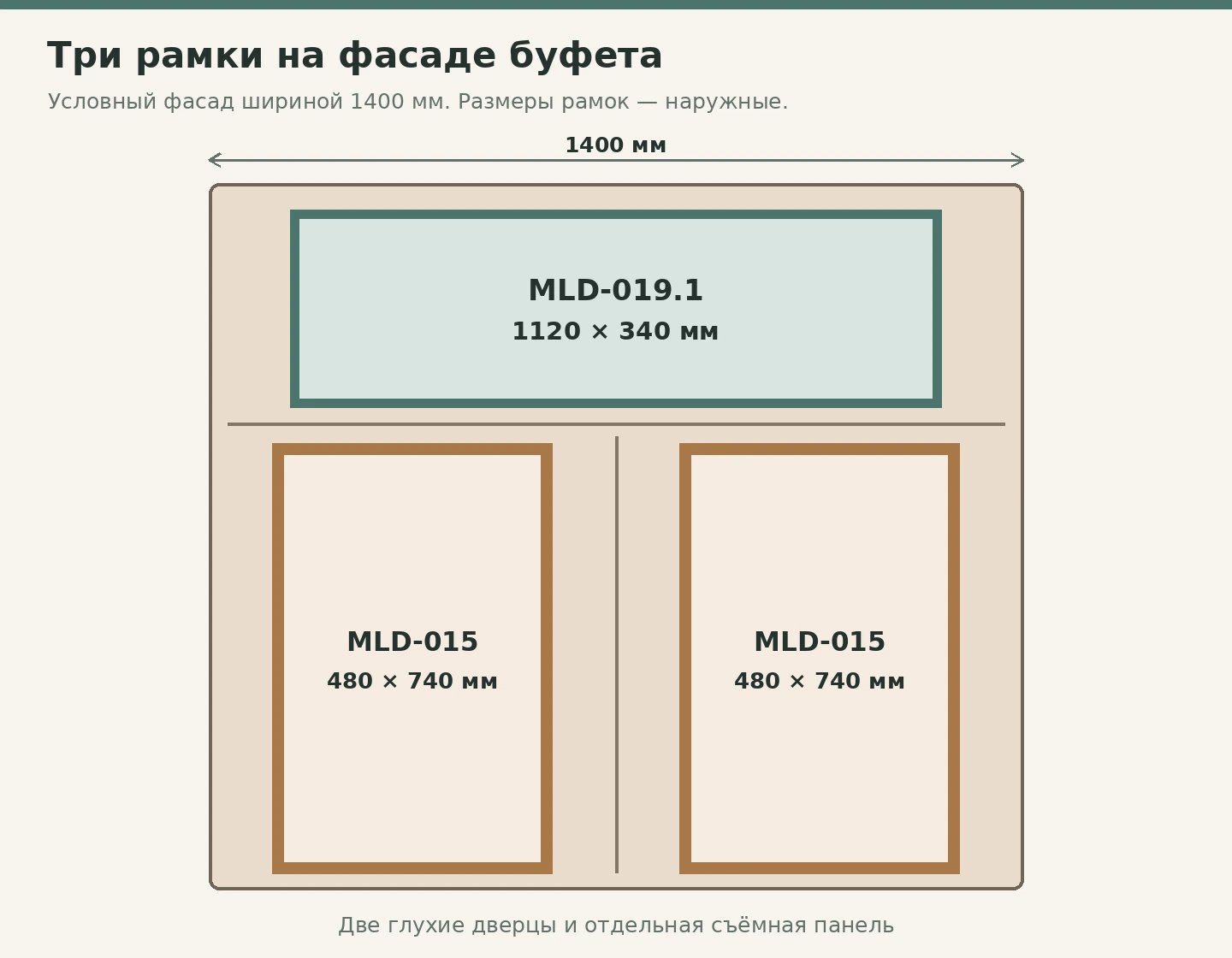
It is convenient to start measuring with the fronts in the closed position. Measure the width and height of each leaf separately, even if the doors are identical according to the drawing. Note the position of the handles, the gaps between the doors and the distance to the side posts of the carcass. If the leaves already have milling, determine the boundaries of the flat surface on which the overlay profile can actually be located. Measuring the outer width of the door is not enough: the relief edge may fall within the intended adhesive strip.
Then check the furniture in the open position. Make sure there is free space above the intended overlay when the door moves, and that the profile does not fall into the path of the adjacent handle. Pay special attention to the internal corners near the side posts and the central gap. During the final test, it is useful to temporarily fix a piece of equal thickness in the intended location and slowly check the full travel of each door. This reveals incompatibilities that the closed view of the furniture does not show.
Two groups of dimensions are needed for the top panel. The first describes the visible frame on the front, the second describes the insert itself and its seating position. Provide access to the panel fasteners, space for a hand when removing it, and the ability to take it out of the carcass without damaging the lower doors. Do not assume that the panel necessarily slides forward: the direction of removal is determined by the chosen design. If a ready-made fixing system already exists, the frame is subordinated to it, rather than changing the operation of the assembly for the sake of a decorative part.
Two overlay frames on solid doors
The outer rectangle of each frame is 480 mm wide and 740 mm high. Two horizontal and two vertical sides form a perimeter of 2440 mm. For two doors we get four horizontal parts of 480 mm each and four vertical parts of 740 mm each. The lengths are determined by the outermost vertices of the cuts, if the usual 45-degree jointing of rectangular parts is used.
In practice, it is worth introducing simple designations: left door, right door, top, bottom, left and right sides. Each part is marked on the reverse surface, since the profile has a face side and a support side. Horizontal blanks of equal length are not necessarily interchangeable after cutting: the direction of the cuts and the selection of wood grain may differ. Marking is especially useful when making frames from oak with subsequent clear finishing.
To make the two doors look identical, prepare a marking template for the outer contour. Install it first on one door, then on the other, aligning it with the corresponding edges. If the leaves differ by a few millimetres, agree on the visible offsets and the alignment of the horizontals before cutting. Do not compensate for unequal front geometry by randomly shifting individual sides of the frame. First choose the method of aligning the whole composition, then transfer the decision to the parts list.
When placing MLD-015, pay attention to the 16 mm protrusion, especially if the sideboard has massive handles. The position of the frame must leave a sufficient flat area for mounting the hardware. The nominal width of 20 mm does not replace checking the actual support surface: a strip drawn on paper may overlap free space, while the real face shape will create additional shadow or protrusion. A preliminary trial fit is useful for both doors, even when the dimensions are identical.
Framing a separate removable panel
The upper rectangle has external dimensions of 1120 × 340 mm. It contains two longitudinal sides of 1120 mm each and two transverse sides of 340 mm each. Their total length is 2920 mm. Unlike door frames, these parts are made from MLD-019.1. The groove on all four sides must face the side specified in the drawing relative to the insert. If the profile is flipped during cutting, the corners may visually align, but the seating shoulders will no longer form a continuous contour.
When making a new panel, first choose the insert design and the principle of its fixing. If the panel consists of a wooden base with a decorative facing, check not only the overall thickness but also the shape of its edge. For an insert that must be removed separately from the frame, access to the retaining parts will be required. If the entire framed assembly is removed as a whole, the frame, insert and fasteners must work together as a single assembly, and the outer contour must not catch on the fixed parts of the sideboard.
The size 1120 × 340 mm is the external size of the frame, not the ordered size of the insert. After checking the drawing, it is useful to cut a test template of the future insert from an inexpensive material. Fitting such a template shows the accessibility of the corners and helps assess whether the working support will be sufficient. If a technological clearance is required for the movement of the wooden panel, it is determined taking into account the material and grain orientation. The finished insert should not be forced in by deforming the thin edges of the profile.
Schedule of twelve wooden parts
After the external dimensions are approved, prepare a separate schedule for each article number. It will be needed when ordering, cutting and checking parts on the workbench. The lengths are finished lengths, i.e. they do not include allowances for end trimming and test cuts. Do not confuse them with the length of rough blanks: if a margin is left during the initial cutting, it must be added only to the material consumption calculation.
| Article | Purpose | Finished length | Quantity | Total length |
|---|---|---|---|---|
| MLD-015 | Door horizontals | 480 мм | 4 | 1920 мм |
| MLD-015 | Door verticals | 740 мм | 4 | 2960 мм |
| MLD-019.1 | Long sides of the panel | 1120 мм | 2 | 2240 мм |
| MLD-019.1 | Short sides of the panel | 340 мм | 2 | 680 мм |
| Total | Three frames | — | 12 | 7800 мм |
So, two overlay frames require 4.88 m of MLD-015 moulding, and a separate panel requires 2.92 m of MLD-019.1. The total finished length is 7.8 m. However, the products cannot be purchased as one combined quantity. Each section is calculated separately: the first group requires a minimum of three factory lengths, the second a minimum of two. Even if the remaining length of one article number were sufficient for the full contour of the other, such a substitution would disrupt the construction.
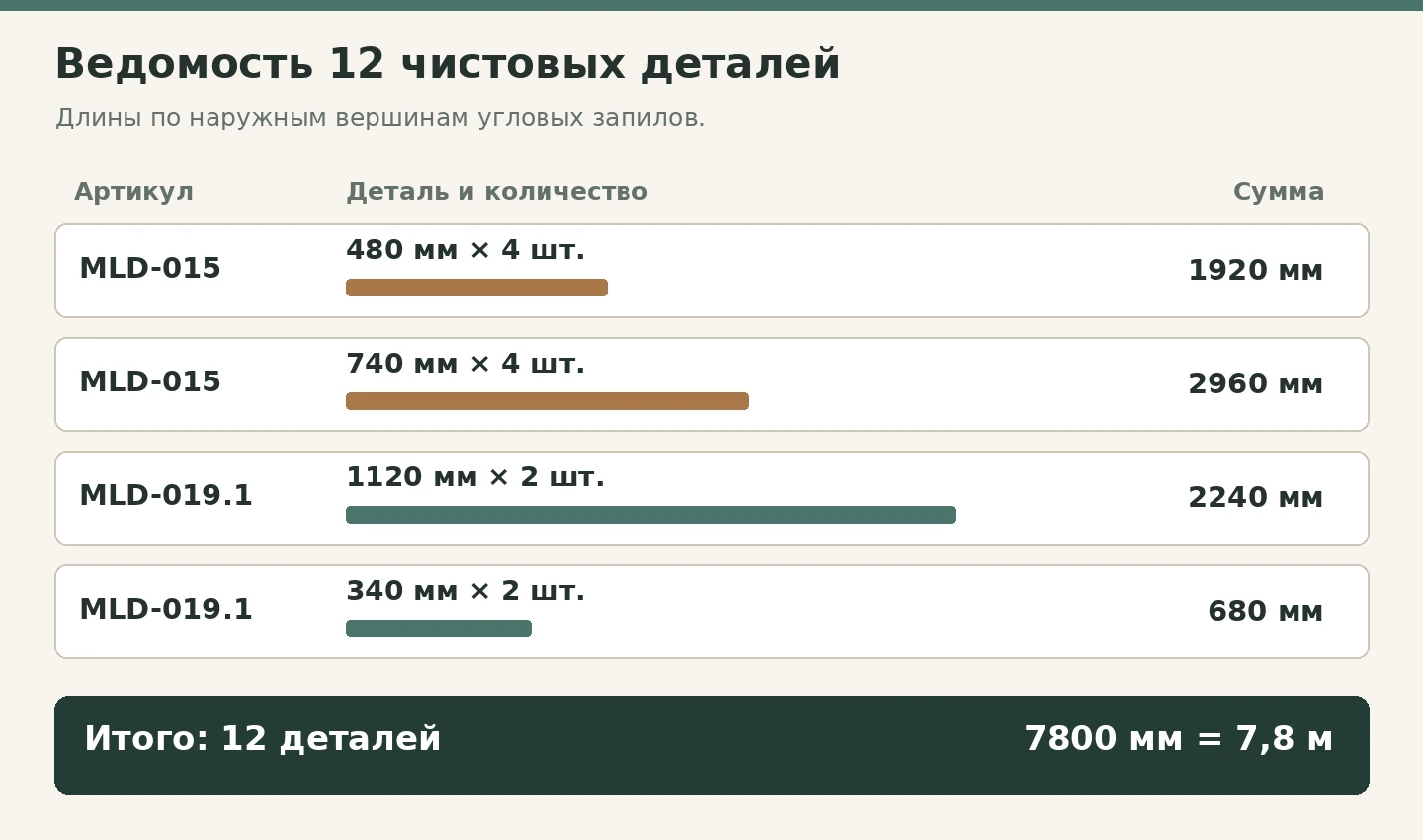
It is important to distinguish between the number of factory products and the number of parts in the finished furniture. The shopping cart will contain five boards, while the workbench after cutting will have twelve finished parts. If the contractor orders material through an intermediary, give them both numbers along with the length of each board being purchased. Otherwise, an erroneous order may be placed for twelve factory products instead of five. For serial production of sideboards, this distinction is especially significant: the cutting map for one piece of furniture is not always the most economical map for the entire batch.
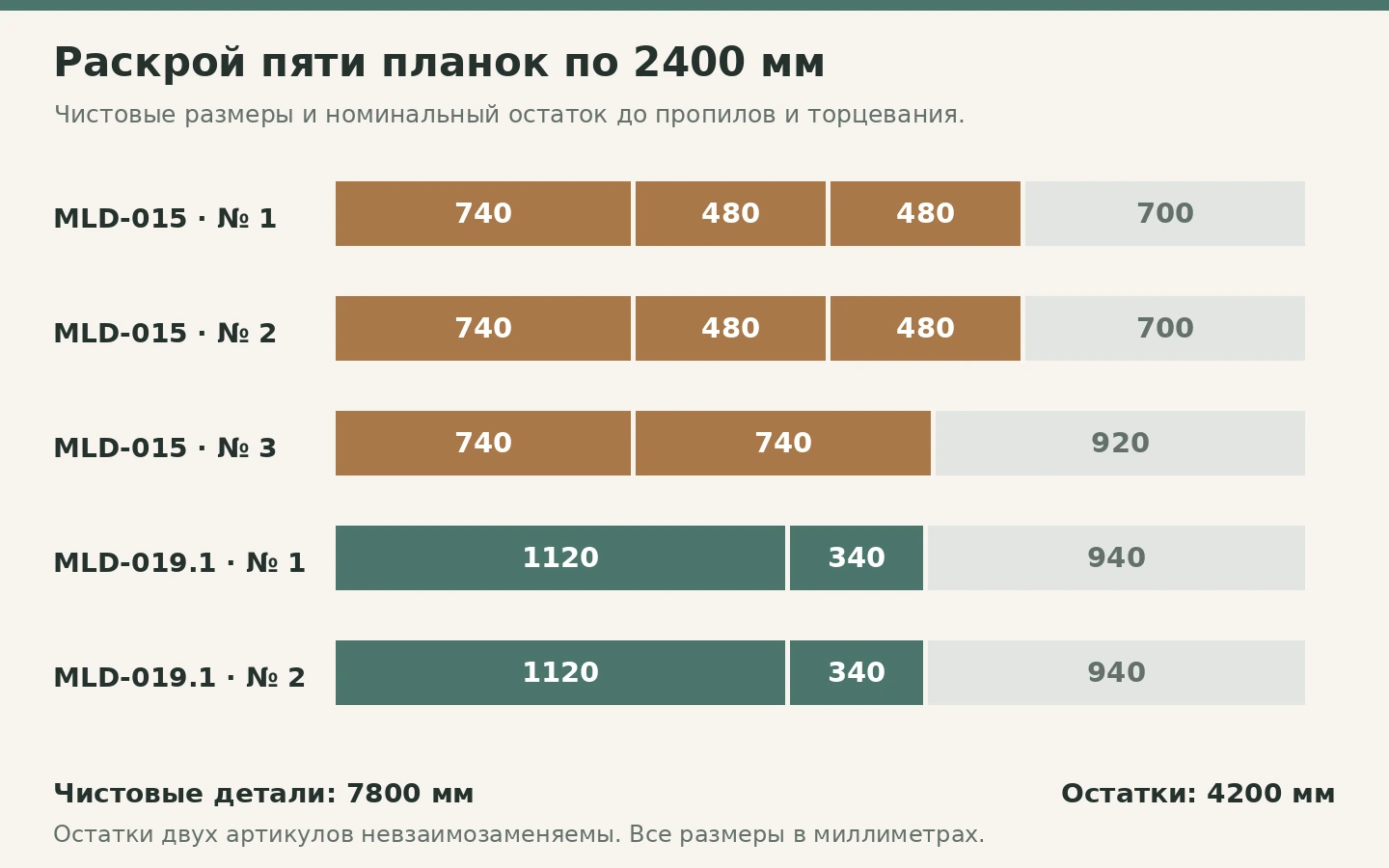
Cutting of three MLD-015 boards
Two factory boards of 2400 mm each give only 4800 mm. The finished requirement for the doors is 4880 mm, so even without accounting for saw kerfs and end trimming, the material is short by 80 mm. A third board is mandatory. This is a fundamental difference from cases where the total length is formally sufficient but the parts cannot be distributed across the blanks. Here the shortage is visible already at the level of total linear meters.
In the basic layout, each of the first two boards holds one vertical part 740 mm long and two horizontal parts of 480 mm each. The sum of finished dimensions is 1700 mm, leaving 700 mm. On the third board, two vertical sides of 740 mm each are placed, leaving a remainder of 920 mm. This cutting layout distributes the parts relatively evenly and leaves significant gaps for end trimming and test cuts. If a blank has an area that cannot be used on the visible side, it is sometimes possible to move the finished part within its allowance.
| MLD-015 board | Finished parts | Total length | Remainder before processing |
|---|---|---|---|
| № 1 | 740 + 480 + 480 | 1700 мм | 700 мм |
| № 2 | 740 + 480 + 480 | 1700 мм | 700 мм |
| № 3 | 740 + 740 | 1480 мм | 920 мм |
| TOTAL | 8 pieces | 4880 мм | 2320 мм |
The remainder of the third board nominally allows cutting one more vertical side 740 mm long, provided it is a continuous section and undamaged. The first two boards leave 700 mm each: this is enough for one horizontal part 480 mm long with some margin, but not for a full vertical part. After actual cutting, the lengths of the remainders will decrease, so they should not be recorded in advance as ready spare parts. Keep the longest pieces in their original condition until the doors are assembled.
There is also an alternative layout for the same amount of material: the first board — three pieces of 740 mm, the second — one piece of 740 mm and three of 480 mm, the third — one piece of 480 mm. The sums are 2220, 2180 and 480 mm respectively, and the finished remainders are 180, 220 and 1920 mm. This option is especially interesting if a long reserve needs to be preserved in case several parts are damaged or for subsequent repairs. But it places stricter requirements on the quality of the first two boards and the distribution of machining allowances.
Before deciding which method to use, sort the blanks by appearance. For an oak frame, it is sometimes more important to get verticals that are close in tone than to preserve the longest possible single remainder. When painting under enamel, the wood color is less noticeable, but surface defects and fit quality must be taken into account. The cutting map compiled from finished lengths is the starting scheme; the craftsman may rearrange parts within a factory board provided the full quantity and required allowances are preserved.
If you are tempted to buy only a short piece instead of a third board, first check the available factory lengths. The MLD-015 product page confirms a length of 2400 mm for solid wood. Do not assume that the supplier will sell 80 mm or a separate one-meter blank at a proportional price. For this project, the cost comparison is based on the actually specified length, without assumptions about the sale of non-standard remainders.
Cutting of two MLD-019.1 boards
The upper rectangle requires 2920 mm, which exceeds the length of a single factory strip by 520 mm. Two strips give 4800 mm and allow the four sides to be distributed in two ways. In the main option, 1120 mm is cut from each along the long side and 340 mm along one short side. The finished consumption for each is 1460 mm, with a remainder of 940 mm. This order is convenient for matching pairs that are similar in appearance and leaves a large margin when cutting each piece.
| Strip MLD-019.1 | Finished parts | Total length | Remainder before processing |
|---|---|---|---|
| № 1 | 1120 + 340 | 1460 мм | 940 мм |
| № 2 | 1120 + 340 | 1460 мм | 940 мм |
| TOTAL | 4 parts | 2920 мм | 1880 мм |
Both 940 mm remainders do not allow a new long side to be obtained, even if their total length exceeds 1120 mm. Joining two short offcuts in the middle of the horizontal element is a change to the original design. Such a seam may be noticeable on the front side, and the position of the quarter will need to be carefully aligned on both sides of the joint. In our project, the long sides are designed as single pieces.
To have a reserve for remaking the long side without buying an additional strip, a different layout can be used: place two 1120 mm pieces on the first strip and two 340 mm pieces on the second. After trimming, 160 mm and 1720 mm remain, respectively. The long remainder of the second strip, if its actual size is sufficient, can be used to replace one of the main horizontals. However, both original long pieces now depend on the quality of the first strip, so it must be carefully inspected before starting work.
Whichever layout is chosen, the actual kerf width should first be established, the length of the resulting factory pieces measured, and the allowances determined. For example, in a conditional calculation one can allow 10 mm for trimming the blank, 10 mm of total allowance for each finished piece, and 3 mm for each separating cut. Then a strip with two long pieces of 1120 mm will require 2240 + 10 + 20 + 6 = 2276 mm for the conditional rough marking, leaving 124 mm. Such an example shows that there is room for processing, but it is not an instruction for assigning allowances on a specific machine. The allowance for an angled cut is determined by the craftsman based on the method of positioning and the actual shape of the profile.
In the main cutting plan, the total purchase length of the five pieces is 12 m. The finished remainder of the two groups is 2320 + 1880 = 4200 mm. This is not entirely waste: part of the material can be used for test coatings, setting up cuts, repairs, or other furniture frames. At the same time, remainders of different sections are stored separately so that they are not mixed up after painting or removal of labels. When working with a small batch, it is more useful to keep suitable long pieces than to immediately break them down into numerous samples.
How much do wooden moldings cost in Vladikavkaz
It is convenient to compare the purchase of beech and oak moldings using the same bill of materials. For the doors, three MLD-015 strips 2400 mm long are needed; for framing the upper panel, two MLD-019.1 strips of the same length. The quantity does not depend on the wood species if the outer dimensions of the frames and the article numbers remain the same. Therefore, the difference between the two estimates is determined solely by the prices of the items, and not by a different quantity of purchased material.
| Article | Number of planks | Beech, price per strip | Beech, set | Oak, price per strip | Oak, set |
|---|---|---|---|---|---|
| MLD-015 | 3 | 1130 ₽ | 3390 ₽ | 1560 ₽ | 4680 ₽ |
| MLD-019.1 | 2 | 1120 ₽ | 2240 ₽ | 1410 ₽ | 2820 ₽ |
| TOTAL | 5 | — | 5630 ₽ | — | 7500 ₽ |
Wooden finish prices were verified against the official STAVROS product pages on November 24, 2026. The calculation covers mouldings only, excluding finishing work, delivery, packaging, inserts and fasteners. Before payment, the price and delivery terms must be checked as of the order date.

A beech set costs 5,630 rubles, an oak set 7,500 rubles. The difference is 1,870 rubles. If the entire sideboard is painted with opaque enamel, choosing beech reduces the cost of the wooden decor itself. If the furniture has a natural oak surface and is intended for a finish with an open wood grain, the extra cost of oak may be justified by the visual unity of the material. At the same time, savings on mouldings should not affect the choice of removable panel construction: a groove is required regardless of the species used.
In some cases, the furniture owner prefers to buy one additional strip of each item. Then four MLD-015 pieces are ordered for the door frames and three MLD-019.1 pieces for the top panel. This gives seven strips with a total purchase length of 16.8 m. A reserve set in beech costs 7,880 rubles, in oak 10,470 rubles. The surcharge relative to the main purchase is 2,250 and 2,970 rubles respectively. Additional blanks make it possible to redo several badly cut elements and keep material for further work, but not every buyer needs them automatically.
| Order option | MLD-015 | MLD-019.1 | Beech | Oak |
|---|---|---|---|---|
| Main purchase | 3 pcs. | 2 pcs. | 5630 ₽ | 7500 ₽ |
| With one reserve strip of each item | 4 pcs. | 3 pcs. | 7880 ₽ | 10470 ₽ |
The decision on a reserve depends on the installer's experience, the difficulty of matching the grain and the ability to obtain an additional strip quickly. If the material is bought for a workshop and the leftovers are then used in other orders, a long reserve may be useful regardless of the current job. For a private buyer who needs just one furniture composition, it is reasonable to first check both alternative cutting plans. Sometimes a long usable offcut can be preserved without increasing the purchase. However, even a well-calculated layout does not protect the entire original blank from damage during transport.
The cost of the material should also be separated from the full cost of the furniture finish. The craftsman's estimate may include removing the doors, stripping the old coating, correcting the geometry, cutting the insert, assembling the frames, fastening, treating the ends and readjusting the hardware. These are different operations. At the same purchase price for wooden strips, working with a new smooth facade and restoring an old lacquered panel will require different labour costs.
How to check the fit of a decorative insert
For the top panel, it is not enough to order a profile with a rebate and then cut the insert to the dimensions of the rectangle. It is necessary to determine in advance which side of the profile will be the face side, how the rebate is positioned, and how it contacts the edge of the insert. The factory drawing should be used to scale and with correctly marked dimensions. On an image of the profile without dimension lines, it is easy to confuse the decorative lip with the bearing surface.
If the door frames have already been designed, but the top panel so far exists only on a sketch, before ordering molding MLD-019.1, agree the thickness and edge shape of the insert with the furniture manufacturer. First, establish what part of it the face side of the frame should overlap. Then check whether the edge will protrude from the back side in such a way that the panel cannot be placed on the carcass. If an additional clamping part is intended, it must also have its place and not interfere with fastening.
For a test assembly, two small samples are sufficient: a section of the profile and a fragment of the material for the future panel. Bring them together in the same position as provided by the project, and measure the actual overlap. Check for skew and the possibility of removing the sample in the intended direction. If the edge of the panel requires separate processing, an experienced furniture maker can evaluate it before making a full-size insert. Such a sample is especially useful when a transparent finish is intended: on light wood, a loose joint is clearly visible.
When finishing the profile and insert with separate coatings, it should be taken into account that the applied layers may change the nature of the fit. Narrow bearing areas are especially sensitive to this. A test assembly on unfinished wood alone does not always answer the question of how the finally painted assembly will interact. Final tolerances are assigned based on the project, the actual sample, the insert material, and the coatings used. Force should not be used to fit a finished wooden panel: a thin decorative lip should not compensate for a dimensional error by its own deformation.
Removability relates to the panel as a whole. If the frame and insert form an assembly unit, independent fasteners must hold precisely this unit in the intended place on the carcass. If only the inner insert is to be removed, a different access and retention device is required. In both cases, serviceability is checked before final finishing. It cannot be assumed that the presence of a rebate automatically solves the task of retaining the insert, or that a simple overlay molding can replace specially provided fasteners.
How to make corner joints of moldings
The project under consideration provides for rectangular frames, so standard joints are made with two matched 45-degree cuts. The finished dimension of each side is measured at the outer long points. It is important that the craftsman uses the same marking datum on all parts. Measuring the horizontal side along the inner edge instead of the outer one results in the frame being enlarged by an amount related to the profile width and the shape of the corners. Sometimes this error can be corrected by re-cutting, but this reduces the useful reserve.
Before starting work, determine how the profile should rest on the work surface when cutting. The face side has a relief, so a random position of the workpiece can lead to mismatched angles. For MLD-019.1, additionally check that the chosen orientation preserves the correct position of the rebate after joining. The methods of positioning and safe fixing depend on the equipment and the shape of the product. Test joints are made by the craftsman on short sections in compliance with the tool instructions, using suitable protective equipment and not holding small parts dangerously close to the cutting blade.
It is useful to begin by making a pair of test corners. They are placed against a flat base and checked to ensure that the outer edges align and that the decorative pattern continues without a noticeable step. If the section of both elements is correctly oriented but a gap remains at one edge, the angle setting and the quality of the workpiece's contact with the support should be checked. Do not try to immediately fill a large defect with putty: with a natural finish such a repair will remain visible, and under enamel it may show up after drying.
Then the entire set of one frame is marked out. Two opposite parts must have the same finished length. After preliminary assembly, check the outer width and height, the fit of all corners, and both diagonals. Equal diagonals with matching lengths of opposite sides serve as a convenient check for squareness. On an uneven facade, do not compensate for a difference in the base by skewing the frame: the flatness problem must be resolved first. For the top panel, additionally check the squareness of the mounting area, which must match the insert.
For an oak finish, select adjacent parts before the final cut. If a pronounced darker stripe is noticeable on one strip, it can be placed in a less conspicuous area or matched with the opposite side. Once the parts have already been cut to size and have specific cut directions, the possibility of rearranging them decreases. When painting with enamel, it is important to avoid chips on relief protrusions: a thick layer of paint should not be used as a way to restore their geometry.
How to prepare wooden profiles for enamel
The wooden moulding must be inspected before applying the coating. Check the shape, the condition of the face surface, the absence of damaged edges, and the compatibility of the chosen version with the planned finish. Even with the sanding quality stated in the catalogue, additional preparation may be needed after cutting and fitting. Finished ends are treated carefully so as not to round off the corners' peaks or change the position of the mating faces.
If the sideboard is being painted in a light color, it is useful to test the entire coating system in advance on a small offcut of each profile. The two sections differ in relief, recesses, and protrusions, so the paint may be distributed unevenly. On the test sample, check whether the pattern is preserved, whether the composition accumulates in the internal corners, how the surface looks in side light, and whether the shade matches the main facade. The primer and topcoat are chosen according to their manufacturers' recommendations and taking into account the existing furniture finish.
For painting already assembled frames, provide a method for preparing the corners and access to each surface. If the frame is finished separately, it is necessary to determine in advance whether the areas for gluing will remain free of coating or whether the adhesive used allows contact with the prepared painted surface. You cannot simultaneously expect maximum bond strength with the wood and indiscriminately coat the entire support side with any varnish. The decision is made in accordance with the assembly technology.
When tinting oak, attention shifts to the wood grain and the appearance of the joints. A sample of the future shade is made on material from the actual delivery. How a particular composition looks on beech does not determine its result on oak. To prevent the furniture from visually breaking up into several separate color patches, compare all three frames and the visible surface of the insert at the same time. Do not try to completely hide the differences in the wood with opaque correction if a finish with open grain was initially chosen.
Separately check the condition of the room in which assembly and finishing take place. Wood reacts to changes in humidity, so new workpieces should be stored under suitable conditions according to the manufacturer's recommendations and the technology used. Do not leave long lengths resting on furniture at one end or near a source of intense heat. Finishing compositions are used with the necessary ventilation, observing safety requirements and the drying time specified by the manufacturer. There is no universal holding time for all types of coatings.
Installing wooden trim on furniture
For two blind doors, an overlay finish is applied to a pre-checked substrate. Before Buy wooden furniture molding, it is important to understand what the front surface is made of and what coating is on it. Old lacquer film, a newly painted door and untreated wood require different preparation. Gluing to a peeling coating does not solve the problem: the decorative element may come off together with that coating.
The practical order of work begins with inspection and marking, not with applying adhesive. The doors are installed in their intended position or temporarily removed if this is necessary for even assembly. Each leaf should be marked and the original adjustment positions preserved so that after finishing it is easier to check the gaps. Before gluing, all four parts of each frame are placed on the front, and the offsets, handle position and visual alignment with the adjacent door are checked.
The method of fixing the profile is determined by the type of substrate, the geometry of the overlay and the recommendations of the adhesive system manufacturer. Fasteners should not be chosen based only on the thickness of the moulding. The door has its own thickness, internal fixings and hinge operating zone; fasteners that are too long can damage the back side or end up in an undesirable place. If adhesive mounting is used, the compound must be compatible with wood and the existing surface, and temporary fixing must not leave dents on the face relief.
To protect the front from squeezed-out compound, use a technique that allows the cleanliness of visible surfaces to be controlled immediately and does not damage the subsequent coating. When finishing for tinting, it is especially important not to allow adhesive to contaminate the face wood: this can change its ability to take the finishing compound. Excess is removed by a method suitable for the specific adhesive and coating, not with an arbitrary solvent. Before loading the joint or opening the door, allow the curing time according to the instructions.
The top panel is assembled separately. Its decorative surround must not connect the panel to the fixed parts of the carcass. Before final fixing, the installation and removal of the whole assembly or of the insert itself, depending on the design, are checked. If some of the fixings become inaccessible after the frame is glued on, the sequence of operations must be changed. Such a check is more important than how even the panel looks immediately after fitting: the goal is to preserve the full functioning of the furniture structure after finishing.
After installation is complete, inspect the furniture first from a normal distance, then under side light. Compare the upper and lower marks of the two door frames, the condition of the corners, the distance to the handles and the nature of the transition between the lower and upper elements. Slowly open both doors to the working angle and make sure the profile does not obstruct movement. Check the removable panel in the prescribed maintenance order. If the furniture is intended for further use in another room, pass on to the owner information about the selected profiles and finishing system.
How to order wooden mouldings with delivery to North Ossetia
To buy wooden trim in Vladikavkaz for a specific sideboard, indicate two article numbers on separate lines in the request. For MLD-015, three pieces 2400 mm long are needed; for MLD-019.1, two pieces 2400 mm long. Next to each item, write the wood species, the intended finish and the selected jointing quality option. If a reserve is required, add one whole strip per item rather than a nominal number of linear metres. Such a list is easier to check against the order confirmation and the completeness of the delivery.
On the page STAVROS payment and delivery terms you can review the current purchasing procedure. Delivery to a specific address or pickup point in Vladikavkaz should be arranged during checkout. Long-length items require suitable packaging. The MLD-015 product page states that when ordering up to ten items, a rigid pine backing is added at a cost of 390 rubles; for MLD-019.1, the cost of a rigid packaging frame is 390 rubles and the norm for the solid wood array is up to fifteen items. Since the set contains two sections, you should not automatically assume that one shared package is sufficient or that two must be paid for. Confirm the actual composition of the packaging units and the final invoice amount.
Upon receipt, check the condition of the protective frame, the length and number of items, the labels, and that the material matches. If there is damage, follow the seller's and carrier's rules and document it before starting to process the blanks. Compare one sample of each profile against the factory drawing. It is especially important to check the side of the rebate on the second model. Do not begin cutting if the item code, material, or geometry is in doubt. After sawing and finishing, it is significantly harder to establish the origin of an error.
For the workshop, it is useful to keep a copy of the specification together with the furniture drawing. During a later repair of the sideboard, this will allow you to order the required profile rather than selecting something approximately similar from a photograph. It is recommended to label the leftovers and store them separately from other strips.
Ten mistakes when buying furniture moldings
The first is ordering by the sum of perimeters without separating the sections. A total of 7.8 meters does not determine the number of factory strips. For this project, the minimum purchase is five items precisely because each item code is calculated separately.
The second is confusing the outer dimension with the door leaf size. A 480 × 740 mm frame does not mean that the door leaf must be exactly the same size. The front requires free areas around the frame, hardware, and structural gaps.
The third is using the internal cut length instead of the external one. The same measurement principle is required for all four parts, otherwise the actual dimensions of the rectangle change.
Fourth — taking the profile thickness as the rebate depth. The 12 mm dimension refers to the outer section of MLD-019.1, not to the permissible insert thickness. Mounting dimensions are checked separately.
Fifth — gluing the removable panel to the carcass. The decor must retain the intended serviceability and must not replace the panel fastenings.
Sixth — comparing prices of different materials without selecting a finish. In our order, all products are made of oak or beech, are 2400 mm long, and correspond to the specified article number.
Seventh — treating offcuts as finished stock. After cutting, the net remainder decreases due to processing. For the long side of the panel, one suitable continuous section is required, not the sum of several offcuts.
Eighth — not accounting for the door swing path. A preliminary dry layout on closed furniture does not replace checking the opening. It is important to check the profile protrusion near the handles and hinges.
Ninth — choosing a finish without a sample. An identical shade name does not guarantee that a finished moulding will match an existing facade. A test application on an offcut helps avoid costly rework.
Tenth — starting to cut before checking that the kit is complete. Marking all blanks, matching their grain pattern and inspecting long sections allow you to choose the most efficient order of work.
Frequently asked questions
Where to buy wooden furniture mouldings in Vladikavkaz?
Suitable products can be selected in the official STAVROS catalogue and ordered with delivery. For the sideboard in the example under consideration, you will need to specify two item codes, a length of 2400 mm, the wood species and the number of blanks.
How do MLD-015 and MLD-019.1 differ?
The first has an outer cross-section of 20 × 16 mm and in our example is intended for overlay door frames. The second measures 17 × 12 mm and has a longitudinal rebate. It was chosen for framing a separate insert. These profiles cannot be swapped at will.
What is the rebate in a wooden moulding for?
It is a longitudinal groove that forms a seating shoulder. It allows the position of the insert's edge relative to the frame to be aligned. Whether a specific panel can be retained is determined by the drawing and the design of the joint.
Which molding should I choose for a solid furniture facade?
For the two rectangular overlay frames in the calculation example, MLD-015 is suitable. Before purchasing, check the available surface, the position of the handles, and the door movement. For other frame dimensions, recalculate.
How do I check the compatibility of the profile and the decorative insert?
Study the factory drawing of MLD-019.1, measure the actual rebate, and perform a trial assembly with the insert material. Agree on the fasteners, coating thickness, required clearances, and the ability to remove the panel.
Which is more cost-effective to buy: oak or beech moldings?
At the verified prices, the beech set is 1870 rubles cheaper. Beech can be considered for opaque enamel, while oak is for furniture where a pronounced natural grain matters. The decision depends on the finish and construction.
How many planks are needed to trim the sideboard?
Five factory planks: three MLD-015 and two MLD-019.1. They yield twelve finished segments. If necessary, buy one additional plank of each item for reserve.
Can the remaining linear stock be used for other furniture?
Yes, if the remainder has retained the required cross-section, length, and surface quality and matches the new project. Offcuts of different items cannot be considered interchangeable. Short pieces are convenient for testing the coating.
How do you correctly join moldings at 45 degrees?
For a rectangular frame, matched miter cuts are used, measuring the length along the outer corners. Before final assembly, test angles, the dimensions of opposite pieces, the diagonals, and the absence of steps are checked. For a profile with a rebate, the continuity of the seating shoulder is additionally checked.
How much does a set of STAVROS wooden moldings cost?
Five strips cost 5,630 rubles in beech or 7,500 rubles in oak at prices verified on November 24, 2026. Packaging, transport, finishing, and labor are counted separately. When placing an order, the price should be confirmed.
How do I order wooden trim with delivery to Vladikavkaz?
Give the seller a list of item codes, wood finishes, quantities, and lengths. Provide the address or preferred pickup point, agree on packaging for long items and the final cost. Upon receipt, verify the material and cross-section before processing.
Buy STAVROS wooden moldings for a sideboard
The final specification for a sideboard 1400 mm wide consists of three MLD-015 strips for two frames 480 × 740 mm and two MLD-019.1 strips for framing a removable panel 1120 × 340 mm. In both cases, a wood finish in oak or beech with a length of 2400 mm is chosen. The total purchase length is 12 meters, the finished length is 7.8 meters. 4.2 meters remain before cuts, distributed between two non-interchangeable cross-sections.
If you are going to buy wooden moldings in Vladikavkaz, open the MLD-015 and MLD-019.1 product pages, compare the solid wood finishes, check the rebate drawing, and agree the dimensions with the furniture maker. Then the order will match not only the appearance of the sideboard but also the way its doors and removable panel work. You will be able to choose the wood species and the reserve amount in advance, and the craftsman will receive a clear cutting list without needing to substitute one profile for another.