

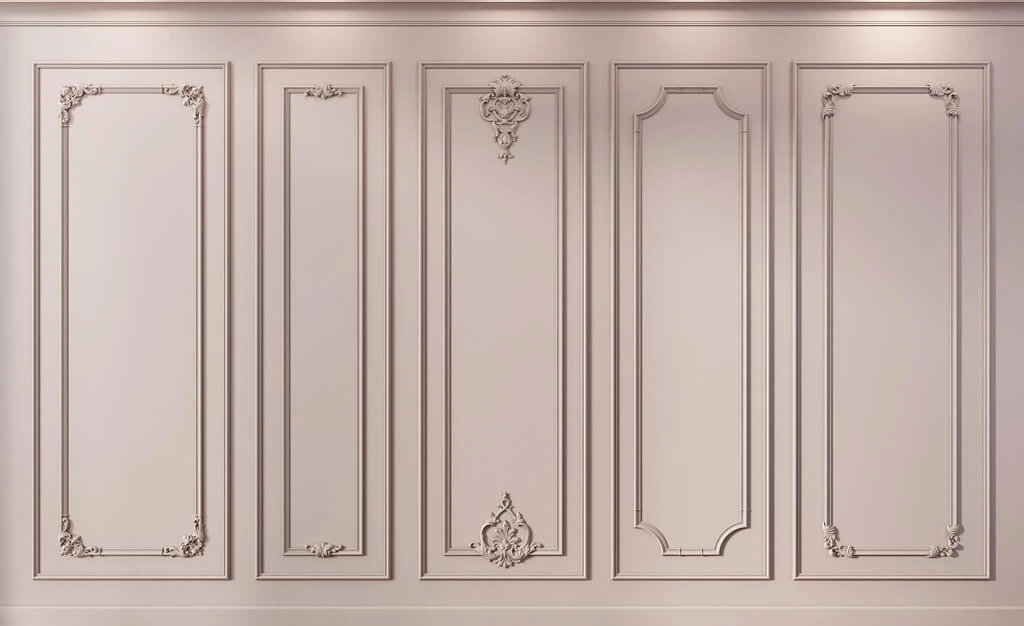
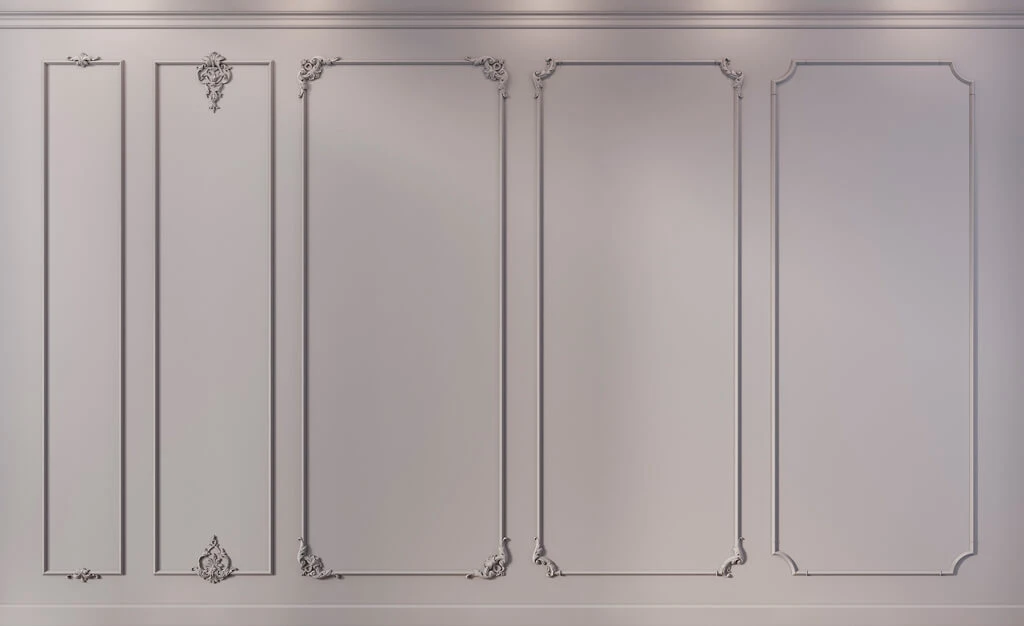
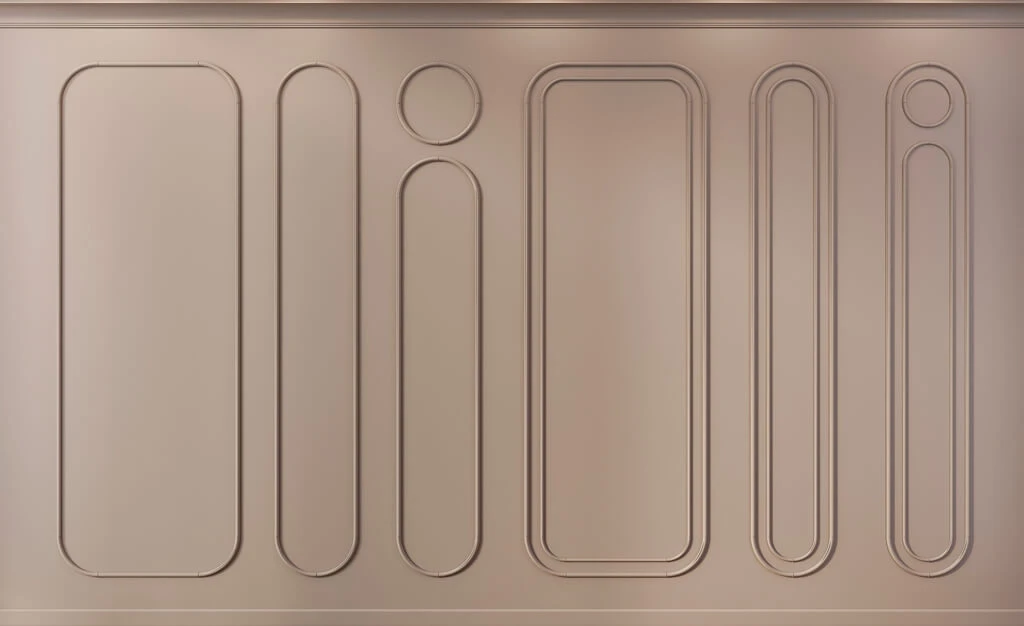
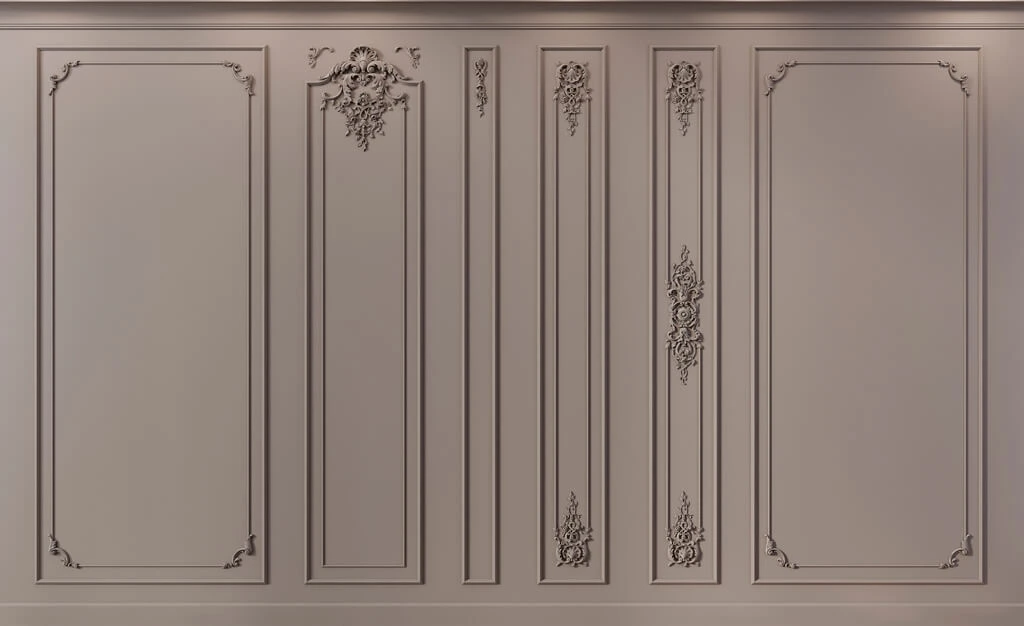
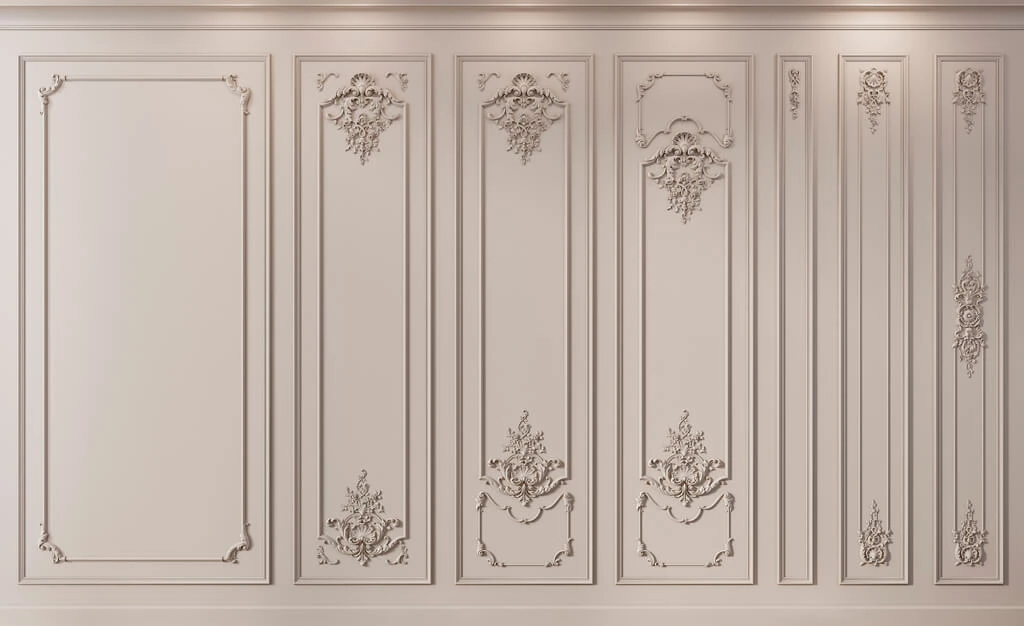
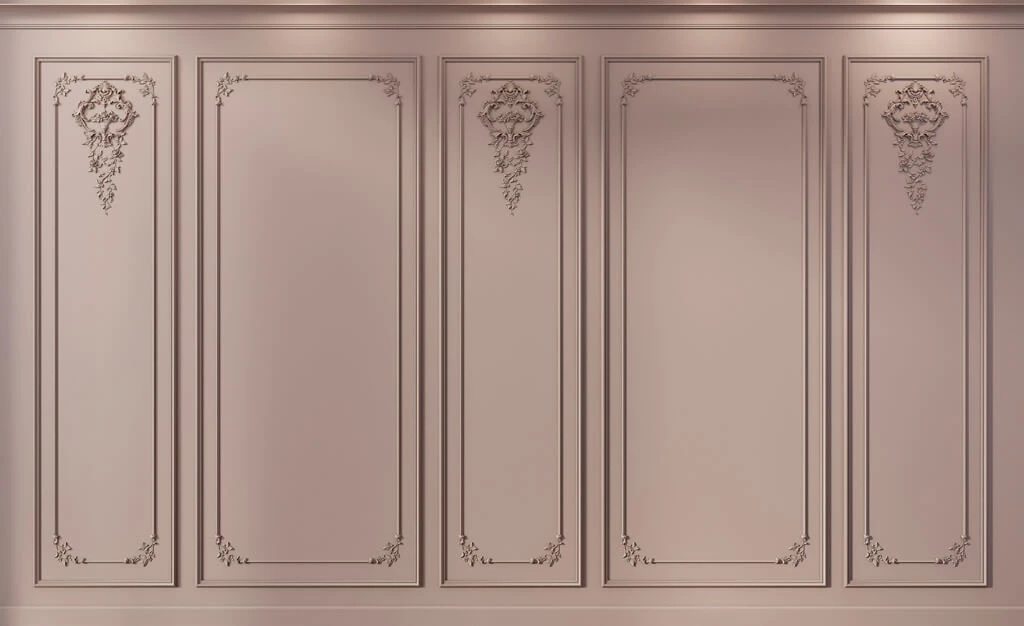
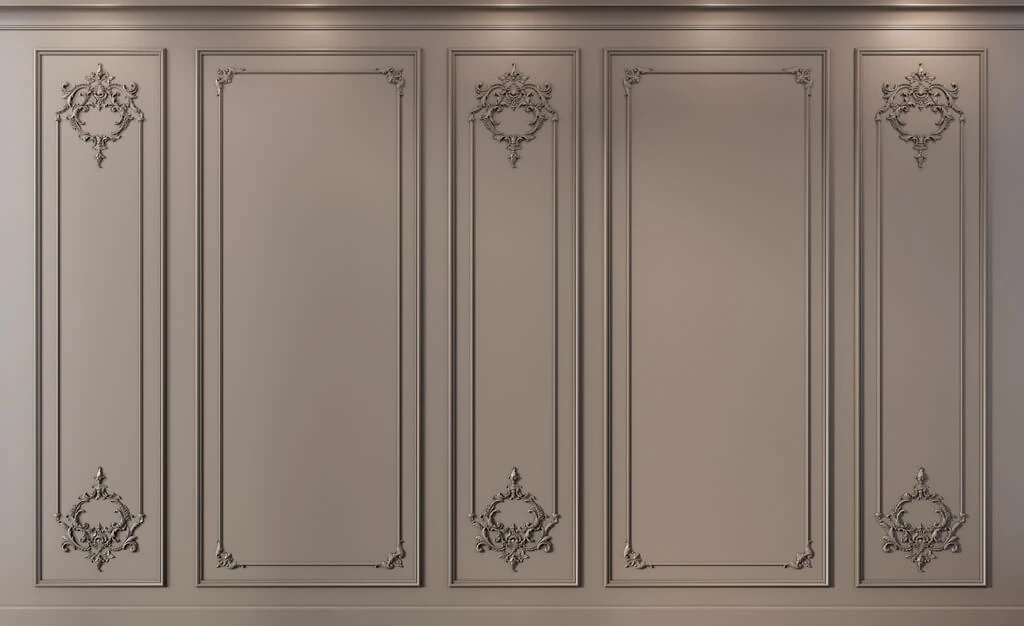
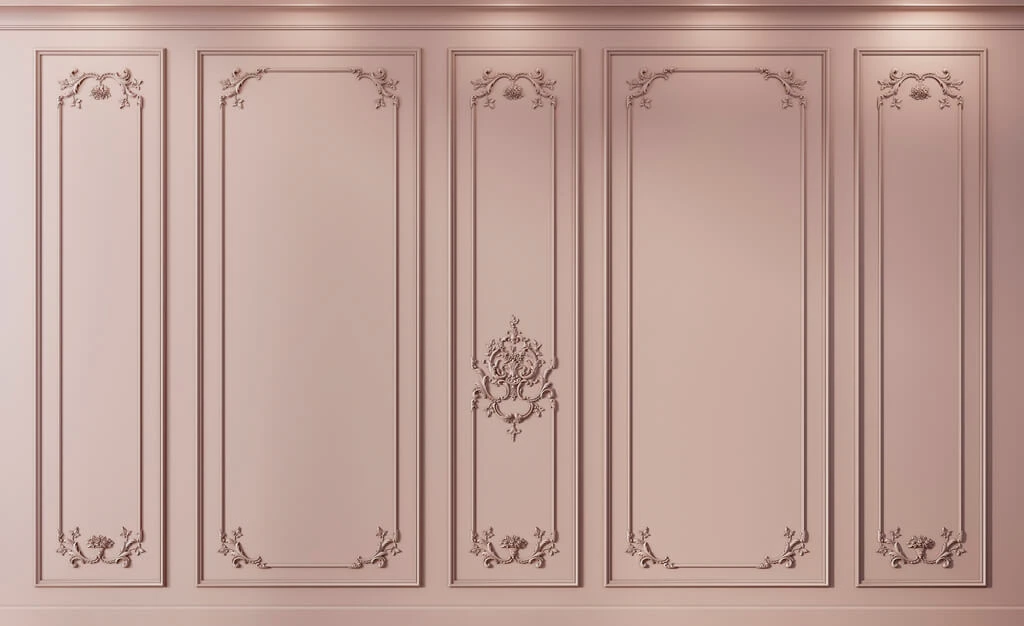
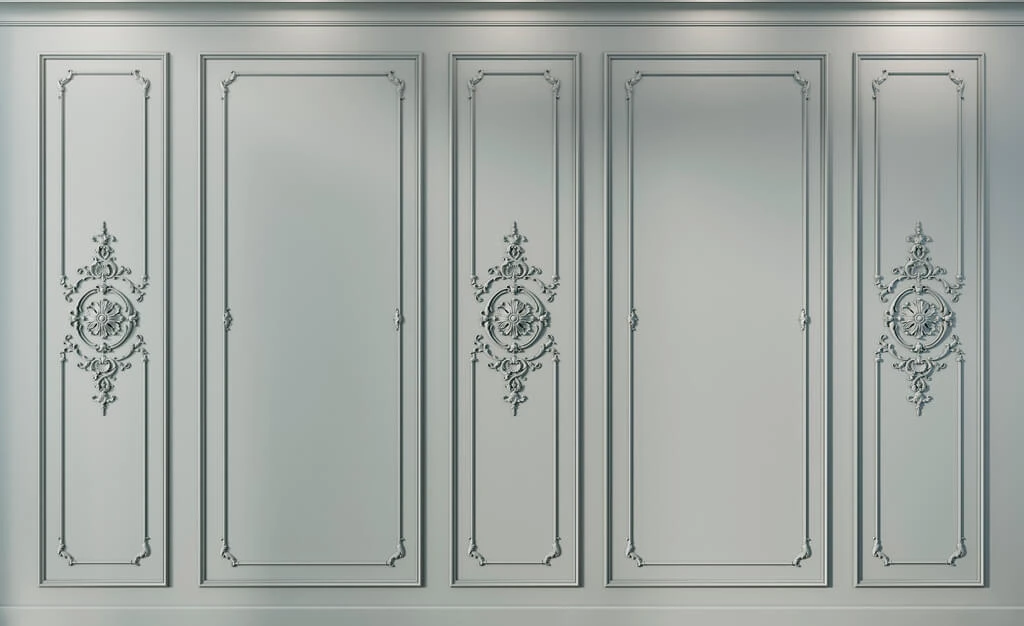
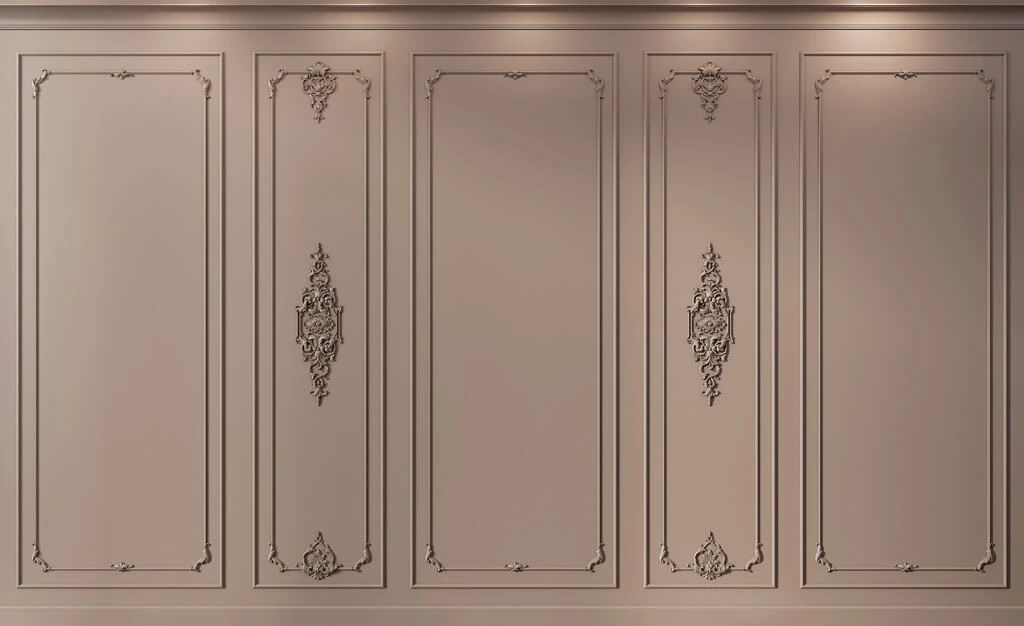
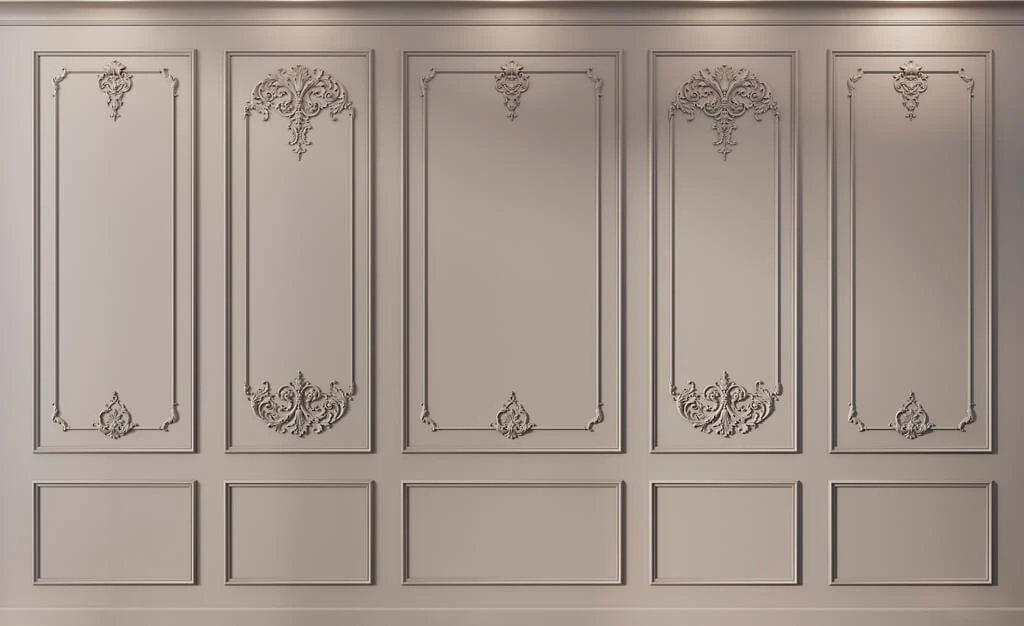
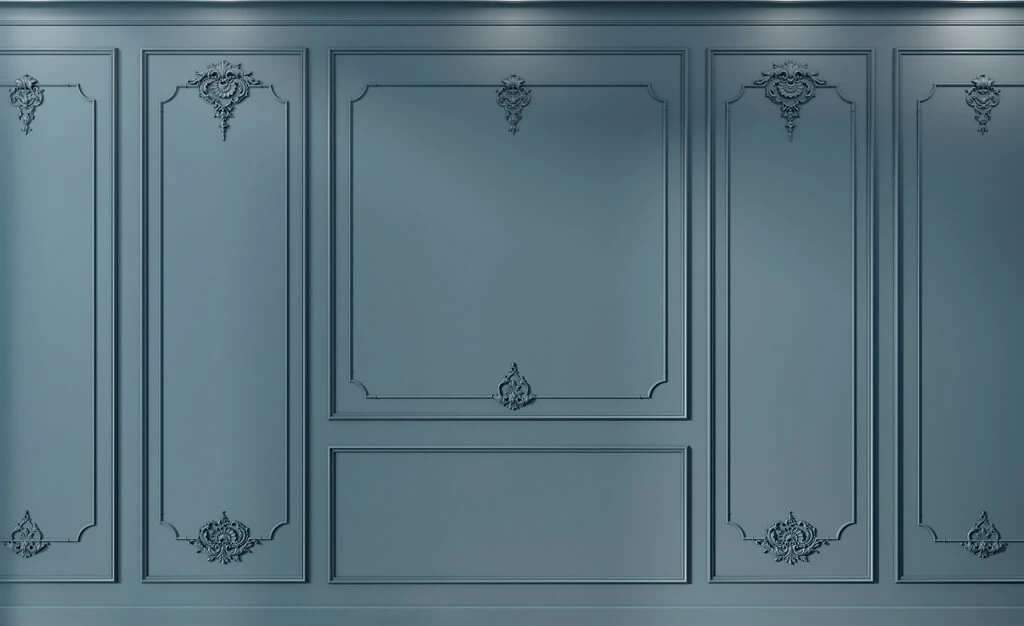
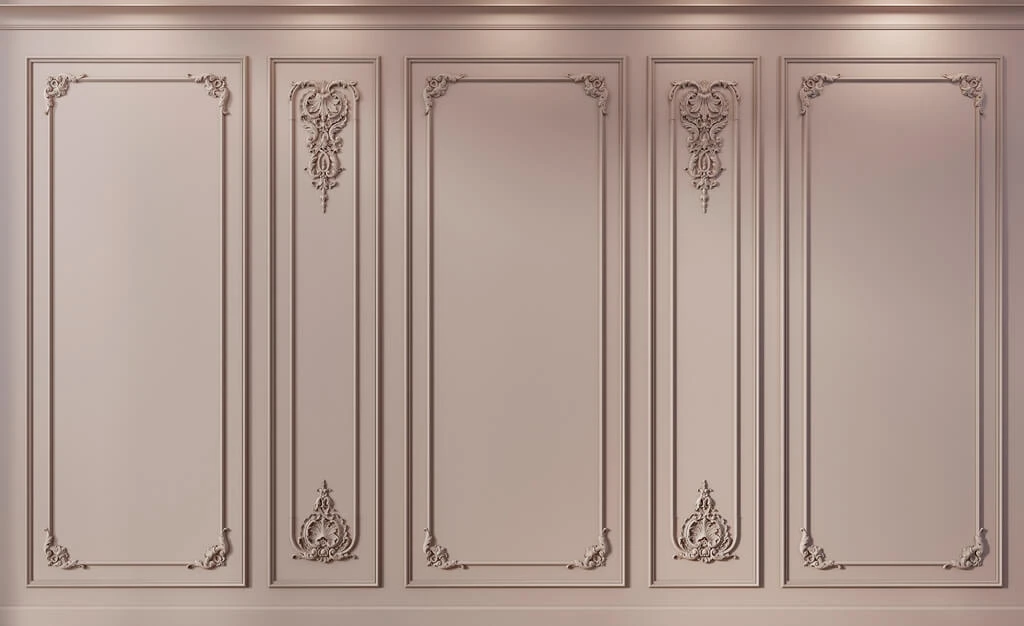
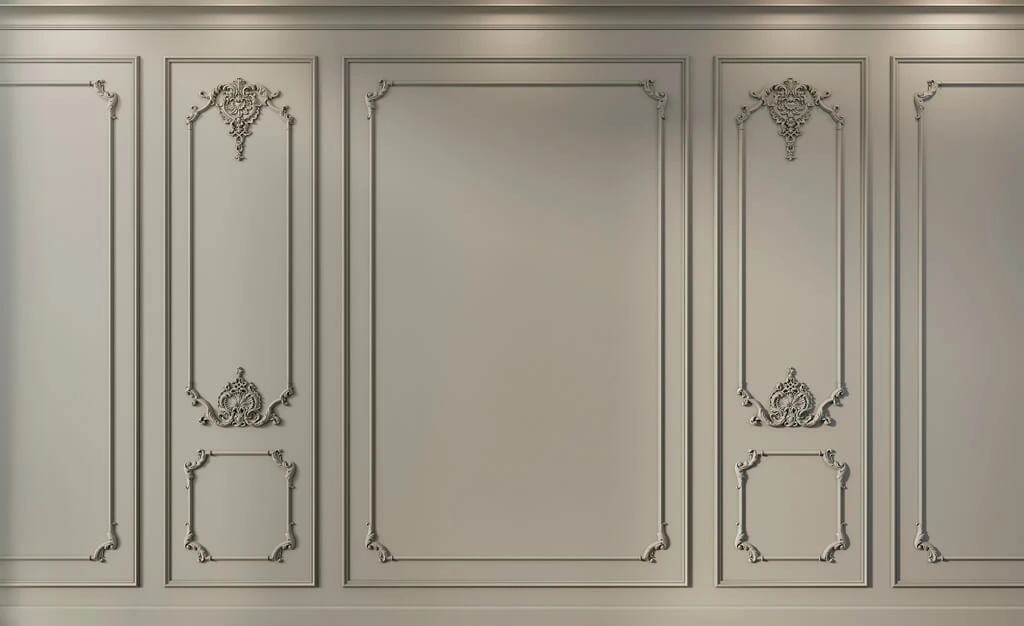
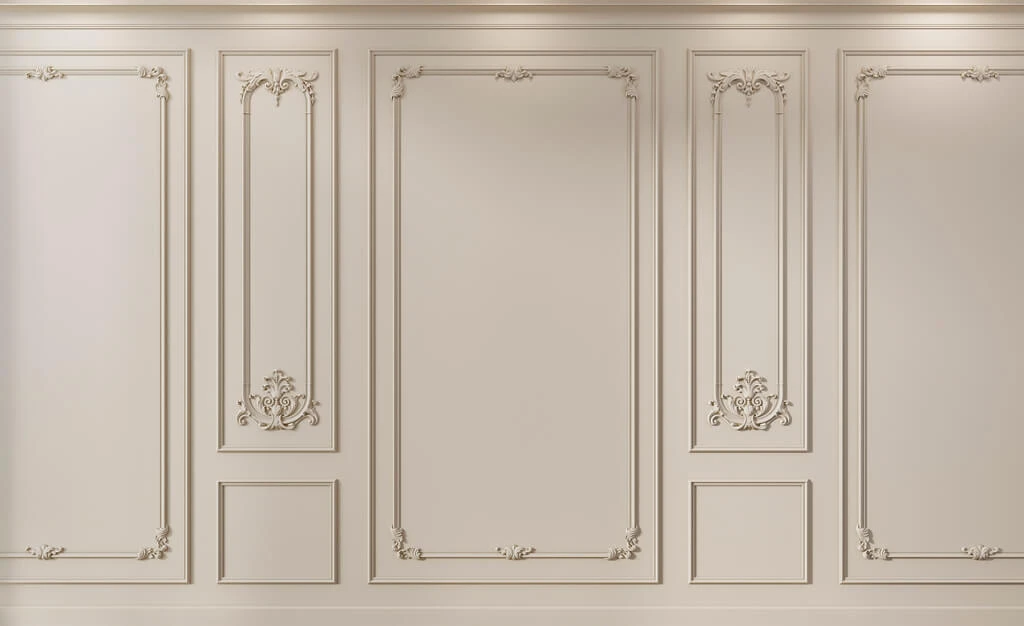
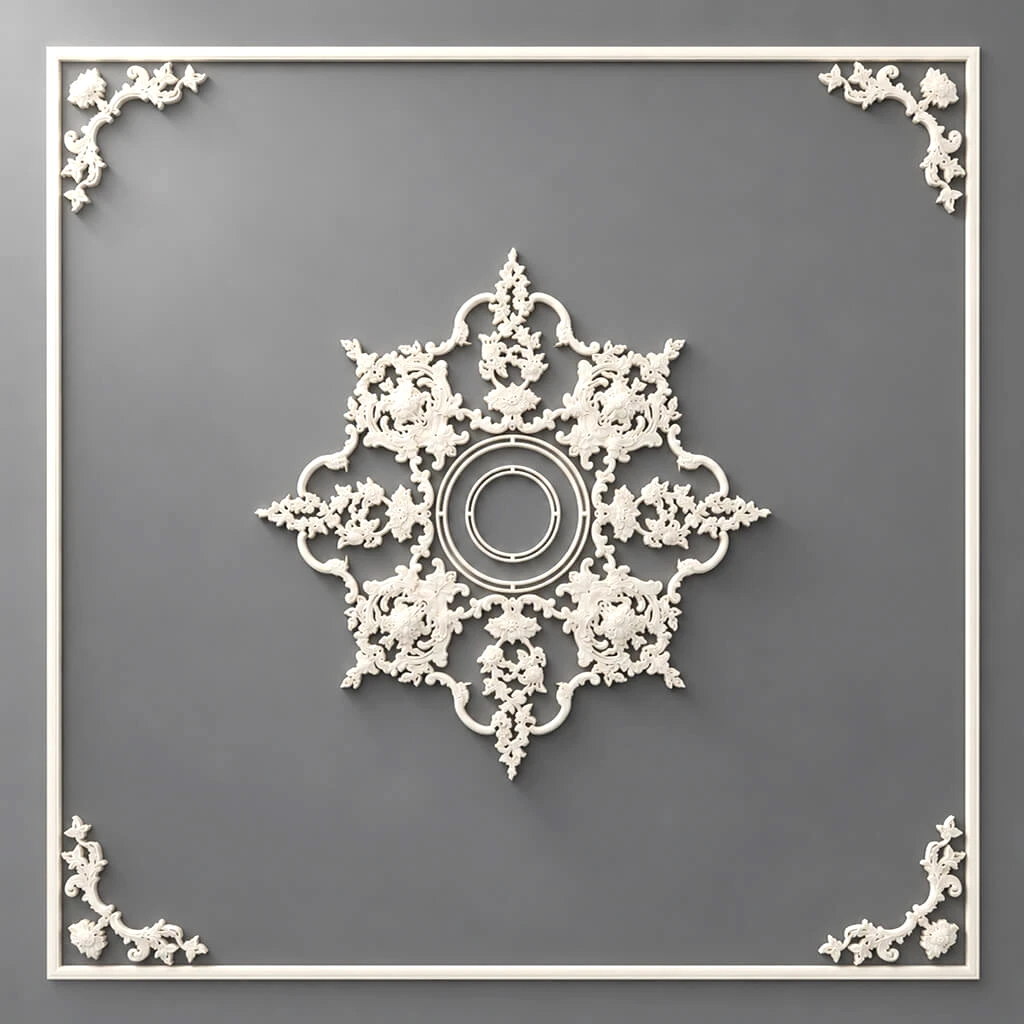






















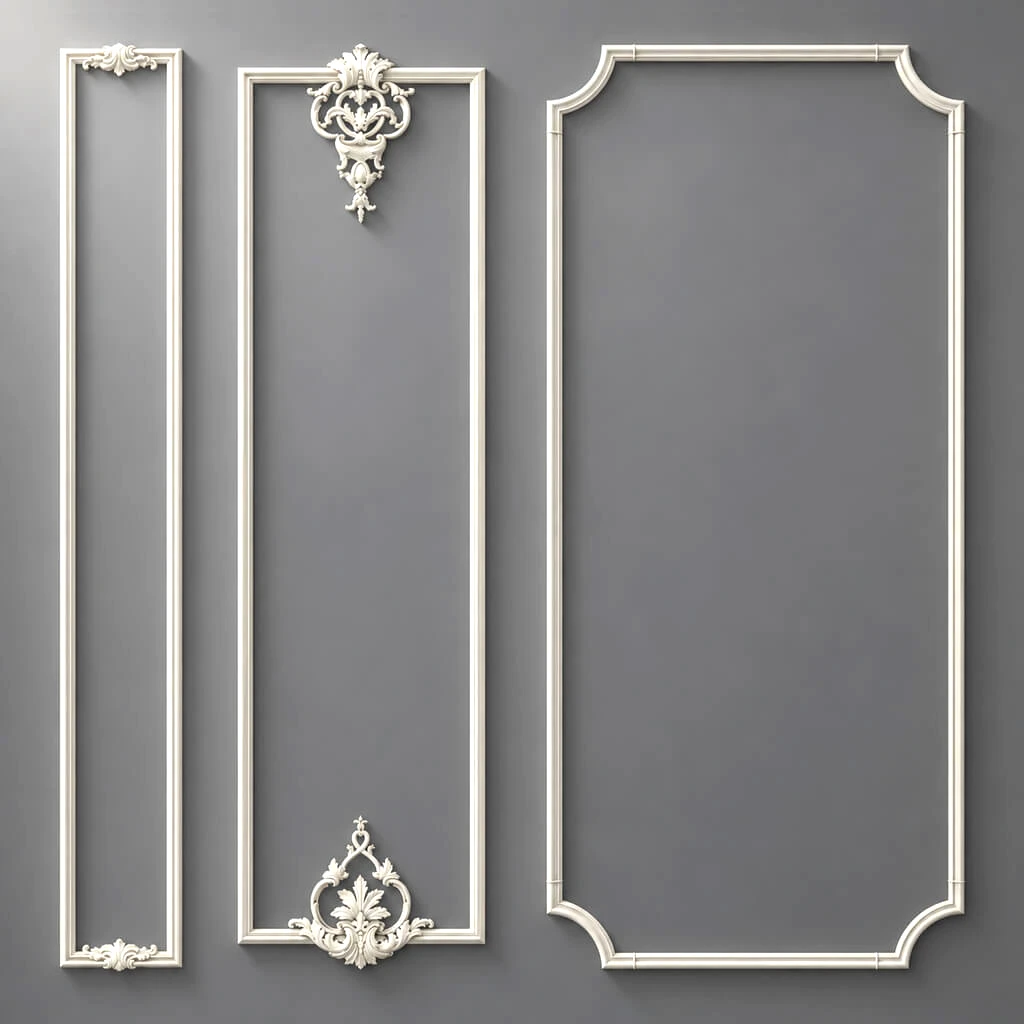
Decor idea for wall panels "Tsarskoye Selo" INTPU-039
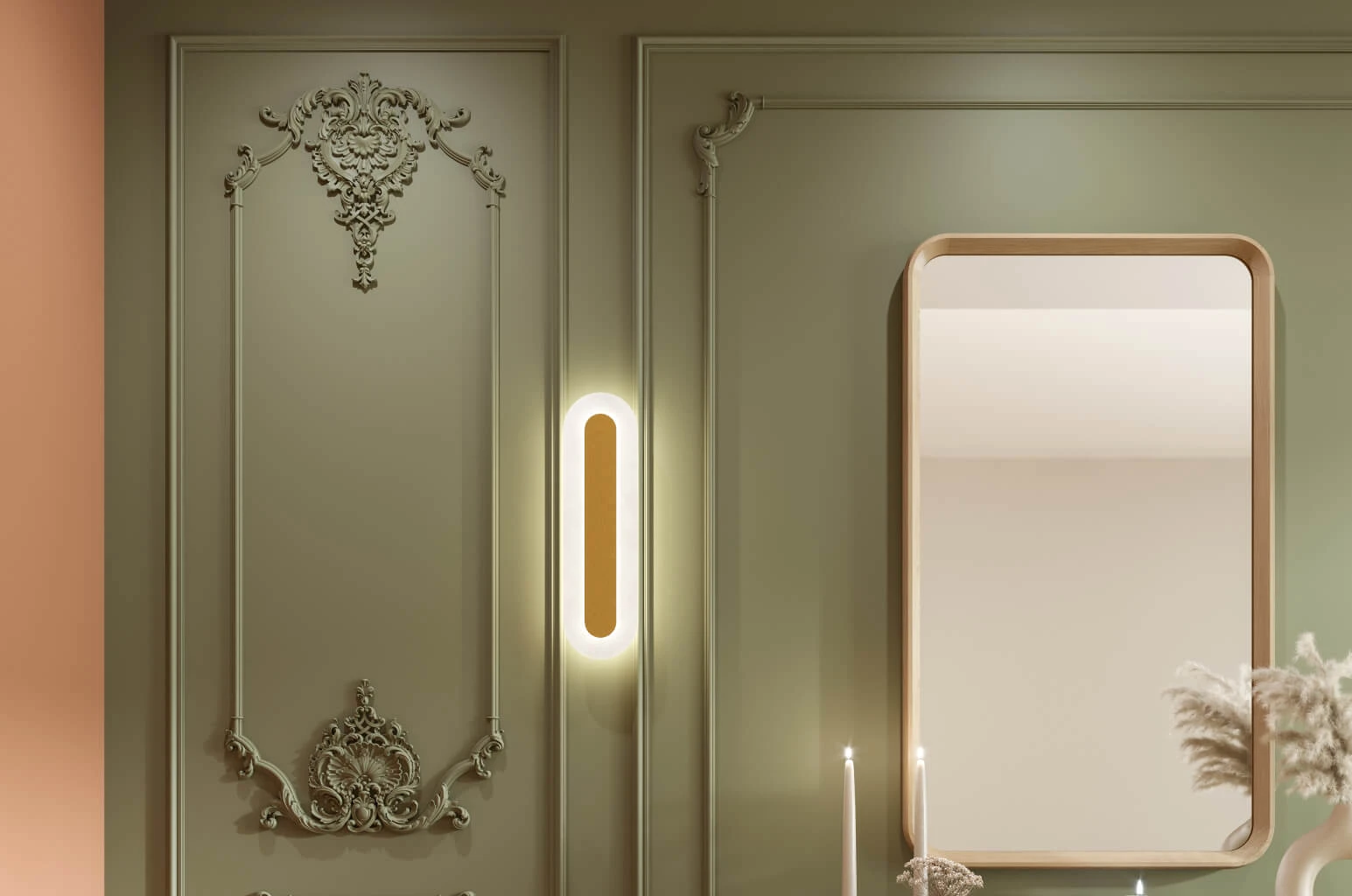
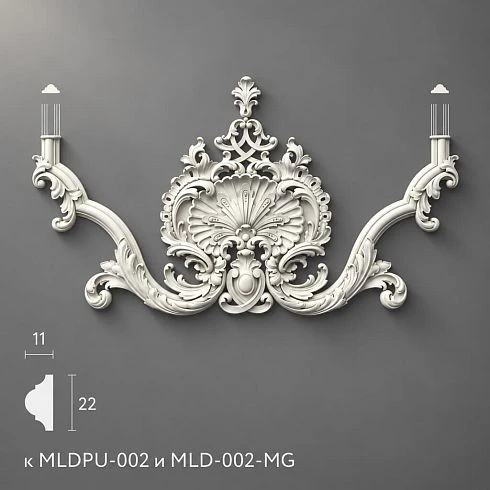
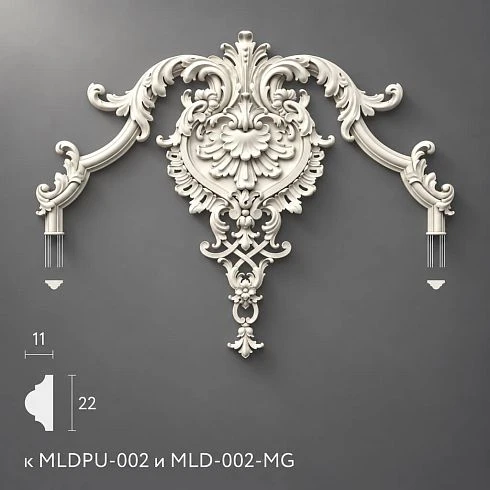
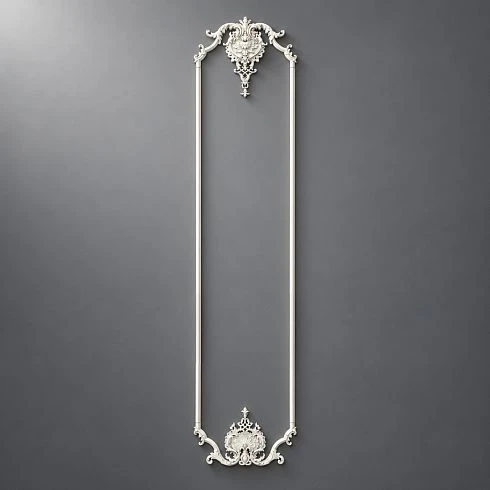
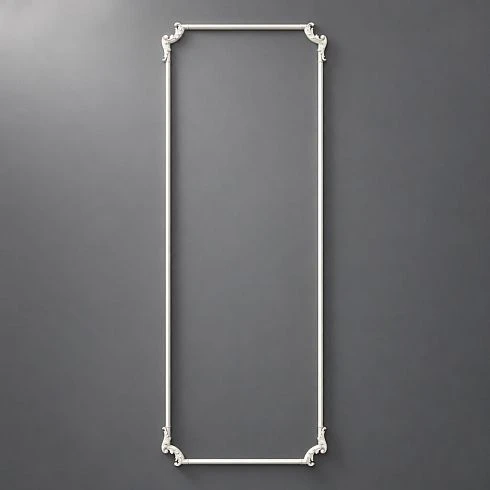
Used elements from the STAVROS array
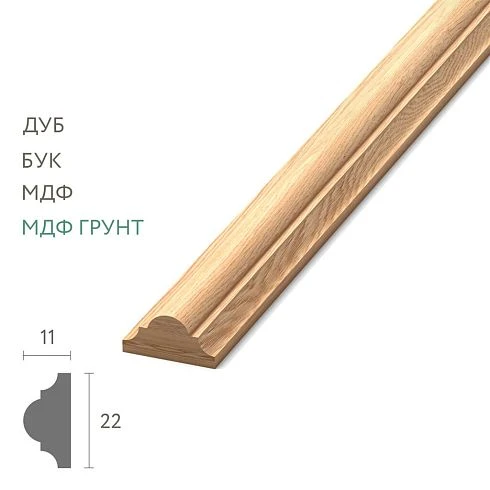
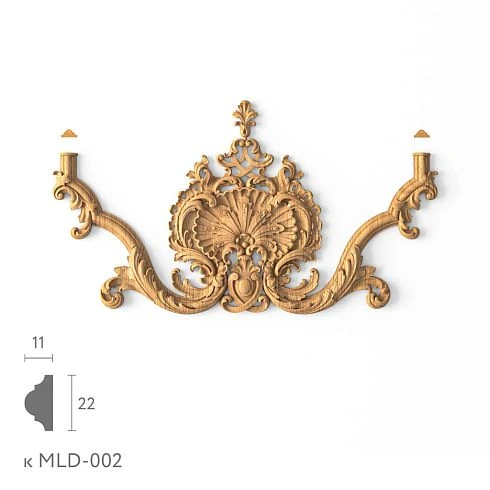
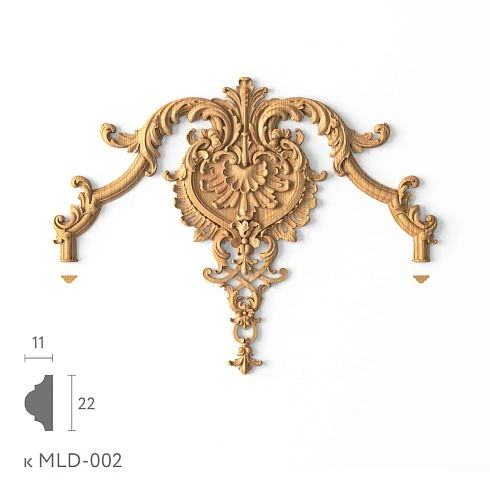
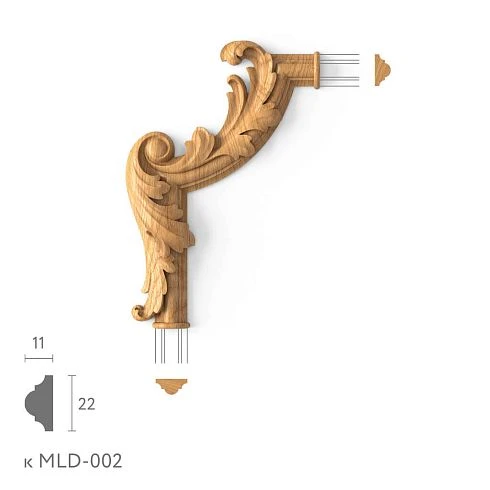
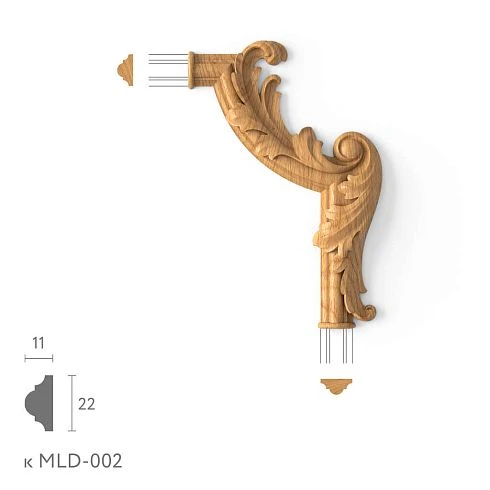
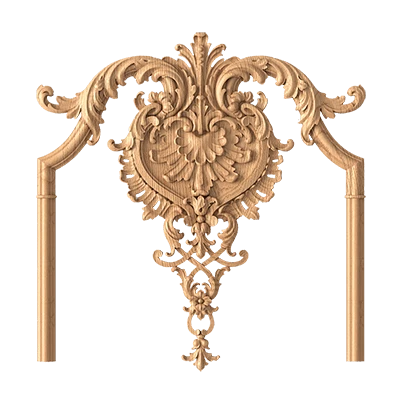
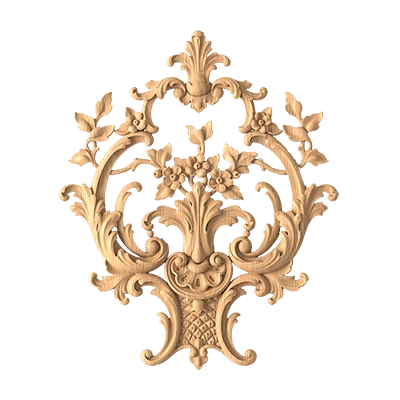
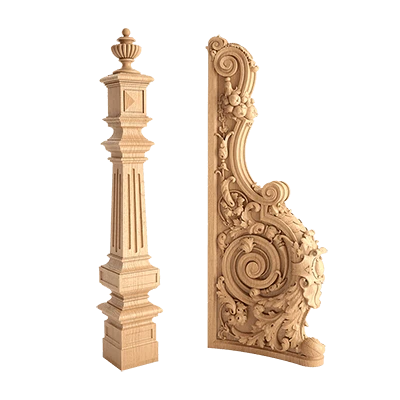
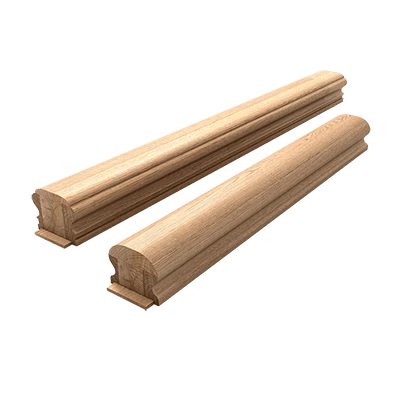
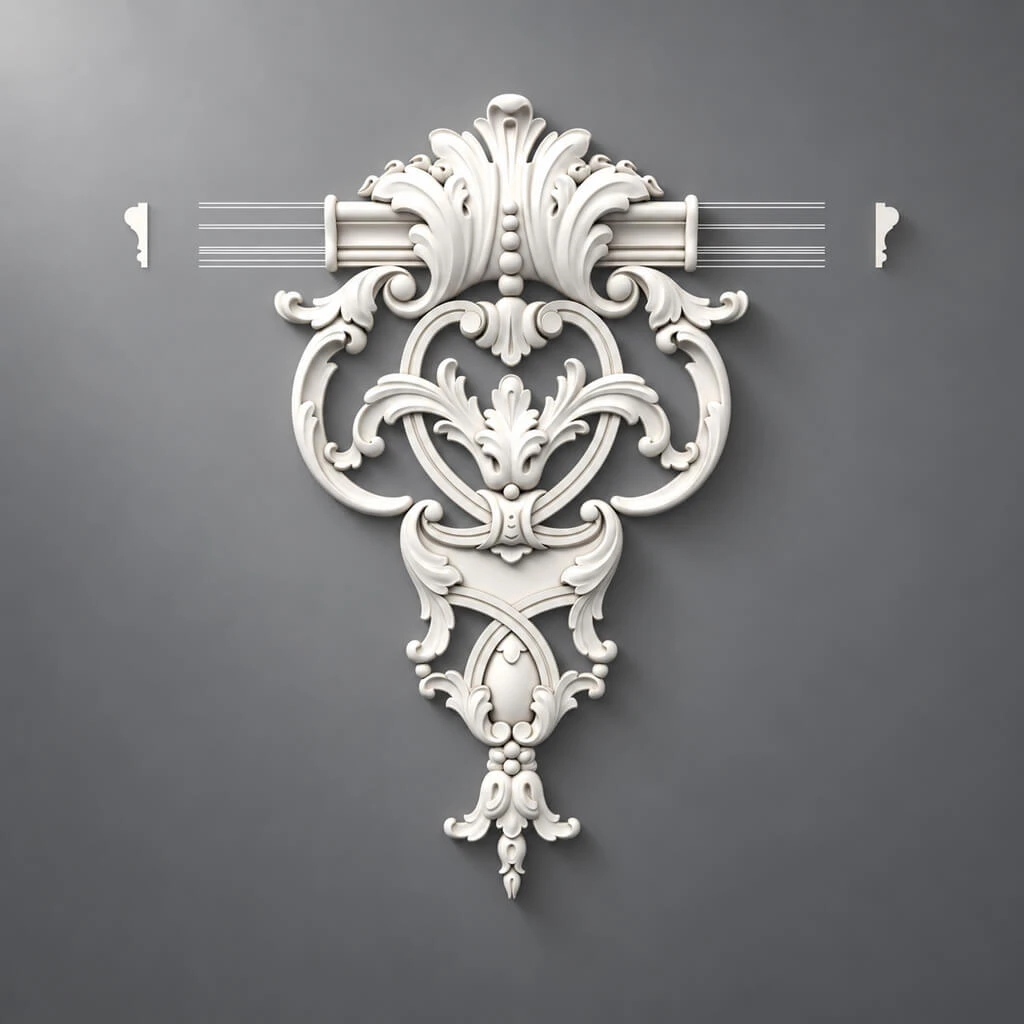
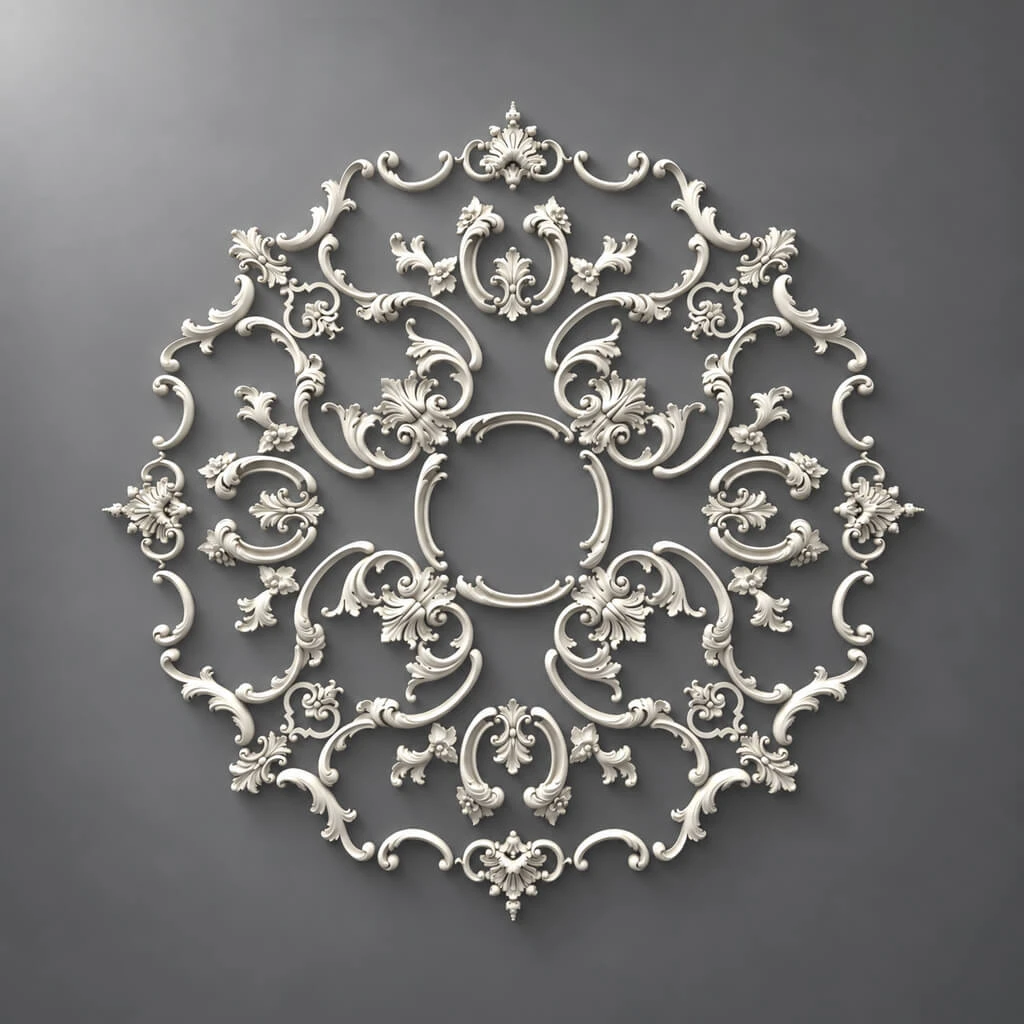
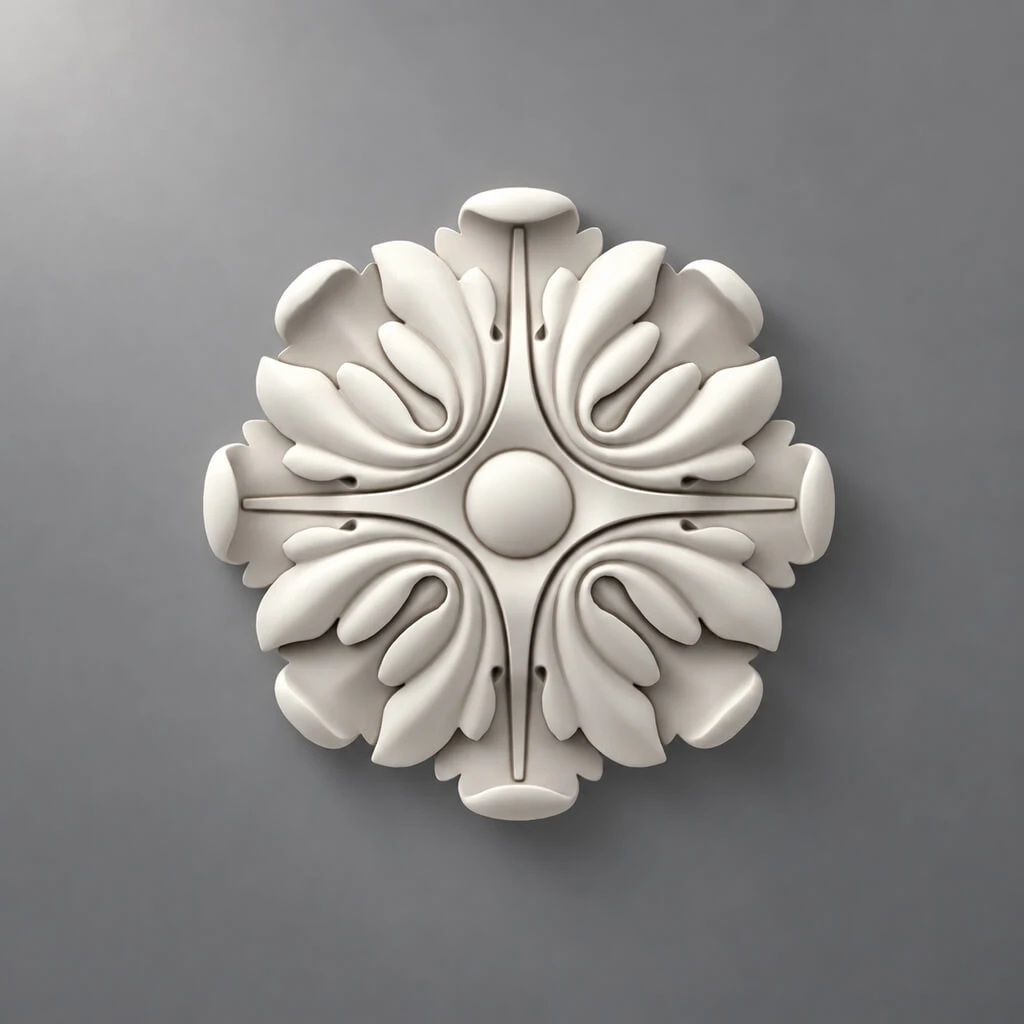
Polyurethane elements used: STAVROS
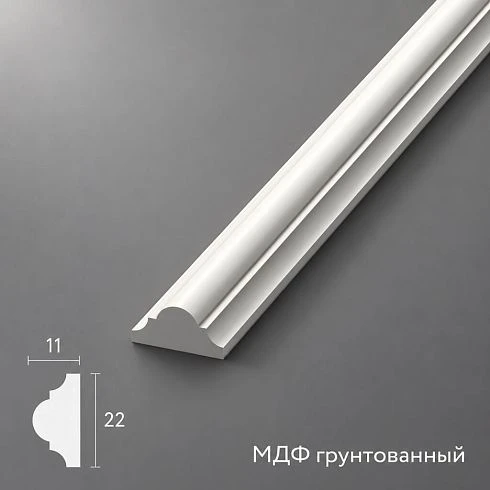
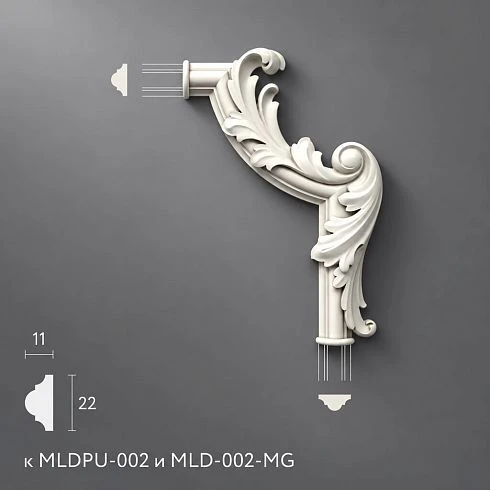
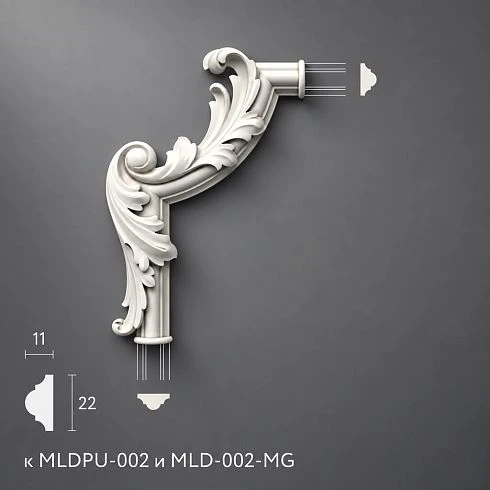
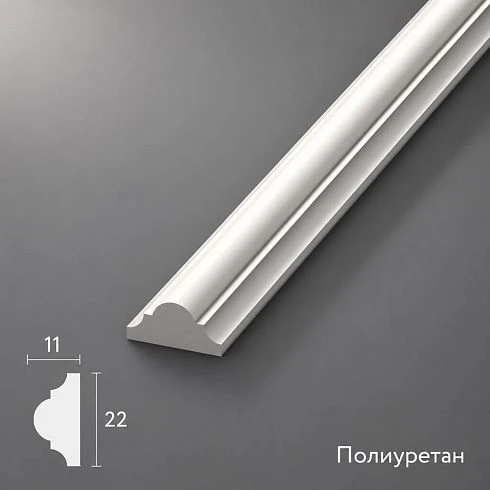
We will help you implement the project
Measurements
You send us furniture, interior, and preferences dimensions
Design
Our specialists will create a project (paid service, from 2000 rub.)
Kitting
After project approval, you receive a specification
Implementation
We will select partners in your city for painting and mounting decor
You may also be interested in
Frequently asked questions
Our showrooms are located in Saint Petersburg and Moscow. Production is located in Saint Petersburg.
Moscow contacts: /contacts_all/
Contacts of Saint Petersburg: /contacts_all/
Send us the product codes, quantities and delivery destination. Contact our team to confirm availability and order details.
Please contact us to confirm shipping availability, costs and delivery times for your destination.
Delivery cost depends on the size, weight of the item, and delivery address.
Please ask our team to confirm shipping costs and delivery arrangements for your destination before placing an order.
Prices and availability of items on the website are always current. Data is updated daily.
Note: items in stock are stored on the warehouse in unpolished form and shipped within 3 working days.
If the item is not in stock, average production time: 5–10 working days.
This is the quality of polishing of the items.
Standard — machine polishing, at a more attractive price.
Prestige — detailed hand polishing, items do not require further work.
More details: /information/kachestvo/
This is the type of veneer of the items.
Under enamel: produced by gluing wooden laminates without color and texture matching. Contrast tonal and textural differences are noticeable. This blank should be chosen if the item is intended for opaque coating.
Under tinting: produced by gluing wooden laminates with color and texture matching. Tonal and textural differences may occur. This blank should be chosen if the item is intended for semi-transparent finish.
More details: /information/kachestvo/
Beech — dense, non-porous wood, most often used for items covered with enamel.
Oak — dense, porous wood with clearly visible natural grain. Due to its strength and decorative properties, it is often used in items with semi-transparent coating, highlighting the wood pattern.
Custom-made, if non-standard items are required, we can produce products from other types of wood, including blanks provided by the customer, manufactured according to our technical specifications.
All our furniture legs can withstand a vertical load of at least 100 kg.
Average production time for custom-made items: 5–10 working days.
Most items are stored on the warehouse in unpolished form. We need time to polish and pack orders.
Yes, we manufacture non-standard items according to individual projects, but we only accept orders with a minimum quantity.
We can manufacture items of the desired size, but we only work with bulk orders. For details, please consult the sales department manager.
Yes, some of our products can be used outdoors. For example, polyurethane items, as well as carved door casings made of pine.
Other items are produced to order using PUR glue, if minimum quantity is available. No warranty is provided for such products, as outdoor conditions are considered aggressive.
Please contact our team to confirm available finishes, minimum quantities and a quotation for your order.
- Dust removal. After sanding, the surface must be dusted.
- Priming. Apply primer in an even layer.
- Matting. After the primer has fully dried, the surface should be matted (lightly sanded for better adhesion).
- Finish coating. Apply finish coating: lacquer or enamel, in 2 layers, with interlayer drying.
More details: /information/sovety/
Apply adhesive to the decor. Attach to the surface and press briefly. Then, remove the decor from the surface and leave it open for 3–5 minutes. Press the decor firmly onto the surface and hold for 5–10 seconds.
More details: /information/sovety/
Ideally, you should prepare a design project before placing an order.
You can do this yourself by downloading drawings of our products from our website, or you can order a project from us.
If the number of decorative elements and fittings is small, our company's manager can assist you with selection.
Unfortunately, this service is not provided.
The packaging method depends on the type of items, but in each case, we ensure sufficient protection for safe transportation.
We most often use corrugated cardboard and stretch film. Fragile items are additionally secured on a rigid base to prevent damage during transport.
Please confirm the minimum order quantity for your selected products and finishes with our team.
Please contact our team to discuss measurement and installation requirements for your project and destination before ordering.
Also see
Decor idea for Tsarskoye Selo INTPU-039 wall panels for a zone with a mirror and console
A mirror in the hallway is the first thing you see when leaving home, and the first thing that greets you when returning. When it stands on a console integrated into a molding system of olive-green wall panels, with vertical sconces on the sides — it is no longer just a "mirror in the hallway." It is an interior point of view. An intention expressed in the architecture of the wall.
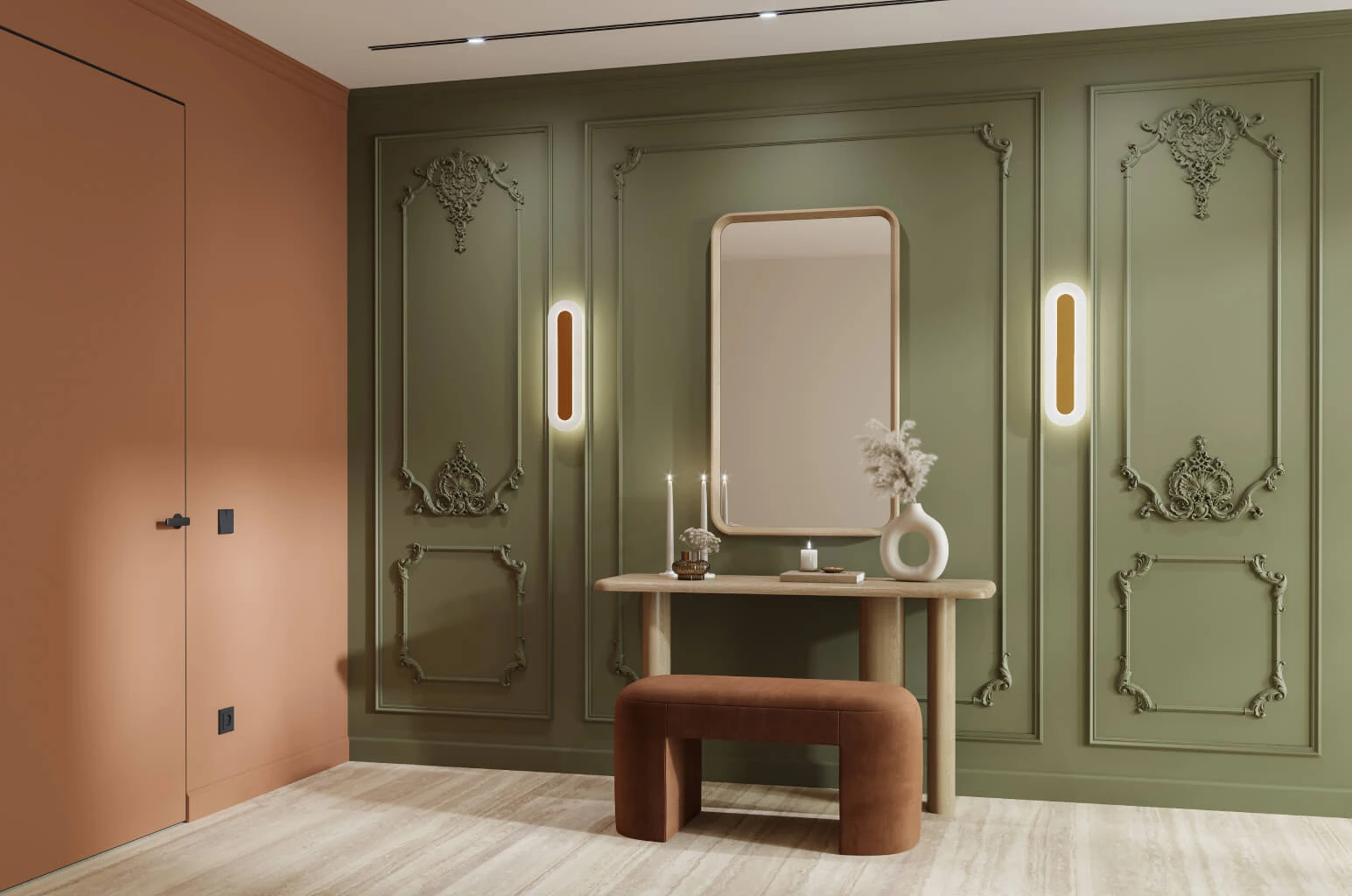
The decor idea for Tsarskoye Selo INTPU-039 wall panels is a ready-made solution for designing a wall with a mirror, console, and decorative lighting. Moldings made of polyurethane, ornamental stucco overlays, olive-green wall panels, vertical sconces, a soft bench, and a warm terracotta accent on the side wall create an expressive, functional, and architecturally complete neoclassical composition — for a hallway, bedroom, dressing room, vanity area, foyer, or premium interior project.
INTPU-039 is "Tsarskoye Selo" in an intimate, personal interpretation. Not a grand hall — a space for meeting oneself: in the morning before leaving, in the evening after returning.
What the INTPU-039 idea represents
Mirror and console as the center of the system
Unlike "large" molding systems organized around the architectural symmetry of the wall, INTPU-039 is built around a pair of objects: a mirror and a console. These are specific objects with specific functions — and they set the logic for the entire decorative system.
The central axis of INTPU-039 is the mirror's vertical line. The console beneath it is the horizontal base. The molding frames on the sides are the architectural surroundings of this pair. The sconces are vertical accents that reinforce the central axis. The bench at the bottom is the final "anchor," making the area not only beautiful but also livable.
Everything in INTPU-039 works for this central pair. No decorative "freelancing" around — only what is needed, and exactly as much as needed.
Olive-green accent wall
A green wall in an interior is a solution that requires confidence. Olive-green in INTPU-039 is neither bright nor aggressive: it is a muted, "herbal" tone of medium saturation with a gray undertone. This shade does not overwhelm — it creates depth. The wall ceases to be just a background and acquires its own character.
In the INTPU-039 system, olive-green works in a monochrome scheme: the wall, moldings, stucco overlays, cornice, baseboard — all in one tone. The relief polyurethane decorative overlays is read through light and shadow, without color contrast — this is precisely what makes the system delicate, not flashy.
Terracotta side wall as a warm accent
A specific feature of INTPU-039, distinguishing it from other ideas in the "Tsarskoye Selo" collection, is the terracotta wall on the side. This is a deliberate color contrast: the cool olive-green of the main panel against the warm clay-terracotta of the side.
Green and terracotta are two colors on opposite sides of the color wheel. Yet both have a muted, natural, "earthy" character. That is why they do not clash but create that special depth in the interior called "color dialogue": each color makes the other more expressive.
Side panels with symmetrical stucco decor
On both sides of the central mirror and console area, there are side molding panels with upper and lower stucco overlays. These panels serve an architectural function: they "frame" the central area, creating a ceremonial decorative context for it.
Symmetry of the side panels relative to the central axis of the mirror is a fundamental requirement of INTPU-039. Any violation of symmetry destroys the sense of "intentionality" and "architecturality" for which the system was created.
Vertical lights
Vertical sconces in INTPU-039 are not just light sources. They perform three functions: create vertical axes on the sides of the mirror, provide task lighting for the area (hallway, vanity table, dressing room), and illuminate the relief of moldings and stucco overlays in the evening.
Shape of the lights: elongated vertical, with light or frosted shades. Metal: matte gold, brass, or soft bronze — in dialogue with the warm terracotta accent.
Where are Tsarskoye Selo wall panels INTPU-039 used
Hallway and grand foyer
The hallway is the main scenario for INTPU-039. Here, the first and last impression of the home is created. Olive-green molding panels with a mirror, console, and sconces transform a "corridor" entrance into what designers call a "grand hallway" — a space with its own character and dignity.
For the hallway, functionality is especially important: the console is a place for keys, mail, small items. The bench is for shoes. The mirror is for a last look before leaving. In INTPU-039, all this functional "equipment" is integrated into the decorative system so that it looks not utilitarian, but architectural.
For narrow hallways (width 1.2–1.8 meters): INTPU-039 in a simplified version — without side panels, only the central mirror area with a molding frame and two sconces. For hallways with a width of 2 meters or more — the full three-part system.
Bedroom: dressing table area and walk-in closet
In the bedroom, INTPU-039 creates a dedicated "morning ritual" zone: a dressing table with a mirror, sconces for task lighting, a console for cosmetics and accessories, and a bench. The olive-green background with a molding system makes this area a prominent interior accent in the bedroom.
For a master bedroom with a walk-in closet — INTPU-039 decorates the wall at the entrance to the closet: a full-length mirror, a console with small items, sconces for lighting. The olive-green wall of the closet with moldings creates the feel of a "dressing room" — a space that in good homes always had its own character.
Hall with console
For a hall in an apartment or at the entrance of a private house, INTPU-039 is an organic system for organizing a "welcoming" zone. A console with decorative objects, a mirror above it, sconces on the sides — a standard "hall" design scheme that INTPU-039 elevates to an architectural statement.
Commercial spaces
For beauty salons — INTPU-039 creates the design of the reception area or a hairdresser's workstation: a mirror, console, lighting, and an olive-green molding wall create the image of an "establishment with character."
For boutiques and showrooms — the zone with a mirror and console in INTPU-039 serves as a "fitting" or "display" space. The olive-green background is a versatile and noble color for showcasing most products.
Wall decor with mirror and console
The "random mirror" problem
In most hallways and bedrooms, the mirror hangs "just like that" — on an empty wall, without connection to the surrounding space. It functions but does not participate in the interior. It can be moved, removed, or replaced — and nothing will fundamentally change.
Polyurethane wall decor In the INTPU-039 system, this problem is fundamentally solved. The molding system creates an architectural context for the mirror and console: they are inscribed in a decorative frame, stand in the center of a symmetrical system, framed by sconces — and now they do not "hang" but "belong" to the wall.
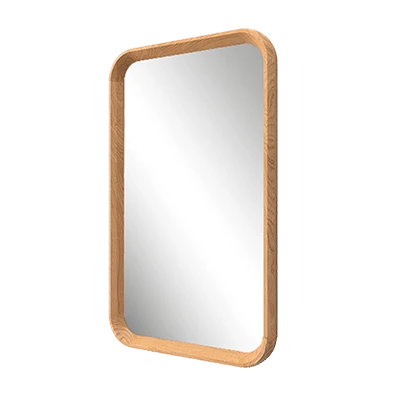
Mirror inside the molding frame
One of the techniques of INTPU-039 is a molding frame in which the mirror is inscribed. The molding profile, painted in the same olive-green tone as the wall, creates a "recessed" frame for the mirror: it looks not hung, but built-in.
An alternative option is a mirror in a wooden or brass frame, placed in the central field of the molding panel, without "embedding". In this case, the mirror frame becomes an independent decorative accent against the background of the olive-green system.
Console as functional decor
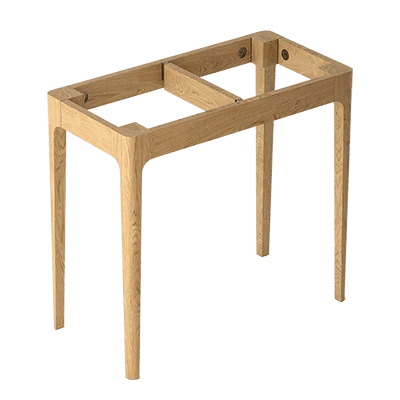
The console in INTPU-039 is selected according to the warm character of the system: light wood (natural oak, ash, bamboo) or a combination of wood with metal (brass legs). Console height: 80–85 centimeters — a standard "working" height, convenient for both decoration and functional use.
On the console: a decorative vase with dried flowers, a small tray with accessories, a candle in a glass or clay candlestick — all in a warm palette, echoing the terracotta accent.
Banquette as completion of the zone
The banquette at the bottom is not a mandatory but an organic final element. For the hallway, it is a functional item (to sit down to put on shoes). For the bedroom, it is decorative. Upholstery: light beige or gray-green velour, natural linen. Shape: rectangular, on wooden legs.
Olive-green palette and terracotta accent
Olive: a natural color with history
Olive color appeared in interiors long before 'green' became a 'trend'. It was present in the upholstery of library armchairs in Victorian England, in the silk of 18th-century St. Petersburg mansions, and in the cloth on gaming tables of Europe's finest clubs. It is a color with a reputation—and it is this reputation that it brings to the interior.
In INTPU-039, olive is chosen not as a 'fashionable green', but as a 'historically justified green': muted, with a gray undertone, matte—exactly as it was in the best interiors of 'Tsarskoye Selo' before the advent of synthetic paints.
Range of olive shades for INTPU-039
Light sage—the airiest option. Pale, almost gray-green. For small entryways and narrow hallways where it's important to maintain a sense of spaciousness.
Classic olive—the main tone of INTPU-039. Medium saturation, pronounced green undertone. Works well in any lighting.
Khaki with a green undertone—a more saturated, 'military' option. Creates a darker, more serious space. Good for large entryways and hallways.
Bottle green matte—the most saturated option. For the decisive—and already 'dressy'.
Why terracotta works alongside olive
Terracotta and olive green are complementary colors of the natural palette. Both are present in Italian rural interiors, Spanish ceramics, and Mediterranean landscapes: clay brick, olive leaves, iron-rich red earth.
In INTPU-039, the terracotta wall plays the role of "warmth": it warms up the cool olive background, making the interior lively and less "northern". At the same time, terracotta is present only on the side wall — as an accent, not as a base. This is an important proportional decision: if there is too much terracotta, it will "overpower" the olive and destroy the integrity of the system.
Monochrome painting of moldings and stucco
Moldings, corner elements, and stucco overlays in INTPU-039 are painted in the same olive-green tone as the background wall. Only matte finish.
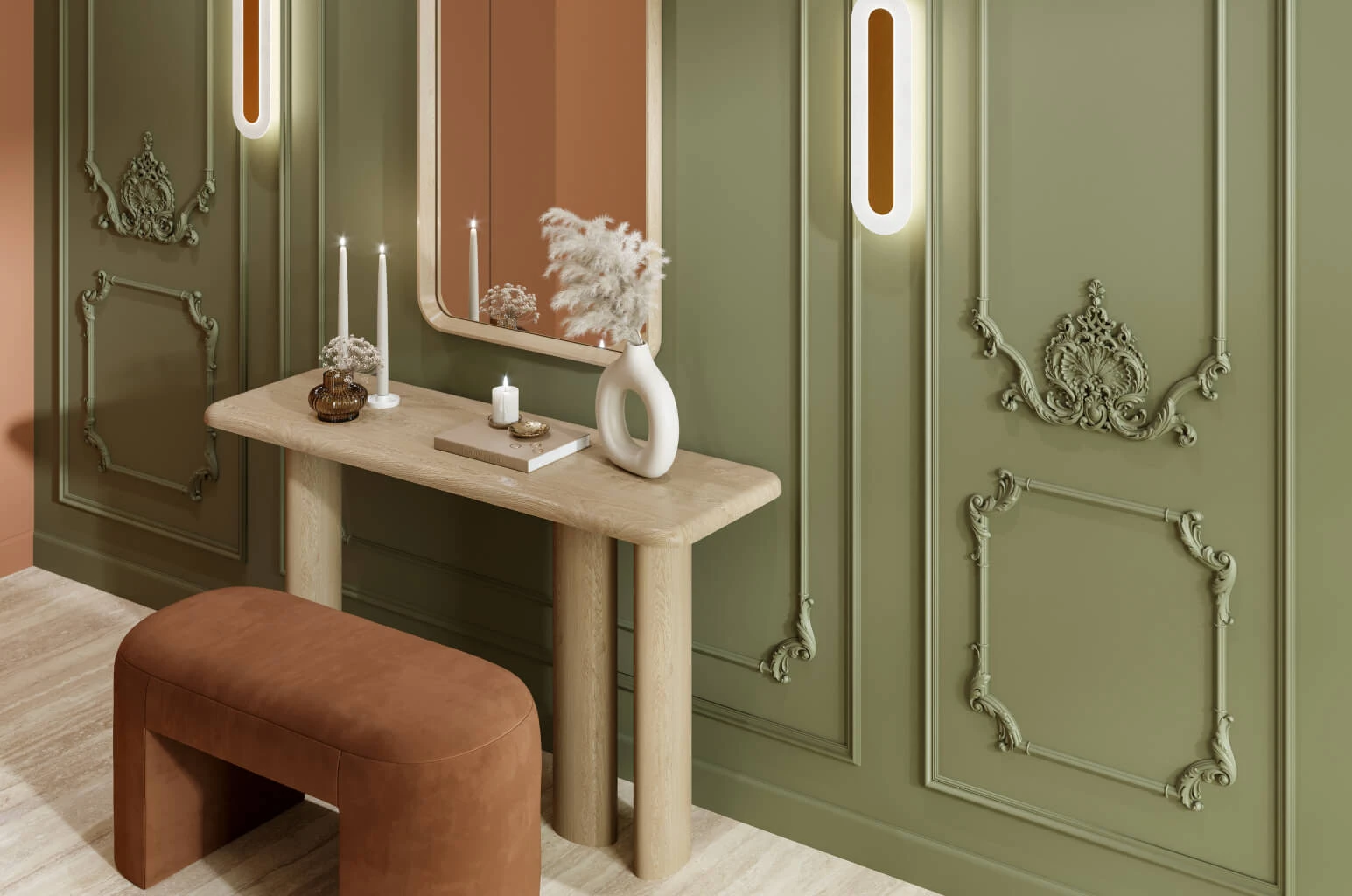
Result: with frontal lighting — a calm, monolithic surface. With side lighting (created by vertical sconces) — a rich relief pattern: each molding profile and each ornamental element of the overlay is revealed through shadow. This is an effect that cannot be achieved with flat paint, wallpaper, or decorative plaster.
Stucco overlays as an accent on side panels
Upper overlays: "crown" of side panels
In INTPU-039, the upper stucco overlays are placed at the top of each side panel — approximately 10–15 centimeters from the upper horizontal profile of the frame. They serve as a "completion": without them, the panel looks like a geometric frame. With them, it looks like a classic decorative unit.
For an olive-green monochrome system, an ornament of moderate detail is recommended: complex enough to create an interesting shadow under side lighting, but not so overloaded as to appear heavy against a green background.
Lower overlays: "anchor" and balance
The lower stucco overlays on the side panels balance the upper ones. They are somewhat smaller in size — this corresponds to the classical principle of decoration decreasing downward. Without the lower overlays, the system seems "overhanging"; with them, it feels stable.
Location: at the bottom of the side frame, symmetrical to the lower horizontal profile. Not at the very bottom of the frame, but with an indentation of 10–15 centimeters from the lower molding.
The "empty field" principle as a design tool
In INTPU-039, most of the side panel plane is free. The top overlay, bottom overlay, corner elements — and an empty field between them. This is not "emptiness," but a deliberate pause.
The free field of the side panel is the "silence" in music: it is no less important than the sound. In an interior context: the empty plane of an olive-green wall inside a molding frame creates a sense of calm that would not exist if the overlays were scattered across the entire surface.
Moldings, mirror, and vertical sconces
How light activates the system
The vertical sconces in INTPU-039 perform their main "decorative" function precisely in the evening. When the sconces are turned on, the side light falls on the moldings at an angle — and each profile, each corner overlay element, each ornamental curl of the stucco detail gains a shadow.
By day, INTPU-039 is a beautiful, calm monochrome system. In the evening, with the sconce light, it becomes a lively, "voluminous" interior with depth and character. It is this evening image that is the final "image" of the system: the reason it was all worth doing.
The mirror as a "space multiplier"
In hallways and small rooms, the mirror in the center of INTPU-039 performs another function: it reflects the opposite wall and doubles the sense of space. In a narrow hallway with olive-green molding panels and a mirror, the space does not "press down" but opens up.
Optimal mirror size for INTPU-039: width — 55–75% of the central molding frame width, height — from 70 centimeters to almost the full frame height. A full-length mirror (180–200 centimeters) is an option for the bedroom and dressing room.
Decor for Molding — linear detailing of profiles
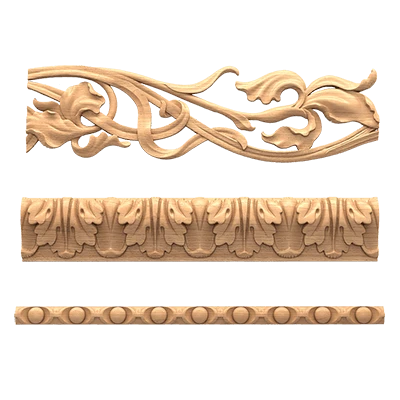
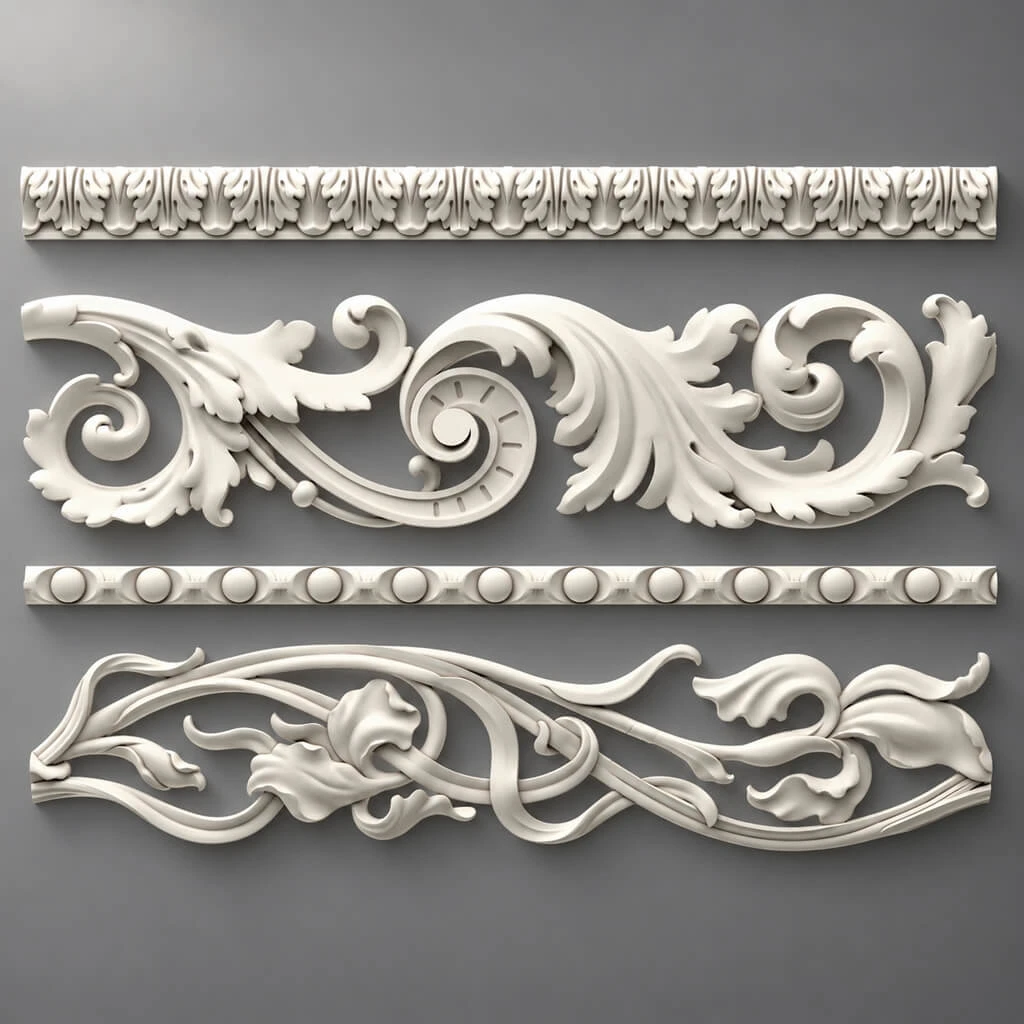
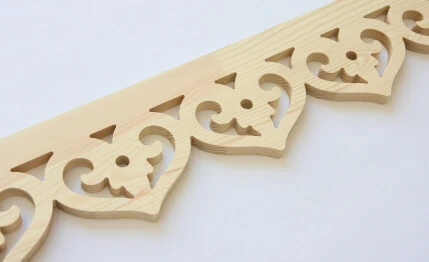
Optional but organic element of INTPU-039 — linear ornamental Decor for Molding on the horizontal cornice profiles. With evening side lighting from a sconce, it creates a subtle ornamental pattern on the upper wall area — another level of detail that is "discovered" upon close inspection.
What elements are included in the INTPU-039 system
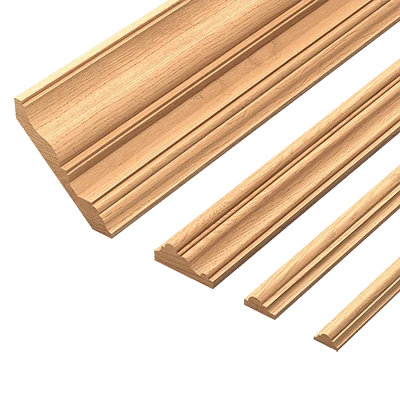
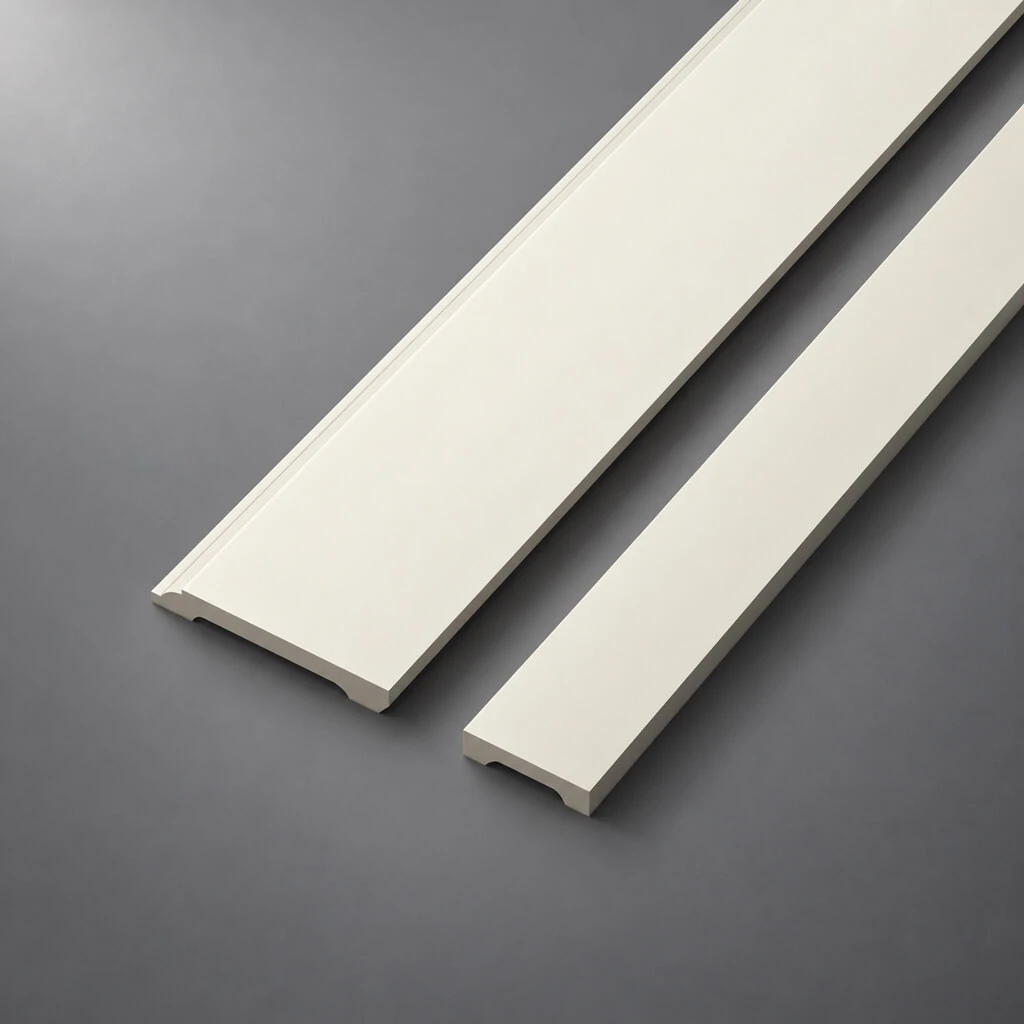
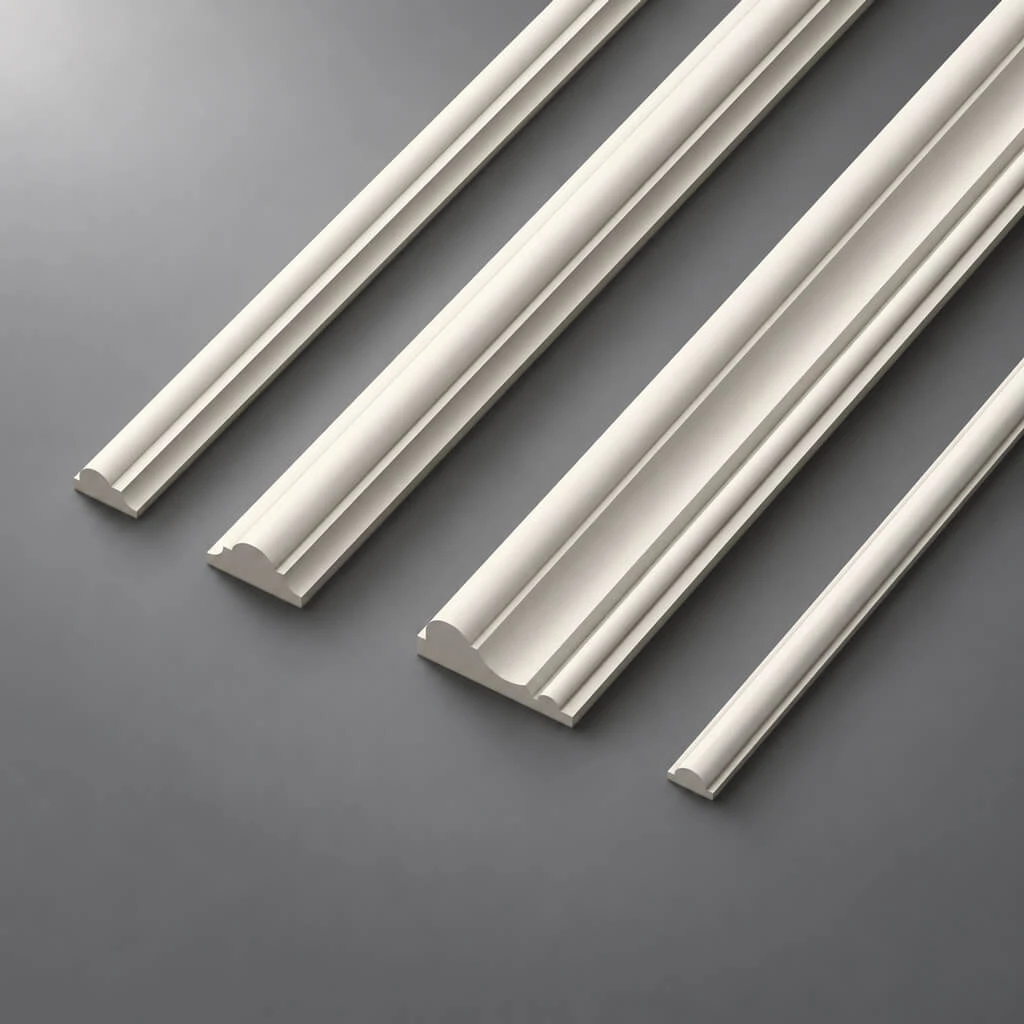
Moldings made of polyurethane — 40–50 mm profile for the main frames of the central and side panels.
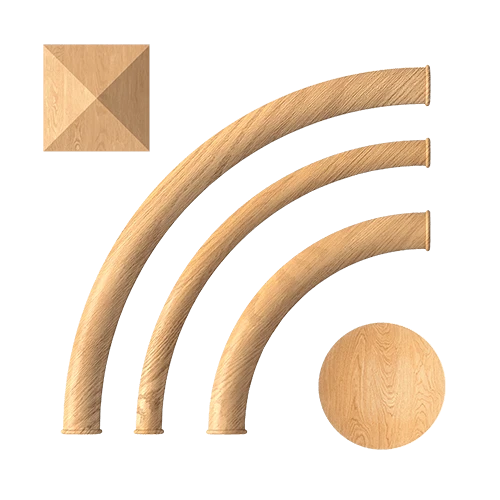
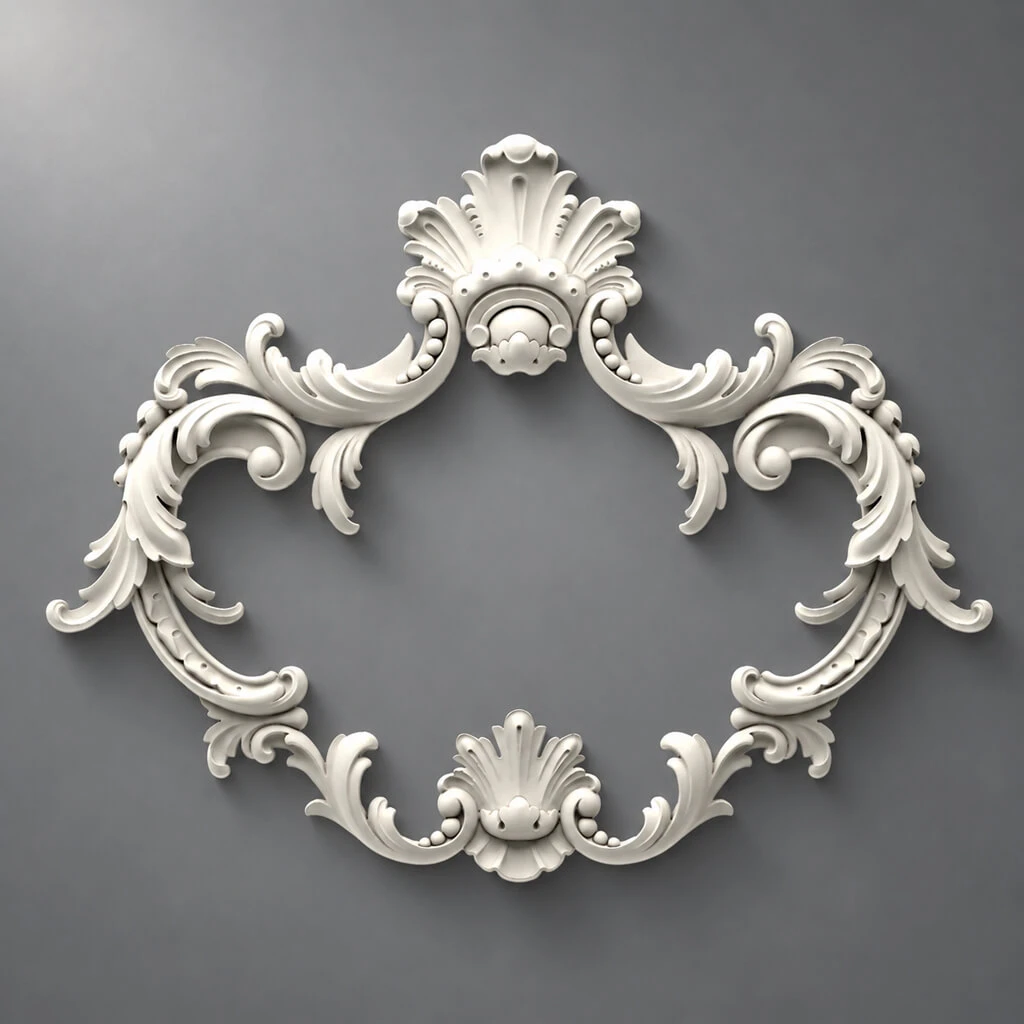
Shaped corner elements — Polyurethane appliqués at the intersection points of the moldings. 4 pieces per frame.
Upper stucco ornamental overlays — one element per side panel.
Lower stucco overlays — one element per side panel. Size: 75–85% of the upper ones.
Optional central element — a small medallion or cartouche in the central area of one of the side panels, if height allows.
Decor for Molding — for horizontal cornice profiles. Optional.
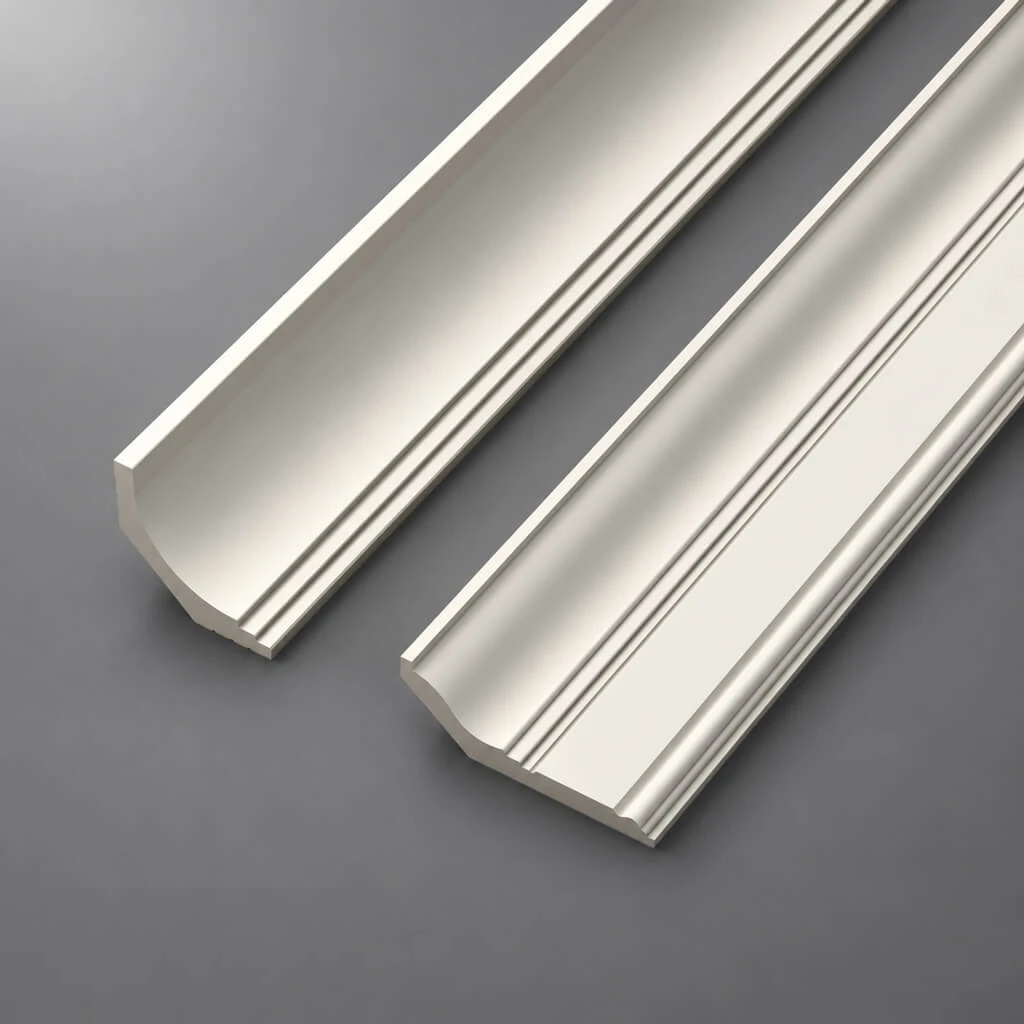
Ceiling cornice — a moderately detailed profile matching the room scale.
Baseboard — 14–20 centimeters, matching the wall color.
Vertical sconces — paired, with warm-toned metal (brass, matte gold, bronze) and light elongated shades.
Mirror — in a wooden, brass, or monochrome frame.
Console — on wooden or metal legs, in a warm tone.
Bench — optional, with upholstery in a neutral warm tone.
What to pair with Tsarskoye Selo decor INTPU-039
Colors, materials, and textiles
The main palette around INTPU-039 consists of warm natural tones related to olive and terracotta: linen, sand, cream, light beige, natural unbleached cotton.
Floors: natural parquet in a medium-dark tone (brushed oak, smoked oak, dark cherry) — it creates the right warm base for an olive wall. Light parquet or wood-look ceramic also works, especially in small hallways.
Textiles: linen, cotton, or velvet — in beige, terracotta, khaki, gray-green. For a bench, a rectangular cushion made of natural fabric.
Decorative accessories
Dried flowers in clay or glass vases — ideal partners for the olive-terracotta system: they belong to the same natural palette.
Candles in clay, brass, or wooden candle holders. A small tray of dark wood or aged brass for keys and small items. Books in warm-toned fabric bindings.
Mirror: in a natural wood frame (warm light tone) or a thin brass frame — both options fit organically into INTPU-039.
What does not combine
Bright cold accents — blue, purple, cold pink — destroy the natural warm-cool harmony of the system. Chrome and polished nickel in lighting fixtures are too "technological" for the olive-classic context. White glossy surfaces create an inappropriate contrast.
How to replicate the INTPU-039 idea
Step 1. Wall measurement. Wall width, ceiling height, location of doors, windows, outlets, switches.
Step 2. Positioning the mirror and console. Central axis of the mirror = central axis of the decorative system. Console height: 80–85 centimeters. Mirror height: 70–200 centimeters depending on the zone's purpose.
Step 3. Molding panel layout. Central zone: mirror width + 20–40 centimeters on each side. Side panels: 35–50% of the central zone width. Distance between panels: 12–20 centimeters.
Step 4. Panel height. For ceilings of 2.7 meters: cornice 10–14 centimeters, offset 5–8 centimeters, main frames 195–215 centimeters, baseboard 14–20 centimeters.
Step 5. Sconce placement. Height: at the level of the upper quarter of the mirror or 20–30 centimeters above its top edge. Horizontal: flush with the mirror edge or with an offset of 15–25 centimeters. Wire routing — before molding installation.
Step 6. Choosing the main color. Test the sample on the wall in daylight and evening lighting. Check compatibility with flooring, console, and sconce metal.
Step 7. Choosing the color of the side accent wall. Terracotta, caramel, clay, or brick — one of the warm tones related to the natural olive palette. Saturation: moderate or high — depending on the brightness of the olive main background.
Step 8. Selecting STAVROS elements. From catalogs molding, appliqués и decoration for moldings.
Step 9. Quantity calculation. Frame perimeters — molding linear footage. Corner elements: 4 × number of frames. Overlays according to the layout. Cornice and baseboard along the perimeter. Reserve: 12–15%.
Step 10. Surface preparation. Leveling, puttying, priming. Marking with a laser level. Special attention — verticality of axes and symmetry relative to the mirror center.
Step 11. Installation. By installation guide for STAVROS moldings: cornice, baseboard, horizontal and vertical moldings, corner elements.
Step 12. Installation of overlays. By installation guide for polyurethane stucco.
Step 13. Painting. Primer on all polyurethane elements. Two coats of a single color in an olive-green tone. Only matte finish.
Step 14. Installation of sconces, mirror, console. Final styling with accessories. Evaluation of the result under evening sconce lighting.
Who the INTPU-039 idea suits
Those who are decorating an entryway or hall and want to make it not a "transit corridor" but a full-fledged space with character and architecture. INTPU-039 is a tool for this transformation.
Those who are creating a vanity area or dressing room — and want the morning ritual to take place not just "by the mirror" but in a thoughtful, beautiful, inspiring place.
Interior designers working with entryways, master bedrooms, dressing rooms — spaces where not only beauty but also functional precision of the solution is important.
Beauty salons and boutiques that need a reception area or fitting room with a "historical" character and individuality.
Hotels with the concept of "historical intimacy": INTPU-039 in the hallway creates the feeling of a "private club" rather than a "standard suite."
Buy decor for wall panels Tsarskoye Selo INTPU-039
All components for implementing the INTPU-039 idea are presented in the full catalog polyurethane products from STAVROS. Moldings made of polyurethane of the required profile for the main and side frames. Polyurethane decorative appliques — shaped corner elements, top and bottom ornamental overlays. Decor for Molding — linear ornamental decor for the cornice. All Polyurethane wall decor of the "Tsarskoye Selo" collection — in consistent quality.
The INTPU-039 system adapts to any wall width, ceiling height, mirror size, placement of console, sconce, bench, outlets, and switches. This is not a rigid template — it is a principle of classic organization of the mirror area that works both in a narrow hallway of a city apartment and in a spacious hall of a country house.
Olive green "Tsarskoye Selo" — for those who know how to greet the day beautifully.
FAQ — answers to popular questions
Will INTPU-039 fit in the hallway?
Yes. INTPU-039 was created specifically for the hallway and foyer with a mirror and console. Olive-green molding panels, stucco overlays, sconces, and a bench turn the hallway into a full-fledged architectural space with character.
Can this idea be used in the bedroom?
Yes. INTPU-039 is well-suited for the bedroom: areas for a vanity table, dressing room, or simply an accent wall with a mirror and console. The olive color creates a calm, "adult" look for the sleeping area.
Why was the olive color chosen?
Olive is a "historically grounded" green: muted, noble, natural. It creates depth without aggression, looks modern in a neoclassical context, and pairs exceptionally well with moldings, stucco, warm wood, brass, and terracotta accents.
Do I need to paint the stucco the same color as the wall?
For INTPU-039, this is the optimal solution. A monochrome olive system looks cohesive and delicate. The relief of the stucco overlays is revealed in the light of the sconces — precisely this way, without color contrast.
How do olive and terracotta combine?
This is a natural pair: both colors belong to the "earthy" palette and create a warm, lively dialogue. Olive "cools" and adds nobility, terracotta "warms" and adds life. Together, they create that "Mediterranean" or "historical" interior look that is both beautiful and cozy.
What elements are needed for implementation?
Moldings made of polyurethane, shaped corner elements, top and bottom sculpted appliquésceiling cornice, baseboard, optional Decor for Molding. Installation — according to the molding guide и the STAVROS stucco guide.