











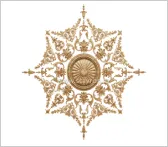









































































Decor idea for wall panels "Pavlovsk" INTPU-040
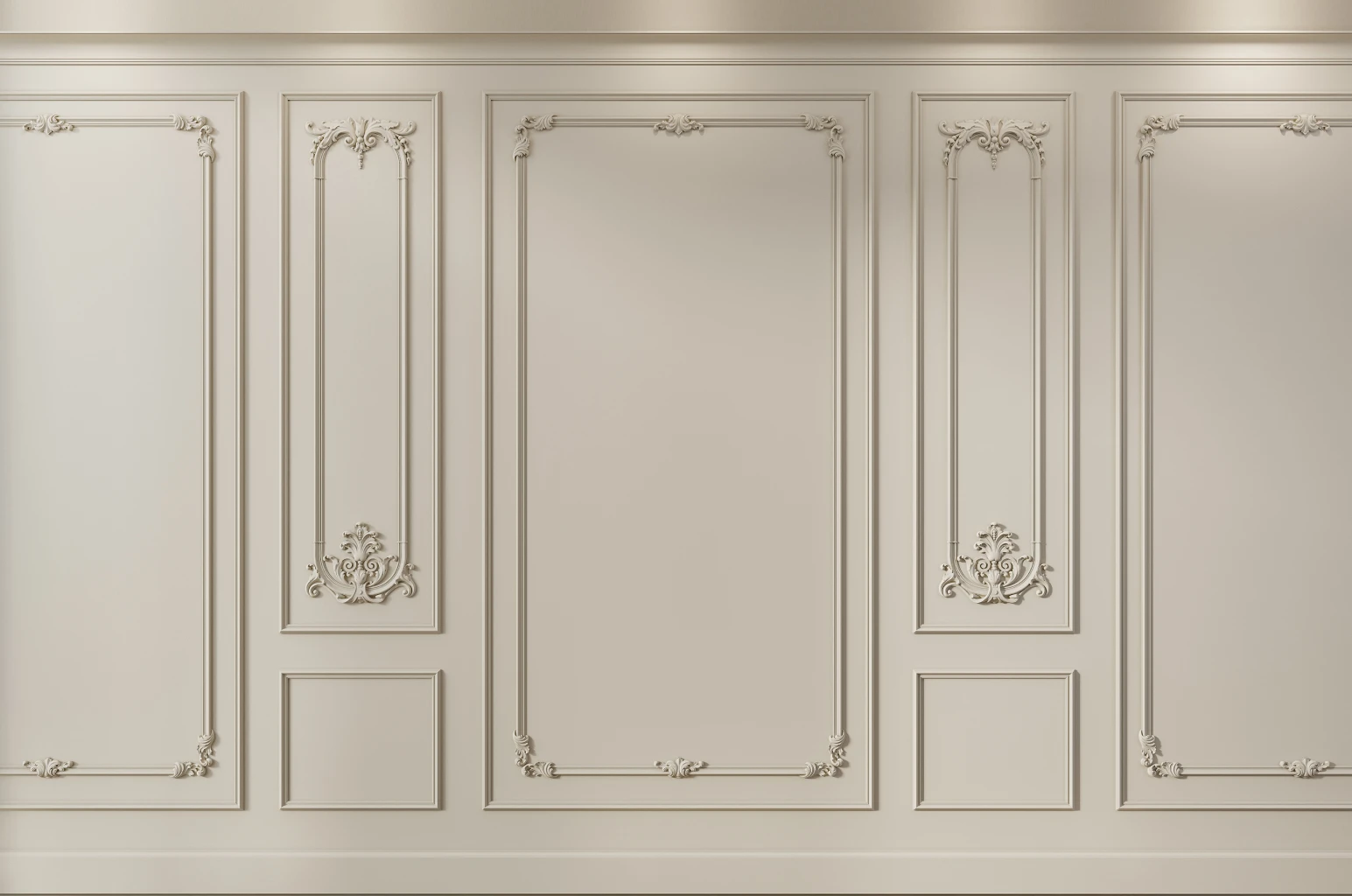
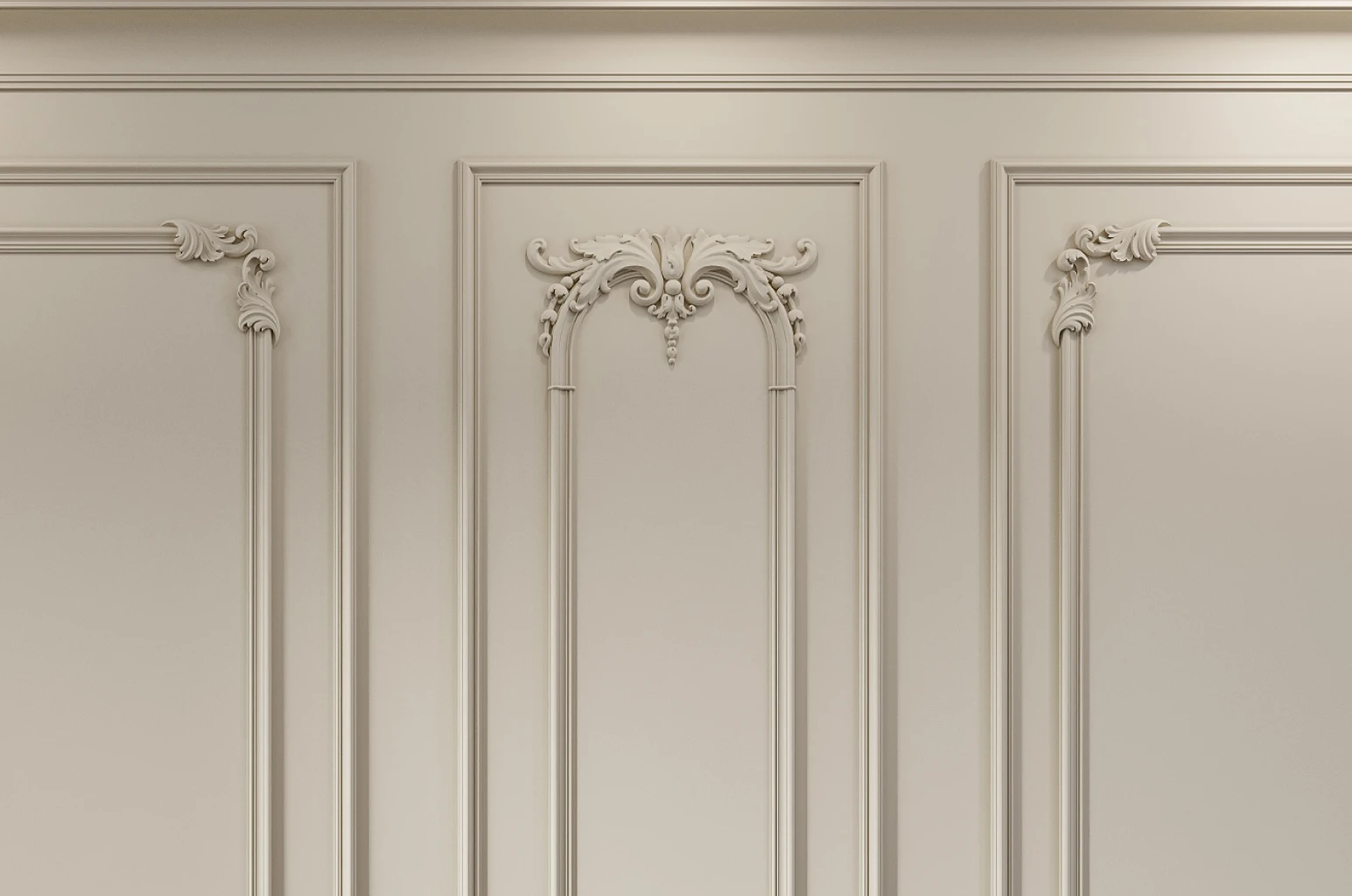
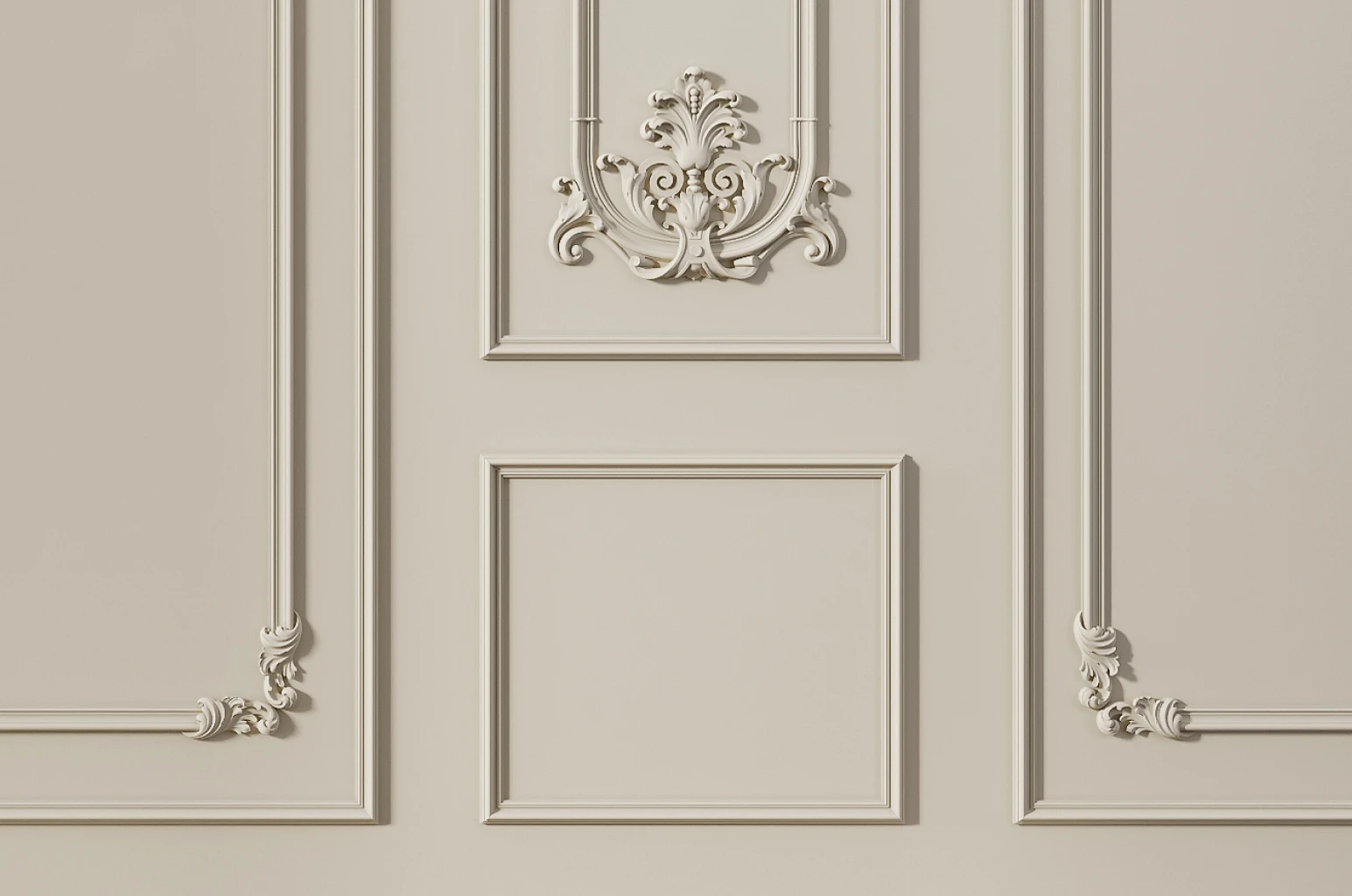
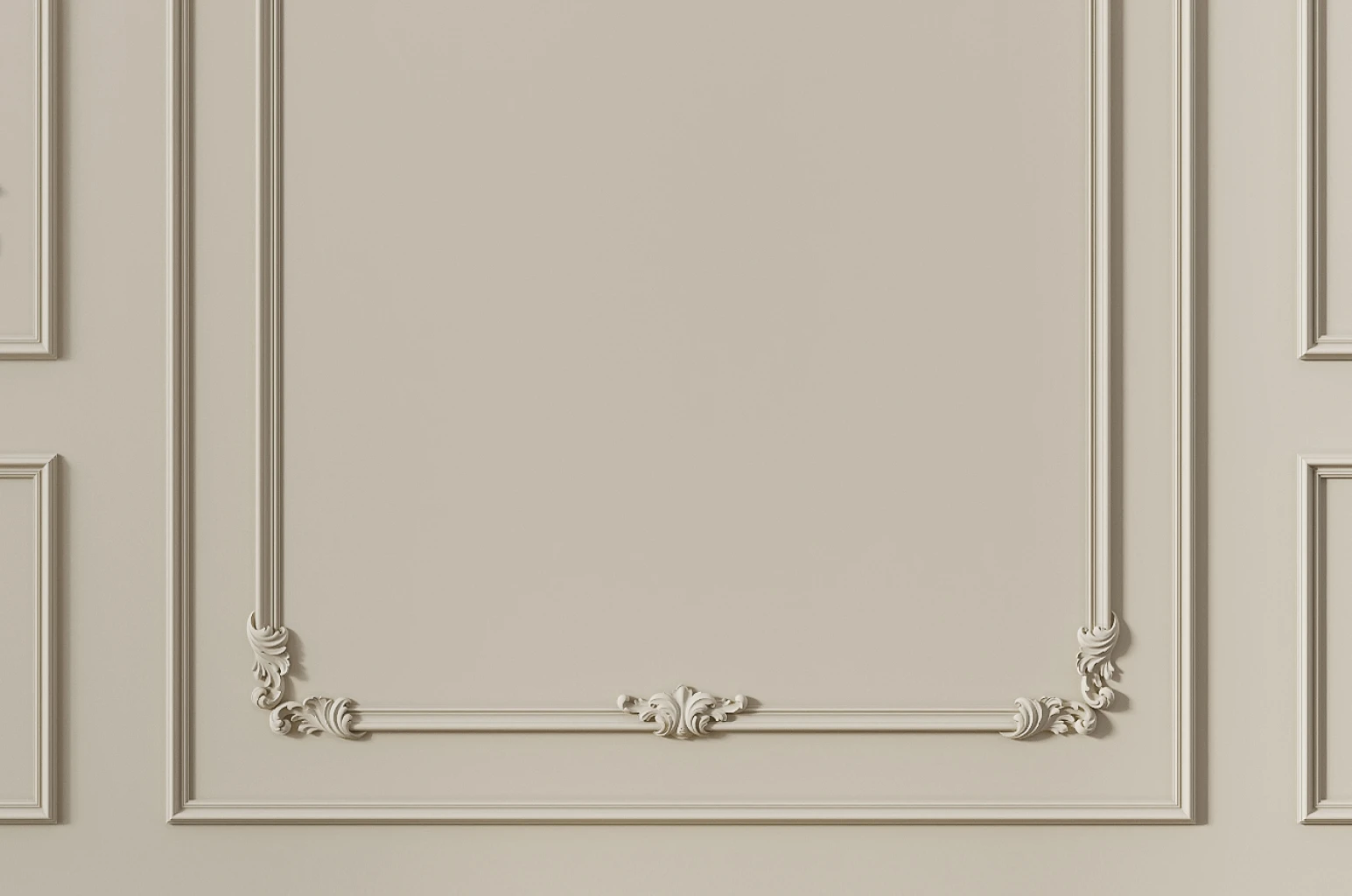
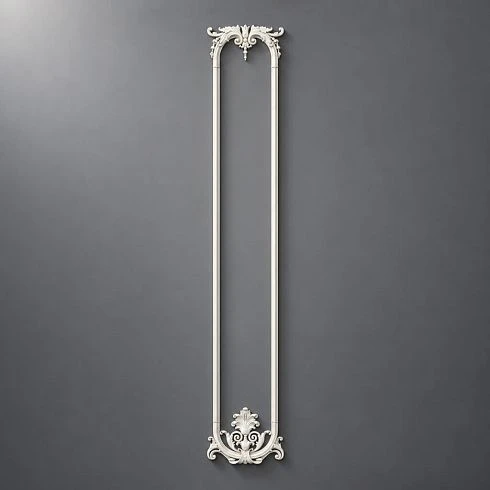
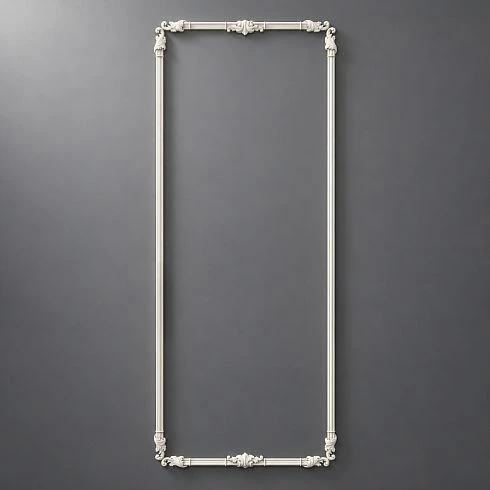
Used elements from the STAVROS array
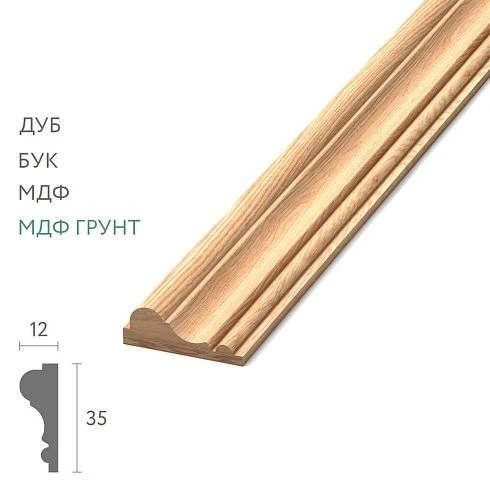
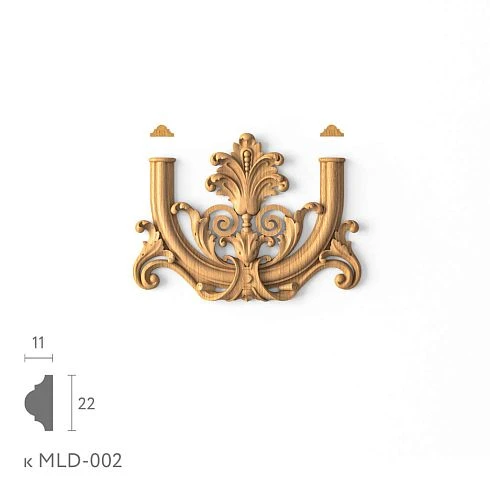
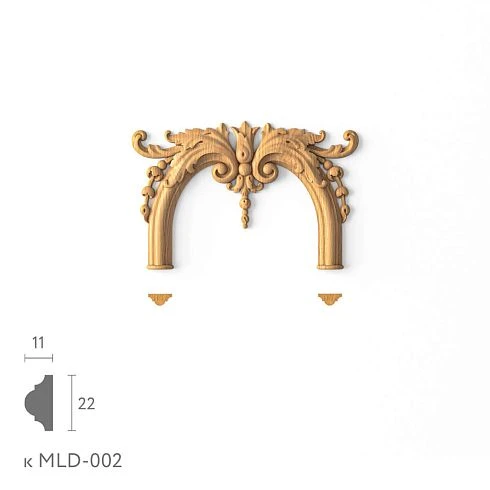
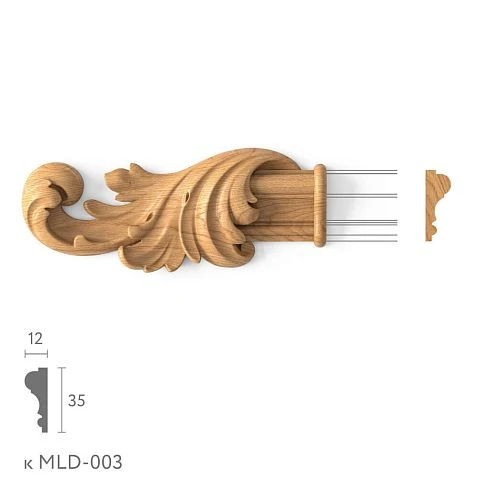
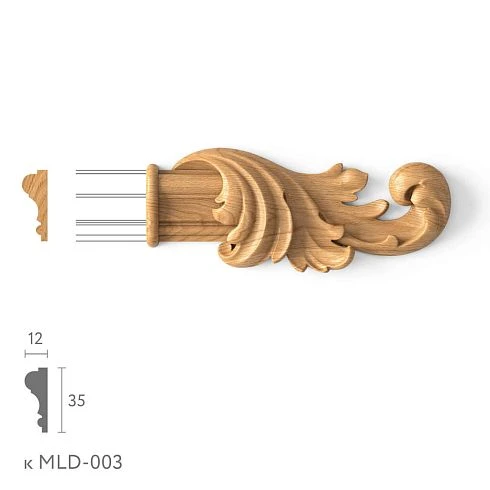
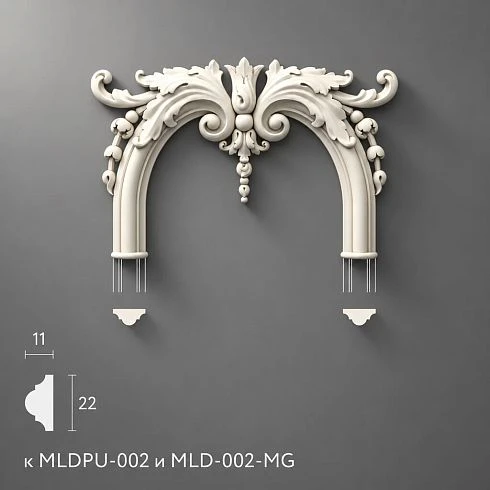
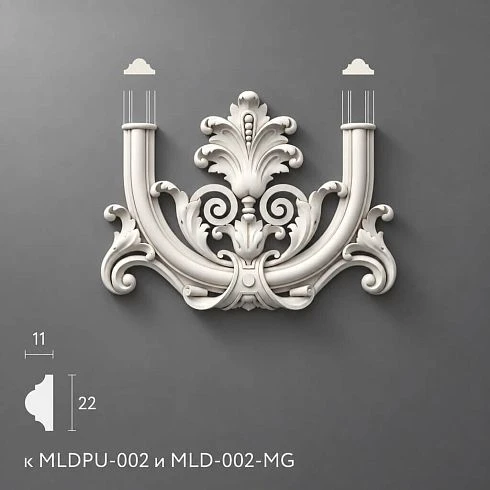
Polyurethane elements used: STAVROS
We will help you implement the project
Measurements
You send us furniture, interior, and preferences dimensions
Design
Our specialists will create a project (paid service, from 2000 rub.)
Kitting
After project approval, you receive a specification
Implementation
We will select partners in your city for painting and mounting decor
You may also be interested in
Frequently asked questions
Our showrooms are located in Saint Petersburg and Moscow. Production is located in Saint Petersburg.
Moscow contacts: https://www.stavros.ru/contacts_all/?tab=msk
Contacts of Saint Petersburg: https://www.stavros.ru/contacts_all/?tab=spb
- Send request by email [email protected]
- Write to us at Telegram
- Write to us at WhatsApp
- Order by phone +7 (800) 555-46-75
- Visit our showroom in Saint Petersburg and Moscow
Yes, we ship orders throughout Russia and to CIS countries.
We cooperate with transportation companies such as СДЭК and DPD.
You can also arrange pickup of your order through any convenient transportation company for you.
Delivery cost depends on the size, weight of the item, and delivery address.
When placing an order, the delivery cost is calculated automatically and displayed as a separate line on our website.
Prices and availability of items on the website are always current. Data is updated daily.
Note: items in stock are stored on the warehouse in unpolished form and shipped within 3 working days.
If the item is not in stock, average production time: 5–10 working days.
This is the quality of polishing of the items.
Standard — machine polishing, at a more attractive price.
Prestige — detailed hand polishing, items do not require further work.
More details: https://www.stavros.ru/information/kachestvo/
This is the type of veneer of the items.
Under enamel: produced by gluing wooden laminates without color and texture matching. Contrast tonal and textural differences are noticeable. This blank should be chosen if the item is intended for opaque coating.
Under tinting: produced by gluing wooden laminates with color and texture matching. Tonal and textural differences may occur. This blank should be chosen if the item is intended for semi-transparent finish.
More details: https://www.stavros.ru/information/kachestvo/
Beech — dense, non-porous wood, most often used for items covered with enamel.
Oak — dense, porous wood with clearly visible natural grain. Due to its strength and decorative properties, it is often used in items with semi-transparent coating, highlighting the wood pattern.
Custom-made, if non-standard items are required, we can produce products from other types of wood, including blanks provided by the customer, manufactured according to our technical specifications.
All our furniture legs can withstand a vertical load of at least 100 kg.
Average production time for custom-made items: 5–10 working days.
Most items are stored on the warehouse in unpolished form. We need time to polish and pack orders.
Yes, we manufacture non-standard items according to individual projects, but we only accept orders with a minimum quantity.
We can manufacture items of the desired size, but we only work with bulk orders. For details, please consult the sales department manager.
Yes, some of our products can be used outdoors. For example, polyurethane items, as well as carved door casings made of pine.
Other items are produced to order using PUR glue, if minimum quantity is available. No warranty is provided for such products, as outdoor conditions are considered aggressive.
Yes, we paint items when ordering products for a total amount of 150,000 rubles or more.
- Dust removal. After sanding, the surface must be dusted.
- Priming. Apply primer in an even layer.
- Matting. After the primer has fully dried, the surface should be matted (lightly sanded for better adhesion).
- Finish coating. Apply finish coating: lacquer or enamel, in 2 layers, with interlayer drying.
More details: https://www.stavros.ru/information/sovety/
Apply adhesive to the decor. Attach to the surface and press briefly. Then, remove the decor from the surface and leave it open for 3–5 minutes. Press the decor firmly onto the surface and hold for 5–10 seconds.
More details: https://www.stavros.ru/information/sovety/
Ideally, you should prepare a design project before placing an order.
You can do this yourself by downloading drawings of our products from our website, or you can order a project from us.
If the number of decorative elements and fittings is small, our company's manager can assist you with selection.
Unfortunately, this service is not provided.
The packaging method depends on the type of items, but in each case, we ensure sufficient protection for safe transportation.
We most often use corrugated cardboard and stretch film. Fragile items are additionally secured on a rigid base to prevent damage during transport.
We ship all items starting from 1 piece.
Room measurements and item installation can be performed by our partners — carpentry companies represented in most regions of Russia.
Also see
Idea for decorating wall panels Pavlovsk INTPU-040 for a classic interior
If "Tsarskoye Selo" is noble austerity, and "Peterhof" is ceremonial grandeur, then "Pavlovsk" is light. Light as the main quality of space: openness, softness, that lightness of classicism where ornament is present but does not overwhelm, history is felt but does not dominate.
Idea for decorating wall panels "Pavlovsk" INTPU-040 is a light classic composition with polyurethane moldings, decorative frames and stucco overlays for painting. The cream-beige palette, symmetrical wall division, measured ornament, and uniform monochrome painting of the entire system create a calm, noble, and versatile interior look — for a living room, bedroom, hall, study, wall behind the sofa, TV area, or console area.
INTPU-040 is "Pavlovsk" in the truest sense: light, airy, with dignity, but without pomp.
What is the INTPU-040 idea
Light palette as a starting point
«Pavlovsk» begins with light. The cream-beige tone is not «white» or «beige» in the literal sense: it is a shade in the range between ivory and warm milky, with a slightly yellow or pink undertone. It is this undertone that makes a white classic wall lively, not «hospital-like».
In the monochrome system INTPU-040 — wall, moldings, corner elements, stucco overlays, cornice, baseboard — a single cream-beige tone, only matte finish. The relief decorative inserts and profile of the moldings are read through light and shadow, without color contrast. The result is a «rich white wall» that is commonly called «true classic».
Wide central panel
The main structural element of INTPU-040 is the central wide molding frame, occupying 40–55% of the width of the decorated wall. It creates the architectural center of gravity of the entire system.
Unlike the more saturated systems of the «Tsarskoye Selo» collection, the central panel of INTPU-040 is deliberately left calm: top overlay, bottom overlay, corner elements — and a spacious light field between them. This «air» in the center is a fundamental feature of «Pavlovsk»: the system breathes.
Narrow side vertical panels
The side panels of INTPU-040 are narrower, vertically elongated. Their width: 40–55% of the width of the central frame. They perform three functions: create symmetry, visually raise the ceiling, and provide architectural context for the upper and lower stucco overlays.
In the lower part of the side panels — small rectangular frames. This «double» technique (frame within a frame) adds to the INTPU-040 system that level of complexity that distinguishes professionally built classic from simple «a few moldings on the wall».
Symmetry and shaped corner elements
Shaped corners Polyurethane decorative appliques At the intersections of vertical and horizontal molding profiles — small but essential details. Without them, the frame is a geometric shape. With them, it's a classic frame with character.
In "Pavlovsk", corner elements are chosen with moderate detailing: an elegant enough ornament for a light cream system, but not overloaded — in the spirit of the Pavlovsk Palace, where "Russian Empire style" was always lighter and stricter than the French.
Where Pavlovsk INTPU-040 wall panels are used
Living room: three scenarios
Wall behind the sofa — a classic and organic scenario. The light monochrome INTPU-040 system against a light-toned sofa creates that "white classic interior" which is both a timeless style and an eternally relevant solution.
TV zone — INTPU-040 integrates the TV into a classic system. The wide central frame "captures" the screen, side panels create a symmetrical architectural context. A TV on a light classic wall with moldings ceases to be a "dark object on the wall" and becomes part of a well-thought-out interior.
Fireplace wall — the light cream-beige "Pavlovsk" system works exceptionally well with a white or light marble fireplace surround. This combination has been present in the best classic interiors of the last two centuries.
Bedroom: wall behind the bed and vanity area
In the INTPU-040 bedroom — behind the bed — a headboard is created from moldings: an architectural alternative to a traditional wooden headboard. The wide central frame "captures" the bed within its boundaries, while the side panels add symmetry.
For the vanity area in the bedroom, the light INTPU-040 system creates an airy, "daytime" look — in contrast to the darker, richer systems of the "Tsarskoye Selo" collection.
Hall and grand entrance
The light hallway with INTPU-040 is the first space in the home that "promises" everything else. The cream-beige molding panels say: light, order, and good taste are loved here. This is the image of an entry space that works equally well in a modern apartment and a classic country house.
Office
"Pavlovsk" in the study is a more "French" in spirit option, unlike the "English" gray-olive "Tsarskoye Selo." Light cream classics, golden details, books, paintings — this is a study from the Age of Enlightenment: a place for thought, surrounded by beauty.
Commercial spaces
For beauty salons, boutiques, showrooms, and hotels, the light INTPU-040 system is an image of "pure luxury": white classics are perceived as a mark of quality in most cultures. For restaurants in a classic style, light molding walls create a festive, "European" image.
Light classics with moldings and stucco
Why light monochrome works better than color contrast
In most "budget" interpretations of classics, moldings are painted white on a colored background or vice versa — colored on white. This creates a decorative effect but deprives the system of architectural quality: the moldings become a "glued-on decoration" rather than part of the wall's architecture.
In INTPU-040, the unified cream-beige coloring of the entire system shifts the moldings from the decorative category to the architectural one: they are not "visible" as separate objects — they exist as the relief of the wall itself. This is a fundamentally different visual result and a fundamentally different perception of the interior's cost.
Decor for Molding — linear detailing of profiles
An optional but organic element for "Pavlovsk" — linear ornamental Decor for MoldingIn a light monochrome system, it works particularly delicately: the ornament on the cornice profile is "revealed" upon close inspection, creating a sense of craftsmanship and detail.
Practicality polyurethane products from STAVROS
For a light interior, material durability is especially important: polyurethane moldings and overlays do not yellow over time, do not crack with temperature changes, and are easily repainted when changing shades. For the cream-beige INTPU-040 system, this means complete freedom: any color in the range from "milky" to "warm beige" at any time.
Central panel and side decorative modules
Logic of the "light" three-part system
In "Pavlovsk," the three-part system (center + two sides) is built on the principle of "more air." The distances between frames — 15–25 centimeters — are slightly larger than in more saturated systems. The central field is larger. The stucco overlays are more compact.
This "light" proportional rhythm matches the character of "Pavlovsk" itself: the historic palace, which was characterized by this very airy interpretation of classicism — with large windows, bright halls, and unburdened wall planes.
Small lower frames as a level of complexity
Small rectangular frames in the lower part of the side panels are an optional but recommended element of INTPU-040. They add layering to the system: from a distance — a simple classic layout, up close — a complex system of nested frames.
Height of the small lower frame: 22–32% of the height of the main side frame. It fits into the lower third of the side panel, separated from the main frame and from the baseboard by equal offsets.
Central panel as a "stage" for the main object
The light central frame INTPU-040 is intentionally created as a neutral, "receptive" background. It doesn't require anything specific inside — but if something is placed inside (a sofa, bed, mirror, console, painting, fireplace), that "something" immediately gains solemnity and intentionality.
This is an important quality of "Pavlovsk" — versatility: the system works with many scenarios and many types of furniture. It doesn't dictate — it supports.
Stucco overlays as an accent
The "Enough" principle
In INTPU-040, the principle of "just as much as needed" applies. Stucco overlays are placed at points where classical logic expects them: at the top and bottom of the side panels. The central frame — top overlay and bottom, corner elements — and an open field.
This measured approach is a distinctive feature of "Pavlovsk" among other systems in the collection. More air, less ornament, more space for the wall itself.
Top overlays in the "Pavlovsk" system
For INTPU-040, the top stucco overlays are selected with a moderate ornament: elongated horizontal elements with a floral or geometric motif, proportionate to the width of the side panel. They should complete the panel — not over-decorate it.
In a light monochrome finish, these overlays create a delicate relief — noticeable with side lighting, barely distinguishable with frontal lighting. It is this "disappearing" presence of the ornament that creates the effect of "rich simplicity" for which "Pavlovsk" is valued.
Lower overlays and their proportions
Lower overlays in INTPU-040 are about 20–25% smaller than the upper ones. This follows the classic principle of decreasing decorative detail downward. Without lower overlays, the system feels unbalanced in the upper zone. With them, it is stable and complete.
Which elements are included in the INTPU-040 system
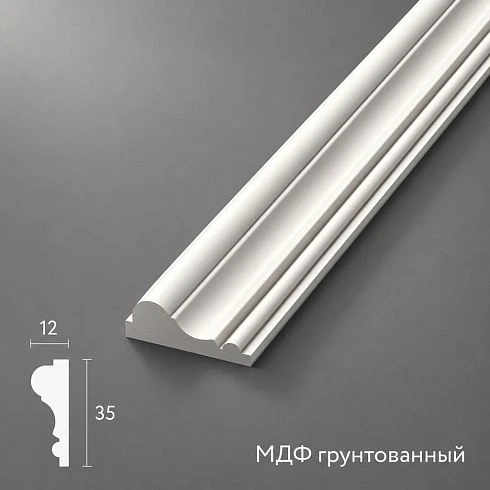
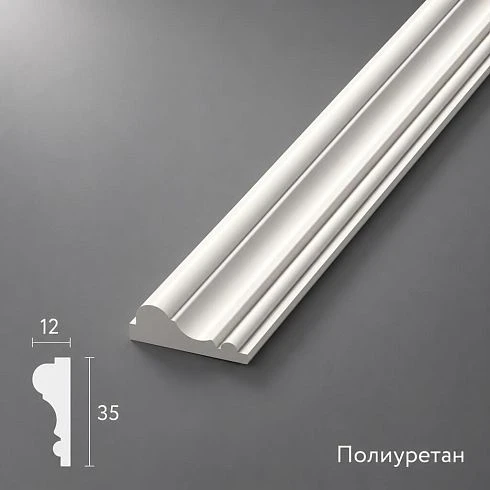
Moldings made of polyurethane — 38–48 mm profile for main frames (more elegant than in "Tsarskoye Selo", matching the light character of "Pavlovsk"). 22–30 mm profile for small lower frames.
Shaped corner elements — Polyurethane appliqués at the intersection points of the moldings. 4 pieces per frame.
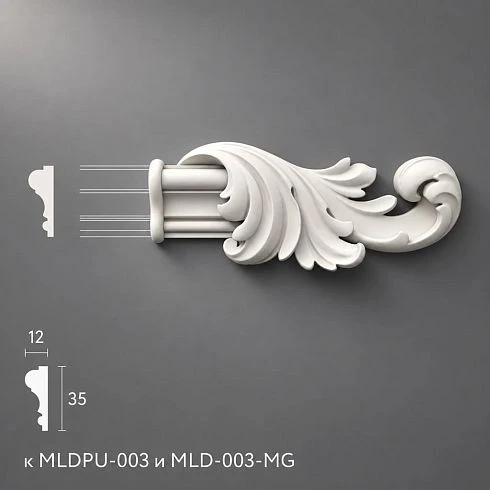
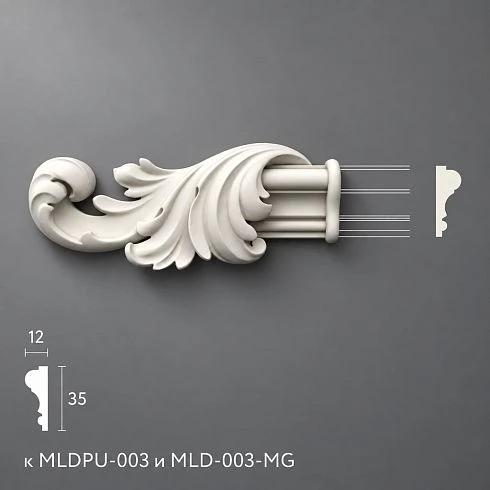
Upper stucco ornamental overlays — one element per main frame.
Lower stucco overlays — one element per main frame. Size: 75–80% of the upper ones.
Small rectangular frames — in the lower part of the side panels.
Decor for Molding — linear ornamental decor for the cornice. Optional.
Ceiling cornice — moderately detailed, proportionate to the light character of "Pavlovsk".
High baseboard — 14–20 centimeters, matching the system's tone.
The central decorative element is an optional medallion or cartouche in the central field of the main frame.
What to pair with the Pavlovsk INTPU-040 decor
Color and materials
The light cream-beige system of "Pavlovsk" is an almost universal background. It pairs with most floor coverings: from light oak and herringbone parquet to light marble, natural stone, and ceramics imitating light concrete.
Furniture: light tones — milky, cream, ivory, beige velour. Furniture in dark tones (black, dark walnut) is possible — as a contrast that "activates" the light system without disrupting its integrity.
Metal: brass and matte gold — the first choice. They create a warm, "academic" accent on a light background. Chrome and matte nickel — for a more modern, neutral interpretation.
Stone and marble: white Carrara, light beige, "portoro" — for fireplace portals, window sills, countertops. All light marbles organically "continue" the cream-beige system.
Textiles and decor
Curtains: heavy, floor-length — in milky, cream, light beige, or dusty pink tones. Tulle — cream, not white. Curtain rod: matte brass or matte gold.
A crystal chandelier is an iconographically accurate partner for a light classical system. Crystal creates cool highlights on light molding surfaces — an effect known from the grand halls of Pavlovsk and Peterhof.
Paintings in thin gold frames — on the central panel or side walls. Mirrors in white or gold frames — in the hall and entryway. Decorative vases in light ceramics or white porcelain. Dried flowers and fresh flowers in light vases.
What enhances the "Pavlovsk" style
Herringbone parquet made of light or natural oak is a direct historical reference. This type of parquet was used in most halls of the Pavlovsk Palace.
Hidden LED strip (2700–3000 K) under the ceiling cornice — softly illuminates the upper part of the molding system and activates the relief of the overlays in the evening.
Classic sconces with white shades or crystal details — on both sides of the central panel in the living room or on the sides of the mirror in the hall.
How to replicate the idea of INTPU-040
Step 1. Wall measurement. Width of all decorated walls, ceiling height, location of windows, doors, niches, sockets, switches.
Step 2. Determining the main zone. Sofa, bed, fireplace, TV, console with mirror, or passage. Central axis of the system = central axis of the main object.
Step 3. Panel layout. Central frame: width of the main object + 25–45 centimeters on each side. Side frames: 40–55% of the central frame width. Distance between frames: 15–25 centimeters.
Step 4. Panel height. For ceilings of 2.7 meters: cornice 10–14 centimeters, offset 5–7 centimeters, main frames 198–215 centimeters, baseboard 14–20 centimeters. Height of small lower frames: 20–30% of the main side frame height.
Step 5. Choosing the level of detail. Basic (only upper and lower overlays without small frames), extended (with small lower frames), full (with small frames and a central medallion).
Step 6. Shade selection. Test the sample in daylight and evening lighting. Range: from "arctic white with a yellowish undertone" to "warm milky" and "creamy beige". Important: not cool white — creamy beige.
Step 7. Selecting STAVROS elements. From catalogs molding, appliqués и decoration for moldings the "Pavlovsk" collection.
Step 8. Quantity calculation. Perimeters of all frames — linear footage of moldings. Corner elements: 4 × (number of main frames + number of small frames). Overlays according to the scheme. Cornice and baseboard along the perimeter. Reserve: 12–15%.
Step 9. Surface preparation. Leveling, puttying, priming. Marking using a laser level. Special attention — horizontal and vertical alignment of axes, symmetry relative to the central axis.
Step 10. Installation. By installation guide for STAVROS moldings: cornice, baseboard, vertical and horizontal profiles, corner elements.
Step 11. Installation of overlays. installation guide for polyurethane stucco: centering along axes, correct adhesive.
Step 12. Priming and painting. Primer on all polyurethane elements. Single creamy beige color in two coats with intermediate sanding. Only matte finish.
Step 13. Final styling. Installation of lighting fixtures. Furniture arrangement. Adding textiles and decorative accessories. Evaluation of the result in morning daylight and evening lighting.
Who the INTPU-040 idea suits
Those who choose light classics — not saturated colorful neoclassicism, but specifically light, "white", airy classics. Classics that forgive minor styling imperfections and always look clean.
Interior designers working with a wide audience: from young families to wealthy clients. The light INTPU-040 system is one of the most universal tools for "elevating the status" of a room.
Architects working with new buildings: standard white apartments gain architectural identity without global reconstruction using INTPU-040.
Apartment owners who handle decoration themselves. The light monochrome INTPU-040 system forgives styling mistakes: almost any furniture and almost any textile look good on a light classic background.
Hotels, restaurants, salons in classic or modern-classic style. The light "Pavlovsk" system is an image understood and accepted in most cultures.
Buy decor for Pavlovsk INTPU-040 wall panels
All components for implementing the INTPU-040 idea are presented in the full catalog polyurethane products from STAVROS. Moldings made of polyurethane two profiles — for main frames and small lower modules. Polyurethane decorative appliques — shaped corner elements, upper and lower ornamental overlays, optional central medallions. Decor for Molding — for linear detailing of the cornice. The entire Polyurethane wall decor Pavlovsk collection — in uniform quality.
The INTPU-040 system adapts to any wall width, ceiling height, location of sofa, bed, fireplace, TV or console. It scales from a small bedroom to a spacious grand hall — and everywhere creates the same image: light, noble, complete.
"Pavlovsk" — for those who love light.
FAQ — answers to popular questions
Will INTPU-040 suit a living room?
Yes. "Pavlovsk" works well in a living room for the wall behind the sofa, TV area, fireplace wall, or accent wall with a console. The light cream-beige system creates a classic backdrop that suits a wide range of furniture and styles.
Can this composition be used in a bedroom?
Yes. The light palette, moldings, and dosed stucco overlays work well for the wall behind the bed, vanity area, or accent wall opposite the bed. "Pavlovsk" creates a light, airy bedroom look — without the heaviness of richer classic systems.
Do I need to paint the stucco the same color as the wall?
For INTPU-040, a single cream-beige color is the recommended option. It shifts the moldings and overlays from the "decor" category to the "wall architecture" category: relief is present through light and shadow, without color contrast. This creates a more mature, "authentic" classic result.
How does "Pavlovsk" differ from other systems in the collection?
"Pavlovsk" is lighter, airier, and less saturated with decor. Greater emphasis on "air" within the frames, more elegant molding profile, moderate detailing of overlays. This is light neoclassicism — versatile, soft, modern in its interpretation.
What elements are needed for implementation?
Moldings made of polyurethane two profiles, shaped corner elements, upper and lower sculpted appliqués, optional small lower frames, ceiling cornice, high baseboard, optionally Decor for Molding. Installation by the molding guide и the STAVROS stucco guide.