Article Contents:
- What are STAVROS wooden construction set elements
- How they differ from regular wooden blanks
- Why the mounting hole, size, and material are important
- Where balls, cubes, bushings, washers, and discs are used
- Decorative posts
- Partitions
- Furniture supports and custom legs
- Balusters and staircase accents
- Furniture decor and interior components
- Sphere — a soft classic accent
- Cube — strict geometry and modern look
- Disc, washer, bushing — separators and transitions
- Conical parts — vertical rhythm and decorative silhouette
- Compact geometric shapes
- Beech for enamel and dense painting
- Oak for staining and natural texture
- When it's better to order samples or check compatibility
- Living Room
- Entry Hall
- Office and Library
- Bedroom
- Commercial interior
- Table: what to buy together with wooden balls, cubes, and construction set elements
- Not to be confused with a toy wooden construction set
- Not to be confused with craft blanks without a hole
- Not to be confused with furniture handles
- Not to be confused with furniture legs
- Not to be confused with slatted panels
- Buy only by shape
- Do not consider the mounting hole
- Do not count the number of elements
- Mix shapes without rhythm
- Not accounting for the material
- Buy craft blanks instead of construction elements
- Not thinking through the mounting
- Do not link decor to the interior
- Do not check product cards
- What can be made from wooden balls?
- How do construction set elements differ from regular blanks?
- What to choose: a ball or a cube?
- Why are bushings, discs, and washers needed?
- How to check part compatibility?
- What to buy for a decorative partition?
- Can construction set elements be used for furniture?
- Are wooden balls suitable for balusters?
- Which is better to choose: beech or oak?
- Can elements be purchased without a ready-made project?
- How not to confuse construction set elements with toys?
- Can I assemble a partition myself?
- What to buy together with wooden balls?
- Where to buy wooden balls, cubes, and construction set elements?

The query "buy wooden ball blanks" often starts with a simple idea: you want to make a beautiful stand, a decorative partition, an unusual furniture support, a baluster element, or an interior accent from natural wood. But an ordinary wooden ball alone does not solve the problem. For assembly, size, mounting hole, material, compatibility with other parts, shape repeatability, and understanding how the elements will work on a rod, axle, stand, or as part of a partition are important.
Wooden balls, cubes, bushings, washers, discs, rings, and cone-shaped parts work differently in interiors than ordinary decor. These are not just shelf decorations or a children's construction set. Such elements help assemble vertical stands, rhythmic partitions, furniture units, decorative supports, parts for custom furniture, and interior compositions where precise geometry is important.
At STAVROS, such products can be considered as construction set parts for adult interior tasks: design, furniture, joinery, decorative. If a buyer wants not just to buy wooden ball blanks, but to assemble a stand, partition, or furniture element from them, it is better to look not at a separate random blank, but buy wooden construction set elements in the appropriate section.
The main value of this approach is the ability to think in sets. A ball can work as a soft decorative node. A cube — as a strict geometric accent. A bushing, disc, or washer — as a separator between large parts. A cone shape — as a transition, vertical rhythm, or expressive part of a stand. When these elements are selected together, the interior structure looks not like a homemade accident, but a well-thought-out wooden object.
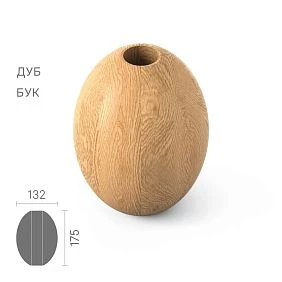
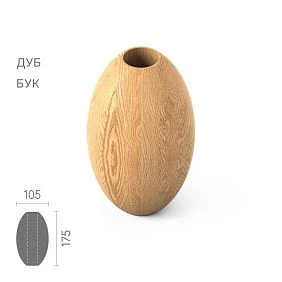
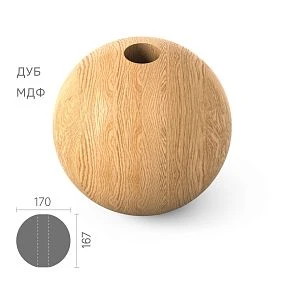
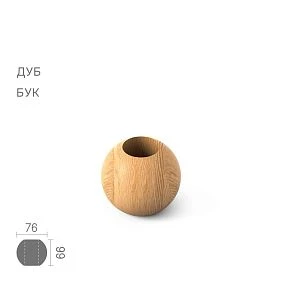
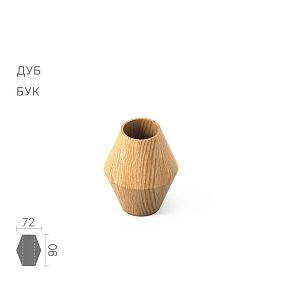
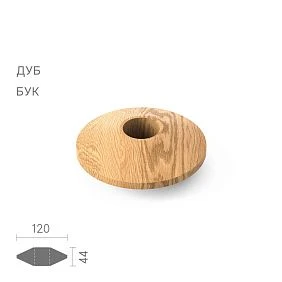
What are STAVROS wooden construction set elements
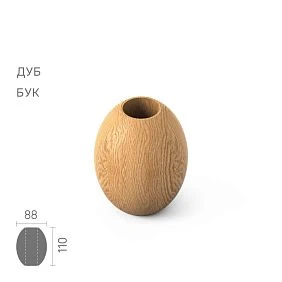
Wooden construction set elements are solid wood parts used for assembling decorative and furniture structures. This group may include balls, cubes, bushings, washers, disks, rings, conical and other geometric shapes. Their purpose is not just to lie as blanks for hand painting, but to participate in assembling posts, rods, partitions, supports, balusters, furniture elements, and interior compositions.
Such parts are especially interesting to designers, furniture makers, carpentry workshops, decorators, and customers who want to assemble a custom item. For example, you can make a decorative post from alternating balls and bushings, assemble a modern partition from cubes, add geometric elements to a furniture support, or use wooden parts as part of an original interior object.
Unlike ready-made furniture, the construction set leaves freedom. The buyer chooses the rhythm: soft, strict, large, small, classic, modern, calm, or contrasting. But this freedom requires attention. You cannot simply buy a set of beautiful shapes and expect them to automatically form a sturdy structure. You need to understand in advance the hole diameter, axis, height, order of elements, material, finish, and installation location.




How they differ from ordinary wooden blanks
An ordinary wooden blank is often bought for creativity: painting, crafts, decoupage, souvenirs, children's activities, small decor. Such items can be beautiful, but they do not always have precise mounting parameters, repeatability, suitable size, and purpose for furniture or interior assembly.
Construction set elements solve a different problem. They are needed where a part must fit onto an axis, rod, or post, repeat in a row, combine with other shapes, and participate in a real structure. Here, not only the shape but also the geometry is important. If the hole does not match the axis, the ball or cube cannot be assembled neatly. If the sizes of elements are not coordinated, the rhythm will be random. If the material does not match the finish, the entire structure will look disjointed.
That is why the query "buy wooden ball blanks" in the interior theme is better translated into a more precise choice: which balls, with what hole, for which post, with which separators, from what material, and for what structure. This way, the buyer moves from a random craft purchase to a professional furniture route.
Our factory also produces:
Why mounting hole, size, and material are important
The mounting hole is one of the main parameters. If the element must be threaded onto an axis, post, or rod, the hole must match the diameter of that base. A hole that is too small will not allow assembly. A hole that is too large will create play, disrupt the geometry, and may spoil the appearance. Therefore, before purchasing, you need to check the element size and mounting diameter in the product card.
Size affects scale. A small ball in a large partition can get lost. A large cube in a narrow stand can look heavy. A disc or washer between large parts helps make the rhythm neater, but repeating small elements too often can overload the structure. In such products, everything is based on proportion.
Material determines the external character and future finishing. Beech is often chosen for dense painting, enamel, and neat geometry. Oak is interesting where natural texture, tinting, and a more expressive wood grain are needed. However, the specific material and parameters should be checked in the selected product's card, as different elements may have different characteristics.
Get Consultation
Where balls, cubes, bushings, washers, and discs are used
Wooden balls work well in decorative stands, balusters, interior supports, and classic compositions. The ball softens the vertical line, creates a smooth silhouette, and pairs well with cones, bushings, washers, and discs. It is appropriate where a soft decorative transition is needed rather than strict geometry.
Cubes create a different look. They provide strict architectural geometry and are more suitable for modern partitions, furniture inserts, stands, decorative verticals, and interior objects with a clear rhythm. A cube looks good in repetition: several identical elements on an axis create a clear modular system.
Bushings, washers, discs, and rings are often underestimated. But they help separate large elements, set the pitch, even out the rhythm, and make the structure more cohesive. Without such intermediate parts, a stand of balls or cubes can look too heavy or monotonous.
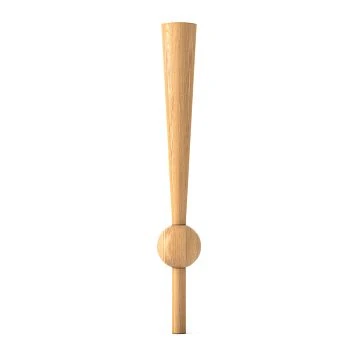
Conical elements add dynamics. They help create a transition from one size to another, enhance the vertical, add silhouette to a stand, or create a more complex decorative shape. Combined with balls and discs, they can resemble modern balusters or custom interior stands.
Table of characteristics of constructor elements
| Parameter | What to check | Why this is important for purchase |
|---|---|---|
| Product type | Ball, cube, bushing, washer, disc, ring, conical part, partition set | The external rhythm and application scenario depend on the shape. |
| Main section | buy wooden construction set elements | It is convenient to start the selection with a category where items are grouped by a common logic. |
| Material | Beech, oak, or another option specified in the product card. | The material affects the finish, texture, and compatibility with furniture. |
| Mounting hole | The hole diameter should be checked in the product card. | Compatibility with the rod, axle, or post depends on it. |
| Size | The ball diameter, cube size, bushing or disc height are specified in the product card. | The size determines the scale of the structure. |
| Purpose | Posts, partitions, furniture supports, balusters, decorative components. | Helps avoid buying a random blank instead of a functional element. |
| Repeatability | Identical elements must match in shape and size | This is important for rhythmic stands and partitions |
| Completeness | For ready-made KON kits, parameters should be checked in the product card | A kit may be more convenient than selecting individually |
| Finishing | Exact finishing options depend on the product card | It is important to understand in advance whether there will be painting, tinting, or natural texture |
| Compatibility | You need to compare the elements with each other and with the axis | A compatibility error ruins the assembly |
This table shows the main principle: wooden construction kit elements should be chosen not only for the beauty of their shape. First, the task is determined, then the dimensions and fit, then the material, assembly order, and finishing. Only after that does the sphere, cube, or bushing become part of a clear structure.
What can be made from wooden spheres
The question "what to make from wooden balls" usually arises among those who already see the decorative potential in this shape but do not yet understand how to turn the idea into a finished object. A wooden ball is truly versatile. It can be a separate accent, part of a stand, a fragment of a baluster, a divider, a decorative furniture node, or an element of a partition. But it reveals itself best not alone, but in a system.
Decorative posts
The most straightforward scenario is a decorative stand. Balls can be strung on an axis, alternated with bushings, washers, discs, or cones, with the height adjusted to create an expressive vertical element. Such a stand can be used in a partition, furniture, a staircase unit, a decorative frame, a bar area, an interior object, or a custom project.
Here it is important to plan the rhythm in advance. If only identical balls are used, the stand may turn out too monotonous. If dividers are added, the silhouette becomes more interesting. If balls of different sizes are alternated, the proportions must be checked especially carefully to ensure the structure does not look random.
Partitions
Wooden balls can be used in decorative partitions, especially if the goal is not to create a solid wall but a light interior filter. The ball provides a soft, almost sculptural rhythm. It can be combined with cubes, bushings, and cones if the partition needs to be more complex.
But for a partition, repeatability is especially important. One beautiful ball does not solve the problem. You need to understand the number of elements, height, axis, spacing, fastening, and overall composition. If a ready-made logic is needed, you can look at KON kits, for example wooden partition kit KON-003 or partition kit KON-007 made of beech or oak.
Furniture supports and custom legs
Balls can become part of a furniture support if used together with other compatible parts. For example, a vertical support can consist of alternating balls, discs, and bushings. This technique is suitable for decorative tables, consoles, stands, small custom items, interior pedestals, and furniture with an expressive silhouette.
Here you cannot forget about the load. An element may be beautiful, but the furniture support must match the structure. If we are talking about a table, cabinet, or seat, you need to consider not only the shape but also the strength, fastening, axis, and overall stability.
Balusters and staircase accents
Wooden balls can be used as decorative parts of balusters or staircase elements. They add a soft classic accent and pair well with turned or carved shapes. For such tasks, it is useful to look not only at the constructor but also wooden balusters for staircases, to understand the scale and style of staircase details.
If the staircase area is already designed, the ball should support its style. An element that is too large may look heavy, while one that is too small may get lost. The material and finish should also match the handrails, posts, steps, or other wooden parts.
Furniture decor and interior nodes
Wooden balls can be used as decorative finishes, accent details, inserts, nodes in posts, or elements of a furniture constructor. They work well where you need to soften strict geometry. For example, cubes provide a straight line, while a ball adds plasticity. A disc creates a pause, a cone a transition, and a bushing distance between large shapes.
To the question "what can be made from wooden balls," the correct answer is: not a separate craft, but a full-fledged node, if you select the ball by size, hole, material, and combine it with other parts. This is what distinguishes an interior approach from a random set of blanks.
Wooden cubes, balls, and discs: how to choose a shape
The shape sets the character of the entire structure. The same material will look different in a ball, cube, disc, or cone. Therefore, the choice should start not with the question "what is more beautiful," but with the question "what image is needed": soft, strict, rhythmic, classic, modern, graphic, or decorative.
Ball — soft classic accent
The ball is perceived as soft and plastic. It has no corners, so it works well for classic, neoclassical, decorative, and warmer interior solutions. It softens the vertical line and makes the structure less rigid. If the stand should look decorative rather than technical, the ball is often a successful choice.
Wooden balls with a hole are convenient for assembly on a rod. But before purchasing, you need to check the diameter of the hole and the size of the ball itself. If the hole does not fit, the element will not sit on the rod. If the ball is too large, the stand will become heavy. If it is too small, it will lose its expressiveness.
The ball pairs well with discs, washers, and bushings. Such elements help separate one ball from another, set the pitch, and make the vertical line neater. If balls are used close together, the structure may look overloaded.
Cube — strict geometry and modern look
The cube provides clear geometry. It is well suited for modern partitions, furniture stands, graphic interior objects, and decorative structures where a distinct shape is needed. Cubes are especially expressive in repetition: several identical elements create an architectural rhythm.
If you need a modern accent, you can look at the wooden cube KN-011 with a hole. Such a part is suitable for tasks where the mounting hole, geometry, and the ability to include the element in an assembled structure are important.
The cube requires careful orientation. Unlike a ball, it has sides and corners. If the elements are rotated chaotically, the structure may look sloppy. Therefore, cubes are best used where the assembly order and visual rhythm are thought out in advance.
Disc, washer, bushing — separators and transitions
Discs, washers, and bushings are often seen as minor parts, but they are very important in assembly. They help separate large elements, create spacing, align rhythm, and set proportions. Without them, a stack of balls or cubes can look too dense.
A bushing can act as an intermediate part between balls. A disc — as a visual pause. A washer — as a thin separation. A ring — as a decorative transition. Such elements are especially useful if you need to assemble a stack not from identical repeats, but from a more complex rhythm.
If the composition feels heavy, it's worth adding more separators. If it looks too fragmented, it's better to reduce their number. There is no universal formula here: it all depends on the height, size of the elements, and the purpose of the structure.
Conical parts — vertical rhythm and decorative silhouette
Conical parts help make the stack more dynamic. They can guide the eye up or down, create a transition from a wide part to a narrow one, add silhouette, and connect different elements together. In combination with balls, they give a more classic look. In combination with cubes, they give a more experimental one.
Cones are especially useful in decorative supports and balusters. They help avoid monotony and create a shape that looks assembled rather than just strung together. But it's important not to overdo it with cones. If every element is too active, the structure will lose its calmness.
Compact geometric shapes
For small furniture units, neat stacks, or decorative inserts, compact shapes may be suitable. For example, compact wooden shape KN-005 helps work with projects where a large element would be unnecessary. A wooden geometric shape KN-013 can be considered as another option for selecting shape and rhythm.
Before purchasing such parts, you need to check not only the appearance, but also the size, hole, and compatibility. A compact shape may be convenient, but it must fit the axle and adjacent elements.
How to choose the size and mounting hole
Size and mounting hole determine whether the structure can be assembled at all. In decorative blanks, this is sometimes not so noticeable: you bought a ball, painted it, put it on a shelf. In a furniture construction set, everything is different. The element must fit on the axle, align with other parts, provide the required height, and maintain rhythm.
First, you need to determine the base. This could be a rod, post, axle, or another element onto which the shapes will be placed. The hole diameter must match this base. If the hole is smaller, the element won't fit. If larger, it will wobble. In some decorative tasks, a small gap can be compensated, but in furniture and partition assembly, it's better not to rely on random solutions.
Then, the height of the structure is calculated. If you need to assemble a post of a certain height, each ball, cube, bushing, or disc adds its own size. An error in calculation will result in the post being higher or lower than the required level. This is especially important for partitions, where several vertical elements must match in height.
After that, the rhythm is planned. You can alternate a large element and a thin separator. You can make a group of a ball, bushing, and disc. You can repeat cubes at equal intervals. You can assemble a post with a gradual transition from large shapes to small ones. But any rhythm needs to be calculated in advance, at least schematically.
If the structure will be repeated several times, for example in a partition, it is important to check the quantity of identical elements. One beautiful module does not solve the problem if you need to assemble ten identical verticals. It is better to calculate in advance how many parts are needed for one post and how many posts will be in the project.
Beech or oak: which material to choose
The material affects the appearance, finish, and feel of the finished product. In the STAVROS configurator, you'll find elements made of beech and oak, and the choice between them should be based on the task. It cannot be said that one material is always better. What matters is what exactly is being assembled: a painted rack, a natural partition, a furniture accent, a staircase detail, or a decorative object.
Beech for enamel and dense painting
Beech is well-suited for projects where a neat shape and further finishing are needed. It is often chosen for enamel, dense paint, calm interiors, and furniture structures where the wood grain should not be the main accent. If elements are to be painted to match the color of a facade, wall, rack, or partition, beech can be a practical choice.
For furniture, beech is convenient because it allows for clean geometry and a calm visual result. Beech cubes, bushings, discs, and spheres can be a good base for custom painting. But before finishing, you need to clarify the parameters of the selected product and surface preparation.
Oak for tinting and natural texture
Oak is chosen when texture is important. It can look more expressive and natural, especially with tinting, oil, varnish, or another finish that preserves the wood grain. Oak works well in interiors with solid wood, wooden staircases, joinery furniture, warm materials, and more prestigious details.
If the structure should showcase the wood rather than hide it under dense paint, oak often looks more convincing. For example, a partition made of oak elements can become a standalone interior object. A decorative rack made of oak can connect furniture, a staircase, and other wooden details.
When it's better to order samples or check compatibility
If the project is large, it's better not to choose the material just by looking at the screen. The color, texture, and feel of the wood depend on lighting, coating, and adjacent materials. This is especially important if the elements need to match existing furniture, doors, stairs, flooring, or wall panels.
Before ordering, it's worth checking with a STAVROS manager for current parameters: material, dimensions, hole, compatibility, finish, and availability. If a complex assembly is planned, it's useful to prepare a diagram, dimensions, and a list of elements in advance.
What to buy for a specific task
| Task | What to buy | What result will be obtained | What to Check |
|---|---|---|---|
| Decorative stand | Balls, bushings, discs, washers, compatible axle | Soft vertical element for furniture or interior | Hole diameter, height, number of elements |
| Modern partition | KN cubes, KON ready-made kits | Geometric partition with repeating rhythm | Module size, material, height, number of sections |
| Furniture support | Compact geometric shapes, dividers, axle | Author's support or decorative furniture unit | Load, fastening, stability, material |
| Staircase accent | Spheres, cones, balusters or posts | Decorative vertical in the staircase area | Compatibility with handrail, balusters, style |
| Rhythmic decor | Washers, discs, rings, bushings | Neat pauses between large details | Thickness, repeatability, combination with main elements |
| Interior object | Cubes, spheres, cones, partition kits | Designer stand, screen, zoning element | General layout, material, finish |
| Project for a workshop | Elements of the same series and size | Repeatable kit for furniture or decor | Quantity, availability, timelines, and card parameters |
This table helps move away from the question "which shape to buy" to a more correct question: "what am I assembling." For a decorative stand, you need one set of elements, for a partition — another, for a furniture support — a third. If the task is not yet formulated, it's better to start with a simple sketch: height, width, installation location, material, style, and number of repeats.
KON partition kits: when a ready-made solution is more convenient than self-assembly
Self-assembly offers freedom but requires calculation. You need to select elements, calculate the quantity, check holes, think through axes, rhythm, fastening, and height. For an experienced craftsman, this is an interesting task. For a buyer who wants to get a clear result faster, a ready-made kit may be more convenient.
KON kits help you view a partition as a system. For example, wooden partition kit KON-003 it can be considered as a solution for decorative zoning, where elements are already assembled in a certain logic. If a different look is needed, it's worth looking at partition kit KON-007 made of beech or oak.
A ready-made kit is especially useful if the partition needs to look repeatable and neat. In zoning, not only individual beautiful details matter, but also the overall pitch, height, density, transparency, and style. If elements are chosen randomly, the partition may look like a set of different blanks. The kit reduces this risk.
However, a ready-made kit does not eliminate the need to check parameters. Before purchasing, you need to look at the material, dimensions, composition, purpose, installation features, and compatibility with the project. If the partition is installed in a complex location, for example between the floor and ceiling, near furniture, or in a walkway, it's better to clarify installation nuances in advance.
Application in interior design: where such elements work best
Living room
In the living room, wooden balls, cubes, and construction set elements can be used for a decorative partition, a stand near the TV area, a custom console, a shelving unit, or furniture support. They help add volume rather than flat decor to the interior. These elements look especially interesting where you need to divide space but not put up a solid wall.
For example, between the living room and hallway, you can use vertical elements that let light through but create a boundary. Cubes will give a more modern character. Balls — a softer and more decorative one. Discs and bushings will help set a rhythm.
Hallway
In the hallway, construction set elements can become part of a stand, decorative screen, partition at the entrance, furniture unit, or console support. Practicality is especially important here. The structure should not obstruct passage, catch on clothes, or look too fragile. It's better to choose shapes that are easily perceived in a small space.
If the hallway is narrow, large balls or cubes can overwhelm it. Compact shapes and a sparser rhythm will look calmer. If the hall is spacious, more expressive elements can be used.
Study and library
In the study, wooden elements help add individuality without excessive decorativeness. Cubes and discs can support strict furniture, while balls and cones can soften a classic interior. A partition made of wooden parts can separate the work area without turning the space into a closed room.
The material is especially important here. If the room has a massive table, wooden shelves or panels, oak elements can support the overall character. If the furniture is painted and calm, beech for the finish may be more appropriate.
Bedroom
In the bedroom, such elements should be used gently. A too active partition can overload the room. However, a decorative rack, an elegant screen, an accent detail near the dressing table, or a furniture unit can look very appropriate. Spheres here are often perceived as warmer than cubes, but it all depends on the style.
Commercial interior
In a salon, showroom, cafe, hotel, or office, wooden construction kit elements help create a memorable detail. A partition made of cubes or spheres can work as zoning, a backdrop for the reception, a decorative screen, or part of interior navigation. But for a commercial space, you need to especially carefully check stability, fastening, coating, and maintenance.
If the structure will be located in a walkway area, it should be not only beautiful but also practical. It is better to discuss the project with a craftsman in advance and clarify the compatibility of the parts.
What to buy together
Purchasing wooden spheres, cubes, and other construction kit elements is rarely limited to one item. If a real interior object is needed, almost always a set is required: main shapes, separators, a partition kit, a furniture base, decorative elements, balusters, or a frame.
To start, it's worth opening buy wooden construction set elements and see what shapes are available for the task. If a strict geometric accent is needed, you can consider the wooden cube KN-011 with a hole. For more compact units, it will be useful compact wooden shape KN-005, and for other geometry — wooden geometric shape KN-013.
If the task is related to zoning, it is worth looking at KON kits. For furniture and interior projects, it is useful to go broader — into Solid wood products, to select adjacent elements in the same material direction. If the structure should be more decorative, the following will be useful wooden decorative elements.
For stair or vertical interior tasks, you can look wooden balusters for staircases. If the constructor elements are to become part of furniture, it's worth assessing in advance Furniture Frames and Pedestalsso that the decorative part is connected to the structure.
Table: what to buy together with wooden balls, cubes, and constructor elements
| What to add to the purchase | Why this is needed | Which scenario it suits | What to pay attention to |
|---|---|---|---|
| buy wooden construction set elements | Start selection with the main category | Any project with posts, partitions, furniture units | Dimensions, holes, material, compatibility |
| the wooden cube KN-011 with a hole | Add strict geometry | Modern partitions, posts, furniture accents | Mounting hole, cube orientation, pitch |
| compact wooden shape KN-005 | Assemble a lighter decorative knot | Small furniture, racks, neat details | Scale relative to other elements |
| wooden geometric shape KN-013 | Expand the set of shapes | Author's compositions, furniture details | Compatibility with the axis and adjacent shapes |
| wooden partition kit KON-003 | Quickly move to ready-made zoning | Partitions, interior screens | Dimensions, composition, installation location |
| partition kit KON-007 made of beech or oak | Select a kit with material for the project | Home, studio, salon, commercial interior | Beech or oak, finish, height |
| wooden decorative elements | Support the composition with adjacent details | Furniture, walls, facades, interior nodes | Do not overload the object with decor |
| Furniture Frames and Pedestals | Connect decorative elements with the structure | Tables, consoles, designer furniture | Dimensions, load, fastening |
How not to confuse construction set elements with similar products
Wooden balls and cubes can easily be confused with other products. Nearby in search results, you may find toy construction sets, craft blanks, beads, furniture handles, legs, balusters, slatted panels, and ordinary wooden parts without mounting parameters. A mistake in selection leads to the buyer receiving a beautiful item but being unable to assemble the required structure from it.
Not to be confused with a toy wooden construction set
A toy construction set is designed for play, motor skill development, and children's creativity. Its pieces can be bright, lightweight, and safe for a child, but they are not intended for assembling furniture racks, partitions, or interior supports. They have a different purpose and different requirements.
STAVROS construction set elements are interior and furniture parts. They are chosen by size, material, mounting hole, and compatibility. They are needed not for play, but for creating real objects in the interior.
Not to be confused with craft blanks without a hole
Craft balls and cubes may be suitable for painting, decoupage, souvenirs, or small decorative crafts. But if they lack the required hole or precise size, you won't be able to assemble a stand. You'll have to drill yourself, which is risky: the hole may go off-center, the surface may be damaged, and the elements may sit unevenly.
For stands and partitions, it's better to choose elements that are already designed for assembly. This way, the buyer saves time and reduces the risk of damaging the material.
Not to be confused with furniture handles
A wooden handle may be round or ball-shaped, but its purpose is to open a facade. It has a different mounting method, a different usage scenario, and a different load. Construction set elements are assembled on rods, bars, stands, or used as parts of an interior composition. If these products are confused, the part may be inconvenient or unsuitable for assembly.
Not to be confused with furniture legs
A furniture leg bears the load and is attached to the body. Construction set elements may be part of a decorative support, but they are not always ready-made legs themselves. If you need to make a furniture support, you must consider the structure, rod, mounting, load, and compatibility with the frame.
Not to be confused with slatted panels
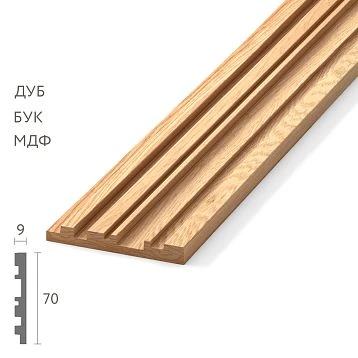
Slatted panels cover the plane of a wall, facade, or partition. Construction kit elements work differently: they assemble into vertical, axial, rhythmic, or furniture structures. If you need a flat relief on the wall, that's one category. If you need a stand, a partition made of individual shapes, or a decorative node, that's a different task.
Who wooden spheres, cubes, and construction kit elements are suitable for
This group of products is suitable for those who think in terms of a project, not a single detail. An interior designer can use construction kit elements for zoning, decorative stands, custom partitions, and unusual furniture accents. A furniture manufacturer — for supports, facade nodes, stands, decorative details, and non-standard items. A carpentry workshop — for repeatable wooden elements with clear geometry.
Such details are suitable for those assembling decorative partitions. Cubes and spheres allow for zoning that is not solid but airy. The room retains light and depth but gains a boundary. In commercial spaces, this is especially useful: you can separate a waiting area, counter, display, or passage without completely closing off the space.
Construction kit elements are suitable for those making stands, supports, balusters, interior verticals, and custom furniture. They help assemble a form from repeatable parts rather than cutting each element from scratch. This speeds up work and makes the result neater.
But such products are not suitable for those looking for children's toys. This is not a play set. They are also not suitable for a buyer who needs random small blanks for crafts without precise parameters. If the task is simply to paint a sphere and make a souvenir, you can look for craft items. If the task is to assemble a stand, partition, or furniture element, you need parts with a precise fit.
They are also not suitable for those who are not ready to check the hole diameter, size, and compatibility. The construction kit requires calculation. Even the most beautiful shape can be useless if it does not fit the axis or does not match other elements.
Installation, assembly, and preparation for finishing
Assembly begins with a sketch. It is not necessary to make a complex drawing, but you need at least to understand the height, number of elements, order of shapes, and base diameter. If it is a partition, you need to know the number of verticals, the distance between them, the height from floor to ceiling or to the top crossbar. If it is furniture, you need to understand the load, attachment point, and the role of decorative details.
Before purchasing, it's worth making a list of elements for one module. For example: ball, bushing, disc, cube, bushing, ball. Then calculate the height of such a module and multiply by the number of repetitions. This will make it clear how many parts are needed and whether the structure will turn out too tall or too short.
The mounting hole is checked separately. Don't assume it will 'somehow fit.' In wooden structures, play is immediately visible, especially if the elements are assembled vertically. An uneven post ruins the entire object. If the hole is smaller than needed, drilling it out yourself can damage the part or disrupt the center.
It's better to plan the finishing before assembly. If the elements will be painted, tinted, or varnished, it's more convenient to treat them before final installation. This is especially true for balls, cubes, and parts with complex shapes. After assembly, some areas may become hard to reach.
If the elements are used in a commercial interior or high-contact area, you need to consider maintenance. The surface will collect dust, may be touched by hands, and cleaning may occur nearby. Therefore, the coating and material must match the actual conditions.
Mistakes when buying
Buying only by shape
A ball, cube, or cone may look appealing but not fit in size, hole, or material. Shape is only the first filter. After that, you need to check the parameters.
Not considering the mounting hole
This is the main mistake. If the hole doesn't match the axis, assembly won't work. Before ordering, you need to compare the hole diameter and the diameter of the rod, post, or other base.
Not counting the number of elements
For a post or partition, one part is almost never enough. You need to calculate the elements for one module and the total number of modules in advance. Otherwise, you may run out of parts or the rhythm may be broken.
Mixing shapes without rhythm
Spheres, cubes, discs, and cones can be combined, but chaotic mixing looks random. It's better to choose a principle in advance: alternation, symmetry, repetition, transition from large to small, or grouping.
Not considering the material
Beech and oak produce different visual effects. If some parts are made of one material and others of another, this should be planned in advance. Random differences can ruin the integrity.
Buying craft blanks instead of construction kit elements
A regular blank may not have the required hole, exact size, or compatibility. This is not a problem for a craft, but for a stand or partition it is critical.
Not planning the fastening
Elements on an axis are only part of the structure. You need to understand how the stand is attached at the top and bottom, how the elements are fixed, how stability is ensured, and where the load will be.
Not linking decor to the interior
Even a beautiful stand can look out of place if it is not connected to the furniture, materials, colors, and style of the room. It's better to think in advance which wooden elements in the interior it will support.
Not checking product cards
Before ordering, you need to check the current dimensions, material, mounting hole, availability, and purchase conditions in the product card. If the project is complex, it's better to clarify compatibility with a STAVROS manager.
Where to buy wooden spheres, cubes, and construction kit elements
If you are looking for where to buy wooden ball blanks for interior assembly, it is better not to limit yourself to random craft items. For racks, partitions, furniture, and decor, you need elements with clear geometry, material, and mounting parameters. At STAVROS, you can start your selection in the section buy wooden construction set elements, and then move on to specific KN shapes and KON kits.
For a modern geometric solution, you can look at the wooden cube KN-011 with a hole. For small nodes, compact wooden shape KN-005. To expand the composition, you can consider wooden geometric shape KN-013.
If the task is a partition, it is worth comparing ready-made kits: wooden partition kit KON-003 и partition kit KON-007 made of beech or oak. This approach is convenient when you need not just to buy individual parts, but to quickly move on to a clear interior structure.
Before ordering, prepare the task: what is being assembled, where it will be placed, what height is needed, what axis is used, what material is suitable, whether painting or natural texture is required. The more accurately you understand the project, the easier it is to choose elements without errors.
FAQ: frequent questions about wooden balls, cubes, and construction set elements
What can be made from wooden balls?
From wooden balls you can assemble decorative stands, partition elements, furniture supports, balusters, accent nodes of furniture, and interior structures. It is better to use them not separately, but together with bushings, discs, washers, cones, or other compatible parts.
How do construction kit elements differ from ordinary blanks?
Ordinary blanks are more often used for crafts and DIY projects. Construction kit elements are designed for interior and furniture tasks: stands, rods, partitions, supports, balusters, and decorative nodes. For them, size, material, and mounting hole are especially important.
What to choose: a ball or a cube?
A ball gives a soft classic silhouette, while a cube provides a strict modern geometric accent. For classic, decorative, and smooth compositions, balls are more often chosen. For modern partitions and graphic stands, cubes are preferred.
Why are bushings, discs, and washers needed?
They work as separators and transitions. With their help, you can set the distance between large elements, make the rhythm neater, and avoid too tight assembly. Without such parts, a stand may look heavy or monotonous.
How to check the compatibility of parts?
You need to compare the element size, mounting hole diameter, and the diameter of the rod, stand, or axle. Also, check the material, height of each element, and the overall assembly order.
What to buy for a decorative partition?
You can start with ready-made KON kits or assemble a composition from construction elements. For a ready-made solution, consider the KON-003 or KON-007 kit. For custom geometry, you can select cubes, spheres, bushings, discs, and other shapes.
Can construction elements be used for furniture?
Yes, they can be used in furniture supports, posts, decorative nodes, custom items, and structures. However, if the element bears a load, you need to consider the fastening, axis, frame, and stability.
Are wooden spheres suitable for balusters?
Spheres can be used as decorative elements in balusters or staircase accents if they match in size, material, and fit. For staircase projects, you should also look at balusters and other wooden staircase elements.
What is better to choose: beech or oak?
Beech is often suitable for enamel and dense painting. Oak is chosen when natural texture, tinting, and a more expressive wood grain are important. The exact material should be checked in the product card.
Can I buy elements without a ready-made project?
You can, but it's better to at least roughly understand the task. If you buy parts without calculation, the hole, height, quantity, or rhythm may not match. A simple sketch and a list of elements are enough to start.
How not to confuse construction elements with toys?
A toy wooden construction set is designed for children and play. Construction elements for interiors are needed for furniture, decorative, and partition tasks. Their seating parameters, material, and compatibility are important.
Can I assemble a partition myself?
Yes, if the dimensions, axis, fastening, order of elements, and installation location are clear. For complex projects, it's better to check compatibility and installation nuances with a specialist or STAVROS manager in advance.
What should I buy together with wooden balls?
Often, bushings, discs, washers, cubes, cone parts, partition kits, decorative elements, balusters, or furniture frames are purchased together with balls. It all depends on whether you are assembling a stand, partition, support, or furniture unit.
Where to buy wooden balls, cubes, and construction set elements?
You can start your selection in the STAVROS section, which contains wooden construction set elements. There you can view individual KN geometric shapes and KON partition kits for interior and furniture tasks.
Summary: how to choose construction set elements without random purchases
Wooden balls, cubes, bushings, washers, discs, cones, and partition kits allow you to create not just decor, but expressive interior structures. They can be used to assemble stands, partitions, furniture units, supports, staircase accents, and custom elements. But a good result is achieved only when the buyer thinks not of a single figure, but of the entire system.
First, you need to understand the task: decorative stand, partition, furniture support, baluster, interior screen, or custom object. Then choose the shape: a ball for a soft silhouette, a cube for strict geometry, discs and bushings for rhythm, cones for transitions. After that, check the material, size, mounting hole, number of elements, compatibility with the axis, and future finishing.
STAVROS helps you move from an idea to purchasing real parts: you can open the construction set section, view KN shapes, KON kits, solid wood products, decorative elements, balusters, and furniture frames. This route allows you not to search for random craft blanks, but to assemble a well-thought-out wooden structure for furniture, partitions, or interiors.