































































Article Contents:
- When separate chair legs are needed: real scenarios
- Restoring an old chair
- Custom-made chair or ottoman
- Updating an armchair, ottoman, or pouf
- Seasonal refresh for garden and country furniture
- How chair legs fundamentally differ from table legs
- Dynamic load vs static load
- Seat height vs table height
- Leg angle adjustment
- Attachment to the apron
- How to choose leg height: ergonomics you can't ignore
- Height formula for a dining chair
- Height for a lounge chair
- Height for a bench
- Height for a bar stool
- Standard height table
- How to choose chair leg shape: from classic to minimalism
- Straight square legs
- Straight round (cylindrical) legs
- Turned legs
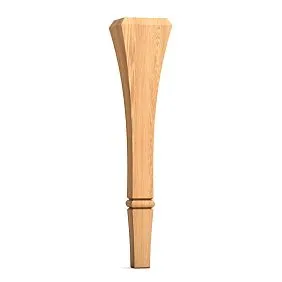
- Tapered legs
- Carved legs
- Pin legs
- Wooden chair legs: how to match supports with seat, backrest, and interior
- Leg and seat material
- Leg style and kitchen/dining room style
- Leg length relative to other chair elements
- Legs for armchairs and ottomans: features of upholstered furniture
- Load on upholstered chair legs
- Attachment to upholstered furniture frame
- Legs for ottoman
- Legs for a pouf
- Material of wooden legs: which species to choose
- Beech: the best material for painting
- Oak: expressive texture and durability
- Ash: light, lightweight, expressive
- Birch and pine: affordable options
- Leg coating: choosing the finish for a specific task
- Uncoated: for self-processing
- Toning + varnish
- White and colored enamel
- Oil and wax
- Mistakes when choosing chair legs: a complete breakdown
- How to replace legs on an old chair: step-by-step logic
- Additional leg decor: overlays and carved elements
- Where to buy wooden chair legs: range and approach
- FAQ: Answers to Popular Questions
- About the manufacturer
A chair is the most heavily used piece of furniture in the home. Not a sofa, not a bed, not a table. It's the chair. Every day, people sit on it dozens of times, move, lean, shift weight unevenly. And all this load is borne by four legs. It may seem like a minor detail, but it determines how long the furniture will last, how safe the seating is, and how the chair looks in the interior.
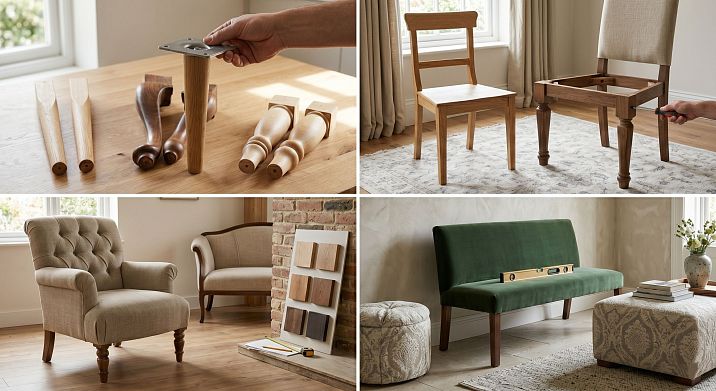
Buy chair legs — a task that arises in three situations: restoring an old chair with damaged supports, assembling a seat to order, or updating an armchair, bench, or pouf. In each case, there are different requirements for height, shape, material, and attachment. This article covers the topic comprehensively: you will understand how to choose wooden legs for a chair accurately and without mistakes.
It's important from the start: chair legs are not the same as table or cabinet legs. The physics of load, height, installation angle, and strength requirements are different. Let's break it down step by step.




When separate chair legs are needed: real scenarios
Before choosing the shape and material, it's worth understanding exactly why separate furniture supports are being purchased. There are several scenarios, and each affects what exactly to look for.




Restoring an old chair
A classic case: the chair is good, the seat is sturdy, the back is holding up, but one or more legs are broken, loose, or irreparably damaged. Replacing the entire chair is economically unfeasible. Replacing the legs is a logical and affordable solution.
The only difficulty here is selecting legs that are as close as possible to the originals in height, shape, seat hole diameter, and profile character. If an exact copy is unavailable, all four legs are replaced simultaneously, choosing a new set in a unified style.
Our factory also produces:


Custom-made chair or ottoman
Craftsmen, carpenters, and furniture designers often purchase wooden furniture legs separately: the seat is made to order (shape, upholstery, material), and the supports are selected from a ready-made range. This is fast, professional, and offers a wide choice of shapes without the need to turn each leg by hand.
Get Consultation
Updating an armchair, ottoman, or pouf
A soft armchair with beautiful upholstery but worn-out legs is a common situation. Replacing black plastic wooden legs with turned beech ones for tinting is a simple operation that radically changes the furniture's appearance. New legs can give an ordinary armchair a classic or modern look without reupholstering or expensive repairs.
Seasonal refresh of garden and country furniture
At the dacha, chairs and armchairs often stand on open verandas or in dining rooms with variable humidity. Wooden legs in such conditions require periodic replacement—especially if the furniture had thin Chinese supports made of soft wood. Replacing them with high-quality legs from solid wood oak or beech legs is an investment in durability.
How chair legs fundamentally differ from table legs
This question is fundamental. Many people think "a leg is a leg" — and they are wrong. The difference is significant, and it affects the choice.
Dynamic load vs static load
A table stands still. Objects are placed on it — the load is static, evenly distributed. A chair lives differently: a person sits down abruptly, moves, leans on the backrest, shifts weight from one leg to another. This is a dynamic, impact, uneven load. It is fundamentally harsher on the joints.
Hence the requirement for the strength of a chair leg: it must withstand not static weight, but dynamic impacts. A thin, elegant leg, suitable for a coffee table, may not hold up on a chair.
Seat height vs table height
The standard table height is 740–760 mm. The standard seat height of a chair is 420–450 mm. These are different leg heights. When choosing supports for a chair, you need to know:
-
The height of the finished seat (with or without a soft cushion).
-
Which table the chair is designed for (if it is paired with a table).
-
Purpose: dining chair, lounge chair, bedside bench, pouf.
An error in height of 30–50 mm results in an uncomfortable seating position that cannot be compensated.
Leg angle setting
Table legs are typically vertical. Chair legs often have a slight outward tilt (splay): front legs angle slightly forward and outward, rear legs angle backward and outward. This splay provides stability under dynamic loads and prevents tipping.
When choosing chair legs, consider whether the seat design requires an angled installation — and select supports with corresponding mounting plates.
Attachment to the apron
A chair has aprons — horizontal rails that connect the legs under the seat. The attachment of the leg to the apron is a critical joint that bears all the load. When selecting ready-made legs, ensure the fastening unit (tenon, bolt, bracket) is compatible with your seat or apron design.
How to choose leg height: ergonomics you can't ignore
Height is the first parameter when choosing legs. Everything else comes after.
Height formula for a dining chair
Standard chain: table height − seat thickness − cushion thickness (if any) = leg height.
Example: table 760 mm, wooden seat thickness 30 mm, no cushion. Desired seat height is 430 mm. Therefore: leg height = 430 − 30 = 400 mm.
If the seat has a soft cushion 60 mm thick: leg height = 430 − 30 − 60 = 340 mm.
This calculation is important: an error leads to discomfort while eating, incorrect hand position on the table, and back strain.
Height for a lounge chair
For a lounge chair, the seat height is lower: 380–420 mm. The chair is designed for a relaxed posture, not for sitting at a table. Accordingly, the legs are shorter — 300–380 mm depending on the thickness of the seat and cushion.
Height for a bench
A bench by the bed or in the hallway: seat height 400–450 mm — such that it is comfortable to put on shoes or sit down for a moment. A bench in the bathroom or at a vanity table: 450–500 mm.
Height for a bar stool
Bar stool for a counter 900–1000 mm high: seat height 650–700 mm. Legs — 600–650 mm considering the seat thickness.
Table of standard heights
| Furniture type | Seat height | Leg height (approx) |
|---|---|---|
| Dining chair | 420–450 mm | 380–420 mm |
| Lounge chair | 380–420 mm | 300–380 mm |
| Hall bench | 400–450 mm | 360–420 mm |
| Ottoman | 350–400 mm | 280–350 mm |
| Bar stool | 650–700 mm | 600–650 mm |
How to choose the shape of chair legs: from classic to minimalism
The shape of the leg is both aesthetics and functionality. Different shapes suit different styles, different loads, and different mounting methods.
Straight square legs
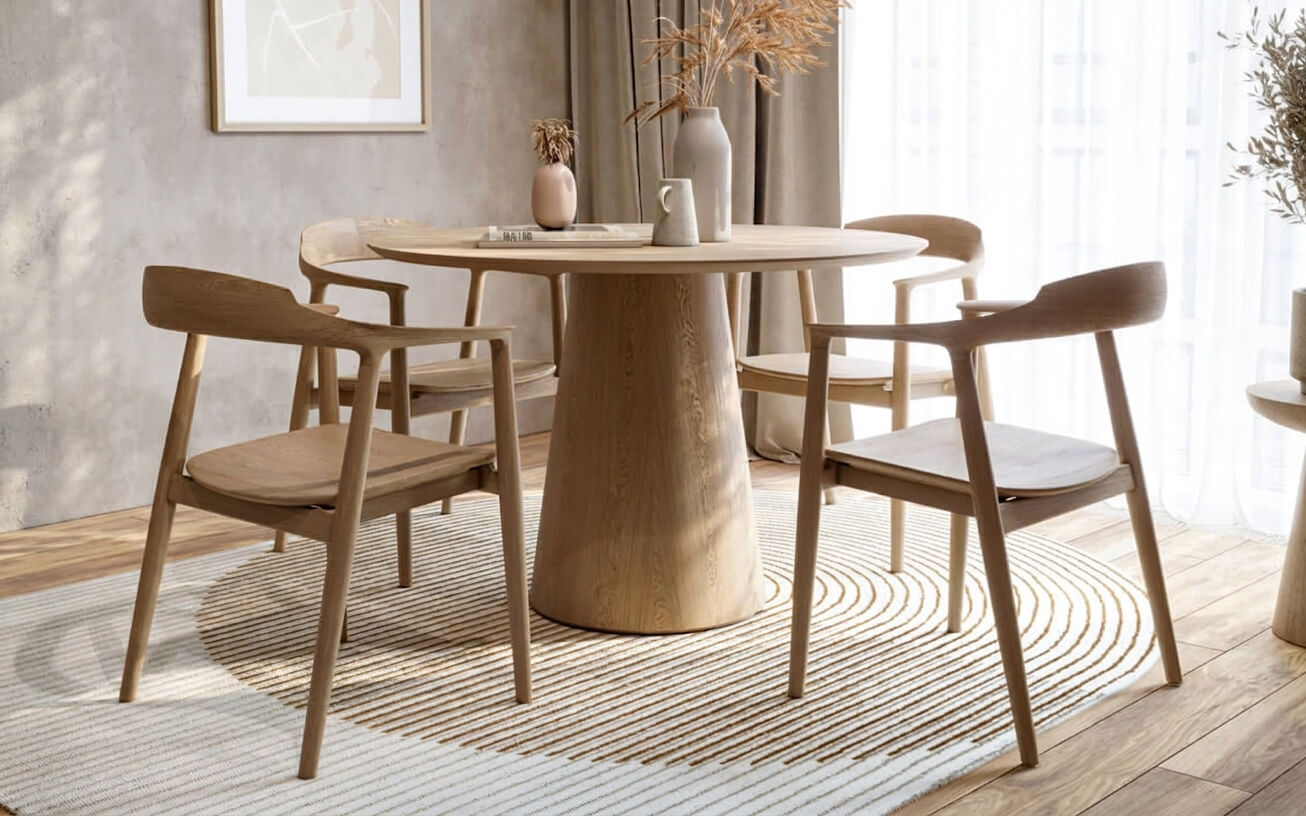
A strict rectangular profile. No turned shapes, no bevels — a pure straight line. These are legs for minimalist, modern, Scandinavian interiors. A chair with straight square oak legs is restrained, functional, and "expensive" in the modern sense.
A square profile is stronger than a round one under lateral loads: there is less risk of twisting at the attachment point. For dining chairs with intensive use — a reliable choice.
Straight round (cylindrical) legs
A rounded cross-section, constant diameter along the entire length. Concise, neutral. Suitable for café-style, rustic interiors, Scandinavian kitchens. Pairs well with natural upholstery materials — linen, cotton, leather.
Turned legs
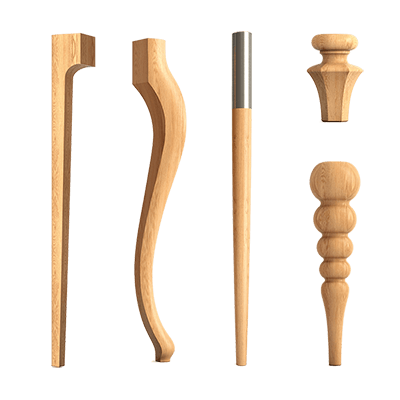
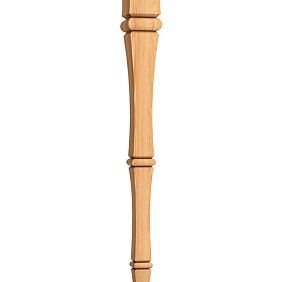
wooden furniture legs with a turned profile — the most common option for classic and neoclassical chairs. The turned shape is created on a lathe: alternating thickenings and narrowings form an expressive silhouette.
Classic turned profile options:
-
Baluster — a profile with a widening in the middle part, tapering towards the top and base.
-
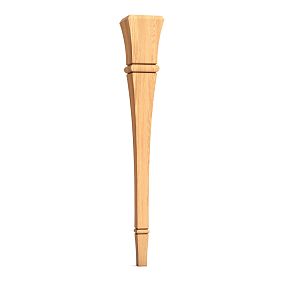
Tapered cone — from a wide top to a narrow bottom with a small decorative belt.
-
Vase — a complex shape with several transitions, characteristic of Baroque and Rococo.
Turned chair legs — this is a choice for a classic dining room, neoclassical living room, study with wooden furniture, bedside bench in a classic interior.
Conical legs
Section from wide at the top to narrow at the bottom, without additional profiling. A clean, simple form. This is "furniture classic" of the mid-20th century — the style of Hans Wegner, Danish modernism, American mid-century. Tapered legs are versatile: they are appropriate in modern, retro, and classic interiors.
The cone angle creates a visual effect of lightness — the furniture "floats" above the floor, looks elegant despite its actual weight.
Carved Legs
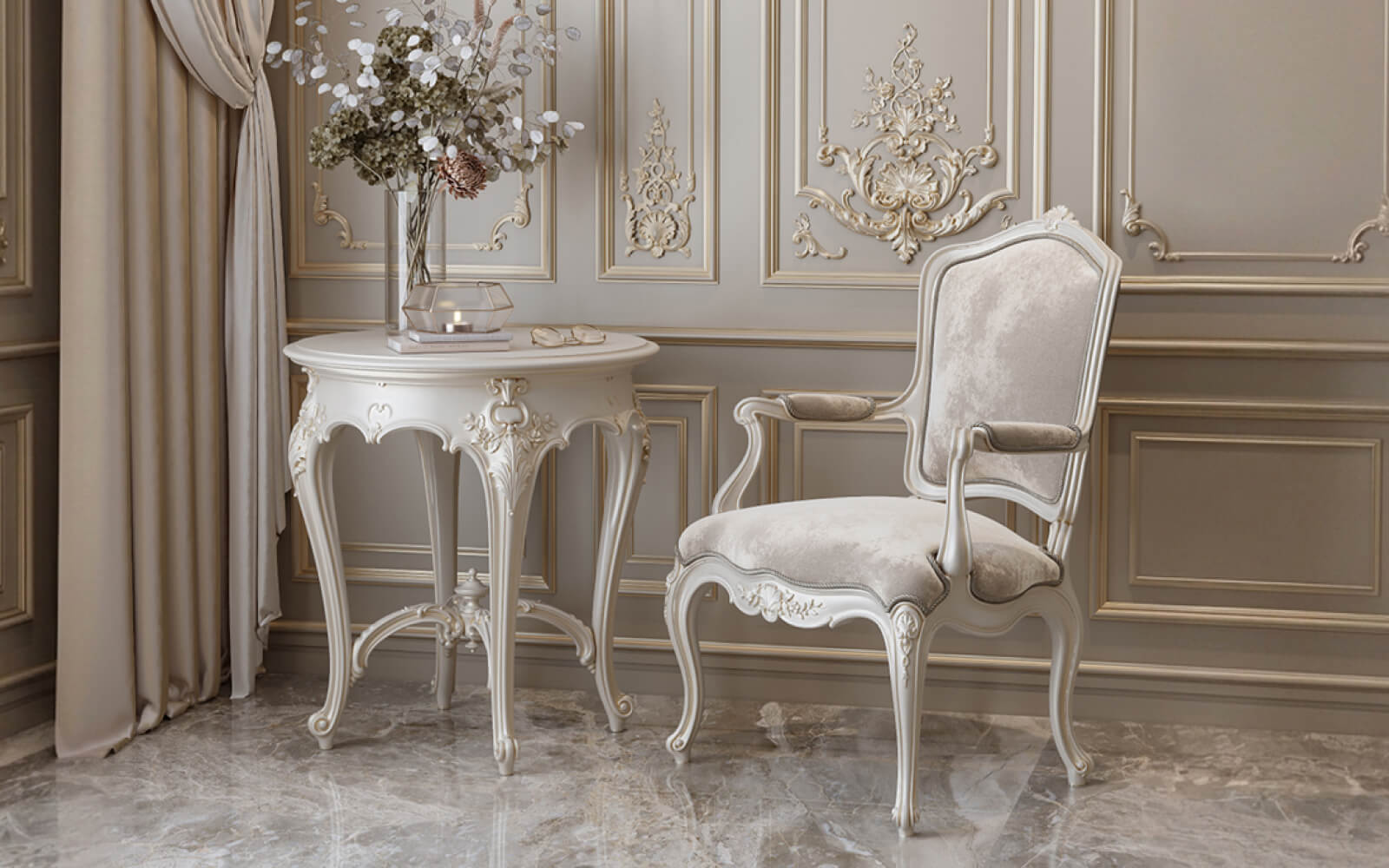
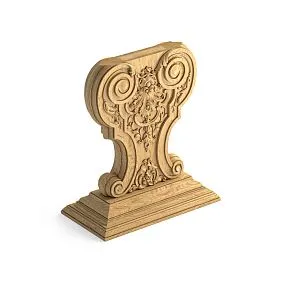
Carved wooden decoration on chair legs — this is the highest level of decorativeness. Carved legs are characteristic of Baroque, Empire, and classic chairs and armchairs: complex plant ornamentation on the surface, acanthus leaves, rocaille curls.
A carved leg is not for daily use in the kitchen, but for the living room, study, conference room, hall, or representative space. This is a detail that is examined and appreciated.
Pin legs
Thin straight legs, often at an angle. A popular type for soft chairs in mid-century modern style: the chair seems to "float" above the floor on thin metal or wooden supports. The wooden version of pins made of thin oak or solid wood is light, elegant, and expressive.
Important: pins require precise load calculation — a thin cross-section, if chosen incorrectly, may not withstand dynamic impacts when sitting down.
Legs for a wooden chair: how to coordinate supports with the seat, backrest, and interior
A chair is a system. The legs, stretchers, seat, and backrest must be coordinated in material, shape, and finish. Let's break down the logic of coordination.
Material of legs and seat
If the seat is oak, the legs are oak. If the seat is beech for painting, the legs are also beech. Mixing wood species in one product creates discrepancies in texture, density of growth rings, and tone — especially noticeable when tinting.
Exception: if the entire structure is painted in an opaque color (enamel), the wood species of the legs is not critical. Here, only strength and shape matter.
Style of legs and style of kitchen/dining room
-
Modern kitchen — straight square or tapered legs made of beech or oak. Minimal profile, no decoration.
-
Classic dining room — turned legs with a baluster profile, made of oak, tinted to walnut or natural oak.
-
Provence, country style — slightly tapered legs with a soft profile, made of beech, finished with white enamel or light stain.
-
Country house in Russian style — massive turned legs made of birch or oak with textured tinting.
-
Study, library — turned or carved legs made of dark oak finished to resemble walnut or ebony.
Length of the leg relative to other chair elements
Legs that are too long make the chair a "crane" — high seating, instability, discomfort. Legs that are too short result in seating close to the floor, which disrupts ergonomics. Calculate the height using the formula from the previous section — this is not a recommendation, it is a safety rule.
Legs for armchairs and ottomans: features of upholstered furniture
Legs for chairs — a separate story. Upholstered furniture imposes special requirements on supports, which are fundamentally different from the requirements for a wooden chair.
Load on the legs of a soft armchair
A soft armchair with a spring block can weigh 30–50 kg — without a person. An armchair with a person: 100–130 kg on four legs. The load is uneven: when sitting down, the main weight falls on the back legs. When standing up, on the front legs. This means that legs for a soft armchair must have an increased cross-section and a reliable fastening unit.
Thin pins with a diameter of 20 mm made of soft wood are not suitable for a soft armchair. The minimum cross-section of the support is 35–45 mm at the most loaded point, made of hard wood (beech, oak).
Attachment to the frame of upholstered furniture
Most upholstered chairs have a wooden frame inside. The legs are attached to the frame via:
-
Tenon and mortise — a traditional joinery joint, strong when executed correctly.
-
Metal plate with bolt — a modern method that allows legs to be removed and replaced.
-
Threaded insert — a metal bushing is driven into the leg, a bolt is screwed into the frame. Fast, reliable, removable.
When purchasing ready-made legs without coating or legs with coating specify the type of fastening unit and check its compatibility with your chair's frame.
Legs for a bench
A bench is light, elegant furniture. The load on it is less than on a chair. But other parameters are important: seat height (for putting on shoes — 400–450 mm), stability (the bench often stands against a wall and rests only on four points), leg style matching the upholstery.
For a classic-style hallway bench — turned beech legs with white enamel. For a Scandinavian-style bedroom bench — conical oak legs with natural lacquer. For a bedside bench in a dark interior — dark walnut-stained solid oak legs.
Legs for a pouf
A pouf is low, compact furniture. Its legs are short (150–250 mm) and wide (for stability). Conical legs with a wide top are often used for poufs: they provide stability and create a light, "floating" silhouette.
Wooden decorative inlays on the top surface of the pouf combined with legs of the same wood species and finish — these are details that turn a budget pouf into a piece of furniture with character.
Material of wooden legs: which wood species to choose
Wood species determines strength, texture, weight, and workability. Let's break down the main options.
Beech: the best material for painting
Beech is a dense, uniform, hard wood. Its fine-grained structure has no noticeable pores and accepts paint perfectly evenly. White, gray, pastel legs are always made of beech. This is the standard for producing turned legs for painting.
for legs without coating beech for DIY painting — an undeniable choice. Beech has higher bending strength than pine — which is crucial for daily chair use.
Note: beech is unstable with humidity changes. For furniture in rooms with normal climate — no problem. For open verandas and country conditions — oak is preferable.
Oak: expressive texture and durability
Oak is a hard, durable wood with a coarse-grained texture and expressive annual rings. Oak legs with a tinted finish create an expressive, "living" surface that looks expensive and rich.
wooden legs for a chair Oak is the choice for chairs, armchairs, and benches in classic and neoclassical interiors. Walnut, wenge, natural light oak — anything is possible.
Note: Oak contains tannins that cause yellowing when light enamels are applied. For white paint, an insulating primer is mandatory. For tinted finishes, there are no issues.
Ash: light, airy, expressive
Ash resembles oak in grain pattern but is lighter and slightly softer. It is well-suited for Scandinavian interiors, light kitchens, and modern dining rooms. Ash legs with a natural lacquer create a neutral yet warm look.
Birch and pine: affordable options
Birch is an affordable hardwood. It is stronger than pine and easy to work with. Suitable for legs intended for painting in the budget segment. Pine is light, soft, and less durable. It is not the best choice for heavily used chairs — it scratches and dents upon impact. For decorative benches with light use, it is acceptable.
Leg coating: choosing the finish for the specific task
The coating determines the leg's appearance and its resistance to daily use. Let's review the options.
Without coating: for self-processing
Uncoated legs — sanded array without primer and topcoat. This is the choice when you need to paint the legs to match the exact color of the furniture or upholstery, or when restoring an old chair and you need the legs and seat to have an identical finish.
Pros: maximum freedom in choosing color and coating. Cons: requires self-preparation, priming, and finishing.
Tinting + varnish
Legs with Finish for tinting — standard for wood chairs. Stain sets the tone (light oak, walnut, wenge), varnish fixes and protects. Matte or semi-matte finish for modern style, semi-gloss or gloss for classic.
White and colored enamel
White chairs are not a trend of recent years, but a classic of French interior, Provence, neoclassicism. Beech legs with white matte enamel + linen or velvet seat upholstery — an image that never ages.
Colored legs — a bolder solution. Deep blue, dark green, mustard — a modern accent in a neutral interior. The main condition: the color of the legs should echo other color accents of the room, not be the only bright spot.
Oil and wax
Natural coatings. The wood remains 'alive', the texture is maximally expressive. For a country house, rustic interior, kitchen with natural materials. Cons: requires annual renewal.
Mistakes when choosing chair legs: full analysis
Mistakes when choosing legs are costly. Installed legs are difficult to remove without risk of damaging the structure.
Buying legs without calculating seat height. This is mistake number one. Without an accurate height calculation — buying legs at random. Result: the chair does not match the table height, uncomfortable seating, rework.
Do not underestimate the load. Thin decorative legs with a diameter of 25 mm made of soft birch for a chair weighing 45 kg + a person is a risk. The load exceeds the support capacity. Chair legs should have an increased cross-section made of hardwood.
Using too thin legs for a heavy chair. A direct continuation of the previous mistake. The minimum cross-section for a soft chair leg is 35–45 mm. Thinner is only for decorative elements without real load.
Forgetting about the installation angle. If the design involves angled legs — which is typical for many chairs and armchairs — you need legs with angled mounting pads or straight legs installed in angled fasteners. A straight leg mounted at an angle without adapted fastening creates an unstable connection.
Not checking the fastening. The type of leg fastening unit must match the mounting point on the seat or frame. Buying legs with a tenon for a wooden socket when the frame is designed for a bolted connection means extra work and potentially unreliable results.
Mixing different wood shades. Especially critical when tinting: legs in dark walnut + seat in light oak = stylistic chaos. If the furniture is to be tinted, all wooden elements should be from the same batch.
Choosing legs separately from the shape of the seat and backrest. Turned legs with a baluster profile on a seat with strict rectangular backrests create a conflict of forms. Legs should be in the same "language" as the other wooden structural elements.
Not considering the coating before installation. Painting legs after installation is inconvenient, with a risk of drips on the upholstery or seat. Coat the legs before installation; after installation, only touch up the fastening area.
How to replace legs on an old chair: step-by-step logic
Replacing legs is not a difficult task if you approach it methodically.
Step 1. Assess the structure. Remove the chair and examine the leg fastening: tenon-socket, bolt, bracket. Determine the type of joint and its condition.
Step 2. Dismantle the old legs. Carefully. For glued tenon joints, do not pull sharply; instead, heat with a construction hairdryer. PVA glue and wood glue soften when heated. Unscrew bolted connections.
Step 3. Clean the mounting sockets. Remove any remaining glue and clean the surface.
Step 4. Select new legs. Compatible mounting type, precise height, matching style.
Step 5. Coat the new legs before installation. Primer, stain, varnish, or enamel — all before mounting.
Step 6. Install. For tenon joints: wood glue + clamp for 24 hours. For bolted connections: tighten firmly, check for play.
Step 7. Check stability. Place the chair on a level surface and check if it wobbles. If necessary, sand the legs or add felt pads.
Additional leg decor: overlays and carved elements
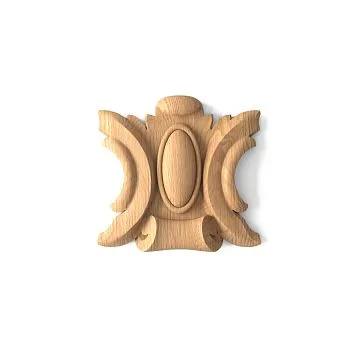
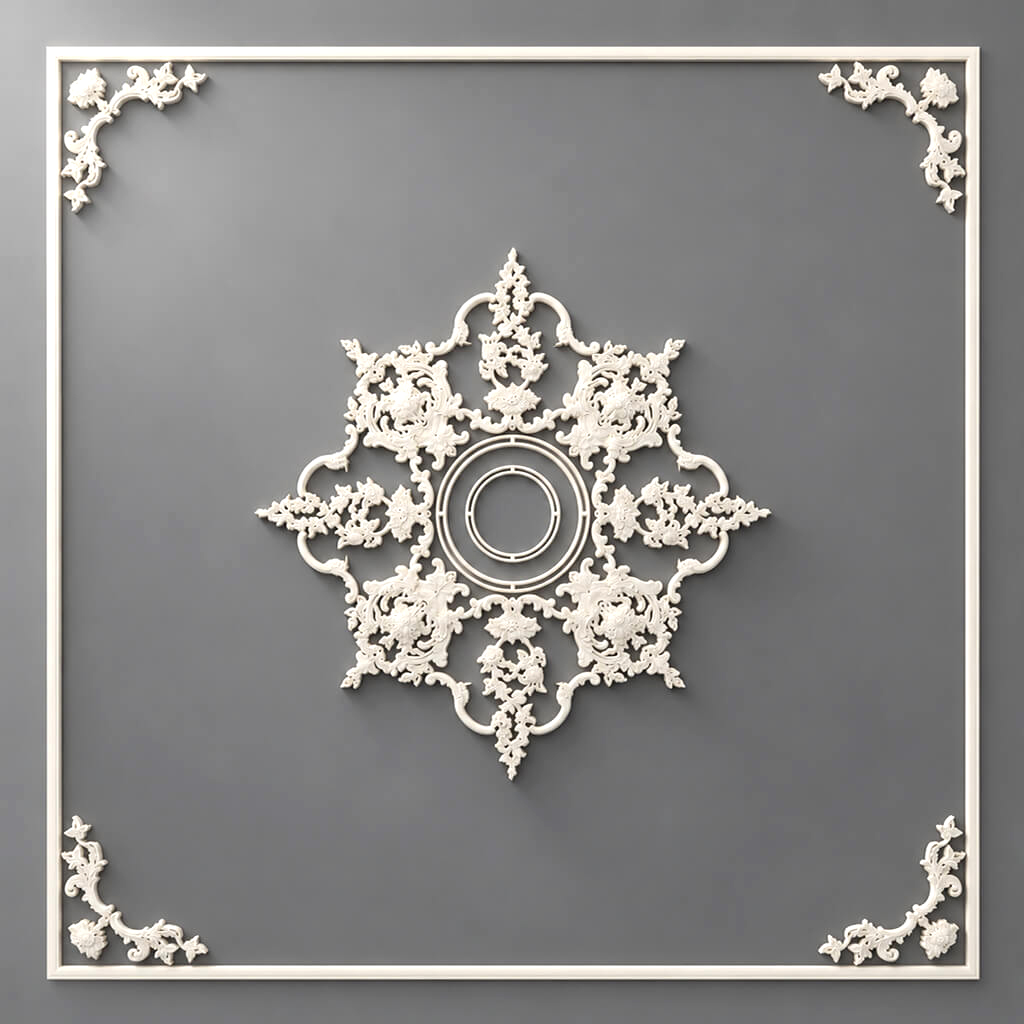
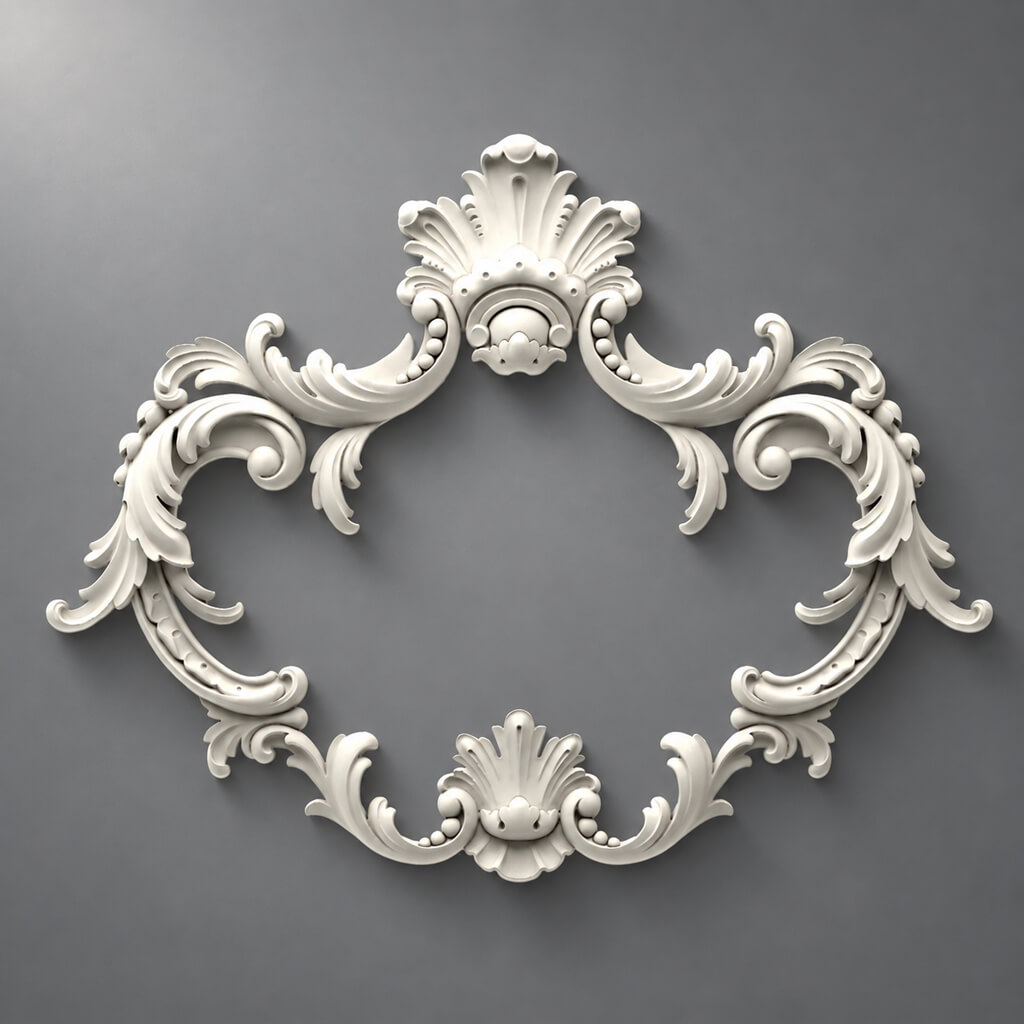
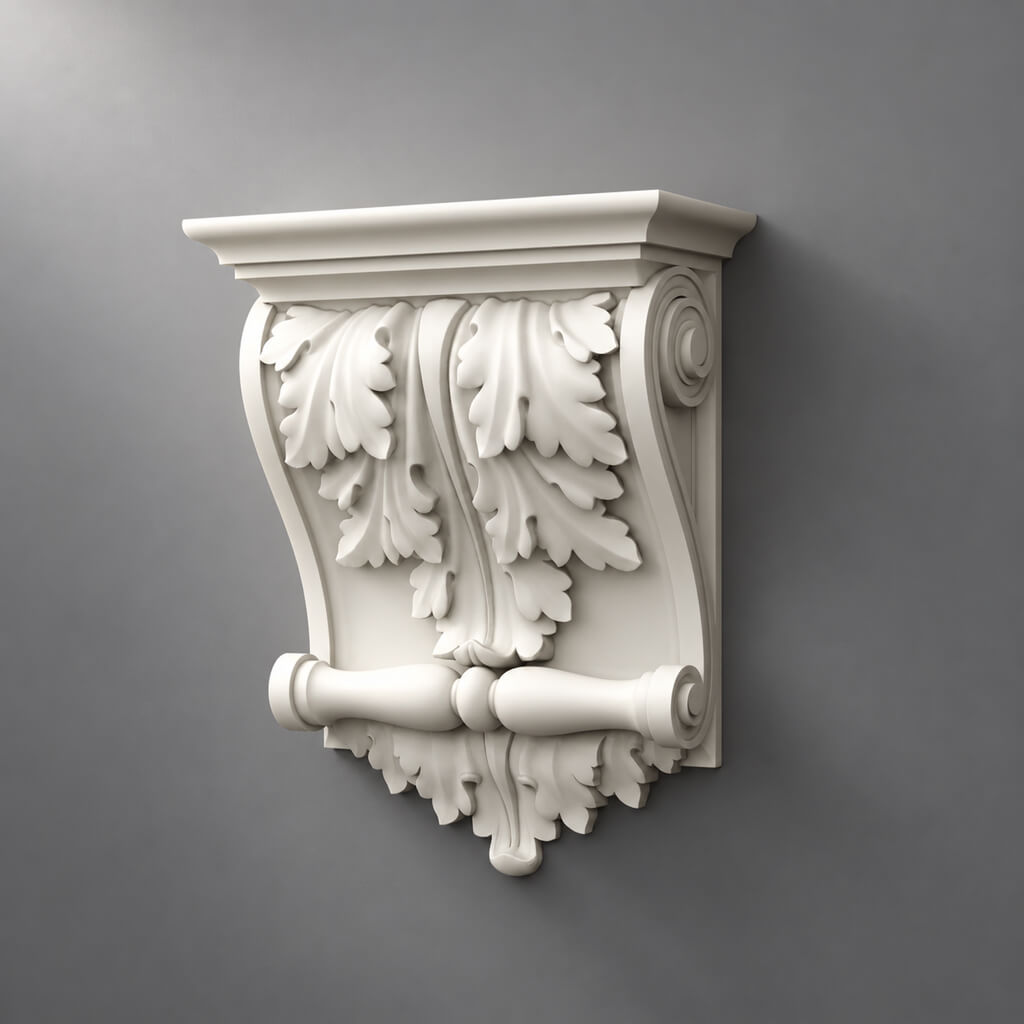
A chair leg is not only a functional element but also a decorative detail. Furniture Decoration from Wood allows you to decorate the leg with additional elements.
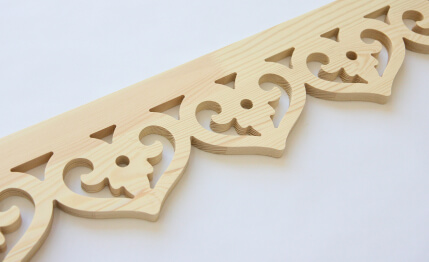
A small carved overlay at the base of the leg, a decorative "cuff" made of carved decor elements — this is a technique used in classical and baroque chairs. For example, an acanthus leaf at the base of the leg, a curl at the top — details that elevate the furniture to the level of "designer" pieces.
For those involved in restoration or custom furniture making: combine ready-made legs with applied decorative elements. This allows you to create a unique look without expensive hand carving of the entire leg.
Where to buy wooden chair legs: assortment and approach
Buy chair legs from the manufacturer means getting an exact choice: the right height, the right profile, the right wood species. A retail store often offers a limited assortment. The manufacturer offers the full range.
In the Stavros catalog — wooden furniture legs of different shapes, heights and wood species: turned, straight, tapered. Available both Uncoated legs for self-processing and Legs with Finish — ready for installation. Nearby — Furniture Decoration from Wood, Carved Decor and other Wooden products for interior — everything you need for a full restoration or furniture assembly from scratch.
FAQ: Answers to popular questions
How to choose chair legs?
Determine the type of furniture, calculate the required seat height, choose the profile shape to match the interior style, check the type of attachment, and select the wood species for the finish.
What leg height is needed for a chair?
For a dining chair — about 400 mm (final seat height 430–450 mm). For a lounge chair — 300–380 mm. For a bench — 360–420 mm. Consider the thickness of the seat and cushion.
How do chair legs differ from table legs?
A chair bears dynamic load. Chair legs must be stronger in bending, have reliable attachment, and often be installed at an angle. A table has static and uniform load.
Are wooden legs suitable for an upholstered chair?
Yes. It is important to choose legs made of hardwood (beech, oak) with sufficient cross-section (35–45 mm) and the correct type of attachment to the chair frame.
Can chair legs be painted?
Yes. The best material for painting is beech. Prime before painting. It is better to paint before installation.
Which legs should I choose for a bench?
Tapered or turned, 360–420 mm high, made of beech or oak. For white enamel for classic style or tinting for a natural wood look.
Which is better: straight or turned legs?
Depends on the style. Straight legs are for minimalism and modern interiors. Turned legs are for classic, neoclassical, and Provence styles.
How to replace old chair legs?
Remove the old ones (heat the glue joint if necessary), clean the sockets, select legs with a compatible mounting type and the required height, finish, and install.
Which legs are suitable for a classic chair?
Turned legs with a baluster or tapered profile, made of oak with walnut tinting. Carved details at the base are possible.
Where to buy wooden chair legs?
In the STAVROS catalog: wooden furniture legs with Contact us to confirm shipping to your destination., various shapes and finishes.
About the manufacturer
STAVROS is a Russian manufacturer of solid wood products for furniture and interiors. The assortment includes wooden legs for a chair, chairs and banquettes — turned, straight, tapered, with and without coating. All products are made of solid wood: beech, oak, ash. Nearby is a complete system of furniture decor: applique, Carved Decor and other Wooden products for interior. If you need to buy chair legs with quality guarantee and delivery — STAVROS offers a full range.