Article Contents:
- Short answer: when you need wooden furniture overlays
- What are wooden furniture overlays
- Where wooden decor for furniture is used
- Overlays for cabinets
- Overlays for dressers and nightstands
- Overlays for the kitchen
- Overlays for doors and wall panels
- Overlays for furniture restoration
- What types of decorative elements for furniture exist
- How to choose an overlay according to furniture style
- How to choose the size of a wooden overlay
- Material and coating: what is important before purchasing
- How to combine overlays with furniture handles, legs, and brackets
- Overlays for restoration: how to update old furniture
- Mistakes when choosing wooden decor for furniture
- What to buy together with wooden overlays
- FAQ: Answers to Popular Questions
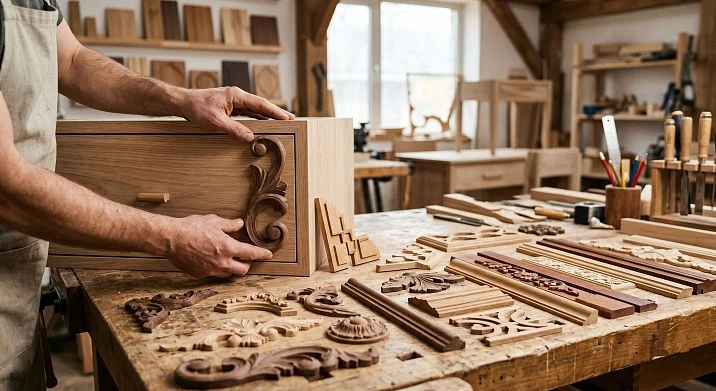
Imagine two identical MDF cabinets — one with smooth white fronts, the second with the same fronts but with symmetrical carved overlays in the center of the doors, wooden legs, and handles from the same wood species. These are not different cabinets — they are the same product before and after. That is precisely the meaning of wooden overlays for furniture: they do not change the structure, but they change everything else — character, perceived value, style affiliation, place in the interior. Wooden decor for furniture is not a luxury or a whim; it is a deliberate tool that works accurately and predictably if you know how to use it.



Short answer: when wooden overlays for furniture are needed
The answer is direct and without mincing words.
If the furniture looks too simple, but there is no point in changing the body — decor for furniture in the form of applied wooden elements solves the problem without disassembly and without significant costs. This is the fastest way to change the visual class of the product.
If you need to fit mass-produced furniture into a classic or neoclassical interior — carved and shaped overlays give it stylistic affiliation. Without them, the furniture "hangs" in the space as a random object. With them, it becomes part of the interior concept.
If furniture is being prepared for painting or enamel, wooden overlays are installed before the coating is applied and ultimately form a single surface with the facade. The result is visually indistinguishable from solid wood furniture with a milled relief.
If an old piece of furniture is being restored, overlays provide an opportunity to completely rethink the item's appearance. An old Soviet cabinet with new decorative elements, legs, and handles is no longer restoration—it is transformation.
If you need to create a unified decorative system: furniture, walls, doors, niches—all can be united by one type of wooden decor into a single spatial solution.
And the final argument, the most practical one: wooden decorative elements make furniture visually more expensive. This is not deception—it is a principle of perception. People evaluate details. A high-quality detail speaks to the quality of the entire product.




What are wooden furniture overlays
Before choosing, you need to understand what exactly you are choosing. This sounds trivial, but it is important not to get confused with terms here.
wooden furniture appliqués are decorative elements made of solid wood that are attached to the surface of a finished product: facades, doors, side panels, drawers, cornice areas, wall panels. They do not bear structural load—this is pure decor. Their task is to add relief, style, accent, and expressiveness to a flat or unremarkable surface.
An overlay is not hardware. It is not visible from the outside like a hinge or a latch. It is visible from the outside as a design element. That is why it is subject to requirements like a piece of small sculpture: clarity of lines, depth of relief, symmetry, surface quality.
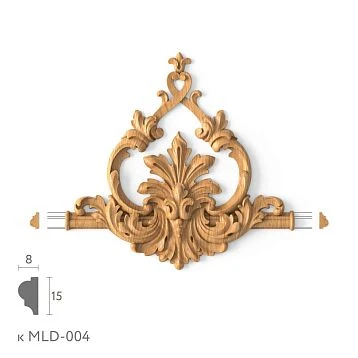
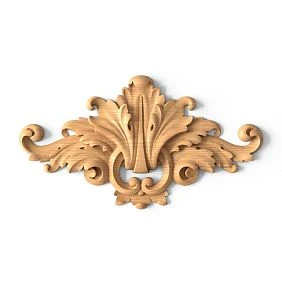
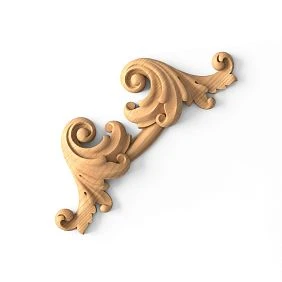
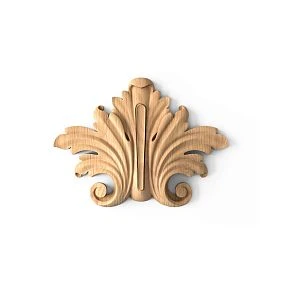
By shape decorative elements for furniture are divided into several categories. Central ones are located in the center of the facade or drawer. Corner ones are in the corners of doors or panels. Vertical ones create a pattern along the vertical axis. Horizontal ones form belts or dividing lines. Rosettes and medallions are symmetrical round or oval elements with ornament. Pilasters are vertical relief posts imitating columns.
All of them can be carved — with deep ornamental relief, figured — with an expressive silhouette without complex carving, or smooth — with a smooth profile and without ornament. The choice of type is determined by the style of furniture and interior, which is discussed in detail below.
Fastening of overlays — with glue (PVA, wood glue, contact adhesive) with additional fixation using thin nails without heads or screws. After applying the coating, the fasteners become invisible.
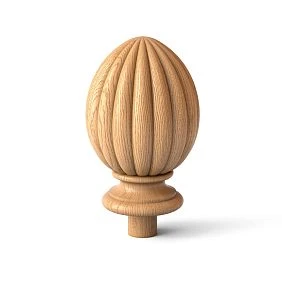
Our factory also produces:
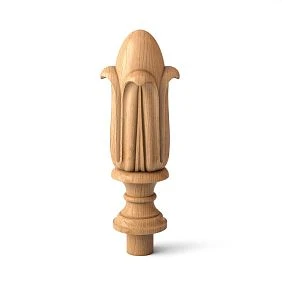

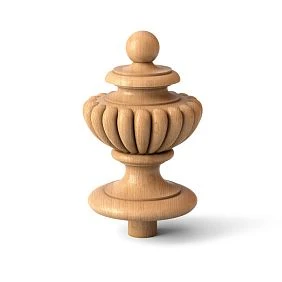
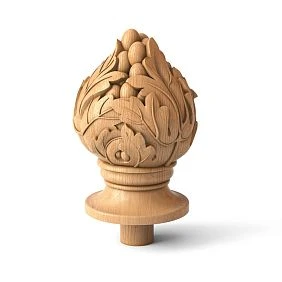
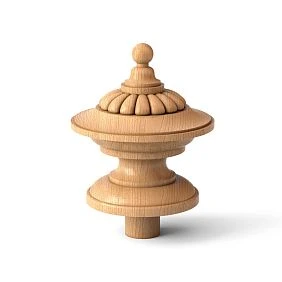
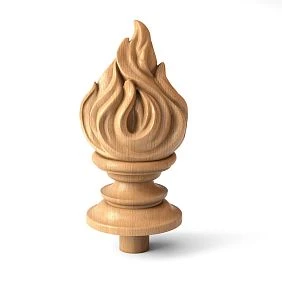
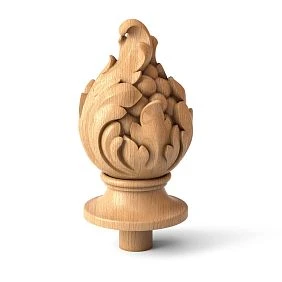
Where to use wooden decor for furniture
Get Consultation
Overlays for cabinets
A cabinet is the most voluminous piece of furniture in any room. That is why its facade has the greatest decorative significance: it is the first thing a person sees when entering the room. A flat, smooth facade without decor is neutral but faceless. Decorative element for a wardrobe in the form of applied wooden elements gives the facade character.
For large cabinets with wide doors, central overlays are appropriate — rosettes, medallions, or vertical figured elements. For cabinets with several narrow doors, corner overlays in each corner of the door, creating a frame effect.
In classic interiors, a system of overlays is installed on cabinets: corner elements at the four corners of each door plus a central rosette. This creates the effect of a framed facade with rich relief — without milling, only with glue.
For the upper part of the cabinet — in combination with with wooden cornices and decorative brackets The overlays create a full furniture entablature: the cornice crowns, the brackets support, and the overlays on the facade complete the decorative system.
Overlays for dressers and nightstands
A chest of drawers is an item with a large number of horizontal drawers. This is a special geometry for decor: the rhythm of repeating rectangles requires a solution that turns monotony into a system.
Decor for a dresser It is built on the principle of repetition: identical overlays on each drawer create a rhythm. Central horizontal elements work best—symmetrical, with moderate relief. For the lower, wider drawers—a larger element. For the upper, narrow ones—a smaller but proportional one.
On cabinets and bedside tables, decorative overlays are often combined with wooden legs: turned legs at the bottom and a carved overlay on the facade—this is already a formed classic image, recognizable and cohesive.
Overlays for the kitchen
A classic-style kitchen is the most complex space in terms of consistency of decorative elements. Here everything is visible at once: facades, cornice, handles, shelves, brackets. Any mismatch between elements is obvious.
Decor for kitchen facades should be selected in a unified system with other wooden elements of the set. Overlays on the doors of lower and upper cabinets, corner elements on door corners, rosettes in the center—all from the same series and the same wood species.
For a classic kitchen with open shelves, the system looks like this: overlays on closed facades, wooden cornice on top, Decorative brackets under open shelves and wooden knob handles on the doors. All from the same wood species — that's what makes a classic kitchen, not just a set with glued-on details.
Overlays for doors and wall panels
An interior door is a huge facade that most people don't consider as an object for decoration. But they should. A wooden overlay on a smooth MDF door instantly elevates it to a different price and style category.
For doors, frame systems are appropriate: corner overlays in the four corners of each panel and/or a central element. Made from the same wood species as the furniture, with the same finish — this ties the doors and furniture into a single decorative system for the room.
Wall panels with applied wooden elements are a technique that is experiencing a true renaissance today. Furniture Decoration and wall decoration come together: overlays on wall panels repeat the motifs of overlays on furniture, creating a unified interior code.
Overlays for furniture restoration
A separate story that deserves special attention. Restoration is not just for antiques. Any quality furniture from the Soviet or late Soviet period, any cabinet or chest of drawers with a good wooden body can get a new life.
Furniture Decoration by adding overlays is the least invasive method of transformation. There's no need to re-router the facades, change the body, or buy a new piece. It's enough to prepare the surface, glue on the overlays, replace the legs and handles, paint or varnish — and as a result, the old cabinet turns into a classic piece with a decorative character.
What decorative elements for furniture exist
Classification helps not to get lost when choosing. Let's break it down by type.
Center overlays — placed in the geometric center of the facade or drawer. This can be a rosette (round or oval symmetrical element with ornament), a medallion (elongated element in the shape of a shield or oval), a figured central element with ornament. Size — from 50×50 mm for a nightstand to 200×300 mm for a large cabinet door.
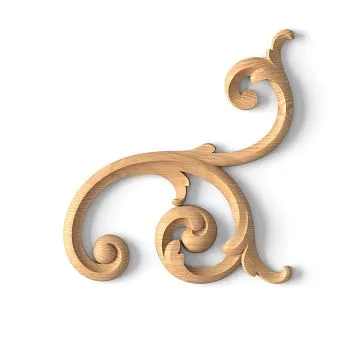
Corner overlays — placed in the corners of doors. They can be rectangular, triangular, or quarter-circle shaped. Create a frame effect without using moldings. For a pair of doors — mirror symmetry is important: corner elements should reflect symmetrically both horizontally and vertically.
Vertical decorative elements — long narrow overlays forming a vertical ornamental accent. Imitate pilasters or create a vertical rhythm on a wide facade. For sideboards and display cabinets — an essential element of the classical style.
Horizontal elements — belts and dividers. Used for visually dividing a tall facade into zones. A horizontal strip of relief wooden carved decoration in the middle of a tall wardrobe — this is not overload, it's a large-scale solution.
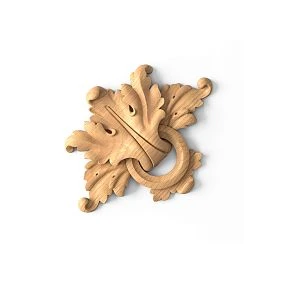
Carved compositions — the most complex and valuable elements. Multi-level ornament: floral, geometric, classical. Acanthus leaves, scrolls, vine, symmetrical braided ornaments — each belongs to a specific era and style. For classic and Empire style — rich floral motifs. For neoclassicism — calm geometric ornaments.
Simple smooth overlays — without ornament, with expressive silhouette. Figured contour without carving — for modern classic and neoclassicism, where shape is important, not detailing. Such overlays work well under strict enamel coating, when the form is read through the play of shadow, not through texture.
Elements for painting — specially prepared for painting: wood species with minimal grain (beech), sanding up to 180 grit. Under white or cream enamel — standard for classic furniture. Provide a smooth surface without texture showing through the paint.
Elements for neoclassicism — moderate relief, clear forms without baroque grotesque. Symmetry, correct proportions, minimum decorative transitions. Such Classical decor for furniture is suitable for most modern classical interiors.
How to choose an overlay according to furniture style
Style is always the first question. Because the same wood species, the same size, but a different pattern profile will turn the detail from an organic accent into a foreign inclusion.
For classic and baroque — carved, symmetrical, rich elements. Acanthus leaves, shells, scrolls, cartouches. Relief deep — from 8 to 20 mm. Coating: white enamel with patina or gilding on protruding parts, dark oil or stain under walnut. Classic Furniture with such overlays — this is a statement: a person knows the history of style and lives in accordance with it.
For neoclassicism — restrained relief, clear lines without grotesque. Soft profile without sharp corners, moderate symmetry. No baroque excess. Coating — white matte enamel, light cream tone. This approach allows creating modern classical interiors that look relevant and at the same time have a recognizable architectural foundation.
For Provence — light, slightly naive forms. Rounded edges, modest ornament, possible asymmetrical details. Under light enamel with slight aging on the edges. Overlays in Provence style create a sense of handcraftedness and warmth — like furniture made by a local carpenter specifically for this house.
For the study and library — strict furniture elements with geometric ornament. No plant scrolls. Rectangular, with clear edges. Under dark stain or matte varnish. Looks solid, substantial, convincing.
For a classic kitchen, overlays from the same series as other furniture decor. Facades, cornice, brackets, handles — everything should form a unified ensemble. For the kitchen, moisture resistance of the glue during installation is especially important: near the sink and stove, the humidity level is higher than in other areas.
For modern classic — moderate decor without overload. One central overlay or corner elements — but not both together. The principle of "less is better" works absolutely in modern classic. One element on the facade, of good quality, from the right wood species — that is enough.
A special case is the restoration of furniture from different eras. Here it is important to understand the logic of the original style and add wooden ornaments for furniture specifically in its spirit. Soviet furniture from the 1950s–60s leaned towards simplified classic: overlays with a soft profile, without complex carving — an ideal choice for such restoration.
How to choose the size of a wooden overlay
Size is a precise calculation, not intuition. And errors here are discovered immediately — as soon as the glue sets.
Proportion of overlay to facade. The overlay should occupy 30–50% of the facade area on which it is placed. For a door 400×700 mm — overlay no more than 150×300 mm (central). For a wide facade 600×800 mm — an overlay up to 200×350 mm or a system of corner elements plus a central one is possible.
A small element on a large facade. This is visually the most noticeable mistake. An overlay 50×80 mm on a cabinet door 500×900 mm looks like a random badge. It is not read as a decorative accent — it is perceived as a defect or a forgotten sticker. The minimum size of a central overlay for a standard furniture door is from 100×150 mm.
Large decor on small furniture. The opposite mistake. An overlay 200×250 mm on a nightstand with a door 250×300 mm literally "covers" the facade, leaving no air around it. Rule: there should be a gap of at least 30–40 mm on each side between the edges of the overlay and the edges of the facade.
Distance to the handle. The handle should be placed either inside the decorative frame created by the overlays, or above or below the central overlay — with a clear and meaningful indentation. If the handle is right next to the overlay or "drives into" it — it looks poorly thought out.
Symmetry for a pair of doors. For double-door cabinets, the overlays on both doors must be either identical or mirror-symmetrical. No "approximately similar" — exact mirror, exact size, exact type. Any deviation is immediately noticeable.
Vertical rhythm of drawers. When decorating a chest of drawers, it is important to follow a proportional principle: the overlays on each drawer are scaled according to the height of the drawer itself. The lower wide drawer — a larger overlay. The upper narrow one — small but proportional. Result: a rhythmic vertical system that is perceived as a single decorative solution.
For corner overlays — it is important that all four elements on one door are identical. Always buy an even quantity with a reserve: corner overlays come in sets of 4 pieces per door.
Material and coating: what matters before purchase
A wooden overlay that falls off after a year or cracks after the first painting is not savings, it is a waste of time and money. Let's break down exactly what needs to be checked.
Wood species is the first parameter. Beech. Fine-porous, dense structure without pronounced grain. Ideal for white or any other enamel. Beech overlays provide a clean, uniform surface for paint without texture showing through. Density 620–680 kg/m³ — good strength for small decorative elements. A thin relief element made of beech will not break during installation and will retain its shape under the coating.
Oak. For transparent coatings. Open pores and beautiful grain — under varnish or oil, it is something special. Oak wooden decorative elements under transparent varnish look like real carving on solid handmade furniture. Under enamel, oak requires a pore filler, otherwise the open pores will show through the coating.
Linden. A traditional wood for carved overlays with fine ornamental detailing. Soft, easy to carve, allows creating complex multi-level reliefs. Density is lower than beech — therefore not the best choice for large load-bearing overlays, but good for small and medium-sized decorative elements. Under enamel, a dense primer is needed.
Quality of sanding is a parameter that is not visible in the photo but decides everything. Check the overlay in oblique light: no scratches, fiber tears, uneven relief transitions. The ends must be processed, not broken off. All lines and edges of the profile must be clear and uniform across the entire area of the product.
Relief depth. This parameter determines the expressiveness of the overlay when painted. Relief less than 5 mm practically disappears under enamel — paint "washes out" weak relief. For enamel coating, the minimum relief depth is 6–8 mm. For transparent varnish, it can be less; the wood texture compensates.
Thread accuracy — for carved overlays. The ornament must be symmetrical, all repeating elements identical, and transitions smooth. Inaccurate carving after painting looks chaotic and does not create a decorative effect.
Compatibility with coating. Before purchasing, decide: enamel, varnish, or stain. This affects the choice of wood species and surface preparation. For enamel — beech, acrylic primer. For varnish — oak or ash. For tinting — any species with a pronounced grain.
Preparation of the furniture surface before installation. Overlays are glued to a clean, degreased, and even surface. If the facade is covered with film, the film at the gluing point must be cleaned or cut for better adhesion of the glue to the base. After gluing, before applying the coating, the seam between the overlay and the facade is puttied — this hides the joint.
How to combine overlays with furniture handles, legs, and brackets
A decorative furniture system is not a competition of individual beautiful details. It is an orchestra where each instrument plays its role, and together they create something that none of them can create alone.
Overlays and handles. wooden furniture handles — the most "touched" part of the decorative system. A person touches the handle every day — and it is the first to form the physical impression of the furniture. The handle should be made of the same wood species as the overlay. If the overlay is made of beech under white enamel — wooden hook handle also made of beech under white enamel. The style of the handle should match the style of the overlay: for a carved overlay with baroque ornament — a handle with a figured profile. For a smooth, laconic overlay — wooden button handle without decoration.
Overlays and legs. Wooden legs — the lower accent of the furniture. A turned leg with a "vase" profile for a classic chest of drawers and corner carved overlays on the drawers — this is a system. The leg creates a vertical impulse from below, the overlay — a decorative accent in the middle part, the cornice — the finishing touch on top. Buy legs for furniture unpainted — the right choice: paint everything together at once, in one tone.
Overlays and brackets. Furniture Bracket in the corners of the upper zone of a cabinet or sideboard — three-dimensional decor that supports the cornice. Overlays on the facade — flat decor that creates surface relief. Together they form multi-level plasticity: a flat layer (overlay) plus a three-dimensional element (bracket) — this is how real classic furniture works.
Overlays and moulding trim. Wooden molding creates a frame contour around the overlay: first the moulding trim is glued onto the facade in a rectangle, then the overlay in the center. This enhances the decorative effect: the overlay reads as a "medallion in a frame."
Overlays and cornices. wooden cornice finishes the furniture on top. For systematic work: the cornice profile should be of the same wood species as the overlays. When painting simultaneously — the same composition on all wooden parts.
trim and moldings. Moldings from solid wood on the facade create frame inserts — flat contours made of profile strip. Inside such frames — overlays. This is a classic technique for display cabinets, sideboards, secretaries: the moulding draws the boundaries of the "painting," the overlay — its "subject."
Overlays and wooden baguette. Wooden Picture Frame creates frames on mirrors and paintings. When the mirror frames in the room and the overlays on the furniture are made of the same wood species, the furniture and the architectural decor of the walls form a unified system.
Overlays for restoration: how to update old furniture
Here I want to speak honestly: most people think of furniture restoration as a complex and expensive process. In reality, it is affordable if you understand the algorithm.
Step one: assess the body. If the wooden or MDF body is in good condition, it is worth restoring. If the body is crumbling or damaged, it is better to purchase a new item and decorate it immediately.
Step two: remove the old hardware — handles, possibly legs. Preserve the body and facades.
Step three: prepare the surface. Remove the old coating by sanding or using a remover. Putty defects. Prime.
Step four: select wooden furniture appliqués according to the facade size and chosen style. Glue onto the prepared surface. Putty the seam, clean it.
Step five: install new Wooden legs — turned or conical depending on the style. Raise the furniture above the floor — this alone visually lightens the item.
Step six: install new wooden furniture handles — matched in style with the overlays.
Step seven: apply coating. White matte enamel in 2–3 coats with intermediate sanding — for a classic look. Walnut tinting — for a dark cabinet style. Oil — for a natural appearance.
Result: furniture you've known for a long time has become different. Not "refreshed" — but different. With a different character, a different perceived value, a different stylistic affiliation.
Furniture Decoration — this is not replacement, it's reinterpretation. And that is its true value.
Mistakes when choosing wooden decor for furniture
Knowing mistakes in advance means not making them. Let's list them honestly and without condescension.
Choosing an overlay without considering the facade size. Buying "by photo" is the main trap. The actual size of the overlay in centimeters on a specific facade is the only criterion. Always measure the facade and calculate how much space the overlay occupies.
Putting too much decor on small furniture. A small nightstand with three types of overlays, corner elements, a carved rosette, and pilasters on the sides — that's overload. Small-scale furniture requires one strong accent, not a collection of elements.
Mixing different carving styles. This is especially critical during restoration: baroque curls plus geometric carving in art deco plus Provencal ornament — each is good on its own, together — chaos.
Do not consider handle placement. The overlay is glued on, the handle should be higher — but during marking it turns out that the handle hits the overlay. Marking holes for handles and placing overlays should be planned simultaneously, before installation begins.
Do not plan the coating before installation. If the overlay is glued onto an already painted facade, the coating will not bond evenly with the base. The overlay's edge will be visible. The correct order: install the overlay on bare wood or primed MDF, putty the seam, sand, prime, paint.
Attach decor to an unprepared surface. PVC film, varnish, wax, silicone — all of these hinder glue adhesion. On laminated MDF, the overlay holds unreliably. The surface at the gluing point must be matte, clean, and free of oil-containing compounds.
Forget about matching with baseboards and doors. with a classic profile creates a sense of solidity, reliability. oak under dark varnish and beech overlays under white enamel — this is a conflict. The system must be unified: wood species, coating, profile style. Otherwise, the furniture will be beautiful on its own but alien in the space.
Do not check symmetry before final installation. Always place the overlay in position without glue, check alignment by center, symmetry axes, distance to facade edges and to the handle. Mark with a pencil. Only after checking — apply glue.
What to buy together with wooden overlays
Overlays are the center of the system. Here is what completes it.
Wooden furniture handles. wooden furniture handles from the same wood species — a mandatory element. Handles are taken simultaneously with overlays, from the same series. For classic style — Handle-screw with a figured profile. For minimalist decor — Knob handle.
Wooden legs. Buy legs for furniture Unpainted, from the same species. Turned classic, conical minimalist, figured Empire style — depending on the style of overlays.
Decorative brackets. Decorative Bracket Under the furniture cornice, in the upper corners of the cabinet — a volumetric element complementing flat overlays on the facade. From the same species.
Wooden cornice for furniture. wooden cornice — top finish. Purchased together with overlays, from the same species, under the same coating.
Solid wood moldings. Moldings from solid wood Create frame contours around overlays — for a systematic facade solution.
Wooden moldings. Wooden molding For framing overlays and creating frame inserts on facades.
Wooden slats. Wooden plank For horizontal dividing lines on facades and for wall decorative panels.
Wooden baguette. Wooden Picture Frame from the same wood species — for mirror and picture frames in the same space. It completes the decorative system 'from furniture to walls'.
Wooden baseboard. with a classic profile creates a sense of solidity, reliability. — the lower horizontal of the space. From the same wood species with the same finish — and the interior becomes cohesive from floor to ceiling.
FAQ: Answers to popular questions
What are wooden furniture overlays used for?
wooden furniture appliqués They are used to give facades, doors, drawers, and side panels a decorative character. They add relief, define the furniture's style, allow updating old pieces without replacing the body, and create a visually expensive result without significant costs. This is also a way to connect furniture with the overall interior decor: handles, legs, cornices, moldings.
Can overlays be used for restoring old furniture?
Yes, and this is one of the best use cases furniture decor. On a prepared surface (cleaned of old coating, primed), overlays are glued with carpenter's or PVA glue, the seam is puttied, and the surface is painted. Combined with new legs and handles from the same wood species, the old piece acquires a completely new look.
Which overlays to choose for classic furniture?
For classics — carved, symmetrical, with deep relief. Acanthus leaves, scrolls, medallions, cartouches. Wood species — beech under white enamel or oak under varnish. It is important to combine with similar style wooden handles, turned with matching legs и decorative brackets.
Can wooden decorative elements be painted?
Yes. For white or colored enamel — beech (best choice), acrylic primer, 2–3 coats of enamel. For tinting — any wood species with a grain pattern. For varnish — oak or ash. Key condition: quality of sanding the overlay surface before applying the coating. Poor sanding will show through any coating.
How is a wooden overlay different from a bracket?
Wooden Inlays are attached to a flat surface and function as a flat decorative relief. Decorative Bracket — a three-dimensional element shaped like a corner support. It can visually "support" a shelf or cornice, protruding beyond the body. Overlay — decoration in a plane. Bracket — decoration in volume. In classic furniture, they work together: overlay on the facade, bracket in the cornice area.