Article Contents:
- Why decorative wall slat panels and polyurethane molding go well together
- What are decorative wall slat panels and what are their features
- Relief and rhythm as the foundation of modern wall decor
- How slat panels change the perception of space
- Where decorative wall slat panels are used
- Why slats make an interior look more expensive
- What is polyurethane molding and why is it in demand
- What is included in the concept of polyurethane molding
- How does polyurethane molding differ from other materials
- Why polyurethane molding is suitable for modern interiors
- Where polyurethane decor is used
- What types of decorative slatted wall panels are available
- Vertical slatted panels
- Horizontal Batten Panels
- Narrow and wide slats
- White, wood-effect, and paintable panels
- Accent and background solutions
- Which polyurethane molding elements are most commonly used in interiors
- Moldings
- Cornices
- Ceiling Rosettes
- Inlays and Decorative Elements
- Framing of openings and niches
- How decorative slatted wall panels work in interior design
- Create an accent wall
- Help zone the space
- Enhance depth and plasticity of space
- Work with light and shadows
- Emphasize the modern character of the interior
- How polyurethane molding complements wall slatted panels
- Cornices as the upper architectural frame
- Moldings as a tool for structuring walls
- Ceiling elements as the completion of the overall composition
- Decorative inserts for accent zone enhancement
- Why molding connects battens with the entire interior
- Decorative wall batten panels and polyurethane molding in various styles
- Modern style
- Neoclassicism
- Modern classicism
- Minimalism with decorative accents
- Art Deco
- Eclecticism
- How to combine batten panels and polyurethane molding without overloading
- Balance between linearity and relief
- How to choose one main accent
- When molding should be laconic
- When can you enhance decorativeness
- How to unite different textures with color
- Interior design ideas: how to use both solutions together
- Accent wall made of batten panels and ceiling cornice
- Batten panels in the TV area and moldings on adjacent planes
- Headboard panels and soft polyurethane ceiling decor
- Slatted panels in the hallway and minimalist moldings
- Living room panels and decorative ceiling rosette for chandelier
- Study interior with slats and classic molding
- Where decorative slatted panels and polyurethane molding look especially advantageous
- Living Room
- Bedroom
- Entry Hall
- Office
- Dining Room
- Commercial spaces
- Halls and waiting areas
- How to choose decorative slatted panels for walls
- By width and spacing of slats
- By color and texture
- By relief depth
- By room size
- By wall purpose
- By combination with other decor
- How to choose polyurethane molding for an interior with slatted panels
- By ceiling height
- By the style of the space
- By the level of decorative saturation
- By Application Area
- By the shape and pattern of elements
- By combination with lighting and furniture
- Practical advantages: why this combination is convenient not only visually
- Slatted panels help organize accent zones
- Polyurethane molding is easy to install and maintain
- Both solutions allow assembling the interior in parts
- Modern and classical motifs can be combined
- This combination doesn't visually age quickly
- Common mistakes when combining slatted panels and polyurethane moldings
- Too busy walls and too busy ceiling at the same time
- Incorrect scale of decorative elements
- Random selection of textures and profiles
- Excess white without textural balance
- Lack of overall compositional logic
- Conflict between furniture and decorative finishes
- Is this combination suitable for a modern interior?
- Frequently Asked Questions
- Can decorative slatted wall panels and polyurethane moldings be combined in one room?
- Is polyurethane molding suitable for modern wall battens?
- Which moldings are best to choose for slatted panels?
- Where to place the accent: on the wall or on the ceiling?
- Is such a solution suitable for a small room?
- Should the molding be painted to match the color of the walls or ceiling?
- In which rooms is such a combination most appropriate?
- Conclusion


Why decorative slatted wall panels and polyurethane molding go well together
There are interior design solutions that exist on their own—as separate accents, independent statements. And there are solutions that truly come to life only in a pair. Decorative slatted wall panels and polyurethane molding are precisely such a pair. Strong, organic, visually convincing.
What happens when these two elements meet in one space? Slatted panels take over the walls: they create a vertical or horizontal rhythm, structure the plane, add depth and volume, making the surface lively and architecturally rich. Polyurethane molding takes over the transitions, contours, and finishing: the cornice closes the line between the wall and ceiling, moldings frame the planes, rosettes decorate the center of the ceiling, overlays accentuate openings and niches. Together, they transform a room from a set of surfaces into a cohesive architectural system.
It is precisely this principle—a system, not a collection of details—that distinguishes a professionally designed interior from a randomly decorated one. And that is why the combination of 'wall battens plus polyurethane decor' works in a wide variety of styles—from minimalism to neoclassicism, from modern classic to art deco.




What are decorative slatted wall panels and what are their features
Our factory also produces:
Relief and rhythm as the foundation of modern wall decor
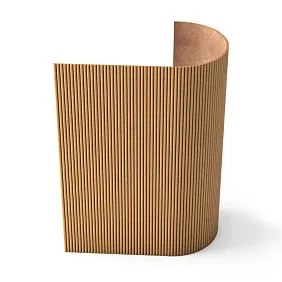
What is a slat on a wall? First and foremost — it's repetition. One slat is just a detail. A system of slats is an architectural rhythm that works just like rhythm in music: it creates order, predictability, and at the same time a lively sense of movement. The eye follows along the slats, the wall surface ceases to be flat and mute — it begins to speak.
Exactly thereforedecorative slatted panelshave become one of the main tools of modern interior design. They provide what cannot be achieved with either paint or wallpaper: a volumetric, three-dimensional pattern on the surface that changes depending on the lighting.
Get Consultation
How slatted panels change the perception of space
Vertical slats elongate the space upward — especially noticeable in rooms with low ceilings. Horizontal slats widen the wall, making the room panoramically broad. Slats mounted at an angle create dynamism — the eye involuntarily follows the direction of the lines.
In addition to the visual effect, slatted panels work with light. Each slat casts a shadow into the gap between the slats, and this shadow pattern changes throughout the day along with the movement of natural light. In the evening, with side directional lighting, a wall with slats becomes an object — sculptural, alive, unlike its daytime self.
Where decorative slatted wall panels are used
The scope of application is practically all residential and commercial architecture:
-
Accent walls in living rooms, bedrooms, studies
-
TV zones and multimedia walls
-
Bed headboards
-
Dining areas and dining rooms
-
Entrances and halls
-
Corridors requiring visual expansion
-
Receptions, meeting rooms, lobbies
-
Zoning partitions in open layouts
Versatility is one of the main advantages of slat decor. It is organic anywhere structure without heaviness is needed.
Why slats make the interior visually more expensive
This is not an illusion or a marketing trick—it is a pattern of perception. A textured, multi-layered surface feels more labor-intensive and costly compared to a smooth painted wall. The brain registers complexity and interprets it as quality. This is why a wall withslatted panels made of solid woodin an interior with inexpensive furniture looks more convincing than a smooth wall in an interior with expensive furniture. The architectural detail works stronger than the cost of the items.
What is polyurethane molding and why is it in demand
What is included in the concept of polyurethane molding
Polyurethane molding is a broad group of decorative architectural products manufactured by casting in a mold from foamed polyurethane. This group includes:
-
Cornices — linear profiles for decorating the joint between the wall and ceiling
-
Moldings — profile strips for creating frames on walls and ceilings
-
Ceiling rosettes — round decorative elements for decorating the center of the ceiling
-
Pilasters — vertical decorative columns on walls
-
Door surrounds — decorative portals for doors, arches, niches
-
Overlays and medallions are independent decorative elements
-
Corner inserts and belt moldings are for completing the molding system in corners
Each of these elements solves a specific spatial task. Together they form a decorative finishing system that structures the interior and gives it architectural integrity.
How polyurethane molding differs from other materials
| Characteristic | Polyurethane | Gypsum | Expanded polystyrene |
|---|---|---|---|
| Weight | Lightweight | Heavy | Very light |
| Relief clarity | High | High | Low |
| Moisture resistance | Good | Weak | Medium |
| Installation | DIY | Requires experience | DIY |
| Durability | High | High | Low |
| Price | Medium | High | Low |
Polyurethane occupies a confident niche between plaster and polystyrene: relief quality and durability - like plaster, ease of installation and moisture resistance - like synthetics, price - significantly lower than plaster. It is this ratio that makes itpolyurethane moldingthe standard for most residential and commercial interiors.
Why polyurethane molding suits modern interiors
An outdated stereotype says: molding is Baroque, Rococo, heavy ceilings with gilding. Reality has long been different. Modern polyurethane molding is produced in a huge range of forms - from rich floral ornamentation to completely smooth profiles without a single decorative motif. A thin cornice with a clean geometric silhouette, a laconic rosette with minimal relief, rectangular moldings without ornament - all this is polyurethane molding, organic in the strictest modern interior.
Key idea: molding is not ornament. It is an architectural contour. And any interior needs a contour - regardless of style.
Where is polyurethane decor used
Polyurethane ItemsApplications:
-
On ceilings — cornices, molding frames, rosettes
-
On walls — moldings for creating panel decor, framing openings, pilasters
-
In the design of door and window openings — portals, trims
-
In niches and arches — decorative framing
-
In commercial interiors — any architectural accents
What types of decorative slat panels for walls are there
Vertical slat panels
Vertical orientation of slats is a classic and most in-demand option. The slats run from bottom to top, creating an architectural vertical. The wall appears taller, the space — more slender and elongated. For rooms with standard ceilings of 2.5–2.7 m, vertical slats are the optimal choice.
Horizontal batten panels
Horizontal slats work differently: they expand the wall, creating a sense of panoramic view. This solution looks impressive in long corridors that need to be visually widened and in living rooms with wide walls where the horizontal scale needs to be emphasized.
Narrow and wide slats
Narrow slats (15–30 mm) create a delicate, dense pattern—refined and sophisticated. Wide slats (50–100 mm) provide a monumental, confident rhythm—suitable for large spaces and rooms with high ceilings. Choosing the width is choosing the 'tempo' of the wall's visual rhythm.
White, wood-tone, and paintable panels
-
White panels—a universal option for any style, maximally delicate
-
Panels in natural wood tone—warmth, naturalness, materiality
-
Tinted in dark shades—expressiveness, contrast, accent
-
Paintable—maximum flexibility for design solutions
Accent and background solutions
An accent slat wall is a wall intentionally highlighted in the interior: a bright visual focus. Background slat cladding is when slats cover several walls, creating a common texture for the space. Both approaches are valid but require different work with ceiling decor: an accent wall—a small contrasting ceiling decor, background slats—minimal molding.
Which polyurethane molding elements are most commonly used in interiors
Moldings are linear profiles used to create framed compositions, zone walls, and frame openings. They come in various widths (from 20 to 150 mm) and relief complexity — from smooth to richly decorated.
Molding is a linear strip with a decorative profile section, used to create frames, border planes, and zone surfaces. On walls, moldings form panel decor — rectangular sections that give the wall a classic structure. On ceilings, moldings are arranged into frame systems. The width of moldings ranges from 1.5 to 10 cm depending on the scale of the space.
Crown mouldings
Cornice is one of the most important architectural elements in any interior. It precisely covers the technically vulnerable spot — the joint between the wall and ceiling — and creates the upper frame of the space. Without a cornice, the ceiling appears 'cut off.' With a cornice — it is completed.Polyurethane Crown Moldingare produced in widths from 4 to 20 cm and more, with a smooth profile or ornament.
Ceiling Rosettes
Rosette is a round decorative disc mounted in the center of the ceiling, typically in the area of the chandelier. Diameter — from 15 to 80 cm. Ornament — from geometric to lush floral. The rosette anchors the center of the space, decorates the lighting area, and creates the main focal point on the ceiling.
Overlays and decorative elements
Corner inserts, medallions, decorative overlays — auxiliary elements that enhance and complete the main system. Corner inserts cover the joints of moldings and cornices in corners. Medallions are independent decorative accents. Decorative overlays are additional relief elements to enrich the system.
Framing of openings and niches
A door opening without framing is technically unfinished. With decorative framing made of polyurethane — it becomes an architectural portal. It is precisely the framing of the opening that transforms an ordinary door rectangle into a meaningful interior element. Similarly — window openings, arches, niches.
How decorative slatted wall panels work in interiors
Create an accent wall
This is the primary and most obvious role of slatted panels. One wall receives a textured finish—and becomes the visual focal point of the room. All other space is organized around this accent. Furniture—opposite or along it. Lighting—directed at the accent wall. Decor—supportive, not competing.
Help zone the space
In open-plan layouts, slatted panels work as a soft zoning boundary without physical separation. Slats behind the sofa—living room. Slats behind the dining table—dining area. The two spaces are visually separated but remain physically one open space.
Enhance depth and spatial plasticity
Layers of space create a sense of depth. The slats are a decorative layer in front of the wall. Behind them—the wall plane. In front of them—furniture. Three layers give spatial depth, which a flat painted wall lacks. This is precisely why an interior with slatted panels is perceived as voluminous and three-dimensional.
Work with light and shadows
With properly positioned light sources (side spotlights, directed floor lamps, LED strips integrated into the slats), the shadow pattern between the slats becomes a full-fledged decorative element. In the evening, a wall with slats is a completely different wall than during the day. It is a living surface that reacts to lighting.
Emphasize the contemporary character of the interior
Slatted decor is one of the most 'contemporary' architectural languages. It is associated with current design trends, clean forms, and high-quality execution. This is precisely whyWall slatted panelsare so actively used in commercial projects where it is important to create a sense of modernity and expertise.
How polyurethane molding complements wall slatted panels
Cornices as the upper architectural frame
When slatted panels reach the ceiling, the question arises: how to complete this transition? A cornice is the perfect answer. It takes on the 'vertical impulse' of the slats and translates it into a horizontal architectural frame for the ceiling. The wall and ceiling receive a clear boundary. The space gains completeness.
Moldings as a tool for structuring walls
Moldings on walls and slatted panels are a combination of two wall decor systems that can be used together, creating complex, multi-layered architecture. For example: the lower part of the wall is panel molding decor, the upper part is slatted panels. Or: a slatted accent wall, and adjacent walls with molding frames. This creates unity in diversity.
Ceiling elements as the completion of the overall composition
Ceiling rosette for a chandelier, molding frames on the ceiling, cornice around the perimeter — these elements complete the space from above. When the walls have received an architectural solution (slats), the ceiling cannot remain empty — it must respond. Polyurethane ceiling decor is the ceiling's response to the expressiveness of the walls.
Decorative inserts to enhance accent zones
At the intersection points of wall and ceiling decor — on corners, at the junction of a cornice and a slatted panel, near doorways — polyurethane inserts create clarity and completeness. Without them, the system looks technically unfinished. With them — professionally assembled.
Why molding connects slats with the entire interior
Slat panels create an accent on a separate wall. Polyurethane molding spreads along the entire perimeter — the cornice runs around the entire room, moldings appear on different surfaces. Thus, the molding becomes a 'connecting' element: it takes the accent of the slatted wall and integrates it into the overall architectural system of the entire space.
Decorative slat panels for walls and polyurethane molding in different styles
Modern style
Modernity is precision, purity, awareness. Slat panels here: white or tinted, with a flat profile, even spacing, vertical orientation. Molding: a thin smooth cornice without ornament, a laconic rosette with a geometric or simple radial pattern. No floral motifs, no opulence. Only architectural logic.
Neoclassicism
The most organic style for this combination. Slat panels with a bevel or thin profile — walls gain structure without losing the classical spirit. Molding with moderate ornamentation — a cornice with a neat decorative belt, a rosette with an elegant floral pattern, molding frames on the ceiling. Together — neoclassicism without a museum feel, alive and relevant.
Modern classic
Here, both solutions are given a bit more freedom. Slat panels — with pronounced relief, possibly with a bevel or stepped profile. Molding — moderately ornamental, with a clear pattern. White color unites everything into a single system. The result — an interior that is perceived as expensive, thoughtful, architecturally sound.
Minimalism with decorative accents
In minimalism, quantity decides everything. One slatted wall — clearly chosen, precisely placed. One thin cornice along the ceiling perimeter. No moldings, no rosettes. Minimalism is not the absence of decor, but precision in its application. Two elements, with proper placement, create sufficient architectural content.
Art Deco
Art Deco is built on geometry, verticals, and luxury. Slat panels — with regular large spacing, with a geometric profile. Molding — stepped cornice, radial rosette, geometric moldings. Often — painting individual elements in gold or bronze on a dark background. This is a style with character, and both decorative systems work here at full strength.
Eclecticism
Eclecticism is not chaos, but a conscious dialogue of different languages. Slat panels in a modern spirit + ornamental molding in a classical style — this is an intentional combination that creates an interior statement. The main condition: there must be internal logic between the styles, not randomness. Then eclecticism reads as a cultural position, not as design confusion.
How to combine slat panels and polyurethane molding without overload
Overload — the main fear when working with two decorative systems simultaneously. How not to cross the line?
Balance between linearity and relief
Slatted panels are linear decor: repeating parallel elements. Polyurethane molding is relief, plastic decor: ornament, profile, sculptural form. Two types of decor create counterpoint — linearity and relief complement rather than duplicate each other. It's important that each occupies its own zone: slats — the wall plane, molding — transitions, contours, ceiling.
How to choose one main accent
Every room should have a hierarchy: what is primary, what is secondary. If the accent is a slatted wall, then the molding should be restrained: a cornice and a small rosette. If the ceiling is a complex system with moldings and a large rosette, then the slatted panels should be delicate: narrow slats, one wall.
When molding should be laconic
Slatted panels on several walls, rich texture — the ceiling needs minimal decor: a thin cornice, a small rosette. No more. Otherwise, the space starts 'shouting' from all surfaces simultaneously.
When decorative elements can be enhanced
Slatted panel — on one accent wall, the other walls are clean, the ceiling is high — you can give the molding more space. Molding frames on the ceiling, ornamental cornice, expressive rosette — this is appropriate and doesn't create overload.
How to unite different textures with color
A unified white color — the main technical solution that reconciles all textures. White slats, white molding, white ceiling — in this system, different reliefs are read through the play of light and shadow, not through color conflict. This is called monochromatic layering — and it's precisely what creates that calm, architecturally rich interior that is simultaneously expressive and not tiring.
Interior design ideas: how to use both solutions together
Accent wall made of slatted panels and ceiling cornice
A minimalist yet powerful system. One slatted wall is the main visual accent. A cornice along the perimeter of the ceiling is a frame that completes the space from above. Two elements, one principle: structure without excess.
Slatted panels in the TV area and moldings on adjacent surfaces
The television wall gets slatted panels—this is a background for the equipment that simultaneously accents the zone. Adjacent walls feature polyurethane panel molding decor. On the ceiling—a cornice and a rosette. This is a rich system that, with a unified color scheme, looks cohesive and well-thought-out.
Panels at the head of the bed and soft polyurethane ceiling decor
A slatted panel at the headboard is an architectural 'frame' for the sleeping zone. A thin cornice along the perimeter of the ceiling, a small rosette above the bed's chandelier—a delicate ceiling finishing. Together they create a bedroom with thoughtful architecture, not overloaded with details.
Slatted panels in the hallway and laconic moldings
The hallway is the first impression. White slatted panels on the wall—lightness, friendliness, structure. A cornice along the perimeter, molding frames—a classic finishing for a small space. The result is an entrance that speaks to the quality of the entire interior.
Panels in the living room and a decorative ceiling rosette for the chandelier
A living room with a slatted accent wall and an expressive ceiling rosette for the central chandelier—these are two architectural accents on different levels. The wall holds the horizontal gaze. The rosette organizes the center of the upper plane. A cornice along the perimeter completes everything into a unified system.
Study interior with slats and strict molding
A study is a space for concentration and authority. Vertical white slats on the work wall represent structure and professionalism. A strict cornice without ornament, a smooth rosette — a ceiling that completes the space without decorative noise. This is precisely the environment that fosters thought.
Where decorative slatted panels and polyurethane molding look especially advantageous
Living Room
The main room — maximum potential for both solutions. Slatted panels set the tone. Molding completes it. Together they make the living room a space with character and architectural integrity.
Bedroom
Delicate, calm application. Slatted panel behind the bed + thin cornice + small rosette = a finished, cozy, architecturally thoughtful space for rest.
Entryway
Limited space, but high symbolic status — this is the first thing a guest sees. Both systems in a delicate scale provide maximum effect with minimal investment.
Office
Strictness, precision, professionalism. Slats + laconic molding = an environment that works for a business image.
Dining Room
Slatted wall behind the dining area + molding frame on the ceiling above the table + rosette for the chandelier = an architecturally highlighted dining space, intimate and representative at the same time.
Commercial spaces
Receptions, meeting rooms, hotels, restaurants — here the decorative system 'slats + molding' creates a sense of brand, class, and professionalism. A client or guest immediately perceives the quality of the environment.
Halls and waiting areas
Long corridors, halls, and waiting areas gain rhythm and structure from slatted panels, and completeness from moldings. Waiting in a beautiful space is perceived differently.
How to choose decorative slatted wall panels
By width and spacing of slats
-
Narrow slats (15–25 mm) + small gap = dense, refined pattern
-
Medium slats (30–50 mm) + standard gap = balanced rhythm for most rooms
-
Wide slats (60–100 mm) + wide gap = monumental, accent decor for large spaces
By color and texture
White panels — universal, delicate, ideal for light interiors. Natural wood — warmth and naturalness. Tinted in graphite or anthracite — expressiveness and contrast. Paintable — maximum flexibility.
By relief depth
Flat slats — modern minimalist look. Slats with bevel — more architectural silhouette, enhanced shadow play. Profiled slats — most decorative, with pronounced plasticity.
By room size
Small room: narrow slats, small spacing, vertical orientation — space visually elongates. Large room: any scale, including wide slats with large spacing.
By wall purpose
Accent wall — maximally expressive battens. Background finish of several walls — delicate, restrained battens. Zoning panel — sufficiently medium battens with moderate relief.
In combination with the rest of the decor
The scale of the battens should correspond to the scale of the molding. Narrow battens — thin cornice and small rosette. Wide battens — wider cornice, larger rosette. Ornament of the molding — in a single stylistic key with the profile of the battens.
How to choose polyurethane molding for an interior with batten panels
Based on ceiling height
Up to 2.5 m: cornice no wider than 6 cm, rosette up to 35 cm. 2.5–2.7 m: cornice 6–9 cm, rosette up to 45 cm. 2.7–3 m: cornice 8–12 cm, rosette up to 60 cm. Above 3 m: any scale is justified.
According to the style of the space
Modern style — only smooth or geometric profiles. Neoclassicism — moderate ornament. Classic — rich ornament. Art Deco — geometric, stepped pattern.
According to the level of decorative saturation
If the walls are active (several batten panels) — molding is minimal. If the walls are calm (one accent batten wall) — molding can be richer.
By Application Area
Kitchen, bathroom, rooms with high humidity — polyurethane is mandatory. Living room, bedroom, study — polyurethane or, if desired, plaster (only if the ceiling structure allows and there is no dampness).
By shape and pattern of elements
The ornament of the rosette and cornice should belong to the same stylistic family. Mixing incompatible ornaments — a floral cornice + a geometric rosette in a minimalist interior — creates a stylistic conflict.
By combination with lighting and furniture
Directional light enhances the relief of moldings — consider this when choosing an ornament. Moldings with deep relief look sculptural under side lighting. With diffused lighting, medium or fine relief is preferable.
Practical advantages: why this combination is convenient not only visually
Slatted panels help organize accent zones
One of the main practical applications of slatted panels is zoning. In a space without walls, slats create 'soft' boundaries between zones. This preserves the openness of the layout while giving each functional zone visual independence.
Polyurethane moldings are easy to install and maintain
Installation — acrylic adhesive, painter's tape, miter box for corner cuts. No professional skills required. No special equipment needed. Maintenance — soft cloth, neutral cleaner. Polyurethane does not absorb dirt, the surface is easy to clean. If desired, the entire molding system can be repainted a new color.
Both solutions allow assembling the interior piece by piece
You don't have to do everything at once. You can start with one slatted panel and a cornice—and already achieve a significant result. Then add moldings, a rosette, a second slatted wall. The system is assembled gradually without the need to redo previously completed work.
You can combine modern and classical motifs.
Modern slats + moderate classical molding = contemporary classic without contradictions. This is one of the main advantages of the combination: each element is flexible enough to work at the intersection of styles.
This combination does not become visually outdated for a long time.
Slatted decor is one of the most enduring trends in interior design over the last twenty years. Polyurethane molding in architectural interiors has been used for decades. Their combination is not a seasonal fashion, but a stable architectural practice that does not require replacement after three years.
Common mistakes when combining slatted panels and polyurethane molding.
A wall that is too busy and a ceiling that is too busy at the same time.
Wide, large slats on all walls plus ornamental molding with a rosette, molding frames, and a wide cornice—the interior loses hierarchy. One system should be leading, the other—supporting.
Incorrect scale of decorative elements.
Thin slats + a monumental 18 cm cornice—stylistic disproportion. Wide slats + a 4 cm cornice—the cornice 'gets lost' against the busy wall. The scale of the two systems must be coordinated.
Random selection of textures and profiles
Three different patterns of cornices, moldings, and rosettes in one room is not decor, but chaos. All stucco elements should belong to the same series or the same ornamental direction.
Excess white without relief balance
White slats + white stucco + white ceiling + white walls + white furniture — without thoughtful lighting, the space turns into a monotonous white plane. Relief should 'work' through light. Without lighting that emphasizes textures, all decor is lost.
Lack of overall compositional logic
Slatted panel — in one corner. Cornice — only on two walls. Rosette — not centered. This is not an architectural system, but a set of random details. Any decorative system requires internal logic: what is primary, what is secondary, how elements relate to each other.
Conflict between furniture and decorative design
Heavy dark furniture + delicate white slats and white stucco — a mismatch in weight categories. Or: strict minimalist decor + furniture with ornate Baroque legs. Wall and ceiling decorative design should be coordinated with furniture in style, scale, and color temperature.
Is such a combination suitable for a modern interior
Definitely — yes. And this is not a compromise, not 'a bit of classic in a modern space.' This is a conscious architectural practice that has long ceased to be perceived as a stylistic contradiction.
A modern interior is not the absence of decor, but precision in its application. A thin, smooth polyurethane cornice at the wall-ceiling junction is not 'classic'; it's an architectural detail that speaks of professionalism. A concise ceiling medallion for a chandelier is not 'baroque'; it's a functional accent that frames the lighting zone. Vertical slatted panels with a flat profile are modern geometry that brings a wall to life.
With a skillful choice of scale, pattern, and color system, this combination in a modern interior looks not outdated, but on the contrary—mature, substantial, and self-assured.
Frequently asked questions
Can decorative slatted wall panels and polyurethane molding be combined in one room?
Yes, and it's one of the most impressive interior combinations. The main condition is the coordination of scale and style of both elements, a unified color (typically white), and a clear hierarchy: one element is leading, the second is supporting.
Is polyurethane molding suitable for modern wall slats?
Yes. Polyurethane molding is produced in a huge range of forms—from rich floral ornamentation to completely smooth profiles. The concise profiles of polyurethane cornices and moldings organically combine with any modern slatted panels.
What moldings are best to choose for slatted panels?
For a modern interior with slatted panels—smooth or geometric moldings without ornament. For neoclassicism—moldings with a moderate relief profile. The width of the molding is proportionate to the width of the slats: narrow slats + narrow molding, wide slats + wide molding.
Where to place the accent: on the wall or on the ceiling?
It depends on the room and the task. In a living room with high ceilings, both can be accentuated. In a small room—only one. As a rule, if the slatted wall is the accent, then the ceiling is restrained. If the ceiling is a complex system with molding frames and a large medallion, then the slatted wall is more delicate.
Is this solution suitable for a small room?
Yes, considering the scale. A small room requires thin slats and delicate molding: a cornice of 5–6 cm, a rosette up to 35 cm. Vertical slats visually raise the ceiling, the cornice completes the space. The visual effect is noticeable with minimal decor.
Should the molding be painted to match the wall or ceiling color?
Standard practice: molding is painted white—the same color as the ceiling. This creates a monolithic perception of the upper part of the space. Slatted panels are also white—the entire system is unified by color despite the variety of textures. If desired, it is possible to paint the molding in an accent color—gold, silver, a contrasting tone.
In which rooms is such a combination most appropriate?
In all living spaces—living room, bedroom, hallway, study, dining room. Especially effective—in living rooms and hallways with high ceilings. In commercial spaces—receptions, hotels, restaurants, meeting rooms.
Conclusion
Decorative slatted wall panels create a linear architecture of space—rhythm, verticality, depth, a living surface that reacts to light. Polyurethane molding gives the space completeness—the cornice closes transitions, moldings structure planes, the rosette organizes the center. Together they form not just a set of decorative solutions, but an integral interior system in which each element enhances the other.
This is the very architectural combination that turns a good renovation into a well-thought-out space. Slatted panels speak of modernity and structure. Molding speaks of culture and completeness. Together they speak of an interior created with understanding—and that is exactly how anyone who enters the room perceives it.
Full catalogdecorative slatted panelsandmoldings from polyurethane—cornices, moldings, rosettes, door/window surrounds, and decorative elements—are available in the assortment of STAVROS company.
STAVROS is architectural decor with European quality standards. Natural wood slat panels with flawless finishes, polyurethane moldings with precise relief and clean geometry, a full range for any style and scale — that's STAVROS. Every element is produced to work within a system and create memorable spaces.