






































Article Contents:
- Why wood works better than artificial imitations
- Solid wood vs MDF: an honest distinction
- Which wooden products enhance slatted panels
- Wooden moldings: the frame that completes the look
- Wooden cornice: the architectural line of the ceiling
- Wooden architrave: the transition between architecture and decor
- Wooden millwork: the system that holds everything together
- How to combine panels, cornices, moldings, and architraves
- Principle of Element Hierarchy
- Principle of material unity
- Principle of scale coordination
- Principle of Color Unity
- Where Wooden Finishes Shine Best
- Living Room: A Declaration of Values
- Study: Concentration and Character
- Bedroom: Natural Silence
- Hallway and corridor
- Kitchen: Wood in Challenging Conditions
- How to Avoid Stylistic Disintegration
- Define One Stylistic Direction — and Stick to It
- Don't Buy Items from Different Places Without Comparing Samples First
- Monochrome as a Defense Against Disintegration
- Three Is the Maximum Number of Independent Elements
- Special techniques: depth, rhythm, chiaroscuro
- Depth through layering
- Rhythm through slat spacing
- Chiaroscuro through backlighting
- Care and long-term use of wooden products
- Optimal microclimate
- Regular care: simple and unobtrusive
- Local repair: wood is restorable
- Acclimatization Before Installation
- Complete wooden system: from wall to ceiling
- System for neoclassical interior
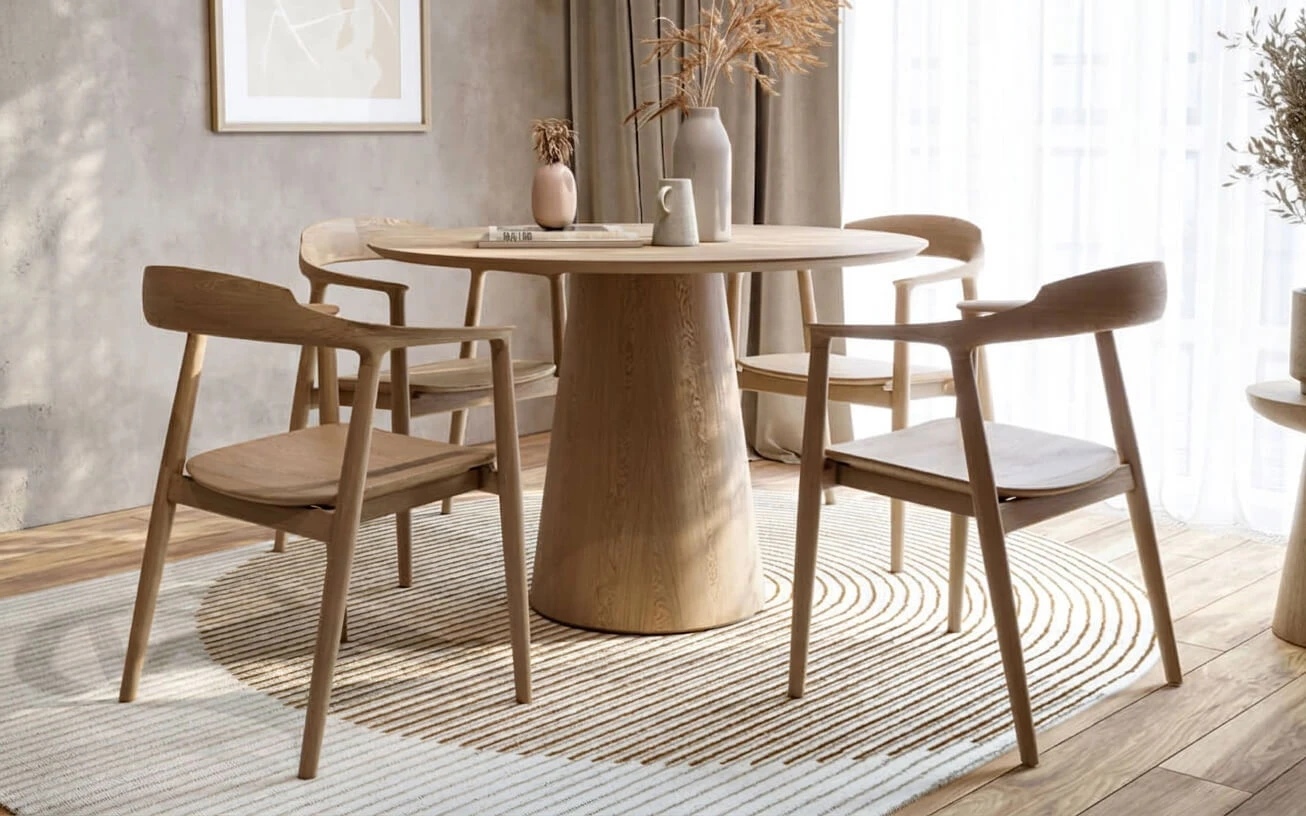
- System for Scandinavian minimalism
- What to consider when choosing and buying
- Frequently Asked Questions
- About the Company STAVROS
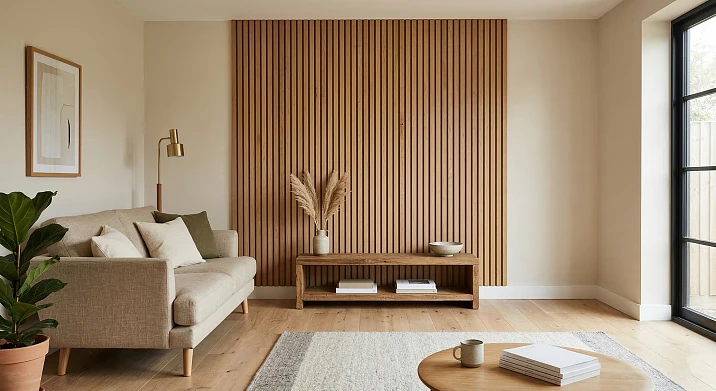
There are interiors that look beautiful in photographs but become boring after two years. And there are those that don't age over ten years—and you can't quite explain why you enter this room and each time feel that everything is in its place. The secret is usually simple and unobvious at the same time: such spaces are based on natural materials. First and foremost—wood.
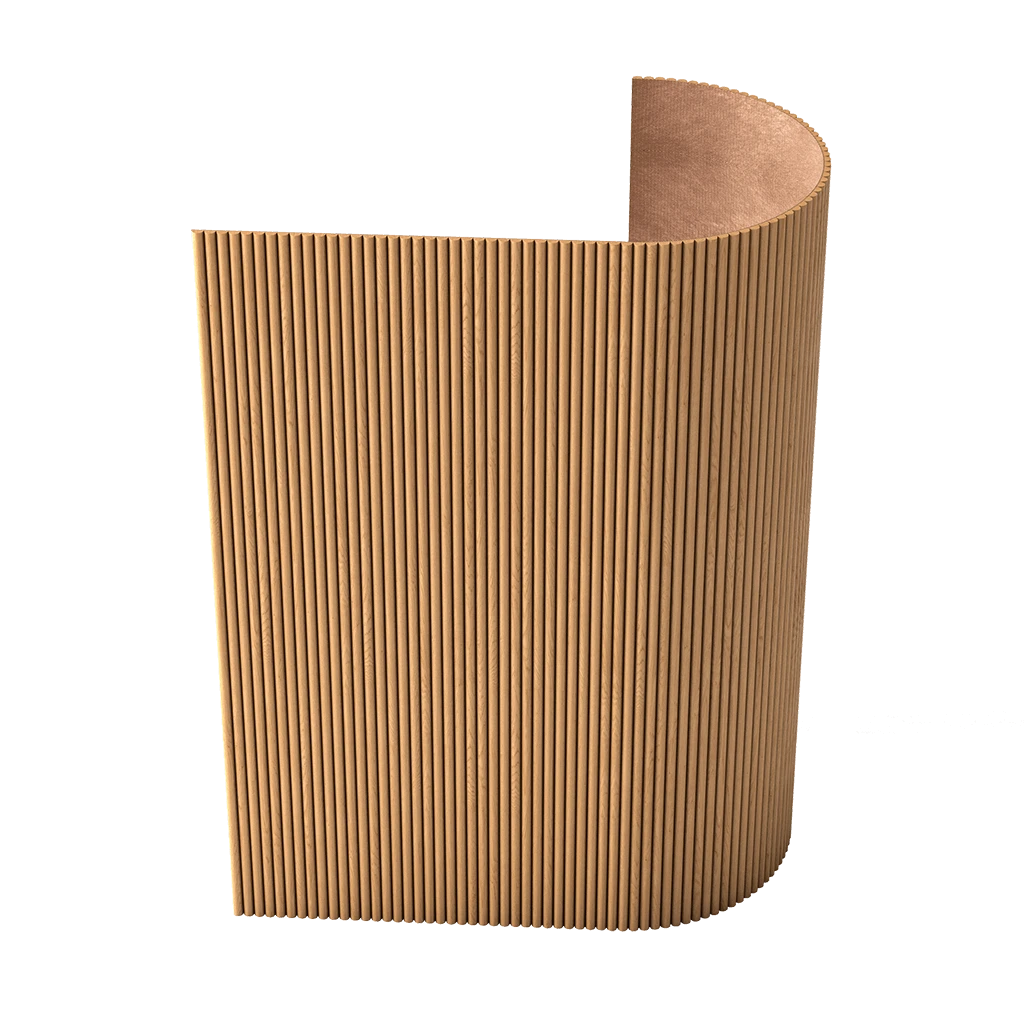
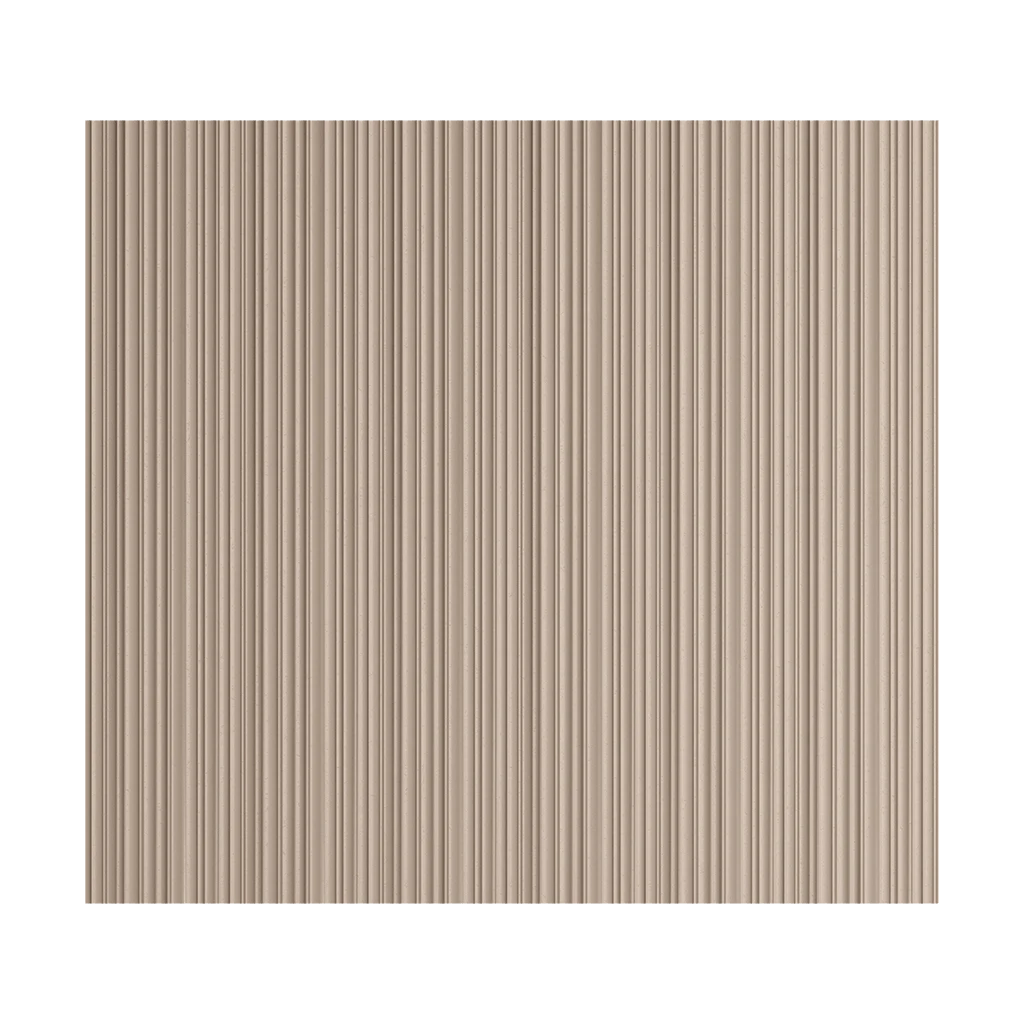
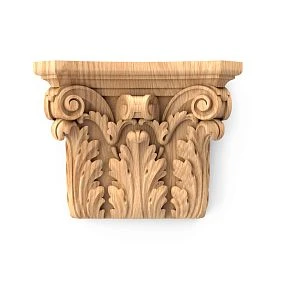
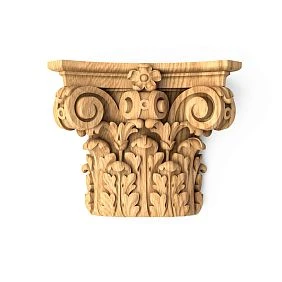
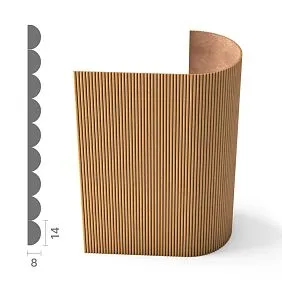
decorative slatted panelsfrom solid oak or MDF combined with otherswooden items—moldings, cornices, trims, millwork—create that very depth of space which cannot be reproduced with polymer imitations. Wood is not just a material. It's a language. And in this article, we talk about how to learn to speak it.
Why wood works better than artificial imitations
It's not sentimentality or nostalgia for a log cabin. It's the physiology of perception. The human brain recognizes natural patterns—fiber texture, irregularity of pattern, warmth of tone—as signals of safety and coziness. Polyurethane and plastic imitations reproduce the pattern but not the depth. With side lighting, upon touch, in living within the space—the difference is obvious.
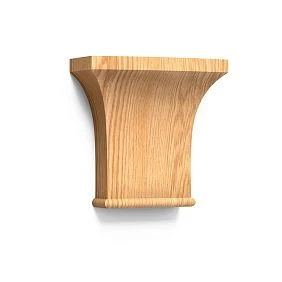
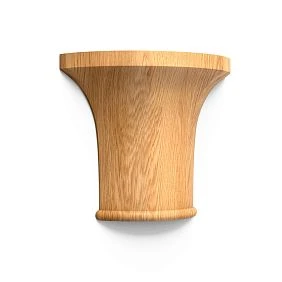
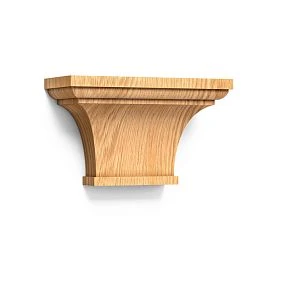
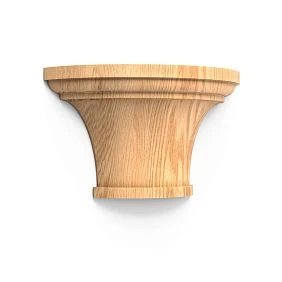
Wooden itemspossess several fundamental properties that synthetics lack.
Living irregularity. No board, no solid wood slat is identical to another. Annual rings, rays, small patterns—all this forms a unique pattern that changes depending on the viewing angle and lighting. This creates what designers call a 'living surface': it doesn't become tiresome because it's slightly different each time.
Tactile truth. Lacquered oak to the touch is oak. Dense, slightly cool, with barely perceptible pores. Painted MDF with wood imitation to the touch is plastic. This difference seems insignificant in the store and becomes fundamental after a year of living in the space.
Ages with dignity. Wood doesn't deteriorate over time—it develops a patina. Minor scratches, darkening of tone, gentle 'aging' of the surface only make wooden items more noble. Cheap synthetic counterparts lose their appearance and require replacement. Wood lives.
The tone changes organically. Oak changes its shade under the influence of light and air: light oak acquires a richer amber tone over several years. This is not a defect—it's the evolution of the material. The interior only becomes deeper over time.
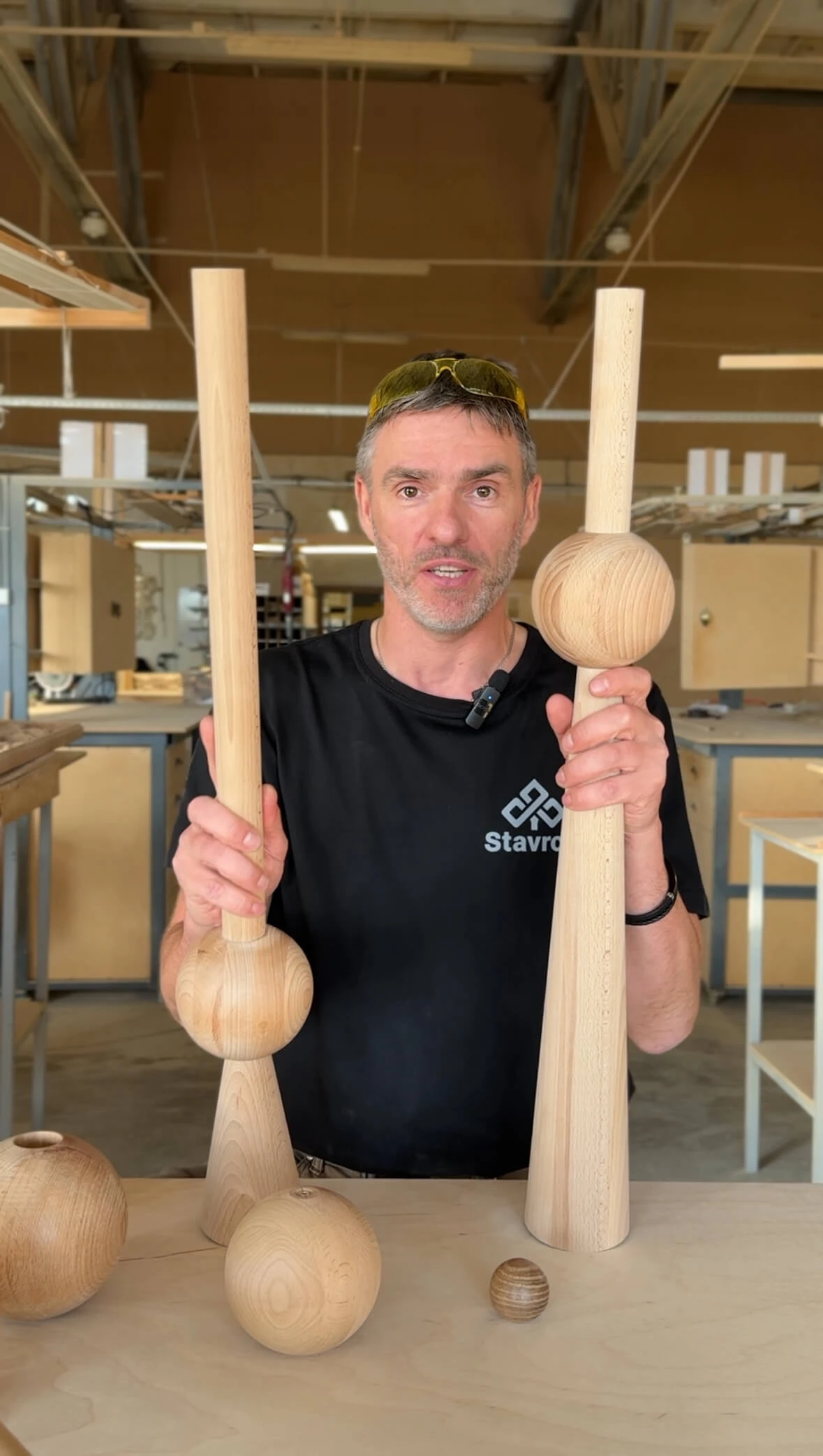

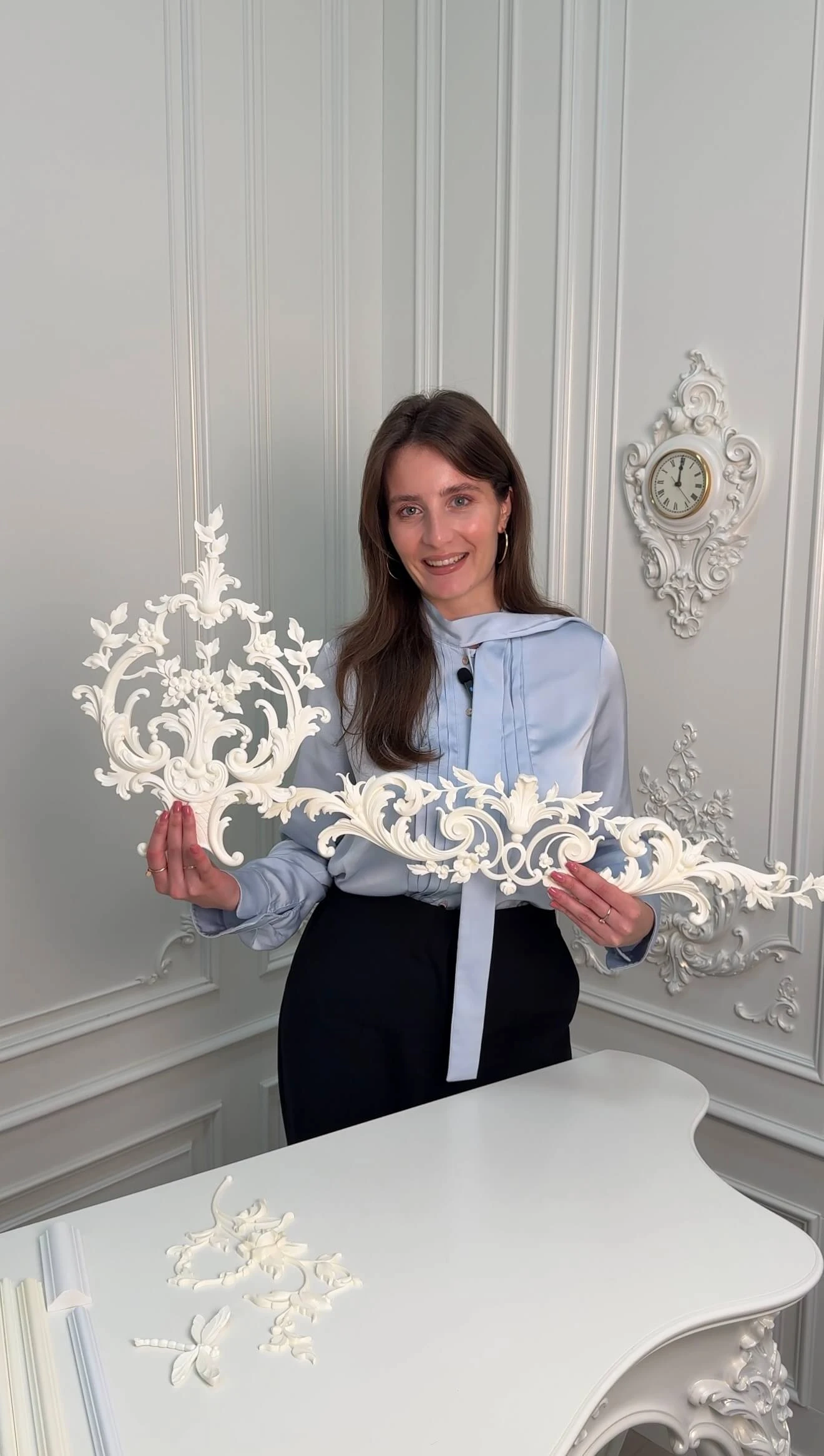
Solid Wood vs. MDF: An Honest Distinction
Both materials have their place in proper finishing. Opposing them is a mistake. The right question is: where to use each of them?
Solid oak is indispensable where natural texture is important, where the material is perceived tactilely, where durability without renewal is needed.decorative slatted panelsSolid oak on an accent wall in the living room is a statement of values, a choice in favor of permanence.
MDF is indispensable where perfect geometry, precise color according to RAL or NCS, or resistance to deformation in an unstable climate is needed. MDF cornices and moldings for painting are the basis for monochrome systems, where everything is painted in one tone and differences between elements are perceived only through profile and relief.
Combining both materials in one interior—solid oak slats plus MDF moldings and cornices painted white or in a neutral tone—is one of the most common and successful modern approaches.
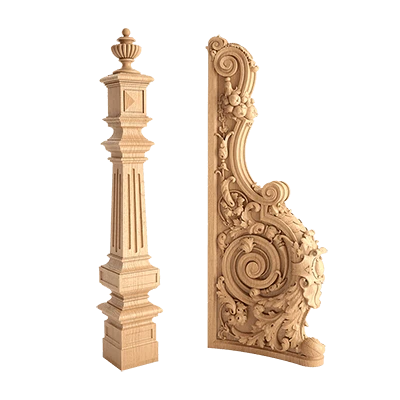
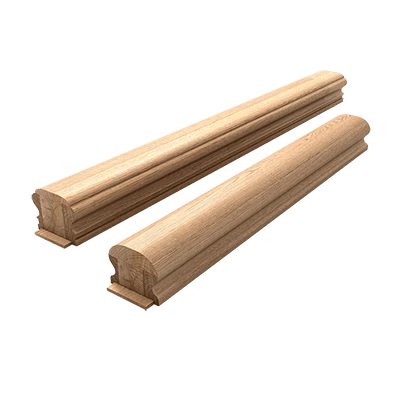
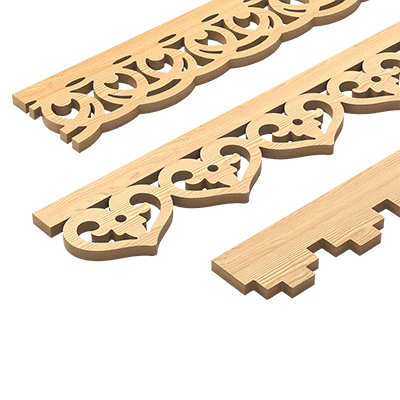
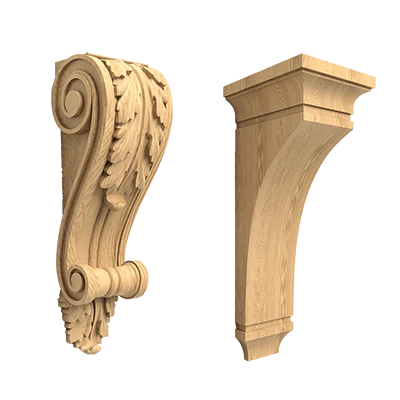
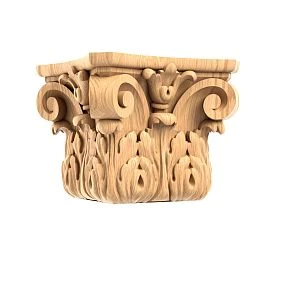
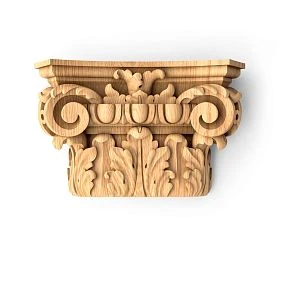
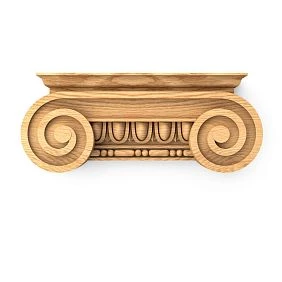
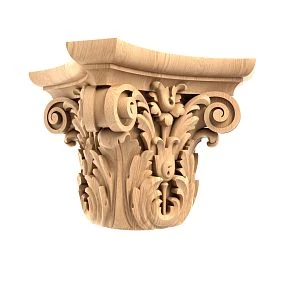
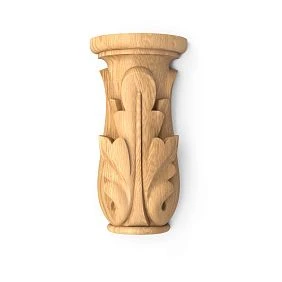
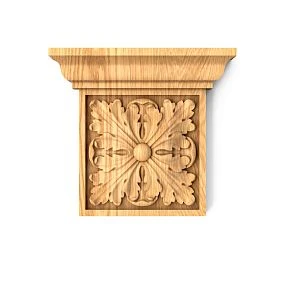
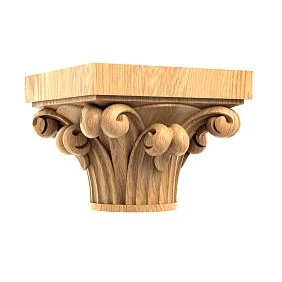
Our factory also produces:

Which Wood Products Enhance Slatted Panels
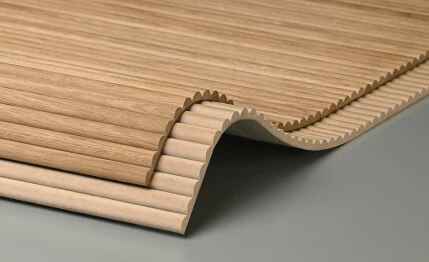
decorative slatted panelsSlatted panels on the wall are a strong but incomplete architectural statement. They create rhythm, texture, and a visual accent. To turn this accent into an interior system, other wood products are connected to it. Each of them plays a specific role.
Get Consultation
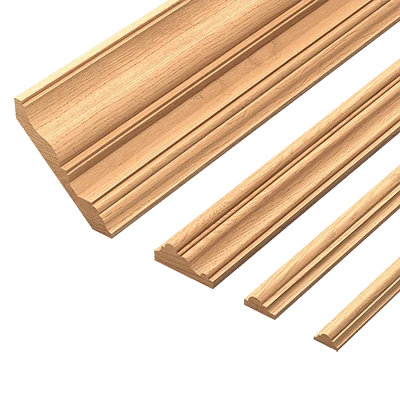
Wooden Moldings: The Frame That Completes the Look
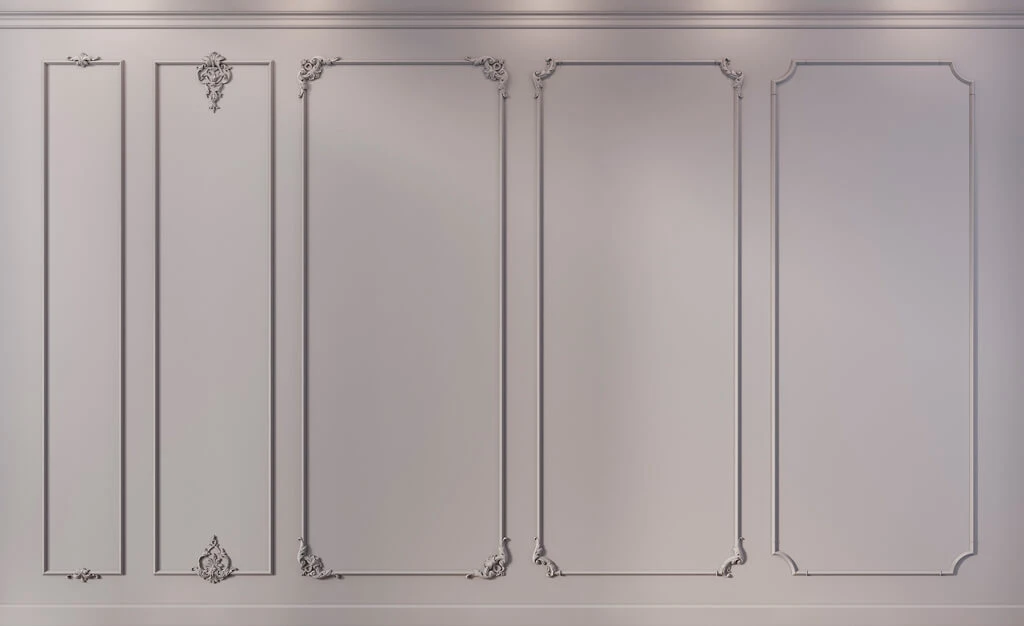
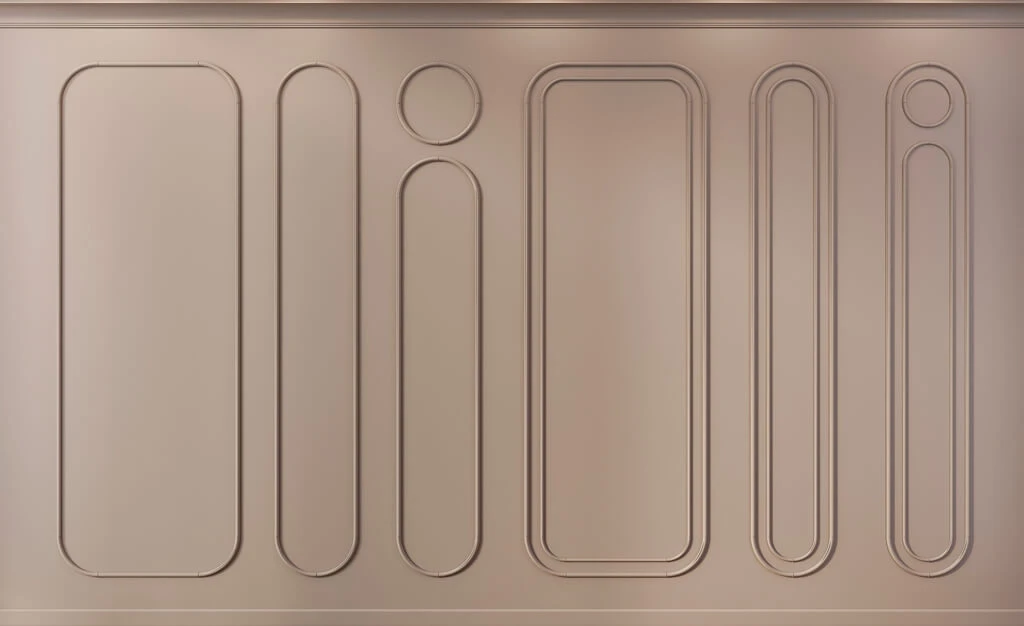
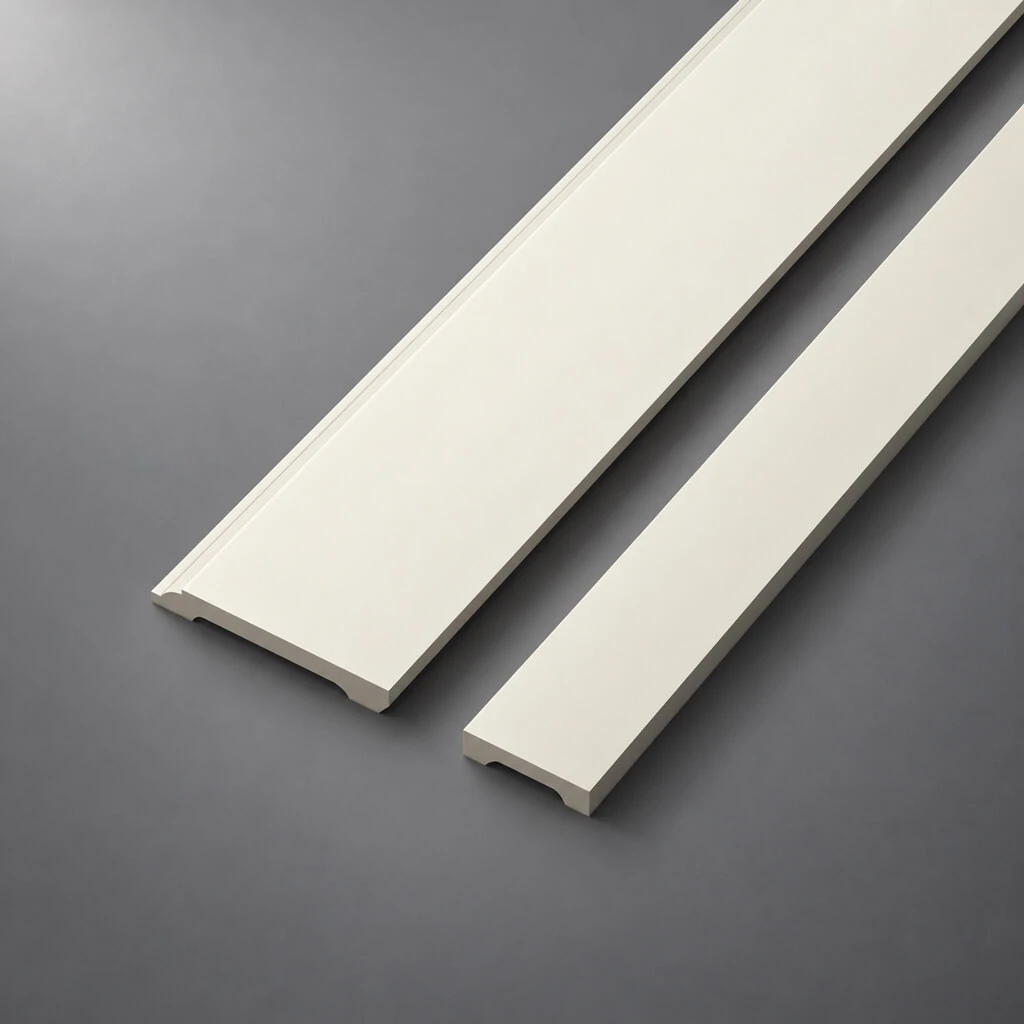
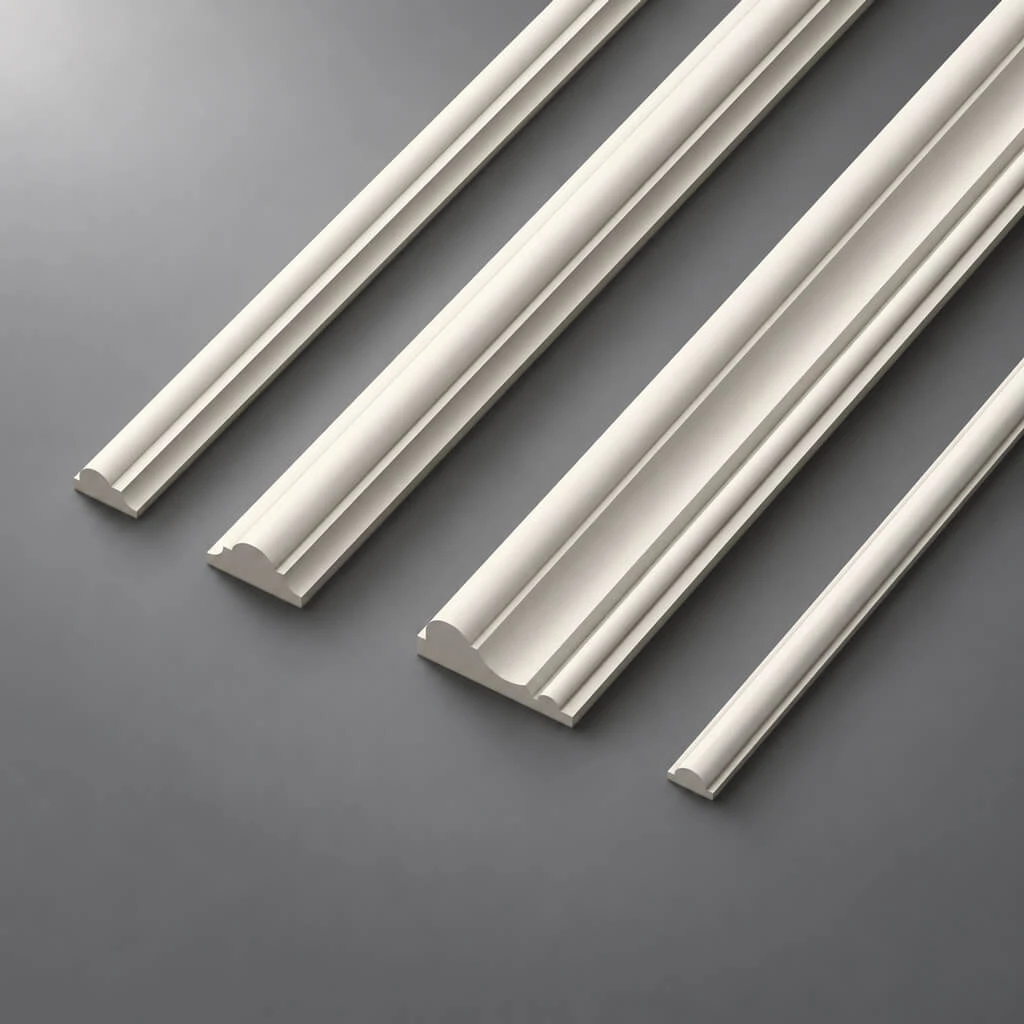
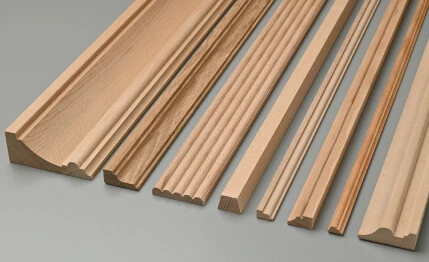
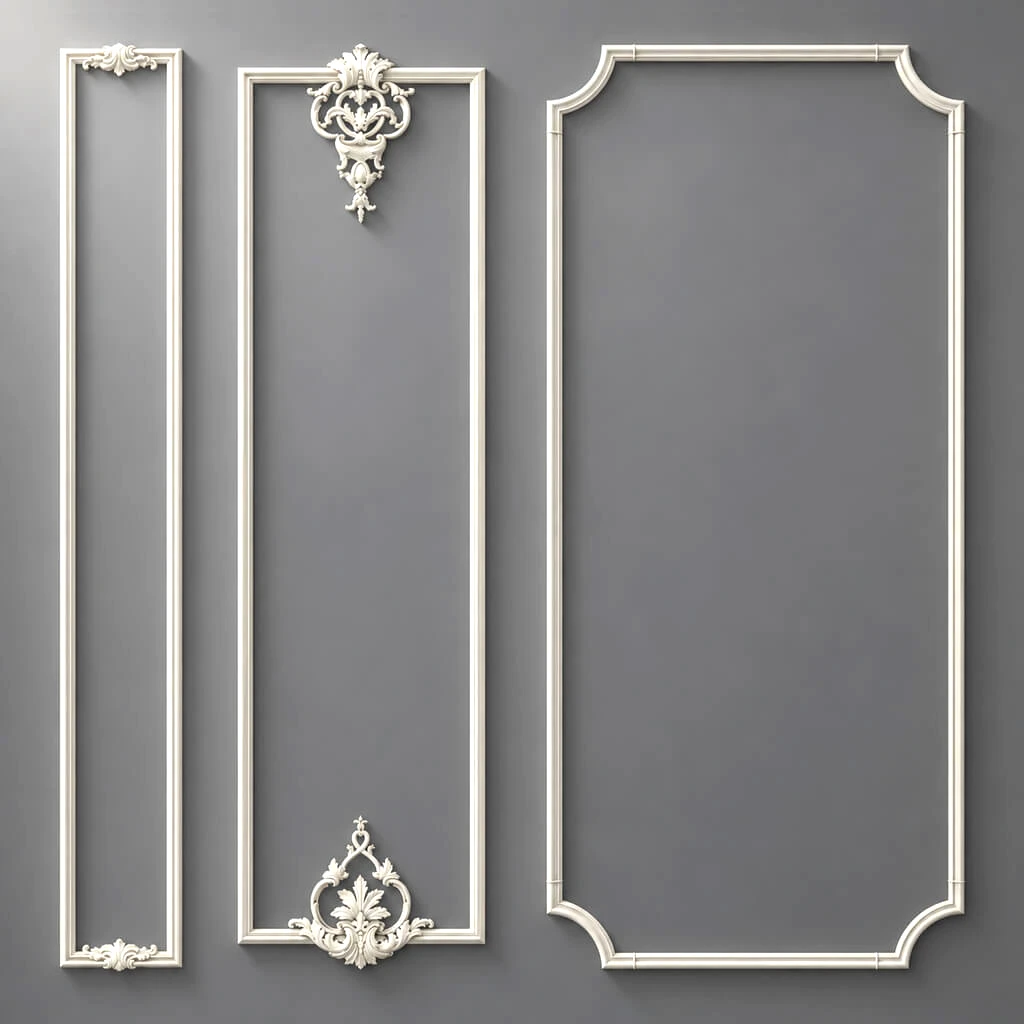
Wooden moldings— is the element that transforms a fragment of slatted wall into a complete architectural form. Vertical moldings on the sides of the slatted fragment mark its boundaries. The horizontal border molding at the top creates a 'cap' for the composition. The lower molding or wide baseboard 'closes' the system at the floor.
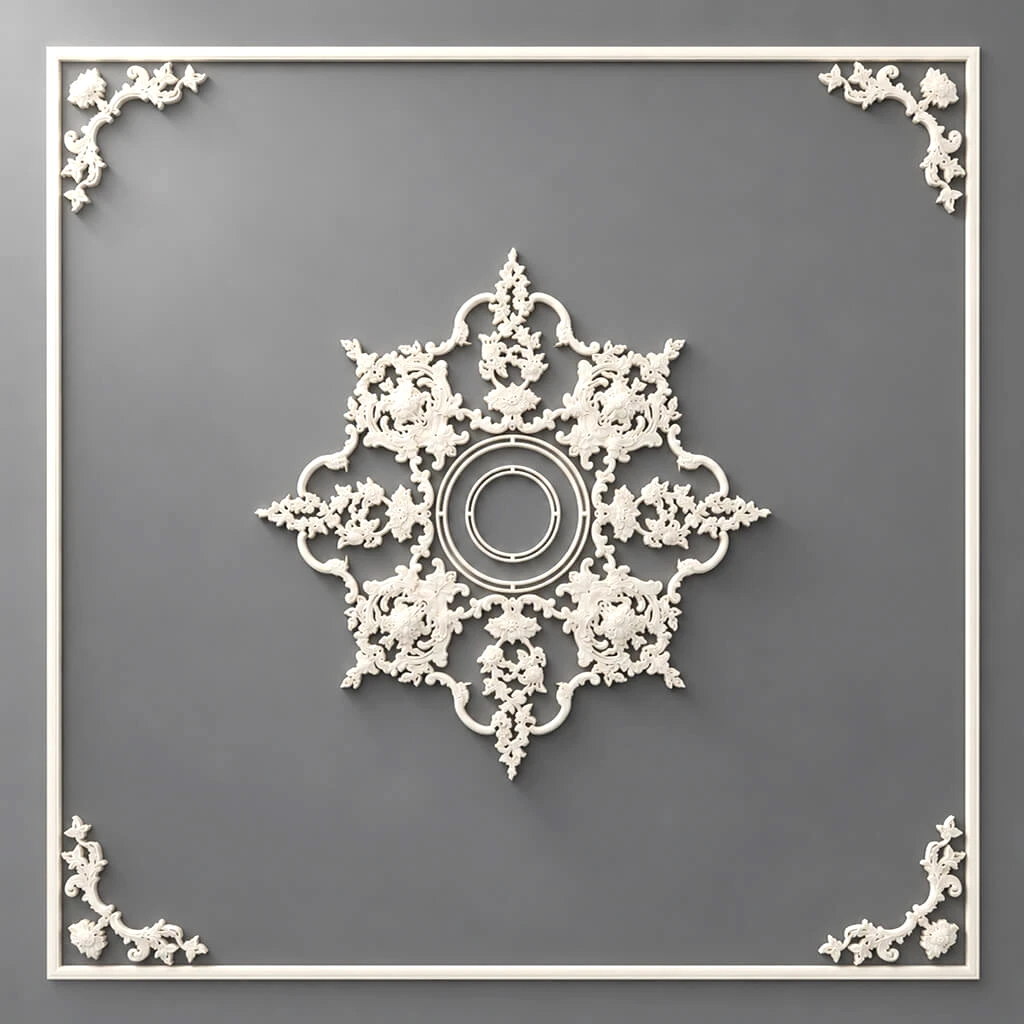
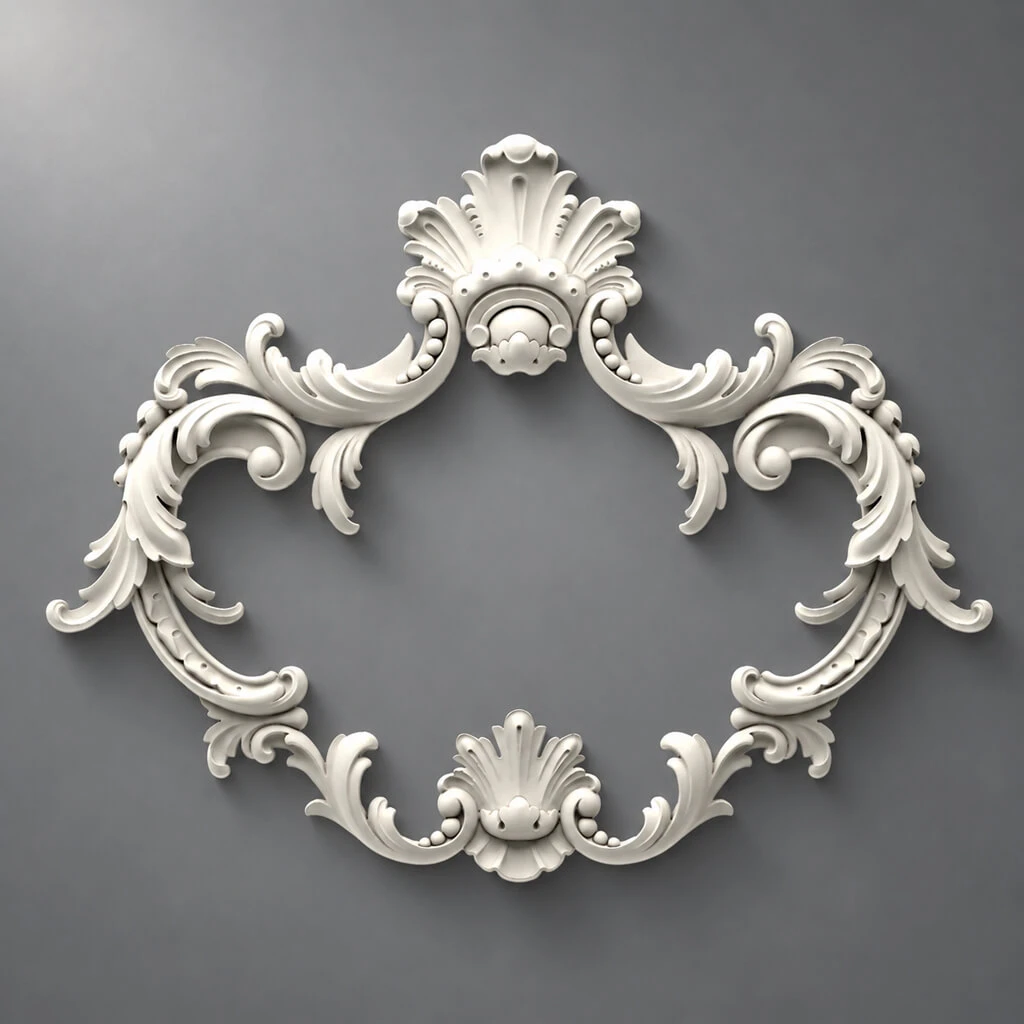
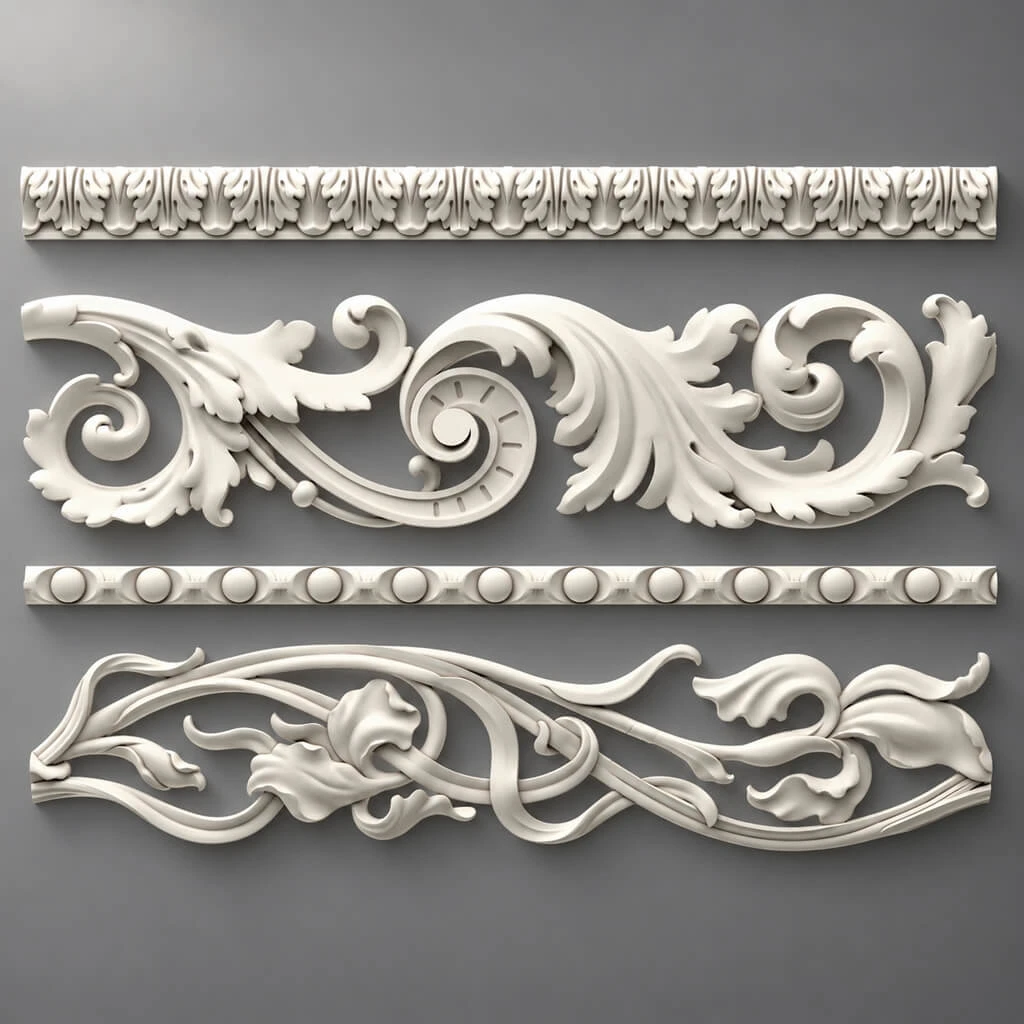
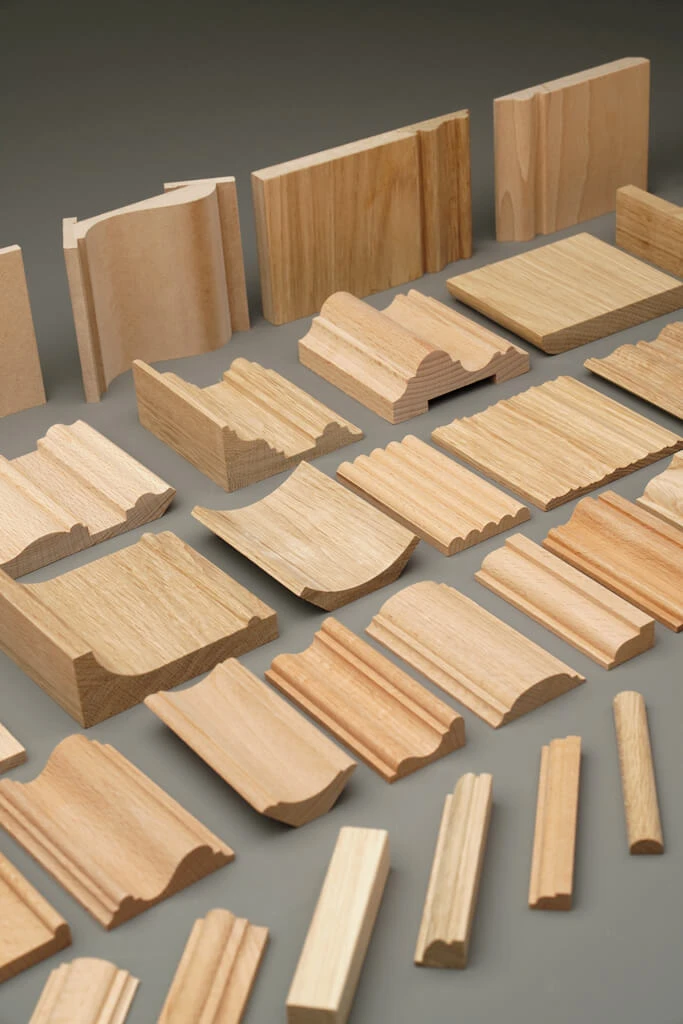
Moldings made of solid oak or beech are available in the widest range of profiles—from minimalist rectangular to complex classical ones with a cavetto, ogee, fillet, or cyma reversa. The choice of profile is determined by the interior style and the scale of the room.
Practical rule: the width of the frame molding should not exceed the total width of three slats together with the gaps. A wider molding begins to compete with the slatted surface—and both elements lose their persuasiveness.
Wooden cornice: the architectural line of the ceiling
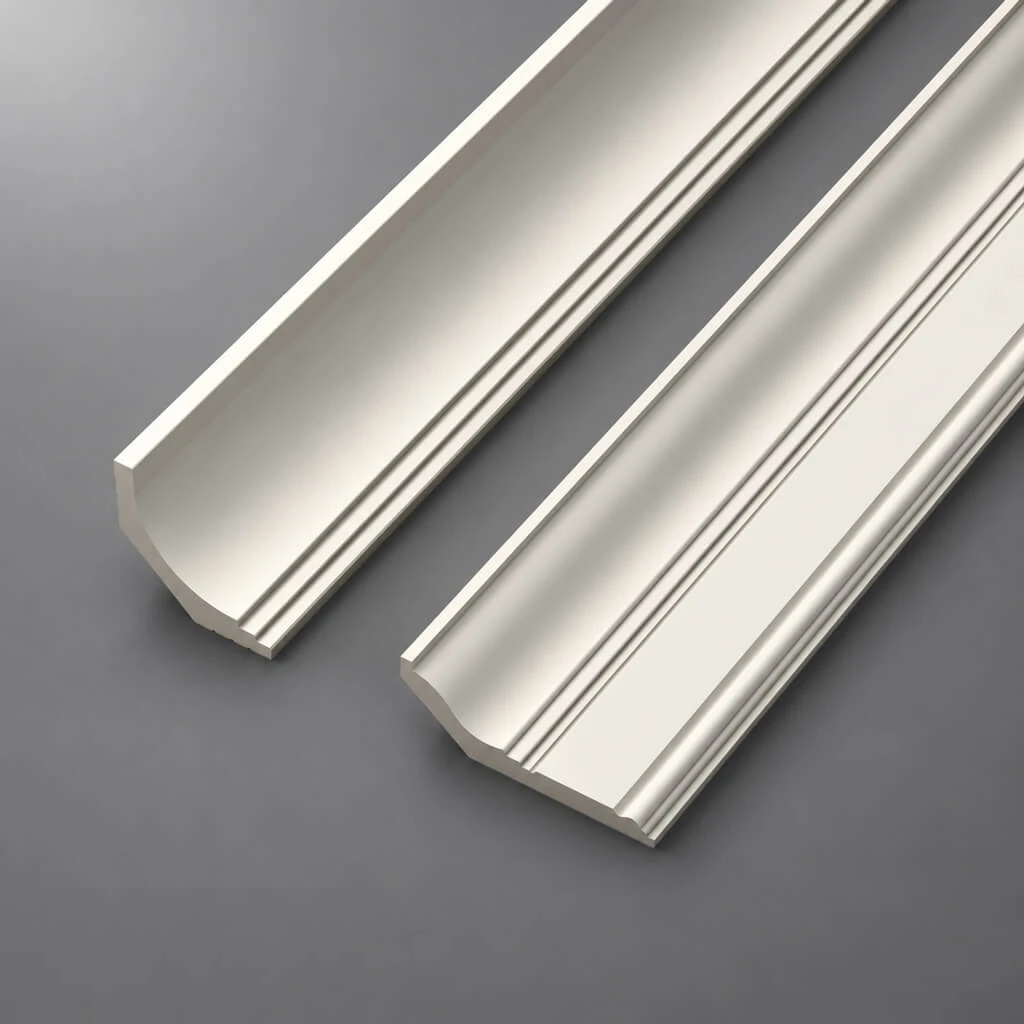
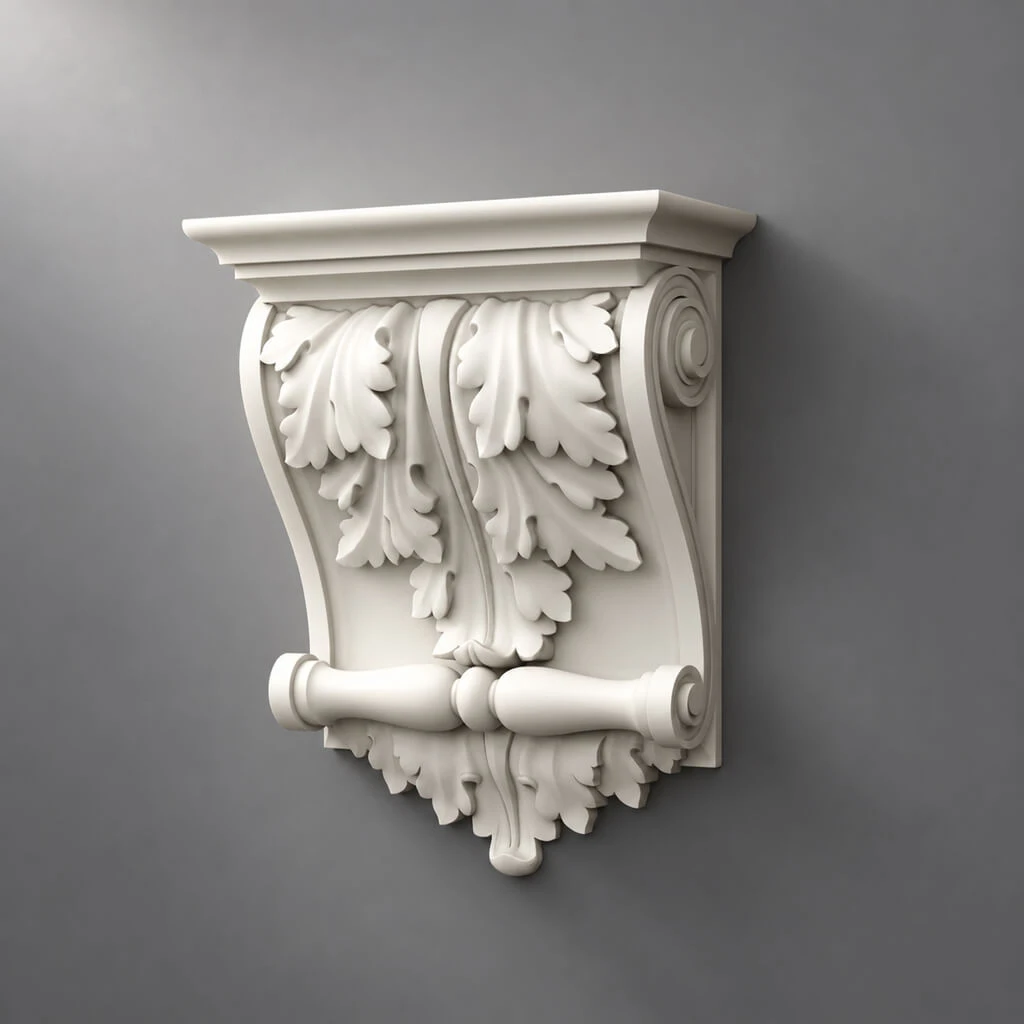
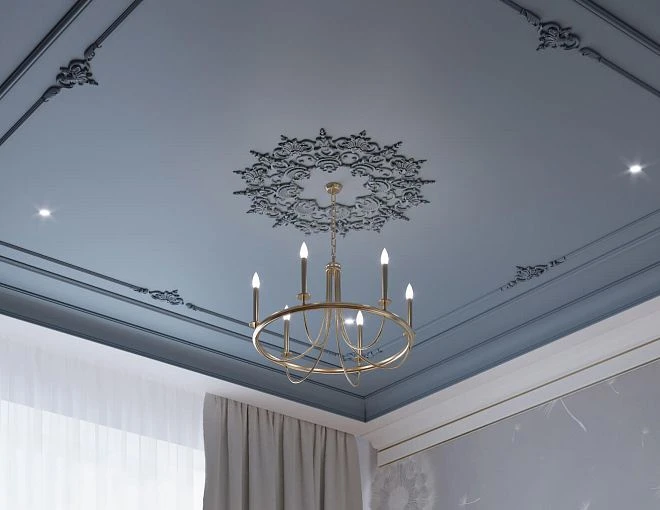
wooden cornice— one of the most powerful tools for finishing a vertical slatted surface. When slats run from floor to ceiling, the cornice at the top boundary creates a visual 'cap' and transitions the vertical rhythm into the horizontal line of the ceiling.
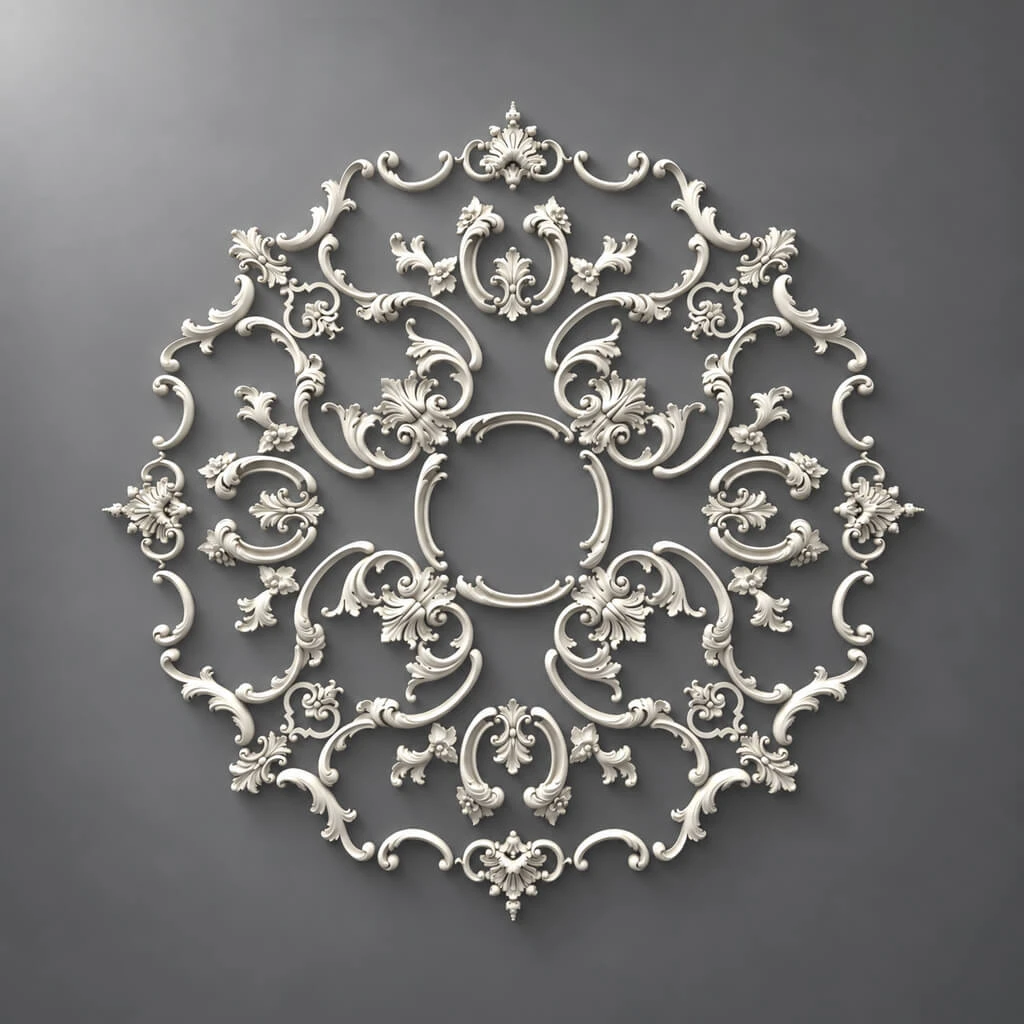
Solid wood cornices are produced with profile heights from 45 mm (for modern minimalism) to 200 mm (for classical and neoclassical interiors with high ceilings). A cornice 120–150 mm high combined with vertical slatted panels made of dark oak is already an architectural statement.
One of the most impressive modern techniques: a cornice with a niche for hidden LED strip lighting. Light directed onto the slatted wall from top to bottom creates a theatrical play of shadows—each slat casts a shadow on the next, and a flat wall turns into a relief volume.
Wooden architrave: the transition between architecture and decor
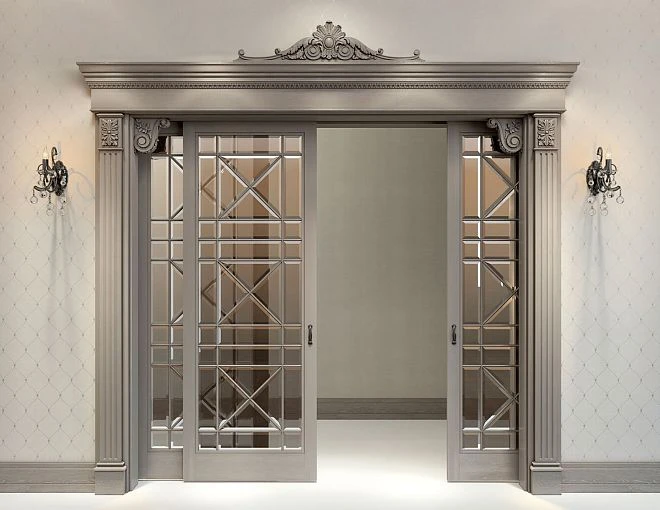
Wooden casing— an element often perceived as purely functional. Yet, it is precisely this element that ensures the coherence of the entire finishing system: the slatted panel reaches the door opening—and its logic is then continued by the architrave.
If the slatted panels are made of natural oak—architraves from the same solid wood create a unified wooden outline for the entire room. If the slats are made of MDF for painting—MDF architraves in the same tone form a monochrome architectural system.
Casing width corresponds to the scale of battens: for thin battens 15–20 mm — casing width 60–70 mm. For massive battens 30–40 mm — casing 90–100 mm. Proportional unity is the key to organic design.
Wooden millwork: the system that holds everything together
Wooden trim— a concept that unites all linear products: baseboards, cornices, moldings, battens, corner pieces, casings. When all these elements are executed in one material system (or at least in coordinated tones), the interior acquires that unified architectural logic we talk about at the beginning.
Millwork products made of oak and high-density MDF with profile accuracy maintained at ±0.1 mm per linear meter — this is the standard where all elements join without visible gaps or level differences. It is precisely this precision of installation joints that distinguishes professional finishing from amateur work.
How to combine panels, cornices, moldings, casings
Combining is not just a collection of beautiful elements in one space. It is a system of relationships between them. Let's examine the principles that work regardless of style.
Principle of element hierarchy
Every interior should have one main element — and everything else works for it, not competes with it. If the main element is an accent batten wall, then the cornice, moldings, and casings act as its frame. They should not shout — they should support.
Practically, this means: if the battens are made of dark oak with a rich texture — it's better to take the cornice and moldings in neutral white or in the tone of the oak, but with a simpler profile. There's no need for an ornate carved cornice next to a strong batten surface — two 'shouting' elements drown each other out.
The principle of material unity
All wooden products in one room should belong to one or a compatible material family. Oak next to oak — a dialogue. Oak next to pine — disharmony. Oak next to ash — an acceptable combination with coordinated tones.
This rule also works for MDF: if the battens are made of MDF for painting — the cornices and moldings should also be made of MDF and painted in the same tone or in a coordinated contrasting one. Mixing MDF battens with massive wooden cornices without a common tone means creating a visual conflict of materials.
Principle of scale coordination
Each element of the system has its own scale—profile width, height, relief. When the scales of all elements are coordinated, the interior is perceived as a whole. When they are not—as a collection of objects.
Approximate proportions for working systems:
| Batten width | Batten spacing | Cornice height | Sticker Width | Baseboard Height |
|---|---|---|---|---|
| 15–20 mm | 40–60 mm | 60–80 mm | 55–70 mm | 60–70 mm |
| 20–30 mm | 60–90 mm | 80–100 mm | 70–85 mm | 75–90 mm |
| 30–40 mm | 90–120 mm | 100–130 mm | 85–100 mm | 90–110 mm |
| 40–60 mm | 120–180 mm | 130–160 mm | 95–120 mm | 100–130 mm |
This is not a strict regulation, but a system of guidelines. An experienced designer may intentionally violate these proportions for artistic effect—but consciously, understanding what they are doing.
Principle of color unity
Three approaches to color have already been discussed in relation to individual pairs (panel + baseboard, panel + cornice). In the context of a complete system, it is important to add: do not create more than two independent color tones in one space of wooden products.
Acceptable: natural oak (warm) plus white (neutral). Acceptable: dark oak (cool) plus anthracite (similar). Undesirable: light oak + dark walnut + white—three independent tones create color noise.
Where wooden finishes are best showcased
Wood is a versatile material, but there are spaces where it works with particular strength.
Living Room: A Declaration of Values
The living room is the public space of the home. Here, the interior speaks about the owner more than any words.decorative slatted panelson an accent wall in the living room, combined with a wooden cornice and moldings, is an architectural statement about taste, a commitment to permanence, a choice of natural over synthetic.
Here, the boldest combinations are appropriate: slats of dark oak with a rich texture, framed by solid wood moldings, with a wooden cornice 120 mm high, with hidden lighting—all as a single portal volume, at the center of which is a TV or fireplace.
Rule for the living room: the accent wall takes on all the decorative load. The other three walls should be neutral—uniform paint, calm plaster. Otherwise, the interior turns into a competition of surfaces.
Study: Concentration and Character
A home study is a place where wood works on a special psychological level. Natural material creates a sense of seriousness, solidity, and concentration. Slats behind the desk made of dark walnut or mocha with narrow moldings around the perimeter—this is a work environment that inspires, not distracts.
Wooden slat panelsin the study often occupies the wall behind the workspace—the area visible on video calls and which forms the first impression of the owner. Several bookshelves built into the slatted wall, a wooden cornice on top, door frame trims to match—and the space gains character.
Bedroom: Natural Silence
slatted panels in the bedroomAbove the headboard—a classic that never ages. Here, wood works primarily through tactile and visual warmth. Light oak in a natural tone, wooden molding around the headboard perimeter, a thin cornice on top—and the bedroom becomes that very sanctuary you want to return to again and again.
In the bedroom, wood should be restrained. There's no point in saturating the space with rich decor—subtraction works here: a minimum of elements, maximum quality for each.
Hallway and corridor
Slatted panels in the hallway—a functional and aesthetic solution at the same time. Here, wood serves as a protective covering (solid wood paneling is resistant to mechanical damage) and sets the tone for the entire home: the entryway is the first thing guests see.
Wooden door casings in the hallway, a wooden cornice with lighting along its entire length, slatted panels on one wall—and a narrow corridor transforms into an architecturally expressive transition between the street and the house.
Kitchen: wood in challenging conditions
Slatted panels in the kitchen—a topic requiring special attention to the material. In the active cooking zone (above the stove, near the sink), wood without moisture-resistant protection is unsuitable. But in the dining area, on the wall opposite the kitchen set, in the bar counter zone—natural slatted panels create a striking accent.
Wooden molding frames on kitchen cabinet fronts matching the slatted panels—a technique that unites the furniture and architectural space of the kitchen into a single system. This detailed coordination makes the difference between a 'designer kitchen' and 'just a beautiful kitchen'.
How to avoid stylistic disintegration
Stylistic disintegration—a state of an interior where there is much that is good, but no unified image. Each element is good on its own, but together they do not form a whole. This is a common mistake when independently selecting materials.
Define one stylistic direction—and stick to it.
Before buying any material, define the style in one word or phrase. Neoclassical. Scandinavian minimalism. Japanese minimalism. Modern classic. Loft. This is not a cage—it's a compass. Every time you look at a new element, ask yourself: does it belong to the same stylistic language?
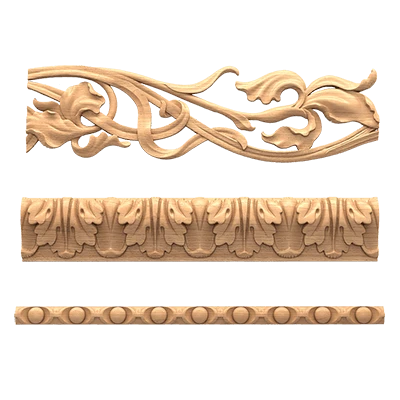
Decorative slatted panels made of dark oak with wide spacing represent one stylistic language (modern, perhaps with notes of loft or Japanese minimalism). A classic cornice with carved ornamentation is another. They speak different dialects and, when combined, create not synthesis but conflict.
Do not purchase elements from different places without first comparing samples.
The shade 'natural oak' can vary by several tones toward warm or cool among different manufacturers. Under side lighting, this is noticeable even to an untrained eye. Before purchasing, compare samples under the same lighting that will be in the finished space.
Monochrome as protection against disintegration.
One of the most reliable ways to ensure stylistic unity is a monochrome system. Slats, cornices, moldings, trims, baseboards—all in one color. This works regardless of style: white monochrome—Scandinavian or modern; dark monochrome—loft or art deco; beige-cream monochrome—neoclassical or modern classic.
In a monochrome system, all elements are unified through color, and profile differences are perceived as architectural relief—the interior looks rich and complex, yet calm.
Three is the maximum number of independent elements.
In a single space, there should be no more than three independent decorative architectural elements vying for attention. A slatted panel—one. A wooden cornice—two. A carved molding—three. A fourth is already excessive. Choose three main elements and subordinate everything else to them.
Special techniques: depth, rhythm, chiaroscuro.
Wood in interior design can create visual effects unattainable by other materials. Let's examine several specific techniques.
Depth through layering
Wooden elements with varying relief depths — thin 10 mm slats, 20 mm moldings, a wide 30 mm cornice — create a multi-layered wall surface. With side lighting, each layer casts a shadow onto the next, and the wall is perceived as a three-dimensional object, not a flat plane.
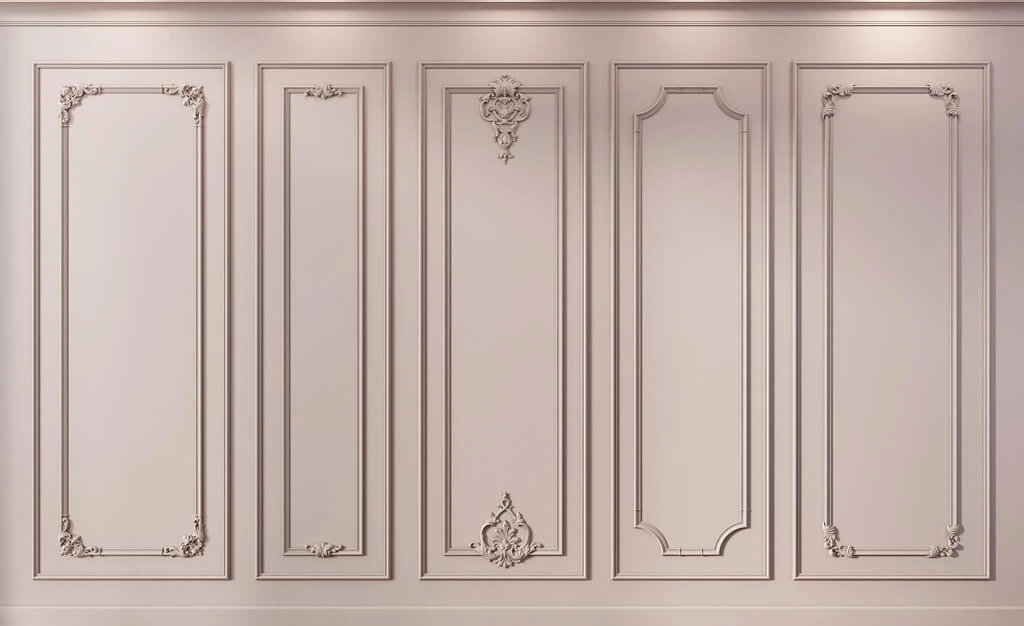
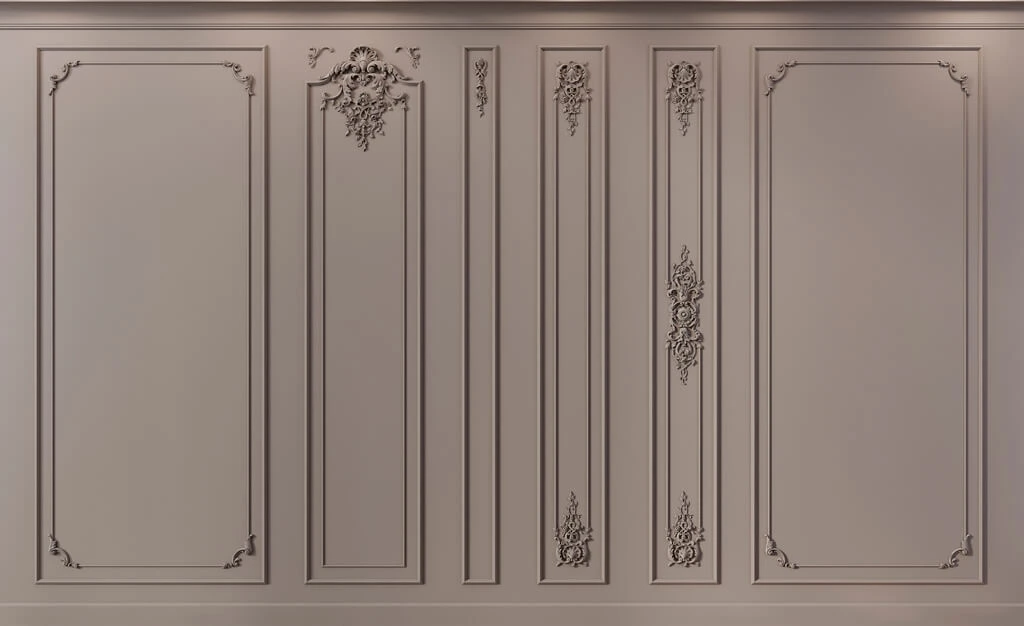
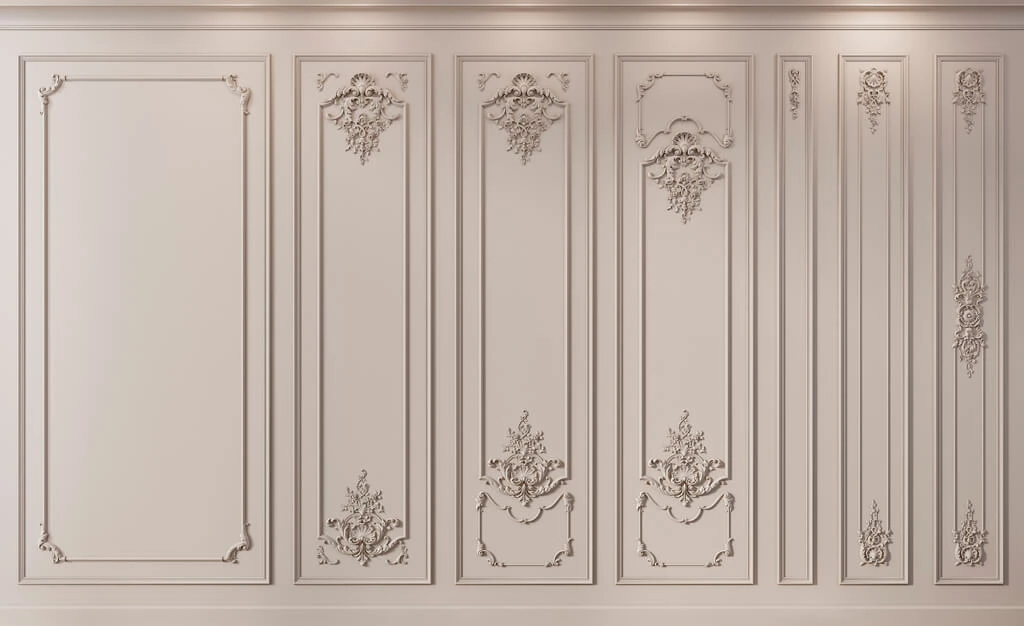
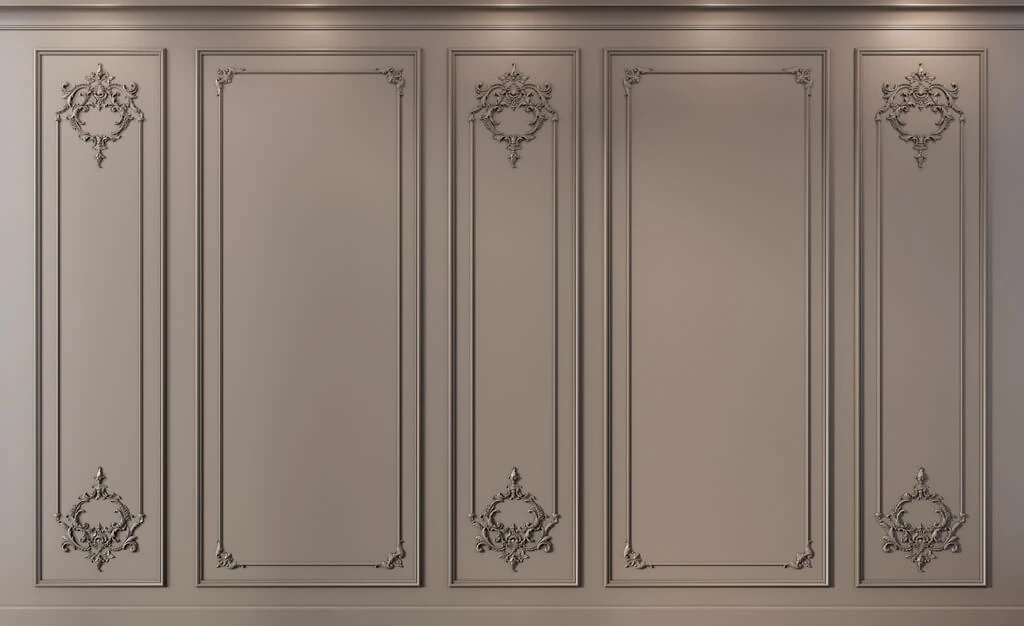
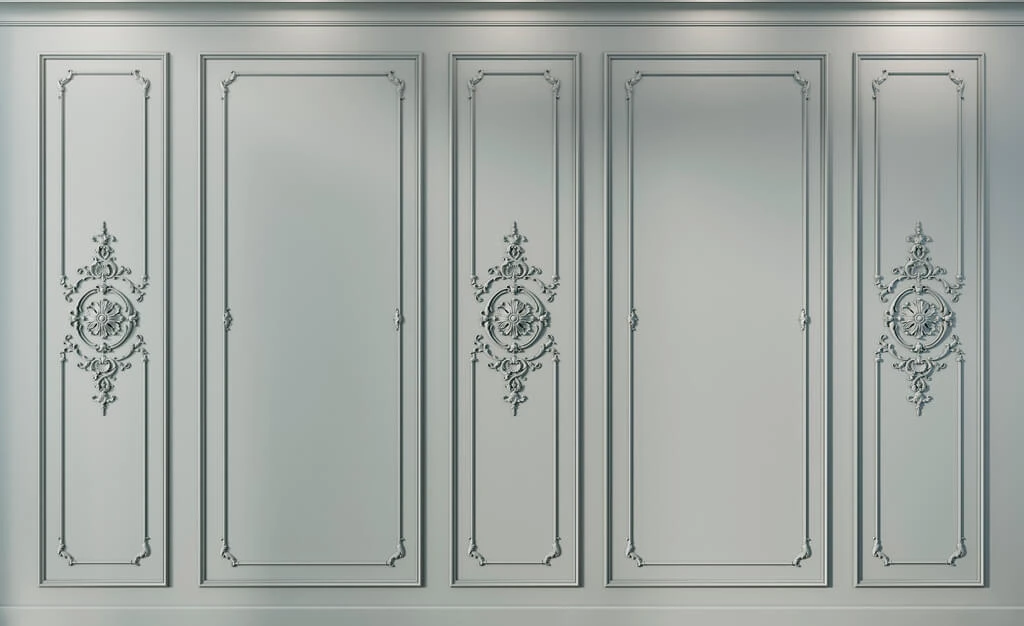
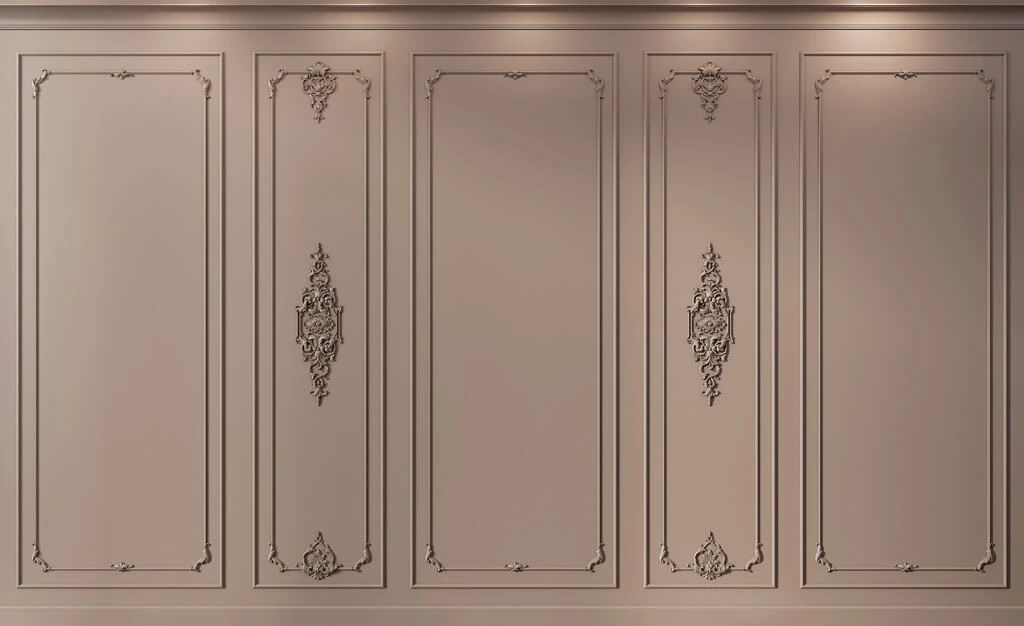
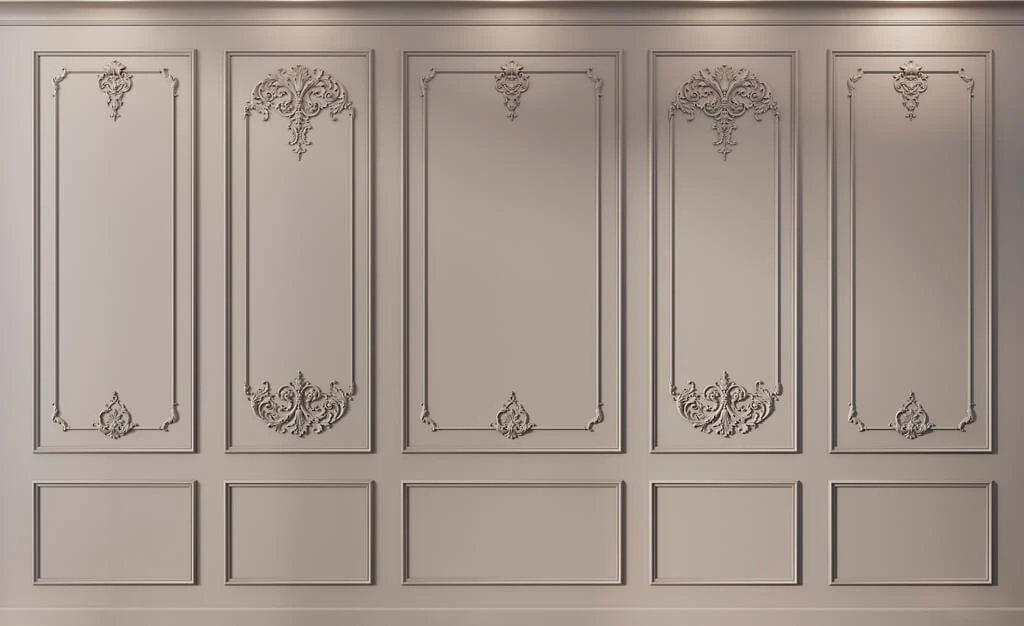
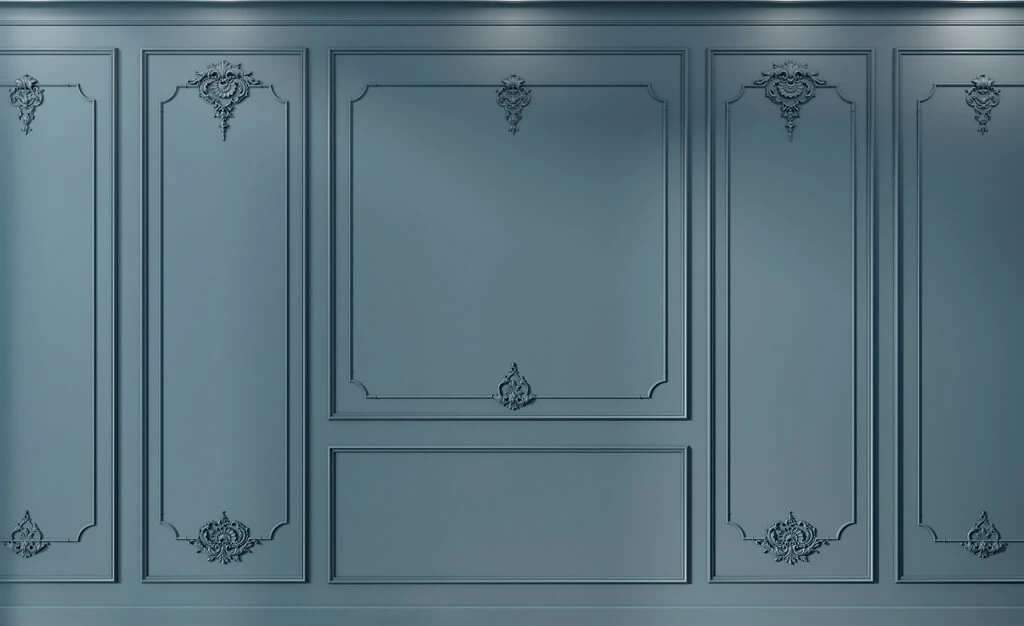
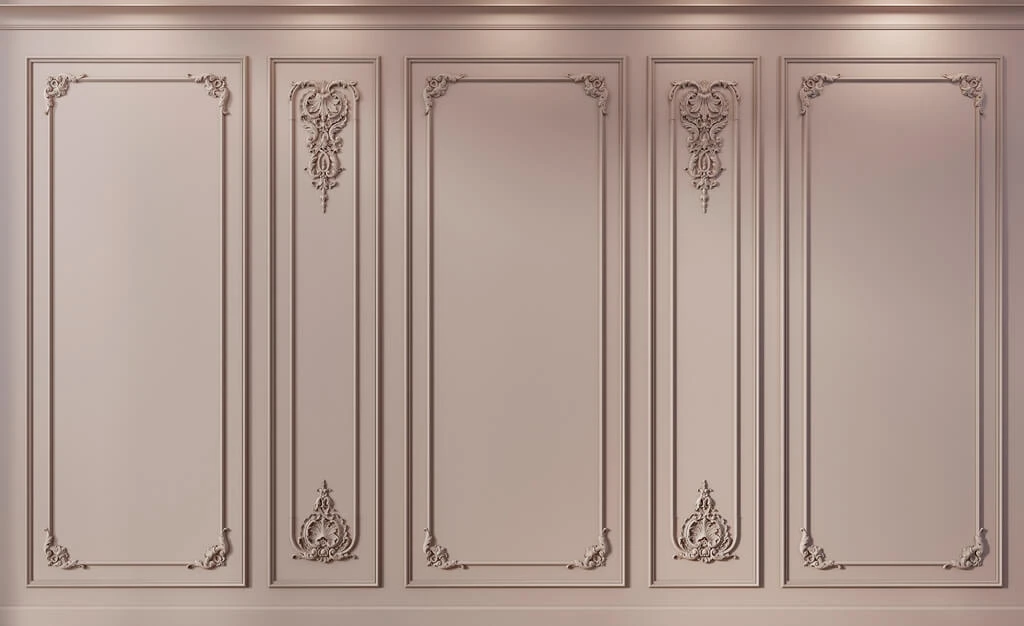
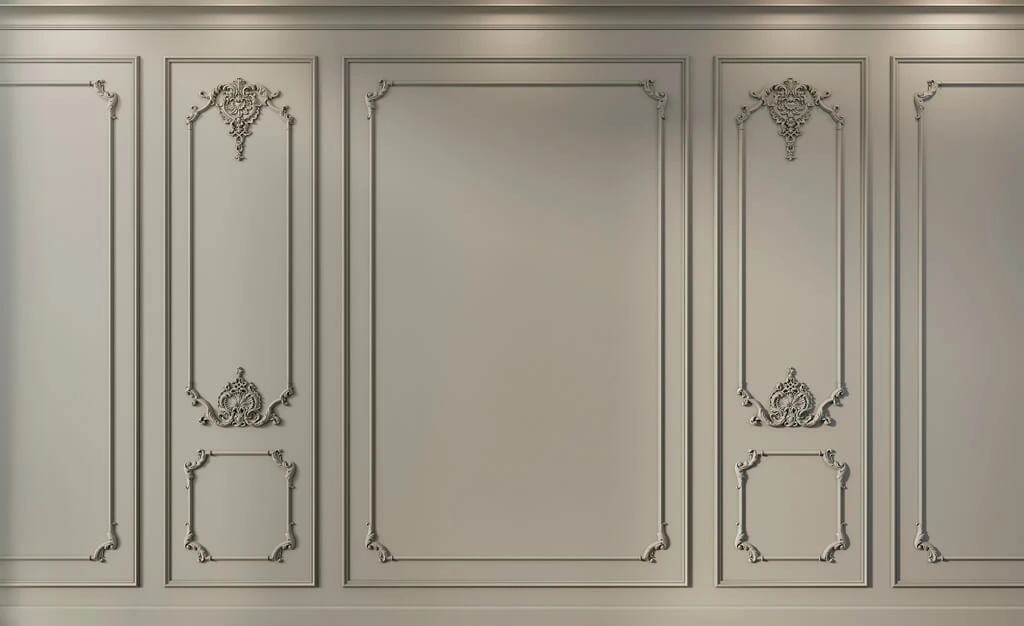
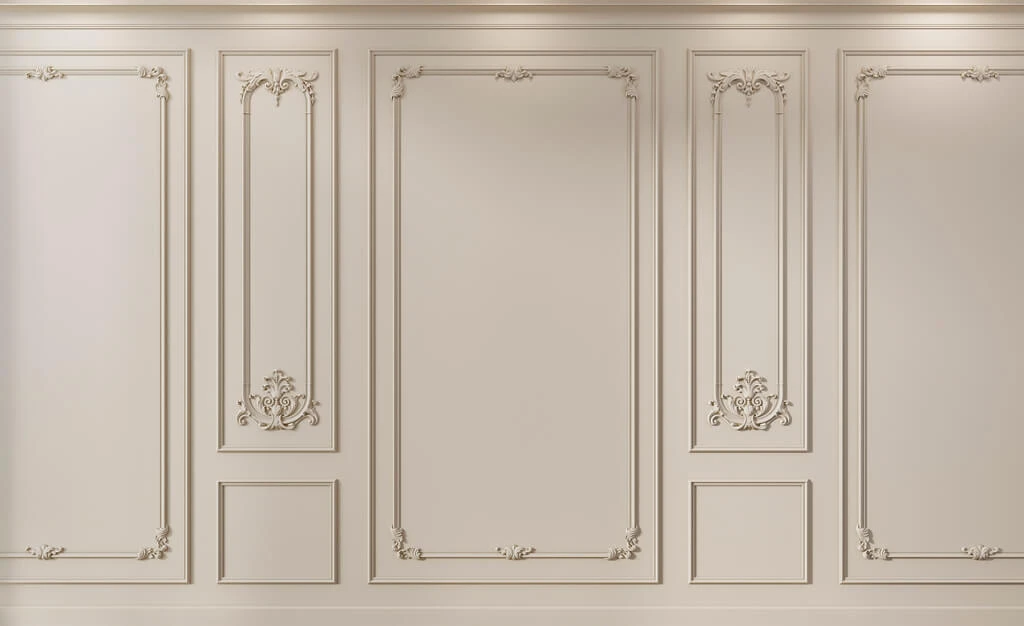
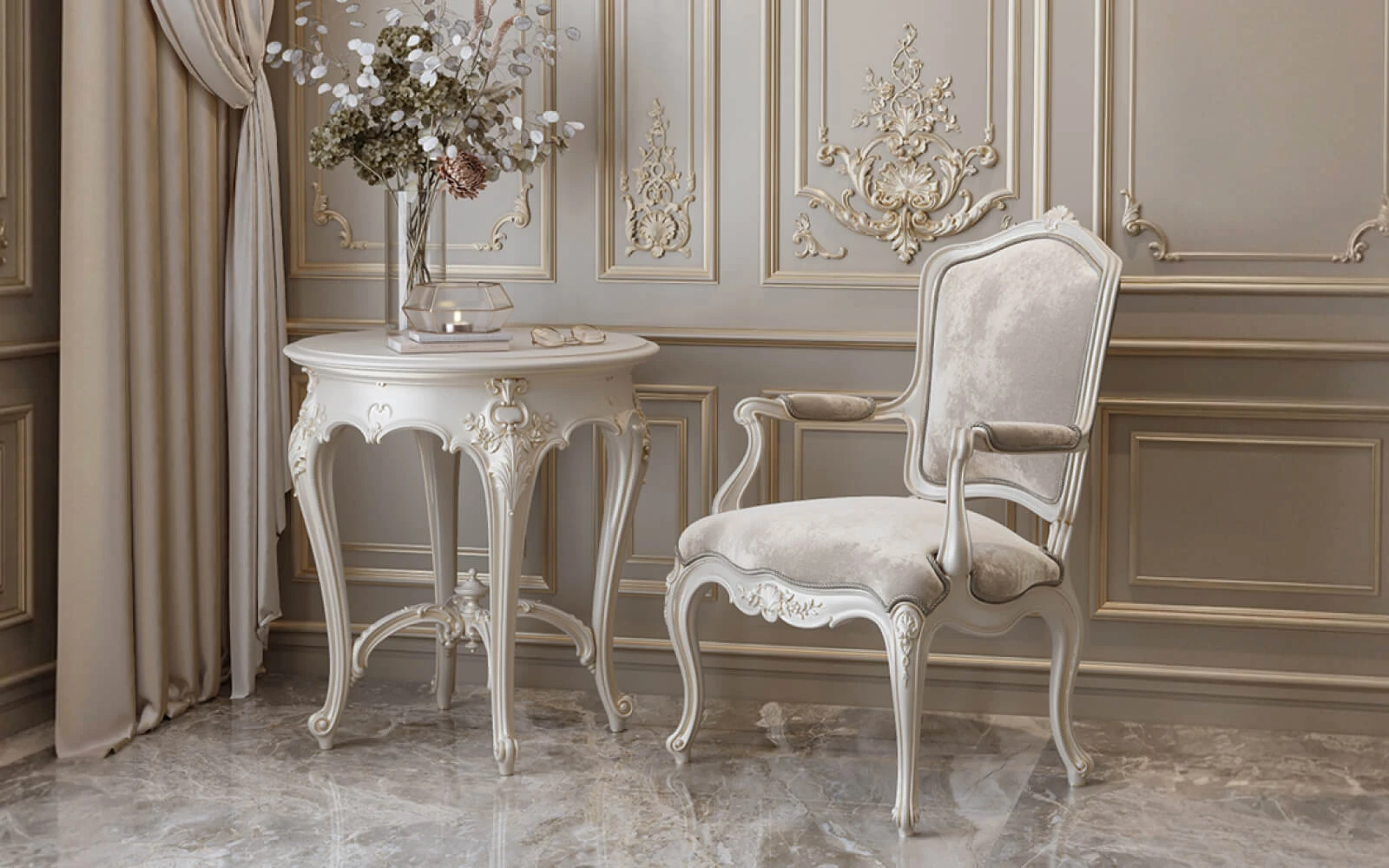
This technique is especially effective in classical and neoclassical interiors, where horizontal and vertical moldings create the traditional system of boiserie — wooden wall panels divided by frame decor into rectangular fields.
Rhythm through slat spacing
slatted panels for wallscreate a rhythmic pattern, the intensity of which is regulated by the spacing. Close spacing (40–50 mm) — a dense, almost fabric-like rhythm, the surface is perceived as a single material. Wide spacing (120–150 mm) — expressive graphics, a clear alternation of slat and gap.
An interesting technique: variable slat spacing. Groups of three slats with narrow spacing, separated by a wide gap — creates a sense of musical notation, a rhythmic pause. This technique requires a confident design decision, but when executed correctly — it is very convincing.
Chiaroscuro through lighting
Slatted panels with lighting— a separate chapter in the discussion of wood in interior design. Spot lighting directed along the slatted surface creates a play of shadows that changes throughout the day along with the shift in the light source's position. In the evening, with built-in lighting turned on, a slatted wall made of wooden planks transforms into a sculptural relief.
For natural oak — warm white light (2700–3000 K), which emphasizes the amber tone of the wood. For MDF slats in neutral or cool tones — neutral white (3500–4000 K).
Care and Long-Term Use of Wooden Products
Natural wood requires attention, but it is simple and rewarding care—unlike synthetic materials, which cannot be restored.
Optimal Microclimate
A stable climate is the foundation for the long life of wooden products. Temperature 18–24°C, relative humidity 45–65%—within this range, wood remains stable and does not warp. At humidity below 35%, wood begins to dry out and crack. At humidity above 75%, it swells and warps.
Sudden changes are especially dangerous: turning on heating in autumn (sharp drop in humidity), open windows during rain (sharp increase). Air humidification systems are not a luxury but a tool for protecting wooden finishes.
Regular Care: Simple and Unobtrusive
Weekly: dry wiping with a soft cloth or duster. Monthly: damp wiping with a well-wrung cloth without harsh chemicals. Annually: specialized wood care product—oil-wax or restorative polish.
Products with an oil-wax finish require renewal every 12–18 months. A polyurethane varnish coating lasts 7–10 years without renewal, then is sanded and re-varnished.
Local Repair: Wood is Restorable
The main advantage of solid wood over synthetic materials is repairability. A scratch on an oak cornice is removed by sanding and spot application of the finish. A chip on a plank panel—wood filler followed by tinting to match the color. Darkening from moisture—sanding and renewing the finish.
This fundamentally distinguishes wooden products from low-quality MDF counterparts, which change entirely when damaged. Solid oak with proper coating and proper care lasts 30–50 years — and this is not a marketing promise, but a physical property of the material.
Acclimatization before installation
Any wooden products must undergo acclimatization before installation — 48–72 hours in a horizontal position at operating temperature and humidity. This allows the material to adapt to the room conditions and avoid deformation after installation. Neglecting acclimatization is one of the most common mistakes during DIY installation.
Complete wooden system: from wall to ceiling
Let's examine what a finished wooden finishing system looks like — a set of products that create a unified architectural space.
System for neoclassical interior
-
Slat panel: made of solid oak, 'tobacco' tint, 80 mm spacing, vertical, from floor to height of 1200 mm (lower third of wall);
-
Border molding: made of solid oak, profile with cavetto, height 50 mm, along the upper boundary of the slat panel;
-
Upper part of the wall: painting in a warm beige tone;
-
Wooden cornice: made of solid oak, classic profile with ogee, height 100 mm, painted to match wall color;
-
Door casings: made of solid oak, width 80 mm, profile with soft cavetto;
-
Baseboard: solid oak, height 90 mm, matching the tone of the slatted panel.
Result: a unified architectural system where wood is present at all levels—and each level is connected to the others through material, tone, and profile.
System for Scandinavian minimalism
-
Slatted panel: MDF for painting, color—warm white, spacing 50 mm, vertical, floor-to-ceiling on only one wall;
-
Cornice: MDF, minimalist rectangular profile, height 60 mm, in the same white;
-
Door trims: MDF, width 60 mm, rectangular profile, in the same white;
-
Baseboard: solid oak in a light tone, height 50 mm—the only wooden accent in a neutral system;
-
Other walls: painted warm white, without decoration.
Result: a light, clean, airy interior where wood is present subtly but noticeably.
What to consider when choosing and purchasing
Let's move on to practice. How to properly approach the selection and purchase of decorative slatted panels and wooden products within a unified system?
First. Determine the style and main material. Solid wood or MDF — depending on the task and budget.
Second. Create a room diagram indicating all surfaces where wooden finishing is planned. Mark what will be accent and what will be subordinate.
Third. Choose a key element — usually this is the slatted panel. All other products are selected to match it.
Fourth. Request samples before a large order. Compare them under natural and artificial lighting in your room.
Fifth. Order everything from one supplier or manufacturer — this guarantees matching tones, profile compatibility, and coating system consistency.
Sixth. Consider a margin: +10% for straight sections, +15% for rooms with many corners.
Frequently asked questions
Can decorative MDF slatted panels be combined with solid wood moldings?
Yes, provided the color matches. MDF slats for painting + white MDF moldings — a monochrome system. MDF slats in a neutral tone + oak moldings in a natural tone — a contrasting system. Both options work when scale coordination is observed.
Is it necessary to use a cornice if the slats run from floor to ceiling?
It depends on the style. In a minimalist interior, battens can reach the ceiling without a cornice—this is an intentional design decision. In a classic or neoclassical style, a cornice is mandatory—it gives the ceiling line architectural weight.
What kind of trim suits batten panels in Scandinavian style?
A rectangular flat profile 55–65 mm wide, painted white or in a neutral tone. No molded elements, fillets, or complex profiles—only pure geometry.
How often should the coating of wooden panels be renewed?
Oil-wax—every 12–18 months under standard use. Polyurethane varnish—every 7–10 years. MDF for painting—repaint as needed, typically every 7–10 years with normal care.
Are slatted panels suitable for a children's room?
Yes. For a child's room, MDF battens for painting with eco-friendly, odorless water-based paints are recommended. Cornices and moldings—minimalist, simple profile. Wooden door trims are mandatory. Solid wood in a child's room is a good solution if the oil-wax coating is chosen with appropriate environmental certifications.
How to choose millwork if the rooms are of different styles?
Common elements (door trims in the hallway, transition baseboards) should be neutral and uniform throughout the apartment. Room decor can vary—but what is visible from the hallway must be coordinated.
Can you install slatted panels yourself?
Yes, with basic tools: level, drill, saw. Detailed installation instructions are in the material"How to install batten panels"Wooden moldings and cornices require precise miter cuts — a miter saw is needed for this.
Which material is better for a study — oak or MDF?
Solid oak is optimal for a study: it creates the necessary atmosphere of solidity and contributes to the psychological feeling of a serious space. Painted MDF provides precise color and monochrome if strict geometry is needed. A combination of both — oak slats plus white MDF moldings — is a compromise option with high visual results.
About the company STAVROS
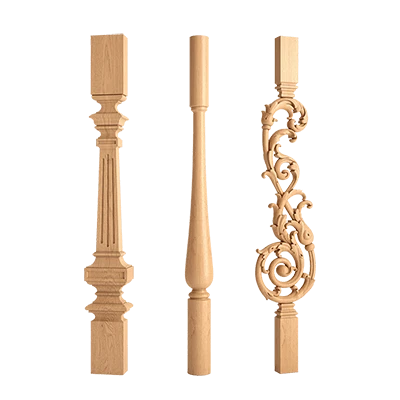
The entire assortment described in this article —decorative slatted panelsfrom oak and MDF array,Wooden moldings, wooden cornices, architraves, baseboards, and the full rangewooden products for interior finishing — is presented in the catalog of the company STAVROS.
STAVROS is a Russian manufacturer with a full production cycle: from wood selection and drying to finishing and quality control. The assortment includes over 4000 models and 20,000 modifications across 39 product groups. Products are made from European oak and beech solid wood, as well as high-density MDF. Wood moisture content in production is maintained at 8–12%, geometric profile accuracy is ±0.1 mm per linear meter.
STAVROS works with both professional market participants — design bureaus, architects, construction companies — and private clients. Custom manufacturing of products according to individual drawings and dimensions is possible. Consultation on selecting a finishing system is free. Investing in natural wood means investing in a space that will bring joy for decades.