








































































Article Contents:
- What are decorative moldings for furniture and why they change everything
- Where furniture moldings are used: from kitchen to wardrobe
- Moldings for furniture facades
- Moldings for Cabinets
- Mouldings for Kitchen Fronts
- Mouldings for Dressers and Nightstands
- Moldings for buffets and display cases
- Moldings for classic furniture: special logic
- What types of decorative moldings for furniture exist: typology by material and shape
- Wooden moldings for furniture
- Polyurethane moldings for furniture
- Smooth and Carved Profiles: Two Poles of Furniture Decoration
- How to Choose Furniture Moldings by Interior Style
- Moldings for Classic Furniture
- Furniture Moldings in Neoclassical Style
- Furniture Moldings in Baroque Style
- Moldings for Light and Dark Furniture
- Moldings for Furniture with Patina, Enamel, Veneer
- How to Choose Moldings by Furniture Type: A Practical Guide
- Moldings for the kitchen
- Moldings for Wardrobes
- Moldings for Dressers
- Moldings for Living Room Furniture
- Moldings for Bedroom Furniture
- What to combine decorative moldings with: furniture decor system
- With furniture handles
- With furniture legs and supports
- With applied decor
- With decor for moldings
- With capitals and pilasters
- With classic furniture: comprehensive approach
- Molding size, profile and pattern: how to avoid mistakes
- Narrow molding for thin facade frame
- Medium profile for universal decor
- Wide decorative profile
- Smooth vs relief profile
- Combining molding with handles and overlays: proportions
- Wood or polyurethane: comparative analysis for furniture decor
- Wood: When to Choose
- Polyurethane: When It's Better
- How to Use Furniture Moldings in Facade Decoration: Practical Techniques
- Creating Frames on Facades
- Designing the Central Panel
- Accent Lines on Doors
- Furniture Decoration in Classic Style: Step-by-Step Logic
- Updating Old Furniture
- What to Look for When Buying Decorative Moldings for Furniture in St. Petersburg
- Where to Buy Decorative Moldings for Furniture in Saint Petersburg
- FAQ: Answers to Popular Questions About Decorative Moldings for Furniture
- What are the best moldings for furniture?
- How does furniture molding differ from an overlay?
- What to choose for facades: wood or polyurethane?
- Are moldings suitable for kitchen furniture?
- Can moldings be used for furniture restoration?
- How to match molding to handles and legs?
- Where to buy decorative moldings for furniture in St. Petersburg?
- How to style furniture in a classic style using moldings?
- Conclusion: furniture decor as an investment in interior quality
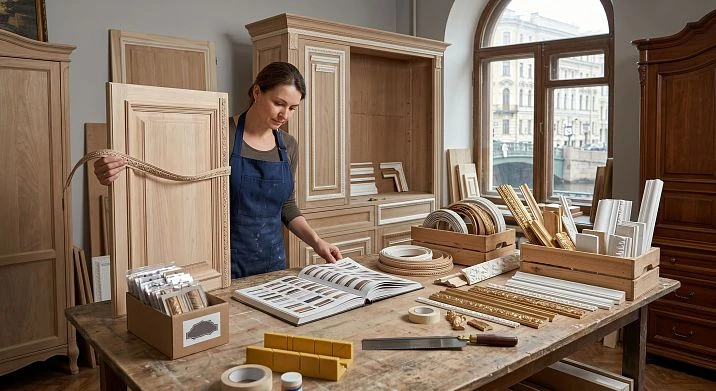
Look at any wardrobe in a classic interior—the kind you want to examine closely. What makes it that way? Not so much the material or the color. It's the decor that makes it: moldings along the perimeter of the facade, thin frames around the panels, neat overlays in the center of the door. Preciselyfurniture moldingstransform cabinet furniture into an object worthy of a second glance. And it is they who are behind that feeling of 'expensive and well-thought-out' which is hard to put into words but is instantly perceived.
Decorative moldings for furniture in St. Petersburg — this is not a highly specialized request. It is a genuine commercial interest of Petersburgers who are furnishing apartments, restoring old furniture, ordering kitchens and suites for classic or neoclassical interiors. The STAVROS catalog featuresmoldings for furniture fronts, applied decoration for furniture, molding decorative elements, Furniture Handlesandfurniture legs— everything for assembling a complete decorative solution in a single style.

What are decorative moldings for furniture and why do they change everything
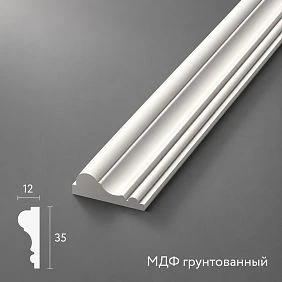
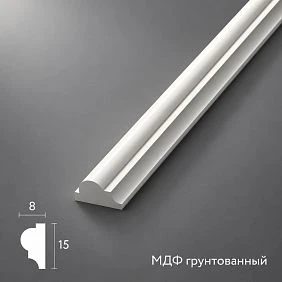
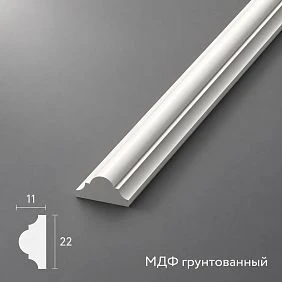
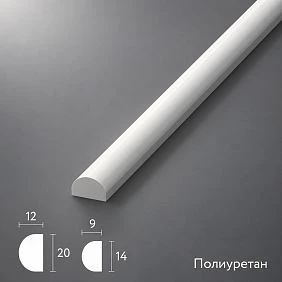
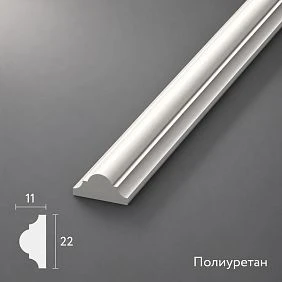
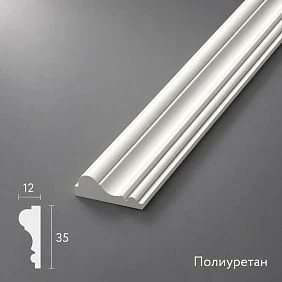
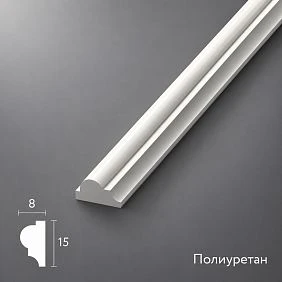
Furniture molding is a decorative profile that is mounted on the front of cabinet furniture. Its task is to create a frame, to border a panel, to emphasize the geometry of a door, and to give a flat front volume and architectural expressiveness. It is precisely furniture moldings that form that very 'classical' character which distinguishes handcrafted cabinet furniture from mass-market production.
Why is this element so important? Because a front without molding is just a flat surface. With molding — it is already a framed panel, which has a beginning, a middle, and a border. It is an architectural gesture applied to furniture.
Decorative moldings for furniture are used:
-
on wardrobe fronts — sliding, hinged, built-in;
-
on kitchen fronts — upper and lower drawers, doors;
-
on dressers and nightstands — to create a framed geometry;
-
on sideboards and display cases — for the classic 'filling' of the facade;
-
on decorative portals and mirror zones;
-
on wardrobe facades in classic and neoclassical interiors.
St. Petersburg is a city with architectural memory. Here, classic and neoclassical styles never go out of fashion: they are reinterpreted, adapted, but remain in demand. That is why buying decorative moldings for furniture in St. Petersburg is not a whim of antique connoisseurs, but a practical request from thousands of apartment owners who want an interior with character.




Where furniture moldings are used: from kitchen to wardrobe
Our factory also produces:



Moldings for furniture facades
The facade is the main surface of furniture. It is what is visible, it is what forms the impression. Decorative molding for furniture facades creates a framed structure: an outer frame made of profile, inside — a panel field that can be filled with wallpaper, fabric, veneer, or simply painted. This is the basic scheme of classic furniture, known for several centuries. And it still works flawlessly.
Get Consultation
Moldings for cabinets
A wardrobe with moldings is no longer just a wardrobe. It is a piece of furniture with character. Framed facades made of MDF with applied moldings made of wood or polyurethane give the feeling of joinery work — while being produced many times faster and cheaper than solid wood furniture. Moldings for wardrobes are especially in demand for built-in wardrobes in bedrooms — where a unified classic front across the entire wall is needed.
Moldings for kitchen fronts
A kitchen in a classic style is unthinkable without framed facades with furniture molding. The profile runs along the perimeter of the door, creating a visual frame. Sometimes a central horizontal plank is added, dividing the facade into upper and lower panels. Moldings for kitchen facades must be moisture-resistant and take paint well — polyurethane profiles are indispensable here.
Moldings for dressers and cabinets
A chest of drawers with moldings is a classic of French interior design. Each drawer gets its own frame, giving the facade rhythm and scale. Moldings for a chest of drawers are selected based on the drawer height: narrow profiles for small drawers, medium ones for full-sized pull-out sections. Paired withdecorative furniture legsandwooden handlesthe chest of drawers transforms into an independent decorative object.
Moldings for buffets and display cabinets
A buffet is a piece of furniture with the most complex decorative program. The lower part has solid doors, the upper part has glass display cases. Moldings for both zones should be coordinated in size and profile. For the glass display case, a thinner and lighter profile is used; for the solid facades below, a more expressive and voluminous one.
Moldings for classic furniture: a special logic
Classic furniture lives by its own rules. Here, molding is not an ornament but a structural element. It forms the frame that holds the visual architecture of the entire piece. Buying moldings for classic furniture means taking responsibility for matching the profile to the entire system: size, style, material.
What types of decorative moldings for furniture exist: typology by material and shape
Wooden moldings for furniture
Wooden moldingsare the highest standard of furniture decoration. Natural wood provides a living texture that looks organic next to solid wood, veneer, wooden handles, and legs. Buying wooden molding means getting a product that can be tinted, stained, varnished, or painted in any shade of the palette. Wood accepts any finish while retaining its natural individuality.
Wooden moldings for furniture are particularly valuable in premium interiors: where furniture is custom-made, where the textural consistency of all surfaces is important. Wooden moldings are also used in restoration work — when restoring antique furniture, the wooden profile is organically integrated into the existing structure.
Polyurethane moldings for furniture
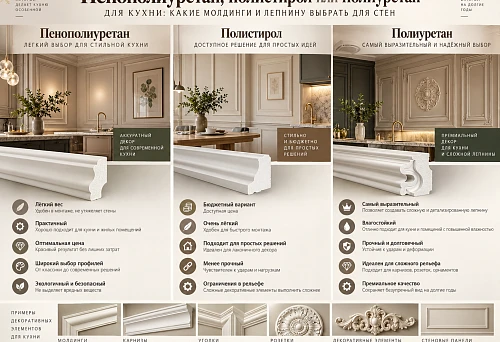
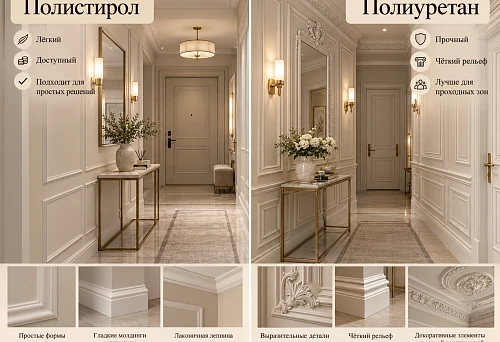
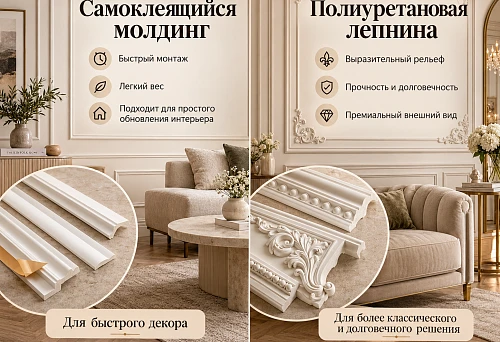
polyurethane decorand profiles made from this material are a solution for those who need rich relief with minimal weight. Polyurethane furniture molding is especially good for decorative facade inserts: it is lightweight, easy to cut, adheres to most surfaces, and takes primer and paint well.
Polyurethane moldingsfor furniture is a separate genre. Overlay decorative elements made of polyurethane: medallions, cartouches, rosettes, corner overlays — all of these are mounted on the facade and create the feeling of carving without labor-intensive manual work. For kitchens and cabinets in a classic style, this is the optimal combination of decorative potential and practicality.
Smooth and carved profiles: two poles of furniture decor
Smooth furniture molding is for calm, modern classic design. Clear geometry without excessive relief, emphasis on line and proportion. Good for neoclassicism and modern design with classical references.
Carved decor for furniture is the opposite pole. Rich relief, intricate profiles, multi-level cross-section. This is the language of Baroque and Rococo, Empire and mature classicism. Carved furniture molding requires an appropriate interior setting: lush fabrics, classic hardware, proportionate space.
How to choose furniture moldings according to interior style
Style is the first filter when choosing. Before looking at size and material, you need to answer the question: what story does your furniture tell?
Moldings for classic furniture
Classic Furniturerequires an appropriate profile: voluminous, with several levels of cross-section, with a clear hierarchy of lines. For it, wooden moldings with a rich profile or polyurethane ones with expressive relief are suitable. Corner overlays andmolding decorative elements— without them, the frame looks unfinished.
Moldings for furniture in the neoclassical style
Neoclassicism is classicism filtered through modern taste. The molding here is more restrained: medium in width, with moderate relief, without excessive curls. Geometry is the main tool. In neoclassicism, solid wood moldings are especially good—they bring the warmth of natural material with a strict form.
Moldings for furniture in the Baroque style
Baroque demands the maximum. Carved moldings with gilding, applied medallions, and complex corner elements are appropriate here. Polyurethane decor is the optimal tool for this style: it provides rich relief without excessive weight and cost.
Moldings for light and dark furniture
White moldings on white furniture create a monochrome volume that forms relief through the play of shadows, not through color contrast. Dark wooden moldings on dark furniture are academic classicism, strict and weighty. Moldings in a contrasting tone—a white profile on a dark facade or vice versa—create a more vivid visual statement.
Moldings for furniture with patina, enamel, veneer
Furniture with patina requires molding with similar treatment—the profile must be aged using the same technique, otherwise there will be dissonance between the decor and the main material. Furniture with enamel—molding under the same enamel. Veneered surfaces—wooden molding with a similar wood species or tint.
How to choose moldings by furniture type: a practical guide
Moldings for the kitchen
The kitchen is the most demanding space in the apartment when it comes to materials. Here, molding faces steam, grease, and daily cleaning. Therefore:
-
polyurethane molding is the best choice for kitchen fronts: moisture-resistant, does not deform with temperature changes, takes paint well;
-
wooden molding in the kitchen requires a high-quality varnish or enamel coating without gaps;
-
the profile width for the kitchen is medium: too wide molding visually reduces the height of the front.
Moldings for the wardrobe
For a wardrobe, the key parameter is scale. Is it a tall wardrobe reaching the ceiling or not? Wide or narrow doors? For a tall wardrobe with wide fronts — a medium to above-medium size profile. For narrow doors — a thinner one. It is important that the molding frame does not consume the panel field — a balance between the profile and the central part of the front is needed.
Moldings for a chest of drawers
Drawers of a chest of drawers are usually not tall — 12–18 cm. The molding for such a front should be narrow or medium, otherwise the frame will take up most of the drawer's height. For a chest of drawers in a classic style, smooth wooden profiles with a chamfered cross-section work well — they provide a frame without overloading.
Moldings for living room furniture
The living room is a formal space. Here, furniture works for representativeness. Moldings for living room furniture can be more voluminous and expressive than in other rooms. In the living room, it is appropriate to haveDecorative pilasterson the wardrobe body,CapitalsOn the side posts, carved moldings on the facades — all this creates furniture with architectural character.
Moldings for bedroom furniture
In the bedroom, furniture decor should be restrained but recognizable. A thin wooden molding on the white cabinet facades, the framed geometry of the chest of drawers, neat profiles on the bedside tables — these details create an intimate classic without opulence.
What to combine decorative moldings with: a system of furniture decor
Molding does not exist in a vacuum. Its strength lies in the system. When all elements of furniture decor belong to the same style and proportional series, furniture transforms from a set of drawers into a cohesive architectural object.
With furniture handles
Furniture Handles— is the final point in the decorative system of the facade. The handle and molding should speak the same language: if the molding is wooden with a slight relief — the handle is also wooden or forged, with a natural character. If the molding is polyurethane with a gold finish — the handle is gilded or with patina. Inconsistency between the handle and molding ruins the entire concept.
uncoated wooden handles— a universal choice for those who want to preserve the naturalness of the material and select the finishing treatment themselves. This is especially relevant for furniture intended for painting: the handle is painted to match the molding — and the facade turns into a monolithic classical composition.
With legs and supports for furniture
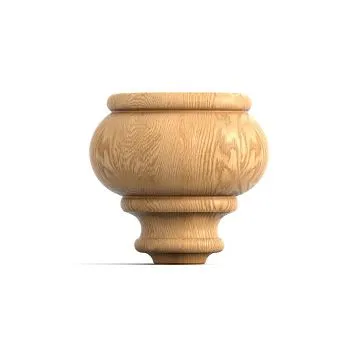
Legs — the lower point of the furniture decor system.Furniture legs— define the style and character of an item no less than the facade molding. A carved turned solid wood leg — for classic and baroque. A straight square leg — for neoclassicism. A curved cabriole leg — for Louis and Empire styles.
Decorative furniture legs with coating— is a ready-made solution where the finish is already applied at the factory. Saves time during installation and guarantees the quality of the topcoat. Paired with wooden moldings and matching handles, coated legs give furniture a finished look without additional painting work.
With applied decor
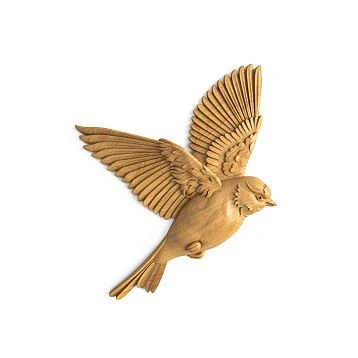
applied decoration for furnitureThese are rosettes, medallions, corner overlays, cartouches, and other three-dimensional elements that are mounted on the facade over the molding or in the center of the panel. It is the overlays that transform a framed facade from simply 'designed' to 'decorated'.
Layout logic: molding creates a frame, the overlay is an accent inside it. Corner overlays secure the joints of the molding at the corners of the frame, the central rosette provides a visual focal point on the field of the panel. This is a classic scheme that has worked in furniture art for centuries.
With molding decor
molding decorative elements— are specialized corner inserts, transition elements, and decorative caps that solve a practical problem: how to beautifully join the profile on the corners of the facade. Without them, the joints of the molding look like a technical solution. With them — like a full-fledged architectural element of furniture.
With capitals and pilasters
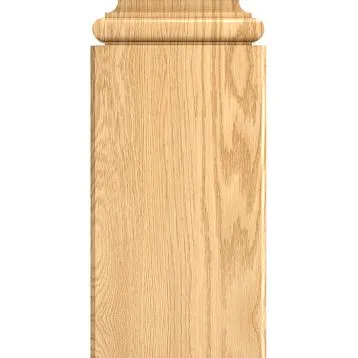
In large furniture objects — built-in wardrobes covering an entire wall, library shelves, sideboards with display cases — moldings are combined withdecorative pilastersandcapitals. The pilaster works as a vertical divider of the cabinet sections, the capital crowns it and creates a classic three-part scheme: base — body — top. This is the principle of order architecture transferred to furniture.
With classic furniture: a comprehensive approach
If you are ordering furniture for a classic interior or updating an existing one, it is important to think systematically.Classic FurnitureThe furniture from the STAVROS catalog is already created with decorative logic in mind: moldings, handles, legs, and overlays are coordinated in style. This eliminates the need to assemble the system piece by piece and guarantees a result that looks cohesive.
Molding size, profile, and pattern: how to avoid mistakes
Choosing the size of furniture molding is not an intuitive decision. It is a calculation based on the geometry of the facade.
Narrow molding for a thin facade frame
Width up to 2 cm — for small facades, drawers of low chests of drawers, narrow cabinets. Creates a light frame that defines the geometry without overloading the surface. Good for neoclassical and modern classic design.
Medium profile for universal decor
Width 2–5 cm — the working range for most furniture tasks. Suitable for standard cabinet facades, kitchen facades 70–90 cm high, chests of drawers, and sideboards. Creates an expressive frame proportionate to most furniture formats.
Wide decorative profile
Width from 5 cm — for tall cabinets, portals, buffets, and objects with large facades. Creates an architectural framing that is readable even from a distance. In small rooms and on small furniture pieces, a wide profile overloads the form — use with caution.
Smooth vs. relief profile
Smooth molding — strictness, purity, conciseness. Relief molding — richness, decorativeness, historical reference. The first works in modern interiors with classical elements. The second — in full-fledged classicism, baroque, and empire. Mixing both types on one piece of furniture is bad taste, unless it is an intentional design technique.
Combining molding with handles and overlays: proportions
Basic rule: the handle should not be wider than the molding. The overlay should not extend beyond the frame. Corner elements should have a thickness corresponding to the molding profile. Violating these proportions creates a feeling of a random set of details, not a thoughtful decor.
Wood or polyurethane: comparative analysis for furniture decor
This question arises for everyone — and deserves a detailed answer.
Wood: when to choose
Wooden furniture molding — for solid wood and veneer furniture. When material unity is important: wooden facade, wooden molding, wooden handles and legs — all from the same natural base. For St. Petersburg interiors with high ceilings and parquet — this is the most organic solution. Wooden moldings can be purchased in St. Petersburg in the STAVROS catalog with the option to choose the profile and wood species.
Wood is also indispensable when restoring antique furniture. A polyurethane profile next to genuine wood reads as a 'replacement' — the eye catches the difference in textures. Wooden molding fits organically into the historical construction.
Polyurethane: when it is better
Polyurethane furniture molding is preferable in the following situations:
-
Kitchen. Moisture resistance, resistance to cleaning agents and constant heat — polyurethane is in its element here.
-
Cabinets made of chipboard/MDF. Wooden molding looks dissonant on chipboard carcasses. Polyurethane or MDF profile creates a more organic pair.
-
Decorative facade inserts. When a complex medallion, cartouche, or corner overlay is needed — polyurethane provides relief that is difficult to reproduce in wood without hand carving.
-
Painting in a non-standard color. Polyurethane accepts any paint — from snow-white to deep anthracite, from patina to gold.
| Criterion | Wood | Polyurethane |
|---|---|---|
| Texture | Natural | Imitation of stucco/wood |
| Moisture resistance | Requires treatment | High |
| Relief | Limited by profile | Rich, any |
| Installation | Precise, with acclimatization | Fast, with glue |
| Painting | Tinting, varnish, paint | Any paint |
| Application | Solid wood, veneer, restoration | Chipboard, MDF, kitchen, classic |
| Weight | Medium | Lightweight |
How furniture moldings are used in facade decoration: practical techniques
Creating frames on facades
This is a basic technique. The molding is glued around the perimeter of the facade door, forming a frame. Inside the frame is the panel field, which can be painted in a different shade, covered with wallpaper, or left plain. A molding frame instantly transforms a flat facade into the 'classic furniture' category.
Decorating the central panel
Decorative elements are added inside the molding frame: a rosette in the center, a pair of miniature overlays in the corners, or a horizontal strip dividing the field in half.applied decoration for furnitureThe catalog from STAVROS offers a wide selection of such elements—from strict geometric to carved ornamental.
Accent lines on doors
Moldings can not only be combined into a frame but also used as single horizontal or vertical lines on the facade. One horizontal strip in the middle of a tall cabinet door divides it into upper and lower parts—and this is no longer just a facade but an architectural solution.
Furniture decoration in classic style: step-by-step logic
-
Determine the style: Baroque, classic, neoclassic, modern classic.
-
Choose the molding profile: relief or smooth, narrow or wide.
-
Select corner overlays and decorative elements.
-
Determine the hardware: handles, legs, supports—in a unified style with the molding.
-
Determine the finish: painting, tinting, patina, enamel.
-
Install the system in strict accordance with the facade geometry.
Updating old furniture
Moldings are one of the best tools for updating morally outdated furniture. A Soviet sideboard with flat facades turns into a classic buffet with the help of overlay moldings and new handles. An old cabinet with smooth doors receives frame geometry and a new life. Wooden furniture decor during restoration is an environmentally friendly and economically sensible alternative choice compared to buying new furniture.
What to look for when buying decorative moldings for furniture in St. Petersburg
Practical checklist before ordering:
Material. Wood or polyurethane — choose based on the furniture construction and room conditions. For the kitchen — polyurethane. For solid wood furniture — wood. For chipboard/MDF — both options, considering the style.
Length and profile. Calculate the required linear footage with a 15–20% allowance for cutting and fitting. Check the profile cross-section: it should be proportionate to the height and width of the facade.
Readiness for painting. If a unified paint job for the molding and facade is planned — ensure the material accepts primer and paint without additional puttying.
Compatibility with furniture hardware. Check that the chosen molding is stylistically consistent with handles, legs, and overlays. Decorative elements for furniture should be purchased as a single set or from one collection.
Overall furniture style. The molding should continue the architectural concept of the piece — not contradict it. A relief Baroque profile on a minimalist Scandinavian cabinet is a mistake.
Availability of matching decor. Check if the catalog includes corner overlays for the chosen profile, decorative inserts, and transition elements for joints.
Where to buy decorative moldings for furniture in Saint Petersburg
Buying decorative moldings for furniture in St. Petersburg is a task that requires not just finding a profile of the right size, but also ensuring it matches the overall decorative system. That is why it is important to choose a supplier where furniture decor is presented comprehensively.
In the STAVROS catalog:
-
moldings for furniture fronts— solid wood profiles with a wide selection of cross-sections.
-
applied decoration for furniture— rosettes, medallions, corner overlays, and carved elements.
-
molding decorative elements— corner inserts and joining elements.
-
Polyurethane overlays and moldingfor decorative furniture fronts.
-
Classic Furniturefor those who want a ready-made solution without assembling the decor piece by piece.
All products are available with delivery in Saint Petersburg.
FAQ: Answers to popular questions about decorative moldings for furniture
What moldings are best for furniture?
Depends on the type of furniture and style. For solid wood and veneer furniture — solid wood moldings. For kitchen fronts — polyurethane or MDF profiles for painting. For classic baroque furniture — relief polyurethane profiles with overlays. For neoclassical — smooth or moderately relief wooden moldings.
How does a furniture molding differ from an overlay?
A molding is a linear profile mounted around the perimeter of a front, creating a frame. An overlay is a three-dimensional decorative element mounted in the center or at the corners of the frame. They complement each other: the molding defines the structure, the overlay provides the accent. You can buy both in the same style in the STAVROS catalog.
What to choose for fronts: wood or polyurethane?
For natural solid wood furniture — wood. For kitchen fronts and furniture made of chipboard/MDF — polyurethane or MDF profile. If complex relief for painting is needed — polyurethane is preferable.
Are moldings suitable for kitchen furniture?
Yes. Polyurethane moldings are an ideal choice for the kitchen: moisture-resistant, resistant to household chemicals, easy to paint. Wooden moldings in the kitchen are acceptable with high-quality varnish or enamel coating.
Can moldings be used for furniture restoration?
One of the best restoration tools. Overlay wooden moldings and carved decor for furniture transform old fronts without requiring a complete replacement of the structure. It is economical, eco-friendly, and gives excellent results.
How to choose molding to match handles and legs?
All three elements should belong to the same style: classic, baroque, neoclassical, minimalist classic. By material: wooden molding — wooden handles and legs. Polyurethane molding with gold finish — handles with gilding or bronze coating. By size: the handle should not be wider than the molding, the leg should be proportionate in volume to the overall decor.
Where to buy decorative moldings for furniture in St. Petersburg?
In the STAVROS catalog — with delivery in St. Petersburg. Here you will find Solid wood furniture moldings, applied decor, Handles, LegsandClassic Furniture.
How to style furniture in a classic style using moldings?
Step one: choose the molding profile — relief, proportionate to the height of the facade. Step two: complement with corner overlays and decorative inserts. Step three: select handles and legs in a unified style. Step four: determine the finish — painting, patina, enamel, tinting. Step five: install the system while maintaining geometry and proportions.
Conclusion: furniture decor as an investment in interior quality
Decorative moldings for furniture are not an additional option you can buy later. They are a fundamental design element that determines whether furniture will be merely functional or truly beautiful. Choosing molding is choosing the style, scale, and character of the piece. Properly selected furniture molding, paired with overlays, handles, and legs, creates a system, not random decor.
In St. Petersburg, where classic and neoclassical styles live in every courtyard and every entrance, furniture decor is not an archaism. It is a relevant, living choice for thousands of people who want an interior with history and character.
STAVROS — the place where this choice becomes simple. Here you can buy moldings for furniture fronts, selectdecor for furnitureselectFurniture Handlesandfurniture legsin one style — and get a ready-made decorative system with delivery in St. Petersburg. For those who don't want to assemble decor piece by piece —Classic Furnitureis already in the catalog, fully ready to live in your interior.