
























Article Contents:
- Why One Frame Is Sometimes Not Enough: The Anatomy of Empty Space
- What Is Molding Decor: A Complete Breakdown of the Category
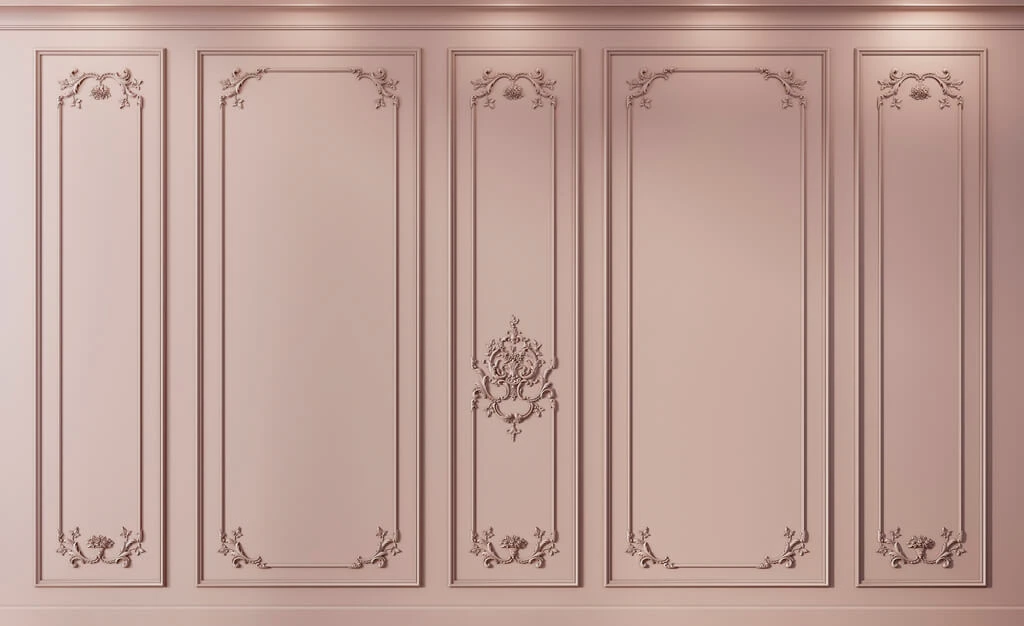
- Corner Decorative Elements
- Decorative Inserts Along the Length of the Molding
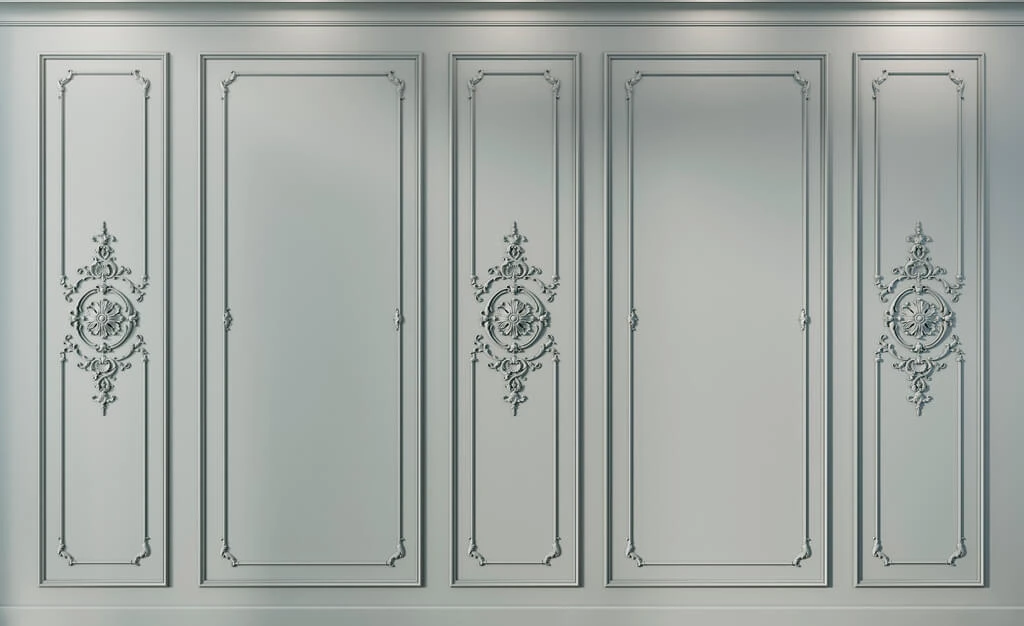
- Central decorative overlays
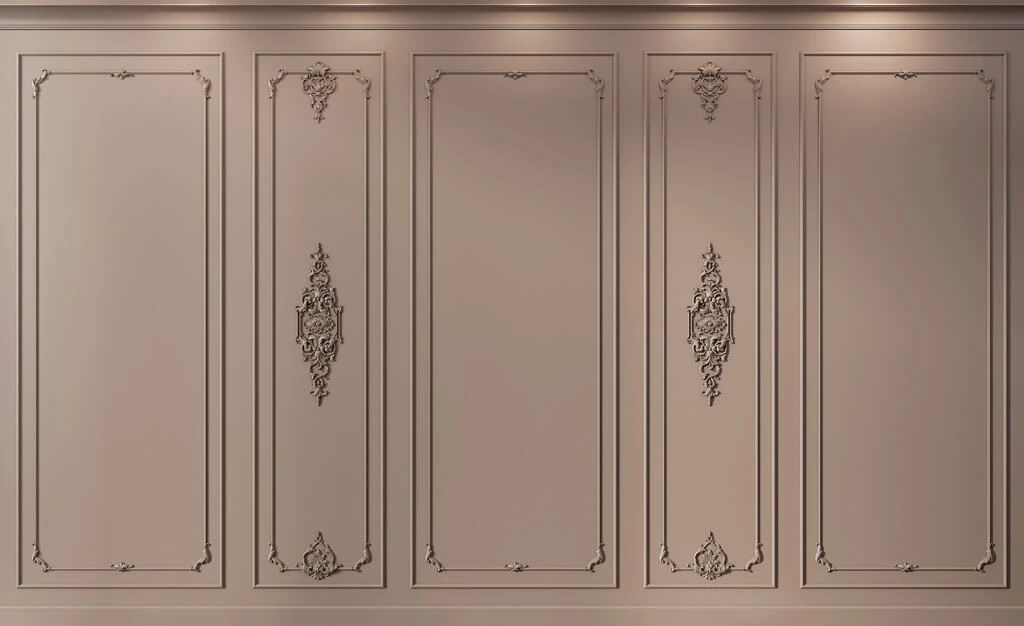
- Paired Elements
- Stucco Accents for Lighting Zones
- Corner Elements for Moldings: A Detailed Look at the Main Thing
- Wall Behind Sofa in Living Room
- Mirror in the Hallway or Bedroom
- Bed headboard in the bedroom
- Hall and Foyer
- Office and Library
- Commercial interior
- Central Stucco Decor: How Not to Leave a Frame Empty
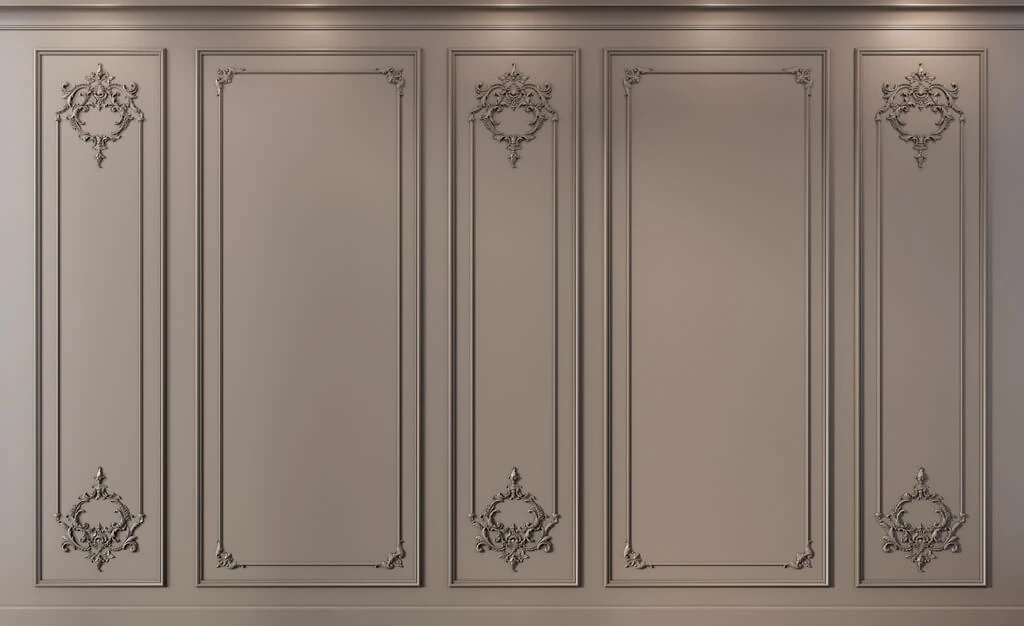
- Stucco decor in the center of the frame
- Decorative stucco at the top of the frame
- Paired elements on the sides of the frame
- Small accent near the sconce
- Decorative stucco inside the frame: how not to overload the wall
- Scale rule for decorative stucco
- When a wall can be considered saturated
- Decor for moldings and ceiling stucco: how to connect the wall with the top of the room
- Ceiling cornice as an extension of the molding system
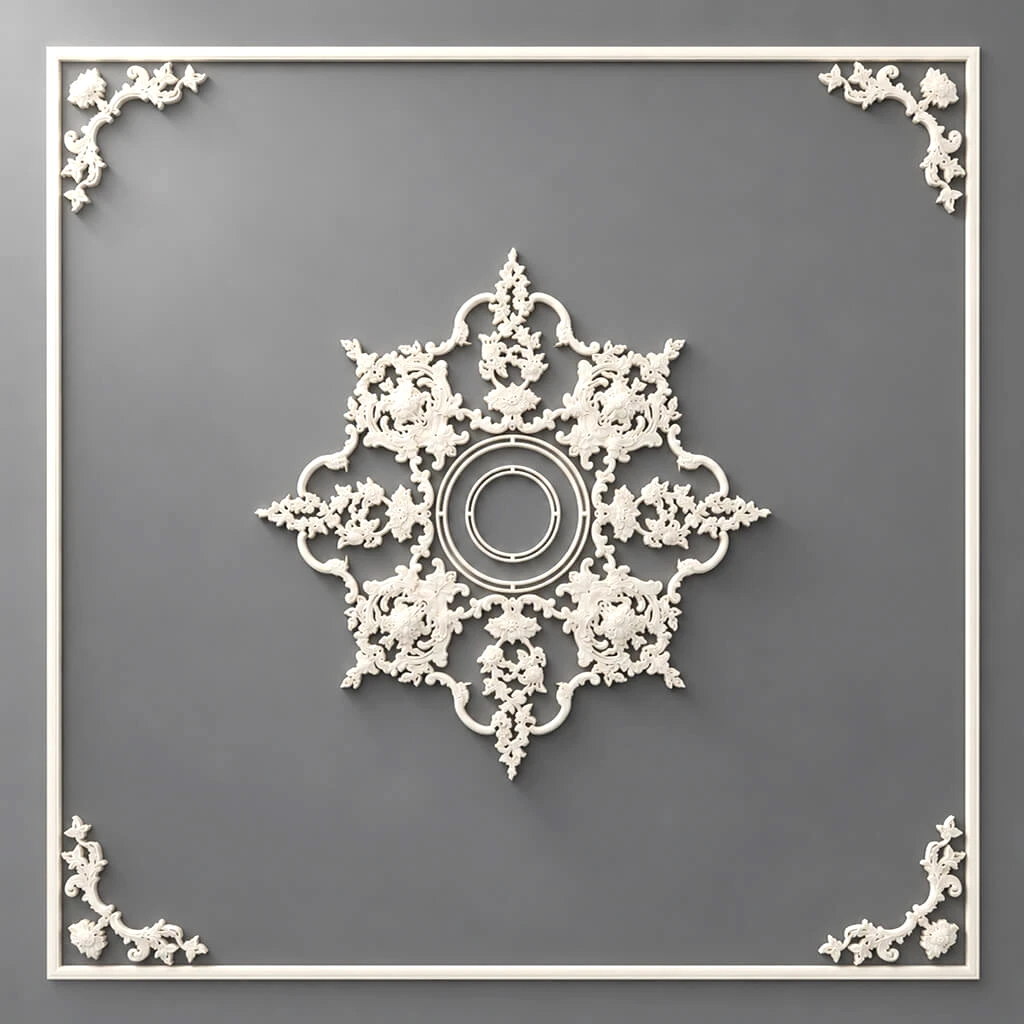
- Ceiling rosette as the final accent
- When a ceiling cornice is especially important
- Material: why polyurethane is the best solution for molding decor
- Polyurethane vs. gypsum
- Polyurethane vs. Polystyrene
- Polyurethane vs. Wood
- Practical advantages of polyurethane for installing decor
- How to choose decor for moldings: a practical algorithm
- Step one: determine the molding style
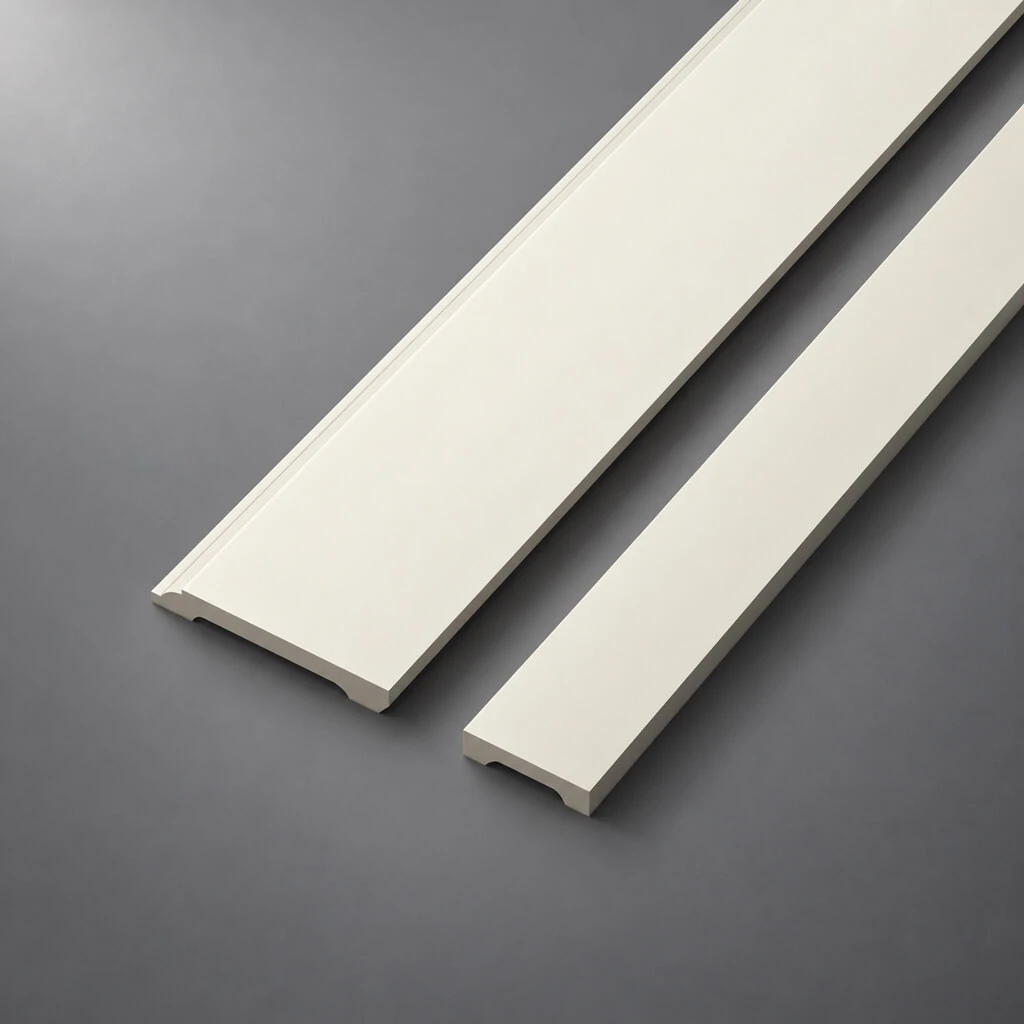
- Step two: measure the molding width
- Step three: measure the frame
- Step four: choose the hierarchy
- Step five: check the scale
- Ready-made scenarios: how to assemble a complete composition
- Scenario 1. A simple frame became more expensive
- Scenario 2. Mirror in a decorative frame
- Scenario 3. Wall behind the sofa: from neat to luxurious
- Scenario 4. Study or hall: status through decor
- Table: what decor to add to moldings
- What to buy together: a complete set for a finished frame
- About the company
- Frequently Asked Questions
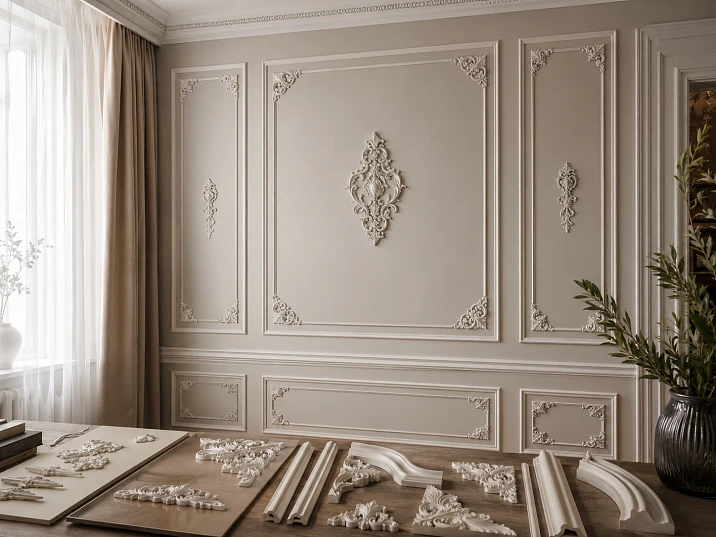
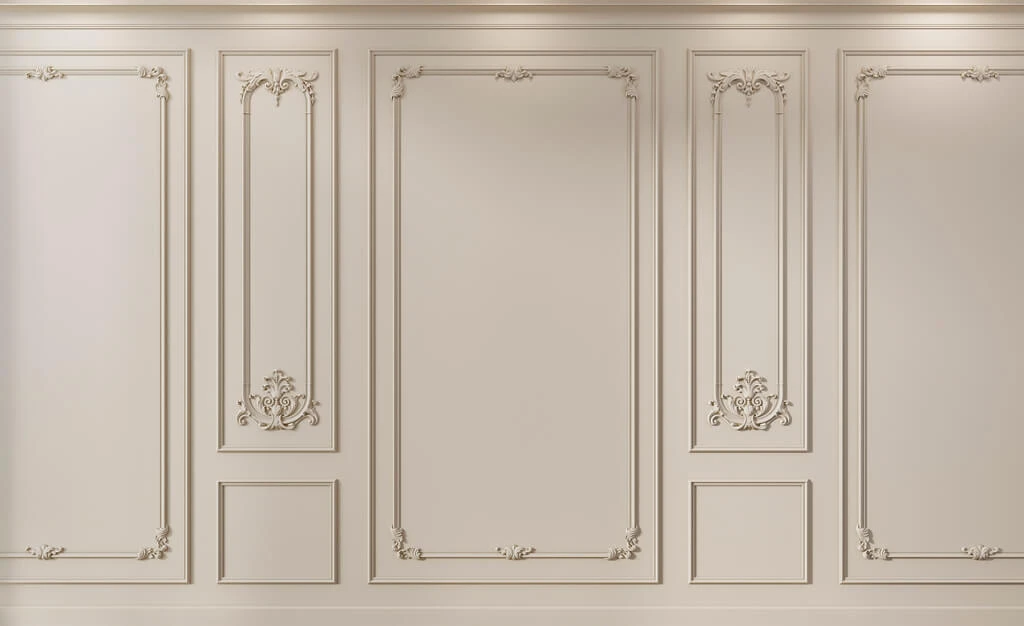
Imagine a painting without a frame. It exists, it is painted, it is beautiful — but something is off. A feeling of incompleteness, an open edge, an unresolved question. That is exactly what a molding frame looks like without decor when it is large, accent, on the main wall of the room — and empty inside.
Moldings made of polyurethane do a magnificent job: they create the rhythm of the wall, form architectural planes, set the scale. But a frame is a container. And the question is always what is inside this container. What lives in it. What it is filled with. Is there something that gives the eye a point of support — or does it slide over the empty rectangle and move on.
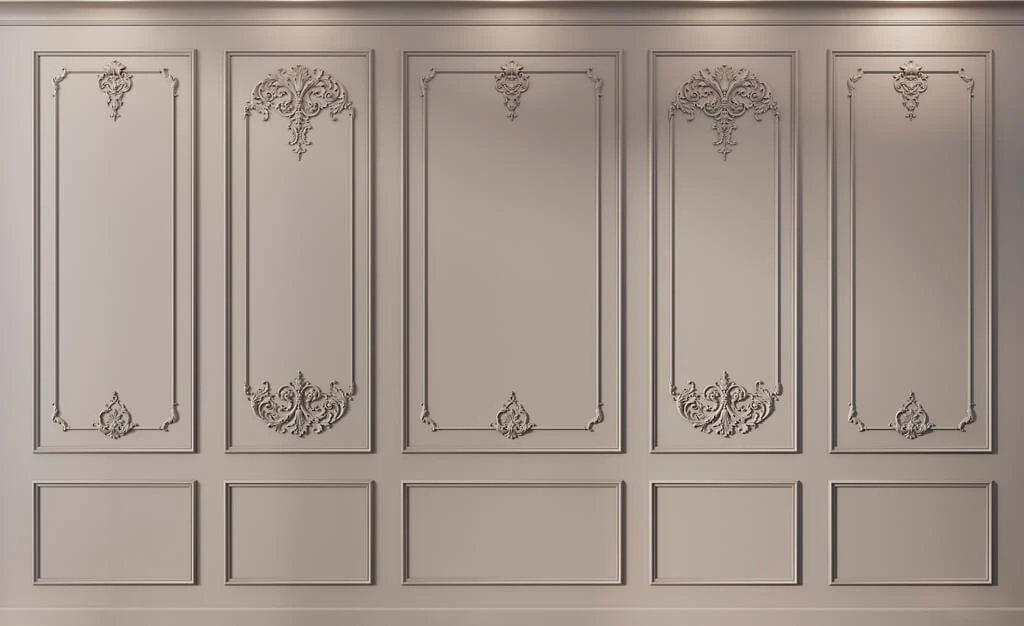
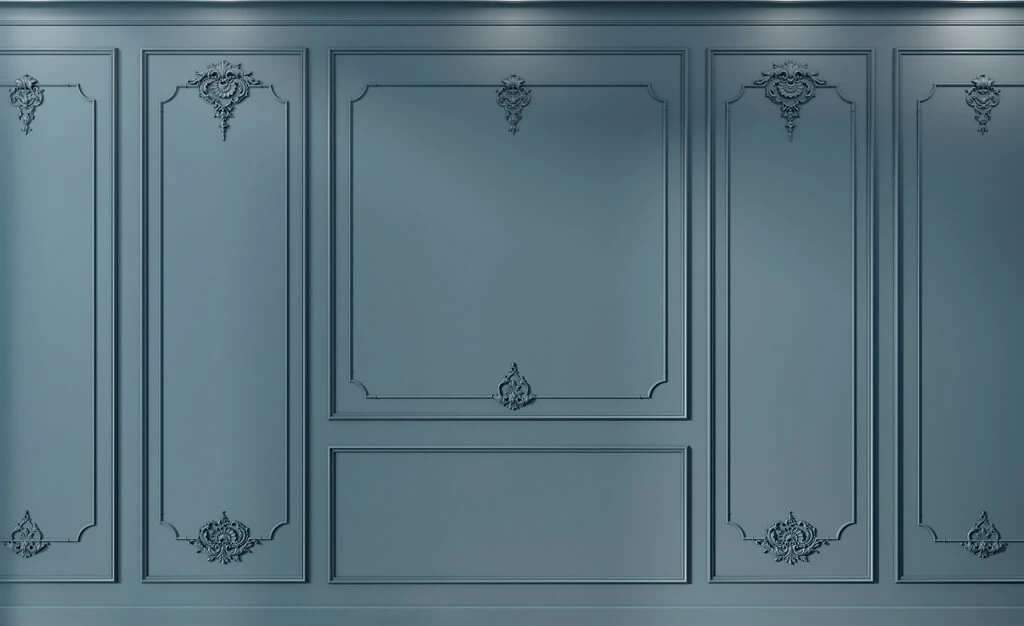
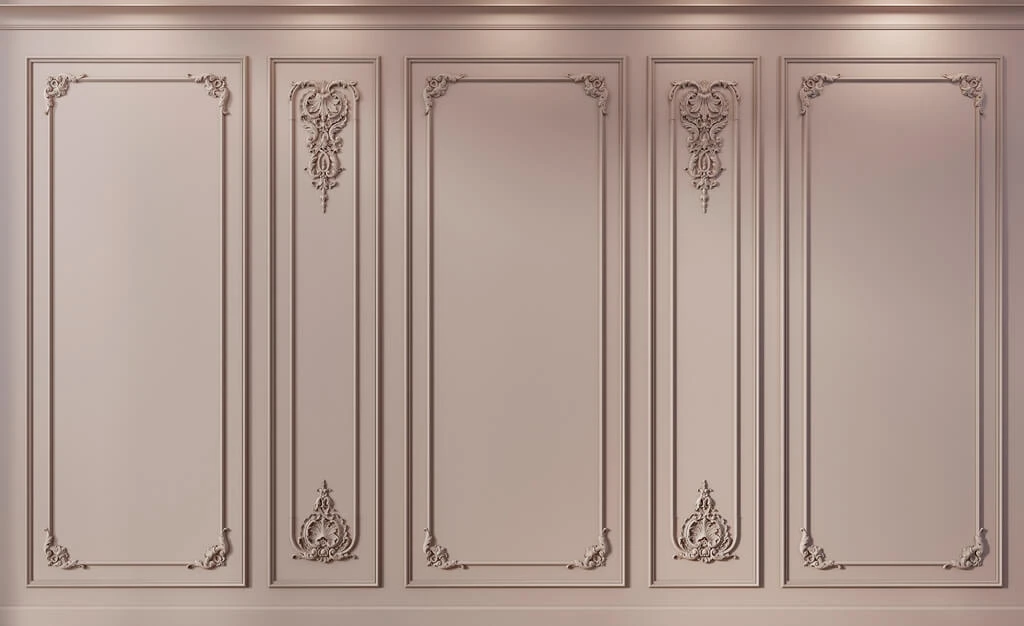
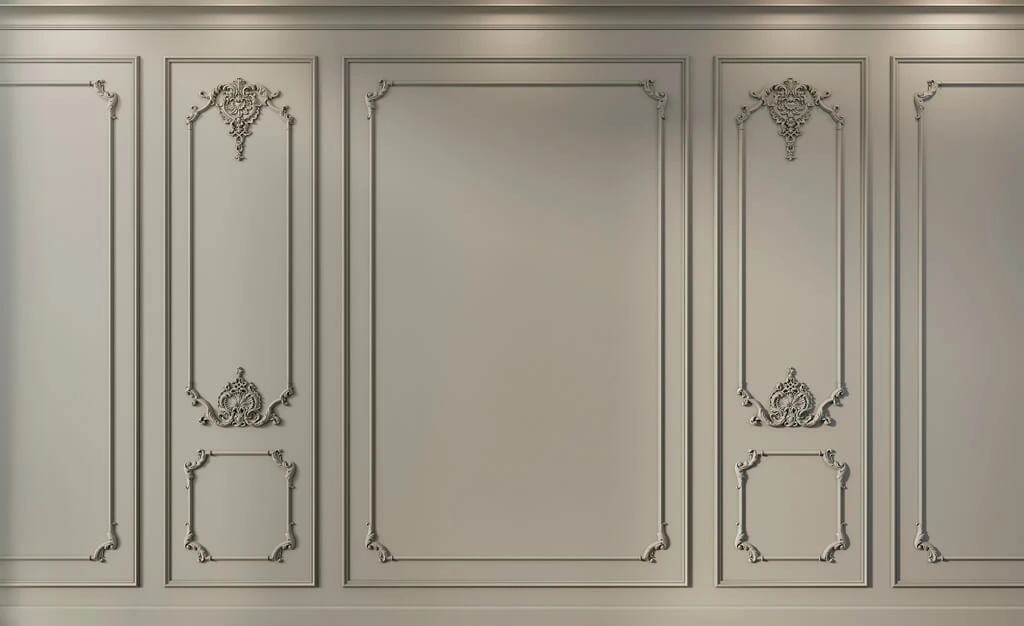
This is where Decor for Molding: corner elements, decorative inserts, stucco overlays, central accents. Everything that turns a neat frame into a finished, expensive, memorable composition.
This article is about how to choose the right decor for moldings, how to avoid overloading or under-saturating a wall, and how to assemble a finished frame that looks like it was made by an experienced decorator. And how to Buy molding and all the accompanying decor to achieve a cohesive composition, rather than a set of random elements.
Why one frame is sometimes not enough: the anatomy of emptiness
A simple molding frame is a rectangle made of profile. It is honest. It is neat. And in some cases, it should be exactly that: a few light frames on the wall behind the sofa is a pure neoclassical technique that works on its own.
But there are situations when this is not enough. When the frame looks at you and asks for completion. When?
When the frame is large. A wall 3.5 meters wide, one or two large frames — and inside each, about a square meter of empty space. This emptiness works against you. The eye enters the frame and gets lost.
When the frame is in an accent zone. The wall behind the bed, the wall behind the sofa, the wall in the hallway opposite the entrance — these are zones where people look intentionally. Here, the frame is a stage. And something should happen on the stage.
When the frame is the only one. A single frame in the middle of a large wall sounds like an unfinished sentence. It needs either a partner or an internal accent.
When the interior is classic or neoclassical. In such styles, a frame without decor is perceived as an unfinished project. Classics require completion.
When there is a mirror or console. A mirror in a simple molding frame is beautiful. A mirror in a frame with corner decor and a stucco accent on top is already an object with character.
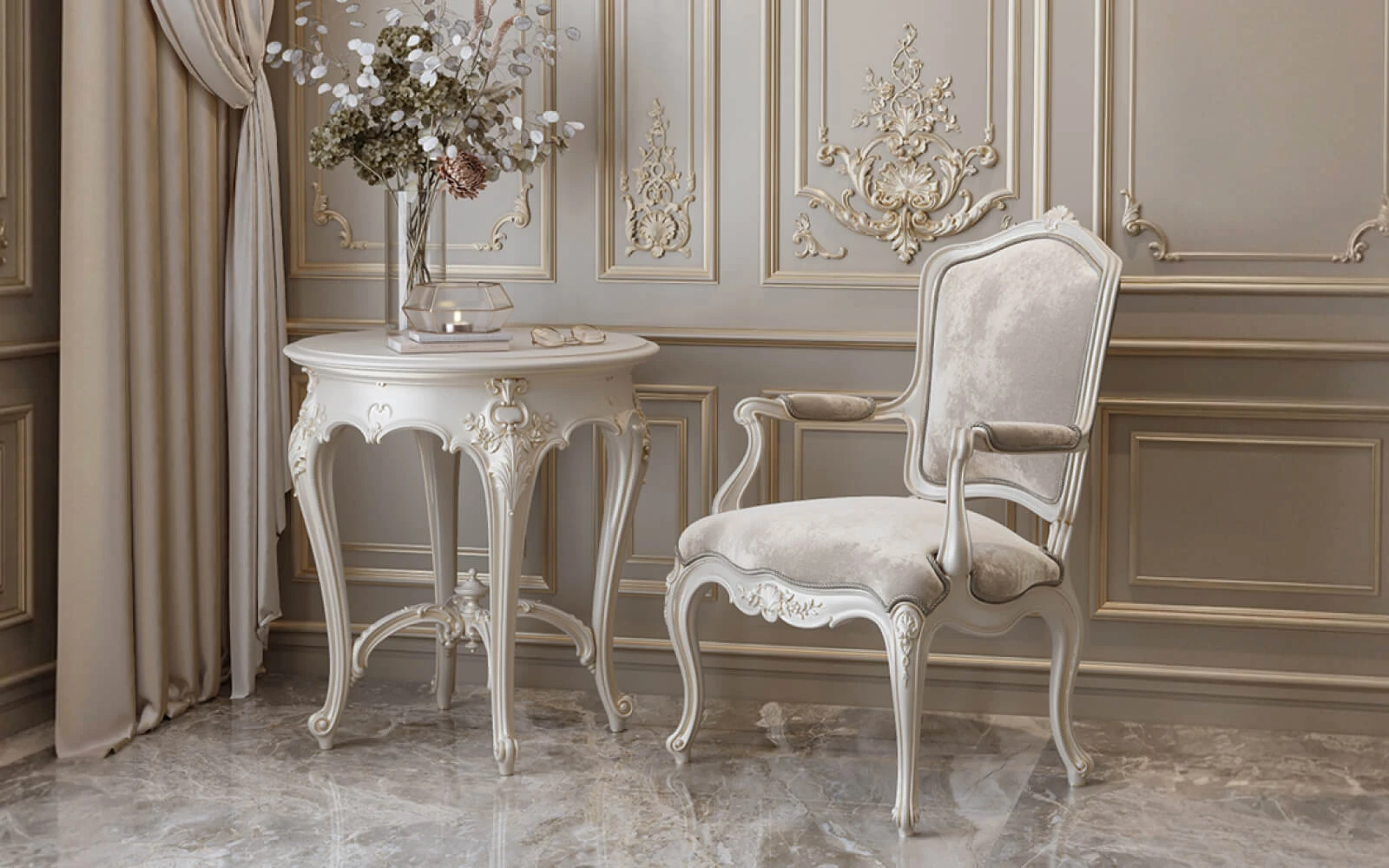
Molding creates a line, but Decor for Molding makes the composition complete: corners assemble the frame, Decorative stucco fills the center, Relief Decoration places an accent, and Ceiling molding connects the wall to the top of the room.

What is decor for moldings: a complete breakdown of the category
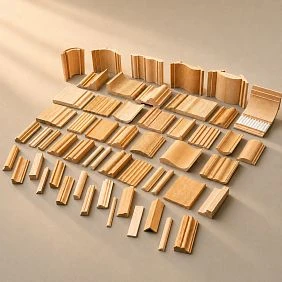
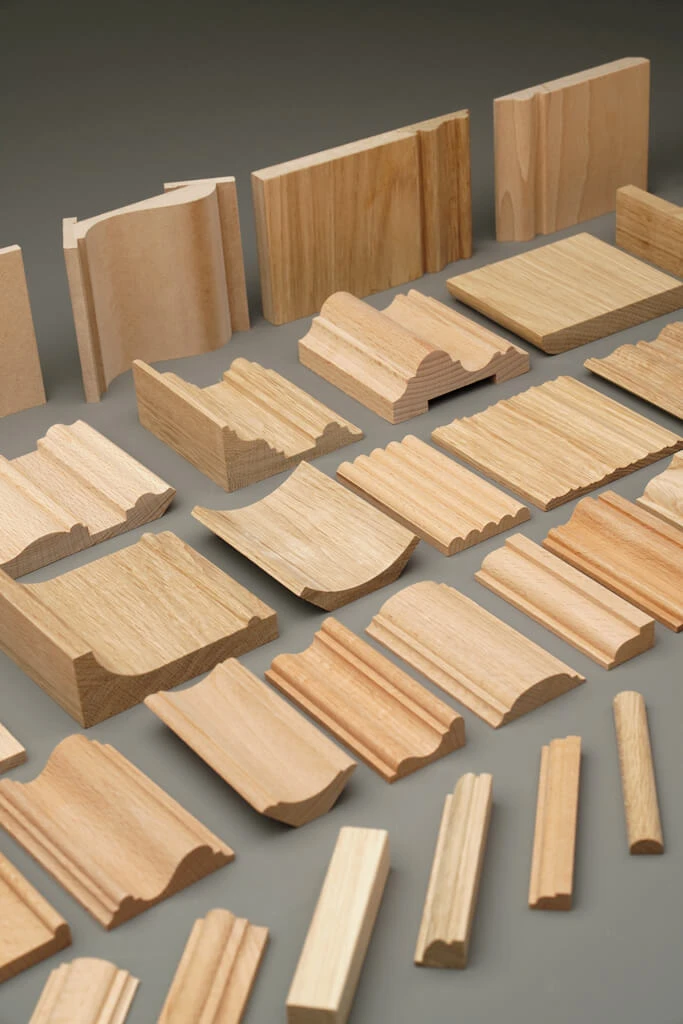
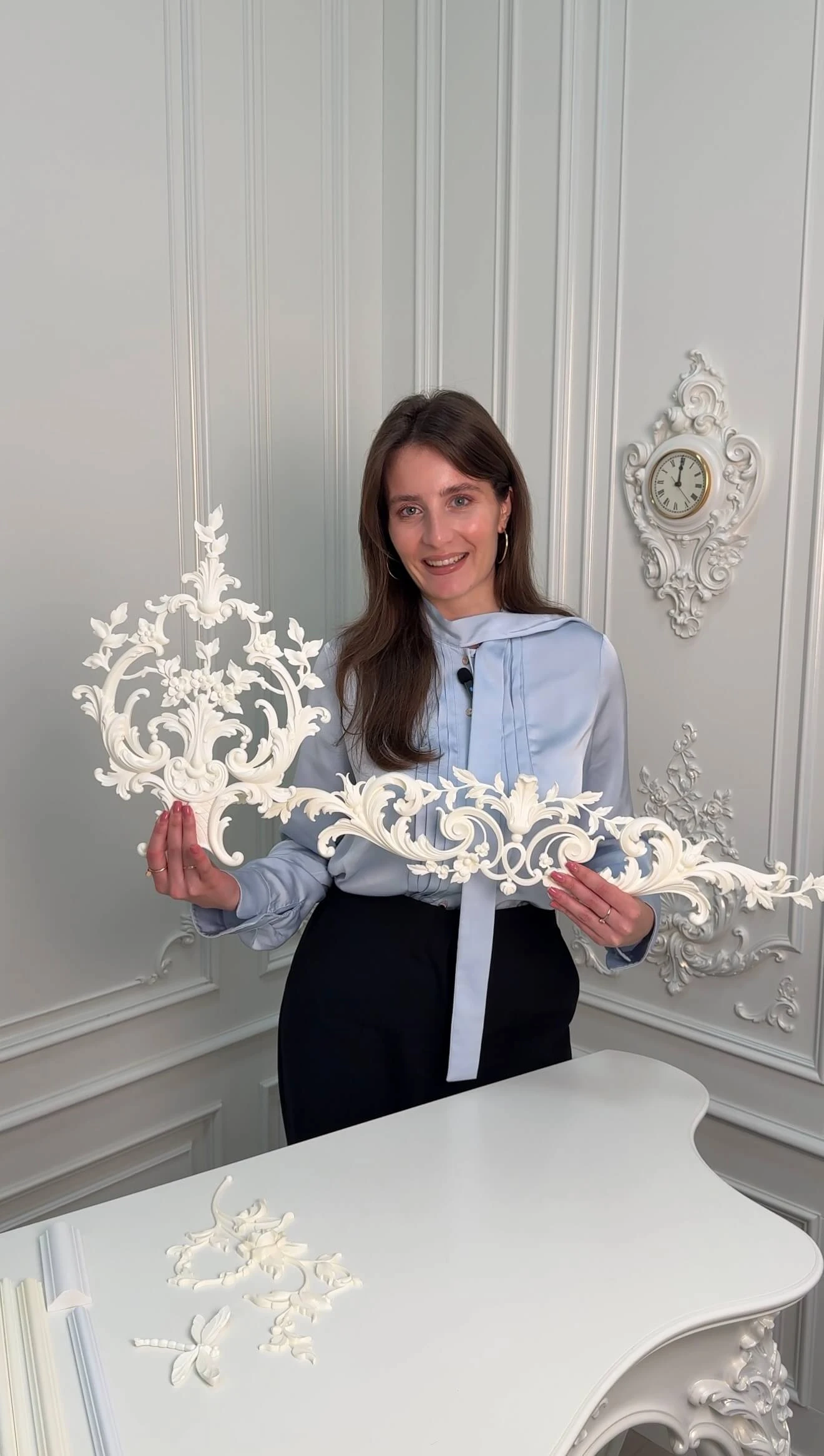
Before choosing, you need to understand what generally falls under the category of "decor for moldings." It is not one type of product — it is a whole ecosystem of elements, each solving its own task.
Our factory also produces:
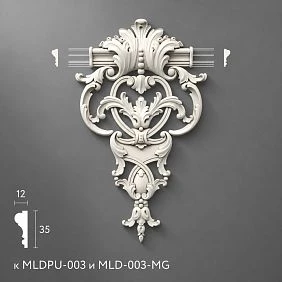
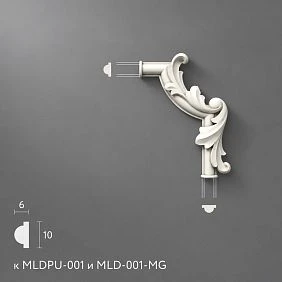
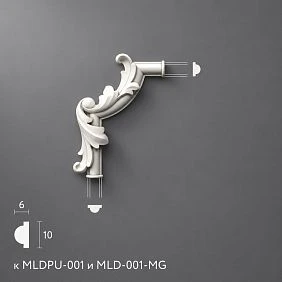
Corner decorative elements
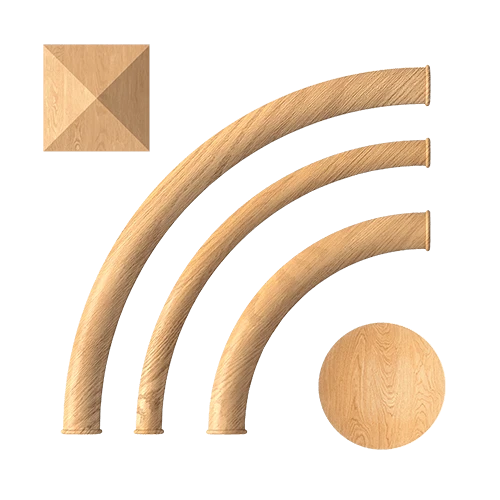
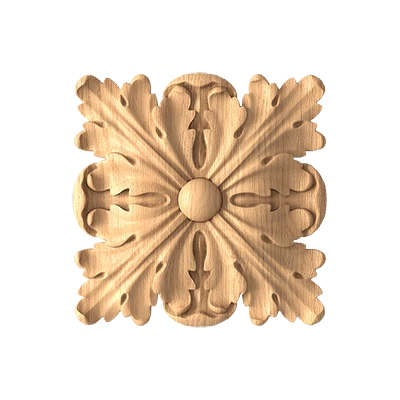
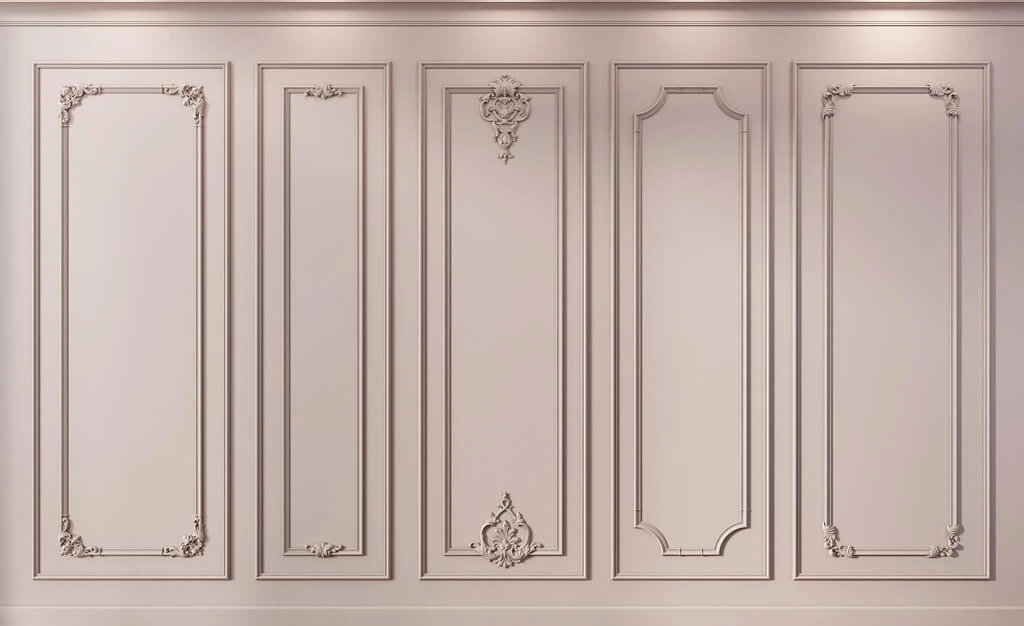
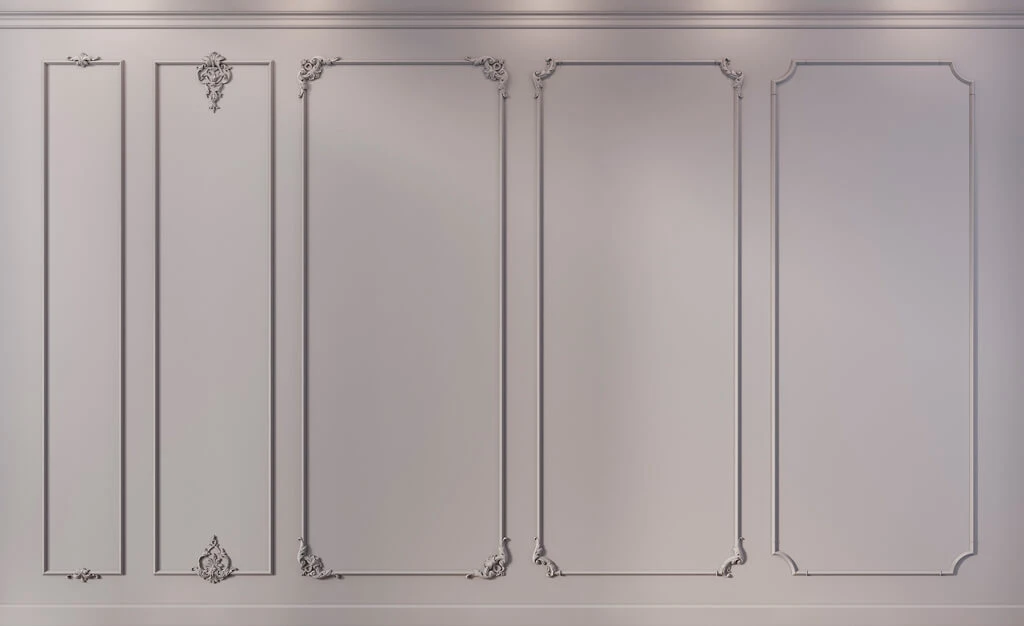
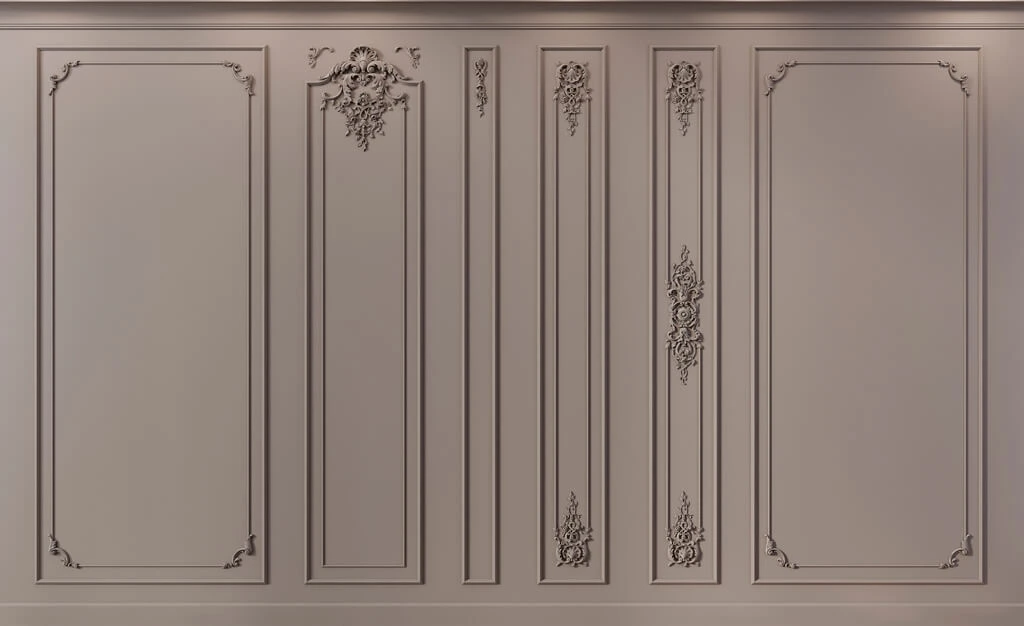
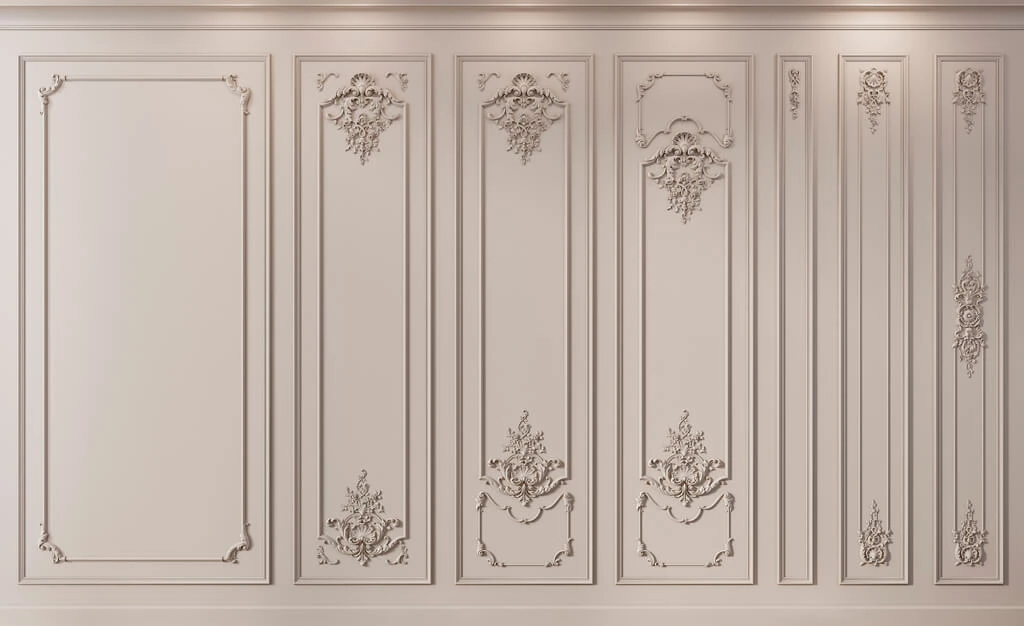
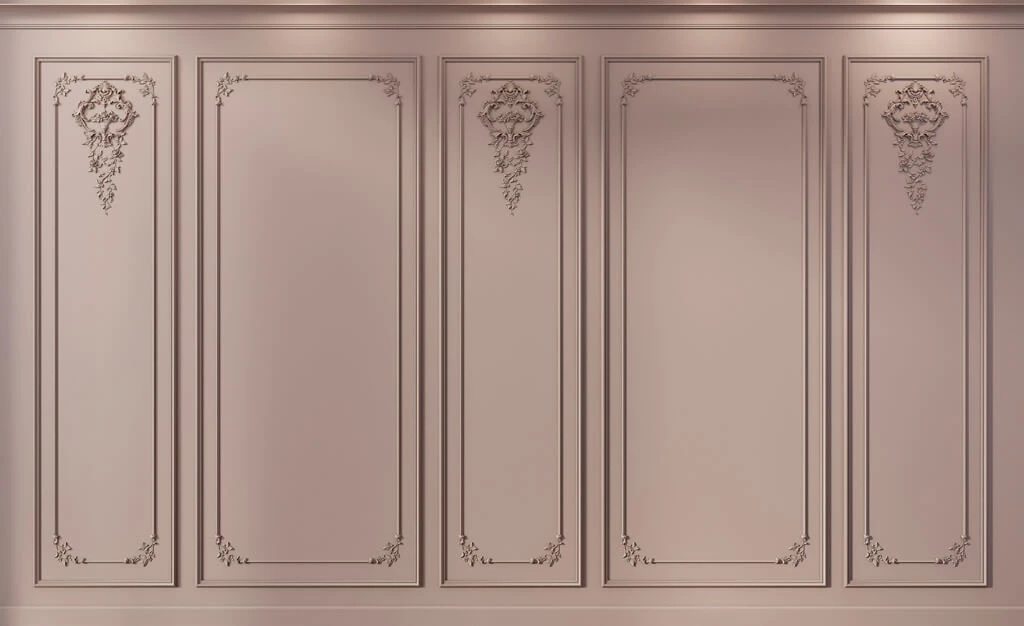
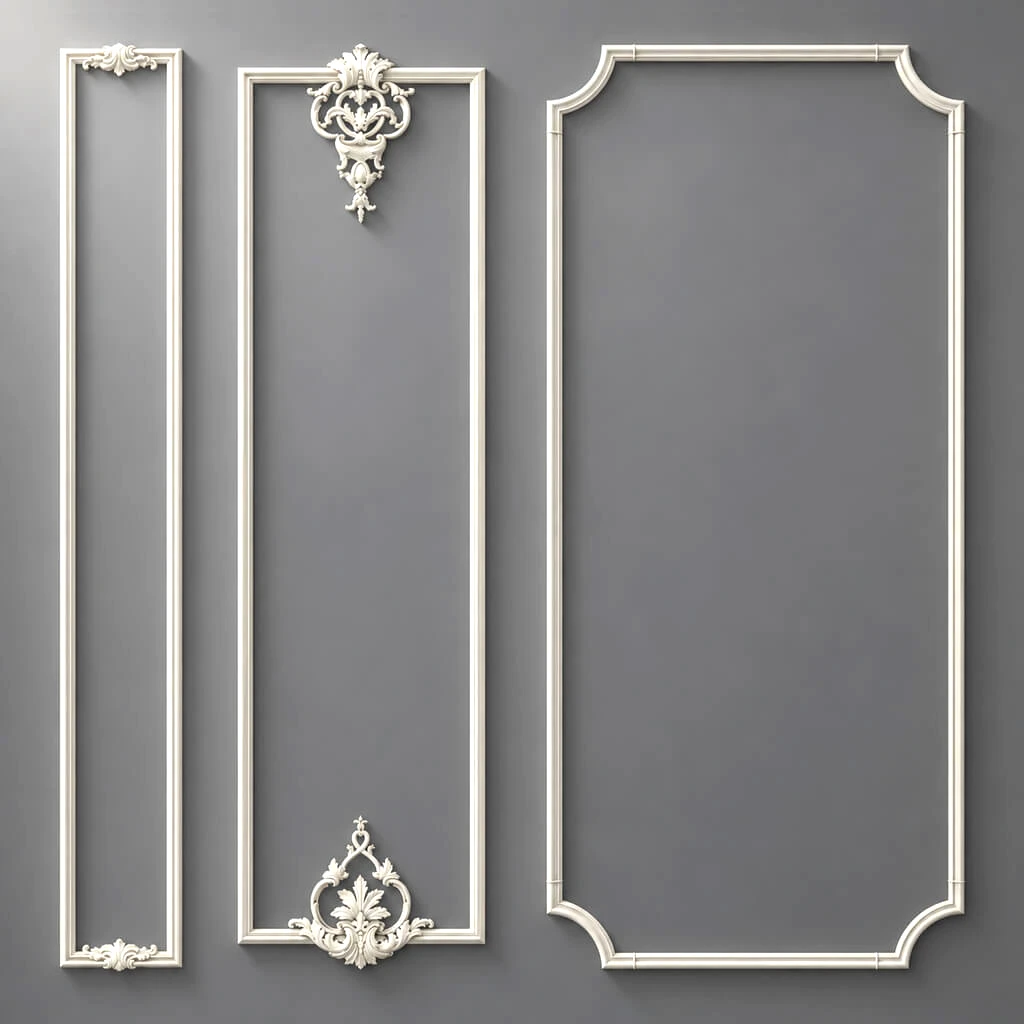
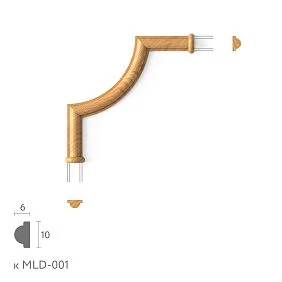
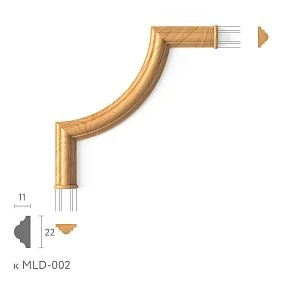
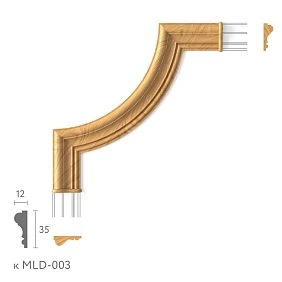
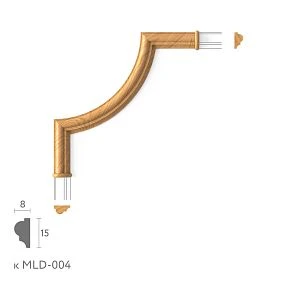
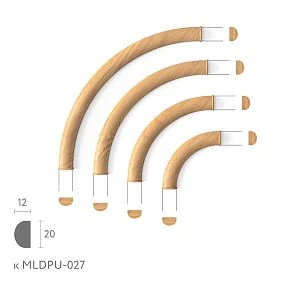
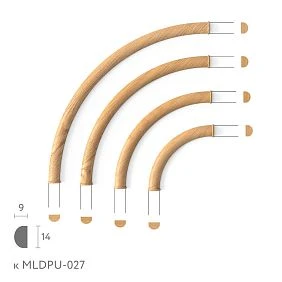
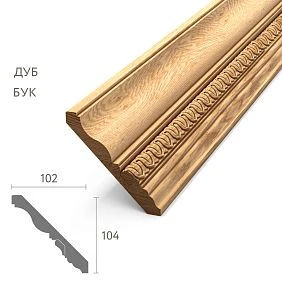
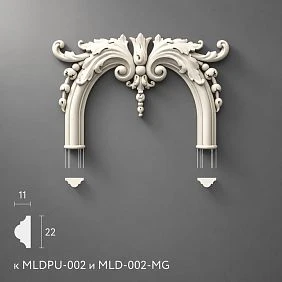
Corner elements are overlays that are installed in the corners of a molding frame instead of cutting at 45°. They serve a dual function: technical (hiding the joint) and decorative (enriching the corner with relief, rosette, leaf, or curl).
Technically, a corner element simplifies installation: instead of a perfect 45° cut, it is enough to cut the molding straight, flush with the corner block. No angle errors, no gaps. Decoratively, it is immediately a different level. The frame ceases to be just a rectangle and acquires an architectural character.
Corner elements come in several formats:
-
Square relief blocks — a classic option, rosette or geometric ornament.
-
Corner overlays with scroll — a Baroque and Neoclassical motif.
-
Corner inserts with acanthus leaves — classic, looks rich at any scale.
-
Neutral corner blocks — for minimalist Neoclassicism, without complex relief, only volume.
Important: corner elements must match the width of the molding. If the molding is 40 mm, the corner block must be designed for this width. A mismatch in width — and the joint will be visible even under paint.
molding decorative elements in the corner version — this is the first thing to consider if the frame looks unfinished.
Get Consultation
Decorative inserts along the length of the molding
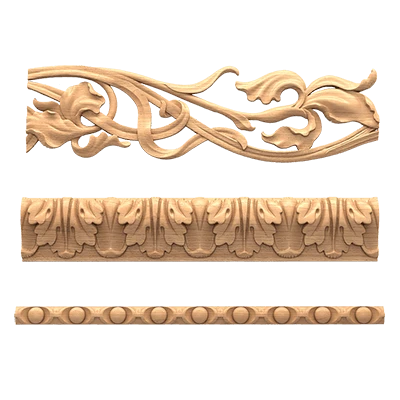
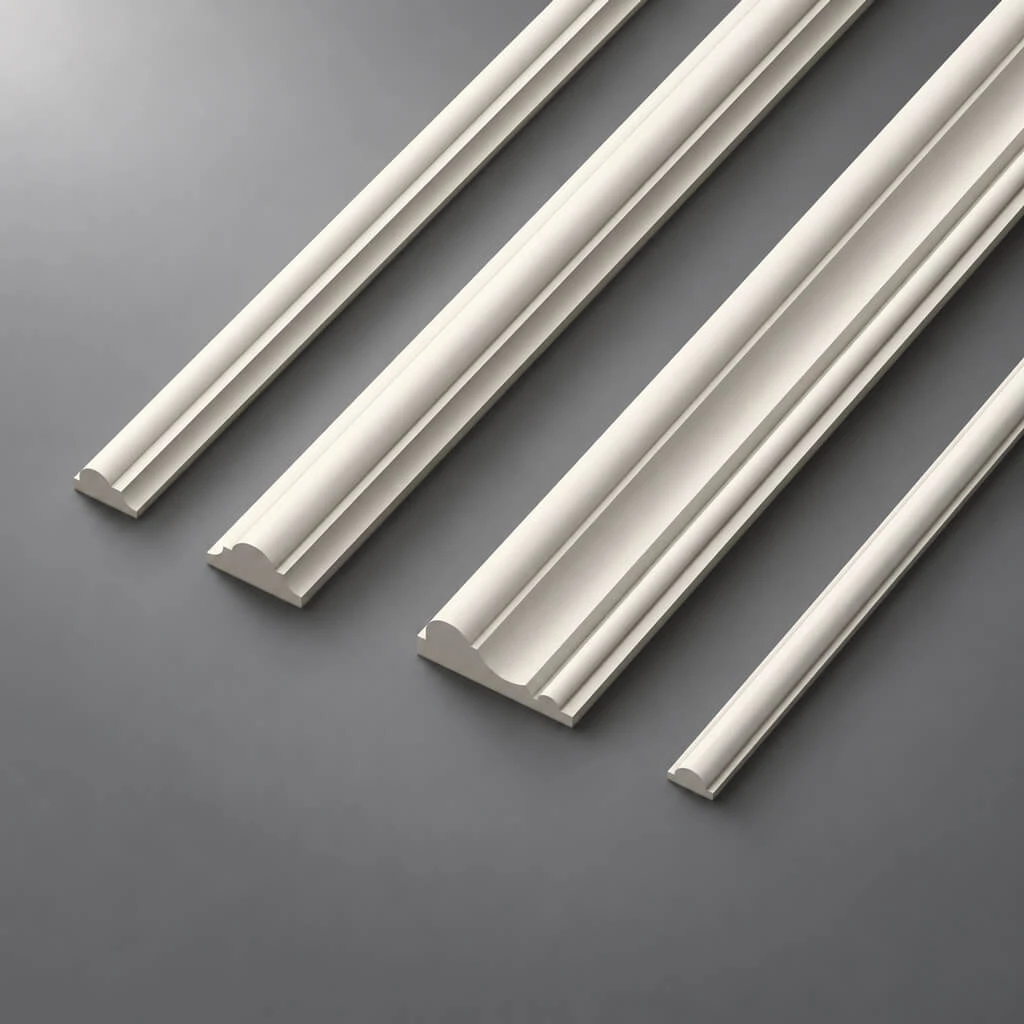
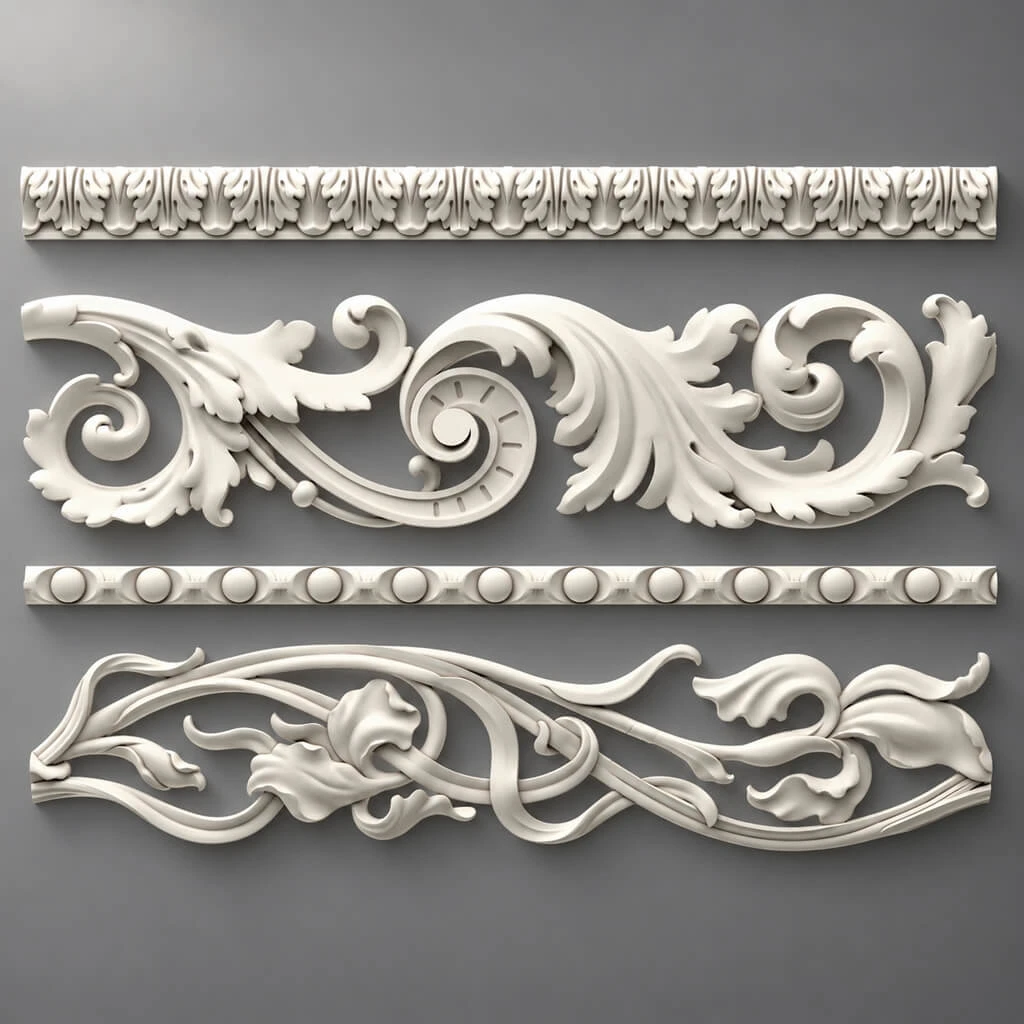
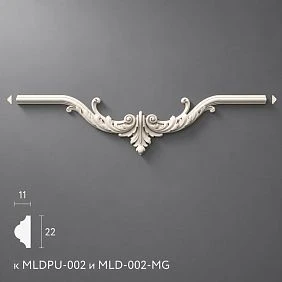
Inserts are short decorative elements that are mounted directly on the profile or next to it along the length. They enhance the horizontal or vertical sides of the frame, add rhythm, break up the monotony of a long straight profile.
Inserts are used when the molding itself is quite simple and needs additional volume — not by replacing the profile, but by enriching it.
Central decorative overlays
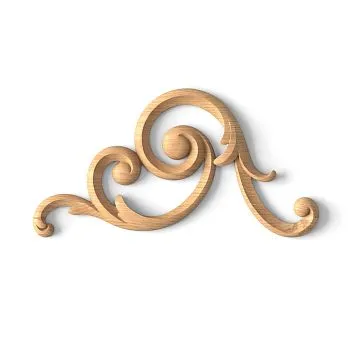
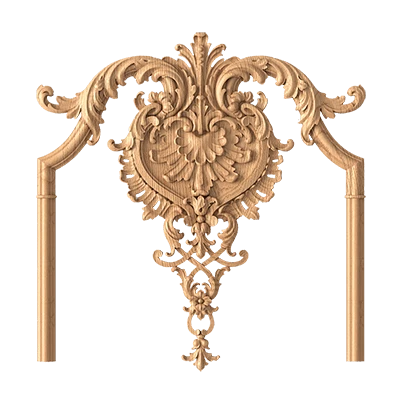
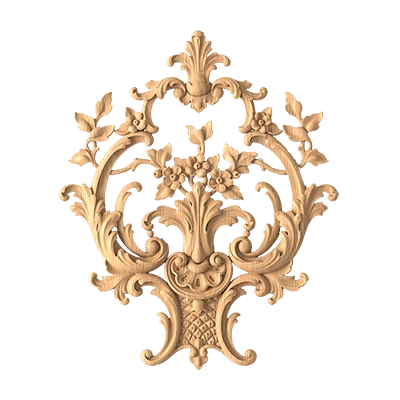
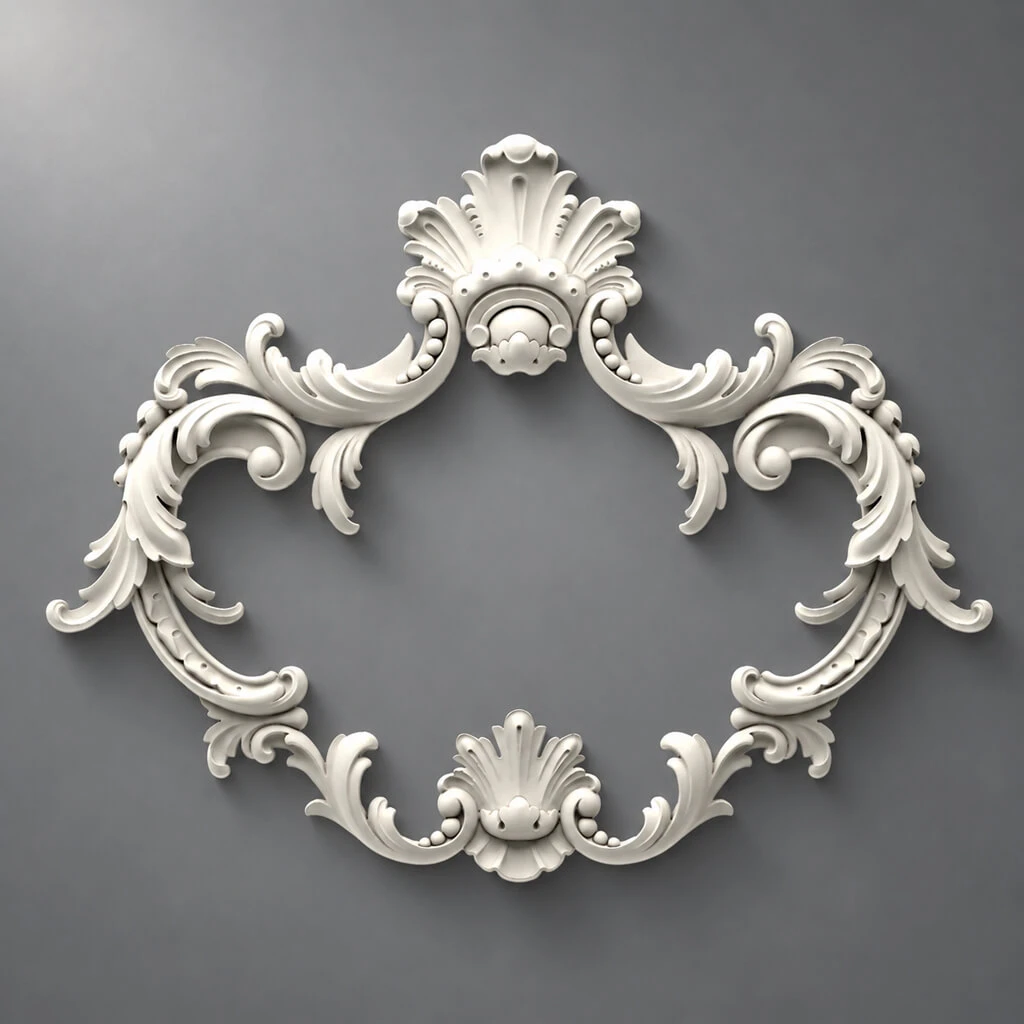
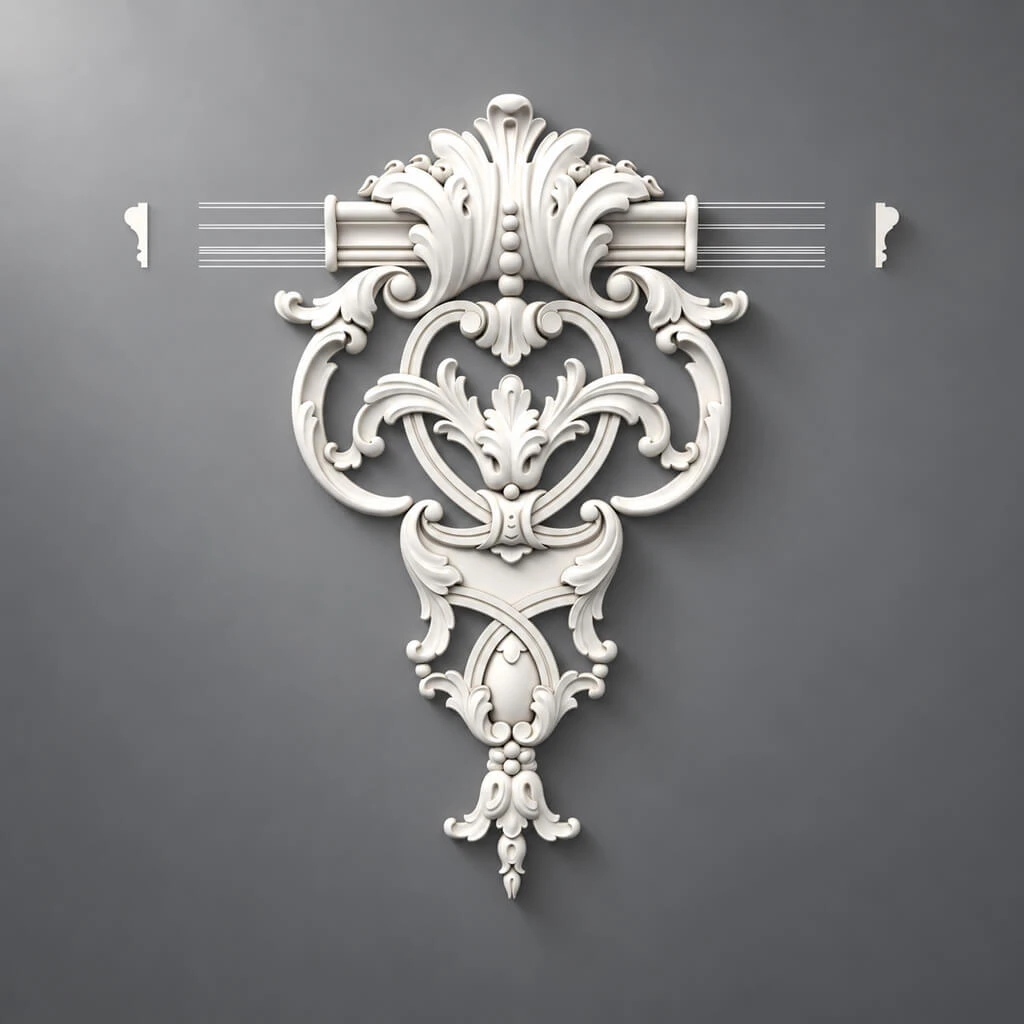
These are elements that are placed inside the frame — in the center, at the top, at the bottom, or at any point dictated by the composition. The central overlay is the main visual accent of the frame. It answers the question "what is happening here?"
By shape, central overlays are:
-
medallions — round or oval;
-
cartouches — elongated horizontal elements with relief;
-
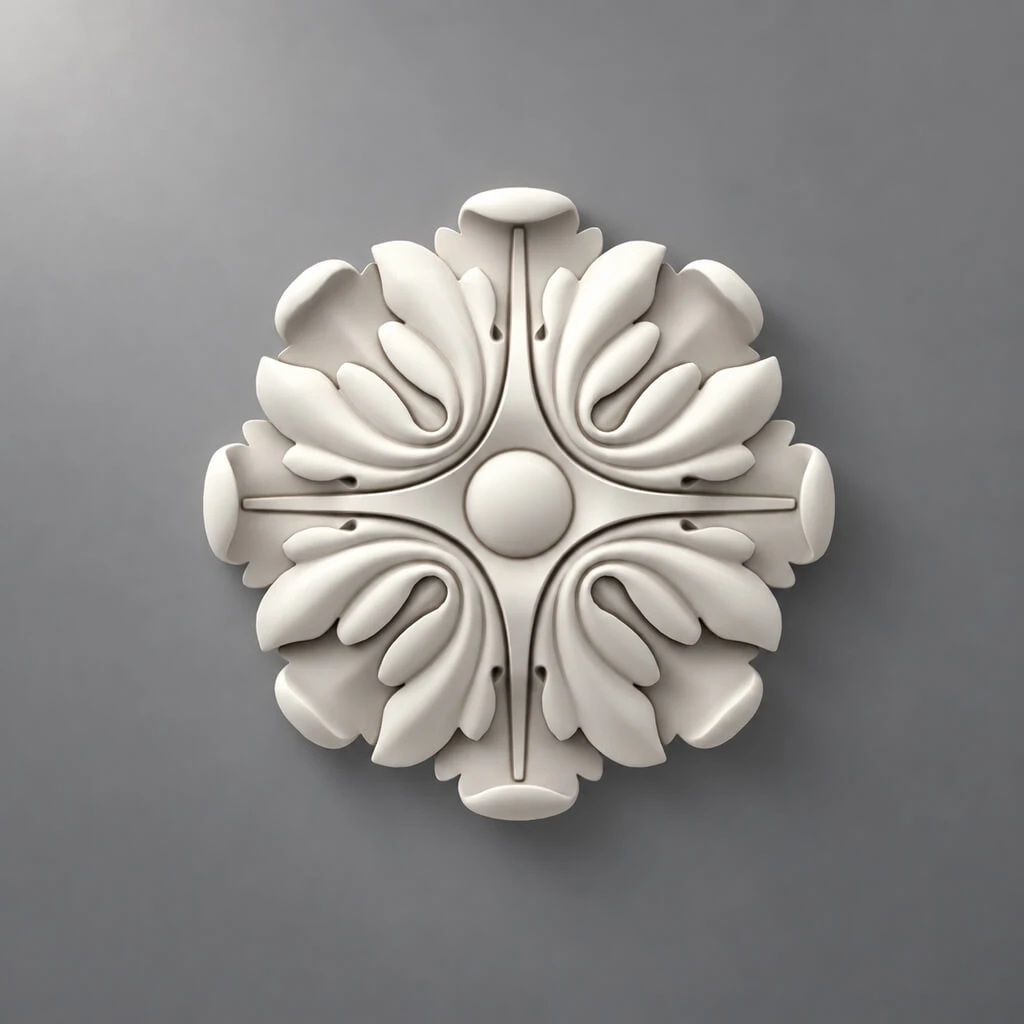
rosettes — symmetrical ornaments with petals;
-
vertical friezes — for tall frames;
-
horizontal ornaments — for wide ones.
Paired elements
Paired overlays — two identical (or mirrored) decorative elements placed symmetrically inside a frame or on its sides. They create a sense of symmetry and formal balance — especially important for classical and neoclassical interiors.
Stucco accents for light zones
Small Relief Decoration near sconces, by a lamp, above or below the light source — this is a separate type of decor use. It does not occupy the center of the frame, but works as a "greeting" to the light: frames, emphasizes, gives the light point an architectural context.
Corner elements for moldings: details on the main thing
Let's return to corners — because this is perhaps the most important decision when assembling a molding frame. It is at the corners that the level of work is determined: professional 45° cutting looks neat, but a decorative corner block looks prestigious.
Where to use corner elements for molding frames?
Wall behind the sofa in the living room
This is a classic application. Two or three frames made of of polyurethane moldings with decorative corner blocks create the feel of paneling — without the investment in real wooden panels. At the same time, the corner elements additionally hold the joints, preventing them from separating during seasonal humidity changes.
Mirror in the hallway or bedroom
A mirror framed with molding and corner elements is a completely different object. Not just a mirror on the wall, but a mirror in a decorative frame that looks like an antique object with a history. And this history is created in just a few hours of installation.
For a mirror, it is especially important to choose the right scale of the corner element: if the mirror is small (up to 60 × 80 centimeters), the corner block should be delicate, without large relief. If the mirror is large (from 80 × 100 centimeters), the corner can be prominent and rich.
Wall behind bed finished with planks
A molding panel at the headboard with corner elements is an accent that 'holds' the bedroom. It sets the axis, creates a focus, and makes the wall meaningful. buy polyurethane moldings and corner decor for the bedroom is one of the most rewarding investments in interior design: the effect is obvious, the cost is moderate.
Hall and Entrance
In the hallway, it's often impossible to place furniture that "holds" the wall. Molding frames with corner decor fulfill this function — they make a neutral wall expressive without furniture. This is especially important for small hallways where every centimeter counts.
Office and library
In a study, panel frames with corner elements are a classic of the genre. They create an atmosphere of seriousness and solidity that is hard to achieve by other means. Especially if the frames are combined with ceiling moldings — a cornice and a ceiling rosette for the chandelier.
Commercial interior
Reception, conference hall, restaurant, boutique — in all these spaces, molding frames with corner decor create an atmosphere of prestige. Here Decor for Molding — it is a branding tool through interior design.
Central stucco decor: how not to leave the frame empty
So, there is a frame. The corners are decorated. What next? If the frame is small — it is already good. If the frame is medium or large — something should be placed inside.
Central stucco decor is not necessarily a large medallion in the middle of the wall. It can be a light ornament in the upper third of the frame, a small rosette at the headboard, a horizontal frieze along the center line — any accent that gives the eye a focal point.
Stucco decor in the center of the frame
The most obvious solution is an element exactly in the center of the frame, equally distant from all sides of the molding. This works for frames with correct proportions: width and height are approximately equal, or height is slightly greater.
For such placement, you need an element that visually "weighs" the same as the frame itself. Too small a decor will get lost. Too large — it will compete with the molding. The general rule: the width of the central decor should not exceed 40–50% of the frame width.
Decorative stucco molding at the top of the frame
If the lower part of the frame will be hidden by furniture (sofa, console, headboard), it's better to place the accent higher. Decor in the upper third of the frame will be visible even with furniture present.
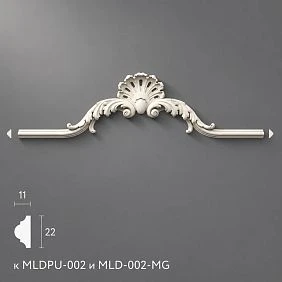
Decorative stucco at the top of the frame — this is typically a horizontal ornament: a cartouche, frieze, semi-figurative overlay. It works as the frame's "cap," finishing it from above.
Paired elements on the sides of the frame
If the frame is wide and its height is significantly less than its width, the central element may look lonely. In this case, it's better to use two symmetrical elements on the sides — or one in the center plus two small accents near the lower corners inside the frame.
Paired Relief Decoration — this is one of the most expressive solutions. Two identical elements on the sides of a mirror, two medallions on the sides of a sconce, two ornamental friezes in the lower sections of a large frame — all of this creates a sense of a deliberate, well-thought-out composition.
Small accent near the sconce
If the sconce is inside the frame — a small decorative element above or below the light fixture works as an architectural "passport" for the light. It says: this light fixture is not here by chance, it's part of the system.
Buy Molded Decoration for the sconce area — means investing a minimum and getting a maximum. A small element next to the light always looks significantly more expensive than it costs.
Decorative stucco inside a frame: how not to overload the wall
Here lies the main trap. Some people, having discovered the possibility of adding decor inside a frame, start adding everything in sight. Corner elements, a central medallion, paired overlays, an upper frieze, a lower ornament — and as a result, the wall screams instead of speaking.
Decor inside a molding frame must follow one principle: one main accent, the rest is support.
Scale rule for decorative stucco
Small frame (up to 600 × 900 mm). One light element — a small medallion or overlay. No corner inserts inside the frame, only outside at the profile corners.
Medium frame (600–1000 × 900–1500 mm). One central element or paired decor. Corner blocks outside enhance the effect.
Large frame (from 1000 × 1500 mm). Central composition — a medallion or cartouche — plus corner inserts inside the frame at the corners or in the middle of the sides.
Tall vertical frame. A vertical stucco element — frieze, elongated ornament, a pair of elements along the vertical axis.
Wide horizontal frame. A horizontal frieze or three elements in a row. decorative molding for a wide frame, you need to choose one with a horizontal orientation — a vertical element will look out of place.
Frame of the sconce. Decor above or below the light fixture, but not around it. The sconce is already the dominant element in this area.
When a wall can be considered saturated
A wall is saturated when the eye finds several anchor points and moves between them along a clear route. Molding sets the structure. Corners fix the perimeter. Central decor holds the center. Ceiling cornice lifts the gaze upward. This is a system — not chaos.
A wall is overloaded when the eye has nothing to 'grab onto' separately: everything merges into a complex, competing pattern. This happens when there are too many small elements without hierarchy.
A good rule: if you can't immediately answer the question 'what is the main thing here?' — then there is either too much decor or no hierarchy.
Decor for moldings and ceiling stucco: how to connect the wall with the top of the room
There is one mistake that is made even in well-thought-out interiors: the walls are richly decorated with molding frames and decor, while the ceiling is completely bare. A white rectangle above a complex, saturated wall. This is a disconnect. Like a well-dressed person without a hat in the cold — something is unfinished.
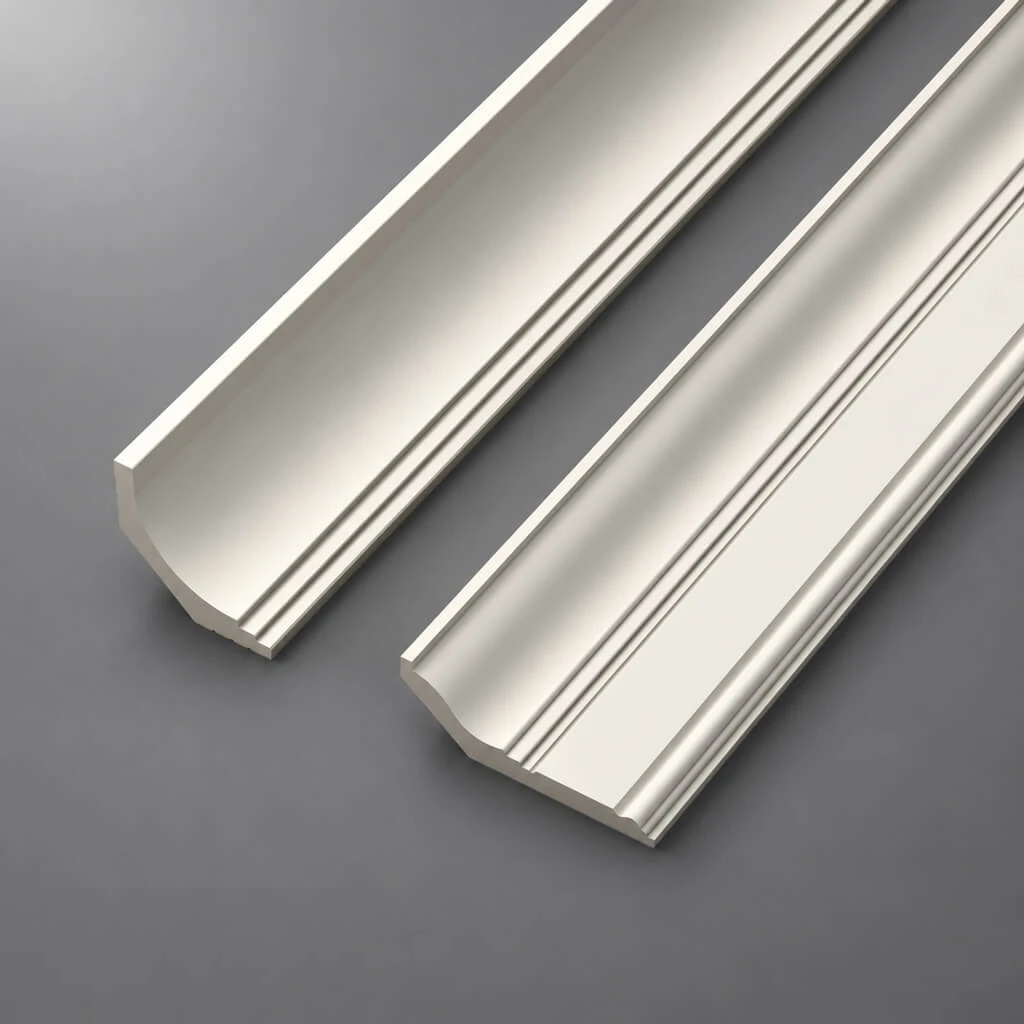
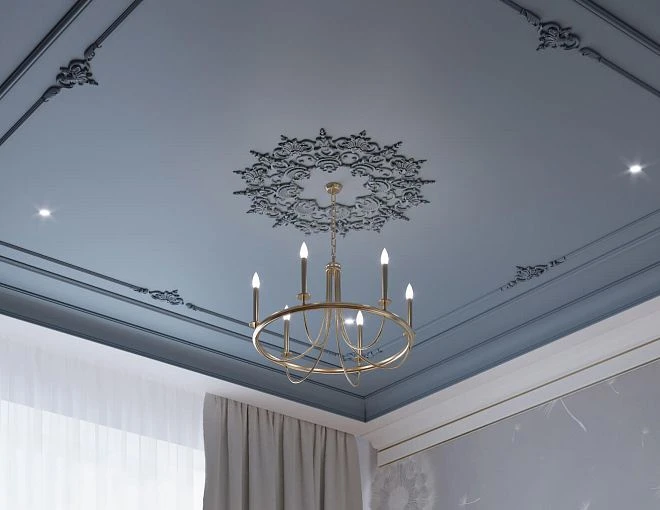
Ceiling molding — this is the connecting link between the walls and the ceiling. A cornice around the perimeter, a ceiling rosette in the center — and the space begins to 'sound' as a single whole.
Ceiling cornice as an extension of the molding system
If the walls have moldings with corner decor, the ceiling cornice should be from the same stylistic family. If the molding has acanthus leaves, the cornice should also have a classic design. If the molding is geometric and neutral, the cornice can be simple.
This unity of style is a principle that makes the interior cohesive. A mix of styles in decor always reads as accidental.
Ceiling rosette as the final accent
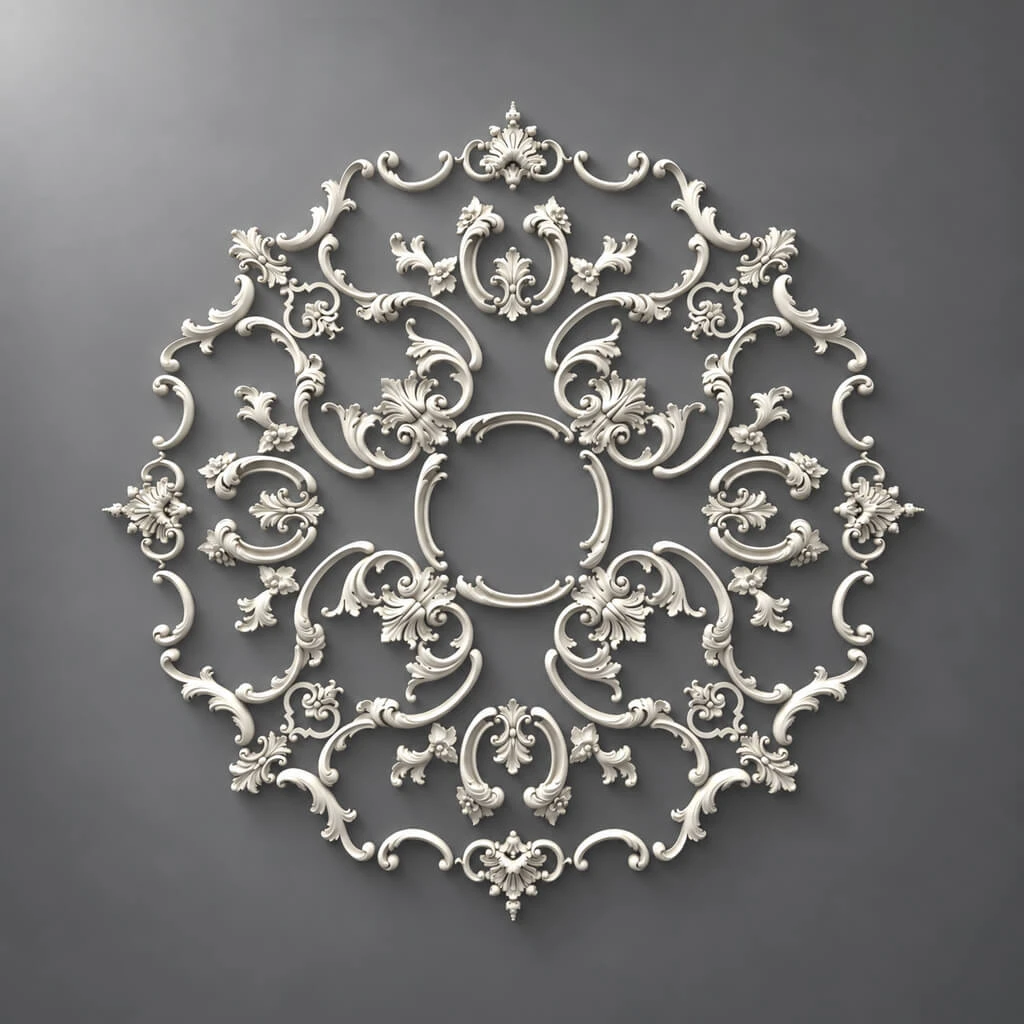
Buy ceiling molding — means also choosing a rosette. A ceiling rosette is a decorative frame for a chandelier. It does several things at once: hides the light fixture's mounting point, sets the decorative context for the chandelier, and forms the visual center of the ceiling.
The rosette should be proportionate to the chandelier: roughly equal in diameter or slightly larger. A rosette that is too small gets lost under the light fixture. One that is too large draws attention away from the chandelier to itself.
When a ceiling cornice is especially important
-
With a high ceiling (from 2.8 meters) — the cornice "lowers" it to a comfortable level without physically reducing it.
-
In rooms with rich wall moldings — the cornice completes the system.
-
In classic and neoclassical interiors — the cornice is mandatory.
-
In the bedroom — the cornice creates coziness and completeness.
-
In the hallway and formal areas — the cornice adds status.
Buy ceiling stucco molding It should be done simultaneously with wall moldings — that way you can ensure stylistic unity and paint everything at the same time, in one pass.
Material: why polyurethane is the best solution for molding decor
This question often arises for those who are first getting acquainted with the modern decorative market. Why not plaster, wood, or expanded polystyrene?
Polyurethane vs. plaster
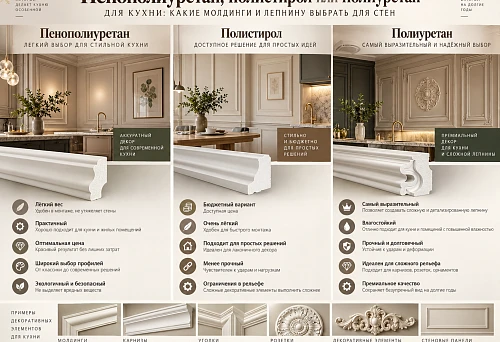
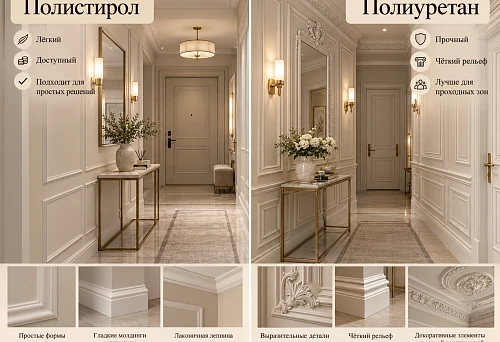
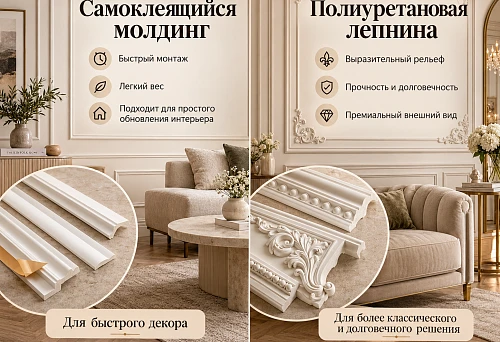
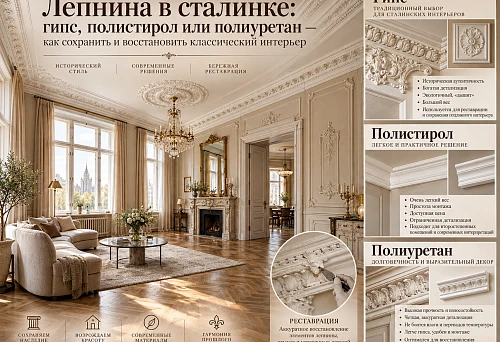
Plaster is a historical material, beautiful and noble. But it is heavy, fragile, and requires fastening with dowels. Polyurethane Moldings made of polyurethane weigh 5–7 times less than plaster counterparts. They are held with glue without dowels. They can be cut with a regular hacksaw. Upon accidental impact, they do not crack like plaster.
Polyurethane vs. Polystyrene Foam
Expanded polystyrene is cheaper but significantly softer. It deforms under mechanical stress, does not maintain a clear relief over the long term, and quickly yellows. Polyurethane decor is hard, and the relief lasts for decades.
Polyurethane vs. wood
Wood is a living material that reacts to humidity and temperature. Wooden moldings crack and separate at joints during seasonal changes. Polyurethane is stable — it is not afraid of moisture, does not deform, and does not crack. This means it can be used in bathrooms and kitchens without restrictions.
Practical advantages of polyurethane for installing decor
-
It is cut with a hacksaw or a utility knife.
-
It is mounted with construction adhesive — no dowels, screws, or drilling.
-
Accepts any water-based paint without special primer.
-
Weighs little — no risk of detaching from the wall.
-
Moisture resistant — can be used in high humidity rooms.
-
Durable — service life comparable to the building itself.
How to choose decor for moldings: a practical algorithm
Now — to practice. You already know you want to add decor to the frames. How exactly to choose the right elements?
Step one: determine the style of the molding
If the molding has a lush relief — leaves, scrolls, egg and dart — it's classic or baroque. Corner elements and decor should be from the same stylistic series.
If the molding is simple, with a geometric cross-section and minimal relief — it's neoclassical or art deco. Here, stricter corner blocks and decor without extra scrolls will suit.
Step two: measure the width of the molding
Corner elements have a specific seating width — it must match the width of your molding. If the molding is 50 mm, the corner must be designed for 50 mm. Even a 5 mm mismatch creates a noticeable step.
Step three: measure the frame
Write down the exact dimensions of the frame: width, height. Determine what percentage of the internal space you are willing to "fill" with decor. For a medium frame — no more than 20–30% of the area.
Step four: choose the hierarchy
Decide what will be the main focus: corners or central decor? If you emphasize corner elements — the central decor should be light. If the main focus is the central medallion, the corner blocks should be calm, without complex relief.
Step five: check the scale
Make a paper template of the decorative element at actual size. Attach it to the wall with painter's tape. Look at it from a distance of two to three meters. If it reads well — the scale is correct.
Ready-made scenarios: how to assemble a complete composition
Scenario 1. A simple frame becomes more expensive
Situation: there are several simple frames made of molding, they are neat but a bit bland.
Solution:
-
Decor for Molding — corner blocks in each corner of each frame.
-
Moldings made of polyurethane — allowance for edits.
-
Assembly adhesive, acrylic putty.
-
Paint in the color of the wall.
Effect: the frames acquire a finished, "packaged" look. The corners cease to be a technical joint — they become a decorative element.
Scenario 2. Mirror in a decorative frame
Situation: an ordinary mirror on the wall looks without context.
Solution:
-
Moldings made of polyurethane — around the perimeter of the mirror, with a slight indentation.
-
Decor for Molding — corner elements.
-
Relief Decoration — one element above the mirror in the center.
-
Glue, putty, paint.
Effect: the mirror turns into a decorative object with character. This can be done in one day.
Scenario 3. Wall behind the sofa: from neat to luxurious
Situation: three frames behind the sofa, well-made, but you want more.
Solution:
-
Buy Decor for Moldings — corner blocks for all frames.
-
Decorative stucco — central element in the middle frame.
-
Paired overlays in the left and right frames (symmetrically).
-
Ceiling molding — cornice around the perimeter to connect with the ceiling.
-
Glue, putty, paint.
Effect: the wall behind the sofa becomes a full-fledged interior statement. Guests will think it's a designer's work.
Scenario 4. Study or hall: status through decor
Situation: need an interior with a sense of solidity and status.
Solution:
-
Wide classic Moldings made of polyurethane — panel frames on the lower third of the wall and individual frames above.
-
Decor for Molding — rich corner blocks with relief.
-
Relief Decoration — vertical or horizontal accents within frames.
-
Ceiling molding — cornice around the perimeter and a rosette under the chandelier.
-
Glue, putty, paint in white or tone.
Effect: the space reads as a thoughtful, finished interior of a representative level.
Table: which decor to add to moldings
| Task | What to add | Category |
|---|---|---|
| Make the frame complete | Corner blocks | Decor for Molding |
| Fill an empty frame | Central medallion or frieze | Decorative stucco |
| Design a mirror | Molding + corner + top decor | Relief Decoration |
| Place an accent at the sconce | Small element near the light | Decorative stucco |
| Connect the wall to the ceiling | Ceiling cornice and rosette | Ceiling molding |
| Design a wall in classic style | Moldings + rich corner + paired accent | Moldings + Decor |
| Assemble a complete set | Moldings + corners + decor + glue | Buy moldings |
What to buy together: a complete kit for a finished frame
Once the decor decision is made, place your order as a complete set. Buying items individually means extra shipping, extra waiting, and the risk that the needed item may be out of stock.
Full list for a molding frame with decor:
-
Moldings made of polyurethane — calculated with a 15% margin.
-
Decor for Molding — corner pieces: 4 pieces per frame.
-
Relief Decoration — central and paired accents: according to the placement scheme.
-
Decorative stucco — inserts and overlays: according to the scheme.
-
Ceiling molding — if a cornice is planned.
-
Mounting adhesive for polyurethane.
-
Acrylic putty for filling joints.
-
Primer.
-
Paint — in the desired color, with extra for painting the decor.
About the Company
STAVROS — a Russian supplier of professional decorative polyurethane molding. The STAVROS catalog features all elements for creating complete molding compositions: Moldings made of polyurethane for frames and cornices, specialized Decor for Molding — corner blocks and decorative elements, Decorative stucco и Relief Decoration for accent zones, Ceiling molding for cornices and rosettes. All STAVROS products are made of solid extruded polyurethane — a moisture-resistant, durable, paintable material that is mounted with adhesive without special tools. Buy molding and you can select decor for moldings online at STAVROS — with consultation on element selection and quantity calculation.
Frequently asked questions
What is decor for moldings?
These are decorative elements that complement and complete molding frames: corner blocks instead of 45° miter cuts, central medallions and cartouches, paired overlays, decorative inserts along the profile length. They turn a simple rectangular frame into an architectural composition.
Is it necessary to buy decor for moldings?
Not always. Simple frames work well in neutral zones. But if the wall is an accent wall, the frame is large, or the interior is classic — Decor for Molding significantly improves the result.
How to decorate a molding frame?
Add corner decorative blocks, a central stucco element, or paired overlays. For large frames — a central medallion. For an accent wall — a cornice and Ceiling molding as a connecting element with the ceiling.
What to buy together with moldings?
Buy polyurethane moldings needs to be together with corner decor, central overlays, glue, and paint. When planning the ceiling — add ceiling molding и ceiling rosettes.
Which decor to choose for a large frame?
For a large-format frame, an expressive Decorative stucco in the center — a medallion, cartouche, or horizontal frieze — plus corner blocks. The decor should occupy no more than 30–40% of the frame area.
Can decor be glued after painting?
Yes, technically it is possible. But the result is better if the decor is applied before the final painting: then it is painted together with the wall and looks built-in. After painting, you need to carefully touch up the joints with a brush.
How to check if the wall is overloaded?
Stand two to three meters away from the wall and answer the question: "What is the main thing here?" If the answer is quick and clear — everything is fine. If the gaze wanders and cannot find a focal point — there are too many elements or no hierarchy.