









































Article Contents:
- What Are Acoustic Slatted Panels and Why Do They Work
- Physics of Sound and Slatted Surface
- Materials and Construction
- Where Acoustic Slatted Panels Are Truly Necessary
- Open-Plan Living Rooms
- Home Theaters
- Studies and Workspaces
- Bedrooms with Problematic Acoustics
- How Molded Decor Works in Rooms with Acoustic Challenges
- Relief as a Diffuser
- Decorative Molding and Visual Acoustics
- Can Acoustic Panels and Moldings Be Combined?
- Principle of Spatial Separation
- Principle of Zonal Acoustics
- Transitional Elements
- Interiors of Offices, Home Theaters, Living Rooms, and Bedrooms
- Home Theater: Maximum Function, Maximum Atmosphere
- Office: Silence as a Working Tool
- Living Room: Life in All Its Manifestations
- Bedroom: Coziness as an Acoustic Category
- Mistakes That Ruin Both Acoustics and Visuals
- First Mistake: Acoustic Panels Without a Sound-Absorbing Layer
- Second Mistake: Molding Everywhere
- Third Mistake: Mismatch Between Slat Width and Molding Scale
- Fourth Mistake: Same Color for Slats and Molding with Different Textures
- Fifth Mistake: Ignoring the Direction of Slats
- Technical Aspects of Combined Installation
- Correct Sequence of Work
- Installing Molding Decor on a Wooden Surface
- Color and Style Solutions: A Practical Cheat Sheet
- Modern classicism
- Scandinavian minimalism
- Art Deco
- Loft with an Acoustic Accent
- FAQ: Answers to Popular Questions
- About the Company STAVROS
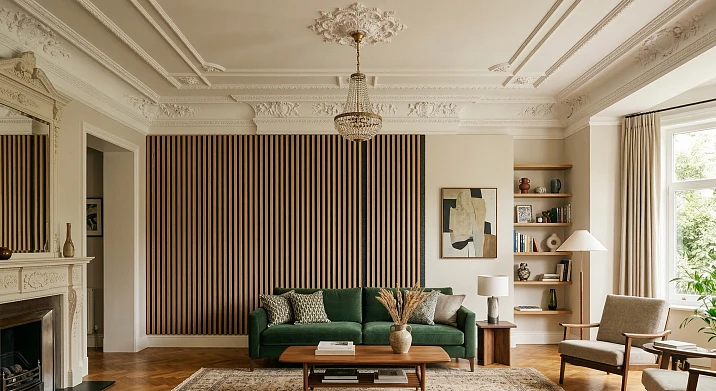
Sound and beauty are two dimensions of space that are rarely considered together. One person thinks about acoustics, another about aesthetics. And almost no one asks the question: is it possible to have both at the same time? Is it possible to achieve a comfortable sound environment in a room that doesn't look like a recording studio, but like a living, rich, expressive interior? The answer is yes. And it is hereAcoustic slatted decorative panelmeets withwith stucco decor in the interior, giving birth to a solution that professionals call a rare balance of function and form.
This article is not a technical guide to acoustics. It is a conversation about how to think about space in two registers at once: auditory and visual. About why wooden slats have become the most discussed material in interior design in recent years. About where exactly stucco is not just appropriate next to acoustic panels, but necessary. And about what mistakes turn a good idea into an expensive failure.

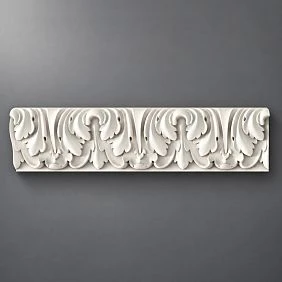
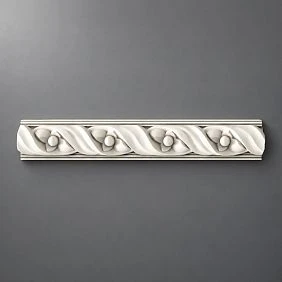
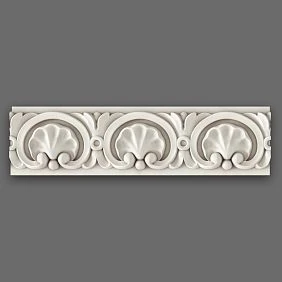
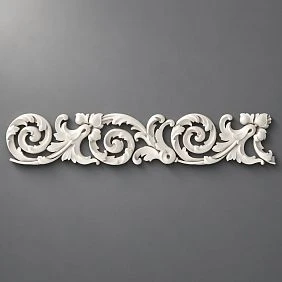
What are Acoustic Slat Panels and Why They Work
Before talking about combining, you need to clearly understand the nature of each element. Let's start with slat panels and their acoustic function — because this is where many people get confused.


The Physics of Sound and a Slatted Surface
Sound in a room behaves like light in a room with mirrors: it reflects off hard surfaces, accumulates, creates echo and reverberation. In rooms with smooth walls, concrete or plastered ceilings, without soft furniture and textiles — sound literally 'lives' in the air longer than necessary. Speech becomes unclear, music becomes a mush of frequencies, a phone conversation becomes a tiring exercise for the ears.
Acoustic slat panelsolves this problem through diffusion. Parallel slats with gaps between them break up the surface uniformity: sound waves, hitting the slats at different angles, scatter in multiple directions, losing energy much faster than when reflecting off a flat wall. This phenomenon is called diffusion—and it is the foundation of the acoustic effectiveness of slat constructions.
An additional effect is achieved through absorption: if a sound-absorbing material—mineral wool, acoustic foam, or specialized felt—is placed behind the panel, part of the sound energy is absorbed by this layer through the gaps between the slats. The combination of diffusion and absorption produces a result that is difficult to achieve by any other means in a residential interior.
It is important to understand:slat acoustic panelsare not professional acoustic equipment in the strict sense. They do not create studio silence or isolate a room from external noise. Their task is to improve acoustic comfort inside the room: reduce reverberation, soften excessive echo, and make the sound environment more pleasant for people. And they handle this task excellently.
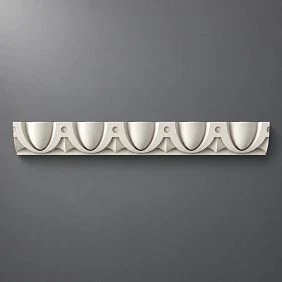
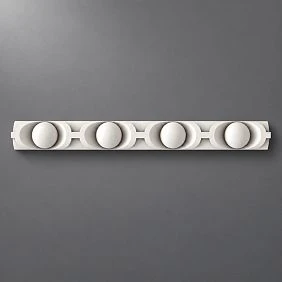
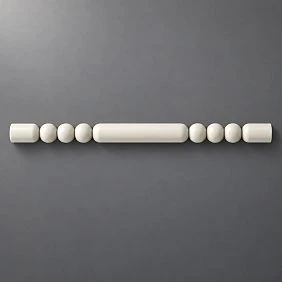
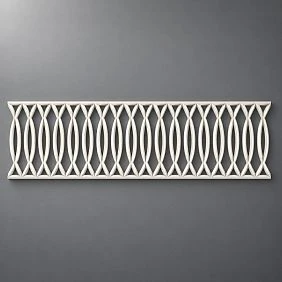
Our factory also produces:
Materials and Construction
The catalog featuresacoustic slat decorative panelsin two fundamentally different versions—and the choice between them is determined not only by aesthetic preferences but also by the functional requirements of the specific room.
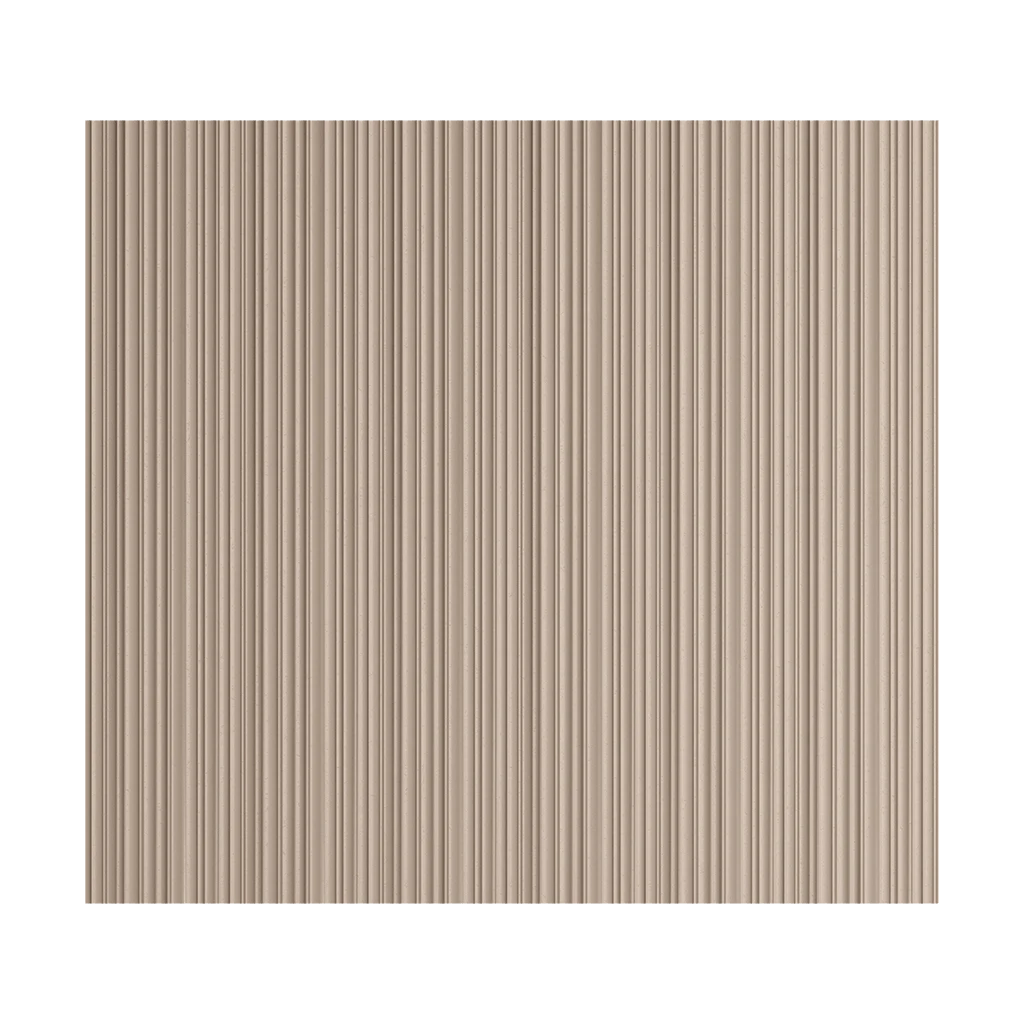
The first version is paintable MDF. Dense MDF with a uniform structure and a density of 750–850 kg/m³ provides a perfectly smooth surface for any enamel or water-based paint. The main advantage is color freedom: the panel can be painted in any shade, from snow white to anthracite, from powder to emerald. It can blend into the wall when painted to match it or become the main accent with a contrasting color.
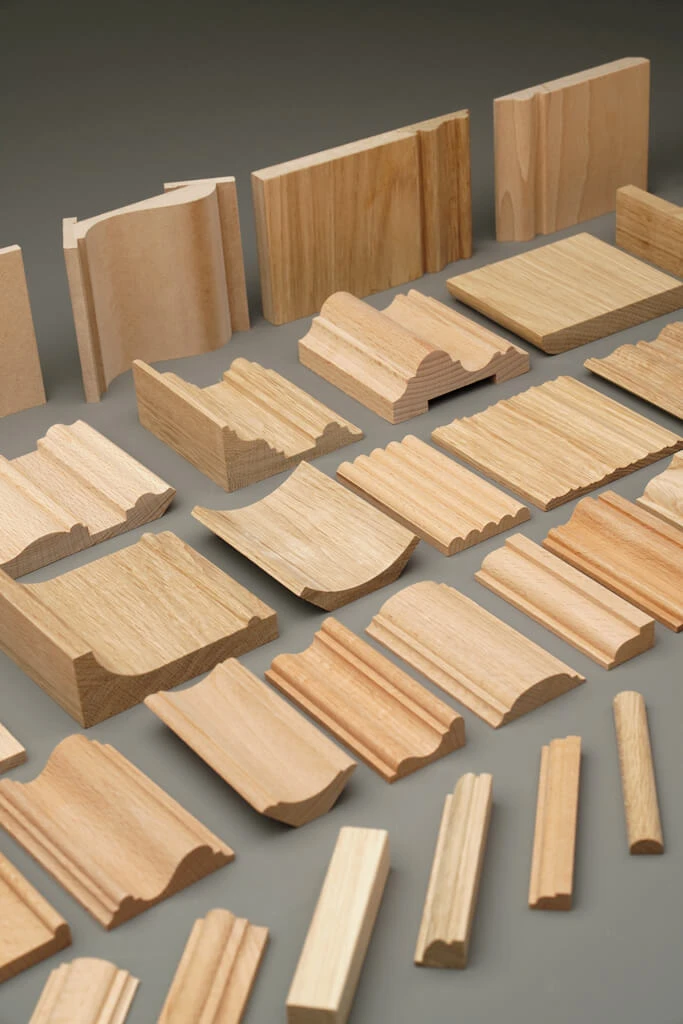
The second version is solid oak for tinting and varnish. This is no longer just a finishing material but a natural object. Each slat carries a unique grain pattern that cannot be reproduced by any synthetic material. Oak with a density of 700–750 kg/m³ is resistant to mechanical wear, holds tint and varnish well. Warm golden tone under clear varnish, cool Scandinavian gray under special oil, deep wenge under dark stain—the range of possible solutions is wide.
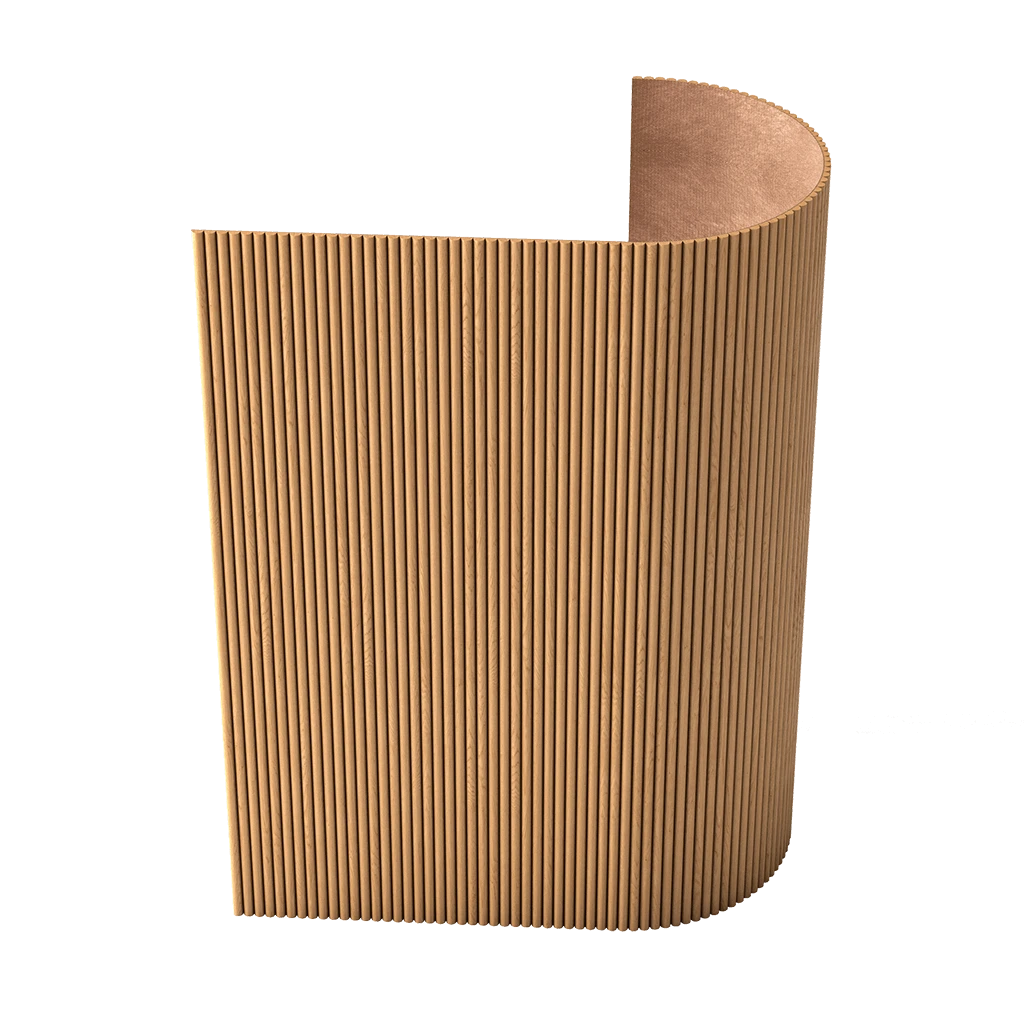
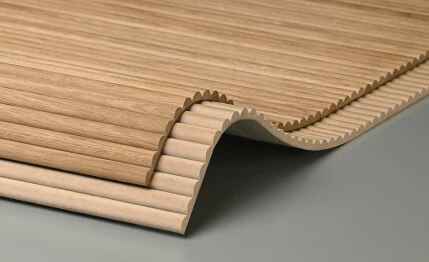
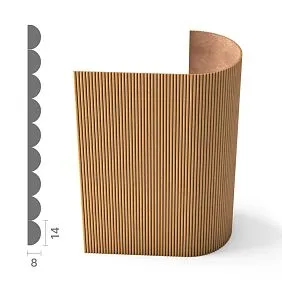
Structurally, the panels are available in two variants. Rigid panels on an MDF backing—a classic solution for flat walls, furniture fronts, ceilings. Precise geometry, even slat spacing, monolithic construction. Flexible panels on a fabric base—an innovative option for curved surfaces: columns, arches, rounded corners. They follow any curve, join seamlessly, maintaining an even rhythm of slats even on complex shapes.
Get Consultation
Where acoustic slat panels are truly necessary
When discussing acoustics in residential interiors, it's important to understand: not every room suffers from acoustic problems to the same degree. There are areas where an uncomfortable sound environment is not a theoretical problem, but a daily irritation.
Open-plan living rooms
The modern trend of combining the kitchen, dining area, and living room into a single space creates visual comfort and communication convenience. But simultaneously, it creates an acoustic disaster. Large volume, hard surfaces, high ceilings: sound spreads uncontrollably, conversation at the dining table competes with the TV, and cooking noise reaches the relaxation area.
An accent wall in the living room, clad with slat panels with an acoustic backing, absorbs a significant portion of this chaos. The slats scatter direct reflections, while the felt or mineral wool behind the backing absorbs the mid-frequency range — and after just a few days of living in such a space, a person notices that it has become easier to talk, the TV can be listened to at a lower volume, and fatigue from noise accumulates more slowly.
Home theaters
This is perhaps the most obvious area of application for acoustic slat panels. A home theater is a room where literally everything depends on sound: that's the very reason people go there. Poor acoustics turn an expensive sound system into a source of muddy sound with echo and resonances.
The classic acoustic treatment for a home theater is a set of professional panels that look functional but bland. Acoustic decorative slat panels change this situation: they provide the necessary acoustic result while creating an aesthetically cohesive interior. Dark oak slats, stained in wenge, on the walls of a home theater are not just a 'sound muffler'; it's a design solution that contributes to the atmosphere.
Studies and workspaces
In a study, a person spends hours talking, reading, and doing focused work. Any unnecessary echo is a strain on the nervous system, which we don't always consciously recognize directly, but feel as fatigue and reduced concentration. Slat panels on one or two walls of a study radically change the sound environment — making it quiet, absorbent, and comfortable for prolonged work.
Bedrooms with problematic acoustics
A bedroom with parquet flooring, high ceilings, and minimal soft furniture is potentially the most acoustically uncomfortable room in an apartment. Sounds from neighboring rooms, reflections from flat walls, nighttime reverberation—all of this disrupts sleep and creates anxiety. A slatted acoustic panel behind the bedhead not only solves some of these problems but also becomes the most expressive element of the bedroom interior.
How decorative plasterwork functions in rooms with acoustic challenges
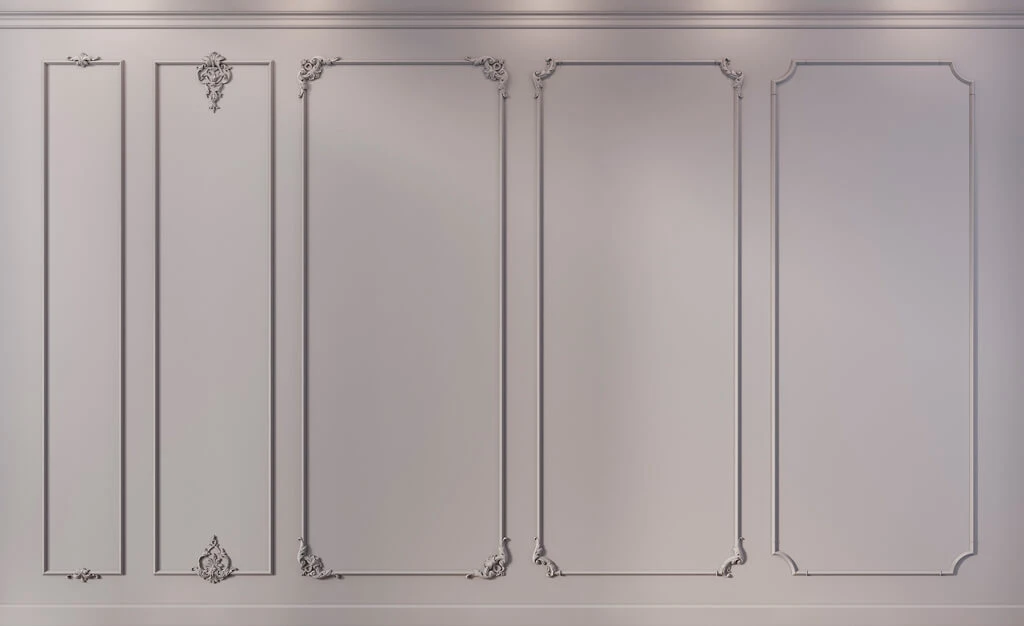
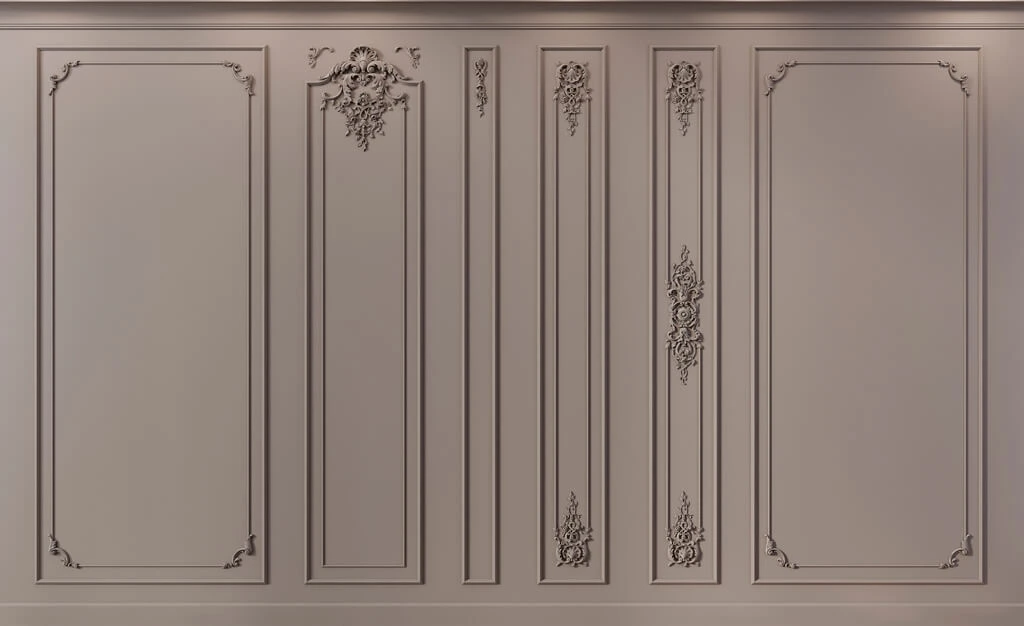
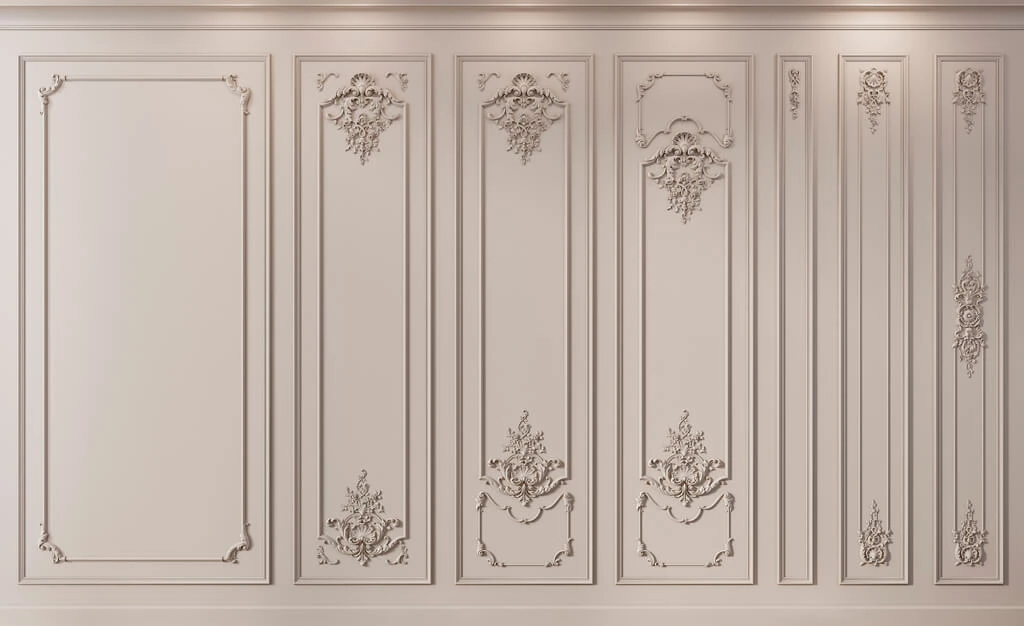
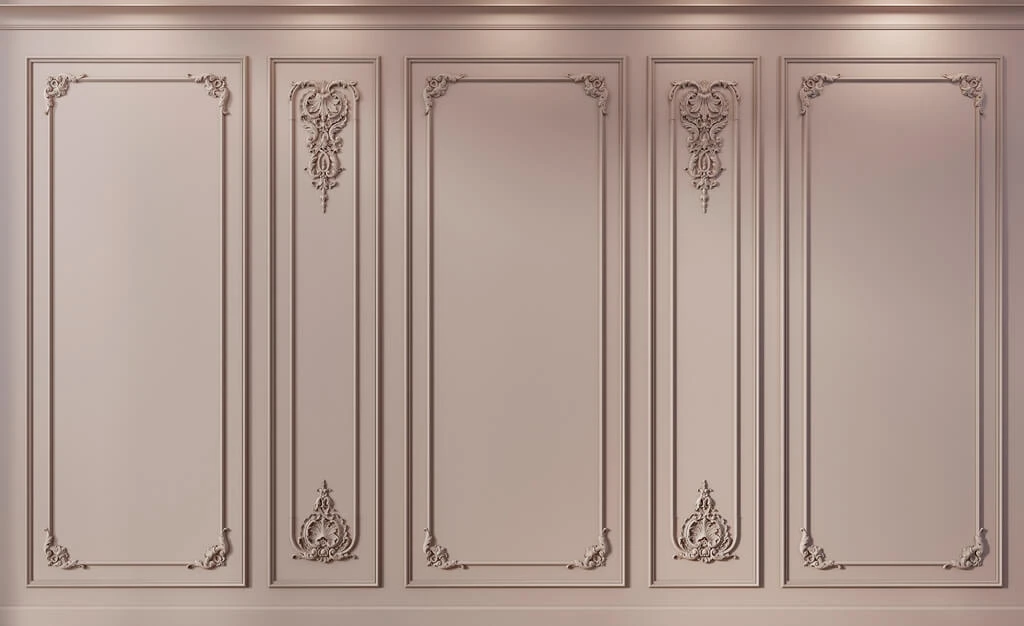
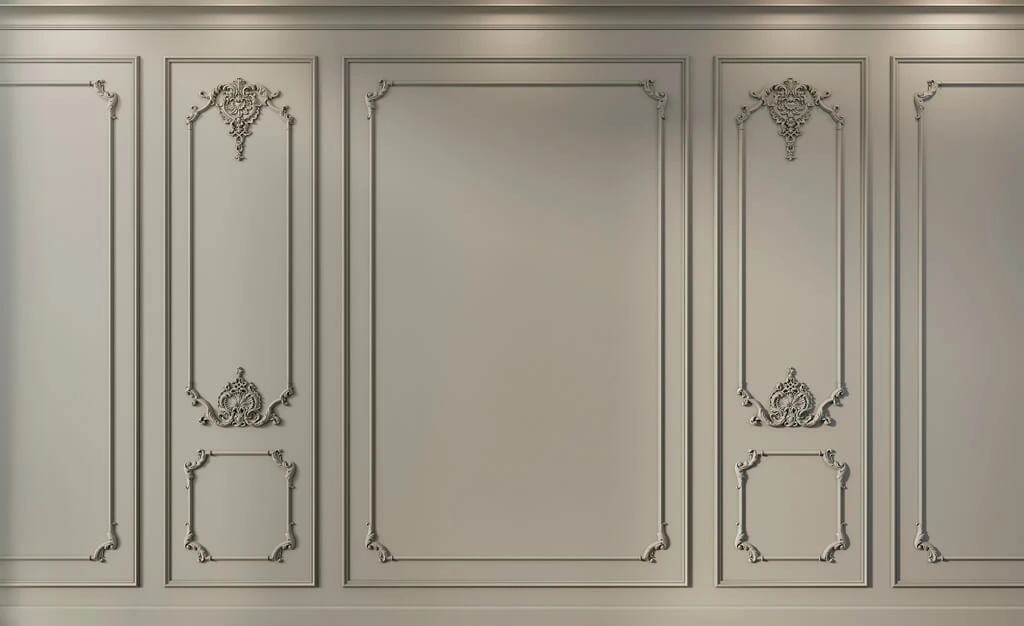
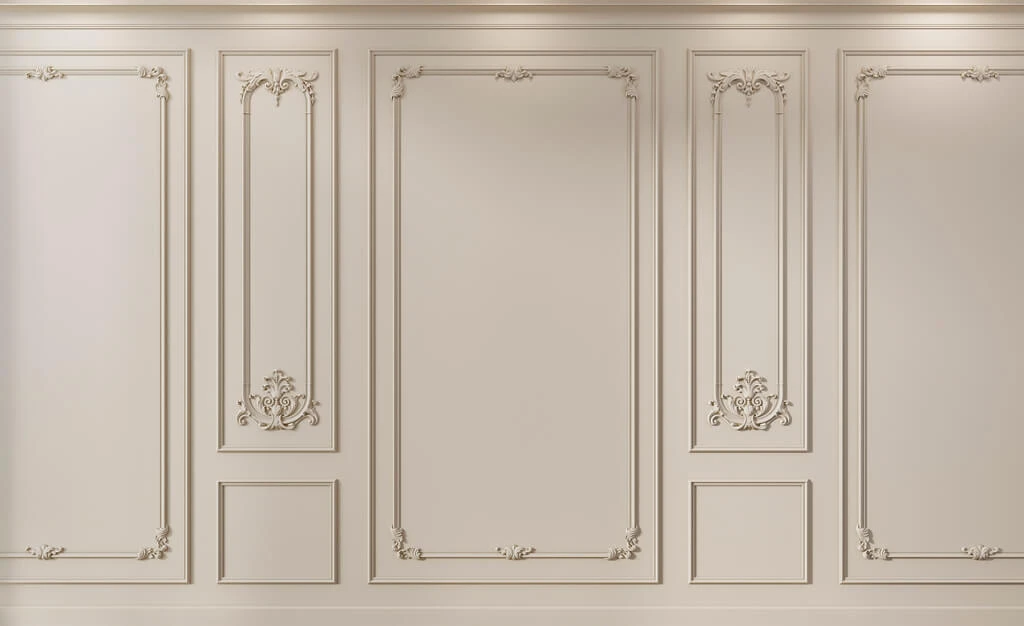
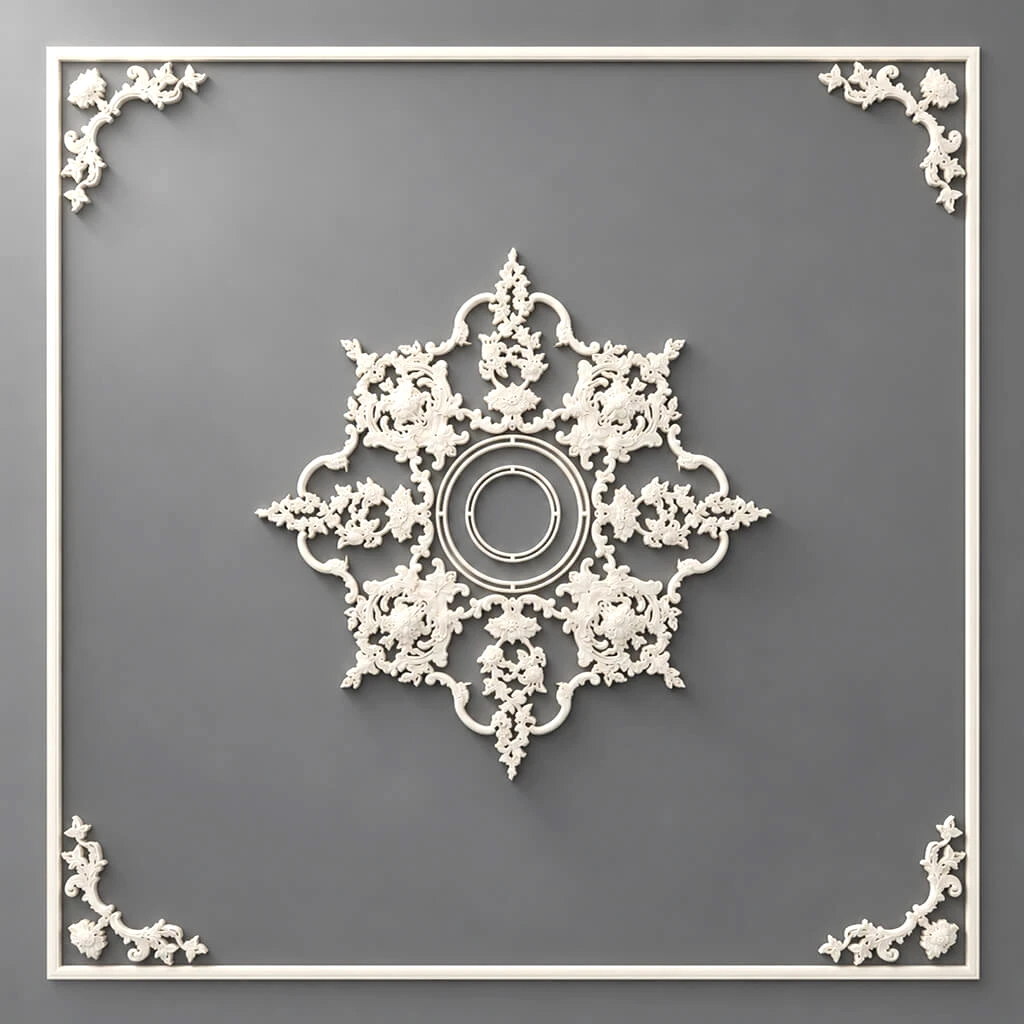
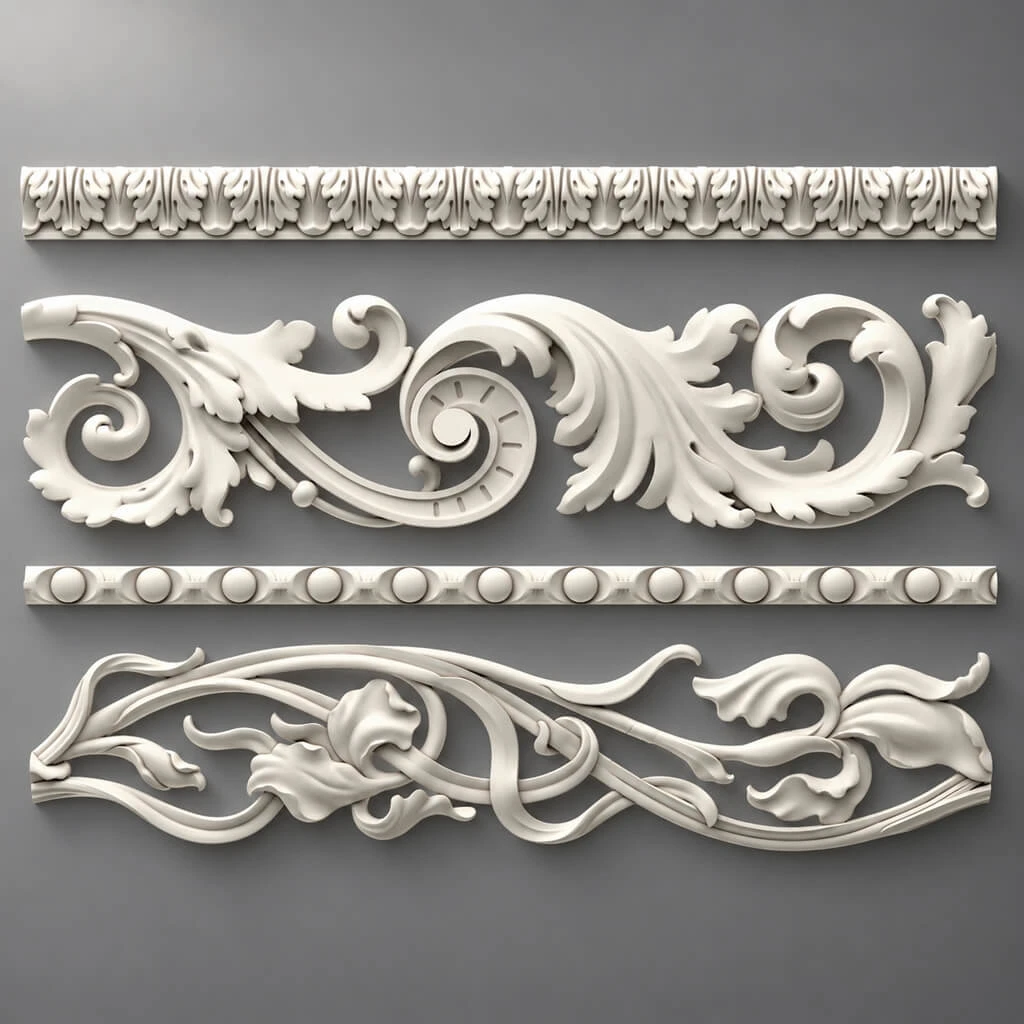
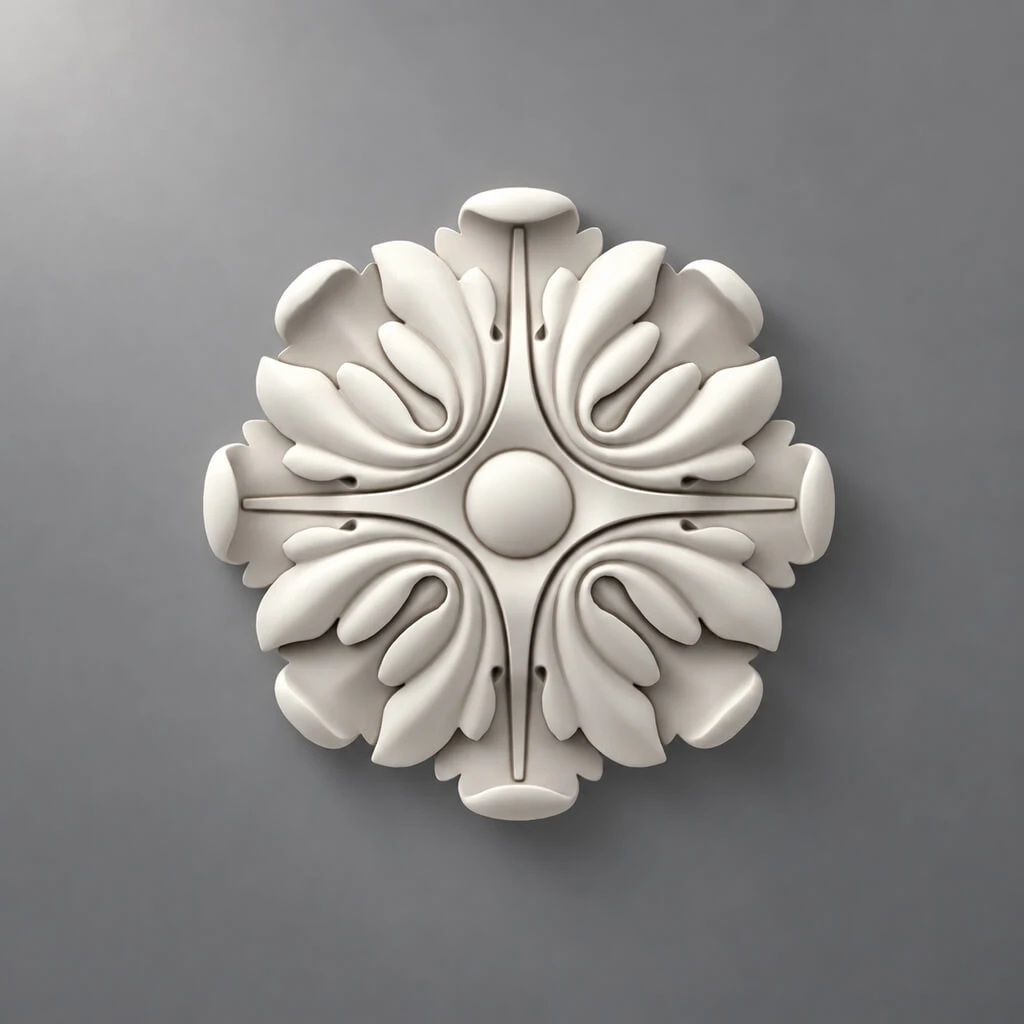
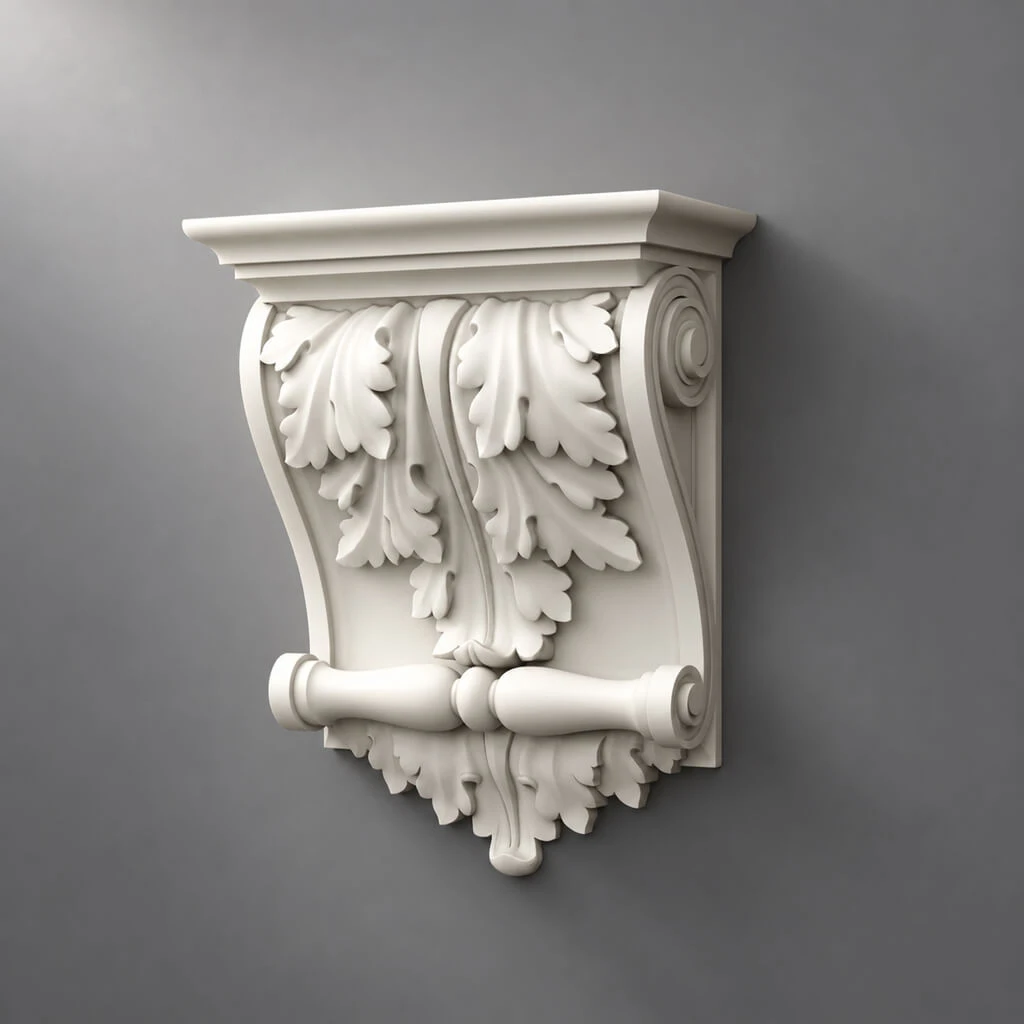
Here we come to the most interesting question.Relief Decor in Interior— these are relief elements with a hard surface: cornices, moldings, rosettes, overlays. They do not absorb sound—hard polyurethane reflects it just like a plastered wall. Does this mean plasterwork is harmful to acoustics? Not exactly.
Relief as a diffuser
A profiled cornice with pronounced relief is not a flat reflective surface. It is a set of protrusions, recesses, and curves, each of which reflects sound in its own direction. In other words, rich architectural relief works as a primitive diffuser. It does not absorb sound but scatters it—exactly like slats, only on a smaller scale.
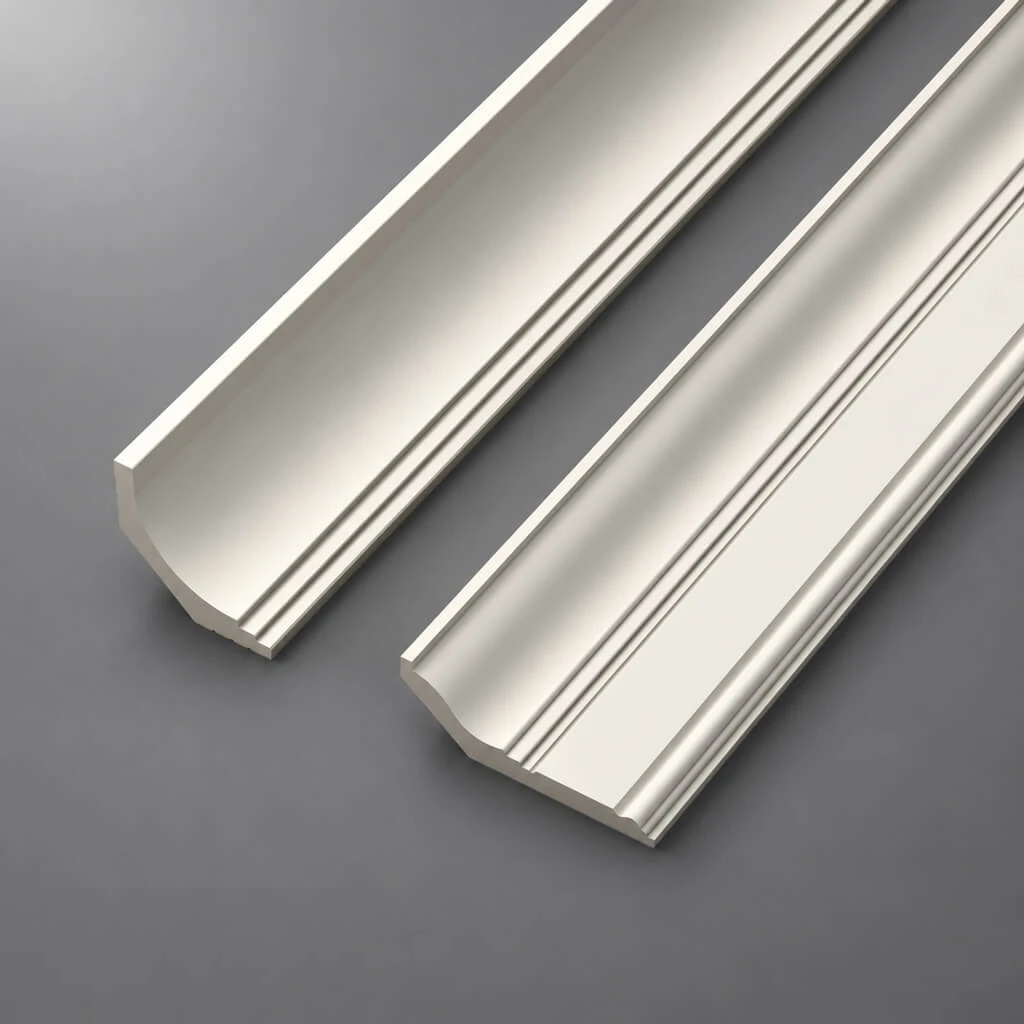
This is especially relevant for cornices around the perimeter of the ceiling. A massive cornice with a projection of 100–150 mm creates an acoustic 'trap' in the corner area of the wall/ceiling—precisely where low-frequency resonances most actively accumulate. The polyurethane cornice itself does not solve this problem, but in combination with other acoustic measures, it makes a tangible contribution to the overall picture.
Decorative stuccoand visual acoustics
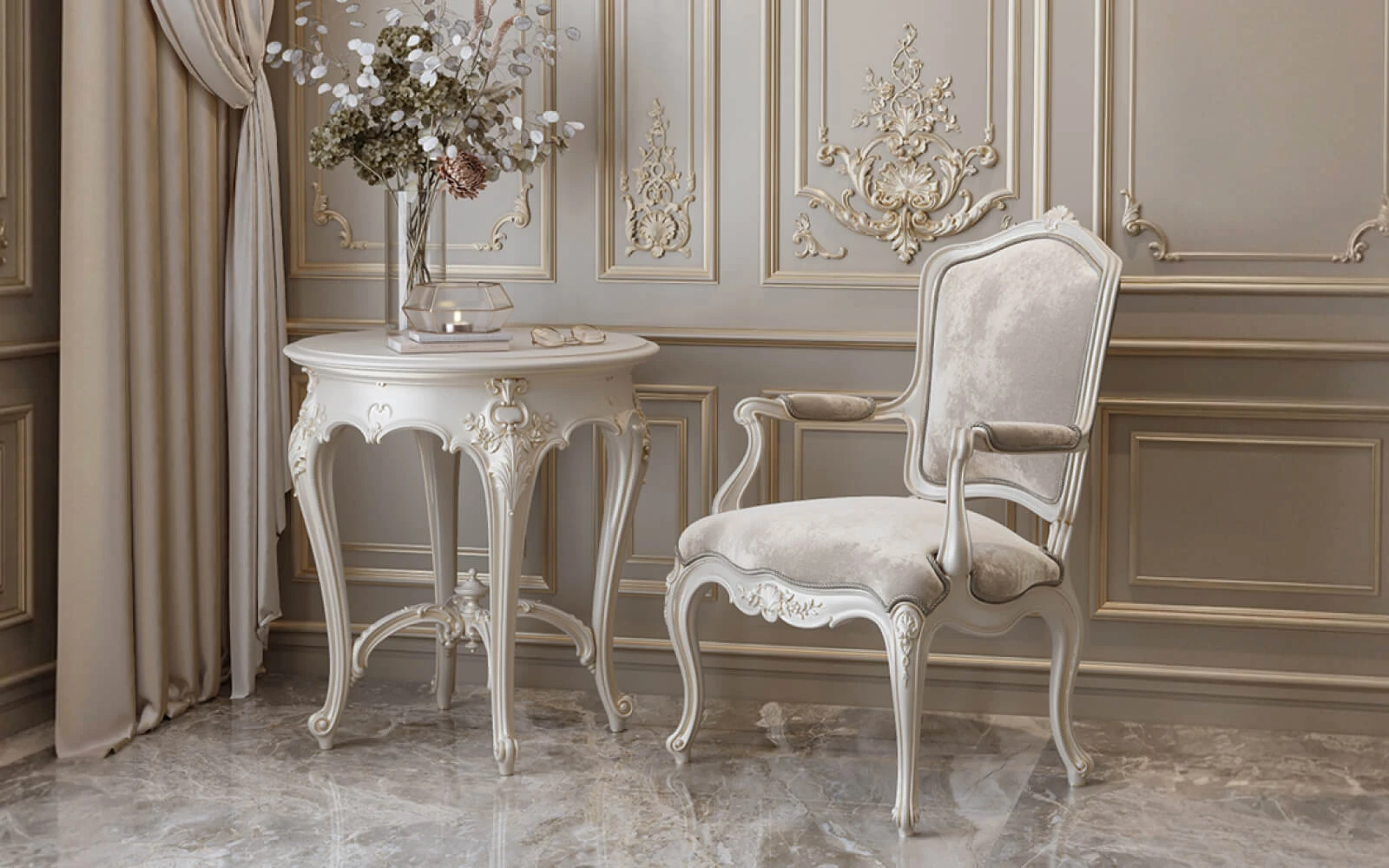
There is another aspect that is rarely discussed: psychoacoustics. A person perceives the sound environment not only with their ears but also with their eyes. A room with rich relief on the walls and ceiling subjectively seems quieter and more comfortable than an identical room in physical parameters with bare surfaces. The brain interprets the visual complexity of the space as a signal of its acoustic richness—and responds by reducing anxiety.
This is not magic or self-suggestion. It is a documented phenomenon that professional acousticians consider when designing concert halls and studios: the visual environment influences the subjective perception of sound.interior moldingsin this context, it is not just decoration, but a tool for managing the perception of space.
Can acoustic panels and moldings be combined?
The main question around which this entire article is built. And the answer is yes, they can. But with conditions that determine the difference between a professional solution and an amateurish mishmash.
The principle of spatial separation
The most reliable strategy for combining is to separate surfaces by function. Walls work for acoustics: here, slatted acoustic decorative panels are placed, which scatter and absorb sound. The ceiling and cornice zones work for aesthetics: here, Decorative stucco— cornices, moldings, rosettes — are placed.
This solution works because the ceiling is a surface with relatively less acoustic load in most residential spaces. The main problem areas are the side walls, which create direct reflections from speakers or the sound source. If the walls are treated with slats, a ceiling with molding does not disrupt the acoustic balance but only adds a scattering relief—which, as we have already established, is rather beneficial.
The principle of zonal acoustics
In large spaces—living rooms larger than 30 sq. m, halls, offices with high ceilings—you can work zonally. The acoustically active zone (the movie-watching area, work desk, negotiation zone) is treated with slatted panels. Peripheral zones, walls near the entrance, decorative niches are decorated with molding.
This approach creates an interior where acoustics and aesthetics coexist not in opposition, but in dialogue. The slats are the work area—functional, restrained. The molding is festive, elegant, representative. Each material occupies its own place.
Transitional elements
One of the most subtle questions is how to skillfully join a slatted surface and a molding zone on the same wall or in the same room. A sharp transition of 'slats — white wall — cornice' looks unfinished. A transitional element is needed.
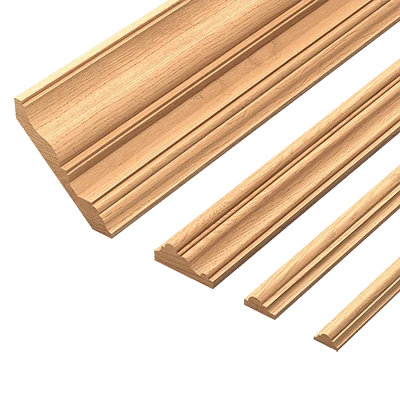
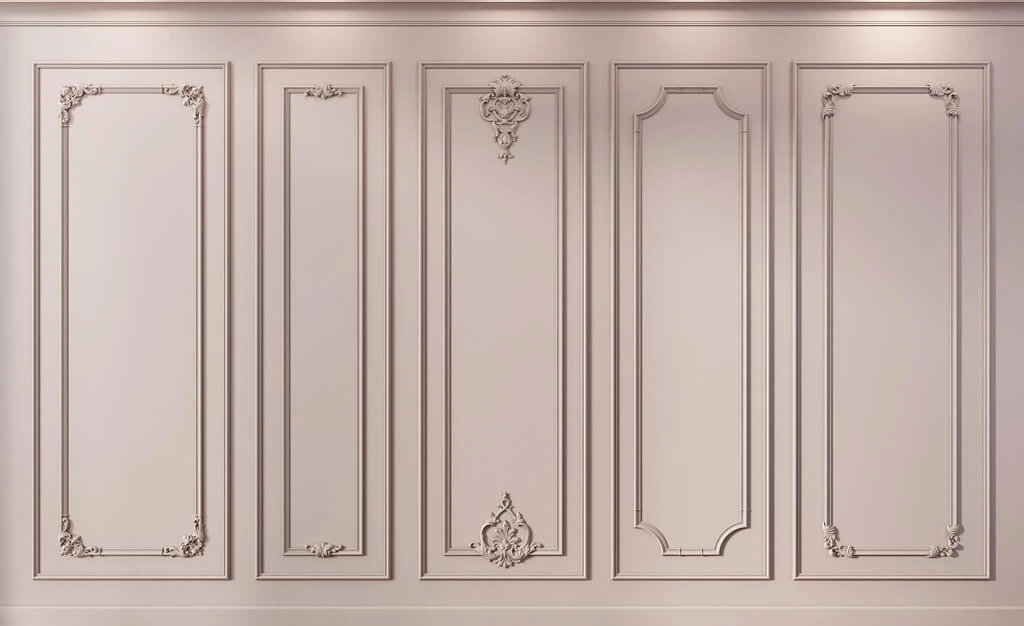
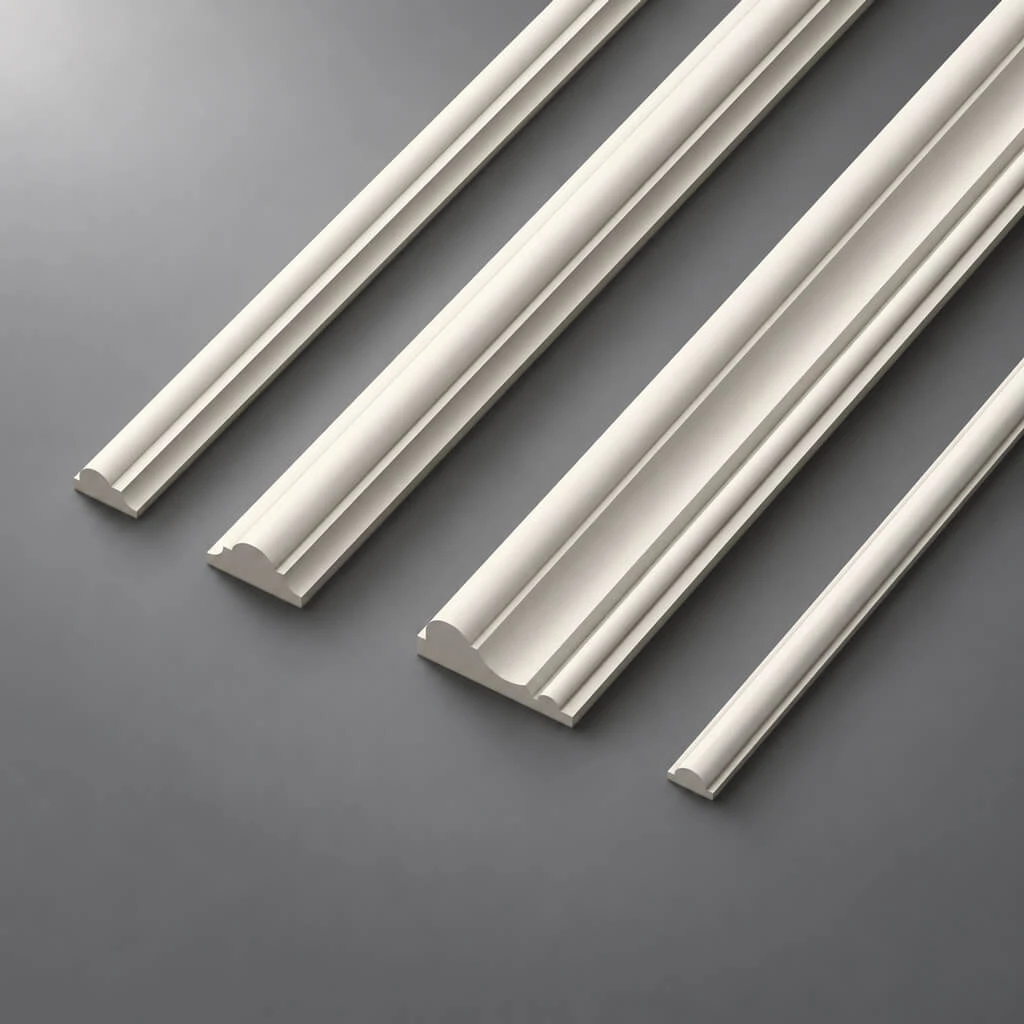
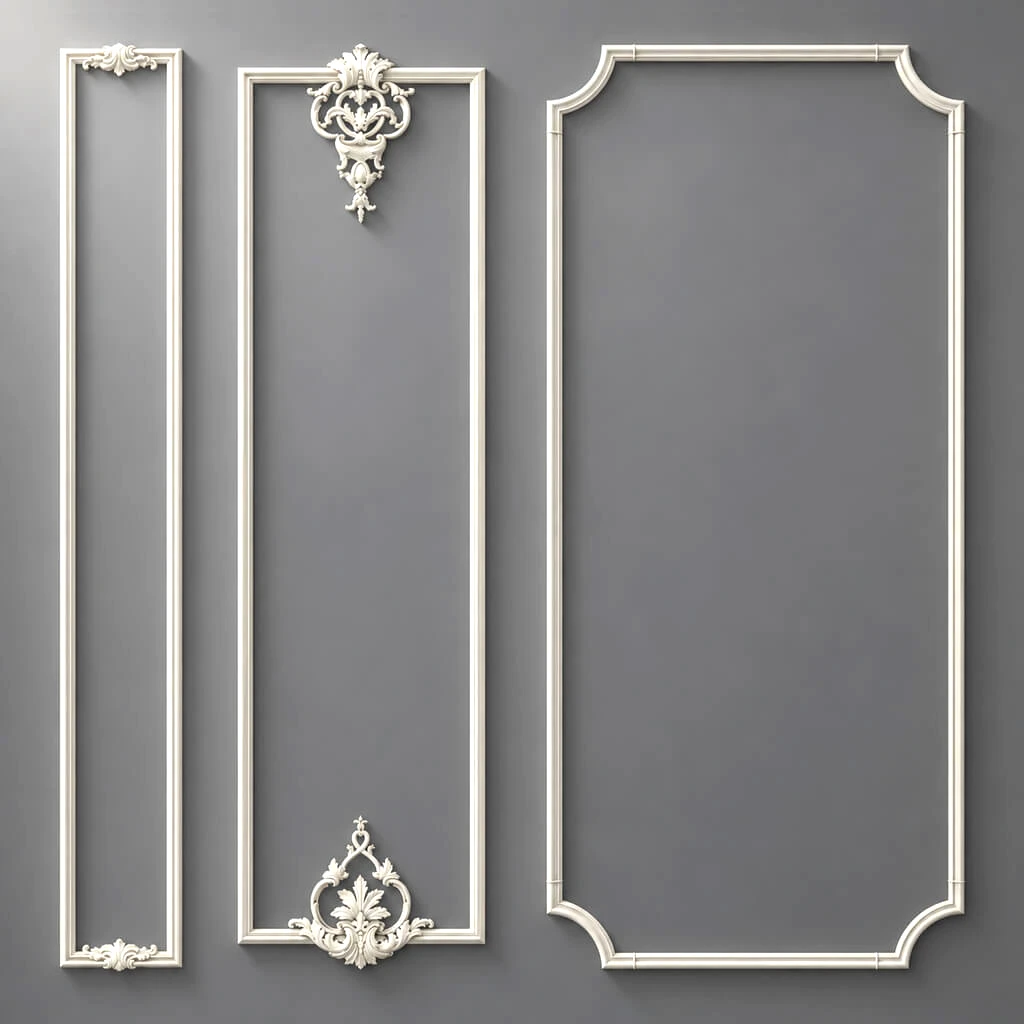
The role of such an element can be played by a molding that frames the slatted panel around the perimeter.interior moldingsIn the form of a thin molding 30–50 mm wide, glued along the contour of the slatted panel, it creates a clear frame that simultaneously completes the slatted zone and begins the decorative one. This solution is encountered quite often in professional interiors—and always looks thoughtful and expensive.
Another option is a wide cornice that visually 'covers' the upper boundary of the slatted panel. If the slats run from the floor to the cornice, and the cornice forms a clear horizontal line along the perimeter of the ceiling, the space reads as holistic: the wooden vertical and the molded horizontal complement each other, rather than compete.
Interiors of studies, home theaters, living rooms, and bedrooms
Theory is theory, but any concept is best revealed through specific examples. Let's consider how the combination of acoustic slatted panels and molded decor works in different types of rooms.
Home theater: maximum function, maximum atmosphere
A home theater is a room where acoustics come first. The side walls and back wall are the first reflection zones, the most acoustically loaded surfaces. Here, an acoustic slatted decorative panel is essential: the slats scatter reflections, and the sound-absorbing material behind the backing absorbs unwanted reverberation.
Reclaimed dark oak slats, stained in wenge or graphite, are the perfect choice for a home theater. Dark walls enhance immersion in the image without creating unwanted glare. The ceiling, however, can be designed differently: a perimeter cornice with a moderate profile, possibly with geometric moldings forming a coffered pattern. Everything in dark tones, everything in a unified palette—and the theater transforms from a simple dark room with a screen into an architecturally expressive space with character.
An important nuance: in a home theater, moldings should not be white. White relief against a dark background creates unwanted light accents during viewing. Cornices and moldings should be painted in the same dark tone as the ceiling—then they function as relief and shadow, not as a color contrast.
Study: Silence as a Working Tool
A study is a room where silence is literally a working tool. Concentration, video calls, working with text—all require an acoustically comfortable environment. At the same time, a study is also a representative space: here you receive guests, hold meetings, and demonstrate taste and status.
A solution that perfectly meets these requirements: solid oak slat panels on two side walls, molded decor on the ceiling and above the fireplace. The slats create silence. The moldings create solemnity. This is the classic scheme of an English club interior, where wood and moldings have always coexisted as the two main materials—but now an acoustic function is added to it.
For a study in a classic style, slats with a wide profile made of dark oak are appropriate, combined with a cornice 120–160 mm high, a rosette above the desk or main light fixture, and moldings forming a coffered pattern on the ceiling. All these are polyurethane elements in ivory or warm white. The result: a study where it is quiet to work and pleasant to receive guests.
Living Room: Life in All Its Manifestations
The living room is the most acoustically challenging space because everything happens here at once: conversations, music, movies, children's noise, phone calls. The only rule that works here: acoustic treatment should be distributed, not spot-based.
The wall behind the sofa or the wall opposite the main viewing area is the first place for a slat panel. If the wall behind the sofa is an accent wall, it receives maximum decorative attention: oak slats in natural or stained finish, possibly with integrated lighting in the gaps. The other walls can be designed neutrally.
The ceiling in the living room is the place for moldings. A perimeter cornice that frames the ceiling plane and creates a shadow at the wall/ceiling transition. Possibly—a central rosette above the chandelier. Moldings forming a rectangular field in the center of the ceiling—if the room height allows. All this turns the ceiling into an architectural object, not just a white plane overhead.
Important: In an open-plan living room, slatted panels are placed primarily in the living area, not the kitchen or dining area. This creates an acoustically isolated relaxation zone within a unified space—and simultaneously visually zones it without any partitions.
Bedroom: Coziness as an Acoustic Category
In a bedroom, acoustics work differently than in a study or home theater. Studio silence is not needed here—what's needed is a soft, absorbing background that dampens excess reflections and creates a feeling of being wrapped up, of protection. It is precisely this feeling we call coziness—and it is largely acoustic in nature.
A slatted panel behind the bed headboard is one of the most striking and functional techniques in modern bedroom design. It creates an acoustic shadow in the area where a person spends a third of their life. And simultaneously—it is the main visual accent of the room: structured, warm, natural.
Molding in the bedroom can be delicate: a thin cornice along the ceiling perimeter, without complex ornamentation—just a line separating the ceiling from the walls. A small rosette above the bed is possible if there is a recessed light fixture or wall sconce with a common mounting point. No coffers, no complex moldings—the bedroom does not tolerate excess decor. Minimal molding, a wooden slatted panel, soft textiles—and the space works for sleep and rest with all its surfaces.
Mistakes That Ruin Both Acoustics and Visuals
Having understood how to correctly combine acoustic slatted panels and molding decor, let's list typical mistakes—those that occur most often and cost the most.
First mistake: Acoustic panels without a sound-absorbing layer
This is the most common mistake of all. A person buys slatted panels, mounts them on a wall without any backing—and does not get the expected acoustic effect. The slats themselves provide diffusion, but not absorption. Without a layer of sound-absorbing material behind the panel—mineral wool, acoustic felt, or specialized foam—the absorption effect is absent.
Correct construction: A metal frame made of CD profiles, attached to the wall via direct hangers. Sound-absorbing material with a density of at least 40 kg/m³ and a thickness of 50–100 mm is placed into the frame cells. Slatted panels with gaps are mounted over the frame, through which sound penetrates to the absorbing layer. Only in such a construction does a slatted panel work as a full-fledged acoustic element.
Second mistake: molding everywhere
When someone discovers polyurethane decor, there's a natural desire to use it everywhere. Cornice - yes. Rosette - yes. Moldings - three types. Corner elements - definitely. Wall overlays - let's add more.
Result: ceilings and walls overloaded with relief that visually creates noise, competes with itself, and doesn't allow the eye to rest. In rooms with acoustic requirements, excess hard relief surfaces also physically increases reflection - literally worsening acoustics.
Rule: one main decorative element - and two auxiliary ones. Perimeter cornice - main. Moldings forming a single field - auxiliary. Rosette - optional. No more needed.
Third mistake: mismatch between slat width and molding scale
Thin slats 30-40 mm wide require proportionate molding - thin moldings, delicate cornices with small projection. Wide slats 80-100 mm or more can be combined with more massive cornices. When the scale doesn't match - thin slats next to huge cornices or, conversely, massive slats framed by miniature molding - the interior looks disjointed and random.
Fourth mistake: same color for slats and molding with different textures
Wood and polyurethane are two different materials with different optical properties. Natural wood texture absorbs light differently than painted polyurethane surface. If you paint slats and molding the same color, expecting monochromatic unity - the result often disappoints: materials with the same color but different textures start competing rather than complementing each other.
Solution - either intentional contrast (slats in wood color, molding in white or neutral), or complete tonal match using enamel paint for slats in the same color as the molding. Intermediate options generally don't work.
Fifth mistake: ignoring slat direction
The direction of battens affects acoustics just as it does visual perception. Horizontal battens scatter sound waves vertically—this is effective for reducing echo from the ceiling and floor. Vertical battens scatter horizontal waves—this is effective for reducing side reflections.
In a home theater, where the main sound sources are arranged horizontally, vertical battens on the side walls work better. In a living room with high ceilings, horizontal battens will more effectively reduce echo from ceiling reflections. This is not an absolute rule, but a factor worth considering during design.
Technical aspects of joint installation
Practice shows: the most beautiful interiors are created when technical solutions are made before work begins, not during. The joint installation of batten panels and stucco decor requires a clear sequence.
Correct order of work
Any work begins with marking. On the ceiling and walls, axes of symmetry, cornice lines, socket positions, and boundaries of batten zones are marked. Only after marking can the frame installation begin.
The correct sequence looks like this:
-
Installation of the frame for batten panels with laying of sound-absorbing material
-
Electrical wiring (if lighting in the gaps between battens or behind panels is planned)
-
Installation of slatted panels
-
Installation of the cornice around the perimeter of the ceiling
-
Installation of moldings on the ceiling plane
-
Installation of overlays and sockets
-
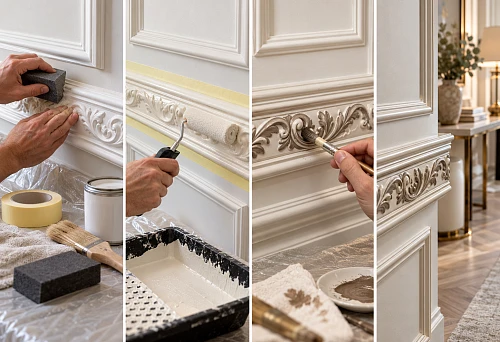
Finishing works: puttying of stucco joints, painting
The cornice is installed after the slat panels — this allows it to be properly fitted onto the wooden surface and precisely form the transition between materials.
Installation of stucco decoration on a wooden surface
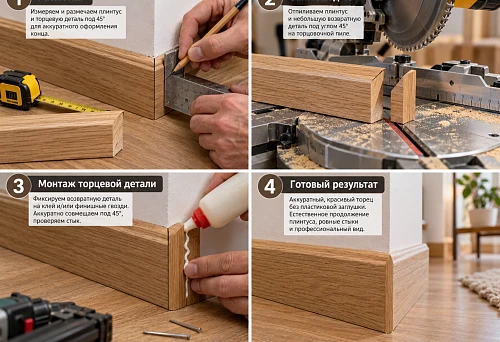
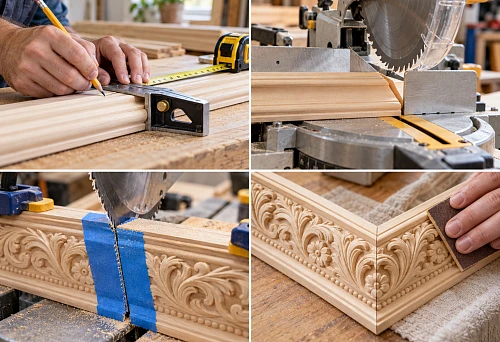
A separate question — is it possible to installdecorative molding directly on wooden slats? In rare cases, this is justified — for example, when a molding frames a slat panel around the perimeter. In this case, the molding is glued with acrylic adhesive directly onto the wooden substrate or onto the MDF base of the panel. The wood must be dry, clean, and degreased. The adhesive is applied to both surfaces, allowed to stand for 2–3 minutes until slightly tacky, after which the parts are pressed together and secured with painter's tape until completely dry.
Cutting molding at angles — 45 degrees using a miter box. Joints are puttied with acrylic putty, sanded, and painted. The boundary between wood and polyurethane can be intentionally emphasized or concealed — depending on the design decision.
Color and style solutions: a practical cheat sheet
Let's conclude the practical part — with a brief overview of the most successful combinations for specific interior styles.
Modern classic
-
Reiki made of light oak in a natural tone or with a light lightening tint
-
Cornice with Greek ornament or meander, height 120–160 mm, in white or ivory color
-
Central geometric rosette
-
Moldings dividing the ceiling into 2–4 rectangular fields
-
Result: warmth of wood + solemnity of stucco + acoustic comfort
Scandinavian minimalism
-
Narrow slats made of birch or light ash, pitch 80–100 mm
-
Thin molding around the perimeter of the slatted panel — framing without ornament
-
No central rosette
-
Light cornice with a minimal profile, completely matching the ceiling tone
-
Result: purity, rhythm, quiet space
Art Deco
-
Reiki with metallic tinting or with a golden backing in the gaps
-
Geometric moldings with broken lines on the ceiling
-
Brass accents in lighting fixtures
-
Clear symmetry, rigid geometry
-
Result: luxury without pomp, modernity with historical references
Loft with an acoustic accent
-
Dark reiki made of brushed oak or thermowood, without varnish
-
No classical stucco — only corner moldings with a neutral profile
-
The open load-bearing plane behind the reiki is painted black
-
Built-in spotlights in the gaps
-
Result: industrial aesthetic with functional acoustics
FAQ: Answers to popular questions
How much do slatted panels improve acoustics in a living space?
With proper installation using acoustic underlayment — noticeably. Reverberation time in a room of 20–30 sq. m decreases by 20–40% depending on the amount of treated surface, density, and thickness of the absorbing material. Subjectively, this is perceived as a 'warmer' and 'calmer' sound.
Does polyurethane molding worsen acoustics?
In most living spaces — insignificantly. The area of polyurethane elements is incomparably small relative to the total surface area. The relief of cornices and moldings scatters sound, which neutralizes any potential negative effect from the additional hard surface.
Can slatted panels be installed in a bathroom?
Yes, when using high-density wood species (larch, oak, thermowood) and moisture-resistant coating. Good ventilation is essential. MDF panels are not recommended in bathrooms without special moisture-protective treatment.
How to choose the slat width for a specific room?
Use the proportion as a guide: the slat width should not exceed 1/40 of the room's height. With a ceiling height of 2.7 m, the optimal slat width is 50–70 mm. With a height of 3.2 m, slats up to 80–100 mm wide can be used.
Should the molding width be coordinated with the slat width?
Yes. Thin slats—thin moldings. If the slat width is 40–50 mm, the framing molding should not exceed 50–60 mm. Otherwise, the scale of the elements does not match, and the interior loses proportionality.
How often should polyurethane molding be repainted?
Depending on operating conditions—every 7–15 years. Polyurethane does not degrade or lose shape; repainting is only needed to restore whiteness or change color. The procedure is simple: sanding with P150 sandpaper, priming, two coats of paint.
What sound-absorbing underlay is best to use behind slatted panels?
For residential spaces, mineral wool with a density of 40–60 kg/m³ and a thickness of 50 mm is optimal. Acoustic foam provides less effect but is easier to install. Specialized acoustic felt is a premium solution with good performance across a wide frequency range.
Can slatted panels be combined with drywall constructions?
Yes. Drywall is used as a base for slatted panels or as a material for forming niches and boxes into which slatted elements are integrated. The combination of drywall + slats + molding is one of the most technically flexible solutions for complex ceiling and wall constructions.
About the company STAVROS
A space that is both quiet and beautiful at the same time is not an accident. It is the result of the right material choices and a professional approach to design.
STAVROS specializes in manufacturing products from solid wood and polyurethane for architectural finishing. The range includes—slat acoustic panels—in MDF versions for painting and solid oak for tinting and varnishing: rigid on a backing, flexible on a fabric base, including with a semi-circular profile of battens for a special play of light and shadow. Each panel is produced with precise slat spacing, stable geometry, and readiness for installation without additional processing.
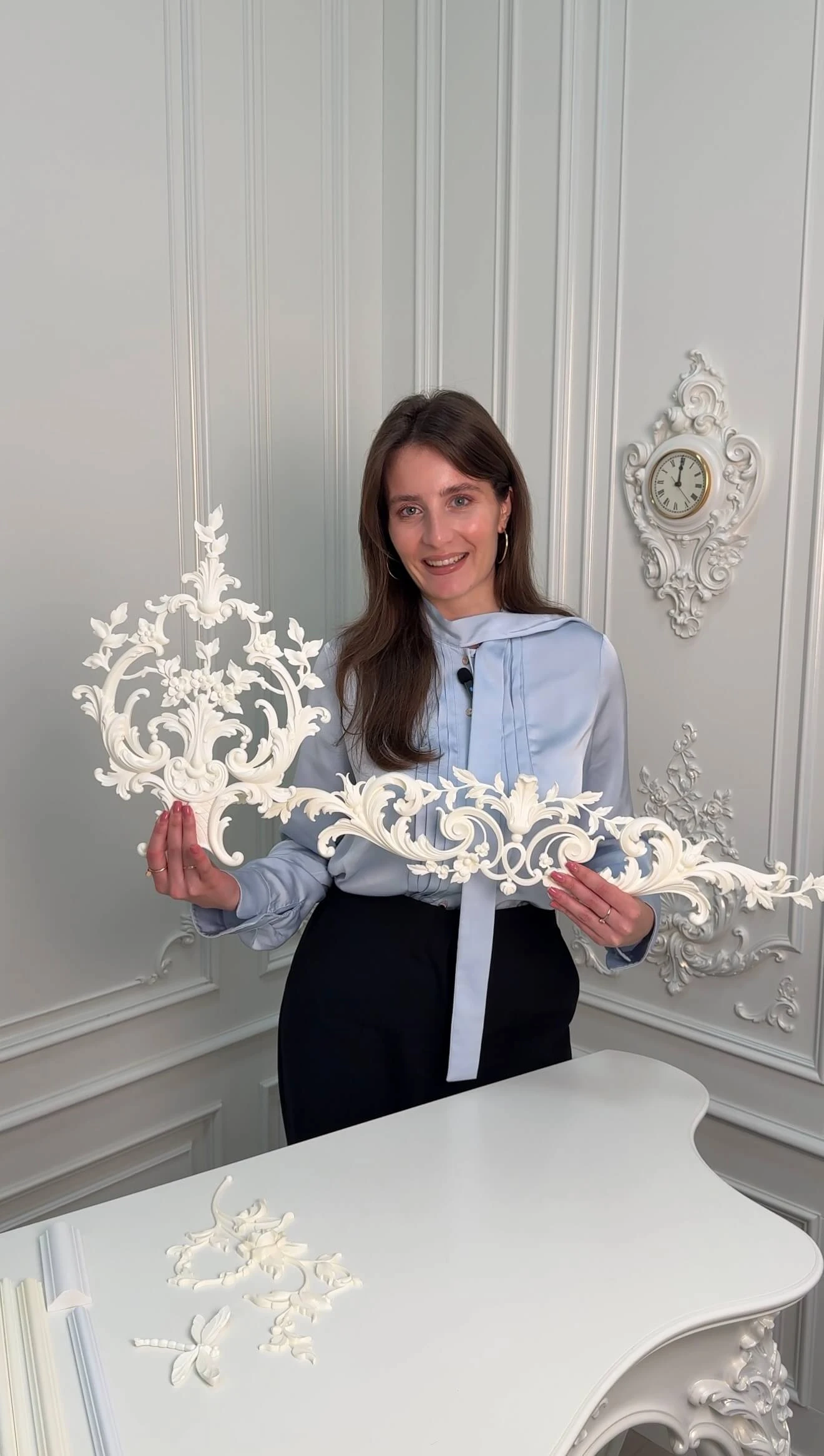
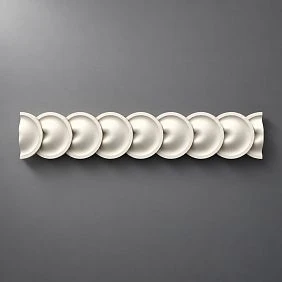
In parallel, STAVROS offers a complete rangedecorative moldingof cornices in all profiles and styles, moldings, rosettes, corner elements, wall and ceiling overlays. Geometric precision, detailed relief, readiness for painting — characteristics that make STAVROS products the first choice of professional designers and architects.
Acoustics and aesthetics are not a contradiction. They are two languages of the same space. And STAVROS creates materials that speak both.