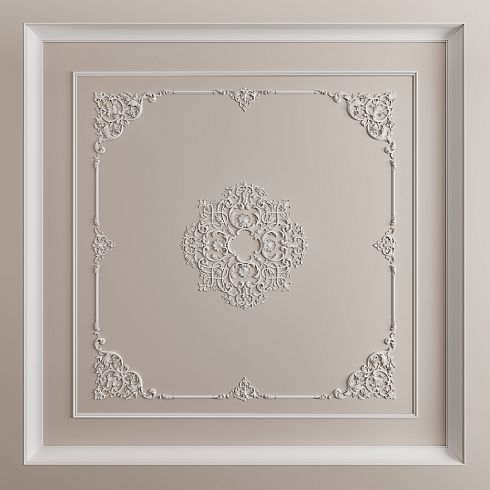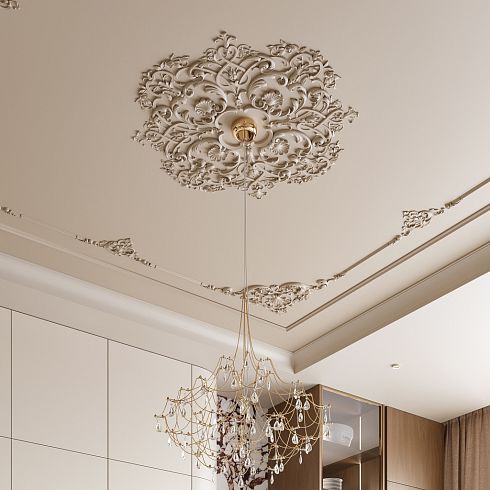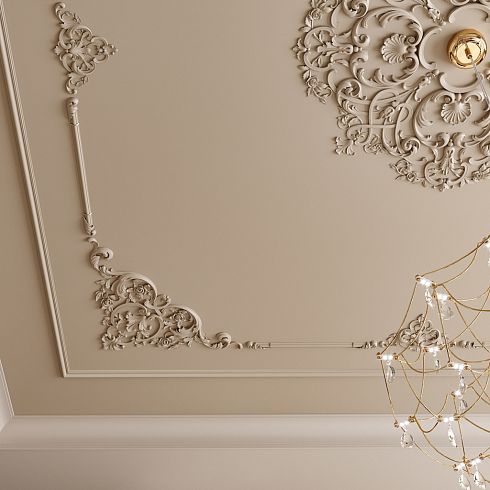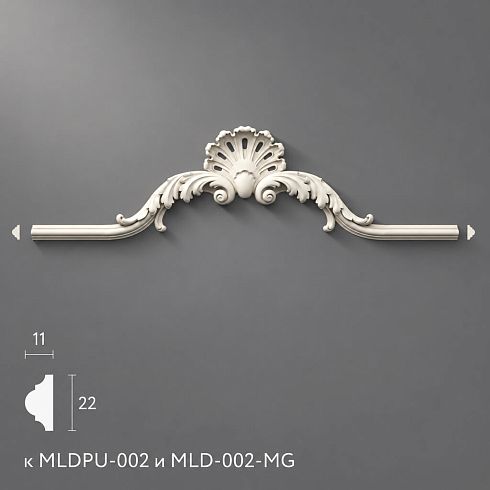



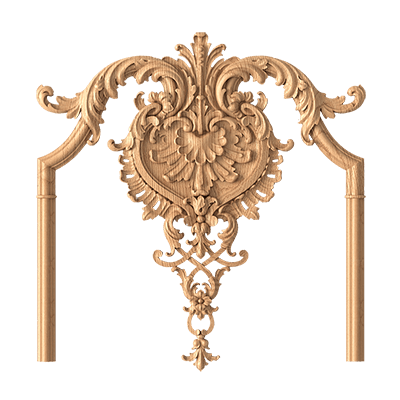
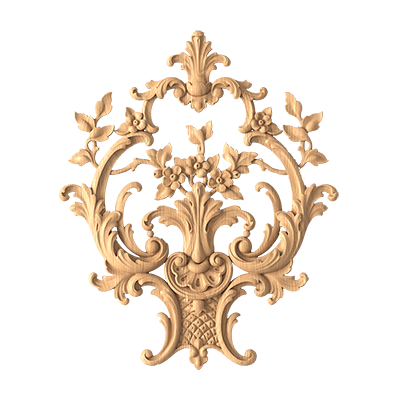
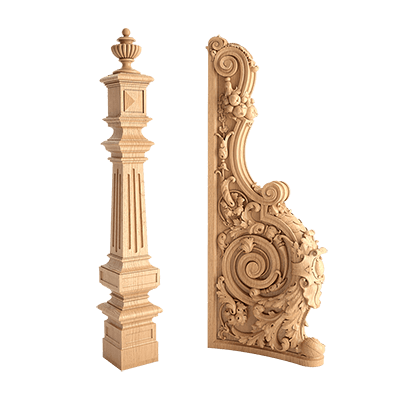
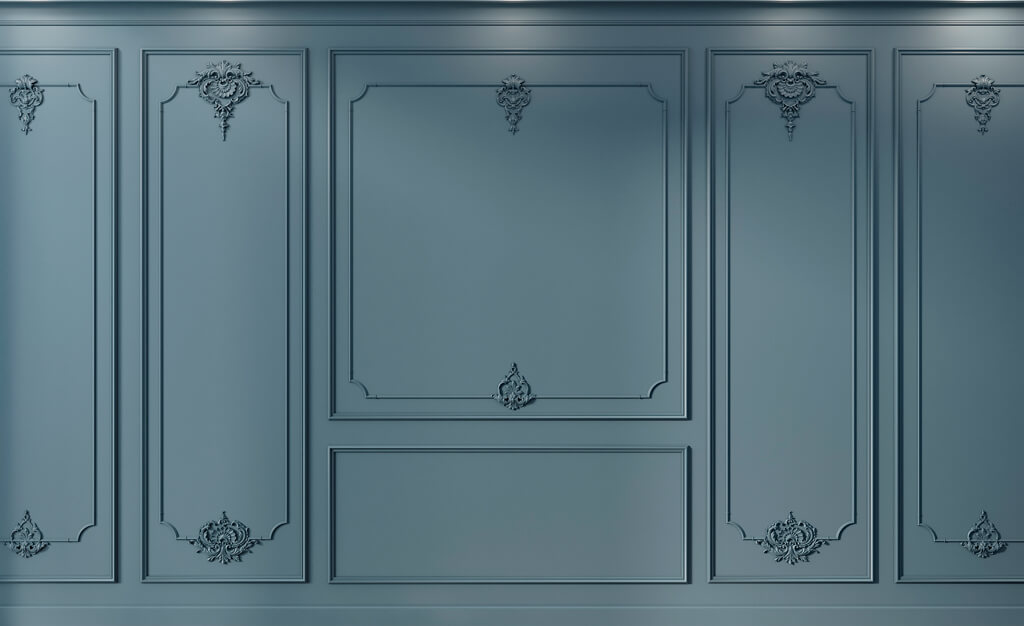
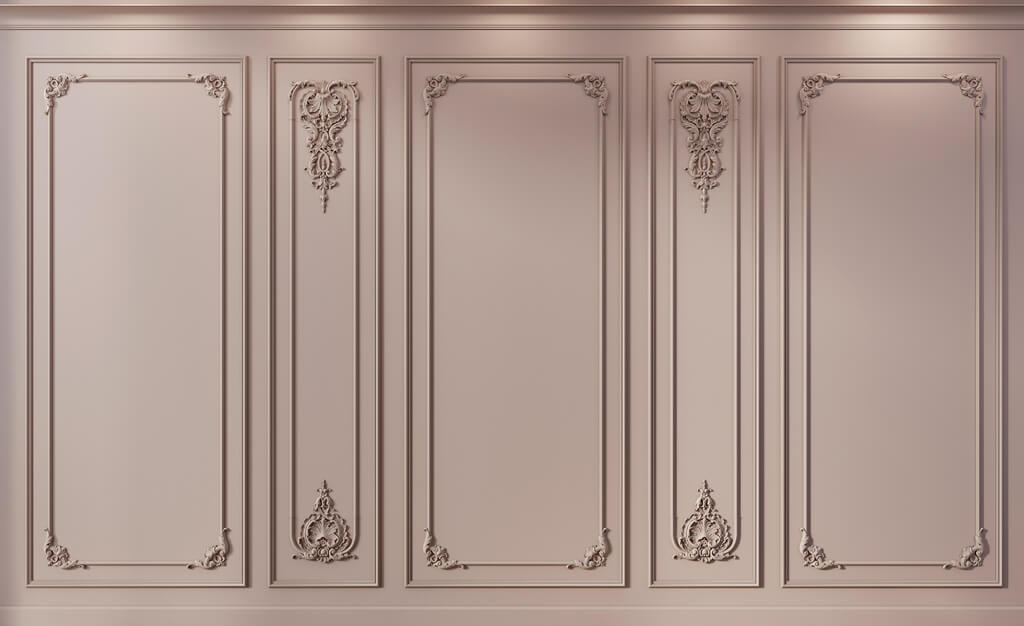
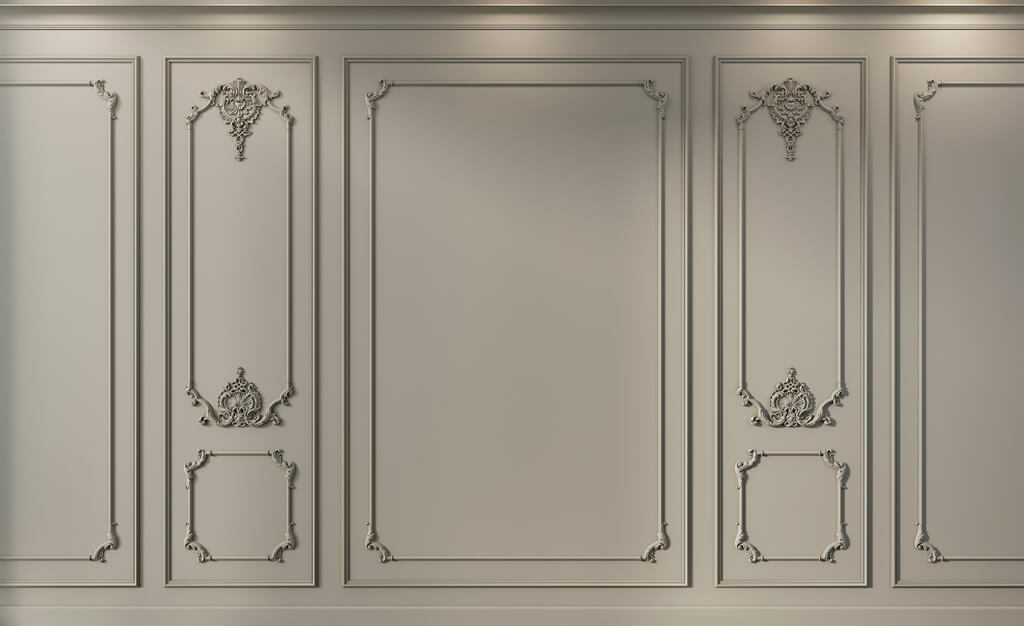
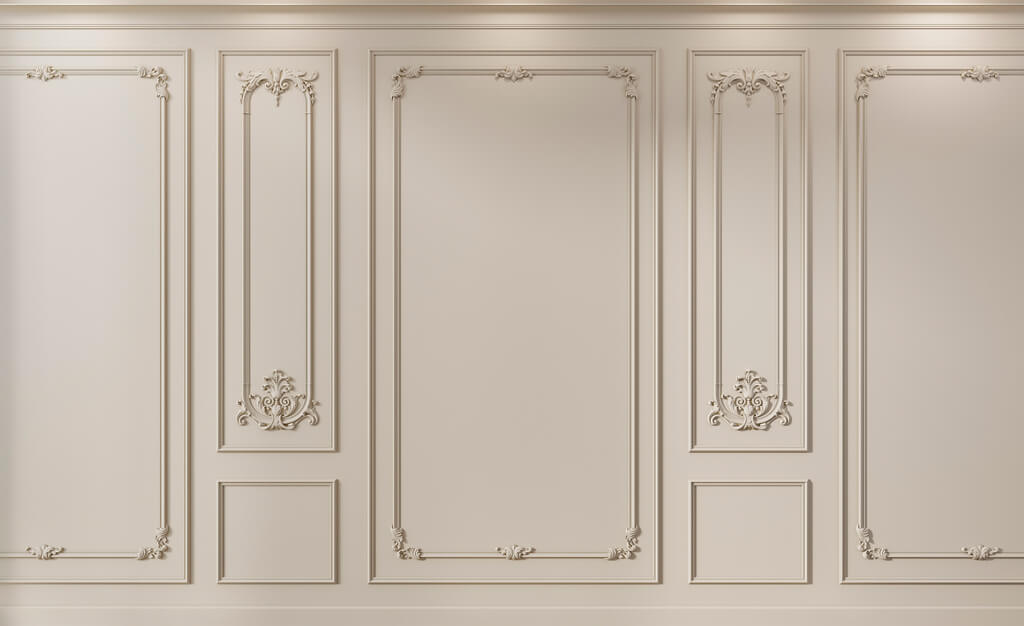

























We have been on the market for over 20 years and are ready to offer you the best combination of aesthetics, quality, and practicality. Our polyurethane is not just a material, but a reliable foundation for flawless details, resistance to moisture and cracks, as well as convenient and quick installation. The company's success began in 2002, when two artists – Andrey Ragozin and Evgeny Tsapko – created a small creative workshop for making carved wooden products. The work of the craftsmen was quickly noticed, and within a year they were invited to participate in the reconstruction of the Konstantinovsky Palace in Strelna.
Every product in our range is the result of years of experience, thoughtful technology, and attention to detail. We constantly update our collections, follow and shape trends in interior design ourselves. From elegant neoclassicism to bold Art Deco, you will find the perfect accent for the interior of your dreams.
Choose durable polyurethane decor STAVROS — beauty proven by time and real projects, not just words.
We save your time, peace of mind, and budget
We solve your tasks with maximum speed
Streamlined process reduces all risks
Quality service regardless of order volume
Reliable partner — the foundation of your business
Our showrooms are located in Saint Petersburg and Moscow. Production is located in Saint Petersburg.
Moscow contacts: /contacts_all/
Contacts of Saint Petersburg: /contacts_all/
Send us the product codes, quantities and delivery destination. Contact our team to confirm availability and order details.
Please contact us to confirm shipping availability, costs and delivery times for your destination.
Delivery cost depends on the size, weight of the item, and delivery address.
Please ask our team to confirm shipping costs and delivery arrangements for your destination before placing an order.
Prices and availability of items on the website are always current. Data is updated daily.
Note: items in stock are stored on the warehouse in unpolished form and shipped within 3 working days.
If the item is not in stock, average production time: 5–10 working days.
This is the quality of polishing of the items.
Standard — machine polishing, at a more attractive price.
Prestige — detailed hand polishing, items do not require further work.
More details: /information/kachestvo/
This is the type of veneer of the items.
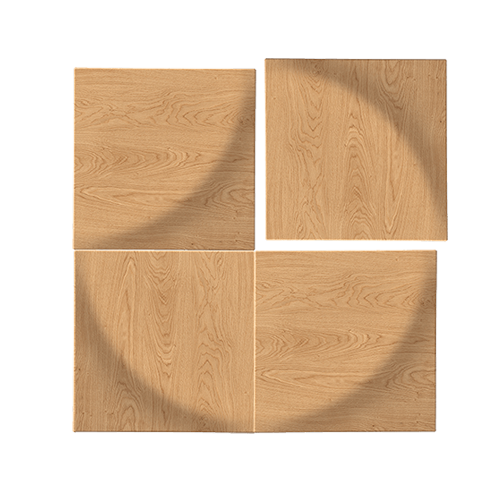
Under enamel: produced by gluing wooden laminates without color and texture matching. Contrast tonal and textural differences are noticeable. This blank should be chosen if the item is intended for opaque coating.
Under tinting: produced by gluing wooden laminates with color and texture matching. Tonal and textural differences may occur. This blank should be chosen if the item is intended for semi-transparent finish.
More details: /information/kachestvo/
Beech — dense, non-porous wood, most often used for items covered with enamel.
Oak — dense, porous wood with clearly visible natural grain. Due to its strength and decorative properties, it is often used in items with semi-transparent coating, highlighting the wood pattern.
Custom-made, if non-standard items are required, we can produce products from other types of wood, including blanks provided by the customer, manufactured according to our technical specifications.
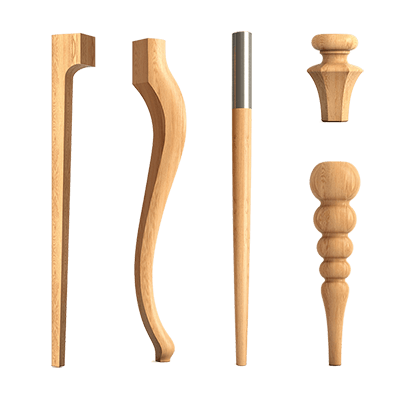
All our furniture legs can withstand a vertical load of at least 100 kg.
Average production time for custom-made items: 5–10 working days.
Most items are stored on the warehouse in unpolished form. We need time to polish and pack orders.
Yes, we manufacture non-standard items according to individual projects, but we only accept orders with a minimum quantity.
We can manufacture items of the desired size, but we only work with bulk orders. For details, please consult the sales department manager.
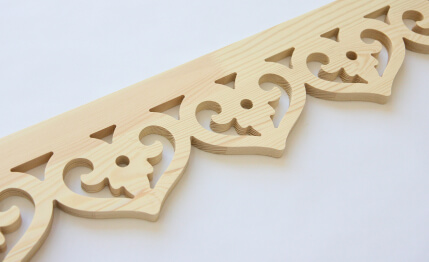
Yes, some of our products can be used outdoors. For example, polyurethane items, as well as carved door casings made of pine.
Other items are produced to order using PUR glue, if minimum quantity is available. No warranty is provided for such products, as outdoor conditions are considered aggressive.
Please contact our team to confirm available finishes, minimum quantities and a quotation for your order.
More details: /information/sovety/
Apply adhesive to the decor. Place it on the surface and press briefly. Then, lift the decor from the surface and leave it open for 3–5 minutes. Press the decor firmly onto the surface and hold for 5–10 seconds.
More details: /information/sovety/
Ideally, you should prepare a design project before placing an order.
You can do this yourself by downloading drawings of our products from our website, or you can order a project from us.
If the number of decorative elements and fittings is small, our company's manager can assist you with selection.
Unfortunately, this service is not provided.
The packaging method depends on the type of items, but in each case, we ensure sufficient protection for safe transportation.
We most often use corrugated cardboard and stretch film. Fragile items are additionally secured on a rigid base to prevent damage during transport.
Please confirm the minimum order quantity for your selected products and finishes with our team.
Please contact our team to discuss measurement and installation requirements for your project and destination before ordering.
4549
4431
3656
2969
347
244
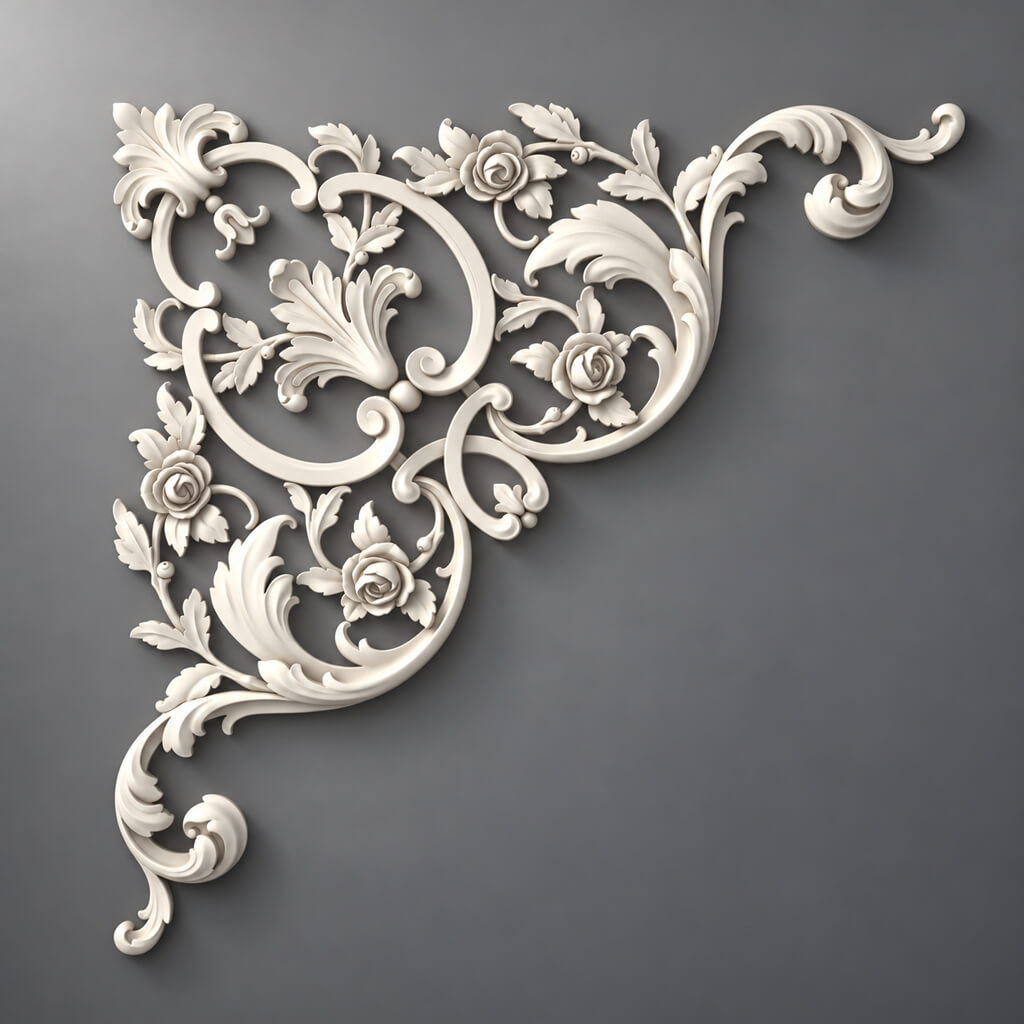
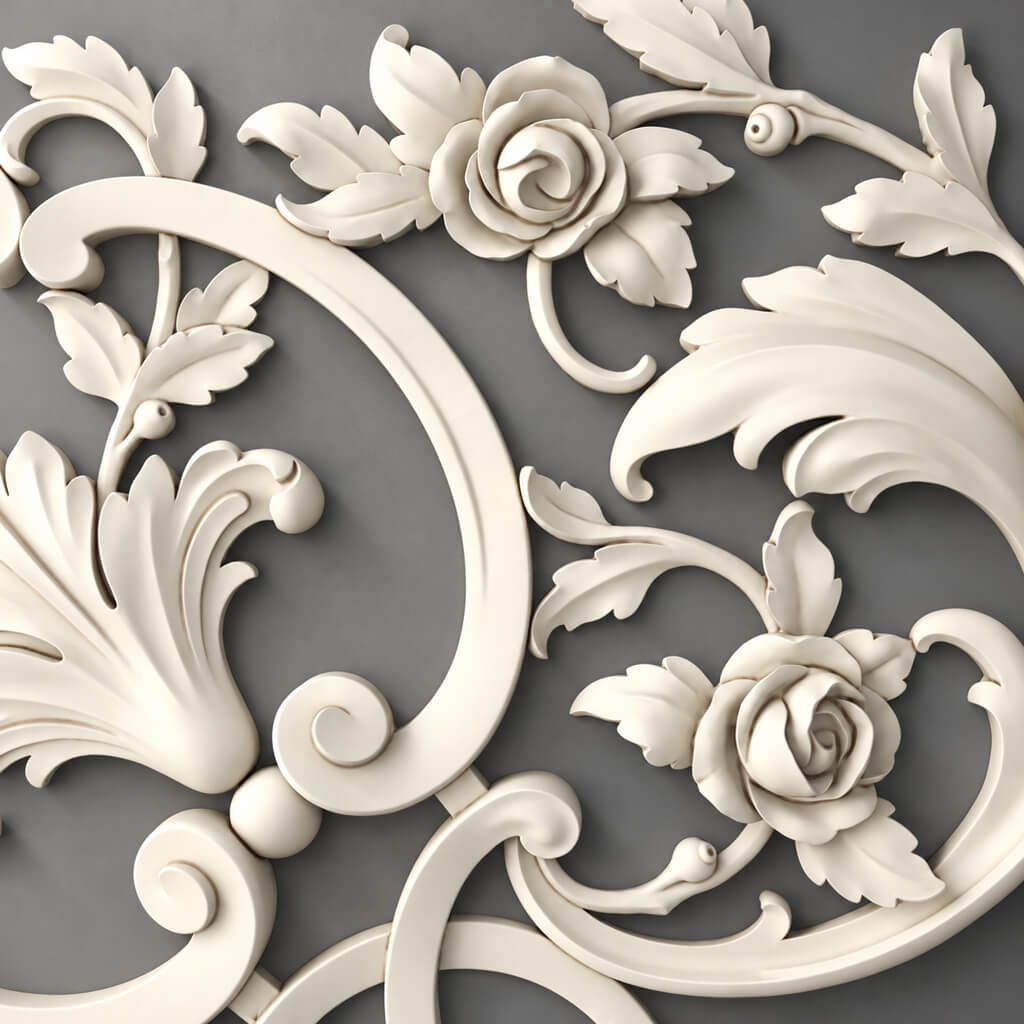
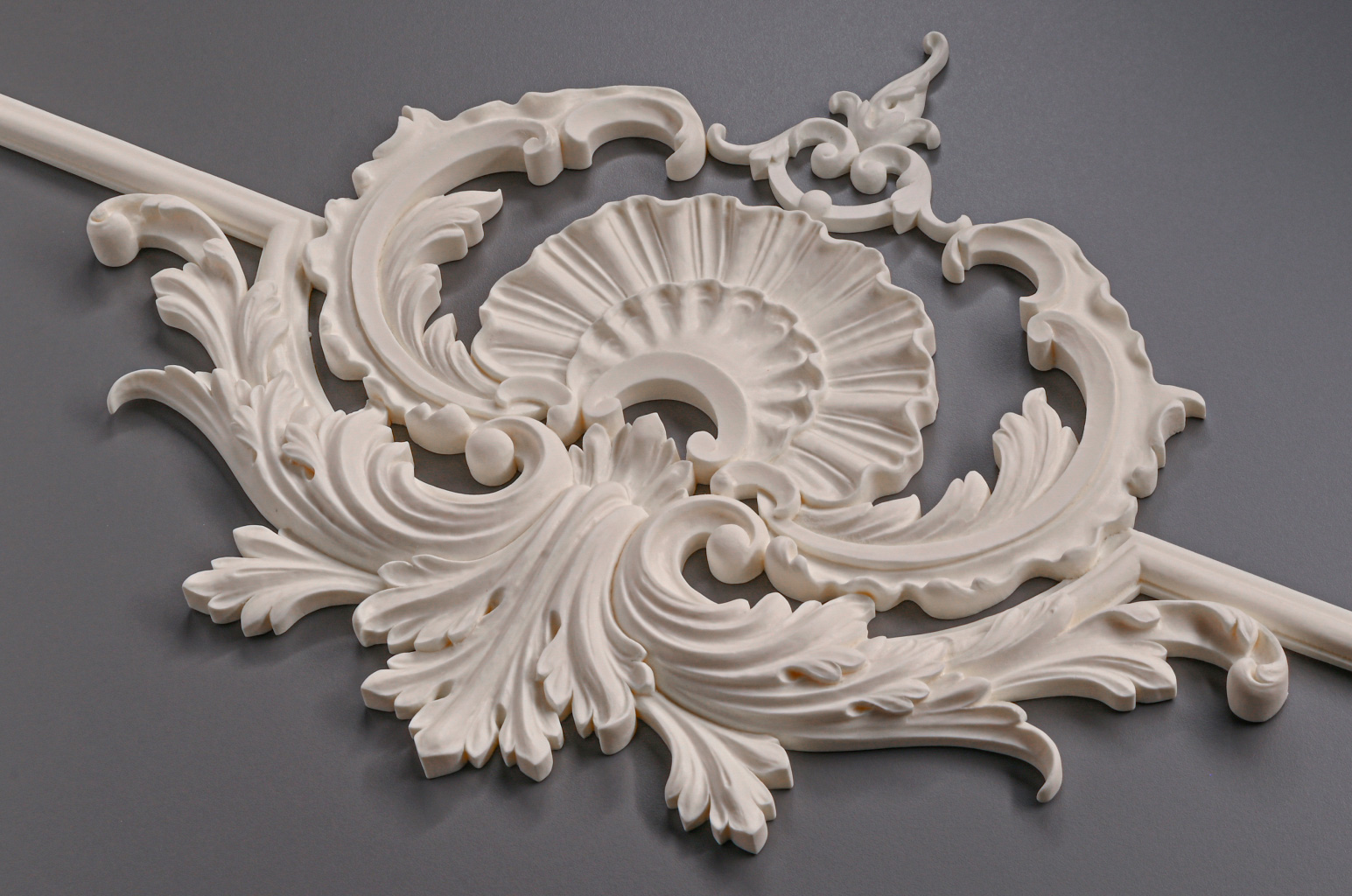
NPU.VRS-017 moulded decor — a large decorative polyurethane applique with an openwork corner composition combining graceful roses, acanthus leaves, plant shoots and expressive wavy scrolls. The product is intended for creating artistic accents in interiors, decorating wall panels, decorative frames, architectural compositions and individual wall sections.
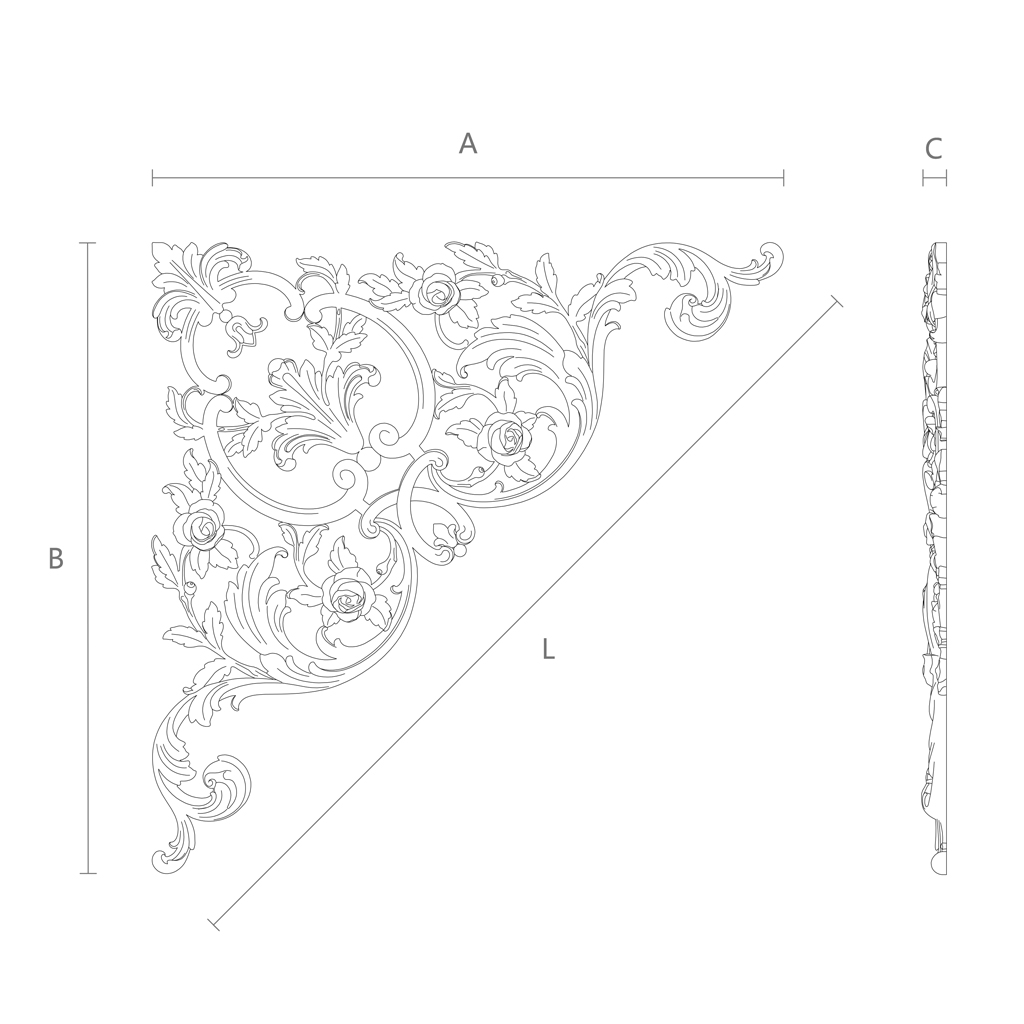
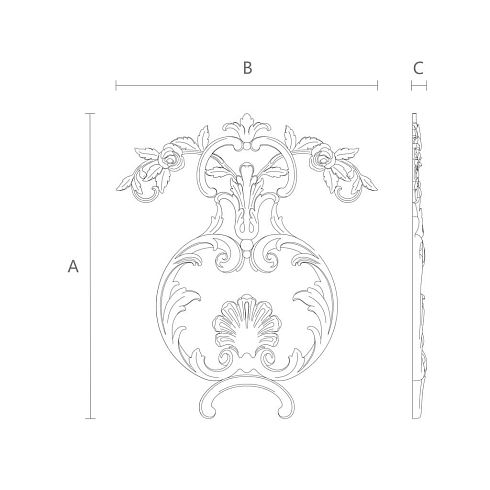
The applique measures 485 × 485 mm with a relief depth of 19 mm. Thanks to the combination of a large format and finely worked elements, the decor attracts attention without visually turning into a heavy solid structure. The asymmetrical pattern gives the composition a natural dynamism characteristic of artistic stucco in the Baroque and Rococo traditions.
A distinctive feature of the NPU.VRS-017 model is its complex system of interlacements, in which floral motifs are combined with the supple curves of stems and acanthus leaves. The relief is perceived as a single decorative work: large scrolls form the main silhouette, while small flowers, leaves and delicate offshoots reveal the details on closer inspection.
The polyurethane applique is suitable for interiors where the expressiveness of architectural design, the neatness of decorative elements and the ability to combine stucco with mouldings, cornices, wall panels and other finishing materials are important.
| Parameter | Value |
|---|---|
| Name | NPU.VRS-017 moulded decor |
| Article number | NPU.VRS-017 |
| Manufacturer | STAVROS |
| Material | Polyurethane |
| Product type | Decorative corner applique |
| Size A | 485 мм |
| Size B | 485 мм |
| Size C | 19 мм |
| Size L | 687 мм |
| Ornament | Floral, flower |
| Main motifs | Roses, acanthus leaves, scrolls |
| Already ready | Asymmetrical, openwork |
| Primary application | Wall decoration and interior compositions |
Dimensions correspond to the product's technical drawing. The L value denotes the diagonal dimension provided by the manufacturer and is not the length of a straight molding.
The ornament of NPU.VRS-017 is based on a plant motif with the characteristic features of classical decorative art. The composition is built not on strictly geometric repetitions, but on the free movement of lines that intertwine and gradually transition into one another.
Large scrolls play a central role. They form expressive arcs and set the direction for the entire pattern. Thanks to their varying thickness and smooth transitions, the decorative lines resemble supple hand-modeled relief.
Stylized acanthus leaves are placed on the curves. This motif is widely used in classical architecture, carved decor and stucco ornaments. Acanthus is characterized by deep incisions in the leaf blade, curved tips and a complex shape that creates a play of light and shadow.
In the NPU.VRS-017 model, acanthus leaves are presented in several variants. Some form broad fan-shaped forms, others stretch along the stems, and still others complement the floral elements. This variety makes the pattern lively and helps avoid monotony.
Roses give the composition particular expressiveness. In the product image, four flowers can be distinguished, located in different parts of the ornament. Each of them is integrated into the overall system of plant interlacements. The multi-layered petals form three-dimensional accents, thanks to which the viewer perceives not only the contour of the onlay but also the inner depth of the decorative pattern.
Between the larger elements are small leaves, thin shoots, curled tips and transitional details. They connect the individual parts of the composition, ensuring its visual integrity.
At the same time, the ornament retains open spaces between the branches. It is this openwork quality that allows a fairly large decorative element to be used without the impression of a solid, heavy covering.
One of the main advantages of NPU.VRS-017 is its shape, oriented toward decorative finishing of corner areas.
The product occupies space within two mutually perpendicular directions. At the same time, its internal elements develop not along strict straight lines but along smooth arcs. This solution creates a transition between the geometry of the architectural framing and the free plasticity of the plant pattern.
In interiors, this feature is especially useful when designing rectangular wall panels, decorative frames and paneled compositions.
A regular frame made of moldings forms a clear contour. The NPU.VRS-017 corner molding adds artistic complexity to it and becomes the visual center of the decorative solution.
The overlay can be used as a standalone corner accent or included in a composition with additional moldings, rosettes and other stucco decor elements.
When designing, the asymmetry of the pattern must be taken into account. Rotating the product changes the direction of the composition but does not replace a mirror-reflected overlay. If strictly symmetrical finishing of two sides is required, the availability of a suitable paired element should be checked in advance, or a layout scheme for the decor should be developed taking into account the specifics of the pattern.
The dimensions of 485 × 485 mm make NPU.VRS-017 an expressive decorative element designed for a fairly prominent role in the interior.
Horizontally and vertically, the composition occupies approximately 48.5 cm. This must be taken into account when choosing the installation location, especially if door casings, cornices, light fixtures or other architectural details are located nearby.
The relief depth is 19 mm. This profile provides noticeable light-and-shadow expressiveness on the wall surface while maintaining a relatively low protrusion of the decor.
A distinction should be made between the overall dimensions of the product and the area actually occupied by its relief parts. Due to the openwork pattern, the overlay does not cover the wall as a solid square. Between the leaves, flowers and scrolls there remain open areas through which the base finish is visible.
This is important when choosing the color and texture of the wall. On a smooth painted surface, the ornament will be perceived differently than on decorative plaster or textured wallpaper.
For precise placement, it is recommended to use the manufacturer's scaled technical drawing and to mark on the wall in advance not only the overall dimensions but also the main points of the composition.
NPU.VRS-017 is made of polyurethane — a material widely used in the production of interior mouldings thanks to its combination of decorative and performance qualities.
Compared with traditional solid gypsum mouldings, polyurethane elements usually have less mass, which simplifies handling them during transportation, fitting and installation. At the same time, the material allows complex relief shapes to be reproduced, including curved leaves, flower petals and small ornamental details.
This is especially important for model NPU.VRS-017. Its artistic image is built on a combination of delicate crossbars, voluminous scrolls and small decorative fragments. Clear reproduction of these elements is essential for a full perception of the composition.
Polyurethane decor is also convenient for subsequent decorative finishing. After appropriate surface preparation, the product can be painted with compatible coatings, selecting the color to match the room's decor.
The advantages of the material include:
the ability to reproduce complex plant relief;
relatively low weight compared to a similar solid gypsum composition;
ease of use in interior decorative systems;
the possibility of painting after proper surface preparation;
combination with various types of wall finishes and architectural decor;
practicality when creating repeating decorative compositions.
At the same time, polyurethane should not be perceived as a material that does not require compliance with installation and operating conditions. The quality of the result depends on the condition of the base, the adhesive used, surface preparation and the compatibility of finishing materials.
In the living room, corner molding can become part of a large decorative panel above the sofa, console, fireplace, or in the central part of a composition wall.
NPU.VRS-017 looks especially expressive on a relatively open surface, where the scrolls and floral elements do not compete with a large amount of furniture, paintings, and accessories.
For example, a rectangular panel made of polyurethane moldings can be complemented with a corner ornament. At the same time, the frame itself retains architectural rigor, while the floral composition softens the geometric character of the surround.
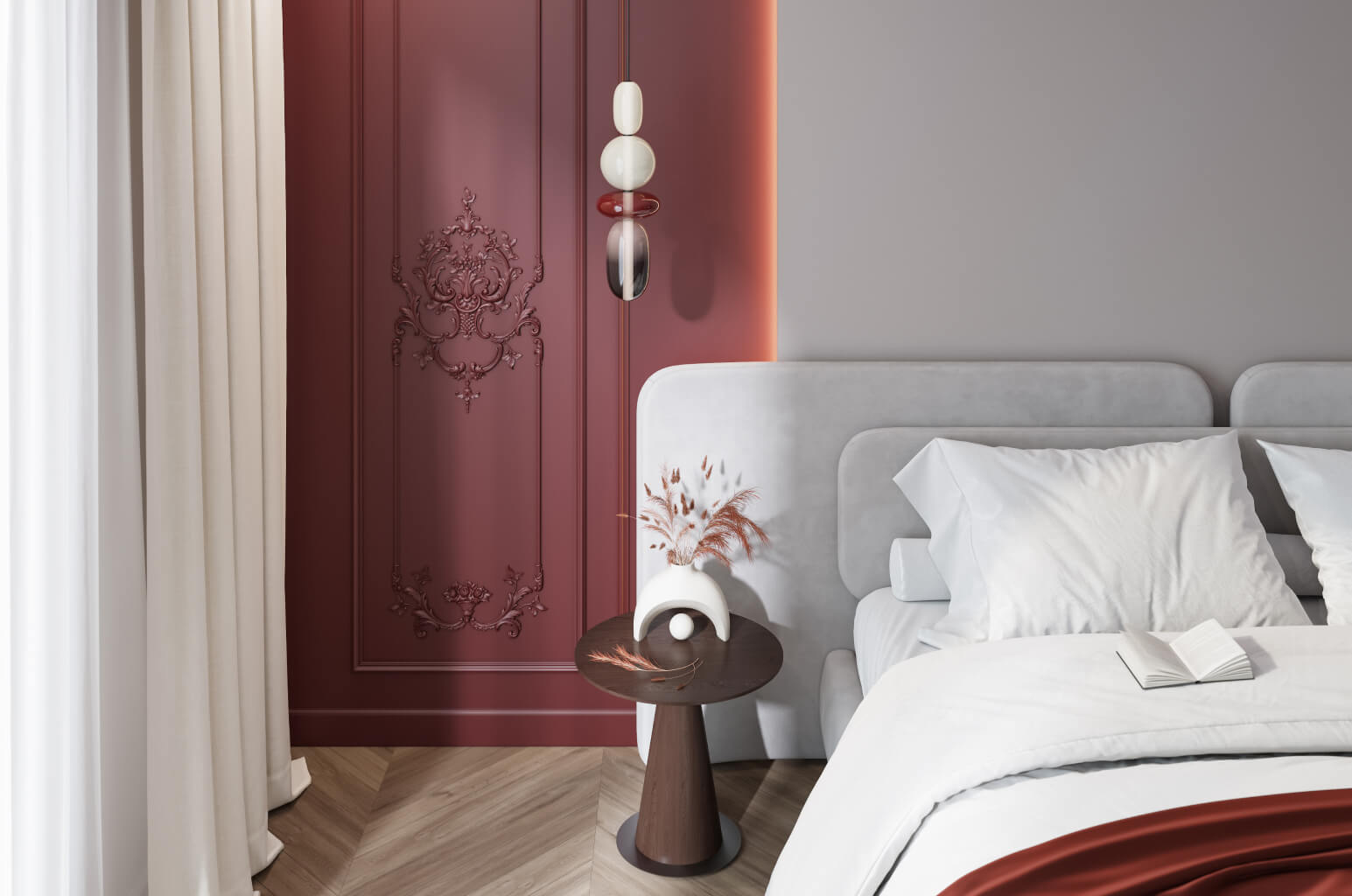
For a living room in a classic style, light-colored molding can be used against a painted wall. A more contrasting solution is a decorative element on a deep colored base, which allows each line of the relief to stand out.
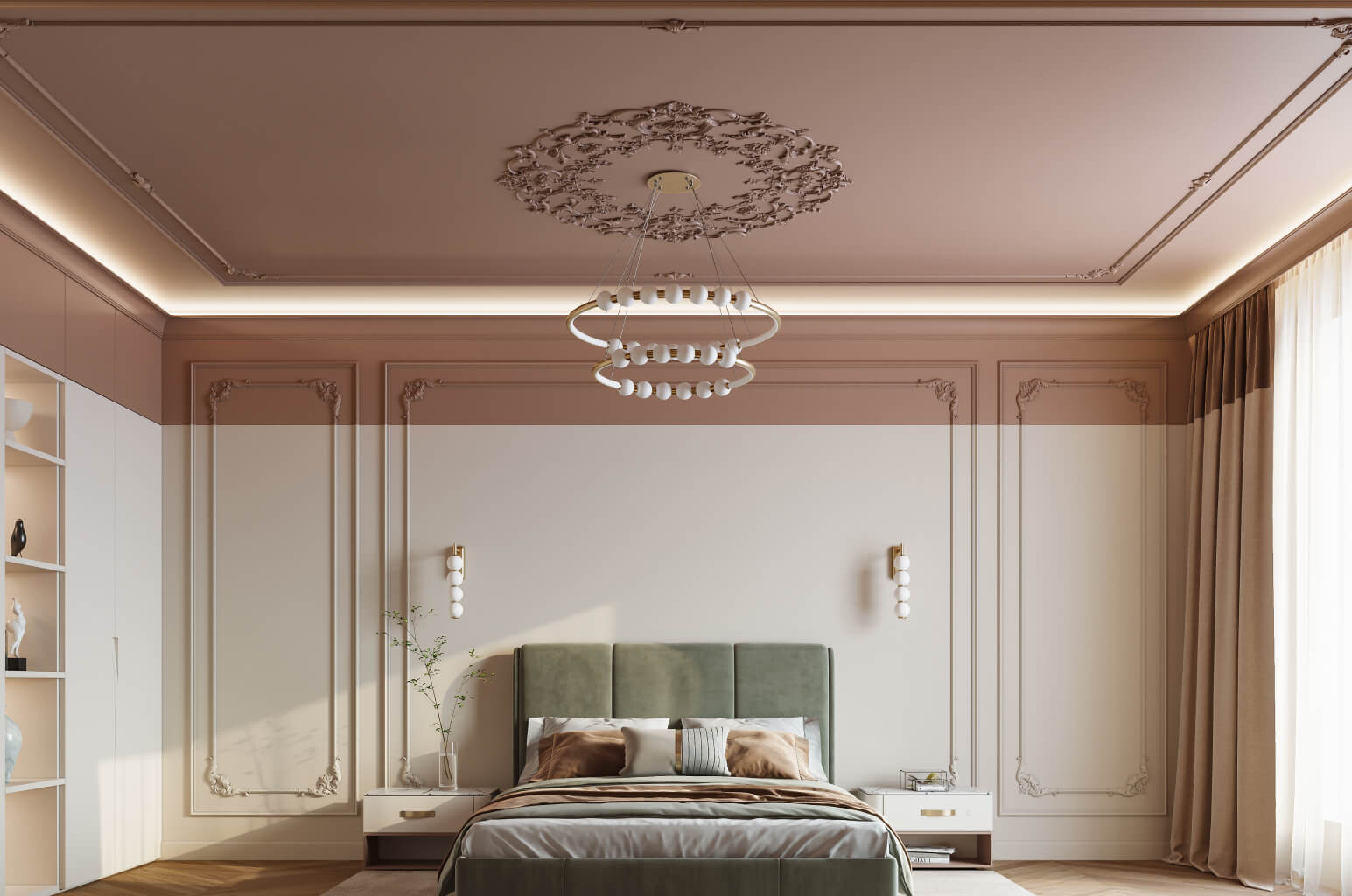
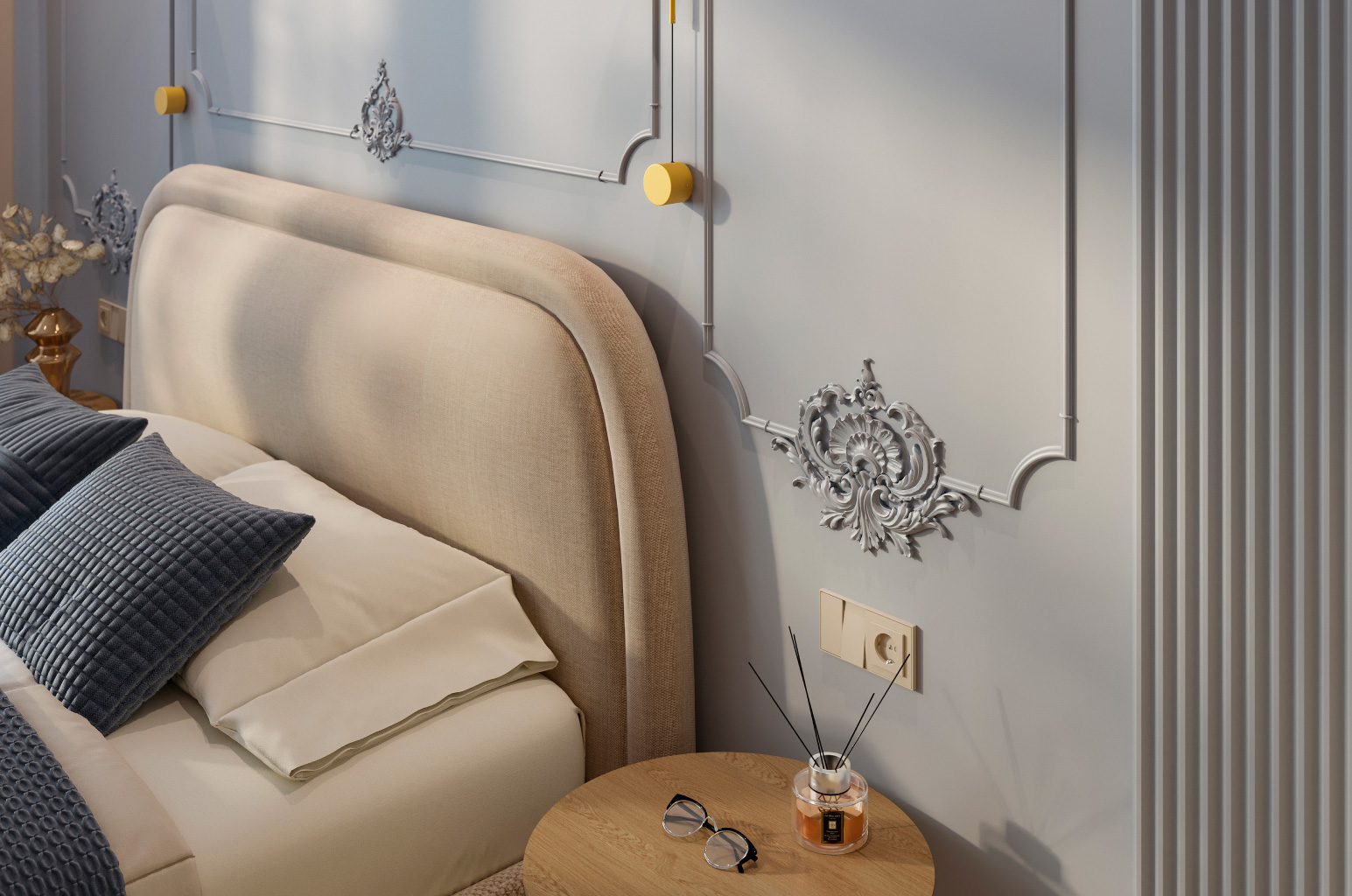
In the bedroom, NPU.VRS-017 is suitable for creating an expressive wall design behind the bed.
The decorative composition can be located in the upper part of the panel, complementing the moldings or framing a designated headboard area. Thanks to its smooth lines and floral motifs, the ornament is perceived as softer than geometric or massive architectural details.
When choosing the location, one should take into account the height of the bed headboard, the position of the sconces, the width of the decorative field, and the distance to the ceiling cornice.
If multiple overlays are used, the visual balance of the entire composition must first be checked. A large ornament does not always need to be repeated: sometimes a single expressive element looks more convincing than several symmetrical decorations.
For a spacious hall or a formal entryway, the corner applique can become part of a wall panel located above a console, next to a mirror, or in an architecturally defined zone.
Plant-based decor creates a connection between classic moldings, door surrounds, and decorative furniture elements.
When used in an entryway, it is especially important to consider the actual dimensions of the product. The applique should not be placed where protruding parts of the relief may be regularly caught by door leaves, clothing, or carried items.
A correctly chosen position allows you to emphasize the decorative character of the room without creating inconvenience in its use.
In studies and home libraries, NPU.VRS-017 can be used in combination with wooden panels, painted walls, and architectural moldings.
The plant ornament is appropriate in spaces with traditional furniture, bookcases, decorative cornices, and complex wall surrounds.
The contrast between the strict rectangular lines of the furniture and the plastic form of the stucco is especially interesting. With such a combination, it is advisable to limit the number of decorative accents so that the floral pattern does not get lost among other complex elements.
Baroque. Baroque interiors are characterized by expressive volume, decorative richness and complex plant forms. Large scrolls, roses and acanthus leaves of NPU.VRS-017 correspond to this artistic movement. The overlay can be used in the design of wall panels and ceremonial decorative compositions.
Rococo. This style particularly favors asymmetrical patterns, smooth curves and elegant floral motifs. The free movement of lines makes NPU.VRS-017 a suitable option for an interior inspired by 18th-century French decorative art.
Classic interior. In traditional design, the molded overlay can serve as an accent element within a more rigorous architectural system. To achieve harmony, it is advisable to combine it with moldings of a calm profile and maintain consistent proportions of the framing.
Modern classics. In a neoclassical space, decor should be used sparingly. One expressive composition can emphasize a wall panel, whereas an excessive number of complex ornaments may disrupt the restraint characteristic of modern classics.
Eclecticism. Polyurethane stucco can be used as a contrasting element against modern monochrome walls, minimalist furniture and minimalist lighting. In this case, the color scheme plays an important role: unusual coloring helps to connect the classic ornament with a modern setting.
To create a complete interior composition, NPU.VRS-017 can be combined with other types of architectural decor.
The most obvious solution is a combination with straight moldings. They define the boundaries of the panel, while the corner overlay adds a plant accent. At the same time, it is necessary to take into account not only the width of the profile, but also the shape of its relief.
If the molding is too massive and has a complex ornament, it may compete with the roses and leaves of NPU.VRS-017. A calmer profile often allows the artistic features of the overlay to be revealed better.
Ceiling cornices can also participate in the overall composition. For example, the decorative treatment of the upper part of the wall can be linked to the cornice through a system of frames and free fields. Direct connection of the overlay to the cornice is not mandatory: sometimes a small gap makes the composition significantly more expressive.
When combining with paneled wall panels, it is important to consider the depth of the panels and the placement of protruding elements. A large openwork ornament is best perceived on a flat area where its pattern is not overlapped by neighboring profiles.
Additionally, small rosettes, vertical overlays, and decorative inserts with similar floral motifs can be used. However, the exact compatibility of specific item codes must be verified against dimensions and drawings, not just by whether the products belong to the same collection.
When designing the decorative treatment, it is important to determine what role NPU.VRS-017 will play: the main accent, an element of corner framing, or part of a larger stucco design.
If the overlay serves as a standalone accent, it is advisable to leave enough free space around it. This allows the silhouette to be perceived as a whole, including the thin ends of the scrolls.
If the product is used as part of a framed composition, the dimensions of the main decorative field must be determined in advance. The overall width and height of the wall, the position of furniture, openings, and other architectural details are taken into account.
The visual center of the composition plays an important role. Due to the asymmetry of the pattern, the geometric middle of the overlay does not coincide with the area of greatest decorative density. During placement, this may require a slight adjustment of position relative to neighboring elements.
When decorating several panels, a consistent principle for placing the stucco should be followed. Repeated compositions should be perceived as a deliberate system, not as a set of randomly placed ornaments.
Mirrored arrangements require especially careful planning. An asymmetrical overlay cannot automatically be considered universal for the right and left corners: before ordering, it is worth checking how each piece will look after rotation.
The visual impression of NPU.VRS-017 depends significantly on the chosen finish.
White molding on a light wall. This is a traditional option for classic interior design. When the wall and the decor are in similar shades, the main expressiveness comes from the shadows within the scrolls and between the rose petals. This solution works especially well with soft side lighting.
Contrasting light relief. Against a gray, graphite, blue, or green background, the light overlay takes on a more graphic character. The open areas between the plant details become part of the pattern, and each curve reads more distinctly.
Painting in the wall color. A monochrome finish preserves the architectural complexity of the molding without strong color contrast. This is a suitable option for modern classics and interiors with a calm palette.
Restrained decorative patina. With the correct finishing technique, individual protruding areas of the relief can be highlighted with an additional tone. This treatment can emphasize the shape of the petals and acanthus leaves. However, an excess of contrasting patina makes the composition visually overloaded.
Accent color. In eclectic interiors, it is possible to paint the molding in a color that differs from the main wall palette. It is important that the shade is repeated in at least a few other details of the room.
When choosing a finish, the original preparation of the product and the recommendations of the paint manufacturer should be taken into account. The color in the photographs should not be perceived as a guaranteed indication of the factory finish.
Lighting significantly affects the perception of stucco decor.
Under even frontal light, the pattern looks relatively calm. Its volume is noticeable, but the deep transitions between decorative elements are less contrastingly expressed.
With side lighting, the scrolls, leaves and petals form more varied shadows. This helps to emphasise the depth of the relief and the complexity of the botanical composition.
However, directional light should be chosen carefully. Shadows that are too harsh can over-emphasise individual elements and disrupt the integrity of the design.
In a residential interior, a good solution is often a combination of soft general lighting with unobtrusive additional light.
When using wall lights, it is important to allow for a distance between the fixture body and the moulding. Decorative elements must not block the light source or be located in close proximity to parts of the equipment that become very hot.
A quality installation of NPU.VRS-017 begins with checking the substrate and preliminary marking out.
The surface must be strong, clean, dry and suitable for bonding decorative products. Dust, weak coatings and peeling layers must be removed before installation begins.
Particular attention should be paid to the evenness of the substrate. The complex openwork ornament has several points of contact with the wall. Pronounced unevenness can lead to individual fragments not fitting tightly.
Before applying adhesive, it is recommended to carry out a dry fit. The product is placed against the chosen location, the position of the main scrolls is checked, and the distances to the nearest mouldings, cornices and other elements are assessed.
Marking out is conveniently done using a pre-prepared plan or a paper template. This method is especially useful when several decorative parts are involved in the composition.
Should check:
compliance of the selected area with the dimensions 485 × 485 mm;
location of the main protruding elements;
the direction of the plant ornament;
sufficiency of free space around the overlay;
compatibility of the base with the mounting compound;
possibility of reliably pressing the product during installation.
For fastening, use an adhesive recommended for polyurethane stucco decor and the specific type of base. The application conditions, working time and fixing procedure are determined by the instructions for the selected compound.
1. Product inspection. Before starting work, inspect the overlay, verify the article number and dimensions, and check the integrity of the thin leaves, floral elements and ends of the scrolls. If damage is found, it is better to postpone installation until the issue with the product is resolved.
2. Wall preparation. Clean the base and level it if necessary. Remove weak coatings, and choose surface preparation materials taking into account the type of wall and the future adhesive bond.
3. Marking. Mark the position of the overlay on the wall. It is recommended to check not only the external dimensions but also the direction of the longest decorative branches.
4. Trial fitting. The product is applied without glue and the fit is assessed. If the composition includes additional moldings, their relative positioning must be checked beforehand.
5. Applying glue. The mounting compound is distributed over the areas of the back of the product intended for gluing. Excess glue must not be allowed, as it may seep out between the thin ornament details.
6. Fixing. The overlay is installed according to the markings and pressed in accordance with the glue instructions. Pressure is applied carefully, avoiding stress on thin petals, individual leaves and protruding ends of the scrolls.
7. Position control. Before final fixing, check that the placement is correct, the fit is tight and there is no displacement relative to the markings.
8. Finishing completion. After the glue has cured, carry out the joint treatment permitted by the technology, cleaning and preparation of the surface for the subsequent decorative coating.
For complex compositions located high on a wall or ceiling, it is advisable to engage specialists with experience in working with stucco. It is not recommended to independently alter the load-bearing fixing scheme or use additional mechanical fasteners without checking their compatibility with the product.
Painting allows NPU.VRS-017 to be integrated with the overall decorative design of the interior.
Before finishing work, the condition of the product surface should be checked. If necessary, carry out careful cleaning and preparation as specified in the manufacturer's recommendations.
For polyurethane decor, STAVROS recommends a sequence comprising dust removal, priming, light sanding of the dried primer and application of the finish coat.
When working with complex plant relief, it is important to avoid excessively thick layers of material. An excessive amount of primer or paint can fill thin recesses, smooth the contours of petals and reduce detail.
The inner surfaces of the scrolls, the recesses of the roses and the small gaps between the leaves require special attention.
When painting, it is necessary to ensure uniform coverage and prevent drips from forming. The tool and technique are selected depending on the type of paint and the characteristics of the installed product.
Matte finishes usually allow the relief to be perceived calmly and naturally, whereas a more pronounced gloss enhances light reflections. The choice depends on the style of the room, the lighting and the desired decorative effect.
The complex ornament NPU.VRS-017 requires careful handling primarily because of the large number of protruding and small decorative details.
For regular surface cleaning, a gentle method of dust removal without intensive mechanical action is suitable. Particular attention should be paid to the inner scrolls, the areas between the petals and the joints of the plant elements.
If the decorative product is painted, the care method must be selected taking into account the properties of the finish. Aggressive cleaning agents, abrasive sponges and hard tools should not be used without confirmation of their compatibility with the finish.
When installing in rooms with high humidity, it is necessary to separately take into account the operating conditions, the properties of the adhesive, the coating and the manufacturer's requirements. The moisture resistance of the polyurethane itself does not mean that any installation and paint system is suitable for constant contact with water.
Proper care helps preserve the clarity of the relief and the decorative appearance of the composition.
Underestimating the dimensions. In a photograph, a decorative applique may appear small. In reality, each side of NPU.VRS-017 measures almost half a meter. Before purchasing, it is advisable to mark out the full-size layout.
Too tight placement. If the applique is placed right next to other complex ornaments, individual elements stop being perceived. Free space around the ornament helps emphasize its shape.
Mismatched scale of moldings. A narrow profile and a large applique can create an unsuccessful size ratio. Similarly, an excessively massive molding can visually overpower the floral pattern.
Ignoring asymmetry. When creating paired compositions, it is important to consider the direction of the scrolls. Simply rotating the product does not always produce the required symmetry.
Choosing an unsuitable base. Even a high-quality decorative product does not compensate for problems with a flimsy or uneven wall. Surface preparation directly affects installation.
Excessive decorative painting. Too thick a layer of paint or excessive patina can hide the fine detailing of roses and acanthus leaves.
Lack of an overall plan. A large corner applique must correspond to the other architectural elements of the room. It is advisable to determine its position in advance relative to furniture, lighting, and the boundaries of the decorative panel.
When selecting stucco, it is necessary to evaluate the product not only by the beauty of the ornament, but also by its role in a specific interior.
First of all, it is recommended to determine the total area of the decorative section. If the applique is intended for a small frame, you should check whether it will occupy too large a part of the inner field.
For a large wall panel, the ratio of the scale of the stucco to the overall composition is more important. In some cases, a single applique becomes the main accent, while in others additional decor is required to maintain visual balance.
The color of the wall should also be taken into account. Since the composition is openwork, the base will be visible between the relief fragments. Consequently, the background participates in forming the final artistic image no less than the color of the product itself.
When choosing neighboring elements, it is recommended to compare profiles, the character of the ornament, and dimensions using technical drawings. Belonging to the same style direction does not yet guarantee an ideal visual combination.
Is NPU.VRS-017 suitable for decorating wall panels?
Yes. The corner shape and intricate floral ornament make the applique a suitable decorative accent for wall panels, framed compositions, and paneled surrounds. For correct placement, the dimensions of the product, the direction of the pattern, and the proportions of the decorative field must be taken into account.
Can the applique be used together with polyurethane moldings?
Yes. Combining it with moldings allows you to unite the free floral ornament with the stricter geometry of the frame. The specific profile should be selected by width, relief height, and style. If direct adjoining is planned, it is advisable to check the geometry of the joint in advance.
Is this decor suitable for modern classics?
Yes, with moderate use. In a modern classic interior, NPU.VRS-017 can become a standalone accent on the wall or part of a decorative panel. The intricate ornament is best perceived next to calmer architectural details and solid-colored surfaces.
What are the actual dimensions of the product?
The overall dimensions are 485 mm horizontally and 485 mm vertically. Size C is 19 mm, and the diagonal dimension L is 687 mm. These values are given in the product's technical documentation. When placing it, one should take into account the intricate openwork shape rather than perceiving the overlay as a solid square panel.
Can polyurethane decor be painted?
Yes, provided the surface preparation technology is followed and compatible materials are selected. Typically, the work includes cleaning, priming, and applying a finish coat. To preserve fine detailing, it is recommended to avoid excessively thick layers of paint.
Can the product be used on the ceiling?
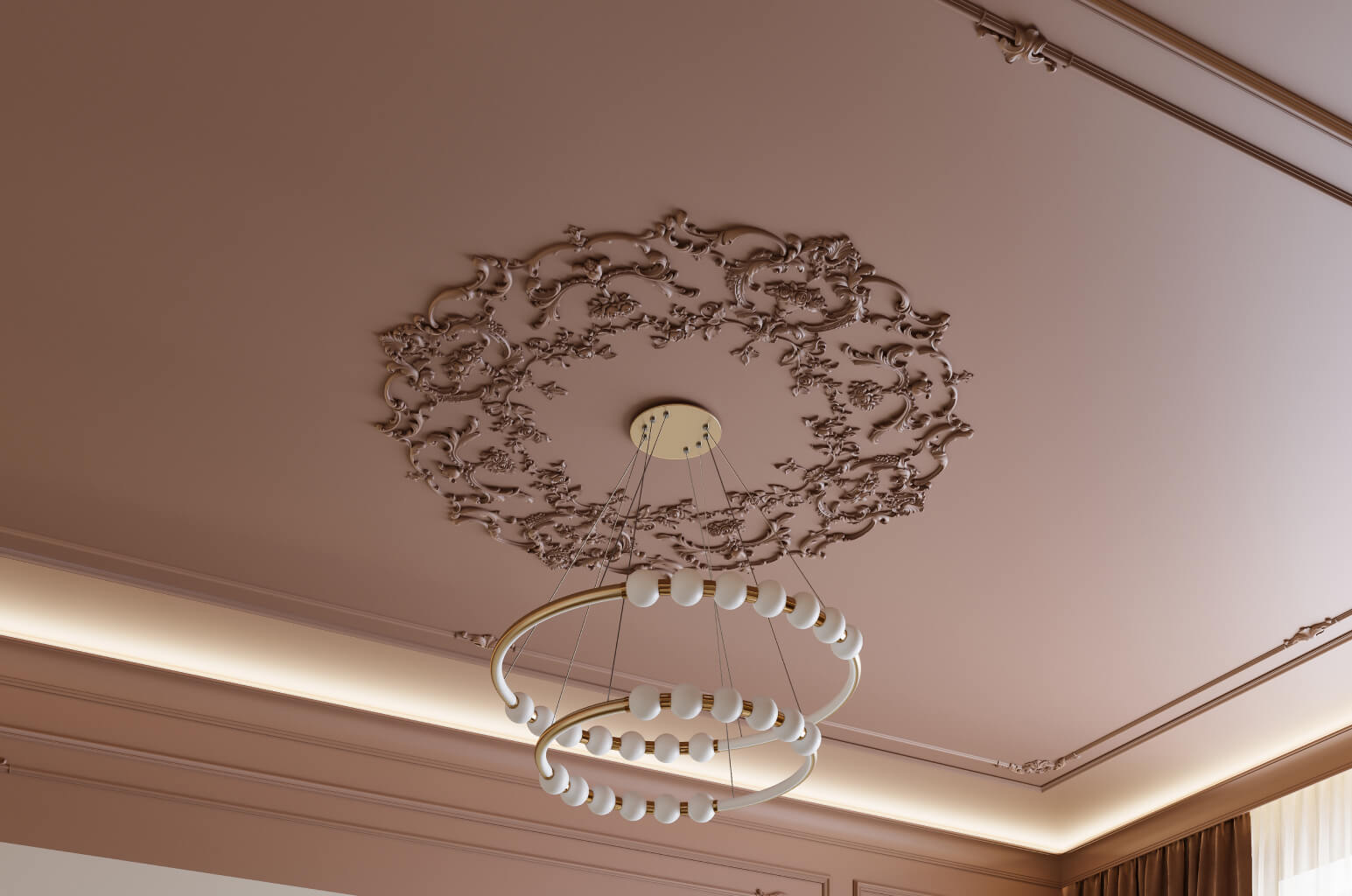
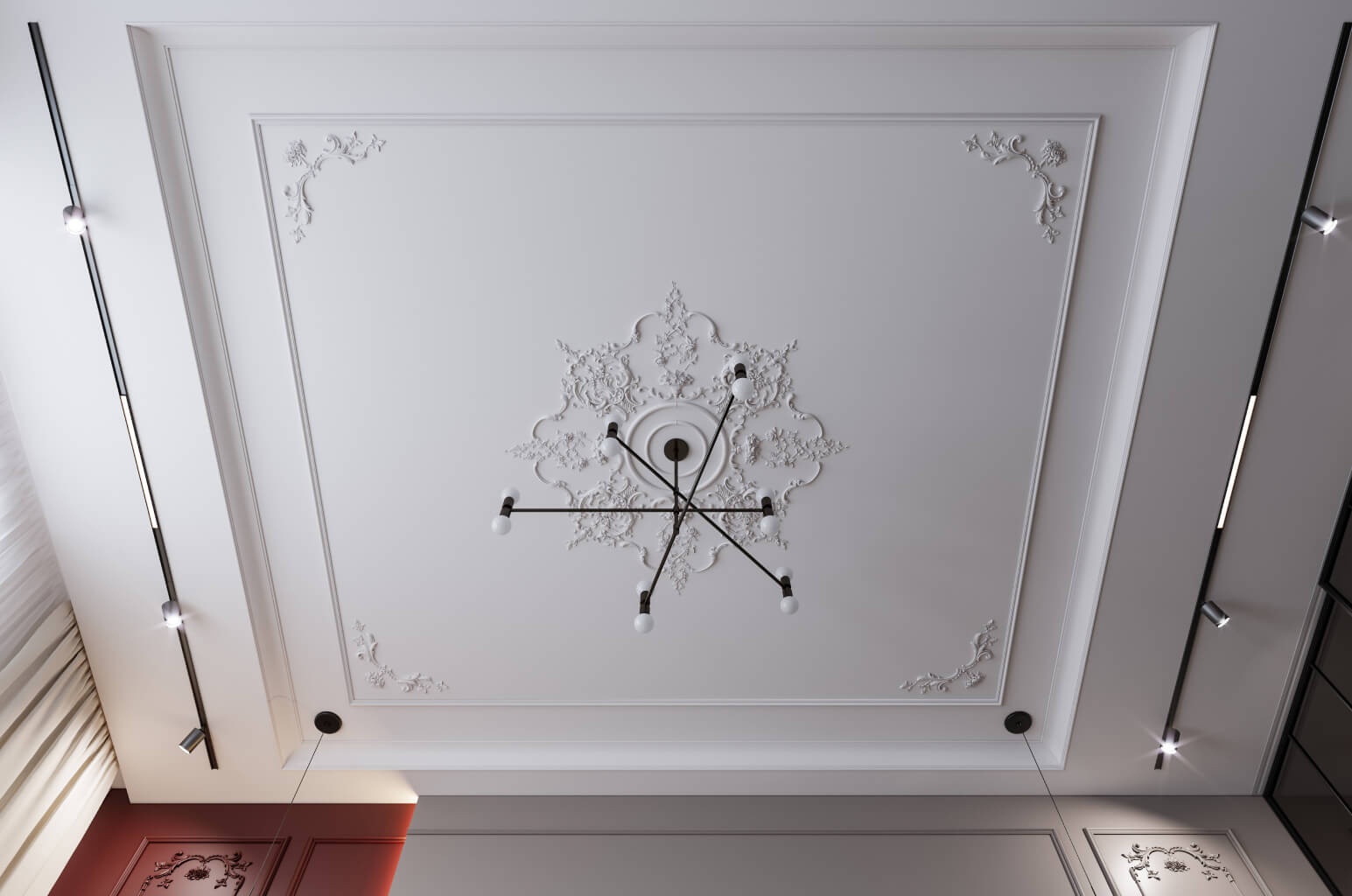
The possibility of ceiling placement depends on the project, the substrate, and the intended mounting method. The botanical ornament itself can be used in ceiling decorative compositions, but the specific installation scheme must be coordinated with the manufacturer's requirements and the characteristics of the substrate.
Is NPU.VRS-017 suitable for a small room?
This depends on the free wall area and the overall decorative design. Even in a relatively small room, a large overlay can look harmonious if used as the single expressive accent. With rich decor and limited space, it is better to check the scale beforehand on a drawing or a full-size template.
Can several identical elements be installed?
Yes, but the asymmetric nature of the composition must be taken into account. The products can be arranged in a repeating rhythm if this suits the project. For a strictly mirrored arrangement, one should check the availability of paired models and evaluate the appearance of each element in the planned orientation.
Is the decor suitable for damp rooms?
Polyurethane has a certain resistance to moisture, but the suitability of the finished structure for a specific room also depends on the mounting adhesive, the coating and the operating conditions. Before installation in a bathroom or another damp area, you should check the manufacturer's recommendations for the entire material system.
How is NPU.VRS-017 different from a simple corner overlay?
The main difference is the complex openwork composition with three-dimensional roses, acanthus leaves and large asymmetrical scrolls. A simple corner overlay more often serves as a geometric finishing element of the frame, whereas NPU.VRS-017 is a standalone artistic accent with a pronounced floral pattern.
NPU.VRS-017 is a decorative solution for interiors in which ordinary molding framing is not enough to create an expressive architectural composition.
The product combines a large format, an openwork silhouette, carefully detailed floral motifs and the flowing lines of classical ornament. Roses and acanthus leaves give the overlay artistic depth, while the asymmetrical scrolls create a sense of movement.
The size of 485 × 485 mm allows the decor to be used as a noticeable accent when decorating walls, panels, decorative frames and interior architectural elements.
The polyurethane base makes the product convenient for integration into various decorative finishing systems, and the possibility of subsequent painting helps coordinate it with the chosen palette of the room.
Buying NPU.VRS-017 polyurethane stucco decor makes sense for projects where the goal is not merely to close the corner of a decorative frame, but to create a full-fledged artistic element with expressive relief and classical floral ornament.
In the STAVROS collection, this applique can become the basis of an individual interior composition — from a restrained accent on a monochrome wall to rich decorative styling in the spirit of Baroque and Rococo.
Our manager will contact you within 5 minutes