












































































Article Contents:
- Why Zoning Without Partitions is Convenient
- Wall moldings: space graphics
- What Wall Molding Means in Architectural Terms
- How Molding Defines Zones Without Walls
- Panel Inserts: Volumetric Zoning
- Panel System as a 'Virtual Wall'
- Combination with Color and Materials
- Practical Partition-Free Zoning Scenarios
- Kitchen-living room
- Bedroom with Workspace
- Children's and Play Area
- Technical Nuances: Width, Height, Spacing
- Proportions for Different Ceiling Heights
- Spacing and Rhythm
- Installation and Operation: Key Considerations
- Installation of Solid Wood Wall Molding
- Operation and Maintenance
- STAVROS: When Zoning Becomes Architecture

Partition-free zoning is a way to divide space into functional zones without cluttering it with walls, stealing light and air.Solid wood wall moldings and panel insertsallow you to 'draw' the layout directly on the walls, emphasizing life scenarios, not just the geometry of the room. This approach is especially valuable in modern interiors: where the kitchen flows into the living room, the work area adjoins the relaxation zone, and every meter must contribute to comfort.


Why Zoning Without Partitions is Convenient
Open floor plans have become the norm: studios, combined kitchen-living rooms, integrated offices and bedrooms. Full partitions consume area, complicate lighting and ventilation, and sometimes completely kill the sense of spaciousness. Meanwhile, the need for zoning hasn't disappeared—people still need order, scenarios, and boundaries.
The task of modern design is to separate functions, not walls. Dining areas, TV zones, workspaces, reading nooks, children's corners—all can be defined not with brick and drywall, but with line, rhythm, and plane.STAVROS wooden moldingsprovide a professional tool for this: precise profiles, stable geometry, the ability to set rhythm and structure without heavy constructions.
The second important aspect is psychological. A partition divides 'rigidly': kitchen here, living room there. Molding and panel inserts define boundaries softly: they suggest where to logically place a sofa, hang a painting, or set up a home office, without cutting off the rest of the world. This is a flexible layout that can adapt to life, not the other way around.




Wall moldings: space graphics
Our factory also produces:


What Wall Molding Means in Architectural Terms
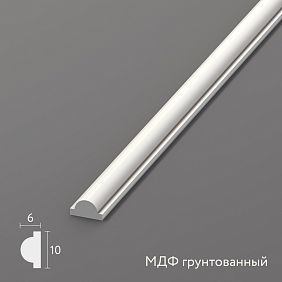
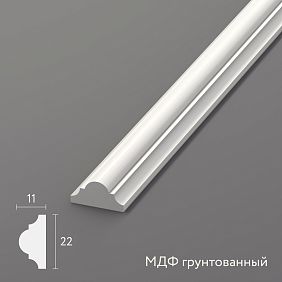
Molding is a linear profile that defines line and rhythm.STAVROS wooden moldingsoffer dozens of profiles: from thin framing strips 15–30 mm to expressive architectural details 90–150 mm wide. This range allows working on perimeters, accent walls, and individual fragments without breaking a single style.
The key advantage of solid wood (oak, beech, high-density MDF) is geometric stability. The STAVROS technological cycle includes chamber drying to 8–12% moisture content, planing on four-sided machines with a straightness tolerance of only ±1 mm per 2 m of profile. This means the moldings truly align into a straight line, without 'snaking' or kinks, which is critical for visual graphics on a wall.
The classification by purpose, reflected in the catalog, is convenient for zoning:
-
15–30 mm framing strips — frames for niches, paintings, local accents;
-
40–80 mm panel systems — the base for 'panels' and large modules;
-
90–150 mm architectural details — large verticals, pilasters, powerful horizontal divisions.
Get Consultation
How moldings define zones without walls
By working with moldings on the wall, the designer essentially draws an invisible floor plan of the room. Several practical principles:
-
A horizontal molding at a height of 80–100 cm formally 'cuts off' the lower panel zone. In the dining area, it can be filled with a warmer color, while in the living area, the upper part can be left light and airy — two zones with different moods already emerge within the same geometry.
-
Vertical 'wall sections' made of 40–80 mm wide moldings create a grid: between them is the TV zone, a spot for a console, or a composition of posters or a mirror.
-
Tall frames made of moldings, assembled into a block, effectively mark a section of the wall for a specific function: a desk, a piano, a mini-library, a children's activity area.
Unlike paint or wallpaper, molding also provides a tactile contour — a slight relief that is perceived on a sensory level. The space is literally 'read by touch': here is the panel base, here is the central field, here is the boundary of another zone.
Panel inserts: volumetric zoning
Panel system as a 'virtual wall'
A panel insert is no longer just a line, but a plane assembled from moldings and, if necessary, filled with another material or color. The STAVROS catalog explicitly states: 40–80 mm wide moldings are the optimal base for boiserie panel systems, while 90–150 mm profiles function as architectural elements for columns and pilasters. This is already architecture, just without bricks.
A panel insert can:
-
'separate' the dining group by encompassing the wall area around the table;
-
highlight the TV zone by giving it its own contour and depth;
-
designate a 'home office' — a panel behind the desk, scaled precisely to this function;
-
form a 'backrest' behind the sofa in a common room, making the living room a self-contained volume.
At the same time, the thickness of the structure is minimal: it's just a set of trim, nailed or glued to the wall, without noticeably reducing the usable area.
Combination with color and materials
Moldings and panels by themselves are merely a 'skeleton'. True zoning emerges when color or material is introduced inside the frames. STAVROS directly suggests scenarios: panel systems for walls, framing niches, portals, fireplaces — all based on the same set of profiles.
Working techniques:
-
Panel in the dining area — a warm shade (milky, taupe, complex green) inside the frames and a more neutral overall wall. Psychologically, it feels 'warmer' here, making it logical to place a table and soft chairs.
-
TV zone — dark graphite or a saturated color inside panels neatly assembled from 40–80 mm moldings. The screen blends with the background, and the viewing area is perceived as a 'niche' without construction.
-
Work corner — a frame made of medium-wide profile moldings and inside it — a more focused color, possibly with a vertical rhythm. The brain perceives this as a separate, organized space, even if the desk is in a common hall.
Wood provides an additional resource — texture. Solid wood or veneer panels, assembled along the contour of moldings, create not just a zone but also status. This is especially appropriate in areas that need 'weight': a study, a fireplace corner, a formal living room.
Practical zoning scenarios without partitions
Kitchen-living room
A classic task: an open-plan space where the kitchen, dining area, and TV zone need to be defined. Without partitions, everything often 'blurs', and furniture seems randomly placed.
What can be done with moldings and panels:
-
Assemble a panel fragment on the wall along the table: a horizontal molding at the height of the chair back plus vertical divisions corresponding to the width of the table and sideboard. Inside — a slightly warmer color. A 'dining room' emerges within the common space.
-
Behind the sofa — a tall rectangular molding composition, spanning the full width of the seat, with a neutral background. This is the center of the living room, around which the furniture and lighting arrangement is built.
-
In the kitchen area — keep the walls more 'clean,' work with cabinets and a backsplash, and emphasize the zone boundary only with a light horizontal molding that visually 'supports' the upper row.
Result: functions are separated, the logic is clear, but the space remains unified and bright.
Bedroom with a workspace
In small apartments, a desk often lives in the bedroom. If you simply place a desk against a wall, the zone dissolves. If you build a partition — it will be cramped and dark.
Solution:
-
Behind the bed — a large panel composition made of moldings 40–80 mm wide, combining the headboard, nightstands, and sconces into a single architectural 'backrest.'
-
Behind the desk — its own panel in a smaller format, but with a more cohesive color inside.
-
A horizontal molding at a height of 90–100 cm can run along the entire room, but in the workspace area be supported by vertical divisions, and in the relaxation area — remain 'clean.'
Thus, two 'stories' emerge on one wall — the sleeping zone and the work zone — without a single full-fledged partition.
Children's room and play area
A children's room especially needs zoning: sleep, study, play. But building walls in it means taking away square meters.
Moldings and panels allow you to:
-
highlight the study area with geometry: strict vertical and horizontal divisions, a calm color;
-
design the play area — with more free-form panels, possibly integrating slats or niches;
-
use a separate panel to design the 'backrest' of the bed, so as not to visually mix rest and study.
At the same time, vertical lines and panels work as a soft 'organizer' of space: the child intuitively understands where to do what.
Technical nuances: width, height, spacing
Proportions for different ceiling heights
The STAVROS catalog provides a clear grid for cornices, but it is also logical for wall profiles:
-
for a height of 2.4–2.7 m — moldings 45–60 mm and panels with a lower division at 80–90 cm;
-
for 2.8–3.0 m — moldings 60–80 mm, panel zone 90–100 cm;
-
for 3.1–3.5 m — moldings 80–100 mm, panels can rise to 110–120 cm.
It is important that the panel 'base' does not take up too much wall in low rooms — otherwise everything will feel 'cramped.' In small interiors, it is better to work with thinner profiles and neat panels.
Spacing and rhythm
Slats and moldings create rhythm. In the decorative slats section, STAVROS provides approximate cross-sections and installation spacing (10×20 with a spacing of 50–100 mm gives 'fine graphics,' 20×40 with a spacing of 150–200 mm — expressive texture). The logic with moldings is the same:
-
spacing of 60–100 cm — a calm, classic panel rhythm;
-
spacing of 120–160 cm — large, more substantial panels for spacious rooms;
-
asymmetry is acceptable but must be intentional (e.g., tailored to specific furniture pieces).
Uniform rhythm calms, makes zoning clear, even if the viewer is not versed in architecture.
Installation and operation: what is important to consider
Installation of solid wood wall moldings
Quality millwork is half the success. The other half is installation. For STAVROS products with high processing precision and stable moisture content, the algorithm is standard:
-
precise marking of the entire composition on the wall (first the entire pattern, then cutting);
-
cutting 45° angles on a miter saw with geometry control;
-
attachment with adhesive (polyurethane / PVA-D3) plus mechanical fasteners (finish nails or screws) depending on the substrate;
-
filling micro-gaps with elastic sealant and final sanding;
-
primer and painting or tinting/varnishing according to the chosen system.
Thanks to stable moisture content (8–12%) and geometry control, STAVROS profiles do not warp after installation, which is especially important for long horizontal runs and large panel blocks.
Operation and Repair
Properly processed solid oak and beech are designed to last for decades. Maintenance involves regular dry cleaning and gentle damp wiping. In case of damage (scratch, dent), the wood can be restored: locally sanded, tinted, and refreshed with varnish or oil. This is a fundamental difference from cheap MDF panels and plastic profiles, which are replaced entirely.
With proper design (considering climatic conditions, maintaining temperature and humidity levels), panel systems do not warp or crack. The recommended range is 18–24°C and 45–65% humidity, which corresponds to a normal residential microclimate.
STAVROS: When Zoning Becomes Architecture
STAVROS is not just 'baseboards and moldings,' but a complete set of tools for creating an architectural framework for interiors. In the section'Cornices, Moldings, Baseboards'a millwork line of oak, beech, and high-density MDF is assembled: from miniature profiles for fine graphics to powerful cornices and panel elements for neoclassical and classic styles.
STAVROS production expertise is based on European standards: kiln drying to 8–12% moisture content, planing on high-precision machines, multi-stage sanding, specialized priming, and finishing. This is not 'decoration for decoration's sake,' but an engineered product that reliably lasts in a real interior for 20–30 years and longer.
For the designer and client, this provides the main value: zoning without partitions becomes not a set of random lines, but thoughtful architecture. Moldings and panel inserts function as layout tools just as precisely as partitions and walls—only without losing air, light, and square footage. This is how a modern interior is born, where the classic language of details helps plan space for a living, changing life.


