Article Contents:
- Principles of Molding Decor Classification
- By Functional Purpose
- By Spatial Arrangement
- By Style Affiliation
- By material of manufacture
- By Production Method
- Horizontal Elements: Cornices, Friezes, Belts
- Ceiling Molding and Moldings
- Friezes and Ornamental Belts
- Interfloor Belts and Dividers
- Baseboards — Finishing the Lower Tier
- Vertical Elements: Columns, Pilasters, Pylons
- Columns — The Classic of Architectural Logic
- Pilasters — Columns on a Plane
- Half-Columns and Three-Quarter Columns
- Central and Accent Elements
- Ceiling Rosettes — Framing Light
- Wall Panels and Medallions
- Cartouches and Heraldic Elements
- Corner Elements and Rosettes
- Trim Elements
- Baseboards and Doorway Frames
- Sandriks and Finials
- Keystones and Arch Accents
- Structural-Decorative Elements
- Consoles and Brackets
- Dentils and Modillions
- Balusters and balustrades
- Classification by Styles
- Categories of Molding Decor in Classical Styles
- Modern and Eclectic Directions
- Materials and Technologies
- Gypsum Molding — Tradition of Craftsmanship
- Polyurethane Molding — Technology and Accessibility
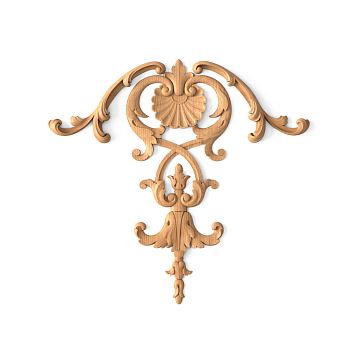
- Wood Carving — Natural Wealth
- STAVROS: 23 Years in the World of Molding Decor
- Practical Recommendations for Selection
- Proportionality of Elements to the Space
- Style Consistency
- Material Selection
- Color solutions
- 2026 Trends
- The Return of Maximalism
- Large Formats
- Color Moldings
- Technology integration
- Ecology and sustainability
- Conclusion: The Art of Creating Spaces

Molding decor is the architectural language spoken by spaces with history, character, and individuality. When the gaze glides over walls adorned with elegant moldings, when the ceiling is framed by a carved cornice, when columns support arches, and a ceiling rose beneath a chandelier creates a compositional center — the interior ceases to be merely a set of functional surfaces and transforms into an environment that cultivates taste, creates mood, and shapes emotions. But behind this aesthetic function lies a complex classification system, where each element has its ownname of molding decor, its own purpose, its own rules of application. Understanding this system distinguishes a professional from an amateur, a conscious choice from a random selection, a harmonious interior from a chaotic accumulation of details.
In 2026, the molding decor market has reached unprecedented diversity. Manufacturers offer thousands of items in dozens of materials for hundreds of styles and applications. Catalogs span hundreds of pages, SKUs number in the thousands, and the choice seems endless and simultaneously paralyzing. How to find the right element amidst this abundance? How to understand the difference between a cornice and a frieze, a molding and a baseboard, a pilaster and a column, a capital and a console? Systematizationtypes of molding decorationdoes not merely satisfy academic interest — it provides a practical tool for navigating the vast world of decorative elements, allows for precise task formulation, efficient communication with suppliers, and informed decision-making when designing interiors.


Principles of Molding Decor Classification




By functional purpose
The first level of classification divides all elements by their primary function in the interior. Some elements serve to frame and finish architectural planes — these are cornices, baseboards, architraves. Others create surface articulation, structuring space — moldings, belts, panels. A third group works as independent decorative accents — ceiling roses, panels, cartouches. A fourth group imitates structural elements, creating architectural logic — columns, pilasters, arches, vaults.
Functional classification helps understand which elements are needed for a specific task. If the goal is to cover the joint between the ceiling and wall, look for ceiling cornices or coving. If you need to frame a doorway — architraves and portals. If you want to create panels on a wall — wall moldings. Each task has its own set of suitable elements.
Our factory also produces:


By Location in Space
Division by location is the most obvious principle. Ceiling elements work on the horizontal plane overhead or at the junction of the ceiling with walls. Wall elements are placed on vertical surfaces. Floor elements finish the lower tier, covering the joint between wall and floor. Facade elements are intended for exterior use, operating in aggressive climatic conditions.
This division is critical when selecting the material and construction of an element. A ceiling rose must have a central hole for a chandelier wire. A facade cornice must be moisture-resistant and frost-resistant. A floor baseboard needs protection from mechanical impact. Ignoring the specifics of location leads to design errors.
Get Consultation
By Stylistic Affiliation
Each architectural era created its own set of decorative elements with characteristic proportions, ornaments, and forms. Greek meanders and palmettes, Roman acanthus, Gothic trefoils and gables, Renaissance cartouches, Baroque rocaille scrolls, Classical modillions, Empire wreaths and eagles, Art Nouveau plant motifs, Art Deco geometry — all are recognizable stylistic markers.
Understanding the stylistic affiliation of elements is necessary for creating a cohesive interior. Mixing elements from different styles requires refined taste and a deep understanding of architectural history. Inept combination turns an interior into a hodgepodge, where each element conflicts with the others.
By Material of Manufacture
Traditional materials — plaster and wood — have dominated molding production for centuries. Modern polymers — polyurethane, polystyrene, fiberglass — have expanded possibilities, reduced weight, simplified installation, and increased durability. Each material has its own advantages, limitations, and optimal areas of application.
Plaster molding retains the prestige of a historical material, conveys the finest details, and has a noble matte surface. Wood carving creates tactile richness and adds naturalness. Polyurethane molding is lightweight, moisture-resistant, technologically advanced, and affordable. Polystyrene molding is the cheapest but also the most fragile. Material choice is determined by budget, operating conditions, and stylistic preferences.
By Production Method
Hand sculpting — an elite art where each piece is unique, bears the imprint of the master, is expensive, and takes a long time to make. Casting in molds — an industrial method providing reproducibility, consistent quality, and an affordable price. Mechanical carving (CNC milling) — a modern technology allowing the creation of complex forms from digital models with high precision.
The production method influences the characteristics of the product. Hand-sculpted molding has a lively, imperfect surface that creates a special charm. Cast molding is perfectly smooth and repeatable. Milled molding has a characteristic machining texture, which can be either an advantage or a drawback depending on the design intent.
Horizontal Elements: Cornices, Friezes, Belts
Ceiling cornices and moldings
A ceiling cornice is a classic element that covers the joint between the wall and ceiling, creating an architectural finish for the room. The cornice profile can be simple — a single smooth curve connecting the vertical and horizontal planes. Or complex — a multi-tiered composition with projections, recesses, and ornamental belts.
Simple coving with a height of 30-80 millimeters is used in minimalist interiors where decor should not attract attention. They create a soft transition between planes, hide technical joints, nothing more. Medium cornices with a height of 100-200 millimeters are the standard for residential interiors with a moderate level of decoration. They are noticeable enough to structure the space but do not dominate.
Large cornices with a height of 250-500 millimeters are used in interiors with high ceilings — from 3.5 meters and above. They are proportionate to the volume of the room, creating monumentality characteristic of palatial and representative interiors. The profile of such cornices is usually complex, multi-tiered, with ornamental belts — dentils (tooth-like elements), egg-and-dart molding, modillions (consoles).
Cornices with hidden lighting — a modern modification of the classic element. The profile is designed so that a niche is formed between the cornice and the ceiling, into which an LED strip is placed. The light is directed upward, reflected off the ceiling, creating soft diffused lighting and emphasizing the volume of the cornice. This solution combines decorative and functional components.
Friezes and Ornamental Belts
A frieze is a horizontal band with ornamentation, located beneath a cornice or independently on the upper part of a wall. Historically, the frieze is part of the classical entablature, the middle horizontal zone between the cornice (above) and the architrave (below). In interior molding, friezes are used to create rich ornamental compositions.
Floral friezes reproduce classical motifs—acanthus leaves, grapevines, laurel wreaths, floral garlands. They create a sense of natural luxury, organicity, and connection with tradition. Geometric friezes are built on repeating abstract forms—meanders, rhombuses, zigzags, waves. They are more austere, rhythmic, and suitable for interiors where a clear structure is needed.
Narrative friezes contain depictions of people, animals, and mythological scenes. This is the most complex and expensive type of decoration, used in formal interiors to create a cultural context. Ancient triumphs, biblical subjects, historical events—the frieze becomes a narrative that reads like a book.
Interfloor belts and dividers
An interfloor belt is a horizontal projecting element that runs along a facade or wall at the level of the floor slab between stories. It visually divides the building into tiers, creates a sense of scale, and emphasizes the structural logic. In interiors, interfloor belts are found in double-height spaces—living rooms with mezzanines, halls, stairwells.
The profile of an interfloor belt can be simple—a rectangular cross-section with chamfers, creating a sharp shadow. Or complex—with carved details, corbels, ornamentation. The projection width is typically 80-150 millimeters, the profile height 100-200 millimeters. A belt that is too narrow gets lost on the facade; one that is too wide creates excessive fragmentation.
Wall dividers are moldings that divide a wall into horizontal zones. A classic technique is the tripartite division of a wall: the plinth section (lower third) is separated from the main section (middle third) by one molding, and the main section from the frieze section (upper third) by another. Each zone is painted or wallpapered with different colors or textures, creating a rich visual structure.
Baseboards—finishing the lower tier
A baseboard covers the joint between the wall and floor, protecting the lower part of the wall from mechanical damage, concealing gaps, and creating a visual finish for the vertical plane. The height of a baseboard varies from modest 40-50 millimeters in minimalist interiors to monumental 200-300 millimeters in classical ones.
Flat baseboards with a rectangular cross-section and one chamfer—the minimalism of functionality. They serve a technical role, not aspiring to be decorative. Profiled baseboards have a complex cross-section with projections and recesses, creating a play of light and shadow. They add visual interest, structure the lower tier, and harmonize with other moldings in the interior.
Wide baseboards 15-30 centimeters high are characteristic of classical and neoclassical interiors. They create a powerful visual foundation against which the wall appears lighter. Such baseboards often have a complex profile with capitals in the room corners, transforming a technical element into an architectural detail.
Baseboards with cable channels—a practical modern solution. A cavity inside the baseboard runs for laying wires, eliminating the need to chase walls. A removable front panel provides access to the wiring for maintenance and upgrades.
Vertical elements: columns, pilasters, pylons
Columns—the classic of architectural logic
A column is a vertical supporting element of circular cross-section that, in classical architecture, bears a real structural load. In interior molding, columns are more often decorative—they create architectural logic, structure space, frame zones, but do not function as supports.
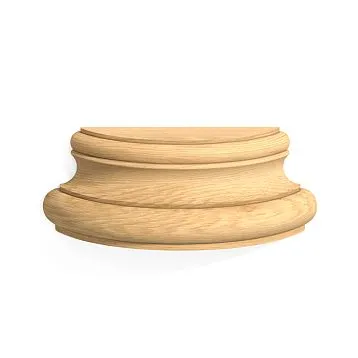
The structure of a column is tripartite: base (expanded foundation), shaft (central part), and capital (upper decorative part). The proportions of these parts and their decorative elaboration determine the column's order—Doric, Ionic, Corinthian, Tuscan, Composite.
The Doric column is the most austere and massive. The base is minimal or absent, the shaft tapers upward, has vertical flutes (16-20), and the capital is simple—a round cushion (echinus) under a square slab (abacus). The height of a Doric column is 5.5-6 times the diameter of the shaft base. This order expresses masculinity, strength, archaic power.
The Ionic column is more elegant and slender. The base is multi-stepped, with alternating convex and concave elements. The shaft has 24 flutes, and the upward taper is more gradual. The capital is adorned with volutes—spiral scrolls that create a recognizable silhouette. The height of an Ionic column is 8-9 diameters. The order expresses grace, harmony, femininity.
The Corinthian column is the most richly decorated. The base and shaft are similar to Ionic. The capital is tall, in the shape of an inverted bell, covered with carved acanthus leaves in two rows, between which stylized plant shoots (cauliculi) emerge, ending in volutes. The height of a Corinthian column is 9-10 diameters. The order expresses luxury, abundance, solemnity.
Modern columns may deviate from strict order canons, mixing elements of different styles, simplifying or complicating decoration, experimenting with proportions. The main thing is to preserve the visual logic: the base is stable and massive, the shaft is slender and stable, the capital is decorative and finished.
Pilasters—columns on a plane
A pilaster is a flat vertical projection on a wall that imitates a column but is not a standalone element. The projection depth is typically from 1/6 to 1/3 of the pilaster's width. The structure is identical to a column—base, shaft, capital—but all executed in a planar version.
Pilasters are used for vertical articulation of walls, creating rhythm, framing openings, highlighting functional zones. A row of pilasters along a long wall divides it into sections, creates a repeating motif, structures the space. A pair of pilasters on either side of a fireplace highlights it as a compositional center. Pilasters on the sides of a doorway give it monumentality.
The height of a pilaster is usually equal to the height from floor to cornice or frieze. Width is 150-400 millimeters depending on the room's scale. Pilasters that are too narrow look thin and disproportionate. Those that are too wide take up a lot of space and visually fragment the wall.
Corner pilasters frame external or internal room corners, visually reinforcing them. This creates the impression that the corners are strengthened by structural elements, although in reality it is pure decoration. External corner pilasters are often made more massive, emphasizing the significance of these points in the architecture of the space.
Half-columns and three-quarter columns
A half-column is a column half-embedded in a wall, projecting by half its diameter. A three-quarter column projects by three-quarters of its diameter. These elements occupy an intermediate position between a pilaster and a full column, creating more volume than a pilaster but requiring less space than a freestanding column.
Half-columns are often used to frame arched openings, niches, bay windows. They create a smooth transition from the wall plane to the three-dimensional form of the arch. In formal interiors, half-columns frame entrance portals, giving them solemnity and scale.
The material for half-columns and pilasters in modern interiors is most often polyurethane. The lightness of the material allows for mounting large elements on walls without structural reinforcement. Polyurethane pilasters and columns replicate all the details of classical orders, are visually indistinguishable from plaster ones, but installation takes hours instead of days.
Central and accent elements
Ceiling rosettes — framing the light
A ceiling rosette is a round or polygonal decorative element installed at the mounting point of a central chandelier. The rosette serves several functions: it conceals the electrical wire exit point, creates a visual frame for the light fixture, and acts as the compositional center of the ceiling decor.
The diameter of rosettes varies from modest 15 centimeters to monumental 150 centimeters and more. The choice of size is determined by the room area, ceiling height, and chandelier size. The rule: the rosette diameter should be 30-50% of the chandelier's diameter (width including arms and shades).
Simple rosettes have a smooth surface with concentric relief rings. They are suitable for minimalist and modern interiors where decor should be noticeable but not intrusive. Ornamental rosettes are covered with carved decor — floral motifs, geometric patterns, classical ornaments. They become independent works of decorative art.
Figural rosettes have a complex contour — petals, stars, polygons, abstract shapes. They create a strong visual effect and require a corresponding interior style and chandelier. An incorrectly chosen figural rosette conflicts with the rest of the decor, destroying harmony.
Domed rosettes are concave elements that create a recess in the ceiling. The interior of the dome often features painting, mosaic, or gilding. The chandelier descends from the center of the dome, creating a light crown effect. This solution is characteristic of palace and church interiors.
Wall panels and medallions
A panel is a decorative composition that occupies a specific section of a wall, framed by moldings, and filled with ornamentation, relief, or a narrative image. A panel can be square, rectangular, round, oval, or figural.
Classical panels often reproduce mythological scenes, pastorals, still lifes, architectural views. The relief can be low (bas-relief, where the image protrudes less than half its volume) or high (high-relief, where the image is almost sculptural). Narrative panels require high craftsmanship, are expensive, and are used in exclusive interiors.
Ornamental panels are filled with a repeating pattern without a narrative. Floral scrolls, geometric weaves, and abstract compositions create visual richness without distracting attention to specific content. Such panels are universal and suitable for various interiors.
Medallions are small round or oval panels (usually 30-80 centimeters in diameter). They are used to fill wall spaces between windows, decorate frieze zones, and create rhythmic compositions. A medallion may contain the owner's monogram, a heraldic motif, the building's construction date, or a decorative pattern.
Cartouches and heraldic elements
A cartouche is a decorative frame of oval or shield-like shape with scrolls, ribbons, and floral motifs along the perimeter. Traditionally, a coat of arms, monogram, inscription, or symbol is placed in the center of the cartouche. In modern interiors, cartouches often remain empty, functioning as purely decorative elements.
Baroque cartouches are distinguished by the opulence of their framing — multiple rocaille scrolls, asymmetrical compositions, dynamic forms. Classicism cartouches are stricter — symmetrical, with a clear contour, decorated with wreaths, ribbons, torches. Art Nouveau cartouches have flowing organic forms, stylized floral motifs, and asymmetry.
Placing cartouches on facades emphasizes the building's status. Above the entrance, a cartouche with a coat of arms or name announces ownership. On the pediment, a cartouche with a date marks the construction time. In interiors, cartouches are placed above fireplaces, in the center of ceiling compositions, on friezes in ceremonial halls.
Corner elements and rosettes
Corner elements solve a specific task — decorating internal and external corners when using moldings and cornices. The traditional method of joining moldings at a corner is a 45-degree miter cut. But for complex profiles with ornamentation, this creates a problem: the pattern at the joint does not match, forming a break that spoils the impression.
Corner elements are ready-made parts that cover the corner. Straight sections of molding, cut at a right angle, meet them from two sides. The corner element masks the joint, creates a smooth transition of the ornament, and often has a decorative accent — a rosette, wreath, or more saturated ornamentation than the main molding.
Internal corner elements have a concave shape corresponding to the geometry of the room's corner. External ones are convex, for cases where the molding goes around a protruding part of the structure. Universal corner elements fit several similar molding profiles, simplifying selection.
Trim elements
Door and window casings
Architrave is a plank framing a door or window opening around the perimeter. It covers the gap between the frame and the wall, creates a decorative frame, and visually highlights the opening. The width of the architrave is 60-200 millimeters depending on the opening size and interior style.
Flat architraves with a rectangular cross-section and one bevel — a minimalist solution. They perform their function without decorative pretensions. Profiled architraves have a complex cross-section with protrusions and recesses that create a play of light and shadow. Carved architraves are covered with ornamentation — floral, geometric, or narrative.
Telescopic architraves have an extendable part that allows adjusting the width and compensating for wall unevenness. This is a practical solution for standard housing where room geometry is far from ideal. Architrave capitals are decorative elements in the upper corners of the opening that create a visual completion of the vertical planks.
Portals are monumental framings of openings that include not only architraves but also pilasters or columns on the sides, an entablature on top, and sometimes a pediment. A portal transforms an ordinary door into an architectural event, creates solemnity, and emphasizes the importance of the room behind the door.
Pediments and finials
A pediment is a decorative element above a window or door, imitating a small roof. It gives the opening completeness, protects from rain (on facades), and creates a play of light and shadow. A pediment can be straight, triangular (gable), segmental (arch), or swan-neck (reverse arch).
A straight pediment is a horizontal plank protruding 50-150 millimeters above the opening. The profile can be simple or complex, with or without ornamentation. It creates a clear horizontal line that structures the facade or wall. A triangular pediment-gable refers to classical architecture, where the gable crowned the temple portico. It adds monumentality and is suitable for ceremonial entrances.
A pediment on consoles rests on decorative brackets on the sides of the opening. Consoles can be simple (S-shaped scrolls) or complex (carved elements with floral motifs, grotesques, mascaron). A broken pediment has a break in the center, where a cartouche, wreath, or other decorative element is often placed.
Keystones and arch accents
A keystone is a decorative element at the top point of an arch that imitates the central stone of an arched masonry structure. In a real stone arch, the keystone holds the entire structure, distributing the load. In stucco decor, this is a purely aesthetic element that emphasizes the center of the arch and creates an accent.
A simple keystone is a wedge-shaped element protruding from the plane of the arch. A decorative keystone has carved details — a mascaron (a human or creature face), cartouche, floral motif, or heraldic symbol. The size of the keystone is proportional to the arch size — for small openings 15-25 centimeters in height, for monumental ones — up to 60-80 centimeters.
Archivolt — the framing of an arched opening along its entire arc. It is a molding that follows the shape of the arch, creating its visual framing. The archivolt can be smooth or ornamented. Multi-row archivolts create depth and layered framing, characteristic of Romanesque and Gothic architecture.
Structural-Decorative Elements
Consoles and brackets
Console (bracket) — a projecting element that visually supports a horizontal structure — a cornice, balcony, shelf, or arch. In real architecture, consoles bear loads, distributing them onto the wall. In stucco decoration, they are more often decorative but create the visual logic of the structure.
Simple consoles have an S-shaped or volute-like form — a smooth curve connecting the vertical plane of the wall with the horizontal projection. Such consoles are laconic, universal, and suitable for various styles. Carved consoles are covered with ornamentation — acanthus leaves, scrolls, mascaron, geometric patterns.
Modillions — small consoles arranged in rows under a cornice at equal intervals. They create a rhythmic composition that visually supports the cornice. Modillions are characteristic of classical architecture — the Corinthian and Composite orders. The distance between modillions is usually equal to their width or one and a half times greater.
Shelf brackets — functional elements that actually support weight. Their strength is critical. The material must withstand the load — wood, metal, high-density polyurethane. The decorative design of the bracket should harmonize with the interior, creating stylistic unity.
Dentils and Beads
Dentils — a row of small rectangular elements resembling teeth, located under a cornice. They create a rhythmic texture, add detail, and are characteristic of the Ionic order. The height of dentils is usually 30-60 millimeters, width 20-40 millimeters, and the distance between them equals their width or half their width.
Beads — small cubic or prismatic elements located under the projecting parts of a cornice or architrave. They create a geometric texture, more strict and regular than dentils. Beads are characteristic of Russian Classicism and Empire style.
These small details may seem insignificant, but their presence or absence critically influences the perception of a cornice. A cornice with dentils looks detailed, classic, and refined. A smooth cornice without small details is more minimalist, modern, and strict.
Balusters and Balustrades
Baluster — a figured post that serves as an element of railings for balconies, stairs, terraces, and parapets. A classic baluster has a characteristic shape: an expanded base, a narrowed central part, and an expanded upper part. The height of balusters is 60-90 centimeters, diameter 8-15 centimeters.
Balustrade — a row of balusters connected by handrails at the bottom and top. Balustrades are used as actual railings with a safety function and as decorative elements on roof parapets, where they create the building's silhouette visible from below. The distance between balusters is 10-15 centimeters — sufficient for visual lightness but safe for railings.
In interiors, balustrades frame stairs, second-floor light balconies, and mezzanines. The material must be strong — wood, metal with decorative overlays, durable composite material. Polyurethane balusters are suitable only for decorative balustrades on parapets where there is no functional load.
Classification by styles
categories of relief decorationin classical styles
Greek and Roman antiquity created fundamental forms that have been reproduced for centuries. Meander — a geometric ornament of broken lines forming a continuous band. Palmette — a stylized fan-shaped leaf. Acanthus — a plant motif with carved leaves of complex shape. Egg-and-dart — a row of oval elements. Beads — a row of spherical elements. These ornaments are combined, creating endless variety within a recognizable canon.
Gothic style introduced verticality, pointed arches, trefoils and quatrefoils, gables (triangular finials), crockets (plant-like hooks along ribs), finials (floral pinnacle tops). Gothic stucco is used in Neo-Gothic interiors, during the restoration of historical buildings, and in church architecture.
The Renaissance returned to antiquity, reinterpreting it through the lens of humanism. Pilasters, cornices, balustrades, cartouches, grotesques (fantastical creatures in ornament), putti (infant angels), floral garlands. Renaissance stucco is balanced, proportional, and rational.
Baroque exploded Renaissance harmony with dynamism and excess. Rocaille scrolls, asymmetrical compositions, broken pediments, spiral columns, lush capitals, an abundance of gilding. Baroque stucco creates a sense of movement, drama, and boundless luxury.
Rococo brought Baroque playfulness to graceful excess. Delicate scrolls, shells, asymmetrical cartouches with birds and flowers, pastoral scenes. Rococo stucco is light, almost airy, creating an atmosphere of intimacy and refinement.
Classicism restored strictness and order. Symmetry, clear proportions, antique orders without deviations, restrained ornament — laurel wreaths, meanders, rosettes. Classical stucco is noble, rational, and solemn without pathos.
Empire — the imperial style of Napoleon — added military symbolism to classicism: eagles, wreaths, torches, swords, victors' laurel wreaths, Egyptian motifs. Empire stucco is monumental, solemn, and designed to inspire respect and admiration.
Modern and eclectic directions
Art Nouveau (Art Nouveau) rejected historical quotations, creating a new language of organic forms. Flowing lines, stylized plants (irises, lilies, poppies), female figures with flowing hair, peacock feathers, dragons and salamanders. Art Nouveau stucco is asymmetrical, dynamic, and biomorphic.
Art Deco combined modernist geometry with material luxury. Stepped forms, ziggurats, sun rays, stylized geometric plants, Egyptian and Aztec motifs. Art Deco stucco is graphic, contrasting, and combines strictness with decorativeness.
Modern minimalism uses stucco sparingly — simple profiles without ornament, clean geometric shapes, emphasis on line and volume rather than details. Minimalist stucco creates spatial structure without overloading it.
Eclecticism consciously mixes elements from different eras, creating individual compositions. A Baroque cartouche on a minimalist wall, classical pilasters in a loft with brick walls, Rococo combined with high-tech. Eclectic stucco requires refined taste — the line between stylish mixing and tasteless clutter is thin.
Materials and technologies
Gypsum stucco — the tradition of craftsmanship
Gypsum — the historical material of stucco, used for millennia. Alabaster mixed with water forms a plastic mass that hardens, retaining the given shape. Gypsum stucco is made by casting in molds or by hand modeling.
Advantages of gypsum: eco-friendliness, non-flammability, possibility of repair and restoration, noble matte surface, prestige of a historical material. Disadvantages: heavy weight (1 m² of gypsum cornice 20 mm thick weighs 20-25 kg), fragility during transportation, hygroscopicity (absorbs moisture), complexity of installation, high cost for handcrafted work.
Gypsum stucco is optimal for the restoration of historical interiors where material authenticity is required. For exclusive projects where each element is created individually. For connoisseurs who are willing to pay for tradition and handcrafted artistry.
Polyurethane Molding — Technological Efficiency and Affordability
Polyurethane is a modern polymer that has revolutionized decorative molding. Elements are cast in molds using reaction injection molding. Liquid components are mixed, poured into a mold, where polymerization occurs to form a solid material.
Advantages of polyurethane: lightness (15-20 times lighter than plaster), strength, moisture resistance, ease of installation (adheres with polymer adhesive), affordable price, huge selection of ready-made forms. Disadvantages: synthetic origin (critical for some), less prestigious status compared to plaster, limitations in custom manufacturing.
Polyurethane molding is the optimal choice for modern interiors where practicality is valued. For wet rooms (bathrooms, kitchens) where plaster is not applicable. For projects with limited budgets. For cases requiring quick implementation.
Wood Carving — Natural Richness
Wood is a material with a millennia-long history of use in decoration. Wood carving creates a tactile richness unattainable by other materials. The texture of wood, the warmth of natural material, the nobility of aging — all this creates a special atmosphere.
Advantages of wood: naturalness, tactile appeal, possibility of fine detailing, prestige, durability with proper care. Disadvantages: high price of hand carving, reaction to humidity (swelling/shrinkage), need for regular maintenance, limitation in forms (impossible to create complex curves).
Wood carving is optimal for classic interiors with wooden finishes. For furniture decoration. For projects where the naturalness of materials is a fundamental requirement. For exclusive works where price does not limit choice.
STAVROS: 23 Years in the World of Decorative Molding
The company STAVROS is one of the leading names in the Russian decorative molding market. Its 23-year history began with the creation of a creative workshop by artists Andrey Ragozin and Evgeny Tsapko, who specialized in carved wooden products. Participation in the restoration of the Konstantinovsky Palace in Strelna became a landmark project that opened the way to working with objects of federal cultural heritage significance.
Work with the Hermitage, Alexander Palace, Trinity-Izmailovsky Cathedral, and Sheremetev Mansion established quality standards that STAVROS applies to all manufactured products. Recreating historical interiors requires a deep understanding of styles, impeccable craftsmanship, attention to the smallest details — these competencies became the foundation of the company.
Today, STAVROS offers a full range of decorative molding: from traditional wooden carved products to modern polyurethane elements. The catalog includes thousands of items in all categories — cornices, moldings, baseboards, columns, pilasters, rosettes, panels, consoles, balusters, furniture decor. Full-cycle production, in-house developments, quality control at every stage guarantee world-class results.
A large stock program allows shipping popular items immediately. Custom manufacturing provides the opportunity to create unique elements for specific projects. Delivery is organized throughout Russia. Professional consultations help select optimal solutions for any interior.
Understandingtypes of molding decorationis the key to creating harmonious interiors, where every element is in its place, performs its function, and works in a unified composition.categories of relief decorationencompass thousands of options, but they all follow the logic of architectural styles, functional requirements, and aesthetic principles. Knowledge ofthe names of decorative moldingallows for precise task formulation, effective communication with suppliers and craftsmen, and making informed decisions during design.
In 2026, decorative molding is experiencing a renaissance. After decades of minimalist restraint, designers and clients are once again turning to classical decoration techniques, but at a new technological level. Modern materials — primarily polyurethane — have made quality decor accessible to a wide range of clients. Production technologies allow reproducing historical samples with museum precision. Custom manufacturing capabilities provide the chance to create unique interiors.
By choosing products from proven manufacturers like STAVROS, you get not just finishing materials, but tools for creating interiors that will delight for decades. Quality without complaints, the widest assortment, prompt delivery, professional support at all stages — from selection to installation — these are the company's working standards, forged over 23 years of working with the most demanding clients.
Decorative molding is not a luxury accessible only to a select few. It is an affordable way to turn standard housing into an individual space, where every detail is thought out, where architecture speaks the language of classical forms, where beauty becomes everyday life. A ceiling cornice visually raises the room height by 15-20 centimeters without construction work. Wall moldings create panels that structure space and add depth. A rosette under a chandelier turns the center of the ceiling into a compositional focus. Pilasters divide a long wall into harmonious sections. Door casings transform standard doors into architectural elements.
Practical Recommendations for Selection
Proportionality of elements to the room
The main mistake when choosing decorative molding is the mismatch between the scale of elements and the size of the room. Small decor gets lost in a large space, large decor overwhelms a small one. Scaling rule: for rooms with a height of 2.5-2.7 meters, the optimal cornice height is 60-100 millimeters, molding width 40-80 millimeters, rosette diameter 30-50 centimeters. For heights of 3-3.5 meters — cornice 120-200 millimeters, moldings 80-120 millimeters, rosette 60-80 centimeters. For heights over 4 meters, monumental elements can be used — cornices 250-400 millimeters, rosettes up to 120 centimeters.
The area of the room also influences the choice. In a room of 15-20 square meters, excessive detailing will create a sense of overload. Limit yourself to a ceiling cornice, baseboard, and possibly one or two moldings for zoning. In a room of 40-60 square meters, a full decorative system can be used — cornices, friezes, wall panels made of moldings, a rosette, pilasters or half-columns for wall division.
Style consistency
Decorative molding must correspond to the overall style of the interior. In a classic interior, use elements with ornaments of the corresponding era — acanthus leaves, egg-and-dart, meanders. In a modern minimalist space — simple profiles without ornamentation, clear lines. In Scandinavian style — laconic white elements with small cross-sections. In loft style — restrained industrial forms or intentional contrast of classical decor with rough textures.
Mixing styles requires a professional approach. Eclecticism is not chaos, but a thoughtful combination of elements from different eras based on a common principle. Color unity, repeating motifs, proportionality of scales — this is what holds multi-style elements in harmony.
Material choice
For living spaces with normal humidity, polyurethane is optimal — lightweight, durable, easy to install, long-lasting. For bathrooms, saunas, swimming pools, moisture resistance is critical — choose special moisture-resistant polyurethane or composite materials. For facades, frost resistance and UV stability are needed — facade polyurethane or fiberglass.
For exclusive projects where budget does not limit choice, plaster molding creates the authenticity of historical interiors. Wood carving adds naturalness and tactile richness. Combining materials — polyurethane cornices with wooden carved panels, plaster rosettes with polyurethane moldings — creates interesting compositions.
Color Solutions
The traditional solution is white molding on a white or light background. This creates soft light and shadow transitions, emphasizes volume through light play, and does not distract attention from the overall interior composition. White is universal, suitable for all styles from classic to minimalism.
Contrasting molding—dark on a light background or light on a dark one—creates graphic quality, clarity, and a modern interpretation of classical forms. This solution requires precision in execution, as contrast highlights any installation and joining defects.
Tonal molding—painted in the color of the walls but a few shades lighter or darker—creates refined restraint. The decor is present, structures the space, but does not shout about its presence. This is the choice of connoisseurs of subtle nuances.
Gilding, silvering, patination—classical techniques that add luxury. Full gilding of elements creates palatial splendor, suitable for formal interiors. Partial gilding—only on the protruding parts of the relief—adds accents without overloading. Patina—artificial aging with darkening of recesses—creates an effect of historical authenticity.
Trends for 2026
The Return of Maximalism
After a decade of minimalist austerity, the pendulum has swung toward decorativeness. Molding is returning to interiors not as a timid accent but as a full-fledged decorative system. Ceiling compositions of cornices, friezes, rosettes, and coffers create architectural richness. Wall panels made of moldings form structure. Pilasters and columns divide space. An abundance of details, complex profiles, and rich ornamentation—this is the trend for 2026.
Large Formats
Small elements are giving way to monumental ones. Cornices 20-30 centimeters wide instead of the standard 8-12. Rosettes with a diameter of a meter or more instead of modest 40-50 centimeters. Wide moldings 15-20 centimeters for creating panels. Full-height columns from floor to ceiling instead of decorative pilasters. Large formats create an impression of solidity, respectability, and architectural significance.
Colored molding
White is no longer the only option. Pastel shades—soft blue, pale pink, light green—create a romantic atmosphere. Saturated tones—deep blue, emerald, burgundy—add drama. Black molding on light walls—a radical contrast characteristic of modern eclectic interiors.
Gradient painting—a smooth transition from one color to another along the length of an element—is an avant-garde solution that turns a cornice or molding into an art object. Two-color combinations—the main color of the element matching the walls, with ornamental details in contrast—create refined complexity.
Integration of technologies
Molded decor is becoming a carrier of technology. Cornices with built-in niches for LED strips create hidden lighting. Rosettes with the possibility of installing speakers turn the ceiling into a surround sound system. Moldings with channels for wiring solve the problem of cable routing while preserving aesthetics.
Smart molding with integrated motion, temperature, and humidity sensors is no longer science fiction. A cornice that changes lighting intensity depending on the time of day. A molding that controls the microclimate in a zone. A rosette with a built-in surveillance camera—technology is penetrating traditional forms.
Ecological and sustainable design
Requirements for the environmental safety of materials are growing. Manufacturers are switching to formulations without toxic additives, using renewable raw materials, and minimizing emissions during production. Certification according to international environmental standards is becoming a competitive advantage.
Recycling of polymer decor—a new direction. Old polyurethane elements are crushed and used as filler in the production of new ones. Biodegradable composites based on plant fibers—an alternative to traditional polymers for those who prioritize ecology above all.
Conclusion: The Art of Creating Spaces
Molded decor is a bridge between the past and the future of architecture. Forms created millennia ago continue to work in modern interiors, proving their timeless value. 21st-century technologies—modern materials, precise production, simple installation—make these forms accessible to everyone who values beauty and strives to create a space with character.
Knowledge of classification, understanding of the functions of each element, the ability to combine different types of decor into a harmonious composition—these are the competencies that distinguish a professional approach from an amateur one.types of molded decorationare diverse, but they all obey the logic of architectural language, which can be studied and applied.
Working with trusted suppliers, such as STAVROS, guarantees material quality, dimensional accuracy, and stability of characteristics. 23 years of experience, work with cultural heritage sites, own production, strict control—this is the foundation of reliability. A wide range allows for the realization of any ideas—from modest decoration of a standard apartment to the creation of palatial interiors. Custom production opens up opportunities for unique projects where standard solutions are not suitable.
Create spaces that inspire. Use molded decor not as decoration but as an architectural tool for shaping the environment. Study classical examples, understand the logic of historical styles, but do not be afraid of modern interpretations. Combine tradition with innovation, proven forms with new materials, classical proportions with modern functions.
An interior with high-quality molded decor is an investment in long-term enjoyment of living in a beautiful space. It is an environment that cultivates taste in children, creates pride in owners, and evokes admiration in guests. It is a home that becomes not just a place to live but a work of art created by your hands with the skill of those who have perfected the forms of architectural decor for centuries.