Article Contents:
- A problem rarely discussed directly
- Why dark furniture requires a different approach to moldings
- Three pitfalls of a dark classic interior
- Where polyurethane moldings work in an interior
- The wall behind the sofa: the main accent of the living room
- Buffet or display cabinet area
- TV area next to dark furniture
- Study with a dark library
- Bedroom with a dark headboard
- Hall with a wooden console or cabinet
- Which stucco elements to choose: a detailed breakdown
- Polyurethane moldings: the workhorse of a classic interior
- Cornice: the top line that holds the entire interior
- Decorative baseboard: connecting furniture, floor, and wall
- Decorative overlays: a pinpoint accent, not a carpet bombing
- Decor for moldings: corner elements as a detail
- Ceiling rosette: the central accent under the chandelier
- Color: the most complex question
- White stucco and dark furniture
- Matching molding to the wall color
- Beige and gray-beige walls
- Dark walls for dark furniture
- Gold: a tool of surgical precision
- Scale: the science of proportions
- Small room (up to 15 sq m)
- Living room (20–35 sq m)
- Office
- High ceilings (from 3.5 m)
- Low ceilings (2.5 m and below)
- Ready-made kits: what to buy for each task
- Classic living room with a dark sofa and sideboard
- Study with a dark library
- Dining room with a dark sideboard and dining table
- Bedroom with a dark headboard
- Hall with a dark console
- Additional keys: what else the buyer is looking for in this topic
- Compatibility table: furniture and decor
- Mistakes to Avoid
- Choose molding based on the principle "the richer, the better"
- Mix style codes of molding
- Make all elements contrasting to the furniture
- Forget about the baseboard
- Choose moldings without considering ceiling height
- Not consider the color of the floor and doors
- Forget glue, sealant, and spare profile
- Practical calculation: how much of what to buy
- FAQ: Answers to Popular Questions
- Which stucco molding suits dark classic furniture?
- Can you combine dark furniture and white stucco molding?
- What to buy for a classic living room with dark furniture?
- What wall color to choose for dark furniture and stucco molding?
- Are decorative overlays needed if the furniture is already carved?
- How to properly paint polyurethane stucco molding?
- Is decor needed for wooden furniture if the walls are finished with polyurethane?
- STAVROS: production for classic interior
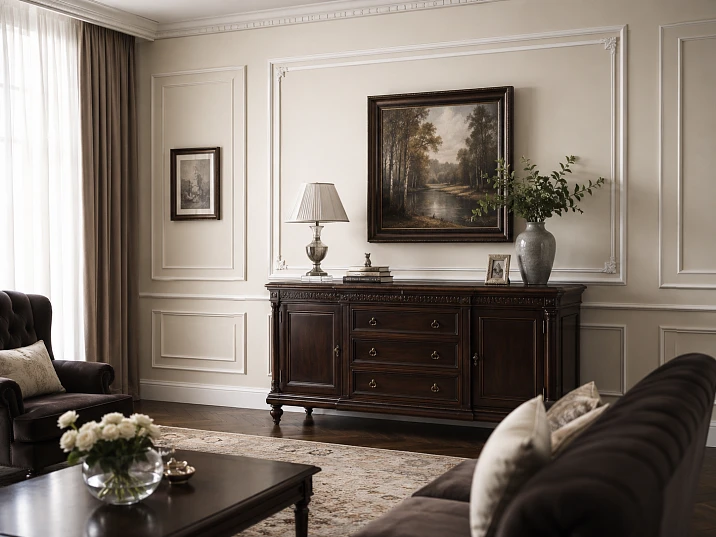
Dark Classic Furniture — it is always a challenge for the interior. It is beautiful, weighty, aristocratic. But it requires a precise environment: a little more stucco — and the room turns into a crypt, a little less — and the expensive furniture "hangs" in the void, deprived of architectural support. Properly selected Polyurethane moldings — it is that very balance that makes an interior with dark furniture expensive, lively, and unclosed.
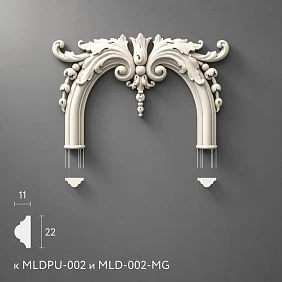
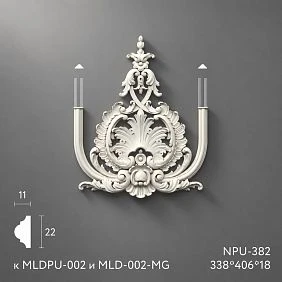
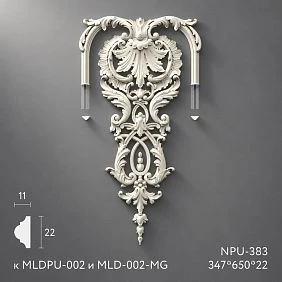

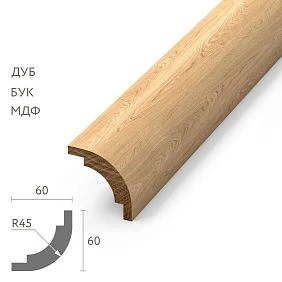
A problem rarely spoken about directly
Most people choosing Classic Furniture dark tones make the same mistake: they either overload the interior with stucco, adding everything at once — cornice, rosette, pilasters, overlays, frames — or completely abandon decor, leaving the furniture alone against painted walls.
The first option gives a feeling of a tired museum. The second — an expensive but unfinished home. The real result lies exactly in the middle: moderate, well-calibrated polyurethane decor, which works as an architectural frame for the furniture, rather than competing with it.
This article is for those who already have dark classic furniture or are just choosing it, and want to understand: which stucco to buy, how not to overload the space, what exactly goes together, and what — categorically does not.




Why dark furniture requires a different approach to stucco
Imagine a cabinet made of dark oak or walnut veneer, 220 cm high. Or a sideboard with carved facades, a display case, and dark patina. Or a classic bed with a high headboard in wenge color. Any of these items is already a powerful visual anchor in the room. It attracts the eye, sets the tone, and shapes the atmosphere.
Now add to this a large baroque cornice with active relief, lush corner rosettes, wide frame moldings with ornamental overlays in every corner. What will happen? The walls will start to "argue" with the furniture. Two active decorative plans—furniture and stucco—will compete, and ultimately neither will win. The interior will turn into visual noise.
The rule is simple: the more expressive and heavy the furniture, the more restrained the wall decor should be. And vice versa: if classic furniture the furniture is light, simple, with minimal ornamentation, the walls can carry richer relief.
Our factory also produces:


Three pitfalls of a dark classic interior
Pitfall one: "everything dark"
Dark furniture + dark walls + dark decor = a tunnel. Polyurethane stucco here should be lighter than the wall or the same tone, but with relief that provides shadows and air.
Pitfall two: "too much of everything"
Cornice + baseboard + frames + overlays + pilasters + rosette — this is no longer classic, it's oversaturation. For an interior with dark furniture, two or three types of decor are enough: cornice, baseboard, and restrained moldings.
Pitfall three: "different stucco styles"
Buy an Empire-style molding, a Baroque-style rosette, and Romanesque-style overlays — and put them all in one room. The result: an awkward masquerade. All stucco elements must belong to the same stylistic series.
Get Consultation
Where polyurethane stucco works in interior design
Before choosing specific elements, it's important to understand where they go. This is not an abstract question: the installation location determines the profile type, its scale, and quantity.
Wall behind the sofa: the main accent of the living room
The accent wall behind the sofa is the most obvious place for of polyurethane moldings in a living room with dark furniture. One or two large frames painted in the wall color create an architectural backdrop that gives the sofa weight and proper framing. The main thing is not to make the frames too small: against the background of a dark sofa, they will get lost.
Sideboard or display cabinet area
A sideboard or display cabinet are elements that 'stand' against the wall and require the wall to support them. A molding frame above the sideboard or a vertical panel behind it adds depth and turns the storage area into an architectural element. Here, both decorative polyurethane elements — an overlay above the sideboard as a completion of the composition.
TV area next to dark furniture
When the TV panel is surrounded by dark cabinets or built into a dark wardrobe, the wall behind it becomes part of this dark story. Light molding frames around the TV area, painted in a light color, visually "bring" the screen out of the darkness and structure the space.
Study with a dark library
A study is a special space. Here, dark bookcase cabinets with books stand along the walls, and the desk occupies the center. Polyurethane wall decor in the study should be strict: no floral patterns, only geometrically precise profiles. A cornice along the top line, a baseboard along the bottom — and this is already an architecturally complete space.
Bedroom with a dark headboard
A dark headboard of a classic bed is one of the most challenging cases. It dominates the wall. Molding frames on either side of the bed or vertical panels on the sides of the headboard balance the central accent and prevent the bedroom from becoming a "chamber."
Hall with a wooden console or cabinet
The hall is the first impression of the home. A dark console or entryway cabinet sets the mood from the doorstep. buy polyurethane moldings for a hall with dark furniture, it should be done considering the scale: in a narrow hall, the profile should be thin; in a spacious one, you can afford a more developed relief.
Which stucco elements to choose: a detailed breakdown
Now, the specifics. Each type of polyurethane decor plays its own role, and it's important to understand exactly which one.
Polyurethane moldings: the workhorse of a classic interior
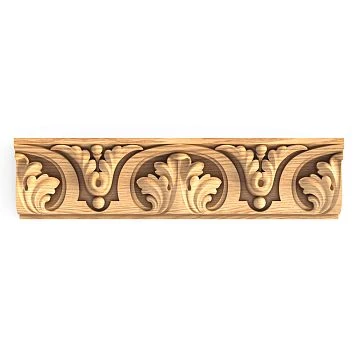
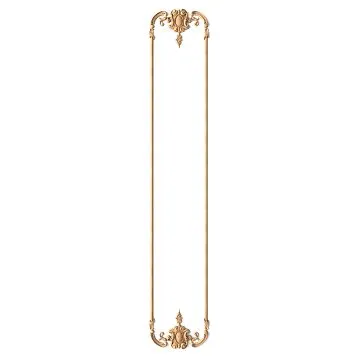
Moldings made of polyurethane — these are profiles used to assemble frame panels on walls. They create architectural rhythm, break up an empty wall into structural zones, and connect furniture to the wall through a repeating vertical-horizontal motif.
For dark classic furniture, choose moldings with moderate relief — profile height from 10 to 30 mm. An active ornament on the profile is appropriate only if the furniture is restrained. If the furniture is already carved, the molding should be as calm as possible, almost smooth.
Face width of the profile: for standard ceilings of 2.7–3 m, 20–40 mm is optimal. A wider profile will make the frames look heavy.
Cornice: the top line that holds the entire interior together
A cornice is not just a decoration for the top of the wall. It is a structural decorative element that visually separates the wall from the ceiling and sets the vertical scale of the room. Without a cornice, even the most beautiful frames on the walls look "abandoned."
For an interior with dark classic furniture the cornice should be proportionate to the ceiling height:
-
With a height of 2.7–3 m — a cornice with a projection of 50–80 mm, with a calm profile
-
At a height of 3–4 m — a cornice with an overhang of 80–120 mm and a more developed relief
-
At a height above 4 m — a composite cornice or a cornice with a frieze can be used
The full range of cornice profiles is in the section moldings from polyurethane.
Decorative baseboard: connecting furniture, floor, and wall
The baseboard is often underestimated. Yet it is the baseboard that connects the space along the lower perimeter — linking the floor, wall, and furniture into a single horizontal line. Dark furniture standing on the floor without a pronounced baseboard looks as if it is 'floating'.
The height of a decorative polyurethane baseboard is from 60 to 120 mm depending on the ceiling height. The baseboard profile should thematically echo the cornice: if the cornice has a three-step cross-section, the baseboard should also have a similar stepped logic.
Decorative overlays: a point accent, not a carpet bombing
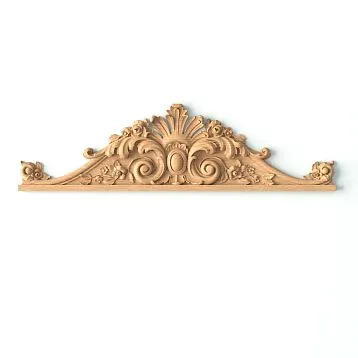
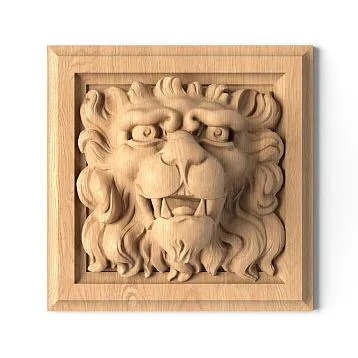
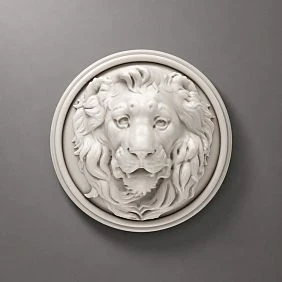
decorative polyurethane elements — overlays, rosettes, corner elements, cartouches — are accent tools. Their task is not to 'fill the wall', but to place a dot in the right spot.
Principle: no more than one or two accent elements per semantic zone. Above the sideboard — one overlay. In the center of the panel — one rosette. In the corners of the frame — corner elements, if the profile is not joined butt-to-butt at 45°.
If dark furniture already carries carved decor, use wall overlays with maximum restraint or avoid them altogether. Furniture carving and wall overlays will compete.
Decor for moldings: corner elements as a detail
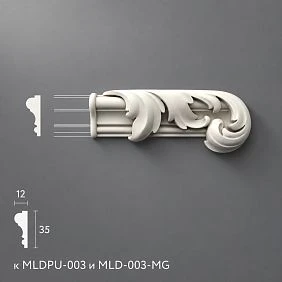
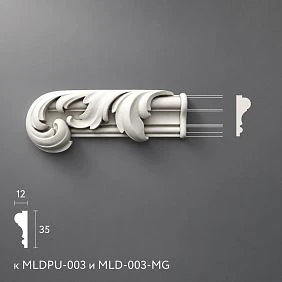
Decor for polyurethane moldings — these are corner rosettes, "ears", end caps installed at profile joints. They turn a simple 45° joint into a decorative detail.
For an interior with dark furniture, choose corner elements from the same style range as the moldings. If the molding is calm and smooth, the corner detail should also not be overloaded with ornament. If the molding has an ionic or other classical motif, the corner element can develop it.
Ceiling rosette: central accent under the chandelier
A ceiling rosette is appropriate where there is a chandelier — and where it is truly needed in scale. In a room of 15–20 sq m with dark furniture, one ceiling rosette with a diameter of 30–50 cm creates the necessary central accent without overload. For a larger area, proportionally larger.
Important: the rosette should be in the same style as the cornice and moldings. A Baroque rosette surrounded by classical moldings looks random. Everything from the same catalog range.
Color: the most complex issue
When it comes to the color of stucco for dark furniture, most people immediately think of white. This is not a mistake — but it is not the only correct answer.
White stucco and dark furniture
This is a classic contrast that works flawlessly under one condition: the walls should be neither too dark nor too bright. The ideal base is warm white, ivory, or a milky shade. White moldings against such a background create a light relief that does not strain the eye but still structures the wall.
If the walls are bright white and the moldings are also white, the relief is lost. You need either a warmer wall tone or a cooler molding tone so that the relief is readable through tonal contrast.
Molding in the color of the wall
modern classic furniture It is increasingly combined with stucco painted in the color of the wall. This solution is called "tinted stucco" or "monochrome relief." The moldings and the wall are painted the same color, and the relief is only readable through shadows from light.
For dark furniture, this approach works especially well: a wall with monochrome moldings remains calm, does not distract attention, but still carries architectural volume. The furniture ends up in the right "nest."
Beige and gray-beige walls
Beige, gray-beige, taupe, grisaille — these are colors that professional designers call "neutrals with warmth." They work perfectly with dark furniture: they don't compete with it but create a soft, warm background. Moldings against such a background — either slightly lighter than the wall, matching the tone, or white — all three options yield a worthy result.
Dark walls for dark furniture
This is a bold solution requiring professional execution. Dark wall + dark furniture — the interior becomes dense, rich, "cocoon-like." In such a space, stucco should be minimal and very precise: only a cornice and baseboard in a slightly lighter tone, without frame panels and overlays. Otherwise — darkness without air.
Gold: a tool of surgical precision
Gilded stucco elements and decor with a "gold" patina are a tempting path in a classic interior. But with dark furniture, gold needs to be dosed extremely carefully. One or two gilded accents — corner elements of frames or a ceiling rosette — provide the necessary shine. If gold appears everywhere, the interior becomes garish.
Scale: the science of proportions
Choosing the right scale of molding for a specific space is perhaps the most challenging part of the task. There is no universal recipe, but there are guidelines.
Small room (up to 15 sq m)
In a small space, dark furniture already takes up a lot of visual volume. The molding here should be as restrained as possible:
-
Thin moldings 15–25 mm wide
-
Frames of one or two standard sizes, no more
-
No large overlays or lush cornices
-
Baseboard height no more than 70 mm
-
Ceiling rosette — only if the ceiling is high (from 3 m)
Living room (20–35 sq m)
Standard living room with dark classic living room furniture allows for more developed decor:
-
Moldings 25–40 mm wide
-
Frame panels on the accent wall
-
Cornice with a projection of 70–100 mm
-
Baseboard 80–100 mm high
-
Decor for Molding in the corners of the frames
-
Overlays — selectively, not everywhere
Office
A study with a dark library and desk requires strict decor. Straight profiles without ornamentation, geometrically precise frames, and a developed cornice are appropriate here. The atmosphere is serious, professional, without excessive decoration.
High ceilings (from 3.5 m)
High ceilings allow for composite cornices, wide baseboards, and two-tier framed panels. Here You can buy ready-made stucco matching the Baroque style. Calculate the quantity: linear meters of cornices and moldings, number of rosettes, pilasters, consoles, corner elements. Add a ten to fifteen percent allowance for trimming. you need to consider that small profiles get lost at great heights — the relief should be larger to be readable from a distance.
Low ceilings (2.5 m and below)
Dark furniture + low ceiling + heavy cornice = cage. For low ceilings — only a thin cornice profile or none at all. Molding on walls — vertical, narrow, they visually "lift" the ceiling. No ceiling rosette.
Ready-made kits: what to buy for each task
This is the most practical section. Below are specific kits for five typical scenarios.
Classic living room with a dark sofa and sideboard
Task: design a living room of 25 sq. m, ceiling 3 m, dark sofa, dark sideboard along the wall.
What to buy:
-
Moldings made of polyurethane profile 30–35 mm — for two or three frames on the accent wall
-
Cornice with an overhang of 80–90 mm — around the perimeter of the room
-
Baseboard 90 mm high — around the perimeter
-
Decor for polyurethane moldings — corner elements per number of frame corners
-
Ceiling rosette 35–40 cm in diameter — for the chandelier
-
Adhesive for polyurethane (more details — what to glue polyurethane molding with)
-
Acrylic sealant, primer for polyurethane, paint in warm white or beige shade
-
10% profile reserve
Study with a dark library
Task: office 18 sq. m, ceiling 3 m, dark wood bookcase along three walls, desk in the center.
What to buy:
-
Moldings made of polyurethane with smooth profile 20–25 mm — frames on the free wall (behind the working person)
-
Strict profile cornice with 60–70 mm projection
-
Baseboard 80 mm high
-
No trims or rosettes — only strict geometry
-
Glue, sealant, primer, paint in wall color or slightly lighter
-
Reserve 8–10%
Dining room with dark sideboard and dining table
Task: dining room 20 sq m, ceiling 3 m, dark sideboard with display case, dark dining table.
What to buy:
-
Moldings made of polyurethane — frames on the wall behind the sideboard and on the opposite wall
-
decorative polyurethane elements — one overlay above the sideboard as a finish
-
Cornice and baseboard in a unified style
-
Ceiling rosette for chandelier above the table
-
Glue, sealant, primer, paint
-
Reserve 10%
Bedroom with a dark headboard
Task: bedroom 16 sq m, ceiling 2.8 m, dark classic bed with high headboard.
What to buy:
-
Moldings made of polyurethane thin profile 20–25 mm — vertical panels on the sides of the headboard
-
minimal profile cornice — only for wall finishing
-
baseboard 70–80 mm
-
no overlays — the headboard itself is a decorative accent
-
glue, sealant, primer, paint matching the walls
-
allowance 5–8%
hall with a dark console
Task: hall 8 sq m, ceiling 2.8 m, dark console with a mirror above it.
What to buy:
-
Moldings made of polyurethane — one frame on the wall above the console (or around the mirror if it is built into the wall)
-
thin profile cornice — if height allows
-
Baseboard 60–70 mm
-
Glue, sealant, primer, paint
-
5% allowance
Additional keys: what else the buyer is looking for in this topic
A customer who is selecting decor for furniture in a classic style, simultaneously searching for several related products.
If the furniture is wooden and requires applied decorative elements on the facades — decorative elements for furniture made of solid wood: overlays, rosettes, decorative slats, and corner elements. This section is for those who want to add decor directly to the wooden facade of a cabinet or dresser.
A customer studying colors of classic furniture and the rules for combining them with decor will find useful material in the site's thematic articles. modern classic furniture is a separate topic where a strict silhouette is combined with elegant decor without historical overload.
Those interested in installation techniques should study the article about installing polyurethane molding — corners, joints, and painting are detailed there
Compatibility table: furniture and decor
| Furniture type | Molding | Crown Molding | Skirting board | Overlays |
|---|---|---|---|---|
| Dark carved furniture | Smooth, thin | Restrained | Medium | Minimum or none |
| Dark furniture without carving | Medium relief | Medium | Medium | Moderately |
| Dark furniture with patina | Calm | Developed | High | Corner accents |
| Light classic furniture | Developed relief | Large | High | Acceptably active |
| Walnut-colored furniture | Thin or medium | Medium | Medium | Pointwise |
Mistakes to avoid
Choosing stucco molding on the principle of "the richer, the better"
This is the most costly mistake. Wealth in an interior is not the amount of decor, it is the precision of its application. Three correctly selected elements look more expensive than ten random ones.
Mixing style codes of stucco molding
Baroque rosette + Empire-style cornice + neoclassical moldings — this is not wealth, this is chaos. The entire polyurethane decor must be from one style family: either classic, or baroque, or neoclassical, or modern classic.
Make all elements contrast with the furniture
If dark furniture and white molding are already a contrast, then adding gold, another contrasting baseboard, and bright walls creates chaos. One contrasting pair: furniture and molding. Everything else should be neutral.
Forget about the baseboard
A cornice without a baseboard is an unfinished story. The interior is always read as a system: the top horizontal line (cornice), the middle verticals (molding frames), the bottom horizontal line (baseboard). Removing any element means losing integrity.
Choosing moldings without considering ceiling height
A wide cornice with a 2.6 m ceiling makes it feel even lower. A thin baseboard with a 4 m ceiling gets lost and looks random. Always match the profile size to the room height.
Not considering the color of the floor and doors
Dark floor + dark doors + dark furniture = need for the lightest and airiest wall decor. If the floor and doors are light, with dark furniture you can afford a slightly warmer wall tone and more developed molding relief.
Forget about glue, sealant, and spare profile
what to glue polyurethane molding with — not a trivial question. Wrong glue, lack of sealant for filling joints before painting, or insufficient profile to buy from another batch — all this leads to rework and extra costs.
Practical calculation: how much to buy
Moldings for one frame 80×120 cm: perimeter = (80+120)×2 = 400 cm = 4 m. Four corner pieces. For three such frames — 12 m of molding and 12 corner pieces. With a 10% margin — 13.2 m of profile.
Cornice around the perimeter of a room 5×4 m: perimeter = 18 m, with margin — 20 m.
Baseboard along the same perimeter: 18 m + margin = 20 m.
Final set for a living room of 20 sq. m:
-
Molding: ~13–15 m
-
Cornice: ~20 m
-
Baseboard: ~20 m
-
Corner pieces: 12–16 pieces
-
Caps: 2–3 pieces
-
Socket: 1 piece
-
Glue: 2–3 tubes of 300 ml each
-
Sealant: 2 tubes
-
Primer: 1 L
-
Paint: 2–3 L for two coats
FAQ: Answers to popular questions
Which stucco molding suits dark classic furniture?
Calm Moldings made of polyurethane with moderate relief, a cornice proportional to the ceiling height, decorative baseboard, and spot overlays. Without lush ornamentation, without active relief — dark furniture already carries enough decorative load.
Can dark furniture and white stucco molding be combined?
Yes, this is a classic technique. It is important that the white is warm or cream — cold white combined with dark wood creates a sharp, uncomfortable contrast. And do not overload the walls: two or three frames, a cornice, a baseboard — enough.
What to buy for a classic living room with dark furniture?
Moldings made of polyurethanecornice, baseboard, moderate Decorative Inserts, Decor for Molding into the corners of the frames, the ceiling rosette under the chandelier, glue, sealant, primer, and paint. Profile reserve — at least 10%.
What wall color to choose for dark furniture and stucco molding?
Warm white, ivory, beige, gray-beige, taupe — they all work. Neutral and warm shades create a soft background against which dark furniture looks dignified, and Polyurethane moldings is read through the light relief.
Are decorative overlays needed if the furniture is already carved?
In most cases — no or minimal. Carved Classical furniture in interior design already carries enough ornamental load. Additional overlays on the walls will create overload. Limit yourself to moldings, cornice, and baseboard.
How to properly paint polyurethane stucco molding?
First — primer for polyurethane for adhesion. Then — two coats of finish paint with intermediate drying. Joints of moldings before painting are sealed with acrylic sealant. Detailed technology — in the article about installing polyurethane molding.
Is it necessary decor for furniture from wood, if the walls are finished with polyurethane?
These are different tasks. decorative elements for furniture Solid wood products are installed directly on wooden facades. Polyurethane moldings are installed on walls. They do not replace each other, but must be stylistically coordinated.
STAVROS: production for classic interiors
All products described in this article are backed by real production. STAVROS manufactures classic furniture, solid wood decor and a full range moldings from polyurethane — from thin moldings to developed cornice systems.
STAVROS wooden products are manufactured in Saint Petersburg from solid beech and oak using professional milling equipment and hand finishing. The polyurethane range covers all formats: moldings, cornices, baseboards, corner elements, overlays, rosettes. Each item is available for retail and wholesale.
For designers and construction companies, STAVROS offers personalized cooperation terms: priority order assembly, assistance in selecting configurations, and the possibility of manufacturing custom profiles based on sketches. Contact us to confirm shipping to your destination. and CIS countries. Showrooms in Moscow and Saint Petersburg — for those who want to see and feel the material in person before making a decision.
If the task is to select a complete set of decor for dark classic furniture, STAVROS specialists will help calculate the footage, coordinate profiles, and assemble an order where all elements work as a unified system.