

































Article Contents:
- Buy veneered slat panels
- What are veneered slat panels and why they deserve a separate discussion
- How veneer fundamentally differs from other materials
- Which veneered slat panels to buy for walls
- Anatomy of a veneered panel: what it consists of
- MDF base
- Adhesive layer
- Veneer layer
- Protective coating
- Where to use veneered slat panels: space by space
- TV area in the living room
- Bedroom
- Entry Hall
- Office
- Commercial interior
- Veneer, solid wood, MDF or wood-look panels: an honest comparison
- What affects the price of veneered slat panels
- Veneer species and their character: a practical guide
- How to choose veneered slat panels before buying: a complete checklist
- Veneered panels and lighting: a special discussion
- Caring for veneered slat panels: how to preserve their appearance for years
- Mistakes when buying veneered slat panels
- How to calculate the number of veneered slat panels
- Integrating veneered panels into the finishing system
- Where to buy veneered slatted panels in St. Petersburg and across Russia
- FAQ: popular questions and precise answers
- About the Company STAVROS
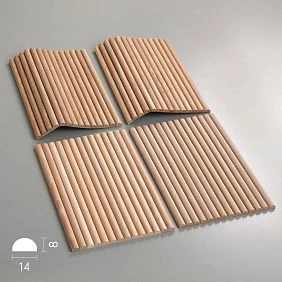
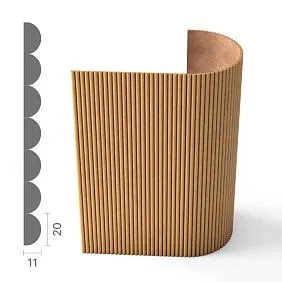
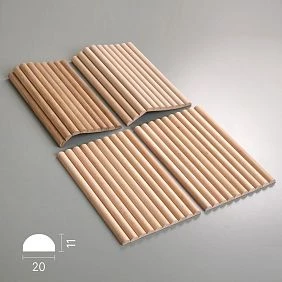
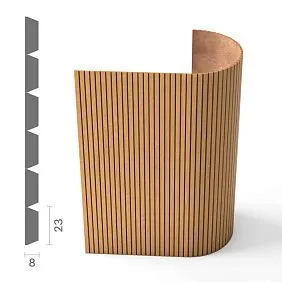
Buy veneered slatted panels
There are materials that immediately speak of the owner's taste. Not with a shout — with a quiet voice. Such is veneer: a thin natural layer on the panel's surface, in which the entire character of the wood is read — living fiber, play of pattern, warm tone. Nothing extra. No imitation. Only nature, captured in the cut.
If you want to buy veneered slatted panels — this article is written for you. There will be no empty praise of the material or marketing constructs. There will be an honest conversation: what veneer is in the context of slatted panels, how it differs from solid wood and from 'wood-look panels', how to choose for a specific interior, what to budget for, where to apply it, and how not to make a mistake when ordering.
Read thoughtfully — and the decision will come on its own.

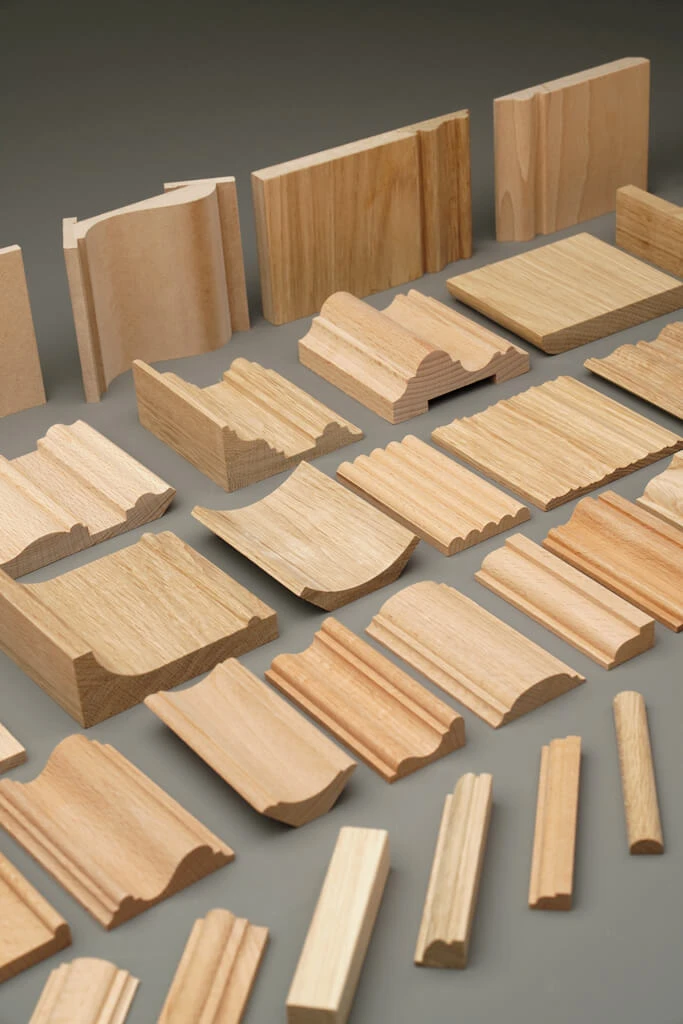
What are veneered slatted panels and why they deserve a separate discussion
Before moving on to selection and price, it is important to clearly understand the subject of discussion. The word 'veneer' in the name is not a marketing label. It is a technological term.
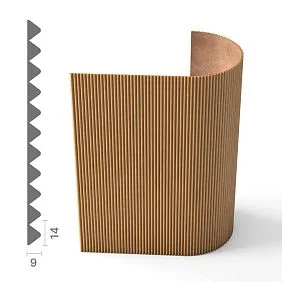
Veneer is a thin slice of natural wood obtained by peeling or planing. Thickness — from 0.3 to 0.6 mm. Materials: oak, walnut, ash, beech, cherry, rosewood, wenge — any species that gives a beautiful pattern. The veneer is glued to a base — most often MDF — under pressure and at a strictly controlled temperature. The result is a panel with a living natural surface on the outside and a stable engineered core on the inside.
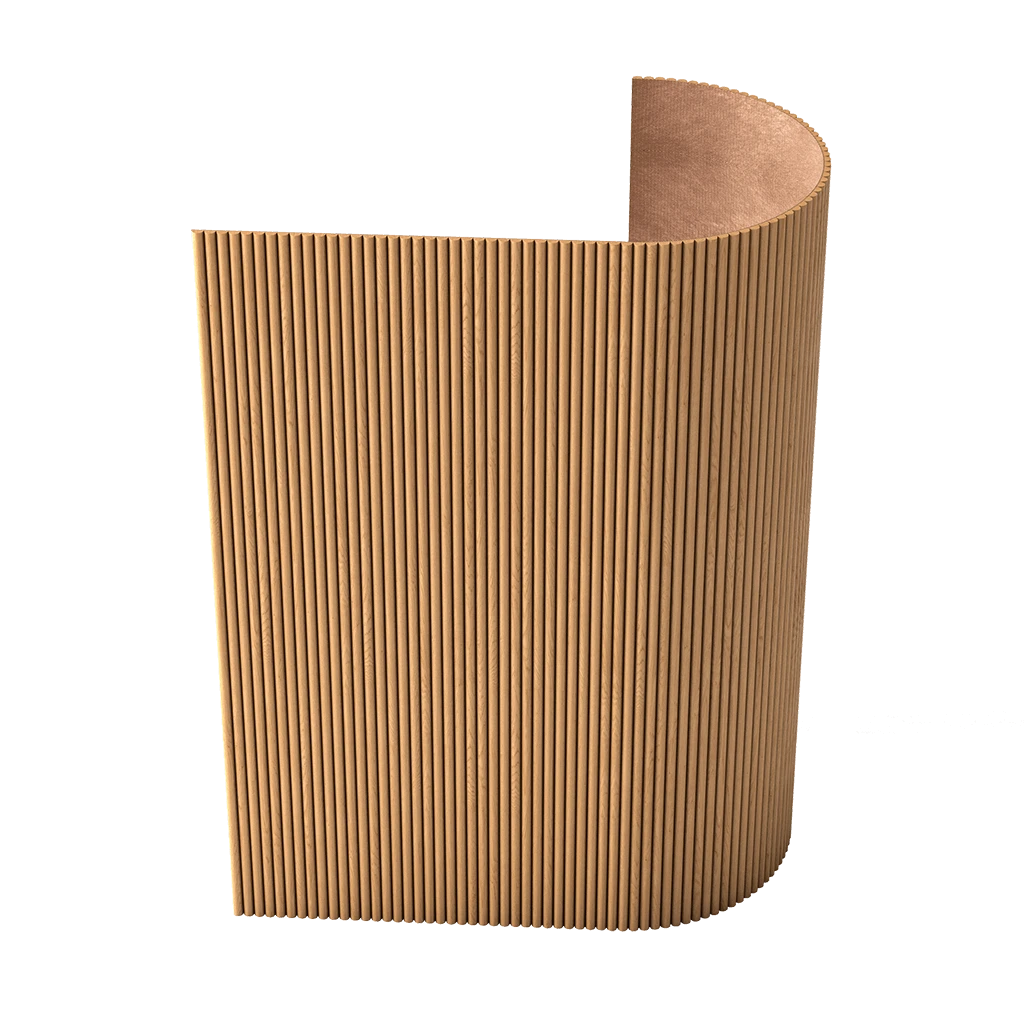
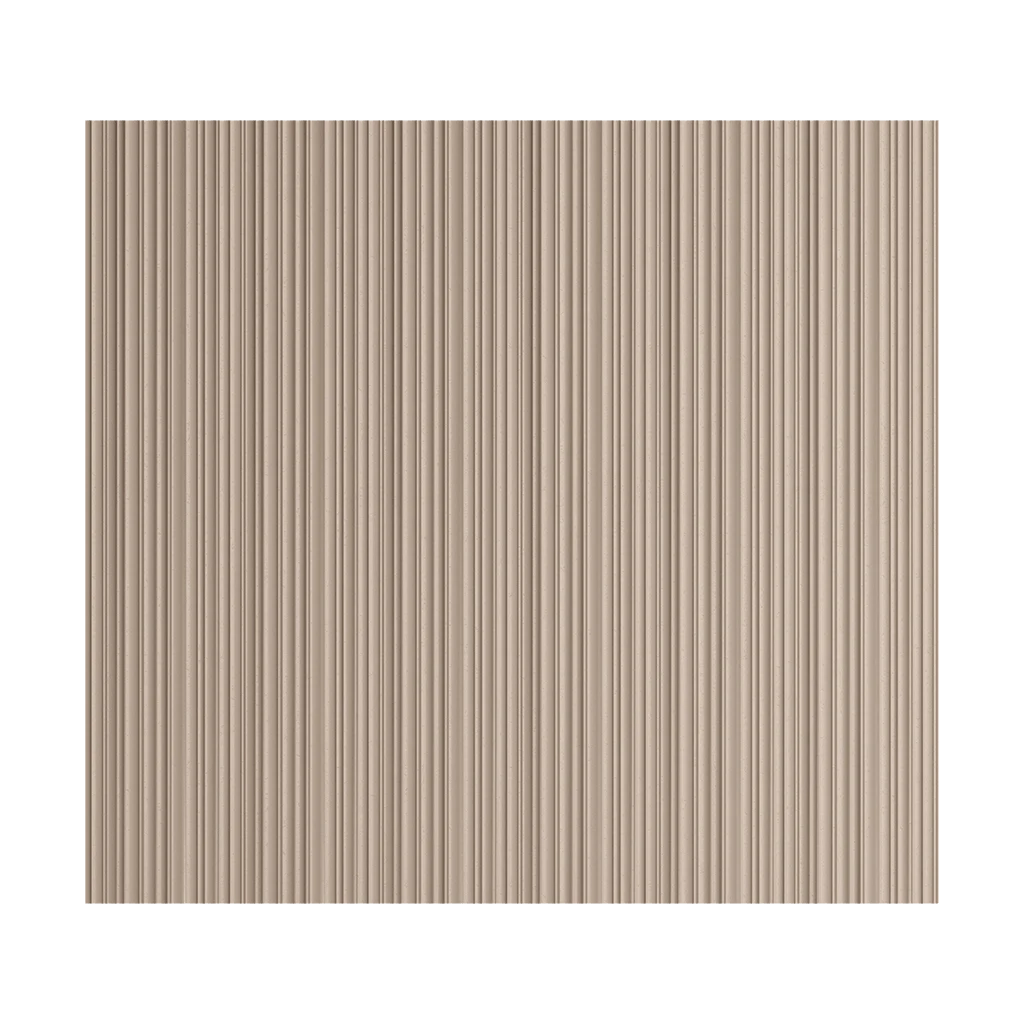
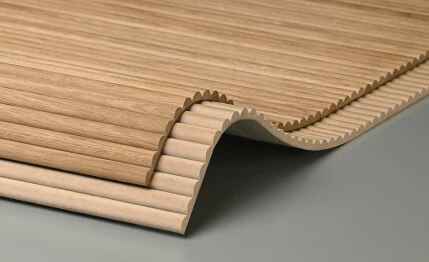
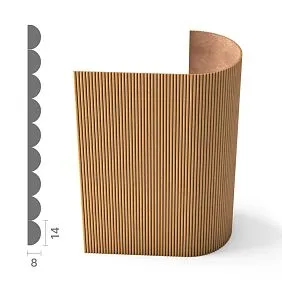
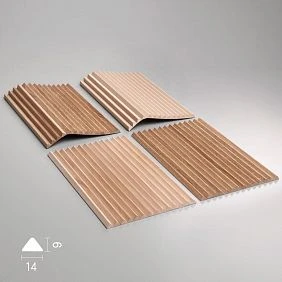
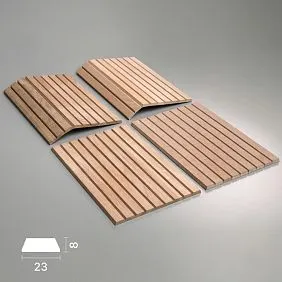
Veneered slatted panels are a slatted profile with such a veneer coating. The milled relief creates a rhythm of vertical or horizontal slats, and the veneer makes each surface unique — because the wood pattern never repeats.
This is not solid wood. This is not an "imitation." It is a separate category of material with its own strengths.
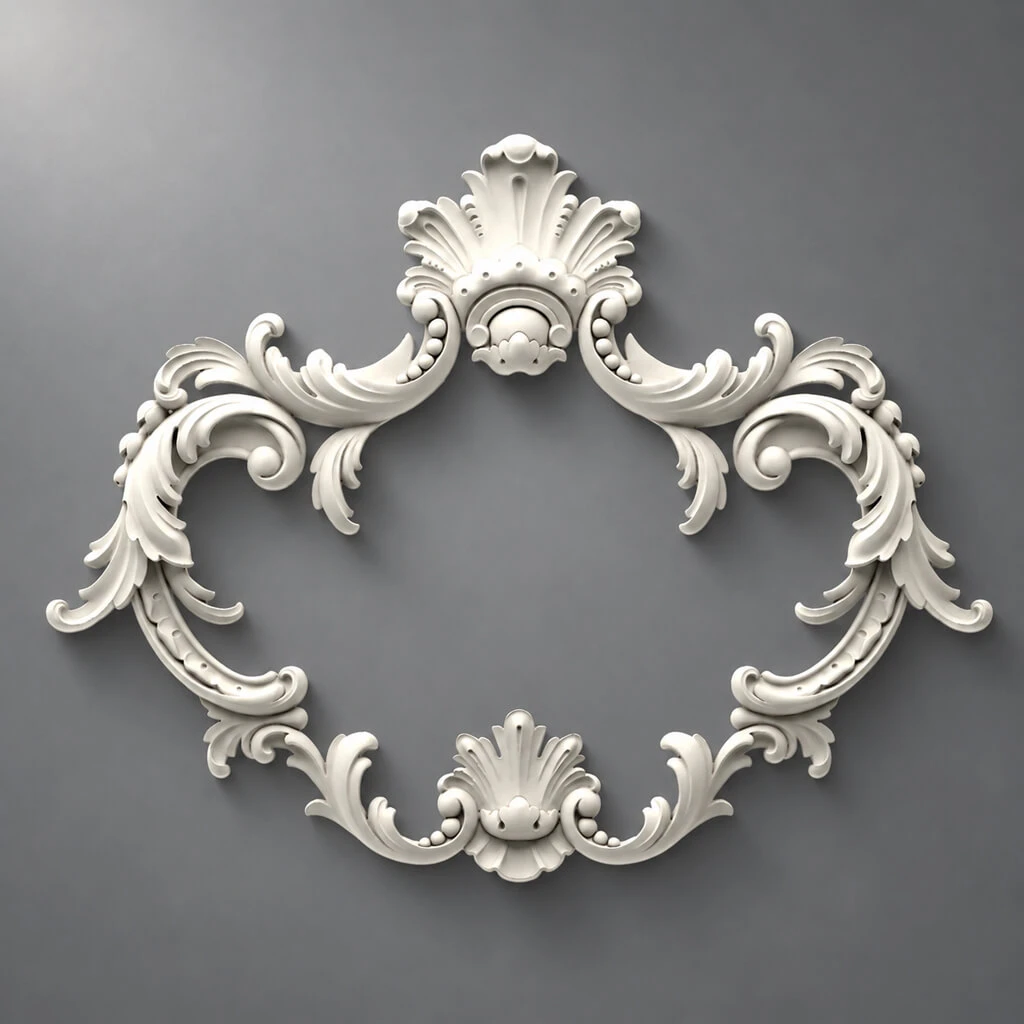
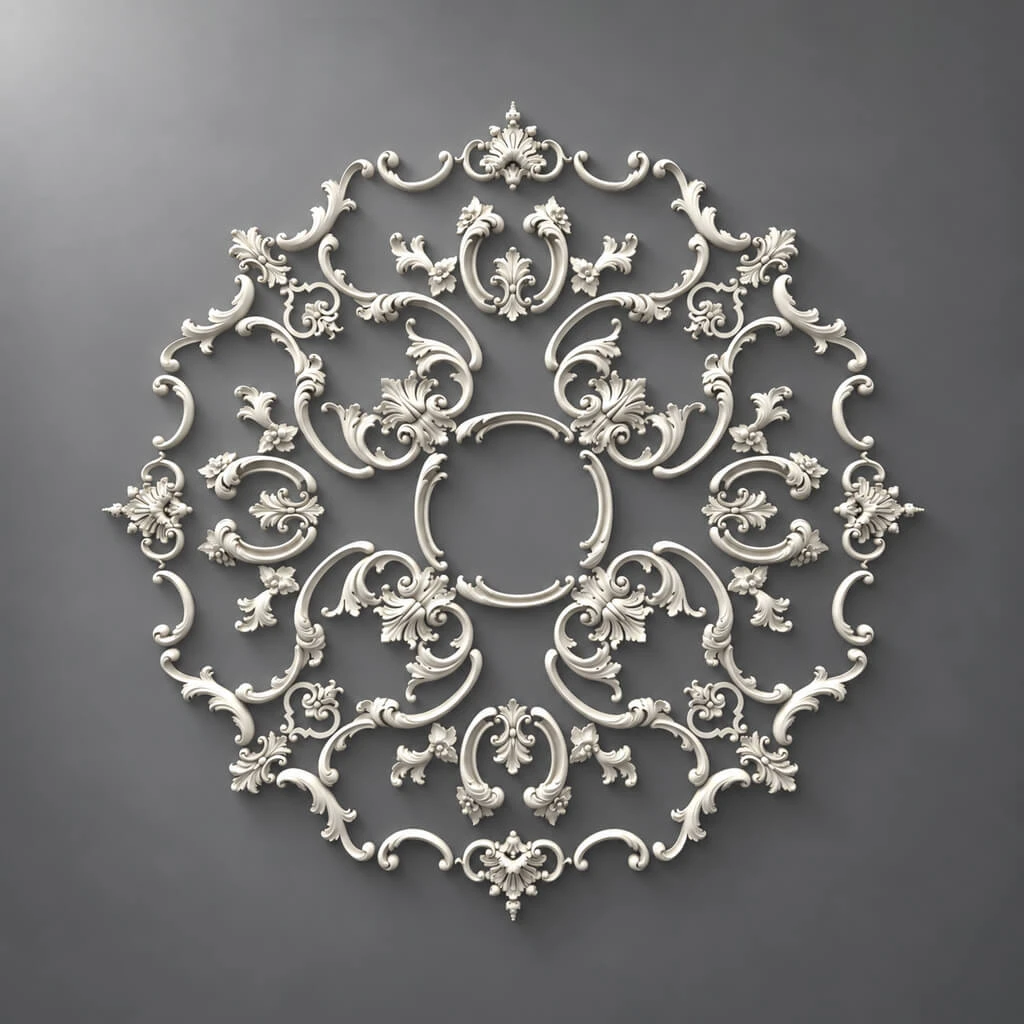
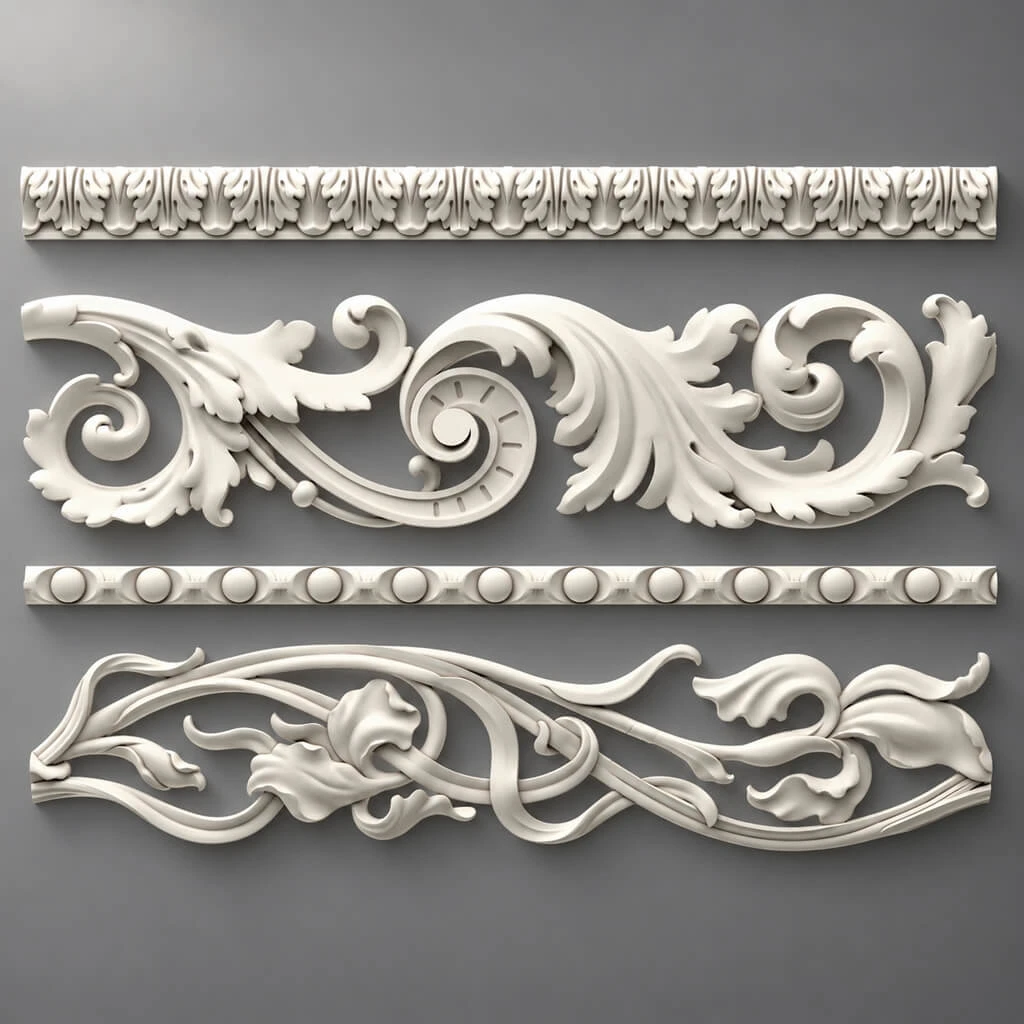
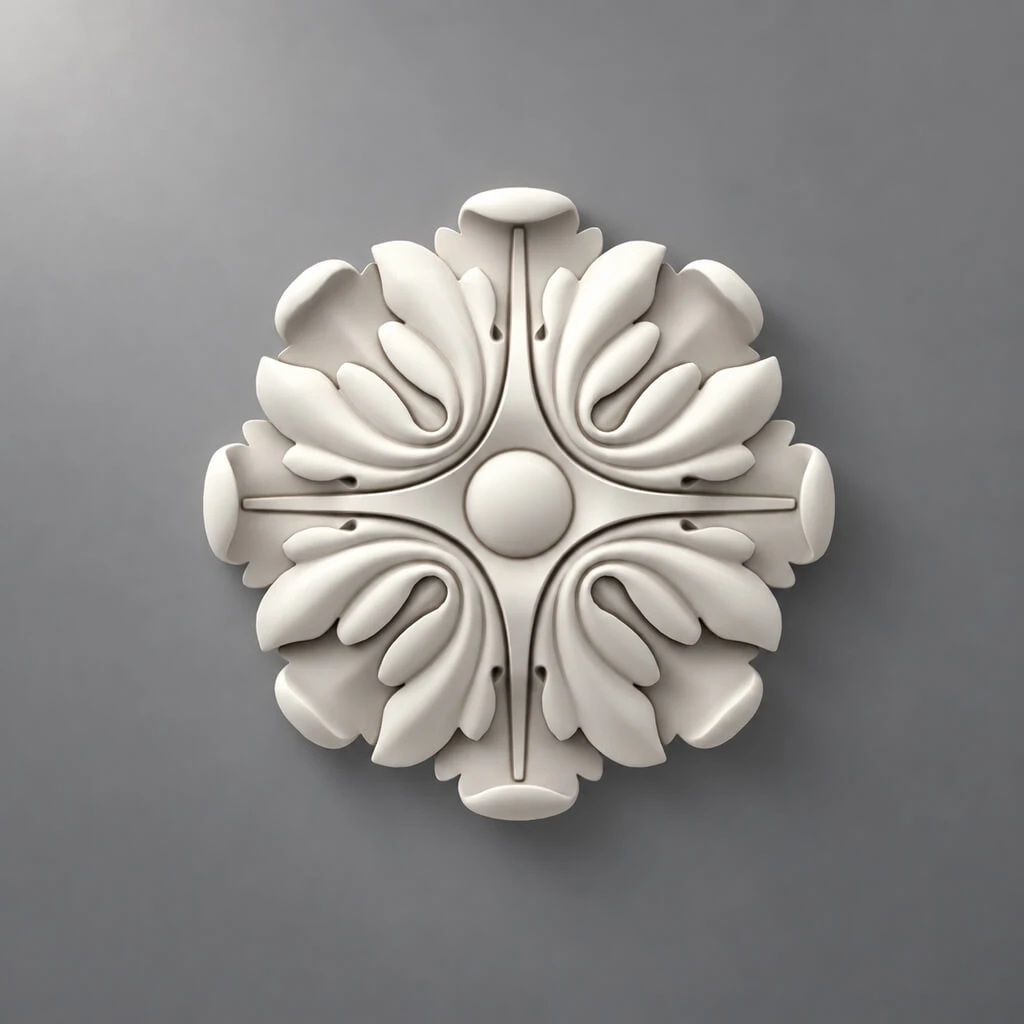
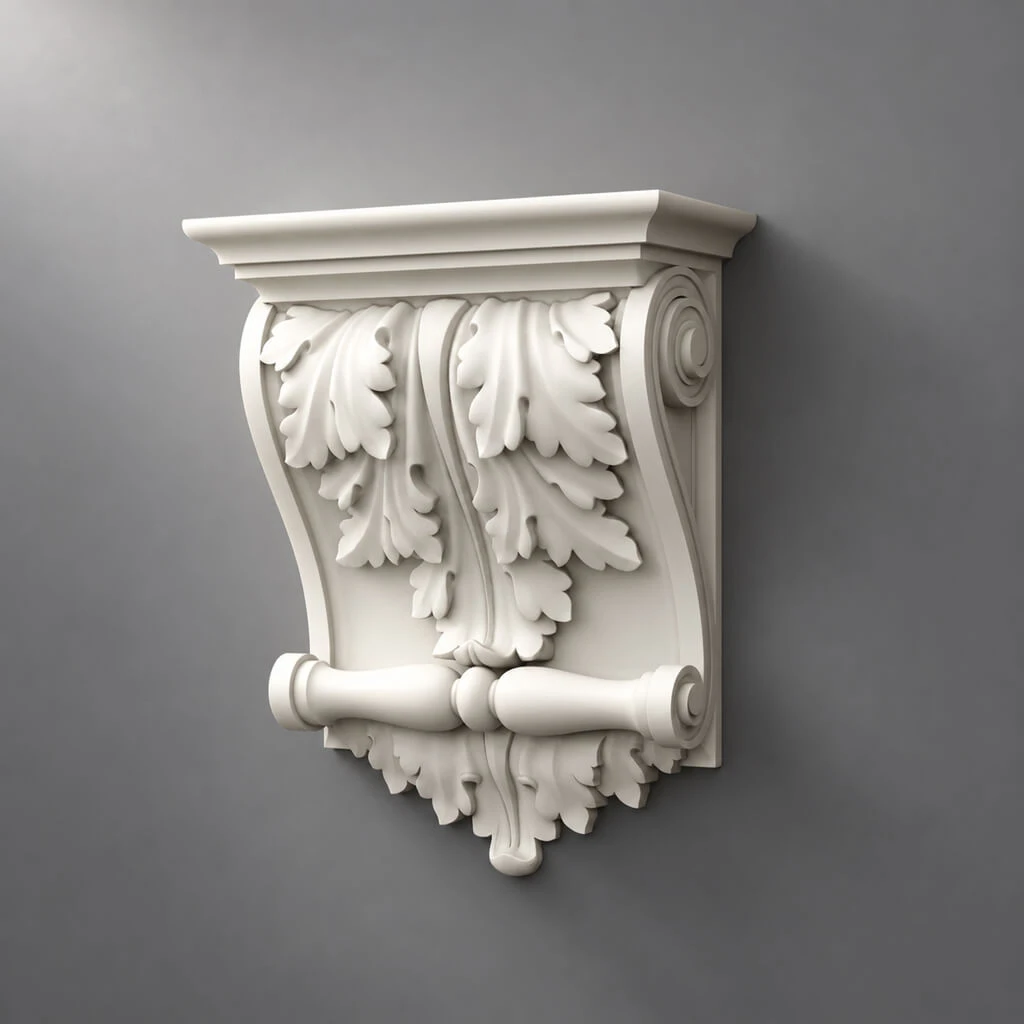
Our factory also produces:
How veneer fundamentally differs from other materials
From solid wood. In solid wood, the entire volume is solid wood. The pattern and texture run through the entire depth of the product. Veneer is only a surface layer, but visually and tactilely it is identical to solid wood. At the same time, the geometric stability of a veneered panel is higher: the MDF base does not react to changes in humidity as solid wood does.
From wood-look panels. wood-look slatted panels These are MDF with an embossed or printed coating that imitates wood texture. The visual effect is good, but it is still a reproduction of the image of wood, not the wood itself. Veneer is a real natural layer. Beneath it are living wood cells, real pores, real fiber structure. The difference is felt both visually and by touch.
From MDF for painting. Paintable lath panels A neutral base for any color. No natural texture. Veneer is a specific natural tone and character.
That is why veneered slat panels occupy a special place: they provide the naturalness of a natural surface with the stability of an engineered product. This is not a compromise — it is a different solution with a different set of advantages.
Get Consultation
Which veneered slat panels to buy for walls
The question is commercial — and it needs to be answered specifically, not by drifting into theory.
When people say "buy veneered slatted panels," they usually mean one of three scenarios.
First scenario: accent wall. One surface — the sofa wall, TV area, or headboard — is finished with veneered slats. The other walls are neutral. This is the most common technique: maximum effect with minimal material costs.
Second scenario: zoning in an open space. A slatted veneered panel as an architectural divider between zones — kitchen and living room, home office and relaxation area. Vertical slats read as a light boundary without closing off the space.
Third scenario: full coverage of a wall or room. An office, meeting room, or loggia — a space where veneer covers everything or almost everything. The most demanding in terms of selection and installation precision.
For walls in living spaces, I recommend planks made of wood with a natural finish — oak, ash, or walnut. This is the right start. Samples are a must before ordering: the color of the veneer changes significantly under different lighting.
It is worth buying slatted veneer panels when:
-
a natural look is needed without the full cost of solid wood
-
geometric predictability is important
-
the interior requires a specific wood tone — say, delicate ash for japandi or rich walnut for classic style
-
Lighting is planned: veneer with live pores in diffused light gives depth unattainable for printed coating
Anatomy of a veneered panel: what it consists of
Understanding the structure is key to proper selection and operation. Let's break down each layer.
MDF base
Medium density fiber — 720–880 kg/m³. Homogeneous structure without voids or knots. Excellent for milling: it is on MDF that a clean deep slatted profile is obtained without chips or splits. The base does not react to humidity changes in the range of normal living conditions — this is the main advantage over solid wood when used in wall decoration.
Adhesive layer
The veneer is glued to the base with thermosetting adhesive under pressure in a press. Temperature is controlled. Pressure is uniform across the entire surface. This ensures perfect adhesion without air bubbles or delamination.
Veneer layer
Natural wood cut 0.3–0.6 mm thick. Rotary-cut or sliced — depending on the species and desired pattern. Rotary-cut veneer gives a wavy pattern (typical for birch, alder). Sliced veneer gives straight long stripes close to radial cut (oak, ash, walnut).
Protective Coating
Oil or varnish. Oil penetrates the fibers, preserving natural matteness and tactility. Varnish creates a hard protective film with variable gloss — matte, semi-matte, semi-gloss. For wall panels in residential spaces, oil is a more aesthetically accurate solution. For commercial spaces with high traffic, varnish.
Where to use veneered slatted panels: space by space
TV zone in the living room
This is perhaps the best scenario for veneered slatted panels. Why?
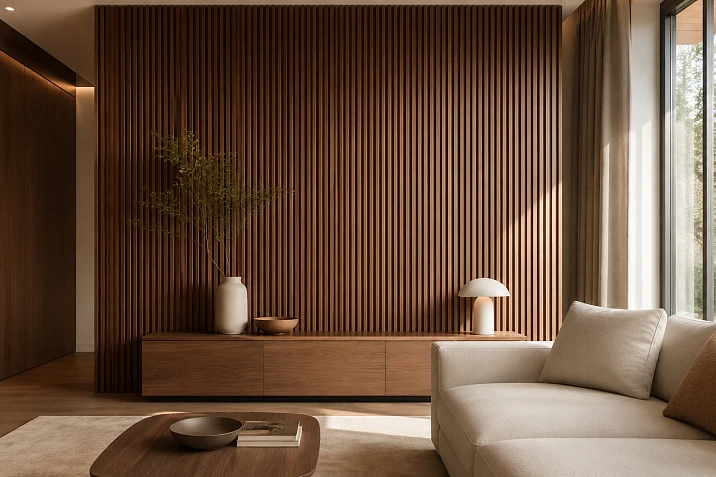
A TV — a dark screen on a light wall — visually dominates when off and becomes nearly invisible when on. A veneered slatted wall behind the TV does the opposite: it creates an architectural context that exists independently of the screen. Wood with an open grain — a warm background that doesn't compete with the image but frames the area.
Add hidden LED lighting in the gaps between the slats: in evening lighting, the veneer texture reveals itself especially expressively — soft side light brings out every pore, every line of the grain.
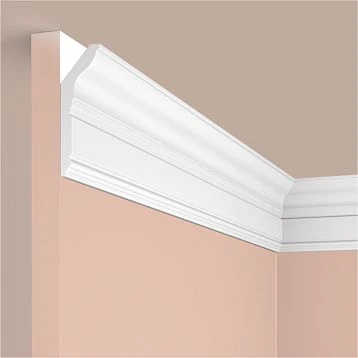
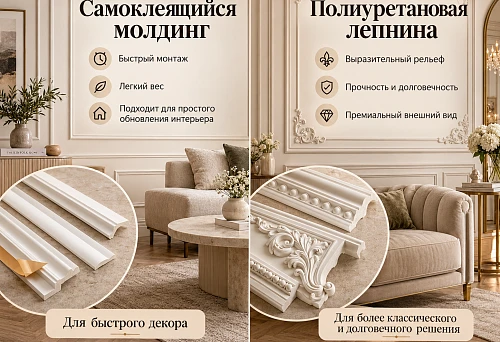
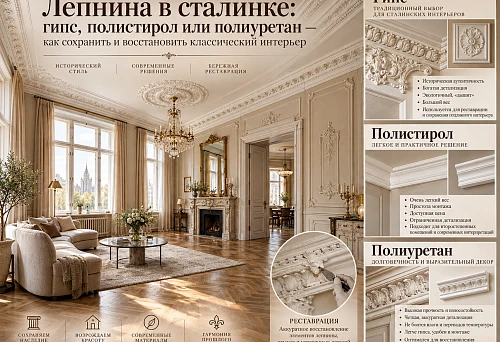
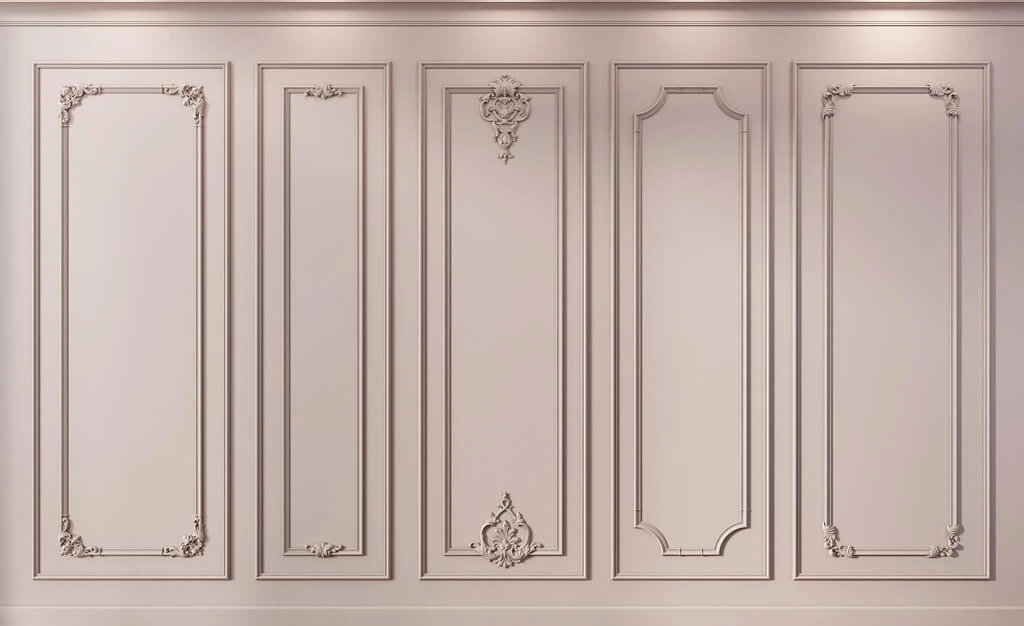
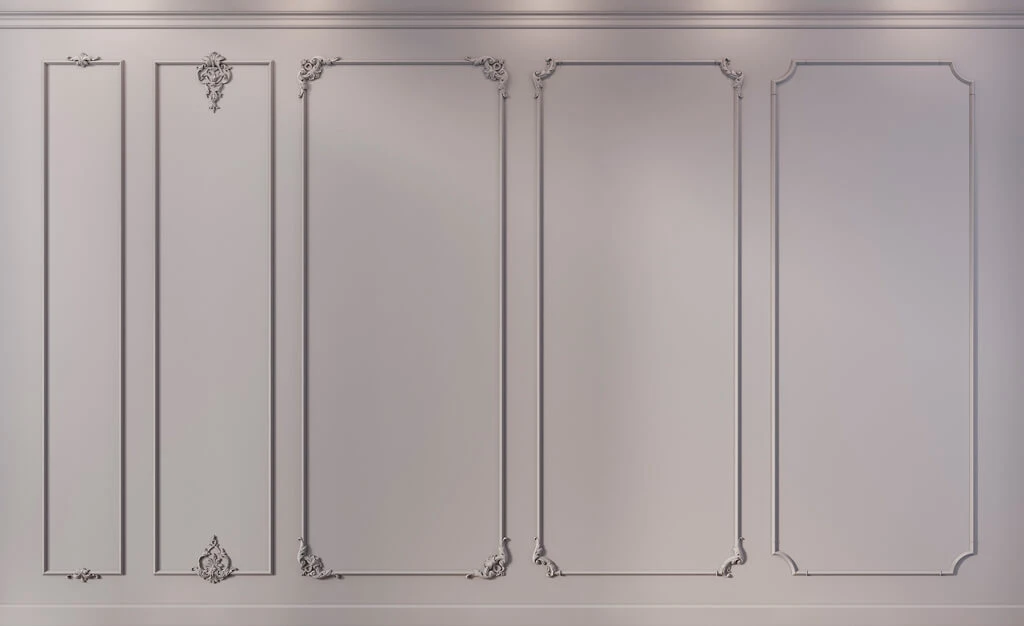
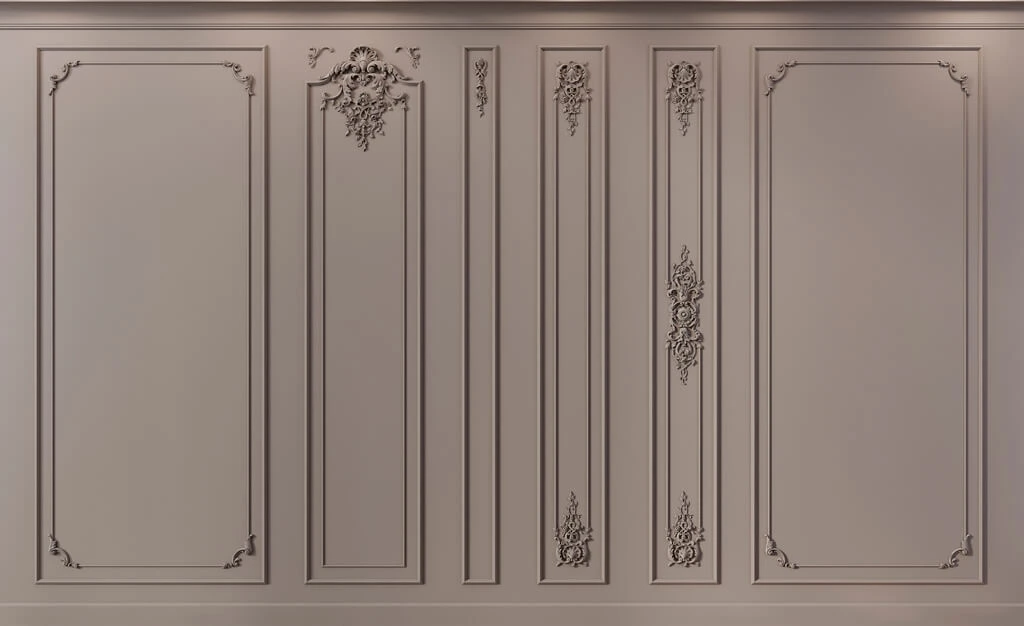
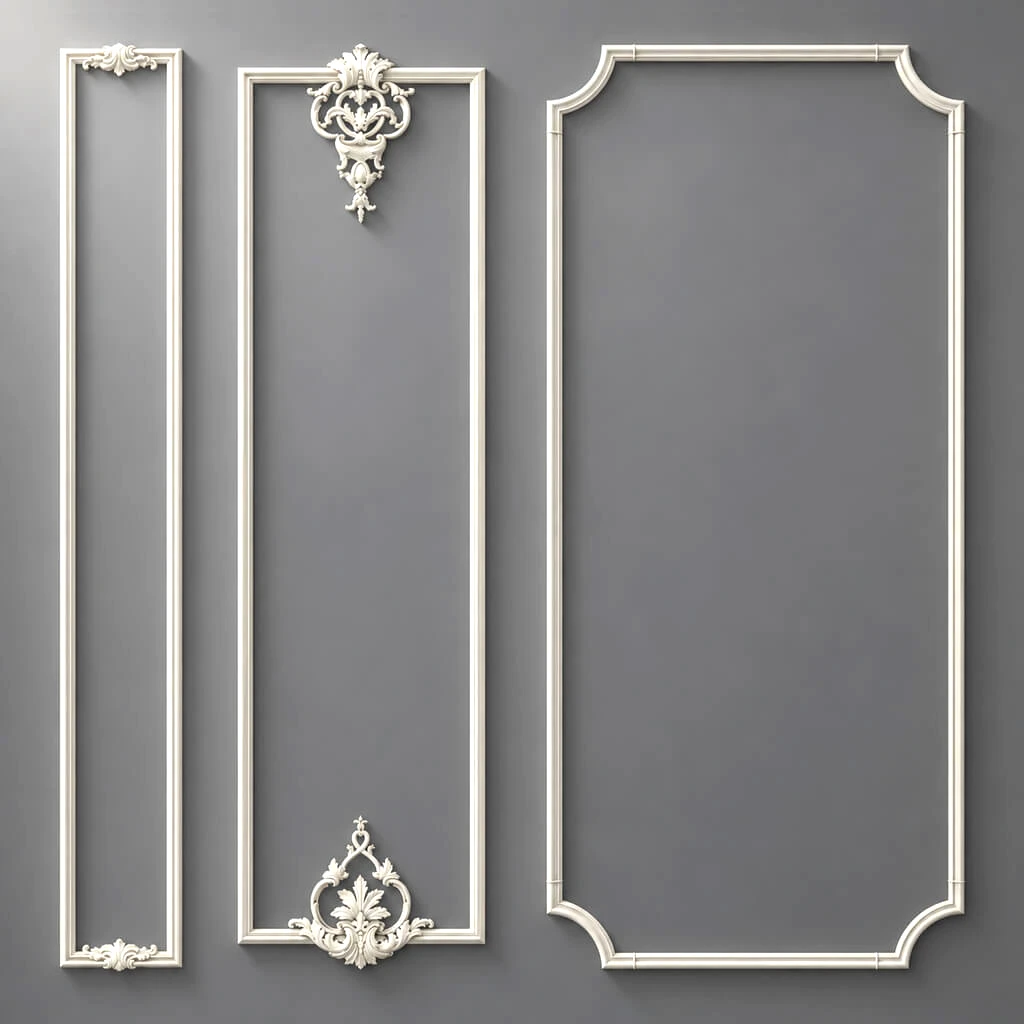
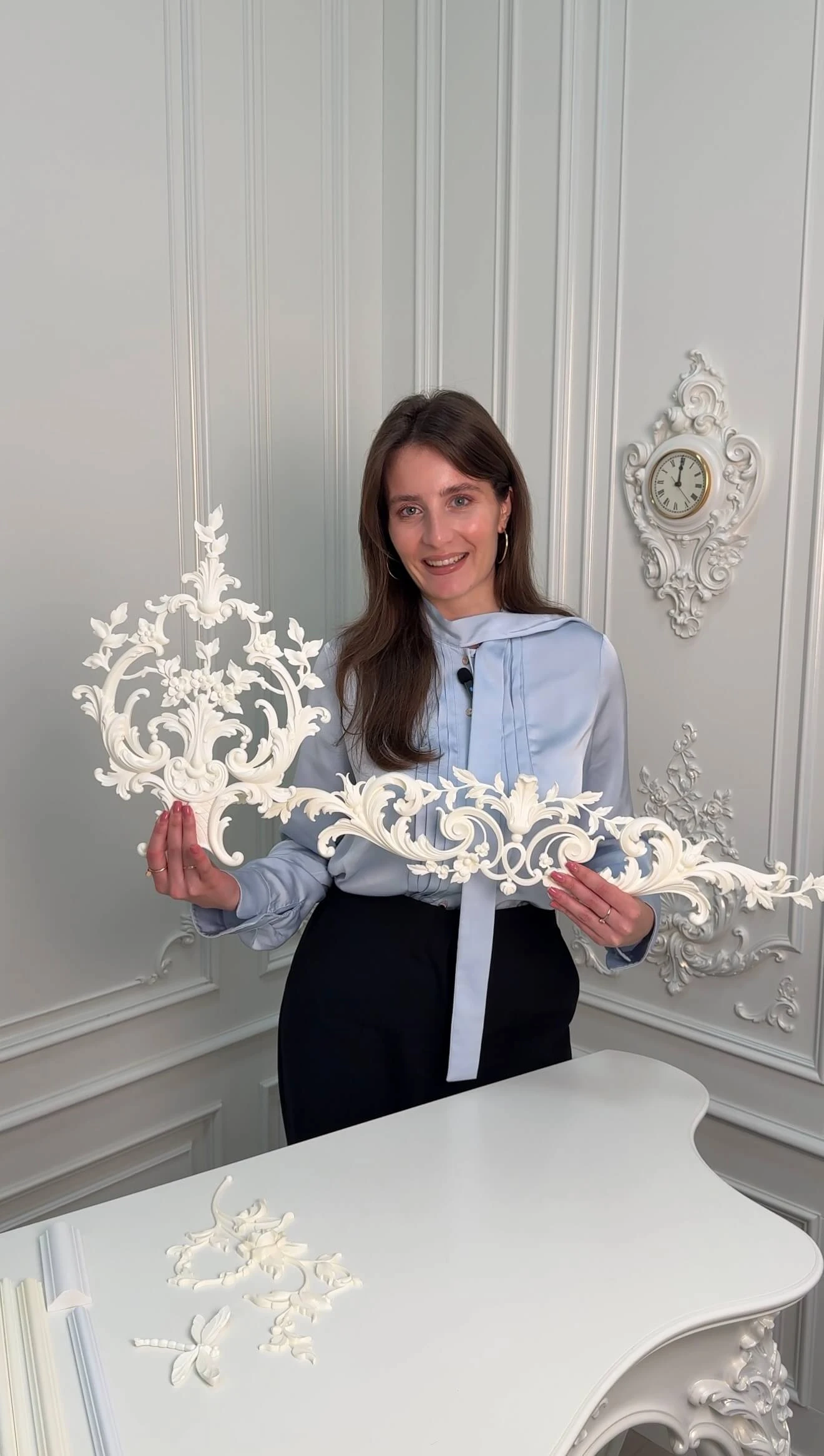
Around the TV zone — Moldings made of polyurethane as a frame system. The wooden rhythm inside the frame and the white molding outside — a contrast of natural and architectural that reads as a deliberate design choice.
Bedroom
In the bedroom, veneered slatted wall panels work more subtly. They don't dominate—they are present. A headboard made of oak or ash veneer panels creates a natural backdrop that visually calms. This is exactly what is needed in a space where a person rests.
An important nuance for the bedroom: the shade of the veneer should be coordinated with the color of the textiles, flooring, and doors. Light ash with linen and oak parquet is natural harmony without a single false note. Dark walnut with dark parquet and light textiles is a contrast that requires precise calculation of light accents.
Entryway
A hallway with veneered slats on an accent wall is not just about aesthetics. It's practicality with a good face. Wall protection in the coat area, visual lengthening of the corridor due to the vertical rhythm, a warm welcoming tone from the first step into the apartment.
A high baseboard matching the veneer or a neutral lacquered baseboard is a mandatory lower element. It connects the flooring with the wall panel, preventing the eye from "falling" into the gap between the floor and the wood.
Polyurethane Items — corner trims, pilasters — create additional architectural volume in a small hallway space without overloading it.
Office
A status wall finish behind the desk is one of the most precise scenarios for using veneered panels. Oak with a pronounced ray pattern, stained oak with a silvery-gray tone, or dark walnut — each creates its own type of working atmosphere.
Study with slatted wall panels made of veneer behind the desk or library cabinet — an environment that simultaneously speaks of seriousness and taste. This is a space where you want to work long and focused.
Combination of a wooden slatted wall and . Clear lines, created using modern technologies, emphasize the strict aesthetics of the room. Each decorative element harmoniously fits into the overall concept, creating a sense of order and thoughtfulness. — pilasters, door frame trims — enhances the classic character of the study.
Commercial interior
Reception, meeting room, executive office, waiting area. Veneer in a commercial space — an instant message about class and quality. This is read without words.
Veneered slatted panels in the reception area are not just decor. This is a material message: people who make thoughtful decisions and choose the best materials work here. This is a statement of standard.
decorative polyurethane elements at corner points, Moldings as a frame system around the slatted section — a system with several levels of detail that is perceived as a project, not as a finish.
Veneer, solid wood, MDF, or wood-look panels: an honest comparison
A question that arises for everyone comparing options. I answer without diplomacy.
| Criterion | Veneer | Solid wood | MDF for painting | Wood-look panels |
|---|---|---|---|---|
| Natural surface feel | Real wood layer | Solid wood | No | Imitation |
| Unique pattern | Each panel is unique | Each element is unique | No | No |
| Geometric Stability | High (MDF base) | Depends on acclimatization | High | High |
| Price | Medium–high | High | Medium | Medium |
| Tactile | Natural pores at hand | Maximum naturalness | Neutral | Embossed imitation |
| Repaintability | No | Restyling only | Complete | No |
| Suitable for | Living rooms, studies, reception areas | Premium zones | Designer projects | TV zones, hallways |
| Care | Periodic oil change | Regular maintenance | Minimal | Minimal |
The takeaway to remember: if naturalness is key but the price of solid wood seems excessive — veneer is the right choice. If color freedom is important — Paintable lath panels. If you need a natural effect on a minimal budget — wood-look panels.
What affects the price of veneered slatted panels
Pricing in this segment is multi-layered. To avoid budget surprises, let's break down each factor.
Type of veneer. Oak is a common species, relatively affordable. Walnut, cherry, bog oak are rare, more expensive. Exotic species (ebony, zebrano, rosewood) are in the custom project segment with a significant markup.
Type of veneer cut. Rotary-cut is cheaper than sliced. Radial cut of sliced veneer gives the most expressive straight-line pattern — and costs accordingly.
Veneer quality. Veneer without knots, with a uniform pattern and no defects — 'select'. Veneer with knots, a lively pattern — 'natural' class. The price differs. The aesthetic effect is different: some need perfect uniformity, others need a lively natural character with 'defects'.
Base. MDF of different densities — different costs. High-density MDF (880 kg/m³) for the cleanest milled profile — more expensive than standard.
Panel size. A long, wide panel with veneer requires a sheet of veneer without joints or with minimal ones. This limits the yield from raw materials.
Relief depth. Deep milling of the slatted profile — longer, more precise, more expensive. But it is the deep relief that creates an expressive play of shadows.
Coating. 'Prestige' oil with hand finishing sanding — the highest category of finish. Standard oil coating — basic option. Varnish — a separate technological chain.
Order volume. Large order — better terms. Production optimization reduces cost.
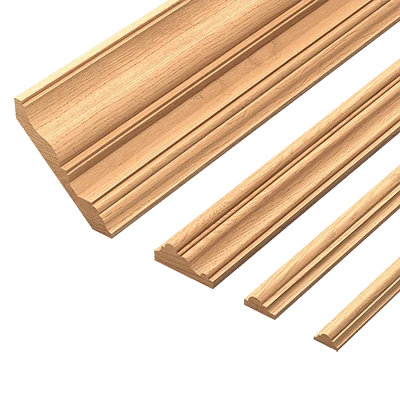
Additional elements. Moldingscornices, decorative elementsBaseboards are included in the system cost of the project. Without them, the slatted panel is an unfinished detail.
Delivery. Long-length goods, special packaging. For remote regions, this is a significant expense item.
Veneer species and their character: a practical guide
Choosing a species is choosing the mood of the interior. Each species carries its own character.
Oak is an eternal classic. A pronounced pattern with wide rays in a radial cut. A warm honey-golden tone in its natural state. Bog oak is almost black with a silvery sheen, cold and prestigious. Bleached oak is Scandinavian neutrality. Oak is equally good in classic, modern interiors, japandi, and loft. A versatile choice.
Ash is more neutral, with a light tone and an elongated, straight-lined pattern. Ideal for light Scandinavian and japandi interiors. It dominates less and supports more.
Walnut is dark, rich, with a masculine character. The pattern is complex, wavy, and opulent. A conference room with walnut slats is a statement. A bedroom with a walnut headboard is an adult decision without compromise.
Beech has fine, uniform grain, almost without a pronounced pattern. A neutral warm tone. It is good where naturalness is needed without the dominance of texture.
Cherry has a warm reddish tone and a moderately pronounced pattern. A traditional material for English interiors. A rare choice for those who appreciate unconventional solutions.
Bog oak is technically treated oak that acquires a dark grayish-black color. Modernity and naturalness in one material. It pairs well with metal, glass, and white surfaces.
How to choose veneered slatted panels before buying: a complete checklist
Choosing takes time. This checklist is your safeguard against mistakes.
1. Determine the finishing area.
Accent wall, zoning panel, or full coverage? This determines the order volume and requirements for veneer uniformity.
2. Choose the wood species and veneer tone.
Look at samples under your lighting — both daylight and artificial. Keep in mind: in the evening under warm light 2700–3000K, warm wood tones intensify, while cool tones are neutralized.
3. Determine the direction of the slats.
Vertical slats lift the space, a classic choice. Horizontal slats create a calmer, more natural rhythm. The direction affects the length and width of the panel in the calculation.
4. Check the room height.
Standard panel length is 2700 mm. If the ceiling is higher, you need a horizontal joint with a molding or a custom length.
5. Align with the baseboard.
The lower edge of the slatted panel — an open end without a baseboard — is bad. The baseboard should be selected before installation or simultaneously with the panels. A single supplier guarantees geometric matching.
6. Plan the top connection to the ceiling.
Molding or a ceiling cornice — a mandatory top element. Without it, the top end will appear unfinished.
7. Align with doors and flooring.
The veneer tone should be from the same temperature zone as the flooring and door panels. All warm — or all neutral. A tone conflict is immediately visible.
8. Plan outlets and switches.
Where they will be in the finishing area — mark on the diagram before installation. The point for an outlet is cut cleanly in the pre-installation state, not with a grinder after the panel is installed.
9. Check furniture placement.
If behind a sofa — ensure the panels are not 80% hidden by furniture. If behind a desk — that the desk does not cover the lower third.
10. Add a reserve for trimming.
Rectangular wall — at least 10–12%. Non-standard geometry, door and window openings — 15–20%.
11. Order the system as a whole.
Panels + moldings + baseboards + decorative polyurethane elements — from one manufacturer. This guarantees compatibility, a uniform tone, and geometry.
Veneered panels and backlighting: a special topic
Backlighting is not an option, but an architectural tool. Especially for veneered slatted panels.
Hidden lighting behind the molding. LED strip in the niche of the upper ceiling molding — a soft glow that washes over the slatted surface from above. The veneer pores turn into a landscape under diffused side light. Each slat gets its own shadow — the rhythm becomes three-dimensional.
Lighting in the gaps between slats. If the gap between slats is sufficient, the LED strip is mounted directly in it. This technique requires planning at the profile selection stage: the gap must be at least 15–20 mm with a slat height of 25 mm or more.
Directional lights. A spotlight or track light directed at the veneered wall is the simplest way to reveal the texture. An incidence angle of 30–45° to the surface is optimal.
Warm vs cool light. Oak and ash veneer under warm light 2700K — honey-golden, lively. Under cool light 4000–5000K — more neutral, "work-like". Choose the color temperature based on the room's purpose and the veneer's tone.
Caring for veneered slat panels: how to maintain their appearance for years
Veneer is a living material. It doesn't require complex care, but it does require proper care.
Daily care. Soft dry or slightly damp microfiber cloth. No heavy wetting — water should not penetrate the veneer joints. No abrasive products — they ruin the coating.
For oil finish. Every 2–5 years — renew the oil with a special compound for veneered surfaces. This takes a few hours and restores the surface's original appearance. Minor scratches are fixed locally — by spot application of oil and polishing.
For lacquer finish. Wipe with a dry microfiber cloth, use products for lacquered wooden surfaces. For deep damage — local restoration with lacquer.
Humidity. The comfortable range for veneered panels is 40–60% at a temperature of 18–24°C. Under these conditions, the geometry will not change. With prolonged drying (humidity below 30%), the veneer may crack. With constant excessive humidity, it may delaminate.
Mechanical damage. Veneer is not an armored surface. Sharp objects, impacts, constant friction — leave marks. For hallways and other high-traffic areas, a lacquer finish is preferable to an oil finish.
Mistakes when buying veneered slat panels
These mistakes occur often enough to dedicate a separate section to them.
Mistake 1: choosing only by photo in the catalog.
Veneer is a unique material. The same species in different photos looks completely different depending on the lighting of the shoot. Samples are the only correct way to evaluate the tone.
Mistake 2: not matching veneer with floor and doors.
Warm golden oak next to cold gray laminate is a visual conflict that can only be fixed by replacing one of the elements. Tone coordination — before ordering.
Mistake 3: ignoring lighting.
Veneer under different lighting is a different material. Examine the sample in the morning in daylight, in the evening under artificial light, and with curtains closed.
Mistake 4: not accounting for trimming allowance.
"Ordered exactly — not enough." A standard allowance of 10–12% is mandatory.
Mistake 5: not planning joints.
Veneer with a pronounced longitudinal pattern when joining two panels can create a "mirror" or "chaotic" effect at the connection point. Proper laying is "book" matching or intentional alternation.
Error 6: placing an active texture on a small wall.
A pronounced "lively" veneer pattern with large knots on a small accent wall creates visual pressure. In a limited space, fine, uniform grain works better.
Error 7: not selecting baseboards and moldings in advance.
They buy only panels, and moldings and baseboards later, from another supplier. Result: mismatched profiles and colors. A system order from one manufacturer is the only reliable way.
Error 8: installing without a preliminary layout drawing.
On veneered panels, the pattern is unique. When installing without a diagram, two panels with vastly different patterns may end up next to each other. Lay out the panels on the floor in the desired order before installation and decide on the arrangement.
Error 9: buying an uncoordinated batch "just in case."
Veneer from different production batches may differ in tone. Buying "the same" six months later is not always possible. Calculate accurately and order with a reserve immediately.
How to calculate the quantity of veneered slat panels
Calculation — step by step, without simplifications.
Step 1. Record the dimensions of each wall or area: width × height in millimeters.
Step 2. Subtract openings (doors, windows, niches) — with allowance for trimming slopes.
Step 3. Calculate the net finishing area.
Step 4. Divide by the area of one panel (length mm × width mm ÷ 1,000,000 = sq m). Round up.
Step 5. Add allowance: 12% for a flat wall, 15–20% for non-standard geometry or diagonal installation.
Example. Wall 4200 × 2700 mm = 11.34 sq m. Minus door 900 × 2100 = 1.89 sq m. Net area: 9.45 sq m. Panel 2700 × 130 mm = 0.351 sq m. Quantity: 9.45 ÷ 0.351 = 26.9 → 27 pieces. With 12% allowance: 27 × 1.12 = 30.24 → 31 pieces.
Step 6. Calculate additional elements:
-
moldings: perimeter of finishing area + 10%
-
baseboard: lower perimeter + 10%
-
decorative corner elements: by number of internal and external corners
Integration of veneered panels into the finishing system
Veneer slat panels are not an independent object, but part of a system. Only within the system do they fully reveal themselves.
Level 1: slatted surface. Veneered slatted panels for walls — a natural base with a living pattern.
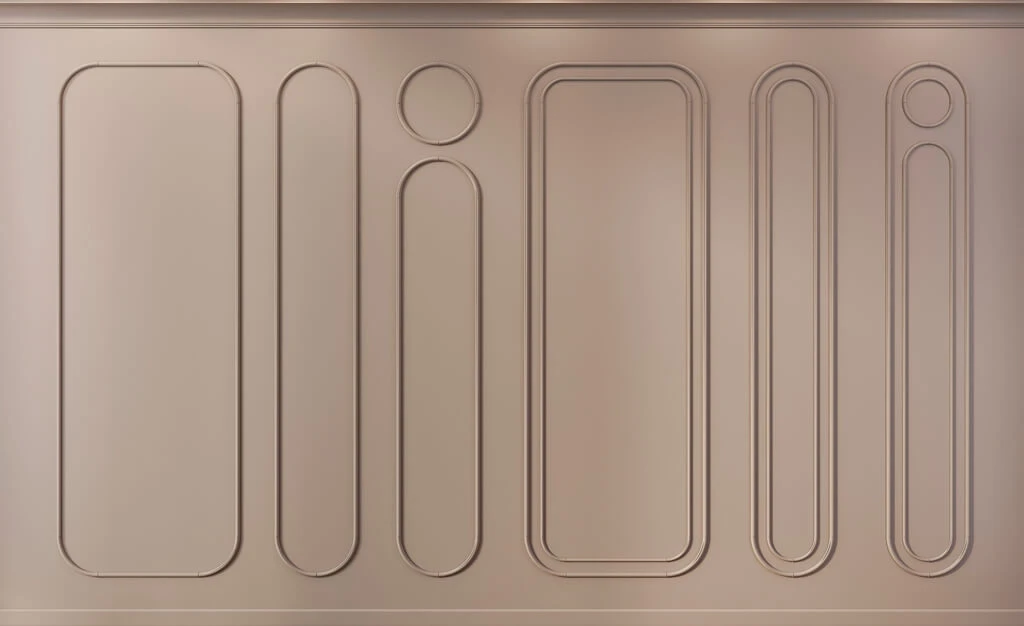
Level 2: molding frame. Moldings made of polyurethane around the perimeter of the slatted area — top, bottom, sides. They turn the finishing zone into a designed architectural panel.
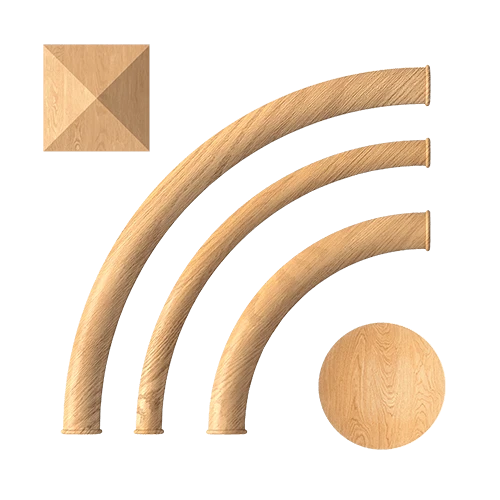
Level 3: corner decor. decorative elements at the corners of molding frames — rosettes, corner blocks. Point accents that give the system completeness.
Level 4: wall decor. Polyurethane wall decor — pilasters, overlays, decorative inserts. They work on the slatted background as an ornamental layer over the natural one.
Four levels—one system. STAVROS produces all elements with geometric consistency. This eliminates the main problem faced by those who buy different items from different places: mismatched profiles, uncoordinated colors, different sanding standards.
Where to buy veneered slatted panels in St. Petersburg and across Russia
If you are looking for where to buy veneered slatted panels in St. Petersburg—STAVROS is right here. Production in St. Petersburg. Pickup. Samples for in-person evaluation. Direct contact with production.
Across all of Russia—delivery by transport companies. Veneered panels are packed in protective film with reinforced edges. With proper packaging, they arrive without damage over any distance.
In the catalog at stavros.ru—the full lineup: Rafter panels, wood-look panels, Panels for painting, Moldings, decorative elements, PU overlays.
Consultations—free. Calculation based on your measurements—free. System selection for your project—free.
Production time: 5–10 business days. Plan ahead.
FAQ: popular questions and accurate answers
Which veneered slat wall panels to buy for walls?
Depends on the room and purpose. For a TV area and study — oak or walnut with a pronounced pattern. For a bedroom — ash or light oak with a neutral tone. For commercial spaces — a species with minimal pattern or smoked oak. Always order samples: the color of the veneer changes significantly under different lighting.
How do veneered slat panels differ from wooden ones?
Wooden ones are solid wood throughout the thickness. Veneered ones have a natural wood layer (0.3–0.6 mm) on an MDF base. The visual and tactile effect is almost identical. The geometric stability of veneered panels is higher. The price is lower than solid wood.
What is better: veneer or wood-look panels?
Veneer is a natural wood layer. Wood-look panels are embossed imitation. Veneer looks and feels like real wood because it is. Wood-look panels are more practical, cheaper, and easier to match. The choice depends on priority: naturalness or versatility.
What affects the price of veneered slat panels?
The wood species of the veneer, cut type, sheet quality, MDF base, relief depth, coating, order volume, additional elements, and delivery. A system order (panels + moldings + decor) offers better terms.
Are veneered panels suitable for a TV zone?
Yes, and this is one of the best scenarios. The veneer texture creates a natural warm background for the screen, backlighting in the gaps enhances the effect in the evening. A molding frame completes the zone architecturally.
How to choose the veneer color for the interior?
The rule is simple: the shade of the veneer and the floor should be from the same 'climate zone' — both warm or both neutral. Look at samples under your lighting. Evening warm light enhances warm wood tones, morning daylight shows the neutral tone honestly.
Is acclimatization required for veneered panels?
For a pure MDF base, it's less critical than for solid wood. But 24 hours in the room before installation is good practice: it equalizes humidity and eliminates any risks.
How to care for veneered slat panels?
Dry or slightly damp microfiber for daily cleaning. For oil finish, renew oil every 2–5 years. For lacquer finish, use products for lacquered wood. Avoid excessive moisture and abrasives.
About the company STAVROS
STAVROS is a St. Petersburg manufacturer with a history that began in restoration. The Hermitage, Konstantinovsky Palace, Alexander Palace — projects where a quality standard was formed that allows no compromises.
Today STAVROS offers a complete system of decorative interior finishing: Rafter panels from MDF and natural wood, wood-look panels и For painting, Moldings and cornices from polyurethane, decorative elements и Wall decor. Production — controlled microclimate. Manual prestige finishing sanding. Contact us to confirm shipping to your destination.
If you want to buy veneered slat panels with confidence in surface quality, geometric precision, and system compatibility — the STAVROS catalog and team of managers are ready to help from sample selection to final calculation.