Article Contents:
- When carved architraves truly transform the look of a house
- How an architrave makes a window expressive
- Why a door without framing looks unfinished
- How house carving changes the facade without major renovation
- Architraves for windows
- Door trims
- Architraves for eaves
- Connecting elements and brackets
- Choose the width and pattern of the trim
- Select the top and side parts
- Close the joints with sockets or connecting elements
- Match the trim with the facade color
- Framing the entrance door
- Carved trim around the opening
- When additional overlays are needed
- How not to overload the front with decor
- Trims and brackets
- House carving for roof overhangs
- How to assemble a single set
- Carved architrave and regular door architrave
- Architrave and decorative overlay
- Architrave and bracket
- Architrave and connecting element
- House carving and interior decor
- Need to decorate the windows of a wooden house
- Need to decorate the front door from the outside
- Need to design the cornice
- Need to decorate the bathhouse
- Need to design the gazebo
- Need to transform the house facade without major renovation
- Choosing only by pattern
- Do not count the number of elements
- Forgetting about joints
- Not considering the lack of coating
- Mixing different styles
- Overloading a small house
- Buy interior decor instead of house carving
- How to decorate the windows of a wooden house
- Can carved architraves be used for doors?
- What to cover the joints of architraves with
- What to buy together with carved casings?
- Can I order carved architraves in custom sizes?
- What is the standard length of carved architraves?
- What material are the carved architraves made of?
- Are the architraves supplied with a coating
- Are carved architraves suitable for a bathhouse?
- How does a carved architrave differ from a regular architrave?
- Are brackets needed along with architraves?
- How not to overload the facade with house carving?
- Can carved architraves be used for a gazebo?
- Where to buy carved architraves?
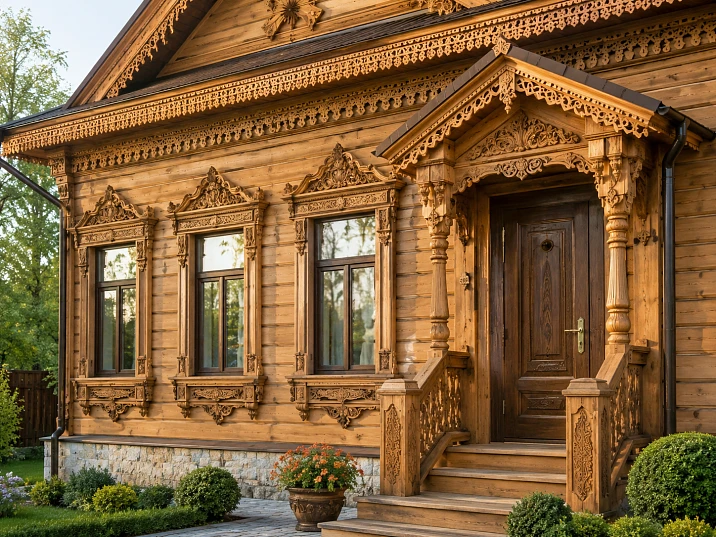
It is worth buying carved architraves when a wooden house, bathhouse, gazebo, veranda, or country building already has a good silhouette, but the facade lacks expressive framing. Windows without a carved outline look like mere openings in the wall. A door without wooden decoration seems unfinished. A cornice without carved details often loses its character, especially if the house is designed in Russian style, classic, dacha aesthetic, or a calm country image.
An architrave in house carving is not just a strip around a window. It sets the mood of the facade, emphasizes the shape of the opening, hides visual joints, helps assemble the window or door composition, and connects the house with the tradition of wooden decor. The same facade can look dry and technical if the openings are left without finishing, or become warm, lively, and memorable if you choose carved architraves, connecting elements, rosettes, and brackets in a single logic.
In the STAVROS catalog you can buy carved architraves for windows and doors From the house carving section. It features carved architraves of the NL series, SNL connecting elements, KR wooden brackets, house carving balusters, solid wood frames, and other elements for decorating windows, doors, cornices, gazebos, bathhouses, and facades. This section is convenient because the buyer selects not a single random part, but a set for exterior wooden decor.
This article will help you understand how to decorate the windows of a wooden house, how to design the front door from the outside, what to add to the cornice, where connecting elements and rosettes are needed, how not to confuse a carved architrave with a regular interior architrave, and what to buy together to make the facade look cohesive.
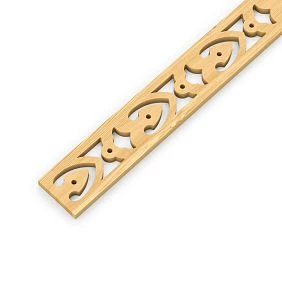
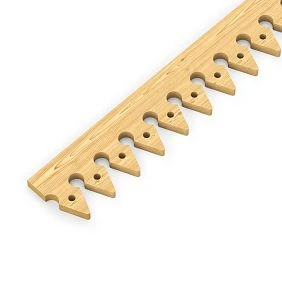
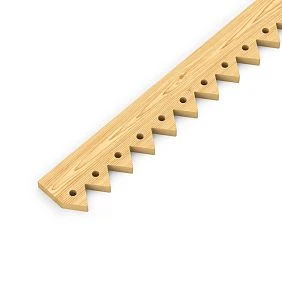
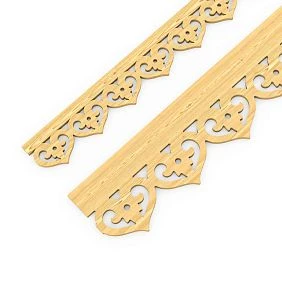
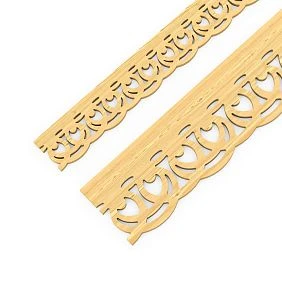
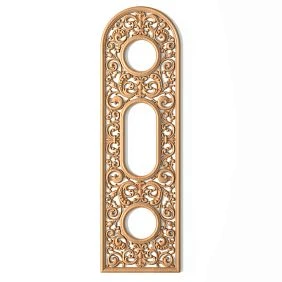
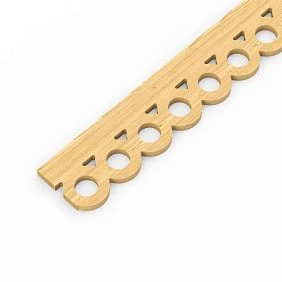
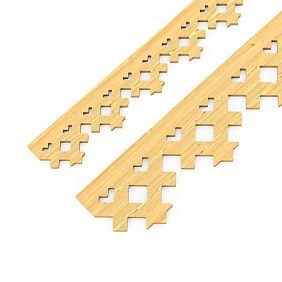
When carved architraves truly change the look of a house
Carved architraves are especially noticeable where the facade is simple, and windows, doors, or cornices require framing. On a wooden house, any empty plane is quickly perceived: if the openings are not finished, the house may look unfinished. When carved side and top elements appear around the windows, the facade gains character.




How a platband makes a window expressive
The window is the central point of the facade. Even if it is small, the eye still catches on the opening. Without an architrave, the window often looks flat: glass, frame, wall, and that's it. A carved architrave adds depth, a decorative edge, and a vertical-horizontal frame. It makes the window part of the house's architecture, not just a technical opening.
On a wooden facade, the connection between the wall and the window is especially important. If the log house, timber, or wooden cladding has a pronounced texture, a smooth plastic or too simple framing can look alien. A carved wooden architrave better supports the house's material and helps preserve the country character.
For one window, you can use side elements, a top part, and additional connecting parts. If there are several windows, it is important to repeat the same principle so that the facade does not turn into a set of different solutions. The more windows on the facade, the more important a unified pattern, element height, thickness, and finishing method are.
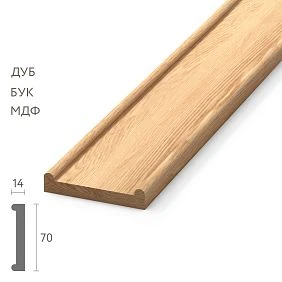
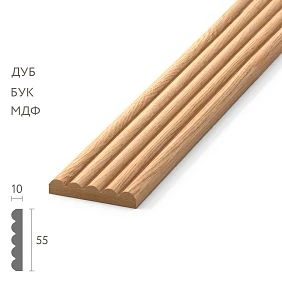
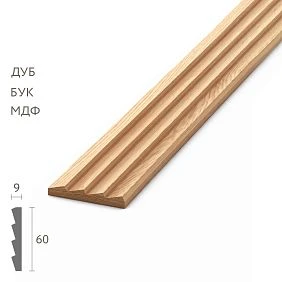
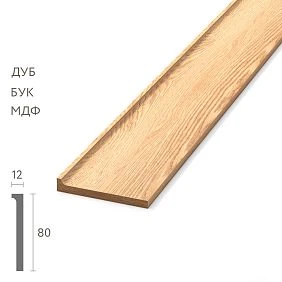
Our factory also produces:
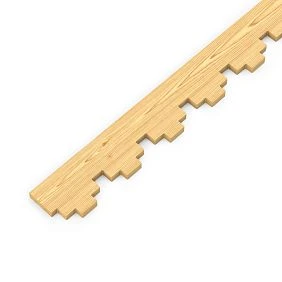
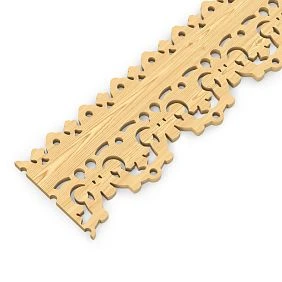
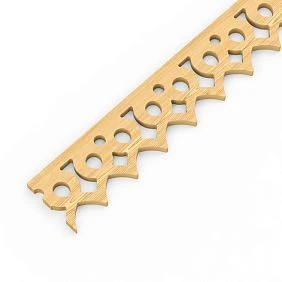
Why a door without framing looks unfinished
The front door from the outside should be not only durable but also expressive. It greets a person first. If there is no framing around the door, the facade often looks too simple: the panel stands separately, and the transition to the wall seems abrupt. Carved architraves help design the opening, emphasize the entrance, and make the door part of the overall composition.
Carved decor works especially well on wooden houses, bathhouses, and verandas. There, the front door is often connected to the porch, canopy, cornice, railings, or brackets. If all these details are chosen in the same style, the entrance area looks not random but like a well-thought-out facade unit.
It is important not to overload the door. If the panel itself is already active, the architraves should support it, not compete. If the door is simple, carved elements can become the main decoration of the opening. In any case, you need to consider the width, height, facade color, and adjacent decor.
Get Consultation
How house carving changes the facade without major renovations
House carving is often chosen not because the house needs repairs, but because you want to make the facade more expressive. Carved trims, brackets, connecting elements, and rosettes allow you to update the appearance without a complete rebuild. Decor is added to visible areas: windows, doors, cornice, roof overhangs, gazebo, veranda, bathhouse.
This is especially convenient when the house is already built but looks too simple. There is no need to change the roof, rebuild walls, or redo all openings. You can start with windows, then add door framing, then tie the composition together with a cornice or brackets. The main thing is to choose a style right away and not mix random patterns.
House carving works well in Russian style, classic, dacha, and country styles. At the same time, it does not have to be overly complex. The catalog includes carved and geometric options, so you can choose both more traditional and more restrained modern decor.
What are STAVROS carved architraves
STAVROS carved trims belong to the house carving section. These are wooden decorative elements for framing windows, doors, and cornices on wooden houses, gazebos, bathhouses, and other buildings. They help create facade decor in the traditions of Russian wooden design or in a more modern version if a restrained geometric pattern is chosen.
The section features not only the platbands themselves, but also accompanying elements: connecting parts, brackets, house carving balusters, solid wood frames. Therefore, the buyer can assemble not just one element, but a facade set.
| Parameter | What is important for the buyer |
|---|---|
| Main category | Carved platbands, house carving |
| Main URL | Select carved architraves for a wooden house |
| Types of products in the section | Baluster house carving, bracket, carved architrave, solid wood frame, connecting element for house carving |
| Product examples | Carved architraves NL-series, connecting elements SNL, wooden brackets KR |
| Application | Windows, doors, cornices, facades, baths, gazebos, wooden buildings |
| Standard length of architraves | 2000 мм |
| Thickness of architraves | 18 мм |
| Material | Reglued pine panel |
| Delivery condition | Without coating or impregnation |
| Preparation | Products are sanded and ready for further finishing |
| Application feature | Two-meter trims are cut to size, joints can be covered with wooden rosettes |
| What to clarify before ordering | Size, availability, model, finish, installation scheme, compatibility with facade and accompanying decor |
This table shows the main thing: carved trims are not a universal interior strip for an apartment. This is facade wooden decor that requires selection by size, style, installation location, and future finish. The trim is supplied without coating, so the buyer must plan the final wood protection in advance.
Window trims
Window trims are the most obvious scenario for house carving. They frame the opening, make the window expressive, and help connect it with the facade. For a wooden house, this is especially important: the window should not just stand in the wall but look like part of the architecture.
When selecting, you need to consider the window size, facade plane width, distance between windows, window sill zone height, cornice, and house color. On a small window, a too-wide trim may look heavy. On a large window, a thin element will get lost. For a facade with multiple windows, it is better to calculate the repeat in advance.
Door trims
A doorway requires a stronger frame than a window because the entrance area is larger and more active. A carved architrave around the door can emphasize the verticals, the upper part of the opening, and the connection with the porch and cornice. If there are brackets, carved canopy elements, or decorative details on the facade nearby, the architrave should support their pattern.
For the front door, it is especially important to consider operation. The exterior decor must be properly prepared for finishing, protected from moisture and sun, and installed on a suitable base. The specific installation method depends on the facade structure, so it is better to clarify the details with a craftsman or STAVROS manager before starting work.
Architraves for cornices
The cornice and roof overhang can be supplemented with carved house carving so that the top line of the house does not look empty. This is especially noticeable in bathhouses, gazebos, verandas, wooden country houses, and houses with a pronounced roof slope. A carved cornice along the overhangs helps connect the top of the facade with the design of windows and doors.
Here it is important not to use a window architrave without understanding its role. The cornice requires its own logic: horizontal rhythm, repetition, connection with brackets and corners. If the windows are richly decorated and the cornice is left empty, the facade may look unfinished. If the cornice is overloaded with simple windows, the house will become heavy on top.
Connecting elements and brackets
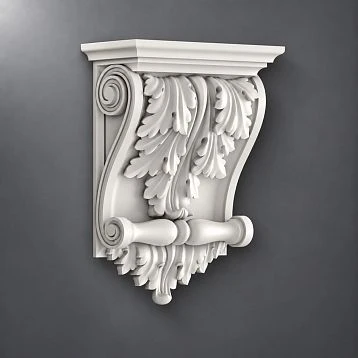
Connecting elements for house carving are needed where parts converge, join, or require neat finishing. They help cover joints, support the pattern, and make the composition clean. Brackets work differently: they add a supporting and decorative character under cornices, overhangs, shelves, canopies, or architectural projections.
If you need to assemble a facade set, you should immediately look not only at architraves but also at the possibility to buy connecting elements for house carving, and for cornices and canopies — buy wooden brackets for facade decor. This way the elements will work together, rather than looking random.
How to decorate windows of a wooden house
Windows are the best starting point for house carving. They are visible from the street, repeat across the facade, set the rhythm, and instantly change the house's appearance. But the decorative result depends not only on the pattern. Width, height, top part, side elements, joints, color, and repeatability are important.
Choose the width and pattern of the trim
First, you need to determine what character the house needs. For a Russian style, more expressive carved elements are suitable. For a calm country facade, you can choose a geometric pattern. For a bathhouse or gazebo, more decorative carving often looks good because the building itself allows for an expressive folk motif.
The width of the trim should match the window. If the window is narrow, too wide decor will make it look heavy. If the window is large, a thin trim will get lost. On a facade made of timber or clapboard, consider the step and scale of the wooden surface. The trim should not conflict with the texture of the wall.
Select the top and side parts
A window usually requires side elements and a top frame. The top can be calm or more decorative. The side parts set the vertical lines. The bottom part depends on the window design, windowsill, and facade.
If there is one window, you can make it the main accent. If there are many windows, it is better to maintain a unified principle: the same pattern, the same width, repeated height, and similar connecting details. Then the facade will look cohesive.
Close joints with rosettes or connecting elements
Joints are the weak point of any decorative composition. Even a beautiful trim can look untidy if the connection points are left open or roughly cut. STAVROS notes that two-meter trims can be cut to size, and the joints can be closed with wooden rosettes from the catalog.
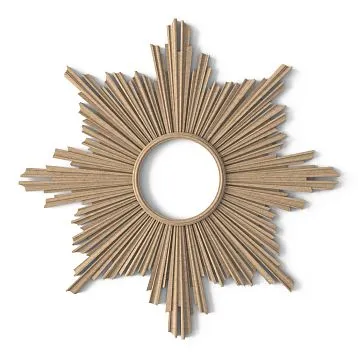
If you need to neatly finish the nodes, you can buy wooden rosettes to close the joints of trims. Rosettes help hide the connection, add a decorative point, and make the framing more cohesive. But they need to be selected by size and style so they don't look like random overlays.
Match trims with the facade color
Carved trims are supplied without coating or impregnation, so final finishing is mandatory for outdoor use. The color can match the facade, be contrasting, or support other elements: porch, cornice, shutters, railings, fences, door.
White or light trims on dark wood provide a classic contrast. Trims in the color of the facade look calmer and softer. Dark decor on a light house makes openings more expressive but requires careful selection to avoid weighing down the facade. Before painting, you need to check surface preparation and choose a coating suitable for outdoor conditions.
How to decorate a door from the outside
The query 'how to decorate an entrance door from the outside' often starts with a desire to make the facade more beautiful but quickly runs into practicalities: what exactly to buy, how not to overload the opening, how to combine the door with windows and cornice. A carved trim is one of the most straightforward ways to design the entrance.
Door frame casing
A door on the outside needs framing no less than a window. If the facade is wooden, a carved casing around the door helps preserve the material and style of the house. It can emphasize verticals, make the entrance more noticeable, and support the porch and canopy.
For the entrance area, it's better to consider the entire assembly: door, frame, exterior trim, porch, cornice, brackets, lighting, railings. If the casing is chosen separately from all this, it may look out of place. If chosen within the overall logic, the entrance area becomes a strong part of the facade.
Carved casing around the opening
A carved casing around the door should match the scale of the opening. A door is usually taller than a window, so the side elements can be longer, and the top part more expressive. But an overly complex pattern next to a small porch or a simple door can overload the facade.
For a country house, repetition works well: windows and door are decorated with similar elements, but the entrance area is slightly stronger. For example, calm casings on windows, and a more expressive top or additional connecting elements on the door. This approach makes the facade not identical, but cohesive.
When additional overlays are needed
Additional carved overlays are needed if the door or the area above it seems empty. For example, there is a wide wooden lintel above the entrance, but it is not decorated. Or there is enough space around the door to add a central carved element. In this case, decorative overlays can be used, but only if they support the pattern of the casings.
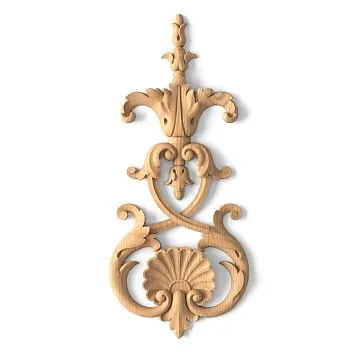
For a richer composition, you can add Decorative Inserts to the upper area, to the side elements, or to the facade fields next to the opening. An overlay does not replace the casing. It enhances the decorative center if the casing is insufficient.
How not to overload the facade with decor
House carving is beautiful precisely when it has enough breathing room. If you place too many elements on every corner, joint, opening, and cornice, the facade becomes fragmented. It's better to choose one main accent: windows, the front door, or the cornice. The remaining areas should support it.
For a small house, it's often enough to decorate the windows and entrance in one style. For a large country house, you can add a cornice and brackets. For a bathhouse or gazebo, more decorative house carving is appropriate, but even there, it's important to maintain repetition and scale.
How to decorate a cornice, gazebo, or bathhouse
House carving is not limited to windows. It works well on cornices, roof overhangs, verandas, gazebos, bathhouses, decorative fences, and utility buildings. In such places, carved decor is especially noticeable because it is tied to the building's silhouette.
Trim and brackets
Brackets add a supporting character to the facade. They can work under overhangs, cornices, canopies, decorative shelves, and ledges. If the windows are decorated with carved trim, brackets help continue the motif in the upper part of the facade.
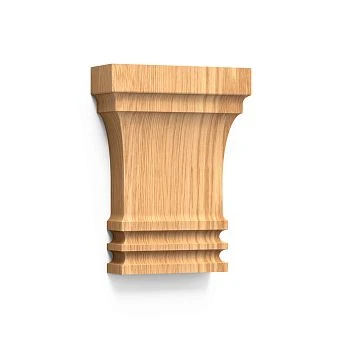
For such a task, you can buy wooden brackets for facade decor. It's important to understand: a bracket does not replace trim. It does not frame the window, but supports or decorates a ledge, overhang, or cornice part. Together, they work more effectively: trim frames the openings, brackets support the upper architecture.
House carving for roof overhangs
The roof overhang often remains empty, even though it greatly influences the house's appearance. If the cornice is not decorated at all, the facade can look plain even with beautiful windows. A carved cornice or decorative elements along the overhangs help make the top of the house more expressive.
When designing the overhang, it is important to maintain rhythm. The decor should repeat with a clear step, not break off randomly, and not conflict with the gutter, roofing, soffit, and brackets. Before ordering, you need to measure the length of the sections, determine the joints, and plan the finish coating.
How to assemble a unified set
A unified set starts with the main element. If windows are being decorated, the main element will be carved architraves. If a cornice — brackets and horizontal decor. If an entrance — architraves around the door and additional details. After choosing the main element, add connecting parts, rosettes, brackets, and overlays.
Do not mix different styles: one architrave in Russian style, another in strict geometry, a third overlay from a different aesthetic. Even if each detail is beautiful individually, together they may clash. It is better to choose one collection or stylistic line and stick to it.
Dimensions, material, and finish: what to check before ordering
STAVROS carved architraves have a standard length of 2000 mm and a thickness of 18 mm. These are important parameters for calculation. The two-meter element is cut to the required size, and joints can be covered with rosettes or connecting parts. Before ordering, you need to measure windows, doors, cornice sections, and determine how many elements will be needed.
The material is glued pine board. The STAVROS description states that knots and resin pockets are cut out of the board so that resin does not seep out under sunlight and the decor does not deform or crack. This is important for facade wood: exterior elements operate under sun, moisture, and temperature fluctuations, so the material and final protection are significant.
Products are supplied without coating or any impregnation. This is not a flaw but part of the logic: the buyer can choose a finish to match the facade. However, the wood cannot be left unprotected if it will be used outdoors. Before installation, you need to plan a primer, paint, varnish, oil, or another finishing system suitable for outdoor conditions and the specific project.
| Parameter | What to Check | Why this is important |
|---|---|---|
| Architrave length | 2000 мм | You need to calculate the cut for a window, door, or cornice |
| Thickness | 18 мм | Affects the relief, joint, and appearance |
| Material | Reglued pine panel | Important for exterior wooden decor |
| Finish | Supplied without coating or impregnation | Need to prepare the final protection in advance |
| Joints | Can be covered with sockets | Helps achieve a neat appearance |
| Connecting elements | Selected in the house carving section | Needed for joints and transitions |
| Brackets | Selected separately | Help to design the cornice and overhangs |
| Overlays | Used to enhance the composition | Suitable for decorative centers |
What to buy together with carved trims
Carved architraves are rarely purchased completely separately. If a window is being framed, side and top elements are needed, sometimes connecting parts and rosettes. If a door is being framed, additional overlays may be required. If a cornice is being decorated, brackets are needed. If the task is a unified facade, it is better to assemble a set at once.
| Task | What to buy | Commercial transition |
|---|---|---|
| Frame a window | Carved architraves for side and top parts | buy carved architraves for windows and doors |
| Design the facade in a single style | House carving, architraves and connecting elements | Select carved architraves for a wooden house |
| Cover joints and nodes | Connecting elements for house carving | to buy connecting elements for house carving |
| Cover the joints of architraves | Wooden rosettes | buy wooden rosettes to close the joints of trims |
| Add support decor | Wooden brackets | buy wooden brackets for facade decor |
| Make the composition richer | Decorative overlays | Decorative Inserts |
For a small window, the set can be simple: trims and rosettes for joints. For an entrance door, it's better to think of a stronger frame. For a cornice, brackets will be needed. For a gazebo or bathhouse, repeating decor on several sides is often needed, so it's important to calculate the quantity in advance.
How not to confuse similar products
Carved trim and regular door trim
A regular door trim usually covers the joint between the frame and the wall inside the room or in the doorway. A carved trim from the house carving section works as facade wooden decor for windows, doors, and cornices. It is chosen not just to cover the joint, but for the decorative design of the house.
If the task is an interior door in an apartment, other solutions are needed. If the task is a wooden house, facade, bathhouse, gazebo, window, or entrance door from the outside, it's better to look at house carving.
Trim and decorative overlay
The trim frames the opening. The overlay decorates a separate surface. The overlay can be placed on the facade, door, central area, pediment, or decorative field, but it will not replace the window frame. The trim sets the perimeter, the overlay adds an accent.
Trim and bracket
The bracket does not frame a window or door. It works as a decorative or support detail under a cornice, shelf, overhang, or canopy. If the buyer wants to decorate the top of the facade, a bracket is appropriate. If the opening needs to be framed, a trim is needed.
Casing and connecting element
A connecting element is needed for nodes, joints, and transitions. It helps connect parts. By itself, it does not replace a long casing, but it makes the composition neater. It is especially useful for complex windows, wide openings, and facade patterns with repetition.
House carving and interior decor
House carving is designed for facade and exterior wooden appearance: house, bathhouse, gazebo, cornice, window, entrance area. Interior decor can be more delicate, designed for walls, furniture, ceilings, doors inside the room. Do not transfer elements without understanding the operating conditions and purpose.
Practical selection for different situations
Need to decorate the windows of a wooden house
Start with the window dimensions. Measure the height, width, distance to neighboring windows, depth of slopes, and free space around the opening. Then choose a style: Russian, classic, modern geometric, rustic. After that, select side and top elements, and cover the joints with rosettes or connecting parts.
Need to decorate the front door from the outside
Look not only at the door but also at the porch, canopy, cornice, and facade color. The entrance area can be slightly more expressive than the windows but should not stand out from the overall style. Carved casings are suitable for the opening, and brackets for the canopy or overhang.
Need to design the cornice
First, measure the length of the section. Then decide whether the decor will be continuous, repeating, or point-based. Brackets help support the top line, and carved elements along the overhang make the facade more complete. Consider gutters and fasteners so that the decor does not interfere with engineering details.
Need to decorate the bathhouse
The bathhouse allows for more expressive folk wooden decor. Carved window casings, door design, brackets under the eaves, and repeating elements work well here. But the wood definitely needs a final protective finish because the bathhouse is often in conditions of humidity and temperature fluctuations.
Need to decorate the gazebo
In the gazebo, carved decor can appear at the entrance, on the cornice, railings, upper lintels, and decorative openings. Casings are not always used here as a window element, but as part of the overall house carving. It is important to maintain lightness: the gazebo should not become too heavy due to large decor.
Need to transform the house facade without major renovation
Start with the most visible areas: windows facing the street, the front door, the cornice. Do not immediately buy decor for the entire house if there is no plan. It is better to choose one facade, assemble a set, try out the style, think through the color, and then repeat on the other sides.
Installation, preparation, and care: what is important to think through in advance
Carved window trims are supplied without coating or impregnation, so preparation for outdoor use is a mandatory part of the project. Before installation, the wood needs to be protected with a suitable finish. The specific system depends on the facade, climate, house location, chosen color, and the master's recommendations.
Before fastening, a dry fitting should be done. Lay out the elements around the window or door, check the joints, the height of the top part, the symmetry of the side pieces, the distance to the edges and neighboring elements. If there are rosettes or connecting parts, they also need to be fitted before final fastening.
The cut to size must be neat. Casings have a length of 2000 mm, so in a real project, cutting is almost always needed. An error in the cut can ruin the joint. If a joint does appear in a visible place, it can be covered with a rosette or connecting element, but it is better to think through the placement in advance.
After installation, facade decor requires maintenance. Wood outdoors operates under more challenging conditions than interior products. The coating needs periodic inspection: check for cracks, peeling, darkening, exposed ends, and areas where water can enter. The more careful the preparation and maintenance, the longer the carved decor retains its appearance.
Mistakes when buying carved window trims
Choosing only by pattern
A beautiful pattern is important, but it doesn't solve everything. You need to consider length, thickness, width, material, installation location, facade color, and adjacent decor. A trim may be beautiful on its own but not suit a specific window.
Not counting the number of elements
For a window, you need side and top parts, sometimes a bottom section, connecting elements, and rosettes. For multiple windows, the quantity quickly increases. Before ordering, make a diagram and calculation. Otherwise, you might buy less than needed or end up with excess leftovers.
Forgetting about joints
Joints don't disappear on their own. Two-meter elements are cut to size, and connection points need to be planned. For a neat result, you can use wooden rosettes or connecting elements.
Not accounting for lack of coating
Trims are supplied without coating or impregnation. If installed on a facade without protection, the wood will be vulnerable. Finish treatment is a mandatory part of outdoor use.
Mixing different styles
Russian ornament, strict geometry, modern details, and random overlays may not come together. It's better to choose one stylistic line for the entire facade.
Overloading a small house
On a small house, overly large and dense carving can look heavy. For a small building, it's better to use expressive but dosed decor.
Buying interior decor instead of house carving
Some wooden elements are intended for furniture or interior walls. House carving is a separate section with facade application logic. If you are decorating the outside of a house, start with that.
Who carved window trims are suitable for
Carved window trims are suitable for owners of wooden houses, bathhouses, gazebos, verandas, and country buildings who want to make the facade more expressive without major renovations. They are especially useful for those who want to highlight windows, the front door, cornice, roof overhangs, or facade details in Russian style, classic, or country aesthetics.
They are suitable for craftsmen, builders, designers, owners of hotel cottages, bath complexes, country houses, suburban restaurants, and guest houses. In commercial properties, carved decor helps make the facade memorable and warmer in perception.
Carved window trims are not suitable for those who seek minimalism without decor, plastic elements, interior door trims, a regular door frame, or a fully finished product with final painting. They are also not suitable for those who are not ready to handle wood finishing for outdoor use.
How to buy carved window trims at STAVROS
Start with the house carving section and select a task: window, door, cornice, bathhouse, gazebo, facade, or veranda. Then filter products by type: carved casing, connecting element, bracket, house carving baluster, solid wood frame. After that, check dimensions A, B, and C, product type, ornament, availability, and the specific product card.
If you need to frame a window or door, start by buy carved architraves for windows and doors. If the task is broader — house facade, bathhouse, gazebo, entrance area — it is better to immediately Select carved architraves for a wooden house together with connecting elements, brackets, and rosettes.
Before ordering, prepare opening dimensions, facade photos, desired style, color of future finish, number of windows and doors, length of cornice sections. For a complex project, it's better to check with a STAVROS manager the compatibility of selected elements and the possibility of manufacturing to custom sizes or drawings.
FAQ
How to decorate windows of a wooden house?
For windows of a wooden house, you can use carved casings: select side and top elements, calculate length, choose a pattern, and close the joints with connecting parts or wooden rosettes. It's important to immediately consider the finishing coating for outdoor use.
Can carved casings be used for doors?
Yes, carved casings can be used for door decoration. They help emphasize the entrance area, connect the door with the facade, porch, cornice, and other wooden decor.
What to use to cover casing joints?
Joints can be covered with wooden rosettes or connecting elements. This helps make the connection point neater and adds a decorative accent to the composition.
What to buy together with carved architraves?
Along with platbands, connecting elements, wooden rosettes, brackets, decorative overlays, and wood finishing materials are often purchased.
Can carved platbands be ordered in custom sizes?
STAVROS indicates the option to buy ready-made carved platbands or order custom manufacturing based on individual sizes and drawings. Before ordering, it is better to prepare the opening dimensions and a facade diagram.
What is the standard length of carved platbands?
The standard length of STAVROS platbands is 2000 mm, thickness is 18 mm. The elements are cut to the required size, so the cutting layout needs to be calculated before purchase.
What material are carved platbands made of?
Carved platbands are made from glued pine panel. Specific parameters of the selected model should be checked in the product card before ordering.
Are platbands supplied with a coating?
Platbands are shipped without coating or any impregnation. For outdoor use, a final wood protection must be selected in advance.
Are carved architraves suitable for a bathhouse?
Yes, carved architraves can be used for a bathhouse if you correctly choose the size, style, and protective coating for outdoor conditions. It is especially important to consider humidity and temperature fluctuations.
How does a carved architrave differ from a regular architrave?
A carved architrave from the house carving section is a facade decorative element for windows, doors, and cornices of a wooden house. A regular architrave is more often needed to close joints in a doorway and may not have a facade decorative purpose.
Are brackets needed together with architraves?
Brackets are not always needed. They are useful for cornices, overhangs, canopies, verandas, and decorative support areas. If only a window is being decorated, architraves and connecting parts are sufficient.
How not to overload the facade with house carving?
Choose one main accent: windows, the front door, or the cornice. Then select the remaining elements in the same style, but more subdued. Do not mix too many different patterns and scales.
Can carved architraves be used for a gazebo?
Yes, house carving is suitable for gazebos. Architraves, brackets, balusters, and connecting elements help to decorate the entrance, openings, overhangs, and decorative areas.
Where to buy carved architraves?
Carved architraves can be purchased in the STAVROS catalog in the house carving section. It features NL-series architraves, SNL connecting elements, brackets, and other products for facade wooden decor.
Result: carved architraves make a wooden house recognizable
Carved architraves help decorate windows, doors, cornices, bathhouses, gazebos, and the facade of a wooden house without major reconstruction. They add expressive framing to openings, connect the house to the tradition of wood carving, cover visual joints, and help unify the facade in a single style.
A good result starts not with the most complex pattern, but with proper selection: window or door dimensions, length 2000 mm, thickness 18 mm, material, lack of coating, future finishing, joints, rosettes, brackets, and connecting elements. If all this is thought out in advance, the facade will look cohesive rather than randomly decorated.
STAVROS allows you to assemble a set for house carving in one logic: architraves, connecting elements, wooden rosettes, brackets, and decorative overlays. It's worth starting with the section where you can buy carved architraves for windows and doors, then add elements for joints, cornices, and facade accents for a specific wooden house.