Article Contents:
- Oak in interior design: symbol of status and sophistication
- Historical value of oak grain texture
- Psychology of perception of oak surfaces
- Technology for creating an ideal oak pattern on MDF
- Multi-layer decorative coating structure
- Embossing and creation of tactile effects
- New-generation protective coatings
- Variety of oak shades and textures
- Light oak shades
- Dark and rich tones
- Modern designer interpretations
- Application of MDF oak planks in various interior styles
- Classic style
- Modern style
- Scandinavian Style
- Loft and Industrial Style
- Technical specifications and manufacturing quality
- Parameters of quality MDF
- Quality of decorative coating
- Geometric accuracy
- Creative application methods
- Creation of three-dimensional compositions
- Integration with lighting
- Furniture applications
- Combination with other materials
- Natural materials
- Modern materials
- Textile Accents
- Ecological Aspects and Safety
- Ecological certification
- Use in children's rooms
- Maintenance and Durability
- Daily care
- Protection against damage
- Local repair
- Installation and mounting
- Foundation Preparation
- Mounting systems
- Features of working with oak decor
- Economic advantages of choosing
- Cost compared to natural oak
- Long-Term Savings
- Universality of application
- Conclusion
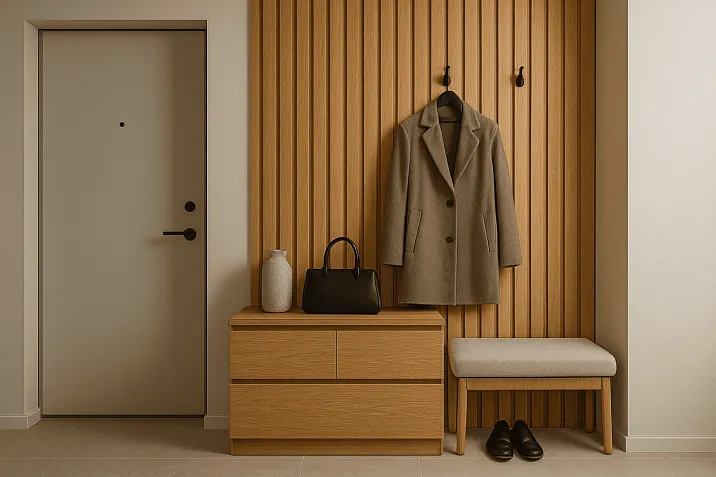
There is something magical in the texture of oak — the king of forests, whose noble beauty has adorned the palaces of European monarchs and cozy homes of ordinary people for centuries. Today, this centuries-old wisdom of nature is accessible to everyone thanks to MDF Planks Oak — an innovative solution that combines the authentic beauty of natural wood with the practicality of modern materials.
Why is oak the standard of prestige in the world of design? Its unique texture with expressive growth rings, noble tone, and natural elegance create an atmosphere that cannot be artificially reproduced. Each plank tells its own story, and every pattern is unique, like a fingerprint.


Oak in interior design: symbol of status and sophistication




Historical value of oak grain texture
For thousands of years, oak has been considered the tree of gods and kings. Ancient Celts worshipped oak groves, seeing in them embodiments of wisdom and strength. Vikings built their longships from oak, conquering the seas. French kings preferred oak panels in their rooms at Versailles. And today, this tradition continues in modern interiors, where oak motifs create a sense of inherited nobility.
Oak texture is instantly recognizable — large pores form a distinctive pattern resembling frost patterns on glass. Light sapwood areas contrast with dark heartwood zones, creating a natural play of tones from golden-honey to deep chocolate.
Our factory also produces:


Psychology of Perception of Oak Surfaces
Modern research confirms: oak surfaces have a calming effect on the human psyche. Warm wood tones reduce stress levels, while natural surface irregularities stimulate tactile receptors, creating a sense of comfort and security.
In interior design, oak elements serve as visual anchors — they ground the space, making it more stable and reliable. That’s why designers so often use oak themes in living areas, especially bedrooms and living rooms.
Get Consultation
Technology for Creating an Ideal Oak Pattern on MDF
Recreating the unique beauty of oak on an MDF surface — a task requiring the highest level of craftsmanship and advanced technologies. Modern decorative methods allow achieving such realism that distinguishing between high-quality imitation and natural material is nearly impossible.
Multi-layer Decorative Coating Structure
Creating quality oak decoration begins with careful preparation of the base. The MDF panel is sanded to a perfectly smooth state, then a special primer is applied, ensuring maximum adhesion of the decorative layer.
The main decoration is created using high-resolution direct printing — up to 1440 dpi. This allows capturing the finest details of oak texture: fine annual rings, characteristic pores, natural knots, and color transitions. The color palette includes dozens of shades — from cream-beige to rich brown.
Embossing and Creating Tactile Effects
Visual similarity is only half the success. The real breakthrough is creating tactile imitation — when the surface not only looks like oak but also feels like natural wood. Special engraved rollers create microscopic surface irregularities on the film, precisely replicating the structure of oak pores.
The embossing process occurs under high temperature and pressure, ensuring the durability of the relief. The result is a surface that not only looks authentic but also feels pleasant to the touch.
Protective Coatings of the New Generation
The final stage — applying a protective coating that ensures the longevity and durability of the decoration. Modern polyurethane varnishes create a transparent protective film just a few microns thick, yet provide high resistance to abrasion, moisture, and ultraviolet radiation.
Special additives in the varnish composition prevent fading of the decoration even under prolonged exposure to direct sunlight. This is especially important for interior elements located near windows.
Variety of Oak Shades and Textures
Nature did not create two identical oaks, and modern technologies allow reproducing all the richness of this diversity. From light Scandinavian oak to deep stained oak — each shade has its own application area and creates a unique atmosphere.
Light Oak Shades
White oak — symbol of Scandinavian minimalism. Its almost white surface with barely noticeable gray veins creates a sense of purity and freshness. Such planks are ideal for small rooms, visually expanding the space and filling it with light.
Natural oak retains its natural color palette — from golden-yellow to warm brown. This shade is universal and suitable for most interior styles, from classic to modern.
Sonomah oak features a grayish undertone, giving interiors a modern and elegant feel. This shade is especially popular in office and commercial interiors, where presentation and professional atmosphere are important.
Dark and Rich Tones
Smoked oak imitates wood treated with smoke. Its deep brown color with gray undertones creates an atmosphere reminiscent of old English libraries and aristocratic clubs.
Stained oak — the darkest of oak shades. Its almost black surface with visible texture creates dramatic interiors full of mystery and depth. Such planks become compositional centers, drawing attention and creating memorable accents.
Cognac oak combines the warmth of natural wood with the elegance of aged liquor. Its golden-brown hue with amber highlights creates an atmosphere of home comfort and coziness.
Modern Design Interpretations
In addition to classic shades, modern technologies allow creating avant-garde interpretations of oak texture. Graphite oak combines natural patterns with modern gray tones. Loft oak imitates weathered wood with scratches and signs of time.
Application of MDF Oak Planks in Various Interior Styles
The versatility of oak motifs allows using them in various stylistic directions. However, it is important to properly combine MDF Planks Oak with other decorative elements, including Wooden planks to create interesting textural contrasts.
Classic Style
In classic interiors, oak planks are used to create traditional panels in the English style. Dark oak tones — smoked or stained — create the atmosphere of old mansions and castles. Combining with MDF molding allows creating complex architectural compositions.
Vertical planks form tall panels that visually increase ceiling height and create a sense of grandeur. Adding MDF Skirting Board in the same oak tone creates a finished, harmonious look.
Modern Style
In modern interiors, oak planks are used more sparingly, creating accent surfaces without excessive ornamentation. Light tones — whitewashed oak or natural — harmoniously combine with minimalist furniture and contemporary finishing materials.
Horizontal plank arrangement visually expands the space and emphasizes the modernity of the interior. Combining with metallic elements and glass creates a textural contrast highly valued in contemporary design.
Scandinavian Style
Scandinavian design is unthinkable without wood, and oak motifs are especially appropriate here. Light, almost white tones create the feeling of northern light and purity. MDF Planks Oak In light tones, they perfectly match white walls and natural fabrics.
Vertical compositions imitate birch or pine trunks, creating an association with northern forests. Such solutions make the interior more lively and natural, which is the foundation of Scandinavian design philosophy.
Loft and Industrial Style
In loft interiors, oak planks create a contrast with rough industrial materials — concrete, brick, metal. Dark, weathered oak tones emphasize the authenticity of the space and add warmth.
Often combined with metallic profiles, which highlight the industrial character of the interior. MDF Crown In oak finish, it can become a finishing element of ceiling composition.
Technical characteristics and manufacturing quality
When choosing MDF planks in oak finish, it is important to pay attention not only to appearance, but also to technical characteristics that determine the durability and operational properties of the products.
Parameters of quality MDF
The basis of any quality planks is high-class MDF board. The material density should be at least 700-750 kg/m³, ensuring sufficient strength and dimensional stability. The moisture content of finished products should not exceed 6-8% — this guarantees the absence of deformation under changes in microclimate.
Special attention should be paid to ecological safety. Quality MDF has formaldehyde emission class E1 or E0, making it safe for use in residential spaces, including children's rooms.
Quality decorative coating
The durability of oak decor is determined by the quality of materials used and the application technology. Professional coatings must withstand at least 10,000 abrasion cycles according to EN 15186 standard, ensuring long-term preservation of appearance.
Coating colorfastness is tested under ultraviolet exposure. Quality products do not change color during 500 hours of continuous exposure, which corresponds to approximately 10 years of use under normal conditions.
Geometric accuracy
Dimensional accuracy is critically important for creating quality compositions. Deviations in length, width, and thickness should not exceed ±0.3 mm. End faces must be perpendicular to the longitudinal axis with accuracy ±0.5°.
The surface of the planks should be perfectly smooth, without waviness, dents, or other defects. The quality of sanding is checked visually and by touch — there should be no noticeable transitions or unevenness.
Creative application methods
Oak planks open up boundless creative possibilities. In addition to traditional use for wall finishing, they can become the basis for creating unique design solutions.
Creating three-dimensional compositions
Combining planks of different thicknesses allows creating multi-level compositions with pronounced relief. The play of light and shadow on such surfaces creates dynamic visual effects that change depending on lighting and viewing angle.
Radial compositions, where planks radiate from a central point, creating a sunbeam effect, are especially effective. Such solutions become focal points in the interior and require expert execution.
Integration with Lighting
Modern LED technologies allow embedding lighting directly into slatted structures. LED strips placed between slats create soft, even lighting that highlights the beauty of oak texture.
RGB lighting opens up even more possibilities — the color of lighting can be changed depending on the time of day or mood. Warm golden glow emphasizes the natural warmth of oak, while cool blueish tones create a modern, technological atmosphere.
Furniture Applications
Oak slats are perfect for making furniture and furniture facades. Sliding wardrobes with slatted doors look light and modern while maintaining a connection to natural motifs. Using different slat orientations — vertical, horizontal, diagonal — allows creating unique compositions.
Shelving and partitions made of oak slats combine functionality with aesthetics. They zone space without creating a sense of enclosure and become full-fledged interior elements.
Combination with Other Materials
The art of design lies in the ability to harmoniously combine different materials. Oak slats have an amazing ability to get along with almost any texture, creating rich and expressive compositions.
Natural Materials
Combining oak slats with natural stone creates an atmosphere of a country house or chalet. The rough texture of stone highlights the elegance of the finished wood, creating a pleasant contrast. Especially effective is combining with limestone, sandstone, or slate.
Brickwork, especially in loft style, is beautifully complemented by oak accents. Warm tones of wood soften the industrial roughness of brick, creating a cozy atmosphere.
Modern Materials
Glass and metal are ideal partners for oak surfaces in modern interiors. The cool sheen of metal highlights the warmth of wood, while the transparency of glass does not compete with the expressive oak texture.
Concrete Surfaces in Combination with MDF Planks Oak create a modern interpretation of natural motifs. Gray tones of concrete serve as an ideal background for warm oak shades.
Textile Accents
Fabrics add softness and coziness to oak interiors. Natural linen and cotton emphasize the naturalness of wood, silk and velvet add luxury, while rough textures like burlap or jute create ethnic motifs.
The color palette of textiles should harmonize with the oak tone. Light tones suit pastel colors and natural shades, while dark tones require more saturated and deeper shades.
Ecological Aspects and Safety
In an era of growing ecological awareness, questions of safety of finishing materials become paramount. High-quality MDF slats with oak finish meet the strictest ecological standards.
Ecological Certification
Leading manufacturers receive international certificates confirming the ecological safety of their products. The FSC certificate guarantees that the wood is sourced from responsibly managed forests. The GREENGUARD standard confirms low levels of volatile organic compound emissions.
European standard EN 717 sets the maximum allowable levels of formaldehyde emissions. Class E1 is permitted for use in residential spaces, while class E0 is approved for use in children's facilities and medical institutions.
Use in Children's Rooms
Children's rooms impose special requirements for the safety of finishing materials. Oak motifs create a calm, restful atmosphere, which is especially important for children's psychology.
Antibacterial coatings prevent the proliferation of pathogenic microorganisms on slat surfaces. Special formulations create an invisible protective film that retains its properties throughout the product's lifespan.
Care and longevity
Proper care ensures the preservation of oak slats' beauty for decades. Modern protective coatings significantly simplify maintenance, but knowledge of basic rules will help extend the lifespan of the products.
Daily care
Dust is the main enemy of any decorative surface. Regular dry cleaning with soft cloth or vacuum cleaner with soft attachment prevents accumulation of dirt. Special attention should be paid to grooves in the texture, where dust accumulates most actively.
For wet cleaning, use special care products for laminated surfaces. They do not contain abrasive particles or aggressive solvents that could damage the decorative coating.
Protection from Damage
Mechanical damage — scratches, chips, dents — is the main threat to the appearance of slats. Using protective pads on furniture legs, careful handling of sharp objects, installing door stops — simple preventive measures.
Ultraviolet radiation may change the color of the finish over time. Blinds or curtains on windows facing the sun will help protect oak finish from fading.
Local repair
Modern technologies allow for local repair of damaged areas without replacing the entire structure. Special repair compounds — waxes, pencils, pastes — enable masking minor defects.
For more serious damage, professional restoration methods exist. Local sanding followed by application of repair compound restores the surface to its original appearance.
Installation and mounting
Quality installation is the guarantee of longevity and attractive appearance of slat structures. Modern mounting systems provide secure fixation with minimal impact on the decorative surface.
Foundation preparation
The mounting surface must be perfectly flat, dry, and clean. Irregularities exceeding 2 mm per meter must be eliminated by spackling or sanding. Moisture content of the substrate must not exceed 4% for mineral substrates and 8% for wooden ones.
Priming increases adhesive bond strength and prevents potential issues during operation. The type of primer is selected based on the substrate material.
Mounting systems
Mechanical fastening ensures maximum reliability. Concealed clamps allow mounting slats without visible fasteners. This system is especially recommended for ceiling structures and areas with increased load.
Adhesive bonding is suitable for lightweight slats on flat surfaces. Modern polyurethane adhesives provide high bond strength and retain elasticity, compensating for thermal deformations.
Combined systems combine the advantages of both methods. Adhesive ensures even contact across the entire area, while mechanical fastening ensures secure connection.
Features of working with oak veneer
When cutting slats with oak veneer, use saws with fine teeth to avoid chipping the decorative finish. End cuts are treated with special compounds that prevent moisture penetration.
Thermal expansion gaps are mandatory when installing long structures. The gap size depends on the structure's length and substrate material, typically 0.5–1 mm per meter of length.
Economic advantages of choosing
Investments in high-quality MDF slats with oak finish pay off due to their durability and versatility. Analysis of total ownership cost shows significant advantages over alternative materials.
Cost compared to solid oak
MDF slats with oak finish offer savings of 60–80% compared to solid oak products, with nearly identical appearance. Dimensional stability and absence of natural defects reduce waste during installation.
Installation speed of MDF slats is significantly higher due to their light weight and precise dimensions. This reduces labor costs and overall project cost.
Long-term savings
High-quality modern protective coatings ensure a service life of 15–20 years without the need for renewal. Ease of maintenance reduces operational costs.
The ability to perform local repairs allows maintaining the original appearance without replacing the entire structure. This is especially important for commercial spaces with high traffic.
Universality of application
Identical slats can be used for wall, ceiling, furniture, and decorative structure finishes. This simplifies material procurement and ensures stylistic unity in interior design. Composition enhancement new arrivals beams cornices slats creates a finished architectural look.
Conclusion
MDF slats with oak finish represent an ideal combination of aesthetics, functionality, and economic efficiency. They open up limitless possibilities for creating interiors that combine the nobility of natural wood with the practicality of modern materials.
Technological excellence in production ensures high quality and durability of products, while the variety of shades and textures allows implementing any design concept. From cozy home interiors to prestigious office spaces — oak motifs everywhere create an atmosphere of reliability and respectability.
Ecological safety of modern products makes them suitable for use in any room, including children's rooms and medical facilities. Ease of installation and maintenance ensures convenient operation throughout the product's lifespan.
Investments in high-quality MDF slats with oak finish are investments in beauty, comfort, and longevity. In a world where every interior detail affects quality of life, choosing the right materials becomes especially important.
STAVROS Company, with years of experience and deep expertise in producing decorative items from wood materials, offers an exceptional range of high-quality MDF slats with oak finish. Continuous improvement of production technology and strict quality control at every stage enable STAVROS to remain an acknowledged industry leader, providing customers not just construction materials, but tools for creating dream interiors that will delight with their beauty and functionality for many years.