












































































Article Contents:
- Inside MDF: What Lies Behind the Acronym
- Why MDF Outperformed Solid Wood in the Slat Panel Segment
- Technical Specifications of MDF Slat Panels: What to Know Before Buying
- Types of MDF Slat Panels: From Classic to 3D Relief
- Flat Slat on Load-Bearing Base
- Slat with Chamfer
- Semi-Round Molding Slats
- Multi-Level 3D Panels
- Combined panels with veneer
- MDF panel coverings: differences and how to choose
- For painting
- Decorative film (lamination)
- Natural veneer
- Melamine coating
- MDF panels in interior: space and style
- Accent wall: one move - different space
- Bedroom: material that doesn't disturb sleep
- Living room with open plan: slat as zoning tool
- Hallway: The First Impression Shapes Everything
- Children's Room: Safety and Imagination
- Office and Meeting Room: Status Without Pretension
- Installation of Slatted MDF Panels: A Professional Approach to Details
- Material acclimatization
- Foundation Preparation
- Methods of Panel Mounting
- Compensatory gaps
- Finishing of Joints and Edges
- Slatted MDF Panels and Comprehensive Interior Design
- Уход за реечными МДФ-панелями: минимум усилий — максимум результата
- Comparative Table of Slatted MDF Panel Coatings
- Trends in the Slatted MDF Panel Segment: 2025–2026
- FAQ: Honest Answers to Popular Questions
- About the Company STAVROS

Some materials enter the market quietly—and conquer it irrevocably. MDF slat panels are exactly such a case. Without loud declarations, without marketing campaigns, at some point designers, foremen, and apartment owners simply discovered: this solution works better than anything comparable in price. It is more precise in geometry, more stable in operation, richer in decorative possibilities—and yet requires neither an aristocratic budget nor professional builders with years of experience.
Today, MDF slat panels cover the walls of living rooms and bedrooms, hotel lobbies and meeting rooms, restaurants and shopping mall corridors. They appear on ceilings, as partitions, as furniture fronts. This material has transcended being just a finishing solution—it has become the language of modern interior design. And to speak it confidently, one must understand its nature, logic, and possibilities.
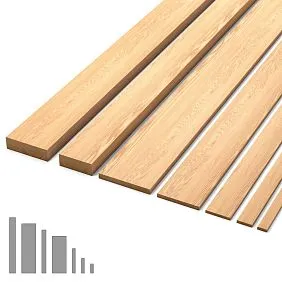

MDF from the Inside: What Lies Behind the Acronym
Before discussing panels, we must understand the material. MDF—Medium Density Fibreboard—is produced by hot-pressing fine wood fibers with thermosetting resin binders. It sounds technical, but the essence is simple: individual fibers are extracted from wood, then pressed under high pressure and temperature into a homogeneous board.
The result is a material without knots, resin pockets, cracks, or voids inherent in natural wood. The structure of MDF is absolutely homogeneous throughout its entire volume. It is precisely this homogeneity that is the main advantage in producing slat panels: each slat becomes geometrically precise, with clean edges and smooth faces, without the slightest deviation along its entire 2400–3000 mm length.
MDF density is a key technical parameter. For wall and ceiling slat panels, the optimal range is 720–850 kg/m³. At this density, the material confidently maintains the slat's shape under humidity fluctuations from 40% to 70%, does not crumble during edge milling, reliably holds fasteners, and ensures stable adhesion of any paint and varnish coatings. A board with a density below 650 kg/m³ is a compromise that will backfire within a year or two of use.
There are several classes of MDF, crucial for panel selection. Standard MDF is suitable for residential spaces with normal humidity. Moisture-resistant MDF of the HMR category (with paraffin additives) is for kitchen areas, bathrooms, and toilets with moderate vapor levels. Fire-resistant MDF of the FR category is for commercial facilities with fire safety requirements. Choosing the material class at the purchase stage determines the structure's service life under specific operating conditions.
MDF Plank PanelsIn the STAVROS catalog, panels are produced precisely from high-density MDF—this is not a declaration, but a production standard ensuring precise slat geometry and coating durability.




Why MDF Outperformed Solid Wood in the Slat Panel Segment
An honest question: why did MDF win in the mass production of slat panels, and not natural oak or pine? The answer is not about price. Or rather, not only about it.
Solid wood is a living material. It reacts to changes in temperature and humidity by expanding and contracting across the grain. In a slat 50 mm wide, this movement amounts to 0.3–0.8 mm for every 10% change in relative humidity. For a single slat, it's unnoticeable. For a wall made of 40 slats, this is 12–32 mm of total movement, which will inevitably affect gaps, joints, and the integrity of the finish.
MDF practically does not react to seasonal humidity fluctuations in enclosed living spaces. A wall made of MDF slat panels installed in October looks exactly the same in July as it did upon installation. No gaps, no deformations, no warping. It is this predictable behavior that makes MDF the technologically ideal base for slat constructions in heated interiors.
The second argument is the paint finish. Paint on the homogeneous surface of MDF applies predictably and evenly. The surface does not 'pull' pigment in areas of higher porosity (like pine) nor repel it in areas with resin inclusions (like coniferous solid wood). The final finish is smooth, with the same gloss or matte across the entire surface—this is why most premium-level painted furniture fronts are made from MDF, not solid wood.
The third argument is the machinability of milling. MDF allows for slats of any profile: rectangular, trapezoidal, with a chamfer, with rounded edges, with decorative grooves—with an accuracy down to tenths of a millimeter. Such precision is either unattainable when working with solid wood without special equipment, or requires significantly higher production costs.
Our factory also produces:


Technical specifications of MDF slat panels: what's important to know before buying
Let's look at specific numbers—not to impress with technical details, but so you can read the specification and understand what lies behind it.
Panel length: standard—2400 and 2700 mm, extended format—3000 mm. The choice of length is determined by the ceiling height in the room: the panel length should exceed the wall height by at least 50 mm for compensation gaps and trimming.
Slat width: from 25 to 120 mm. Narrow slats (25–40 mm) create an elegant, almost textile-like rhythm; wide ones (80–120 mm)—a monumental architectural pattern. For small rooms (up to 15 m²), a width of 30–50 mm is optimal; for spacious interiors—60–100 mm.
Gap step: from 5 to 50 mm. A narrow gap (5–12 mm) with frequent slats creates a dense ornamental pattern; the surface appears semi-closed. A wide gap (25–50 mm) reveals the background behind the slats—and this is where the magic begins: with backlighting of a dark background, the effect of floating planks is achieved.
Slat height (protrusion above the base): 14, 16, 19, and 22 mm. The higher the slat—the deeper the shadows with side lighting, the more pronounced the three-dimensional effect of the surface. A 14 mm slat creates a soft relief; 22 mm—a true architectural volume.
Load-bearing base thickness: 9 or 12 mm. For wall panels, 12 mm is preferable — it provides a more rigid base plane and better fastener retention.
Final construction thickness (panel + batten): 23–34 mm depending on the parameter combination. This is critically important to consider when designing trims, extensions, and junctions to door openings.
Get Consultation
Types of batten MDF panels: from classic to 3D relief
Flat batten on a load-bearing base
A classic of the genre. Rectangular battens with uniform spacing on a flat load-bearing base made of MDF or HDF. This option forms the foundation of the market — and it's clear why: clean geometry, predictable visual result, simple installation, affordable price. Flat battens work in any interior — from Scandinavian minimalism to modern classic.
Batten with chamfer
A chamfer — a cut at a 45° angle or with a radius — is made on the edges of each plank. The chamfer visually emphasizes the boundary of each batten, enhances the play of light and shadow, and gives the surface a more detailed and refined appearance. Battens with a chamfer look more expensive than their price — this is a level of detail unavailable with any other material at the same cost.
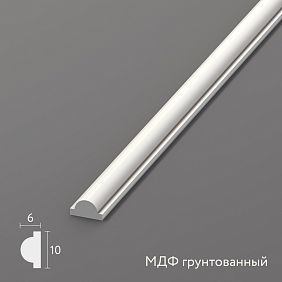
Semi-circular molding battens
Battens with a semi-circular profile create a soft, pliable rhythm — in contrast to the rigid geometry of rectangular planks. Such panels are suitable for bedrooms, children's rooms, and spaces with a soft, organic character. The arched profile of the batten produces soft shadows without sharp boundaries.
Multi-level 3D panels
The slats on a single panel protrude to different heights — some at 16 mm, others at 22 mm, and others at 30 mm. The surface acquires a sculptural relief with pronounced depth. With directed side lighting, suchMDF Plank Panelscreate an effect of architectural bas-relief — comparable in visual complexity to stucco, but incomparably simpler to install and maintain.
Combined panels with veneer
MDF slats are faced with a thin layer of natural veneer (oak, walnut, ash, teak) — achieving visual identity to solid wood with the stability of an MDF base. For residential interiors where the aesthetics of natural wood are important, this is the optimal compromise.
Coatings for slatted MDF panels: differences and what to choose
The finish coating is what the eye sees. And what determines the durability of the surface in real-world use.
For painting
Slatted MDF panels for painting are supplied with fine-dispersion primer under factory conditions — this seals the pores of the MDF and provides an optimal base for applying the finish enamel. The customer can choose any color from the RAL, NCS, or Pantone catalog — and receive precise reproduction of the chosen shade. White RAL 9010, soft gray-beige, deep anthracite, warm terracotta — virtually anything is possible. Matte enamel hides minor surface and installation defects; satin creates a noble silky sheen.
Important nuance: painting the panels after installation yields the best result — the seams between modules become practically invisible under a uniform layer of enamel.
Decorative film (lamination)
PVC or polypropylene film with a printed pattern is applied to slats under factory conditions. High-quality lamination reproduces the texture of wood, concrete, stone, or a solid matte color with impressive realism. The film enhances the surface's moisture resistance and resistance to household stains. Limitation: the film cannot be repaired—if damaged, the entire slat needs to be replaced. For bathrooms and kitchen areas, choose only special moisture-resistant lamination.
Natural veneer
Oak, walnut, or ash veneer applied to an MDF slat provides visual and tactile identity to natural wood. Veneered slats are coated with oil, varnish, or wax—depending on the desired finish. This is the most expensive option for MDF panels, but also the most noble in appearance.
Melamine coating
Melamine—a dense paper impregnated with resins—is pressed onto the MDF surface under factory conditions. The surface becomes hard, resistant to scratches and moisture, solid-colored or with a printed pattern. Melamine does not require additional painting or maintenance. Widely used in commercial interiors—offices, retail spaces, high-traffic corridors.
MDF slat panels in interior design: space and style
Let's face it: the material itself is just a possibility. The result is determined by how exactly you realize that possibility. Let's examine specific interior situations.
Accent wall: one move—a different space
An accent wall made of MDF slat panels is the principle of '80% effect for 20% effort.' One wall in the living room, behind the sofa or the TV area, covered with slat panels in a contrasting or neutral tone—and the room acquires a completely different scale and character. A flat, unremarkable rectangular space gains a focal point, an axis, depth.
The 'glowing background' technique is especially effective: dark-toned slats with a warm white LED strip (2700–3000 K) behind them. Light seeps through the gaps between the slats, illuminating the dark base—and the surface literally 'floats.' This is not a designer trick for magazine photos—it's a real daily spatial experience created by an accent slat wall with properly organized lighting.
Bedroom: a material that doesn't interfere with sleep
In the bedroom, the headboard wall is the most intimate spot in the interior. MDF slatted panels here work in two registers simultaneously: visual (creating an expressive backdrop, 'framing' the bed) and tactile (the slat surface softly reflects light, creating a sense of coziness and security). Light neutral tones—gray-beige, soft white, natural—are optimal for the bedroom: they don't overload the space and don't interfere with rest.
Hidden backlighting behind the slats in a warm range—2700 K—creates ideal evening reading light: soft, diffused, without a glaring source in the field of view.
Living room with open plan: slats as a zoning tool
In studio apartments and living rooms combined with kitchens, MDF slatted panels solve a task that neither rugs nor lighting fixtures can handle. A slatted partition—not a wall, but a boundary—divides the space into functional zones while preserving visual openness. Light, air, and sight pass through the gaps unimpeded; the space remains unified—yet zoned. This is architectural thinking realized in a simple and accessible material.
Entryway: first impression shapes everything
The entryway is the threshold of your world. What a person sees upon entering sets the tone for everything else. Dark MDF slatted panels in the entryway—dark walnut, graphite, anthracite—create a sense of significance and thoughtfulness. Vertical slats visually raise the ceiling in a narrow hallway.Furniture Handlesnatural wood on the shoe cabinet,Wooden baseboardmatching the panels—and the entryway transforms from a functional vestibule into an architectural statement.
Children's room: safety and fantasy
In a children's room, MDF slatted panels must meet one mandatory criterion: formaldehyde emission class E0 or E1. With the correctly chosen material and water-soluble enamels—this is an absolutely safe solution. Light pastel tones—soft blue, powdery pink, warm yellowish—create a cozy, stimulating atmosphere. Horizontal slats on one wall visually expand a small children's room; vertical ones add spaciousness in height.
Office and Meeting Room: Status Without Pretension
In commercial interiors, slatted MDF panels do two things simultaneously: create a prestigious image and improve room acoustics. A meeting room with slatted walls in restrained corporate tones—dark gray, dark blue, deep beige—looks professional and modern without sliding into pretension. The acoustic effect of sound wave diffusion by the slatted surface genuinely reduces discomfort from reverberation in rooms with hard surfaces.
Installation of Slatted MDF Panels: A Professional Approach to Details
Installation is where the concept becomes reality or failure. Let's break down each stage without omissions.
Material acclimatization
MDF is not wood, but it also reacts to sudden changes in conditions. Panels delivered from a cold warehouse to a warm room must acclimate for at least 24–48 hours at working temperature and humidity. Installation without acclimatization risks panel deformation in the first weeks of use.
Foundation Preparation
The base must be level, dry, and sturdy. Variations exceeding 3 mm per linear meter require leveling. Three methods: putty (for minor irregularities), a frame of metal profiles or wooden beams (for significant deviations and when needing to conceal utilities), or direct mounting onto level drywall panels.
The frame is installed using 27×60 mm metal profiles with a spacing of 400–600 mm. All uprights are set strictly in the same plane—a laser level is mandatory. Any misalignment at this stage will result in an obvious defect on the finished slatted surface. Acoustic insulation is placed in the space between the frame uprights—an added bonus to the structure's functionality.
Panel Mounting Methods
Mounting adhesive is the fastest and cleanest method for level bases. Applied in a zigzag pattern on the back of the panel, the panel is pressed against the wall and held for 1–2 minutes. Mounting speed is high; the drawback is that future panel removal is difficult.
Clips (concealed fasteners) are the professional standard. Metal brackets are fixed to the frame and hook onto the side edge of the panel's load-bearing base. There are no visible screws on the front surface—the structure looks monolithic. Damage-free removal is possible.
Headless finishing nails — used as a supplement to glue. The nails are countersunk flush with the MDF surface using a special nail setter and covered with putty or paint.
Expansion gaps
Leave a 3–5 mm expansion gap at the floor, ceiling, and end walls. MDF reacts slightly to humidity, and this allowance prevents visible deformations at the edges of the structure. The gaps are concealed underwith wooden skirting boardsthe floor and under the ceiling molding at the top.
Finishing of joints and edges
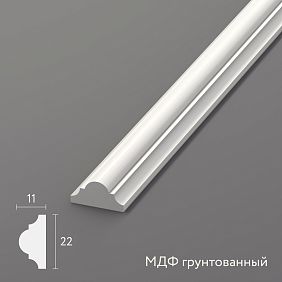
Joints between panels are masked during final painting — this is one of the main arguments in favor of painting after installation. Panel edges in doorways are covered with decorative trims. External corners — with corner profiles or special moldings.buy MDF skirting boardin white finish — an optimal solution if the slats are also white: a continuous white line at the floor creates compositional completeness.
MDF slat panels and comprehensive interior design
A slat panel does not exist in a vacuum — it is part of an interior ensemble. For it to work most effectively, a logic of material connections is needed.
An MDF slat wall in the living room organically rhymes with wooden elements throughout the space.and paint it to the desired shade — standard practice in modern design. It is important to use special wood finishes that allow the material to breathe.in the same tint as the slats — means creating a continuous visual thread from the floor to the wall.Wooden planksIn other decorative elements — on shelves, in furniture fronts, in decorative partitions — they continue the material dialogue initiated by the wall panel.
If the interior includes a staircase,balusters for staircasesmade from the same wood species as the veneered slats — this is the detail that transforms a collection of items into a unified architectural concept. It is precisely this consistency that distinguishes mature design from a set of beautiful but unrelated elements.
The color of adjacent surfaces is a critically important partner to the slatted panel. Dark slats require a light ceiling and neutral adjacent walls; otherwise, the space will 'collapse.' White or light gray slats are harmonious with any tones of adjacent surfaces — this is a universal base.Classic Furniturewith wooden elements in the same color palette as the slatted panels — the final chord of the ensemble.
Care for MDF slatted panels: minimum effort — maximum result
One of the main practical arguments in favor of MDF slatted panels is the ease of care. A surface with a finished paint coating only needs to be wiped with a soft, slightly damp cloth to remove dust. For more intense soiling — a neutral cleaning agent without abrasive components. Abrasives are unacceptable: they scratch the finish and create matte streaks on glossy surfaces.
For local damage — scratches, chips — the coating can be restored without dismantling: sanding with fine-grit sandpaper, priming, and local repainting. With precise color matching, the result is practically invisible.
The main enemy of MDF panels is not mechanical wear, but moisture. Water getting onto unprotected edges (in the absence of baseboards or trim) can cause the edges to swell. Proper installation with protection of all edges eliminates this risk.
The service life of MDF slatted panels with a quality coating under normal operating conditions is 10–20 years. If the interior needs updating, the panels can be repainted without dismantling — this is significantly cheaper and faster than a complete replacement of the finish.
Comparative table of MDF batten panel finishes
| Finish | Surface type | Repairability | Moisture resistance | Price (rel.) | Application |
|---|---|---|---|---|---|
| For painting (enamel) | Any RAL/NCS color | High | Medium | Medium | All living spaces |
| PVC lamination | Imitation wood/concrete/stone | Low | High | Low | Kitchens, bathrooms |
| Natural veneer | Identical to wood | Medium | Medium | High | Living rooms, studies |
| Melamine | Solid color/texture | Low | Medium | Medium | Commercial projects |
| Oil/lacquer (veneer) | Matte/semi-gloss | High | Medium | High | Residential interiors |
Trends in slatted MDF panels: 2025–2026
Deep, rich tones. The undisputed dominance of white and light gray is giving way to deep colors: dark green, terracotta, indigo, tobacco brown. A dark slatted wall in the living room is a statement, not a backdrop.
Integrated lighting as standard. LED strips behind the slats are no longer a designer extravagance—they are incorporated into the project from the start. Profiles with a ready-made groove for the strip make this task technically trivial.
Large slats with wide gaps. Wide slats of 80–100 mm with a 30–50 mm gap create a monumental architectural rhythm, suitable for high spaces. The 'frequent comb' is replaced by a calm, confident rhythm.
Combining MDF with natural inserts. MDF slats alternate with brass profiles, metal strips, or inserts of natural veneer. This is not eclecticism — it is a deliberate material narrative.
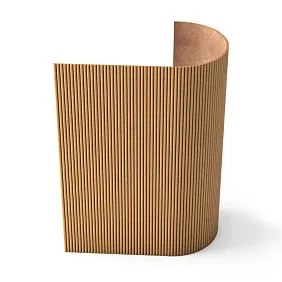
Curved and arched structures. Flexible bases for MDF slatted panels open up possibilities for curved surfaces — arches, columns, rounded niches. Straight slats on a curved plane — a contrast that works flawlessly.
FAQ: honest answers to popular questions
How do MDF slatted panels differ from regular cladding?
Fundamentally — in construction. Cladding creates a continuous flat surface. A slatted panel is a three-dimensional relief with gaps, depth, and play of light and shadow. Moreover, MDF panels are produced with factory precision unattainable for cladding: each slat is identical to the previous one with an accuracy of tenths of a millimeter.
Can MDF slatted panels be installed independently?
Yes, with basic construction skills. Key conditions: a level base, strict adherence to the horizontal when installing the first panel, expansion gaps at the ends. The most important thing is thorough preparation. The installation of modular panels itself takes several hours.
Should panels be painted before or after installation?
Professional answer: for panels to be painted — after installation. This allows hiding the joints between modules under a single layer of enamel, resulting in a surface without visible seams. Factory painting is justified if there are no conditions for high-quality painting on site.
What gap to choose between slats?
Depends on the task. Narrow gap (5–15 mm) — for dense ornamental patterns, for rooms where visibility behind the slats is not needed. Wide gap (25–50 mm) — for lighting effects with background illumination, for a light, airy rhythm. In most residential interiors, a 10–20 mm gap is optimal.
How to choose the paint tone for slatted panels?
White or light gray — a universal choice suitable for any interior. Neutral warm (beige, sand, light brown) — for organic and Scandinavian interiors. Dark tones (graphite, anthracite, dark blue) — only with good lighting and light adjacent surfaces.
Are slatted MDF panels possible in damp rooms?
For bathrooms and kitchen areas, use exclusively moisture-resistant MDF of the HMR category. The front surface must be covered with moisture-protective lamination or special moisture-resistant enamel. The edges — must be sealed. If these conditions are met — yes, it is possible.
After how many years do slatted MDF panels need to be replaced?
Under normal operating conditions, quality panels last 15–20 years. If it is necessary to update the interior, the panels can be repainted without dismantling — this is significantly cheaper than a complete replacement.
What to do if an individual slat is damaged?
In most modular systems, an individual slat can be replaced without dismantling the entire panel. Clarify this parameter when purchasing — it is an important criterion for choosing a system.
How to properly store MDF panels before installation?
Horizontally on a flat surface, away from moisture sources. Minimum 24–48 hours in the installation room — for acclimatization before installation.
Which skirting board to choose for slatted MDF panels?
Optimally — a skirting board in the same tone and material.wooden baseboardIn white or a light tone, it is ideal for white slatted panels.with a classic profile creates a sense of solidity, reliability.In a dark tone — for dark slats. A skirting board width of 60–80 mm emphasizes the solidity of the slatted structure.
About the company STAVROS
STAVROS is a Russian manufacturer of wooden architectural elements for interiors with a full production cycle. In the STAVROS catalog, you will findslatted panels made of MDF and solid oakfor walls and ceilings,Wooden planksfor decorative and installation tasks, a wide range offloor skirting boards— from MDF to solid wood,wooden skirting board purchasefrom oak and ash array,Furniture Handles— made of natural wood,Balusters and staircase elementshandcrafted, as well asclassic furniturehigh degree of execution. STAVROS works with private clients, designers, architects, and construction companies across Russia, providing expert support at every stage—from material selection to final installation. If you want your MDF slatted panels to last for decades and look exactly as intended—choose materials backed by real production and genuine responsibility. STAVROS is exactly such a partner.


