Article Contents:
- What a frame gives a mirror in the interior
- How a ready-made frame differs from baguette by the meter
- What mirror frames are available at STAVROS
- Characteristics and selection table
- How to choose a frame based on the mirror's shape
- Round frame
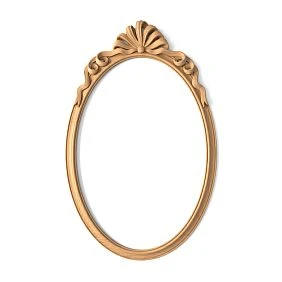
- Oval frame
- Rectangular frame
- Polygonal frame
- Vertical frame
- Solid wood frame
- MDF frame
- How not to confuse solid wood with MDF
- Mirror frame in the hallway
- Frame for bedroom
- Frame for living room
- Frame for bathroom or dressing room
- Frame for commercial interior
- Need to frame a mirror in the hallway
- Need to choose a frame for the bedroom
- Need to make the mirror an accent in the living room
- Need to choose a frame for a large floor mirror
- You need to design a mirror in a classic interior
- You need to design a mirror in a modern interior
- Mistake 1. Choosing only by photo
- Mistake 2. Not considering the installation location
- Mistake 3. Not matching the frame with the furniture
- Mistake 4. Confusing the frame with the molding
- Mistake 5. Not checking the mirror fit
- Mistake 6. Ignoring the material
- Mistake 7. Overloading the interior with carving
- Mistake 8. Not thinking about the mounting
- Mistake 9. Not coordinating the color
- Error 10. Buying a frame without understanding the kit
- How to choose a mirror frame?
- Where to buy a mirror frame?
- What is the difference between a solid wood frame and an MDF frame?
- Which frame is suitable for a round mirror?
- How to style a mirror in a wooden frame?
- What to choose for a large floor mirror?
- Is a baguette frame and a wooden baguette the same thing?
- Can the frame be complemented with carved rosettes?
- Which frame is best for a hallway?
- Which frame is best for a bedroom?
- Do I need to buy the mirror separately?
- What to check before ordering a frame?
- Will a carved frame suit a modern interior?
- How to avoid mistakes with the frame size?
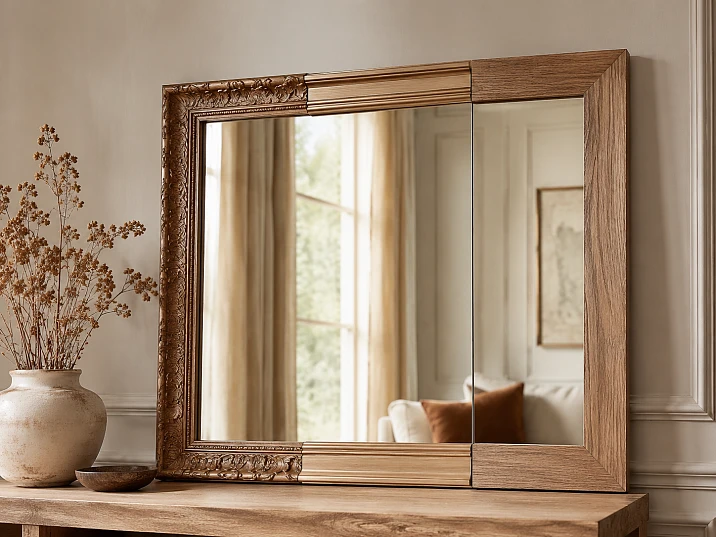
The difference is especially noticeable in classic and neoclassical interiors. There, a smooth mirror without framing can look too modern and cold, and a random thin frame too simple. A wooden or carved frame adds depth, relief, shadow, texture, and a sense of completeness. It helps the mirror not to blend into the wall but to work together with the furniture and architecture of the room.
On STAVROS, you can start your selection from the section buy a mirror frame STAVROS, where ready-made frames of the RM series, models made of solid wood and MDF, different shapes and stylistic solutions are presented. This approach differs from buying baguette by the meter: the buyer chooses not just a profile for self-assembly, but a ready-made frame or a clear base for the mirror, which can be checked for shape, size, material, style, and fit.
The main mistake when choosing is to look only at a beautiful picture. The frame must suit not only the mirror but also the wall, room, ceiling height, nearby furniture, light, floor color, and finishes. A round frame in a small hallway works differently than a rectangular frame for a large floor mirror. A carved frame for a grand hall is not always appropriate in a minimalist bedroom. A baguette frame for a mirror can be calm or solemn, massive or light, restrained or decorative — and each of these characteristics affects the final look of the interior.
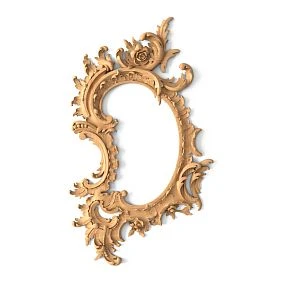
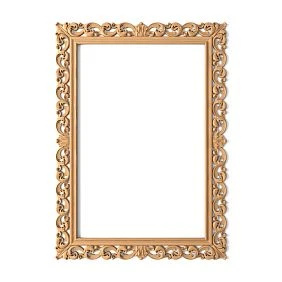
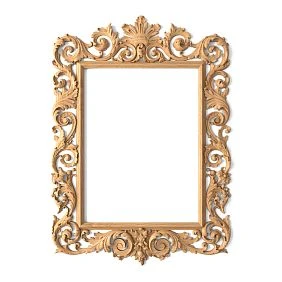
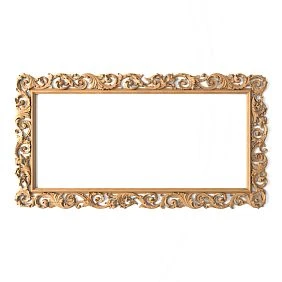
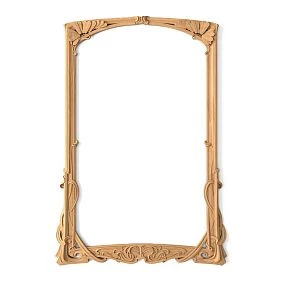
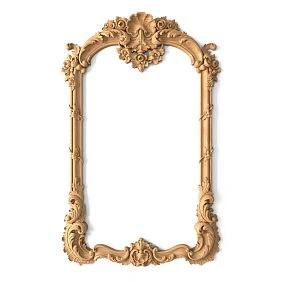
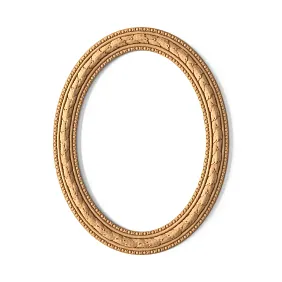
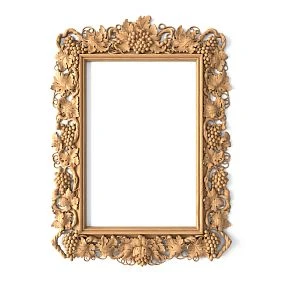
What a frame gives a mirror in an interior
A mirror without a frame mainly serves a practical function: it reflects a person, light, part of the room. The frame adds a second layer—decorative and architectural. It turns the mirror into an object that can be tied to the interior. If the room has wooden doors, solid wood furniture, carved details, baseboards, a console, a fireplace, wall panels, or classic moldings, the frame helps the mirror become part of that system.
The frame sets a boundary. The mirror surface itself visually "recedes" into the wall, especially if it is large. The framing holds its shape and makes it clear: where the mirror begins, where the reflection ends, how it relates to the furniture and the wall. This is especially important for large mirrors in hallways, bedrooms, dressing rooms, and foyers.
The frame helps manage scale. A small mirror on a wide wall can get lost. A large mirror without framing can look too flat. A carved or wooden frame adds visual weight to the object. Thanks to this, the mirror no longer seems like a random piece of glass but is perceived as a complete decorative object.
The frame also affects the mood. A thin, minimalist model makes the mirror calm. A carved frame adds a classic character. An oval shape softens the interior. A rectangular one emphasizes verticality or horizontality. A round one makes the composition softer and is suitable for hallways, bedrooms, bathroom areas, and decorative partitions. A polygonal one can become a more modern or Art Deco accent.




How a ready-made frame differs from molding sold by the meter
A buyer often confuses two intents: buying baguette and buying a frame for a mirror. These are related topics, but not the same thing.
Molding by the meter is a profile from which you can assemble a frame for a mirror, painting, panel, icon, decorative design, or furniture element. It is chosen when there is a task of self-assembly or workshop work: measure the profile, make the corners, adjust the size, assemble the framing, and perform the finishing.
A ready-made frame for a mirror is a more understandable product for a buyer who wants to immediately see the shape and the future result. It already has geometry, an outer contour, a fit, a construction, and often a specific model and article number. The buyer chooses not a profile by length, but a framed product that needs to be matched with the mirror and the interior.
Therefore, the topic "buy a mirror frame" does not duplicate the topic about baguette molding. The baguette has one route: profile → cutting → assembly → finishing → mirror. The ready-made frame has another route: shape → size → style → mirror fit → place in the interior → purchase. If you need a ready-made base for a mirror, it is more logical to look at the frame section, not just the baguette.
But molding can still be useful nearby. If the buyer wants to make a non-standard frame, complement a ready-made composition, or design a mirror to an individual size, it is worth looking at buy wooden baguette for framing. This is already a neighboring scenario: not a finished frame, but material for framing.
Our factory also produces:
What mirror frames are available at STAVROS
In the STAVROS frame section, models of the RM series are presented. The catalog helps you choose not only by appearance but also by practical filters: shape, product type, size, collection, and availability. This is important because a mirror frame must match the geometry and purpose, not just be liked separately.
By product type, you can focus on solid wood frames and MDF frames. Solid wood is chosen when natural wood, texture, the possibility of expressive carving, and a more furniture-like character of the item are important. MDF is suitable where a decorative frame for painting, stable shape, neat surface, and a more restrained approach to the material are needed.
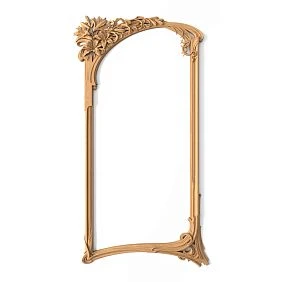
By shape, the catalog includes round, oval, rectangular, polygonal, and vertical frames. This is not a formality. The shape of the mirror should support the installation location. A round frame softens an entryway or bedroom well. An oval adds classic softness. A rectangular frame is suitable for floor and wall mirrors, dressing rooms, halls, areas above a console. A polygon can become a more unusual accent. The vertical shape is especially important when the mirror is used for full-length viewing.
STAVROS also highlights an important design feature: the standard mirror frame includes a seat for a 5 mm thick mirror, a 6 mm thick MDF backing, hanging hinges, and an electronic file with a mirror cutting template in DWG format. For the buyer, this is practical: the frame is considered not as abstract decor, but as a product that requires selecting a mirror and installation.
Large items over two meters high are supplied in a disassembled form for ease of transportation. This is especially important for floor mirrors, large halls, hotels, salons, showrooms, and private homes, where the mirror can be a tall, heavy, and prominent interior element.
Get Consultation
Specifications and selection table
| Parameter | What to look at | Why this is important |
|---|---|---|
| Type of product | Solid wood frame or MDF frame | The material affects weight, finish, texture, and visual character |
| Shape | Round, oval, rectangular, polygonal, vertical | The shape should suit the installation location and nearby furniture |
| Size A, height | Total frame height | Helps determine if the mirror is suitable for a wall, hallway, bedroom, or floor scenario |
| Size B, width | Total frame width | Important for proportion with console, wall, dresser, doors, and partition |
| Size C, depth | Frame depth | Affects relief, shadow, protrusion from the wall, and sense of massiveness |
| Mirror mounting | Mirror 5 mm thick | Must be considered when ordering mirror glass |
| Underlay | MDF 6 mm thick | Helps understand frame construction and preparation for mirror |
| Hanging | Hinges for hanging | It is important to assess the wall, fasteners, and installation location in advance |
| Template | DWG file for mirror cutting | Convenient for precise ordering of mirror glass |
| Frame material | Beech and oak for wooden carved frames | The material affects the finish, texture, and status of the product |
| Size over 2 m | Delivered in disassembled form | Important for transportation, assembly, and installation of large frames |
This table helps you quickly understand that a mirror frame is not just a decorative item. It has a structure, fit, depth, hanging method, material, and requirements for the mirror glass. Considering these parameters before purchase reduces the risk of errors with size, weight, and installation.
How to choose a frame based on mirror shape
Round frame
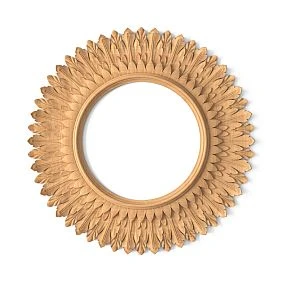
A round frame softens the interior. It works well in an entryway, bedroom, bathroom area, dressing room, above a console, above a chest of drawers, or in a wall space with many straight lines. The circle breaks up the geometry of doors, cabinets, panels, and rectangular facades, often making the interior feel more lively.
A round frame needs to be carefully matched with the furniture below it. If the mirror hangs above a console, the width of the frame should not be random. A circle that is too small above a wide console will get lost. One that is too large can feel oppressive and disrupt the composition. It is good when the round frame is either slightly narrower than the furniture or confidently aligned with it along the axis.
For a classic style, a round frame can be carved, with ornamentation, or have a more subdued profile. For a modern room, it's better to choose a more restrained form. If the interior is already rich with decor, the round frame should be softer. If the wall is empty, a more expressive frame can be chosen.
Oval frame
An oval frame is closer to classic and neoclassical styles. It elongates the mirror, makes it softer, and is suitable for entryways, bedrooms, dressing rooms, and decorative areas. An oval works well above a console, vanity table, chest of drawers, in a hall, or next to wooden furniture.
The oval shape is especially successful if you need to visually raise the wall but do not want the mirror to be a strict rectangle. It adds verticality while maintaining softness. In a classic interior, an oval carved frame can become a standalone accent, especially if there are sconces, a console, a bench, or pilasters nearby.
The main thing is not to choose an oval that is too small. A small oval mirror on a large wall can look like a random detail. If the wall is wide, it is better to either increase the size or complement the composition with decor, light, or furniture.
Rectangular frame
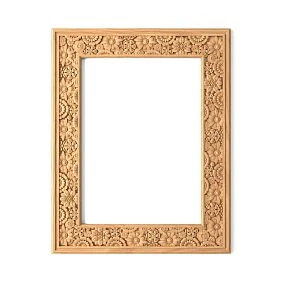
A rectangular frame is the most versatile option. It is suitable for full-length mirrors, floor mirrors, hallways, dressing rooms, bedrooms, living rooms, foyers, and commercial interiors. A vertical rectangle elongates the room, while a horizontal one expands the wall.
A rectangular wooden frame pairs well with furniture: a console, dresser, table, cabinet, bed, or wall panels. Its geometry is clear and it easily fits into a classic or modern interior. But precisely because of its versatility, it cannot be chosen thoughtlessly. A rectangle can be too strict, too massive, or too simple for a specific wall.
For a large floor mirror, the rectangular frame must have sufficient depth and visual strength. A thin frame on a tall mirror can look weak. A carved profile, solid wood, or expressive molding helps maintain the scale.
Polygonal frame
A polygonal shape suits interiors where an unusual accent is desired. It can lean toward Art Deco, modern style, geometric classic, or custom design. Such a frame is not always versatile, but it can quickly make a wall more interesting.
A polygon is best used where the surrounding surfaces are calm enough. If there is a lot of carving, ornamentation, complex fabrics, and active furniture nearby, the shape may conflict with the environment. If the wall is calm, a polygonal frame becomes a noticeable focal point.
Vertical frame
A vertical frame is needed for a full-length mirror or for a wall that needs to be visually elongated. It is appropriate in hallways, bedrooms, dressing rooms, foyers, fitting rooms, salons, and showrooms. The vertical shape helps a person see themselves fully while making the space feel taller.
For a vertical frame, stability, hanging method, installation height, and distance from the floor are important. If the mirror is floor-standing, the support and safety need to be considered. If wall-mounted, the fasteners and wall quality matter. A large frame is no longer just decor but a major interior item.
Solid wood frame or MDF frame: which to choose
Solid wood frame
A solid wood frame is suitable when naturalness, texture, depth of carving, and the feel of a real wooden piece are important. Beech and oak offer different possibilities. Beech is often chosen for painting, enamel, complex carved shapes, and a neat classic look. Oak is chosen when one wants to emphasize the wood grain, status, warm texture, and tinting.
Solid wood works especially well in interiors with wooden furniture, doors, panels, staircases, fireplace portals, classic consoles, and carved decor. Such a frame does not look like a random overlay. It is perceived as a full-fledged object.
If the mirror is meant to be an art object, a massive carved frame is often stronger than a simple smooth frame. But the more expressive the frame, the more carefully you need to choose its location. In a small room, overly active carving can overwhelm the wall. In a large hall, on the contrary, it may be necessary.
MDF frame
An MDF frame is suitable for cases where a stable decorative base, neat geometry, and a finish for painting are needed. MDF is often chosen for modern and neoclassical solutions where shape, color, and a clean surface are important, rather than necessarily a pronounced wood texture.
An MDF frame can be a good choice for painted interiors, light walls, minimally decorated bedrooms, hallways, and dressing rooms. It allows for a framed border without the excessive heaviness of solid wood. But before ordering, you still need to look at the specific product card: size, shape, depth, finish, and mirror fit.
How not to make a mistake between solid wood and MDF
The choice depends on the task. If you need to emphasize natural wood, carving, oak texture, or classic status — look at solid wood. If you need a frame for painting, a calm profile, clean geometry, and a more restrained look — you can consider MDF.
It is a mistake to consider solid wood always the best for any room. In a small modern interior, a massive carved frame can be unnecessary. Conversely, in a formal hall, a thin MDF frame can look too simple. The material is chosen according to scale and style, not abstractly.
Molding, wooden, and carved frame: what is the difference for the buyer
A baguette frame for a mirror is a framing where the profile is important: width, relief, depth, pattern, corner joining method. The baguette can be wooden, carved, smooth, classic, modern. If the buyer wants to choose a baguette frame for a mirror, he needs to look not only at the shape of the mirror, but also at the profile: how it will cast a shadow, how far it protrudes from the wall, whether it will be too heavy for the room.
A wooden frame emphasizes the material. It can be carved or smooth, painted or tinted, made of beech or oak. The query "buy a wooden frame for a mirror" more often means a desire to get a natural, warm, furniture-like framing, rather than a plastic or metal profile. Here, texture, finish, and combination with furniture are important.
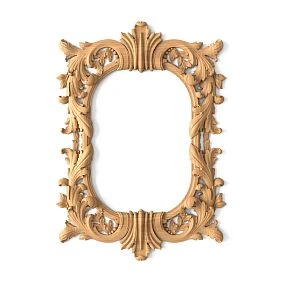
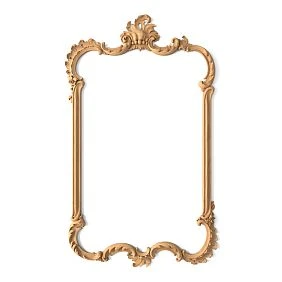
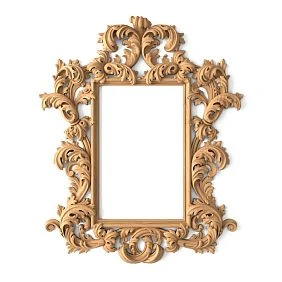
A carved frame emphasizes decorativeness. It is needed when the mirror should become the center of attention: above a console, in a formal hallway, in a bedroom, in a classic living room, in a hall, restaurant, hotel, salon. If you want buy a carved frame for a mirror, you need to decide in advance how active the ornament will be and what will support it in the interior.
Sometimes the buyer needs not a ready-made frame, but additional decoration. For example, they want to strengthen the corners, add a floral motif, connect the frame with furniture, or make custom decor. Then you can use carved elements next to the frame: choose carved rosettes for frame decor or look at overlays for furniture and interior design.
How to choose a frame based on installation location
Frame for a mirror in the hallway
The hallway is one of the most important places for a mirror. Here, the mirror is needed for practical purposes: to look at yourself before leaving, check your clothes, add light, visually expand the entry area. But it is in the hallway that the shape of the frame is especially important. The space is often narrow, with doors, baseboards, a console, a shoe cabinet, a wardrobe, and light fixtures nearby.
For a small hallway, it's better not to choose a too heavy frame. It can visually compress the space. Round, oval, vertical, and not too wide rectangular models work well. If the hallway is light, you can choose a frame with enamel or a calm wood shade. If the hallway is classic, the frame can be carved, but not excessively wide.
For a spacious hall, on the contrary, a small mirror in a thin frame will get lost. Here, you can choose a large rectangular, oval, or carved model. If there is a console nearby, the frame should match it in width and style. Over a wide console, a small frame looks weak, and over a narrow console, a frame that is too large will feel oppressive.
Frame for the bedroom
In the bedroom, the mirror works more softly. It can be placed near the dressing area, next to the wardrobe, above a console, a dresser, in the space between windows, or as a floor mirror. Here, the frame should support the calmness of the room, not compete with the bed, textiles, and headboard.
Oval and round frames add softness. Rectangular vertical frames are suitable for a full-length mirror. Carved frames are appropriate if the bedroom is classic or neoclassical. But if the room already has an active headboard, a carved wardrobe, heavy curtains, and a lot of decor, it is better to make the frame calmer.
For the bedroom, color is especially important. A frame that is too dark on a light wall can become heavy. A frame that is too white next to warm milky shades can look cold. It is better to compare the frame with the furniture, walls, and fabrics in advance.
Frame for the living room
In the living room, the mirror often plays a decorative role. It can reflect light, a fireplace, a chandelier, a painting, windows, or beautiful furniture. The frame here can be more expressive than in the bedroom. Especially if the mirror hangs above a console, fireplace, dresser, or in a central space.
For a classic living room, a carved wooden frame is suitable. It will support furniture, cornices, baseboards, portals, and decorative panels. For a modern living room, it is better to look at more laconic baguette or geometric models. It is important that the frame does not conflict with the TV area, lighting, and furniture.
If the mirror is large, it can become the main accent of the wall. Then the frame should be sufficiently strong in scale. If the mirror is small, it is better to support it with other elements: sconces, rosettes, overlays, a console, or a decorative group.
Frame for the bathroom area or dressing room
In the bathroom area and dressing room, the frame should be not only beautiful but also practical. It is necessary to consider humidity, ventilation, frequent contact, lighting, and the method of attachment. Not every wooden product is equally suitable in a humid area, so before ordering it is important to clarify the conditions of use and finish.
In a dressing room, vertical frames and full-length mirrors are often needed. Here, height, width, and distance to the floor are especially important. The frame should not interfere with the passage, cabinet doors, or light. If the dressing room is small, it is better to choose a more subdued profile.
Frame for a commercial interior
In a salon, hotel, restaurant, showroom, or fitting room, the mirror works to create an impression. It not only reflects a person but participates in the image of the space. A carved or wooden frame here can become part of the brand style: grand, classic, vintage, art deco, modern, or intimate.
For a commercial interior, durability and maintenance are important. Large frames should be easy to transport, properly installed, and securely fastened. If the mirror is used frequently, it's worth planning ahead for care, coating, and placement to prevent the frame from being damaged during daily use.
How to choose a frame by size
The size of the frame is chosen not only by the mirror. It is necessary to consider the wall, the furniture under the mirror, the distance to the floor, the ceiling height, the lighting, and the viewpoint.
For a mirror above a console or dresser, the frame width should relate to the furniture width. Usually, it works well when the frame is slightly narrower than the furniture or roughly aligns with it along the central axis. If the frame is much narrower, it looks random. If much wider, the composition loses stability.
For a floor mirror, height is important. A person should see themselves fully, and the frame must withstand the scale. A tall frame should not be too thin, otherwise the mirror looks weak. But an overly wide carved frame in a small bedroom can take up too much visual space.
For a round mirror, size is especially noticeable. A small circle on a wide wall gets lost. A large circle in a narrow hallway can disrupt perception. Before ordering, it's useful to mark the future diameter on the wall with painter's tape or a paper template. This simple action helps avoid mistakes.
For a rectangular mirror, the height-to-width ratio is important. A narrow tall mirror elongates the wall but may look too strict. A wide mirror expands the space but can be inconvenient in a narrow area. A vertical shape is better for hallways and dressing rooms, a horizontal one for the wall above a dresser, fireplace, or long console.
Selection table by scenario
| Scenario | Which frame will suit | What to check before ordering |
|---|---|---|
| Mirror above the console | Oval, round, or rectangular frame | Ratio of frame width to console, hanging height |
| Large floor mirror | Vertical or rectangular frame | Height, weight, installation method, safety |
| Small hallway | Round, oval, or narrow vertical frame | Does the frame overload the wall and passage |
| Grand foyer | Carved solid wood frame | Wall scale, ceiling height, furniture style |
| Bedroom | Soft oval, round, or calm rectangular frame | Color, combination with bed and textiles |
| Living room | Wooden or carved baguette frame | Connection with furniture, fireplace, light, and panels |
| Modern interior | Laconic MDF frame or calm wooden profile | Does the profile conflict with minimalism |
| Classic interior | Carved wooden frame | Does the ornament overload the room |
| Commercial space | Large expressive frame | Installation, care, safety, repeatability of the solution |
What to buy together with a mirror frame
A frame rarely lives alone. To make the mirror look complete, accompanying elements are often needed nearby: baguette, rosettes, decorative overlays, console, light, fasteners, mirror of suitable thickness, finishing materials. Within this article, we use only those product groups that have already been confirmed in the scheme.
If you need to frame a mirror not only with a ready-made frame but also with an additional profile, it is worth looking at buy wooden baguette for framing. Baguette helps in projects where a non-standard size, additional framing, decoration of a painting, panel, or mirror area nearby is needed.
To enhance decorativeness, you can use choose carved rosettes for frame decor. Rosettes are suitable as point accents: they can support corners, the central axis, nearby furniture, or repeat the motif on the wall. It is important to use them sparingly: the rosette should decorate the composition, not turn the mirror into an overloaded object.
If the frame is used in a classic interior, carved overlays may be needed nearby. They help connect the mirror with furniture, doors, facades, panels, or a console. Overlays do not replace the frame but can support the overall decorative language of the room.
Table: what to buy together
| What to add to the purchase | Why this is needed | Which scenario it suits | What to pay attention to |
|---|---|---|---|
| Mirror sheet 5 mm | Needed for installation in a frame with a provided seat | Ready-made mirror frame | Cutout size, template, edge quality |
| Backing / base | Supports the mirror structure | Wall mirror, large frame | The standard configuration of STAVROS frames includes a 6 mm MDF backing |
| Wooden picture frame molding | Helps to design a custom mirror or adjacent elements | Custom size, author's composition | Profile, width, corner joining |
| Carved rosettes | Adds point accents | Classic frame, nearby furniture, decorative wall | Size and style should not conflict with the frame |
| Decorative overlays | Connect the mirror with furniture or wall composition | Classic, neoclassical, carved decor | Do not overload the area around the mirror |
| Fastening | Needed for safe hanging | Wall and large mirrors | Check the wall, weight, and mounting method |
| Finishing samples | Help match the color | Oak, beech, enamel, tinting | View under real lighting |
| Console or furniture under the mirror | Completes the composition | Hallway, bedroom, hall | Ratio of furniture width to frame width |
How not to confuse the frame with similar products
| Product | What it is for | When to buy |
|---|---|---|
| Mirror frame | Ready-made mirror frame | When you need to design a mirror as an interior item |
| Molding | Profile for assembling a frame | When you need a non-standard size or self-assembly |
| Decorative overlay | Relief accent on furniture, wall, or frame | When you need to enhance the decor, not replace the frame |
| Rosette | Point decorative element | When you need a center, corner, or connecting motif |
| Casing | Decorating a door or window opening | When you need to cover a joint, not frame a mirror |
| Molding | Linear decorative profile | When you need a frame on a wall, facade, or panel |
| Finished mirror | Mirror already comes with framing | When you don't need to separately select a frame and glass |
The main difference is in the degree of readiness. A mirror frame already has a shape and structure. A baguette requires assembly. Overlays and rosettes are additional decorative elements. Molding creates lines and frames, but is not itself a ready-made mirror frame. If a buyer wants to quickly frame a mirror, it's best to start with the frames section. If a custom size or special assembly is needed, use baguettes and additional elements.
Practical selection for specific tasks
Need to frame a mirror in the hallway
First, measure the wall and nearby furniture. If there will be a console, dresser, or shoe cabinet under the mirror, the frame should match the width of that furniture. In a narrow hallway, it's better to avoid an overly wide carved frame: it can visually take up the passage. For a calm entry area, round, oval, or vertical shapes work well.
If the hallway is grand, with a high ceiling, wide wall space, and classic furniture, you can choose a more expressive carved frame. In this case, the mirror becomes not only a practical item but also the first decorative accent of the home.
Need to choose a frame for the bedroom
In the bedroom, the frame should support softness. If the interior is light, calm wooden or painted options will work. If the bedroom is classic, you can consider a carved frame, but without excessive heaviness. If the mirror is placed near the bed, it is important that it does not clash with the headboard.
For the toilet area, it's better to look at frames that match the console, table, or chest of drawers. If the mirror is floor-standing, check the height, depth, and installation method.
Need to make the mirror an accent in the living room
For the living room, you can choose a more expressive frame. The mirror can hang above the fireplace, console, dresser, between windows, or in a central wall space. In such a scenario, the frame should be sufficiently noticeable.
If the interior is classic, a carved solid wood frame will help support the furniture and architecture. If modern, it is better to choose a calmer baguette or geometric shape. The main thing is that the mirror reflects a beautiful part of the room: light, chandelier, window, decorative wall, and not a random corner.
Need to choose a frame for a large floor mirror
A large floor mirror requires special attention. The frame should feel sturdy, proportionate to the height, and safe to use. You need to understand in advance whether the mirror will stand on the floor, be attached to the wall, or combine both methods.
For large frames, transportation and assembly are especially important. If the product is over two meters high, you need to consider that oversized models may be delivered disassembled. This is not a drawback, but a practical point: it makes the product easier to deliver and bring into the room.
You need to design a mirror in a classic interior
Classic style loves symmetry, material, and relief. Carved frames, baguette profiles, rosettes, wooden overlays, consoles, and sconces are appropriate here. But don't add everything at once. If the frame is already ornate, the surrounding decor should be calmer. If the frame is restrained, it can be supported with rosettes or overlays.
Before ordering, you need to check not only the size of the mirror but also the surroundings: baseboards, doors, furniture, trim, wall panels, cornices. A good frame should look like part of the interior, not a separate decoration.
You need to design a mirror in a modern interior
In a modern interior, the frame can be wooden, but the shape should be more concise. Calm profiles, geometry, clean lines, and restrained finishes are suitable. It's important not to overload the wall with ornament.
If you want to add warmth, a wooden frame works well next to natural flooring, slats, wooden furniture, countertops, chairs, doors. It softens the modern interior but does not make it old-fashioned if the profile is chosen restrainedly.
Installation, preparation and care
Before ordering a frame, you need to understand where the mirror will be and how it will be mounted. A wall mirror requires a reliable wall and fasteners. A floor mirror requires stability and safety. A large mirror requires careful delivery, lifting, assembly, and installation.
If the frame is designed for a 5 mm thick mirror, it's important to order the mirror panel exactly for this fit. For precise cutting, a DWG template is useful. This reduces the risk of error, especially if the shape is not simple: round, oval, figured, or polygonal.
The finish also needs to be thought out in advance. A beech frame can be painted, an oak frame can be tinted or varnished, an MDF frame can be suitable for enamel. The specific option depends on the product card and the task. Don't buy a frame without understanding whether it will be white, natural, dark, patinated, or matching the furniture color.
Care depends on the finish. Carved frames should not be rubbed with abrasives or soaked. Dust can accumulate in the relief, so it's better to use a soft dry or slightly damp cloth suitable for the chosen finish. If the frame is in a high-humidity area, the operating conditions should be clarified in advance.
Mistakes when buying a mirror frame
Mistake 1. Choosing only by photo
In the photo, the frame may look lighter or smaller than in reality. You need to look at dimensions A, B, C, shape, depth, and material. This is especially important for carved and large frames.
Mistake 2. Not considering the installation location
The frame may be beautiful but not suitable for the wall. In a narrow hallway, a too-wide frame gets in the way. In a large hall, a small frame gets lost. In a bedroom, active carving may clash with the bed.
Mistake 3. Not matching the frame with furniture
A mirror often hangs above a console, dresser, fireplace, or vanity. If the frame does not relate to the furniture in width and style, the composition looks random.
Mistake 4. Confusing a frame with a molding
If you need a finished item, look at frames. If you need a profile for assembly, look at moldings. These are different purchase scenarios, and the choice determines the amount of further work.
Mistake 5. Not checking the mirror fit
A frame has a structure and a fit for the mirror. You need to order glass of the correct thickness and shape in advance. You cannot simply buy any mirror and hope it fits.
Error 6. Ignoring the material
Solid wood and MDF behave differently in finishing and perception. Beech, oak, painting, tinting, enamel, varnish — all of this changes the appearance of the frame. The material should be chosen for the interior, not just by price.
Error 7. Overloading the interior with carving
A carved frame can be very beautiful, but if there is already active furniture, ornamental fabrics, complex doors, and a lot of decor nearby, the mirror can become unnecessary noise. Sometimes it is better to choose a calmer profile.
Error 8. Not thinking about the mounting
A large frame requires reliable installation. You need to account for weight, wall, hinges, fasteners, installation height, and safety. This is especially important for floor-standing and large wall mirrors.
Mistake 9. Not coordinating the color
The frame should match the floor, doors, furniture, walls, and lighting. It's better to check the shade of wood or enamel in the actual room. On the website, the color may appear differently due to the screen.
Mistake 10. Buying a frame without understanding the set
The frame is the main element, but you may also need baguette, rosettes, overlays, fasteners, mirror, backing, and trim. If everything is planned in advance, the final composition will look cohesive.
Who is a wooden or carved mirror frame suitable for
A wooden frame is suitable for those who want to make the mirror a part of the interior, not just hang glass on the wall. It is appropriate in hallways, bedrooms, living rooms, dressing rooms, foyers, studies, salons, restaurants, hotels, and showrooms. It works especially well where there is already wooden furniture, consoles, baseboards, doors, panels, or carved decor.
A carved frame suits classic, neoclassical, art deco, vintage, formal, and designer interiors. It is needed when the mirror should become an accent. If the room is large, the frame can be more expressive. If it is small, it is better to choose more carefully.
An MDF frame suits those who want a calmer framing, a finish for painting, neat geometry, and a decorative result without a pronounced wood texture. This option may be appropriate in modern and neoclassical interiors.
A carved wooden frame is not suitable for those who want a completely hidden mirror without framing, a minimalist glass surface, or a temporary solution without thoughtful installation. Also, a large frame should not be chosen for a tight space without measurements.
How to buy a frame on STAVROS
Start with the section choose a wooden frame for a mirror. First choose the shape: round, oval, rectangular, polygonal, or vertical. Then look at the product type: solid wood frame or MDF frame. After that, proceed to size, collection, depth, and appearance.
If you need a ready-made frame as a standalone item, stay in the frames section. If you need an additional profile or custom assembly, you can look buy wooden baguette for framingIf you need to enhance decorativeness, add choose carved rosettes for frame decor or decorative inlays.
Before ordering, prepare the wall dimensions, desired mirror size, a photo of the room, ceiling height, width of furniture under the mirror, wall, floor, and adjacent furniture colors. If the mirror will be large, plan delivery, assembly, and installation in advance. If the frame is being selected for an existing interior, it is better to check with a STAVROS manager for compatibility in material, finish, and size.
FAQ
How to choose a frame for a mirror?
First, determine the installation location: hallway, bedroom, living room, hall, dressing room, or commercial space. Then choose the shape, size, material, style, and finish. The frame should suit not only the mirror but also the wall, nearby furniture, ceiling height, and overall interior.
Where to buy a frame for a mirror?
Ready-made mirror frames can be viewed in the STAVROS frames section. Models from the RM series, solid wood and MDF frames, various shapes and sizes are available there. Before purchasing, you need to check the card parameters and order conditions.
What is the difference between a solid wood frame and an MDF frame?
A solid wood frame emphasizes natural wood, texture, carving, and furniture character. An MDF frame is more often chosen for painting, calm geometry, and decorative framing without an emphasis on wood texture.
Which frame is suitable for a round mirror?
For a round mirror, the diameter and the wall on which it will hang are important. A small circle will get lost on a large wall, while one that is too large may overwhelm the hallway. A round frame is well suited for softening straight lines in the interior.
How to design a mirror in a wooden frame?
You need to select a frame by shape and size, order a mirror panel of the required thickness, consider the mounting and finish. If the mirror hangs above furniture, the frame should match the width and style of that furniture.
What to choose for a large floor mirror?
For a floor mirror, it's better to look at vertical or rectangular frames of sufficient scale. It's important to check the height, depth, installation method, safety, and the possibility of delivering a large item.
Is a baguette frame and a wooden baguette the same thing?
No. A baguette frame is a finished or assembled mirror frame. A wooden baguette is a profile from which a frame or decorative trim can be made. If you need a finished item, it's more convenient to look at frames.
Can the frame be supplemented with carved rosettes?
Yes, if it suits the style. Rosettes help add point accents, support a classic composition, or tie the frame to furniture. But they should be used sparingly to avoid overloading the mirror.
Which frame is best for a hallway?
For a small hallway, it's better to choose a neat round, oval, or vertical frame without excessive bulkiness. For a spacious hall, you can look at a larger carved frame made of solid wood.
Which frame is best for a bedroom?
Soft shapes work well for a bedroom: oval, round, calm rectangular. If the interior is classic, you can choose a carved frame. If the bedroom is light and calm, the frame should not be too heavy.
Do I need to buy the mirror separately?
In the standard configuration of STAVROS frames, a seat for a 5 mm thick mirror and a DWG template for cutting are provided. Before ordering, you need to clarify the configuration of the selected model and properly prepare the mirror sheet.
What to check before ordering a frame?
Check the shape, height, width, depth, material, finish, mirror fit, mounting method, availability, current price, and delivery options. For a large frame, plan assembly and installation in advance.
Will a carved frame suit a modern interior?
It will work if the interior allows for a decorative accent. In strict minimalism, it's better to choose a more subdued frame. In modern classic, art deco, or an interior with wooden details, a carved frame can look very appropriate.
How to avoid mistakes with the frame size?
Make a template on the wall: mark the height and width of the future mirror with painter's tape or paper. This will immediately show if the frame is too small or too large for the room and nearby furniture.
Result: how to choose a mirror frame without mistakes
A mirror frame is not a secondary detail but a full-fledged interior element. It defines the shape, scale, style, depth, and connection of the mirror to the rest of the room. A wooden frame adds warmth and materiality, a carved one adds expressiveness and classic character, and a baguette frame adds a finished profile and neat geometry.
To make a successful purchase, first determine the installation location and size, then choose the shape, material, and finish. Do not mix a ready-made frame with baguette by the meter, do not buy decor without understanding the composition, and always check the mirror seat, mounting, and dimensions.
STAVROS helps you navigate this process without random selection: you can choose a ready-made RM-series frame, select a wooden baguette for custom design, add carved rosettes or overlays for decorative cohesion. A good frame turns a mirror from just a reflective surface into an object that brings the interior together and makes an impression every day.