Article Contents:
- Why a wooden frame looks more expensive than a plastic one
- What is a baguette frame for pictures: getting to the point
- How to choose the frame size: three levels of the task
- By picture size
- By wall size
- By group composition
- How to choose a frame profile: from minimalist to classic carving
- Narrow profile
- Wide profile
- Carved Profile
- Smooth wooden profile
- Deep profile (floating frame)
- Frame color: to match the painting or the interior?
- Picture frame in different interior styles
- Classic Interior
- Neoclassicism
- Modern Interior
- Russian style
- Art Deco
- Mistakes when choosing a picture frame
- Matting: when it's needed and how it works
- What to pair wooden frames with in the interior
- Wooden picture frame in different rooms
- In the living room
- In the bedroom
- In the study
- In the entryway
- In a country house
- What to buy together with a picture frame
- How to buy a picture frame without mistakes: an algorithm
- About the Company STAVROS
- FAQ: Answers to Popular Questions

A painting without a frame is just canvas. A painting in the right frame is a statement. It is the picture frame that determines whether the artwork will be an organic part of the interior or look like a randomly nailed object. And if you are now choosing which frame to buy for a painting, photograph, poster, or icon — this article is for you: an honest, detailed breakdown without fluff, with specific selection criteria and practical recommendations.
A wooden picture frame is not just a border. It is an architectural element that connects the image with the space. And the more precisely the frame is chosen — in size, profile, color, texture — the stronger the entire interior works as a whole.
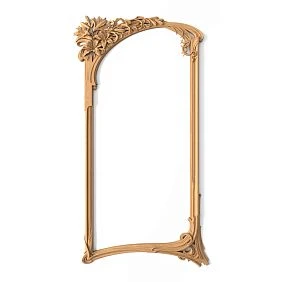
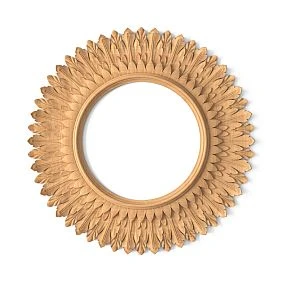
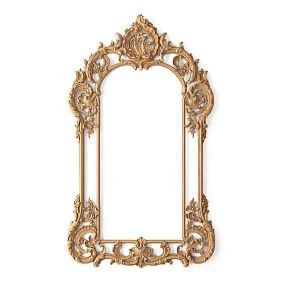
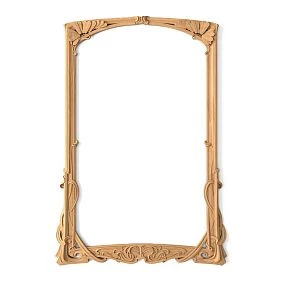
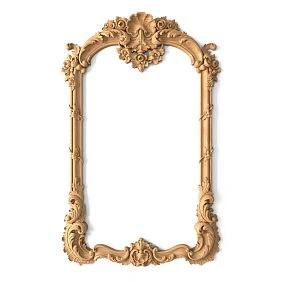
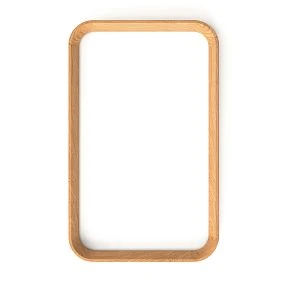
Why a wooden frame looks more expensive than a plastic one
Ask yourself: what do you feel when you approach a painting in a gallery? Before you even examine the image itself, your eye catches the frame. It sets the tone, mood, and sense of value. Plastic — no matter how accurately it imitates wood — never delivers what natural solid wood does.
Why is a wooden frame objectively more convincing?
-
Natural texture. Wood has a living surface — each frame is unique in its grain pattern. This is physically felt even by sight.
-
Profile depth. A wooden profile creates real volume — the shadow from the frame is not flat but relief-like. This transforms the frame from a flat border into a three-dimensional wall element.
-
Noble appearance. Under side lighting, a wooden profile with carving or milling reveals details that plastic cannot convey.
-
Compatibility with furniture and doors. A wooden frame fits organically into an interior where there are Wooden moldings, Wooden baseboard and doors made of natural wood. They speak the same material language.
-
Durability. A wooden frame made of solid oak or beech lasts for decades. A well-made frame outlasts several interior changes — and each time it feels organic in a new context.
wooden frames at STAVROS are made from oak and beech using 3D milling followed by hand finishing. It is the handwork after milling that gives the surface that tactility and precision of detail that industrial production cannot replicate.




What is a picture frame molding: getting to the point
In everyday language, the word "baguette" is more often associated with French bread than with a picture frame. But in professional interior design terminology, it is a very specific term worth understanding.
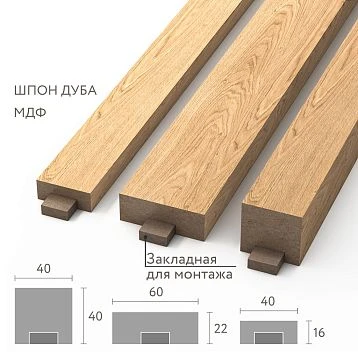
A baguette is a profiled strip of wood (or other material) from which a frame is assembled. Four pieces of baguette, cut at 45 degrees and joined into a rectangular or square structure, form the frame. That is why "buy a wooden baguette" means buying the raw profile to assemble the frame yourself or ordering its assembly from a craftsman.
Wooden Picture Frame can be very different:
-
Smooth — a minimalist profile without relief, for modern interiors.
-
Profiled — with a milled pattern on the surface: smooth transitions, bevels, steps.
-
Carved — with a three-dimensional ornament: floral motifs, geometry, classic acanthus.
-
Wide — creates a majestic border, visually "centers" the picture on the wall.
-
Narrow — neat, concise, suitable for graphics and posters.
The baguette profile determines the feel of the picture more than it seems at first glance. The same watercolor in a narrow smooth profile and in a wide carved profile creates literally two different impressions. In the first case, a modern gallery; in the second, a 19th-century study.
Buy wooden picture frame molding At STAVROS, you can order by linear meter, choosing a profile from an extensive catalog — from the minimalist K-034 starting at 190 rubles to the classic carved K-104 starting at 5,260 rubles per linear meter. The range is wide: there are solutions for budget-friendly design and premium interiors.
Our factory also produces:
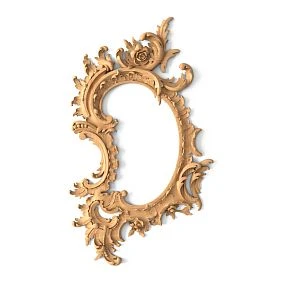
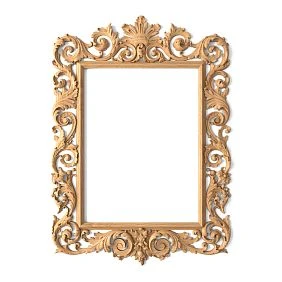
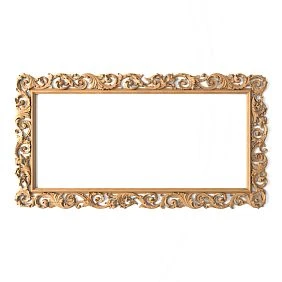
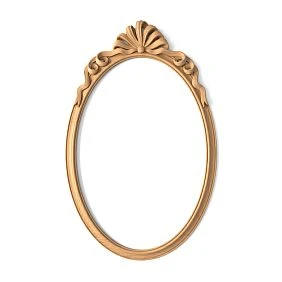
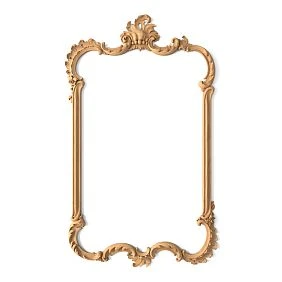
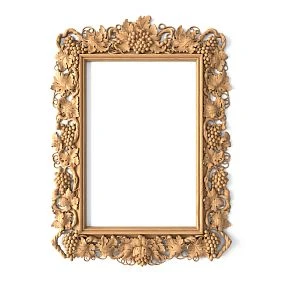
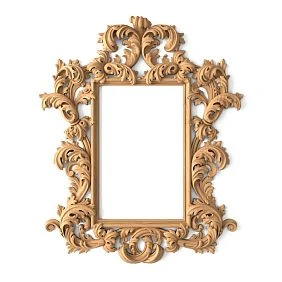
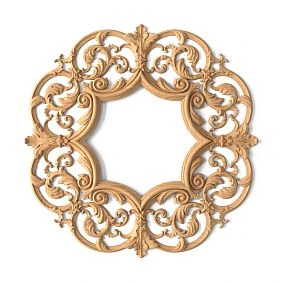
How to choose the frame size: three levels of the task
Size is the first thing people think about, and at the same time, the first thing they get wrong. Let's break down the three levels of the task.
Get Consultation
By the size of the artwork
The inner opening of the frame must exactly match the size of the artwork — with allowance for the mounting groove (usually 3–5 mm on each side). Too wide an opening — the artwork "wobbles," edges are visible. Too narrow — the frame overlaps the image.
For canvas on a stretcher — the frame is selected considering the depth of the stretcher: the profile must be deep enough so that the canvas does not protrude beyond the frame from the front side. Standard stretchers have a depth of 18–20 mm, so the frame profile must have a depth of at least 20 mm.
For works under glass — watercolor, graphics, photography, pastel — a frame with a mat is used. The mat creates an air gap between the glass and the image, protects the work from condensation, and simultaneously serves as an additional visual field.
By wall size
Here, a simple principle applies: the scale of the frame should match the scale of the wall. A small painting in a thin frame on a 4×3 meter wall will look like a stamp on an envelope — it will get lost. For a large wall, you need either a large painting with an expressive frame, or a group of paintings composed into a single installation.
Proportion rule: the width of the painting with the frame ideally makes up 50–60% of the width of the wall or piece of furniture above which it hangs (console, sofa, chest of drawers). This is not an absolute law, but a reliable starting point.
By the composition of the group
If you plan to place several paintings next to each other, that is a separate task. Unity of frames is a mandatory condition. They may differ in size (that's interesting), but must be connected: either by the same profile, or by the same wood color, or by a unified design principle.
Mixing different profiles, different wood species, and different frame styles on one wall is a common mistake that turns a meaningful gallery into a random storage of paintings.
How to choose a frame profile: from minimalism to classic carving
A profile is the cross-section of a baguette. It determines how the frame looks from the front, from the side, and under different lighting. Choosing a profile is choosing the "voice" with which the frame speaks to the space.
Narrow profile
Frame width up to 20–25 mm. This is a minimalist solution for graphics, posters, photographs, watercolors in a modern interior. A narrow profile does not compete with the image — it serves it, marking the boundary without loud statements. Good for a bedroom, home office, Scandinavian interior.
Wide profile
Width from 50 mm and above. Solemn, weighty, accent. Suitable for oil paintings, large walls, classic and neoclassical interiors. A wide frame creates a "field of rest" around the image, giving the eye space to transition from the painting to the wall.
Carved profile
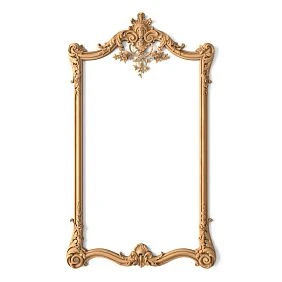
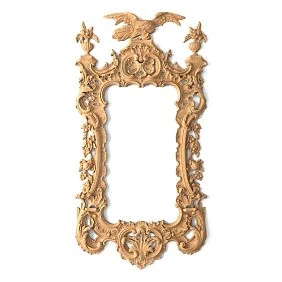
Volumetric ornament on the baguette surface — acanthus, foliage, geometric ribbons, classic garland. This is a choice for formal interiors: a classic-style living room, study, grand hallway. A wooden picture frame with a carved profile — it is not just framing, it is an independent decorative object.
Smooth wooden profile
Milled, but without carving. It can be stepped, with smooth transitions, with a chamfer or bevel — but without ornament. Good in neoclassicism and modern classicism, where restrained form without excess is valued.
Deep profile (floating frame)
A frame where the painting is slightly recessed into the profile or, conversely, protrudes forward — as if floating in the frame. This type is popular for contemporary paintings and art objects. In a wooden version, it offers an interesting combination of natural texture and modern presentation.
Frame color: to match the painting or the interior?
This is the question that sparks the most debate among first-time frame buyers. The answer is both. But priority goes to the interior.
The painting changes — the interior remains. Therefore, a frame chosen 'only to match the painting' risks feeling out of place in the context of furniture and finishes. A frame chosen in harmony with the interior will work regardless of what is hanging in it.
To match the furniture color. Warm oak in furniture — warm oak in the frame. Dark walnut — dark walnut. This is not a literal match, but belonging to the same tonal group.
To match the floor color. This is especially relevant if the floors are wooden. A frame coordinated with the wood species and tone of the floor is perceived as part of a unified finishing system.
To match the door color. The door frame often sets the dominant wood tone in the interior. Frames close to the door tone are a logical continuation of this thread.
To match Wooden baseboardthe baseboard. The baseboard and the frame are the horizontal and vertical of the same material. When they match in tone, the space is perceived as cohesive and well-thought-out.
To match Moldings and cornicesIf there are already wooden moldings on the walls, the frame should speak the same language as them. This is not "identical," but "related."
Contrast with the wall. A light frame on a dark wall, a dark frame on a light wall — a classic technique that works provided the contrast is intentional, not accidental.
In tone with the painting. This is acceptable when you need to "turn off" the frame from the interior context and focus all attention on the image. Works for modern minimalism.
Frame for a painting in different interior styles
The room's style is the main filter for choosing a frame. A mistake here is too noticeable to ignore.
Classic interior
Here you need a frame with character: wide profile, voluminous carving, warm wood tones — oak, walnut, gilded patina. Molded picture frame in a classic style should itself be complex enough to stand next to heavy painting — landscape, portrait, oil still life. Carved frames with floral ornaments, baroque profiles with leaf wreaths — all this is appropriate and organic in a classic living room or study interior.
Neoclassicism
A more restrained language. The profile is wooden, but without excessive carving. The form is clean, the geometry precise, the tone light or neutral. Beech in natural tone, oak under pale stain, white MDF with a milled profile — all these are neoclassical solutions. The frame does not shout, but does not disappear — it neatly emphasizes the image.
Modern interior
Minimalism requires minimalism. A narrow smooth profile, natural light oak or tinted in a gray-warm tone — that's what works in a modern interior. A frame in this context is a photo frame, not a gold icon case. It marks the boundary without unnecessary words. Wooden Picture Frame series K-034 or K-125 — typical solutions for this task.
Russian Style
Here lies a rich layer — carved ornaments, plant motifs, silhouettes of natural forms. A frame for a painting in the Russian style is a voluminous, expressive, warm-toned structure with distinctive carving. It is an artifact in itself. Such frames pair well with wooden window casings in the same ornamental key and with carved furniture elements.
Art Deco
Geometry, contrast, metallic accents, strict symmetry. A wooden frame in the Art Deco style is a stepped profile, black lacquer or dark chocolate, sometimes with a gilded inner strip. No plant ornamentation — only clean lines and expressive form. A frame of this character is itself an object.
Mistakes when choosing a frame for a painting
They happen even to those who approach the interior carefully. Here is a list of the most common ones.
-
Choosing a frame only by the color of the painting. The painting is not the only reference point. The frame lives in the interior around the clock, so the interior itself should be the main criterion for selection.
-
Not considering furniture and doors. A warm oak frame next to cold wenge doors is not contrast, it is conflict. It does not add interest, it takes away peace.
-
Choosing too thin a profile for a large wall. A small frame on a large wall is not minimalism, it is indecisiveness. Visually, it gets lost and creates emptiness instead of an accent.
-
Using too heavy a frame for a small painting. A wide carved profile on an A4-sized work is a frame that "ate" the painting. The proportion is broken.
-
Not considering the style of the room. A Baroque frame in a Scandinavian interior is not an "interesting contrast," it is a gross mistake.
-
Mixing different wood shades without logic. Warm golden oak, gray ash walnut, and cold wenge on one wall is not variety, it is chaos.
-
Buying a baguette without understanding the width and depth of the profile. The profile in the catalog is the cross-section. Make sure the internal depth is sufficient for your canvas or mat.
-
Not planning a group of several paintings in advance. First buying six different frames, then trying to assemble a gallery from them almost always ends in rework.
Mat: when it is needed and how it works
A mat is an intermediate element between the frame and the image. It is a cardboard spacer with a cut-out window that creates a field around the image. The mat solves several tasks.
First, it protects the work on paper from contact with the glass — important for watercolor, pastel, graphics, etching. Second, it creates an additional visual field — the picture "breathes" inside the frame. Third, it allows using a larger frame for a small work — this is needed when an expressive frame is required but the painting is small.
The color of the mat is traditionally white or cream. Gray and dark mats are used for accent gallery solutions in modern interiors. A mat made of natural cardboard without optical brighteners is the preferred option for works that need to be preserved for a long time.
What to combine wooden frames with in the interior
A wooden frame does not work in isolation. It is part of a system that includes several levels of wooden decor in the room.
Wooden baseboard. The horizontal line at the floor. When it is coordinated in tone with the frames, the space is "connected" vertically from bottom to top.
wooden cornice. The horizontal line at the ceiling. Creates an upper frame for the entire room. The picture frames within this space become small elements of a large architectural system.
Wooden moldingsProfiled slats on the walls form panels. Paintings hung inside these panels are part of the architectural concept, not just "decoration."
Wooden architraves. Door architraves in the same tone as the picture frames — a very strong technique that immediately sets the feeling of a well-thought-out interior.
wooden furniture handlesHardware details in the same material as the frame — elegant consistency.
Mirror FramesIf there is a mirror in a wooden frame in the living room or hallway, paintings in frames made of the same wood create a unified line of decor.
carved appliqués on furniture. When furniture is decorated with carved wooden overlays and the picture frames have a similar ornament, the interior acquires an authorial interior character.
Wooden picture frame in different rooms
In the living room
Living room — the main field for paintings. Here both a single accent format (a large canvas over the sofa in a wide carved frame) and a gallery wall of a group of works in uniform frames are possible. For a classic living room — a wide warm wood profile. For a modern one — a narrow smooth profile.
In the bedroom
An intimate space requires calm. Picture frames in the bedroom are usually of a narrow or medium profile, in neutral tones. One painting above the headboard — an accent that works as the finishing touch in the wall composition. A too heavy frame in the bedroom is excessive.
In the study
Study — a place for concentration and dignity. Portraits, landscapes, engravings are appropriate here — and frames of a classic profile with a warm wooden or gilded tone. The study is one of the few rooms where a Baroque frame does not look excessive.
In the hallway
The hallway greets guests — and the artwork here works as a first impression. A compact painting in a good frame above the console is already a statement about taste and attention to detail. wooden frame matching the tone of the trim and baseboard — an ideal solution.
In a country house
A country house is a space for wooden decor. Large canvases, massive frames, natural wood without varnish — in a house with wooden walls or ceiling beams, this works organically and powerfully.
What to buy together with a picture frame
If you are choosing a frame as part of a broader project — decorating a room or a house — here are logical related categories to consider in parallel.
-
wooden frames — ready-made frames for mirrors and pictures in a wide range: from MDF to solid oak, from minimalist to baroque.
-
Wooden Picture Frame — linear profile for DIY frame assembly or creating wall moldings.
-
Wooden moldings and cornices — for creating architectural panels, inside which it is appropriate to hang pictures.
-
Wooden baseboard — a lower horizontal accent, coordinated with the frames in tone.
-
carved appliqués — decorative elements for furniture and doors.
-
Furniture Handles — the final touch of consistency in wooden decor.
-
Solid Wood Items — full catalog of wooden interior products.
How to buy a picture frame without mistakes: an algorithm
A clear sequence of actions is the best insurance against regret after a purchase.
Step 1. Measure the picture. The exact size of the canvas or work on paper — in mm. If there will be a mat, plan its width (usually 50–80 mm on each side) and calculate the final frame opening.
Step 2. Determine the place on the wall. What is the size of the wall? Above which piece of furniture will the picture hang? This determines the scale of the frame.
Step 3. Understand the room style. Classic, neoclassical, modern, Scandinavian, Russian style, art deco — each has its own profile language.
Step 4. Choose the profile width. Narrow — up to 25 mm. Medium — 25–50 mm. Wide — from 50 mm. Match it with the size of the picture and the wall.
Step 5. Select the wood color. Focus primarily on the furniture, doors, and baseboards in the room.
Step 6. Coordinate the frame with the entire interior. Take a photo of the room, show it to the manager — this will help make a more accurate choice.
Step 7. Browse the catalog of frames and wooden moldings. Wooden frames from STAVROS — finished products. Wooden Picture Frame — for assembling frames to non-standard sizes.
Step 8. If necessary, order matching wooden decor. Baseboards, moldings, cornices — to create a complete finishing system.
About the company STAVROS
When a painting deserves a good frame — the manufacturer matters. STAVROS produces wooden frames, moldings, and Solid Wood Items since 2002. Production is in Saint Petersburg, with in-house capabilities for 3D milling and hand surface finishing. Materials — oak and beech, selected for density and dryness. Frame assortment — over 30 models of different styles: from strict neoclassicism to ornate baroque, from neat MDF frames from 14,740 rubles to exclusive carved solid wood frames.
STAVROS manufactures frames to non-standard sizes — subject to batch production. Production time and price are calculated individually. Contact us to confirm shipping to your destination. via CDEK and DPD. Showrooms in Moscow and Saint Petersburg — for those who want to see and touch the product before ordering. For designers and architects — a loyalty program with attractive terms.
FAQ: Answers to popular questions
How to choose a frame for a painting?
First, consider the size of the painting and the space on the wall. Then — the interior style, color of furniture, doors, floor, and baseboards. A good frame should connect the painting with the room, not exist separately from it.
What is better for a painting — a wooden or plastic frame?
A wooden frame looks significantly more expensive, blends better with furniture and interior decor, and suits any style from modern to classic. Plastic is perceived as simpler and gets lost in premium finishes.
What is a picture frame molding?
This is a frame assembled from a wooden profile — a molding. The molding can be smooth, carved, wide, narrow, classic, or modern. A finished frame is assembled from four segments cut at 45°.
What color frame should I choose?
First, focus on the furniture, floor, doors, and baseboards in the room. A frame in a tone close to them feels organic. A contrasting frame works as an accent — but only if the contrast is intentional, not accidental.
Where to use wooden frames for pictures?
In the living room, bedroom, study, hallway, stair hall, country house — anywhere there is wooden decor in the interior. Wooden frames work especially well next to wooden moldings, baseboards, and furniture made of natural wood.
Can I order a custom-sized frame?
Yes, STAVROS manufactures custom frames for bulk orders. The size, wood species, profile, and finish are individually agreed upon. The catalog also features Wooden Picture Frame linear meters — for self-assembly of a frame of any non-standard size.
What is a mat and when is it needed?
Mat — a cardboard spacer with a cut-out window between the glass and the image. It is needed for works on paper (watercolor, graphics, pastel, photography) — it protects the work from contact with the glass and adds a visual field around the image.