








































































Article Contents:
- What to include in the kit: first answer without prefaces
- Why polyurethane decor has become a working tool for furniture production
- 4–6 times lighter than carved solid wood
- Repeatability in series without deviations
- Facades for painting — ideal area of application
- Reduces complexity without lowering the product class
- Works in classic, neoclassical, art deco, and transitional styles
- Which furniture elements are better left wooden
- Furniture supports and legs
- Wooden Handles
- Cornice with open wood texture
- Glazing bead for glass fronts
- Wooden frame
- Elements that bear load or are frequently touched
- Where to use polyurethane decor: facade work map
- Frames and trims of facades
- Central decorative overlays
- Top line of the cabinet
- Decorative panels and side panels
- Base and false facades
- Display sections
- Furniture compositions in a single color
- Sets for different furniture types
- Classic style cabinet
- Classic kitchen
- Buffet and display case
- Commode
- Console
- Classic furniture series
- What to buy together: complete shopping list
- Mistakes when purchasing components: what eats budget and time
- Buying decor without a facade map
- Not accounting for element repeatability in a series
- Choosing too deep relief for small facades
- Placing polyurethane decor in impact zones
- Do not check the compatibility of glue, primer, and paint
- Mix different styles of overlays
- Forget to account for waste and trimming
- Do not make a test sample of the facade
- How to properly combine wooden elements and polyurethane on furniture
- Polyurethane stucco for MDF facades: installation technology in a nutshell
- Decor of classic kitchen facades: a separate discussion
- Moldings and overlays for custom cabinets: how to choose a profile
- How to make classic furniture cheaper without compromising quality
- Decor for furniture for painting: which colors work in classic style
- FAQ: answers to frequent questions from manufacturers
- About the Company STAVROS
If you are building a furniture series, launching a new facade, or reviewing the configuration of your production — this material is written specifically for you. Not for the buyer of finished furniture. For those who make it: furniture workshops, joinery shops, designers, facade manufacturers, and private craftsmen who assemble cabinets, kitchens, sideboards, chests of drawers, and consoles to order. There will be no beautiful words about "eternal classics" — there will be a concrete discussion about what to include in the facade, what to buy immediately, what to keep in stock, and where polyurethane works better than wood, and where it does not.
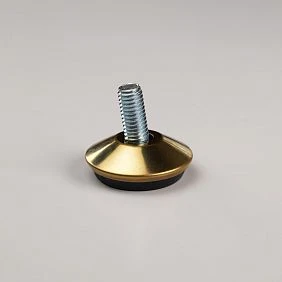
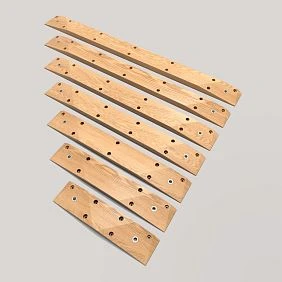


What to include in the kit: the first answer without prefaces
Production classic furniture is built on two levels. The first is structural: the body, drawers, shelves, frame facades made of MDF or solid wood. The second is decorative: everything that creates the face of the product, its style, character, and price perception. It is the second level that determines whether the furniture will look like a custom piece or a conveyor product without soul.
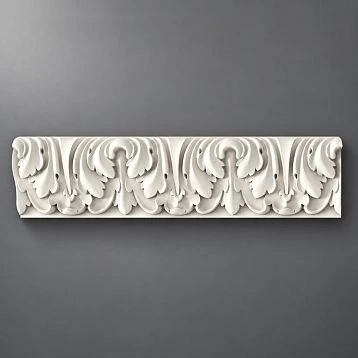
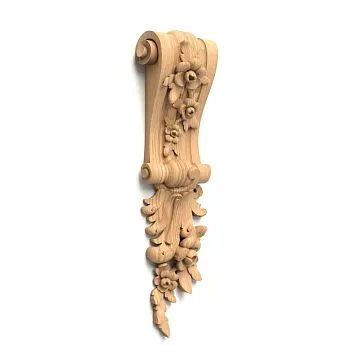
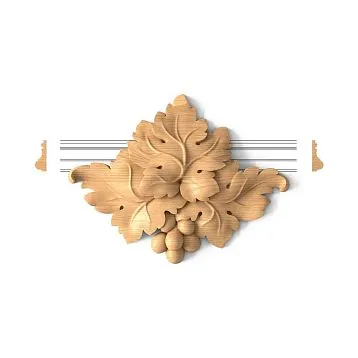
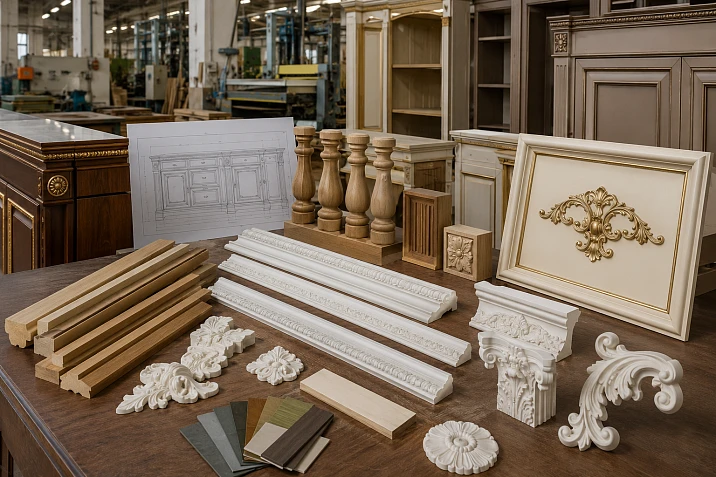
The basic kit for the production of classic furniture facades looks like this: wooden legs and supports, wooden handles or brackets, cornice, glazing bead for glass doors, wooden baguette, decorative elements for furniture made of solid wood, polyurethane moldings, PU overlays, decor for moldings, glue, primer, paint, and a reserve for the series. This is not an excessive list — it is the minimum at which production works predictably.
The key principle: wood takes on the load, tactile contact, and details with visible texture. Polyurethane solves decorative tasks on the facade — frames, overlays, relief for painting. This is not a competition between two materials, it is a division of roles within one product.




Why polyurethane decor has become a working tool for furniture production
When people say "polyurethane decor for furniture," some manufacturers immediately think of something decorative but unreliable. This is an outdated notion. Modern polyurethane decor is not an imitation, but a technological solution that addresses specific production tasks where carved solid wood would be too expensive, too heavy, or too inconsistent in repeatability.
Let's break down point by point why Polyurethane moldings has firmly entered serial furniture production.
Our factory also produces:
4–6 times lighter than carved solid wood
Massive carving on facades is not only beautiful but also heavy. A cabinet facade with deep hand carving on beech or oak adds load to hinges, body, and load-bearing elements. In serial production, this is a problem: hinges have to be reinforced, the body thickened. Polyurethane Polyurethane appliqués provide the same visual relief with minimal weight. A facade with polyurethane decor behaves on hinges the same as a facade without decor.
Get Consultation
Repeatability in series without deviations
Hand carving is a one-off product. Each element differs slightly from the previous one: in depth, width, pattern. This is acceptable in exclusive orders but kills productivity in series. Moldings made of polyurethane and PU overlays are made from a single mold: each copy is identical to the previous one. This is critically important when you are making 20 identical kitchen facades or a series of 40 cabinets for one project.
Facades for painting are an ideal area of application
Polyurethane accepts any paint: water-based, alkyd, oil, acrylic. With proper priming, the coating lays evenly, without drips or white spots. Products for painting make up 70–80% of classical and neoclassical furniture in the mid and high segments. This is where polyurethane works most effectively: furniture facades with stucco decor under white or pastel enamel look monolithic, without a noticeable transition between the base and the overlay.
Reduces complexity without lowering the product class
For a small workshop, carved decor on each facade means either a queue for the carver or your own CNC machine and a setup specialist. Polyurethane decor eliminates this bottleneck: overlays are glued with assembly adhesive, joints are puttied, primed, painted — and the facade looks as if a carver with ten years of experience worked on it. Production of factory-grade classic furniture becomes accessible for a mid-sized workshop.
Works in classic, neoclassical, art deco, and transitional styles
Polyurethane moldings and overlays are produced in a vast range of reliefs: from strict straight profiles of neoclassicism to lush cartouches and acanthus leaves of baroque. This allows a workshop to work in multiple styles using one technological base, simply by changing the assortment of overlays.
Which furniture elements are better left wooden
Despite all the advantages of polyurethane, there are details that in classic production should be wooden — not because 'it's customary,' but for functional reasons.
Furniture supports and legs
furniture legs и Wooden legs bear real load: the weight of the body, contents, sometimes a person opening a wide drawer with force. Polyurethane under such load deforms or breaks. Turned legs made of beech, oak, or birch are not decor; they are a structural element that must be made of wood.
Additionally, the leg is visible from below and is often touched by hands when rearranging furniture. The wooden surface here behaves predictably: it can be coated with varnish, wax paste, or paint, and it will last for decades.
Wooden handles
Wooden handles — this is the most frequently touched element of furniture. Hands open a drawer or door hundreds of times a year. Polyurethane under constant tactile contact wears down, and at attachment points it crumbles. A wooden handle retains its shape, is pleasant to the touch, and is easy to restore. In classic design, it's also about aesthetics: the texture of wood under the hand gives a sense of quality that polyurethane cannot reproduce.
Cornice with open wood texture
If the cornice completes a cabinet and is painted to match the body, polyurethane will work. But if the cornice is part of an interior composition with open texture, staining, or clear varnish, wood is needed here. A wooden cornice made of solid wood or profiled molding gives a living texture that polyurethane does not reproduce.
Glazing bead for glass fronts
Wooden trim — a small detail with a big role. It fixes the glass in the frame of the front and is simultaneously a visible profile along the perimeter of the display case or glazed door. Polyurethane is not suitable here: the glazing bead is regularly removed when replacing glass, and it experiences bending and impact loads. A wooden profile fits precisely into the grooves of the frame and is well processed for reinstallation.
Wooden molding
Wooden Picture Frame is used in the design of display sections, panel fronts, and decorative inserts. It allows working with open texture and painting to match the body part. Profiled solid wood molding is also a structural detail: it can fix panels, cover joints, and simultaneously serve as a decorative frame.
Elements that bear load or are frequently touched by hands
General rule: everything that is turned, pulled, pressed, taken by hand, or leaned on should be made of wood. Polyurethane works on the wall of the front, not at points of mechanical contact.
Where to use polyurethane decor: a working map of the front
decor for furniture made of polyurethane is placed in areas that are visible but not under constant load or tactile contact. Here is the application workflow map.
Frames and trims of facades
Molding around the perimeter of a facade door is a classic and most common application. A profiled polyurethane molding is glued onto the MDF base of the facade, primed, painted — and forms the very "frame" geometry we are used to seeing in classics. The joint between the molding and the base is puttied and sanded until it disappears. The result is a monolithic facade with a relief profile.
Central decorative overlays
decorative elements for furniture in the center of the facade panel — rosettes, cartouches, acanthus leaves, symmetrical overlays — are placed on the plane of the door or drawer. This is a purely decorative function without load. Here polyurethane works flawlessly: repeatability, clarity of relief, the ability to work in any relief pattern from minimalist to lush baroque.
Important: decorative overlays for facades should be selected in proportion to the panel area. A large overlay on a small door looks heavy. A small ornament on a wide facade gets lost.
Top line of the cabinet
A cornice on the upper end of the body is one of the most noticeable elements of the cabinet. If the furniture is painted in a single color, the upper cornice made of polyurethane looks monolithic and allows you to get a complex profile without expensive milling. For tall cabinets and furniture walls, this is also a saving: a long polyurethane cornice will cost less than a similar profile made of solid wood.
Decorative panels and side panels
The side wall of the cabinet facing the room is often decorated with decorative panels with moldings. This is a detail that is visible from the side, it does not bear any load. Polyurethane Moldings for furniture are ideal for creating geometric frame compositions on side panels.
Base and false facades
The lower base of a cabinet or kitchen set is another area where polyurethane works precisely. A decorative profile on the base creates a finished look for the bottom line of furniture. False facades that cover household appliances or non-functional sections are decorated with the same overlays as working facades, maintaining series unity.
Display sections
Glazed sections of a sideboard or bookcase require special attention to decor. Frames around glass doors are decorated with moldings, corner elements with decorative overlays. Decor for polyurethane moldings — corner inserts, rosettes, central accents — create a finished look for the display facade.
Furniture compositions in a single color
If all furniture in a room is painted in one color — ivory, gray chalk, powder white — the mixing of wooden and polyurethane elements becomes unnoticeable. A single layer of paint unites everything into one surface. This is the approach used by furniture factories working in the neoclassical style: wood where strength is needed, polyurethane where relief is needed.
Kits for different furniture types
Each furniture type in classic style requires its own configuration. There is no universal scheme here — but there is logic that can be built for each item.
Classic style cabinet
A cabinet is primarily about doors. The basis of the configuration:
-
moldings around the perimeter of each facade;
-
central decorative overlays on wide doors;
-
top cornice (profiled, made of polyurethane or wood);
-
Wooden handles — mandatory, as this is a point of constant contact;
-
wooden legs or plinth base;
-
spare moldings and overlays for trimming and replacement.
If the cabinet is tall and built-in up to the ceiling, the top cornice becomes an architectural element of the room. Here, the connection with the ceiling plinth or interior cornice is important.
Classic Kitchen
The kitchen is the most complex object in terms of the number of facades and options. Here, repeatability is important: all lower facades should look the same, all upper facades should look the same. For a classic kitchen:
-
moldings for facades of lower and upper sections (one profile or two different ones for lower and upper);
-
PU overlays for wide panels of refrigerator or oven;
-
wooden handles or brackets — single SKU for the entire kitchen;
-
upper cornice of the kitchen set (protruding profile);
-
glazing bead for upper display doors;
-
glue, primer, paint — uniform tone for all elements.
For a kitchen, it is critical not to mix different molding profiles even in minor details: it is immediately noticeable.
Sideboard and display cabinet
Sideboard — a product where the combination of open and glazed sections is important. Configuration:
-
Wooden trim for fixing glass in display doors;
-
Wooden Picture Frame for finishing panels and frames;
-
upper cornice — complex profile, multi-level, characteristic of sideboard classics;
-
decorative polyurethane elements on lower facades and side panels;
-
moldings on the frames of display doors;
-
wooden legs — turned, visible, tall.
Sideboard — a product loved for its details. Don't skimp on stock and thorough selection here.
Chest of drawers
Chest of drawers — an object where the facades are the front wall of the drawers. Configuration:
-
furniture legs or wooden legs — mandatory, they define the character of the product;
-
knob handles or wooden brackets — on each drawer;
-
moldings around the perimeter of each drawer;
-
central decorative overlays on wide drawers;
-
spare overlays and handles.
A chest of drawers is rhythm. Identical drawers with identical handles and identical decor create that visual order that reads as quality.
Console
A console is a lightweight piece with open legs and a decorated front panel. Configuration:
-
wooden supports — turned, carved, or twisted, they define the style;
-
polyurethane decor of the front panel — central overlay, moldings around the perimeter;
-
console surface — clean, without overlays;
-
primer and paint for a uniform coating.
A console is a piece where wooden supports and polyurethane facade decor work together especially expressively.
Classic furniture series
If you are building a series — wardrobe, chest of drawers, bedside table, console, sideboard in a single style — you need a through set: one molding, one overlay, one handle, one leg. furniture elements must be repeated on each piece of the series. This creates the feeling of a collection, not a set of disparate items. Before launching the series — make one test facade with a full set of elements, painted in the final color. Only after checking, order the volume.
What to buy together: complete shopping list
A good production order is not "buy moldings." It is a kit where each element is compatible with the others and allows you to finish the facade without additional trips to suppliers.
Wooden components:
-
furniture legs and wooden legs — with a 10–15% margin;
-
Wooden handles — with a margin for defects and replacements;
-
wooden cornice or profiled molding;
-
Wooden trim for a specific glass thickness;
-
Wooden Picture Frame for display sections and frames;
-
decorative elements for furniture from solid wood — overlays, rosettes, corner elements.
Polyurethane components:
-
Moldings made of polyurethane — one or two profiles for facade frames;
-
Polyurethane appliqués — central and corner;
-
Decor for Molding — corner rosettes, inserts for profile intersections.
Consumables and finishing group:
-
assembly adhesive — compatible with polyurethane and MDF (more on choosing adhesive in the article what to glue polyurethane molding with);
-
acrylic sealant — for sealing joints between the overlay and the base;
-
adhesion primer — mandatory for polyurethane before painting;
-
paint — water-based or alkyd, depending on the desired finish effect;
-
spare elements 10–20% of the calculated quantity.
We especially emphasize the spare. In serial production, trimming moldings at an angle, rejecting overlays with casting defects, replacing handles after installation — all this is inevitable. A 15% spare is not a luxury, it is a production necessity.
Samples for test painting must be ordered together with the main batch. Check on the sample: how the primer lays on polyurethane, how the paint covers the joints, whether there is any seam lifting after the first coat. Only then proceed with production.
Mistakes when purchasing components: what eats up budget and time
Real production experience includes a history of mistakes that repeat over and over. Here are the most common ones.
Buying decor without a facade map
The most common mistake is ordering moldings "roughly for a 3-meter kitchen" without an exact facade drawing. As a result, either one profile is missing, or there are extra linear meters that go to waste. A facade map is a diagram of each door with dimensions, indicating the location of moldings and overlays. Only with it can you calculate the purchase accurately.
Not accounting for repeatability of elements in a series
"We no longer produce this overlay" — a phrase no furniture manufacturer wants to hear mid-run. When purchasing for a series, you need to check with the supplier whether the item is a permanent assortment or temporary. It's better to buy a reserve from the first order than to look for an analogue later.
Choosing too deep a relief for small facades
An overlay with a deep relief of 15–20 mm looks expressive on a wide wardrobe facade. On a 40 cm wide dresser drawer, it looks heavy and out of scale. The depth of the relief should match the dimensions of the product. For small facades, use flat or low profiles.
Placing polyurethane decor in impact zones
The lower part of the kitchen cabinet door, the end of the drawer, the baseboard area — these are zones of regular impacts: from a foot when opening, from a vacuum cleaner when cleaning, from random objects. Polyurethane chips here. Either additionally protect these areas, or use wooden profiles.
Do not check the compatibility of glue, primer, and paint
Three different manufacturers — three different chemical compositions. Some mounting adhesives destroy polyurethane upon contact. Some primers do not provide adhesion to alkyd paint. Before ordering a large batch, test the entire chain on a sample. This takes one day but saves a week of rework.
Mixing different styles of overlays
A Baroque rosette + a minimalist neoclassical profile + an Art Deco handle — this is not eclecticism, it's chaos. In classic furniture, all decorative furniture elements elements must come from the same style vocabulary. Before purchasing, assemble everything on paper in one collage and ensure it reads as a cohesive whole.
Forgetting allowance for defects and trimming
Molding is cut at 45° at frame corners. Each corner requires two cuts. If there is an error in marking or an inaccurate cut, the part goes to waste. When calculating linear footage, add +20% for trimming and +10% for defects. This is a standard production norm.
Not making a test sample of the facade
A test facade is not a waste of material. It is an investment in not having to redo the entire series. On the test sample, check: joining of moldings at corners, glue adhesion, quality of joint putty, priming and painting results. Only after the test facade is approved by the client should the series be launched.
How to properly combine wooden elements and polyurethane on furniture
This is one of the most common questions in the b2b environment: will it be visible where the wood is and where the polyurethane is? The answer depends on the final finish.
For painting — the boundary between wood and polyurethane completely disappears with proper puttying and priming. A single layer of paint creates a monolithic surface. Wooden legs and handles, polyurethane moldings and overlays — all of this can be painted in one color and look like a single piece.
For staining or clear varnish — polyurethane and wood are not compatible in the same visual field. Polyurethane has no texture or pores, staining gives it an even color without depth. Here, either open wooden parts are separated from polyurethane decorative elements by visual breaks, or polyurethane is not used on parts with open texture.
This is an important design principle that should be established at the design stage, not resolved during the painting process.
Polyurethane stucco for MDF facades: installation technology in a nutshell
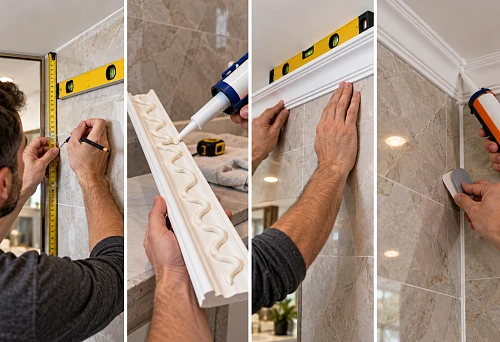
The production of facades for painting with polyurethane decor follows a simple chain: base preparation — marking — adhesive application — installation of molding or overlay — puttying of joints — sanding — priming — painting.
The MDF base is good because it has a smooth surface and good adhesion. Before installing overlays, the surface must be clean, free of dust and grease. Adhesive is applied to both surfaces — the base and the back side of the overlay. After pressing, the fixation time is maintained according to the adhesive manufacturer's instructions.
The joints of moldings at corners are the most vulnerable spot. The 45° miter cut must be precise. The joint is puttied, sanded with fine paper, then primed twice. After that, the boundary between elements completely disappears under the paint.
More details about what to glue polyurethane molding with and how to properly prime polyurethane before painting — in a special article on the website.
Decor of classic kitchen facades: a separate conversation
The kitchen is an object where furniture facades operate under conditions of humidity, temperature fluctuations, grease, and mechanical impacts. This imposes requirements on all decor.
Moldings for kitchen facades should be mounted with high moisture-resistant glue. Joints must be carefully sealed with acrylic sealant. The paint should be water-resistant, with a hard film, preferably two-component or alkyd.
Polyurethane appliqués On kitchen facades, it is better to place them on upper sections, where there is less moisture and mechanical impact. Lower facades with frame geometry of moldings are a good solution, but the molding must be securely glued along its entire length, without voids.
For a classic-style kitchen, tone uniformity is critical. All wooden handles, all moldings, all legs must be in the same color. Even a slight deviation in shade is immediately noticeable in the kitchen because all elements are close together and in the light.
Moldings and overlays for custom cabinets: how to choose a profile
A custom cabinet is a product with non-standard dimensions. This means the molding must be selected for the specific width and height of the door. Scale is important here.
The width of the molding is chosen based on the width of the frame strip on the facade. Usually, this is 40–80 mm from the edge. A molding wider than this strip will protrude onto the plane, while a narrower one will get lost. The profile height (relief) is from 5 to 15 mm for classic styles, up to 20–25 mm for lavish baroque.
For a large order of custom cabinets, make several test doors with different profiles. Show them to the client in the final paint finish. This resolves questions about profile selection and eliminates disappointment after manufacturing the series.
How to make classic furniture cheaper without compromising quality
A question asked by manufacturers in the mid-price segment. The honest answer: polyurethane decor is one of the tools for reducing cost without visual deterioration.
Carved decor from solid wood is an hour of a carver's work per element. A polyurethane overlay with a similar pattern is glue and 20 minutes of installation. For a series of 30 facades, the difference in cost and labor is multiple.
What to replace carved decor on facades with? The correct answer: decorative elements for furniture polyurethane for decorative zones + wooden carved decor only where it is visible up close and where the customer's hand will touch the product. This is a hybrid approach used by most serious furniture manufacturers.
Savings are also achieved on primer and paint. With a single facade color, complex tinting, staining, and sanding for varnish are not needed. One color — one technology. This reduces the time and cost of finishing.
Decor for furniture for painting: which colors work in classics
Classic wooden furniture and painting is primarily white, milky, ivory, light gray, powder, champagne. These shades mask the boundary between wood and polyurethane, create the feeling of a monolithic material, and are well perceived in interiors from classic to Provence and neoclassical.
Dark colors — wenge, anthracite, dark brown — are acceptable but require careful work with joints. On a dark background, the seam between the overlay and the base is more visible. This requires more careful puttying and several layers of primer.
Patination, aging, two-color coatings (dark patina on the relief + light base tone) are a separate technology that requires testing on a sample. Polyurethane accepts patination just like wood, which opens up additional design possibilities.
FAQ: answers to frequent questions from manufacturers
Can polyurethane decor be used in furniture production?
Yes, and it is a widespread practice. Polyurethane moldings It is especially effective for facades to be painted, decorative frames, central overlays, and elements that do not bear structural load. Polyurethane is resistant to deformation under normal furniture operating conditions indoors.
What is better to make from wood, and what from polyurethane?
Wood — for legs, supports, handles, glazing beads, baguettes, and structural parts that experience load or tactile contact. Polyurethane — for moldings, overlays, top cornices, decorative side panels, false facade panels, and any stucco relief elements to be painted.
Is polyurethane decor suitable for a furniture series?
Yes, and this is one of the main advantages of polyurethane. Identical shapes during replication, precise profile repeatability, stable dimensions — all this makes it decorative polyurethane elements an ideal tool for serial production. The main thing is to select elements in advance, test them on a sample facade, and purchase with a reserve.
What to buy for classic furniture facades?
Moldings for frame design, decorative overlays for centers and corners, wooden handles, wooden supports or legs, cornice, glazing bead (if glass doors are present), mounting adhesive, acrylic sealant, adhesion primer, paint, and a 10–20% reserve of all elements.
Can carved decor be replaced with polyurethane?
For decorative facade tasks — yes, completely. The relief of polyurethane overlays reproduces acanthus leaves, cartouches, geometric profiles, and floral ornaments with precision unattainable in manual carving for series production. Load-bearing and tactile elements — legs, handles, glazing bead — are better left wooden.
How to choose a molding for a specific facade?
The width of the molding should correspond to the frame zone of the facade (usually 40–80 mm). The profile height should be proportional to the scale of the product. The profile style should be from the same style vocabulary as the overlays and handles. Before ordering, make a scale sketch of the facade with the molding.
Is primer needed before painting polyurethane?
Absolutely. Without primer, the paint does not provide the necessary adhesion and will peel over time, especially at joints and on relief surfaces. Use an adhesion primer compatible with your paint type.
How to store a supply of polyurethane elements?
Polyurethane products are stored in a dry room at a temperature of +5 to +30°C, away from direct sunlight. With proper storage, the shelf life is unlimited — the material does not dry out or deform.
About the company STAVROS
All the components for the production of classic furniture mentioned in this material are presented in the catalog of STAVROS company. It is one of the leading Russian suppliers of wooden and polyurethane decor for the furniture industry and interior design.
STAVROS produces and supplies a full range of products for furniture manufacturing: wooden legs and supports, solid wood handles, wooden glazing bead and baguette, profiled moldings, carved overlays from beech and oak, polyurethane moldings and cornices, PU overlays for facades, decor for moldings, as well as consumables for installation and finishing.
STAVROS's assortment covers more than 400 models of wooden decorative overlays and an extensive collection of polyurethane products for classic, neoclassical, Provence, and Baroque styles. The catalog is constantly updated with new items adapted to current demands of furniture manufacturing.
Delivery is available throughout Russia. Pickup — from warehouses in Moscow and St. Petersburg. Purchase from one unit. Consultations on component selection — via the website or by phone.
If you are building a series, launching a new model, or want to review the configuration of your facades — start with the catalog moldings from polyurethane и wooden decorative overlays on the STAVROS website. There you will find everything you need — from a single socket to a kit for the entire series.