












































































Article Contents:
- Why Polyurethane Wins: Material Physics vs. Myths
- Trend One: Wide Moldings as Architectural Dominants
- Horizontal Wall Zoning
- Vertical Accents: From Floor to Ceiling
- Frames Within Frames: Complex Geometry
- Trend Two: Color Experiments with Monochrome
- Tone on Tone: Invisible Volume
- Contrasting Drama: Black on Gray
- Colored Moldings: From Pastel to Saturation
- Trend Three: Technology Integration into Decor
- Hidden Lighting: Light from Within the Decor
- Cable Channels: Wires Without Wires
- Acoustic Transparency: Sound Through Decor
- Trend Four: Minimalism with Accents
- One Wall — One Accent
- Decor in Functional Zones
- Asymmetry as a Principle
- Trend Five: Hybrid Materials and Textures
- Polyurethane + Wood: Lightness and Warmth
- Polyurethane + Metal: Industrial Elegance
- Polyurethane + Stone: Monumentality Without Weight
- Application Practice: Scenarios for Different Rooms
- Living Room: Architecture Without Replanning
- Bedroom: Intimacy Through Framing
- Hallway: First Impression in 3 Seconds
- Kitchen: Decor in the Wet Zone
- Installation: from theory to practice
- Tools: Minimal Set
- Preparation: The Foundation of the Result
- Layout: millimeter precision
- Installation: glue and patience
- Finishing: seams and painting
- Q&A: dispelling doubts
- Is polyurethane molding durable?
- Can polyurethane moldings be installed over wallpaper?
- How to care for polyurethane molding?
- Can polyurethane molding be used on facades?
- How Does Cheap Polyurethane Molding Differ from Expensive?
- How much does polyurethane molding installation cost?
- Can polyurethane molding be painted in metallic colors?
- Are polyurethane moldings suitable for bathrooms?
- STAVROS: where quality becomes the standard

What is happening with interior decor right now, in this moment between past and future? We see a transformation that is not spontaneous but conscious. Designers worldwide are rejecting excess for the sake of excess, decoration for the sake of decoration. But they are not abandoning beauty. They are not abandoning volume, relief, architectural expression. They are seeking new forms. And they are finding them in a material that just a decade ago was considered a compromise but has now become the standard —polyurethane moldings.
Polyurethane moldingin 2026 — is not just a strip on the wall. It is a tool for zoning, creating visual rhythms, and crafting architectural illusions. With it, a studio apartment transforms into a space with clearly defined zones. A room with a low ceiling visually gains 20 centimeters. A bare white wall acquires depth, texture, and character.
Why is 2026 becoming a turning point fordecorative elements made of polyurethane? Because technology has reached a level where polyurethane has ceased to be a 'cheap imitation of plaster' and has become an independent material with unique properties. Because aesthetics have shifted — from maximalism to thoughtful minimalism with accents. Because new usage techniques, new forms, and new combinations have emerged.


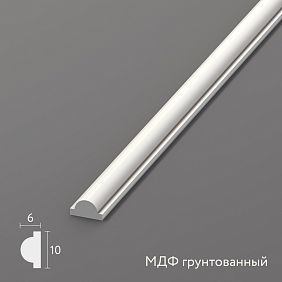
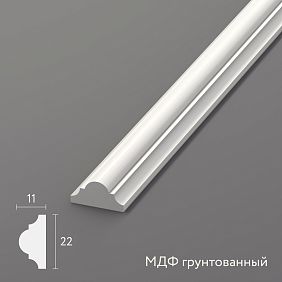
Why polyurethane wins: material physics versus myths
Let's start with an honest conversation. There is a stereotype: plaster is noble, polyurethane is cheap. This stereotype died about five years ago, but it still lingers in some places. Let's bury it for good.
Plaster is heavy. A 150 mm wide, 2-meter long cornice weighs 10-12 kilograms.Moldings and trimmade of polyurethane with the same dimensions — 1.5-2 kilograms. The difference is critical. A heavy element requires powerful mechanical fastening — anchors into concrete, screws into wood, complex mounting structures. A lightweight element is glued with acrylic adhesive or liquid nails, held by adhesion, and does not create load on the structures.
Plaster is brittle. Accidentally hit during transport — a chip. Carelessly tightened against an uneven wall — a crack. Polyurethane is elastic. Upon impact, it deforms and returns to shape. When installed on a slightly uneven surface, it compresses without cracking.
Plaster fears water. Water absorption coefficient is 5-10% by mass. In a humid environment, plaster molding without special waterproofing begins to soften, salt stains appear on the surface, and mold develops in the pores. Polyurethane is completely hydrophobic. Water absorption coefficient is less than 1%. It can be installed in bathrooms, pools, saunas (at temperatures up to 80°C), kitchens — anywhere where plaster would quickly deteriorate.
But the main advantage of polyurethane is technological. High-pressure injection molding (up to 150 atmospheres) reproduces the finest ornament details with depths up to 0.5 mm with photographic precision. Each element is identical to the previous one — not 'roughly similar,' but absolutely identical down to micron-level tolerances. This yields perfect joints, precise pattern repeatability, and predictable installation.
Plaster cannot achieve such precision. Even serial plaster elements have deviations of 3-5 mm because plaster is molded by hand, finished by hand, and human error is inevitable.




Trend one: wide moldings as architectural dominants
In 2026, scale is increasing. Thin decorative strips 30-50 mm wide, which dominated in the 2010s, are taking a back seat. They are being replaced bywide moldings100-200 mm wide, which create not delicate lines but powerful architectural divisions.
Our factory also produces:


Horizontal wall zoning
A classic technique: a molding at 90-120 cm from the floor divides the wall into a panel and an upper section. But in 2026, this is done not with a thin profile but with a wide one — 120-150 mm. The panel (lower part of the wall) is painted in a saturated color — deep green, dark blue, graphite, terracotta. The upper part remains light — white, cream, light gray. The molding between them is contrasting or matches one of the sections.
The effect is colossal. The wall ceases to be a flat vertical surface, becoming a composition of two horizontal blocks. Visually, this expands the room, creates a sense of proportionality, and adds color drama without overload.
Why specifically a wide molding? Because a thin one (30-40 mm) against the contrast of two saturated colors appears weak, insufficient. It does not create a clear boundary or hold the composition. A wide molding (120+ mm) is a physical boundary that divides the space not conditionally but actually.
Get Consultation
Vertical accents: from floor to ceiling
Vertical moldings 80-100 mm wide, running from floor to ceiling at intervals of 60-80 cm, create the rhythm of a colonnade without physical columns. This is especially effective in rooms with ceiling heights of 3 meters and above, where vertical lines emphasize the height and create a sense of grandeur.
Panels are formed between the vertical moldings—spaces that can be played with in different ways. Cover them with contrasting wallpaper. Paint them a different color. Leave them neutral, creating a frame as a self-sufficient element. Place artwork (a painting, panel, mirror) inside.
This technique works both in narrow hallways and in wide living rooms. In a hallway, vertical moldings visually raise the ceiling and compensate for narrowness. In a living room, they zone a long wall, dividing it into logical sections, each perceived as a separate composition.
Frames within frames: complex geometry
Trend 2026 — creating complex geometric compositions from moldings. Not just a rectangular frame on the wall, but a system of nested frames creating visual depth.
Example: a large 200×150 cm frame made from 80 mm wide molding. Inside — four smaller 80×60 cm frames made from 50 mm wide molding, symmetrically arranged. Inside each small frame — even smaller elements (appliqués, rosettes, central accents). The result is a three-level composition where the eye sequentially reads the large form, medium forms, and details.
Such complexity requires precision. The slightest error in layout — and the symmetry is broken, the composition falls apart. Here, the advantage of polyurethane is evident: stable geometry, precise dimensions, predictability when cutting corners.
Second trend: color experiments with monochrome
For a long time, moldings were painted exclusively white. White molding on a white wall — a classic, fail-safe option that works in any interior. But in 2026, boldness emerges.Polyurethane moldingsTone-on-tone: invisible volume
The molding is painted the same color as the wall, but with a different paint texture. The wall is matte — the molding is satin. The wall is satin — the molding is glossy. The color is identical, but the difference in light reflection creates a visual separation.
The molding is painted the same color as the wall, but with a different paint texture. If the wall is matte, the molding is satin. If the wall is satin, the molding is glossy. The color is identical, but the difference in light reflection creates a visual separation.
Under direct lighting, the molding almost blends with the wall, perceived only by its relief. Under side lighting (from a window, sconce), the difference in textures becomes noticeable — the glossy molding appears lighter than the matte wall. The result is a dynamic composition that changes throughout the day depending on the direction of light.
This technique requires high-quality paint and precise shade matching. The slightest deviation in color (by half a tone) — and the effect is lost, the molding looks like a mistake.
Contrasting drama: black on gray
Dark molding on a light wall — a classic contrast that has always worked. But in 2026, it becomes more nuanced. Not black on white (too sharp), but black on light gray, or graphite on milky white, or dark blue on light blue.
Contrast creates graphic quality, clarity of lines. The molding becomes not a relief element, but a drawing on the wall. This works in minimalist interiors, where every line must be meaningful, every element — functional.
An important nuance: contrasting molding requires perfect installation. Any unevenness, gap, or seam is immediately noticeable because the dark color emphasizes defects. Here again, the advantage of polyurethane: smooth edges, tight fit, absence of deformations.
Colored moldings: from pastels to saturation
Colored moldings — a phenomenon of 2026. Moldings are painted in active colors: emerald, sapphire, burgundy, mustard, terracotta, dusty pink.polyurethane moldingsColored molding on a neutral wall (white, gray, beige) becomes an art object. It's not just framing, it's an accent that attracts the eye, creates emotional tension, sets the mood for the entire room.
Colored molding requires boldness and taste. An error in shade selection — and the interior turns into kitsch. But with the right approach, it's a powerful tool for creating a unique atmosphere.
Third trend: integration of technology into decor
In 2026, moldings cease to be purely decorative. They become functional, integrating technological systems.
Moldings and trimHidden lighting: light from within the decor
Wide ceiling cornices (150-250 mm wide) with a recessed inner shelf create a niche for an LED strip. The light is directed upward, toward the ceiling, creating the effect of a floating plane. The ceiling visually separates from the walls, as if hanging in the air.
This technique works in any room, but is especially effective in rooms with low ceilings (2.5-2.7 m). Hidden lighting visually raises the ceiling by 15-20 cm, creating a sense of airiness and lightness.
Polyurethane is ideal for such structures. It is not afraid of heat from the LED strip (operating temperature of the strip is 40-50°C, polyurethane withstands up to 80°C). It is lightweight, so even a wide cornice with a niche does not create a critical load. It is mounted with adhesive, without visible fasteners, creating a clean line.
Cable channels: wires without wires
Cable channels: wires without wires
Wide wall moldings (100-120 mm wide) with an internal channel are used for concealed wire routing. Cables for the TV, router, speakers, and chargers are hidden behind the molding. The molding runs horizontally at a height of 80-100 cm — precisely where outlets and equipment are typically placed.
Effect: no visible wires, no cable channels, no plastic boxes. Only a clean wall with decorative molding that serves a dual function — aesthetic and technical.
Acoustic transparency: sound through decor
Special polyurethane panels with perforation (holes 2-3 mm in diameter, spaced 10-15 mm apart) are used to conceal audio systems. Home theater speakers are placed behind the panel; sound passes through the perforation without distortion, but the speakers remain invisible — only an elegant decorative panel is seen.
The perforation is so fine that from a distance of 2-3 meters it reads as texture, not as holes. The panel is perceived as a relief surface, and its functionality only becomes obvious upon close inspection.
Trend four: minimalism with accents
The paradox of 2026: minimalism does not reject decor but uses it in a targeted, meaningful, and maximally effective way.
One wall — one accent
A room has four walls. Three are completely neutral, smooth, painted in one color. The fourth is an accent wall, decoratedpolyurethane moldings.
An accent wall can be decorated in various ways:
-
A grid of moldings creating a system of squares or rectangles
-
Vertical stripes of wide moldings running from floor to ceiling
-
One large frame in the center of the wall, with contrasting paint or wallpaper inside
-
An asymmetrical composition of moldings of varying widths, creating dynamic tension
Three neutral walls create a background, calmness, and airiness. The accent wall draws the eye, becomes the room's focal point, and sets the character. This is a balance between the emptiness of minimalism and the expressiveness of decor.
Decor in functional zones
Instead of decorating the entire space uniformly, decor is concentrated in functionally important zones.
TV zone: the wall behind the television is decorated with a frame of wide moldings, creating a portal. The TV is perceived not as an appliance but as a framed painting integrated into the architecture.
Bed headboard zone: the wall behind the bed is decorated with vertical moldings or panels with relief. The other bedroom walls are smooth. The sleeping area is highlighted, becoming cozy and intimate.
Dining zone: the wall next to the dining table is decorated with a composition of moldings and panels. This creates a sense of a special place where the family gathers and important conversations happen.
Targeted use of decor is cost-effective (no need to buy molding for all walls), visually stronger (concentrated effect), and functionally justified (decor where it's needed).
Asymmetry as a principle
Classical interiors are strictly symmetrical: the left side of the room mirrors the right. The minimalism of 2026 allows and encourages asymmetry.
The molding runs not in the center of the wall but is offset a third to the right. A frame on the wall is not centered but placed in the upper left corner. Vertical stripes of moldings are not evenly distributed across the wall but are grouped on one side, leaving the other empty.
Asymmetry creates visual tension, dynamism, and a sense of movement. But it requires impeccable taste. Random asymmetry (a mounting error) looks like a defect. Conscious asymmetry (a design decision) looks like bold avant-garde.
Trend five: hybrid materials and textures
2026 blurs the boundaries between materials.Polyurethane and wood in decorcease to be antagonists and become partners.
Polyurethane + wood: lightness and warmth
Frame made of polyurethane moldings (lightweight, stable, moisture-resistant) + infill of wooden slats or panels (warm, textured, natural). The molding creates the geometric structure, the wood fills it with materiality.
Example: a frame made of 80 mm wide polyurethane molding on a wall, with wooden slats (40 mm wide, 60 mm spacing) oriented vertically inside. The result is a panel with a relief texture, where polyurethane is the structure, wood is the infill.
This combination works in eco-interiors, Scandinavian spaces, minimalist homes where connection with nature is important, but installation technology is needed.
Polyurethane + metal: industrial elegance
Polyurethane moldings are painted with metallic paints (copper, bronze, brass, steel, black metal), imitating real metal. The effect is enhanced if the molding has a geometric profile with clear edges — metallic paint on the edges creates highlights that enhance the metallic feel.
Such molding works in loft interiors, industrial spaces, brutal minimalist homes. It adds architectural expressiveness without the physical weight of real metal.
Polyurethane + stone: monumentality without weight
Polyurethane panels with texture imitating stone (marble, travertine, slate, concrete), painted in corresponding colors. Indistinguishable from real stone from a distance, obviously an imitation up close, but this is not a flaw, but a feature.
Stone texture is used for accent walls, fireplace portals, niches. Polyurethane provides the volume and texture of stone, but weighs dozens of times less, installs in hours instead of days, costs many times less.
Application practice: scenarios for different rooms
Theory is beautiful, but how does this work in real apartments and houses? Let's consider specific scenarios.
Living room: architecture without redevelopment
Living room 25 sq.m, ceilings 2.7 m, standard rectangular shape. Task: create architectural expressiveness without major renovation.
Solution: An accent wall (long, 5 meters) is decorated with a system of vertical moldings 100 mm wide with 80 cm spacing. This results in six vertical strips from floor to ceiling. Between the moldings — panels painted in deep emerald. Moldings — white. The other three walls — light gray, smooth.
Effect: the living room gains a dominant feature, the wall behind the sofa becomes an architectural accent, vertical lines visually raise the ceiling, color contrast creates drama.
Installation time: 1 day. Material cost: 15000-20000 rubles. Visual effect: the room looks an order of magnitude more expensive.
Bedroom: coziness through framing
Bedroom 16 sq.m, ceilings 2.6 m. Task: create a feeling of coziness, intimacy, seclusion.
Solution: The wall behind the bed headboard is decorated with a large frame made of molding 120 mm wide. Frame size 2200×1400 mm (bed width + 20 cm on each side, height from floor 20 cm to top 160 cm). Inside the frame — wallpaper with fabric texture (velour, velvet). The molding is painted the color of the wallpaper, the relief is read by shadows. Other walls — solid, pastel.
Effect: the headboard area is highlighted, becomes the center of the bedroom, the frame creates a portal feeling, inside which — softness, comfort. The bedroom ceases to be just a room, becomes a space for rest.
Hallway: first impression in 3 seconds
Hallway narrow (1.2 m wide, 4 m long), ceilings 2.5 m. Task: visually widen, create an impression of thoughtfulness.
Solution: Horizontal molding 80 mm wide at a height of 100 cm from the floor along the entire perimeter of the hallway. The lower part of the wall (panel) is painted dark gray, the upper — white. Molding — white. On the end wall (opposite the entrance door) — a vertical frame made of the same molding, inside — a mirror.
Effect: horizontal molding visually widens the narrow hallway, the dark panel hides inevitable dirt, the light top adds air. The mirror in the frame on the end wall creates an illusion of space continuation.
Kitchen: decor in a wet zone
Kitchen 12 sq.m, with work and dining areas. Task: highlight the dining area, add style.
Solution: The wall next to the dining table (2.5×2.7 m) is decorated with a composition of moldings: a central frame 1800×1200 mm made of 60 mm wide molding, inside — four smaller frames 700×500 mm made of 40 mm molding. Moldings are painted the color of the kitchen fronts (e.g., graphite), the wall inside the frames — in a contrasting color (mustard). Moisture-resistant polyurethane is not afraid of splashes, condensation, temperature fluctuations.
Effect: the dining area is highlighted as a separate space, the kitchen ceases to be a purely utilitarian room, becomes a place for family gatherings.
Installation: from theory to practice
installing polyurethane molding— a process that seems complex, but in reality is accessible even to non-professionals. The main thing is precision, care, adherence to technology.
Tools: minimal set
For installing moldings, a minimal set is required:
-
Miter box (for cutting 45-degree angles)
-
Fine-tooth saw (polyurethane cuts easily, like wood)
-
Tape measure, pencil, level (for marking)
-
Polyurethane glue or acrylic liquid nails
-
Painter's tape (for temporary fixation while the glue sets)
-
Acrylic sealant (for filling joints)
Not required: drill, hammer drill, anchors, screws, special mounting systems. Polyurethane is glued with adhesive and held by adhesion.
Preparation: the foundation of the result
The surface must be: clean (free of dust, grease stains), dry (humidity no more than 60%), strong (paint, plaster not peeling), degreased (wipe with alcohol or degreaser).
Primer is mandatory. Deep-penetration acrylic primer is applied with a roller in 1-2 coats, drying time 6-12 hours. Primer improves adhesion; the glue holds many times stronger.
Marking: precision to the millimeter
Marking is a critical stage. A molding glued crookedly by 2-3 degrees is visually perceived as an error and ruins the entire composition.
Use a level (preferably a laser level, which projects a perfectly horizontal or vertical line). Mark the line with a pencil where the molding will go. Check the marking twice before gluing.
For corners, use a miter box—it ensures an accurate 45-degree cut. Two moldings cut at 45 degrees form a perfect right angle (90 degrees) when joined.
Installation: glue and patience
Apply glue to the back of the molding in a zigzag pattern (for molding width 80-100 mm—2-3 strips of glue) or in dots (for narrow molding 40-60 mm—dots spaced 15-20 cm apart).
Place the molding against the wall strictly along the marking, press along its entire length for 30-60 seconds. The glue sets quickly, but full polymerization takes 2-3 hours. During this time, secure the molding with painter's tape (strips of tape from the molding to the wall every 50 cm).
Finishing: seams and painting
After the glue dries (after 24 hours), fill the seams between moldings with acrylic sealant. Squeeze sealant into the seam, remove excess with a damp sponge. After drying (2-3 hours), sand the seam with fine sandpaper (grit 220-320).
Moldings are sold primed, ready for painting. Use high-quality acrylic paint, apply with a roller (smooth areas) and brush (textured areas). Two to three coats for even coverage, drying time between coats 2-4 hours.
Questions and answers: dispelling doubts
Is polyurethane molding durable?
With proper installation and use—30-50 years without changes. Polyurethane does not age, yellow (if painted with quality paint), deform, or crack. Service life is limited not by the material but by changes in interior fashion.
Can polyurethane moldings be installed on wallpaper?
Yes, if the wallpaper is firmly attached to the wall. Apply glue to the molding, press the molding against the wallpaper; the glue penetrates through the wallpaper and bonds with the wall. But if the wallpaper is peeling, the molding will fall off with it. It's better to glue onto a painted or plastered wall.
How to care for polyurethane molding?
Minimal care: wipe with a dry or damp cloth to remove dust 1-2 times a month. If the molding is painted with washable paint, mild detergents can be used. Do not use abrasives, solvents, or aggressive chemicals.
Can polyurethane molding be used on facades?
Yes, there are special facade moldings made of high-density polyurethane, reinforced with fiberglass, resistant to UV radiation, frost, and moisture. They are more expensive than interior ones (1.5-2 times), but last outdoors for 20-30 years without deterioration.
How does cheap polyurethane molding differ from expensive?
By material density (cheap 150-200 kg/m³, quality 280-320 kg/m³), clarity of relief (cheap—blurred details, quality—sharp up to 0.5 mm), dimensional stability (cheap—deviations up to 5 mm, quality—up to 0.5 mm), quality of primer.
How much does installation of polyurethane molding cost?
For polyurethane: 200-400 rubles per linear meter of moldings, 800-2000 rubles for installing a panel or rosette. This is 2-3 times cheaper than installing plaster stucco. Many people do the installation themselves, saving on labor costs.
Can polyurethane stucco be painted in metallic colors?
Yes, polyurethane accepts any paints, including metallic ones (gold, silver, copper, bronze, steel). To enhance the effect, use paints with metallic powder, which create genuine metallic highlights on the relief.
Are polyurethane moldings suitable for bathrooms?
Yes, polyurethane is completely moisture-resistant, ideal for bathrooms. The only limitation is direct contact with hot water (shower stream). If the molding is located outside the direct water splash zone (above 2 meters from the floor), it lasts for decades.
STAVROS: where quality becomes the standard
When it's time to choose interior materials, the question arises: who to trust? The market is overflowing with offers, from cheap Chinese to premium European. How not to make a mistake?
STAVROS has been working in the field of architectural decor for over twenty years, offering solutions for the most demanding projects.Polyurethane moldings, cornices, and baseboardsSTAVROS is not just trim. It's a system of elements designed in a unified style, with precise dimensions, stable geometry, and impeccable quality.
Production on European equipment with quality control at every stage. Polyurethane density of 280-320 kg/m³ guarantees rigidity and durability. High-pressure casting ensures relief detailing down to 1 mm. Surface primed with white acrylic primer — ready for painting without additional processing.
The STAVROS catalog features over 200 molding profiles: from thin minimalist (20 mm width) to wide monumental (250 mm width). From smooth geometric to complex ornamental. Each profile is available in 2-meter length (standard) or 2.44 meters (to minimize joints in large rooms).
Flexible moldings for curved surfaces — bending radius from 1 meter without relief deformation. Corner elements, connecting overlays, decorative inserts — everything for creating seamless compositions.
STAVROS offers not only materials but professional support. The company's designers consult on selecting profiles for specific interiors, create visualizations, and show how a wall will look with the chosen stucco. Technologists provide recommendations on installation, adhesive selection, and painting techniques.
The tinting service allows obtaining moldings in any color from the RAL catalog. Classic white, modern graphite, accent emerald, luxurious gold — any shade to choose. Decorative effects of patination, gilding, metallization — for exclusive projects.
The stock program with constant availability of popular profiles ensures fast shipping — materials can be picked up on the day of order or delivered the next day. For non-standard elements, the production time is 7-14 days.
STAVROS showrooms in Moscow and St. Petersburg are spaces where you can see moldings in person, assess the quality of relief, material density, and color options. Consultants demonstrate installation techniques, show how to cut corners, and create complex compositions.
The STAVROS quality guarantee is confidence that every molding is manufactured without defects, with precise dimensions, clear relief, and stable geometry. If a defect is found — replacement without questions. Professional support at all stages — from selection to finishing.
Working with STAVROS, you get not just materials, but a partner in creating your interior. A partner who understands: decor is not mere embellishment, but a tool for shaping space. Who provides materials of the highest quality and expert knowledge so that your interior becomes exactly as you envisioned.
Entrust interior creation to STAVROS — and get a space where every line is thought out, every element is functional, every detail is perfect. Because quality created with precision and attention requires no compromises. And because the trends of 2026 are not about fashion, but about understanding how architectural decor changes life in a space.


