










































































Article Contents:
- Kitchen Skirting Board in Moscow: Which Option to Choose for a Practical Interior
- What Skirting Boards for Kitchen Can Be Bought in Moscow
- Wooden Skirting Boards for Kitchen
- MDF Skirting Boards for Kitchen
- Moisture-resistant polystyrene skirting boards
- White skirting boards for painting
- How to Choose Kitchen Skirting Board by Material
- When wood is better
- When MDF is more convenient
- When a Moisture-Resistant Option is Needed
- How to Choose a Skirting Board for the Kitchen to Match the Floor Covering
- For tile and porcelain stoneware
- Under laminate
- For quartz vinyl
- For wooden floors
- How to Choose a Skirting Board for the Kitchen by Height, Color and Style
- Tall Skirting Board for Kitchen
- White Skirting Board for Kitchen
- Skirting Board for Modern Kitchen
- Skirting Board for Classic Kitchen
- What is important specifically for the kitchen: moisture, cleaning, adjacencies
- Which material handles wet cleaning more calmly
- What to choose next to the kitchen set
- How not to make a mistake with color and soiling
- What to combine the floor skirting board with in the kitchen
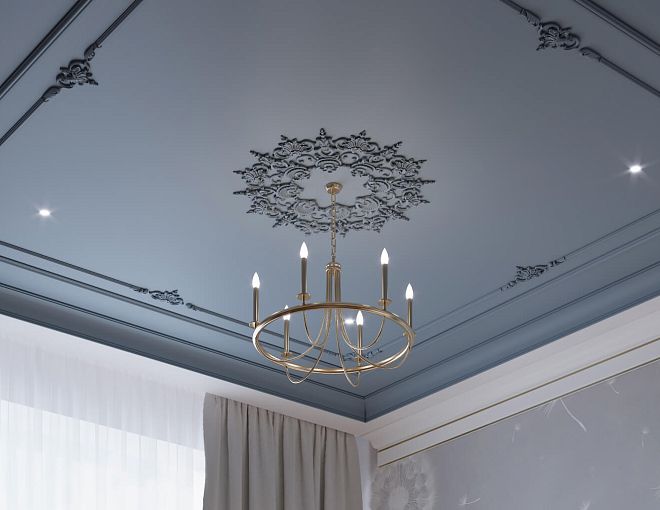
- With moldings and cornices
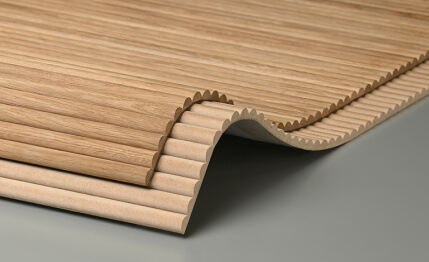
- With slatted panels
- with decorative elements
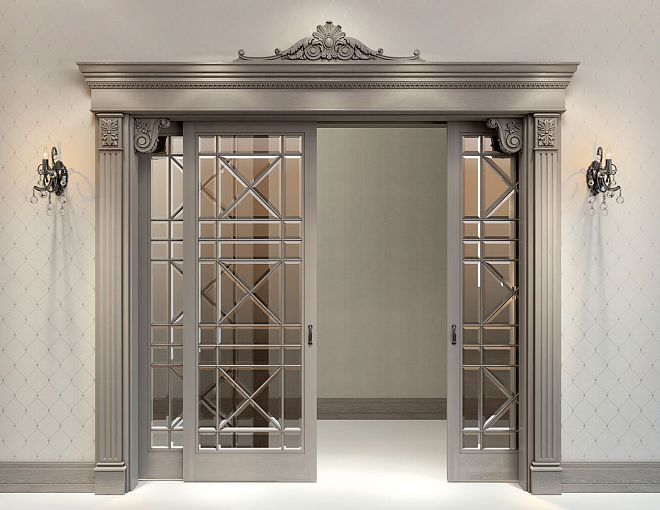
- With door architraves and adjacent moldings
- Where to buy skirting board for the kitchen in Moscow
- What to check before purchase
- Delivery in Moscow
- Catalog for quick navigation
- Common mistakes when choosing a skirting board for the kitchen
- Too "delicate" material for a wet area
- Too low a profile next to an active kitchen set
- Color error relative to gender and facades
- Selection by photo only without considering coverage
- Lack of connection with platbands and wall decor
- Frequently Asked Questions
- Conclusion
Kitchen skirting board— is not a question that can be solved by intuition or the principle 'I'll buy something simpler and figure it out there.' The kitchen requires precise answers to three questions: what material, for what floor covering, in what style. Exactly in this order, exactly with this logic.
If you're looking for where to buy baseboard for the kitchen in Moscow with a specific result — this article is for you. Not general theory, but a practical guide: from material selection to installation next to cabinets.




Baseboard for the kitchen in Moscow: which option to choose for a practical interior
Let's state the main thing right away.Buy baseboard for the kitchen in Moscow— these are three parallel choices that need to be made simultaneously.
First: selection based on operating conditions. The kitchen is a wet area. Not in the sense of a bathroom, but in the sense of daily floor washing, a running dishwasher, boiling water, and steam cooking. A skirting board made of a material that cannot withstand constant contact with moisture will last significantly less than the stated lifespan in the kitchen.
Second: selection based on the floor covering. The skirting board is the transition between the floor and the wall. It should organically continue the visual rhythm of the floor covering. One type for tiles. Another for laminate. A third for quartz vinyl or wooden flooring. Choosing without considering the covering yields a random result.
Third: selection based on kitchen style. A modern kitchen in white with matte fronts and a classic kitchen with wooden fronts require fundamentally different skirting boards. The profile shape, height, color, and texture—each parameter either enhances the style or ruins it.




What skirting boards for the kitchen can be bought in Moscow
Our factory also produces:


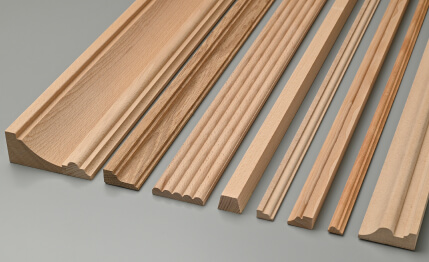
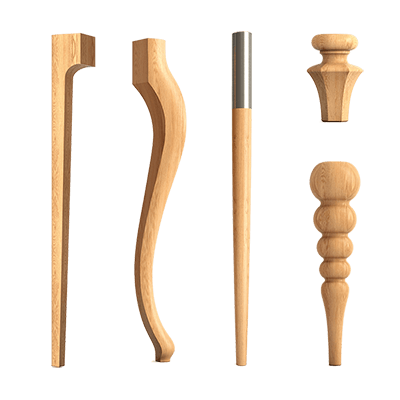
Wooden skirting boards for the kitchen
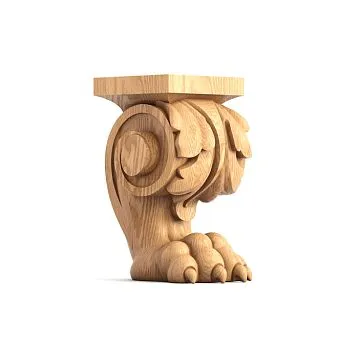
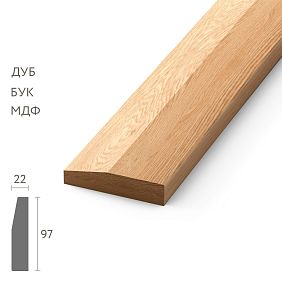
Wood in the kitchen is not an exception. It is a choice for a specific context: a kitchen with wooden fronts, a wooden countertop, parquet, or a solid wood floor. Where the interior material already speaks the language of wood, a woodenbaseboard—is an organic continuation.
wooden kitchen baseboard—made of solid oak or beech has a natural density that protects against mechanical impacts—chair legs, a mop, a cabinet door. Oak is the hardest option: it does not dent, scratch, or deform under reasonable use. Beech is slightly softer but impeccably accepts staining: it accurately reproduces any shade from light ash to dark wenge.
The key condition for a wooden skirting board in the kitchen: it must be treated with oil, varnish, or a wax-based composition that is resistant to moisture. Untreated solid wood in the kitchen is unacceptable. Properly treated—it lasts 20–30 years.
For oak and beech, profiles with a height from 60 to 100 mm are recommended: this range is visually correct for standard Moscow kitchens with a ceiling height of 2.7–3 m.
Get Consultation
MDF Skirting Boards for the Kitchen
MDF is a high-density pressed wood fiberboard. In dry rooms, it is one of the best materials: perfectly smooth surface, precise paintability, uniform structure without knots. This is precisely why it is loved in Scandinavian and modern white kitchens: a white MDF skirting board for painting gives a perfectly even white line at the floor.
But in the kitchen, there is a nuance.MDF Skirting Board for Kitchenis appropriate provided that:
-
The kitchen is equipped with a good hood — steam does not settle on the walls
-
The floor is regularly cleaned without excess water
-
The skirting board is installed with sealing of the lower end: silicone sealant blocks capillary moisture penetration from below
-
There are no gaps at the base through which water gets under the profile during wet cleaning
White MDF skirting board for the kitchen is the right choice for modern kitchens in white-gray tones, where a unified white perimeter (ceiling skirting, floor skirting, facades) creates a clean, well-thought-out horizontal line. But without sealing — it's a risk.
Moisture-resistant polystyrene skirting boards
This is where the kitchen gets the perfect practical answer.Moisture-resistant skirting board for kitchenmade of high-density polystyrene — a material for which moisture is not a problem in principle. Polystyrene water absorption is less than 2%. It does not swell, delaminate, or deform upon contact with water.
The HI WOOD line includes skirting boards made of high-density polystyrene (58–140 mm) with a primed surface for acrylic painting. This is not a foam profile from a construction supermarket — the density is different, the surface is different, the resistance to mechanical loads is different.
Advantages of moisture-resistant polystyrene skirting board for kitchen:
-
Does not react to wet cleaning, splashes, steam
-
Easy installation — cuts with a knife, glued with special adhesive
-
Primed surface accepts any acrylic paint: white, gray, cabinet color
-
Durability 15–25 years without deformation
-
Width from 58 to 140 mm — selected according to ceiling height and kitchen style
-
Allowed for use near dishwasher and under sink
White skirting boards for painting
A separate category is white kitchen skirting boards for purchase, intended for final painting with acrylic enamel. This is relevant for kitchens in white, gray-white, or monochrome color schemes, where the exact shade of the bottom line must match the color of the walls or cabinet fronts.
White MDF or polystyrene skirting boards for painting — both options are primed under factory conditions. The difference: polystyrene is moisture-resistant, MDF is not. For the kitchen, polystyrene with an acrylic coating is preferable: it retains color, does not yellow, and does not crack under temperature fluctuations.
How to choose a kitchen skirting board based on material
When wood is better
Wood in the kitchen is a conscious choice for a specific interior. A solid wood skirting board is suitable when:
-
The kitchen floor is parquet, engineered wood, wooden panels, or laminate 'under wood' with a high density of imitation
-
Cabinet fronts are wooden or veneered — a unified material code
-
The countertop is wooden or stone — a warm, natural interior overall
-
A kitchen in a country house with exposed wooden structures — beams, paneling
-
Proper wood treatment: oil or varnish with moisture protection
It is not recommended to purchase an untreated solid wood skirting board for the kitchen without subsequent impregnation. This is exactly what often happens: bought, installed — and after 2 years, the end is swollen, the paint has peeled off.
When MDF is more convenient
MDF — when you need a perfect surface for painting and the kitchen is equipped with proper ventilation.Buy MDF skirting board for kitchen— for a white monochrome kitchen in a modern style, where visual result is more important than operational over-insurance.
Mandatory: the bottom edge of the MDF skirting board must be primed or coated with silicone sealant before installation. Without this, moisture that inevitably gets on the floor during cleaning penetrates the edge and gradually begins to destroy the board's structure.
MDF for kitchen — suitable in the lower zone provided normal humidity and adherence to installation technology. Not recommended near the sink, next to the dishwasher, or in the work surface area with steam.
When a moisture-resistant option is needed
Moisture-resistant skirting board for kitchenmade of polystyrene — the rule, not the exception. For a kitchen with active cooking, a dishwasher, and regular wet cleaning — high-density polystyrene.
The gap between polystyrene and 'moisture-resistant MDF' is fundamental: water absorption of MDF even labeled 'moisture-resistant' — 10–15%, water absorption of polystyrene — less than 2%. In real kitchen conditions, this is the difference between a profile that lasts 10 years and one that needs replacing in 3–5.
How to choose skirting for the kitchen to match the floor covering
For tile and porcelain stoneware
Tile and porcelain stoneware — the most common kitchen flooring in Moscow apartments. A cold, hard, smooth material.
Buy skirting board for kitchen under tile — considering several rules:
Color. The skirting board is chosen either to match the tile (a smooth transition, an unobtrusive solution) or to match the walls (a clear horizontal boundary). Contrast between light tile and dark skirting board is acceptable only as an intentional design accent.
Material. Polystyrene or wood with moisture-resistant treatment. MDF is questionable, only if the tile is perfectly flat and the skirting board fits tightly without gaps.
Height. A medium profile of 60–80 mm is recommended for tile. A low skirting board up to 40 mm under large-format tile looks accidental—it doesn't maintain proportion.
Buying a skirting board for the kitchen under porcelain stoneware—the same rules apply. The surface of porcelain stoneware can be textured (imitation wood, stone)—in this case, it's better to choose a neutral, smooth skirting board without competing texture.
Under laminate
Laminate in the kitchen is a debatable but common solution for economy and comfort-class apartments in Moscow. Moisture-resistant laminate with class AC4–AC5 withstands kitchen use with proper care.
Buying a skirting board for the kitchen under laminate—first and foremost, with color matching. Laminate manufacturers produce skirting boards to match each collection. But if the collection is outdated or the 'manufacturer's' skirting board doesn't suit in quality—an alternative from solid wood or MDF in a suitable tint is selected.
A wooden skirting board made of solid wood under warm laminate 'oak' or 'walnut'—gives a higher quality result than a plastic profile from the same box. Natural wood next to an imitation is more honest and visually convincing.
Height: 60–80 mm for a standard laminate floor. A wide skirting board of 100+ mm under laminate in the kitchen is rarely appropriate.
For quartz vinyl
Quartz vinyl (LVT/SPC) is the most practical flooring for the kitchen: fully moisture-resistant, warm to the touch, with high-quality imitation of wood or stone. In the Moscow market, it has actively displaced laminate specifically in kitchen areas.
Buying a skirting board for the kitchen under quartz vinyl—the logic is the same as for laminate. But since quartz vinyl is moisture-resistant, it's better to take a skirting board for it with similar resistance: high-density polystyrene or wooden with a moisture-protective coating.
Color: Quartz vinyl often mimics wood—light oak, gray wood, darkened pine. A solid wood skirting board in a matching finish creates a convincing transition: natural material completes the imitation.
For wooden flooring
Wooden flooring in the kitchen—parquet, engineered board, solid board—sets the highest standard for skirting.
solid wood baseboardOak or beech—the only correct answer. The same material, the same species, the same finish. Skirting and flooring should be from the same system: wooden profile—from the same series as the board, or specially matched in tone.
Moisture protection treatment is mandatory. Wooden flooring in the kitchen area is usually varnished—the skirting must be treated with the same composition. Differences in gloss and tone between the floor and skirting are immediately noticeable and can only be corrected by re-sanding.
How to choose a skirting board for the kitchen by height, color, and style
Tall skirting board for kitchen
Buy high skirting for the kitchen—when the task is to hide wall irregularities in the lower zone, when the cabinet does not reach the floor and leaves an open lower belt, or when the interior is built on an expressive horizontal line.
Height 100–120 mm—for a kitchen with a ceiling of 2.9–3 m. With a ceiling of 2.7 m, 70–80 mm is optimal. A higher profile 'squeezes' the space from below if the kitchen is small.
Buy high white skirting for the kitchen—a popular solution for modern kitchens in white tones. A wide white horizontal belt at floor level visually expands the kitchen, adds air to the lower zone. Works especially well in kitchens with lower facades without legs—creates a unified white bottom.
White skirting board for kitchen
White is the most in-demand color for kitchen skirting in Moscow. And this is logical: most modern Moscow kitchens are built on white or light gray tones. White skirting is neutral—it does not compete with the floor, facades, or walls.
Buy white skirting for the kitchen made of MDF or paintable polystyrene—the best way to get an exact shade of white. White shades vary: warm white (creamy), cool white (pure), gray-white (neutral). Choose to match the facades or walls, not 'any white'.
Nuance: next to warm-toned floor tiles, cool white skirting creates an unpleasant visual break. The shade of white should be selected with a sample in hand.
Baseboard for a modern kitchen
A modern kitchen is minimalism, straight lines, matte surfaces, neutral colors. The baseboard here is an auxiliary element that should not attract attention.
Rule for a modern kitchen: smooth profile, moderate height (60–80 mm), white or gray color, strict geometry without bevel or relief. MDF or polystyrene for painting to match the walls — it 'dissolves' in the perimeter, leaving the space clean.
To buy a modern baseboard for the kitchen means to choose exactly what is not noticeable. This is professional logic: in a modern interior, a good detail is one that is not noticed.
Baseboard for a classic kitchen
A classic kitchen — facades with milling, wooden or veneered surfaces, patinated decor, warm shades. Here the baseboard is a decorative element, not a technical profile.
Wooden baseboard made of solid wood with a figured cross-section to match the facades — for a classic kitchen, this is the standard. Height 80–100 mm, profile with a ledge or round molding, tinting to match the wooden facades or slightly darker.
To buy a classic baseboard for the kitchen without a system is a mistake. It should be part of a unified wooden program: baseboard,Moldings and cornices on the walls, door trims, cornices above the cabinet. One classic element in a neutral interior is accidental luxury. A system is an interior with character.
What is important specifically for the kitchen: moisture, cleaning, junctions
Which material handles wet cleaning more calmly
Wet cleaning in the kitchen is a daily reality. With a mop or mop, sometimes with detergent. Sometimes with a lot of water — especially if children help clean.
Material moisture resistance rating (from most to least):
| Material | Water absorption | Behavior during wet cleaning |
|---|---|---|
| Polystyrene HI WOOD | < 2% | Does not react, does not deform |
| Wood with varnish | 3–5% | Resistant with quality coating |
| Moisture-resistant MDF | 10–15% | Allows moderate humidity |
| Standard MDF | 20–30% | Risk of swelling with constant moisture |
The conclusion is obvious: buy a moisture-resistant kitchen skirting board made of polystyrene or wood with high-quality moisture protection treatment. MDF — with reservations and mandatory sealing of the ends.
What to choose next to the kitchen unit
Next to the kitchen unit — it's a separate story. The lower cabinets of the unit rest on legs or a special plinth profile. Between them and the floor — there is a gap that is closed in different ways: by the unit's plinth, floor skirting board, or a combination.
Skirting board for the unit— is a separate topic. Here it's important to understand: the floor skirting board at the walls and the unit's plinth profile are two different elements with different tasks. The floor skirting board closes the joint between the floor and the wall. The unit's plinth profile closes the space under the lower cabinets.
Visual unity: it's better to choose the floor skirting board and the unit's plinth profile in the same color. Contrast between them creates a 'double horizontal' — two competing skirting boards at different heights, which looks unprofessional.
How not to make a mistake with color and soiling
White skirting board in the kitchen — visually advantageous, but practically demanding. On a white surface near the floor, greasy splashes, mop streaks, and scratches from chair legs are clearly visible. A matte white skirting board surface hides dirt better than a glossy one.
Practical color choice for the kitchen:
-
White matte — good, dust and greasy splashes are less visible than on glossy
-
Light gray is more practical than white, suitable for kitchens in a white-gray color scheme.
-
Color matching the floor — the baseboard 'disappears' — maximum neutrality.
-
Dark baseboard with a dark floor — elegant and practical, dirt is almost invisible.
What to pair kitchen floor baseboards with
With moldings and cornices
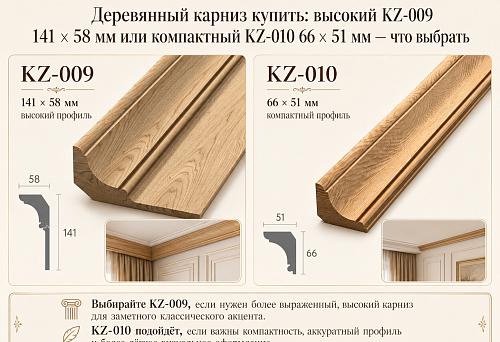
Moldings and cornices— horizontal frame profiles on walls that create decorative panels. In the kitchen, moldings are used in the area above the cabinet (if the wall is open), in the dining area, by the window — anywhere the wall needs visual structuring.
A unified set: floor baseboard + moldings from the same line, same material, same tint. It is this system that turns a kitchen from just a 'renovation' into an interior with a concept.
With slatted panels
Slatted panels made of natural wood— vertical wooden rhythm on walls. In the kitchen, they are used in the dining table area, as an accent wall behind a bar counter, by the window in the dining part.
Wooden baseboard + slatted panels from the same solid wood — a natural system where the lower horizontal and vertical rhythm of the wall are made from the same material. This is not a random set of wooden details — it's a thoughtful solution that creates warmth and structure simultaneously.
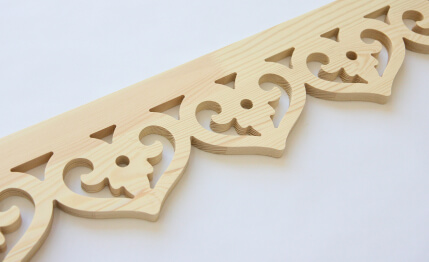
With decorative elements
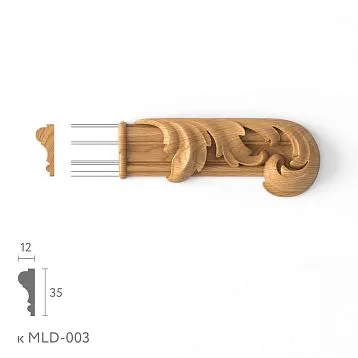
Decor for Molding— corner blocks, rosettes, inserts for molding frames. In a classic kitchen, corner blocks on molding frames complete the wall decor system — and a floor baseboard with a shaped profile fits organically into this architecture.
With door trims and adjacent trim
The kitchen floor skirting board forms a single space with the door architraves. If the kitchen doorway is visible from the living room or hallway, the architrave and skirting board should be coordinated: one material, one shade, one profile level.
Kitchen floor skirting board + door architraves + ceiling cornice from a unified wood program — this is a system. The kitchen no longer looks like a 'separate element' — it is integrated into the apartment's overall architecture.
Where to buy skirting board for the kitchen in Moscow
What to check before purchase
Before placing an order, answer five questions:
-
Is the item in stock or made to order? Kitchen renovations rarely allow for a 3–4 week wait. Made-to-order skirting board carries the risk of batch color mismatch.
-
Is it possible to order a sample? The shade of wood stain on screen and under the natural light in your kitchen can differ significantly. A sample is not an option, it is a standard.
-
What is the standard plank length? Most wood and MDF skirting boards are supplied in lengths of 2.5 or 3 m. For a 12 m² kitchen with a 14 m perimeter, you need to calculate the quantity considering trimming — and the standard length affects the number of joints.
-
Is the line compatible with moldings and architraves? If you are building a system — check if one manufacturer's range includes moldings, architraves, and floor skirting board from the same series.
-
What is the end finish like? The end of an MDF skirting board requires priming or sealing before installation in the kitchen. Check if factory end treatment has been performed.
Delivery in Moscow
Buy skirting board for the kitchen in Moscow with delivery — if in stock, the timeframe is 1–3 business days. Long-length trim is transported in protective film or cardboard packaging: it is important that the planks do not bend or sustain end damage during loading.
Tip: order with a 10–15% surplus for trimming and possible defects. Buying from a new batch risks color mismatch, especially with tinted wood.
Catalog for quick navigation
Common mistakes when choosing a kitchen skirting board
Too 'delicate' material for a wet area
Unsealed MDF near the sink, untreated wood next to the dishwasher, standard polystyrene profile in a kitchen with active cleaning — all these are examples of the 'install and forget' rule, which works for exactly 2–3 years in the kitchen. Then replacement.
If the kitchen is used actively — moisture-resistant material from the start. This saves time and money, not extra expenses.
Too low a profile next to an active kitchen unit
A skirting board 30–40 mm high near the lower cabinets of the unit — it gets lost. The lower part of the unit has its own plinth profile 80–100 mm high. If the floor skirting board along the walls is 2–3 times lower than the unit's plinth profile — two different 'skirting boards' create visual chaos.
Coordinate the height of the floor skirting board and the unit's plinth. Ideally — the same or similar height, one color.
Color error relative to gender and facades
Warm brown laminate + cold gray skirting = visual conflict without intentional design. White matte facades + cream-beige skirting = two 'different whites' side by side.
Skirting shade is selected with a sample in hand. On a monitor screen, via phone photo, and under store lighting, the color is distorted. The only reliable check is the sample in your kitchen under daylight.
Selection only by photo without considering the finish
Selected from a catalog photo. Delivered. Turned out: skirting is warm walnut tint, while floor is cold light gray quartz vinyl. Result — skirting doesn't match anything.
Correct sequence: first the flooring sample, then selecting skirting with that sample in hand.
Lack of connection with door trims and wall decor
Kitchen skirting is bought first — or last, in a hurry. In both cases, door trims and ceiling skirting are often forgotten. Later it turns out that the floor has warm wood, the door has cold white MDF, the ceiling has polystyrene in another shade. Three different whites, three different temperatures — and no sense of system.
Plan decorative moldings systematically: kitchen skirting, door trim, ceiling skirting — from a single line or coordinated collections of one manufacturer.
Frequently asked questions
Which skirting is better to buy for the kitchen: wood, MDF, or polystyrene?
For most kitchens – high-density polystyrene (HI WOOD): moisture-resistant, easy to install, affordable, accepts painting. Wood – for kitchens with wooden floors and classic cabinetry. MDF – for dry kitchens in a white color scheme with mandatory edge sealing.
How to choose the height of a kitchen skirting board?
60–80 mm for a standard kitchen with a 2.7 m ceiling. 80–100 mm if it needs to be aligned with the cabinet's plinth profile. Above 100 mm – for kitchens with ceilings from 3 m or for a striking design solution.
Can MDF skirting board be installed in a kitchen?
Yes, provided that: the lower edge is primed or treated with silicone sealant, the kitchen is equipped with an extractor hood, wet cleaning is done without excess water near the walls. Not recommended near the sink and next to the dishwasher.
How to calculate the amount of skirting board for a kitchen?
Add up the lengths of all walls (the kitchen's perimeter) and add 10–15% for cutting at corners and doorways. For a 3×4 m kitchen, the perimeter is 14 m, with a margin – 15.5–16 m. Standard plank is 2.5 m: 7 planks will be needed.
What to use to paint white polystyrene skirting board?
Acrylic paint in 2 coats. Acrylic primer (1 coat) → first coat of paint → drying → final coat. Do not use oil-based paint: it adheres poorly to polystyrene.
Is it necessary to seal the skirting board in the kitchen?
Yes — the bottom joint between the skirting board and the floor should be sealed with transparent silicone sealant. This is especially important for MDF and wood: the sealant prevents moisture from getting under the profile. For polystyrene — advisable near the sink and dishwasher.
How to install wooden skirting board for the kitchen?
Construction adhesive for wood + finishing nails. On drywall — anchors into the frame profile. Wooden profile held only with adhesive without mechanical fastening is unreliable — due to weight and wood deformation with temperature fluctuations.
Which skirting board to choose for a kitchen with tile flooring?
Polystyrene or wood with moisture-resistant treatment. Height 60–80 mm. Color — to match the tile or to match the walls. Smooth profile — more practical in areas with frequent cleaning.
What to do if the skirting board does not fit tightly against the wall?
Kitchen walls are often uneven — behind cabinets, near pipes. The skirting board is pressed and filled with mounting adhesive from behind. Gaps at the wall are sealed with acrylic sealant. Silicone — only at the floor (it is more elastic, accommodates skirting board movement).
Conclusion
Choosing a skirting board for the kitchen is a task with three variables: material (moisture resistance), height and profile shape (proportions), color (system). Solving it correctly the first time is only possible knowing the specific conditions: floor covering, humidity level, kitchen style.
Final selection scheme:
-
Determine the floor covering → type of tinting and skirting board material
-
Assess humidity → polystyrene or wood with moisture protection
-
Measure ceiling height → profile width
-
Choose style → smooth or shaped profile, color
-
Coordinate with system → moldings, trims, plinth of the set
Go to catalog and make an exact choice:
STAVROS is a Russian manufacturer of interior decor made from natural wood, MDF, and polystyrene. The STAVROS range includes solid oak and beech floor skirting boards, paintable MDF skirting boards, moisture-resistant skirting boards from the HI WOOD line made of high-density polystyrene (58–140 mm), moldings, cornices, paneling, and decor for moldings — a complete system of interior trim for kitchen, living room, bedroom, and country house.
STAVROS works with private customers, interior designers, construction companies, and studios. In-stock availability, delivery within Moscow in 1–3 business days in protective packaging for long-length trim. Free professional consultation on choosing a skirting board for the kitchen for any type of floor, humidity, and style.