Article Contents:
- Types of country houses: different walls — different approaches
- Wooden houses: living material with its own character
- Brick houses: classic reliability
- Gas concrete and aerated concrete houses: modern economy
- Frame houses: lightness and technology
- Climate-specific features: when weather dictates the choice
- Cold regions: fighting frost
- Humid regions: protection against dampness
- Hot regions: resistance to overheating
- Style of a country house: when architecture defines the interior
- Classic mansion
- Rustic house
- Modern minimalism
- Eclecticism and Contemporary
- Finishing materials: from traditions to innovations
- Wood in all its forms
- Paint: simplicity and universality
- Wallpapers: from budget to luxury
- Decorative plaster: texture and character
- Ceramics: practicality and durability
- Stone: natural monumentality
- Polyurethane decor: lightness of classic
- 3D panels and volumetric solutions
- Functional zones in a private house
- Hall and entryway: first impression
- Bedroom: Intimacy and Peace
- Bedrooms: personal space
- Kitchen-dining room: functionality and coziness
- Bathrooms and toilets
- Office and Library
- Children's rooms
- Preparation and installation in a private house
- Features of preparation
- Working with high ceilings
- Seasonality of Work
- Budgeting: How Much Does Home Finishing Cost?
- Economical option
- Mid-range segment
- Premium
- Frequently Asked Questions About Private Home Finishing
- When to Start Finishing a New Home?
- Can All Rooms Be Finished the Same Way?
- Is Vapor Barrier Needed Under Interior Finishing?
- What Materials Are Best for a Home with Periodic Heating?
- Is It Worth Saving on Finishing?
- How to Combine Finishing with Heating System?
- Is a Design Project Needed for Home Finishing?
- STAVROS: Comprehensive Solutions for Country Houses

A private home is a completely different reality compared to an urban apartment. Here, there is more space for imagination, fewer restrictions on load, but simultaneously specific challenges arise, unknown to residents of high-rise buildings.Wall finishing in a houseIt requires consideration of factors that simply do not exist in an apartment: seasonal temperature fluctuations, differences between frame, brick, and wooden structures, characteristics of settlement, the need for harmony between interior finishing and facade architecture.
In a country house, you are not limited by standard solutions. High ceilings allow using large-scale moldings, spacious rooms enable experimenting with volumetric panels and boiserie, and the absence of neighbors below eliminates the need to economize on material weight. But freedom requires responsibility: incorrectly selectedwall cladding of the housemay lead to freezing, condensation formation, and deformation of decor. Every solution must take into account the structural features of your house, regional climatic conditions, and occupancy regime — permanent or seasonal.


Types of Country Houses: Different Walls — Different Approaches
Before discussing finishing materials, it is necessary to understand what type of structure we are working with. Everything depends on this: from foundation preparation to selection of finish materials.




Wooden Houses: Living Material with Its Own Character
A house made of logs, beams, or frame construction with wooden cladding — a special case. Wood 'breathes', changes volume depending on humidity, and settles in the first few years.Materials for finishing wooden wallsmust take into account this mobility.
A freshly built log house actively settles in the first 1-2 years. During this period, it is better not to apply rigid finish materials — plaster will crack, tiles will fall off, moldings will deform. The optimal strategy is temporary finishing with subsequent replacement or using flexible materials and special sliding fasteners.
After settlement, wooden walls are often left in their natural state, highlighting the beauty of the wood texture.Material for walls of a wooden houseThe finishing may be minimal: sanding, toning, or oiling with oils, waxes, or varnishes. This preserves the natural aesthetics and allows the wood to perform its function in regulating the microclimate.
If planning to cover the wood with finishing, it requires treatment with antiseptics and fire retardants — protection against mold, insects, and fire. Then, a lathing is installed (it compensates for the irregularities of the log and creates a ventilation gap), to which gypsum board, panels, or battens are attached.
Our factory also produces:

Brick Houses: Classic Reliability
Brick masonry — a strong, long-lasting foundation. However, the inner surface of brick walls is rarely perfectly flat. It requires leveling with plaster or installing gypsum board.
Brick retains heat well, but requires quality vapor barrier in cold regions.Wall finishing in a private houseFinishing from brick can be any: from simple painting to luxurious boiserie. The main thing — proper preparation of the base.
The advantage of brick walls — high load-bearing capacity. Heavy decorative elements can be mounted without concern. Large wooden panels, gypsum moldings, marble cladding — all this is feasible on a brick foundation.
Get Consultation
Gas concrete and foam concrete houses: modern economy
Block construction is popular due to the speed of erection and good thermal insulation properties. However, the porous structure of gas concrete requires mandatory finishing — the material is hygroscopic and absorbs moisture.
Walls made of blocks require plastering with vapor-permeable compounds or cladding on a frame with a ventilated gap.Materials for a country houseare selected taking into account the need to ensure the exit of water vapor to the outside. Film materials, vinyl wallpaper, dense non-ventilated panels may cause condensation buildup inside the wall.
Frame houses: lightness and technology
A frame house is a wooden frame clad with sheet material (OSB, plywood, gypsum board) with insulation inside. Walls are initially flat and do not require serious preparation.Cottage finishingof frame type can begin immediately with finishing materials.
An important point — the weight of the finishing. Frame walls are less strong than brick or concrete walls. Heavy marble cladding or solid oak wainscoting may require structural reinforcement. However, lightweight materials — polyurethane decor, MDF panels, rails, wallpaper, paint — are ideal.
Climate-specific features: when weather dictates the choice
In a private house, climate affects finishing more than in an apartment with central heating and stable temperature.
Cold regions: fighting frost
In houses located in areas with harsh winters, the dew point is critical. If insulation is improperly done, condensation may form on the inner surface of walls, damaging the finish and promoting mold growth.
Wooden wall claddingIn cold houses, a ventilated gap between the wall and panels is required. Solid cladding without a gap may lead to moisture accumulation and wood rot. A framing with a 2-3 cm gap ensures air circulation.
Materials with low vapor permeability (vinyl, plastic) are better not to use or to use with good ventilation in cold houses. Prefer natural 'breathable' materials: wood, paper wallpaper, mineral plaster.
Humid regions: protection against dampness
In areas with high humidity (coastal regions, forested areas), material resistance to mold and mildew is critical. Antiseptic treatment and use of moisture-resistant materials are mandatory.
Polyurethane wall claddingis optimal for humid conditions. Polyurethane does not fear water, is not affected by mold, and does not deform from humidity.Sculptural decorationsmade from this material will last decades even in a humid climate.
Wooden elements require multiple treatments with moisture-protective compounds. Lacquers and oils with fungicides are used. Good room ventilation is necessary.
Hot regions: resistance to overheating
In southern regions, walls are exposed to significant temperature fluctuations: heat during the day, coolness at night. Materials must be thermally stable, not crack, and not emit harmful substances when heated.
Ceramic tiles, stone, quality paint, polyurethane — are thermally stable. Cheap plastic, low-grade vinyl may deform and emit odors when overheated.
Style of a country house: when architecture determines the interior
In a private house, interior finishing often continues the concept of the facade and overall building architecture.
Classic mansion
A house with columns on the facade, symmetrical windows, high ceilings requires a corresponding interior.Internal decorative wall claddingClassic mansions — are the realm of moldings, cornices, pilasters, wainscoting, and stucco.
Wall finishing with moldingscreates framed compositions, structures space, emphasizes ceiling height. Walls are divided into panels, within which are expensive wallpaper, silk, hand-painted murals.
Plaster ornament for walls and ceilingsIn the form of plant ornaments, rosettes, and cartouches, it adds luxury and historicism. Modern polyurethane analogs are visually indistinguishable from plaster, but significantly lighter and more practical.
Boiserie — wall panels made of solid wood or MDF with routed patterns — transform a hallway, library, or office into a space worthy of an aristocratic residence.Internal wall finishingBoiserie requires high ceilings and spacious rooms — in small rooms, the panels 'press down'.
Rustic House
A chalet, country, or Provence-style home leans toward natural materials and deliberate simplicity.Wooden wall claddingHere, in the foreground: beams, planks, imitation logs, roughly processed boards.
Wood can be brushed (texture emphasized), stained in natural tones, artificially aged. The effect of 'a house with history' is created through special treatment.Internal wooden wall finishesIn rustic style, wood is often combined with stone — part of the wall is wooden, part (fireplace area, accent wall) is stone.
Decorative plaster with rough texture, imitation of unprocessed stone, exposed beams on the ceiling — all of this creates an atmosphere of authentic countryside charm.
Modern minimalism
A house with a flat roof, panoramic windows, and minimalist forms requires a corresponding interior. Minimalist finishes — smooth painted walls, microcement, large-format ceramic tiles, glass panels.
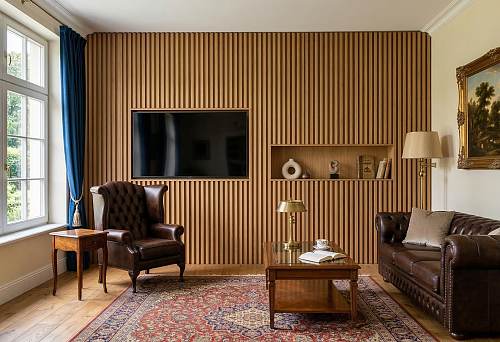
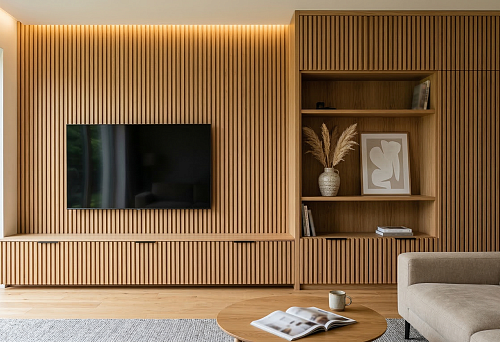
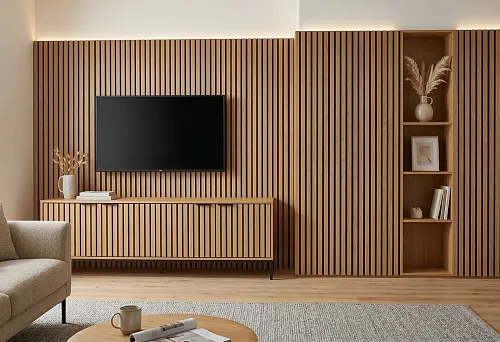
Plank wall claddingPerfectly fits minimalist aesthetics. Thin wooden or metal laths, arranged with precise spacing, create a graphic pattern.wall finishing with lathsCan be vertical (visually raises the ceiling) or horizontal (expands the space).
Emphasis on material texture with minimal decoration. Concrete remains concrete, wood remains wood, without attempts at imitation. Color palette is restrained: white, gray, black, natural wood tones.
Eclecticism and Contemporary
Many modern homes do not fit into strict stylistic frameworks, combining elements from different directions.Wall cladding optionsHere, there are no limits: classical moldings coexist with industrial metal, rustic wood with urban concrete.
The main thing in eclecticism is a sense of proportion and a unifying concept. You cannot simply mix everything indiscriminately. An idea is needed to harmoniously unite disparate elements into a cohesive whole.
Finishing materials: from traditions to innovations
Wood in all its forms
Wooden finishing materialsUsed significantly more widely in private homes than in apartments.
Plank — classic wooden finish. Modern plank has moved far from Soviet standards: profiles 'shytle', 'softline', 'American' provide different visual effects. Plank can be painted, stained, lacquered, or left in its natural state.
Imitation of beams and log cabin — panels imitating beam or log walls. Create an authentic look of a wooden house regardless of the actual construction type. Mounted on a framework, hide irregularities, allow for insulation integration.
Planken — boards with beveled or rounded edges. Mounted with gaps, creating a striking shadow line.Racks for internal wall claddingPlanken — a trend of recent years.
Boiserie — elite panels with routed patterns, filigree, carving. Made from premium woods: oak, ash, walnut. Mounted using a frame method, creating complex compositions.
Wall-mounted parquet — an unexpected approach. Individual parquet or parquet boards, traditionally used for floors, mounted on walls, creating a unique texture and pattern.
Paint: simplicity and universality
In private homes, wall painting is just as relevant as in apartments. But the scale is larger, and requirements for durability are higher.
For homes intended for permanent residence, water-based interior paints are suitable: latex, acrylic, silicone. For cottages with seasonal heating, more durable compositions are needed, capable of withstanding temperature fluctuations.
Wall cladding for paintingRequires perfectly prepared surfaces. In homes with complex wall geometry, this may be labor-intensive. An alternative — textured paint, which conceals minor defects.
Decorative painting techniques — ombre, geometric patterns, accent stripes — allow creating a unique interior without additional materials.
Wallpapers: from budget to luxury
The assortment of wallpapers for private homes does not differ from that for apartments, but the scale of application is often greater. High walls require more material, while spacious areas allow using large patterns.
Wall-to-wall photo wallpapers — a technique often impossible in apartments due to doors and windows. In spacious home living rooms, you can realize panoramic images — forests, mountains, seas, cityscapes.
Textile wallpapers — an expensive material — are more commonly used in country mansions than in apartments. Silk, linen, velour wallpapers create a luxurious atmosphere in bedrooms and living rooms.
Decorative plaster: texture and character
decorative wall finishingPlaster compositions are widely used in private homes due to their durability and aesthetic appeal.
Venetian plaster imitates polished marble. Multi-layer application creates depth and inner glow. Suitable for halls, living rooms, dining rooms in classical interiors.
Textured plasters such as 'wormwood', 'fur', 'travertine' create a three-dimensional surface. Practical, durable, and conceal unevenness of the base. Works well in entryways, corridors, utility rooms.
Microcement — a market novelty. Creates a monolithic concrete surface only 2-3 mm thick. Completely moisture-resistant, suitable for bathrooms, kitchens, and humid areas. Ideal for lofts and industrial interiors.
Tadelakt — a Moroccan plaster based on lime. Creates a smooth, water-repellent surface with a soft sheen. Traditionally used in hammams, today it is used in luxury bathrooms and spa zones of private homes.
Ceramics: practicality and durability
Ceramic tiles and ceramic granite are used in private homes not only in wet areas.
In homes with underfloor heating and central heating, tiles can be used to clad walls of living rooms — they conduct heat well, creating a comfortable microclimate. Large-format ceramic granite in marble, onyx, or wood finishes creates luxurious interiors.
Mosaic is used to create artistic panels, decorative inserts, and to clad curved surfaces. In homes with pools, hammams, and wine cellars, mosaic is indispensable.
Clay brick-style tiles create an authentic industrial or loft interior. Can be used to clad entire walls or parts of them — kitchen backsplash, wall behind the fireplace, accent surface in the living room.
Stone: natural monumentality
Natural stone — expensive, heavy, but incredibly effective material. Marble, granite, travertine, onyx, slate — each has a unique texture and character.
Stone is used to clad fireplace zones, accent walls, halls, staircases.Plaster wall finishingIt is inferior to stone in durability, but lighter and cheaper.
Artificial stone — an affordable alternative to natural stone. Modern technologies allow creating convincing imitations of brickwork, wild stone, slate. Easier and simpler to install, but visually effective.
Polyurethane decor: light classicism
Polyurethane wall claddingEspecially relevant in private homes with high ceilings and spacious rooms.
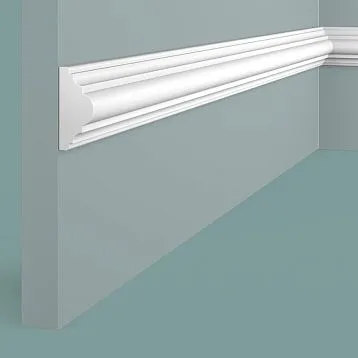
Moldings of various widths and profiles allow creating framed compositions of any complexity.Wall finishing with moldingsThey structure space, adding architectural character.
Pilasters, half-columns, and capitals transform an ordinary wall into a classical portal. In spacious halls, living rooms, and dining rooms, these elements create a sense of grandeur.
Decorative appliqués with floral, geometric, and animal motifs add detail and richness.Sculptural wall decorationMade of polyurethane, mounted with adhesive, painted, and lasts for decades.
The advantage of polyurethane over plaster is critical in wooden and frame houses: the lightweight material does not create excessive load on the structure.
3D panels and volumetric solutions
3D Wall FinishingPanels — a way to create a memorable interior. In spacious rooms of a private home, volumetric panels are especially effective.
Gypsum 3D panels create deep relief and play of light and shadow. Require a quality base and professional installation. Heavy, but visually luxurious.
MDF panels with routed relief are lighter, cheaper, and easier to install.Relief wall finishingMDF panels primed for painting allow changing color without dismantling.
Polyurethane 3D panels are moisture-resistant, lightweight, and durable. Suitable even for bathrooms and kitchens.
Decorative wall paneling— a volumetric finish option that does not require solid panels. Rails with variable spacing create rhythm, dynamism, and visually transform the space.
Functional zones of a private home
Hall and entryway: first impression
The entrance zone of a private home is often more spacious than an apartment's. Here, ambitious ideas can be realized.Decorative corridor wall finishingSets the tone for the entire house.
Hall options:
-
Stone (natural or artificial) on parts of walls — practical and respectable
-
Boiserie in classic interiors — creates a sense of status
-
Rails with built-in lighting in modern homes — dramatic and functional
-
Venetian plaster — elegant and long-lasting
Practicality remains important: in the entryway, walls get dirty. Materials must be easy to clean.
Living room: the heart of the home
The living room in a private home is often combined with the dining area, has access to a terrace, and includes a fireplace zone.Wall finishing photos in apartmentsDo not convey the scale of country living rooms.
Accent zones:
-
Wall behind the fireplace — stone, decorative brick, relief plaster
-
TV zone — wooden rails, 3D panels, contrasting colored surface
-
Dining zone — patterned wallpaper, molding frames
Wall Wood FinishingIn the living room, it creates an intimate atmosphere, making the space visually and physically warmer (wood is a good insulator).
Bedrooms: personal space
Bedrooms in a house can be themed: seaside, forest, classic.Wall room finishingShould promote relaxation for sleeping.
Prioritize eco-friendly materials: wood, paper wallpaper, water-based paints. Textile panels at the headboard add softness and sound absorption.
In homes with good sound insulation between rooms, bolder solutions can be used — dark walls, active patterns, non-standard textures.
Kitchen-dining area: functionality and coziness
The kitchen in a private home is often spacious, with an island, and access to the garden.Wall finishing and decorationHere, practicality and aesthetics are combined.
Work area:
-
Ceramic tile or ceramic granite
-
Tempered glass (skinny)
-
Natural or artificial stone
-
Metal (stainless steel, brass) in industrial interiors
Dining area can be finished with wood, wallpaper, or painted. Often, zoning is achieved using different materials: kitchen — tile, dining — wallpaper.
Bathrooms and toilets
In private homes, bathrooms can be huge — with a hydromassage bathtub, shower cabin, sauna.wall cladding of the houseIn wet zones, requires maximum moisture resistance.
Large-format ceramic granite resembling marble creates a luxurious atmosphere. Mosaic for decorative panels and accents. Microcement for creating a seamless surface without joints.
polyurethane decorCan even be used in the bathroom: moldings, cornices, trim pieces add elegance to utilitarian spaces.
Office and library
Personal office in the house — a place for concentration and work.Wall Finishing ElementsHere, materials should support a work-oriented atmosphere.
Dark wood bookcases, wall-to-wall bookshelves, leather panels — classic office interior elements. Sound-absorbing panels ensure quiet. Muted tones create an atmosphere of focus.
Children's rooms
In a private home, a child's room may include a play area, bedroom, and study space.Wall finishing samplesMust be safe and adaptable.
Paintable wallpaper allows changing colors as the child grows. Cork panels in the play area provide sound insulation and softness. Chalk paint on one wall — a legal space for creativity.
Materials must be strictly eco-friendly: paper wallpaper, water-based paints, solid wood without toxic stains.
Preparation and installation in a private home
Preparation specifics
Wall preparation in a private home may differ from apartment preparation.
In wooden houses, after settling, gaps between logs or beams require caulking. Then, treatment with antiseptics and fire retardants. If covering wood with finish, install a lathing with ventilation gap.
In brick and block houses — plastering over guides or installing drywall. In new homes, it is advisable to wait for full settling (6–12 months) before final finishing.
Frame houses often have ready-made smooth walls from drywall. Requires joint spackling and priming — then proceed to final finishing.
Working with high ceilings
Ceilings 3–4 meters — common in private homes. This complicates work and requires scaffolding or tall ladders.DIY decorative wall finishingWork at high heights is risky — better to hire professionals.
High walls allow using large-scale decor: large moldings, tall burled wood panels, panoramic wallpapers. But require more material and time for installation.
Seasonality of work
For houses with seasonal occupancy, it is better to plan repairs during the warm season. Many materials (paints, adhesives, plaster) require positive temperatures for proper curing.
In unheated houses during winter, water-containing materials cannot be used — they will freeze and break. If winter repair is unavoidable, temporary heating is required.
Budgeting: How much does house finishing cost?
A private house is usually larger than an apartment, therefore, the budget for finishing is higher.
Economy option
Most affordable materials and DIY work:
-
Paint or simple wallpaper: 800-1500 rubles/m²
-
Economy-grade plywood: 1000-1500 rubles/m²
-
Plastic panels: 500-800 rubles/m²
For a 100 m² house (250-300 m² of walls): 200,000–450,000 rubles.
Mid-Range Segment
Quality materials, partial use of professionals:
-
Good wallpaper or paint: 2000–4000 rubles/m²
-
Quality plywood or imitation beam: 2000–3500 rubles/m²
-
Decorative plaster: 2500–5000 rubles/m²
-
Polyurethane decor: 1500–3000 rubles/m²
For a 100 m² house: 500,000–1,200,000 rubles.
Premium
Luxury materials, designer solutions, professional crews:
-
Solid wood boiserie: 15,000–40,000 rubles/m²
-
Venetian plaster: 5000–15000 rubles/m²
-
Natural stone: 8000–25000 rubles/m²
-
Textile wallpaper: 4000–12000 rubles/m²
For a 100 m² house: from 2 million rubles.
Frequently asked questions about finishing a private house
When to start finishing a new house?
Wooden house — after 12–18 months (settlement). Brick/block — after 6–12 months. Frame — immediately, but preferably wait one heating season.
Can all rooms be finished identically?
Yes, but it will be boring. Variety of materials and styles in different rooms makes the house more interesting. However, there should be a unifying concept — color palette, recurring elements, overall style.
Is vapor barrier needed under interior finishing?
In wooden and frame houses — often yes, especially if there is external insulation. In brick and block houses — usually no, breathable materials are sufficient. Consultation with a heating engineer is mandatory.
Avoid materials that degrade under temperature fluctuations: cheap vinyl, some types of decorative plaster. Prefer wood, quality paint, and polyurethane.
Savings on finishing are acceptable: MDF instead of solid wood, polyurethane instead of plaster, good paint instead of expensive wallpaper. But cutting corners on base preparation, material quality, or contractor skill will result in redoing work.
Should you save money on finishing?
Reasonable savings are acceptable: MDF instead of solid wood, polyurethane instead of plaster, good paint instead of expensive wallpaper. But saving on base preparation, material quality, or contractor skill will result in redoing work.
How to combine finishing with the heating system?
Underfloor heating is compatible with any wall finish. Radiators are better placed under windows — do not cover them with decorative panels without ventilation holes. In-floor convector units do not affect wall finishes.
Is a design plan needed for finishing the house?
For a small house with simple finishing, a plan is not necessary. For a large house (200+ m²) with varied finishing, a plan is highly recommended — it will organize the process, help calculate materials, and avoid mistakes.
STAVROS: comprehensive solutions for country houses
Finishing a private house is a large-scale project requiring a reliable partner for materials. STAVROS is a company that understands the specifics of country house construction and offers solutions tailored to the realities of private homes.
STAVROS assortment covers everything needed forcottage finishing: fromsculptural ornamentsand moldings to wooden planks and boiserie, from classic decor elements to modern plank systems. Products are selected with consideration that private homes often require materials of larger scale than apartments.
STAVROS’s expertise in architectural decor allows company consultants to assist with selecting solutions for homes of any type — wooden, brick, frame, or block. They will take into account structural specifics, recommend materials compatible with your home type, and help calculate quantities considering the complex geometry of country houses.
STAVROS offersMaterials for a country housein a wide price range — from a reasonable economy segment to premium options. This allows implementing projects of any budget without compromising on quality.
The company’s service includes not only material sales but also comprehensive support: consultations during the planning stage, assistance with calculations considering high ceilings and complex volumes, delivery to the Moscow region and other areas, and recommendations for proven installation crews.
For owners of country houses planning to create a unique interior, STAVROS is a guarantee of European-level material quality, professional support at every stage, and long-lasting results. The company knows thatWall finishing in a house— is an investment for decades, and offers solutions that will meet these expectations.