Article Contents:
- Aesthetic Revolution: How Planks Change the Perception of Space
- Psychology of Linear Compositions
- Play of Light and Shadow as the Basis of Composition
- Technical Side of the Process: Preparation and Planning
- Analysis of Existing Surfaces
- Material Calculation and Layout Design
- Creating a technical specification
- Tools and Materials: Professional's Arsenal
- Specialized Tools for Working with MDF
- Measuring Instruments and Marking Tools
- Fastening Systems and Consumables
- Step-by-step installation technology
- Marking and Installing Guides
- Preparation and Cutting of Planks
- Technology of Installing the First Plank
- Installation of the Main Plank Array
- Processing Complex Areas
- Design solutions: from concept to implementation
- Monochromatic Compositions
- Contrasting combinations
- Combined Solutions
- Problems and Their Solutions: Experience of Masters
- Deformations and Their Prevention
- Acoustic Problems
- Fastening Problems
- Care and Longevity: Investments in the Future
- Regular Maintenance of Surfaces
- Local repair and restoration
- Modernization and Upgrades
- Economic Aspects: Cost Calculation and Optimization
- Cost Structure for Finishing
- Pricing factors
- Cost and Benefit Analysis
- Conclusion
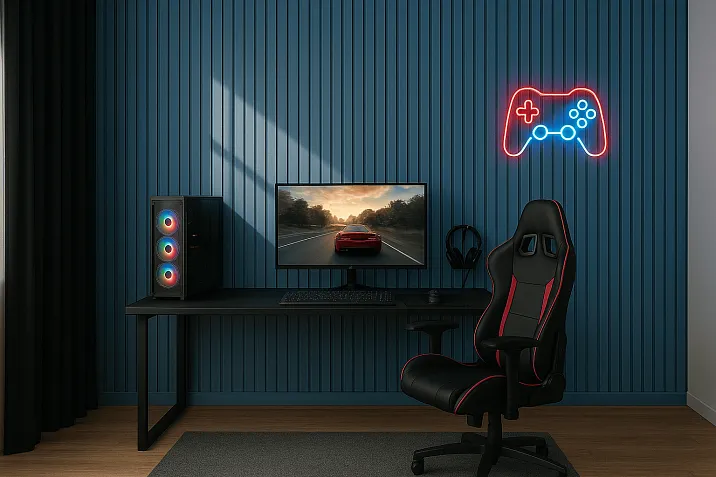
When standard painting or wallpaper no longer inspires, and the soul demands something more than plain tiles, it's time for radical solutions. MDF plank wall finish It has transformed from an exotic designer whim into a mainstream element of modern interiors, and there are solid reasons for this. This type of finishing doesn't merely change the appearance of a room—it radically transforms the very philosophy of space, creating volume where there was only flatness, adding character where there was blandness.
But what lies behind this popularity? Why exactly plank wall cladding has become the choice of thousands of homeowners, architects, and designers? The answer lies in the unique combination of practicality and aesthetics, accessibility and prestige, tradition and innovation, embodied by modern MDF plank wall finishing technology.


Aesthetic Revolution: How Planks Change the Perception of Space




Psychology of Linear Compositions
Human perception is structured in such a way that linear elements exert a powerful influence on the sense of space. Vertical MDF interior planks Visually raise the ceiling, creating a sense of grandeur and majesty. Horizontal installation expands the room, making narrow rooms more proportionate and cozy.
The spacing between the slats plays an equally important role in creating the atmosphere. A frequent rhythm with gaps of 10-15 mm creates the impression of a monolithic textured surface, resembling expensive wall panels. Wide gaps of 30-50 mm emphasize the individuality of each element, creating a structural, almost industrial aesthetic.
Diagonal installation adds dynamism to a static space. An angle of 30-45° is considered optimal for creating a sense of movement without feeling chaotic. This solution is especially effective in long corridors and narrow rooms.
Our factory also produces:


Play of light and shadow as the basis of composition
Slatted cladding transforms an ordinary wall into a sculptural object, living its own life depending on lighting. Morning light creates one shadow pattern, evening light – a completely different one. Artificial lighting from different angles reveals new facets of the composition.
The depth of the shadow line depends on the slat thickness and the angle of light incidence. With a standard thickness of 16-20 mm and side lighting, the shadow is 8-15 mm, creating an expressive relief without excessive drama. Backlighting forms softer transitions, suitable for calm, relaxing interiors.
Integrated lighting turns the slatted wall into an independent source of architectural lighting. LED strips placed in the gaps between slats create a floating surface effect, especially impressive at night.
Get Consultation
Technical side of the process: preparation and planning
Analysis of existing surfaces
Successful wall cladding with slats begins with a careful analysis of existing structures. Brick walls require checking for verticality and horizontality – deviations exceeding 10 mm per linear meter require leveling. Concrete surfaces are inspected for cracks, delamination, and efflorescence.
Wooden walls require moisture testing with an electronic moisture meter. A reading above 12% requires additional drying or treatment with antiseptic compounds. Old wooden structures are inspected for fungal or insect damage.
Gypsum board bases are checked for strength of attachment to the frame. Sagging sections require additional reinforcement or complete replacement of sheets. Joints between sheets must be properly spackled and sanded.
Calculation of materials and layout design
Accurate calculation of material requirements begins with creating a detailed layout plan. Not only the total wall area is considered, but also the placement of windows, doors, switches, and outlets. Each obstacle affects the layout scheme and the amount of waste.
MDF planks Standard length of 2700 mm allows covering most rooms with minimal joints. With ceiling heights of 2500-2600 mm, there remains allowance for trimming and leveling. In rooms with high ceilings, horizontal joints with decorative overlays are provided.
The reserve coefficient varies from 5% for simple rectangular rooms to 15% for complex geometries with many angles and openings. With diagonal installation, the reserve increases to 20-25% due to significant trimming.
Creation of technical specifications
Detailed technical specifications include layout schematics, material specifications, and technical requirements. The type of base, method of fastening, requirements for gaps, and specifics of corner and junction treatments are indicated.
Special attention is given to the locations of engineering utilities. Electrical cables, heating pipes, and ventilation ducts must be marked on the plan to the centimeter. This prevents damage during installation and ensures access for maintenance.
Requirements for room microclimate are also specified in the technical specifications. Temperature regime, humidity, and ventilation influence the selection of MDF grade and fastening technology.
Tools and materials: professional arsenal
Specialized tools for working with MDF
Quality wall finishing is impossible without professional tools. A circular saw with a 250-300 mm diameter blade ensures a clean cut without chipping. The number of teeth must be at least 60 for thin slats and 80 for thick profiles.
An electric jigsaw with fine-toothed wood blades is necessary for cutting around outlets, switches, and pipes. The pendulum action is disabled to prevent chipping on the front surface. The feed speed is set to minimum to ensure a clean cut.
A drill with torque adjustment prevents damage MDF material when driving in screws. A magnetic bit holder simplifies work in hard-to-reach areas. An additional battery ensures continuous operation.
Measuring instruments and marking tools
A laser level with 2 mm/10 m accuracy is critically important for creating an ideal geometry for slatted cladding. Cross beams allow simultaneous control of horizontal and vertical lines. A rotating prism extends the working zone to 360°.
A 5-8 meter tape measure with a 25-32 mm wide metal tape ensures precise measurements without sagging. A dual-scale simplifies reading dimensions. A magnetic hook securely attaches to metal surfaces.
A 400-500 mm wide carpenter's square with a shelf is necessary for marking perpendicular cuts. Aluminum squares are lighter than steel and leave no marks on light surfaces. A degree scale allows marking angles other than 90°.
Fastening systems and consumables
The choice of fasteners depends on the type of base and mounting method. For brick and concrete walls, use 6×40 mm anchors with 4×40 mm self-tapping screws. The spread zone of the anchor must be fully embedded in the base material.
Wooden bases require the use of 3.5×45 mm wood screws with concealed heads. Pre-drilling holes with a 2.5 mm diameter prevents cracking of MDF. Screw depth is controlled by a depth stop on the drill.
Hidden fastening clip systems provide an ideal finish for the surface. Clips are made of galvanized steel with a thickness of 0.8–1.2 mm. The teeth must securely embed into the end of the rail without damaging the material structure.
Step-by-step installation technology
Marking and installation of guide rails
Installation begins with marking the wall. Base lines are snapped using a chalk line and checked with a laser level. The distance between guide rails is chosen based on rail length and expected load—typically 600–800 mm.
Guide rails are mounted strictly according to the marking, with control of horizontal and vertical alignment. Each rail is checked with a level at multiple points. Deviations are compensated using adjustable shims or tightening fasteners.
Room corners require special attention during guide rail installation. Internal corners are finished with overlapping rails, while external corners are mitered at 45°. Corner quality determines the overall impression of the finish.
Preparation and cutting of rails
Decorative MDF rails Before installation, elements must acclimate in room conditions for 48–72 hours to prevent deformation after mounting. Elements are laid horizontally on a flat surface with spacers every 500–600 mm.
Cutting is performed according to the cutting plan developed during the design phase. Each element is measured twice before cutting. Ends are sanded with fine-grit sandpaper to remove burrs and chips.
Element numbering simplifies installation and prevents errors. Numbers are marked with a pencil on the reverse side of the rail, in the area hidden by fasteners. The numbering scheme must be logical and understandable to all participants in the process.
Technology for installing the first rail
The first rail determines the geometry of the entire structure, so its installation requires maximum precision. The element is installed strictly according to the marking with repeated position checks. Deviations at this stage will accumulate across the entire finish area.
The gap from the floor to the bottom edge of the first rail must match the design. Typically, it is 5–10 mm to compensate for floor irregularities and possible deformations. The gap is covered with baseboard after completing the main work.
The gap from the floor to the bottom edge of the first rail should correspond to the project. Usually, it is 5-10 mm to compensate for floor irregularities and possible deformations. The gap is covered with baseboard after completion of main works.
Installation of the main rail array
Subsequent rails are installed while maintaining the design spacing. Distance is controlled using a template or measuring tool. Accumulation of errors is not allowed—each element must be precisely in place.
Intermediate geometric checks are performed every 10–15 rails. A laser level helps identify deviations early, when they are easy to correct. Serious geometric deviations require partial disassembly and reinstallation of elements.
Electrical cables and other utilities are installed during the mounting process. Traces are laid in corrugated pipes with outlets at designated points. Cable length reserve must ensure convenient connection of outlets and switches.
Processing complex areas
Locations of outlets and switches require precise marking and careful cutting. Hole sizes must allow for easy installation of the outlet box with a small clearance for adjustment. Hole edges are sanded with fine-grit sandpaper.
Room corners are finished with special corner elements or by mitering main rails at 45°. Quality of corner joints determines the professionalism of the work. Gaps in corners are not permitted.
Top edges of rails must form a strictly horizontal line. If the ceiling is uneven, rails are mitered at the location while maintaining parallelism with the ceiling surface. Unevenness up to 5 mm is concealed by ceiling baseboard.
Design solutions: from concept to implementation
Monochromatic compositions
Wall finishing in a single color palette creates a calm, harmonious atmosphere. White MDF laths for interior visually expands space and serves as an ideal backdrop for furniture and decor. Gray tones add elegance and highlight architectural features of the room.
Different shades of one color create subtle gradient transitions. Darker tones at the lower part of the wall transition to lighter tones at the top, creating a natural lighting effect. This solution is especially effective in rooms with high ceilings.
Textural variations while maintaining color unity add interest to monochromatic compositions. Alternating matte and semi-gloss surfaces create delicate reflections without disrupting overall harmony.
Contrasting Combinations
The contrast of light and dark elements creates dramatic effects suitable for modern interiors. Alternating white and black strips in a 1:1 ratio form a graphic composition reminiscent of the art deco style.
Asymmetric rhythms with varying ratios of contrasting elements create more complex, musical compositions. The sequence 2:1:3:1 forms a dynamic pattern, avoiding the monotony of a strict rhythm.
Color accents on a neutral background allow creating focal points in the interior. One or two bright strips among many neutral ones attract attention and form a compositional center.
Combined solutions
Combining vertical and horizontal layouts within a single room creates complex geometric compositions. Zoning is achieved by changing the direction of the strips — vertical strips in the resting zone emphasize height, while horizontal strips in the working zone create a sense of stability.
Variable spacing between strips adds dynamism to a static composition. Gradual reduction of distances from 50 mm to 10 mm creates a sense of perspective and movement. This solution is especially effective in long corridors.
Multi-level compositions with strips of varying thickness form a complex surface relief. The main array of thin strips is supplemented by individual elements of larger cross-section, creating accent lines.
Problems and their solutions: experience of masters
Deformations and their prevention
Temperature and humidity deformations are the most common problem when finishing walls with strips. The linear expansion coefficient of MDF is 8-15×10⁻⁶ 1/°C, which at a length of 2700 mm and a temperature difference of 25°C results in a size change of 0.54-1.01 mm.
Compensatory gaps are provided at locations of rigid attachment to immovable structures. The gap size is calculated based on maximum possible deformations with a safety factor of 1.5. Gaps are filled with elastic sealant.
Humidity deformations are more significant and can reach 0.2-0.4% of linear dimensions when relative humidity changes by 10%. Stabilizing the material's humidity at the factory minimizes these deformations, but does not eliminate them entirely.
Acoustic problems
Empty spaces behind strip cladding can create undesirable acoustic effects — echo, resonance, sound amplification. Filling the inter-strip space with sound-absorbing material resolves most of these issues.
Mineral wool 50-100 mm thick provides a sound absorption coefficient of 0.6-0.9 in the speech frequency range. The material must be non-combustible and not emit harmful substances when heated.
Air cavities of certain sizes may resonate with low-frequency sounds, amplifying bass and causing discomfort. Calculating resonant frequencies allows avoiding overlap with speech and music frequencies.
Mounting problems
Weakening of fasteners during operation may lead to squeaks, creaks, visible deformations of the cladding. Regular inspection of fasteners and timely tightening prevent the development of problems.
Corrosion of metal fasteners in high-humidity conditions requires the use of galvanized or stainless steel fasteners. Additional treatment with anti-corrosion compounds extends service life.
Uneven load on fasteners due to thermal deformations may lead to failure of individual fastener points. Distributing load among several fasteners reduces risks.
Maintenance and longevity: investments in the future
Regular surface maintenance
Quality strip cladding retains its original appearance for 15-20 years with proper care. Regular cleaning with a soft dry cloth removes dust and surface dirt. The direction of movement should match the direction of the strips to prevent scratches.
Wet cleaning is performed with a slightly damp microfiber cloth without using aggressive cleaning agents. Special care products for MDF contain anti-static additives that slow down dust accumulation.
Periodic treatment with protective compounds extends the lifespan of the cladding. Wax polishes create a protective film that repels moisture and dirt. The frequency of treatment depends on the intensity of room usage.
Local repair and restoration
The modular construction of strip cladding allows replacing damaged elements without dismantling the entire system. A damaged strip is carefully removed from the fasteners and replaced with a new one of the same size and color.
Minor scratches and chips are removed by sanding with fine-grit sandpaper followed by application of repair compound. Deep damage requires partial replacement of the element or professional restoration.
Color change under ultraviolet exposure occurs unevenly, which may cause discoloration of the surface. Protective coatings with UV filters prevent fading and maintain color uniformity.
Modernization and updating
Changing design preferences does not require complete removal of strip cladding. Painting in new colors allows for a radical change in appearance at minimal cost. High-quality paints for MDF ensure long-lasting new finish.
Adding decorative elements—molding, overlays, lighting—gives the finish a new sound. Modern technologies allow integrating smart home elements without compromising the structural integrity.
Partial replacement of individual decorative sections allows creating accent zones or updating the most worn areas. Compatibility between new and old elements is ensured by precise adherence to dimensions and colors.
Economic aspects: calculation and optimization of costs
Cost structure for finishing
Material costs account for 40-60% of total costs for wall paneling. The price of quality MDF ranges from 300 to 800 rubles per linear meter, depending on dimensions, surface type, and manufacturer.
Installation work costs 50-80% of material costs when using professional crews. Complexity of geometry, ceiling height, and need for integrating engineering systems affect labor costs.
Additional expenses include surface preparation, material delivery, and waste removal. These costs account for 10-20% of the total project cost and are often underestimated during budget planning.
Pricing factors
The size of the panels significantly affects the cost per square meter. Wider panels are more expensive per linear meter, but cheaper per square meter of finished surface due to fewer elements required.
Surface type determines the material’s price category. Laminate surfaces with wood imitation cost 20-40% more than painted ones. Premium veneered items may cost 2-3 times more than basic variants.
Purchase volume affects obtaining wholesale discounts. The threshold for wholesale pricing is typically 500-1000 linear meters. Consolidating orders from multiple projects helps achieve wholesale volumes.
Economic efficiency of the solution
The service life of quality paneling is 15-25 years with proper care. This is comparable to other decorative finishes but significantly exceeds the lifespan of wallpaper or decorative plaster.
The possibility of local repair reduces operational costs. Replacing damaged elements costs 5-10% of full finishing costs, compared to 80-100% for damaged painted or plastered surfaces.
Impact on property value is 5-12% with quality workmanship. Unique design increases the attractiveness of the property to potential buyers and tenants.
Conclusion
MDF plank wall finish Represents an ideal combination of aesthetics and functionality, tradition and innovation. This finishing method has evolved from designer exoticism into a mass solution due to its unique space transformation capabilities and accessibility of quality materials.
Technological simplicity of installation makes paneling accessible not only to professional builders but also to DIY enthusiasts. Detailed instructions, quality materials, and affordable tools create the prerequisites for self-execution.
Design possibilities are virtually limitless due to the variety of sizes, colors, textures, and installation methods. Each project can achieve a unique solution reflecting the client’s individuality and the space’s characteristics.
Economic efficiency is demonstrated by a reasonable balance between initial costs and long-term benefits. Material durability, ease of maintenance, and local repair capability make investments in paneling worthwhile.
The ecological safety of modern MDF materials meets the strictest requirements. Use of renewable raw materials, formaldehyde-free binders, and energy-efficient production technologies align with sustainable development principles.
Technical perfection of production ensures stable quality and predictable material characteristics. Modern control systems prevent defective products from reaching consumers.
Professional support at all stages—from design to post-sales service—guarantees successful implementation even of the most complex projects. Expert consultations, technical documentation, and training materials make the process understandable and controllable.
Future development prospects are linked to integration of digital solutions, advancement of smart materials, and higher ecological standards. Paneling continues to evolve, remaining a relevant solution for modern interiors.
STAVROS Company, with its long-standing experience and deep understanding of market needs, continues to lead in the production of high-quality finishing materials. Every STAVROS product embodies the best craftsmanship traditions, enhanced by modern technological solutions, creating the foundation for interiors that delight their owners with flawless quality, functionality, and beauty for many years, becoming an indispensable part of modern lifestyle.