






























































Article Contents:
- Why exterior casings are needed: more than just decoration
- When to install exterior casings
- Exterior casing vs interior casing: what's the fundamental difference
- How to choose casing width: proportion is everything
- Narrow casings: 40–70 mm
- Medium casings: 80–120 mm
- Wide casings: 130–200 mm and more
- How to measure the required width
- How to choose a trim pattern: from simple to complex
- Simple profile without carving
- Geometric ornament
- Floral ornament
- House carving in Russian style
- Trims for a wooden house: the principle of facade unity
- Facade decor as a system
- Trims on a wooden house made of logs and timber
- Trims for plastic windows in a wooden house
- Trims for a summer house: simplicity plus character
- Trims for a bathhouse: moisture resistance first
- Composition of a facade set: what is included in window decor
- Side panels
- Top decorative strip ("head" of the casing)
- Window sill decorative part (crown)
- Corner connectors
- Material for exterior casing: what to choose
- Solid wood
- MDF and PVC casings
- Protective coating for exterior casings: a mandatory step
- Antiseptic primer — mandatory first layer
- Paint for exterior use
- Varnish for exterior use
- Oil with antiseptic
- Color of trim: how to integrate them into the facade palette
- Mistakes when choosing exterior trim: learning from others' experience
- What to check before buying: a complete checklist
- How to attach exterior wooden trim: basic installation rules
- House carving: trim as part of the facade program
- FAQ: answers to the most common questions
- What trim is needed for windows from the outside?
- Can wooden trim be installed on plastic windows?
- What to coat exterior wooden trim with?
- Which is better: simple or carved trim?
- Can ready-made carved trim be purchased?
- Is a top decorative head needed for the trim?
- How many window casings are needed for a house?
- About the Company STAVROS

Look at any wooden house without window casings — and you'll immediately feel what's missing. The windows seem cut into the wall without a frame, without completion, without character. That's exactly exterior window casings transform the facade from just a wall with openings into an architectural statement — recognizable, cohesive, alive. And it's not just about beauty: the exterior casing covers the technical joint between the frame and the wall, protects the slope from moisture, and gives the entire house a visual completeness that no other technique can replace.
View carved window casings and house carving STAVROS — ready-made facade elements from solid wood for any house style.


Why exterior window casings are needed: more than just decoration
The conversation about window casings usually starts with aesthetics — and that's correct. But if you limit yourself to beauty alone, the picture will be incomplete. The exterior casing has three equally important roles, and none of them can be ignored.
First function: technical sealing. After window installation, a mounting seam remains between the frame and the opening — foamed, puttied, or simply covered with a slope. Without a casing, this seam remains exposed to the outside: moisture gets into the gap, the foam swells, and the slope deteriorates. wooden window trims cover this vulnerable joint and extend the service life of the entire window structure.
Function two: visual completion. A window is not just a hole in the wall. It is an accent of the facade around which its entire composition is built. The casing creates a frame that fixes the gaze, emphasizes the proportions of the opening, and connects the window with other elements of the facade: cornice, pediment, porch, corner boards.
Function three: stylistic unity. When all windows on one facade have the same Carved Door Casings for Windows, the house acquires that special character that cannot be created with random details. This is the author's handwriting of architecture — recognizable from afar.




When it's time to install exterior casings
There are several life situations in which the question of casings arises with practical urgency.
After window installation. New windows are installed, but the mounting gaps outside are not covered by anything. This is especially noticeable on wooden houses: the seam between the plastic frame and the logs or timber looks like unfinished work.
When renovating the facade. Repainting the house, replacing siding, cladding — any facade repair is a suitable moment to add casings. Simultaneously with the main work, they are easier to install and properly integrate into the new finish.
When building a dacha, bathhouse, or cottage. A new building from scratch is an ideal opportunity to plan casings from the very beginning, when you can still correctly choose a unified style, size, and pattern for all windows at once.
When replacing old casings. Wooden casings that have stood for 15–20 years without proper care fade, crack, and lose their shape. Replacement is not a repair; it is an update of the entire house's appearance.
When the house looks unfinished. Sometimes the house is built, the finish is done, but something is missing. Most often, it is window decor. A few sets carved casings literally transform the facade in one day of installation.
Our factory also produces:


Exterior casing vs. interior casing: what's the fundamental difference
It's important to understand this distinction before purchasing — because a mistake here costs both money and time.
Interior casing operates in indoor conditions: constant temperature, no moisture, protection from UV. Its job is to cover the joint between the slope and the wall from the inside and create a neat finish for the window opening in the room. Such casing has minimal protection requirements — it just needs to hold its shape and look good.
exterior window casings — is a fundamentally different story. They work in an aggressive outdoor environment: rain, snow, frost, thaws, direct sunlight, temperature fluctuations from -30°C to +40°C. They must hold their shape for years, not absorb moisture, not crack, and not peel off the facade.
If you install interior casing outside — it won't last even one season. The wood will swell, the coating will blister, the corners will separate. Exterior casing is always made from denser solid wood, with deeper protective impregnation and structural solutions for water drainage.
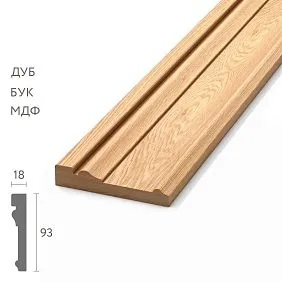
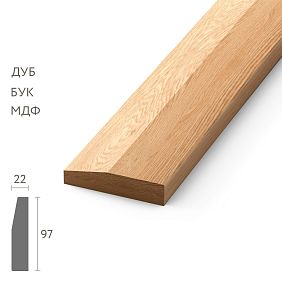
The profile of the casing is also important: exterior strips most often have a beveled or rounded top edge — so that water does not linger on the horizontal surface but drains off. This is called a 'drip edge,' and it is not a decorative but a structural element.
Get Consultation
How to choose the width of the casing: proportion is everything
The width of the casing is the first thing you need to decide. And here's a simple rule: the casing should be visible but not dominate the window.
Narrow casings: 40–70 mm
Suitable for small windows — in country houses, bathhouses, and utility buildings. A narrow casing creates a neat frame without emphasizing the ornament. For small buildings, this is a logical choice: the smaller the house, the more modest the decorative elements should be — otherwise, the casings will "steal" all the attention of the facade.
A narrow casing is also appropriate on a facade in a modern restrained style, where there is no room for rich ornamentation.
Medium casings: 80–120 mm
The most versatile range. Suitable for standard windows of residential houses, country cottages, and suburban homes. Wooden window casing 80–100 mm wide is clearly visible on the facade, creates an expressive frame, and does not overload the opening.
In this range, both a simple profile and uncomplicated geometric or floral carving look good.
Wide casings: 130–200 mm and more
For large houses with big windows, for expressive house carving, for facades in Russian or Neo-Russian style. A wide carved casing on a large window is a true facade manifesto. It requires an appropriate context: a tall house, large windows, other elements house carving — gable, cornice, porch.
If you put a wide carved casing on a small country house window, the proportion will be disrupted: the decor will overwhelm the opening.
How to measure the required width
The rule of thumb: the width of the casing should be approximately 1/6–1/8 of the window width. For a window 120 cm wide — casing 15–20 cm. For a window 80 cm — casing 10–14 cm. This is a guideline, not a rigid standard: the final choice is always made by eye, considering the proportions of the entire facade.
How to choose a casing pattern: from simple to complex
The casing pattern is not just a design. It is an architectural language that must match the style of the house. You cannot take the first ornament you like and put it on any facade: rich carving in the Russian style on a minimalist modern house will look like a misunderstanding.
Simple profile without carving
A smooth plank with a profiled edge — a chamfer, a molding, or a small edge. This is the most restrained option, suitable for modern-style country houses, for houses made of imitation timber with a 'no decorations' finish, and for small bathhouses.
Such a casing does not attract attention — it simply neatly finishes the window. This is 'invisible' decor that works without words.
Geometric ornament
Diamonds, squares, straight intersections, a serrated edge — this is a more expressive option that nevertheless remains strict. Geometric casings look good on houses in Scandinavian style, in constructivism, and in calm country architecture.
Geometry does not 'age' and never goes out of style — it is the eternal language of form.
Floral ornament
Leaves, branches, curls, floral motifs. This is a soft, warm language of facade decor, characteristic of traditional wooden architecture. Floral ornamentation is appropriate on eco-style wooden houses, on country cottages in a natural setting, on bathhouses and garden houses.
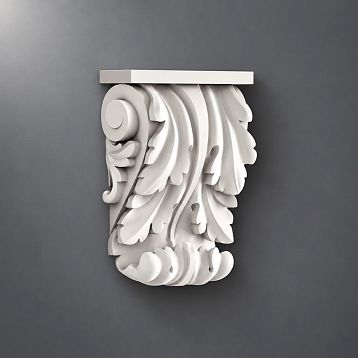
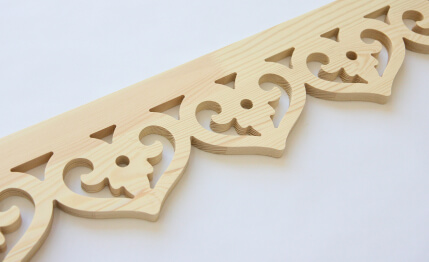
Carved casing NL-1 STAVROS with a floral motif is a good example of how traditional ornamentation can look modern and organic.
House carving in Russian style
This is no longer just a window casing, but a full-fledged architectural element with a rich ornamental program. Complex woven patterns, birds, solar symbols, three-dimensional openwork carving — this is a tradition of Russian wooden architecture that is alive and relevant.
House carving for windows in the Russian style is appropriate on log and timber houses, on bathhouses in traditional style, on country estates where they want to emphasize the national character of the architecture. This is not just decor — it is a statement of identity.
More about this tradition in the article windows with casings in Russian style: an architectural symphony of wooden architecture.
Window casings for a wooden house: the principle of facade unity
A wooden house is a special environment for window decor. Here, casings are not just "glued to the facade" as a foreign element: they grow from the same material logic as the entire house. Wood speaks to wood in the same language.
But that's precisely why it's important not to lose sight of the principle of unity. Window casings don't exist on their own — they are part of the overall decorative program of the facade.
Facade decor as a system
A well-designed wooden house is a system of interconnected elements:
-
Window casings — the frame of each opening, the first thing people notice
-
Pediment — a decorative part above the entrance or at the gable end of the roof, often with rich carving; more details in the article Carved Pediment: Decorating the Facade of a Wooden House
-
Cornice — a horizontal profile under the roof overhang, connecting the entire facade horizontally
-
Corner boards and pilasters — vertical accents at the corners of the facade
-
Porch — a decorative entrance with carved posts and balusters
If the window casings are made in the same style and from the same material as the pediment and cornice — the facade looks like a cohesive architectural story. If the casings are "taken off the shelf" and the pediment is ordered from another craftsman — the facade looks eclectic.
Facade decor for the house STAVROS is precisely a systematic approach: platbands, pediments, cornices, belts, and other elements are maintained in a unified stylistic logic.
Platbands on a wooden house made of logs and timber
For a log house, platbands with pronounced volume are best: a flat thin strip gets lost against the background of massive logs. You need either a wide profile, a platband with volumetric carving, or a composite structure — side strips plus an upper decorative "head."
The width of a platband for a log house is from 100 mm. The optimal ornament is traditional carving with volume: it does not get lost against the texture of the wood.
For a house made of timber or boards, a slightly smaller scale is appropriate, but the principle is the same: the platband must be visible and read as a finished element.
Platbands on plastic windows in a wooden house
This is a popular question — and the answer is simple: a wooden platband pairs perfectly with a plastic window. The platband is attached not to the window frame, but to the wall around it. For installation, this means that a plastic or wooden window does not affect the ability to install exterior wooden platbands.
Moreover, a wooden platband is the best way to integrate a plastic window into a wooden facade. Plastic in a wooden house without a platband looks foreign. With a properly selected wooden platband, it looks organic and natural.
Platbands for a country house: simplicity plus character
A dacha is a special world. There is no place for pomp here, but there is room for warmth, coziness, and individuality. This is what distinguishes dacha decor from urban or estate decor.
Wooden window casings for a dacha should be:
-
Light in design — without overloading with details, without overly complex ornamentation
-
Practical — withstand moisture, require no complicated maintenance
-
Uniform — all windows on one facade are decorated identically
-
Proportional — width tailored to the specific size of dacha windows
A typical dacha is a small house with windows 90×120 cm or 100×140 cm. For such openings, a casing 70–100 mm wide with a geometric or simple floral pattern works well.
One repeating pattern on all windows is a rule that works flawlessly on dacha facades. A unified ornament ties the facade together and makes it cohesive, even if the house itself is small.
Casings for a bathhouse: moisture resistance above all
A bathhouse is a space with maximum moisture resistance requirements. Here, steam, condensation, and heating and cooling cycles create an environment significantly more aggressive than that of a residential building.
for of external window casings for a bathhouse are critically important:
Wood species. For a bathhouse, it is better to choose dense species with natural moisture resistance — oak, larch, aspen. Larch does not rot in humid conditions but only becomes stronger: the resin impregnates the wood over time, making it almost impermeable.
Protective coating. Bathhouse casings must be treated with special compounds for exterior use with an antiseptic component: it prevents the formation of fungus and mold in conditions of constant humidity.
Design. On the horizontal elements of the casing (the top plank above the window), proper water drainage is important: a slight slope or drip edge that prevents water from lingering on the surface.
Size. For a bathhouse — more modest than for a residential building. Small bathhouses with one or two windows require proportional decor: a casing 70–90 mm wide with a simple pattern.
A bathhouse with beautiful carved casings is no longer just an outbuilding but an element of a well-maintained estate. It signals to the owner and guests: attention is paid to details here.
Composition of the facade kit: what is included in the window decor
A casing is not a single profile but a set of elements. Understanding the composition of the kit helps avoid buying side planks without a top "head" and ending up with incomplete decor.
Side planks
Vertical elements that frame the window on the left and right. This is the basis of the casing. The width and ornament of the side planks determine the overall character of the entire framing.
Upper decorative trim ("head" of the casing)
The horizontal element above the window is the most noticeable and decoratively rich. It is the "head" of the casing that carries the main ornament: a carved canopy, a figured cornice, an openwork ornament with classical or traditional motifs.
In traditional Russian architecture, it was the upper element of the casing that was most decorated — the main symbolism of house carving is concentrated here. This is what people look at first.
Window sill decorative part (ochelye)
The horizontal element under the window. It is less common than the upper head, but in traditional casings it is mandatory. It completes the vertical axis of the casing from below.
Corner connectors
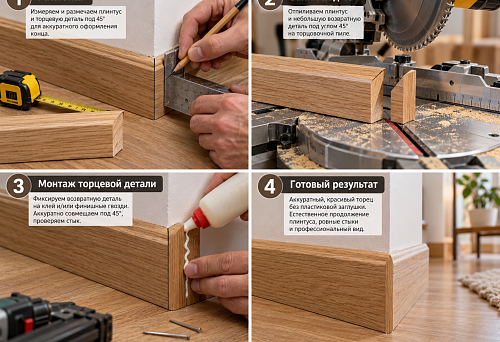
Decorative overlays at the corners that decorate the transition from the side strips to the upper and lower horizontal ones. In simple casings, the corners are cut at 45° and joined directly. In decorative sets, separate corner elements are used.
Facade decor for the house It is better to buy as a set — this way all elements will be made of the same material, from the same manufacturer, and will age uniformly over time.
Material of the exterior casing: what to choose
The market offers casings made of different materials, and each has its own logic of application.
Solid wood
Wooden millwork for facade and solid wood trims are a natural, eco-friendly, and aesthetically flawless choice for wooden houses. Solid wood holds its shape, accepts any coating, and responds well to antiseptic treatment.
Oak. Hard, dense, moisture-resistant. Oak trims are a durable and prestigious choice. Oak accepts tinting and varnish well, and its texture under a transparent coating looks lively and expressive.
Larch. Leader in moisture resistance among coniferous species. Its natural resin content makes it resistant to rot. Larch is the best choice for trims in regions with high humidity and for bathhouses.
Pine. Soft, light, affordable. Easy to work with, accepts paint. Suitable for trims to be painted with opaque enamel. Requires mandatory antiseptic treatment — without it, it quickly turns blue in sun and moisture.
Birch. Dense, uniform in structure. A good choice for carved trims where detail clarity is important — birch provides clean carving. For facade use, it requires high-quality impregnation.
Trims made of MDF and PVC
Alternative materials found on the market. MDF is cheaper, but outdoors with temperature fluctuations it quickly loses its shape — swells, delaminates. PVC is practical in terms of moisture resistance, but looks plastic and does not match a wooden facade.
For a wooden house, cottage, or bathhouse — solid wood without alternatives. wooden moldings and architraves made of natural solid wood is the only choice that looks organic on a wooden facade.
Protective coating for exterior architraves: a mandatory step
Exterior architraves without coating are not savings, they are a mistake. Unprotected wood outdoors lasts one or two seasons: it darkens, cracks, fungus penetrates the pores, and after two years the architrave will have to be completely replaced.
A proper coating performs several tasks simultaneously: protects against moisture, blocks UV degradation of wood, prevents fungus and mold, and preserves aesthetics.
Antiseptic primer is a mandatory first layer
Before any finish coating, exterior architraves must be impregnated with a deep-penetration antiseptic. This creates biological protection from within: neither fungus nor wood-boring beetles will be able to infest the treated wood.
The antiseptic is applied to all faces and ends — especially the ends, through which moisture penetrates most actively.
Paint for exterior use
The best choice for architraves with a uniform color. Acrylic-latex paints for exterior use provide good moisture resistance, flexibility during temperature changes, and a long service life. Architraves in white, gray, green, or other enamel colors are a classic for country and suburban facades.
Paint is applied in 2–3 coats after priming. Service life with quality application is 5–8 years.
Varnish for exterior use
For cash registers, where it is important to preserve the visible texture of wood — carved details with a beautiful pattern, oak or larch cash registers with a pronounced fiber pattern. The exterior varnish should be elastic (so as not to crack when the wood expands) and have a UV filter (so that the wood does not turn gray under the sun).
Yacht varnish is one of the best options for exterior use. It is specifically designed for conditions of constant exposure to moisture and sun.
Oil with antiseptic
Natural oil with an antiseptic component is a choice for those who prefer natural coatings. The oil penetrates the wood, does not form a surface film, and allows the wood to "breathe." For oak and larch cash registers, the oil additionally emphasizes the texture.
Disadvantage: oil requires more frequent renewal than varnish. Frequency — once every 3–4 years, depending on operating conditions.
Color of cash registers: how to fit them into the facade palette
The color of the cash register is not an isolated decision. It should be part of the overall color scheme of the facade.
White cash register is a classic that works with any facade color. White cash registers on dark timber, on gray siding, on beige plaster — always look clean and elegant. White is a neutral color that does not conflict with anything.
Contrast color — cash registers in the tone of the roof or in the tone of the door create a color rhythm for the facade. Dark green cash registers on a light facade — strict and elegant. Dark brown on a log house — natural and organic.
Color in tone with the facade — cash registers of the same tint as the facade itself. This option gives a calm, uniform impression: the cash register is not accentuated, but delicately completes the window.
Natural wood under varnish or oil — for wooden houses where you want to preserve the living look of the material. The natural shade of oak, larch, or pine under a transparent coating is the most "honest" and organic choice for a solid wood facade.
Mistakes when choosing exterior window trims: learning from others' experience
The list of typical mistakes is short, but each one leads to rework and extra costs.
Mistake 1: buying an interior trim for exterior use. An interior trim will be destroyed in one season outdoors. Always clarify the product's purpose: exterior or interior use.
Mistake 2: choosing a pattern without considering the facade. Complex carved fretwork in Russian style on a modern minimalist house looks historically illiterate. The pattern must match the stylistic language of the architecture.
Mistake 3: taking too narrow a decor for a large window. A thin trim on a wide window simply doesn't read — it gets lost against the wall. The proportion of the trim to the window is a key parameter.
Mistake 4: not protecting the wood with a coating. An unpainted exterior trim is a temporary structure, with a lifespan measured in one or two seasons.
Mistake 5: making different trims on adjacent windows. If one window has a geometric ornament and the next has a floral one, the facade looks unsystematic. All windows on one facade — one ornament.
Mistake 6: not considering the color of the roof and the window sill area. Trims should be part of the entire facade's palette: roof, walls, trims, doors — it's a unified color system.
Mistake 7: buying only side planks without a top piece. An incomplete set looks like unfinished work. A trim without a top element is a frame without a top side: technically possible, aesthetically wrong.
Error 8: mounting trim without a horizontal level. Trim mounted "by eye" without checking with a level will be visibly tilted. On a flat horizontal wall, this is especially noticeable.
Error 9: attaching trim only with glue. On the outside, glue is not the primary fastening, but an auxiliary one. The base is self-tapping screws or stainless steel nails, countersunk and covered with putty or wooden plugs.
Error 10: choosing carved decor without understanding the style of the entire facade. Carved facade decor — this is not something added to the facade post factum. It is part of the architectural concept that must be thought out systematically.
What to check before purchasing: a complete checklist
Before ordering trim, go through each point — this will save time and money.
-
Window size: width and height of the opening for which the trim is selected
-
Slope width: distance from the frame edge to the wall surface — the trim must cover this gap
-
Facade material: log, timber, board, plaster, siding — affects the fastening method and style choice
-
House style: modern, classic, country, Russian — determines the ornament
-
Thread type: smooth profile, geometry, floral ornament, house carving
-
Coating color: for painting or varnishing, matching the facade or contrasting
-
Number of windows: it is important to order the entire set at once — from the same batch and the same material
-
Unified design: all windows on one facade are decorated with the same ornament
-
Set composition: side strips + top head + bottom element if necessary
-
Operating conditions: open southern sun, northern humidity, coastal area — affects the choice of wood species and coating
-
Installation: access to the window, type of fastening, availability of necessary tools
How to attach exterior wooden window trims: basic installation rules
Installing window trims is a task that anyone who knows how to use a screwdriver and a level can handle. But there are several rules, compliance with which determines the result.
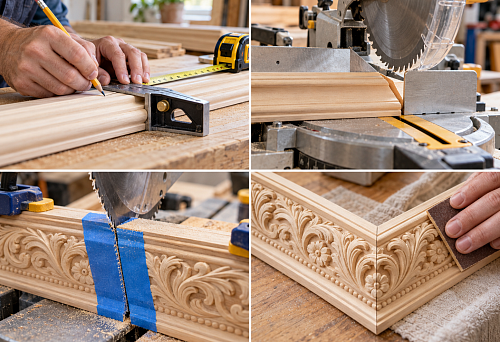
Marking and level. Before installation, apply markings around the window perimeter using a laser or bubble level. Horizontal lines must be strictly horizontal — even a slight deviation is noticeable.
Start from the top element. Installation begins with the upper head of the casing, then the side strips are attached from the top corner downwards, and finally the bottom element (if present).
Fasteners — stainless steel. Outdoors, ordinary black self-tapping screws rust within one season and leave rusty streaks on the wood. Use only stainless steel or galvanized self-tapping screws.
Countersunk heads. The screw head must be recessed into the casing body. The hole is closed with a wooden plug or wood putty, then sanded and painted over.
Sealant adhesive around the perimeter. A thin bead of weather-resistant sealant adhesive is applied along the contact between the casing and the wall — this prevents water from flowing under the casing.
Coating after installation. If the casings are purchased in natural form for self-finishing, painting or varnishing should be done after installation. Special attention — to the ends, cut areas, and joints.
House carving: casings as part of the facade program
Casings are just the beginning. Once you start thinking about facade decor systematically, it turns out that casings naturally flow into house carving across the entire facade.
A carved pediment is a continuation of the casing ornament at the top of the house. A cornice with a profiled soffit board is a link between the roof and the facade. Corner pilasters with carved details — a vertical rhythm that holds the entire facade.
That is why wooden facade decoration it is better to order as a set — casings, pediment, cornice, corner boards — from one manufacturer, from one material. Then the facade will look like an image conceived by the artist, not like a collection of individual parts.
FAQ: answers to the most common questions
What trim is needed for windows on the outside?
For the facade, you need external trim — made of dense solid wood (oak, larch, beech, pine), with mandatory protective coating and structurally correct water drainage on horizontal edges. wooden window trims From the interior range, they are not suitable for exterior use.
Can wooden trim be installed on plastic windows?
Yes, and this is an excellent solution for a wooden house with plastic windows. The trim is attached to the wall, not the frame, so the window material doesn't matter. Carved Mouldings They will cover the joint and make the plastic window an organic element of the wooden facade.
What should exterior wooden trim be coated with?
The scheme is: antiseptic primer → finish coating. Finish: weather-resistant paint (for uniform color), exterior elastic varnish with UV filter (to preserve texture), or oil with antiseptic (for a natural look). For baths and humid regions, an antiseptic with a fungicidal component is mandatory.
Which is better — simple or carved trim?
For a modern, calm facade — a simple profile. For a wooden house, bathhouse, or cottage in a traditional style — Carved Window TrimCarving adds character and individuality that cannot be created with a simple profile. The main thing is that the ornament matches the style of the house.
Can I buy ready-made carved window casings?
Yes. Buy carved window casings Ready-made ones are the most practical route. No need to order carving from scratch, wait for production, or coordinate sizes. Ready-made elements are matched to standard window sizes and are immediately ready for installation.
Is the top decorative head required for the casing?
Yes, in most cases. A casing without the top element is an unfinished structure. The top head carries the main ornament and completes the composition. Without it, the casing looks like a rough solution, even if the side panels are beautiful.
How many casings are needed for a house?
One set per window (2 side panels + top element). To calculate: count all windows on the facade, add 10% reserve for trimming and possible installation errors. All casings are ordered at once — from the same batch.
About the company STAVROS
STAVROS is a Russian manufacturer of wooden products for facade and interior decor made from natural solid wood. The assortment includes Carved Door Casings for Windows, House Carving for facades, Wooden trim, Wooden moldings and cornices, Carved facade decor and a wide range of solid wood for wooden houses, cottages, bathhouses, and villas.
STAVROS works with both private clients and construction companies and furniture workshops. All products are made from natural wood, without substitutes, with the option to choose the species, size, and pattern.
If you want buy exterior window casings for a wooden house, cottage, or bathhouse — the STAVROS catalog offers ready-made solutions from proven solid wood that will organically fit any facade and last for decades.