Article Contents:
- What exactly is being purchased: NPU-154 is a carved decorative overlay, not a molding and not hardware
- Why the door closer is not just a "piece of hardware on top," but a constraint for the entire composition
- The main principle of the article: first draw the forbidden zone of the door closer, then apply the NPU-154 template
- Which parts of the door closer actually affect the space for the overlay
- Door closer body
- Arm and movement trajectory
- Fasteners and mounting plates
- Service access
- Relief protrusion when opening the door
- Handle and hand grip zone
- Edge of the door leaf and lock part
- Casing, frame, and adjacent wall
- Existing panels or decorative lines of the door
- Placement height relative to eye level
- Upper central zone under the door closer
- Central field of the door leaf
- Offset position
- Mistake 1. Only considering the overlay dimensions and not accounting for the door closer mechanism
- Mistake 2. Trying the template only on a closed door
- Mistake 3. Ignoring the 12 mm thickness
- Mistake 4. Considering any remaining space as a suitable field
- Mistake 5. Trying to shift the decor to an inconvenient spot just because it's cramped in the center
- Step 1. Inspect the door closer
- Step 2. Mark the working and service zone
- Step 3. Make an NPU-154 template
- Step 4. Find a calm field
- Step 5. Check the distance to the handle and door edges
- Step 6. Simulate a thickness of 12 mm
- Step 7. Look at the door in the interior
- Step 8. Check the door closer maintenance
- Step 9. Make one of three decisions
- Scenario 1. Wide smooth door, compact door closer, calm central field
- Scenario 2. Narrow door, high door closer lever, and handle close to the intended decor area
- Scenario 3. Door in a slatted wall opens toward an adjacent plane
- Painting in the color of the door leaf
- Painting in the color of the wall or a similar tone
- Contrast painting
- Door closer high and compact at the top edge
- The door closer is massive and noticeably offset in the door field
- The door closer lever operates over a wide amplitude
- Can the NPU-154 be installed directly under the door closer if its body does not touch it?
- Should you follow some standard clearance from the door closer?
- Is it enough to try the template on a closed door?
- If the door is smooth and wide, can the NPU-154 be considered automatically compatible?
- Can two NPU-154 units be used on one door instead of one?
- What to do if the 250 × 154 mm template fits but looks too small for the door?
- Can the overlay interfere with cleaning or touch clothing when passing by?
- Should you take the NPU-154 if doubts remain but you like the product visually?
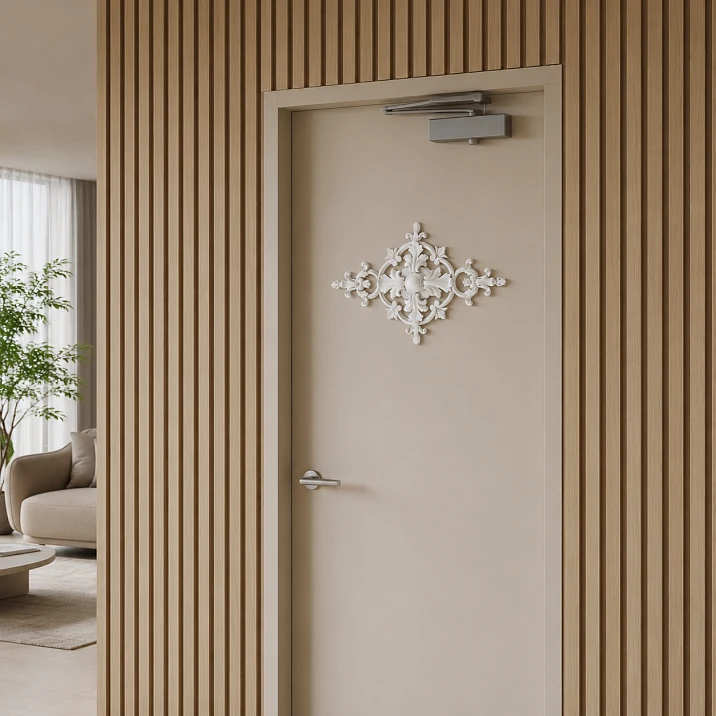
The door is already installed, the slat wall around it is assembled, the door closer works, and you want to add a small classic accent to the panel. In this situation, buying a decorative overlay seems simple: the product is compact, inexpensive, looks neat in photos, and the product card clearly states that it is suitable for walls, doors, and furniture. But the door closer assembly breaks this apparent simplicity.
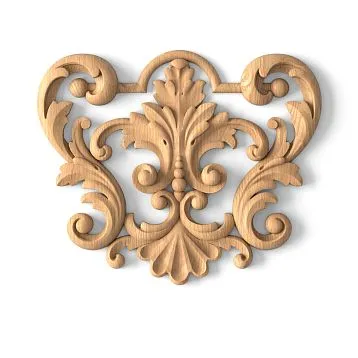
The carved decorative overlay NPU-154 made of polyurethane, in the variant selected for this article, has dimensions of 250 × 154 × 12 mm and costs 2,010 ₽ per piece. By itself, this size does not seem large. The problem is different: on the door, there is already a working zone for the door closer, and the mechanism has a housing, an arm, a movement path, mounting points, and an access zone for adjustment. Therefore, the decision is made not based on the product card or a nice photo, but on the free space available on the specific door leaf.
The short answer is this: NPU-154 can be considered for a door with a closer only when there is a separate free field on the leaf for the 250 × 154 mm template that does not fall into either the working or service zone of the mechanism. If there is no such field, it is better not to buy the overlay. And this is a normal commercial conclusion for the article: sometimes the right result is not to add an item to the cart, but to stop in time.
If, after checking, free space really remains, it makes sense to buy the carved decorative overlay NPU-154 made of polyurethane already with an understanding of exactly where it will fit. If checks show a conflict with the mechanism or the absence of a calm field on the leaf, it is better to immediately move on to alternatives rather than try to glue the decor into the "leftover" between the closer, handle, and door edge.
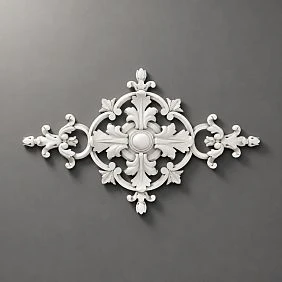
What exactly is being purchased: NPU-154 is a carved decorative overlay, not a molding or hardware
In this topic, it is important not to confuse the type of product. NPU-154 is a carved decorative overlay made of polyurethane. It is not a molding, does not replace door hardware, does not reinforce the leaf, and does not solve the technical tasks of the closer. Its function is compositional: to add a decorative accent to the plane of a door, furniture, or wall.
For the article, only one product variant is fixed to avoid going into a parallel storyline of "which size to choose." We are interested in the specific dimensions of 250 × 154 × 12 mm and the price of 2,010 ₽ per piece. If, after fitting, it turns out that the chosen size conflicts with the closer, the conclusion of this article should not be a transition to another size of the same model, but an honest answer: this scenario is not suitable for the chosen NPU-154.
The basic data that needs to be considered before purchase is conveniently collected in a short table:
| Parameter | NPU-154 for this article |
|---|---|
| Product type | Carved decorative overlay |
| Material | Polyurethane |
| Dimension | 250 × 154 × 12 mm |
| Price | 2,010 RUB/pc. |
| Planned quantity | 1 pc. |
| The main question | does a free field remain on the door without conflict with the door closer |
Such fixation helps keep the topic within the necessary boundaries. We do not discuss the entire range of door decor at once. We check whether one specific NPU-154 fits an existing door next to a slat wall.




Why a door closer is not just a "piece of hardware on top," but a constraint for the entire composition
If the door has no closer, choosing a place for the overlay usually comes down to the geometry of the leaf, the position of the handle, lock, panels, and edges. With a closer, another coordinate system appears. Moreover, the most inconvenient one: it is not static.
The mechanism housing is fixed in the upper part. The arm changes position when opening and closing. On some models, an additional rod, knee, or guide element is noticeable. In some mechanisms, the adjustment screws are located on the end or on the lower side of the housing, meaning access to them cannot be blocked by a decorative element, even if the arm itself does not touch the overlay.
Because of this, a so-called forbidden zone of the door closer is formed on the door. This is not an official term from the STAVROS card, but a convenient working concept for compatibility checking. By it, we understand a combination of three areas:
-
the area occupied by the door closer housing itself;
-
the area into which the arm or rod moves when the door operates;
-
the area that must remain accessible for maintenance, adjustment, tightening of fasteners, and removal/installation of parts.
Until you draw this forbidden zone on the door leaf, any fitting of the overlay is meaningless. Otherwise, you will be assessing the free space visually, and visual assessment in a unit with moving mechanics is almost always wrong.
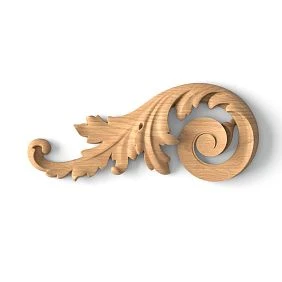
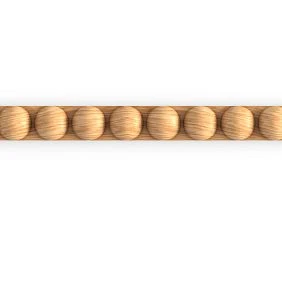
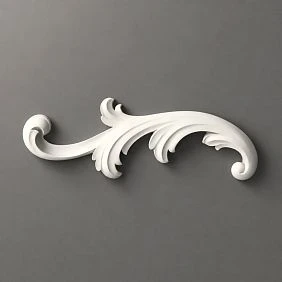
Our factory also produces:

The main principle of the article: first draw the forbidden zone of the door closer, then apply the NPU-154 template.
The most common mistake looks like this: a person applies the overlay template to a nice spot on the door leaf, sees that "it seems to fit on the plane," and only then starts thinking about the door closer. The correct order is the reverse.
First, the door is considered as a technical unit. You need to understand where exactly the door closer operates, where the arm goes, which sector above the leaf is best left free of any relief decor, and which area must remain accessible to the technician. Only then does the door become a decorative plane again, where you can choose a place for the overlay.
This seems like a minor detail, but in practice it changes everything. The same door may have enough space for the NPU-154 by pure geometry and not have it after accounting for the door closer's operation. And vice versa: a door with a small leaf may unexpectedly turn out to be compatible if the mechanism is mounted high, compactly, and leaves a calm central field.
Therefore, the main usefulness of the article lies not in listing the advantages of polyurethane, but in the verification method. After reading, a person should be able to perform one specific action: check whether there is a working free field of 250 × 154 mm on the door that does not affect the door closer, handle, or edges of the leaf.
Get Consultation
Which parts of the door closer actually affect the space for the overlay
It is not always only the body itself that is dangerous. Visually, it is what catches the eye, but for installing the overlay, you need to check the entire mechanism.
Door closer body
The body occupies a stable position. It creates constant visual pressure in the upper part of the door and, by itself, can shift the center of the decorative composition downward. If the body is large and located on the front side of the leaf, the overlay has to be moved lower, even if the arm does not directly interfere with it.
Lever and trajectory of movement
This is the most obvious moving part. It needs to be checked with the door in closed, half-open, and fully open positions. If the lever passes close to the intended overlay area, a conflict may arise not in static state, but in motion.
Fasteners and mounting plates
Some systems have additional plates on the door or frame. Removing them for a decorative element is impractical. Therefore, the forbidden zone should include not only the main body, but also all mounting areas.
Service access
Even if the decorative overlay does not physically touch the mechanism, it can hinder adjustment. This is especially unpleasant in operation: the overlay is already glued and painted, but the door closer needs to be adjusted or serviced. You cannot invent a universal 'correct gap' in millimeters. It is determined by the mechanism model and the side from which tools approach it.
Relief protrusion when opening the door
The thickness of NPU-154 is 12 mm. This means that after installation, the door plane becomes a plane plus relief. If the door opens close to an adjacent wall, casing, slats, or protruding element, you need to check not only the 250 × 154 mm dimension, but also the 12 mm protrusion.
This is why the article is not just about 'where to stick the decor'. It also concerns the operation of the finished door.
How to draw the forbidden zone of the door closer on the door
The most reliable way is to use painter's tape and paper. No complex tools are needed.
-
Close the door and carefully look at where the body is located.
-
Use painter's tape to outline the conditional boundary of the body on the panel.
-
Open the door approximately 30–45 degrees and mark the position of the lever.
-
Then open it wider and mark the extreme position of the moving part again.
-
If the lever folds, mark the entire sector of its movement, not just the end points.
-
Add an access zone around the mechanism for a screwdriver, hex key, or other tool—not based on imagination, but on actual access to your model.
-
Connect the marks into a single outline. This will be the practical restricted zone.
It is useful to take a photo of the door with this marking. It helps to view the composition not as a set of individual marks, but as an actual map of constraints.
An important point: the restricted zone may be asymmetrical. You cannot assume that if there is enough space from the body on one side, the situation on the other side is a mirror image. The working kinematics of the lever often breaks such logic.
Paper template 250 × 154 mm is a mandatory step, not a formality
After marking the door closer, you need to make a paper template of the overlay itself. Not a reduced sketch, but a real rectangle of 250 × 154 mm. It is safer not to pre-bind the size to the words "width" and "height" if the orientation on the card has not been analyzed separately, but simply use the exact product dimension as a template.
It is best to cut out thick cardboard or paper and write "NPU-154" on it. If you want to check both orientations compositionally, you can apply the template differently, but within the positions that look logical for the door.
The template solves several tasks at once:
-
shows whether the overlay fits between the forbidden zone of the door closer and other elements;
-
allows checking symmetry relative to the door leaf, handle, and slat wall;
-
helps assess the product scale not from the card, but in real space;
-
makes it clear whether the future decor will look like a random small spot or, on the contrary, an intrusive accent.
The template should be applied more than once. At least in three positions:
-
at the intended final point;
-
slightly higher or lower — to understand if there is a more suitable field;
-
at the moment when the door is open, to check not only the plane, but also the operation of the assembly.
If the template fits only in one very tight, borderline position, where it almost touches the closer markings, handle, or edge of the door leaf, this is a bad sign. A comfortable solution usually looks calmer.
What other limitations need to be checked besides the door closer
The door closer is the main subject of the article, but not the only one. After marking the mechanism, you need to check the entire door field as a compositional and functional system.
Handle and hand grip area
If the overlay is too close to the handle, the door becomes inconvenient in everyday use. A person should be able to freely grab the handle without touching the relief with their fingers. This is especially important if the handle is located low and you want to lower the overlay closer to the center of the leaf.
Edge of the leaf and lock part
The decor should not look glued tightly to the edge just because there is no other place left. The door always needs air around the overlay. Too close an adjacency to the edge makes the decorative element not a central accent, but a visual compromise.
Casing, frame, and adjacent wall
If the door opens outward and there are slatted panels, protruding casing, furniture, or a wall-mounted console nearby, the 12 mm relief needs to be checked in dynamics. In the closed position, everything may look safe, but in the open position, the overlay may end up close to the adjacent plane.
Existing panels or decorative door lines
On a smooth NPU-154 surface, it can be placed more freely. On a door with its own frames, panels, milling, or inserts, the overlay competes not only with the door closer but also with the architecture of the door leaf itself.
Placement height relative to eye level
If the overlay is placed too high, it starts to visually stick to the door closer, even without touching it. If too low, it may conflict with the handle and lose connection with the upper part of the composition. The height is checked not against the abstract center of the door, but against the actual free field.
When NPU-154 can actually work on a door with a door closer
A positive scenario exists. A door closer does not automatically prohibit any decor. But such a solution has clear signs.
First, the door leaf has a calm flat surface, not disrupted by panels and not occupied by hardware. Second, the door closer's forbidden zone is localized in the upper part and does not extend too low. Third, after marking, a separate readable field remains for the 250 × 154 mm template, not just a random "gap" between the handle and the mechanism.
Fourth, the decorative overlay truly solves a compositional task. For example, the door is in an accent slat wall, and a small classic element helps connect the door leaf with the surrounding decor without turning the entire door into a portal. Fifth, door closer maintenance remains normal: adjustment, tightening of fasteners, and access to the mechanism are not blocked.
Finally, the 12 mm relief does not create a new problem when the door is in the open position. This is especially important for a slat wall: if the door swings open toward the panels or next to them, the protrusion may start acting as an unwanted contact point.
If all these conditions are met, order NPU-154 250 × 154 × 12 mm — a reasonable next step. In this case, the purchase is based not on liking the product, but on verified compatibility.
When it's better to refuse NPU-154 right away
For a commercial article, it's very important to discuss situations where the product shouldn't be bought. This doesn't reduce the page's value, but rather makes the recommendation convincing.
It's better to skip the overlay if:
-
the closer's forbidden zone occupies almost the entire upper third of the door, leaving no calm area;
-
the 250 × 154 mm template only fits with contact with the handle, mechanism, or door edge;
-
the door already has active relief, panels, glass inserts, or its own pronounced classical composition;
-
the closer requires regular access, and any decor in the area near it worsens maintenance;
-
the 12 mm relief creates a risk of touching the adjacent wall, slats, trim, or furniture when opening;
-
the overlay turns out to be too small for the door's visual scale and looks random;
-
the door is too minimalist in style, and the only decorative element looks alien;
-
the composition of the slat wall is already quite rich, and the decor on the door leaf only complicates it.
In each of these scenarios, the right solution is 0 × NPU-154, not an attempt to "somehow squeeze it in." The cost is small, but a bad purchase in a door assembly rarely looks like a trifle: the plate immediately falls into the zone of constant attention.
How a slat wall changes the perception of the door and the plate itself
The slat wall in this topic is not the main technical object, but it defines the interior context. That is why the article should not turn into general material about a door and a door closer in a vacuum.
Vertical slats create rhythm and visually elongate the plane. Against their background, the door can either blend in or, conversely, stand out too harshly. The small NPU-154 plate works as a point counterpoint. It does not argue with the rhythm of the entire wall as strongly as a large frame system, and that is precisely its advantage.
But there is also a downside. Against the background of active slats, any small decorative element is scrutinized more strictly. If it is placed in an unfortunate spot, seems disproportionate, or is squeezed by the door closer on top and the handle on the side, the mistake becomes more noticeable.
Therefore, you need to evaluate not just the door, but the door surrounded by the slat wall. It is better to look at a template from several points:
-
directly opposite the door;
-
at an angle from the adjacent area;
-
from the place where the door is most often seen in the interior;
-
with the door leaf open.
Sometimes it turns out that the overlay formally fits on the door itself, but in the overall composition with the wall it does not produce the desired effect. Then the product does not solve the interior task, although it is technically compatible.
If the slatted panels in the project are still being selected or further work with the wall is planned, you can separately buy slat panels for walls for interior finishing already taking into account how the door will be integrated into the overall system. But this article is still about the opposite situation: the door and slats already exist, and the decor for them is only being selected.
Where exactly on the door they most often look for a place for NPU-154
In practice, three typical zones are considered. Each has its own advantages and limitations.
Upper central zone under the door closer
This is the first place that comes to mind for many owners. It seems that the overlay can be positioned along the central axis of the door and visually support the upper part of the leaf. But it is here that the forbidden zone of the door closer has the strongest effect. Even if the housing is small, it is at the top that there is most often not enough space.
Such placement is only suitable when the mechanism is compact, located high, its arm does not descend into the central field, and the overlay retains a normal clearance for composition and maintenance. In reality, this is a rare but possible scenario.
Central field of the panel
This is the calmest option for most smooth doors. Here it's easier to step back from both the door closer and the handle. The plate gets air around it and can be read as an independent accent, not as an attempt to fill the remaining gap.
But there are risks here too. If the handle is tall and the door is narrow, the central field may be smaller than it seems. Additionally, on a blank, minimalist panel, a small plate in the center can sometimes look too lonely if the entire door is large and tall.
Offset position
Sometimes, due to the door closer, handle, or door features, you might want to shift the plate slightly from the central axis. This is not automatically prohibited. But the offset must be compositionally justified. If the decor is shifted simply because the center is occupied, the viewer usually perceives this as a forced compromise.
That's why the paper template should be viewed not only on the door itself, but also in the context of the wall. What seems acceptable up close may look crooked or random from a distance.
How to check the 12 mm thickness not by the number, but in real door opening
Many buyers focus on the 250 × 154 mm size and underestimate the thickness. Meanwhile, it's the 12 mm relief that can cause a rejection even with a good free field on the panel.
The protrusion should be checked practically:
-
Take a piece of cardboard or foam material that can be placed under the template, simulating the 12 mm protrusion.
-
Attach the template to the intended location.
-
Slowly open the door to the normal working angle.
-
Check whether the overlay area comes close to a slat wall, slope, trim, adjacent leaf, console, cabinet, or other obstacle.
-
Check whether the decor catches clothing, a hand, or a bag when passing by, if the door is located in a tight area.
Such a check is especially important for doors in a hallway, narrow passage, or small room. On a large surface, 12 mm may seem like a modest protrusion, but in a tight route, it is enough for the element to start getting in the way.
You cannot turn 12 mm into an abstract criterion of "it's a little." For one door, this protrusion is not felt at all, but for another, it becomes critical due to the opening trajectory.
Do you need to consider the door opening side?
Yes, and this is one of those factors that are often remembered too late.
If the door opens into a room with enough free space, the risk of external contact is less. But if the door opens toward a slat wall, into a narrow hallway, toward an adjacent cabinet, or into a passage, the overlay is subjected to harsher conditions.
The opening side affects three things:
-
on access to the door closer in operation;
-
on the risk of the relief touching surrounding surfaces;
-
on how the decorative accent is visible in the main user route.
Sometimes the most beautiful side of a door is not the main side of perception at all. Then investing in a decorative overlay may be less justified than it seems from the product photo. The article should help with this too: not every technically possible decor is needed from the standpoint of everyday use.
What changes if the door already has its own frames, panels, or glass inserts
On a smooth panel, NPU-154 acts as an independent accent. On a complex door, the situation is different.
If the panel already has milled fields, panels, moldings, glazing, or pronounced geometry, the overlay stops working in an empty field. It integrates into the existing architecture and can either support it or ruin it.
In such a situation, you need to check not only the door closer but also the internal composition of the door:
-
whether the overlay falls on the joint of panels;
-
whether it hangs between frames without logic;
-
does the relief not conflict with the existing pattern;
-
does it not compositionally form a "third system", apart from the hardware and panels.
If the door is decorative in itself, one small overlay next to the door closer often turns out to be superfluous. Conversely, on a very plain door with a slat wall behind it, one neat element can look more convincing than on a complex panel.
How to understand that what remains on the door is a calm field, and not just a free rectangle
This difference seems subtle, but it determines the quality of the result.
A free rectangle is a place where the template physically fits. A calm field is an area of the door where the overlay looks natural, is not squeezed by neighboring elements, and does not read as a compromise.
This can be checked with five questions:
-
Is there air around the overlay, not just a geometric gap?
-
Does it not visually stick to the door closer from above?
-
Does it not pull toward the handle or the edge of the door?
-
Is the compositional logic of its placement clear?
-
Does the overlay look like a deliberate decision, rather than an attempt to fill the remaining space?
If the answer to one or two questions is negative, it is better to stop and not buy the decor. In an article of this type, this is a normal and useful conclusion.
How to frame the decision in terms of money and actions, rather than an abstract “fits / doesn’t fit”
Commercial material should lead the reader to a specific next step. In this topic, it is extremely simple.
| Inspection result | What to do next | Financial summary |
| There is a calm field on the door, the door closer does not conflict, and service access is preserved | buy 1 pc. NPU-154 | 2 010 ₽ |
| The template fits only marginally; there are doubts about the lever trajectory or maintenance | Do not buy immediately, double-check on site or request data on the door closer | temporarily 0 ₽ |
| There is no free space or the overlay interferes with the mechanism/door opening | refuse NPU-154 for this door | 0 ₽ |
This is more useful than a vague conclusion like "it all depends on the situation." Yes, it does. But after the check, it should turn into a clear decision: buy one overlay, take a pause for additional verification, or refuse.
If you want to consider other door decor options in the same material, you can buy decorative door overlays in the section catalog and compare alternatives there by shape and scale. But only after it becomes clear that the idea of a decorative element on this door is appropriate.
What mistakes are most often made when trying to install an overlay on a door with a door closer
Mistake 1. Considering only the overlay dimensions and not accounting for the door closer mechanism
Why it happens: from the photo, it seems there is a lot of space on the panel.
Consequence: the decor interferes with the lever, blocks access to adjustment, or visually sticks to the mechanism.
How to avoid: first draw the forbidden zone, then apply the template.
Mistake 2. Trying the template only on a closed door
Why it happens: it is simpler and more convenient.
Consequence: the conflict appears only when opening, when the lever position and the panel trajectory change.
How to avoid: check the door in several positions, including the working opening.
Mistake 3. Ignoring the 12 mm thickness
Why it happens: the number seems small.
Consequence: the overlay catches the adjacent surface or interferes in a narrow passage.
How to avoid: do a fitting with a simulation of the flight.
Mistake 4. Considering any remaining space as a suitable field
Why it happens: you still want to buy the product you like.
Consequence: the overlay looks random and emphasizes the limited space.
How to avoid: distinguish between physical capacity and a calm compositional field.
Mistake 5. Trying to shift the decor to an inconvenient point just because it's crowded in the center
Why it happens: the desire to bypass the door closer without giving up the purchase.
Consequence: the door looks unbalanced.
How to avoid: allow the "not buying" scenario as a fully valid positive outcome of the check.
When a refusal of decor will work better on the door than an overlay
Sometimes the best decorative move is to leave the canvas clean. This is especially true for modern slat compositions, where the panels themselves already provide enough rhythm and expressiveness.
If the door is laconic, the door closer is noticeable, and the free field is small and nervous, one small classic overlay will not improve the situation. It will rather emphasize that the assembly is complex. In such an environment, either a completely smooth door looks cleaner, or a solution on a completely different plane—for example, working with framing, lighting, a console, or decor on the adjacent wall.
Being able to refuse a product is also part of expert selection. This article should help not only to buy, but also not to buy unnecessary things.
Practical algorithm: how to check a door in 15–20 minutes before ordering
To avoid spreading the methodology throughout the article, let's consolidate it into one working algorithm.
Step 1. Inspect the door closer
Look at where the housing, arm, and all additional elements are attached.
Step 2. Mark the working and service zone
Use painter's tape to draw a forbidden contour on the canvas, taking into account the arm movement and access to adjustment.
Step 3. Make an NPU-154 template
Cut out a rectangle 250 × 154 mm.
Step 4. Find a calm field
Place the template in the intended location, then slightly move it up, down, and sideways to see if there is a better spot.
Step 5. Check the distance to the handle and door edges
Make sure the plate is not squeezed between adjacent elements.
Step 6. Simulate a thickness of 12 mm
Check the protrusion on the opening door.
Step 7. Look at the door in the interior
Evaluate the template against the slatted wall from a normal viewing point.
Step 8. Check the door closer maintenance
Imagine or try adjusting the mechanism after the overlay appears.
Step 9. Choose one of three decisions
-
buy 1 pc. NPU-154;
-
re-check the unit if doubts remain;
-
refuse the product for this door.
This algorithm is good because it takes little time and immediately shifts the conversation from the realm of taste to the realm of solution.
Three typical scenarios that lead to different conclusions
Scenario 1. Wide smooth door, compact door closer, calm central field
The panel has no panels, the handle is conveniently located, and the closer occupies only the upper part. After marking, a readable central field remains, the 250 × 154 mm template looks natural, and mechanism maintenance does not deteriorate.
Conclusion: NPU-154 can be purchased. Here the product solves the decorative accent task without conflicting with the technique.
Scenario 2. Narrow door, high door closer lever, and handle close to the intended decor area
Physically, the template fits, but only in a borderline position. The overlay almost touches the closer zone, and at the bottom it already pulls toward the handle.
Conclusion: the purchase is risky. For such a door, it is better to refuse NPU-154, because there is a free rectangle, but no calm space.
Scenario 3. A door in a slatted wall opens toward an adjacent plane
On a closed door, the space for the overlay is easy to find. But when opening, the 12 mm protrusion approaches the slatted wall, trim, or furniture.
Conclusion: the decision depends not on the plane of the door leaf, but on usage. If the relief raises doubts during fitting, it is better to refuse the purchase.
These scenarios differ not in numbers, but in decision logic. That is why it is useful to consider them separately.
What to do if NPU-154 is not suitable, but a decorative accent is still needed
If a specific overlay fails the check, it does not mean a ban on all decor in principle. But the alternative should be sought not in a frontal shift of the same product, but in changing the approach.
Several directions are possible:
-
choose another decorative element from the catalog of overlays, but only after a new check against the template;
-
leave the door clean and shift the accent to the adjacent wall or furniture;
-
use a broader interior composition in which the door remains neutral;
-
return to the overall polyurethane decor system and look at solutions for another plane.
If you need exactly the next catalog step, you can You can buy ready-made stucco matching the Baroque style. Calculate the quantity: linear meters of cornices and moldings, number of rosettes, pilasters, consoles, corner elements. Add a ten to fifteen percent allowance for trimming. in the general section after it becomes clear that the door overlay does not work on this panel.
This is an important point for the funnel: the article should not push the user into only one card. It should help transition to an alternative level of choice if the original product is not suitable.
How to match NPU-154 by color if compatibility with the door closer has already been confirmed
When the technical part is resolved, the composition remains. On a door in a slatted wall, the color and degree of visibility of the overlay determine whether it will be a delicate accent or overly active decor.
Painting in the color of the panel
The safest option. The relief remains visible through the shadow, but does not conflict with the door and the slatted wall. This approach is especially good if the door itself is modern and you don't want to turn the overlay into a central object.
Painting in the color of the wall or a close tone
It can work if the door is visually connected to the slatted composition and you want to incorporate the decor a bit more into the overall interior scenario. Here, it's important that the overlay doesn't start to look randomly detached from the door.
Contrast painting
Requires caution. On a door with a door closer and next to slats, a contrasting element quickly becomes the main accent. If the composition itself is very calm and the overlay is placed in the right field, this can be appropriate. But with any borderline geometry, contrast will only amplify the problem.
The best rule here is simple: the more complex the assembly with the door closer and surrounding elements, the calmer the presentation of the overlay itself should be.
Why this article is not about "decorating a door in general," but about a specific check before purchase
If you look at existing materials on door decor, many of them discuss style, proportions, panels, symmetry, or the selection of a group of products. But in the assembly with an already installed door closer, a completely different buyer's question arises.
A person is not asking whether decorative door overlays are beautiful. They are asking: can I place specifically the NPU-154 on my finished door leaf so that the door closer remains free and the door continues to work normally.
That is why the article is strictly focused on:
-
one specific product;
-
in one specific size;
-
in one specific constraint — the door closer;
-
in one commercial decision — to buy or not to buy 1 piece.
Such focus is useful for both the reader and the site: it does not retell the product card and does not compete head-on with broad articles about door decor.
Result: NPU-154 is placed not where it "fit," but where a normal free field remains after the door closer.
The carved decorative overlay NPU-154, measuring 250 × 154 × 12 mm, can become a successful accent on a door in a slat wall if the panel is already technically and compositionally ready for such an element. The mere fact that the overlay is small and intended, among other things, for doors, does not automatically make it compatible with the door closer.
The correct sequence of actions is always the same. First, you need to understand the mechanism's operation: mark the housing, the arm, the movement trajectory, and the service zone. Then make a paper template 250 × 154 mm, apply it to a calm field on the panel, check the distance to the handle and edges, and then assess the 12 mm protrusion on the opening door.
If after this check a separate free field remains, the overlay looks appropriate, door closer maintenance does not suffer, and the door does not start conflicting with surrounding surfaces, then buying 1 × NPU-154 for 2,010 ₽ is logical. If there is no free field, the overlay interferes with the mechanism or looks forced, it is better to refuse it specifically for this door.
This is the main practical conclusion: they buy not a pretty picture, but a compatible solution for a specific panel.
How the door closer's own placement changes the NPU-154 placement scenario
Not all door closers create the same constraints. Even if the article does not go into the fittings catalog, it is useful to understand why on one door the NPU-154 passes easily, while on another the same size immediately becomes a problem.
The door closer is high and compact at the top edge
This is the most favorable option. The mechanism housing is assembled in the upper zone, the arm does not go deep down, and adjustment points are accessible without intruding into the central field of the leaf. In this case, the door often retains a full lower or central zone for the overlay.
The door closer is massive and noticeably shifted into the door field
This happens when the housing is large, mounting plates are extended, or the model itself structurally takes up more space. Here, the decorative overlay begins to compete not only with the arm but also with the visual mass of the mechanism. Even if the 250 × 154 mm template fits geometrically, the top of the door may already be too heavy in composition.
The door closer arm operates over a wide amplitude
This scenario is dangerous because visually there is free space at the top, but in the real opening cycle, part of the trajectory goes exactly where
Base preparation: NPU-154 cannot be glued onto a problematic surface just because a spot has been found
Even when free space for the overlay has been found, another question remains: whether the door surface itself is suitable for decorative mounting. This is especially important on an already installed leaf, where there are signs of wear, possible coating differences, paint, film, varnish, or local defects.
The NPU-154 overlay is a decorative element. It works well on a prepared surface, but should not be used as a mask for chips, dents, old hardware holes, or noticeable curvature.
Before purchasing, it is worth checking:
-
whether the area under the overlay is even;
-
whether the coating is blistering;
-
whether a seam, panel, or material transition runs through the chosen spot;
-
whether the base is ready for proper adhesion after preparation;
-
whether the chosen position interferes with opening, once the door gains both thickness, glue, and paint.
If the surface is problematic, first fix the base, and only then return to the question of decor. Otherwise, NPU-154 will become not a door decoration, but a way to cover a defect, which is usually visible even after careful painting.
How to understand whether NPU-154 is needed specifically on the panel, and not on an adjacent surface
Sometimes the problem is not in the overlay or the door closer, but in the choice of surface itself. A person likes the product, wants to support the interior, but the situation on the door is too cramped. In such a case, it is worth stepping away for a moment from the "must glue to the panel" scenario and checking adjacent solutions.
For example, nearby there may be a smooth wall section between slats, a free field above a console, a fragment of wall near a mirror, or a furniture facade, where a single NPU-154 will look more convincing and will not conflict with the door mechanics.
This approach does not deviate from the commercial goal. On the contrary, it helps to buy the same product meaningfully. If there is no free field on the door, and on the adjacent smooth surface the accent reveals better, this is a stronger solution than a stubborn attempt to place the overlay in a complex door assembly.
But for this article, the conclusion remains strict: if the question is specifically "NPU-154 on a door with a door closer," then in the absence of a calm field on the leaf, the correct answer is to reject this scenario, rather than declare compatibility where it does not exist.
How to evaluate a door in open and closed positions as two different compositions
A door exists in the interior in two states. In the closed position, it reads as part of the wall. In the open position, it reads as an independent movable plane. For the overlay, these are two different modes of perception.
In the closed position, the NPU-154 should logically integrate into the composition of the slatted wall. It should not accidentally stick to the door closer or fall out of the rhythm of the surrounding finish.
In the open position, the door separates from the wall, and the overlay begins to read as an element of the leaf itself. Here, the following are important:
-
interaction with the handle;
-
distance to the passage;
-
possible contact with adjacent surfaces;
-
perception from other points in the room.
Sometimes a solution works well only in one state. For example, on a closed door, the overlay beautifully connects the leaf with the slatted wall, but in the open position it becomes too active and constantly falls into the field of view next to the door closer. It also happens the other way around: on an open door, the decor looks calm, but in the closed position it sticks too much to the upper mechanics.
Therefore, the final decision is made only after evaluating both states. For such an article, this is not an "additional tip" but a mandatory verification step.
Is one overlay needed, or will the lack of symmetry look strange?
The buyer often fears that a single NPU-154 on the door will look lonely or unfinished. In the scenario of this article, this is a normal question, because we deliberately do not build a molding frame around the product and do not assemble a complex classical composition.
The answer depends not on the number of parts as such, but on what task the element solves.
If the NPU-154 is used as a single local decorative accent on a smooth or nearly smooth surface, one overlay is a normal compositional scheme. It works as a focal point, not as half of a missing set.
The problem arises when the door itself or the surrounding wall already requires a symmetrical system, and one overlay looks like a cut-off fragment. In a node with a door closer, this risk is higher: a person sometimes agrees to a single placement not because it is logical, but because only for one piece can a place still be found.
Therefore, during fitting, it is useful to honestly answer the question: is one NPU-154 here an independent artistic accent or a forced compromise due to a cramped node? If the latter, it is better to postpone the purchase.
How to combine decorative logic with future door maintenance
An already installed door lives not only at the moment of overlay installation. It will be washed, adjusted, repainted, hardware lubricated, and the door closer tightened and configured. Therefore, the decorative solution should also be checked for future operation.
It is useful to imagine several everyday situations in advance:
-
the master adjusts the door closer six months after installing the overlay;
-
the door is removed from its hinges or the hardware is replaced;
-
the panel is repainted or restored;
-
cleaning is done near the door, and the door is opened and closed many times;
-
children, bags, and large items appear in the house that may catch on the protruding relief.
If in all these scenarios the overlay remains a neutral element and does not interfere with operation, then the solution is sustainable. If the decor makes any service operation inconvenient, that is a poor compromise. For a commercial purchase, "it looks nice now, we'll figure it out later" is weak logic.
Decision tree: buy NPU-154 or stop
To simplify the final choice, it is useful to reduce it to a short decision tree.
| Question | Yes | No |
| Is there a free field on the door after marking the door closer? | go to the next question | do not buy NPU-154 for this door |
| Is access to adjustment and maintenance preserved? | go to the next question | do not buy NPU-154 for this door |
| Does the template conflict with the handle, edges, and door relief? | go to the next question | do not buy NPU-154 for this door |
| Is the 12 mm protrusion safe when opening the door? | go to the next question | do not buy NPU-154 for this door |
| Does the overlay look appropriate against the slat wall? | buy 1 pc. NPU-154 | decline or look for another scenario |
Such a table is useful because it removes the emotional pressure of "if you like the product, you must take it." While at least one key answer is negative, the door is not ready for this overlay.
How to embed internal links naturally, not as an intrusive list
Since the article is commercial, it should help the reader take the next step, but not look like a list of links. Therefore, within the text, links should be distributed by roles.
-
When a person has already confirmed that there is free space, it is logical to give a product link: to buy the carved decorative overlay NPU-154 made of polyurethane.
-
When it becomes clear that a different door decor is needed, a category link is appropriate: Buy decorative overlays for interior doors.
-
When the question is broader and the person wants to review all the material, the general catalog is suitable: Buy Polyurethane Molded Decoration.
-
When it's important to preserve the interior context with a slat wall, transitioning to the panels section remains useful: Buy slatted panels for wall finishing.
This method of interlinking supports the real user journey: product → category → parent catalog → related interior section. This is better than repeatedly showing the same card without new value.
What photos and measurements are useful to save before ordering
Even if you conduct the check yourself and are confident that the location is found, it's useful to record the result as a few photos and a short list of measurements. This helps not only during re-verification but also when discussing the project with a designer, installer, or salesperson.
The minimum set is as follows:
-
a photo of the door in the closed position, fully visible;
-
a photo of the door in the half-open and open positions;
-
a photo with the door closer's forbidden zone marked;
-
a photo with a paper template of 250 × 154 mm placed at the chosen location;
-
photo with imitation of a 12 mm protrusion, if you made it;
-
measurement of the distance from the template to the handle;
-
measurement of the distance from the template to the top edge and to the nearest edge of the door leaf;
-
a note indicating which direction the door opens and what is located next to it.
Such fixation disciplines the decision. Very often, during a live fitting, everything seems clear, but an hour later it is already difficult to recall how close the template came to the lever or handle. Photos and measurements bring the conversation back to facts.
Moreover, this is useful for a repeated selection. If, based on the check results, you declined NPU-154 specifically, these same materials can be used to evaluate another decorative element from the catalog. That is, the work with the template is not wasted: it becomes the basis for the next, more accurate selection.
What to consider a successful outcome of the check
Sometimes a buyer perceives the check as an exam that must necessarily end with a purchase. This is not the case. A successful check is one after which the decision became clear.
If all conditions are met and NPU-154 confidently fits onto the door, the check is successful because you are reasonably purchasing a specific product. If the check showed that there is no free space and the overlay will only complicate the assembly, it is also successful: you do not spend money on an unsuitable solution and do not complicate the work of the door closer.
The worst outcome is not a refusal, but false confidence. It is this that leads to situations where the overlay has already been purchased, and then people begin to convince themselves that it "seems not to interfere" or "slightly touches, but it is tolerable." For a door assembly with mechanics, such an approach is bad. Here, one clear "yes" or one clear "no" is better.
Therefore, at the end of the inspection, you should have not a general impression, but a clear answer to three questions:
-
Is there a clear space under the NPU-154?
-
Does the door closer remain fully functional and serviceable?
-
Is this overlay needed for this particular door from a compositional standpoint?
If the answer to all three questions is "yes," you can safely proceed to purchase. If at least one is "no," it is better to refuse installing the NPU-154 on this panel and keep the door functional and visually cohesive.
FAQ
Can the NPU-154 be installed directly under the door closer if its body does not touch it?
Only if access to adjustment remains and the working trajectory of the arm is completely free. The absence of direct contact with the body does not yet mean the assembly is compatible.
Should you rely on some standard offset from the door closer?
No. There is no universal size for all door closer models here. The offset is determined by the actual kinematics and service zone of the specific mechanism.
Is it enough to try the template on a closed door?
No. The door needs to be checked in at least closed, partially open, and fully open working positions, because the door closer lever moves, and the 12 mm protrusion starts interacting with adjacent surfaces precisely in dynamics.
If the door is smooth and wide, can NPU-154 be considered automatically compatible?
No. A smooth leaf simplifies the composition, but it does not eliminate the need to check the door closer, handle, leaf edges, and opening trajectory.
Can two NPU-154 units be used on one door instead of one?
This article considers a specific scenario with a single plate. If paired placement is planned, you will need to check not only the door closer but also the new door composition, so this is a separate task.
What to do if the 250 × 154 mm template fits, but looks too small for the door?
Then the problem is no longer about compatibility, but about scale. In that case, it is better not to buy NPU-154 for this particular door, even if there is physically space.
Can the plate interfere with cleaning or touch clothing when passing by?
Yes, if the door is located in a narrow area or opens near a traffic route. Therefore, the 12 mm protrusion should be checked not only against walls and trims, but also in real use.
Should I take NPU-154 if doubts remain, but the product looks visually appealing?
No. In a borderline situation, it's better to double-check the node first. For a door with a door closer, it is precisely doubt that means compatibility has not yet been proven.