












































































Article Contents:
- What Lies Behind the Concept of 'Molding': The Philosophy of Decorative Trim
- Polyurethane as a Material: The Technology of Frozen Elasticity
- Variety of Types: From Austere Flatness to Baroque Opulence
- Smooth Flat Moldings
- Profiled Three-Dimensional Moldings
- Ornamented Moldings with Decoration
- Corner and Specialized Elements
- Size Range: From Subtle Accents to Monumental Statements
- Molding width
- Element Length
- Thickness and Relief Depth
- Using Moldings in Interiors: From Royal Boiserie to Hiding Construction Flaws
- Decorative Boiserie Panels: Aristocratic Tradition in Modern Interpretation
- Wall Framing: Managing Attention and Proportions
- Door and Window Framing: Architectural Frames for Functional Openings
- Room Zoning: Boundaries Without Walls
- Hiding Defects and Joints: The Practical Magic of Decoration
- Molding Installation: Step-by-Step Guide for DIY Setup
- Surface Preparation
- Marking and Cutting
- Adhesive Application
- Finishing and Fitting
- Painting Moldings: From Snow-White Classics to Bold Colors
- Color Strategies
- Painting technology
- Molding Prices: What Affects Cost and How to Optimize Your Budget
- Pricing factors
- Current 2026 Prices
- Savings without loss of quality
- Frequently Asked Questions About Polyurethane Moldings: Answering Key Questions
- Can Polyurethane Moldings Be Used in Bathrooms?
- How Are Moldings Attached to Stretch Ceilings?
- Can Regular Rigid Moldings Be Bent?
- How Do Polyurethane Moldings Differ from Polystyrene Moldings?
- Is it necessary to prime moldings before painting?
- Can Moldings Be Painted After Installation?
- How Long Does DIY Molding Installation Take in a Room?
- How to care for installed moldings?
- What glue is best to use for installation?
- Can moldings be used on the facade?
- STAVROS Company: quality tested by time

Polyurethane moldings have become one of the most sought-after tools in modern interior design. These elegant decorative strips can transform a space without radical reconstruction, add architectural depth to flat walls, and create a sense of noble completeness where visual emptiness once reigned. Why has polyurethane become the material of choice for thousands of designers and homeowners? The answer lies in a unique balance of aesthetics, practicality, and affordability.
Unlike heavy plaster moldings, which require professional installation and reinforced fasteners,Polyurethane moldingscombine the visual luxury of classic decor with incredible lightness and ease of installation. They are not afraid of moisture, do not crack from temperature fluctuations, and maintain a flawless appearance for decades. Modern polyurethane reproduces the finest details of historical ornaments with such precision that only a restorer with a magnifying glass in hand can distinguish the copy from the original.


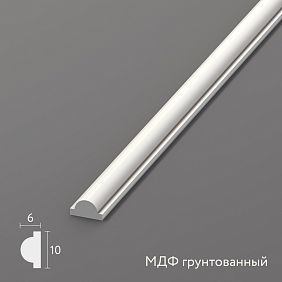

What lies behind the concept of 'molding': the philosophy of the decorative strip
A molding is an elongated decorative element with a constant profile that is attached to a wall, ceiling, or facade to create visual accents, zone space, or mask technical joints. The word comes from English (moulding - a cast part), but the concept itself has its roots in the architecture of Ancient Greece and Rome, where stone profiled strips divided the facades of temples and palaces into harmonious proportional parts.
In modern interiorswall moldingsperform several functions simultaneously. First, they create architectural rhythm, breaking up monotonous planes into readable fragments. The human eye is designed so that it is more comfortable perceiving structured surfaces than faceless wall canvases. Molding turns a wall into a composition where each element is in its place.
Secondly, moldings control the perception of a room's proportions. A horizontal strip at one-third of the wall height visually lowers excessively high ceilings, making the space cozier. Vertical moldings, on the contrary, stretch the room upward, creating an illusion of airiness in rooms with low ceilings. Frame compositions made of moldings on walls create hierarchy: what is inside the frame is perceived as an accent zone.
Thirdly, moldings solve practical problems. They mask technological joints of different materials - wallpaper and paint, tiles and plaster. They hide minor wall defects that are especially noticeable under grazing light. They protect corners and protrusions from accidental impacts with furniture. And some specialized profiles even organize hidden channels for laying cables.




Polyurethane as a material: the technology of solidified elasticity
Why has polyurethane become the basis for producing modern moldings? This polymer possesses a rare combination of properties that is difficult to find in other materials. Polyurethane is produced by two-component casting: two liquid polymers are mixed immediately before pouring into a mold, undergo a chemical reaction, and within minutes turn into a solid material with a closed porous structure.
The density of high-quality polyurethane fordecorative interior elementsis 280-350 kilograms per cubic meter. This is three to four times lighter than wood and seven to eight times lighter than plaster. A linear meter of an average molding weighs only 200-400 grams - it can be lifted with one finger. Lightness is critically important during installation: elements hold securely on special adhesive without the need for mechanical fasteners, do not create load on drywall partitions, and do not require an assistant during installation.
At the same time, the material has sufficient rigidity to maintain its shape on spans up to 2.4 meters without sagging. Shore hardness is 30-40 units, which provides impact strength: upon accidental impact, polyurethane elastically deforms, then returns to its original geometry without forming dents or cracks. Plaster in a similar situation would shatter, and polystyrene foam would leave an ugly dent.
Complete inertness to moisture is another critical advantage. Polyurethane does not absorb water even upon direct contact, does not deform from humidity fluctuations, and does not become covered with mold. Moldings made from this material serve equally confidently in dry living rooms and humid bathrooms, in kitchens with steam from cooking, and in unheated country houses. The material withstands a temperature range from minus 30 to plus 80 degrees without loss of properties.
The technology of casting into high-precision silicone molds allows reproducing the smallest relief details with perfect repeatability. Every ornamental curl, every protruding edge comes out of the mold absolutely identical, which is impossible with manual work. This means that the joining of elements becomes seamless: the ornament smoothly transitions from one strip to another without breaks or shifts.
Our factory also produces:
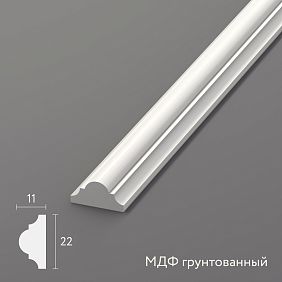


Variety of types: from ascetic flatness to baroque opulence
Moldings are classified according to several parameters: profile geometry, presence and nature of decoration, dimensions, functional purpose. Understanding this typology helps consciously choose elements that will precisely solve your tasks.
Get Consultation
Smooth flat moldings
These are minimalist strips of rectangular or slightly rounded cross-section without relief. Their surface is smooth, often with a concise bevel along the edges. Width varies from 2 to 12 centimeters, thickness - from 5 to 15 millimeters. Such moldings fit perfectly into modern interiors, where purity of lines and absence of visual noise are valued.
Smooth profiles are used to create strict frame compositions on walls, frame doorways in minimalist style, and form geometric panels. They combine beautifully with matte paints, concrete textures, and wooden panels. In monochrome interiors, a flat molding works as a thin shadow line, revealing volume through the play of light.
Profiled volumetric moldings
Here the profile becomes more complex: protrusions, recesses, smooth curves appear, creating a play of light and shadow. Classic forms - beads, ogees, toruses, fillets - are borrowed from order architecture. Such molding under side lighting casts a clear shadow, becoming a three-dimensional graphic element.
Profiled moldings are universal in style. Depending on the painting, they work in both neoclassical, Scandinavian, and modern eclectic styles. Profile width is usually 4-15 centimeters, relief depth - 1-3 centimeters. These elements are good for creating multi-level compositions, where different profiles are layered on top of each other, forming a rich plastic rhythm.
Ornamented moldings with decoration
The pinnacle of decorative complexity - moldings with relief ornamentation. Floral motifs (acanthus, grapevines, oak leaves), geometric meanders, Art Nouveau weaves, Art Deco stylizations - polyurethane casting reproduces any historical ornamentation with museum precision.
Ornamented moldings require space for perception. In small rooms, they overload the interior; in large ones, they become the core of the composition. A classic technique: a wide ornamented molding frames the perimeter of the ceiling, while more modest smooth strips create panels on the walls. The width of such moldings reaches 20 centimeters, the length of a standard element is 2.4 meters.
An important nuance: ornamented moldings often have a directionality of the pattern. Floral decoration 'grows' in a certain direction, and during installation, it is necessary to monitor the correct orientation of the elements so that the ornament does not end up upside down.
Corner and Specialized Elements
Moldings also include special corner pieces: external and internal corners with a pre-made 90-degree joint, rosettes (round or oval medallions for accent points), and decorative framing inserts. These elements eliminate the need for complex 45-degree miter cuts on straight planks, ensuring perfect pattern alignment in corners.
There are also flexible moldings made from special elastic polyurethane. They are designed for curved surfaces: bay windows, arched openings, radius walls. A flexible molding can be bent along an arc with a radius from 30 centimeters (for narrow profiles) to one and a half meters (for wide ones). After installation, it holds its set shape, maintaining the clarity of the relief along its entire length.
Size Range: From Subtle Accents to Monumental Statements
Understanding size standards helps design decor that will harmoniously relate to the scale of the room. A molding that is too narrow in a tall space will get lost, while one that is too wide in a small room will overwhelm the volume.
Molding Width
Width (profile height when placed vertically) varies from 2 to 20 centimeters. Narrow moldings (2-5 cm) are suitable for subtle accents: framing mirrors, highlighting niches, creating unobtrusive frames on walls. Medium (6-10 cm) — a universal option for most standard-height living spaces of 2.7-3 meters. Wide (12-20 cm) — for tall spaces, formal interiors, facade decor.
Empirical rule: the width of the molding should be approximately 1/30 of the wall height. For a 3-meter ceiling, a 10-centimeter plank is optimal. But this is just a starting point — the final decision depends on style and personal perception.
Element Length
The standard molding length is 2 meters or 2.4 meters. This size is due to technological limitations of casting and transportation convenience. A two-meter plank fits in an elevator and a passenger car, which is critical for individual buyers.
During installation, elements are joined end-to-end with special adhesive. Modern polyurethane adhesives create a seam whose strength exceeds that of the material itself. A properly executed joint becomes absolutely invisible after puttying and painting.
Some manufacturers offer elements of non-standard length — 1.5 meters for narrow spaces or 3 meters to minimize joints. But the main assortment is based on the two-meter standard.
Thickness and Relief Depth
The plank thickness (distance from the wall to the outer edge) ranges from 5 millimeters for flat profiles to 4-5 centimeters for richly ornamented ones. Relief depth — from half a millimeter for barely noticeable bevels to 3-4 centimeters for Baroque compositions with large floral motifs.
Thickness affects the play of shadows: the greater the projection from the wall, the more contrasting the shadow under side lighting, and the more voluminous the decor appears. In rooms with uniform ceiling lighting, it makes sense to choose deeper relief so the molding doesn't blend with the wall. Where there is directional light (wall sconces, floor lamps), shallow profiles also work.
Using Moldings in Interior Design: From Royal Boiserie to Hiding Construction Flaws
Moldings are a tool with an extremely wide range of applications. They can be the main hero of an interior or an invisible assistant solving technical problems. Let's consider the main usage scenarios.
Decorative Boiserie Panels: An Aristocratic Tradition in a Modern Interpretation
Boiserie (from the French 'boiserie' — wood paneling) is a system of wall panels framed by moldings, creating a rhythmic geometric composition. Historically, boiserie was made from carved wood and adorned palace interiors. Todaywall panels boiserie it is recreated using polyurethane moldings, paint, and boundless imagination.
Classic scheme: the wall is divided by a horizontal plank into two zones — lower (1/3 of the height) and upper (2/3). The lower zone is subdivided by vertical and horizontal moldings into rectangular or square panels. Inside the panels — contrasting paint, wallpaper, fabric inserts. The upper zone remains monochromatic or receives its own pattern. A finishing cornice runs under the ceiling.
Modern interpretation of boiserie allows freedom: asymmetrical compositions, panels of different sizes, using moldings only on an accent wall. It's important to maintain proportionality: in tall spaces, panels can be large (80x120 cm), in standard apartments, compact ones (50x70 cm) work better.
The color scheme determines the mood. Classic option — white moldings on a light gray or beige background. Modern — graphite planks on white walls. Dramatic — black moldings with a gold accent inside the panels. The material inside the panels can be anything: paint, wallpaper, fabric, mirror, wood veneer.
Boiserie visually structures space, adds depth and aristocracy to the interior. Such finishing is appropriate in living rooms, studies, dining rooms, bedrooms. In hallways, boiserie protects walls from accidental damage, creating a practical and elegant decor.
Wall Framing: Managing Attention and Proportions
Even without creating full-fledged boiserie, moldings can transform the perception of walls. Framing compositions manage the viewer's gaze, highlighting significant zones and creating visual anchors.
A typical technique is a large frame made of molding on an accent wall behind a bed headboard, sofa, or TV. The frame can surround a painting, mirror, decorative panel, or be a standalone element with contrasting paint inside. The frame size is chosen proportionally to the furniture: it should be slightly wider and taller than the item it 'serves'.
Horizontal moldings divide the wall by height, correcting room proportions. A plank at a level of 90-100 cm from the floor (classic boiserie height) visually lowers overly high ceilings, making the space more intimate. A plank at a level of 2/3 of the wall height, on the contrary, stretches the room upward. In rooms with windows of different heights, a horizontal molding running at the level of the top edge of all openings creates an illusion of uniformity.
Vertical moldings form a rhythmic structure, especially effective in long, narrow rooms. A row of vertical planks on a long wall visually shortens it, breaking it into readable segments. This technique works in hallways, galleries, elongated living-dining rooms.
Framing Doors and Windows: An Architectural Frame for Functional Openings
Door and window openings are natural focal points in any room. Framing them with moldings turns utilitarian holes into architectural statements.
Classical door framing includes vertical strips on the sides of the opening (casing) and a horizontal element at the top (frieze or pediment). Moldings can be placed flush with the frame or set back from it by 5-10 centimeters, creating an additional frame. The top element is sometimes made wider and more decorative, with consoles or rosettes at the corners.
Modern interpretation allows for asymmetry: framing on only one side of the opening, using moldings of different widths, color contrast between the strips and the wall. In minimalist interiors, a thin, smooth molding is sufficient to emphasize the geometry of the opening. In classical ones, a wide profiled or ornamented molding is appropriate.
Windows are framed according to the same principle. The molding runs along the perimeter of the opening outside the reveals, visually enlarging the window and giving it significance. If the window is positioned low, the bottom molding can be extended down to floor level, creating the illusion of a French window. A group of windows on one wall is unified by common horizontal moldings at the top and bottom, resulting in a cohesive window composition.
Framing openings makes them part of the overall decorative system, linking them with wall, ceiling, and furniture finishes. The interior gains completeness and thoughtfulness.
Zoning rooms: boundaries without walls
In modern open-plan layouts (kitchen-living room, living-dining room), moldings become a tool for soft zoning. They delineate functional zones without physical separation by walls, preserving a sense of openness.
The technique is simple: different zones receive different decorative treatments with moldings. For example, in the living area, boiserie panels are created, while in the dining area, the walls remain smooth with a horizontal molding at chair back height. Or the kitchen is highlighted with flat, minimalist strips, and the living room with ornamented classical ones.
Another option is color zoning within a unified molding grid. The entire space receives identical frame compositions, but in different zones, they are painted in different shades. The eye perceives the zoning, but the integrity of the space is not disrupted.
Ceiling moldings also contribute to zoning.Polyurethane Crown MoldingDifferent profiles above different zones delineate functional boundaries at the ceiling level. For example, a simple smooth cornice runs above the kitchen, while a more ornate profiled one is above the living room.
Concealing defects and joints: the practical magic of decor
Not all uses of moldings are dictated by aesthetics. Often they solve purely practical tasks while simultaneously decorating the interior.
The junction of dissimilar materials—wallpaper and paint, tile and plaster, wood and concrete—rarely looks neat. A molding that overlaps the problematic boundary turns the defect into a decorative element. In the kitchen, a molding masks the joint between the kitchen backsplash and the painted wall. In the bathroom—the boundary between tile and waterproof paint.
Uneven walls are the bane of many apartments. Moldings do not physically level the plane, but they create a new geometric coordinate system that distracts the eye from defects. When a wall is divided into panels, attention focuses on the molding frames, and the unevenness of the background is perceived as insignificant texture.
Cracks, chips, traces of poor repairs are literally concealed by moldings: a strip is glued over the defect, completely covering it. After painting to match the wall color, the molding looks like originally intended decor, not an emergency cover-up.
Concealing utility lines is another function of specialized moldings. Wide, flat profiles with a rear cavity allow hiding electrical cables, low-voltage wires, and thin lighting tubes inside. The molding is attached to the wall, the utilities are laid in the groove, resulting in a clean surface without hanging wires.
Installing moldings: a step-by-step guide for DIY installation
One of the main advantages of polyurethane moldings is the accessibility of DIY installation. No special skills, expensive tools, or assistants are needed. Carefulness, precise measurements, and adherence to technology are sufficient.
Surface preparation
The quality of installation is 80% determined by preparation. The surface must be clean, dry, strong, and relatively even. Peeling paint, loose plaster, dust—all of this is removed. If the wall is painted with glossy paint, it should be lightly sanded with fine sandpaper (grit P120-P180) to improve adhesive adhesion.
Significant unevenness—bumps higher than 3-5 millimeters, depressions deeper than 5 millimeters—are best leveled with filler. The molding is flexible and will follow a gentle wave of the wall, but sharp changes will create gaps at the joint between the strip and the surface.
Before installation, the wall is primed with an acrylic deep-penetration primer. The primer binds residual dust, strengthens the surface layer, and improves adhesive adhesion. Drying time for the primer is 2-4 hours depending on temperature and humidity.
Marking and Cutting
It's better to sketch the layout of the moldings on paper or in a graphics editor, indicating exact dimensions. This will allow calculating the amount of material and avoiding errors during installation.
Marking on the wall is done using a laser or bubble level, tape measure, and pencil. Accuracy of horizontals and verticals is critically important: even a 1-degree deviation over a 2-meter length creates a noticeable visual slant.
Cutting moldings is done with a fine-toothed saw (a hacksaw for metal works best), a miter box for precise angled cuts, or a miter saw for professional speed. Polyurethane cuts easily but requires care: rushing leads to chipping of the relief.
Straight 90-degree cuts are simple. Angled joints at 45 degrees (for frames and trims) require precision: even a small error in the angle will create a gap at the joint. An adjustable miter box or a miter saw with a rotating platform solves the problem.
Before gluing, elements are dry-fitted. All strips are laid out on the floor in the order they will be installed, joints, lengths, and symmetry are checked. Any discrepancies found are corrected immediately.
Adhesion
For installingof polyurethane moldingsSpecial polyurethane adhesive (often based on modified polymers like MS-polymer) or acrylic construction adhesive like 'liquid nails' is used. Silicone sealants are not suitable: they do not provide the necessary strength.
Adhesive is applied to the back of the molding in a dotted line or a continuous zigzag. For narrow strips, one line down the center is enough; for wide ones—two or three parallel lines. The amount of adhesive should be such that when the molding is pressed, excess slightly squeezes out along the edges but does not flow out abundantly.
The molding is applied to the marked spot, aligned with the lines, and firmly pressed against the wall with palms or a roller. Pressure should be uniform along the entire length. Hold time is 30-60 seconds, during which the adhesive sets.
Excess adhesive that squeezes out is immediately removed with a damp sponge. It will be more difficult to remove after drying. If a gap forms between the molding and the wall (due to surface unevenness), it is filled with acrylic sealant or filler.
End-to-end joints of the planks are glued with the same adhesive. A thin layer of adhesive is applied to the end of one element, and the second element is pressed firmly, aligning the relief. A properly executed joint is practically invisible. If the joint line is visible, it is filled with a thin layer of acrylic sealant and smoothed with a wet finger.
Final finishing and fitting
After the adhesive has completely dried (usually 24 hours), the final finishing of the joints is performed. White acrylic sealant is used to fill gaps between the molding and the wall, between adjacent elements, and in corner joints. The sealant is smoothed with a wet rubber spatula or finger, creating a smooth transition.
If painting the moldings in a color other than white is planned, the joints and gaps are first filled with finishing acrylic putty. After drying, the putty is sanded with fine sandpaper (P180-P220) until completely smooth. Only after this is painting performed.
Important note:wall moldingsare supplied primed, but this primer is intended for protection during storage and transportation. Before final painting, it is advisable to apply an additional layer of acrylic primer—this will improve paint adhesion and reduce its consumption.
Painting moldings: from snow-white classic to bold color
Polyurethane accepts any water-soluble paints: acrylic, latex, water-based. Alkyd enamels are also suitable, but they take longer to dry and have an odor. The best choice for interior work is water-based acrylic paint: it dries quickly, is odorless, and forms a durable coating.
Color strategies
White is the classic color for moldings, working in any interior. White planks on light walls create subtle volumetric graphics; on dark walls, they create contrasting framing. Pure white (tinting 'snow white,' 'arctic') gives a cool effect, while milky white or ivory is warmer and softer.
Painting moldings the same color as the wall is a modern minimalist technique. The planks almost blend with the background, remaining noticeable only due to the shadow play of the relief. This approach emphasizes the purity of forms without creating color contrast. It is important to use exactly the same paint shade as on the walls.
Contrast painting—moldings darker or brighter than the walls—creates a dramatic effect. Black planks on white walls, graphite on light gray, dark blue on beige—such combinations attract attention, structure the space, and add graphic quality.
Accent painting of the space inside molding frames with white planks is another popular technique. The moldings remain white, while the area inside the panels is painted in a contrasting or similar shade to the walls. This creates the effect of a painting in a frame.
Metallic finishes—gold, silver, bronze—are traditional for classic interiors. Ornamented moldings with gold or silver patina look luxurious but require care: an excess of metallic decor turns the interior into a museum exhibition.
Painting technique
The first coat of paint is applied with a brush or roller (a roller is more convenient for smooth moldings, a brush for ornamented ones). The paint is diluted with water by 5-10% for better flow and even coverage.
Ornamented moldings require thorough painting of all relief recesses. A thin brush (flute or art brush No. 6-10) is used, and the paint is dabbed into the relief details with short stippling motions.
The first coat dries in 2-4 hours depending on temperature and humidity. After drying, a second coat of undiluted paint is applied. Two thin coats provide more even and durable coverage than one thick coat.
If a perfectly smooth surface is required (e.g., for glossy enamel), light sanding with fine sandpaper (P320-P400) is performed after the first coat. This removes raised fibers and minor imperfections.
A final varnish coat is not mandatory, but in high-humidity areas (kitchens, bathrooms), matte acrylic varnish will add moisture resistance and simplify maintenance.
Molding prices: what affects the cost and how to optimize the budget
The price of polyurethane moldings varies widely depending on size, profile complexity, and manufacturer. Understanding pricing helps plan the budget and choose the optimal balance of quality and cost.
Pricing Factors
Width and profile complexity are the main factors. A narrow, smooth molding 2-4 centimeters wide costs from 250 to 600 rubles per linear meter. A medium profiled molding 6-10 centimeters wide—from 600 to 1500 rubles. A wide ornamented molding 15-20 centimeters wide—from 1500 to 4000 rubles and above.
Relief complexity directly affects the price: the richer the ornament, the more expensive the casting mold, and the higher the production cost. A molding with detailed floral carving can cost five times more than a smooth plank of the same width.
Polyurethane density also matters. Moldings with a density of 280-300 kg/m³ are cheaper but less durable and prone to shrinkage. Products with a density of 320-350 kg/m³ are 20-30% more expensive but more durable, with clearer relief and minimal risk of deformation.
Brand and country of production: Russian manufacturers offer prices 30-50% lower than European ones with comparable quality. German and Italian premium-class moldings are expensive but offer unique designs and impeccable execution.
Element length: the standard 2-2.4 meters has a base price. Elements of increased length (3 meters) cost more per linear meter due to production and transportation complexity. Flexible moldings are 50-100% more expensive than rigid ones due to special elastic polyurethane.
Current prices for 2026
As of February 2026, prices for polyurethane moldings in Russia are as follows (average retail prices in rubles per linear meter are indicated):
-
Smooth moldings 2-4 cm: 300-700 rub/m
-
Smooth moldings 5-8 cm: 600-1200 rub/m
-
Profiled 4-6 cm: 700-1500 rub/m
-
Profiled 8-12 cm: 1200-2500 RUB/m
-
Ornamented 6-10 cm: 1500-3000 RUB/m
-
Ornamented 12-20 cm: 2500-5000 RUB/m
-
Flexible moldings: +50-100% to the price of a similar rigid profile
-
Corner elements: 300-1500 RUB/pc depending on size
-
Rosettes and medallions: 500-3000 RUB/pc
For a standard room of 4x5 meters with a height of 3 meters, creating a simple boiserie system (horizontal molding around the perimeter at a height of 1 meter, plus vertical and horizontal slats to form 8 panels) will require approximately 35-40 linear meters of molding. Using an average profile costing 1000 RUB/m, the total material cost will be 35-40 thousand rubles. Including glue, sealant, paint — about 45 thousand.
Savings without loss of quality
Combining profiles of different complexity: expensive ornamented moldings are used only on accent areas (e.g., framing a fireplace or headboard), while the main volume is covered with medium profiled slats. Savings reach 30-40% while maintaining visual luxury.
Self-installation saves 50-70% of labor costs. A craftsman's services for installing moldings usually cost the same or even more than the material itself. The installation technology is simple enough to master independently over a weekend.
Purchasing from a manufacturer or large distributor provides a 15-25% discount compared to small retail stores. Bulk orders (from 100 linear meters) allow for an additional 10-15% price reduction.
Russian manufacturers with German or Italian equipment offer quality comparable to European, at a price one-third lower. Visual and operational differences are minimal.
Popular questions about polyurethane moldings: answering the main ones
Can polyurethane moldings be used in the bathroom?
Absolutely. Polyurethane is completely inert to moisture, does not absorb water, does not deform, and does not develop mold. Moldings made from this material are ideal for bathrooms, saunas, and swimming pools. The only condition is the use of moisture-resistant paint for the finish (acrylic latex or silicone).
How are moldings attached to a stretch ceiling?
Moldings are not attached to the stretch ceiling fabric itself — it is too thin and flexible. A special technique is used: the molding is glued to the wall right up to the edge of the ceiling, the top part of the profile remains free, creating the appearance of abutting the ceiling. The result is that the molding is held only by the wall but visually frames the ceiling. For hidden lighting, special profiles with a shelf are used, behind which an LED strip is placed.
Can regular rigid moldings be bent?
Rigid moldings made from standard polyurethane have limited flexibility. Narrow slats up to 5 cm wide can be bent to a radius of 2-3 meters without risk of breakage. Wider profiles are practically inflexible. For curved surfaces, it is necessary to use special flexible moldings made from elastic polyurethane, which are produced specifically for these purposes.
How do polyurethane moldings differ from polystyrene ones?
The main differences are in density, strength, and durability. Polyurethane is denser (280-350 kg/m³ vs. 25-40 kg/m³ for polystyrene), its relief is sharper and more detailed. Polyurethane is stronger: it does not break under pressure, does not crumble when cut, and withstands impacts. Polystyrene is lighter and cheaper but brittle, with less expressive relief. For rooms with a risk of mechanical impact (hallways, children's rooms), polyurethane is preferable. For calm areas where economy is important, polystyrene is suitable.
Is priming moldings necessary before painting?
Moldings are supplied primed, but this layer is intended for storage protection. Before final painting, it is recommended to apply an additional layer of acrylic primer — this improves paint adhesion, reduces its consumption, and creates a more even coating. Additional priming is especially important for ornamented profiles with deep relief.
Can moldings be painted after installation?
Yes, and this is even preferable to painting before installation. During installation, minor contamination with glue, sealant is inevitable, and joints requiring putty are formed. Painting after all materials have completely dried (usually 24-48 hours after installation) gives a neater and more uniform result. Joints and gaps become invisible, and the entire decor looks cohesive.
How long does it take to install moldings in a room by oneself?
For a person without experience, working carefully and without rushing, installing a boiserie system in a standard 4x5 meter room takes approximately 8-12 hours of pure time, spread over 2-3 days. Day one: preparation, marking, cutting (3-4 hours). Day two: installation (4-5 hours). Day three: sealing joints, sanding, painting (3-4 hours plus drying time). With experience, the speed doubles.
How to care for installed moldings?
Maintenance is minimal. Regular dry cleaning with a soft cloth or vacuum with a brush attachment once a month removes dust from the relief. Every six months, you can wipe with a slightly damp sponge with a mild soap solution. Do not use abrasive agents or stiff brushes — they scratch the paint. Local stains are removed spot by spot. With proper care, moldings retain their original appearance for 15-20 years.
What glue is best to use for installation?
The optimal choice is specialized polyurethane adhesives based on MS polymers (e.g., Titebond, Orac Decor FDP500, Tytan). They provide maximum strength, set quickly, and remain elastic after polymerization. An alternative is acrylic mounting adhesives like 'liquid nails' (Moment Montage, Titan). Do not use silicone sealants — insufficient bond strength.
Can moldings be used on facades?
Yes, polyurethane moldings are suitable for facade decoration. The material is resistant to UV radiation, moisture, temperature fluctuations, and frost. For facades, choose moldings with increased density (320-350 kg/m³) and use facade paints with enhanced weather resistance. Installation is performed using facade polyurethane adhesive foam.molded decoration made of polyurethaneexcellently serves both on facades and in interiors.
STAVROS Company: Quality, Time-Tested
When you decidebuy polyurethane moldings, the choice of manufacturer is crucial. STAVROS Company has specialized for over two decades in producing decorative elements from polyurethane, MDF, and solid wood, offering the Russian market European-quality products at reasonable prices.
The STAVROS production base is equipped with modern German and Italian equipment, allowing the reproduction of any historical ornaments with museum precision. The catalog includes over a hundred molding profiles — from laconic minimalist to lavish Baroque, from narrow accent strips to monumental wide compositions. All products are made from polyurethane with a density of 300-330 kg/m³, ensuring sharp relief, strength, and durability.
STAVROS offers not only standard moldings but also a full range of accompanying elements:Decor for Molding, corner pieces, rosettes, flexible profiles for curved surfaces. This enables the implementation of projects of any complexity, from simple door framing to creating intricate boiserie systems with multi-level compositions.
The company pays special attention to comprehensive solutions. If you want to create a classic interior withdecorative boiserie panels, STAVROS specialists will help select coordinated elements — moldings, baseboards, cornices, overlays — that perfectly match in style and proportions. You receive not a set of disparate parts, but a well-thought-out system where each element enhances the effect of the others.
Technical customer support is another advantage of working with STAVROS. The company's consultants will help calculate material quantities, suggest optimal profiles for specific rooms, and explain the nuances of installation and painting. In the Moscow and St. Petersburg showrooms, you can see all samples in person, assess the quality of relief, compare different profiles, and obtain materials for color tests.
Production within Russia ensures competitive prices, short delivery times, and the possibility of manufacturing custom elements for individual projects. Delivery is available to all regions of the country and CIS countries. Reliable packaging prevents damage during transportation.
Choosing STAVROS means gaining not just a material, but a partner invested in the success of your project. High-quality polyurethane, precise casting, a well-considered assortment, and professional support — all this makes working with STAVROS moldings comfortable and effective. Create inspiring interiors with products you can trust.


