Article Contents:
- What is Molding: Definition and Functions
- Functions of Moldings: Decorative and Practical
- Types of Moldings by Profile: From Simple to Complex
- Flat Moldings: Laconic and Modern
- Volumetric Moldings: Classical Architectonics
- Carved Moldings: Ornament and Luxury
- Molding Sizes: Choosing According to Room Scale
- Narrow Moldings: Two to Five Centimeters
- Medium Moldings: Six to Ten Centimeters
- Wide Moldings: Twelve to Twenty Centimeters
- Application of Moldings in Interior: Techniques and Methods
- Wall Panels Boiserie: Classic French Interior
- Framing Doors, Windows, Mirrors: Accentuating Objects
- Dividing a Wall Horizontally: Height Zoning
- Creating Decorative Frames on Walls: Art Without Paintings
- Flexible Moldings: Decorating Curved Surfaces
- Characteristics of Flexible Moldings
- Applications of Flexible Moldings
- Answers to Popular Questions About Moldings
- Conclusion: Moldings as a Tool for Transformation

The wall is silent. A flat surface painted or wallpapered remains faceless, empty, devoid of depth and character. Why do interiors of the nineteenth century, palace halls, aristocratic residences captivate the eye, make one stop and examine the details? The secret lies in the structure: walls were divided by moldings into panels, framed with borders, covered with relief decor, creating a play of light and shadow, a rhythm of verticals and horizontals, a hierarchy of planes.Polyurethane stucco moldingsbring back this architectural complexity into modern interiors affordably, quickly, without wet processes and astronomical costs. A profiled strip two to twenty centimeters wide, two meters long, weighing three hundred to eight hundred grams, costing one hundred to one thousand rubles per piece transforms a room radically: moldings glued in rectangles on the wall create classic boiserie panels, a horizontal line visually divides the wall into a plinth and a main zone, framing a door or mirror adds an accent, decorative frames turn the wall into a gallery.
Molding is not an invention of the twentieth or twenty-first century. Profiled strips adorned temples of Ancient Rome (marble cornices, friezes with relief), palaces of the Renaissance era (wooden carved panel frames), Baroque mansions (abundant, lush, complex gypsum stucco). Materials expensive, installation labor-intensive, accessibility elitist. Polyurethane democratized decor: mass production reduced the price dozens of times (polyurethane molding costs one hundred to five hundred rubles per meter versus three to ten thousand for wooden carved molding of similar profile), lightness simplified installation (glued to the wall without dowels, screws — one hour of work to glue twenty meters of moldings versus a day's work installing wooden ones), moisture resistance expanded application (bathrooms, kitchens, facades — polyurethane does not rot, does not swell, lasts for decades). Todaypolyurethane stucco moldingis accessible to everyone: construction stores, online catalogs, manufacturers direct sales — hundreds of profiles to choose from, delivery within a week, installation over the weekend by yourself.



What is Molding: Definition and Functions
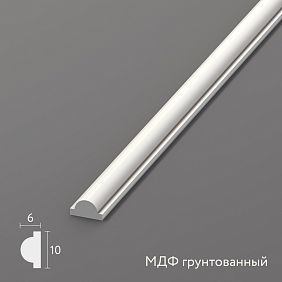
Molding (from English molding — molding, casting) is a profiled decorative strip of linear form. The cross-section of molding is relief (protrusions, depressions, complex geometry create a play of light and shadow), standard length two to two point four meters (covers a wall with minimal joints), width variable from two to twenty centimeters (narrow for delicate decor, wide for monumental compositions). Material of molding historically: stone (marble, granite — antiquity, heaviness, high cost, eternity), wood (hand or machine carving — Middle Ages, modern era, labor intensity, high price, susceptibility to moisture, insects), gypsum (modeling, casting — Baroque, Classicism, fragility, weight, lengthy installation), polyurethane (casting in molds — late twentieth-twenty-first century, lightness, strength, moisture resistance, mass production, accessibility).




Functions of Moldings: Decorative and Practical
Structuring the plane. A bare wall is visually endless (the gaze slides, finding no point of fixation, the space seems amorphous, unorganized). Moldings divide the wall into zones (a horizontal molding at a level of ninety to one hundred twenty centimeters from the floor creates a visual plinth, vertical moldings divide the wall into panels — rhythm, order, hierarchy appear). Psychology of perception: structured space is more comfortable than chaotic (the brain processes information divided into blocks more easily — an interior with moldings is perceived as more harmonious than empty walls).
Framing objects. Door, window, mirror, painting, panel — objects requiring visual highlighting. Molding creates a frame (contour emphasizes the boundaries of the object, focuses attention, adds significance). Example: a door without framing merges with the wall (the opening is perceived as a technical hole), a door framed with molding becomes an architectural element (portal, entrance emphasized, solemn).
Concealing defects. Perfectly smooth walls are rare (plaster has waves, variations of millimeters-centimeters, drywall joints are visible, cracks appear over time). Molding conceals (applied along the defect line, covers unevenness, crack — visually the wall becomes flawless). Cost-saving: leveling a wall with plaster to perfection is expensive (ten-twenty thousand rubles per room), applying moldings that conceal defects is cheap (one-three thousand for materials plus a day of work).
Creating style. Moldings instantly mark the interior style. Classic requires moldings (without them, the interior is not read as classic — the necessity of decor is absolute), Baroque abounds with moldings (the more, the more authentic), Neoclassical uses them delicately (narrow profiles, restrained ornamentation — elegance without overload), Minimalism avoids them (absence of moldings is fundamental — purity of planes, conciseness). Want a classic interior?Polyurethane moldings stuccoare as necessary as air — without them, the style is not realized.
Our factory also produces:



Types of moldings by profile: from simple to complex
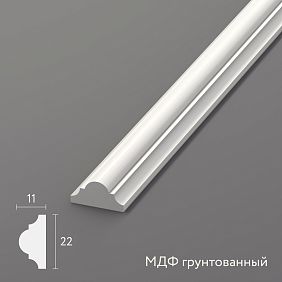
Molding profile (cross-sectional shape) determines visual perception, style affiliation, installation complexity. Classification by relief complexity: flat (smooth, minimal relief — Modern, Minimalism, Contemporary), volumetric geometric (protrusions, depressions of simple shapes — shelves, coves, beads without ornamentation — restrained classic, Neoclassical), carved ornamented (floral motifs, geometric patterns, complex relief — Baroque, Rococo, Empire, richness of decor).
Get Consultation
Flat moldings: conciseness and modernity
Flat molding — a strip of rectangular or trapezoidal cross-section without relief or with minimal (beveled edges, barely noticeable grooves). Width two-ten centimeters (narrow two-four for delicate lines, medium five-seven for noticeable frames, wide eight-ten for monumental panels). Thickness five-fifteen millimeters (thin almost flat, thick create a noticeable protrusion from the wall). Surface smooth matte (white primed — ready for painting any color).
Application of flat moldings. Modern interiors (Minimalism, Scandinavian style, Contemporary — decor is present but unobtrusive, geometry is clean without ornaments), office spaces (meeting rooms, executive offices — solidity without pretentiousness, professionalism without pomp), children's rooms (safety — absence of sharp protruding elements, neutrality — does not impose a style, suits any theme from princesses to space). Popular technique: flat moldings form rectangular frames on the wall (inside the frame paint of a contrasting color or wallpaper with a print, outside a solid base — graphic quality, structure, modernity without classical overload).
Volumetric moldings: classical architectonics
Volumetric molding has a complex cross-section (alternation of convexities and concavities, shelves and beads, steps and roundings — profile repeats architectural orders, cornices of ancient temples, framing of palace panels). Width five-twenty centimeters (medium five-ten for standard panels, wide twelve-twenty for high walls, ceremonial rooms). Relief depth ten-thirty millimeters (protrusion from the wall is noticeable, creates a pronounced play of light and shadow — relief is readable from a distance, adds volume to a flat wall).
Elements of a classic molding profile. Shelf (upper horizontal plane — completes the profile, creates a shadow line), cove (concave arc — smooth transition, softness of forms), bead (convex arc — volume, dynamics), ogee (S-shaped curve — complexity of profile, elegance), fillet (flat vertical strip — separates elements, structures the profile). Combination of elements creates a unique profile (two moldings outwardly similar, but the difference in proportions of cove and bead makes one elegant, the other massive — details are critical).
Application of volumetric moldings. Classic interiors (living rooms, dining rooms, studies in styles Classicism, Neoclassical, English — moldings are mandatory, volumetric profile emphasizes status), boiserie (wall panels framed by moldings — French classic, volumetric profile creates expressive frames), framing (doors, windows, fireplaces, mirrors — volumetric molding makes the framing an architectural element, not just a line).
Carved moldings: ornament and luxury
Carved molding is covered with ornament (floral motifs, geometric patterns, zoomorphic elements — relief is complex, detailed, requiring examination). Width seven-twenty centimeters (narrow seven-ten for delicate decor preserving readability of the ornament, wide fifteen-twenty for large-scale compositions where the ornament is visible from a distance). Relief depth fifteen-forty millimeters (ornament is protruding, volumetric — play of light and shadow is dramatic, decorativeness is maximal).
Types of ornaments for carved moldings. Acanthus leaves (classical floral motif — stylized leaves, scrolls, volume — Antiquity, Renaissance, Baroque), dentils (small rectangular teeth — repeating, rhythmic row — Doric order, strictness), egg-and-dart (egg-shaped ornament — alternating ovals with darts — Ionic order, elegance), meander (geometric pattern broken line forming squares — Ancient Greece, strictness, eternity), grapevine (floral motif — clusters, leaves, tendrils — Provence, Country, naturalness), linear rosettes (repeating floral motifs — Baroque, Rococo, femininity). Choice of ornament is determined by interior style (acanthus leaves for Baroque, dentils for Classicism, grapevine for Provence — style correspondence is critical for harmony).
Application of carved moldings. Luxurious interiors (living rooms, bedrooms, dining rooms in styles Baroque, Rococo, Empire — abundant decor is appropriate, expected, creates a palace atmosphere), accent zones (fireplace, headboard, TV area — carved molding frames, highlights a focal point, attracts attention), restoration of historical interiors (buildings of the 19th-early 20th centuries — replacement of lost plaster stucco with polyurethane replica, ornament is accurately reproduced, authenticity is preserved).
Molding sizes: selection according to room scale
Molding width (profile height during vertical installation) is critical for proportions. Narrow molding in a tall room gets lost (line is thin, unnoticeable — decorative effect is minimal), wide in a small room is oppressive (massiveness overloads, space visually shrinks). Rule: molding width is proportional to ceiling height and wall area.
Narrow moldings: two-five centimeters
Narrow molding is delicate (line is noticeable but not dominant — decor is present, does not shout). Width two-five centimeters, thickness five-ten millimeters, weight one-two hundred grams per meter (maximum lightness, installation is simplest — glue applied minimally, pressure brief).
Application of narrow moldings. Small rooms (rooms area ten-fifteen square meters, ceilings two forty-two seventy — narrow molding does not overload, preserves airiness), framing small objects (mirrors diameter forty-sixty centimeters, paintings, switches sockets — narrow frame is sufficient, wide is excessive), modern interiors (Minimalism, Scandinavian style — decor is minimal, narrow molding is a compromise between absence of decor and classical need for structure).
Medium moldings: six-ten centimeters
Medium molding is universal (suits most rooms, styles — golden mean between delicacy and expressiveness). Width six-ten centimeters, thickness ten-twenty millimeters, weight two-four hundred grams per meter (installation standard, glue ordinary, pressure one-two minutes).
Application of medium moldings. Standard rooms (rooms area fifteen-twenty five square meters, ceilings two seventy-three meters — proportions optimal), classic panels (boiserie, frames on walls — width seven-nine centimeters creates a noticeable, structuring, not massive frame), framing doors windows (standard openings height two-two twenty, width eighty-one hundred twenty centimeters — molding eight-ten centimeters frames proportionally).
Wide moldings: twelve-twenty centimeters
Wide molding is monumental (line is dominant, massive — decor declares itself loudly, creates pronounced architectural quality). Width twelve-twenty centimeters, thickness twenty-forty millimeters, weight five-eight hundred grams per meter (installation requires strong glue, pressure prolonged five-ten minutes or weight until setting).
Application of wide moldings. Tall rooms (ceilings three twenty-four meters and above, areas from thirty square meters — scale requires large moldings, narrow ones will get lost), ceremonial interiors (halls, living rooms, dining rooms of representative class — monumentality, solidity, status are created by large decor), building facades (external application — wide moldings are visible from a distance, structure the facade, create architectural expressiveness).
Application of moldings in interior: techniques and methods
molding from polyurethaneare universal. One molding profile is applied in dozens of ways (panels on walls, door framing, decorative frames, horizontal wall division, accenting niches — limitation only designer's imagination, project budget). Let's consider popular techniques.
Wall paneling boiserie: the classic French interior
Boiserie (from the French boiserie - wooden paneling) are wall panels framed with moldings. Historically: carved wooden panels covered the lower part of walls (protection from cold, moisture, mechanical damage), moldings framed each panel (decorative, structuring frame). Modern interpretation: wooden panels are replaced by a painted wall or wallpaper, moldings are glued in rectangles (visual imitation of panels - boiserie effect without wooden paneling, budget-friendly, quick, decorative).
Technology for creating boiserie with moldings. Step one: marking (the wall is divided into rectangles - quantity, size, location are calculated based on wall height, length, interior style). Classic boiserie: the lower third of the wall (ninety to one hundred twenty centimeters from the floor) is divided into panels (three to five rectangles horizontally, height sixty to eighty centimeters, width fifty to one hundred centimeters - proportions close to a square or vertically elongated). Step two: molding installation (strips are cut to the required length, corners are cut at forty-five degrees for joining, glued to the wall according to markings - forming rectangular frames). Step three: painting (moldings and the wall inside the frames are painted - options: all white monochrome, white moldings with colored contrasting wall inside frames, colored moldings with white wall - contrast emphasizes structure).
Boiserie effect. The wall is structured (amorphous plane turns into an organized composition - rhythm of rectangles, hierarchy of zones), the interior acquires a classic character (boiserie is a marker of classic, neoclassical, Provence style - instant style identification), space visually changes (vertical panels stretch the wall upward, horizontal ones widen it, small panels fragment and make it cozier, large ones enlarge and make it more monumental - managing space perception through decor).
Framing doors, windows, mirrors: accentuating objects
Door, window, mirror - functional objects, but also compositional centers. Framing with molding highlights (focuses attention, emphasizes significance, creates solemnity).Polyurethane moldingideal for framing: lightweight (does not overload the door leaf, window frame), adheres firmly (holds for decades without peeling), can be painted any color (matching the interior color scheme).
Door framing. Molding is glued around the perimeter of the door opening (onto the wall around the frame or onto the frame itself — depends on the opening width and style). Molding width: narrow five to seven centimeters for standard doors, medium eight to twelve for tall entrance doors, wide fifteen to twenty for palace portals (proportion: molding width is one-fifth to one-eighth of the door height). Frame shape: simple rectangular (molding runs strictly vertically upward from the floor along the sides of the door, horizontally at the top — clean geometry, minimalism), with a pediment (moldings above the door form a triangle or semicircle — classic, solemnity), with consoles (moldings on the upper sides form protruding consoles supporting the top molding — Empire style, monumentality).
Mirror framing. Molding turns a frameless mirror into a framed mirror (visually more expensive, more interesting, more finished). Technology: molding is cut to mirror size plus molding width multiplied by two (mirror eighty by one hundred twenty centimeters, molding width eight centimeters, length of verticals one hundred twenty plus sixteen equals one hundred thirty-six, horizontals eighty plus sixteen equals ninety-six), corners are cut at forty-five degrees, molding is glued to the wall around the mirror (forms a frame - mirror is visually integrated into the interior, doesn't hang as a foreign object). Option: molding is glued to the mirror itself (special mirror adhesive, holds polyurethane on glass - frame moves with the mirror when relocated).
Horizontal wall division: height zoning
A high wall (three to four meter ceilings) is perceived as monumental, but amorphous (giant plane, the eye finds no scale). Horizontal molding divides the wall into zones (lower third - visual plinth, middle third - main zone, upper third - frieze - hierarchy is created, proportions are harmonized).
Placement level of horizontal molding. Classic: ninety to one hundred twenty centimeters from the floor (one-third of wall height with ceilings two seventy to three meters - golden ratio, harmonious proportion). High: one hundred fifty to one hundred eighty centimeters (with ceilings three fifty to four meters - two-thirds of the wall remain upper zone, one-third lower - visually lowers the ceiling, makes the space more intimate). Low: sixty to eighty centimeters (creates a wide plinth zone - Provence, country, rustic coziness).
Color solution for zones. Lower zone darker than upper (dark plinth visually grounds the interior, gives stability, practical - dirt is less noticeable), upper zone light (ceiling height visually increases, space becomes airier). Options: bottom dark gray top white (graphic quality, modernity), bottom beige top cream (soft tonality, Provence, warm classic), bottom wallpaper with print top solid paint (decorativeness, texture variety).
Creating decorative frames on walls: art without paintings
An empty wall is boring. Hanging paintings is not always possible (collection absent, budget limited, style doesn't involve painting). Alternative: decorative frames made of moldings (moldings glued in rectangles on the wall create the illusion of paintings, wall inside frames is painted contrastingly or covered with patterned wallpaper - decorativeness, structure, budget-friendliness).
Composition of decorative frames. Symmetrical (four to six rectangles of the same size arranged in an even grid - classic, order, calm), asymmetrical (frames of different sizes, free arrangement - Art Nouveau, dynamics, modernity), accent (one large central frame, several small ones around - focal point, hierarchy). Frame sizes: small thirty by forty centimeters (imitation of photographs, engravings - multiplicity, gallery feel), medium fifty by seventy (imitation of medium-sized paintings - balance of visibility and quantity), large eighty by one hundred twenty and more (imitation of large-format panels - monumentality, dominance).
Flexible moldings: decoration of radius surfaces
A straight wall is easily decorated with rigid molding. A curved wall (bay window, column, arch, semicircular niche) requires flexible molding. Flexible molding is made from modified polyurethane (additives of plasticizers increase elasticity - material bends without cracking, after installation retains curved shape).
Characteristics of flexible moldings
Elasticity: minimum bending radius thirty to fifty centimeters (depends on molding width - narrow ones bend tighter, wide ones require larger radius). Flexibility is achieved by preheating (before installation, molding is immersed in hot water fifty to sixty degrees for ten to fifteen minutes, polyurethane softens, bends easier, after cooling in curved position retains shape) or initially (material contains plasticizers, flexibility is constant without heating - more convenient, twenty to forty percent more expensive).
Application of flexible moldings
Framing arches (molding is glued along the arc of the arched opening - emphasizes the curve, creates architectural framing), column decoration (molding wraps the column with horizontal rings - visually divides height, adds decorativeness), semicircular niches (molding frames the niche around the perimeter - highlights, structures), bay windows (wall smoothly curved - molding repeats the curve, boiserie panels on a bay window become possible).
Answers to popular questions about moldings
Can moldings be glued onto wallpaper or only on bare walls?
Gluing onto wallpaper is possible, but with caveats. Thin paper wallpaper (adhesive soaks through, softens - wallpaper peels off with the molding, installation unreliable - not recommended). Thick non-woven, vinyl wallpaper (adhesive doesn't soak through completely, wallpaper holds on the wall, molding holds on the wallpaper - installation possible, but strength is average, during removal molding will tear off wallpaper - acceptable if you don't plan to remove moldings). Optimal: glue moldings on a painted bare wall (maximum strength, removal if necessary without wall damage), after molding installation paint the wall and moldings together (painting integrates moldings, makes them one with the surface).
How to cut moldings at corners so joints are even without gaps?
Internal and external corners require cutting at forty-five degrees. Tool: miter box (device for precise cutting at a given angle - plastic miter box costs three hundred to five hundred rubles, metal one thousand to two thousand, professional with adjustable angle three to five thousand), fine-toothed saw (for metal works - clean cut without chips), sharp utility knife (for narrow thin moldings - cuts easily, quickly). Technology: molding is placed in the miter box (positioned as it will be on the wall - ceiling molding placed with ceiling side to the bottom of the miter box, wall molding with wall side to the side), saw is inserted into the miter box slot at forty-five degrees, cut smoothly without pressure (haste creates chips, tears - carefulness is critical). Check: two cut moldings are placed at an angle on a table (form a right angle of ninety degrees, joint tight without gap - cutting is correct), if gap (cut again, adjust angle - perfect joining requires practice, first five to ten corners have gaps, subsequent ones perfect).
Do moldings need to be primed before painting or is painting directly sufficient?
Polyurethane moldings are supplied primed (surface white matte - factory primer applied, ready for painting). Additional priming is not necessary (acrylic paint adheres well to factory primer, adhesion sufficient, paint consumption normal - priming again is excessive). Exception: unpainted gray moldings (polyurethane without primer - require mandatory priming before painting, otherwise paint absorbs unevenly, consumption doubles, color becomes spotty). Advice: buy white primed moldings (saves time, materials, nerves - paint immediately, result guaranteed).
How much does it cost to decorate a room with moldings, what budget to plan?
Room area twenty square meters, perimeter eighteen meters, ceiling height two seventy. Task: create boiserie on lower third of wall (six rectangular panels around perimeter), frame door with molding. Material calculation: boiserie six panels, each perimeter two meters (eighty centimeters width, sixty height, perimeter two eighty, rounded to three meters with margin), total eighteen meters of molding; door framing perimeter five meters (height two twenty, width eighty, perimeter six meters); horizontal molding around room perimeter at level one hundred centimeters from floor eighteen meters; total forty-one meters of molding. Molding price: average profile width eight centimeters three hundred to four hundred rubles per meter, total forty-one multiplied by three hundred fifty equals fourteen thousand three hundred fifty rubles. Adhesive: two liters of polyurethane adhesive (one thousand rubles per liter, total two thousand). Paint: four liters of acrylic paint (six hundred rubles per liter, total two thousand four hundred). Total materials: eighteen thousand seven hundred fifty rubles. Labor (if hiring a professional): molding installation two hundred rubles per meter (forty-one meters, eight thousand two hundred), painting one hundred rubles per meter (four thousand one hundred), total labor twelve thousand three hundred. Total budget: thirty-one thousand fifty rubles (materials plus labor) or nineteen thousand (if you install and paint yourself).
Conclusion: moldings as a transformation tool
Polyurethane molding trim— not just a decorative strip. It's a tool for transforming space (featureless walls gain structure, character, style), accessible to everyone (price is affordable at one hundred thousand rubles per meter depending on the profile, installation is simple over a weekend DIY, results comparable to a designer's work). Classic interiors without moldings are impossible (boiserie, frames, panels — the necessity of decoration is absolute), modern interiors with moldings gain depth (minimalism without sterility, structuredness without overload — balance is achieved with delicate profiles). Investment in moldings pays off instantly (visual value of the interior multiplies relative to costs — a room with twenty thousand worth of materials looks like one hundred to two hundred thousand, guests are surprised, owners are proud).
Company STAVROS — leader of the Russian architectural decor market, produces and suppliespolyurethane molding trimfor over twenty-three years (experience, technology, reputation verified by tens of thousands of completed projects). STAVROS assortment includes over one hundred eighty profiles of wall moldings (width from fifteen to one hundred fifty millimeters — from delicate lines for small rooms to monumental profiles for formal halls), styles cover the entire spectrum (classic, neoclassical, baroque, empire, provence, modern, minimalism — each style represented by corresponding profiles, ornaments), strip length standard two meters (minimum joints during installation, convenient transportation, compact packaging).
STAVROS production is based on European equipment (German, Italian lines — geometric precision to zero zero five millimeters, relief detail photographic, repeatability perfect), high-quality materials (polyurethane density three hundred-three hundred fifty kilograms per cubic meter — optimal balance of lightness, strength, detail), each batch controlled (before shipment moldings are checked visually, metrologically — defective items removed, client receives only quality products, two-year warranty against deformation, yellowing, degradation — manufacturer's confidence in products is absolute).
STAVROS catalog available online (website with close-up photos of profiles, precise dimensions in millimeters, current prices — selection convenient, information complete without need to call, ask), order placed simply (cart, delivery address, payment method — process five minutes), delivery fast (within Moscow and St. Petersburg by own couriers one-three days free for orders over twenty thousand rubles, to regions by transport companies four-ten days cost calculated automatically — transparency, predictability).
STAVROS technologists' consultations professional (help selecting profile for interior style, calculating molding quantity for project, recommendations on adhesive, installation, painting — phone, email, online chat, messengers, response within one business hour, support qualified based on experience of thousands of projects). Installation services (if you don't want to glue yourself — STAVROS partner crews perform turnkey installation of moldings, boiserie, panels, timeframe room per day-two, work warranty one year — peace of mind, professionalism, guaranteed result).
Choose STAVROS moldings — transform interior from featureless to characteristic, from simple to refined, create space that is structured, harmonious, inspiring daily. Classic accessible to everyone — polyurethane moldings make palace interiors reality for any budget.