Article Contents:
- What is Molding: Anatomy of an Architectural Detail
- Functions of Moldings in Interior Design
- Advantages of polyurethane over other materials
- Classification of Moldings by Profile and Style
- Flat Moldings: Minimalism and Modernity
- Volumetric Moldings: Classical Ornaments
- Carved Moldings: Baroque Luxury
- Flexible Moldings: Decorating Curved Surfaces
- Technical Specifications of Flexible Moldings
- Applications of Flexible Moldings
- Size Range: From Delicate to Monumental
- Thin Moldings (15-40 mm): Delicacy and Jewelry-like Detail
- Medium Moldings (50-100 mm): Balance and Versatility
- Wide Moldings (110-180 mm): Monumentality and Accent
- Applications of Moldings: From Panels to Framing
- Boiserie Panels: French Classic on Russian Walls
- Horizontal Wall Division: Classic English Interiors
- Door and Window Framing: Portals Instead of Openings
- Installation of Moldings: Mounting Technology
- Surface Preparation
- Marking
- Corner Trimming
- Adhesive Application
- Joint sealing
- Painting
- Painting and Decorating Moldings
- Solid Color Painting
- Patination: Gold in Recesses
- Contrast Painting: Graphic Style and Modernity
- Frequently Asked Questions about Polyurethane Moldings
- How Do Moldings Differ from Cornices and Baseboards?
- How Much Does It Cost to Decorate a 20 m² Room with Moldings?
- Can moldings be mounted on wallpaper?
- How Long Do Polyurethane Moldings Last?
- Can Moldings Be Painted in Dark Colors?
- Do Moldings Need to Be Treated Before Painting?
- Conclusion: Moldings as the Grammar of Interior Design

What transforms an ordinary wall into an architectural canvas? Not the paint color (trendy gray today, boring tomorrow), not the wallpaper (changed every 7-10 years, gets tiresome sooner), not the paintings (hang separately, disconnected from the space). It is structure that transforms — relief borders, horizontal and vertical divisions, panels, frames, transitions between zones. It is herepolyurethane stucco moldingsbecome the primary tool of the architectural language of the interior. Molding is not mere decoration, but the grammar of space, allowing one to create a three-dimensional composition from flat, featureless walls, which is perceived not as finishing, but as architecture.
A molding is a narrow, profiled strip (width from 15 to 180 mm, thickness 8-35 mm, standard section length 200-240 cm), mounted on walls, ceilings, furniture, and doors to create relief borders, frames, panels, and visual transitions. The history of moldings dates back to antiquity (Greek and Roman temples — egg-and-dart, dentils, fluting), flourishes in the Renaissance era (Italian palazzos with multi-tiered moldings dividing facades into floors and axes), and reaches its apogee in the Baroque and Classicism of the 17th-18th centuries (Versailles, Peterhof — walls completely structured by moldings creating panels, frames, borders). In the 20th century, moldings almost disappeared (modernism rejected decoration, walls became bare), in the 21st century they are returning (neoclassical, eclectic, modern classic — demand for structured, not bare spaces). Polyurethane made moldings mass-produced: plaster moldings (expensive, heavy, fragile, installation takes weeks) were accessible only to the elite, polyurethane ones (light, durable, inexpensive, installation takes hours) are accessible to all.
This article is a 2026 encyclopedia of polyurethane moldings. We systematize all the variety: classification by profile (flat minimalist, voluminous classic, carved baroque — how to choose to match the style), by function (wall for panels, ceiling for borders, door for framing, furniture for decor), by geometry (straight rigid, flexible for arches and radii), size range (from the thinnest 15 mm to monumental 180 mm — how width affects visual impact), application (boiserie panels, horizontal wall division, zoning, creating rhythm), installation technology (adhesives, miter cutting, joining, timelines), painting and decorating (colors, patination, gilding, matte and glossy finishes). The goal is to give you a complete catalog of polyurethane moldings, an understanding of their architectural role, tools for selection, confidence in installation, inspiration to create interiors that are not just finished, but structured.



What is a molding: the anatomy of an architectural detail
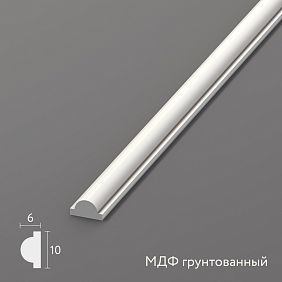
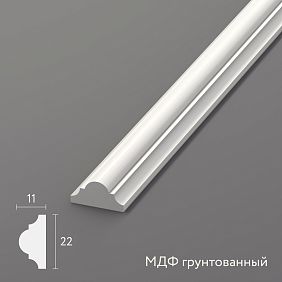
A molding is a profiled strip, the cross-section of which (the profile) is formed by a combination of simple geometric shapes: cavetto (concave arc, creates soft shadow), torus (convex arc, creates soft highlight), fluting (vertical groove, creates a rhythm of light and shadow), fillet (flat horizontal surface, creates a sharp boundary of light and shadow), ogee (S-shaped curve, creates a smooth transition). The combination of these forms creates an infinite variety of profiles — from the simplest (one cavetto, minimalism) to the most complex (five-seven elements, multi-tiered baroque profile).




Functions of moldings in the interior
Structuring planes: a bare wall is a single plane, monotonous, boring. Molding divides it into zones (upper and lower, left and right, center and periphery), creates rhythm, depth. The wall ceases to be a background, becomes an object.
Creating panels: rectangular or square zones on a wall, framed by moldings around the perimeter. Inside, panels are painted a contrasting color, wallpapered with a different pattern, or clad with fabric, leather, wood. Panels are the foundation of the boiserie style (French palace decor of the 17th-18th centuries), neoclassical, American classic, modern classic.
Framing: moldings around the perimeter of doors (architraves), windows, mirrors, paintings, fireplaces turn functional elements into decorative objects, focal points of the composition.
Horizontal wall division: a molding at a height of 90-120 cm from the floor (dado rail, chair rail) divides the wall into the lower third (painted a dark color, practical, protects from stains) and the upper two-thirds (painted a light color, visually raises the ceiling). A classic technique in English and American interiors.
Transitions between materials: the boundary between wallpaper and paint, between wooden panels and plaster, between tiles and wallpaper in the bathroom — molding creates a relief border, a clean transition, a sense of completion.
Concealing defects: gaps between wall and ceiling, uneven planes, material joints — molding covers them, turning a defect into decor.
Our factory also produces:


Advantages of polyurethane over other materials
Why polyurethane, not plaster, wood, polystyrene, MDF?
Weight: polyurethane with a density of 280-350 kg/m³ (quality European systems like BASF, Huntsman) is 4-5 times lighter than plaster (1200-1400 kg/m³), 2-3 times lighter than wood (oak 700 kg/m³, pine 500 kg/m³). A molding 100 mm wide, 240 cm long made of polyurethane weighs 0.8-1.2 kg, of plaster 4-6 kg, of wood 2-3.5 kg. Lightness simplifies installation (adheres to the wall without structural reinforcement, one person can install 20-30 meters per day), transportation (delivery from Moscow to regions 2500-8500 rubles, plaster is heavier — delivery is 40-70% more expensive), storage (stacks of moldings in a warehouse do not require reinforced shelves, do not collapse).
Durability: polyurethane is elastic (bends upon impact, then returns to shape, does not crack), plaster is brittle (cracks, crumbles upon impact), polystyrene is brittle (dents when pressed with a finger, breaks when cut), wood cracks along the grain (due to drying, thermal deformation). Polyurethane hardness on the Shore scale is 30-45 units (a scratch from a sharp object leaves a mark 0.2-0.5 mm deep but does not destroy the structure, does not crumble). Service life of polyurethane moldings in interiors is 30-50 years (plaster 20-40 years, cracks in new buildings due to settling, polystyrene 10-20 years, yellows from UV, becomes brittle, wooden 20-30 years, dries out, cracks).
Moisture resistance: polyurethane does not absorb water (water absorption coefficient less than 1%, when immersed in water for a month, swelling is 0.3-0.8% by volume — negligible), does not deform with humidity fluctuations of 30-90% (critical for bathrooms, kitchens, pools, saunas — plaster absorbs moisture, swells, cracks, wood dries out in winter at 30-40% humidity, swells in spring at 70-80%, moldings crack, gaps form). Polyurethane moldings are equally stable in dry and humid zones.
Detail reproduction: silicone molds (Wacker Germany, mold lifespan 5000-15000 castings) reproduce ornament with an accuracy of 0.2-0.3 mm (each egg-and-dart, each dentil, each flute is identical to the standard, symmetrical, sharp). Plaster molds (rigid, multi-part) reproduce relief with an accuracy of 0.5-1.2 mm (details are less sharp, especially small ones), wooden moldings are milled (accuracy 0.3-0.8 mm, but complex ornaments are impossible — only simple fluting and tori).
Price: polyurethane molding 180-1250 rubles/meter (depending on width and profile complexity), plaster 600-3500 rubles/meter (3-5 times more expensive), wood 450-2800 rubles/meter (30-120% more expensive than polyurethane, cheaper than plaster, but worse in moisture resistance), polystyrene 80-320 rubles/meter (2-4 times cheaper than polyurethane, but brittle, not durable, detail reproduction is worse). Savings for a 20 m² room (perimeter 60 meters of moldings for panels): polyurethane 60 m × 380 rub. = 22,800 rub., plaster 60 m × 1200 rub. = 72,000 rub. (savings 49,200 rub.).
Get Consultation
Classification of moldings by profile and style
Polyurethane stucco moldingsare classified by profile complexity (flat, voluminous, carved), style (minimalist, classic, baroque), function (wall, ceiling, furniture), geometry (straight rigid, flexible for radii).
Flat moldings: minimalism and modernity
A flat molding is the simplest profile (one or two cavettos or tori, relief 3-8 mm, width 15-60 mm). Minimalist geometry, absence of ornament, neutral form, does not draw attention to itself, creates structure without overloading.
Visual characteristics:
Thin (15-35 mm) — for zoning without dominance (separate wallpaper and paint, create thin panel frames, frame mirrors, paintings — the border is visible but unobtrusive).
Medium (40-60 mm) — for boiserie panels in minimalist interiors (Scandinavian style, contemporary, modern — panels 70×100 cm, molding 50 mm, inside a contrasting color, structure is clear but not heavy).
Application:
Modern apartments and townhouses (walls smooth with paint in white, gray, beige colors, flat thin moldings 25-40 mm painted the same color as the walls — create relief through light and shadow, not color contrast, minimalism with structure).
Offices, clinics, public spaces (minimalism requires it, but completely smooth walls look cheap, flat moldings create a delicate structure, status without pomp).
Children's rooms (moldings create panels 60×80 cm, inside painted in bright colors — red, blue, yellow, green — colored squares on the wall, child's room, playful, not boring, moldings neutral white do not compete with the color).
Prices: 180-420 rub./meter (thin 15-35 mm), 280-550 rub./meter (medium 40-60 mm).
Volumetric moldings: classical ornaments
Volumetric molding — medium complexity profile (two-four elements: ogees, beads, flutes, shelves, relief 8-20 mm, width 50-120 mm), often with ornament (egg-and-dart — oval beads, dentils — small rectangular teeth, meander — Greek ornament broken line, bead-and-reel — round beads pearl). Classical architectural grammar, elegance, moderate opulence, suitable for neoclassical, American classic, modern classic.
Types of ornament:
Egg-and-dart (oval or egg-shaped elements, alternating with sharp darts — ornamentum egg-and-dart): relief 10-18 mm, pitch (distance between eggs) 25-50 mm. Application: framing panels in living rooms, dining rooms, studies (neoclassical, Greek, Palladian style). Price 420-850 rub./meter.
Dentils (small rectangular teeth, imitation of beam ends in ancient architecture): tooth height 8-15 mm, width 5-12 mm, pitch 8-18 mm. Application: cornices under the ceiling, moldings for panels in studies, libraries (Roman, Renaissance, English classical style). Price 380-780 rub./meter.
Meander (broken line at right angles, continuous ornament, symbol of eternity, Meander river in Greece): relief 8-12 mm, module (size of one meander element) 20-40 mm. Application: framing zones in living rooms, halls (Greek, Hellenistic, neoclassical style). Price 460-920 rub./meter.
Bead-and-reel (round beads, strung in a chain, pearl): bead diameter 6-12 mm, pitch 8-15 mm. Application: thin moldings for framing mirrors, paintings, doors (French classicism, Empire, American classic style). Price 320-680 rub./meter.
Flutes (vertical grooves, imitation of column fluting): depth 5-12 mm, width 8-18 mm, pitch 10-22 mm. Application: wide moldings for imitating pilasters (vertical moldings on walls with flutes create the impression of flat columns — classical order system). Price 450-950 rub./meter.
Application:
Living rooms (boiserie panels 80×120 cm on the wall behind the sofa, molding width 80 mm with egg-and-dart around the perimeter of each panel, inside the panels damask wallpaper or solid contrasting, moldings white, wall light gray — neoclassical, elegance, European aesthetic). Molding perimeter on the wall 12 m² (five panels): 5 panels × perimeter of one 3.6 m = 18 meters, cost 18 m × 680 rub. = 12240 rub. + installation 18 m × 380 rub. = 6840 rub., total 19080 rub.
Dining rooms (horizontal molding at a height of 100 cm from the floor, width 70 mm with dentils, divides the wall into a lower dark third — dark blue, burgundy, graphite — and an upper light one — cream, light beige — classic technique, atmosphere of an English club, conservatism, solidity). Room perimeter 20 m² — 18 meters of molding, cost 18 m × 520 rub. = 9360 rub. + installation 18 m × 340 rub. = 6120 rub., total 15480 rub.
Studies (vertical moldings with flutes in the corners of the room, imitation of pilasters, height from floor to ceiling 2.7 m, width 90 mm — create an order system, verticals visually raise the ceiling, the study seems taller, more architectural). Four pilasters in four corners: 4 pcs × 2.7 m = 10.8 meters, cost 10.8 m × 780 rub. = 8424 rub. + installation 10.8 m × 450 rub. = 4860 rub., total 13284 rub.
Prices: 380-950 rub./meter (depends on width 50-120 mm and complexity of ornament).
Carved moldings: baroque luxury
Carved molding — complex multi-tiered profile (five-seven elements, relief 20-45 mm, width 80-180 mm), ornament opulent (acanthus leaves — stylized leaves of the acanthus plant, curled into spirals, multi-tiered; garlands — flowers, fruits, ribbons in compositions; cartouches — oval or rectangular frames with ornament inside; volutes — S-shaped scrolls; roses, grapevines, putti — cherubs). Baroque, rococo, palace aesthetic, maximum opulence, theatricality, luxury.
Types of ornament:
Acanthus (leaf of the Acanthus plant, symbol of classical architecture, used since antiquity): multi-tiered (two-three tiers of leaves, one above the other), curled (leaves form spirals, volutes), relief 25-45 mm. Application: wide moldings for framing fireplace portals, doors, mirrors in palace interiors (baroque, rococo, Empire style). Price 850-1650 rub./meter.
Garlands (festoon, swag — composition of flowers, fruits, ribbons, falling in an arc): relief 20-35 mm, elements roses, grapes, apples, ribbons intertwined. Application: moldings for wall decoration in formal living rooms, banquet halls (French classicism, Empire, historicism style). Price 720-1450 rub./meter.
Cartouches (decorative frame of oval, rectangular, shaped form, inside ornament or empty space for monogram, coat of arms, inscription): relief 18-35 mm, cartouche size 50-120 mm along the molding width. Application: moldings for framing mirrors, panels, doors (baroque, rococo, Victorian style). Price 650-1350 rub./meter.
Application:
Formal living rooms (walls with panels 100×150 cm, molding width 140 mm with acanthus leaves around the perimeter of each panel, inside the panels dark velvet — burgundy, dark green, dark blue — or gold wallpaper, moldings painted white with gold patination — palace luxury, baroque, theatricality). Cost: moldings 30 meters × 1250 rub. = 37500 rub. + installation 30 m × 520 rub. = 15600 rub., total 53100 rub.
Fireplace zones (fireplace portal framed with moldings width 120 mm with garlands — vertical moldings on the sides of the firebox, horizontal above the firebox, forming a frame, inside the firebox, above the portal a mantel shelf — the fireplace becomes the center of the composition, a work of art). Cost: moldings 5 meters × 980 rub. = 4900 rub. + installation 5 m × 480 rub. = 2400 rub., total 7300 rub.
Restaurants, hotels, banquet halls (high-end commercial interiors, where there is a demand for luxury, status, impression — walls are decorated with carved moldings, creating opulent panels, frames, portals — guests are immersed in the atmosphere of a palace, European mansion, historical building). Hall 60 m², wall perimeter 120 meters of moldings, material cost 120 m × 1150 rub. = 138000 rub., installation 120 m × 500 rub. = 60000 rub., total 198000 rub. (expensive, but the effect is corresponding — the hall is memorable, photographed, becomes the establishment's signature).
Prices: 650-1650 rub./meter (depends on width 80-180 mm and opulence of ornament).
Flexible moldings: decoration of radius surfaces
Standard moldings are rigid (polyurethane density 320-380 kg/m³ does not bend, holds shape — suitable for straight sections). Flexible moldings (flexible mouldings) — special polyurethane formula with reduced density (180-250 kg/m³) or with the addition of elastomers (rubber, thermoplastic elastomers) — material bends without heating, without cracks, returns to shape after load is removed. Application: arches, columns, bay windows, radius walls, oval and round ceilings — everywhere curved lines are needed.
Technical characteristics of flexible moldings
Minimum bending radius: depends on the width of the molding (narrow bends more, wide less). Molding 30 mm wide — minimum radius 25-35 cm (can wrap around a column diameter 50-70 cm), molding 60 mm — radius 50-80 cm, molding 100 mm — radius 100-150 cm. When attempting to bend more, the molding deforms irreversibly (microcracks on the inner surface, loss of shape).
Profile retention when bending: flexible molding in a straight state has an identical profile to rigid molding (same relief, same dimensions); when bent, the profile slightly deforms (the inner side of the arc compresses, relief elements converge by 3-8%, the outer side stretches, elements spread apart by 3-8%) — deformation is noticeable when measured, invisible to the eye from a distance of 1.5-2 meters (working perception distance in interiors).
Shape fixation: flexible molding is glued to a curved surface (arch, column) with polyurethane adhesive (Soudal, Tytan, Penosil) or acrylic mounting adhesive (Moment Montazh); when the adhesive dries (12-24 hours), the molding is fixed in a bent state, the shape is retained for 20-30 years (the material does not tend to return to straight, the adhesive seam holds). For fixation during drying time, painter's tape is used (every 20-30 cm a strip of tape from the molding to the surface — holds, prevents lifting).
Prices: flexible moldings are 40-80% more expensive than rigid ones (special polyurethane formula, more complex production, lower demand, shorter series). Flexible molding 50 mm 520-950 rub./meter (rigid equivalent 340-650 rub./meter), flexible 80 mm 780-1450 rub./meter (rigid 520-980 rub./meter).
Application of flexible moldings
Arches: a semicircular arch (width 100 cm, height 220 cm, arc radius 50 cm) is framed with flexible molding 70 mm wide (the molding follows the arch's arc, creating a relief frame). Arc length (half a circle with radius 50 cm): πR = 3.14 × 0.5 = 1.57 meters. Cost: 1.57 m × 820 rub. = 1287 rub. + installation 1200 rub., total 2487 rub. (an arch transforms from a bare opening into a portal).
Columns: a cylindrical column (diameter 30 cm, height 280 cm) is decorated with three flexible moldings (lower at base level 20 cm from floor, middle at half-height 140 cm, upper under capital 260 cm from floor), moldings 40 mm wide wrap around the column's circumference. Circumference length: πD = 3.14 × 0.3 = 0.942 meters per one molding, three moldings = 2.826 meters. Cost: 2.826 m × 620 rub. = 1752 rub. + installation 1800 rub., total 3552 rub. (a column transforms from a smooth cylinder into a decorated, classical, architectural one).
Bay windows: a bay window (semi-circular room protrusion, arc radius 120 cm, wall height 270 cm) is framed with flexible molding at a height of 100 cm from the floor (horizontal molding divides the bay window wall into lower and upper parts, creating structure). Arc length: πR = 3.14 × 1.2 = 3.77 meters. Cost: 3.77 m × 780 rub. = 2941 rub. + installation 2200 rub., total 5141 rub.
Size range: from jewelry to monumental
Polyurethane molding stuccoare produced in a wide range of sizes — width (main parameter, measured across the profile) from 15 to 180 mm, thickness (protrusion from wall) from 8 to 50 mm, standard section length 200-240 cm (some manufacturers make 250 cm or 300 cm for large objects, where fewer joints = faster installation + less sealant consumption for joint filling).
Thin moldings (15-40 mm): delicacy and jewelry
Thin molding — width 15-40 mm, thickness 8-15 mm, minimal relief 3-10 mm. Visually perceived as a thin line, border, stroke. Does not dominate, creates structure delicately.
Application:
Framing mirrors, paintings, photo frames (molding 20-30 mm around the perimeter creates a thin relief frame — mirror or painting stands out, not overloaded with a massive frame). Mirror 80×120 cm, perimeter 4 meters, molding cost 4 m × 220 rub. = 880 rub. + installation 800 rub., total 1680 rub.
Separating wallpaper and paint (on a wall, wallpaper occupies the upper two-thirds, paint the lower third, border — thin molding 25 mm, separates materials, creates a clean transition). Room 18 m², perimeter 17 meters, cost 17 m × 240 rub. = 4080 rub. + installation 17 m × 280 rub. = 4760 rub., total 8840 rub.
Furniture decor (thin moldings are glued onto cabinet, dresser, nightstand fronts, creating relief frames, drawer surrounds — furniture transforms from plain to decorated, status). Dresser with three drawers, each drawer framed with 18 mm molding, perimeter 8 meters, cost 8 m × 200 rub. = 1600 rub. + one hour of work (self-gluing, Moment Crystal adhesive 150 rub.), total 1750 rub. — an IKEA dresser for 8000 rub. looks like one for 18000 rub.
Prices: 180-380 rub./meter.
Medium moldings (50-100 mm): balance and versatility
Medium molding — width 50-100 mm, thickness 15-30 mm, relief 10-25 mm. The most universal group, suitable for most tasks (panels, framing, horizontal wall division), balanced (visible but not dominant, creates structure, does not overload).
Application:
Boiserie panels (wall divided into panels 70×100 cm, 80×120 cm, 100×150 cm, around each panel perimeter molding 60-90 mm, inside panel contrasting color or wallpaper — classic technique of French and American decor, neoclassical, modern classic). Living room 25 m², wall 12 m², five panels 80×120 cm, molding perimeter 20 meters, cost 20 m × 480 rub. = 9600 rub. + installation 20 m × 360 rub. = 7200 rub., total 16800 rub.
Door framing (architraves width 70-100 mm around door opening perimeter, create a decorative frame, transform door into portal). Door height 200 cm, width 80 cm, perimeter 5.6 meters, cost 5.6 m × 520 rub. = 2912 rub. + installation 5.6 m × 380 rub. = 2128 rub., total 5040 rub.
Horizontal wall division (molding 80 mm at height 100 cm from floor divides wall into lower dark third and upper light — classic of English and American interiors). Dining room 22 m², perimeter 19 meters, cost 19 m × 580 rub. = 11020 rub. + installation 19 m × 350 rub. = 6650 rub., total 17670 rub.
Prices: 340-850 rub./meter.
Wide moldings (110-180 mm): monumentality and accent
Wide molding — width 110-180 mm, thickness 25-50 mm, relief 20-45 mm. Visually powerful, dominant, creates accent, monumentality. Suitable for high rooms (ceilings 3.0+ meters), large areas (rooms 30+ m²), luxurious styles (Baroque, Rococo, palace).
Application:
Fireplace framing (fireplace portal framed with wide molding 140 mm with acanthus leaves, garlands — fireplace becomes an architectural object, center of composition, dominates the room). Portal perimeter 4.5 meters, cost 4.5 m × 1250 rub. = 5625 rub. + installation 4.5 m × 480 rub. = 2160 rub., total 7785 rub.
Large panels in formal living rooms (panels 120×180 cm, molding 150 mm around perimeter, inside gold wallpaper or velvet — palace luxury, theatricality, opulence). Three panels on wall, molding perimeter 18 meters, cost 18 m × 1420 rub. = 25560 rub. + installation 18 m × 520 rub. = 9360 rub., total 34920 rub.
Banquet halls, restaurants, hotels (high-end commercial interiors, where wide moldings create impression, status, luxury — guests immerse in palace atmosphere, historical building). Hall 50 m², walls decorated with wide moldings 130 mm, total length 80 meters, cost 80 m × 1180 rub. = 94400 rub., installation 80 m × 500 rub. = 40000 rub., total 134400 rub.
Prices: 780-1650 rub./meter.
Application of moldings: from panels to framing
Polyurethane molding stuccoare used in dozens of scenarios — each creates its own visual effect, atmosphere, and style.
Boiserie panels: French classic on Russian walls
Boiserie (from French bois — wood) is a system of wooden panels that decorated the walls of French palaces in the 17th-18th centuries (Versailles, Louvre, Fontainebleau). The panels were cut from oak, walnut, painted, gilded, creating a continuous decorated wall surface. Today, boiserie is imitated with polyurethane moldings: the wall is divided into rectangular or square panels (size 60×90 cm, 80×120 cm, 100×150 cm), a molding (width 50-120 mm) is mounted around the perimeter of each panel, and the inside of the panel is painted in a contrasting color (wall white, panel gray; wall cream, panel dark beige) or covered with wallpaper of a different pattern or texture.
Panel layout:
Panel height is usually 80-150 cm (the top edge of the panel at a height of 90-180 cm from the floor, leaving the upper part of the wall free or with other types of moldings). Width depends on the wall width (a 4-meter wall is divided into 4-5 panels, each 80-100 cm wide, with 10-20 cm intervals between panels — rhythm, structure). Panels are marked with a pencil using a level (horizontal lines strictly horizontal, vertical lines strictly vertical — curvature ruins the composition, looks like a mistake).
Molding installation:
Moldings are cut at a 45° angle at panel corners (miter box or miter saw — cutting precision is critical, gaps in corners are noticeable and spoil aesthetics), glued with polyurethane glue (Soudal, Tytan, Penosil) or acrylic mounting adhesive (Moment Montage), fixed with painter's tape while drying (12-24 hours). After drying, the tape is removed, joints are sealed with white acrylic sealant (gaps are filled, smoothed with a wet finger, excess removed with a sponge), moldings and panel interiors are painted (moldings usually white, panels inside contrasting — two coats of acrylic paint, roller for flat surfaces, brush for moldings).
Visual effect:
The wall becomes an architectural object (not a bare plane, but a structured composition with relief, rhythm, depth). The space visually compresses horizontally (panels break up the wall — the room seems cozier, more intimate, less institutional; suitable for large rooms 25-40 m² that need to be made homely). Status (panels are associated with European mansions, palaces, high-class hotels — a symbol of luxury, taste, tradition).
Cost of panels for a 12 m² wall (five panels 80×120 cm):
Moldings: perimeter of all panels 20 meters × 520 rub./meter = 10,400 rub.
Molding installation: 20 meters × 360 rub./meter = 7,200 rub.
Painting panel interiors (contrasting color, 6 m² panel area): 6 m² × 180 rub./m² = 1,080 rub.
Painting moldings (two coats of white paint): included in installation cost or separately 20 meters × 90 rub./meter = 1,800 rub.
Total: 10,400 + 7,200 + 1,080 + 1,800 = 20,480 rub. (the wall transforms from bare into a work of art, lasts 30-40 years).
Horizontal wall division: classic of English interiors
Molding at a height of 90-120 cm from the floor (dado rail, chair rail — historically protected the wall from chair backs) divides the wall into the lower third and upper two-thirds. The lower part (from floor to molding) is painted a dark color (graphite, dark blue, burgundy, dark green — practical, hides dirt from shoes, furniture, hands), the upper part (from molding to ceiling) a light color (white, cream, light gray, light beige — visually raises the ceiling, the room seems taller, brighter).
Visual effect:
The ceiling seems higher (dark bottom visually settles, light top soars — a 2.7-meter ceiling is perceived as 2.8-2.9 meters). The wall stops being monotonous (two colors instead of one, the border between them is relief — volume, dynamics, structure). Practicality (lower part dark, dirt is unnoticeable, easy to clean with a damp sponge). Style (classic English technique, used in Victorian, Edwardian, Georgian interiors, American classic, chinoiserie).
Application:
Dining rooms (lower part of walls dark, easy to clean from splashes, stains, upper part light, room doesn't feel oppressive, molding 70-90 mm at height 100-110 cm — atmosphere of an English club, conservatism, solidity).
Corridors (narrow long spaces visually expand if the upper part of walls is light — reflects light, corridor is brighter, more spacious, molding 60-80 mm at height 90-100 cm).
Studies (dark bottom, light top, molding wooden or painted to look like wood — atmosphere of a library, English club, respectability).
Cost for a 20 m² room (perimeter 18 meters):
Molding: 18 meters × 580 rub./meter = 10,440 rub.
Installation: 18 meters × 340 rub./meter = 6,120 rub.
Wall painting (lower part dark, upper part light, wall area 48 m², two colors): 48 m² × 220 rub./m² = 10,560 rub.
Molding painting (white, two coats): 18 meters × 90 rub./meter = 1,620 rub.
Total: 10,440 + 6,120 + 10,560 + 1,620 = 28,740 rub. (the room transforms from standard into an English dining room, study, library).
Door and window framing: portals instead of openings
Door and window are functional holes in walls. Moldings turn them into portals, framed, decorated, architectural objects. Casing (molding around the perimeter of the opening, width 40-120 mm) — simplest framing. Portal (two pilasters or columns on the sides + cornice or pediment on top) — full order framing, monumental.
Casing with moldings:
Molding 50-100 mm wide is mounted around the perimeter of the door opening (two vertical sides 210 cm each, one horizontal top 90-100 cm, total 510-520 cm = 5.1-5.2 meters per door). Corners are cut at 45° (upper corners of the opening — joining vertical and horizontal moldings). Molding is glued with polyurethane glue, joints sealed with sealant, molding painted to match wall color or contrastingly (wall white, molding white — blends in, relief stands out; wall gray, molding black — graphic quality, contrast, modern aesthetics).
Door casing cost:
Molding: 5.2 meters × 520 rub./meter = 2704 rub.
Installation: 5.2 meters × 380 rub./meter = 1976 rub.
Painting: 5.2 meters × 90 rub./meter = 468 rub.
Total: 2704 + 1976 + 468 = 5148 rub. (a door from a bare opening turns into a framed portal).
Window casings:
A window (width 120 cm, height 150 cm, perimeter 5.4 meters) is framed with molding 70-100 mm wide (molding around the perimeter of the sashes or around the perimeter of the reveals, creates a decorative frame, the window becomes an accent). Cost: 5.4 m × 580 rub. = 3132 rub. + installation 5.4 m × 360 rub. = 1944 rub., total 5076 rub.
Molding installation: installation technique
Installation of polyurethane moldings is accessible to a non-professional (unlike plaster moldings, which require plastering skills, or wooden ones, which require carpentry skills). You need tools (miter saw or miter box, level, tape measure, pencil, glue gun, spatula, painter's tape), materials (polyurethane glue or acrylic mounting adhesive, white acrylic sealant), time (a 20 m² room, 30 meters of moldings — 6-10 hours for a beginner, 3-5 hours for a professional).
Surface preparation
The wall must be level (deviations up to 3 mm are acceptable, polyurethane is flexible and compensates; more than 3 mm — level with putty), clean (free of dust, grease, old wallpaper, peeling paint — dust is removed with a damp sponge, grease is degreased with alcohol or acetone, peeling paint is scraped off with a spatula and primed), dry (wall moisture content no more than 8%, otherwise the glue won't set — damp walls are dried with a heat fan, heater, or ventilation).
Marking
Mark lines with a pencil and level where the moldings will go (horizontal lines are checked with a level — strictly horizontal, vertical lines with a plumb line or laser level — strictly vertical). Marking errors lead to crooked moldings (a molding runs at a 1-2° angle to the horizon — the eye sees it, looks like a mistake, unprofessionalism, spoils the aesthetics).
Trimming Corners
Moldings are joined at corners at 45° (top corners of panels, corners of door casings). Cutting with a miter box (hand tool, guides at 45°, cut with a saw — medium precision, gaps 0.5-1.5 mm, filled with sealant) or a miter saw (power tool, precision 0.1-0.3 mm, perfect corners, minimal gaps). A miter saw is expensive (12000-45000 rub.), but if you're doing moldings throughout the apartment (150-300 meters), it pays off in time and quality.
Adhesion
Glue (polyurethane Soudal, Tytan, Penosil for heavy moldings weighing more than 1 kg/meter; acrylic mounting adhesive Mомент Монтаж, liquid nails for light moldings less than 1 kg/meter) is applied in a zigzag or dots (every 30-40 cm) to the back of the molding (the surface that contacts the wall). The molding is pressed against the wall, aligned with the markings, and secured with painter's tape (every 50-70 cm a strip of tape from the molding to the wall — holds until the glue dries, prevents slipping under its own weight). After 12-24 hours (depending on glue, temperature, humidity) the tape is removed, the glue is dry, the molding is firmly fixed.
Joint sealing
Joints between moldings (panel corners, joints of molding sections — standard length 240 cm, if the wall is longer, moldings are joined) are filled with white acrylic sealant (Момент Гермент, Ceresit, Tytan). Sealant is squeezed from the tube with a gun into the gap, smoothed with a wet finger (wet your finger with water, run it along the seam — the sealant smooths out, fills the gap, forms a smooth transition), excess is removed with a damp sponge. After 2-4 hours the sealant dries, the seam is ready for painting.
Painting
Polyurethane moldings are supplied primed white (acrylic primer, two-three coats — surface is white, ready for painting). Paint with acrylic paints (Tikkurila, Dulux, Caparol, Benjamin Moore) in any colors (white, gray, black, colored — any RAL or NCS shade, 10000+ options). Technique: two coats of paint with a 4-6 hour interval (first coat dries 4 hours, then second coat — color is even, dense, without gaps), roller for flat areas of the molding (fast, even), brush for relief areas (penetrates recesses, paints the ornament completely). Paint consumption: 100-150 ml/meter of molding (20 meters of moldings = 2-3 liters of paint, a 2.5-liter can costs 850-2500 rub. depending on brand).
Painting and decorating moldings
Moldings are painted to match the wall color (blend in, stand out with relief, play of light and shadow — volume without color contrast, modern aesthetics), contrastingly (light wall, dark moldings or vice versa — graphic quality, clarity, classic), patinated (gold, silver, bronze in the recesses of the relief — luxury, baroque, palace style), decorated with special effects (metallic, pearl, glitter — modern eclecticism, art decor).
Solid color painting
The most common option: moldings white (walls colored — gray, beige, blue, moldings white — classic combination, clarity, contrast, European aesthetics) or moldings matching the wall color (graphite wall, graphite moldings — blend in color, stand out with relief, light glides over the molding, creates highlights and shadows — volume, modernity, minimalism with depth).
Technique: two coats of acrylic paint, roller and brush, 4-hour interval. Consumption 100-150 ml/meter.
Patination: gold in recesses
Patination (from Italian patina — patina of time) — a technique that imitates aging, creating the impression that the molding is antique, from a palace, with history. Patina (metallic pigment — gold, silver, bronze, copper) is applied to the recesses of the relief, creating highlights, contrast, luxury.
Technology:
The molding is painted with a base color (white, cream, light gray — two coats of acrylic paint, dries 12 hours).
Patina (metallic acrylic composition — Maimeri Idea Patina, Decoart Dazzling Metallics, gold, silver, bronze) is applied with a dry brush (brush is dipped in patina, excess wiped on paper, almost dry brush is run over the raised parts of the relief — gold remains on the raised parts, doesn't get into the recesses — contrast, volume, luxury).
Protection (optional, matte or semi-matte acrylic varnish, one coat — fixes the patina, protects from wear).
Effect: white molding with golden highlights on the raised parts of the relief (golden egg-and-dart, recesses between them white — luxury, baroque, palace style, associated with Versailles, Peterhof, European palaces).
Application: formal living rooms, dining rooms, banquet halls, high-end restaurants (where there is a demand for luxury, impression, opulence).
Contrast painting: graphic quality and modernity
Light wall (white, light gray, cream), dark moldings (black, graphite, dark blue) or vice versa (dark wall, white moldings). Creates graphic contrast, clarity, modern aesthetics, not classic.
Application: modern interiors (minimalism, Scandinavian style, contemporary — white walls, black moldings, panels white inside, black moldings around the perimeter — graphics, strictness, purity of lines).
Frequently Asked Questions about Polyurethane Moldings
How do moldings differ from cornices and baseboards?
Cornices are moldings installed at the junction of the wall and ceiling (only one application location, width 30-300 mm, function: separating the ceiling from the walls). Baseboards are moldings at the junction of the wall and floor (only the bottom of the wall, height 40-300 mm, function: masking the temperature seam, protecting the lower part of the wall). Moldings are universal strips, mounted anywhere on the wall (horizontally, vertically, diagonally, width 15-180 mm, function: framing, panels, decor, transitions). Cornices and baseboards are subtypes of moldings with a fixed application location.
How much does it cost to decorate a 20 m² room with moldings?
Basic option (horizontal molding at a height of 100 cm, divides the wall into two parts): perimeter 18 meters × 480 rub./meter = 8640 rub. materials + installation 18 m × 340 rub. = 6120 rub., total 14760 rub. Boiserie panels (five panels on a 12 m² wall): moldings 20 meters × 520 rub. = 10400 rub., installation 7200 rub., panel painting 1080 rub., total 18680 rub. Full decor (panels on two walls, door framing moldings, ceiling moldings): materials 28000-45000 rub., installation 18000-32000 rub., total 46000-77000 rub.
Can moldings be mounted on wallpaper?
Yes, but with limitations. The wallpaper must be firmly glued (not peeling, not bubbling — check by pressing with your palm, if the wallpaper moves, sags, doesn't hold — re-glue). The molding must be light (weight less than 0.6 kg/meter, width up to 80 mm — the glue holds the molding on the wallpaper, heavier ones will peel off after a year or two, pulling the wallpaper). Use acrylic mounting adhesive (Moment Montazh, liquid nails — doesn't damage wallpaper, holds light moldings). Ideally — moldings are mounted on a bare wall, then the wall is painted or wallpapered (the molding is fixed on the wall, wallpaper around the molding, wallpaper can be replaced, the molding remains).
How long do polyurethane moldings last?
Interior moldings 30-50 years (do not crack, dry out, or deform at humidity 30-90%, temperature +5-35°C — interior conditions). Facade moldings 20-30 years (with proper installation using glue + screws, painting with facade paint, repainting every 7-10 years — withstand frosts down to minus 40°C, heat up to plus 50°C, freeze-thaw cycles 20-40 times per season). Without painting on the facade, polyurethane yellows after 8-12 years (UV damages the surface, but strength is preserved — the molding holds, but looks unattractive).
Can moldings be painted in dark colors?
Yes, polyurethane can be painted with acrylic paints of any color (black, graphite, dark blue, burgundy, dark green — any shade). Technique: two coats of paint, roller and brush, 4-hour interval. Dark colors require more thorough preparation (white primer must be even, without spots, otherwise spots show through the dark paint — apply a third coat of primer before painting if needed).
Do moldings need to be treated before painting?
Polyurethane moldings are supplied pre-primed (white acrylic primer, two-three coats — surface is ready for painting, additional primer is not needed). Simply paint with two coats of acrylic paint. If the molding is damaged (scratches, chips, defects), fill with acrylic putty, sand with fine sandpaper (grit 180-240), then paint.
Conclusion: Moldings as the Grammar of Interior
Moldings are not decoration, but architectural grammar, allowing flat walls to be transformed into structured, voluminous, complete spaces. Without moldings, an interior is like text without punctuation (words exist, but there are no connections, it's hard to read, the meaning is blurred), with moldings it's like grammatically correct text (sentences are structured, paragraphs are separated, the thought is clear, easy to read, the meaning is clear).catalog of polyurethane moldingsThe 2026 catalog contains 400+ models (from the thinnest 15 mm for delicate zoning to monumental 180 mm for palace panels, from minimalist smooth for modern interiors to carved Baroque for formal living rooms), allowing the implementation of any style (minimalism, Scandinavian style, contemporary, neoclassical, American classic, English conservatism, French boiserie, Baroque, Rococo, palace), any task (wall panels, horizontal division, framing doors and windows, furniture decor, creating portals, visual transitions between materials).
Polyurethane as a material is ideal for moldings: lightweight (4-5 times lighter than plaster, 2-3 times lighter than wood — installation is simple, fast, accessible to non-professionals), durable (elastic, doesn't crack from impacts, building shrinkage, temperature deformations — lasts 30-50 years without cracks), moisture-resistant (doesn't absorb water, doesn't deform with humidity fluctuations of 30-90% — suitable for bathrooms, kitchens, pools, saunas), detailed (silicone molds reproduce ornament with an accuracy of 0.2-0.3 mm — each ionic, each dentil, each flute is identical to the standard, symmetrical), affordable in price (180-1650 rub./meter vs. 600-3500 rub./meter for plaster — saving 3-5 times), stylistically universal (painted in any colors, patinated with gold-silver, decorated with special effects — adaptable to any style from minimalism to Baroque).
Molding installation is accessible to non-professionals (miter saw or miter box, glue, sealant, painter's tape — tools are simple, technology is proven, a 20 m² room can be decorated in 6-10 hours by a beginner, 3-5 hours by a professional), cost is reasonable (decorating a 20 m² room with moldings costs 15000-75000 rub. depending on complexity, lasts 30-40 years — 500-2500 rub. per year, the price of a coffee per month for architectural expressiveness that delights every day).
Company STAVROS — leader of the Russian polyurethane molding market, operating since 2002 (24 years of experience, over 220000 completed orders, geography from Kaliningrad to Vladivostok), own production in the Moscow region (factory 8500 m², 45 Hennecke Germany injection molding machines, capacity up to 22000 linear meters of profile products per day), European raw materials (polyurethane systems BASF Germany, density 320-380 kg/m³, durability 30-50 years, frost resistance minus 60°C, moisture resistance 100%, UV stability), high-precision molds (silicone Wacker Germany, relief detail 0.2-0.3 mm — each ornament element is reproduced perfectly). STAVROS assortment: 410 molding models (flat minimalist 15-60 mm, voluminous classic 50-120 mm with ionic, dentils, meander, pearls, flutes, carved Baroque 80-180 mm with acanthus leaves, garlands, cartouches, flexible for arches and columns 30-100 mm), covering all styles and tasks. Delivery across Russia (transport companies PEK, Delovye Linii, SDEK, timeframe 3-10 days depending on region, cost 2500-15000 rub. depending on weight and distance), service (free designer consultations, accurate material calculation, text and video installation instructions, technical support 9:00-21:00 MSK daily), 24-month warranty (if an element deformed, cracked due to production fault — replacement free of charge).
Choose STAVROS — choose polyurethane moldings, tested for 24 years (reviews 97% positive, material has proven durability, strength, beauty), high-quality (European polyurethane, detail 0.2-0.3 mm, three-layer snow-white primer ready for painting), diverse (410 models — you'll find moldings for any style from minimalism to Baroque, for any room from a 25 m² studio to a 600 m² mansion, for any budget from 5000 to 500000 rub.), affordable in price (180-1650 rub./meter — 3-5 times cheaper than plaster analogues). Your interior deserves structure, architectural depth, expressiveness that turns walls from flat surfaces into works of art — STAVROS moldings create all this, affordably, beautifully, forever.