Article Contents:
- What is molding and why is it needed in modern interiors
- Historical excursion: from palaces to apartments
- Modern functions: more than decoration
- Polyurethane vs other materials: why exactly it
- Gypsum: tradition with problems
- Wood: nobility and caprices
- Polystyrene: cheap and irritable
- Polyurethane: technology of the 21st century
- Types of polyurethane moldings: from minimalism to baroque
- By width: from thin to wide
- By profile: from simple to carved
- Special types
- Installing moldings: step-by-step technology from a master
- Tools: what you'll need
- Surface preparation: laying the foundation
- Marking: measure seven times
- Cutting moldings: precision is the courtesy of kings
- Adhesion: the moment of truth
- Molding joints: the art of invisible seams
- Filling joints and seams: the final touch
- Painting moldings: from white to any color
- Why paint?
- Choosing paint
- Painting technology
- Patina: luxury effect
- Creating wall frames: transforming a plane into architecture
- Composition planning: golden ratio and proportions
- Installing frames: sequence of actions
- Ideas for decorating the inner part of the frames
- Panels: horizontal wall division
- Common Mistakes and How to Avoid Them
- Error 1: Inaccurate corner cutting
- Error 2: Crooked marking
- Error 3: Weak base
- Error 4: Insufficient adhesive
- Error 5: Rushing
- Molding care: preserving beauty for years
- Frequently asked questions
- Conclusion: moldings as the philosophy of space

You know what distinguishes a regular apartment from a space with character? Not expensive furniture. Not trendy wallpaper. Details. Those fine lines on the walls that divide space into zones, create rhythm, transform a flat surface into architecture. Step into a room — and your gaze is drawn to elegant frames outlining zones, to graceful transitions between colors, to classic panels, like in old mansions. And you understand: here, taste lives.
Moldings made of polyurethaneThese are not just decorative strips. They are tools for transformation, accessible to everyone. Forget that molding is a privilege of the wealthy, that installing it requires a team of masters and the budget of a small car. Modern polyurethane moldings weigh grams, are installed in hours, cost pennies compared to gypsum analogs. And yet they look as if they were carved by a court master in the 18th century.
This article is not a dry instruction. It is a conversation with a professional who has worked with decoration for fifty years, has seen thousands of interiors, knows all the subtleties, and is ready to share secrets. We will not only discuss the installation technology, but also the philosophy of using moldings. We will talk about how to create frames that will transform a wall. How to paint so that it looks professional, not amateurish. How to avoid the mistakes that nine out of ten beginners make.
Ready to turn your walls into a work of art? Then get comfortable. Let’s begin.


What is molding and why is it needed in modern interiors
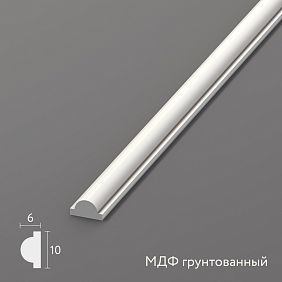
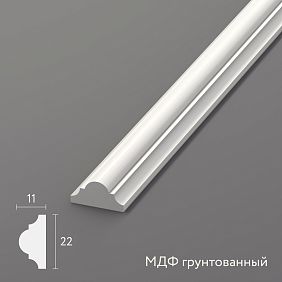
Molding is a narrow decorative strip. Length is usually 2–2.4 meters. Width from 2 to 15 centimeters. Thickness 1–3 centimeters. The profile can be simple (smooth surface with one or two recesses) or complex (relief ornaments — beads, leaves, geometric patterns).
But this is a technical description. In essence? Molding is a line that structures space. Divides the wall into parts. Creates frames. Outlines transitions. Conceals joints. Protects corners. Adds volume to a flat surface.




Historical excursion: from palaces to apartments
Moldings have been known since antiquity. In ancient Roman homes, they framed walls, divided rooms into zones, created visual hierarchy. In the Renaissance, moldings became a mandatory element of rich interiors — without them, a wall seemed unfinished, impoverished.
Baroque and Rococo took the use of moldings to its peak. Walls were divided into numerous panels, each framed by gilded strips, inside — fabric, painting, mirrors. This was called boiserie — wall panels, becoming a symbol of luxury.
Neoclassicism simplified forms, but moldings remained. Walls were divided into three parts: plinth (lower third, usually dark), main part (middle, light), and frieze (upper, under the ceiling). Moldings marked the boundaries.
The 20th century, with its functionalism, tried to abandon decoration. Smooth white walls seemed ideal. But boring. After a few decades, moldings returned — but not gypsum, heavy, expensive ones, but polyurethane, light, affordable ones.
Our factory also produces:


Modern functions: more than decoration
Todaypolyurethane wall moldingsperform multiple functions:
Visual zoning. A molding running horizontally at a height of one meter from the floor divides the wall into a panel and upper part. The panel can be painted in another color, covered with wallpaper, or finished with wood. This creates visual separation without physical partitions.
Creating accents. A molding frame around a zone — above a sofa, behind a bed headboard, around a TV — draws attention, making the zone the composition’s focal point.
Masking defects. Molding covers the junction of two types of wallpaper, the transition from tile to paint, the gap between the wall and built-in furniture. Irregularities, cracks, traces of old repairs disappear under an elegant strip.
Wall protection. Molding at the height of chair backs (80–100 centimeters) protects walls from scratches, scuffs, and dirt. Especially relevant in dining rooms, children’s rooms, and entryways.
Changing proportions. Horizontal moldings visually widen a narrow room. Vertical moldings increase the ceiling height. A system of rectangular frames makes a large space more intimate and cozy.
Stylistic marking. Classic moldings with ornaments set a classic style. Simple smooth ones — minimalism. Wide ones with geometric patterns — art deco. Moldings are the signature of style.
Get Consultation
Polyurethane vs. other materials: why exactly it
Moldings are made from different materials: plaster, wood, MDF, polystyrene, polyurethane. Why has polyurethane become the leader?
Plaster: tradition with problems
Plaster moldings — classic, history, authenticity. They have been used for centuries, handmade by sculptors. But plaster has many drawbacks.
Weight. A plaster molding 2 meters long and 10 cm wide weighs 8–12 kilograms. Its polyurethane equivalent — 800 grams. The difference is tenfold. Plaster requires strong fasteners — self-tapping screws, anchors, sometimes metal brackets. Polyurethane is glued with ordinary mounting glue.
Brittleness. Plaster crumbles upon impact. If you hit a molding with a chair — a piece broke off. Polyurethane is elastic, withstands impacts without damage.
Fear of moisture. Plaster is hygroscopic. In humid rooms (bathrooms, kitchens, basements) it absorbs water, swells, develops mold, and deteriorates within 2–5 years. Polyurethane is completely moisture-resistant. You can install it even in a swimming pool.
Price. Plaster molding is 5–7 times more expensive than polyurethane. Plus complex installation requiring professionals. Final cost goes into space.
Processing difficulty. Plaster is hard to saw, crumbles, produces clouds of dust. Polyurethane cuts easily with a regular hacksaw, like butter.
Wood: nobility and caprices
Wooden moldings are beautiful, natural, tactilely pleasant. But wood has its own drawbacks.
Weight and price. Wood is 3–5 times heavier than polyurethane, and 5–10 times more expensive (especially valuable species — oak, walnut, mahogany).
Reaction to humidity. Wood absorbs moisture, swells, dries out, deforms. In rooms with fluctuating humidity, wooden moldings warp, cracks spread.
Susceptibility to rot and insects. Without protective treatment, wood rots, is attacked by wood-boring beetles and fungi.
Manufacturing difficulty. Carved wooden moldings require high craftsmanship, are handmade, and cost as much as works of art.
Polystyrene: cheap and irritable
Polystyrene moldings are the cheapest and lightest. But these are their only advantages.
Brittleness. Polystyrene breaks under light pressure. Pressed with a finger — dent.
Yellowing. After 5–10 years, polystyrene yellows from sunlight, especially near windows. White moldings turn yellowish.
Cheap appearance. Coarse-grained structure, unclear relief. From afar, it’s indistinguishable, but up close — you can see they cut corners.
Flammability. Polystyrene burns, releasing toxic gases. In case of fire, this is dangerous.
Polyurethane: 21st-century technology
Polyurethane moldings lack all the listed drawbacks.
Lightness. A molding 10 cm wide and 2 meters long weighs 600–1200 grams. A child can lift it with one hand. It is mounted with glue without additional fasteners.
Strength. Polyurethane is elastic and impact-resistant. It does not crumble, does not break, withstands accidental impacts.
Moisture resistance. Does not absorb water. Does not swell, does not mold. Ideal for bathrooms, kitchens, humid rooms.
Detailing. Modern injection molding creates sharp relief with fine details. Visually indistinguishable from hand-crafted plaster.
Ease of processing. Cuts with a hacksaw, circular saw, or office knife. Can be adjusted to any size.
Durability. Lasts 30–50 years without quality loss. Does not yellow, does not age, does not deform.
Affordability. 3–5 times cheaper than plaster, 5–10 times cheaper than wood. Comparable quality.
Ecological. High-quality polyurethane is safe, does not emit toxins. Suitable for living spaces, children's rooms.
Types of polyurethane moldings: from minimalism to baroque
The market offers hundreds of models. How to choose?
By width: from narrow to wide
Narrow (2–4 cm). Thin, elegant. Used for framing mirrors, pictures, small zones. In minimalist interiors, they create neat accents without overloading.
Medium (5–8 cm). Universal. Suitable for creating wall frames, zoning, framing doors and windows. The most popular width.
Wide (9–15 cm). Massive, noticeable. Used in classical, baroque interiors, high-ceilinged rooms. Create monumentality and luxury.
By profile: from plain to carved
Smooth. Rectangular cross-section, no relief. Minimalism, Scandinavian style, modernity. Clean lines, no decoration.
With grooves. One or two longitudinal grooves creating shadow relief. Light decoration without excess. Neoclassicism, modern classicism.
With ornaments. Relief patterns — beads (rows of spherical elements), Ionic (egg-shaped elements), meanders (Greek geometric patterns), acanthus leaves, palmettes. Classic, Empire, traditional interiors.
Carved. Complex ornaments — grapevines, roses, scrolls, shells. Baroque, Rococo, palace style. Maximum decorative effect.
Special types
Flexible moldings. Made of elastic polyurethane, bendable along a radius. Used for framing arches, round columns, curved walls, niches. Essential in non-standard rooms.
Corner elements. Ready-made corner inserts for internal and external corners. Simplify installation — no need to precisely cut moldings at 45 degrees, just insert the corner element.
Moldings with LED backlighting. With built-in groove for LED strip. Mounted on the wall, backlighting creates a floating panel effect, soft contour lighting.
Installing moldings: step-by-step technology from a master
Here begins practice.installing polyurethane moldingDoes not require special education. But requires attention, precision, patience. Rushing is the enemy of quality.
Tools: what you'll need
Minimum set:
-
Miter saw (or hacksaw for metal + miter box for cutting angles)
-
Tape measure
-
Pencil
-
Laser level (or water level, or at least bubble level)
-
Office knife
-
Putty knife (for applying adhesive, removing excess)
-
Polyurethane mounting adhesive (e.g., 'Moment Mounting', 'Titan', specialized polyurethane)
-
White acrylic sealant
-
Painters' tape (for temporary fixation)
-
Sandpaper (grit 120–180 for surface preparation, 220–320 for final sanding of joints)
-
Clean cloths (for removing excess glue)
Additional (will ease the work):
-
Sealant gun (more convenient than tubes)
-
Ladder (if working near the ceiling)
-
Protractor (for precise angle marking)
-
Metal straightedge (for cutting with a knife)
Surface preparation: lay down the base
70% of the installation quality depends on preparation. Skip this stage — you’ll get peeling moldings in half a year.
Cleaning. The wall must be clean, dry, free of dust, dirt, grease stains. Wipe with a damp cloth, let it dry. If the wall is painted with glossy paint or enamel, lightly sand it with 120-grit sandpaper — this will improve adhesive bond.
Base strength check. Run your fingernail along the wall. If paint or plaster flakes off — the base is weak, the glue won’t hold. Reinforce with a penetrating primer (applied with a roller or brush, dries in 2–4 hours). Primer binds loose particles, creating a strong base.
Assessing unevenness. Place a long straightedge or level against the wall. Are there height differences greater than 5 millimeters? Flexible polyurethane will replicate minor unevenness. But large differences will create gaps between the molding and the wall. Either skim the wall with putty, or choose wider moldings (they hide gaps better than narrow ones).
Primer (mandatory). Even if the wall appears strong, prime the area where moldings will be installed with acrylic primer. This will improve adhesion by orders of magnitude. Apply primer with a roller or brush in a strip 2–3 cm wider than the molding. Dries in 1–2 hours.
Marking: measure seven times
Marking — the most important stage. An error here will result in crooked lines, uneven frames, and ruined material.
For horizontal moldings (wall paneling, perimeter framing):
Measure the wall height. Decide at what height the molding will be placed. The classic panel height is 1/3 of the wall height from the floor. For example, if the ceiling height is 2.7 meters — the molding will be at 90 cm. But this is not a rule. You can place it at 1 meter, 1.2 meters — it depends on room proportions and your taste.
Mark the desired height with a pencil at several points around the room’s perimeter. Connect these points with a horizontal line using a laser level (most accurate method) or a water level. The line must be perfectly horizontal — even a 5 mm deviation over 4 meters will be noticeable to the eye.
For vertical moldings (door and window framing, creating vertical axes):
Mark a vertical line using a laser level or plumb bob (weight on string — an old but reliable method). The vertical line must be perfect.
For wall frames:
Draw a rectangle or square on the wall with a pencil. Use a tape measure and level. Check that opposite sides are equal and angles are 90 degrees (check with a square or straightedge: diagonals of a rectangle must be equal).
Pro tip: don’t draw frames 'by eye', even if it seems like it will work. Your eye instantly detects symmetry deviations, even if you don’t notice them immediately. After a week of living with a crooked frame, it will start to bother you.
Cutting moldings: precision is the courtesy of kings
Straight cut (for straight sections, end-to-end joints):
Measure the required length with a tape measure. Mark it on the molding with a pencil. Place the molding on a flat surface (table, stool, floor). Cut with a metal hacksaw (fine teeth won’t tear the material) or a miter saw. The cut must be strictly perpendicular to the molding (90-degree angle), otherwise the joints won’t align.
Cutting at a 45-degree angle (for corner joints, frame creation):
This is the most critical moment. Inaccurate cutting — and you’ll have a gap of several millimeters in the corner, which will be glaringly obvious.
Use a miter box (a device with slots for different angles) or a miter saw with angle adjustment. Set the angle to 45 degrees. Place the molding in the miter box with the front side up, press it against the back wall of the box. Cut with a hacksaw, applying minimal pressure — let the saw do the work, you only guide it.
Important nuance: for internal corners (room corners, frames), the top edge of the molding should be shorter than the bottom. For external corners (protrusions), it's the opposite — the top edge is longer than the bottom. If you mix them up, the moldings won't align.
Tip: practice on an unnecessary piece. Cut two pieces at 45 degrees, join them. No gap? Great, you can cut the final moldings. Gap present? Adjust the angle (slightly less or more than 45) until you achieve perfect alignment.
Adhesion: the moment of truth
Choosing adhesive. Use a special polyurethane adhesive or universal mounting polymer (e.g., "Moment Mounting Express Decor", "Titan Wild", Orac Decor FDP500). Do not use water-based glue (PVA) — polyurethane dislikes it, resulting in a weak bond. Do not use "liquid nails" based on solvents — they may degrade polyurethane.
Good adhesive should:
-
Set quickly (30–60 seconds for initial fixation)
-
Be elastic after drying (compensate for thermal expansion)
-
Be white or transparent (so excess doesn't spoil the appearance)
Applying adhesive. Apply adhesive to the back of the molding (the side that adheres to the wall). The application method depends on the molding's width:
-
Narrow (up to 5 cm): one snake in the middle
-
Medium (5–10 cm): two parallel snakes or dots spaced 5–7 cm apart
-
Wide (over 10 cm): snake around the perimeter + several dots in the center
Don't be stingy with adhesive. Better to squeeze out excess (you'll wipe it off), than underapply (the molding will detach). But don't overapply — white mass will ooze out from under the molding, staining the wall.
Installing molding. Press the molding against the wall, aligning with the marking. Press evenly along the entire length — by hand, rolling with your palms, or using a rubber roller (if available). Do not press too hard in one spot — the molding may deform.
Hold the molding pressed for 30–60 seconds (time depends on adhesive and temperature — the colder it is, the longer it takes). The adhesive must set, providing initial fixation.
Removing excess. Immediately wipe away excess adhesive squeezed out from under the molding with a damp cloth or putty knife. If the adhesive has dried, you'll need to remove it with a knife, risking scratches on the molding.
Temporary fixation (if needed). If the molding is long (over 1 meter), heavy, or the adhesive sets slowly, temporarily fix the molding with painter's tape. Attach tape strips from the molding to the wall every 30–40 cm. Remove tape after 12 hours, when the adhesive has fully dried.
It is absolutely not recommended to nail moldings with nails (as sometimes suggested online). First, a nail may crack the molding. Second, you'll have to patch and paint nail holes. Third, quality adhesive holds better than nails.
Molding joints: the art of invisible seams
Jointing in corners (for frames, room trimmings):
Two moldings, cut at 45 degrees, join at the corner. Before installing the second molding, apply adhesive not only to the back, but also to the end (on the 45-degree cut). Press the moldings together to ensure a tight, gap-free joint. Press firmly.
If a micro-gap (up to 1 mm) appears — no problem, seal it with sealant. If the gap is larger — it's a problem. Either the cutting angle is inaccurate, or the wall is uneven. Try slightly shifting one of the moldings to find the position where the gap is minimal. Secure with tape.
Jointing along length (when wall is longer than molding):
Moldings are typically sold in lengths of 2 or 2.4 meters. If the wall is longer, you'll need to join several moldings.
Straight joint (end to end) is noticeable. Better to use a diagonal joint: cut both ends of the moldings at a 45-degree angle (not for corners, but for straight joints — cuts should face the same direction). Apply adhesive to the ends, join them. A diagonal seam is less noticeable than a straight one.
Pro tip: place length joints in least noticeable areas — behind furniture, in dark corners, not at eye level.
Sealing joints and seams: final touch
After 12–24 hours (when adhesive has fully dried), inspect all joints. Perfect joints don't exist — micro-gaps are always present. They must be sealed.
Acrylic sealant. Use white acrylic sealant (not silicone! silicone cannot be painted). Squeeze sealant into the gap from a tube or caulking gun. Smooth with a damp finger or rubber putty knife, wipe off excess with a damp cloth. Sealant must fill the gap, creating an invisible transition.
Acrylic sealant can be painted after drying (1–2 hours). Therefore, even if the sealant is slightly darker than the molding, after painting, everything will blend together.
Spackle (for large defects). If the gap is larger than 2 millimeters (uneven wall, inaccurate cutting), sealant won't help — it will shrink, and the gap will show. Use acrylic spackle for interior work. Apply with a putty knife, let it dry (drying time depends on layer thickness, usually 2–6 hours), sand with fine grit (220–320). The spackled area will be matte, so it's better to paint the entire molding after spackling — then everything will blend together.
Painting moldings: from white to any color
Polyurethane moldings are usually sold white and primed. You can leave them white — this is classic, universal. But you can paint them any color — and the moldings will look fresh and new.
Why paint?
Contrast. White moldings on light-gray walls blend in. Paint the moldings dark gray or black — and they will become graphic, expressive.
Unity. Moldings in wall color create a monolithic look. Walls beige — moldings beige. This creates not a contrasting trim, but a relief zoning.
Accents. Moldings in accent color (gold, silver, bronze, bright color) become art objects.
Style. Gold moldings — baroque, classic. Black — art deco, modern. Gray — Scandinavian style. Pastel — Provence.
Paint Selection
Use water-based paints — acrylic or latex. They are safe, odorless, dry quickly, and apply well to polyurethane.
Matte paint. Creates a velvety surface, hides minor defects, suitable for classic and modern interiors. Minus — less durable, stains faster.
Satin (semi-gloss). Light silk-like sheen. Universal, suitable for most interiors. More durable than matte, easier to clean.
Glossy. Shiny, reflects light, emphasizes relief. Suitable for art deco, modern interiors. Minus — highlights defects (scratches, unevenness), harder to apply evenly.
Avoid solvent-based paints (alkyd, oil-based) — they are toxic, take a long time to dry, and yellow over time.
Painting technique
Primer (if moldings are not pre-primed by manufacturer). Apply acrylic primer with a brush or roller. Let dry (1–2 hours).
Painting. Apply paint with a brush (easier for relief moldings) or a short-pile roller (for smooth moldings). Paint in 2–3 thin layers, not one thick layer. Each layer dries in 2–4 hours (depends on paint and temperature).
Paint carefully, without touching the wall. If you need a sharp edge — use painter’s tape. Stick tape tightly to the wall next to the molding, paint the molding, wait for full drying (24 hours), then remove the tape. The edge will be perfectly straight.
For relief moldings: use a fine-bristle brush to paint into the recesses of the relief. A roller won’t reach deep grooves, leaving unpainted areas.
Spray paint (alternative to brush and roller). Convenient for quickly painting complex reliefs. Spray from 20–30 cm away, holding the can perpendicular to the surface. Apply several thin layers, not one thick layer (otherwise paint will drip). Minus — must carefully protect walls, floors, and furniture with plastic and tape, otherwise everything around will get painted.
Patina: luxury effect
Patina is an aging effect, the nobility of time. Moldings with patina look antique, as if they’ve been around for a hundred years.
Technology:
-
Paint the molding in a base color (white, cream, light gray). Let dry.
-
Apply patina (gold, silver, bronze, copper) with a dry brush or sponge. Do not cover the entire surface, but lightly brush the raised parts of the relief. Patina should be on the raised parts, while the recesses remain the base color. This creates depth and dimension.
-
You can add dark patina (brown, black) into the recesses, imitating years of accumulated grime (surprisingly, this looks noble). Apply dark paint with a brush, immediately wipe off excess with a cloth, leaving paint only in the recesses.
-
After drying (24 hours), you can cover with matte varnish for protection and to fix the effect.
Patina transforms ordinary moldings into premium decor. Suitable for classic, baroque, Provence interiors.
Creating wall frames: turning a flat surface into architecture
Molding frames (boiserie) — a classic technique that never goes out of style. It transforms a blank wall into a structured surface, adding depth and elegance.
Composition planning: golden ratio and proportions
Before grabbing moldings, plan the composition on paper or in a graphic editor.
Number of frames. Depends on wall size and style. For a 4×3 meter wall (typical living room), a classic option is 6 frames (3 rows of 2 frames) or 4 frames (2 rows of 2). For a small wall (bedroom, hallway) — 2–3 frames. For a huge wall (dining room, library) — 9–12 frames.
Frame size. Classic proportion — rectangle with side ratio 2:3 or 3:4 (close to the golden ratio). For example, a 60×90 cm or 80×120 cm frame. Square frames are also possible (60×60, 80×80), but they are less elegant.
Distance between frames. Frames should not merge into a mess. Minimum distance between adjacent frames — 15–20 cm. Optimal — 20–40 cm.
Distance from wall edge. Frames should not stick to the edge. Leave at least 15–20 cm from the wall, ceiling, or floor; preferably 30–50 cm.
Symmetry. Frames should be symmetrical relative to the wall’s central axis (vertical and horizontal). Asymmetry hurts the eye and creates a sense of error.
Tip: print the wall at scale on paper and draw different frame arrangements. Choose the one that seems most harmonious.
Frame installation: sequence of actions
-
Marking. Draw all frames on the wall with a pencil. Use a tape measure, level, and square. Check symmetry, distances, and rectangularity (diagonals of each frame must be equal).
-
Molding cutting. Each frame requires 4 molding pieces. Cut them at 45 degrees for corner joints. For an 80×120 cm frame, you need: 2 pieces of 80 cm (top and bottom) + 2 pieces of 120 cm (sides). Remember, length is measured along the outer edge of the molding (after 45° cut, the outer side is longer than the inner side).
-
Adhesion. Start with the top molding. Apply adhesive, attach to the wall, aligning with the marking. Then attach side moldings, then the bottom. Apply adhesive to the ends of moldings at each corner so they stick together.
-
Fixation. Use painter’s tape to secure corners until the adhesive dries.
-
Joint sealing. After 12 hours, seal joints with sealant.
-
Painting or decorating the interior. Paint the moldings (if needed). Decorate the interior of frames as desired: paint in another color, apply wallpaper, hang mirrors or pictures.
Ideas for decorating the interior of frames
Contrasting color. Light gray wall, white moldings, dark gray paint inside frames. Creates clear contrast and depth.
Patterned wallpaper. Solid wall, white moldings, patterned wallpaper (floral, geometric) inside frames. Adds texture and elegance.
Mirrors. Mirrors are installed inside frames (glued with liquid nails or double-sided tape). Mirrors visually expand space and add light.
Fabric. Fabric (velvet, silk, linen) is stretched over frames on thin plywood or directly on the wall. Creates softness, coziness, and acoustic effect (fabric absorbs sound).
Empty space. Nothing inside frames — just the same-colored wall. Frames create relief only through moldings. Minimalism, elegant simplicity.
Panels: dividing the wall horizontally
Classic approach — divide the wall horizontally with molding into a panel (lower part) and upper part.
Panel height: usually 1/3 of wall height, but not a rule. For a 2.7-meter ceiling, a classic panel is 90 cm. You can make it higher (1 meter, 1.2 meters) or lower (80 cm) — depends on room proportions, furniture, and your taste.
Panel decoration: paint it a darker color than the upper part. Or cover it with wooden panels or wallpaper. Or install vertical moldings on the panel to create faux paneling (imitation of wooden panels).
Upper part decoration: light paint, patterned wallpaper, smooth textured plaster.
Panels visually lower the ceiling height (useful for very high rooms), add coziness, and protect the lower wall section (useful for children’s rooms, dining rooms, hallways).
Common mistakes and how to avoid them
Beginners make the same mistakes. Here are the top 5 and how to avoid them.
Error 1: Inaccurate corner cutting
Moldings were cut by eye, without a miter saw. Gaps of 2–3 mm at corners. Sealant won’t help — gaps are visible.
Solution: use a miter saw or a circular saw. Practice on scrap pieces until you achieve perfect joints.
Error 2: Incorrect marking
Marked moldings by eye, without a level. After installation, it's clear the line is sloped by 1–2 centimeters. Looks terrible.
Solution: use a laser or water level. Don't be lazy — marking takes 10 minutes but saves the result.
Error 3: Weak base
Applied moldings to old, peeling paint. After a month, the moldings peeled off along with the paint.
Solution: check the base's strength. Prime it. If the paint is weak — remove it, then prime the wall.
Error 4: Insufficient adhesive
Regretted the adhesive, applied a thin line. After half a year, the molding peeled off in several places.
Solution: don't economize on adhesive. Better to remove excess than reapply the molding.
Error 5: Rushing
Applied moldings without letting the adhesive dry — immediately started painting. The molding shifted, paint smeared, and the result was ruined.
Solution: patience. Let the adhesive dry for 12–24 hours. Only then fill the seams and paint.
Molding care: preserving beauty for years
Polyurethane moldings are low-maintenance, but minimal care will extend their lifespan.
Regular cleaning. Wipe with a dry soft cloth once a month (dust accumulates in the relief). Every 3–6 months — with a damp cloth and mild detergent.
Avoid abrasives and aggressive chemicals. Stiff brushes, powders, solvents may scratch or damage the finish.
Paint refresh. After 5–10 years, paint fades, especially in sunny rooms. Lightly sand with fine grit, repaint. Moldings will look brand new.
Repairing damage. Scratch — sand, touch up. Dent — fill, sand, repaint. Peeling — apply fresh adhesive, press down, secure with tape for 12 hours.
Frequently asked questions
Technically possible, but not recommended. The molding will adhere to the wallpaper, not the wall. If the wallpaper peels off, the molding will come off with it. Moreover, on textured wallpaper, the molding will not fit tightly, creating gaps. It’s better to install the molding on a prepared painted wall, and then apply wallpaper, or use wallpaper only within decorative panels.
Yes, but with caveats. If the wallpaper is vinyl or non-woven (durable), it holds well. If it’s thin paper — it may peel under the weight of the molding. Better to glue to a primed wall, then glue wallpaper later (cutting around the molding) or use the molding as a zone divider (different wallpaper above and below the molding).
How long does it take to install moldings in a room?
Creating 6 frames on a wall — 4–6 hours (marking, cutting, gluing). Horizontal molding around a 4x5 meter room — 2–3 hours. Plus one day for adhesive drying, plus 1–2 hours for seam filling and painting (if needed).
Can moldings be used in wet areas?
Yes, polyurethane is completely moisture-resistant. Ideal for bathrooms and kitchens. Just use moisture-resistant adhesive and paint.
How to calculate molding quantity?
For frames: measure the perimeter of each frame, sum them up, add 15% for trimming and errors. For horizontal molding around a room: room perimeter + 10%. Moldings are sold in 2 or 2.4 meter planks — divide the required length by 2 (or 2.4), round up.
Is it necessary to paint moldings?
No. They are sold white and primed. White moldings are universal and fit most interiors. Painting is optional if you need contrast, accent, or stylistic alignment.
Conclusion: moldings as a philosophy of space
Moldings are not just wall strips. They are the language of architecture, a dialogue with space, a tool for creating character. They transform a standard box into a home with history, flat walls into volumetric compositions, and anonymity into individuality.
Polyurethane moldings democratized ornamental plaster. What was once accessible only to the wealthy (handmade gypsum molding) is now available to everyone. For reasonable prices, weekend work, and DIY effort, you can create an interior that looks like a professional designer’s work.
From minimalist thin lines to luxurious baroque frames, from Scandinavian simplicity to palace opulence — moldings suit any style. Just understand proportions, follow the technology, and don’t be afraid to experiment.
Flexible discount system for interior designers, construction companies, regular customers, and wholesale buyers (discounts up to 20% for orders over 50 linear meters). Quality guarantee: all moldings undergo multi-stage quality control to ensure absence of defects (scratches, cracks, warping, uneven relief). If you find a defect, we will replace it free of charge with delivery compensation. Visit STAVROS showrooms in Moscow and Saint Petersburg, where you can see assembled interior compositions with moldings in various styles (classic panels, modern frames, baroque moldings, minimalist zoning). You can touch the moldings, assess the relief quality, material density, and ornament clarity, and choose the ideal models for your project. On exhibition stands, you will see ready-made walls with molding frames of different sizes and configurations, panels with contrasting finishes, door and window framing options, examples of patination and decorative coatings. Showroom consultants will help you select moldings for your interior, calculate quantities, and process your order. STAVROS — European
Moldings from polyurethane for walls: installation, painting, creating frames and panels | Company STAVROS