Article Contents:
- Relief as a tool of visual dynamics
- Depth through shadow
- Rhythm and structure
- Scale and proportions
- Texture and materiality
- Moldings - structure, appliqués - accent
- Structural role of moldings
- Accent function of appliqués
- Ornamental Motifs
- Decor for moldings
- Compositional logic of placement
- Design styles: neoclassicism, art deco, modern
- Neoclassicism - restrained elegance
- Art deco - geometric luxury
- Modern - organic forms
- Modern classicism
- Materials and tinting methods
- Wood species for moldings
- Tinting methods
- Finishes and protection
- Combined Techniques
- Conclusion - interior built on proportions and light
- Frequently Asked Questions

A flat wall is a blank canvas awaiting architectural expression.Wooden moldingsandWooden InsertsThey transform a two-dimensional surface into a three-dimensional composition where light and shadow create visual drama. Wall relief is not merely decoration but an architectural tool for managing space, creating depth, forming rhythm, and establishing accents. Understanding the interaction between structural moldings and decorative appliqués is the path to creating interiors with true architectural expressiveness.


Relief as a tool of visual dynamics
The human eye perceives volume through the play of light and shadow on a relief surface. A flat painted wall is static — light falls on it evenly, creating no visual interest.Wooden moldingsThey break this monotony, creating protrusions and recesses that interact differently with light throughout the day.




Depth through shadow
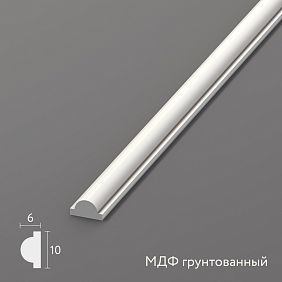
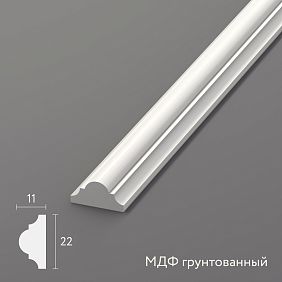
Shadow is the primary tool for creating the illusion of depth.Wooden moldingA molding 50 mm wide and 15 mm thick creates a shadow 10-12 mm deep depending on the angle of illumination. This shadow forms a visual boundary perceived as a recess in the wall, even though the molding physically protrudes from the surface.
The molding profile determines the nature of the shadow. A simple rectangular molding creates a sharp linear shadow with distinct edges.Decorative wooden moldingsMoldings with rounded edges and ridges form a complex shadow with smooth transitions from light to dark. A classic S-shaped molding creates a shadow whose intensity varies along the length of the profile.
The angle of illumination dramatically changes the perception of relief. Side lighting at a sharp angle creates long, dramatic shadows that emphasize relief to the maximum extent. Frontal lighting smooths the relief, with minimal shadows.moldings, cornices, skirting boardsThey are designed taking into account the direction of natural light in the room.
Our factory also produces:


Rhythm and structure
Repeating moldings create a visual rhythm that organizes the perception of the wall.Solid wood moldingsThey form rectangular panels on the wall — a regular grid creates an orderly structure. The size of the panels and the gaps between moldings determine the character of the rhythm — frequent or sparse, dynamic or calm.
Symmetrical placement of moldings creates a classic order. The central axis of the wall is emphasized by symmetrical placement of panels to the right and left.Buy wooden moldingThey should be calculated in terms of the number of elements to create a symmetrical composition. Asymmetry adds dynamism — panels of different sizes, offset from the center, create movement.
Vertical and horizontal moldings form a coordinate grid on the wall. Horizontal elements divide the wall height into tiers — a classic three-part system with a base, main plane, and frieze. Vertical moldings divide the width into segments, creating a rhythmic sequence.Wooden moldingsThey intersect at corners, forming compositional nodes.
Get Consultation
Scale and proportions
The size of the molding should correspond to the scale of the room.Wooden moldingA width of 40-50 millimeters is optimal for rooms of standard height 2.7-3.0 meters. Larger moldings 70-100 millimeters are used in high formal rooms. Small moldings 25-35 millimeters are suitable for small chamber spaces.
The ratio of panel size to molding width is usually 15:1 to 20:1. A panel 800 millimeters wide is framed by a 40-50 millimeter molding. This creates a noticeable frame without overloading the composition.Buy wooden moldingsThey should be considered with these proportions for a harmonious result.
The height of horizontal moldings affects the perception of space. Low placement 90-120 centimeters from the floor creates a classic paneling. High placement 180-200 centimeters forms a frieze at the top of the wall. Medium placement at 150-160 centimeters divides the wall in half, creating a two-part structure.
Texture and materiality
The material of the molding affects the character of the relief.Solid wood moldingsThey have a lively texture with growth rings. Under side lighting, the texture becomes apparent, adding another level of relief. Oak with pronounced pores creates a rough texture. Beech with a uniform structure — smooth.
Surface treatment changes interaction with light. Matte finish absorbs light, creating deeper and softer shadows. Glossy lacquer reflects light, creating highlights on convex parts of the profile.Decorative wooden moldingsWith semi-gloss lacquer, they create a balance between shadow depth and highlight play.
The color of the molding determines contrast with the wall surface. White moldings on a colored wall create clear light lines, maximally emphasizing geometry. Moldings in the wall’s tone are visible only through relief and shadows — a more delicate solution. Contrasting dark moldings on a light wall form a graphic structure.
Moldings — structure, overlays — accent
Architectural composition of the wall is built on the hierarchy of elements.Wooden moldingsThey form the basic structure — frames, boundaries, divisions.Wooden Insertscreate accents - decorative elements that draw attention to specific points in the composition.
Structural Role of Moldings
Moldings create a visual frame for the wall, organizing all other elements.Wooden molding on the wallform rectangular panels within which decorative material - wallpaper, paint, fabric - is placed. These frames create order, structuring the perception of a chaotic surface.
Horizontal moldings divide the wall height, creating a layered effect. The lower tier, 90-120 centimeters high, forms a classic paneling - boiserie.moldings, cornices, skirting boardsAt this height, they create a clear horizontal line, connecting all walls of the room into a unified system. The upper tier, from the horizontal molding to the ceiling, forms a frieze.
Vertical moldings create a rhythmic sequence. The wall is divided into segments of equal or varying widths.Solid wood moldingsThey are installed strictly vertically, forming lines that guide the gaze upward. The distance between vertical elements determines the rhythm's density - frequent creates activity, sparse creates calm.
Accent Function of Appliqués
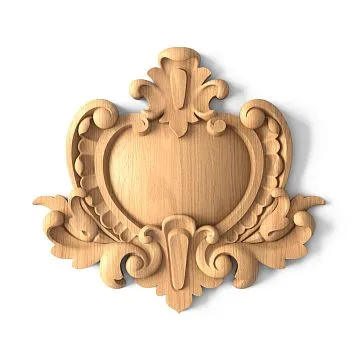
Appliqués serve as decorative accents at key points in the composition.Carved wooden appliquésThey are placed at the intersections of moldings, at the corners of panels, and at the centers of horizontal elements. These points naturally attract attention as structural nodes - appliqués enhance this attention through decorative detail.
carved wooden inlaysThey create a concentration of decoration in a small area. Instead of evenly distributing ornamentation across the entire surface, decorative detail is concentrated in the appliqués. This creates a visual hierarchy - calm surfaces of moldings and walls contrast with the richness of carved appliqués.Carved appliquébecomes a focal point.
The size of the appliqué is proportional to the size of the molding. A 50-millimeter wide molding pairs with a 60-80-millimeter appliqué - the appliqué is slightly larger, protruding beyond the molding's boundaries. This emphasizes its role as an accent.Wooden appliqués on furnitureSmaller in size, they are used on furniture facades, repeating motifs of architectural appliqués.
Ornamental motifs
The ornament of appliqués should match the interior style. Classicism uses plant motifs - acanthus leaves, grapevines, palmettes.Wooden carved appliquésWith acanthus, they create solemnity and respectability. Rosettes - round or multi-petaled - are placed at the center of panels or at the intersections of moldings.
Baroque adds volutes, cartouches, and mascarons. The ornament is more lavish, with deep relief and complex curves.Carved wooden appliqués for purchaseIn the Baroque style, they create drama, characteristic of this direction. Empire introduces military motifs - laurel wreaths, trophies, eagles, torches.
Modern uses stylized plant forms with smooth lines.carved appliquésIn the Modern style, they depict irises, lilies, and vines with characteristic curved stems. Modern geometric motifs - interlacing lines forming complex patterns. Asymmetry in composition is characteristic of this style.
Decor for moldings
Decor for MoldingIncludes corner elements, central appliqués, and end finishes. Corner elements conceal molding joints, transforming a functional detail into a decorative accent.Decorative wooden corner pieceWith carved ornament, it finishes the corners of panels.
Central appliqués are placed in the middle of horizontal moldings.Molding decor for purchaseConsider the length of the moldings - on long sections, the central appliqué breaks the monotony of the line. On short sections, a central appliqué may not be required.
End caps are installed at the ends of moldings that do not abut other elements.carved wooden inlaysIn the form of scrolls or leaves, they create a sense of completion for the molding line. Without end detailing, the molding appears cut off and unfinished.
Compositional placement logic
Appliqués are placed according to construction logic - at junctions, intersections, and centers of spans.Wooden InsertsAt panel corners, they create the impression that they are securing the moldings, although physically they are not. This constructive logic is intuitively understandable and makes the composition cohesive.
The symmetry of appliqué placement is critical. If an appliqué is placed in one corner of a panel, a similar one must be placed in all four corners. A central appliqué on one molding requires similar ones on parallel moldings.Carved appliqués for furnitureThey repeat the system of architectural appliqué placement.
The density of decoration is regulated by the number of appliqués. Minimal solution - appliqués only in panel corners. Medium - central appliqués added on long moldings. Maximum - appliqués in all corners, centers, plus additional ones between corner and center.Decorative wooden inlaysThey should decorate, but not overload the composition.
Design styles: Neoclassicism, Art Deco, Modern
Each style dictates its own rules for using moldings and appliqués.Wooden moldingsThey acquire different characteristics depending on the stylistic direction of the interior. Understanding stylistic specifics is critical for creating an authentic atmosphere.
Neoclassicism - restrained elegance
Neoclassicism takes classical forms but lightens them, making them less pompous.Wooden moldingsIn neoclassicism, they have simple profiles - one or two elements instead of multi-tiered baroque forms. A bead and a shelf or a bead and a scroll - sufficient profile complexity.
Wall panels are rectangular, proportional, and symmetrically arranged.Wooden moldingThey create clear frames without excessive ornamentation. The height-to-width ratio of panels is often close to the golden section 1:1.618. This creates visual harmony through mathematical logic.
Wooden InsertsIn neoclassicism, they are used moderately - at the corners of main panels, possibly at the center of long moldings. The ornament is restrained - rosettes, palmettes, laurel wreaths in shallow relief. Relief is preferred over high relief.Wooden carved appliquésThey create accents, but do not dominate.
The color palette of neoclassicism is light and pastel. White or cream moldings on walls in shades of ivory, pale blue, soft green. Various shades of gray are possible.Solid wood moldingsThey are often painted white, hiding the wood texture for the sake of clean lines.
Symmetry is absolute. The central axis of the room is emphasized by the symmetrical placement of panels, doorways, and furniture.moldings, cornices, skirting boardsThey form a symmetrical frame for the space. Any violation of symmetry is perceived as an error, not as an intentional technique.
Art Deco - geometric luxury
Art Deco combines geometry with luxurious materials.Wooden moldingsIn Art Deco, they create clear geometric forms - rectangles, trapezoids, octagons. The molding profile is simplified - often it is simply a rectangular strip without complex configuration. Expressiveness is achieved through compositional geometry, not profile plasticity.
Stepped forms are characteristic of art deco.Wooden moldingThey are arranged in tiers, creating a stepped pyramid or ziggurat on the wall. Several parallel moldings spaced 30-50 millimeters apart form a multi-level frame. This geometry refers to the architecture of skyscrapers from the 1920s-30s.
Wooden InsertsArt deco uses geometric ornaments - chevrons, zigzags, sun rays, stylized fountains.carved wooden inlaysThey depict fans - a characteristic motif of art deco. The ornament is symmetrical but dynamic, with sharp angles and broken lines.
Art deco colors are contrasting and saturated. Black with gold - a classic combination. Dark brown with cream. Deep emerald with bronze.Decorative wooden moldingsThey are often painted in dark colors - black, dark brown, graphite. Contrast with light walls creates graphic effect.
Gloss is characteristic of art deco.Solid wood moldingsThey are coated with high-gloss lacquer, creating a sheen reminiscent of jazz-era lacquered furniture. This sheen enhances the graphic quality of forms, creates a sense of luxury and glamour. Metallic inserts - brass, bronze - complement wooden elements.
Modern - organic forms
Modern rejects straight lines in favor of curved, organic forms.Wooden moldingsThey have smooth curves resembling plant stems. Rectangular panels are replaced by forms with rounded corners or fully curved contours.
Asymmetry is characteristic of modern design.Wooden molding on the wallThey are arranged asymmetrically relative to the center, creating a dynamic composition with a shift to the left or right. Panels of different sizes alternate in an uneven rhythm. This asymmetry creates movement, characteristic of the style.
Carved wooden appliquésThey depict stylized plant forms - irises, lilies, poppies, vines. The forms are fluid, with long, curving stems and leaves.carved appliquésThey are often asymmetrical - the flower leans to one side, the stem spirals. Female faces with flowing hair - a characteristic motif of modern design.
Modern colors are natural but muted. Olive, tobacco, terracotta, lilac, pale blue.Wooden moldingsThey often retain the natural color of wood with toning, emphasizing the texture. Matte finishes are preferred over glossy ones - oil and wax create a noble surface.
Linearity of ornament is characteristic of modern design.Decor for MoldingThey often consist of interwoven lines forming a complex pattern. These lines flow, curve, and transition into one another without breaks. The ornament creates a sense of growth, development, and movement - like a plant reaching for light.
Modern classic
Modern interpretations of classic styles simplify forms while preserving their essence.Wooden moldingsThey have minimalist profiles - one element instead of complex multi-tiered forms. Wall panels are present, but fewer and larger.Buy wooden moldingThey have a broader profile, creating an expressive relief with minimal elements.
Wooden InsertsThey are used very sparingly - possibly only at key points, for example, at the corners of the main panel above the headboard. The ornament is simplified to a symbol - a stylized rosette instead of a detailed flower.carved wooden inlaysThey create an accent but do not overload the space with decoration.
Colors are neutral - white, gray, beige in various shades.moldings, cornices, skirting boardsThey are often painted in wall colors, appearing only through relief. This creates delicate volume without color contrast. Natural wood tones are possible - bleached oak, ash.
Material selection determines not only durability but also the character of the relief.
They have a lively texture that appears or disappears depending on the finishing method. Toning is a tool for controlling color and emphasizing or neutralizing texture.Solid wood moldingsWood species for moldings
Wood species for moldings
Oak is a classic choice for architectural elements.Oak moldingsThey have a distinct texture with large pores and visible growth rings. The hardness of oak ensures sharp profile definition without chipping. The natural color of oak ranges from light straw to brown with a golden hue. Oak stains beautifully, taking on shades from light to black.
Ash is similar to oak in properties but lighter and with a finer texture.Ash moldingsThey create a lighter interior tone. The natural color of ash is cream-white with a pink or olive tint. The texture is clearly visible but more delicate than oak. Ash holds its profile well due to its high hardness.
Beech has a uniform fine-pored texture without distinct growth rings.Beech moldingsThey are ideal for painting — uniform structure ensures even color without revealing the texture. The natural color of beech is pale pink or yellow-pink. Beech stains easily, mimicking more expensive species.
Linden is a softwood, ideal for carving.Carved wooden appliquésLinden moldings have fine details due to the softness of the wood. The texture is uniform and light. Linden is easy to work with but less durable than hardwoods. Used for decorative elements without mechanical load.
Staining Methods
Stain penetrates the wood structure, changing color while preserving texture.Solid wood moldingsAfter staining, they have a darker tone, but the texture remains visible. Water-based stain creates an even color. Alcohol-based stain dries faster but may cause blotching on softwoods.
Staining oil changes color and simultaneously protects the wood.Wooden moldingsWith an oil finish, they retain the wood’s tactile quality; the surface has no film. The oil penetrates the wood, highlighting the texture. Various shades are available — from natural to dark brown and black.
Patina creates an aged effect. A base coat of paint is applied to the molding, then partially sanded or covered with a contrasting layer.Decorative wooden moldingsWith patina, they have a vintage look. Grooves are darker, raised areas lighter — an effect of natural darkening from time and touch.
Brushing highlights the wood’s texture. Soft spring fibers are removed with a metal brush, leaving hard autumn fibers.Oak moldingsAfter brushing, they have a pronounced texture relief. After brushing, a stain is applied — darker color remains in grooves, raised areas are lighter. This creates a three-dimensional texture.
Finishes and Protection
Lacquer creates a durable protective film. Alkyd lacquer is hard and wear-resistant but yellows over time. Polyurethane lacquer is resistant to moisture and mechanical impacts. Acrylic lacquer does not yellow and is eco-friendly.Solid wood moldingsWith a lacquer finish, they have varying degrees of gloss — from matte to high-gloss.
Oil penetrates the structure, highlighting texture without forming a film. Linseed oil is traditional but takes longer to dry. Tung oil polymerizes faster. Oil-wax combines oil protection with wax’s water-repellent properties.Wooden moldingsWith an oil finish, they retain a natural appearance and preserve the wood’s tactile quality.
Wax creates a soft matte sheen. Beeswax is natural and creates a pleasant aroma. Carnauba wax is harder and more durable. Wax is applied to a surface previously treated with oil.moldings, cornices, skirting boardsWith a wax finish, they have a noble soft sheen and are pleasant to the touch.
Enamel completely hides the wood’s texture. Water-based acrylic enamel is eco-friendly and odorless. Alkyd enamel is stronger but has an odor during application.Wooden moldingsSurfaces under enamel require careful preparation — sanding and priming. Enamel is applied in 2-3 coats with intermediate sanding.
Combined techniques
Two-tone finish highlights the profile’s relief. Grooves are painted dark, raised areas light.Wooden moldingWith this finish, the profile has maximum readability. The technique requires care — dark paint is brushed into grooves, light paint is sprayed onto raised areas.
Gilding creates the luxury of classic interiors. Patina - imitation of cast gold - is applied to protruding parts of the profile.Decorative wooden moldingsWith gilding on a white or cream background, it creates a festive atmosphere. Silvering is similar but cooler in tone. Bronzing creates a vintage effect.
The combination of matte and glossy finishes creates an interesting effect. The main molding surface is matte, while protruding profile elements are glossy.Decor for MoldingWith such finish, there is a play of surfaces - matte areas absorb light, while glossy areas create highlights.
Result - an interior built on proportions and light.
Wall depth is created not by the quantity of decoration, but by a thoughtfully designed relief system.Wooden moldingsThey form the basic structure - the order of lines, creating an architectural frame.Wooden InsertsThey set accents, concentrating decorative elements at key points.
Light is the primary tool for revealing relief. Shadows from moldings create visual depth, which changes throughout the day depending on the sun's position. Artificial lighting is projected with regard to wall relief - side lighting maximally emphasizes volume, while frontal lighting smooths it out.
Proportions determine the harmony of composition. The size of moldings should correspond to the scale of the room. The ratio of molding width to panel size is usually 1:15 - 1:20. Placement of horizontal moldings follows classical proportions - one-third or golden section of wall height.moldings, cornices, skirting boardsThey create a frame for space, within which the wall composition develops.
Style determines the character of element usage. Neoclassicism requires restraint and symmetry. Art Deco - geometric clarity and contrast. Modern - organic forms and asymmetry. Understanding stylistic features is critical for creating an authentic atmosphere.
Material and finish affect the character of relief.Solid wood moldingsWith natural finish, they retain live texture. Painted elements emphasize the purity of form without visual texture noise.carved wooden inlaysThey create concentration of decoration, allowing other surfaces to remain calm.
Result - an interior with true architectural depth, where walls are not flat surfaces but three-dimensional compositions with complex play of light and shadow. This depth is not illusory, created by perspective wallpaper, but real, physical, changing depending on lighting and viewpoint. Such an interior possesses spatial richness that never tires, revealing new nuances under different lighting conditions.
Company STAVROS offers a full range ofof wooden moldings, wooden carved overlaysanddecoration for moldingsMade from solid oak, ash, beech, and lime. Wide selection of profiles - from minimalist modern to richly decorated classical - allows implementing any concept. High-quality processing ensures clear profile without chips. Variety of finish options - from natural wood to enamels of various colors - provides freedom in creating color solutions. Professional consultation from specialists helps select the optimal combination of elements considering interior style, architectural features of the room, and project budget. Use of solid natural wood guarantees durability, eco-friendliness, and enduring aesthetic value of the interior with true architectural depth.
Frequently asked questions
What is the difference between moldings and overlays?
Moldings form the basic wall structure - panel frames, horizontal and vertical divisions.Wooden moldingsThey are elongated elements of simple or profiled cross-section.Wooden InsertsThey are local decorative elements with carved ornament, creating accents at key points of composition.
What size molding is optimal for a standard apartment?
For rooms 2.7-3.0 meters high, an optimal molding width is 40-50 millimeters.Wooden moldingSuch size creates noticeable relief without overcrowding space. For high rooms, moldings 60-80 millimeters are used, for low rooms - 30-40 millimeters.
How to choose the style of molding decoration?
Style is determined by the overall interior concept. Neoclassicism uses symmetrical rectangular panels. Art Deco - geometric forms with stepped moldings. Modern - smooth curved lines.Solid wood moldingsThey adapt to any style through profile and finish method.
Should wooden moldings be painted?
Depends on the concept.Wooden moldingsOil finishes highlight the wood grain. Enamel painting hides the texture, creating clean lines — a classic solution for formal interiors. Staining changes the color while preserving the texture.
Where to place carved appliqués?
carved wooden inlaysThey are placed at key points — corners of panels, intersections of moldings, and centers of long horizontal elements. Symmetry in placement is mandatory. An appliqué in one corner requires similar ones in all corners of the panel.
Which wood species is best for carved appliqués?
Linden is ideal for carving due to its softness — it allows for fine details.Carved wooden appliquésOak or ash are more durable but harder to carve. Beech is suitable for painted appliqués due to its uniform texture.
How to create a sense of wall depth?
Depth is created by molding relief and play of shadows.Decorative wooden moldingsMoldings with profiled sections create complex shadows. Side lighting maximally emphasizes the relief. Multi-level compositions with overlapping moldings enhance the sense of depth.
How many appliqués to use on one wall?
The quantity depends on wall size and style. Minimal solution — appliqués only at corners of main panels. Medium — add central appliqués on long moldings.Decor for MoldingIt should adorn, but not overwhelm. Better less, but more expressive, than excessive decoration.