Article Contents:
- Polyurethane in bathrooms, kitchens, basements: the physics of superiority
- Closed-cell structure: a barrier against water
- Resistance to biological damage
- Temperature Stability
- Chemical Resistance
- Light weight: simplified installation
- Technical specifications: numbers that determine durability
- Density and Strength
- Water absorption
- Temperature range
- Flammability
- Durability
- Installation of polyurethane moldings: error-free technology
- Surface Preparation
- Adhesive Selection
- Installation Technology
- Sealing Joints and Seams
- Painting polyurethane: from primer to protective coating
- Primer: the foundation of adhesion
- Painting with acrylic paint
- Protective varnish: additional durability
- Special techniques: patination, gilding
- STAVROS collection of moisture-resistant moldings for wet rooms
- Smooth moldings: minimalism and modernity
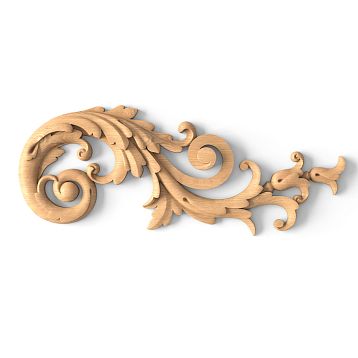
- Relief moldings: classic and neoclassical
- Corner elements and outlets
- Pilasters and Half Columns
- Wall decorative panels
- Frequently asked questions about polyurethane decor
- Conclusion: technology versus the elements
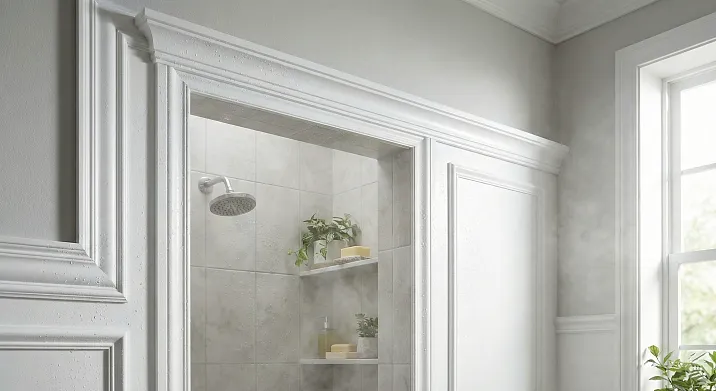
A bathroom where steam condenses on the walls every morning. A kitchen where grease vapors mix with condensation from boiling pots. A basement where humidity never drops below seventy percent. A swimming pool with chlorinated water. A sauna with temperatures nearing one hundred degrees. These are challenging areas — territories where ordinary decor capitulates within a month or two. Wood swells, cracks, and becomes moldy. Plaster crumbles and loses its shape. MDF delaminates into fibers. Yet the interior demands completeness — cornices,Polyurethane wall molding for painting, decorative panels.
Polyurethane solves the problem radically. A material originally developed for industries where moisture resistance requirements are absolute. Water absorption of less than one percent — this is not marketing, but a physical characteristic of its closed-cell structure. Strength comparable to hard wood, but weight three times less. Thermal stability from minus sixty to plus eighty degrees without deformation. Polyurethane molding in a bathroom is not a compromise; it is technological superiority.
This article reveals the technology of polyurethane decor in wet areas. Why polyurethane is the best choice for bathrooms, kitchens, and basements. Technical specifications that determine durability. Installation: adhesive, sealants, flawless finishing. Painting: primer, acrylic paint, protective varnish for maximum durability. The STAVROS collection of moisture-resistant moldings — from minimalist profiles to relief classical ones.



Polyurethane in bathrooms, kitchens, basements: the physics of superiority
Why does polyurethane dominate in wet areas? The answer lies in the material's molecular structure.




Closed-cell structure: a barrier against water
Polyurethane for decor is manufactured by reaction injection molding of a two-component system: polyol plus isocyanate. During the reaction, a polymer matrix with closed cells is formed. The cells are microscopic gas bubbles trapped within the solid polymer walls. They do not interconnect or form through-channels. Water cannot penetrate the material — there are no pathways for capillary absorption.
Wood has an open-cell structure. Wood pores are conductive vessels through which water with minerals flowed from roots to leaves during the tree's life. Even after drying, these channels remain. Water easily absorbs into wood through capillaries, fibers swell, and geometry changes. In a humid environment, wood is a living material that constantly reacts to moisture.
Plaster is hygroscopic: it chemically binds water from the air. Plaster molding in a damp room gradually loses strength, the surface becomes loose, and ornament details wear away. MDF is pressed wood fibers with a binder. Upon contact with water, the binder softens, fibers delaminate, and the panel swells.
Polyurethane is inert. Water absorption coefficient is less than one percent by mass after twenty-four hours of complete immersion in water (ASTM D570 standard). For comparison: pine wood absorbs five to ten percent, MDF up to fifteen percent. A polyurethane molding in a shower cabin, where it gets splashed with water daily, looks the same after five years as on the day of installation.
Our factory also produces:


Resistance to biological degradation
Moisture creates an environment for microorganisms. Mold, fungus, bacteria — they develop on organic materials at humidity above seventy percent and temperature above fifteen degrees. Wood, MDF, even plaster — are nutrient media. Mold spores settle on the surface, grow into the material structure, destroying it from within. Black mold spots on a wooden cornice in a bathroom — a typical sight after one year of use.
Polyurethane is a synthetic polymer. It is not organic, does not contain cellulose, starch, proteins — anything that could serve as food for microorganisms. Mold cannot grow on polyurethane. Spores can settle on the surface, but do not germinate, do not take hold. Wipe with a damp cloth — spores removed, surface clean.
This is critical for bathrooms, saunas, basements. Where wooden decor requires treatment with antiseptics every two to three years, polyurethane requires nothing. Install — forget. Works for decades without biological degradation.
Get Consultation
Temperature stability
Bathroom — temperature fluctuations from fifteen degrees (when not in use) to thirty-five (after a hot shower). Sauna — from twenty to eighty degrees in an hour. Such fluctuations are a test for the material. Wood expands when heated, contracts when cooled. Coefficient of thermal expansion of wood across the grain — thirty to forty millionths per degree. A molding two meters long, when heated by twenty degrees, lengthens by one and a half to two millimeters. If it is rigidly fixed to the wall, internal stresses arise — the molding may crack or detach from the wall.
Polyurethane has a coefficient of thermal expansion of seventy to eighty millionths per degree (higher than wood), but the material is more elastic. A polyurethane molding compensates for expansion through internal deformation without destruction. Plus, the adhesive for polyurethane (polyurethane or acrylic) is also elastic — the joint does not detach during thermal movements.
Operating temperature range of polyurethane from minus sixty to plus eighty degrees. Within this range, the material retains all mechanical properties: strength, elasticity, geometry. Polyurethane moldings work equally well in an unheated basement (where it's minus ten in winter) and in a sauna (where it's plus eighty).
Chemical Resistance
Kitchen — an environment aggressive not only in terms of moisture, but also chemistry. Fat aerosols, acids from food (vinegar, lemon juice), cleaning agents (alkaline, chlorine-containing). Bathroom — chlorine in water, soap solutions, cosmetics. Pool — chlorinated water with pH shifted to the alkaline side.
Wood is sensitive to acids and alkalis. Acid destroys lignin — the substance binding wood fibers. Alkali saponifies fats and resins in wood, wood darkens, loses strength. A wooden cornice above a kitchen stove becomes covered with brown spots after a year, the surface becomes sticky from decomposed resins.
Polyurethane is chemically inert to most household substances. Acids and alkalis in concentrations found in households do not affect polyurethane. Fats are not absorbed (closed-cell structure), easily washed off. Chlorine in pool concentrations (one to three milligrams per liter) does not destroy the polymer. Polyurethane molding can be washed with any household cleaner, including abrasive (although abrasive may scratch the paint, the polyurethane itself will withstand).
Low weight: simplifies installation
Density of polyurethane for decor — two hundred to two hundred fifty kilograms per cubic meter. For comparison: density of pine wood — five hundred kilograms per cubic meter, oak — seven hundred fifty kilograms, plaster — one thousand two hundred kilograms. Polyurethane is two to five times lighter than alternative materials.
A linear meter of polyurethane cornice with a profile of one hundred by one hundred millimeters weighs three hundred to four hundred grams. A similar plaster one — one and a half to two kilograms, wooden — seven hundred grams to one kilogram. Light decor does not create load on the wall — can be glued to drywall, painted walls, even wallpaper (although not recommended, but possible).
Transportation, storage, installation — everything is easier with a light material. Two people install polyurethane decor in a bathroom in a day. Plaster would require reinforced fastening, helpers to hold heavy elements, risk of breakage if dropped.
Technical characteristics: numbers determining durability
Polyurethane is not one material, but a family of polymers with different properties. For decor, rigid high-density polyurethane is used.
Density and strength
Density of quality polyurethane for moldings — two hundred twenty to two hundred fifty kilograms per cubic meter (STAVROS standard). Cheap analogs have a density of one hundred fifty to one hundred eighty kilograms — they are more brittle, ornament details break easily during installation.
Flexural strength — twenty to thirty megapascals (MPa). For comparison: pine wood along the grain — eighty MPa (stronger), across the grain — five MPa (weaker). Polyurethane is isotropic — strength is the same in all directions, no weak spots.
Impact toughness — five to seven kilojoules per square meter (kJ/m²). Polyurethane molding withstands impact without destruction. Plaster would crumble from a similar impact.
Water absorption
ASTM D570 standard: polyurethane sample is immersed in water for twenty-four hours at twenty-three degrees temperature. Mass gain is measured. Quality polyurethane shows less than one percent. STAVROS polyurethane — zero point six to eight tenths of a percent. This means a molding weighing one kilogram will absorb six to eight grams of water after a day in water, practically immeasurable.
Water absorption of less than one percent — guarantees no swelling, deformation, loss of geometry even with prolonged contact with water. Polyurethane molding can be installed in a shower cabin directly above the bathtub — water splashes will not damage it.
Temperature range
Lower limit — minus sixty degrees. At this temperature, polyurethane retains elasticity, does not become brittle. Can be used in unheated rooms, on facades in northern regions.
Upper limit — plus eighty degrees. At this temperature, polyurethane does not soften, does not deform. Can be used in saunas, near heating appliances, under direct sunlight (on south-facing facades).
Deformation under temperature — less than zero point five hundredths of a percent per degree. A molding two meters long, when heated by fifty degrees, will lengthen by five millimeters. This is compensated by the elasticity of the material and adhesive.
Flammability
Polyurethane is an organic polymer, it is combustible. Combustibility class according to Russian standard GOST 30244 — G2 (moderately combustible) or G3 (normally combustible, depends on composition). In flame, polyurethane burns, when the flame source is removed — it extinguishes.
To reduce combustibility, flame retardants are added to polyurethane. STAVROS polyurethane contains flame retardants, combustibility class G2. This allows use in residential premises. For objects with increased fire safety requirements (public buildings, evacuation routes) polyurethane decor is not suitable — non-combustible materials are required (plaster, mineral composites).
Durability
Service life of polyurethane decor under normal conditions (residential premises, absence of mechanical damage) — at least thirty years. In wet zones (bathroom, kitchen) — at least twenty-five years. Polyurethane does not age under moisture exposure, does not oxidize in air, does not degrade from ultraviolet light (if painted with paint containing UV filters).
For comparison: wooden decor in a wet area without regular maintenance (antiseptic treatment, repainting) lasts five to ten years. Plaster decor loses strength in humidity after ten to fifteen years.
Installation of polyurethane moldings: error-free technology
Installation of polyurethane decor is simpler than wooden or plaster decor, but requires adherence to technology.
Surface preparation
The wall must be level, clean, dry, and strong. Irregularities exceeding three millimeters per meter of length must be leveled with putty. Polyurethane is elastic and can compensate for minor irregularities, but significant variations will cause the molding not to adhere tightly, resulting in gaps.
Cleanliness: dust, dirt, grease, old peeling paint—all must be removed. Dust is brushed off or vacuumed. Grease is washed off with a degreaser (alcohol, acetone, special compounds). Peeling paint is scraped off with a putty knife, and the surface is primed.
Dryness: wall moisture should not exceed eight percent (for concrete, brick) or twelve percent (for drywall). If the wall is damp (fresh plaster, leakage), the adhesive will not set. The wall must dry completely—from two weeks for drywall to a month for plaster.
Strength: the substrate must withstand a pull-off strength of at least 0.5 MPa. This can be checked with a test: stick a piece of masking tape to the wall, press it, leave it for an hour, then rip it off sharply. If the tape comes off without pieces of plaster or paint—the substrate is strong. If pieces remain—the substrate is weak, requiring primer or removal of the weak layer.
Primer: for porous substrates (drywall, plaster, concrete), deep-penetration primer is recommended. It strengthens the surface layer, reduces absorbency, and improves adhesive adhesion. Primer is applied with a brush or roller and dries in twelve to twenty-four hours.
Adhesive selection
For polyurethane, three types of adhesive are suitable: polyurethane, acrylic, hybrid (MS-polymer).
Polyurethane adhesive (e.g., Titebond Polyurethane Glue, Soudal PU Fix)—high adhesion, moisture resistance, strength. Disadvantage: foams during curing (expands by ten to twenty percent), requires pressing the molding until it sets (first ten to fifteen minutes). Full curing time—twenty-four hours.
Acrylic mounting adhesive, water-based (liquid nails like Moment Montazh Express Decor, Akfix)—easy application, no foaming, ability to adjust position within a minute after gluing. Disadvantage: long drying time (up to seventy-two hours), need to fix the molding during drying. Moisture resistance is lower than polyurethane adhesive but sufficient for bathrooms and kitchens (after full curing).
Hybrid adhesive-sealant (Soudal Fix All, Bostik Simson)—combination of properties: high adhesion, elasticity, moisture resistance, quick setting (five to ten minutes), full curing twelve hours. Expensive (one and a half to two times more than acrylic), but optimal for challenging conditions (bathrooms with constant humidity, kitchens with grease).
STAVROS recommendation: for bathrooms and kitchens—hybrid or polyurethane adhesive. For dry rooms (bedroom, living room)—acrylic.
Installation technology
Marking: determine the molding's position on the wall. Use a laser level for horizontal and vertical lines. Mark a thin pencil line—the molding edge will be aligned along it.
Cutting moldings: measure the required length, cut with a fine-toothed saw or utility knife. Cut corners at forty-five degrees in a miter box (for internal and external room corners). The cut should be clean, without chips. Polyurethane cuts easily, but the knife must be sharp.
Applying adhesive: adhesive is applied to the back of the molding. If the molding is flat (adheres to the wall with the entire surface)—apply adhesive in a zigzag or dots every ten to fifteen centimeters. If the molding has only two contact lines (top and bottom edges, hollow middle)—apply adhesive to these lines in a continuous strip.
Adhesive quantity: enough so that when pressing the molding, adhesive slightly squeezes out along the edges (but not excessively). Excess adhesive is immediately removed with a damp sponge (before it sets).
Gluing: the molding is applied to the wall along the marking, pressed evenly along its entire length. For polyurethane adhesive—press, hold for ten seconds, release, wait three to five minutes (adhesive slightly dries and foams), reapply and press firmly for ten seconds. For acrylic—apply, press, fix with masking tape or supports for seventy-two hours. For hybrid—apply, press for a minute, release—it holds.
Joining elements: in corners, two moldings are joined at forty-five degrees. The joint should be tight, without gaps. If there is a gap (cutting inaccurate)—fill with white acrylic sealant (after installation, before painting).
Corner elements: for complex molding profiles (with ornament), cutting at forty-five degrees may disrupt the ornament pattern. Use ready-madePolyurethane corner elements—pre-cast corners that are inserted between straight sections of moldings. This simplifies installation and guarantees perfect ornament matching in corners.
Sealing joints and seams
Joints between moldings (end, corner) and gaps between molding and wall (if the wall is uneven) are filled with white acrylic sealant. Sealant is squeezed from a cartridge in a thin strip into the gap, smoothed with a wet finger or rubber spatula. Excess is removed immediately with a damp sponge.
Sealant must be acrylic-based (paintable). Silicone sealant is not suitable—it is not paintable and will remain a shiny spot after painting the moldings.
Sealant drying time—two to four hours. After full drying (twenty-four hours), priming and painting can be done.
Painting polyurethane: from primer to protective coating
Polyurethane moldings are supplied white (base polyurethane color). To integrate into the interior, they need to be painted.
Primer: the foundation of adhesion
Polyurethane has a smooth surface with low porosity. Paint adheres worse on such a surface than on wood or plaster. Primer creates an intermediate layer with good adhesion both to polyurethane and to paint.
Use acrylic primer for plastics and smooth surfaces (e.g., Tikkurila Otex Akva Primer, Dulux Trade Vinyl Primer). Primer is applied with a brush or roller in a thin, even layer. The goal is to cover the entire molding surface, leaving no unprimed areas.
Primer drying time—four to six hours (indicated on the packaging). After drying, the surface feels slightly rough to the touch—this is normal, the primer has created micro-texture for paint adhesion.
Sanding the primer: if the primer has been applied unevenly (drips, runs), you can lightly sand it with fine sandpaper P320 — P400. Sand carefully, without removing the primer completely.
Painting with acrylic paint
Acrylic or latex paint for interior use is applied. For wet areas — paint with increased moisture resistance (labeled for bathrooms and kitchens, washable).
Paint sheen type: matte, semi-matte, semi-gloss, gloss. For classic interiors, semi-gloss is traditionally used (a slight sheen accentuates the molding's relief). For modern interiors — matte (restraint, no glare). For wet areas, semi-gloss or gloss is recommended — they form a denser film and are easier to clean.
Application: with a brush (for relief moldings, to paint all the recesses of the ornament) or a short-nap roller (for smooth moldings). First coat — vertical strokes, second coat (after twelve hours) — horizontal strokes. This ensures uniformity.
Number of coats: two — mandatory minimum. If a saturated color (dark molding) or contrasting paint job (white walls, black moldings) is desired — three coats.
Intercoat drying: twelve hours minimum. Do not attempt to speed up drying with a hairdryer or heater — the paint may bubble.
Color: white — classic, universal. Gray — modernity. Black — drama, contrast. Beige, cream — warmth, coziness. Colored (blue, green, gold) — accents, eclecticism. Color choice is determined by interior style and wall color.
Protective varnish: additional durability
For wet areas (bathroom, kitchen), a final coat of protective varnish is recommended. The varnish creates an additional barrier against moisture, grease, and dirt. Painted and varnished molding is easier to clean and retains its color longer.
Water-based acrylic varnish for interior use is applied (e.g., Tikkurila Paneeli Assa, Dulux Diamond). Varnish comes in matte, semi-matte, gloss. For wet areas, semi-matte or gloss is recommended — they form a denser film.
Application: with a brush or roller, one — two coats with intercoat drying of four — six hours. The varnish is applied thinly, evenly, without runs.
Result: molding with a varnish coating has a smooth surface that does not absorb dirt and is easily wiped with a damp cloth. Varnish increases the lifespan of the paint job by thirty — fifty percent.
Special techniques: patination, gilding
For classic interiors (Baroque, Rococo, Empire), decorative painting techniques are used.
Patination: creating an effect of noble aging. The molding is painted in a base color (white, cream), after drying, patina (dark paint diluted to translucency: brown, gray, black) is applied to the relief's raised areas. The patina is rubbed with a cloth, remaining only in the recesses of the ornament. The result is an effect of parts darkened by time.
Gilding: applying gold or silver paint to the relief's raised areas. The molding is painted in a base color, after drying, metallic paint (gold, silver, bronze) is applied to the ornament's raised areas with a sponge or brush. The result is an effect of gilded stucco.
These techniques require care and artistic taste, but they turn a simple polyurethane molding into a work of art.
Collection of moisture-resistant moldings STAVROS for wet areas
STAVROS offers a line ofpolyurethane moldingsfor walls, ceilings, furniture decoration.
Smooth moldings: minimalism and modernity
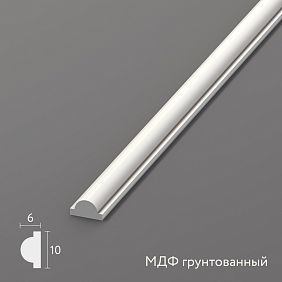
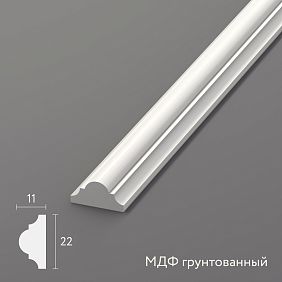
Profiles without ornament, pure geometry. Cross-sections from twenty by ten millimeters (for thin accent lines) to eighty by forty millimeters (for cornices). Length two meters.
Application: wall framing, ceiling cornices, dividing zones on walls (e.g., upper third of the wall one color, lower two-thirds another, the border covered by a smooth molding).
Styles: minimalism, Scandinavian, contemporary, Japanese. Smooth molding emphasizes lines, does not distract with ornament.
Price: from two hundred fifty to eight hundred rubles per linear meter (depends on cross-section).
Relief moldings: classic and neoclassical
Profiles with ornament: floral motifs, geometric patterns, waves, meander, egg-and-dart. Cross-sections from thirty by fifteen to one hundred twenty by sixty millimeters. Length two meters.
Application: ceiling cornices in classic interiors, fireplace framing, decorative wall panels, framed compositions.
Styles: classic, Baroque, Rococo, Empire, neoclassical, Art Deco. Relief molding creates a sense of palatial luxury, opulence, historical continuity.
Price: from seven hundred to three thousand rubles per linear meter (depends on the complexity of the ornament and cross-section).
Corner Elements and Rosettes
To simplify the installation of moldings in corners, ready-made corner elements are offered. They are cast with full reproduction of the molding ornament, inserted into corners, and straight sections are joined to them. This eliminates the need to cut moldings at forty-five degrees and adjust the ornament.
Ceiling rosettes - round or square decorative elements for the center of the ceiling (for a chandelier). Sizes from three hundred to eight hundred millimeters in diameter. Ornament from simple geometric to complex floral.
Application: classic interiors, accentuating the center of the ceiling, masking the chandelier mounting point.
Price of corner elements: from three hundred to one and a half thousand rubles per piece. Price of rosettes: from eight hundred to five thousand rubles per piece.
Pilasters and half-columns
Vertical decorative elements for walls. Pilaster - a flat imitation of a column, protrudes from the wall by twenty to forty millimeters. Half-column - a three-dimensional element, protrudes by fifty to one hundred millimeters.
Application: framing doorways, zoning walls, creating classic porticos in the interior.
Height from one and a half to three meters. Consist of three parts: base (lower widened part), shaft (middle part, can be smooth or with flutes - vertical grooves), capital (upper part with ornament).
Price: from two to fifteen thousand rubles per set (depends on height and complexity of ornament).
Decorative wall panels
Three-dimensional panels with relief. Sizes from six hundred by six hundred millimeters to one thousand two hundred by one thousand two hundred millimeters. Thickness ten to twenty millimeters. Relief: geometric (squares, rhombuses, waves), floral (leaves, flowers), abstract.
Application: accent walls (one wall in a room is covered with panels, the others are painted or wallpapered), decoration of niches, headboards.
Installation: panels are glued to the wall close to each other, joints between panels are invisible (tongue-and-groove connection or butt joint). After installation, panels are primed and painted.
Price: from one and a half to eight thousand rubles per square meter (depends on the complexity of the relief).
Frequently asked questions about polyurethane decor
Can polyurethane moldings be installed directly in a shower cabin?
Yes, polyurethane is completely moisture-resistant. However, it is recommended to paint the moldings with moisture-resistant paint and coat with varnish for additional protection. Use polyurethane or hybrid moisture-resistant adhesive.
How to clean polyurethane moldings in the kitchen if grease has settled on them?
Wipe with a damp cloth with any kitchen detergent (degreasing). Grease does not absorb into polyurethane, washes off easily. If the molding is varnished - even easier, varnish creates a smooth surface.
Can polyurethane moldings be used in a sauna?
Yes, polyurethane withstands temperatures up to plus eighty degrees. Paint with heat-resistant paint (acrylic heat-resistant or special for saunas). Use heat-resistant adhesive (polyurethane or hybrid).
How does polyurethane molding differ from foam molding?
Density and strength. Foam (expanded polystyrene) has a density of twenty to forty kilograms per cubic meter, is brittle, and breaks easily. Polyurethane - two hundred twenty to two hundred fifty kilograms per cubic meter, is strong, impact-resistant. Foam is cheaper, but for wet areas and places with risk of mechanical damage - only polyurethane.
How much does a linear meter of polyurethane cornice weigh?
Depends on the cross-section. Cornice with a cross-section of fifty by fifty millimeters - about one hundred fifty grams. Cross-section one hundred by one hundred millimeters - three hundred fifty to four hundred grams. Three to five times lighter than similar wooden or plaster ones.
Can polyurethane molding be glued onto wallpaper?
Technically possible, if the wallpaper is strong (non-woven, vinyl), glued with quality adhesive, not peeling. But it's better to glue onto plaster or drywall - more reliable. If wallpaper, use light thin moldings, hybrid or acrylic adhesive (they are lighter than polyurethane).
How to cut polyurethane molding?
With a fine-toothed saw (for wood or metal) or a sharp utility knife. Cut carefully, without jerking, to avoid chipping. For forty-five degree angles, use a miter box.
Does polyurethane need to be primed before painting?
Mandatory. Primer creates roughness, onto which paint adheres better. Without primer, paint may peel off after a few months. Use acrylic primer for plastics.
Can polyurethane be painted with oil-based paint or enamel?
Yes, but it's not recommended. Oil-based paints take a long time to dry (up to several days), have a strong odor, and yellow over time. Acrylic paints are better: they dry quickly, are odorless, don't yellow, and are easier to apply.
Where to buy STAVROS polyurethane moldings?
Through the website with delivery across Russia, at STAVROS showrooms in Moscow and St. Petersburg, or by phone at eight eight hundred fifty-five forty-six seventy-five.
Conclusion: Technology vs. the Elements
Humidity, temperature fluctuations, chemically aggressive environments—these are the elements that destroy materials. Wood rots, plaster crumbles, MDF delaminates. Interiors need architectural completeness—cornices, moldings, decorative panels. But materials that served for centuries in dry aristocratic living rooms surrender within a year in a modern apartment's bathroom.
Polyurethane wall molding for painting—is not a compromise, but a technological solution. A polymer with a closed-cell structure that doesn't absorb water, doesn't swell, doesn't deform. A material that withstands temperatures from minus sixty to plus eighty without losing its properties. Lightweight—three times lighter than wood, five times lighter than plaster. Durable—withstands impacts, doesn't crumble, doesn't break. Long-lasting—serves twenty-five to thirty years without maintenance.
Installing polyurethane decor is simple. Apply adhesive to the back of the molding, press it against the wall, hold for a minute—it's glued. No dowels, screws, or complex structures needed. The light weight allows gluing onto drywall, painted walls. The flexibility of the material and adhesive compensates for minor wall irregularities and thermal movements.
Painting transforms white polyurethane into an interior element. Primer—the foundation of adhesion. Acrylic paint—color, style, individuality. Protective varnish—additional durability in wet areas. Two techniques—patination and gilding—turn a simple molding into palace stucco.
The STAVROS collection—dozens of polyurethane molding profiles. Smooth for minimalism, relief for classic styles. Corner elements to simplify installation. Ceiling rosettes. Wall pilasters. Decorative panels for accents. All made from high-density, moisture-resistant, durable polyurethane.
STAVROS has been producing polyurethane decorative elements for over fifteen years. Proprietary molds developed based on historical samples and modern design concepts. Precision casting technology that reproduces the finest ornament details with accuracy to fractions of a millimeter. Quality control of each batch: density, strength, geometry.
Warehouse program in Moscow and St. Petersburg—popular molding profiles in stock, shipping within three business days. Custom production—on order, moldings can be made in non-standard lengths, colors (factory painting), with custom ornament (for bulk orders).
Delivery across all of Russia. Courier delivery in Moscow and St. Petersburg within one to two days. Transport companies to regions within three to ten days. Sturdy packaging: polyurethane in stretch film, on pallets, with corner protection. Receipt with inspection—opportunity to document damages and receive replacements.
Technical support—consultations on selecting profiles to match interior style and operating conditions. Calculation of linear meters based on room plans. Recommendations on adhesive, paint, installation techniques. Problem-solving if something goes wrong.
Start with a project. Identify areas needing decor: ceiling cornices, wall moldings, mirror frames, decorative panels. Choose a style: minimalism requires smooth profiles, classic—relief with ornament. Select profiles from the STAVROS catalog or order custom ones.
Prepare surfaces: level walls, apply primer. Purchase materials: moldings, moisture-resistant adhesive (hybrid or polyurethane), acrylic sealant, plastic primer, moisture-resistant acrylic paint, protective varnish.
Install moldings: marking, cutting, gluing, sealing joints. Let adhesive cure (time indicated on packaging, from twelve to seventy-two hours). Prime moldings, dry for four to six hours. Paint with two to three coats with intercoat drying of twelve hours. Apply varnish (one to two coats).
Result—a wet zone interior that looks like a dry living room. Cornices, moldings, decorative panels—all in place, as classical architecture demands. But the materials perform in conditions where wood and plaster wouldn't survive. Polyurethane withstands the elements, maintaining shape, color, and ornament details for decades.
STAVROS—a partner in creating interiors where beauty doesn't depend on humidity. Where classical proportions and modern materials create a synthesis of durability and aesthetics. Twenty years of experience, thousands of projects, tens of thousands of linear meters of decor installed in bathrooms, kitchens, pools, saunas—and all performing. Quality tested by moisture. Reliability confirmed by time. Trust STAVROS professionals. Create interiors that aren't afraid of water.