Article Contents:
- What is a furniture bracket and where is it used
- Between function and beauty
- Why the bracket is important for interior perception
- How a furniture bracket differs from a decorative one
- Two intents — one detail
- Where the line is drawn
- Where to use a wooden bracket in the interior
- Application scenarios: from hallway to study
- Non-standard applications
- How to choose the size of a furniture bracket
- Proportion is everything
- Load and number of brackets
- Visual Mass
- How to choose the shape: simple, figured, carved
- Shape as a language of style
- Sculptural and exclusive shapes
- Material: why wood is suitable for furniture brackets
- Arguments in favor of solid wood
- Beech vs oak: what to choose
- Why not polyurethane
- What to pair with a furniture bracket
- Wooden decor system
- Color and finish
- Furniture bracket for classic furniture
- Classic is a system, not a single detail
- Furniture for a classic interior style
- Carved brackets: the highest level of decor
- Wooden brackets and molding products: a systematic view
- Why it's important to think systematically
- How to choose a bracket for molding
- Common mistakes when choosing
- Error 1: Size too small
- Error 2: Style mismatch
- Mistake 3: Random color
- Error 4: Different brackets on the same shelf
- Error 5: No connection with other fittings
- Error 6: Weak visual support
- How to use a bracket as a furniture decor element
- Overlay brackets: an architectural technique
- Bracket as an accent in modern interior
- How to combine a bracket with a baseboard, slat, and baguette
- Wooden decor system: three levels
- Practical Combinations
- Wooden Bracket for Painting: Practical Tips
- Why Painting Is Not a Compromise
- Patina and Aging
- Where to Buy Furniture Brackets and Wooden Decor
- Why the Right Source Matters
- What Else to Look for in the Catalog
- FAQ: Frequently Asked Questions About Wooden Furniture Brackets
- STAVROS: Manufacturer of Wooden Decor with Experience and Reputation

There are details that don't catch the eye immediately — but they decide everything. A shelf hanging above a fireplace, a console in the hallway, a countertop against the wall — each of these elements is held not just by fasteners, but by an image. And that image begins with a bracket. Not with that nameless metal corner from a hardware store, but with a real wooden furniture bracket — products where constructive logic intertwines with artistic expression.
If you work with furniture, interiors, classic design, or simply want to understand which detail to choose for a shelf in the living room — this article is written for you. We'll break down everything: from purpose and shape to material, style, and mistakes even experienced finishers make.
What is a furniture bracket and where is it used




Between function and beauty
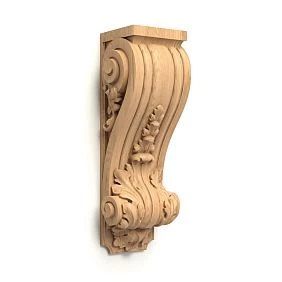
Bracket is a word of German origin, from Kragstein, "projecting stone." In architecture, it referred to a cantilevered projection supporting a cornice, balcony, or arch. In furniture and interior design, the word remained but acquired a much broader meaning.
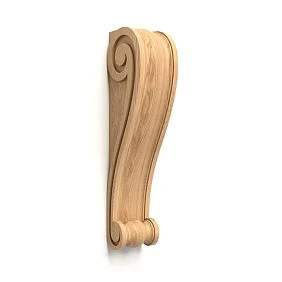
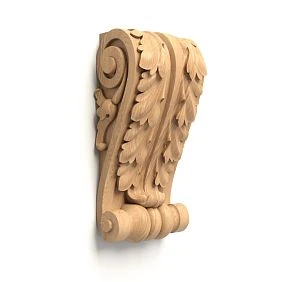
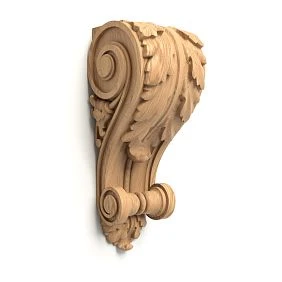
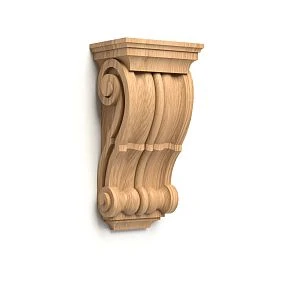
Furniture Bracket — is a support element that attaches to a wall or furniture body and bears the weight of a shelf, console, countertop, or decorative projection. It seems like a purely technical task: to hold the load. But this is where the interesting part begins. Because unlike hidden fastening systems — invisible screws, dowels, and metal rails — the bracket is always in sight. It is part of the image.
In modern and classic interiors Furniture Bracket it is used in a variety of scenarios:
-
Shelves in the living room and bedroom — open shelves above the sofa, by the bed, above the desk, in niches. Here, the bracket is not hidden but, on the contrary, chosen to become an accent.
-
Consoles in the hallway — a narrow hanging surface for keys, a mirror, a vase. Without visible support, it looks lifeless. The bracket gives it completeness.
-
Countertops against the wall — bar counters, drop-leaf tables, work areas in small kitchens. The bracket here bears a significant load while shaping the visual character of the entire structure.
-
Open shelving — in library areas, studies, in the kitchen above the work surface. A row of identical brackets creates a rhythmic, easily readable image.
-
Furniture facades — as a decorative overlay element, imitating a classic architectural support on cabinets, sideboards, chests of drawers, and fireplace portals.
A special place is occupied by Wooden Brackets in a classic interior: there they are not an auxiliary detail, but a full-fledged element of the room's decorative program.
Our factory also produces:
Why the bracket is important for the perception of the interior
Interior design works with human attention. The gaze does not scan space evenly — it moves along "points of attraction": lines, volumes, details. And it is precisely small but characteristic details — handles, legs, moldings, overlays, brackets — that create the feeling of "richness" or "poverty" of the space. A bracket without character is a neutral element. A bracket with form, proportion, and material is a statement.
Get Consultation
How a furniture bracket differs from a decorative one
Two intents — one detail
When a person searches for "furniture bracket," they think about function: I need a support that will hold a shelf. When they search for "decorative bracket" — they think about form: I need an element that will decorate furniture or a wall.
But in the case of wooden products, these two intents almost always coincide. Decorative wooden brackets are both support and decoration at the same time. They are made from solid beech or oak, have the necessary load-bearing capacity, and at the same time have a detailed artistic form: carving, profile, relief, sculptural elements.
The difference between a "furniture" and a "decorative" bracket is rather contextual:
| Characteristic | Furniture bracket | Decorative bracket |
|---|---|---|
| Main task | Load-bearing function | Visual effect |
| Application | Shelves, countertops, consoles | Furniture facades, portals, walls |
| Shape | Can be simple, geometric | Figural, carved, sculptural |
| Material | Wood, metal, fiberboard | Primarily solid wood |
| Visibility | Visible but not emphasized | Is part of the decor |
In practice, most wooden brackets are dual-purpose items. They both hold the shelf and decorate the interior. That is why it is more correct to say not "furniture or decorative", but "functional-decorative" — this is the most accurate characteristic of solid wood products.
Where the boundary lies
The boundary is not defined by material or shape, but by the installation context. If the bracket is mounted into the wall and bears a real load, it is furniture. If it is glued or screwed onto the cabinet facade as an overlay, imitating an architectural support, it is decorative. However, both can be made from the same solid beech wood, have an identical shape, and the same artistic design.
Where to use a wooden bracket in the interior
Application scenarios: from hallway to study
A wooden bracket is a part that has no "single correct place." It fits organically into a variety of home zones and interior scenarios.
Living room. A shelf above the sofa or fireplace is a classic scenario. to buy, which will allow you to transform your furniture using carved wooden elements. You can use the C-003-3 decor set to decorate furniture, walls, doors, or any other surface. The C-003-3 decor set is made of oak or beech, known for their strength, durability, and beauty. You can buy the C-003-3 decor set at the Stavros decor store, which specializes in producing and selling decorative elements and hardware for furniture and interiors. At the Stavros decor store, you will find a wide selection of decor sets of various shapes, sizes, and styles. You can choose in the living room should be expressive but not overloaded. S-shaped brackets with an acanthus leaf or light spiral carving work well here — they provide the needed accent without excessive opulence.
Entryway. A console table by the mirror is one of the most common requests. The bracket for the console in the entryway must support the weight of the mirror, photo frames, and decorative items. The shape is moderately figured, proportional to the height of the console. In a classic entryway, brackets with fluting or smooth S-shaped curves look good.
Kitchen. Open shelves above the work surface are a popular element of modern kitchen interiors. In the kitchen wooden shelf bracket choose either the simplest (for Scandinavian or loft style) or, on the contrary, an ornate one with carving — for Provence, country, or classic kitchen.
Study and library. A desk against the wall, bookshelves, shelving sections — everywhere a wooden bracket is appropriate and functional. Here, both load-bearing capacity and visual seriousness are valued: a massive profile, strict form.
Bedroom. Bedside shelves, hanging cabinets, a decorative niche above the headboard — small brackets here create a feeling of coziness and completeness. The shape can be delicate, with smooth lines, without sharp corners.
Classic furniture: cabinets, chests of drawers, sideboards. Overlay brackets on facades are a separate big world. More about this in the section on classic furniture.
Non-standard applications
The wooden bracket is also used beyond traditional scenarios: as a support for a curtain rod, as side decor for a fireplace portal, as an element of door framing. decor for furniture made of solid wood is versatile precisely because the material allows it to be painted, varnished, tinted to any color and interior context.
How to choose the size of a furniture bracket
Proportion is everything
The most common mistake: choosing a bracket "by eye" and ending up with either a piece too small that gets lost under the shelf, or a bulky element that visually "eats up" the entire structure.
The rule is simple: the bracket should be 2/3 to 3/4 of the shelf depth. This ensures both reliable support and correct visual proportions.
A few practical guidelines:
-
Shelf depth 20–25 cm (typical decorative shelf in a living room): bracket height and projection 15–18 cm.
-
Shelf depth 30 cm (open kitchen shelf): bracket 20–24 cm.
-
Countertop depth 40–50 cm (drop-leaf table, bar counter): bracket 30–35 cm, preferably with an additional horizontal support.
-
Console with a depth of 25–30 cm: bracket 18–22 cm, with a pronounced vertical body.
Load and number of brackets
The load is distributed evenly among all supports. For a lightweight decorative shelf up to 80 cm long, two brackets are sufficient. For a shelf from 100 cm long for books or dishes, at least three. For a countertop, the calculation is based on the weight of the countertop plus the expected working load.
Beech and oak wood are materials with high bending strength. Wooden Brackets from these species, when properly installed, withstand loads from 15 to 50 kg depending on size and shape.
Visual Mass
In addition to physical dimensions, the visual mass of the bracket is important. A thin, elegant shelf requires a lightweight, "airy" bracket with carved cutouts and smooth lines. A massive oak countertop, accordingly, requires a large, substantial bracket with pronounced volume. A mismatch in visual mass creates a feeling of instability, even if structurally everything is reliable.
How to choose a shape: simple, figured, carved
Shape as a language of style
Shape decorative bracket for furniture — it's not just aesthetics. It's a direct reference to the interior style in which the detail works. Making a mistake with the shape means creating a dissonance that will irritate even those who can't explain "what's wrong."
Minimalism and modern style. Here you need a bracket with clear geometric lines, without carving, with a smooth surface. Rectangular profile, angular or slightly beveled shape. Material — solid wood in natural color or under light oil. Such brackets go well with shelves made of oak, birch plywood, or lightened solid wood.
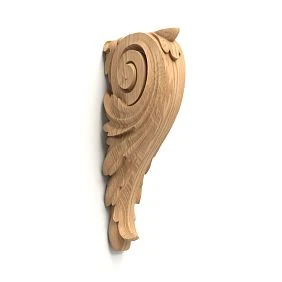
Classic. This is the main field of application for figured and carved brackets. S-shaped forms with acanthus leaf, scroll volutes, fluting, rocaille — all this is the language of classic decor that has existed for several centuries and does not lose its relevance. Carved wooden bracket in a classic interior — it's not a decoration, it's an architectural argument.
Neoclassicism. Moderate decor, strict proportions, restrained profiles. The bracket may have light carving or a relief ornament, but without baroque opulence. The shape is rather vertical, with a clear contour.
Provence and country. Warm wood texture, soft shapes, sometimes with a deliberately "aged" surface. The bracket can be figured, with smooth curves, painted white or cream. The main thing is the feeling of handcraftedness, naturalness.
Art Deco. Geometric ornament, symmetry, noble conciseness. The bracket in this style is strict, with correct lines, without unnecessary details, but with a pronounced character.
Sculptural and exclusive forms
A separate category is sculptural brackets: atlantes, caryatids, lion heads. These are items of high artistic level, used in elite interiors, during the restoration of historical objects, or in creating author's spaces. They are installed on ceremonial portals, in libraries, on fireplace mantels — where every detail is a work of decorative art.
Material: why wood is suitable for furniture brackets
Arguments in favor of solid wood
Among all materials used to make brackets — metal, polyurethane, MDF, plaster — solid wood holds a special place. And it's not just about aesthetics.
Strength. Beech and oak are species with high density and bending strength. A wooden bracket made from these materials, when properly installed, lasts for decades without deforming under load.
Workability. Solid wood can be sanded, coated with oil, varnish, stain, painted in any color — from natural to white, black, patina colors like gold or bronze. This allows you to precisely match the bracket to existing furniture with a classic profile creates a sense of solidity, reliability., wooden strip and other finishing elements.
Restorability. A scratched or dull wooden bracket can be sanded and recoated. With a polyurethane or plaster product, this is significantly more difficult.
Eco-friendliness. Natural wood is an inert, non-toxic material that does not emit volatile compounds and does not cause allergic reactions.
Beech vs oak: what to choose
Both materials are used in production decorative bracketsand the choice between them is a matter of specific application.
| Beech | Oak | |
|---|---|---|
| Density | High | Very High |
| Color | Light pink, uniform | Golden brown, with pronounced texture |
| Workability | Good | Good |
| For painting | Ideal — gives a smooth surface | Good, but the texture is visible |
| For oil/varnish | Pleasant natural look | Expressive, "lively" surface |
| Cost | Below | Higher |
If the bracket is to be painted or patinated, choose beech: it provides a smooth, uniform surface without a pronounced grain. If you want to preserve the natural wood texture, oak with its characteristic grain looks significantly richer.
Why not polyurethane
Polyurethane decor has its place in interiors — primarily where lightness, moisture resistance, or non-standard sizes are required. But in furniture applications, solid wood wins on several parameters: it feels heavier and more "substantial" to the touch, holds fasteners better, allows for live surface finishing, and retains its appearance much longer without needing renewal.
What to pair with a furniture bracket
Wooden decor system
A bracket never exists in an interior on its own. It is part of a system of wooden elements that form a unified look. Here is what it should be coordinated with:
Baseboard. Floor with a classic profile creates a sense of solidity, reliability. sets the basic "theme" of wooden decor in the room. The bracket should be made of the same wood species or painted the same color.
Slat and molding. Wooden plank — an element often used as horizontal wall decor or as an overlay profile on a furniture facade. In combination with a bracket, it forms a complete decorative line.
Wooden corner. Wooden corner bracket used for finishing wall corners, furniture bodies, window and door slopes. Together with a bracket, it creates a systemic perception of wooden decor.
Picture frame molding. Wooden Picture Frame — a profile rail with a decorative cross-section — used as a finish for shelf systems, framing mirrors and paintings. Made from the same wood species as the bracket, it makes the entire shelf structure a unified artistic statement.
Overlays and decorative elements. decorative elements for furniture — overlays, rosettes, ornamental panels — set the level of decorative complexity of the facade. The bracket must match this level: a carved bracket is appropriate next to a carved overlay, a smooth bracket next to a smooth overlay.
Furniture legs. Wooden legs — a separate section of furniture decor, directly related to brackets stylistically. If the legs are turned, with a classic profile — the bracket should be in the same stylistic system.
Color and finish
The rule is simple: the bracket should not be a "black sheep" in the color scheme. If all furniture and decor in the room is white or cream — paint the bracket the same color. If natural oak is used — an oil-finished oak bracket. If the interior is in the style of dark classic wood — stain or patina to match walnut.
It is the possibility of painting that makes to buy, which will allow you to transform your furniture using carved wooden elements. You can use the C-003-3 decor set to decorate furniture, walls, doors, or any other surface. The C-003-3 decor set is made of oak or beech, known for their strength, durability, and beauty. You can buy the C-003-3 decor set at the Stavros decor store, which specializes in producing and selling decorative elements and hardware for furniture and interiors. At the Stavros decor store, you will find a wide selection of decor sets of various shapes, sizes, and styles. You can choose solid wood brackets such a universal designer tool.
Furniture bracket for classic furniture
Classics is a system, not a separate detail
A classic interior is built according to certain architectural laws: the order system, symmetry, hierarchy of details, unity of plasticity. A bracket in a classic interior is not just a support for a shelf, but an element of the order, part of the decorative program of the entire room.
Classical furniture made of wood uses brackets in several roles:
On the sideboard and cabinet. The upper part of the sideboard is often finished with a cornice supported by overlay brackets. This can be a pair of symmetrical S-shaped elements with acanthus or more strict rectilinear supports with flutes.
On the fireplace portal. Brackets support the shelf above the fireplace — one of the most ceremonial places in a classic interior. Large, expressive items are used here: atlantes, caryatids, figured consoles.
On the console in the hallway. A console table in a classic style is unthinkable without brackets: they are its visual foundation, holding the shape of the entire structure.
On open shelves. In a library, study, or dining room, open shelves in a classic style are always equipped with paired brackets — strictly symmetrical, the same size, the same type of wood.
On door and window portals. Overlay brackets on pilasters and cornices are an architectural element used in the design of ceremonial doors and large windows in a classic style.
Furniture for a classic interior style
If you are creating an interior in a classic style, it is important to understand: the bracket here is not a separate detail, but part of the overall furniture in classic style for interiorIts shape, size, and finish must match the overall stylistic concept. A randomly chosen bracket in a classic interior destroys the image more than its absence.
Carved brackets: the highest level of decor
A carved wooden bracket is a product that cannot be replicated in a cheaper material without losing its character. Polyurethane decor imitates carving but does not provide the tactile, visual, and meaningful depth that real solid wood carries. The master's hand, the wood chisel, the precise pattern — all of this creates an item that will live in the interior for decades.
Wooden brackets and millwork products: a systematic view
Why it's important to think systematically
Professional designers never choose a bracket separately from the rest of the wooden decor. They think in terms of a millwork system: baseboard, molding, batten, cornice, bracket — all must be from the same "family" of parts, have a consistent profile scale, and a unified finish.
decor hardware and solid wood millwork products are a designer's toolkit that allows creating a consistent, convincing image of a space. When the baseboard, batten, and bracket "speak" the same plastic language — the interior reads as a cohesive work, not as a set of random elements.
How to choose a bracket for millwork
If you have already chosen the baseboard and moldings — look at the character of their profile:
-
Smooth, rectangular profile → bracket with a simple geometric shape
-
Classic turned profile → bracket with S-shaped or figured form
-
Profile with ornamental carving → bracket with a similar level of detail
Scale is also important: a thin molding requires a small elegant bracket, and a wide heavy baseboard requires a large substantial one.
Common mistakes when choosing
Mistake 1: Too small size
The most common mistake. A person buys a bracket 'just in case' small, so that 'it's not too much'. Result: a thin bracket under a wide shelf looks pitiful and creates a feeling of unreliability. The bracket should visually 'hold' the shelf — this is the main rule of proportion.
Mistake 2: Style mismatch
A carved baroque bracket on a minimalist plywood shelf is not eclecticism, it's a mistake. The bracket should always 'speak' the language of the surrounding interior. If you are unsure about the style, choose moderate, transitional forms: a moderately figured bracket with light relief fits into both classic and neoclassical, as well as transitional styles.
Mistake 3: Random color
A whitewashed bracket in an interior with dark wood, or an oak-look bracket on white furniture — this is a sign of lack of thought. The color of the bracket is always coordinated with the color of the shelf, furniture, and furniture decor overall.
Mistake 4: Different brackets on the same shelf
Sometimes this story happens: a person bought brackets at different times, in different places — and they differ slightly. In size, shape, or shade. The shelf then looks untidy. Rule: all brackets of the same design — one model, one wood species, one finish.
Error 5: Lack of connection with other fittings
The bracket does not exist in a vacuum. If on the same furniture or in the same area there are wooden furniture legs, overlays, handles — all these elements should form a unified decorative program. When each detail is chosen "on its own" — the interior falls apart into fragments.
Error 6: Weak visual support
It happens that the bracket is technically the right size, but in shape it is too "light" — openwork, with large cutouts, almost invisible. Under a massive countertop made of thick oak, such a bracket looks unconvincing. The visual weight of the support should match the visual weight of what it holds.
How to use a bracket as an element of furniture decor
Overlay brackets: an architectural technique
In classic furniture design, the bracket is used not only as a load-bearing part, but also as a purely decorative overlay element. It is glued or screwed to the facade of a cabinet, chest of drawers, sideboard — in places where architectural logic suggests "support": under the cornice, on the sides of the pilaster, at the base of a protruding element.
This technique is called "order imitation" — when furniture is built according to the same laws as classical architecture: base, shaft, capital, cornice, bracket-console. It is this approach that makes Furniture and Decor made of solid wood look like architectural objects, not just cabinets and chests of drawers.
Bracket as an accent in modern interior
In modern interiors, a wooden bracket is used as a deliberate accent — a "quote" from classical architecture, intentionally placed in a contemporary context. This technique works if the bracket is chosen wisely: the form should be recognizable enough to read as a reference, and concise enough not to look alien.
How to combine a bracket with a baseboard, slat, and baguette
Wooden decor system: three levels
Wooden decor in the interior works on three levels of space:
-
Floor level — with a classic profile creates a sense of solidity, reliability., Wooden corner bracket for finishing joints, floor moldings.
-
Middle level — shelves, consoles, brackets, Wooden plank as wall decor, mirrors, picture molding.
-
Upper level — ceiling baseboard, cornice, decorative beams.
When all three levels are consistent within a single system — one wood species, one finish, one profile character — the interior gains completeness and a "museum-like" sense of quality.
Practical combinations
-
Bracket + rail: the rail is mounted horizontally on the wall, the shelf is placed on it, and the brackets are fixed from below. A unified decorative ensemble.
-
Bracket + baguette: Wooden Picture Frame frames the shelf end, the bracket supports it from below. A noble completion of the structure.
-
Bracket + overlay: on the cabinet facade — an ornamental overlay, on the sides of the cornice — brackets in the same style. A unified decorative program for the facade.
-
Bracket + legs: furniture legs and shelf brackets — one wood species, one finish. Creates the feel of "designer" furniture.
Wooden bracket for painting: practical tips
Why painting is not a compromise
Some believe that painting a bracket "kills" the wood. This is not true. Proper surface preparation — sanding with grit 120, then 180, applying primer — and quality paint yield a result that looks significantly more expensive than natural solid wood with rough finishing.
Beech is ideal for white paint: its smooth, dense surface without a pronounced grain provides a clean finish. For enamel matching the furniture facade color, beech or pre-primed oak is also suitable.
Preparation sequence:
-
Sanding with P120 grit along the grain
-
Dust removal
-
Priming with acrylic primer
-
Sanding with P220 grit after the primer dries
-
Applying paint or enamel in 2 coats
After such preparation wooden furniture bracket is virtually indistinguishable in appearance from factory-painted furniture — with significantly higher quality of relief and detail.
Patina and aging
For classic and Provencal interiors, patination is relevant: applying dark paint or patina to the recesses of the carving, followed by sanding the raised areas. This emphasizes the relief, creates an effect of noble antiquity, and makes Carved wooden bracket truly luxurious.
Where to buy furniture brackets and wooden decor
Why the right source matters
The market for wooden decor in Russia is uneven. Alongside high-quality solid wood products, you'll find items made from glued veneer, fiberboard with imitation carving, or polyurethane passed off as wood. Telling them apart by eye is not easy — especially from online photos.
Signs of a quality solid wood product:
-
Specification of wood species (beech, oak) in the description
-
Visible natural grain texture on the ends
-
Even surface without chips or cracks
-
Correct geometry without warping
-
Option to order for painting or in natural finish
Buy decorative elements from an array with quality assurance and clear characteristics — a task that is easily solved by contacting a specialized manufacturer.
What else to look at in the catalog
In addition to decorative brackets, when arranging shelves and furniture, it is worth paying attention to:
-
decorative elements for furniture — overlays, ornamental panels, rosettes, corner elements
-
Buy furniture legs for a 200-room hotel project — this is not an ordinary deal, but a partnership requiring a special approach. — for furnishing solid wood furniture
-
Wooden baseboard — to complete the floor line
-
solid wood trim pieces — slats, moldings, cornices
-
Solid Wood Items — full catalog of wooden decor
When all wooden decor is purchased in one place, from one manufacturer — it is a guarantee of uniformity of wood species, color, and surface quality.
FAQ: frequently asked questions about wooden furniture brackets
Which bracket can support a heavy shelf?
A wooden bracket made of solid beech or oak, size 20 cm and above, when properly installed into a load-bearing wall, supports from 30 kg. For heavy shelves with books, it is recommended to install three brackets per shelf 100–120 cm long and use metal dowels in a concrete wall.
Can a wooden bracket be painted?
Yes, and this is one of the main advantages of solid wood over other materials. Prepare the surface (sanding, primer) and use acrylic enamel or alkyd paint. The result is a smooth, durable coating that can be refreshed after a few years.
How does a decorative bracket differ from a regular metal bracket?
A metal bracket is just a fastener; its job is to hold the load. Wooden decorative bracket performs both functions: load-bearing and decorative. It shapes the look of the entire shelf structure and is part of the interior statement.
How many brackets are needed for one shelf?
For a shelf up to 80 cm — two brackets. From 80 to 120 cm — three. Over 120 cm — calculate based on a spacing of 40–50 cm between supports.
Which type of wood to choose: beech or oak?
Beech — if the bracket is planned to be painted or used in a classic white interior. Oak — if you want to preserve the pronounced texture and natural color. In terms of strength, both materials are excellent for load-bearing structures.
Is special fastening required for a wooden bracket?
No. The wooden bracket is fastened with standard screws through the mounting holes in the base of the product. For solid walls, dowels of the appropriate diameter are used. It is important to ensure that the screw goes into the solid wood of the bracket itself, not just into the wall dowel.
Can brackets be used only as decor, without load?
Yes. Overlay decorative brackets on furniture facades, portals, and cabinets do not bear any load — they work exclusively as a visual element. They are attached with PVA or wood glue, additionally with a small screw from the back.
How to choose a bracket for existing furniture?
Take a sample of the wood or determine the species by color and texture. If the furniture is painted, record the RAL or Pantone color code and paint the bracket the same color after purchase. For shape, focus on the furniture style: classic → carved or S-shaped, modern → smooth geometric.
STAVROS: manufacturer of wooden decor with experience and reputation
When it comes to a wooden bracket — a detail that both works and decorates — it is fundamentally important who made it. STAVROS is a Russian factory specializing in the production of carved solid wood decor for over 20 years. During this time, the company has developed a clear quality control system, a wide model range, and a flexible system for working with professional clients.
The STAVROS catalog features over 60 models of wooden brackets — from minimalist geometric shapes for modern interiors to intricate sculptural pieces with atlantes and caryatids for classical and baroque projects. Each model is made from solid beech and oak, comes in a wide range of sizes, and is available for order from a single piece.
In addition to brackets, STAVROS offers a complete system wooden furniture decor and interior: overlays, moldings, baseboards, slats, legs, linear products, and classic furniture — everything needed to create a consistent, high-quality look for the space. The company's showrooms operate in Moscow and Saint Petersburg, with delivery available throughout Russia.
If you are looking for wooden furniture bracket with character, proportion, and reliability — STAVROS is a choice you won't reconsider.