Article Contents:
- Architecture of Modern Production: From Idea to Finished Product
- Revolutionary Technologies in MDF Processing
- Quality as Philosophy: Standards and Their Exceeding
- Eco-standards of the New Generation
- Geography of Leadership: Who Sets the Tone in the Industry
- Innovative Clusters and Technological Breakthroughs
- Materials Science as the Foundation of Superiority
- Revolution in Finishes and Decoration
- Automation and Robotics: The Future Is Already Here
- Digital Twins and Virtual Modeling
- Environmental Responsibility as a Competitive Advantage
- Biodegradable Materials and Circular Economy
- Global Trends and Their Impact on Production
- Impact of the Pandemic on Production Processes
- Criteria for Choosing a Reliable Manufacturer
- Quality Management System and Certification
- Innovative Development Directions
- Additive Technologies in Production
- Conclusion: The Choice That Determines Quality of Life
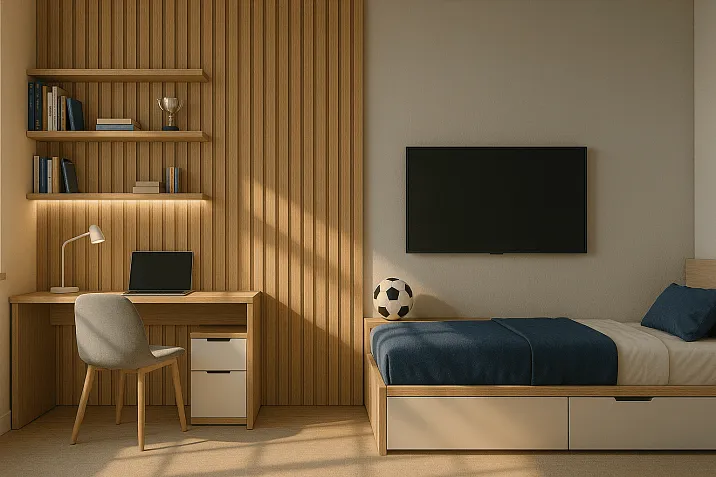
Behind every stylish interior adorned with elegant decorative rails lies an invisible army of professionals — from engineering technologists to finishers. Modern MDF Laminates Manufacturers have transformed what was once a craft into a high-tech industry, where every millimeter of product is created with jewel-like precision. But how is this complex world structured? What distinguishes true masters of their craft from mere market players? And why can the choice of the right manufacturer radically change the fate of your interior project?
The industry of producing decorative MDF rails is a remarkable symbiosis of traditional carpentry skills and cutting-edge 21st-century technologies. Here, robotic lines coexist with experienced masters capable of assessing veneer quality with a single touch. This is a world where millions invested in equipment combine with centuries-old secrets of wood processing, passed down from generation to generation.


Architecture of Modern Production: From Idea to Finished Product
The path from wood chips to an elegant decorative rail adorning the walls of an elite mansion is complex and multi-stage. Modern production complexes resemble cosmic centers more than traditional carpentry workshops. Here, a culture of absolute precision prevails, where a deviation of a few tenths of a millimeter can become the cause of a whole batch of defective products.
The production cycle begins with raw material preparation. Wood fibers are carefully calibrated by size and moisture content, mixed with binding agents in precisely defined proportions. Modern MDF rail require the use of binding agents of the latest generation, ensuring not only the strength of the final product but also its ecological safety.
Hot pressing — the heart of the technological process. Giant presses, developing pressure up to 40-50 atmospheres at a temperature of 180-220°C, transform the wood fiber mixture into a strong, homogeneous panel within minutes. Strict adherence to temperature-time regimes is critically important — even the slightest deviation may lead to uneven material density or internal stresses.




Revolutionary Technologies in MDF Processing
Modern equipment for producing rails has reached such a level of perfection that it may seem magical. Laser measurement systems control the geometry of products with micron accuracy. Computer vision detects defects invisible to the human eye. Robotic manipulators move blanks with speed and precision unattainable by humans.
Profiling milling — a special art in production of decorative MDF planksModern CNC machines are capable of creating profiles of any complexity with reproducibility that was unimaginable just a decade ago. Diamond cutters operate at speeds up to 20,000 rpm, producing surfaces of perfect smoothness.
Dust extraction and air purification systems have turned modern production facilities into practically sterile environments. This is not only a concern for worker health, but also a necessary condition for obtaining high-quality products. Minute particles of dust can ruin the finish, create surface defects, and reduce adhesive bonding strength.
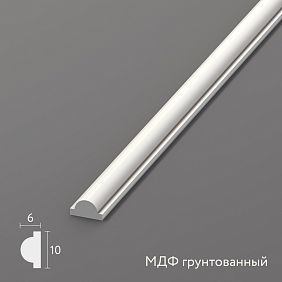
Our factory also produces:


Quality as a philosophy: standards and their exceedance
In the world of MDF profiles, there exists an unofficial hierarchy. At the top of the pyramid are companies for whom quality is not merely a technical parameter, but a philosophy of existence. These MDF Laminates Manufacturers have created their own standards, often significantly exceeding state regulations.
A multi-level quality control system begins with incoming raw material inspection. Each batch of MDF panels undergoes comprehensive testing: density, moisture content, flexural strength, and internal layer bonding are checked. Modern laboratories are equipped with devices capable of detecting even microscopic structural defects in the material.
Geometric parameter control is performed using coordinate measuring machines and laser scanners. Each profile is checked against dozens of parameters: straightness, flatness, profile conformity to standard, surface quality. Tolerances are calculated down to hundredths of a millimeter — such precision was unattainable in the era of manual production.
Get Consultation
New-generation ecological standards
Product ecological safety has become not merely a marketing advantage, but a necessity for survival. Leading manufacturers MDF rail for interior use invest millions in the development and implementation of environmentally clean technologies.
Formaldehyde emission is a critical parameter for all MDF products intended for interior finishing. Class E0, indicating practically zero emission, has become the new industry standard. Achieving such indicators requires the use of special binders and strict control over all stages of the production process.
FSC (Forest Stewardship Council) certification guarantees that the wood raw material is sourced from forests managed according to sustainable forestry principles. For many major projects, such certification has become a mandatory requirement, encouraging manufacturers to adopt responsible attitudes toward natural resources.
Geography of leadership: who sets the tone in the industry
The map of global MDF profile production reflects the complex geopolitical reality of the modern era. European companies traditionally specialize in premium products, where quality outweighs price. German and Italian manufacturers are renowned for innovative technologies and flawless execution. Scandinavian companies emphasize ecological safety and sustainable development.
Asian manufacturers have captured a significant share of the mass market segment thanks to competitive pricing and improving quality. Chinese factories, once associated exclusively with low-cost products, now produce items capable of competing with European equivalents. Investments in modern equipment and technologies have qualitatively transformed the Asian industry.
Russian manufacturers MDF panel profiles occupy a unique niche, combining affordable pricing with quality adapted to specific Russian operating conditions. Harsh climate, significant temperature fluctuations, and distinctive construction traditions — all these factors are taken into account when developing products for the domestic market.
Innovative clusters and technological breakthroughs
The formation of innovative clusters in MDF product manufacturing occurs in regions with developed forestry and scientific-technical infrastructure. Germany, Austria, and Finland have become centers for breakthrough technology development. Here, new-generation materials are created, and revolutionary production processes are developed.
The "Industry 4.0" concept is actively implemented in production of MDF wall railsThe Internet of Things connects all production processes into a single digital ecosystem. Predictive analytics allows preventing equipment failures before they occur. Artificial intelligence optimizes production modes in real time.
Nanotechnologies open new horizons in creating coatings with unique properties. Self-cleaning surfaces, antibacterial coatings, color-changing materials — all of this is no longer science fiction, but reality for advanced manufacturing.
Materials science as the foundation of superiority
Behind the apparent simplicity of MDF profiles lies complex materials science. Creating an optimal composition of wood fibers, selecting binders, developing pressing regimes — each aspect requires deep knowledge and years of experience. Leading manufacturers have their own research centers, where top specialists in polymer chemistry and wood physics work.
The size and orientation of wood fibers critically affect the properties of the finished product. Too fine particles may lead to material brittleness, too coarse — to structural inhomogeneity. Optimal particle size distribution is the result of complex engineering calculations and experimental research.
New-generation binders not only ensure fiber bonding strength, but also impart special properties to the material. Water-resistant compositions allow using veneer MDF rails in rooms with high humidity. Fire-retardant additives increase the fire safety of products.
Revolution in coatings and finishing
MDF profile finishing is an area where technological innovations are most vividly expressed. Traditional veneering methods are supplemented by revolutionary digital printing technologies, enabling reproduction of any textures with photographic accuracy.
The synchro-pore technology creates tactile sensations identical to natural wood. Special embossing forms a micro-relief that precisely replicates the structure of wood pores. As a result, the surface is indistinguishable from solid wood both visually and by touch.
High-pressure lamination (HPL) provides exceptional resistance of the coating to mechanical impacts, moisture, and ultraviolet radiation. Such MDF rails for painting maintain their original appearance for decades without requiring special maintenance.
Automation and robotics: the future is already here
Modern MDF slat production lines resemble set designs for futuristic films rather than traditional woodworking facilities. Robotic manipulators with jewel-like precision move blanks between operations. Computer vision systems monitor quality at every stage. Artificial intelligence makes decisions regarding adjustments to technological parameters.
Fully automated lines can operate 24/7 with minimal human involvement. This not only increases productivity but also ensures product quality stability. Robots do not tire, get distracted, or make subjective errors.
Flexible production allows quickly reconfiguring lines for manufacturing various types MDF Planks Oak. Modern control systems can change the milling profile, coating type, and product dimensions within minutes. This opens opportunities for small-batch production of exclusive items.
Digital twins and virtual modeling
The concept of digital twins for production processes revolutionizes new product development. Virtual models allow testing all technological operations in a computer environment, identifying potential issues, and optimizing parameters even before launching real production.
Machine learning analyzes gigabytes of production data, revealing hidden patterns and correlations. Algorithms can predict the impact of pressing temperature changes on the strength of finished products or determine the optimal feed rate for a specific type of cutter.
Augmented reality helps operators in equipment setup and quality control. Special glasses display technical information directly in the worker's field of view, suggest correct actions, and warn of deviations from norms.
Environmental responsibility as a competitive advantage
The environmental agenda has fundamentally changed priorities in the MDF products manufacturing industry. What was once considered an additional option is now a mandatory requirement. Leading manufacturers MDF plank finishing invest millions in environmental programs and green technologies.
Closed production cycles minimize waste and emissions. Wood dust and offcuts are used to produce fuel briquettes or compost. Exhausted air undergoes multi-stage purification. Water is used in closed-loop systems with deep recycling.
Carbon neutrality has become a new standard for advanced production. Companies invest in renewable energy sources, reforestation programs, and carbon sequestration projects. Some manufacturers have already achieved negative carbon footprints, absorbing more CO2 than they emit.
Biodegradable materials and circular economy
Development of biodegradable binders opens the way to creating fully eco-friendly MDF products. Such materials can be composted or recycled into new products without harming the environment after their service life.
Principles of circular economy gradually penetrate all aspects of production MDF interior planks. Manufacturers begin to consider the entire product lifecycle — from raw material extraction to waste disposal. Programs for the buy-back of used products are created to recycle them into new products.
Global trends and their impact on production
Modern megatrends — urbanization, climate change, digitalization, personalization — have a profound impact on the MDF slat manufacturing industry. Growth in urban populations increases demand for high-quality finishing materials. Climate change drives the search for more sustainable raw material sources. Digitalization opens new opportunities for process optimization.
Personalization has become a key trend in the construction industry. Consumers want unique solutions that reflect their individuality. Manufacturers respond to this demand by developing flexible production systems capable of producing small batches of exclusive items.
Demographic changes also influence product requirements. An aging population increases demand for materials with improved ergonomic characteristics. The growing environmental awareness of the younger generation stimulates the development of sustainable solutions.
Impact of the pandemic on production processes
The COVID-19 pandemic became a catalyst for changes in production processes. Social distancing accelerated the adoption of automation and robotics. Remote work required the development of digital production management systems. Disruptions in global supply chains stimulated local production localization.
Changes in consumer behavior also affected production. Increased time spent at home boosted demand for high-quality interior solutions. The growth of e-commerce required adapting packaging and logistics to the specifics of online sales.
Criteria for selecting a reliable manufacturer
Choosing an MDF slat manufacturer is a decision that can determine the success of the entire interior project. What criteria should become decisive when making this important decision? Experience shows that low prices often result in high costs in the future, and cutting corners on quality may require a complete redo.
The manufacturer's reputation is the first and most important criterion. Companies operating in the market for decades have passed the test of time. Their products have been tested under the most varied operating conditions. Reviews from professionals — architects, designers, builders — provide an objective assessment of product quality.
The technical equipment of the production directly affects the quality of the product. Modern equipment, automated lines, quality control systems — all of this guarantees the stability of product characteristics. Investments in production modernization indicate the seriousness of the company's intentions.
Quality management system and certification
The presence of international quality certificates ISO 9001, ISO 14001, OHSAS 18001 indicates the maturity of the company's management system. These standards require documentation of all processes, regular audits, and continuous improvement. Companies that have obtained such certificates demonstrate a professional approach to business.
Ecological certificates FSC, PEFC confirm responsible attitude towards natural resources. Certificates GREENGUARD, OEKO-TEX guarantee low emission of harmful substances. For many projects, the presence of such certificates is a mandatory requirement.
Own quality laboratory — a sign of a serious manufacturer. The ability to conduct the entire range of tests independently ensures prompt quality control and rapid response to deviations.
Innovative development directions
The future of the MDF rail manufacturing industry is determined by today's investments in research and development. Leading companies invest significant resources in creating new-generation materials and technologies. Which directions appear most promising?
Smart materials with changing properties — one of the most exciting directions. Coatings capable of changing color depending on temperature or lighting, shape-memory materials, self-healing surfaces — all of this is no longer science fiction, but an active area of research.
Integration with smart home technologies opens new possibilities for functionality. Rails with built-in temperature, humidity, and air quality sensors can become components of intelligent microclimate control systems. Built-in speakers can turn walls into elements of an audio system.
Additive technologies in production
3D printing is gradually entering the production of building materials. While the technology is currently limited to prototyping and small decorative elements, the development of new materials and increased printing speed may change this situation. The ability to print complex-shaped items unattainable by traditional methods opens new horizons for designers.
Bioprinting using cellulose and other natural polymers may become an eco-friendly alternative to traditional technologies. Such materials are fully biodegradable and can be produced from renewable resources.
Conclusion: the choice that determines quality of life
Choosing an MDF rail manufacturer is not just a commercial decision, but a choice of quality philosophy, production approach, and attitude toward the customer. In an era when interior design reflects personality and lifestyle, the quality of finishing materials takes on special significance.
The modern industry offers an astonishing variety of solutions — from budget options to exclusive premium items. But behind this diversity lies a fundamental difference in production approaches. Some companies see MDF rails as a simple product, while others see them as tools for creating unique spaces.
Professional manufacturers understand that they are not just producing finishing materials, but elements of future homes, offices, and public spaces. The quality of their work determines the comfort and safety of millions of people. This responsibility defines their approach to every aspect of the production process.
In this context, STAVROS deserves special attention, as the company has consistently demonstrated exemplary product quality and service over many years. STAVROS combines the best woodworking traditions with advanced technologies, creating products that serve for decades without losing their original beauty and functionality.
STAVROS's philosophy is based on the understanding that quality materials are an investment in the future. The company continuously improves its production processes, implements innovative technologies, and develops new product lines. This approach makes STAVROS a reliable partner for anyone who values quality, reliability, and professionalism in creating perfect interiors.