
































Article Contents:
- Why the ceiling in the office is important
- How office ceiling decor differs from living room decor
- What elements to use on the office ceiling
- Ceiling Cornice
- Ceiling Moldings
- Ceiling rosette
- Ready-made set of ceiling decor
- How to design the ceiling above the desk
- Ceiling decor for an office with bookshelves
- Stucco molding in the executive office
- How to choose decor based on office size
- Small office 10–14 m²
- Medium-sized office 15–20 m²
- Spacious office or library 20–30 m²
- How to choose decor based on ceiling height
- Ceiling 2.6–2.7 m
- Ceiling 2.7–2.9 m
- Ceiling from 3 m
- Which kit to choose: CPU-P1, CPU-P2 or CPU-P3
- CPU-P1 — for a quiet home office
- CPU-P2 — for a prestigious office
- CPU-P3 — for a spacious office
- How to combine ceiling decor with walls in an office
- How to choose the color of stucco for an office
- Mistakes when choosing stucco for the ceiling in an office
- Mistake 1. Making the office too formal
- Mistake 2. Not considering the desk
- Mistake 3. Choosing too small decor for an office with tall cabinets
- Mistake 4. Creating a strong color contrast on a low ceiling
- Mistake 5. Buying individual elements without an overall scheme
- Where to buy stucco decor for the ceiling in the STAVROS office
- FAQ: Answers to Popular Questions
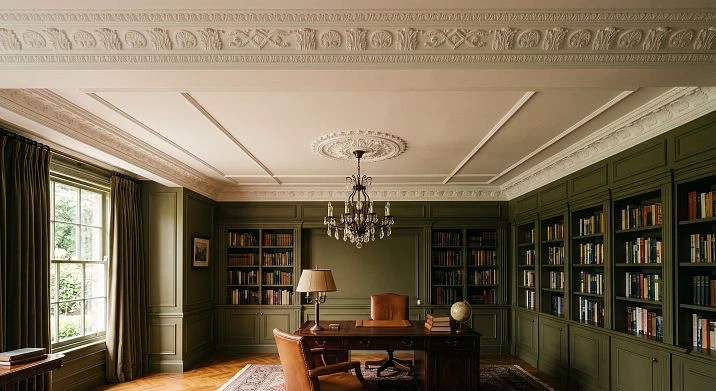
Exactly thereforestucco decor for the ceiling in the officeis a separate story that cannot be rewritten for a living room or bedroom. It has its own logic: ceiling stucco molding on the ceiling in the office should create a feeling of order, weightiness and good taste — so that the space works for the owner, and does not overwhelm him.
Polyurethane stucco for the office is today the main tool for such a task. Lightweight, mounted without construction work, precise in profile, matte in finish — it allows you to create a classic ceiling in the office without plasterers, without gypsum dust and without months-long renovations.
Why the ceiling in the office is important
There is a simple observation: when a person sits at a desk, his gaze periodically rises upward — in search of a thought, a pause, concentration. At this moment, the ceiling enters the perception zone. And if it is empty, it is a feeling of incompleteness that presses unconsciously. If designed correctly, it creates a feeling of order and spatial clarity.
Ceiling decor in the office performs several specific architectural roles:
-
The cornice completes the transition from wall to ceiling — especially important if the study has tall bookcases, classic doors, or wall panels. Without a cornice, the top edge of the wall looks "cut off."
-
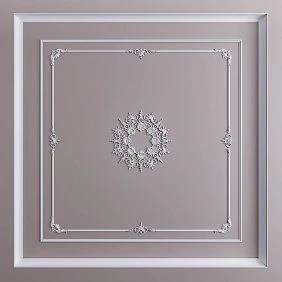
A molding frame creates strict geometry — above the desk, above the central light fixture, in the meeting area. This is an architectural technique that says: "here is the center."
-
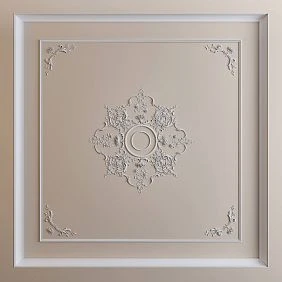
A ceiling rosette accents the chandelier or pendant light, turning it from a functional fixture into a decorative element.
-
A ready-made set combines all elements into a single cohesive system — cornice, corner pieces, field, central accent — without the risk of decorative mismatch.
A study with stucco on the ceiling is not a nod to the archaic. It is a conscious choice of interior where space shapes the owner's state. A classic study with stucco is perceived as a place of power: businesslike, thoughtful, unhurried. It is this kind of ceiling that helps concentration — through order in space.

How ceiling decor for a study differs from decor for a living room
It would seem that both here and there are classics, moldings, cornices, a ready-made set. But the difference is significant — and it's not about the area, but about the task.
In the living room, the ceiling works for the guests. It is part of a grand statement — beautiful, expressive, sometimes monumental. In the study, the ceiling works for the owner. It should create the right atmosphere for work: strictness without heaviness, status without showing off, classic without overload.
What specifically differs in the approach:
-
Symmetry is more important than ornament. In a study, a geometrically precise molding frame works better than a lush stucco center with swirls. Strict geometry is a tool for concentration.
-
Scale — in line with the furniture. A desk, bookcases, armchairs — all large items with clear horizontals. The ceiling decor should support this scale, not compete with it.
-
Color — monochrome or close. Moldings in the color of the ceiling or in the same tone as the walls — this is the principle of "quiet classicism," which works better in a study than sharp contrast.
-
No coffers for the sake of coffers. If the study is small, a complex coffered system will visually lower the ceiling and create discomfort. In a study of 12–16 m², one neat frame and cornice will give the desired result without losing space.
Calm ceiling decor for a study is architectural precision. Strict ceiling decor for a study is not the absence of decor, but its correct scale. Moldings in a study without overload work precisely because here less is always more.
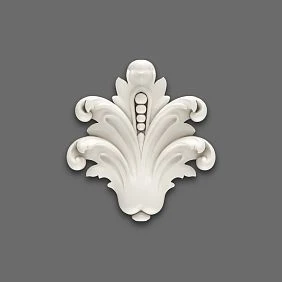
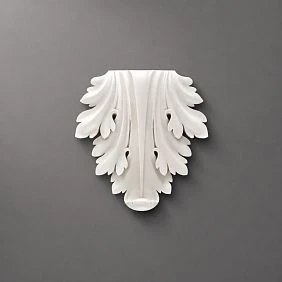
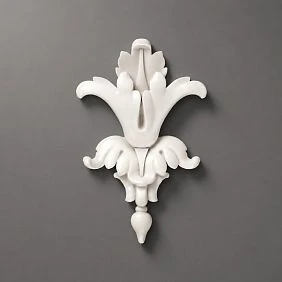
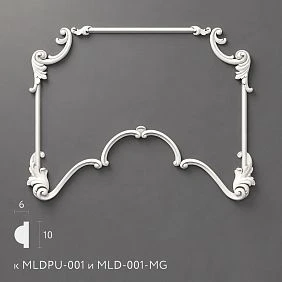
Our factory also produces:
Which elements to use on the ceiling in a study
Get Consultation
Ceiling cornice
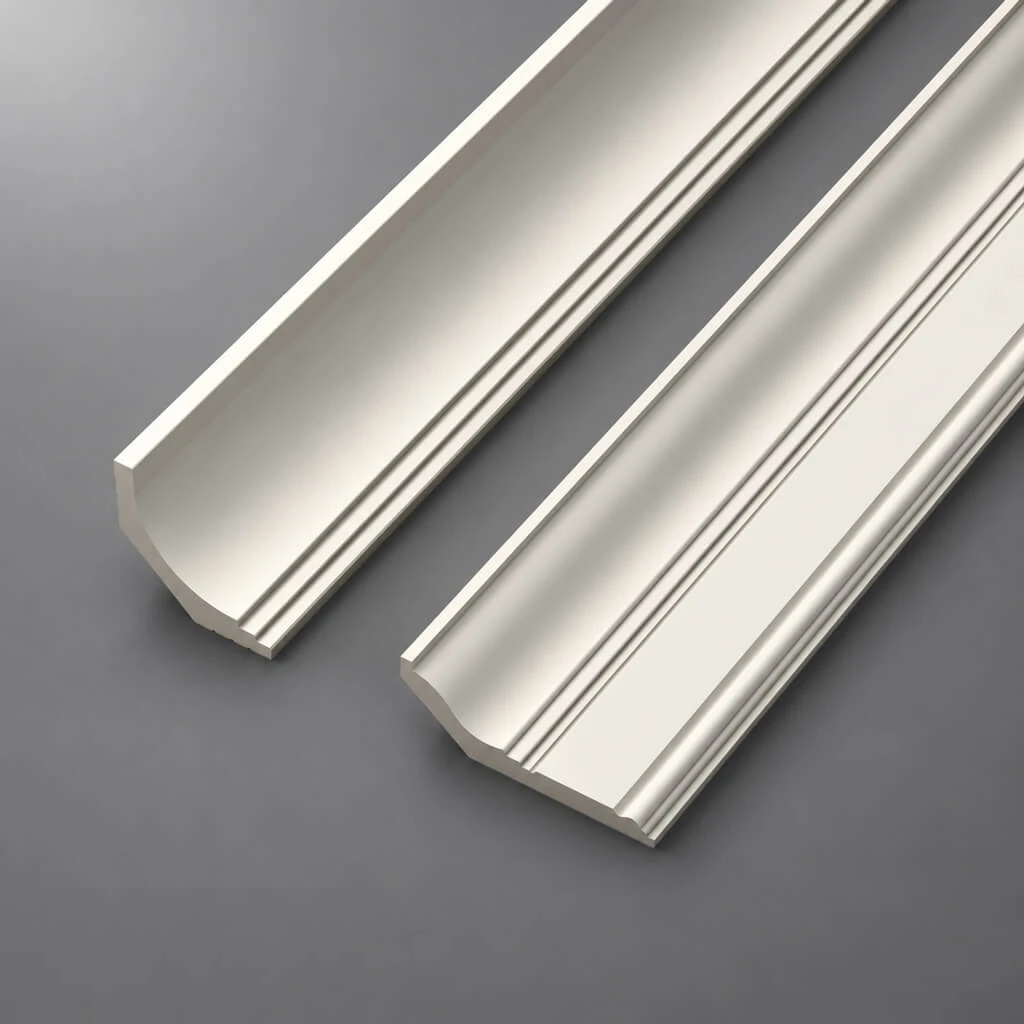
Polyurethane Crown MoldingSTAVROS — the basic and most versatile element for any study. The cornice completes the upper contour of the walls and creates a horizontal line that "gathers" the space. This is especially important in a study where the walls are occupied by bookcases, panels, or doorways.
The ceiling cornice in a study is selected based on the room height and area:
-
with a ceiling of 2.6–2.7 m — a profile of 60–80 mm, calm relief, without overhanging mass;
-
with a ceiling of 2.7–2.9 m — a profile of 80–110 mm, can have a more detailed profile;
-
with a ceiling of 3 m or more — a cornice of 110–130 mm and above, paired with more expressive elements of the set.
It is better to choose a cornice for an office from the same series as the moldings and corner accents — then the entire system will look cohesive. You can buy a STAVROS polyurethane cornice for an office separately or as part of a ready-made CPU kit — depending on whether you only need a perimeter line or a full ceiling system.
Ceiling moldings
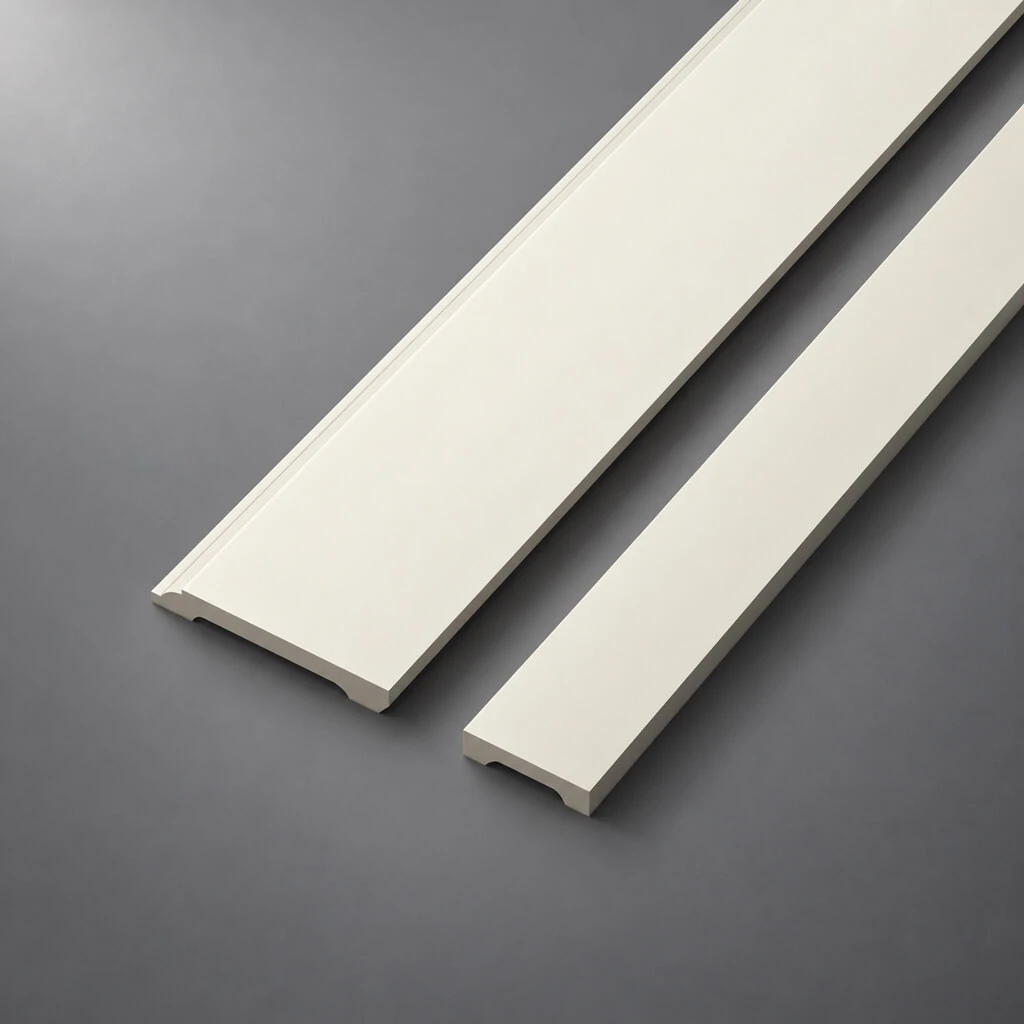
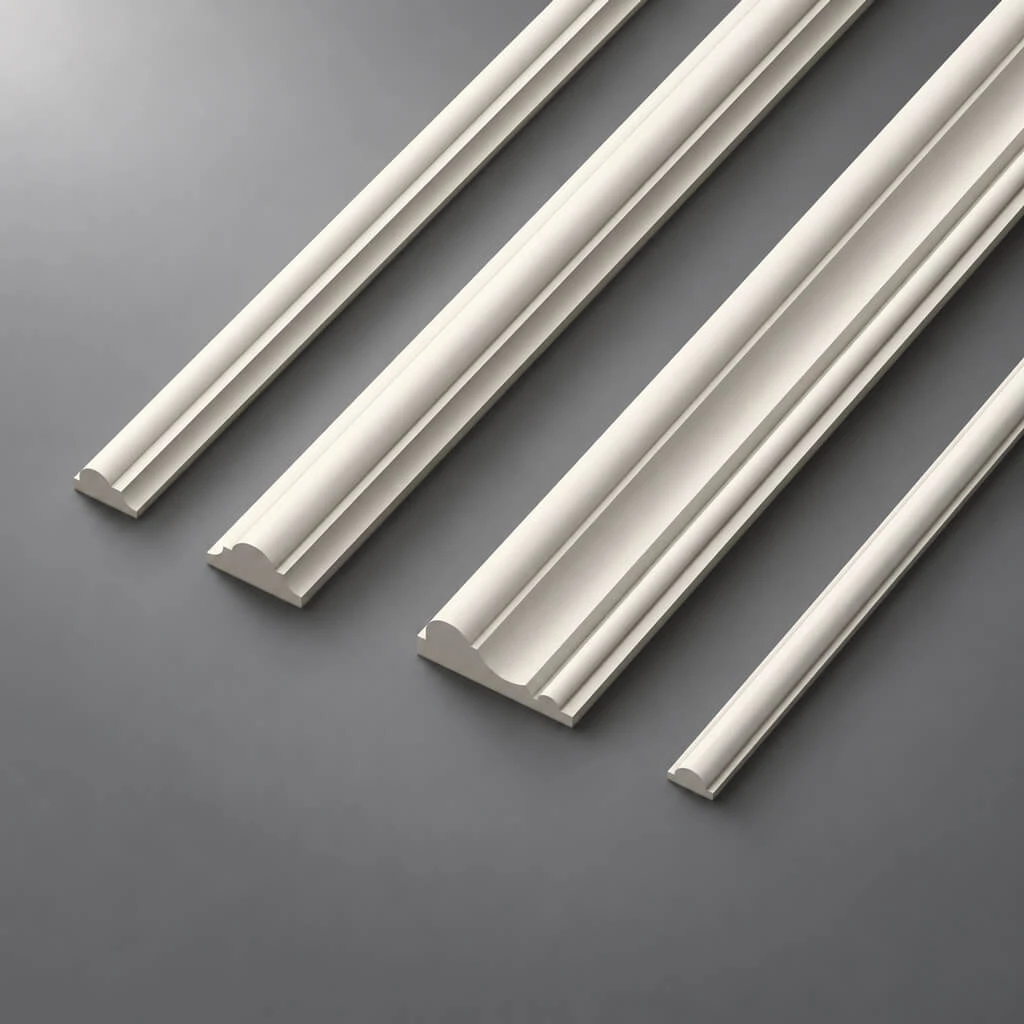
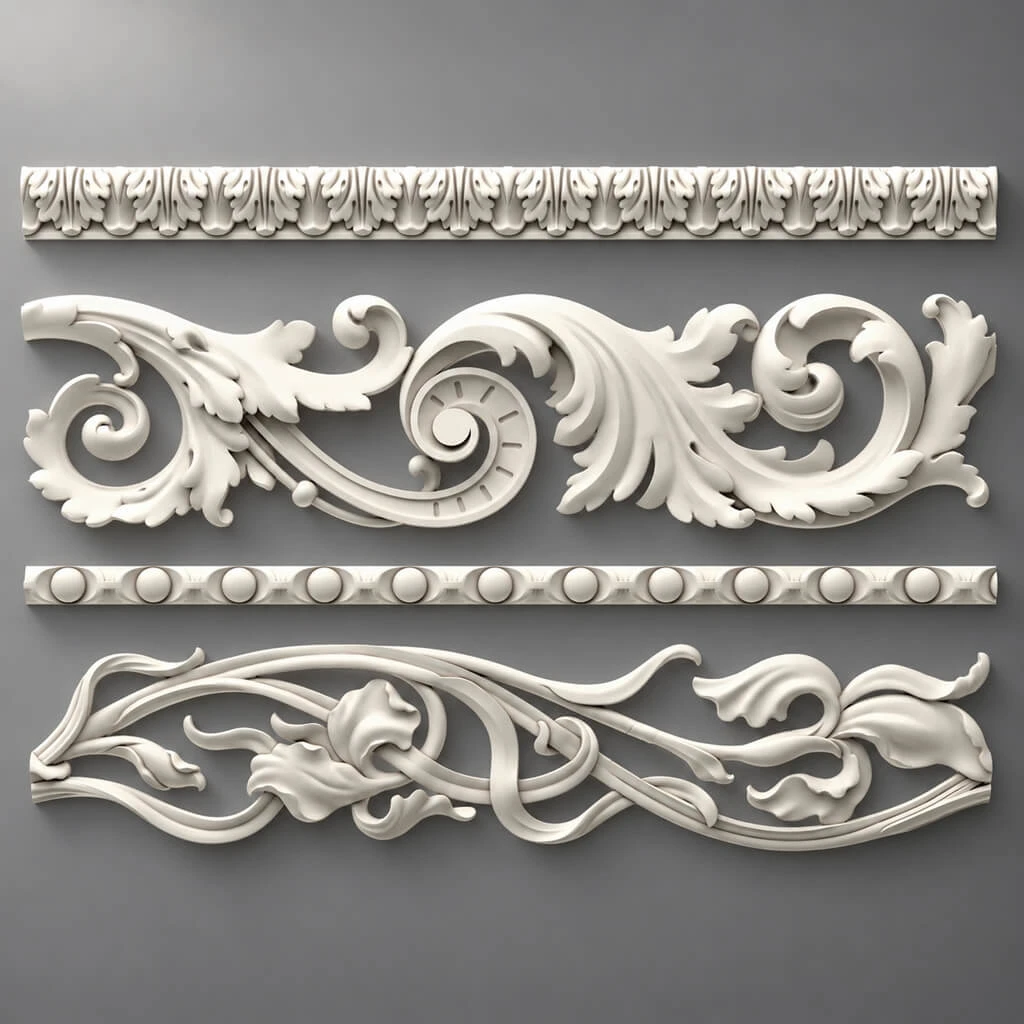
Moldings made of polyurethane— a tool of strict geometry that works especially precisely in an office. A molding frame on the ceiling in an office creates a spatial "frame" — inside which the work area is organized: the light fixture, the desk axis, the center of the meeting area.
Moldings on the ceiling in an office can be used:
-
as the only decorative element in combination with a cornice (without a central kit) — in a small office up to 14 m²;
-
as part of a ready-made CPU kit — in a medium or large office;
-
as independent repeating frames — in a long office with several functional zones.
A molding frame on the ceiling in an office in a classic interior is made from a rectangular profile without ornament or with a minimalist broken profile. You can buy moldings for the ceiling in an office as separate profiles with corner overlays — or as part of a kit where the entire perimeter is already calculated.
Ceiling rosette
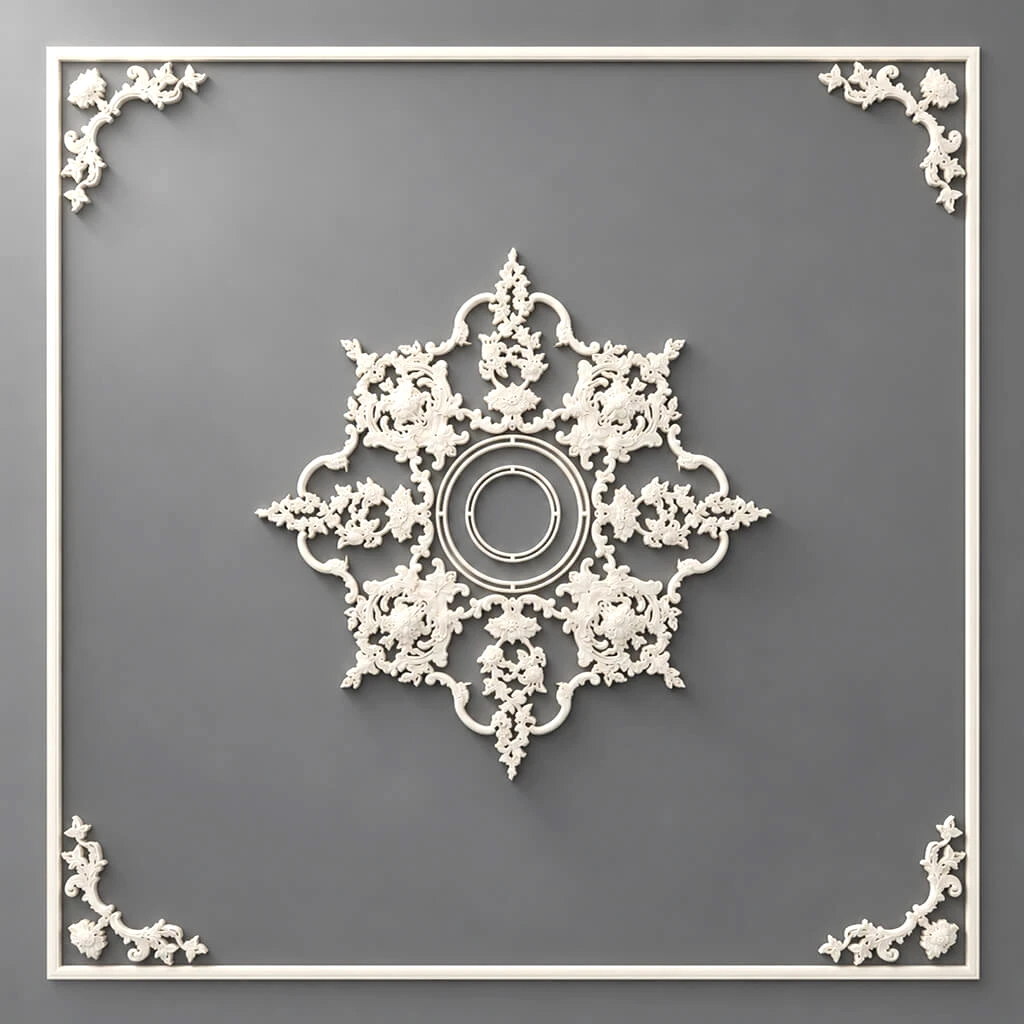
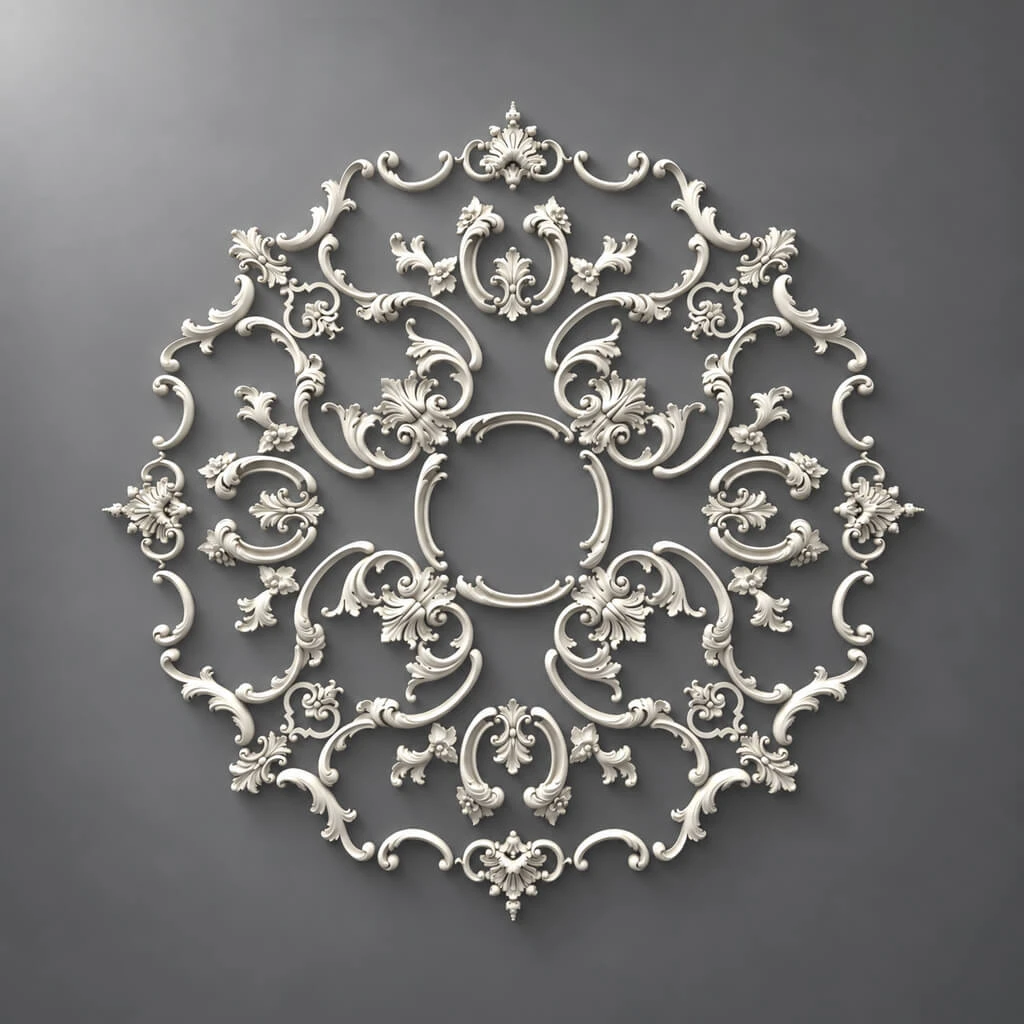
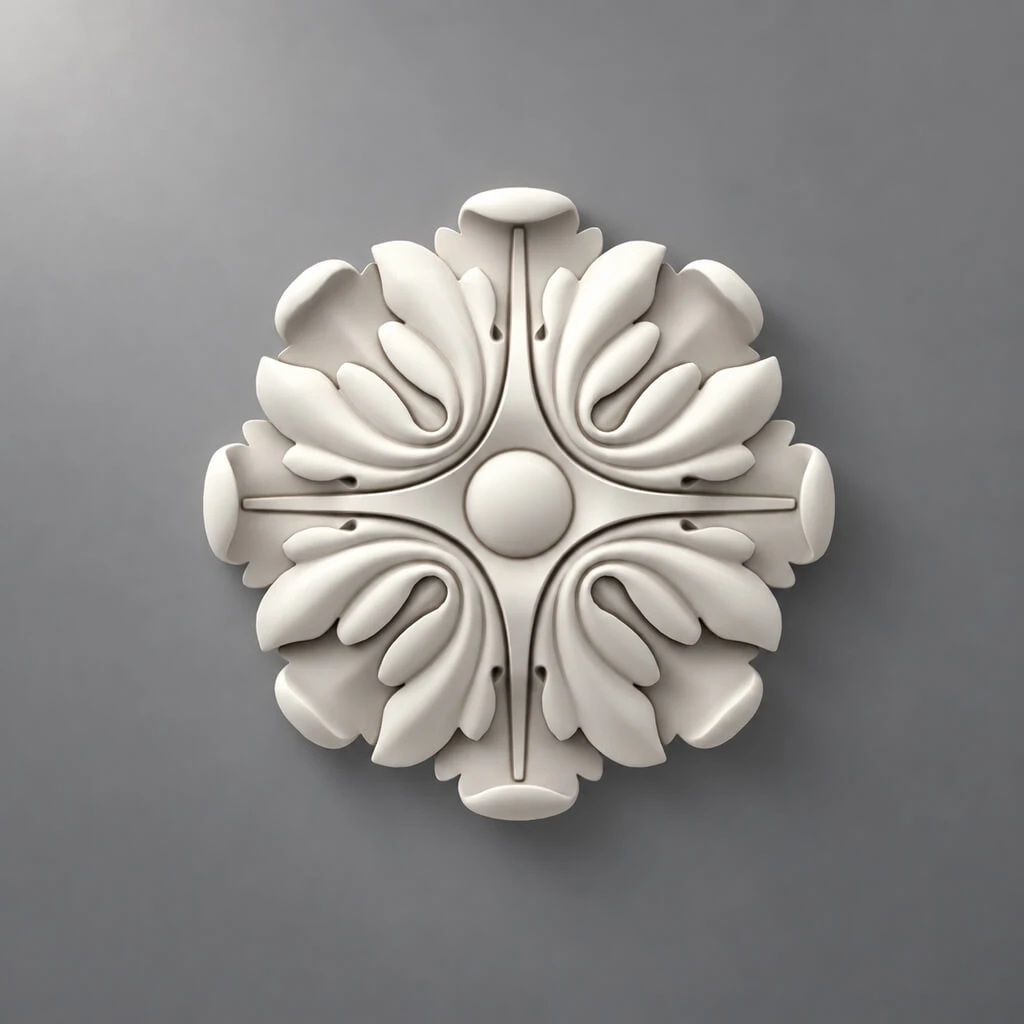
Polyurethane ceiling rosettesSTAVROS — an element that works in an office only in one case: when there is a meaningful light source underneath it. A rosette without a chandelier is a decorative accident. A rosette with a chandelier on the central axis is architectural precision.
Ceiling decor around a chandelier in an office: the ceiling rosette is selected to match the scale of the light fixture. If the chandelier has a diameter of 400–500 mm — the rosette has a diameter of 250–300 mm. If the light fixture is compact — the rosette is 150–200 mm. In an office, it is better to avoid overly lush rosettes with multi-tiered ornament: they are appropriate in formal halls, but not in a workspace.
You can buy a ceiling rosette for an office of the required size in the STAVROS catalog — it features rosettes of different diameters with various profiles: from laconic rims to more detailed classic forms.
Ready-made ceiling decor set
When the task is to create a cohesive ceiling system rather than manually selecting individual elements, the optimal solution isa ready-made ceiling decor kit for an office. The CPU STAVROS kit is a coordinated scheme: cornice, several types of corner overlays, field elements, and a central accent. All parts are designed within a unified proportional system.
A ready-made stucco kit for an office is a safe choice if you lack experience in selecting individual elements. Scale, profiles, and levels of detail are already coordinated by the manufacturer. All that remains is to choose a kit that matches the size and height of the office.
How to design the ceiling above the desk
This is the main scenario question that arises for most people when designing an office. Where exactly should the ceiling composition be? What should it "cover"? How should it be properly structured?
The principle is one: the ceiling in an office is built along the axis of the main workspace.
If the desk is placed in the center of the office (common in meeting rooms and executive offices) — the ceiling frame is centered on the desk. The light fixture is on the desk's axis. The outlet is under the light fixture. This entire vertical axis creates the "work center" of the space.
If the desk is against the wall (typical home office layout) — the ceiling frame can be shifted closer to the desk and the wall behind it. Or the ceiling decor is organized differently: a perimeter cornice + a frame above the center of the room + sconces on the sides of the desk. A light fixture above the desk, attached to the wall, creates local task lighting, while the ceiling system provides overall architectural completeness.
Ceiling decor above the desk:
-
Do not place an ornamental accent directly above the work surface if the office is small — it creates a feeling of "the ceiling is pressing down."
-
In an office of 12–15 m², the frame shifts to the central axis, not just the desk area.
-
In an office of 20+ m², you can create two ceiling zones: a work zone (above the desk — a neat frame and light fixture) and a meeting/sofa zone (a separate accent).
How to highlight a work area with ceiling decor: a ceiling frame above the workspace works better than any floor zoning. It is an architectural "room within a room" — without walls, only through ceiling geometry.
Ceiling decor for an office with bookshelves
A library or office with bookshelves has a unique atmosphere. Floor-to-ceiling shelving, book spines, wood or lacquered facades, a desk lamp, a leather armchair — a classic picture that requires the right ceiling. This is where ceiling molding for an office truly shines: it completes the vertical rhythm of the shelves, sets the upper boundary, and creates a sense of "hall."
Molding for a library: principles:
-
A cornice is a must. Bookshelves typically have a top cornice or cornice shelf. The ceiling cornice continues this horizontal line and creates architectural continuity "shelf — wall — ceiling."
-
Ceiling moldings support strictness. There is no room for random ornamental curls in a library. A rectangular frame made of classic molding provides the strictness that aligns with books on shelves.
-
Dark shelves — light ceiling. If the bookshelves are dark (wenge, oak, walnut), it is better to paint the ceiling decor white or a very light shade. This creates the right balance: dark bottom — light top — visual comfort.
-
CPU-P1 or CPU-P2 are the main product variants for the library. CPU-P1 for a more intimate cabinet-library, CPU-P2 for a more spacious and prestigious one.
A classic ceiling in a library is not a luxury. It is part of the very atmosphere of a "place where people think." Ceiling decor for a library should be such that a person in this armchair with a book feels in their place — not in an office, not in a living room, but precisely in a library.
Stucco molding in an executive office
An executive office is not just a workplace. It is a space that speaks about its owner without words. A properly designed executive office interior creates the right atmosphere for negotiations, meetings, and important decisions. The ceiling here is part of that statement.
Ceiling decor in an executive office solves three tasks:
-
Creates status. A ceiling cornice, molding frames, a ceiling rosette under the chandelier — this is the architectural language of business classics, which is read at the level of sensations.
-
Does not overwhelm. An executive office should be representative, but not tense. Heavy palace decor in an office is a mistake: it creates discomfort for negotiation partners.
-
Works with furniture. A massive desk made of oak or walnut, leather armchairs, shelves with folders or books — all this requires ceiling decor that supports the scale and style of the furniture.
Prestigious stucco molding for the office:Molding decor set CPU-P2 — the optimal choice for an executive office. CPU-P2 is a more saturated system than CPU-P1: an expanded corner scheme, more detailed field overlays, an expressive central element. This is exactly what is needed for a ceiling that should read as "serious decisions are made here" — not as "stucco molding was hung here for the sake of stucco molding."
Ceiling decor for an executive office, paired with dark wood panels and wall moldings, creates that high-level "quiet classic" style that is currently relevant in corporate and private business interiors.
CPU-P2 for the meeting room: if the office is combined with a meeting area (long table, several armchairs), the ceiling system should cover the entire central zone. CPU-P2 with an area of 3200 × 3200 mm is a good solution for a meeting room of 18–25 m² with a ceiling height of 2.8–3 m.
CPU-P2 for the library: if the executive office has a library area — separate sections of bookcases, a reading chair, a floor lamp or sconce — CPU-P2 creates a ceiling system that is representative enough for this format.
How to choose decor based on office size
Small office 10–14 m²
A small office in an apartment or country house is a space where every element is visible up close. Ceiling decor for a small office should be proportionate: not too small to get lost, and not too large to feel overwhelming.
Working option for an office of 10–14 m²:
-
Cornice around the perimeter — profile 60–80 mm.
-
Molding frame above the center — with a 15–20 cm offset from the cornice.
-
Small rosette for the light fixture.
-
orStucco decor set CPU-P1— as a ready-made system solution that coordinates all elements in proportion.
Stucco for a small study in the color of the ceiling is the optimal strategy: a monochrome ceiling in a small room appears higher, and the decor reads as an architectural detail, not as "glued-on stucco."
Ceiling decor in a 12 m² study: one frame + cornice + rosette. That's enough. CPU-P1 implements exactly this scheme in a ready-made form.
Medium-sized study 15–20 m²
A 15–20 m² study is already a full-fledged workspace. You can place a desk, a meeting area, bookshelves, a sofa for relaxation or negotiations. Ceiling decor for such a study can be more expressive.
Which decor set to choose for a 15–20 m² study:
-
CPU-P1 — if the ceiling is 2.6–2.7 m and you want calm, unobtrusive decor.
-
CPU-P2 — if the ceiling is 2.7–2.9 m and you need a more prestigious solution.
Ceiling decor in a 15 m² study with CPU-P1: cornice A130V1, corner overlays, molding contours, central element NPU-462.1 — all this creates a complete ceiling system without excessive ornamentation. The workspace remains the main focus, the ceiling is an architectural backdrop that supports, not competes.
Ceiling decor in a 20 m² study is already the CPU-P2 zone: you can afford a more detailed corner system, an expressive center, and a slightly larger profile cornice.
Spacious study or library 20–30 m²
A spacious study is a different story. Here, ceiling decor can be truly expressive. With an area of 20–30 m² and a ceiling height of 2.8 m or more, consider CPU-P2 or CPU-P3.
Molding decor set CPU-P3For a spacious study, this is a ready-made ceiling system with a zone of 3200 × 3200 × 83 mm, extended corner accents, and a central element. CPU-P3 creates a noticeable but not heavy ceiling center — exactly what is needed for a large study, study-living room, or home library.
CPU-P3 for a study with a seating area: if the study has a sofa for meetings or reading, CPU-P3 organizes a ceiling center that covers the entire functional zone, not just the desk. This creates architectural unity for the entire room.
CPU-P3 for a study in a private house: with ceiling heights of 2.8–3 m and an area of 25–35 m², CPU-P3 delivers the result described as "exactly what I wanted — solid but not lavish."
How to choose decor based on ceiling height
Ceiling 2.6–2.7 m
A low ceiling in a study is a challenge, but not a dead end. Ceiling decor in a study with a height of 2.6–2.7 m requires a subtle approach: lightweight elements, monochrome painting, and no heavy overhanging profiles.
Molding for a study with a low ceiling:
-
Cornice — no more than 80 mm in profile.
-
Molding frames — thin, no more than 30–40 mm wide.
-
Rosette — small, 150–180 mm.
-
Color strictly matches the ceiling tone.
Light ceiling decor in a 2.7 m study: CPU-P1, with the right choice of cornice profile and monochrome painting, creates a light, almost "airy" ceiling system — an architectural hint of classicism without a sense of heaviness.
Moldings on the ceiling in a study with a low ceiling: only horizontal geometry, no vertical accents. Thin moldings optically "widen" the ceiling rather than lowering it.
Ceiling 2.7–2.9 m
The gold standard for most apartment and office studies. At this height, you can use CPU-P1, CPU-P2, or — with sufficient area — CPU-P3.
Ceiling decor in a 2.7–2.8 m study: CPU-P1 looks proportionate for an area of 12–20 m², CPU-P2 for an area of 18–28 m². Both systems proportionally "fill" the ceiling without a feeling of pressure or, conversely, without a feeling of "too little."
Which decor to choose for a study with a 2.7 m ceiling: if the study is home-based, 14–18 m², without formal ambitions — CPU-P1. If the study is executive, 18–25 m², with dark furniture and bookcases — CPU-P2.
Ceiling from 3 m
A study with a high ceiling is an architectural privilege. With a height of 3 m or more, it becomes possible to use larger-scale decor. But even here, it's important to remember: the goal is not a "grand hall" but a "serious working study."
Stucco for a study with a high ceiling: with a 3 m ceiling, the cornice can be 120–150 mm, corner accents more expressive. CPU-P2 or CPU-P3 are good options. CPU-P4 and CPU-P6 are not recommended for a study unless the goal is a "palatial" interior: they are designed for grand halls and large living rooms.
Classic ceiling in a study with a high ceiling: clear geometry, expressive corner accents, a central rosette for a large chandelier, a 120–140 mm cornice — this is the formula for a study with a 3 m ceiling. No unnecessary ornamentation, only proportional strictness.
Which set to choose: CPU-P1, CPU-P2, or CPU-P3
CPU-P1 — for a quiet home office
Stucco decor set CPU-P1 — a basic laconic STAVROS system, a starting option for small rooms and intimate spaces. Cornice A130V1, corner covers, molding contours, central rosette NPU-462.1 with a diameter of 330 mm.
CPU-P1 for an apartment study — an ideal system for a home office or workroom of 12–20 m² with a ceiling of 2.6–2.8 m. It creates a composed classic system without overload — exactly what is needed for a space where concentration matters, not decorative richness.
CPU-P1 for a classic study: in an interior with bookshelves, classic doors, parquet, and wooden furniture, CPU-P1 works as an organic part of the overall architecture — it does not stand out, does not overwhelm, does not 'shout' about itself.
Who is CPU-P1 for in the context of a study:
-
home study 12–20 m²;
-
workroom in an apartment;
-
small home office;
-
ceiling 2.6–2.8 m;
-
neoclassical without overload, calm classic.
Buy CPU-P1 for the office: the kit is available in the STAVROS catalog, all components are selected in a unified system. Installation with glue, no drilling, no construction work.
CPU-P2 — for a status office
Molding decor set CPU-P2 — a more saturated system with an extended corner layout. STAVROS describes CPU-P2 as a more detailed option for medium-sized rooms where an expressive but not heavy ceiling system is needed.
CPU-P2 for the executive office: representative decor without palatialness. The corner accents of CPU-P2 create a more detailed ceiling contour than CPU-P1 — this is exactly what reads as "this is a serious office."
CPU-P2 for a status office: if the office has dark solid wood furniture, classic bookcases, high doors with architraves, and representative lighting — CPU-P2 gives the ceiling the right status weight.
CPU-P2 for an office with a high ceiling: with a height of 2.8–3 m and an area of 20–28 m², CPU-P2 is optimal. The system is proportionate to the room — no more, no less.
Who is CPU-P2 for in the context of an office:
-
executive office;
-
spacious home office 18–28 m²;
-
meeting room;
-
home library with a representative character;
-
ceiling from 2.7–3 m;
-
dark furniture, solid wood, classic wall decor.
Buy CPU-P2 for the study: available in the STAVROS catalog, mounted similarly to all CPU series kits — with special adhesive, without a hammer drill, without a construction crew.
CPU-P3 — for a spacious study
Molding decor set CPU-P3 — a universal system for an area of 3200 × 3200 × 83 mm, more detailed NPU-472L/R and NPU-309 field overlays, expressive corner contours. CPU-P3 creates a ceiling center that is noticeable and readable, but does not pretend to be a "palace."
CPU-P3 for a spacious study of 20–35 m²: with such an area, a ceiling without strong decor will look empty. CPU-P3 fills the central zone, creates an expressive architectural accent under the chandelier, and sets the scale for the entire ceiling system.
CPU-P3 for a study-living room: if the study is combined with a sofa area or transitions into a living room — CPU-P3 creates a ceiling system that works for both functional zones simultaneously.
CPU-P3 for a study in a private house: in a country house, the study is often more spacious — 25–35 m², ceiling 2.8–3 m. CPU-P3 here is the precise option: expressive enough for the country scale, strict enough for a working study.
For whom is CPU-P3 in the context of a study:
-
spacious office from 20–25 m²;
-
office-living room or office with a sofa area;
-
home library in a country house;
-
office in a private house with a ceiling height of 2.8–3 m;
-
need more expressiveness than CPU-P1, but without the formal overload of CPU-P4.
How to combine ceiling decor with walls in an office
Ceiling decor in an office is part of the system. Stucco on the ceiling that exists separately from the walls, furniture, and doors looks "glued on" rather than architectural. A properly designed office is a unified system: ceiling, walls, doors, furniture, lighting — all in the same scale and decorative logic.
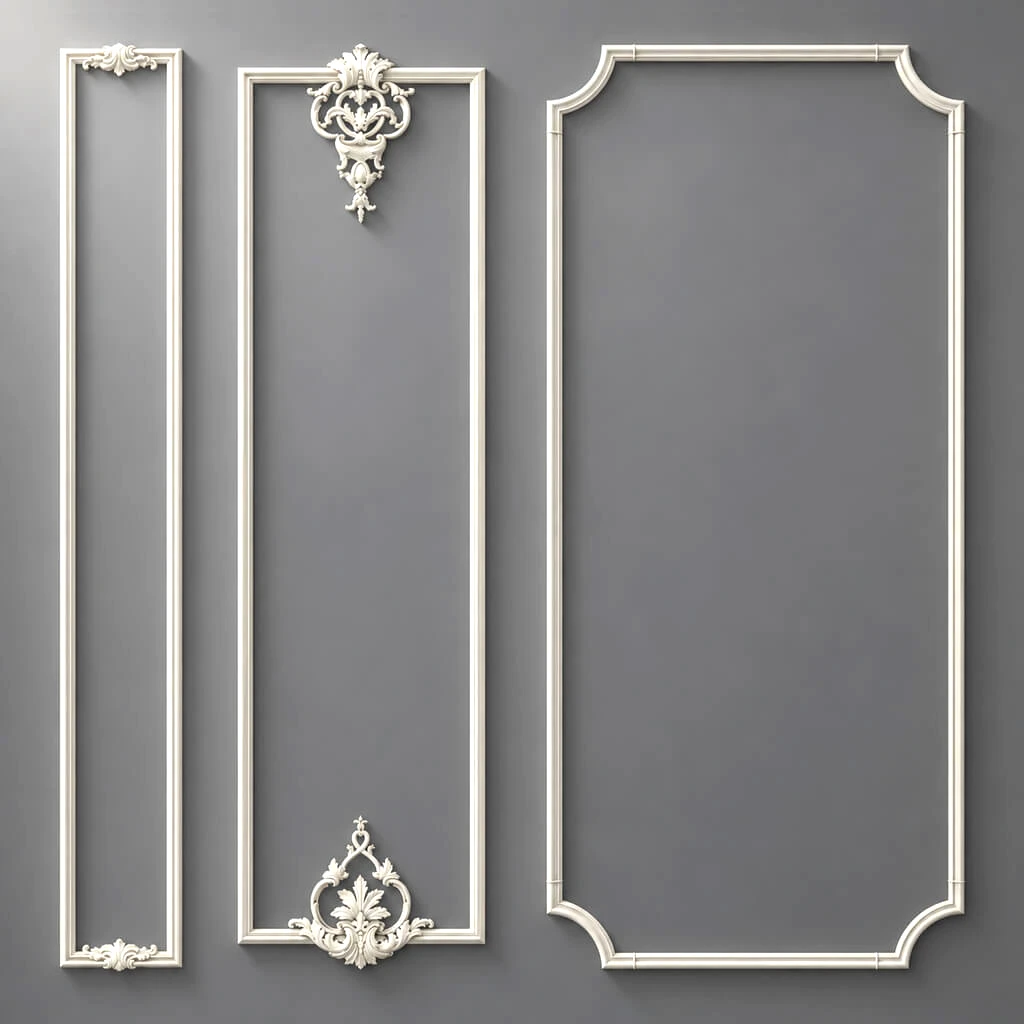
Polyurethane wall decorSTAVROS — molding frames, panels, corner trims — creates a wall system that "responds" to the ceiling. An office with moldings and ceiling stucco is an interior with architectural continuity: the eye follows from the cornice down the wall, to the panel frames, to the baseboard — and everywhere one language of forms is read.
How to combine stucco on the ceiling and walls in an office:
-
Cornice → wall moldings → baseboard — all three elements from the same STAVROS series. This creates a vertical rhythm that makes the office visually "tall."
-
At the desk — a molding frame on the wall. Above the desk — a molding frame on the ceiling. Both are aligned along a single axis.
-
Bookcases with a cornice shelf — the ceiling cornice continues their horizontal line. The space between the top of the bookcase and the ceiling cornice remains clear.
An office with cornices and stucco: if the walls are rich in decor (frames, panels, decorative inserts) — the ceiling is made slightly simpler. Only a cornice + a neat frame. The balance between ceiling and walls is key. If the walls are smooth — the ceiling system can be slightly more expressive, becoming the main architectural accent.
Polyurethane moldingsOn the office walls — pilasters, corner overlays, medallions — complement the ceiling system and create a cohesive classic interior where every element is in its place. All made from a single material STAVROS — polyurethane, which is easy to cut, glue, and paint.
Practical side:installation of polyurethane moldingandinstalling polyurethane molding — these are finishing works after painting or wallpapering the walls. Installation with PVA glue or special acrylic glue, without drilling, without construction work. Corner joints are cut with a miter box at 45° followed by puttying. The surface is primed and painted in the desired shade. Full cycle — 1–2 days for an average-sized office.
How to choose the color of stucco for an office
The color of stucco in an office is not a secondary issue. It determines whether the decor will be "readable" or remain an architectural hint.
A few working principles:
White stucco in an office — a classic that always works if the ceiling is also white. A monochrome white ceiling with white stucco is "quiet classic": the decor is present but not overwhelming. In daylight, the stucco is read through the play of shadows, not through color contrast.
Stucco in the color of the ceiling in the study — if the ceiling is colored (light gray, beige, cream), the stucco is painted in the same tone. The decor preserves architectural logic but does not create visual fragmentation.
Stucco in contrast — only in a spacious study with good height. If the ceiling is dark (graphite, gray-blue, green-gray — the "dark study" trend), white or cream stucco creates a clear architectural outline. This is a strong technique, but it requires sufficient area and proper lighting.
Strict stucco for a dark-toned study: a combination of dark walls, white ceiling, white stucco, and dark furniture is one of the most striking options for an executive office or home library. The ceiling becomes a "bright sky" above the dark interior, and the stucco serves as its architectural transition.
In a study with dark wooden furniture, avoid sharp color contrast on the ceiling when the height is below 2.8 m: contrast "pulls" the gaze upward, which creates discomfort with a low ceiling. Calm stucco in the color of the ceiling is the right choice.
Mistakes when choosing stucco for the ceiling in a study
Mistake 1. Making the study too grand
The desire to make it "beautiful and expensive" sometimes leads to CPU-P4 or CPU-P6 in an 18 m² study. This is overkill: heavy grand decor in a workspace creates discomfort for staying and working. The study should look prestigious — not palatial.
Mistake 2. Not considering the desk
A ceiling composition "detached" from the axis of the desk looks random. The central axis of the decor should coincide with the axis of the main workspace — this is visual organization of the space.
Mistake 3. Choosing too small decor for a study with tall cabinets
If the office has large bookcases 250–280 cm high, a thin molding 25 mm wide on the ceiling will be indistinguishable — it will simply "get lost" against the scale of the furniture. The decor should be proportionate to the largest objects in the room.
Mistake 4. Creating a strong color contrast on a low ceiling
Contrasting stucco on a 2.5–2.6 m ceiling creates optical pressure. Monochrome painting is a mandatory condition for a small office with a low ceiling.
Mistake 5. Buying individual elements without an overall scheme
A cornice from one supplier, moldings from another, corner overlays from a third — all this, as a rule, does not form a unified system. The proportions of profiles, height and depth of relief, thickness — each manufacturer has its own standards. A ready-madeceiling decor set for an officefrom a single source is a guarantee that all elements will look as a cohesive whole.
Where to buy stucco decor for the ceiling in the STAVROS office
The STAVROS catalog features a full range ofstucco decor for the ceiling in the office — ready-made sets of the CPU series, individual cornices, moldings, rosettes, and wall decor for creating a unified classical system.
For a calm home office —CPU-P1: a basic laconic system, office 12–20 m², ceiling 2.6–2.8 m, classic without overload. For a status office, meeting room or library —CPU-P2: a richer system, 18–28 m², ceiling from 2.7 m, dark furniture, business interior. For a spacious office, office-living room or office in a private house —CPU-P3: a universal expressive system, 20–35 m², ceiling 2.8–3 m.
For kits — a full range of components:Polyurethane Crown Molding for perimeter finishing,Moldings made of polyurethane for frames and wall systems,ceiling rosettes for lighting fixtures,Wall Decor for creating a unified classic environment andpolyurethane interior items — the entire range in one catalog.
The cluster articles contain complete guides on related topics:polyurethane ceiling decor, a set of stucco decor for the ceiling, ceiling molding for 2.6–2.8 m ceilings, which CPU ceiling decor set to choose, Stucco decor for a high ceiling, Ceiling decor for the living room, and alsoceiling decor for hallway and hall — if not only the office but also the entire entrance area is being decorated.
STAVROS is a Russian manufacturer of architectural decor made from polyurethane. Own production, precise profile system, CPU kits for spaces of any size and purpose — from a small home office to a formal study in a country mansion. The full range is available in the stavros.ru catalog.
FAQ: Answers to popular questions
Which ceiling decor should you choose for an office?
For an office, it's better to choose strict, calm decor: a cornice, a molding frame, a neat rosette for a light fixture, or a ready-made CPU kit without excessive ornamentation. The main principle is status, not formality.
Which STAVROS kit is suitable for a home office?
For a home office with an area of 12–20 m² and a ceiling height of 2.6–2.8 m — CPU-P1. A concise basic system, calm classic style, without overload.
What to choose for an executive office?
CPU-P2 — a more detailed system with an expanded corner scheme. Creates a status ceiling that 'works' in a meeting room and executive office.
Is CPU-P3 suitable for an office?
Yes — if the office is spacious enough (from 20–25 m²), combined with a library or lounge area, or located in a private house with a ceiling height of at least 2.8 m. CPU-P3 provides an expressive but not heavy ceiling center.
How to avoid overloading the office with stucco?
Choose decor proportionate to the room: do not overload a small office with large ornamental systems, paint the stucco to match the ceiling color if the height is below 2.7 m, and connect the ceiling composition with the axis of the desk and light fixture.
Can stucco be used in an office with dark furniture?
Yes, and this is one of the best options. Dark furniture + a light ceiling with white stucco creates a classic 'quiet office' contrast. The main thing is to avoid a sharp contrast if the ceiling is below 2.8 m.
Is a cornice needed if the office already has wall moldings?
Yes. The cornice is a connecting element between the walls and the ceiling. Without a cornice, the molding system on the walls looks incomplete: the upper contour of the wall remains 'open'.