












































































Article Contents:
- When walls and ceilings start talking to each other
- Wall molding: a separate world of decorative possibilities
- What is wall molding and why is it needed
- Types of wall molding
- Ceiling molding: system and logic
- Unified system: wall and ceiling molding in a single interior
- Why this works better than each element separately
- How a unified decorative system is built
- Wall molding in different interior styles
- Classic: a total architectural system
- Neoclassicism: Modern Interpretation
- Art Deco: geometry and decorative richness
- Modern style: architectural accent without historical quotation
- Eclecticism: freedom with internal logic
- How to combine wall and ceiling molding: practical schemes
- Scheme 1: Cornice plus wall molding frames
- Scheme 2: Cornice, molding frames on the ceiling and wall panels
- Scheme 3: Pilasters and ceiling cornices
- Scheme 4: Framing functional zones
- Scheme 5: Molding belt and cornice
- How to choose wall molding: criteria
- Room height and scale of elements
- Interior style and ornament
- Application area
- Compatibility with ceiling decor
- Polyurethane for walls and ceilings: why it's the only reasonable choice
- Unified material for walls and ceilings
- Easy installation on any surfaces
- Precision relief on both surfaces
- Moisture resistance and durability
- Painting in a uniform color
- Molding on walls and ceilings in specific rooms
- Living Room
- Bedroom
- Dining Room
- Entry Hall
- Office
- Hall of a country house
- Installation of wall molding: what is important to know
- Wall preparation
- Marking
- Cutting Elements
- Adhesive Application and Fixation
- Sealing joints and final finishing
- Common mistakes when creating a wall and ceiling molding system
- Different ornaments on walls and ceilings
- Disproportion of elements
- Violation of symmetry in marking
- Overloading walls with decor
- Ignoring zones without decor
- Different materials on walls and ceiling
- What to combine wall and ceiling decor system with
- Furniture in a unified style
- Lighting
- Textiles
- Floor covering
- Frequently asked questions about wall and ceiling molding
- Can the same moldings be used on walls and ceiling?
- How difficult is it to install the decor system yourself?
- How to calculate the number of moldings for wall frames?
- Is a cornice needed if there are already molding frames on the walls?
- Can wall molding be combined with wallpaper?
- Is wall molding suitable for small rooms?
- How to care for wall moldings?
- How long does polyurethane wall molding last?
- Conclusion


When walls and ceilings start talking to each other
There are interiors where something is subtly off. The furniture is good, the color is right, the lighting is set up correctly—yet there's no sense of wholeness. The space exists as a collection of fragments, not as a unified organism. Most often, the reason is precisely this: the ceiling lives on its own, the walls live on their own, and there is no architectural dialogue between them.
Wall molding and ceiling molding as a unified solution—this is exactly the tool that creates this dialogue. Not two separate decorative solutions, but one cohesive system where the cornice ornament flows into the wall molding, the ceiling rosette echoes the wall medallion, and the space acquires that quality of completeness which distinguishes a professional interior from just a good renovation.
In this article—a full conversation: what wall molding is, how it differs from ceiling molding, how to combine them into a unified system, what elements are used, in what styles, how they are installed, and why polyurethane is today the optimal material for both cases.




Wall molding: a separate world of decorative possibilities
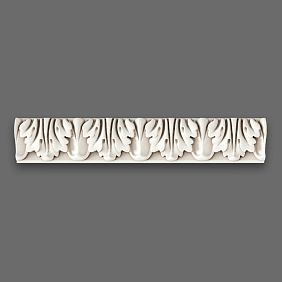
Our factory also produces:


What is wall molding and why is it needed
While ceiling moldings are more or less associated with rosettes and cornices for most people, wall moldings remain a much less explored territory. And in vain — it is the walls that occupy the main part of the visual field in any room, and it is here that architectural decor has the most powerful effect.
Wall moldings solve several fundamentally different tasks. The first is creating the architectural envelope of a space: when walls are not just painted but structured with molding frames, pilasters, decorative belts — the room acquires an architectural character. The second is accentuating individual zones: a bed headboard, fireplace framing, a decorative panel behind a sofa, framing a mirror or painting — in all these cases, wall moldings create a 'frame' for a functional or decorative element. The third is visual division of the wall, which changes the proportions of the room: horizontal molding belts make high walls cozier, vertical pilasters — visually raise a low ceiling.
Get Consultation
Types of wall moldings
Wall moldings. These are the same as ceiling moldings — profile strips — but used to create framing systems on vertical surfaces. Wall moldings form rectangular panels (so-called 'frames' or 'panels'), which make the wall structured and architecturally rich. This is one of the most popular types of wall decor in neoclassical and classical interiors.
Pilasters. Decorative flat columns that are mounted vertically on walls. A pilaster has a base (lower part), a shaft, and a capital (upper part). In a classical interior, pilasters divide the wall into rhythmic sections, creating a sense of a columned hall. In modern solutions, the pilaster is simplified to a vertical strip with minimal relief.
Decorative panels. Large rectangular or shaped elements that are mounted on the wall as an independent decorative accent. A panel can be made with an ornament inside a frame, with a relief central motif, or as a pure architectural section.
Wall molding belts and friezes. Horizontal strips with or without ornamentation that divide the wall into zones: a plinth (lower part), the main zone, and a frieze (upper part under the cornice). This is a classic three-part wall decoration system that dates back to ancient architecture and remains relevant to this day.
Decorative medallions and rosettes on walls. Round or oval elements that are mounted on the wall as independent decorative accents. Often used symmetrically — in pairs or sets of four — to create a rhythmic system.
Framing for mirrors, paintings, and fireplaces. Special decorative frames made from moldings that create an architectural frame for a functional or decorative item on the wall.
Polyurethane moldings in a full range — from thin moldings to large decorative panels — allows you to implement any of these types without complex construction work.
Ceiling Molding: System and Logic
Ceiling molding is a topic we have covered in detail in other materials. Here, we'll recap the main points: ceiling decorative molding consists of cornices (around the perimeter), moldings (frames on the surface), rosettes (center, chandelier area), and additional decorative elements (corner inserts, medallions).
Each of these elements has its own function in the ceiling system. The cornice frames the space. Moldings structure the surface. The rosette anchors the center. PreciselyPolyurethane ceiling decorationis now the standard for residential and commercial interiors: lightweight, precise in relief, moisture-resistant, and can be installed independently.
But the key question of this article is not ceiling or wall decor separately, but their combined application in a unified architectural system.
Unified System: Molding on the Wall and Ceiling in One Interior
Why This Works Better Than Each Element Separately
Imagine a living room: a white stretch ceiling with a cornice around the perimeter. The cornice provides a frame—good, but the ceiling still feels somewhat separate from the walls. Now imagine that from the cornice, molding belts run down the walls, dividing them into panels. The cornice and wall moldings are executed in the same ornamental style. The ceiling rosette echoes the wall medallions. The space suddenly acquires a quality that is hard to describe in words but easy to feel: it becomes unified, cohesive, and architecturally complete.
It is precisely this connection between ceiling and wall decor that transforms 'renovation with molding' into an 'architectural interior.' And this is exactly what experienced designers mean when they talk about the 'envelope of space.'
How a Unified Decorative System is Built
A professional wall and ceiling decoration system is built on several principles.
Ornamental unity. All elements—cornice, ceiling moldings, wall moldings, pilasters—belong to the same ornamental language. If the cornice is classical with an acanthus leaf, then the wall moldings cannot be geometrically minimalist. The ornament should be consistent throughout the entire space.
Scale coordination. The width of the ceiling cornice, the size of the rosette, the width of the wall moldings—all these parameters should be proportionate to each other and to the space. A large ceiling cornice requires corresponding wall elements. A thin profile cornice calls for delicate wall moldings.
Structural logic. The cornice at the junction of the ceiling and wall is a transitional element that connects two worlds. The system starts precisely from it: wall moldings should 'read' as a continuation of the ceiling decor, descending onto the wall.
Rhythm and symmetry. Wall molding frames are arranged symmetrically. Pilasters are placed at equal intervals. Medallions are placed in pairs or in groups of four symmetrically. Breaking the rhythm in a decorative system is immediately noticeable and creates a sense of chaos.
Wall stucco in different interior styles
Classicism: a total architectural system
In a classical interior, wall stucco is not an option but a mandatory element. Walls are divided into three zones: the plinth (lower part, 30–50 cm high), the main zone with molding panels, and the upper zone with a frieze under the cornice. Inside the molding frames are wallpaper, fabric, painting, or simply a painted surface. Pilasters divide the walls vertically. The cornice connects the wall to the ceiling.
This is the classical architectural shell reproduced in all significant interiors of the 18th–19th centuries. Today, it is implemented using polyurethane moldings for reasonable money and without special skills.
Neoclassicism: Modern Interpretation
Neoclassicism simplifies the classical system: it removes some ornamentation, makes profiles cleaner, and preserves architectural logic without historical literalism. Wall molding panels without lavish interior ornamentation, a thin cornice with a geometric profile, pilasters with simplified capitals—this is the neoclassical approach applied today in most 'luxury' residential interiors.
Art Deco: Geometry and Decorative Saturation
Art Deco favors verticals, geometric repetitions, metallic accents, and decorative saturation without historical eclecticism. Wall moldings in Art Deco are strict rectangular frames without floral ornamentation. Pilasters are narrow, elongated, with geometric capitals. Decorative belts are stepped profiles. Wall stucco in Art Deco is often painted in a contrasting color or metallic.
Modern Style: Architectural Emphasis Without Historical Quotation
In a modern interior, wall stucco is used pointedly and intentionally. One molding frame above the bed headboard. A decorative panel behind the sofa. A thin molding belt dividing the wall painting zone. A pilaster marking the transition between functional zones. This is not 'classics,' it is a deliberate architectural detail in a modern environment—and precisely this approach today is a sign of mature design thinking.
Eclecticism: Freedom with Internal Logic
Eclecticism allows mixing—but only conscious mixing. A classic molding frame on the wall next to a modern geometric cornice works as an intentional clash of eras. The main thing is that this clash is thoughtful, not accidental.
How to Combine Wall and Ceiling Stucco: Practical Schemes
Scheme 1: Cornice plus wall molding frames
The most accessible and effective system. Ceiling cornice around the perimeter + wall moldings forming rectangular panels on all walls. The ornament of the cornice and moldings is the same or similar. The effect is a full-fledged architectural shell with minimal costs.
Preciselydecorative polyurethane elementsare used in this scheme most often: the same profiles work both on the ceiling and on the walls, ensuring visual unity.
Scheme 2: Cornice, ceiling molding frames, and wall panels
Complete system: ceiling cornice + molding frames on the ceiling plane + wall molding panels. The ceiling gets its own architecture (frames), the walls get their own (panels), and the cornice ties them together into a unified whole. This solution is for spacious living rooms and formal areas.
Scheme 3: Pilasters and ceiling cornices
Pilasters on walls + cornice on the ceiling create a vertical-horizontal division system that resembles a columned hall. This is an architecturally very strong solution that radically changes the perception of space. Suitable for living rooms, halls, studies.
Scheme 4: Framing functional zones
Molding frame above the bed headboard (bedroom), fireplace framing (living room), decorative panel behind the sofa (living room), frame around the mirror in the hallway — this is a targeted approach where molding is used not as a system, but as an accent. A ceiling rosette and one or two wall elements are a minimal yet expressive set.
Scheme 5: Molding dado and cornice
Horizontal molding dado on the wall (at a height of 90–110 cm or at door top level) + cornice on the ceiling. The dado divides the wall into two zones: lower (below the dado) and upper (above the dado). These zones can be painted in different colors or wallpapered with different patterns. The cornice completes the system from above.
How to choose wall molding: criteria
Room height and element scale
Ceiling height determines the entire scale of the system. With ceilings up to 2.6 m, wall moldings should be thin (2–4 cm), panels small, and cornices delicate. With ceilings of 2.7–3 m, possibilities expand. With a height from 3 m — complete freedom, including full-fledged pilasters and multi-profile molding systems.
Interior style and ornament
The ornament of wall plasterwork should match the style of the entire space. For classic — floral profiles with leaves and scrolls. For neoclassical — clean geometric or slightly ornamental profiles. For modern style — smooth or minimally relief. For Art Deco — stepped and geometric.
Application area
One thing is molding frames on all walls (a full system), another is a decorative panel only on an accent wall. The second approach requires fewer elements but no less thoughtful approach to selection.
Compatibility with ceiling decor
If ceiling decor already exists — wall decor should match it in ornament and scale. If decorating from scratch — select ceiling and wall decor simultaneously, from the same collection.
Polyurethane for walls and ceilings: why it is the only reasonable choice
When it comes to comprehensive decorating — both walls and ceilings — the material takes on special significance.Polyurethane Itemsare the optimal choice today precisely because they work equally well on both surfaces.
Single material for walls and ceiling
Polyurethane moldings, cornices, rosettes, and decorative panels are produced in unified collections. The same profile can be used both on the ceiling (as a cornice or ceiling molding) and on the wall (as a wall molding). This ensures complete visual unity of the system — the ornament, profile, and relief are identical on all surfaces.
Easy installation on any surfaces
On the ceiling — acrylic adhesive. On walls — the same acrylic adhesive, with additional mounting brackets if needed. Polyurethane adheres equally well to concrete, drywall, plaster, and PVC surfaces. No special tools required.
Precision relief on both surfaces
The casting method ensures perfect repeatability of the form. Every cornice, every molding, every frame is an exact copy. This is especially important when creating systems with a large number of elements: symmetry and uniformity of the ornament create a professional result.
Moisture resistance and durability
On walls, polyurethane is just as moisture-resistant as on the ceiling. Decor in hallways, kitchen areas, rooms with variable humidity — polyurethane withstands all of this without deformation or deterioration.
Painting in a unified color
After installation, the entire system — ceiling cornice, ceiling moldings, wall moldings, pilasters — is painted in a unified color. Traditionally, this is white. This creates the impression of a monolithic architectural system, not a set of separate elements.
Wall and ceiling moldings in specific rooms
Living Room
Here the decorative system unfolds to its full potential. Classic living room: cornice along the ceiling perimeter, molding frames on the ceiling plane, wall molding panels, ceiling medallion for the chandelier. This is a complete set that transforms an ordinary room into an architectural space.
Modern living room: thin cornice, wall panel behind the sofa, ceiling medallion for the chandelier. Three elements — and already a completely different level of interior.
Bedroom
Accent wall behind the bed — the main application point for wall moldings in the bedroom. A molding frame framing the headboard or a decorative panel with relief — this creates a focal point that makes the bed area special. Combined with a ceiling cornice and a small medallion, this is already a full-fledged system.
Dining Room
Molding panels on dining room walls plus cornice plus medallion above the table — a formal system for a space where family meals are held and guests are received. It is here that the molded decoration of walls and ceilings creates a sense of solemnity and respect for the ritual of dining.
Entryway
The first space a guest sees. Here, wall decoration works as the first architectural statement of the interior. Molding frames on hallway walls, cornice, possibly a decorative console or pilaster — all this creates an impression of a thoughtful, quality space even before entering the main rooms.
Office
Strict architectural system: vertical pilasters, molding panels, cornice. A structured, representative space with internal logic. Moldings on study walls create an environment that speaks of the owner's seriousness and professionalism.
Hall of a country house
A space with high ceilings and large walls — an ideal environment for the full deployment of the system. Pilasters from floor to cornice, molding panels between them, ceiling molding frames, a central chandelier with a large medallion — this is an architectural space comparable to the interior of a historic mansion.
Installation of wall moldings: what is important to know
Wall preparation
The wall must be smooth, dry, and clean. Flaking paint, grease stains, and loose plaster are all removed. The surface is primed. On uneven walls, moldings will 'float'—small gaps are filled with acrylic sealant after installation.
Marking
Marking is the most important stage. All wall moldings must be symmetrical, frames must have correct proportions, and pilasters must be at equal distances. For marking, use a level, tape measure, and chalk line. A marking error of 1–2 cm becomes visible on the finished system.
The height of molding frames is calculated based on ceiling height. Traditional proportion: the lower frame is 10–15 cm from the floor, the upper one is 15–20 cm from the cornice. Frame width is proportional to the wall width.
Cutting Elements
Moldings are cut to length. Corner joints are cut at 45° using a miter box. Ready-made corner inserts for internal and external corners simplify installation and give a neat result without precise cuts.
Applying glue and fixing
Acrylic mounting adhesive is applied to the back of the molding in a zigzag pattern or dots. The molding is pressed against the wall along the markings, held for 30–60 seconds, and secured with painter's tape until fully set.
Sealing joints and final finishing
Joints and gaps—use acrylic sealant. After drying—sanding with fine sandpaper, painting. The final result is a unified white architectural system without visible seams.
Common mistakes when creating a wall and ceiling molding system
Different ornaments on walls and ceiling
This is the most serious mistake. A classic floral cornice and minimalist wall moldings create a stylistic conflict that destroys the sense of a system. All elements should be from the same collection or the same ornamental direction.
Disproportion of elements
A wide ceiling cornice and thin wall moldings look mismatched. Proportions must be maintained: the scale of ceiling and wall elements should be proportionate.
Violation of symmetry in layout
Wall frames shifted from center, or asymmetrical pilasters are immediately noticeable. Layout requires precision and patience.
Overloading walls with decor
Molding frames + pilasters + decorative belts + medallions + mirror frames — all at once on one wall. The result is decorative noise instead of architectural order. Stucco works in moderation: the more precisely the elements and their quantity are chosen, the more expressive the result.
Ignoring undecorated zones
Not every wall should be covered with molding frames. An accent wall — yes. The others — possibly only a cornice. This creates the right rhythm: accent and background, saturation and space for the eye to rest.
Different materials on walls and ceiling
Gypsum cornice and polyurethane wall moldings may look different after painting: different surface textures, different whiteness. It is optimal to use one material on all surfaces.
What to combine with wall and ceiling decor systems
Furniture in a unified style
A classic decor system requires appropriate furniture—with carving, polishing, characteristic legs, and proportions. A modern molding system calls for neutral or intentionally contrasting furniture.
Lighting
The chandelier should be proportionate to the ceiling medallion and match the style of the decor. Wall sconces should follow the same stylistic key as the chandelier and moldings. Hidden lighting in cornice niches creates an additional lighting scenario.
Textiles
In a classic system—heavy fabrics (velvet, jacquard) with vertical folds. In a modern one—light neutral fabrics that do not compete with the decor.
Flooring
Parquet in a classic room with rich moldings—unity of materials and sensations. Strict laminate or porcelain tile in a modern interior with a laconic molding system—an equally organic combination.
Frequently asked questions about wall and ceiling moldings
Can the same moldings be used on walls and ceilings?
Yes, that's exactly how it's done in most cases. The same profile on the ceiling and walls ensures the ornamental unity of the system. The only difference is in function: on the ceiling, the molding creates frames, on the wall — decorative panels.
How difficult is it to install the decorative system yourself?
Installing polyurethane elements is accessible without special skills. The main things are careful marking, the right adhesive, and a consistent workflow. Cornices, moldings, pilasters — all of these are glued with acrylic mounting adhesive. A standard living room can be finished in one to two days.
How to calculate the amount of molding for wall frames?
Total perimeter of all frames (length + width) × 2 = linear meters of molding for each frame. Add 10% for waste when cutting. Corner inserts — one for each internal corner of the frame (4 pieces for a rectangular frame).
Is a cornice needed if there are already molding frames on the walls?
Preferably — yes. The cornice is a connecting element between the wall system and the ceiling. Without a cornice, the wall frames 'hang' in the air, lacking an upper boundary. The cornice closes the system and makes it complete.
Can wall stucco be combined with wallpaper?
Yes, and this is one of the classic approaches. Molding frames are mounted on the wall, inside the frames — wallpaper (or painting in a different color), outside — white stucco. This creates emphasis and variety while preserving architectural logic.
Is wall stucco suitable for small rooms?
Yes, when choosing the right scale. Thin molding frames in a small room create a sense of order and completeness, not overload. The principle: the smaller the room — the thinner the profile and the fewer frames.
How to care for wall molding?
A soft brush or vacuum with a delicate attachment for dust removal. A damp cloth — for dirt. Neutral cleaning agents — if necessary. Mechanical damage is restored with acrylic putty followed by painting.
How long does polyurethane wall molding last?
With proper installation and normal operating conditions — decades. Polyurethane does not deteriorate from moisture, does not crumble, does not yellow on its own. The service life is comparable to the service life of the room's finish itself.
Conclusion
Wall molding and ceiling molding are not two different solutions, but one architectural system that transforms any room from a set of planes into a cohesive, thoughtful, expressive space. Walls and ceilings, united by a common decorative language, create that sensation which in design is called the 'spatial envelope' — when you are inside an architectural object, not just a room with furniture.
Modern polyurethane products have made this system accessible for any interior and any budget. One material, one collection, one ornamental language — and the entire set: ceiling cornice, moldings, rosette, wall panels, pilasters. DIY installation, long service life, freedom in painting.
The full range of decorative elements for walls and ceilings made of polyurethane — cornices, moldings, rosettes, pilasters, panels, and corner inserts — is presented in the STAVROS company catalog. Go to the section Polyurethane Items and select elements for your decorative system right now.
STAVROS — architectural decor for those who create not just an interior, but a space with character, logic, and genuine visual power. European quality, precise relief, a complete range for any task — from a minimalist accent to a classic architectural system.


