Article Contents:
- Why molding is needed in modern interiors
- Why polyurethane outperforms other materials
- Where to find quality molding: supplier selection criteria
- Types of molding: what to choose for different areas
- Ceiling Cornices
- Wall Mouldings
- Ceiling Rosettes
- Columns and pilasters
- Decorative panels
- Skirting boards and architraves
- How to calculate the required amount of molding
- Molding installation: DIY or hire professionals
- Molding prices in 2026: approximate estimate
- Interior styles and molding selection
- Color and finishing of molding
- Combining molding with other materials
- Mistakes when choosing and installing molding
- Where to buy advantageously: direct sales vs intermediaries
- Custom manufacturing: when standard solutions aren't enough
- Care for Polyurethane Moldings
- 2026 trends in molding usage
- Frequently asked questions about buying molding
- Conclusion: an investment in beauty and longevity

Renovation in 2026 isn't just about changing wallpaper and painting. It's an opportunity to create an interior that will delight for decades. Want your home to stand out from bland boxes? Pay attention topolyurethane molding. This architectural decor transforms ordinary rooms into spaces with character, depth, and nobility. Let's explore where to buy quality products advantageously, what to look for when choosing, and why polyurethane has become the number one material for modern renovation.


Why molding is needed in modern interiors
Ask any architect—they'll say molding works on three levels simultaneously. First—functional.Molding for wallsmasks material joints, conceals unevenness, frames openings. Ceiling cornices hide gaps between walls and stretch ceilings, create niches for hidden lighting.
Second level—compositional. Moldings divide walls into zones, create rhythm, structure space. Vertical elements elongate rooms upward, horizontal ones—expand.Ceiling moldingsunites walls and ceiling planes into a single architectural composition.
Third level—emotional. Beautiful relief, play of light and shadow, nobility of classical forms evoke aesthetic pleasure. A person entering a room with thoughtful molded decor instantly feels the difference. Space gains a dimension that flat walls lack.
In 2026, molding has ceased to be an attribute exclusively of palace interiors. Modern materials and technologies have made it accessible, easy to install, practical. Now it's a solution for any style—from strict neoclassicism to soft minimalism.




Why polyurethane outperforms other materials
Traditionally, molding was made from plaster. Heavy elements required complex installation on metal anchors, feared moisture, cracked over time. Polystyrene proved too fragile—a light impact, and the relief crumples. Foam doesn't hold sharp shapes at all.
Polyurethane combines the advantages of all materials and eliminates the drawbacks. Quality polyurethane density is 280-320 kg/m³—5-6 times lighter than plaster, but 8-10 times denser than foam. The material is strong, elastic, holds the finest relief details.
Moisture resistance—a critical advantage. Polyurethane's water absorption coefficient is less than one percent. You can installdecorative moldingIn the bathroom, kitchen, or pool — the material won't swell, deform, or become a breeding ground for mold.
Temperature stability — from minus 40 to plus 80 degrees without changing properties. Polyurethane doesn't crack in the cold or soften in the heat. You can use it on unheated verandas, balconies, and in seasonal country homes.
Installation with adhesive without wall perforation — another plus. No need for dowels, screws, or anchors. Special polyurethane adhesive ensures reliable bonding in 15-30 minutes. One person can install a cornice in a room in a couple of hours.
Ability to paint in any color — design freedom. Polyurethane accepts water-based, acrylic, and oil paints. You can create a patina effect, metallization, or aging. Want to repaint after a few years? No problem — just light sanding and a new coat of paint.
Our factory also produces:


Where to find quality molding: criteria for choosing a supplier
The market is flooded with offers. Chinese no-names at bargain prices, resellers with huge markups, artisanal productions with unstable quality. How not to make a mistake?
Own production — the first sign of reliability. A company that manufactures products itself controls quality at all stages. It doesn't depend on suppliers, can quickly solve non-standard tasks, and offers reasonable prices without intermediary markups.
Time in the market — an indicator of stability. Fly-by-night firms come and go. A manufacturer that has been operating for 15-20 years values its reputation. It has refined technologies, accumulated experience, and a base of satisfied customers.
Wide assortment — the ability to find everything in one place. WhenStucco storeoffers cornices, moldings, rosettes, columns, panels — you save time searching, get stylistically coordinated elements, and optimize logistics.
Technical support — assistance at all stages. Consultations on selection, calculation of required quantities, installation recommendations, resolution of disputes. A professional manager will ask the right questions, suggest optimal options, and warn against mistakes.
Certificates and documentation — a guarantee of safety. Quality polyurethane has certificates of conformity, test reports, and sanitary-epidemiological conclusions. The material must be approved for residential premises, not emit harmful substances, and comply with fire safety standards.
Delivery terms — a practical point. Molding is bulky and fragile. Make sure the supplier organizes careful packaging, insured delivery to the site, and unloading. Damage during transportation is a common problem when dealing with unscrupulous sellers.
Possibility of return and exchange — insurance against mistakes. Even with careful calculations, situations arise: a mistake in size, color doesn't match, an element is damaged. A normal supplier provides a mechanism for return or exchange within reasonable timeframes.
Get Consultation
Types of molding: what to choose for different zones
Molding decor is diverse. Each element solves specific tasks. Let's examine the main categories.
Ceiling cornices
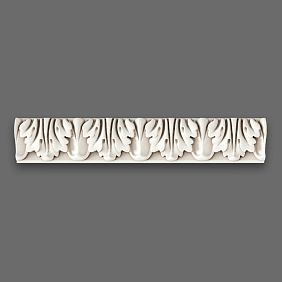
Crown Molding— the most popular type of molding. Installed at the junction of wall and ceiling, they create a smooth transition and visually complete the space. Width varies from 40-50 mm for small rooms to 200-300 mm for high halls.
Simple smooth cornices suit minimalist interiors. Profiled ones with shallow relief — for neoclassical. Richly decorated with ornaments — for palace styles.
A special category — cornices with a niche for hidden lighting. An LED strip is placed in the groove, light is directed upward or downward, creating a soft glow along the ceiling. Such lighting visually raises the ceiling and adds depth to the interior.
Wall Moldings
Moldings — a universal tool for wall decoration. Narrow strips 20-80 mm wide are used to create frame compositions, frame panels, and zone space.
A classic scheme — rectangular frames on the wall from floor to ceiling. The molding forms a perimeter, inside which you can place contrasting paint, wallpaper, or decorative plaster. The result is a paneling effect — a technique known since the times of French palaces.
Moldings are also used for horizontal division of the wall. A strip at a height of 90-120 cm divides the wall into a base and main part. This creates additional scale and makes the room appear taller.
Ceiling Rosettes
ceiling rosettes— decorative elements of round or oval shape, installed in the center of the ceiling. The main function is to frame the chandelier. The rosette hides the mounting point, wires, and mounting hook.
But it's not just practicality.The rosette creates a compositional center, draws attention, and sets the scale. Diameter varies from 200 mm for small bedrooms to 1500 mm for large halls.
The rosette's ornament can be simple geometric or complex floral. The choice depends on the interior style. For classic — acanthus and grapevine, for neoclassical — restrained meanders, for art deco — geometric rays.
Columns and pilasters
Full-fledged architectural elements that divide space, create vertical accents, and support cornices and arches.polyurethane columns and pilastersweigh dozens of times less than gypsum or stone ones, but look no less convincing.
A column is a round element protruding from the wall by its full diameter. A pilaster is flat, protruding 30-50 mm. A half-column is an intermediate option, protruding by half the diameter.
Columns consist of a base (foundation), a shaft (central part), and a capital (crowning element). You can choose Doric, Ionic, or Corinthian orders—each has its own proportions and decoration.
Decorative Panels
Polyurethane wall panels—a relatively new category. These are large-format elements with a relief or fluted surface that are mounted flush against each other, creating a continuous textured covering.
Panels can imitate coffers, boiserie, geometric patterns, or abstract textures. They combine the decorative appeal of molding with the practicality of wall coverings—hiding base imperfections, offering thermal and sound insulation properties, and being easy to clean.
Skirting boards and casings — basic elements of any interior decoration, creating visual completeness of the room. MDF has become the preferred material for these items due to the optimal combination of price, quality, and aesthetic possibilities.
Baseboards finish the trim at the junction of the wall and floor, while casings frame doors and windows. They may seem like small details, but it's precisely these details that create the integrity of the interior.
Polyurethane baseboards are taller and wider than traditional wooden or plastic ones. Height ranges from 80 to 200 mm, featuring pronounced relief and the option to paint them to match the wall color or in a contrasting shade. This is not just a technical strip but a full-fledged decorative element.
How to Calculate the Required Amount of Molding
Errors in calculations lead to unnecessary expenses or material shortages. A professional approach is to measure everything accurately, account for installation specifics, and plan for a surplus.
Ceiling cornices. Measure the perimeter of the room. Note that each internal corner requires two 45-degree cuts—this subtracts 10-15 cm from the standard 2-meter strip length. The same applies to each external corner. Add 5-7 percent for cutting and possible defects. The final formula: perimeter + 7 percent.
Picture frame moldings. Calculate the perimeter of each frame. Multiply by the number of frames. Account for corners—four corners per frame, each requiring a cut. A 10 percent surplus is mandatory—moldings are thin and easy to make mistakes when cutting.
Ceiling rosettes. The quantity is determined by the number of chandeliers. Usually, one rosette per room. In large halls, there may be two or three lighting zones—accordingly, several rosettes.
Columns and pilasters. Counted individually. Note that a set consists of a base, a shaft (which may be composite, made of several parts), and a capital. Check for completeness when ordering.
Panels. Calculate the area of the wall you plan to cover. Divide by the area of one panel. Round up. Add 5 percent for cutting.
Professional advice: before ordering, draw a scaled plan of the room, marking the placement of all elements. This will help visualize the result and avoid calculation errors.
Molding Installation: Do It Yourself or Hire Professionals
A question that concerns everyone. On one hand, polyurethane is positioned as a material for DIY installation. On the other hand, you want guaranteed results.
DIY installation is feasible under the following conditions:
-
You have basic repair skills
-
You know how to use a level, miter box, and caulking gun
-
The room geometry is simple—right angles of 90 degrees
-
The scope of work is small—one or two rooms
-
You are willing to spend time learning the technique
For simple tasks like installing a ceiling cornice around the perimeter or applying picture frame moldings, DIY installation is quite suitable. Savings on labor will amount to 30-50 percent of the material cost.
Professional installation is necessary when:
-
Complex geometry—non-standard angles, sloped ceilings, curved walls
-
Large scope of work—an entire house or apartment
-
High ceilings requiring scaffolding and special equipment
-
Integration of lighting, utilities
-
Expensive elements where the risk of damage is unacceptable
-
Tight deadlines—need to be done quickly and with quality
An experienced crew will installmoldings for walls and ceilingsin a standard room in one working day. Professionals have the tools, refined techniques, and experience in solving non-standard situations.
The cost of professional installation depends on complexity: simple cornices — 200-300 rubles per linear meter, complex compositions with rosettes and columns — 500-800 rubles per square meter of wall.
Molding prices in 2026: approximate estimate
The market offers a wide range. Let's understand what the cost consists of and what to focus on.
Ceiling cornices:
-
Simple smooth ones 40-80 mm wide: 150-350 rubles per linear meter
-
Profiled classical ones 100-150 mm wide: 400-700 rubles per meter
-
Wide decorated ones 180-250 mm wide: 800-1500 rubles per meter
-
Cornices with a niche for lighting: plus 30-40 percent to the base price
Wall moldings:
-
Narrow smooth ones 20-40 mm: 80-180 rubles per meter
-
Medium profiled ones 50-70 mm: 200-400 rubles per meter
-
Wide ones with ornament 80-120 mm: 450-800 rubles per meter
Ceiling rosettes:
-
Small ones with a diameter of 200-400 mm: 600-1500 rubles per piece
-
Medium ones with a diameter of 500-800 mm: 1800-4000 rubles
-
Large ones with a diameter of 900-1500 mm: 5000-12000 rubles
Columns and pilasters:
-
Pilasters 2000-2500 mm high: 3000-8000 rubles per set
-
Half-columns: 5000-12000 rubles
-
Full columns: 8000-20000 rubles
Decorative Panels:
-
Simple ribbed ones: 800-1500 rubles per square meter
-
With relief ornament: 1800-3500 rubles per square meter
For a standard room of 18-20 sq. m, basic decoration (ceiling cornice around the perimeter, moldings for three panels on the walls, one rosette) will cost 15-25 thousand rubles for materials. With labor — 25-40 thousand.
Premium decoration of the same room (wide cornices with lighting, complex paneling, a large rosette, pilasters) will require 60-100 thousand for materials, with labor — 100-150 thousand.
Interior styles and selection of moldings
Moldings must match the overall style. An incorrect choice will create dissonance, a correct one will enhance the character of the interior.
Classicism — strict symmetrical forms, meanders, rosettes, garlands. Medium-width cornices with a clear profile, columns of Doric or Ionic order, moldings with antique motifs. Color — white, cream, with possible gold patina on accents.
Neoclassicism — a simplified version of classicism. Less saturated decor, more clean lines. Concise cornices, simple moldings, restrained rosettes are suitable. Colors — white, gray, beige, without gilding.
Baroque — opulence and drama. Wide cornices with deep relief, large rosettes with floral ornament, curved elements. Gilding, patination, contrasting colors. The style requires large spaces and high ceilings.
Art Deco — geometry and graphics. Stepped cornices, rosettes with radial patterns, zigzag moldings. Contrasting combinations — black and white, gold and wenge. The style of elegance from the 1920s.
Minimalism — here, stucco is used very sparingly. A simple smooth cornice without ornamentation, thin moldings to create geometric lines. The color must match the walls — a monochrome solution.
Scandinavian style — white walls, white stucco, minimal decor. A medium-width cornice, possibly wall paneling with simple moldings. No rosettes, columns, or complex ornaments.
Color and finish of stucco
Polyurethane is supplied in white, ready for painting. The finish determines the character of the interior.
Snow white — a classic. White stucco on white walls creates relief only through the play of light and shadow. This is a solution for light, airy interiors. It is important to use one shade of white — warm or cool — to avoid mismatched tones.
Matching the wall color — a modern approach. The stucco is painted the same color as the walls. The relief remains visible, but the decor becomes unobtrusive, blending with the surface. Suitable for neoclassicism and minimalism.
Contrasting — white stucco on colored walls or vice versa. Contrast emphasizes the architecture, making the decor an active element. Gray walls with white stucco, dark blue with cream, beige with white — work excellently.
Patination — artificial aging. Gold, silver, or bronze patina is applied to the convex parts of the relief. Creates an effect of antiquity and nobility. Used sparingly — full gilding looks vulgar.
Wood imitation — mimicking wood texture. Polyurethane is primed, painted in a base wood color, then a wood grain pattern is applied with a brush or sponge. From a distance, the effect is convincing — it appears to be carved wooden decor.
Metallic — silver, bronze, copper. Relevant for Art Deco style, industrial loft, modern eclecticism. Metallic paints create a cold sheen, emphasizing the geometry of forms.
Combining stucco with other materials
Decorative stuccoStucco does not exist in a vacuum. It interacts with wall, ceiling, and floor finishes, as well as furniture. Skillful combination of materials enhances the effect.
Stucco and wallpaper — a traditional pair. Moldings frame panels with wallpaper, creating wall art. Wallpaper can be plain textured, with a delicate pattern, or fabric-like. It is important that the wallpaper pattern does not compete with the stucco relief.
Stucco and paint — the simplest solution. Painted walls plus polyurethane decor. Monochrome or contrasting combination. Practical, durable, easy to maintain.
Stucco and decorative plaster — texture plus relief. Venetian plaster, travertine, or 'bark beetle' plaster is applied inside molding frames. Smooth stucco contrasts with the rough texture of the plaster.
Stucco and wood — the warmth of natural material complements the strictness of polyurethane. Wooden boiserie panels on the lower part of the wall, polyurethane moldings and cornices above. Parquet flooring, wooden trims, polyurethane ceiling decor — harmony of natural and artificial.
Stucco and stone — for luxurious interiors. Marble flooring, a stone fireplace, polyurethane stucco on walls and ceiling. The coldness of stone is balanced by the softness of textiles and warm lighting.
Mistakes when choosing and installing stucco
Even with quality material, unsatisfactory results can occur. Let's examine typical mistakes.
Scale mismatch. Large stucco in a small room creates a feeling of tightness, feels oppressive. Small elements in a large hall get lost, appear insignificant. Choose the size of the decor proportionally to the room's volume.
Overloading with decor. The desire to use all elements from the catalog leads to chaos. Stucco on all walls, on the ceiling, on doors, plus rosettes, plus columns — results in a museum, not a living space. Less is more.
Poor installation. A slanted cornice, gaps in joints, noticeable seams — all of this ruins the impression. Stucco requires perfect geometry. If unsure — consult professionals.
Incorrect adhesive. Using ordinary construction adhesive like 'liquid nails' can lead to peeling. Polyurethane requires special polyurethane adhesive with high adhesion. Do not skimp on consumables.
Painting without primer. Although many believe polyurethane can be painted immediately, primer improves paint adhesion and coverage. Especially important when using dark or saturated colors.
Ignoring temperature conditions. Installation and painting should be done at a temperature not lower than +10 degrees Celsius and humidity not higher than 80 percent. Violating these conditions leads to poor adhesive bonding and uneven paint drying.
Lack of joint sealing. Even with perfect cutting, micro-gaps remain between elements. They need to be filled with acrylic sealant and smoothed. Only then paint. Otherwise, the joints will be visible.
Where to buy advantageously: direct sales vs intermediaries
The price difference when buying from the manufacturer and through intermediaries can reach 40-60 percent. Let's examine the schemes.
Direct sales from the manufacturer — the optimal option. You buy at factory price without intermediary markups. Receive consultations from specialists who know the product inside out. Warranty directly from the manufacturer. Possibility for custom orders, non-standard sizes, exclusive decor.
Dealers and distributors — an intermediate link. Have local warehouses, ensure fast delivery in regions. Markup is usually 20-30 percent. Makes sense if the manufacturer is far away, and the dealer is in your city.
Building hypermarkets offer a wide assortment but have high prices. Markups of 40-70 percent are due to rental of retail space, staff salaries, and marketing. The plus is you can come and see in person. The minus is limited selection, often only popular items.
Online stores are convenient for price comparison and selection. But be careful: many online platforms are resellers who post photos from manufacturers' websites, and when ordering, they purchase the goods and resell them with a markup. Check who is behind the store.
Markets and small retail outlets carry the highest risks. Unknown origin of goods, lack of warranties, often low quality. Savings are questionable, and problems are likely.
Professional recommendation: buy directly from a large manufacturer with its own website, production facilities, and a long history. This guarantees quality, reasonable prices, and full support.
Custom manufacturing: when standard solutions are insufficient
Catalog items cover 95 percent of requests. But there are projects that require unique elements.
Non-standard sizes. Ceilings are 4.2 meters, but the maximum cornice in the catalog is 200 mm. You need 280 mm for correct proportions. Or a column height of 3.5 meters, while the standard is up to 3 meters. A manufacturer with its own molding shop will create a custom mold.
Unique ornament. You want to reproduce the historical decor of your house built in the 19th century. Or create a custom element with a family crest or monogram. A designer will develop a sketch, a technologist will create the mold, and production will cast the required quantity.
Special properties. Increased fire resistance is required for a public building. Or special strength for facade application. The polyurethane compound is modified with additives that impart the necessary characteristics.
Complex shapes. Curvilinear cornices for round rooms, curved moldings for arches, panels of non-standard configuration. Flexible polyurethane technology or segmented elements solve the problem.
Custom manufacturing is more expensive—you need to pay for development, mold creation, and technological preparation. The minimum order is usually from 10-20 units. But if the project requires it, the result justifies the costs.
Care for polyurethane molding
Quality molding lasts for decades with practically no maintenance. But minimal procedures will extend its flawless appearance.
Dust removal. The textured surface collects dust. Once a month or two, go over it with a soft brush or a vacuum cleaner with a brush attachment. Especially relevant for rosettes and complex ornaments.
Wet cleaning. Polyurethane is not afraid of water. You can wipe it with a damp cloth or sponge. For kitchen molding where grease settles, use a soapy solution or a mild detergent.
Refreshing the paint. Over time, the paint may fade, and wear may appear in areas of frequent contact. Repainting refreshes the interior. Light sanding with fine sandpaper, dust removal, a new coat of paint—and the molding is like new.
Repairing damage. An accidental impact can leave a dent or chip. Small defects are filled with acrylic putty, sanded, and painted. Serious damage requires replacing the element.
Checking fastenings. Although polyurethane adhesive provides a reliable bond, it's sometimes worth inspecting the joints. If you notice peeling—carefully lift the element, apply fresh adhesive, press it, and secure it with painter's tape until dry.
With proper installation and minimal carepolyurethane molding for renovationwill last 30-50 years, maintaining its original appearance.
Trends for 2026 in the use of molding
Design is evolving. What is relevant now?
Minimization of decor. Even in classic interiors, there is a noticeable trend towards simplification. Fewer ornaments, more clean lines. Molding becomes graphic, geometric, and concise.
Integration of technology. Hidden lighting in cornices, built-in acoustics in decorative panels, wires and utilities hidden behind moldings. Molding ceases to be just decor and becomes a functional element.
Color experiments. Moving away from the dominance of white. Gray, black, colored molding. Matte and glossy surfaces. Contrasting and nuanced combinations.
Large formats. Wide cornices 200-300 mm, large rosettes with a diameter of 1000-1500 mm, panels measuring a meter by a meter. Increasing the scale creates monumentality even in small spaces.
Hybrid styles. Classic molding in a modern minimalist interior. Or vice versa—geometric moldings in a classic space. Mixing eras and styles creates uniqueness.
Eco-friendliness. Attention to material composition, absence of harmful emissions, and recyclability. Manufacturers emphasize the use of safe raw materials and environmental certifications.
Frequently asked questions about purchasing molding
How long does delivery take?
Depends on the region and stock availability. For Moscow and the region—1-2 days. To other regions of Russia—3-7 days via transport companies. Custom orders—from 2 to 4 weeks including manufacturing time.
Can molding be returned if it doesn't fit?
Yes, if the items were not installed, the original packaging is preserved, and there is no damage. The return period is usually 14 days. Please check the specific conditions with the seller.
Is special wall preparation required?
Walls must be even (irregularities no more than 2-3 mm per meter), clean, and dry. Loose surfaces require priming. The ideal base is a painted or plastered wall.
Can molding be installed on a stretch ceiling?
Ceiling cornices are not attached to stretch ceilings—only to the wall. There are special cornices for stretch ceilings that are mounted on the wall and cover the gap between the wall and the fabric.
How to choose the size of a ceiling medallion for a chandelier?
The diameter of the medallion should be 1.5–2 times larger than the diameter of the chandelier's shade. For small chandeliers (40–50 cm), use a 60–80 cm medallion. For large ones (70–90 cm), use a 100–150 cm medallion.
Is polyurethane flammable?
Polyurethane is classified as a low-flammability material (G2-G3 according to Russian classification). It does not support combustion; when exposed to fire, it chars but does not ignite. It is approved for use in residential premises.
Can polyurethane molding be bent?
Standard polyurethane does not bend. For curved surfaces, there is flexible molding made from a special compound. It can withstand a bending radius from 50 cm depending on the element's width.
How is polyurethane better than polystyrene foam?
Polystyrene foam is soft, easily deformed, has a coarse porous structure, and does not hold sharp relief. Polyurethane is 5–10 times denser, durable, with closed pores, and reproduces the finest details of the ornament.
Conclusion: an investment in beauty and longevity
Renovation is not just about replacing finishes. It's about creating an environment you'll live in for years.Molding for wallsandceilingtransforms an ordinary room into a space with architecture, character, and depth.
Polyurethane has made classical decor accessible. Lightweight, durable, moisture-resistant, and easy to install—it has opened up possibilities that were not available with traditional plaster. Now, anyone who values beauty and is willing to invest in quality materials can create a luxurious interior.
Choosing a supplier is critical. Don't chase cheap prices—poor-quality molding with unclear relief, voids, or inaccurate geometry will ruin the result. Buy from a manufacturer with a reputation, its own facilities, and years of experience.
Plan the design in advance. Draw a plan, define the style, calculate the quantity. It's better to spend time on preparation than to redo what's already installed.
Don't skimp on installation if you're not confident in your skills. Crookedly installed molding is worse than no molding at all. Professionals will do it quickly and with quality.
And most importantly—molding never goes out of style. In ten, twenty years, your interior will still be relevant. Classic forms are eternal. As long as architecture exists, decorative molding will exist.
Company STAVROS has been producing for over twenty yearspolyurethane molding for walls and ceilingsof the highest quality. Our own production in the Moscow region is equipped with modern equipment for precise pressure casting. Only European raw materials with environmental certificates are used. The catalog features over 2000 items—Ceiling Molding, Moldings, Outlets, Columns, decorative panels, elements of any complexity and style. STAVROS offers professional consultations, accurate material calculations, assistance in selecting elements, organization of delivery across all of Russia, and a quality guarantee on all products. By buying from STAVROS, you get factory prices without intermediary markups, confidence in the quality of every element, and technical support at all stages of the project. Create interiors that will amaze for generations—choose STAVROS.