Article Contents:
- Why a glide is not a trifle, but a working component of furniture
- When you need an adjustable glide instead of a regular pad
- Uneven floor and precise fit
- Floor protection from support pressure
- Stability of the wooden leg after installation
- Specifications of main models
- FUR-029: when to choose D25
- FUR-018: when D32 is needed
- FUR-022: when round D30 is sufficient
- FUR-027: when soft floor protection is important
- FUR-043: when a quick solution without complex installation is needed
- By bottom platform diameter
- By installation type
- By load capacity
- By floor type
- By task: adjustment, sliding, protection, silence
- Table: what to buy together with furniture glides
- Need to eliminate table wobbling
- Need to protect parquet or engineered wood flooring
- Need to assemble new furniture with wooden legs
- Need to quickly protect legs of ready-made furniture
- Need to equip furniture for a commercial space
- Need to replace old furniture glides
- Tables and consoles
- Commodes and cabinets
- Chairs and lightweight furniture
- Sofas, armchairs and upholstered furniture
- Hallway furniture
- Furniture for the bedroom
- Mistake 1. Choosing without measuring the leg
- Mistake 2. Confusing protection and adjustment
- Mistake 3. Not considering the floor type
- Mistake 4. Buying glides after furniture assembly
- Mistake 5. Ignoring the installation method
- Mistake 6. Using different glides on the same furniture
- Mistake 7. Not checking compatibility with wooden support
- Error 8. Expecting the foot to fix a body defect
- Where to buy furniture feet?
- Which foot to choose for a wooden furniture leg?
- How is FUR-029 different from FUR-018?
- When is an adjustable foot needed?
- How is an adjustable foot different from a felt foot?
- Can a self-adhesive foot be used instead of an adjustable one?
- How to choose a foot by diameter?
- What to buy together with wooden furniture legs?
- How to fix furniture wobbling?
- Which furniture glide to choose for parquet?
- Is a round D30 furniture glide needed if there are adjustable models?
- How many furniture glides should I buy?
- What to check before ordering FUR-029 or FUR-018?
- Can I install a furniture glide on already finished furniture?
People usually want to buy furniture glides not for the tiny part itself, but for a clear result: so that a table, cabinet, chest, console, sofa, or other furniture stands stable, does not wobble, does not scratch the floor, and does not damage the lower part of the wooden support. At first glance, a furniture glide seems like a simple fitting that can be chosen "by eye." In practice, it is often the lower support node that determines whether the furniture will behave calmly on a real floor: on parquet, laminate, engineered wood, tile, or other covering.
The furniture glide must be selected especially carefully for wooden furniture legs. The wooden support is perceived as a decorative and load-bearing part of the furniture, but its lower point constantly contacts the floor. If the end is left unprotected, the load will be applied directly to the wood or finish. If an unsuitable pad is installed, the furniture may slide, catch, stand unevenly, or quickly damage the covering. If you need not just a protective circle but an adjustment of the furniture's position, an adjustable furniture glide comes to the forefront.
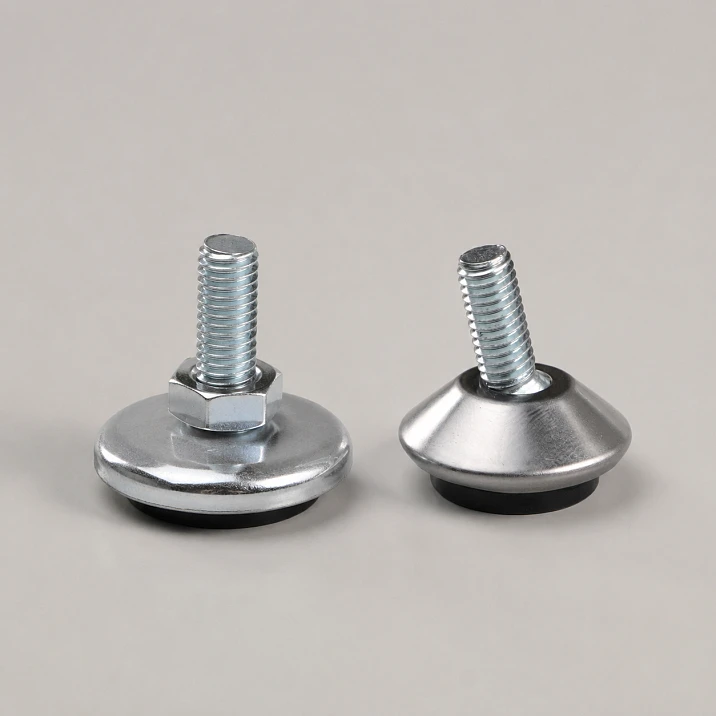
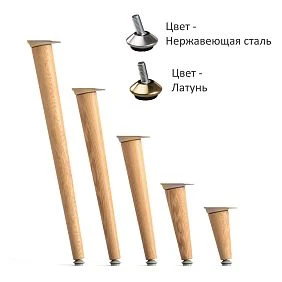
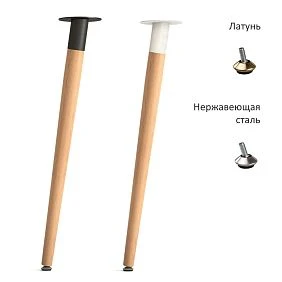
In STAVROS, there are several different solutions for this task. The main products of this article are Adjustable support foot D25 FUR-029 и adjustable foot D32 FUR-018. Both are designed for installation in furniture supports, but differ in diameter, size, color, and mounting logic. Alongside them, there are other options: a round foot, felt protection, a self-adhesive pad, as well as fittings for furniture legs that are convenient to select together with wooden supports.
The main goal of this article is not to retell product cards, but to help choose the correct lower assembly for a wooden furniture support. We will analyze when an adjustable foot is needed, how FUR-029 differs from FUR-018, when a round or felt option is sufficient, what to buy together with wooden legs, and what mistakes most often lead to furniture wobbling, floor scratches, and incorrect installation.

Why the foot is not a trifle, but a working assembly of furniture
The foot is located at the lowest point of the furniture. It is almost invisible, but it is through it that contact between the support and the floor occurs. When furniture stands on four legs, all the load is distributed among these points. If at least one support is lower, higher, softer, harder, or at a different angle, the furniture starts to wobble. If the end of a wooden leg is not protected, it can wear down, absorb dirt, leave marks, or damage the floor covering.
The foot has several tasks. It protects the lower part of the support, distributes pressure, reduces the risk of scratches, helps furniture move more smoothly or, conversely, stand more stably. Adjustable models add another important function — adjusting the height or position of the support. This is especially useful where the floor is not ideal: an old apartment, a country house, tiles with a slight difference, parquet with natural unevenness, a commercial space after renovation.
A regular protective pad does not always solve the problem. Felt softens contact and reduces noise, but does not level the furniture. A self-adhesive foot quickly protects the floor, but does not compensate for height differences. A round foot for a self-tapping screw can help with standard protection and sliding, but if the furniture needs to be leveled precisely, an adjustable option is needed.
Therefore, the question "which furniture feet to buy" should be immediately clarified: what are they needed for. For floor protection? For leveling? For a wooden support? For heavy cabinet furniture? For a table? For a nightstand? For furniture that is sometimes moved? For decorative solid wood legs? The answers quickly separate adjustable feet from felt, plastic, and self-adhesive ones.




When an adjustable foot is needed, not a regular pad
An adjustable foot is needed where a simple layer between the leg and the floor is not enough. It is chosen when furniture should not only avoid scratching the surface but also stand stable. This is especially noticeable on tables, chests of drawers, nightstands, consoles, cabinet furniture on legs, and items that bear load unevenly.
Imagine a wooden cabinet on four supports. In a flat photo, everything looks correct. But in a real room, one leg might be on a board joint, another on a slight tile height difference, and a third on a sloped floor area. As a result, the furniture wobbles, doors may work poorly, the body gets extra stress, and a person feels annoying shaking every day. An adjustable foot allows you to more precisely set the lower support point and partially solve this problem.
Another scenario is furniture made of wood or with wooden legs after assembly. The legs may be high quality, the body durable, but the lower contact remains vulnerable. If you place the support directly on the floor, the wood end will act as a point load. If you add an unsuitable pad, it may slip, wear out, not fit the diameter, or spoil the appearance. An adjustable foot makes the lower assembly more meaningful: the support, fastener, foot, and floor covering start working as a single system.
Our factory also produces:

Uneven floor and precise fit
An uneven floor is not always noticeable to the eye. A difference of a few millimeters may not interfere with walking, but for furniture on rigid supports, it is already critical. A table starts to "catch" a diagonal, a cabinet wobbles, a console near the wall stands unsteadily, a shelf or chest of drawers requires shims. In a household version, cardboard, a piece of plastic, or felt is often placed under the leg. Such a solution looks temporary and does not solve the problem professionally.
An adjustable foot is needed precisely for such cases. It helps not to mask the problem with a random shim, but to correctly work with the lower point of a wooden support. For a furniture workshop, designer, or buyer assembling furniture on quality wooden legs, this is an important component of the kit.
Get Consultation
Protecting the floor from support pressure
A wooden leg may look neat, but its lower end still creates pressure on the covering. On laminate, this can leave a mark. On parquet, a dent or scratch. On engineered wood, a noticeable contact point. On tile, a risk of chipping from a hard impact or moving furniture. A foot is needed as an intermediate part between the furniture and the floor.
If the main goal is softness and silence, you can consider felt foot FUR-027 for floor protectionIf you need a quick household solution without drilling and tools, this will do. self-adhesive glide FUR-043But if besides protection you also need to set the furniture stably, it's better to look at adjustable models.
Stability of a wooden leg after installation
A wooden furniture leg itself does not guarantee proper furniture operation. It needs to be properly secured, aligned with the body, load, and floor. The bottom assembly completes this system. If the support is not protected and leveled, even a good wooden leg can perform worse than it should.
Therefore, the furniture glide should be chosen not at the end, when the furniture is already standing and wobbling, but in advance — together with legs, fasteners, and mounting hardware. This approach is especially important when assembling custom furniture, restoring, replacing old supports, creating a console, cabinet, table, or decorative case furniture.
Which STAVROS furniture glides to choose for a wooden furniture support
In this topic, not all glides are important at once, but a few specific options that cover different tasks. FUR-029 and FUR-018 are adjustable models. FUR-022 is a round glide D30 for a self-tapping screw. FUR-027 is a felt glide for soft protection. FUR-043 is a self-adhesive square pad 20×20 mm for a quick solution without complex installation.
Characteristics of the main models
| Model | Type | Size | Purpose | Features |
|---|---|---|---|---|
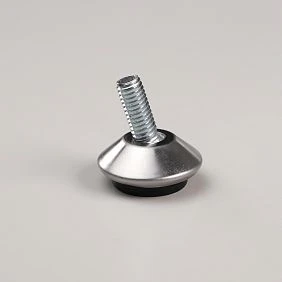
| FUR-029 | Adjustable glide D25 | 23 × 23 × 27 mm | Installation into furniture supports | Ball joint, chrome color, metric threaded insert M6 |
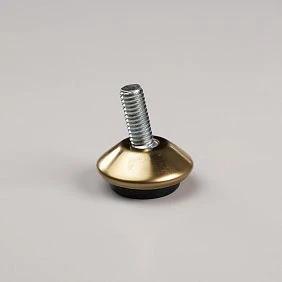
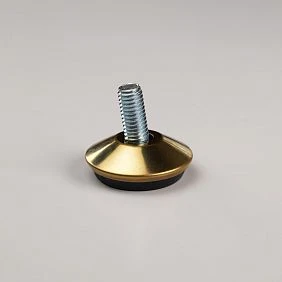
| FUR-018 | Adjustable foot D32 | 34 × 34 × 32 mm | Installation into furniture supports | Ball joint, brass color, metric threaded insert M8 |
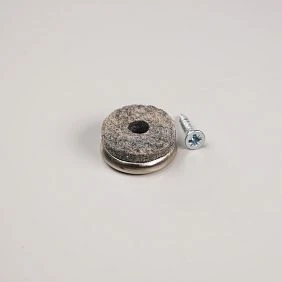
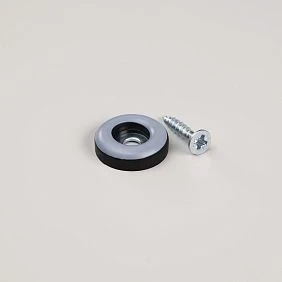
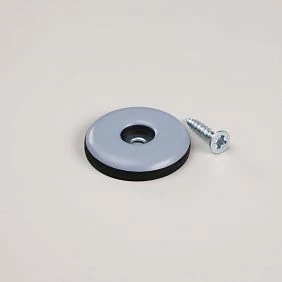
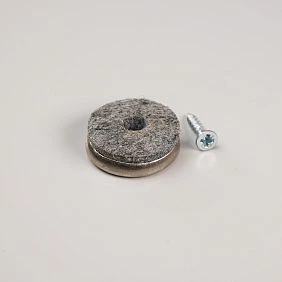
| FUR-022 | Round foot D30 | 30 × 30 × 5 mm | Protection and sliding | For self-tapping screw, comes with universal self-tapping screw 3.5×20 |
| FUR-027 | Felt foot d=24 mm | 25 × 25 × 5 mm | Soft floor protection | Comes with a universal self-tapping screw 3.5×20 |
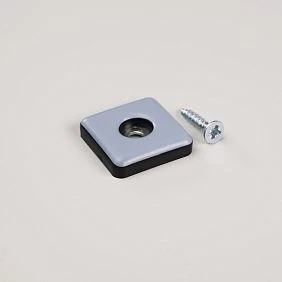
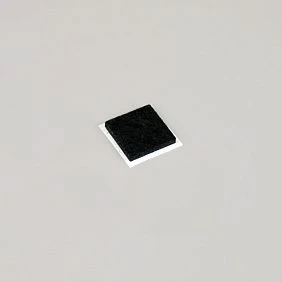
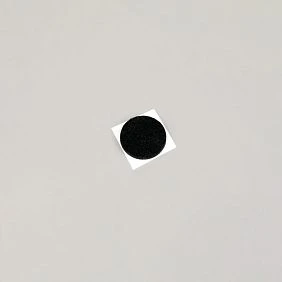
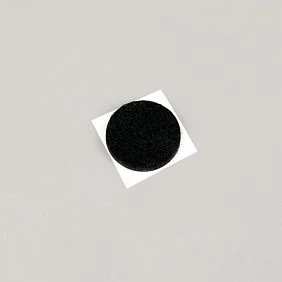
| FUR-043 | Self-adhesive square foot pad | 20 × 20 × 3 mm | Quick protection for leg and floor | Self-adhesive base, tool-free installation |
This table shows the main point: foot pads cannot be chosen only by name. They have different sizes, installation methods, and purposes. Adjustable models are suitable for stability and adjustment. Felt ones are for delicate contact with the floor. Self-adhesive ones are for quick protection. Round ones are for a standard solution under a self-tapping screw.
FUR-029: when to choose D25
Adjustable support foot D25 FUR-029 should be considered when an adjustable lower assembly for a furniture support is needed, but the diameter and fit must remain more compact. The card specifies dimensions 23 × 23 × 27 mm, ball joint, chrome color, and metric insert M6.
This option is suitable for wooden supports where it is important not to overload the bottom point with large fittings. If the leg has a neat bottom platform and the furniture does not require a larger diameter foot, FUR-029 can be a rational choice. It helps not just to cover the end of the support, but to add adjustment and a more precise fit.
Before ordering, you need to check the bottom platform of the leg. The foot should not look like a random protrusion. It should match the diameter, support design, and furniture task. If the support is larger, the load is higher, or a more noticeable adjustable unit is needed, it is worth comparing FUR-029 with FUR-018.
FUR-018: when D32 is needed
adjustable foot D32 FUR-018 It differs by a larger diameter. The card specifies dimensions 34 × 34 × 32 mm, a ball joint, brass color, and an M8 metric insert. This foot is suitable when the bottom unit should be larger and more noticeable in terms of placement logic.
FUR-018 should be considered for more massive wooden supports, furniture with a larger contact area, or cases where it is important to choose a foot not only by function but also by scale. If the support is wide, a small foot may look weak and not perform as convincingly. A larger diameter helps better match the fitting to the furniture leg.
However, you cannot choose FUR-018 just because it is larger. A large floor protector must match the support. If the bottom plate of the leg is smaller, the hardware may look redundant or create uncomfortable contact. Therefore, the choice between FUR-029 and FUR-018 starts with measuring the bottom part of the support.
FUR-022: when a round D30 is enough
Adjustment is not always needed. Sometimes the task is simpler: protect the bottom of the support and make moving furniture smoother. In such cases, you can consider the round foot D30 FUR-022. This is a D30 foot for a self-tapping screw, size 30 × 30 × 5 mm. It comes with a universal galvanized self-tapping screw 3.5×20 and is a variant that helps move structures without damaging the floor surface.
FUR-022 is useful where furniture does not need to be leveled by adjustment, but reliable bottom protection is required. For example, on furniture with wooden legs that is sometimes moved during cleaning or rearranging. But if the furniture is already wobbling due to uneven floors, a round glider will not replace an adjustable option.
FUR-027: when soft floor protection is important
felt foot FUR-027 for floor protection needed when the main task is gentle contact with the surface. The card states: d=24 mm, size 25 × 25 × 5 mm, supplied with a universal screw 3.5×20. Such a glider is well suited for parquet, laminate, engineered wood, and other coverings where scratches and noise are especially undesirable.
Felt should not be seen as a replacement for leveling. It softens contact but does not adjust furniture height. If a chest or cabinet wobbles, a felt glider may slightly reduce noise but will not fix the geometry of the problem. However, for furniture that already stands level, FUR-027 can be a good option for floor protection.
FUR-043: when a quick solution without complex installation is needed
self-adhesive glide FUR-043 is a quick option for furniture with a suitable bottom surface. Size 20 × 20 × 3 mm, square shape, and self-adhesive base make it convenient for cases where you don't want to drill, install fasteners, or disassemble furniture.
This option is suitable for a light household scenario: protecting the legs of a chair, cabinet, small table, chest, or other furniture where a pad is sufficient. But a self-adhesive glider should not be chosen for tasks requiring adjustment, mechanical fastening, or handling heavy loads. It is good precisely as a quick and clean solution.
FUR-029 or FUR-018: how to choose between two adjustable models
The main difference is size and mounting logic. FUR-029 — D25, more compact, with M6 insert nut. FUR-018 — D32, larger, with M8 insert nut. Both options have a ball joint and are designed for installation in furniture supports. But in furniture practice, 'bigger' does not always mean 'better'. The glider must match the support, not overlap it.
| Criterion | FUR-029 D25 | FUR-018 D32 |
|---|---|---|
| Size | 23 × 23 × 27 mm | 34 × 34 × 32 mm |
| Diameter by name | D25 | D32 |
| Color | Chrome | Brass |
| Threaded insert | M6 | M8 |
| When to choose | For a more compact lower support point | For a larger support and a larger mounting node |
| What to check | Diameter of the lower platform, installation depth, compatibility with the support | Sufficient space, leg scale, mounting type |
| Main task | Adjustment and stability without excessive bulkiness | Adjustment and more pronounced lower node |
If the support is thin, elegant, or has a small bottom area, a large glider may be inappropriate. If the support is massive, a small glider may look weak and provide insufficiently convincing contact. Therefore, the first step is to measure the leg. The second is to understand the load. The third is to choose the fitting based on the installation method.
Color also matters. Chrome and brass are perceived visually differently. The glider is at the bottom and should not become a decorative center, but on open legs its shade may be noticeable. For light, modern, or neutral furniture, chrome is often perceived as calmer. Brass may better match warm classic details, fittings, and wood finishes. But the final decision depends on the specific furniture and the overall fittings in the project.
How to choose a glider for a wooden furniture leg
Proper selection starts with the bottom platform. Not with the overall appearance of the furniture, not with a picture, and not with the product name, but with the place where the glider will be installed. A wooden leg may have a round, square, shaped, carved, or tapered bottom part. The more complex the shape, the more carefully you need to select the fitting.
By bottom platform diameter
The diameter or size of the bottom platform must match the glider. If the glider is too small, the load will be concentrated on a smaller point, and the support may look unstable. If it is too large, it will protrude, catch, look foreign, or interfere with normal contact with the floor.
For FUR-029, consider D25 and the actual size 23 × 23 × 27 mm. For FUR-018 — D32 and size 34 × 34 × 32 mm. For FUR-022 — D30 and height 5 mm. For FUR-027 — d=24 mm, size 25 × 25 × 5 mm. For FUR-043 — square 20 × 20 × 3 mm. These numbers help not to guess but to match the fitting with the support.
By installation type
Adjustable gliders FUR-029 and FUR-018 are designed for installation in furniture legs and come with a metric threaded insert. This is not the same logic as a self-adhesive pad. Here it is important to understand how the leg will be prepared, who performs the installation, and whether the fastener is suitable for the structure.
Round FUR-022 goes with a self-tapping screw. Felt FUR-027 also comes with a self-tapping screw. FUR-043 is glued without tools. These differences cannot be ignored. If the furniture is already assembled and you don't want to drill, the self-adhesive option is more convenient. If the furniture is being made in a workshop, an adjustable unit can be planned in advance. If mechanical fixation of the protective pad is needed, the self-tapping screw option will work.
By load
The load depends not only on the weight of the furniture but also on the usage scenario. A chair that is constantly moved works differently than a heavy cabinet. A chest of drawers with filled drawers gives one load, a console against the wall gives another, a table gives a third. If the furniture will be used actively, a random thin pad can quickly wear out or shift.
For heavy and critical items, it is better to plan the entire lower assembly in advance: wooden leg, fastening, furniture glide, floor type. If in doubt, it is worth opening buy furniture glides STAVROS and compare hardware by size, attachment type, and purpose.
By floor type
On parquet and engineered wood, the softness of contact is especially important. On laminate, protection from scratches and marks. On tile, stability and absence of unpleasant sound when moving. On wooden floors, pressure distribution and reduced risk of dents. On carpet, the task changes: stability and lack of sinking are more important.
If the floor is expensive and delicate, felt protection can be useful. If the floor is uneven, a soft pad alone is not enough — adjustment is needed. If the furniture is moved often, it is worth looking at options that help move the structure without damaging the covering. If the furniture must stand rigidly and not slide, the choice will be different.
By task: adjustment, sliding, protection, silence
Each furniture glide has its own strength. The adjustable one is for leveling. The felt one is for softness and silence. The self-adhesive one is for quick installation. The round one for a self-tapping screw is for standard protection and more reliable fixation than a simple sticker.
It's a mistake to look for one universal furniture glide for all occasions. It's better to formulate the task: "furniture wobbles," "floor gets scratched," "need to quickly protect legs," "heavy furniture is sometimes moved," "we assemble custom wooden supports." Each task will have its own choice.
What to buy together with the furniture glide
A furniture glide is rarely bought completely separately. It is connected to the wooden support, fasteners, mounting plate, threaded insert, self-tapping screw, floor type, and future use of the furniture. Therefore, it's better to think in terms of a kit: not "one small part," but the lower assembly of the furniture.
If furniture is being assembled from scratch, first choose wooden furniture legs for furniture glides, then hardware, then the furniture glide. If furniture already exists and wobbling needs to be fixed, first assess the supports and floor, then choose an adjustable option. If the coating needs protection, look at felt or self-adhesive solutions. If full hardware for assembly is needed, open the general section where you can buy furniture glides STAVROS and select adjacent elements.
Table: what to buy together with furniture glides
| What to add to the purchase | Why this is needed | When it is especially useful | Link |
|---|---|---|---|
| Wooden furniture legs | The furniture glide works as the lower part of the support | When assembling new furniture or replacing old legs | wooden furniture legs for furniture glides |
| Adjustable D25 | For adjustment and stability of a compact support | When a neat adjustable unit is needed | Adjustable support foot D25 FUR-029 |
| Adjustable D32 | For a larger lower support point | When the support is more massive and a larger diameter is needed | adjustable foot D32 FUR-018 |
| Round D30 | For standard protection under a self-tapping screw | When adjustment is not needed | the round foot D30 FUR-022 |
| Felt glider | For soft contact with the floor | Parquet, laminate, engineered wood | felt foot FUR-027 for floor protection |
| Self-adhesive furniture foot | For quick installation without tools | Light furniture, household protection | self-adhesive glide FUR-043 |
| Leg hardware | To assemble the lower furniture unit as a set | Workshop, restoration, new furniture | buy furniture glides STAVROS |
This approach is convenient for the buyer: they don't forget the fasteners, don't mix incompatible elements, and don't return to the problem after furniture assembly.
How not to confuse adjustable, plastic, felt, and self-adhesive furniture feet
Furniture feet are similar only at the level of general purpose: they are all at the bottom of the furniture. But their functions are different. An adjustable foot helps level the furniture. A felt foot protects the floor covering and reduces noise. A self-adhesive foot quickly covers the end of a leg. A round foot with a screw provides more stable fixation than a simple sticker and helps protect the lower part of the support.
| Product | What it is | When to buy | Common mistake |
|---|---|---|---|
| Adjustable furniture foot | Support element with position adjustment | When furniture needs to be leveled | Buying it without checking the support diameter |
| Round base plate | Protective element for self-tapping screw | When standard protection and sliding are needed | Expecting adjustment from it |
| Felt glider | Soft floor pad | When silence and floor protection are important | Assuming felt will fix wobbling |
| Self-adhesive furniture foot | Adhesive-backed pad | When you need a quick fix without tools | Applying to a dirty or unsuitable surface |
| Wooden leg | Main furniture support | When assembling or updating furniture | Buying a leg without bottom hardware |
| Mounting hardware | Fasteners for installing the support | When proper assembly is needed | Select fasteners separately from the structure |
The main guideline is simple: if furniture wobbles — think about adjustment. If the floor gets scratched — think about protection. If furniture is moved — think about sliding and wear resistance. If you need to quickly cover legs — think about self-adhesive options. If new furniture is being assembled — think about a complete set: leg, fastener, glider.
Practical selection for different situations
Need to eliminate table wobbling
First, check why the table wobbles. The cause may be in the floor, the support, the leg attachment, the body, or the tabletop geometry itself. If the issue is a slight height difference between the legs and the flooring, an adjustable glider can help. For a compact support, look at FUR-029; for a larger one, FUR-018. If the legs are poorly secured, a single glider won't solve the problem: you need to check the fasteners.
Need to protect parquet or engineered wood flooring
If the furniture stands level but there is a risk of scratches, felt protection will work. In this case, consider FUR-027. If the furniture is moved frequently, it's important to consider not only softness but also attachment. The glider should not slide off, come loose, or collect dirt under its edge.
Need to assemble new furniture with wooden legs
It's better not to leave gliders 'for later'. First, choose the supports, then immediately select the hardware and the bottom assembly. Open the section wooden furniture legs for furniture glides and nearby, think about what hardware will be needed. If the furniture will stand on an uneven floor, plan for adjustment. If on a delicate surface, plan for protection. If the furniture will be moved, consider sliding and attachment.
Need to quickly protect the legs of already assembled furniture
If the furniture does not require adjustment and the task is urgent, a self-adhesive option is convenient. FUR-043 is installed without tools, but the surface must be clean, dry, and suitable for adhesion. Do not glue the foot pad onto a dusty, greasy, uneven, or crumbling end — it may hold worse.
Need to equip furniture for a commercial space
In a salon, showroom, cafe, office, or waiting area, furniture is used more actively than at home. It is moved more often, sat on more frequently, and the floor gets marks faster. Here, it is better to choose fittings not based on the principle of "the simplest," but based on the task. For stability — adjustable foot pads. For floor protection — felt or special sliding options. For quick replacement — self-adhesive solutions where they are suitable for the load.
Need to replace old foot pads
Remove the old fittings and measure the mounting spot. Do not buy a new foot pad based only on external similarity. You need to understand the diameter, attachment method, height, material, support condition, and floor type. If the furniture was wobbling before, repeating the old solution is not advisable. Perhaps instead of a simple pad, an adjustable foot pad is needed.
Selection by application location
Tables and consoles
A table or console is especially sensitive to stability. If the item stands against a wall, slight wobbling may not be as noticeable, but it still affects use. If the table is used actively, adjusting the lower points becomes more important. For wooden supports, it is better to plan foot pads together with the attachment right away.
Commodes and cabinets
A chest of drawers or cabinet creates a serious load, especially when filled with items. If one support is uneven, the body may become skewed. Drawers start working worse, facades look uneven, and the floor receives point pressure. Here, foot pads are especially important as part of the lower assembly.
Chairs and light furniture
For chairs and lightweight furniture, floor protection and silence are often more important. If a chair is constantly moved, felt or self-adhesive protection may be appropriate. But wear and tear must be considered. The pad should match the shape of the leg and not protrude so as to catch on the flooring.
Sofas, armchairs, and upholstered furniture
For upholstered furniture, the load is distributed differently. Legs may be short, supports wide or hidden. Here, it is important not only to protect the floor but also to maintain stability. If upholstered furniture stands on decorative wooden legs, a glider helps protect the lower part of the support and the floor covering.
Hallway furniture
In the hallway, sand, moisture, and dirt from shoes get on the floor. Furniture is moved less often, but the covering receives more abrasive load. The glider should not collect dirt under a protruding edge or damage the floor during micro-movements. For wooden cabinets, benches, consoles, and shoe racks, the lower assembly is better planned in advance.
Bedroom furniture
In the bedroom, silence and gentle contact are important. Dressers, nightstands, vanity tables, and benches stand on flooring that is often desired to be kept without marks. Soft protective solutions work well here, and for furniture on uneven floors, adjustable gliders.
Installation and preparation: what to check before installation
A glider works correctly only with proper preparation. Even high-quality fittings may not yield results if the support is dirty, the installation location is not marked, the hole is made inaccurately, or the wrong size is chosen.
Before installation, check the end of the leg. It should be flat, dry, without chips, dust, or weak coating. If the support is wooden and requires drilling, it is important not to damage its decorative part. For adjustable gliders, the precision of the fit is especially important because stability depends on it. For self-adhesive ones, the cleanliness of the surface. For screw-in options, correct centering.
Do not install glides on only some of the supports. If furniture has four legs, the bottom assembly should be designed for all four points. Different glides on different legs can cause height differences, varying friction, and uneven furniture behavior. The exception is intentional design solutions, but in regular furniture, it is better to keep a complete set.
After installation, the furniture should be placed in position and checked for stability. If there is adjustment, use it carefully, without sharp tilts. If felt or a self-adhesive pad is used, ensure the glide does not protrude unevenly, catch on the floor, or shift with slight movement of the furniture.
Mistakes when buying furniture glides
Mistake 1. Choosing without measuring the leg
The most common mistake is buying a glide by name without measuring the bottom platform. D25, D30, D32, 20×20 mm are not conventions. These sizes must correspond to the actual support. If the glide does not fit properly, it may perform poorly even if of good quality.
Mistake 2. Confusing protection and adjustment
A felt glide protects the floor but does not level furniture. A self-adhesive glide protects the end and coating but does not solve a serious wobbling problem. An adjustable glide helps correct position but requires more careful selection and installation. You cannot buy one type of hardware expecting it to perform the function of another.
Mistake 3. Not considering the floor type
The same glide can perform differently on tile, parquet, laminate, and wooden floors. On smooth surfaces, sliding and absence of scratches are important. On soft surfaces, pressure matters. On uneven tile, adjustment is key. If you choose a glide without considering the floor, you may get noise, marks, wobbling, or rapid wear.
Mistake 4. Buying glides after furniture assembly
It is better to choose the lower node together with the legs. When the furniture is already assembled, installation options may be limited. Sometimes you have to choose not the optimal option, but the one that can be installed without disassembly. For new furniture, it is easier to immediately buy legs, fasteners, and glides as a set.
Mistake 5. Ignoring the installation method
A self-adhesive glide, a screw-in glide, and an adjustable glide with a threaded insert are different installation methods. If the buyer is not ready to drill or prepare the support, a solution requiring installation will not suit them. If a reliable mechanical fit is needed, a simple sticker may be a weak option.
Mistake 6. Using different glides on the same piece of furniture
Different types of glides have different heights, stiffness, and behavior. If you put felt on two legs, a self-adhesive pad on one, and nothing on another, the furniture will stand unpredictably. It is better to select a set for all supports at once.
Mistake 7. Not checking compatibility with a wooden support
A wooden leg can be carved, turned, tapered, or have a decorative bottom. Not every glide will fit such a shape nicely and correctly. Before ordering, you need to evaluate not only the size but also the geometry of the lower part.
Mistake 8. Expecting the glide to fix a body defect
If furniture wobbles due to a warped body, weak fastening, deformed frame, or incorrect assembly, the glide will not completely solve the problem. It can help with the lower contact point, but does not replace structural repair.
Who adjustable glides are suitable for
Adjustable leveling feet are suitable for those who want to position furniture more precisely, rather than just covering the bottom of the leg. This is a good option for furniture workshops, designers, specifiers, owners of furniture on wooden supports, manufacturers, and buyers who assemble or update furniture consciously.
They are especially appropriate if the floor has unevenness, the furniture stands on wooden legs, the structure needs to be stable, and you want the bottom assembly to look neat. Adjustable leveling feet are also useful when assembling custom furniture, where it is important to plan the correct hardware in advance.
They are not always needed for lightweight furniture that stands level and only requires floor protection. In this case, you can consider felt, round, or self-adhesive leveling feet. An adjustable option may also be unnecessary if the furniture is temporary, the load is small, and the buyer is not prepared to handle precise installation.
| Suitable | Not suitable |
|---|---|
| For those who buy wooden furniture legs and want to assemble the bottom assembly correctly | If only a temporary felt pad is needed |
| For workshops and furniture manufacturers | If the furniture does not require leg installation |
| For owners of furniture that wobbles on an uneven floor | If the cause of wobbling is a warped cabinet body |
| For designers and specifiers | If only the simplest pad without compatibility matters |
| For furniture buyers on wooden legs | If the pad is chosen without measurements and understanding of installation |
How to buy pads for STAVROS and not make a mistake
It's better to start with the task. Not with the article number and not with the price, but with the question: what should the hardware do? Level the furniture, protect the floor, reduce noise, help move furniture, cover the end of the leg, or assemble the lower unit of a new support?
If adjustment is needed, compare FUR-029 and FUR-018. For a compact unit, look at D25. For a larger one, look at D32. Check the size, color, threaded insert, installation method, and compatibility with the wooden leg. If adjustment is not needed, compare FUR-022, FUR-027, and FUR-043 by task: round for self-tapping screw, felt for soft protection, self-adhesive for quick installation.
Next, you should open the general section buy furniture glides STAVROS and look at the adjacent elements. If you are assembling furniture on wooden legs, do not limit yourself to one pad. Check what fasteners, mounting plates, studs, threaded inserts, and legs themselves are needed. If you are choosing a furniture leg, immediately think about how it will contact the floor.
Before ordering, check:
| What to check | Why this is important |
| Pad size | To align it with the lower support platform |
| Mounting method | To allow installation for your furniture |
| Floor type | To avoid scratches, noise, or slipping |
| Load | To ensure the hardware works in real conditions |
| Number of supports | To purchase a set for the entire furniture |
| Compatibility with the leg | To prevent the foot from protruding and getting in the way |
| Is adjustment needed? | To avoid replacing the adjustable unit with a regular pad |
This route saves time and reduces the risk of error. The buyer understands in advance exactly what they need: an adjustable furniture glide, felt protection, a round option for a self-tapping screw, a self-adhesive pad, or a complete set of hardware for wooden furniture legs.
FAQ
Where to buy furniture glides?
Furniture glides, adjustable models, and related hardware can be viewed in the section buy furniture glides STAVROS. Before ordering, it is better to define the task: adjustment, floor protection, sliding, silence, or quick installation.
Which furniture glide to choose for a wooden furniture leg?
If you need to level furniture, choose the adjustable option: FUR-029 D25 or FUR-018 D32. If you need soft floor protection, look at FUR-027. If you need a simple round glide for a self-tapping screw, FUR-022 will do. For a quick household solution without tools, consider FUR-043.
How is FUR-029 different from FUR-018?
FUR-029 is adjustable D25, size 23 × 23 × 27 mm, chrome color, M6 threaded insert. FUR-018 is adjustable D32, size 34 × 34 × 32 mm, brass color, M8 threaded insert. The choice depends on the size of the lower support platform, load, and the required scale of hardware.
When is an adjustable furniture foot needed?
It is needed when furniture needs to be placed stably on a floor with slight unevenness. An adjustable foot is useful for tables, cabinets, chests of drawers, consoles, and other furniture on wooden supports, especially if a regular pad does not eliminate wobbling.
How is an adjustable furniture foot different from a felt one?
An adjustable foot helps correct the position of the support. A felt foot primarily protects the floor and reduces noise. If the furniture wobbles, felt will not replace adjustment. If the furniture stands level but you need to protect parquet or laminate, felt can be a good option.
Can a self-adhesive furniture foot be used instead of an adjustable one?
Only when adjustment is not needed. self-adhesive glide FUR-043 quickly protects the leg and floor, but does not help level the furniture in height.
How to choose a furniture foot by diameter?
Measure the bottom platform of the furniture support and compare it with the size of the foot. The foot should not be too small or too large. For FUR-029, aim for D25; for FUR-018, D32; for FUR-022, D30; for FUR-043, a 20×20 mm square.
What to buy together with wooden furniture legs?
Along with the legs, it is worth selecting floor protectors, fasteners, mounting hardware, and, if necessary, protective caps. You can start with the section wooden furniture legs for furniture glides, and then move on to hardware for the legs.
How to eliminate furniture wobbling?
First, you need to understand the cause. If the problem is an uneven floor or a slight difference in the lower support points, an adjustable floor protector will help. If the cause is a skewed cabinet, weak fastening, or deformed structure, you need to fix the furniture first, and only then select the bottom hardware.
Which floor protector should you choose for parquet?
To protect parquet, soft options are often chosen, for example felt foot FUR-027 for floor protection. If the furniture is uneven at the same time, felt alone may not be enough — then you should consider adjustable floor protectors.
Is a round D30 floor protector needed if there are adjustable models?
Yes, if no adjustment is required. the round foot D30 FUR-022 Suitable for standard protection and installation under a self-tapping screw. It should not be purchased as a replacement for adjustment, but it can be convenient for its intended purpose.
How many glides do I need to buy?
Usually, the number of glides corresponds to the number of legs. If the furniture has four legs, it's better to buy a set for all four points. You cannot install different glides without calculation: this can cause a height difference and new wobbling.
What to check before ordering FUR-029 or FUR-018?
Check the size of the bottom support platform, installation method, required diameter, floor type, load, number of legs, and the possibility of installing a ferrule. If the furniture is made to order, it's better to agree on the bottom assembly in advance.
Can I install a glide on already finished furniture?
Yes, but the choice depends on the design. A self-adhesive option is easier to install on finished furniture. Glides for screws and adjustable models require more careful preparation. If the leg is decorative or carved, it's better to assess in advance whether installation will damage the appearance.
Conclusion: the glide should be chosen as part of the wooden furniture leg
A glide seems like a small detail only until the furniture starts wobbling, scratching the floor, creaking, or leaving marks. In reality, it is an important working component that connects the wooden leg to the floor covering. If chosen correctly, the furniture stands more stable, the floor stays cleaner, and the lower part of the leg lasts longer.
For adjustment and stability, it's worth comparing Adjustable support foot D25 FUR-029 и adjustable foot D32 FUR-018. If standard protection is needed, you can look at the round foot D30 FUR-022If softness and gentle contact with the coating are important, it will do. felt foot FUR-027 for floor protectionIf you need a quick solution without complex installation, you can consider self-adhesive glide FUR-043.
The most reliable way is to choose glides together with wooden legs and mounting hardware. Then the lower assembly of the furniture turns out not random, but well-thought-out: the support fits the body, the glide fits the support, and the entire structure works smoothly on a specific floor. At STAVROS, such a selection is conveniently done as a set: first define the task, then open the cards of the required glides, check the dimensions, and select the hardware that will help the furniture stand stably and neatly.