








































































Article Contents:
- When one new furniture leg is truly enough
- First, make sure the problem is really with the leg
- The best option is to find the exact article number of the old leg
- If the article number is unknown: how to create a profile of the old leg
- What to measure
- How to compare a shaped leg with the catalog
- Total length and working height are not the same thing
- Example with a mounting plate
- Why old holes should not be ignored
- The mounting plate is not universal either
- Left and right orientation
- When replacing a pair is especially appropriate
- Replacing four legs does not solve all problems automatically
- When beech can be used instead of oak
- For enamel
- For clear lacquer, oil, or tinting
- What to do about patina on old furniture
- When one trial support is especially useful
- Example of cost calculation
- Commode
- Cabinet
- Sofa
- Chair
- Cabinet
- Sequence of the trial installation
- Can I buy a single wooden furniture leg?
- How do I know if replacing one broken leg is enough?
- What should I do if the old furniture leg is an unknown model?
- Why does the furniture wobble after installing a new leg?
- Can I put a new leg on the old threaded stud?
- When should I replace two legs instead of one?
- When is it better to replace all four legs?
- Can I replace an oak leg with a beech one?
- How do I match the shade of a single new wooden leg?
- Should I buy a single leg before ordering a full set?
- Should I replace a leg if the furniture wobbles?
- Where can I find a wooden replacement leg for a dresser, cabinet, or sofa?
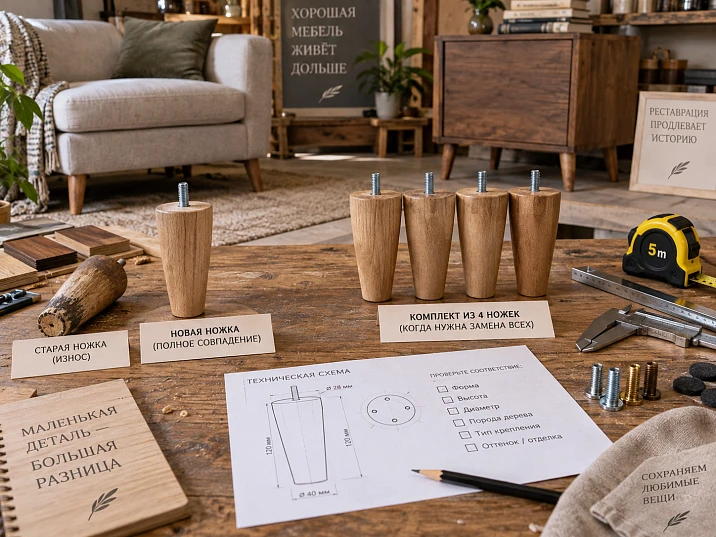
One wooden leg on a dresser broke. The other three look fine, so buying four new ones seems like an unnecessary expense. But after installing a similar support, the furniture sometimes starts to wobble, the front corner ends up slightly higher than the others, and the new part is noticeably different in color or wood grain.
The reason is usually not that only one leg was replaced. The problem is insufficient checking of compatibility.
Buying one furniture leg to replace a damaged one is quite reasonable if the new support matches the old ones in working height, mounting geometry, attachment method, and operating conditions. For furniture with exposed wood, the shape, species, and finish are also checked.
The simplest case is when the exact article number of the original leg has been preserved and the same size version can be ordered. It is more difficult when the furniture was made many years ago, the documents are lost, the manufacturer is unknown, and only visually similar models are available for sale.
In that case, the choice should begin not with a product photo, but with measuring the surviving supports. Sometimes it is possible to find a single replacement. In other situations, it is more rational to replace the two front legs or the entire set of four.
There are also cases when buying a new leg is not needed at all: the furniture wobbles because of a loose fastening, a damaged glide, an uneven floor, or a defect in the body.
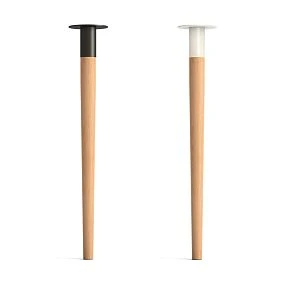
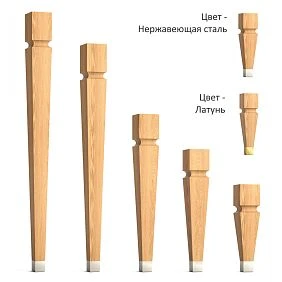
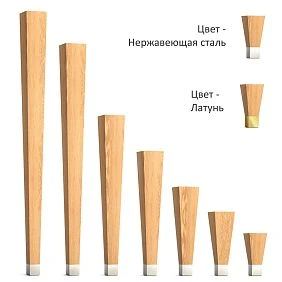
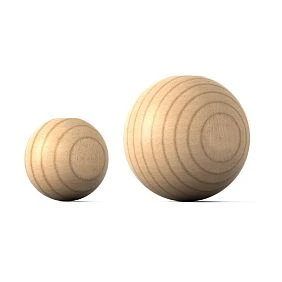
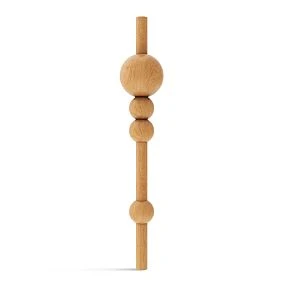
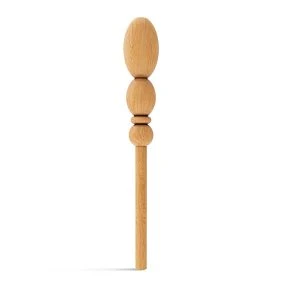
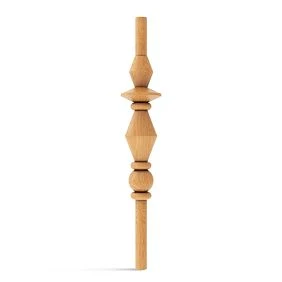
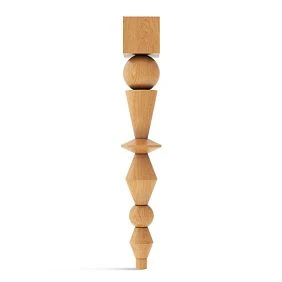
When one new furniture leg is truly enough
A single replacement is most justified when one support is locally damaged, while the remaining furniture elements have retained correct geometry and a reliable connection to the body.
For example, a wooden leg of a cabinet was mechanically damaged during transport. The body has not deformed, the mounting plate is intact, and the three remaining supports are of equal height. If the original model is available for sale, a new item with the same parameters can be selected.
But a matching external silhouette does not yet mean full compatibility.
Let's imagine two turned legs with a height of 150 mm. The first has its mounting located along the central axis of the upper plate. The second uses a different connection system, and the size of the mounting part differs. In a photo, the items may look similar, but installing the second leg will require modifying the body.
Therefore, before purchasing, three groups of parameters are checked.
Structural compatibility: working height, mounting surface, thread, fasteners, orientation, and permissible application.
Geometric compatibility: overall silhouette, cross-section, diameter, relief depth, location of bends, and contact area with the floor.
Visual compatibility: material, wood shade, character of the grain pattern, color, and degree of coating gloss.
Not every piece of furniture requires a complete match in all decorative features. For example, a hidden rear leg of a wardrobe may be less noticeable than the front support of an open chest of drawers. But differences affecting stability and load transfer must not be ignored even in an invisible part.




First, make sure that the problem is actually with the leg
One of the most unpleasant mistakes is to order a new support, install it, and discover that the furniture still wobbles.
The cause may be in a completely different place.
The connecting elements of the chest of drawers have loosened. The body has slightly changed its geometry, one of the mounting plates has cracked, or there is a damaged foot pad under the leg.
Sometimes furniture stands unsteadily solely because of an uneven floor.
Before looking for a replacement, perform a consistent check.
-
Unload the item. Remove heavy contents and avoid using the furniture until the cause is identified.
-
Inspect all supports. Check for cracks, chips, visible bending, and damage in the mounting area.
-
Check the fasteners. Pay attention to loosened connections, damaged threads, and cracks near the holes.
-
Compare the foot pads. One worn foot pad can change the working height of the support.
-
Check the floor surface. If possible, evaluate the furniture on a level, hard surface.
-
Inspect the body. Make sure the problem is not related to deformation of the bottom, the apron, or the mounting block.
If the cause is a loosened joint, you may need to repair the fastening rather than buy a new leg.
If there are cracks in the load-bearing assembly, simply replacing the decorative support is not enough. First, the joint structure must be restored or reconsidered.
For heavy furniture, sofas, and armchairs, damage to the fastening is especially dangerous. Until the inspection is complete, it is best not to use such furniture.
Our factory also produces:
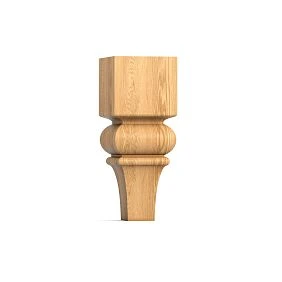
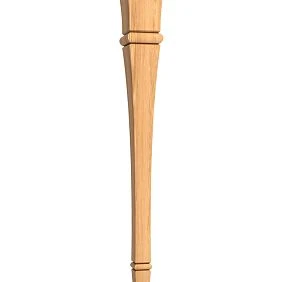
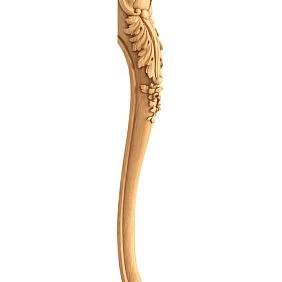
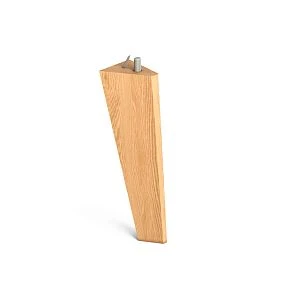
The best option is to find the exact article number of the old leg
If the furniture documents or the production specification have been preserved, the task becomes much easier.
The article number allows you to identify the original model, but it does not always fully determine its dimensional and material version.
One series of wooden legs may be produced in several height variants. At the same time, some models are offered in both beech and oak.
Therefore, when reordering, it is useful to determine:
-
full article number;
-
size of the specific installation;
-
wood species;
-
surface condition;
-
coating option;
-
mounting method;
-
features of the mounting plate;
-
if necessary — the original order number.
Suppose the documents specify the article number MN-234. This is not enough to place a purchase right away.
У turned furniture leg MN-234 several size versions are available. Among them are options with heights of 120, 250, 350, 450, and 740 mm with the corresponding model geometry.
All these versions belong to the same series, but they are not interchangeable.
To replace a 120 mm high support, you cannot purchase the 250 mm version just because the model's article number matches.
After determining the required option, you must also check the material. Oak and beech legs with the same geometry differ in the appearance of the wood and the result of the clear finish.
The exact article number narrows the search, but the final decision is made based on the full version of the part.
Get Consultation
If the article number is unknown: how to create a passport for an old leg
When the furniture manufacturer is unknown and the original model is not in the documents, the surviving support becomes the main source of information.
It is best to examine not the broken part, but one of the intact legs with the same purpose.
If the item has four identical supports, choose the most accessible one for measuring.
But first make sure the others are truly identical. On classic sofas, armchairs, and some antique chests of drawers, the front and back legs may differ.
What needs to be measured
| Parameter | What to Check | What it is for |
|---|---|---|
| Overall height | The size of the part from the top to the bottom point according to the drawing | Model matching |
| Working height | Distance from the cabinet's mounting base to the floor | Checking the furniture level |
| Top platform | Width, depth, diameter, shape | Mounting compatibility |
| Bottom plate | Support size and shape | Contact with the floor |
| Maximum width | Maximum transverse dimension | Clearance check |
| Profile | Turning, taper, or thread geometry | Visual match |
| Orientation | Tilt, bend direction | Correct installation |
| Fastening | Stud, insert, plate, or other fitting | Mounting option |
| Material | Beech, oak, or other wood | Finish selection |
| Finish | Enamel, oil, lacquer, tinting | Visual match |
It is helpful to take photos of the surviving leg from several angles: front, side, bottom, and from the mounting side.
To check dimensions, use a ruler, calipers, and a square. If the model has a complex curve, make a simple paper template of its side contour.
Pay especially close attention to measuring the mounting part. In the catalog photo it is often barely visible, even though it is precisely what determines whether the item is suitable.
How to compare a shaped leg with the catalog
Start with the overall shape: geometric, turned, or carved.
Then compare the height, the main cross-sectional dimensions, and the mounting location.
Only after that should you compare the decorative features.
For example, two turned legs may have the same height and maximum diameter, but differ in the placement of the thickening. On one, the main volume is concentrated closer to the body; on the other, near the floor.
On an open dresser, this difference is noticeable. Especially if the new support is installed next to the old one.
For carved parts, additionally check the direction of the pattern and the overhang. Elements cannot be considered interchangeable just because they have a similar floral ornament.
Why the height of a new leg is the main risk of a single replacement
Furniture on four supports is designed for a specific position of the body relative to the floor.
If one leg turns out to be higher than the others, the support changes. Depending on the rigidity of the body, the contact points, and the condition of the floor, the furniture may begin to wobble or distribute the load unevenly.
Let's imagine a dresser in which all working supports create a working height of 180 mm.
Instead of the broken one, a leg with a working height of 182 mm is installed.
The difference is only 2 mm. However, this does not mean that it can automatically be considered acceptable.
For one item, such a difference may be noticeable; for another, part of the deviation is compensated by the flexibility of the structure or adjustable glides. There is no universal acceptable value without knowing the specific product.
The correct check is to compare the new support with the three remaining ones and to assess the actual stability of the furniture after a safe trial installation.
Full length and working height are not the same thing
The catalog specifies the size of the part itself. But after installation, the working height may depend on the mounting.
For example, the upper part of the leg partially goes into the furniture body. Then the visible height is less than the full dimension.
In another case, a mounting plate of a certain thickness is installed between the leg and the body.
The plate can change the distance between the mounting base and the floor.
Therefore, comparing two models solely by the height designation is not enough.
For replacement, what matters is the actual distance from the same mounting plane of the body to the point where the leg contacts the floor.
When measuring an old part, this value must be recorded separately.
Example with a mounting plate
Let's assume the old support has a visible height of 150 mm with a specific installation method.
The new leg is also designated by the manufacturer as a product with a height of 150 mm, but it assumes a different mounting system.
If the new system changes the position of the support relative to the body by 4 mm, the same nominal height does not guarantee that the furniture position will match.
This example illustrates the principle. Actual dimensions should be determined from installation drawings and a physical trial fitting.
How to correctly compare the height of three old supports and one new support
It is not necessary to disassemble the entire piece of furniture for the first measurement.
If access to the legs is unobstructed, start by measuring the distance from the mounting base to the floor at several points.
When it is possible and safe, remove one serviceable support and compare it with the new one on a flat reference surface.
Make sure both parts are supported in the same way.
If the old legs have glides, their thickness and condition must be taken into account.
It is especially useful to compare:
-
the old support in good condition;
-
the old damaged support;
-
the selected new part;
-
the mounting point on the furniture.
A damaged leg may be shorter than the original due to a lost lower section. Therefore, taking its remaining length as the original height is incorrect.
If the three remaining legs have different working dimensions, the cause must first be determined. Perhaps the furniture has been repaired, and the previous supports are no longer identical.
In such a situation, buying a fourth leg based on one random measurement will not solve the problem.
Mounting plate: why a visually similar leg may not fit
Let's imagine two wooden legs in the same style.
The first has a square top plate. The second has a round one with a smaller diameter.
The visible part of both pieces may have a similar silhouette, but the connection to the furniture will differ.
If the new plate does not match the original in dimensions, installation may require modifying the mounting.
Sometimes adaptation is possible. But it must be provided for in the design, especially if the furniture is heavy or the mounting area is already weakened.
For a single replacement, it is better to choose a product that is as compatible as possible with the existing mounting point.
Why old holes cannot be ignored
After removing a broken leg, holes from studs, screws, or the mounting plate may remain on the body.
Their position is part of the original construction.
If the new leg requires additional holes too close to the old ones, the wood can be weakened.
It is also necessary to check whether the mounting plate of the housing itself is damaged.
First photograph the joint, then measure the mounting area, and only after that select a new part.
You should not drill additional holes before checking the selected fastening solution.
Thread, stud, and threaded insert: what must match
Some wooden furniture legs use a threaded fastening.
In such a connection, the thread diameter, its pitch, the length of the working sections, and the seating depth matter.
You cannot assume that the old stud automatically fits any new wooden leg.
The STAVROS range includes, for example, fastening hardware set FUR-001, which includes connecting elements with M8 threads.
However, the mere presence of such a set in the catalog does not prove compatibility with unknown old furniture.
Before purchasing, determine the actual threaded connection.
If the dimensions do not match, you need to choose another compatible fastener or develop an acceptable adaptation method.
The mounting plate is not universal either
There are mounting plates of various shapes and sizes.
They may differ in thickness, hole placement, and the method of connection to the leg.
If the old furniture used one system, replacing it with another may change the working height of the support.
Therefore, when buying a separate leg, you need to check in advance whether the existing plate is retained or a new mounting set is required.
Suitable options can be found in the section STAVROS furniture fittings catalog, but the final choice always depends on the specific mounting assembly.
Straight and angled leg: why the same length is not enough
Particular care must be taken when replacing angled furniture supports.
The angle may be determined by the shape of the leg, the mounting plate, or a special fastener.
If two parts have the same length but different installation angles, their vertical offset may differ.
Let's consider a simplified geometric example.
Suppose the distance along the axis of a straight leg is 200 mm.
If an axis of the same length is tilted 10 degrees from vertical, its vertical projection will be approximately:
200 × cos 10° ≈ 197 mm.
The difference relative to the vertical axis is about 3 mm.
This is not a universal way to calculate the height of a real shaped leg: the contact surface, mounting geometry, and shape of the part also affect the result.
But the example explains why the installation angle cannot be ignored when selecting a single support.
Left and right orientation
For some carved and shaped legs, the orientation of the shape matters.
If the old chest of drawers had two mirror-oriented front supports, the new leg must match the required side.
You cannot automatically assume that the item can simply be rotated.
Rotation can change the position of the mounting point, the direction of the bend, or the outer contour.
Check the drawing and the actual part. If separate versions with different orientations are provided for the model, this must be specified when ordering.
Front and rear legs are not always identical
On some sofas, armchairs, and antique furniture pieces, the front supports serve both a structural and a decorative function, while the rear ones may have a simpler shape.
Therefore, you cannot automatically determine the number of identical legs from the total number of supports.
Let's imagine an armchair with two carved front legs and two straight rear legs.
If the front support is broken, finding a similar straight leg of the required height is not enough.
You need to restore specifically the front position with the corresponding mounting and shape direction.
If there is no exact equivalent, it is sometimes wiser to replace the front pair while keeping the rear supports.
However, the solution must take into account the chair's construction and the function of all joints.
To choose suitable items, you can use the categories chair legs и wooden sofa supports.
When only one wooden leg can be replaced
A single replacement is reasonable when the main compatibility conditions have been confirmed.
| Criterion | What should be checked |
|---|---|
| Model | Exact part number or a reliably compatible equivalent |
| Working height | Match with the other supports |
| Mounting part | Suitable platform and mounting seat |
| Mounting | Compatibility of studs, plates, and other elements |
| Shape | No critical silhouette differences |
| Orientation | Correct position relative to the body |
| Material | Compliance with project requirements |
| Finishing | Acceptable match of color and texture |
| Construction | Safe operation of the new support as part of the furniture |
If these conditions are confirmed, buying a set of four may not be necessary.
Single replacement is especially suitable for furniture that has been recently manufactured and has retained documentation.
In this case, it is easy to find the same item code and verify its finish.
But even a new part of the same model should be inspected before installation.
Natural wood may differ in grain pattern, and an individual batch may differ in surface condition.
When it is better to replace two legs
A paired replacement can be a reasonable compromise if the exact old model cannot be found, but it is possible to select supports that are close in style.
Let's imagine a chest of drawers where the two front legs are clearly visible and the back ones are almost hidden.
One front support is damaged.
The new model is approximately suitable in shape but differs slightly in profile.
If only one front leg is replaced, the difference will be noticeable next to the old one.
If both front supports are replaced with identical new items, the composition may look more consistent.
However, this option is acceptable only after checking the overall working height, stability, and fastening.
The two new front legs should not differ arbitrarily in height from the rear ones.
It is also necessary to check whether their shape matches the load and the geometry of the body.
A paired replacement helps to harmonize the appearance, but by itself does not correct structural incompatibility.
When replacing a pair is especially appropriate
The paired option should be considered if:
-
the front supports create a symmetrical composition;
-
the exact original pattern is no longer available;
-
two identical new legs have been found;
-
the rear supports are structurally compatible with the new front pair;
-
the finish can be done in a coordinated manner.
If the new pair changes the installation angle or noticeably protrudes beyond the body, the solution needs to be reconsidered.
When it is better to replace the entire set of four legs
Sometimes buying four new supports turns out to be a more reliable and predictable solution than a lengthy search for one similar part.
This is typical for furniture whose original model has been discontinued, and the remaining legs differ noticeably from the modern products available.
For example, the old legs have a complex turned profile, a height of 165 mm, and a non-standard mounting.
A similar model with a height of 180 mm is available for sale.
Trying to install it in place of one old support is incorrect.
If the furniture design allows switching to a new set, four identical legs can provide consistent geometry and appearance.
But replacing the set requires a separate check of the overall height of the item.
If each new leg is 15 mm taller than the previous one, the furniture will also become taller by approximately the corresponding amount, taking real installation into account.
For a chest of drawers, this can affect ease of use. For a table, it affects the height of the work surface. For a sofa, it affects the seat height.
Replacing four legs does not solve all problems automatically
Even a new set of four identical items does not guarantee stability if the furniture body is damaged or the mounting areas are not strong enough.
Therefore, before a complete replacement, it is necessary to assess the structure and the load.
This is especially true for furniture in which the old legs were part of the load-bearing frame rather than separate removable supports.
In such a situation, mechanically replacing them with modern add-on legs may be impossible without reworking the joints.
How to choose the wood for a new leg
For a single replacement, the material primarily affects the compatibility of the appearance and finish.
If the three remaining supports are made of oak and coated with clear varnish, a new beech leg may stand out noticeably after applying the same coating.
Oak has a characteristic pronounced texture. Beech is usually perceived as calmer in its grain pattern.
However, even two oak parts do not necessarily have the same shade.
Therefore, for a clear finish, one cannot rely solely on the name of the species.
It is necessary to evaluate the natural wood in combination with stain, oil, or lacquer.
When beech can be used instead of oak
If the furniture is coated with a dense opaque enamel, the natural texture of the original material is not the main visible factor.
Therefore, in certain repair projects, a technically compatible beech element may be considered as a replacement for an oak part.
But this does not mean automatic interchangeability of materials.
It is necessary to check the joint strength, dimensions, surface preparation, nature of use, and restoration requirements.
If the furniture is of historical value, replacing the wood species may be unacceptable from the standpoint of preserving authenticity.
How to match the color of three old legs
When repairing furniture, a difference in color sometimes turns out to be more noticeable than a difference in shape.
This is especially typical of old chests of drawers, cabinets, and sideboards with clear or semi-transparent finishes.
Over years of use, the finish may change shade. Light, wear, cleaning, and previous repairs also affect the appearance of the surface.
Therefore, a new leg cannot be selected based only on a catalog photo.
For an accurate comparison, it is desirable to have a surviving support or an approved sample in front of you.
Under Enamel
With opaque painting, the task is to match the color, degree of gloss, and texture of the finish.
Even if the color number matches, the result may differ if different primers, materials, or application techniques are used.
One leg may look more matte, another more glossy.
This is especially noticeable under side lighting.
Before the final painting of a new part, perform a test coat and compare the result with the furniture.
For such a repair, it is convenient to consider unpainted furniture legs STAVROS, if their geometry matches the original design.
Under clear lacquer, oil, or tint
Here, you need to coordinate both the shade of the finish and the natural wood grain.
The same product can produce a different result on beech and oak.
In addition, the end-grain areas of wood may absorb tinting products differently than the longitudinal surfaces.
Therefore, it is advisable to perform the test finish on an area that allows you to evaluate the characteristics of the material and profile.
You should not immediately coat the entire new part without testing.
What to do about patina on old furniture
Patina is part of the overall decorative finish system, not just a dark compound applied into the recesses of the carving.
On old furniture, the shade, depth of contrast, and sheen of the finish can differ significantly from modern ready-made options.
Therefore, you should not artificially age a new leg without a sample.
First determine the original color and the characteristics of the surviving finish. Then select a test finish and evaluate it next to the existing supports.
How to use a single furniture leg as a sample
Buying individually is useful not only for repairs.
It allows a furniture workshop to test a new model before ordering a full set.
For example, a carpenter is designing a custom cabinet and has found a suitable turned support in a catalog.
From a photo, it is difficult to determine how large its profile will be next to the cabinet body, what the top plate looks like, and whether the mounting is conveniently positioned.
Purchasing a single unit allows for a physical inspection.
You can evaluate:
-
height;
-
cross-sectional dimensions;
-
shape;
-
mounting plate;
-
surface quality;
-
material;
-
finishing options;
-
compatibility with the furniture's scale.
After the sample is approved, the workshop can order the remaining three legs or a set for several identical items.
However, a trial installation of one leg should not be used as a full load test of the furniture.
To test the structure, you need a safe temporary support, a test rig, or a full set, depending on the task.
When a single trial support is especially useful
This approach is sensible when designing custom dressers, cabinets, consoles, coffee tables, and bespoke furniture.
Especially if the new model determines the final height of the item and the position of the stretcher.
After receiving the sample, the actual dimensions can be added to the drawing.
This reduces the risk of a situation where the body is already manufactured and the selected leg turns out to be incompatible with the mounting point.
Example: one MN-234 leg or a set of four
Let's look at a specific STAVROS series — turned furniture leg MN-234.
The catalog offers several size options, including 120 × 86 × 86, 250 × 86 × 86, and 350 × 86 × 86 mm.
This allows you to choose one geometric model for different furniture tasks, but it does not mean that versions of different heights are interchangeable.
Let's imagine two scenarios.
Scenario one. One leg of a modern chest of drawers has broken, and the documentation specifies the exact MN-234 variant with a height of 120 mm. The other three supports are preserved, the mounting is intact, and the fastening is compatible.
In that case, buying a single leg in the same design may be a rational solution.
Scenario two. An old chest of drawers has three surviving turned legs of unknown origin, 115 mm high. Visually they resemble MN-234, but the shape and mounting plate do not match completely.
In this case, you cannot buy one MN-234 and install it immediately in place of the old one.
You first need to take measurements and determine whether safe adaptation is possible. If not, consider replacing the set.
Cost calculation example
At the time this material was prepared, the STAVROS product page listed a price of 1,240 rubles per item for the MN-234 design, 120 × 86 × 86 mm, in beech.
At this price:
| Quantity | Calculation | Cost of products |
|---|---|---|
| 1 leg | 1 × 1 240 | 1 240 ₽ |
| 2 legs | 2 × 1 240 | 2 480 ₽ |
| 4 legs | 4 × 1 240 | 4 960 ₽ |
The calculation does not include fasteners, finishing, or delivery. Before purchasing, you need to check the current price, availability, and whether the required quantity of the selected design can be ordered.
But comparing solutions only by the cost of the item is incorrect.
If a single replacement requires significant modification of the mounting and complex restoration finishing, additional work may change the economics of the repair.
Sometimes a set of four items turns out to be more cost-effective than lengthy individual fitting of one non-standard leg.
In other cases, when an exact equivalent is available, there is really no need to buy four instead of one.
Geometric leg as a single replacement option
Geometric wooden legs are common in modern furniture.
Their relatively simple silhouette can make it easier to find equivalents, but dimensional accuracy remains mandatory.
For example, geometric leg MN-146 is available in several height versions.
For a single replacement, it is important not to mix up the variants of one model.
Additionally, check the cross-section and orientation of the faces.
If the leg has a taper, an incorrect rotation can disrupt the appearance of the entire furniture composition.
To find analogues, you can use the section geometric furniture legs.
Features of replacing a turned leg
Turned supports are visually perceived primarily through their profile.
If the surviving legs have several thickenings and narrowings, the new part must match not only in overall height.
The location of the transitions, diameters, and proportions are important.
For classic furniture, the difference is especially noticeable on the front legs, which are located next to each other.
Therefore, in the absence of an exact match, it is worth evaluating the option of replacing them as a pair in advance.
You can view the assortment in the category turned wooden legs.
For simple modern models, the task may be easier than for complex antique turned pieces.
Specifics of replacing a carved leg
A carved support has a more complex geometry.
When selecting, consider:
-
full overall dimension;
-
maximum projection;
-
bending direction;
-
depth of the carving;
-
ornament;
-
mounting plate;
-
material;
-
finishing.
If a carved leg has an active floral ornament, even a small difference in the pattern can be noticeable.
Therefore, one new part sometimes looks out of place next to three antique ones.
When repairing mass-produced furniture, an exact analogue may be sufficient. For an antique piece with custom carving, a ready-made mass-produced leg is often not a historically identical replacement.
In that case, it is more reasonable to consider custom reproduction of the lost element based on a surviving sample.
Special cases: sofa, armchair, chest of drawers, and wardrobe
Each type of furniture has its own limitations.
Chest of drawers
The legs of a chest of drawers affect the height of the body and the visual symmetry of the front.
If the front support is broken, the difference in shape will be especially noticeable.
Before replacing, check the working height and the method of connection to the body. If necessary, do a dry fit next to the second front leg.
If there is no exact match, it is sometimes more advisable to replace the front pair or the entire set.
Cabinet
Small cabinets often allow for a simpler selection of a geometric leg.
But the mounting location and overall height must not be ignored.
Especially if the cabinet stands next to a second identical one and any difference in height becomes noticeable.
Sofa
In a sofa, the load is transferred through several frame elements.
Supports may have different purposes, including central supporting elements.
Therefore, replacing a broken leg with a decorative equivalent without checking the structure is dangerous.
For repair, one should consider not only the height but also the method of connection to the frame, the number of supports, and operational loads.
Chair
The front and rear legs of an armchair may differ.
In addition to vertical load, the joints experience stress when furniture is moved and when the seated person changes position.
If the original leg is part of the load-bearing frame, replacing it with a separate add-on support may be impossible without major structural alterations.
Wardrobe
In a cabinet, visible wooden legs may be combined with other hidden supports.
Before replacing a single part, you need to understand its structural function.
Also check the stability of the tall cabinet and the wall attachment specified by the design, if required.
How to safely test a new leg before final installation
Once the selected part has been received, you should not immediately apply the finish and install it permanently.
Start by checking the package contents.
Make sure the correct item code, size, material, and finish option have arrived.
Then compare the new leg with a good old one.
Check the height and mounting plate, the shape of the lower support, and that all necessary fasteners are included.
After that, do a dry fit.
If the connection requires modifying the body, first assess whether such alteration is acceptable.
For solid wood or upholstered furniture, the structural issue must be resolved before the decorative finishing.
Trial installation sequence
-
Remove the load from the furniture.
-
Provide safe temporary support for the body.
-
Inspect and measure the old mounting.
-
Compare the new part with the approved dimensions.
-
Check the fasteners and the mounting area.
-
Perform a trial fit without damaging the body.
-
Check the working height of all supports.
-
Ensure stability on the reference surface.
-
Evaluate the appearance of the new leg next to the old ones.
-
Only after confirming compatibility should you complete the finishing and installation.
Do not perform testing under significant load until the structural strength has been confirmed.
If cracks are found in the body, damaged mounting holes, or other defects, the relevant assembly must first be repaired.
When buying a single leg makes no sense
It is not always rational to look for a ready-made replacement.
Sometimes the original model has long been discontinued, and the surviving parts were made individually.
If the new leg differs noticeably in shape, height, and mounting, attempts to adapt it may cost more than making an exact copy.
For historically valuable furniture, preserving the original construction is especially important.
A modern mass-produced support may be suitable for ordinary repair or decorative alteration, but it is not automatically an authentic restoration replacement.
In such cases, one should use measurements of the surviving leg, an archival drawing, or custom fabrication of the part.
There is also another situation: damage to an old leg can be repaired well without replacing it.
If the construction allows restoration, buying a new support is not required at all.
Such a decision should be made based on the condition of the wood and the joint, not only on appearance.
How to save data after a successful replacement
If the furniture has been successfully repaired, it is worth recording the part number used and the installation details.
This is especially useful for a furniture workshop that repairs identical nightstands, cabinets, or dressers.
Save:
-
model name;
-
sizes;
-
material;
-
coating option;
-
link to the product page;
-
mounting scheme;
-
hardware used;
-
photos of the installed leg;
-
repair date;
-
if necessary — the number of the approved sample.
Then, the next time damage occurs, you won't have to search for the model again and restore the connection parameters.
For a furniture series, such a document can be included in the general production specification.
Where to buy a single wooden furniture leg
It is convenient to start your search with the STAVROS wooden furniture legs catalog.
In it, you can choose from turned, carved, and geometric models in various sizes.
For replacement, it is important not just to find a similar leg, but to determine the specific design that suits the old furniture.
If you need to replicate the color of an existing finish yourself, it is useful to consider unfinished products.
If you need a part with a ready-made finish, you can explore Legs with Finish and compare color options.
If you intend to buy furniture legs individually, you need to check the ordering terms for the selected model. The ability to purchase a single unit, availability, and lead times may depend on the specific design.
To select a fastener, use furniture hardware, after first verifying the dimensions and connection type.
If an exact equivalent is found and matches the original construction, one new leg can fully solve the repair task.
If the model differs, first assess the consequences for height, stability, fastening, and appearance. Sometimes the right solution is to replace two or four supports.
The main rule: the number of new legs is determined not by the desire to buy fewer, but by confirmed compatibility with the existing furniture.
Frequently asked questions about buying and replacing a single furniture leg
Can I buy one wooden furniture leg?
Piece-by-piece purchase is possible for items sold as single units, but the conditions must be checked for the specific model and finish. Before ordering, it is important to determine the dimensions, material, and fastening compatibility.
How do I know if replacing one broken leg is enough?
Compare it with the remaining supports by working height, mounting plate, shape, material, and finish. If the critical parameters match, a single replacement may be reasonable.
What should I do if the old furniture leg is of an unknown model?
Take measurements from an intact support, photograph the profile and the mounting, then compare the results with the drawings of available products. If no compatible analogue is found, consider custom manufacturing or replacing the entire set.
Why does the furniture wobble after installing a new leg?
The cause may be a difference in working height, a damaged foot pad, a loose mounting, a defect in the body, or an uneven floor. First identify the source of the problem rather than trying to immediately trim the new part.
Can a new leg be installed on an old stud?
Only after checking the thread, length, mounting hole, and joint strength. An external resemblance of the fastener does not confirm compatibility.
When should two legs be replaced instead of one?
When one of a visible symmetrical pair is damaged, the exact original model is unavailable, but two compatible new supports have been found. Their working height and connections must match the design of the entire piece of furniture.
When is it better to replace all four legs?
If the original model is unavailable, a compatible single replacement cannot be found, and a new set matches the furniture in height, mounting, load capacity, and appearance.
Can an oak leg be replaced with a beech one?
In certain projects with opaque coating, this may be technically acceptable after checking dimensions, strength, and mounting. With a clear finish, the difference in wood species is usually more noticeable. For valuable antique furniture, preserving the original material may be required.
How do I match the shade of one new wooden leg?
Compare it with the existing supports and do a test finish. Evaluate not only the color but also the degree of gloss, the wood texture, and the visibility of the end sections.
Is it worth buying one leg before ordering a full set?
Yes, if you need to check the actual geometry, the mounting plate, the material, and the finish. One test piece is especially useful for custom furniture, but it does not replace testing the complete structure.
Should a leg be replaced if the furniture wobbles?
Not necessarily. The cause may be an uneven floor, a damaged glide, loose fasteners, or a defect in the body. Buying a new support makes sense after diagnosis.
Where can I find a wooden leg as a replacement for a dresser, cabinet, or sofa?
In the STAVROS catalog of wooden furniture supports, using filters by purpose, type, size, and material. When choosing a single spare leg, be sure to check compatibility with the supports already installed.