

































Article Contents:
- Why you should buy wooden floor skirting
- Natural material and live texture
- Versatility: both classic and modern
- Durability and Repairability
- Which wooden floor skirting to choose
- By material: oak, beech, solid wood
- By height: from low to wide
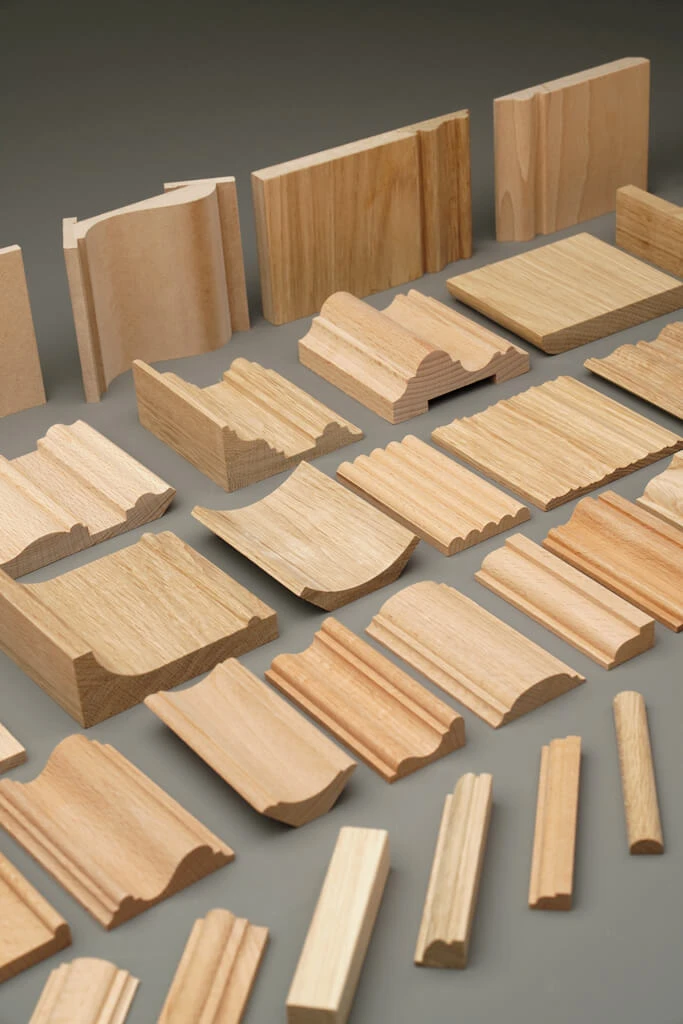
- By profile: classic, straight, decorative
- By finish: for painting, for varnish, natural shade
- How to choose wooden skirting for a specific interior
- Classic interior: focus on architecture
- Modern interior: calm geometry
- For apartments: balance of taste and practicality
- For private houses: scale and style unity
- How to match wooden skirting boards to floors and doors
- Matching the floor color
- Matching the door color
- Matching the wall color
- Contrasting skirting board
- White wooden skirting board
- When to choose a wide profile
- Where to buy wooden floor baseboards in Moscow
- Prices and what affects the cost of wooden skirting boards
- Wood species
- Height and thickness
- Profile and complexity of shape
- Presence of coating
- Wood sorting
- Price summary
- Common mistakes when choosing a wooden skirting board
- Too low a height for a large room
- Unfortunate combination with doors
- Choosing based only on price
- Ignoring wall geometry
- Choosing a profile without considering architraves and moldings
- Why you should order a wooden skirting board for an interior project
- Selection rules: brief and to the point
- FAQ: Popular questions about wooden skirting boards
- About the company: why STAVROS
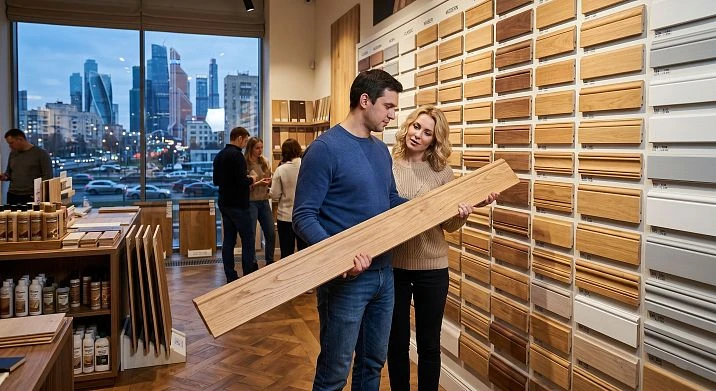
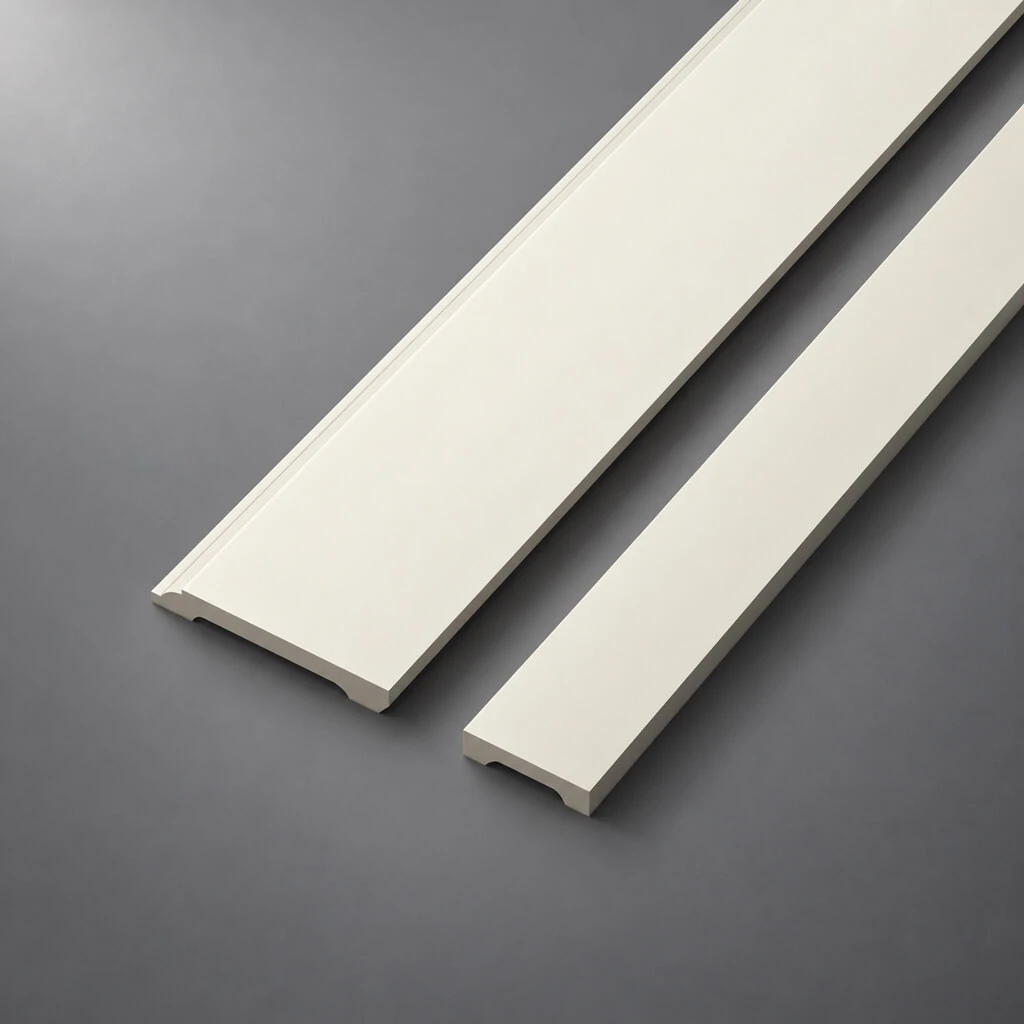
A wooden floor skirting board is not just a plank against the wall. It is the boundary between the floor and the space, an interior line that reveals the level of renovation, the owner's taste, and the quality of the finish. Today, you can buy a wooden floor skirting board in Moscow to suit any taste and budget—but not everyone knows how to choose correctly without regretting it later. This page was created precisely for that purpose: here you will find practical guidelines on types, sizes, profiles, wood species, and the logic of selection for a specific interior.
If you are ready to make a choice — go to Floor skirting boards catalog or check out solid wood skirting boards. If you need to understand — read on.
Advantages of choosing solid wood skirting boards:
-
Natural material without synthetic binders
-
Wide range of profiles — from minimalist to decorative
-
Compatible with parquet, laminate, engineered wood flooring
-
Can be painted and sanded to match any interior
-
Delivery in Moscow, pickup available
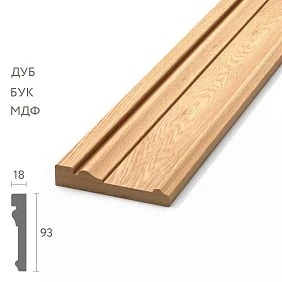
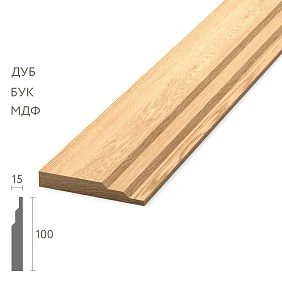
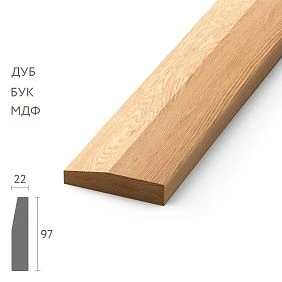
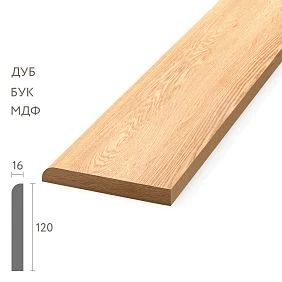
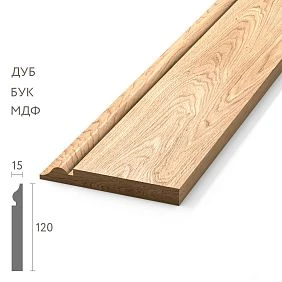
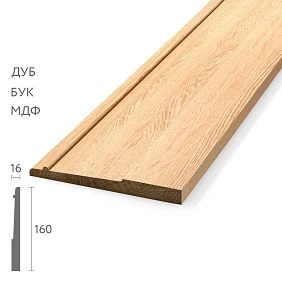
Why you should buy wooden floor skirting
Natural material and living texture
Plastic skirting is a temporary solution. It fades, yellows, cracks at joints, and in hot weather softens and deforms at corners. Solid wood skirting behaves fundamentally differently: it ages gracefully, develops a patina, and remains stable under normal use.
The texture of living wood is something no polymer can replicate. The characteristic grain play of oak, the velvety uniformity of beech, the soft warm tone of coniferous species — all create a sense of handcrafted work, a luxurious interior, a thoughtfully designed space. That is why designers and architects, when working with classic, neoclassical, Scandinavian, and biophilic styles, chooseWood skirting boardas the only viable solution.
Our factory also produces:


Versatility: both classic and contemporary
It's a mistake to think that wooden skirting boards are only for classic and palace styles. Modern, minimalist profiles made of oak or beech with straight geometry and white finishes work perfectly in minimalist, Scandinavian, and light, neutral interiors. A wooden skirting board for painting allows it to be integrated into any color scheme—from RAL 9016 (white) to NCS S 8000-N (anthracite).
For apartments in modern residential complexes, where the design combines natural parquet, gray walls, and light doors, a wooden floor skirting board made of oak with a straight profile looks organic and expensive—without unnecessary decoration.
Get Consultation
Durability and repairability
This is an argument that is rarely voiced, but it's important: a wooden skirting board can be updated. Sanding removes scratches and wear. Repainting changes the color to match a new renovation. If necessary—a separate section can be replaced without dismantling the entire perimeter.
The service life of a high-quality solid oak or beech skirting board, under proper operating conditions, is from 30 to 80 years. This is not a marketing exaggeration: such skirting boards are found in pre-revolutionary houses and in restored Soviet apartments with parquet.
Which wooden floor skirting board to choose
This is the main practical section. Before placing an order—you need to understand four parameters: material, height, profile, finish.
By material: oak, beech, solid wood
Solid oak skirting board—the most popular and justified choice. Oak is dense (700–800 kg/m³), resistant to mechanical loads, easy to process, sands and paints well. The characteristic texture with medullary rays gives the surface a noble appearance. The shade ranges from light golden to rich nutty, depending on the treatment.
Solid beech skirting board—more uniform in structure. The fibers are fine, the pattern is neutral, the surface takes paint and stain well. Beech is ideal for interiors where the skirting board should be white or painted to match the wall color—it doesn't 'show through' the paint with a pattern.
Other species—pine, larch, linden—are more common in the budget segment or for specific tasks (e.g., for a country house or sauna). For a city apartment with quality flooring, oak and beech are preferred.
View the current assortment and prices in thecatalog of solid oak and beech skirting boards.
By height: from low to wide
Skirting board height is not just a dimension. It's the proportion of the room, its 'scale.' The higher the ceilings, the more massive and tall a skirting board is perceived as harmonious.
| Baseboard Height | Suitable ceiling heights | Application |
|---|---|---|
| 45–60 mm | 2.3–2.6 m | Typical apartments, minimalist interiors |
| 70–80 mm | 2.6–3.0 m | Standard apartments, modern interiors |
| 100–120 mm | 3.0–3.5 m | Spacious apartments, houses, neoclassical style |
| 150–200 mm and above | from 3.5 m | Premium interiors, classic, country houses |
Low wooden skirting board (45–60 mm) — works well in modern studio apartments, creates a sense of lightness and does not 'eat up' the visual height of the walls.
Medium (70–80 mm) — the most popular format for Moscow apartments. Versatile in style, suitable for most floor coverings.
High wooden skirting board (100–120 mm and above) — for large rooms, classic interiors, country houses. Creates architectural completeness, pairs well with moldings and cornices.
Wide wooden skirting board — a separate story. Read more about its application and features in the article Wide Wooden Skirting Board.
By profile: classic, straight, decorative
The skirting board profile determines its 'stylistic assignment'. There are no right or wrong solutions here — only suitability or unsuitability for a specific interior.
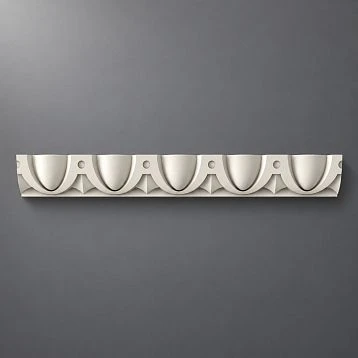
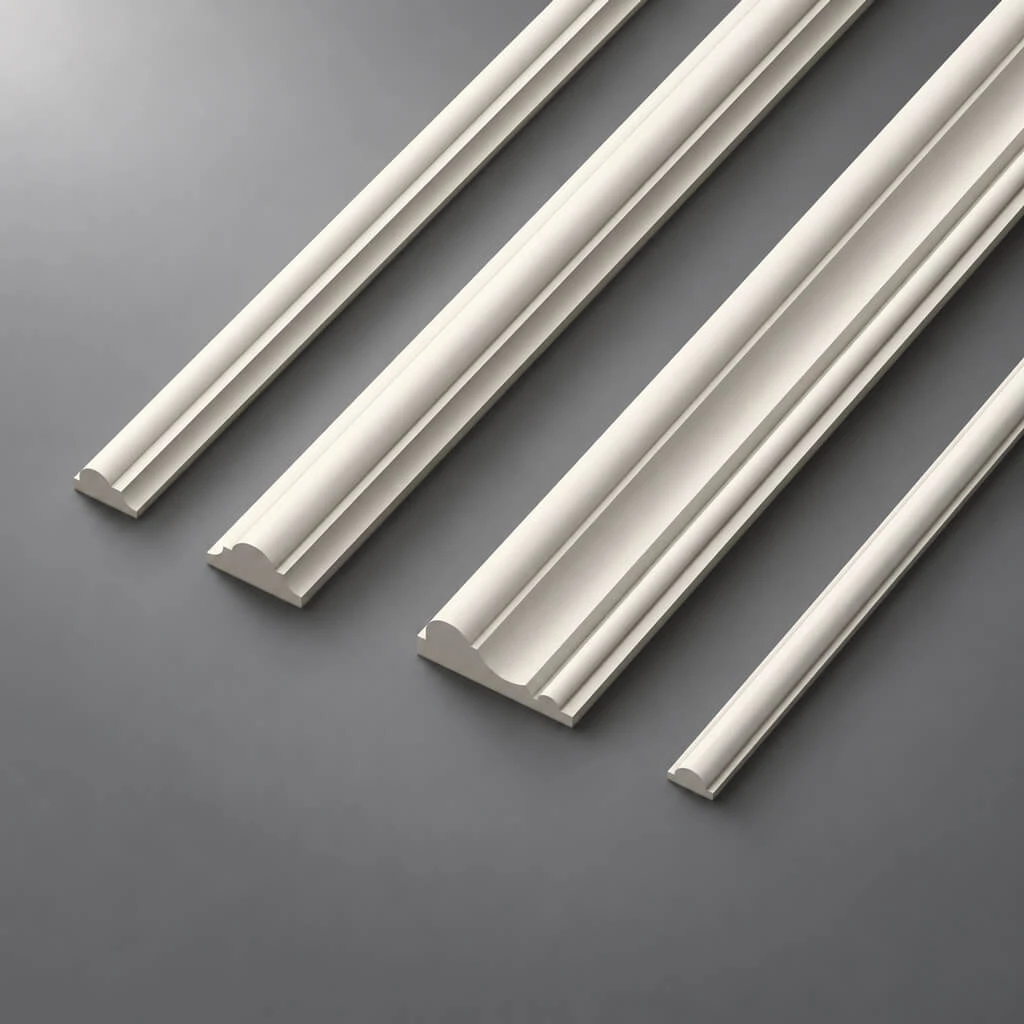
Classic profile with curves, stepped transitions, decorative beads — for traditional interiors, neoclassical, Empire style. Pairs well with shaped solid wood moldings and carved architraves.
Concise profile — minimal plasticity, clear geometric edges, restrained silhouette. Ideal for modern, Scandinavian, and minimalist interiors.
Straight profile — flat frontal plane, strict geometry. Often used for painting so the skirting board blends with the wall color.
Decorative profile with carved elements, milled grooves, relief details — for classic and baroque interiors, where every detail carries semantic weight.
By finish: for painting, for varnish, natural shade
The choice of final treatment depends on the interior task:
-
Without coating / for painting — the skirting board is sanded, ready for application of any paint or primer. Maximum color freedom. Beech is preferable to oak in this case — gives a more even tone.
-
For oil / oil-wax — the natural texture is preserved, the surface is protected from moisture and dirt. Soft, matte, 'living' appearance.
-
For varnish — glossy or semi-matte surface with pronounced texture. Wear-resistant, easy to clean.
-
Natural wood shade — without artificial tinting, only the natural color of the species. For those who value material honesty.
How to choose a wooden skirting board for a specific interior
Classic interior: emphasis on architecture
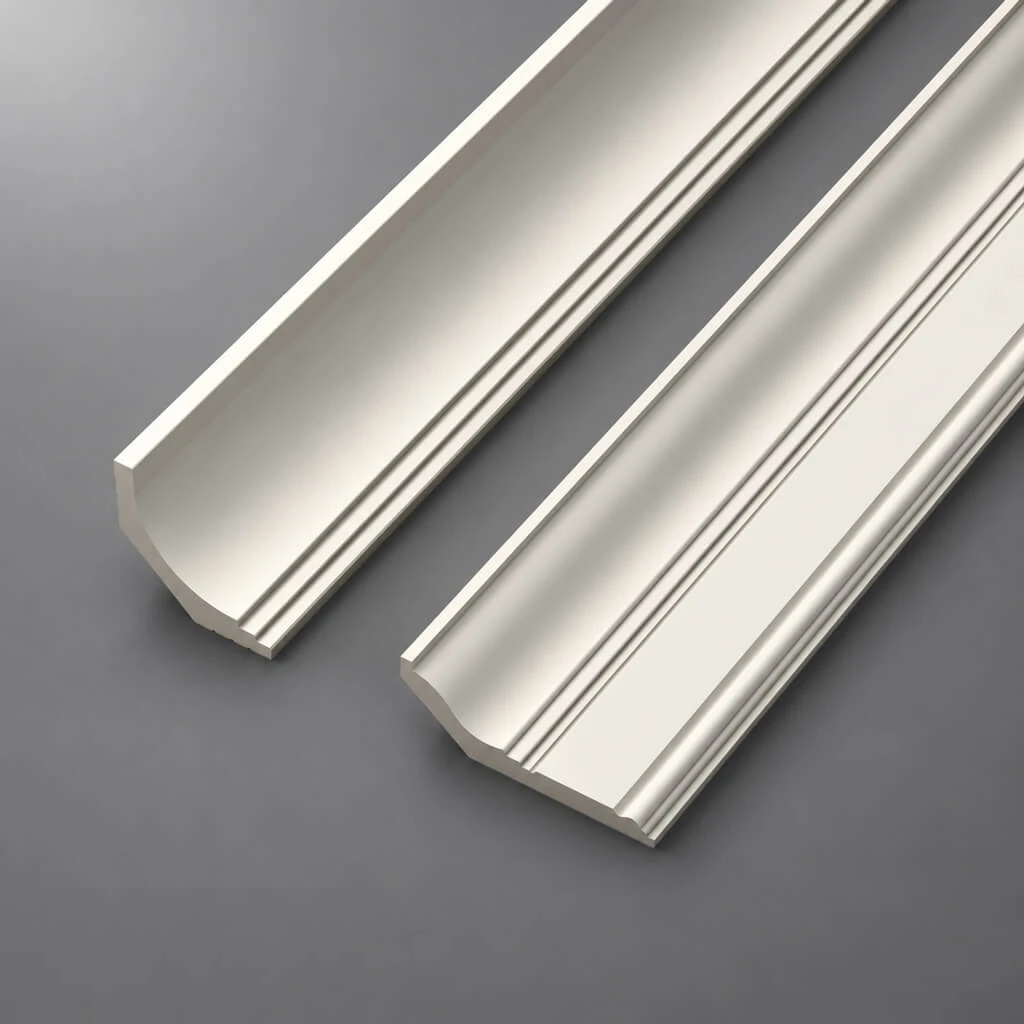
For classic interiors, neoclassicism, Empire, and Baroque, the baseboard should be part of a unified architectural system. Here, height (from 100 mm and above), a pronounced profile with fillets and roundings, and unity with door casings are important.solid wood moldingsandwooden cornices.
In such a space, the baseboard is not a background element but part of the vertical rhythm: floor → baseboard → wall → molding → cornice → ceiling. A break in this chain is immediately noticeable.
An oak baseboard with a classic profile, varnished in a natural shade or tinted to a darker color, is the optimal choice. It pairs well with parquet, oak doors, and furniture on a wooden frame.
Modern interior: calm geometry
A modern interior requires restraint. Here, a straight profile, minimal height (60–80 mm), and neutral colors—white, beige, or matching the walls—work best. The baseboard should 'blend' into the space without drawing attention.
A wooden baseboard made of beech for painting is the perfect solution. It can be painted the same color as the walls, creating an effect of a continuous plane. Or in white—as a classic, clean accent.
For light interiors withslatted wall panelsa wooden baseboard becomes a logical continuation of the wooden theme—uniting vertical and horizontal space.
For an apartment: balancing taste and practicality
In an apartment, the key question is compatibility with existing or planned flooring, doors, and the overall character of the renovation. For a standard Moscow apartment with ceiling heights of 2.6–2.8 m, an optimal height is 70–80 mm, with a laconic or classic profile.
Important: the skirting board is chosen after selecting the flooring and doors, not before. Only this way can a harmonious combination be achieved.
Read more:Wooden floor baseboard: how to choose, which to buy and why it's better for interior design.
For a private house: scale and stylistic unity
A country house allows for thinking on a larger scale. Here ceilings are higher, spaces are more spacious, and the style is typically more pronounced. A tall wooden skirting board (100–150 mm) in a house with wooden staircases, solid wood doors andwooden cornicescreates a cohesive interior system.
The wood species is also important: for a house with pine or larch finishes, the skirting board can also be made from these species. For a house with oak parquet and oak furniture — an oak skirting board is the only option.
How to match a wooden skirting board to the floor and doors
This is practically the most common question when choosing. And there is no single correct answer here — there are several working strategies.
Matching the floor color
A classic and foolproof technique: the skirting board is matched to the shade of the flooring. If the floor is light oak in a natural tone, the skirting board is also chosen from oak of a similar shade. The space is perceived as cohesive, transitions are smooth.
Works for parquet, laminate, engineered wood. Especially well — when the skirting board and floor are made from the same wood species.
In the color of the doors
The second popular approach: the skirting board 'rhymes' with the doors. White doors — white wooden skirting board made of beech. Oak doors with dark tinting — skirting board made of oak in the same shade.
This creates a vertical rhythm: doors + trims + baseboard — a unified ensemble. The floor can be contrasting.
Matching the wall color
A modern technique, characteristic of minimalist interiors: the baseboard is painted the same color as the walls. Visually, the wall 'descends' to the floor, and the baseboard disappears as an independent element. An effect of a pure, continuous volume is created.
Contrasting baseboard
A bold design solution: a dark baseboard on a light floor (or vice versa). Works in interiors with a strong concept, where contrast is an intentional technique, not an accident.
White wooden baseboard
A separate and highly sought-after category. White wooden beech baseboard for painting is a universal solution for most interiors. It does not compete with the floor and doors, is neutral in color, and creates a clean line along the perimeter of the room. Especially relevant in Scandinavian style, Provence, and classic interiors with white walls.
When to choose a wide profile
Wide Wooden Skirting Boardis chosen when an architectural accent at the floor is needed: for high-ceilinged rooms, country houses, classic living rooms. It creates a visual 'foundation' for the wall, making the space monumental.
Where to buy wooden floor skirting in Moscow
Before finalizing the purchase, it's worth going through several key parameters — this will take no more than 10 minutes and save hours on a possible return or rework.
What to check before buying:
-
Dimensions — measure the perimeter of all rooms, add 10–15% for reserve and trimming. Clarify in what units the baseboard is sold: per linear meter or per piece of a specific length.
-
Profile — compare with door trims and interior style. Profile mismatch is one of the most common mistakes during renovation.
-
Wood species — oak or beech? Coniferous? It's important that it matches the floor material.
-
Geometry quality — is the end straight? Any warping? A baseboard with poor geometry will create gaps in corners and joints.
-
Style compatibility — decorative baseboard in a modern interior will look excessive, straight baseboard in classic style will look too plain.
-
Availability — check actual warehouse availability, especially if purchasing large volume.
-
Delivery in Moscow — clarify timing and cost, possibility of self-pickup.
-
Custom project order — if you need non-standard profile, wood species or finish — custom orders for specific projects are possible.
to buy wooden floor skirting in Moscowwith delivery can be found in the catalog — it shows current available items with description of each model.
Prices and what affects the cost of wooden baseboard
Wooden floor baseboard — a product with wide price range. The price difference between simplest and most expensive items can be tenfold. Let's examine why.
Tree species
Coniferous skirting board is the most affordable. Oak and beech are significantly more expensive due to their density, labor-intensive processing, and raw material base. Oak is typically 15–25% more expensive than beech.
Height and thickness
The taller and thicker the skirting board, the greater the material consumption and the higher the price. A 45×15 mm skirting board and a 120×22 mm skirting board made from the same wood species can differ in price by 2–3 times solely due to the volume of wood.
Profile and complexity of shape
A straight profile is milled quickly and simply. A shaped profile with multiple transitions, coves, and decorative grooves is more complex to produce, requires more passes, and has a higher percentage of defects. This directly affects the price.
Presence of coating
Uncoated skirting board is cheaper. Skirting boards with oil-wax, varnish, or RAL paint are more expensive due to material and labor costs. White painted beech skirting board is one of the most labor-intensive items in the product line.
Wood sorting
The 'Extra' or 'Premium' grade means the absence of knots, cracks, and color variations. Such material is selected by hand, which increases the cost. The 'AB' grade allows for minor natural defects and is cheaper.
Price summary
For reference: solid wood skirting board in the catalog starts from 1600–2000 rubles per piece (for a product of standard length). Wider and more decorative models range from 3000 to 7000+ rubles. Exact current prices are in theskirting board catalog.
Common mistakes when choosing wooden baseboards
Over years of practice in interior design, a stable list of mistakes has emerged that are repeated again and again. It's better to know about them before purchasing.
Too low a height for a large room
A 45–50 mm high skirting board in a living room with 3-meter ceilings looks like a thin line that is almost invisible. The room seems unfinished, 'bare'. For large spaces, a height of at least 100 mm is needed.
Unsuccessful combination with doors
Dark doors + light skirting board + bright floor — chaos. Without a unified logic of color and material, the room falls apart into unrelated details. The choice of skirting board should always stem from the overall color concept, not from personal preferences 'taken out of context'.
Choosing based on price alone
A cheap pine skirting board in an apartment with parquet flooring and oak doors is always a noticeable mismatch. The money saved on the skirting board is lost in the overall impression of the renovation.
Ignoring wall geometry
In real apartments, walls are never perfectly even. A skirting board with a rigid profile and a thin support base will not 'lie' flush against an uneven wall — there will be gaps. For walls with variations, it is better to choose profiles with a wider support part.
Choosing a profile without considering architraves and moldings
A skirting board with a rich decorative profile next to simple straight architraves — dissonance. The profiles of door frames and floor skirting boards should be from the same 'design system'. For this, it is convenient to lookSolid wood moldings, cornices, and baseboardsin a unified catalog.
Why you should order wooden skirting boards for your interior project
A one-off purchase of 'a single skirting board' and a comprehensive approach to the interior are fundamentally different stories. When skirting boards, moldings, architraves, cornices, and slatted panels are selected from the same range, the result reads as a unified whole.
What this provides:
-
Cohesive style — all wooden elements in the same wood species, same tone, same profile character.
-
Architectural completeness — the space looks designed, not assembled from random parts.
-
Time savings — one supplier instead of five, one logistics, one finish.
-
Combination with moldings and cornices —Wooden cornicesandMoldings from solid wood from a single manufacturer is indispensable — a guarantee of profile compatibility.
-
Slatted wall panels —planks made of woodpaired with a wooden skirting board create a unified textural theme.
Ordering for a project also involves non-standard solutions: the required height, custom profile, special tone — all this is resolved at the design stage, not after installation.
Selection rules: brief and to the point
A few simple guidelines that work in real projects:
-
Skirting board height = ~1/20 of the room height. Ceiling 2.6 m → skirting 70–80 mm. Ceiling 3.2 m → skirting 100–120 mm.
-
The skirting board profile follows the logic of the door casing profile. No casings — choose a straight profile.
-
The wood species of the skirting matches the species or color of the floor. Or is coordinated with the color of the doors.
-
Finish is chosen last: first species, then height, then profile, then color.
-
All wooden elements in the room — skirting, cornice, molding, casing, batten — are best from a single source.
FAQ: Popular questions about wooden skirting boards
Which wooden skirting board is best to buy for an apartment in Moscow?
For a standard Moscow apartment with ceilings 2.6–2.8 m, a skirting board made of oak or beech with a height of 70–80 mm is optimal. Profile — depending on the interior style: straight for modern, classical — for traditional. See available models in skirting board catalog.
How does a wooden skirting board differ from MDF?
Solid wood skirting board is solid natural wood without binders. MDF is pressed fiber. Solid wood is more durable, repairable, and natural. MDF is cheaper, more dimensionally stable, and moisture resistant. For premium renovation — solid wood. More details: Baseboard MDF.
Can a wooden baseboard be painted after installation?
Yes. Beech wood skirting board for painting is specifically designed for this purpose. The surface is primed and painted with acrylic enamel in any color. Oak skirting board can also be painted, but the grain may show through thin layers of light paint.
What height of wooden skirting board to choose for a private house?
For a country house with high ceilings (3.0–3.5 m) — 100–150 mm. If there is a staircase, wooden doors, and cornices — the skirting board is selected as part of a unified system. All solid wood products for the house — in the section Solid Wood Items.
How to match a baseboard to laminate flooring?
Laminate with a warm oak shade — oak skirting board in natural tone or with oil-wax finish. Light laminate — white beech wood skirting board or neutral beige. Dark laminate — dark oak skirting board with varnish or stain. The main thing is not to choose a skirting board that clashes with the floor tone.
Is there delivery of wooden skirting boards in Moscow?
Yes. Wooden floor skirting board in Moscow can be Buy solid wood skirting board with city delivery or pickup.
What is a skirting board for painting and why is it needed?
This is a solid wood skirting board (usually beech) whose finish surface is prepared for paint application: sanded, without knots or defects. Allows the skirting board to fit into any color scheme of the renovation — white, gray, colored. The most flexible solution for modern interiors.
About the company: why STAVROS
You can buy wooden floor skirting boards in Moscow in various places. But choosing a place where each item is backed by real production, quality control of the wood, and a professional approach to the assortment is a different story.
STAVROS is a Russian manufacturer of solid oak and beech products. Own production, chamber drying of wood, controlled microclimate at all stages — temperature 20–24°C, humidity not below 40%. Over 4000 models, 20,000 modifications, 39 product groups. Everything in one place: skirting boards, moldings, cornices, slatted panels, architraves — a unified interior system from a single source.
Order from one piece. Large stock program. Delivery across Moscow and all of Russia. Possibility to selectWooden floor baseboardfor a ready-made project or receive a consultation on selection.
Select a floor skirting board in the catalog —https://www.stavros.ru/products/izdeliya-iz-massiva/vid_izdeliya_plintus/
Buy wooden floor skirting board in Moscow —https://www.stavros.ru/products/izdeliya-iz-massiva/moldingi-karnizy-plintusy/plintus-massiv/