












































































Article Contents:
- What is decorative molding and why is it needed
- Wall molding: overlays, panels, moldings
- Wall Mouldings
- Decorative overlays
- Panels and bas-reliefs
- Pilasters and Half Columns
- Ceiling molding: cornices, rosettes, coffers
- Ceiling Cornices
- Ceiling Rosettes
- Ceiling coffers
- Domes and Arches
- Facade molding: exterior house finishing
- Features of facade molding
- Elements of facade decor
- Stylistics of facade decor
- Polyurethane decor: versatility of application
- Physical and Mechanical Properties
- Aesthetic possibilities
- Technological advantages
- Economic efficiency
- How to choose molding for different rooms
- Living Room
- Bedroom
- Children's room
- Kitchen
- Bathroom
- Hallway and corridor
- Office and Library
- Where to buy and prices for decorative elements
- Purchase channels
- Price benchmarks
- Pricing factors
- How to save without sacrificing quality
- Installation of decorative molding: basics
- Surface Preparation
- Marking
- Trimming elements
- Adhesive Application
- Finishing
- Frequently Asked Questions
- Conclusion

An interior is not just a combination of walls, floor, and ceiling. It is a space that affects mood, productivity, and inner state. You can furnish a room with expensive furniture, use high-quality finishing materials, but without decorative elements, the interior will remain flat and faceless.buy decorative moldings— means adding volume, depth, and character to the space. Molding transforms a standard apartment into a unique dwelling, creates an atmosphere of a palace or a cozy country house, and emphasizes the owner's status.
For decades, molding was associated exclusively with the classical style — the palaces of Versailles, St. Petersburg mansions, Stalin-era apartments. But modern design has expanded the boundaries. Todaybuy decorative moldingscan be used for any style — from pompous Baroque to strict minimalism. It's all about the right choice of shapes, proportions, and application methods. Laconic profiles without ornaments fit perfectly into modern interiors, creating structure and rhythm. Elegant moldings with floral motifs support classic styles. Geometric elements work in Art Deco and loft.
The geography of molding application is just as wide.wall molding for saleis used to create panels, frame mirrors, and zone space.Buy ceiling mouldingsis necessary for installing cornices, rosettes, and creating coffers.to buy facade moldingis needed when it comes to the exterior finishing of a house — decorating windows, doors, cornices, and columns. Each zone requires specific elements adapted to the operating conditions.


What is decorative molding and why is it needed
Molding is three-dimensional decorative elements that adorn architectural surfaces. Historically, it was created from plaster or stone by hand by master plasterers. Each detail was formed individually, required weeks of work, and cost a fortune. Such molding adorned the palaces of aristocrats, temples, and public buildings.
Modern technologies have democratized molding. Polymer materials — polyurethane, polystyrene — allow elements to be produced by casting. A master model is created, a mold is taken from it, and then identical copies are replicated. The quality of detailing is not inferior to handcrafted work, but the cost is reduced by orders of magnitude.buy stucco for homeToday, a family with average means can afford it, not just oligarchs.
Why is molding needed at all? Aren't simply smooth painted walls enough? From a practical standpoint, molding solves several tasks.
Masking defects. The joint between wall and ceiling is rarely perfectly even. A cornice conceals these irregularities, creating a clear boundary. Wall moldings mask cracks, plaster unevenness, wallpaper seams.
Visual space correction. A wide cornice visually lowers the ceiling, making a tall room cozier. Vertical pilasters visually raise the ceiling in low rooms. Horizontal moldings widen narrow spaces.
Zoning. Moldings divide a wall into functional zones — dining area, relaxation zone, workspace. Arches with decorative columns demarcate space while preserving openness.
Creating focal points. A ceiling rosette draws the eye to the chandelier. Framing a mirror or painting turns them into a compositional center. A fireplace portal becomes the dominant feature of the living room.
Stylistic identification. Certain molding forms clearly indicate a style. Corinthian capitals — classicism. Floral swirls — Art Nouveau. Geometric ziggurats — Art Deco. Smooth profiles — minimalism.
Protective function. Baseboards protect the lower part of walls from mechanical damage and wet cleaning. Facade cornices divert rainwater from walls, preventing moisture absorption.
Molding is an investment in the aesthetics of a space. Unlike furniture, which is periodically changed, molding serves for decades, becoming an integral part of the architecture. Quality decor increases property value — apartments and houses with molding sell for more than standard ones.




Wall molding: overlays, panels, moldings
Walls occupy the largest area in a room, so their decoration is critically important. Bare painted planes look boring, even if the color is chosen perfectly.wall molding for saleIt is worth it to add volume, structure, and visual interest.
Our factory also produces:


Wall Moldings
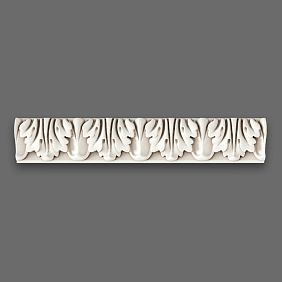
Moldings — linear elements, meaning they are sold by the meter. These are strips of varying width and profile that are mounted on walls. The application of moldings is diverse.
Creating wall panels. A classic technique — dividing a wall into three horizontal zones. The lower third — a panel or plaque — is framed with molding. The middle — the main wall field. The upper — a frieze under the ceiling. Such a structure is characteristic of classic interiors — English, French, American styles.
Moldings are attached vertically and horizontally, forming rectangular frames. Inside the frames, the wall can be painted in a contrasting color, wallpapered with a pattern, or covered with fabric. The effect of coffers — recessed panels — is achieved. Frame sizes vary — from large 80x120 cm to elegant 40x60 cm.
Framing doors and windows. Molding installed around a doorway serves as a casing, but more elegantly. Windows are also framed, creating architectural expressiveness.
Separating materials. When different finishing materials are used in one room — paint and wallpaper, tile and plaster — molding creates a clear boundary, masking the seam.
Decorative zoning. Vertical moldings divide a long wall into sections, structuring the space. Horizontal ones create a visual anchor for furniture, paintings.
The width of wall moldings is usually 2-10 cm. Narrow (2-4 cm) are suitable for small rooms, creating an elegant pattern. Medium (5-7 cm) — are universal. Wide (8-10 cm) are used in spacious halls with high ceilings.
The profile of a molding can be smooth or ornamented. Smooth ones with simple profiling (rounds, beads) suit modern interiors. Ornamented ones with floral, geometric motifs — for classic styles.
Get Consultation
Decorative overlays
Polyurethane appliqués— are individual elements of various shapes and sizes. These can be floral ornaments — acanthus leaves, laurel branches, rosettes, garlands. Geometric patterns — meanders, braids, ziggurats. Figurative compositions — putti, masks, griffins.
Overlays are used for:
Decorating panel corners. A corner overlay is installed in each corner of a molding frame — this emphasizes the structure, adds detailing.
Creating central accents. A large overlay is attached in the center of a panel, becoming a visual focus.
Decorating furniture. The fronts of cabinets, dressers, kitchen sets are adorned with overlays, transforming simple furniture into designer pieces.
Framing mirrors and paintings. Overlays on the corners of a frame create an antique framing effect.
Accents above doors. A large overlay above a doorway (a pediment) makes the entrance ceremonial.
The sizes of overlays vary from miniature 5x5 cm to monumental 100x50 cm. Relief thickness — from 5 mm to 4 cm. Deep relief creates expressive shadows, plays of light, enlivens the plane.
Panels and bas-reliefs
Panels are large decorative compositions that occupy a significant portion of a wall. These can be narrative bas-reliefs—mythological scenes, hunting motifs, pastorals. Or abstract compositions of geometric, plant elements.
Panels are installed in the central part of a wall, becoming the dominant feature of the interior. They are framed by moldings and often complemented with lighting. In classical interiors, panels are placed above fireplaces, in dining rooms, libraries.
Modern panels can be minimalist—relief geometric compositions that create a play of shadows. Such elements work in contemporary, minimalist, high-tech styles.
Pilasters and half-columns
Pilasters are vertical elements that imitate columns but are flat, protruding from the wall by 2-5 cm. They consist of a base, shaft, and capital. Used for vertical wall division, creating rhythm, framing doors and windows.
Pilasters set the scale of a room, creating solemnity. Characteristic of classicism, empire, neoclassicism. In modern interiors, simplified pilasters without capitals are used—simply vertical protrusions that create structure.
Ceiling moldings: cornices, rosettes, coffers
The ceiling is the fifth wall of a room, often undeservedly ignored. A white, smooth ceiling is functional but boring.Buy ceiling mouldingsIt is necessary to turn this plane into an architectural element that defines the character of the interior.
Ceiling cornices
Ceiling cornices— the most common type of molding. Installed at the junction of the wall and ceiling, creating completeness, masking unevenness. But the function of a cornice is not only decorative.
Visual change of proportions. A wide cornice (15-25 cm) visually lowers the ceiling, making a tall room more intimate and cozy. A narrow cornice (5-8 cm) hardly affects the perception of height, performing a purely decorative function.
Color separation. The cornice creates a boundary between the color of the walls and the ceiling. If they are contrasting, the cornice emphasizes this. If they are close in tone, the cornice provides a clear dividing line.
Hidden lighting. A modern technique—installing a cornice with an offset from the wall or ceiling, creating a niche into which an LED strip is mounted. Light is directed onto the ceiling or wall, creating soft diffused lighting. The effect is a floating ceiling or glowing perimeter.
Stylistic marker. The shape of the cornice determines the style. Multi-tiered with ornament—Baroque, Rococo. Simple with classical profiles (cavetto, torus)—classicism. Smooth, laconic—minimalism, contemporary.
The width of the cornice is chosen based on the ceiling height and room area. For standard apartments with ceilings of 2.7 m, cornices of 8-12 cm are suitable. For tall rooms from 3.5 m—15-25 cm. A too narrow cornice in a large room will get lost. A too wide one in a small room will overwhelm and reduce the height.
Cornices are sold in 2-meter lengths. For a room with a perimeter of 20 meters, 10 lengths plus a reserve for corner cutting are needed. Elements are joined end-to-end, seams are filled with sealant, sanded, and become invisible.
Ceiling Rosettes
Ceiling rosette—a central decorative element framing a chandelier. The rosette turns the light fixture into a compositional center, attracts the eye, creates a focal point. In classical interiors, the rosette is a mandatory element.
The diameter of the rosette depends on the size of the room and the chandelier. A small rosette of 30-40 cm is suitable for compact fixtures in bedrooms, studies. Medium 50-80 cm—for living rooms, dining rooms. Large 100-150 cm—for formal halls with large-scale chandeliers.
The proportion is as follows: the diameter of the rosette should be approximately 50-70% of the chandelier's diameter. A too small rosette will create imbalance; the chandelier will loom. A too large one will overwhelm the light fixture.
The ornament of the rosette is chosen to match the interior style. Classical rosettes have concentric rings with plant motifs—acanthus leaves, laurel, oak branches, floral garlands. Baroque ones are distinguished by lushness, abundance of scrolls, putti. Empire—strict geometric, with laurel wreaths, torches. Art Nouveau—asymmetrical, with flowing plant lines. Modern—laconic, geometric, minimalist.
The structure of the rosette can be single-tiered or multi-tiered. Simple rosettes—one ring of ornament around the central hole. Complex—several concentric rings with different patterns, creating depth.
Rosette installation is done before mounting the chandelier. The rosette is glued to the ceiling, electrical wiring is passed through the central hole, then the light fixture is attached. The rosette can be painted to match the ceiling color or in a contrasting one—gold, silver, patina.
Ceiling coffers
Coffers—recessed panels that create a relief structure on the ceiling. Historically, coffers were a structural element—beam ceilings formed cells. Today, coffers are purely decorative, created using moldings and polyurethane beams.
Creating a coffered ceiling: moldings forming a grid of rectangles or squares are mounted on the ceiling. Cell size is usually 60x60, 80x80, 100x100 cm. Inside each cell, an overlay—rosette, ornament—can be installed. Cells are painted in a color contrasting with the moldings.
Alternative option—using polyurethane beams imitating wood. Beams are attached to the ceiling crosswise, forming coffers. Wood texture creates coziness, suitable for country, Provence, Mediterranean styles.
Coffered ceilings visually reduce the height of a room, making it more intimate. Suitable for tall rooms from 3.2 m. In standard apartments, coffers will feel oppressive.
Domes and Arches
Domes—volumetric elements creating the illusion of an architectural structure. A semi-dome is mounted in the center of the ceiling or in a corner, creating volume, play of light and shadow. Dome diameter from 40 cm to 2 meters.
Domes are characteristic of classical and neoclassical interiors. Often combined with rosettes—a dome is installed in the center, surrounded by a rosette, from which moldings radiate to the cornices.
Vaults—arched elements imitating vaulted ceilings. Create an impression of height, monumentality. Used in Gothic, Romanesque stylizations, as well as in lofts for an industrial effect.
Facade moldings: exterior house finishing
The facade is the face of the house. It is by the facade that the owner's taste and status are judged. Modern cottages are often built from standard materials — brick, blocks, siding. Without decoration, they look bland.buy facade molding— a way to transform the exterior appearance, giving the building individuality and architectural expressiveness.
Features of facade stucco
Exterior stucco is used in aggressive conditions — rain, snow, frost, heat, ultraviolet light. The material must withstand these impacts. Facade stucco is made from:
High-density polyurethane. Special compounds with UV stabilizers and frost-resistant additives. Withstand temperatures from -50°C to +80°C, do not fade, do not crack.
Glass composite. Polymer reinforced with fiberglass. Extremely strong, lightweight, durable. More expensive than polyurethane, but service life is 50+ years.
Fiber-reinforced concrete. Concrete with fiber fibers. Imitates stone, heavier than polymers, but maximally authentic.
Facade stucco is usually painted with facade paints — acrylic, silicone. Painting protects from moisture and provides the desired color. Imitations of natural materials — stone, brick, terracotta — are popular.
Elements of facade decor
Cornices and friezes. Installed under the roof, creating a finishing touch for the facade. Protect the wall from water running off the roof. The width of facade cornices is 20-50 cm — significantly larger than interior ones.
Window casings. Frame the windows, adding expressiveness. Can be simple rectangular or complex with pediments, brackets, keystones. Casings are a characteristic feature of Russian wooden architecture, now reproduced in polyurethane.
Window sill cornices. Installed under windows, creating visual support and diverting water from the wall.
Corner elements (rustication). Overlays mounted on building corners, imitating stone masonry. Create an impression of massiveness and solidity.
Pilasters and columns. Vertical elements dividing the facade. Especially effective on the entrance group — columns on either side of the porch create a portico, a ceremonial entrance.
Pediments and pediment hoods. Triangular or arched elements above windows and doors. Characteristic of classicism, giving the building a palatial appearance.
Balustrades. Railings for balconies and terraces, consisting of balusters and handrails. Transform a simple balcony into an architectural element.
Decorative brackets. Support canopies, balconies, bay windows. Can be simple or ornamented.
Stylistics of facade decor
Classicism. Strict proportions, symmetry, order system. Columns with capitals, pediments, cornices with modillions.
Baroque. Opulence, abundance of decor, curved lines. Cartouches, garlands, sculptural elements.
Art Nouveau. Asymmetry, flowing plant ornaments, arched windows.
Russian style. Casings with carvings, kokoshniks, shirinki, barrel-shaped columns.
Alpine (chalet). Wooden beams, wide cornices, simplicity of forms.
Mediterranean. Arcades, columns, rusticated corners, terracotta tones.
to buy facade moldingmust be considered within the overall architectural concept. Elements should correspond to the proportions of the building and not overload the facade. Decor should emphasize the merits of the architecture, not mask it.
Polyurethane decor: versatility of application
Why has polyurethane become the dominant material for stucco? What properties make it universal?
Physical and mechanical properties
Lightness. Polyurethane density is 0.6-0.8 g/cm³. For comparison, plaster — 1.2-1.5 g/cm³, wood — 0.5-0.9 g/cm³. A 2-meter long cornice weighs 1-3 kg depending on width. This simplifies installation and does not require structural reinforcement.
Strength. Despite its lightness, polyurethane is strong. Withstands impacts, does not crumble when dropped. This is critical during transportation and installation.
Elasticity. Polyurethane is slightly flexible, which allows it to compensate for surface irregularities. The element fits tightly to the wall, even if it is not perfectly even.
Moisture resistance. Polyurethane does not absorb water, does not swell, does not deform. Suitable for bathrooms, kitchens, facades.
Temperature stability. Operating range from -40°C to +80°C. Does not crack in frost, does not soften in heat.
UV resistance. Modern formulations contain stabilizers that prevent fading and degradation under sunlight.
Eco-friendliness. Polyurethane is inert, does not emit harmful substances. Safe for living spaces, children's rooms.
Aesthetic possibilities
Detail. Molding allows reproduction of the finest ornament details. Reproduction accuracy — up to 0.1 mm. Every leaf vein, every curl is clearly visible.
Surface. Polyurethane has a smooth matte surface, ready for painting. Can be painted any color, patinated, create gilding, aging effects.
Material imitation. Through painting and texturing, polyurethane imitates plaster, wood, stone, metal. Visually difficult to distinguish, but performance characteristics are better.
Technological Advantages
Easy installation. No special equipment required. Elements are cut with a regular handsaw, attached with adhesive (liquid nails, special polyurethane adhesive). Installation is accessible even to non-professionals.
Installation speed. A cornice around a 20 m² room perimeter is installed in 2-3 hours. For plaster molding, it would take days.
No wet processes. Plaster molding requires puttying, priming, drying. Polyurethane is glued immediately, seams are sealed with sealant, can be painted the same day.
Repairability. If an element is damaged, it is easily replaced. The old one is removed, a new one is glued in its place.
Economic Efficiency
Affordable price. Polyurethane molding is 2-5 times cheaper than plaster, 3-10 times cheaper than carved wood. With comparable visual effect.
Durability. Service life 30-50 years without quality loss. Requires no maintenance except periodic painting.
Savings on installation. Ease of installation reduces labor costs. Can be installed independently, saving on craftsman services.
How to choose molding for different rooms
Choosing molding is not only an aesthetic but also a functional issue. Different rooms have different operational specifics and require appropriate elements.
Living Room
Living room — a formal room for receiving guests, hosting family evenings. Here, solemn, expressive molding is appropriate.
Ceiling: wide cornice (12-20 cm) with ornament, large rosette (70-120 cm) around the central chandelier. If the ceiling is high (from 3.2 m), coffers can be created or a dome installed.
Walls: panels made of moldings, dividing the wall into zones. Pilasters in corners or framing the fireplace. Over-door appliqués.
Style: classical, neoclassical, art deco depending on the overall interior concept.
Bedroom
Bedroom — an intimate space requiring tranquility, coziness. Molding here should be restrained, not overloaded.
Ceiling: narrow cornice (8-12 cm), small rosette (40-60 cm) or none at all if lighting is diffuse.
Walls: moldings to create panels at the head of the bed. Mirror frames. Laconic forms.
Style: classic, Provence, modern.
Children's room
Children's room should be safe, bright, cheerful. Molding here is more playful, light.
Ceiling: simple cornice (5-8 cm), medium-sized rosette possible (50 cm).
Walls: moldings for zoning (sleep area, play area, study area). Appliqués with playful motifs can be used — butterflies, flowers, stars.
Style: modern, Provence, Scandinavian.
Kitchen
Kitchen — a room with high humidity, temperature fluctuations, risk of contamination. Molding must be moisture-resistant, easy to clean.
Ceiling: simple smooth cornice (5-10 cm), resistant to moisture.
Walls: moldings for framing the backsplash, windows. Decor should be minimal to avoid accumulating grease and dirt.
Style: classic, Provence, country.
Bathroom
Bathroom — a high humidity area. Mandatory use of moisture-resistant polyurethane.
Ceiling: cornice (8-12 cm), can include a niche for hidden lighting.
Walls: moldings for framing the mirror, niches. Moisture-resistant overlays.
Style: classic, Art Deco, modern.
Hallway and corridor
Hallway — the first room seen by those entering. Should make an impression.
Ceiling: medium-width cornice (10-15 cm).
Walls: panels made of moldings resistant to mechanical impact. Door framing.
Style: matches the overall style of the apartment.
Office and library
Study — a place for concentration, work. Molding should be solid, commanding respect.
Ceiling: coffers, massive cornice (15-20 cm), medium-sized rosette.
Walls: high panels made of moldings, pilasters, bookshelves framed with decor.
Style: classic, English, Art Deco.
Where to buy and prices for decorative elements
The molding market is vast — from budget options to exclusive collections. Where to look, what to pay attention to, how much does it cost?
Purchase channels
Direct from the manufacturer. Optimal option. Full range, fair prices without intermediary markups, quality guarantee, professional consultations. Order via website or by phone, delivery to any city.
Construction hypermarkets. Leroy Merlin, Castorama, OBI offer a basic assortment. Advantage — availability, you can come and buy immediately. Disadvantage — limited selection, often budget segment.
Specialized salons. Molding and decor stores. Wide selection, consultations. Prices are higher due to trade markup.
Marketplaces. Ozon, Wildberries, Yandex.Market. Convenient for comparing prices, reading reviews. Risk — quality may not meet expectations.
Price Benchmarks
Ceiling cornices: from 200 to 3000 rubles per linear meter. Simple smooth ones are cheaper, ornamented ones are more expensive.
Wall moldings: from 150 to 1500 rubles per linear meter.
Floor skirting boards: from 250 to 2000 rubles per linear meter.
Ceiling rosettes: from 1500 (30 cm diameter) to 20000 rubles (150 cm diameter).
Decorative overlays: from 200 (small 10x10 cm) to 5000 rubles (large 50x50 cm).
Pilasters: from 3000 to 30000 rubles depending on height and detailing.
Facade elements: 20-40% more expensive than interior ones due to enhanced characteristics.
Pricing Factors
Element size. The larger, the more expensive — an obvious dependency.
Complexity of ornamentation. Detailed relief requires expensive molds, increases cost.
Manufacturer brand. Well-known European brands are more expensive than Russian ones with comparable quality.
Material. Premium high-density polyurethane is more expensive than standard.
Order volume. Wholesale purchases are cheaper than retail. Complete orders (all elements for room decoration) often come with a discount.
How to save without sacrificing quality
Buy directly from the manufacturer. Save 20-40%.
Order as a set. Discounts on large orders.
Choose Russian manufacturers. Quality is comparable to European, price is 30-50% lower.
Watch for promotions. Seasonal sales, special offers.
Don't skimp on the essentials. It's better to install quality elements in key areas than cheap ones throughout the apartment.
Installation of decorative molding: basics
Installing polyurethane molding does not require professional skills, but following the technology is mandatory.
Surface preparation
The surface must be clean, dry, and sturdy. Remove old wallpaper, peeling paint, and dust. Prime with acrylic primer — this improves adhesive bonding.
A perfectly even surface is not necessary — polyurethane compensates for minor irregularities. But serious defects are better leveled with putty.
Marking
Before installation, mark the placement of elements. For a cornice, draw a line at a distance from the ceiling equal to the height of the cornice. Use a laser level or chalk line — the line must be strictly horizontal.
For wall panels, mark rectangles, considering symmetry and proportions.
Trimming elements
Cornices and moldings need to be trimmed at an angle in room corners. The angle is usually 45 degrees (in standard rectangular rooms). Use a miter box — a tool for precise cutting at a given angle.
Polyurethane can be cut with a fine-toothed saw or a miter saw. The cut is smooth, without chips.
Adhesion
Apply adhesive to the back of the element. For light cornices, liquid nails are suitable. For heavy ones — special polyurethane adhesive. Apply adhesive in a zigzag or dotted pattern.
Press the element against the surface, hold for 30-60 seconds. The adhesive sets quickly. Remove any excess that squeezes out at the edges immediately with a damp cloth.
Joints of elements should fit tightly. If a gap forms, fill it with white acrylic sealant. Smooth with a wet finger. After drying, the seam is invisible.
Final finishing
After installation, the elements are ready for painting. If leaving them white, you may not paint — polyurethane has a neat surface. But painting enhances aesthetics and protects from dirt.
Use water-based or acrylic paint. Apply with a brush or roller in 1-2 coats. For ornamental elements, a brush is convenient — it paints recesses.
Decorative techniques can be applied — patination (highlighting recesses with dark paint), gilding, creating an aged effect.
Frequently asked questions
Can interior molding be used on the facade?
No. Interior molding is not designed for outdoor conditions — moisture, frost, UV. It will deteriorate within a season. For facades, special facade molding is needed.
Can polyurethane molding support the weight of a chandelier?
A rosette is a decorative, non-load-bearing element. The chandelier is attached to the ceiling structure through a hole in the rosette. The weight hangs on a hook or bracket, not on the molding.
Yes, you can paint stucco; it is a common practice. Acrylic or latex paints for interiors are used. First, the stucco is primed, then paint is applied in 2–3 layers. Possible options: white stucco on a colored wall (classic), stucco matching the wall color (modern approach), colored stucco (bold solution), gilding or patina.
Yes, this is standard practice. Polyurethane paints excellently with water-based, acrylic, and alkyd paints. It can be repainted multiple times.
How to care for moldings?
Wipe dust with a dry or slightly damp cloth. Ornamented elements can be vacuumed with a soft brush attachment. No special care is required.
How long does polyurethane molding last?
30-50 years indoors, 20-30 years on facades with proper installation and painting.
Can polyurethane molding be bent?
Standard — no, it is rigid. Flexible molding (flex) exists for arched, curved surfaces. It costs more and is ordered separately.
Does molding need to be primed before painting?
Preferably. Primer improves paint adhesion and reduces consumption. Use acrylic primer.
What to do if an element is damaged during transportation?
Minor chips are filled with putty, sanded, and painted. Serious damage is grounds for replacement. Contact the seller.
Can molding be installed on wallpaper?
Light elements — cornices, moldings — can be. Heavy ones — rosettes, pilasters — are better on plaster, otherwise they may fall off along with the wallpaper.
How long does installation take?
Cornice around the perimeter of the room — 2-3 hours. Rosette — 30 minutes. Wall panels made of moldings — 4-6 hours per room depending on complexity.
Conclusion
Decorative molding is a tool for transforming space. It turns a standard apartment into a unique home, creates an atmosphere, emphasizes style, and reflects the owner's personality.buy decorative moldingsToday it is easier and more accessible than ever. Modern materials — primarily polyurethane — have democratized this type of decor, making it accessible to a wide range of people.
wall molding for saleIt is used to create structure, volume, and visual interest. Moldings, overlays, and panels transform flat painted walls into architectural compositions.Buy ceiling mouldingsIt is necessary for installing cornices, rosettes, creating coffers — elements that turn the ceiling into a fifth wall, an active element of the interior.
buy stucco for homeFor the facade — it means giving the building individuality and architectural expressiveness. Casings, cornices, pilasters, and rustications transform a standard cottage into a mansion worthy of magazine covers.to buy facade moldingIt requires specially designed for exterior use — moisture-resistant, frost-resistant, UV-stable.
buy decorative moldingsPurchasing from a reliable manufacturer is critically important. Material quality, accuracy of ornament reproduction, durability — all of this depends on the manufacturer. Saving on quality leads to disappointment — cheap molding yellows, cracks, and crumbles after a few years.
Company STAVROS is your reliable partner in the world of decorative molding. 24 years on the market, own full-cycle production, use of European raw materials, strictest quality control at all stages — all this guarantees premium-level products.Ceiling Molding, Decorative Inserts, ceiling rosettes, Trimming ItemsMore than 4000 items in the catalog.
STAVROS is not just a manufacturer, but a creator of dream interiors. Each product passes through the hands of experienced craftsmen, embodies high artistic taste, and meets the strictest quality standards. Warehouse programs in Moscow and St. Petersburg ensure prompt shipment. Delivery throughout Russia and CIS countries. Professional consultations, assistance in selecting elements, calculation of material quantity, installation recommendations — comprehensive support at all stages.
Choosing STAVROS means choosing uncompromising quality, time-tested reliability, and European-level service. Create interiors that captivate at first glance. Transform your home into a space that reflects your individuality, taste, and aspiration for beauty. STAVROS molding is an investment in beauty that will delight for decades.


