Article Contents:
- What makes classic bedroom furniture different
- The language of classics: what makes furniture 'classic'
- Three levels of classics in the bedroom
- What furniture items are needed for a classic bedroom
- Complete bedroom set: nothing extra, nothing missing
- What is not needed in a classic bedroom
- How to choose a classic style bed
- Headboard — the main architectural element of the bed
- Bed size: proportions and logic
- Connection between bed and nightstands: a system, not a coincidence
- Nightstands and dresser: how to assemble a set
- Why unity of details matters more than unity of manufacturer
- Key parameters for coordination
- Dresser: the central piece of a free wall
- Light or dark classic bedroom furniture
- Two poles of the classic palette
- Light classic furniture
- Dark classic furniture
- Comparison table: light vs dark classic
- The golden mean: walnut and oak in medium tone
- Wooden decor in a classic bedroom
- Decor is the architecture of furniture
- Wall-mounted decorative elements
- Layout profiles and frames
- Wooden cornices and cornice profiles
- How to choose handles and legs for classic furniture
- Handles: the language of style at the detail level
- Legs: support and character
- Modern classic: how not to overload the bedroom
- Balance is the main principle of modern classic
- Practical principles of modern classic
- Common mistakes when choosing furniture for a classic-style bedroom
- Mistake 1: Too massive furniture for a small room
- Mistake 2: Different wood shades on adjacent pieces
- Mistake 3: Random hardware
- Mistake 4: Mismatched legs
- Mistake 5: Overload of textiles and decor
- Mistake 6: Mixing too many different style levels
- Classic furniture for a small bedroom: a special case
- Limited space — no possibilities
- Where to buy classic bedroom furniture and decor
- Systematic approach to purchasing
- Catalog for creating a classic bedroom
- FAQ: popular questions about classic bedroom furniture
- STAVROS: classic furniture and wooden decor for bedroom interiors
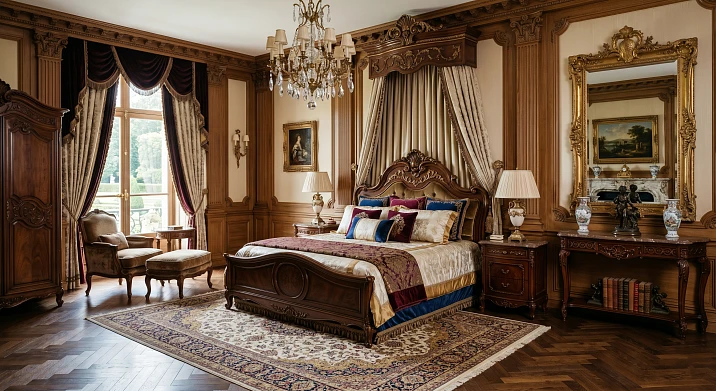
There are interiors that become outdated in five years. They are created on the principle of "fashionable now" — and after a few seasons they seem random, tired, untimely. A classic bedroom is the complete opposite of this logic. It does not chase trends. It exists outside of them — because it relies on timeless architectural proportions, quality material, a restrained palette, and well-considered wooden decor. Classics do not become outdated — they only mature.
But "classic" is a broad concept. This word can easily hide both heavy Baroque opulence, elegant Empire strictness, and light neoclassicism with clean lines. Choice classic bedroom furniture is not just "taking something beautiful." It is working with proportions, material, details, and their interaction. And this is exactly what we will discuss — in detail, with specifics, without clichés.
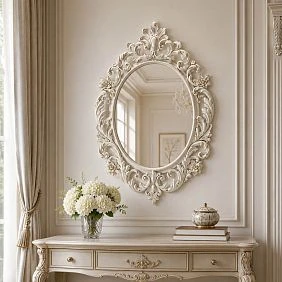
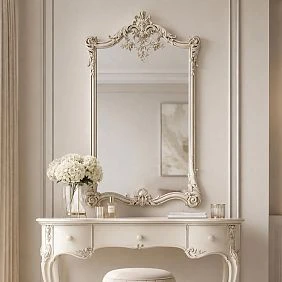
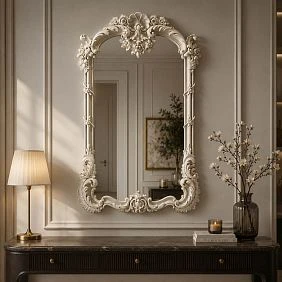
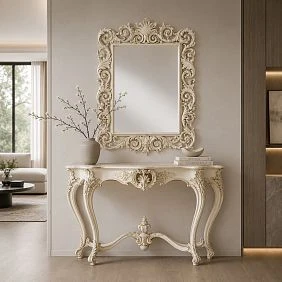
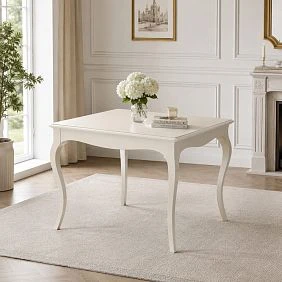
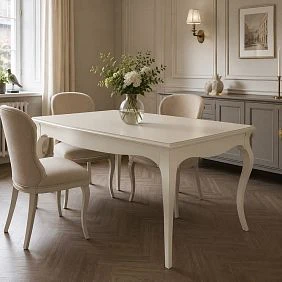
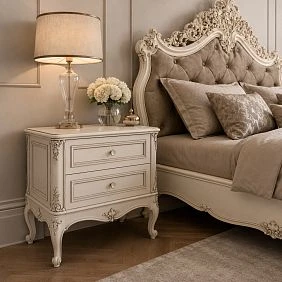
How classic bedroom furniture differs




The language of classics: what makes furniture "classic"
Classic bedroom furniture is not a style label. It is a set of specific visual and structural features that are unmistakably read and create a recognizable image.
Symmetry as the basic law. Classics build space along an axis of symmetry. The bed is in the center of the wall. Two identical nightstands on each side. Identical lamps. A mirror or painting exactly centered above the headboard. Symmetry creates a feeling of peace and completeness — exactly what is needed in the bedroom.
Wood as the main material. Classic wooden furniture — this is not just a tradition, it is a fundamental position. An array of beech, oak or walnut provides warmth, tactile value and durability that cannot be achieved with MDF with film or metal structures. Wood lives in the interior — it truly lives, not just exists.
Carved decor and overlay elements. Classic furniture is never "bare". Cabinet fronts are framed with panel layouts. On the headboard — an overlay ornament or carved frieze. On the chest of drawers fronts — overlay rosettes in the corners of the frames. This decor for furniture is not excessive — it structures the surface, creates a play of shadows and gives the furniture character.
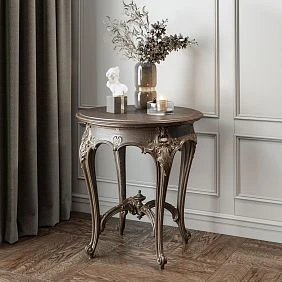
Expressive legs. Carved turned legs are one of the main markers of classics. Straight legs with a chamfer, curved "cabriole" legs, turned columns — all of them create a feeling of "elevation", lightness, visual weightlessness even for massive furniture.
Restrained color palette. White, cream, ivory, walnut, cherry, wenge — the color palette of a classic bedroom never shouts. It speaks calmly and confidently.
Quality hardware. Handles, hinges, guides — in classic furniture these are visible elements that work for the image. A wooden bracket handle with moderate decor or a turned knob handle — this is not a trifle, it is a detail by which the level of the entire set is read.
Our factory also produces:
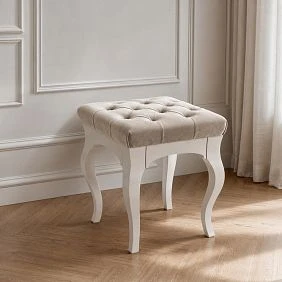
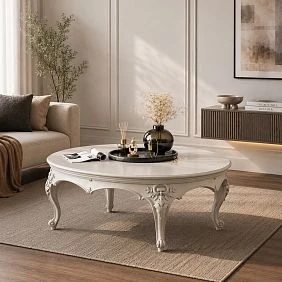
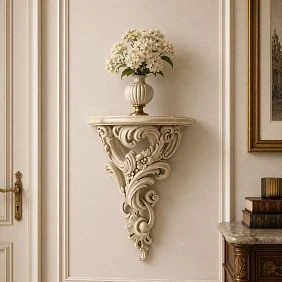
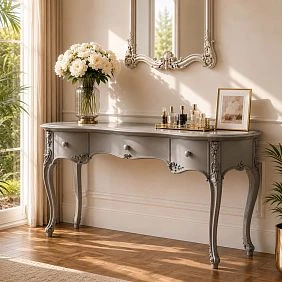
Three levels of classics in the bedroom
It is important to understand: classics are not monolithic. Within this large stylistic direction there are several levels, and everything depends on which one you choose: the shape of the furniture, the richness of decor, the choice of color and hardware.
Strict classics (Empire, neoclassicism) — straight lines, geometric ornament, dark wood, golden hardware. Solemn, prestigious, requires high ceilings and a spacious room.
Soft classics (transitional style) — paneled fronts, moderate carved decor, light or medium wood, neutral hardware. A universal solution for apartments and country houses.
modern classic furniture — a combination of classic proportions with lightweight forms, minimal ornamentation, and a light palette. It works perfectly in modern interiors that want a "warm" character without opulence.
Get Consultation
What furniture pieces are needed for a classic bedroom
Complete bedroom set: nothing extra, nothing missing
A classic bedroom is a system. Each piece of furniture has its place, performs its function, and participates in the overall architectural picture of the room.
The bed is the central and most significant piece. It sets the scale for all other furniture in the bedroom. Everything else "works" for the bed: nightstands, dresser, wardrobe are chosen with an eye on its proportions, color, and decor.
Nightstands — two, symmetrically on each side of the bed. In a classic interior, nightstands are always paired — and preferably from the same set as the bed, or from a coordinated series.
Dresser — storage and a visual anchor for the wall where there is no bed. On the dresser, as a rule, there is a mirror or painting, decorative items, a lamp, or a vase.
Wardrobe for clothes — in a classic interior, this is either a built-in wardrobe with classic doors (paneled facade, wooden handles) or a separate sliding or hinged wardrobe with decor coordinated with the rest of the furniture.
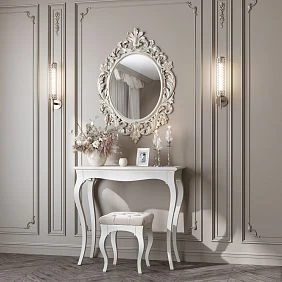
Vanity table — not mandatory, but organic in a classic bedroom. This is a piece with a special character: curved legs, a small mirror, drawers with delicate handles.
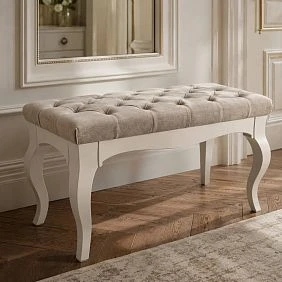
Bench or ottoman — at the foot of the bed. In a classic interior, this element completes the end side of the sleeping area, creating a feeling of "completeness" of the composition.
The mirror is above the dresser or in a separate area. In a classic interior, the mirror is always in a frame — wooden or with wooden elements.
What is not needed in a classic bedroom
-
Metal shelving without finishing.
-
Plastic storage containers in open view.
-
Chaotically placed items of different styles.
-
Bright accents without connection to the overall palette.
Classics know how to remove the excess. And this is one of its main advantages.
How to choose a classic-style bed
The headboard is the main architectural element of the bed
In a classic bedroom, the bed is not just a sleeping place. It is an architectural object in the interior. And its main element is the headboard. Its shape, height, and decor determine the character of all the furniture in the room.
Rectangular headboard with frame decor — strict classic. Suitable for a bedroom with high ceilings, dark furniture, and clear horizontal lines.
Arched headboard — a soft, romantic shape. Associated with Italian classic style, elegance, and coziness. Works well in a bedroom with a ceiling height of at least 2.7 m.
Rectangular headboard with upholstery — a modern classic option. Fabric upholstery (velvet, jacquard, natural fabric) with a wooden frame brings warmth, comfort, and restrained decor.
Headboard with carved wooden decor — high classic. Applied plant ornaments, rosettes, scrolls — all this turns the headboard into an independent architectural statement.
Bed size: proportions and logic
The bed should be proportionate to the bedroom — that's obvious. But how exactly?
-
In a bedroom up to 14 m² — a bed 140×200 or 160×200. Larger, and the room will lose space for passage.
-
In a bedroom of 16–20 m² — a bed 160×200 or 180×200.
-
In a bedroom of 20 m² or more — a bed 180×200 or even 200×200 with high ceilings and proportionate furniture.
The height of the bed from the floor in a classic style — from 55 to 70 cm. This is an "adult" height, creating a sense of solidity. A too low bed — 35–40 cm — is typical for modern and Scandinavian styles and looks inappropriate in a classic interior.
Connection of the bed with nightstands: a system, not a coincidence
The bed and nightstands should be perceived as a single ensemble. This means:
-
A single color or a single wood tone.
-
Consistent type of decor: frames on the nightstand fronts should repeat or echo the headboard decor.
-
Identical handles — the same model, the same size.
-
Consistent legs — the same shape, the same height.
If the bed and nightstands are bought from different collections — this is not a mistake, but requires special care in coordinating details.
Nightstands and dresser: how to assemble a set
Why unity of details is more important than unity of manufacturer
There is a common belief: to make a bedroom look like a set, you need to buy all furniture from one manufacturer. This is a simplified view. What matters more is not identical labels, but the consistency of specific details: color, hardware, proportions, and decor.
Two pieces of furniture from different factories, but with the same wooden pull handles, the same wood tint, and the same frame facade profile, will look like a single set. Conversely, furniture from the same factory but with different handles, different legs, and different coating saturation will break the unity.
Key parameters for coordination
Color and wood tint. This is the most noticeable parameter. The same tint on all furniture pieces is a basic requirement. A slight nuance variation in light tones is acceptable (for example, 'milky white' and 'ivory' look fine together). But different shades of walnut or oak on adjacent furniture pieces is a mistake.
Hardware. wooden hook handle or wooden button handle — choose one model and use it on all furniture pieces. It is the handles that most strongly maintain the visual unity of the set.
Legs. wooden furniture legs on all pieces of the set must be of the same shape and size (adjusted for the different heights of the pieces). If a chest of drawers stands on turned shaped legs, the bedside tables should also have similar ones, though possibly slightly lower.
Decor and frame profile. Overlay decorative elements for furniture on the facades — rosettes, corner overlays, ornamental inserts — must be coordinated in style across all pieces. Not necessarily identical, but from the same stylistic 'family'.
Chest of drawers: the central piece of a free wall
A chest of drawers in a classic bedroom is not just a cabinet with drawers. It is a piece that anchors the free wall and creates an additional decorative focal point in the interior.
Classic bedroom dresser:
-
Width 100–140 cm — proportional to a standard wall.
-
Height 80–95 cm — a comfortable work surface for arranging decor, a vase, or a mirror.
-
4–6 drawers of different sizes.
-
Frame fronts with applied rosettes or corner ornaments.
-
Wooden legs 10–15 cm high — provide 'air' under the body.
-
Handles matching the bedside table handles.
Light or dark classic bedroom furniture
Two poles of the classic palette
The question of colors of classic furniture — one of the most common when creating a classic bedroom. And the answer is not so much about personal taste as about the objective characteristics of the room.
Light classic furniture
White, cream, ivory, light oak — light classic furniture visually expands the space, making the room airier and brighter.
When to choose light furniture:
-
Room area up to 18 m².
-
Low ceilings — up to 2.7 m.
-
Little natural light.
-
Desire to create a light, delicate, "feminine" look.
Light classics pair with warm wall shades: soft beige, powder, gray-pearl, warm white. Textiles — matching the furniture or slightly richer.
Dark classic furniture
Walnut, wenge, dark cherry, black lacquer with gold — Dark classic furniture creates a stately, weighty, "masculine" image. This is a bedroom that asserts itself with confidence.
When to choose dark furniture:
-
Spacious room from 20 m².
-
High ceilings — from 2.9 m.
-
Good natural lighting.
-
Desire to create a solemn, representative interior.
Dark classic requires light walls — otherwise the room loses air. Ideal background: milky white, light gray, warm cream with slightly more saturation. Textiles — contrasting or in noble neutral tones.
Comparison table: light vs dark classic
| Parameter | Light | Dark |
|---|---|---|
| Visual volume | Increases | Shrinks |
| Suitable room size | Up to 18–20 m² | from 20 m² |
| Ceilings | Any | High (from 2.9 m) |
| Lighting | Any | Good |
| Image character | Light, delicate, cozy | Prestigious, ceremonial |
| Care | Requires | Hides minor defects |
| Relevance | Consistently popular | Requires confidence in choice |
The golden mean: medium-toned walnut and oak
Medium-toned walnut, natural or honey oak — this is the classic of classics that works in most situations. Not too light, not too dark. Warm, lively, noble. Suitable for rooms from 14 to 25 m², pairs well with a wide range of wall colors.
Wooden decor in a classic bedroom
Decor is the architecture of furniture
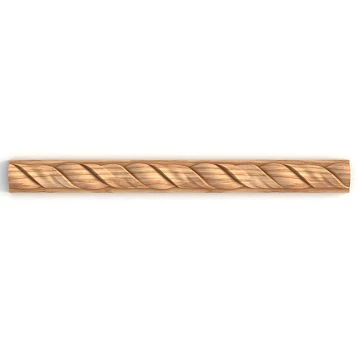
Remove all Wooden decoration — and it will lose its essence. Frames, rosettes, applied ornaments, cornice profiles — these are not decorations on top of furniture. They are its structural elements that set the rhythm, scale, and character.
Wall-mounted decorative elements
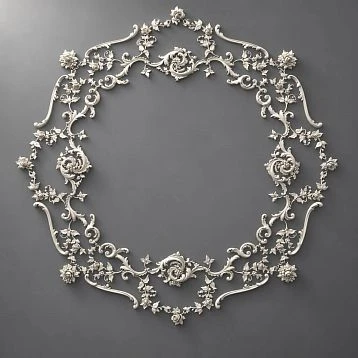
decorative elements for furniture made of solid wood — this is a broad class of products that are attached to the facade of ready-made furniture or used in the production of new furniture:
-
Applied rosettes — installed in the corners of frame facades, creating a sense of completeness for rectangular shapes. Sizes — from 40×40 mm to 100×100 mm.
-
Overlay corner elements — corner ornaments that replicate the shape and pattern of the decor.
-
Central overlays — ornamental medallions, cartouches, relief inserts in the center of the facade.
-
Frieze overlays — horizontal decorative strips under the body's cornice.
All these products are mounted with glue and additional fasteners. After installation, they are painted together with the facade — creating the impression of a single piece, rather than separately glued decor.
Layout profiles and frames
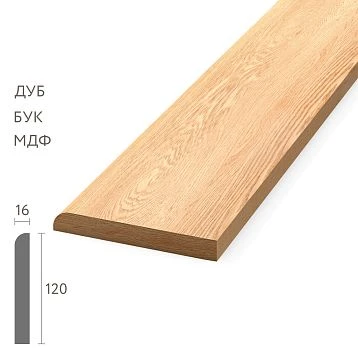
A framed facade is one of the main visual markers of classic furniture. It is created using thin wooden profiles (layouts) that form rectangular frames on a flat facade.
Profiles can be:
-
Flat rectangular — strict, geometric character.
-
With a fillet or ogee — soft classic profile with an S-shaped or concave section.
-
With ornament — shaped profile with a relief pattern.
A well-chosen layout profile elevates a simple MDF facade to the level of classic furniture — or adds architectural character to existing furniture during renovation.
Wooden cornices and cornice profiles
The upper horizontal line of cabinet furniture — a wardrobe, chest of drawers, or nightstand — in a classic interior is finished with a cornice profile. This is a small protruding element that creates a shadow and "closes" the top plane.
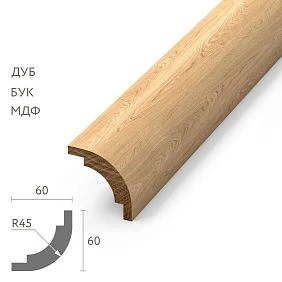
A wooden cornice profile made of solid wood, consistent in style with the facade layout, is another sign of furniture "with character."
How to choose handles and legs for classic furniture
Handles: the language of style at the detail level
A handle is the last detail the eye sees. And the first — that the hand touches. In a classic interior, the handle should speak the same language as the rest of the furniture: calmly, with dignity, without fuss.
For classic bedroom furniture, the following are suitable:
Wooden pull handle — with a moderately curved arch, without sharp corners, in natural wood or painted to match the furniture. Center-to-center distance 64, 96, or 128 mm — depending on the drawer width. On a chest of drawers with wide drawers — 96–128 mm.
Wooden knob handle — a round turned button with a diameter of 40–55 mm for nightstands, small vanity drawers, and upper small sections of a chest of drawers.
A combination of a button and a pull in one set is acceptable if both types are from the same "family" (same wood species, same finish, consistent shape character). On small nightstand drawers — buttons, on chest drawers — pulls.
What you definitely should not choose for a classic bedroom: chrome metal pulls, plastic buttons, loft-style handles with beveled corners. They ruin the image, even if everything else is correct.
Legs: support and character
Buy furniture legs for a 200-room hotel project — this is not an ordinary deal, but a partnership requiring a special approach. for a classic bedroom — means choosing a shape that creates a feeling of lightness despite the massiveness of the furniture body. This seems contradictory, but that is the essence of classic proportion.
A turned straight leg with a chamfer — strict classic. Four facets, a slightly tapered body, a small "heel." Suitable for chests of drawers and nightstands in a neoclassical style.
A turned figured leg — a more ornate shape, with graceful curves along the height, with a base and finish. For soft classic and classic with rococo elements.
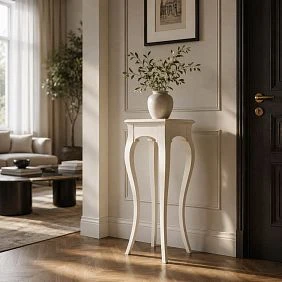
Cabriole leg — curved, with an elongated bend, associated with French classic and Louis XV style. For dressing tables, ottomans, light nightstands.
All legs on all furniture pieces in the bedroom — of a unified style and consistent height. A chest of drawers should not stand on straight rectangular blocks if the nightstands are on turned figured legs.
Modern classic: how not to overload the bedroom
Balance is the main principle of modern classics
modern classic furniture This is not "less classic." It is "classic in a new interpretation": the same proportions, the same symmetry, the same quality material — but without baroque heaviness, without excessive ornamentation, with greater attention to clean surfaces.
This approach is currently most in demand — especially in furniture in classic style for interior for apartments with ceiling heights of 2.7–3.0 m, where lavish decor would look excessive.
Practical principles of modern classics
One or two decorative accents — no more. If the headboard has expressive carved decor, the fronts of the dresser and nightstands should be more restrained: frames without ornament, or frames with minimal applied rosettes.
Light palette with neutral accents. White furniture with light wooden handles, beige walls, linen textiles — this is typical "modern classics": warm, calm, restrained.
Fewer items, more space. There's no need to fill every corner. A bed, nightstands, a dresser, a mirror — this is enough for a complete look. A vanity table, ottoman, and chair — optional and if space allows.
The quality of materials speaks for itself. In modern classics, there is no point in piling on decor if solid wood, quality staining, and correct proportions already create the desired image. Sometimes one good detail is worth ten mediocre ones.
Common mistakes when choosing bedroom furniture in a classic style
Error 1: Too massive furniture for a small room
Classic furniture often has significant visual weight. In a small bedroom (up to 14 m²), this can create a feeling of crampedness and "pressure." Solution: choose smaller items with the same proportions, or prefer a light palette and minimal decor.
Error 2: Different wood shades on adjacent items
"A little darker," "a little warmer," "the same color but a different manufacturer" — all this leads to furniture placed next to each other looking mismatched. Wood tinting is the first thing checked when selecting a set.
Error 3: Random Hardware
"I used what was available" — and a beautiful dresser is ruined by chrome metal handles that have nothing to do with the classic style. Hardware is chosen last, but changes the perception first.
Error 4: Mismatched legs
Different legs on nightstands and a dresser are one of the most noticeable mistakes that is easy to overlook when buying separately. Just place the items next to each other — and the mismatch becomes obvious.
Error 5: Overload with textiles and decor
Classic style loves moderation. When there are six decorative pillows on the bed, ten trinkets on the dresser, and three layers of curtains on the window, the visual image is ruined despite correctly chosen furniture. Decor is an accent, not a filler.
Error 6: Mixing too different style levels
A baroque headboard with lavish carving next to laconic nightstands in a modern classic style is a conflict of forms. Choose one stylistic level and stick to it consistently.
Classic furniture for a small bedroom: a special conversation
Space is limited — possibilities are not
Many people think that classic style is incompatible with a small bedroom. This is a misconception. Classic style works perfectly in an intimate space — provided that several rules are followed.
Choose furniture without overhanging elements. Case furniture in a small room should not 'hover' over the space. A dresser without a top crown molding, nightstands with thin legs — create a feeling of more space.
Integrate storage into the bed. A bed with drawers under the base is a rational solution. In a classic style, such beds look organic if the drawers are hidden behind a skirt or have framed fronts.
Use mirrors. A mirror above the dresser or mirrored inserts in wardrobe doors visually double the space.
A light palette is mandatory. In a small classic bedroom, dark furniture will take away the last bit of air. White, cream, light walnut — and that's it.
Where to buy classic bedroom furniture and decor
A systematic approach to purchasing
Buying furniture for a classic bedroom 'one piece at a time from different places' is a risky strategy. Mismatched stains, different proportions, uncoordinated details — all of this becomes apparent only when the furniture is already in the room.
Optimal approach:
-
Determine the style level (strict, soft, modern classic) and color scheme.
-
Select basic items (bed + nightstands + dresser) from a single collection or check their consistency with samples.
-
Choose hardware: handles and legs — a single series for the entire set.
-
Add decor: overlays, layout, profiles — for items requiring finishing.
Catalog for creating a classic bedroom
Everything you need for a full classic bedroom — in one place:
-
Buy Classic Furniture — catalog of classic-style furniture.
-
Classical Furniture for the Apartment — solutions for urban interiors.
-
Furniture and Decor from solid wood — natural wood products for all tasks.
-
Wooden decoration — overlay elements, sockets, friezes, ornamental inserts.
-
wooden furniture legs — turned solid wood legs for furnishing and renovating furniture.
-
wooden hook handle — solid wood brackets with a ready-made coating.
-
wooden button handle — buttons for painting to match furniture of any color.
FAQ: popular questions about classic bedroom furniture
Where to start creating a classic bedroom?
Start with choosing the bed. It sets the scale, character, and style level of everything else. Decide on the headboard shape and color scheme — and move forward from that point.
Can classic furniture be combined with modern wallpaper?
Yes. Neutral modern wallpaper — solid colors, with a soft texture or unobtrusive geometric pattern — pairs beautifully with classic furniture. The main thing is that the background color supports, rather than competes with, the furniture's finish.
Which handles are best suited for a classic dresser?
Wooden handle brackets with a moderate curve and natural finish. On wide lower drawers — center distance 96–128 mm. On upper narrow ones — 64 mm or buttons with a diameter of 40–50 mm.
How to choose furniture color for light walls?
Light walls are a universal backdrop. They pair well with both light and dark furniture. If the walls are white or light gray, dark walnut furniture creates a striking contrast. If the walls are warm — beige or cream — light furniture blends with the background into a soft monochrome look.
Do you need a bench in a classic bedroom?
A bench at the foot of the bed is not mandatory but a very organic element of a classic bedroom. It completes the end side of the bed, creates a sense of an "architectural frame" for the sleeping area, and solves a practical task — a convenient place for dressing.
How to update bedroom furniture to a classic look without replacement?
Three tools: new handles (wooden, coordinated in style), applied decorative elements on the fronts, and repainting in a neutral color. This is often enough to "elevate" the level of furniture.
How much does classic wooden bedroom furniture cost?
The range is wide: from affordable solutions made of beech wood to expensive handmade walnut pieces. Current prices and assortment — in the catalog of classic furniture on the STAVROS website.
STAVROS: classic furniture and wooden decor for bedroom interiors
A classic bedroom is about long-term thinking. Not about "beautiful now," but about "flawless always." That's why each element must be chosen with the same thoughtfulness with which architects designed classic interiors: systematically, consistently, with attention to detail.
STAVROS is a manufacturer of decorative solid wood products and classic furniture that understands this logic. The company's assortment includes everything needed to create a classic bedroom interior: from furniture handles and legs made of natural wood to overlay decor, molding profiles, cornices, and ready-made furniture pieces in a classic style.
STAVROS works with those who build interiors seriously and for the long haul. And if for you Classic interior style furniture this is not a temporary solution but a conscious choice, the company is ready to become a reliable partner in this project.