Article Contents:
- Classic living room: where to start and what is actually needed here
- How classic furniture differs from ordinary furniture
- What furniture items are needed for a classic-style living room
- Sofa and armchairs: the main ensemble
- Display cabinet or wardrobe: storage as decor
- Chest of drawers: wall support
- Console: lightness and accent
- Coffee table: the connecting element
- TV cabinet in a classic style
- Light or dark classic furniture: how to make the right choice
- Classic furniture for a small living room
- How to combine classic furniture with finishes
- Furniture and wooden baseboard
- Furniture and ceiling cornice
- Furniture and wall moldings
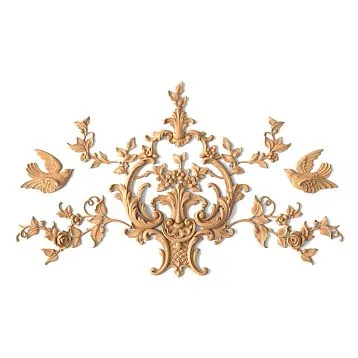
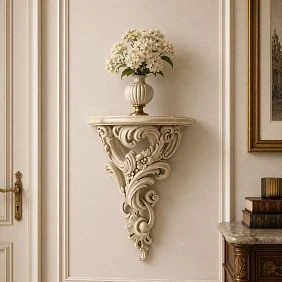
- Furniture and carved overlays
- Furniture and solid wood handles
- Furniture and frames for mirrors and paintings
- Mistakes when choosing classic style furniture
- Classic furniture and carved decor: how to make the interior look more expensive
- Modern classic furniture: when tradition meets reason
- What to buy for a classic living room: a practical checklist
- Classic furniture in the hall: features of large spaces
- How to choose classic furniture before buying: a step-by-step algorithm
- About the Company STAVROS
- FAQ: Answers to Popular Questions
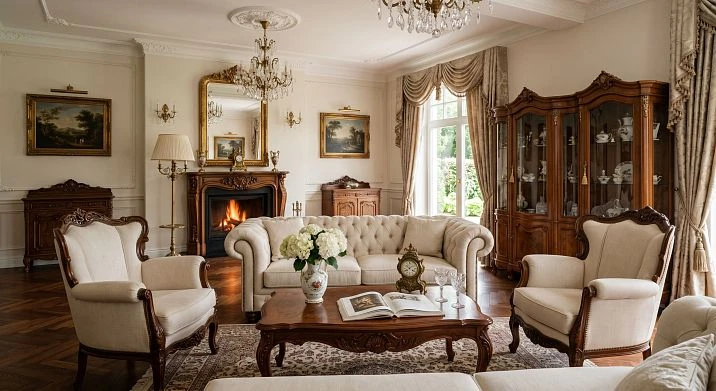
If you are thinking about how to assemble a living room that will look cohesive, noble, and at the same time not turn into a museum hall, then the question of choice of classic living room furniture is facing you in full force. This is not just a choice of a sofa or a chest of drawers. This is a choice of a system: proportions, materials, details that together create an interior with character. This article provides an honest practical breakdown: what to buy, how to combine, what to avoid, and how to achieve that very feeling of an expensive, living space.
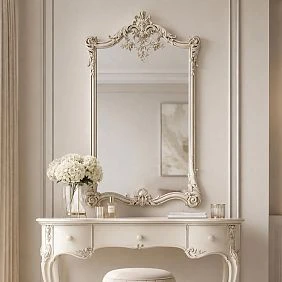
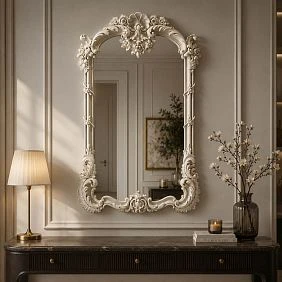
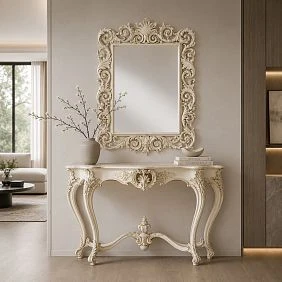
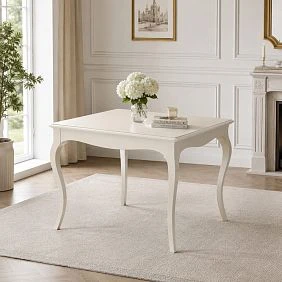
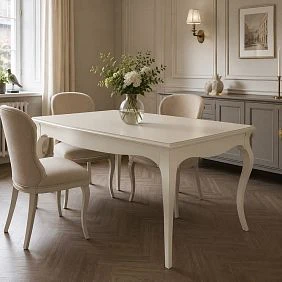
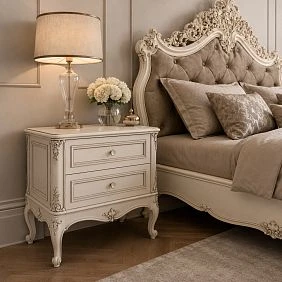
Classic living room: where to start and what is actually needed here
Let's start with a simple question that most people ask themselves after the purchase: why do I need classic style? Everyone has their own answer, but the scenarios come down to a few. Some want a style that won't go out of fashion in five years. Others are tired of cold minimalism and want warmth — natural materials, details, coziness. Still others are building a house with high ceilings and understand: only classic style will be appropriate here. And all three scenarios are correct.
What exactly is needed for a classic living room? Let's list it right away, without preamble. Here is the basic composition:
-
seating group — a sofa and one or two armchairs, connected by a single fabric, proportion, and leg style;
-
Coffee table — connects the soft seating area into a single ensemble;
-
Display cabinet or wardrobe — for books, dishes, decorative items;
-
Chest of drawers — for storage and visual "anchoring" of the wall;
-
Console table — for an accent wall, mirror area, entryway;
-
Classic-style TV cabinet — if the living room functions as a media zone;
-
Decorative details — Wooden moldings, carved appliqués, Mirror Frames, Furniture Handles и Legs.
This is not just a list — it's a system. A classic living room interior only works when all elements are connected. One random item from another era — and the integrity falls apart.




How classic furniture differs from ordinary furniture
It would seem that ordinary furniture also stands against the wall, and classic furniture does too — what's the difference? The difference lies in the logic of arrangement. Classic-style furniture is built according to different rules.
Symmetry. A classic living room is always symmetrical — at least in its core. Two armchairs on either side of the sofa, two candlesticks on the chest of drawers, a mirror exactly centered above the console. Symmetry is visual calm that we read instantly and physically perceive as "order."
Natural materials. Solid oak, beech, walnut. Natural veneer. Textured fabric — velvet, tapestry, jacquard. Genuine leather. All of this feels and looks different from laminated chipboard and microfiber.
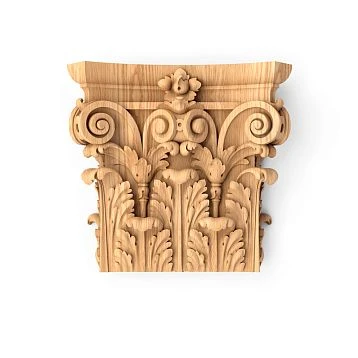
Carved details. Not all classic furniture is overloaded with carving — that's a myth. But turned legs, profiled facades, relief cornices, and cast handles are almost always present. It is they that create the feeling of handcraft — and this feeling is justified: in good classic furniture, details are indeed made by hand.
Proportions. Classic furniture is never lopsided. The height of the backrest corresponds to the ceiling height. The width of the sofa is coordinated with the width of the room. The academic rule of the "golden ratio" applies here — more often intuitively, less often consciously, but always perceptibly.
Compatibility with finishes. Classic Furniture was originally designed in a system with the room's architecture: Wooden baseboard, cornice, wall molding — all are parts of the same language. When they match in tone and proportion, the interior reads as a single statement.
Our factory also produces:
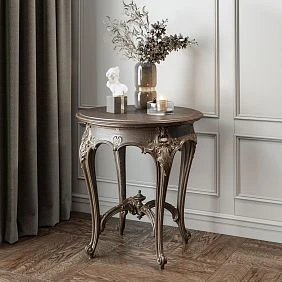
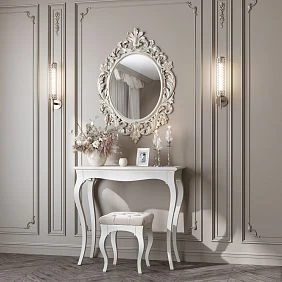
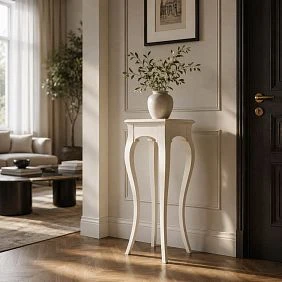
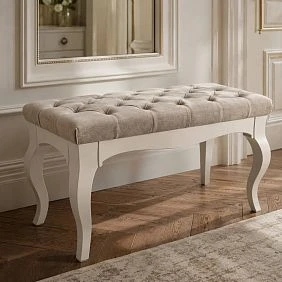
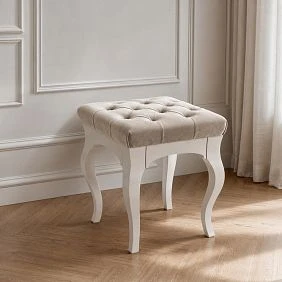
What pieces of furniture are needed for a classic-style living room
Get Consultation
Sofa and armchairs: the main ensemble
The sofa is the semantic center of the living room. The entire rest of the ensemble is built around it. A classic sofa is distinguished by several unmistakable features: straight or slightly curved armrests with wooden decor, a high or medium backrest with relief, turned or carved solid wood legs, upholstery in a noble tone — cream, beige, gray-blue, burgundy, dark emerald.
Armchairs in a classic interior work as a pair. One armchair is a coincidence. Two — symmetry and intention. Ideally, when the sofa and armchairs are upholstered in the same tonal range or in a harmonious combination — for example, a sofa in beige velvet, armchairs in striped tapestry of the same warm register.
Important: a classic sofa doesn't have to be huge. Compact three-seater designs on elegant legs are suitable for an apartment — they don't overwhelm the space but retain all the stylistic character. Buy upholstered furniture in classic style available both in ready-made and customized versions — for specific dimensions and fabric.
Display cabinet or wardrobe: storage as decor
A display cabinet in a classic living room is not just a cabinet with glass doors. It's an item that turns storage into an exhibition. Behind the glass — porcelain, books, collectibles, glasses — everything you want to show off. A display cabinet with carved cornices and profiled facade frames creates a vertical accent on the wall, sets the height, and enriches the interior with details.
When choosing a display cabinet for a classic living room, pay attention to height: a ceiling-height display cabinet (or one with a cornice simulating the joint) works better than a shortened version. Empty space above the cabinet in a classic interior looks like incompleteness.
Chest of drawers: the wall's anchor
A chest of drawers in the living room is a functional anchor. On it stands a mirror or painting, on the sides — decorative lamps or candlesticks. Inside — things that shouldn't be in plain sight. A classic-style chest of drawers has several drawers with symmetrical handles, shaped legs, and a profiled top. This item "grounds" the wall, giving it weight and significance.
A good chest of drawers with wooden carved handles и turned solid wood legs looks like a piece of applied art — especially if it is coordinated in tone with the rest of the furniture and the baseboard.
Console: lightness and accent
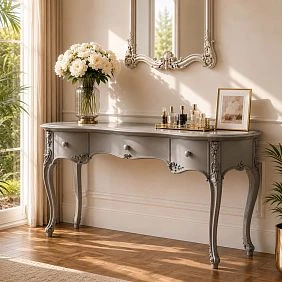
The console is one of the most versatile pieces in a classic interior. It works in an entryway-living room, by an accent wall, and in the mirror area. The key advantage of a console is that it takes up little depth (30–40 cm), but creates a full visual accent. A console with a mirror a carved wooden frame and a pair of decorative vases on the sides is a classic wall "axis" that is intuitively recognized.
A console in the Versailles or Marseilles style — with curved legs, a carved frieze, and a profiled apron — is one example of how a single piece can set the tone for an entire room.
Coffee table: a connecting element
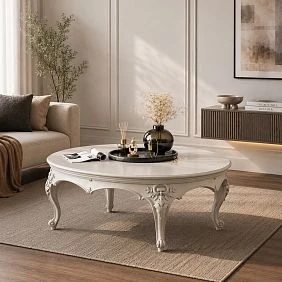
In a classic living room, a coffee table cannot be glass on chrome legs — that is a clear dissonance. It should be wooden or with a wooden base, with a profiled tabletop and turned legs. The classic shape is square or rectangular with rounded corners, less often oval.
The coffee table connects the sofa and armchairs into a single group, sets the center of the relaxation area, and serves as a focal point for decor: a book, a candle, a decorative tray, a small sculpture.
TV cabinet in a classic style
TV and classic style — a topic discussed with caution. But a living room in 2025–2026 rarely does without a media zone, and this needs to be addressed honestly. A TV cabinet in a classic design — with carved facades, wooden handles, and a profiled base — integrates the screen into the room's finishing context. Adding a slatted panel on the wall behind the TV and a wooden cornice on top creates a complete architectural niche, not just a "TV on a nightstand."
Light or dark classic furniture: how to make the right choice
This is one of the most common questions, and it's more important than it seems. The color of the furniture determines the character of the entire room — its mood, sense of space, and the "temperature" of the area.
Light classic furniture — milky, cream, white, or in the tone of natural light oak — optically enlarges the room and makes it airy. This is the best choice for apartments with standard ceilings of 2.5–2.7 meters, small living rooms, and rooms with limited natural light. Light Classic Furniture for the Living Room is also organic in neoclassicism and modern classicism, where you want to preserve the nobility of forms without palace heaviness.
Dark classic furniture — in shades of walnut, wenge, dark chocolate — looks solemn and rich. This is a choice for spacious living rooms with good lighting, high ceilings, and light walls. A dark set in a small room without thoughtful lighting turns into visual weight — you need to consider this in advance.
Natural oak and medium tone — the most versatile option. Warm wood without extremes in lightness and darkness — suitable for most living spaces. Easily combines with wooden skirting board in a similar tone, organically coexists with parquet and wooden doors.
Important advice: never choose furniture color separately from the floor, doors, and baseboard. It is the inconsistency of these elements that is the main reason why the interior looks "thrown together hastily," even if each item individually is good.
Classic furniture for a small living room
A separate topic deserving a separate discussion. Many believe that classic style is only for large spaces. This is a persistent myth. Classic style works in small apartments too — just differently.
A few principles that will help make a small living room in a classic style — and at the same time not turn it into a cramped antique warehouse.
-
One strong piece. In a small room, you don't need a full set. Choose one main accent—a chest of drawers with a mirror, a console, or a sofa—and build the rest around it more modestly.
-
Furniture on elegant legs. Items that stand on elegant turned legs visually "float" above the floor—this frees up space and reduces the feeling of clutter.
-
A console instead of a chest of drawers. A small console carved legs takes up less depth than a chest of drawers but serves the same role as an accent piece against the wall.
-
Light color scheme. White or cream MDF, light veneer, fabrics in pastel shades—this is not a compromise but a proper adaptation of classics to real conditions.
-
Details instead of pieces. If the furniture is compact and simple, the style can be supported through details: wooden molding on the walls, a cornice near the ceiling, Carved frame mirrors, classic Furniture Handles —and the classic character will emerge without clutter.
Classic furniture for a small living room is not a reduced copy of a palace hall, but a precise choice of proportions, color, and details.
How to combine classic furniture with finishes
This is where the main art of a classic interior lies. Furniture and finishes in classic style are not separate stories, but one narrative. Let's look at specific combinations.
Furniture and wooden baseboard
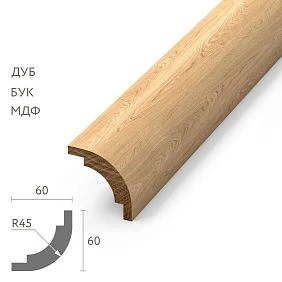
Wooden baseboard — this is where the consistency of a classic interior begins at the lower level. A solid oak baseboard matching the furniture tone creates a continuous horizontal line along the floor, connecting all items together. In living rooms with parquet flooring and classic furniture, a baseboard made of the same wood as the furniture is a mandatory element of the system.
Furniture and ceiling cornice
The upper level mirrors the lower one. wooden cornice at the ceiling creates a horizontal frame for the entire interior. It gives the room a sense of "completeness" from above, just like the baseboard does from below. Without a cornice, a living room feels somewhat "under-decorated" even with the most beautiful furniture.
Furniture and wall moldings
Wooden moldings on the walls is a classic technique imitating architectural panels. When the molding frames the walls in the same tone as the furniture facades, the space acquires the feel of a palace hall on a residential scale. This is not an expensive technique, but its effect is disproportionately high.
Furniture and carved overlays
Carved furniture decor — this is a way to enrich existing furniture without replacing it. Decorative solid wood overlays on cabinet facades, bed headboards, door panels transform simple surfaces into classic ones. This is especially valuable if you want to update an existing interior step by step without buying a whole new set.
Furniture and handles made of solid wood
wooden furniture handles — a detail that changes the perception of the entire facade. A chrome handle on a classic chest of drawers is a mismatch that ruins the image. A wooden or gilded handle with a classic profile is a continuation of the style, its logical completion. It is through the hardware that the quality and intention of the interior are most often "read."
Furniture and frames for mirrors and paintings
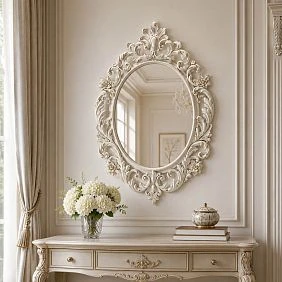
wooden frames for mirrors and paintings — a crucial element of a classic living room. A mirror in a carved frame above a console or chest of drawers creates the main vertical accent of the wall. Frames on paintings and photographs in the same style and tone unify the decor into a cohesive whole.
Mistakes when choosing furniture in a classic style
They are made more often than it seems — and people pay dearly for rework. Let's make an honest list.
-
Too massive furniture for a small room. A three-meter sofa in an eighteen-square-meter room is not classic, it's a wall of furniture. Choose proportionally.
-
Mixing incompatible wood shades. Warm oak and cold wenge in one living room is not contrast, but conflict. Either choose a warm palette throughout, or a cold one.
-
Modern hardware without connection to the style. Chrome pull handles on a carved chest of drawers are like sneakers with a tuxedo. Inappropriate and inexplicable.
-
Forgetting about the baseboard and cornice. Classic furniture without a coordinated baseboard and cornice is objects in a void. The system doesn't work without a frame.
-
Choosing furniture separately from doors and flooring. Wenge doors and light oak furniture are not always bad, but require a clear design solution. Without it, it's a mismatch.
-
Overloading a small space with carving. In a small room, dense carving on all surfaces turns into visual noise. One or two decorative items are enough.
-
Not considering ceiling height. A display cabinet 220 cm high with a 250 cm ceiling is appropriate. A 220 cm cabinet in a room with a 260 cm ceiling and a 10 cm cornice feels cramped and oppressive. Calculate.
-
Blindly copying the palace style. Versailles was built for completely different purposes. Modern classic furniture in an apartment is an adapted language, not a literal copy. The more precise the adaptation, the better the living experience.
Classic furniture and carved decor: how to make an interior look more expensive
Here's a practical secret that designers know and rarely tell clients: to make an interior look more expensive, you don't need to change all the furniture. You need to change the details.
carved appliqués on cabinet and dresser fronts — these are details that turn budget case furniture into an item with a classic character. They are attached with glue and finishing nails, do not require repainting, and radically change the perception of the surface.
furniture legs made of solid wood — replacing standard metal supports with turned wooden legs for a sofa, armchair, bed, or nightstand. The difference in perception is huge. A wooden leg with a shaped profile gives upholstered furniture a completely different class.
Furniture Handles made of wood or metal with a classic profile — a simple replacement done in half an hour with a screwdriver. The result is that the furniture has "moved" to another class.
frames for mirrors and paintings — one carved baguette under a mirror above a console or above a fireplace creates a focal point around which the entire wall image is built.
Wooden moldings on the walls — they break the plane into architectural panels, imitating expensive cladding. This is an effective technique used in all palace interiors of Europe — and it works just as well in an ordinary apartment.
Modern classic furniture: when tradition meets reasonableness
It is worth discussing separately what is commonly called "modern classic" or "neoclassicism." This is not a separate style — it is an approach to classics through the filter of modern lifestyle.
Modern classic furniture retains all key features: symmetry, natural materials, turned details, noble tones — but gets rid of excessive carving, gilding, and palace opulence. Lines are cleaner, proportions stricter, decor less — but the character remains the same.
This is exactly what most people need who are looking for Classic furniture for the living room for an apartment or country house: not a museum reconstruction, but a living, noble space where it is comfortable to live every day.
Neoclassicism pairs well with modern appliances, hidden lighting, minimalist textiles, and open floor plans. The key lies in the quality of details and materials, not in the quantity of decor.
What to buy for a classic living room: a practical list
This block is for those furnishing a living room step by step. The budget doesn't always allow buying everything at once, and that's normal. Here is the order of priorities:
-
The sofa is the main piece around which everything else is built.
-
Classic Furniture — console, chest of drawers, display case depending on the layout.
-
Wooden baseboard — immediately match the tone with the furniture.
-
Moldings and cornices — finish the finishing horizontally.
-
Furniture Handles — replace with wooden or classic metal ones everywhere at once.
-
furniture legs — update the legs of the sofa and armchairs if they do not match the style.
-
Mirror Frames — create an accent point on the main wall.
-
carved appliqués — enrich the facades of cabinets and chests of drawers.
-
Solid Wood Items — additional decor, figurines, shelves, interior items.
When buying step by step, always keep the final picture in mind. Each subsequent item should fit into the already created system, not compete with it.
Classic furniture in the living room: features of large spaces
A hall in a private house or a large apartment is a different task. Here the possibilities are wider, but mistakes are more costly. A few observations for large living rooms.
In a hall of 30 square meters or more, a full upholstered group is acceptable and appropriate: a sofa plus two armchairs plus an ottoman. This creates a feeling of a lived-in, rich space, not an exhibition hall. A coffee table is a must in this case, preferably with a lower shelf or drawers.
A display cabinet in a large hall is already a serious architectural detail. A display cabinet 240–250 cm high with glazed upper sections and closed lower ones — storage, decor, and architecture all at once.
In a hall with high ceilings of 3 meters or more — moldings on the walls change everything. They break the walls into panels and create the feeling of a palace interior without a single piece of classic-style furniture. In combination with classic furniture for the hall the result is impeccable.
How to choose classic furniture before buying: a step-by-step algorithm
The final block is for those ready to place an order. Here is a precise algorithm that will protect you from mistakes.
Step 1. Determine the size of the living room. Write down the length, width, and ceiling height. Calculate the free area excluding the passage (at least 90 cm) and door zones.
Step 2. Choose a light or dark color scheme. Focus on the color of the floor, doors, and walls. Determine which tone dominates — warm or cold.
Step 3. Decide: full set or individual items. A full set provides unity but requires a budget. Individual items offer flexibility and allow you to build the interior gradually.
Step 4. Coordinate furniture with doors and baseboards. Before choosing furniture color, photograph the doors, baseboards, and floor. Show them to the manager. Let the coordination happen before ordering, not after.
Step 5. Select handles, supports, and carved decor. Furniture Handles, Legs и applique — this is what makes the furniture yours, not just standard from a catalog.
Step 6. Order samples. Before a large order, verify the wood tone and fabric texture in person. The monitor gives an approximate idea of the color.
Step 7. Go to the catalog. Classic furniture in the STAVROS catalog — the Versailles and Marseilles collections, consoles, tables, armchairs, mirrors in carved frames, benches, poufs. A wide selection of ready-made solutions and the possibility of customization for the project.
About the company STAVROS
When it comes to classic furniture, execution is everything. STAVROS is a St. Petersburg manufacturer with over twenty years of history working with wood, solid wood, and classic forms. Own production, controlled microclimate, handcrafted by skilled artisans, selected wood species — oak, beech, walnut. The catalog of furniture and interior items — full collections for the living room, bedroom, study, hallway, as well as thousands of items of solid wood: moldings, cornices, baseboards, handles, legs, overlays, frames.
STAVROS works with both private clients and designers and architects — provides samples, calculates projects, produces custom orders from 1 piece, and ships throughout Russia. Showrooms are available for residents of Saint Petersburg and Moscow, where you can evaluate the quality in person. When you choose classic furniture from a manufacturer with such a history, you choose confidence in the result.
FAQ: Answers to popular questions
What furniture is suitable for a classic-style living room?
For a classic living room, you need a sofa and armchairs with wooden legs and noble upholstery, a coffee table, a display cabinet, a chest of drawers, a console, and decorative details — handles, overlays, frames, moldings. All items should be connected by color, proportion, and material.
Can classic furniture be used in a small apartment?
Yes. For a small living room, choose light tones, furniture on elegant legs, a console instead of a chest of drawers, and one or two accent pieces with details. The style is supported not by the number of items, but by the consistency of details.
What is better for a classic living room — light or dark furniture?
Light furniture visually lightens the space and suits most apartments. Dark furniture looks majestic but requires a spacious room with good lighting and light walls.
What to pair classic furniture with?
With wooden baseboards, ceiling cornices, wall moldings, carved overlays, wooden handles, mirror frames. The entire system works only when all elements are coordinated in tone and material.
Is it necessary to buy a full furniture set?
Not necessarily. It is often better to choose a few strong pieces — a sofa, a console with a mirror, a chest of drawers — and support the style with details: handles, overlays, moldings, and baseboards. This is smarter and more flexible than a standard set.
What is modern classic furniture?
It is classic furniture adapted to modern lifestyle: clean lines, noble materials, turned details — without excessive carving and gilding. Such furniture fits organically into apartments with standard ceilings and modern layouts.
How do furniture details affect the perception of an interior?
Carved overlays, wooden legs, and classic handles can radically change the perception of even simple furniture. This is the most economical way to enrich an interior with a classic character without replacing the entire set.