Article Contents:
- A mirror without framing is a missed opportunity
- Why a mirror without framing loses
- Scenario one: wooden frame for a mirror
- What is a wooden frame and how it differs from molding
- Types of wooden frames by profile
- Wooden frame: material and finishing
- Where and how to hang a mirror in a wooden frame
- Scenario two: moldings around the mirror
- How It Works
- Which molding to choose for a mirror
- Polyurethane moldings for mirrors: advantages
- Mirror with molding frame in different rooms
- Scenario three: decorative stucco above and around the mirror
- Stucco decor above the mirror: top finish
- Decorative stucco on the sides of the mirror
- Decorative stucco in the corners of the molding frame
- Stucco for a mirror in the hallway: complete composition
- How to design a mirror in different interior styles
- Classic and neoclassic
- Modern classic and neoclassic
- Provence and Country Style
- Scandinavian Style
- Modern Interior
- Mirror and light: how stucco enhances the lighting effect
- Mirror size and decor scale: proportion table
- Element combinations for different tasks
- Practical guide: how to install a molding frame around a mirror
- Mistakes when decorating a mirror
- Frequently Asked Questions
- About the Company STAVROS
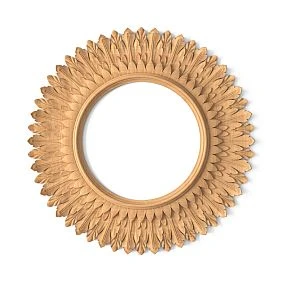
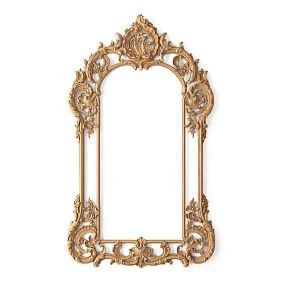
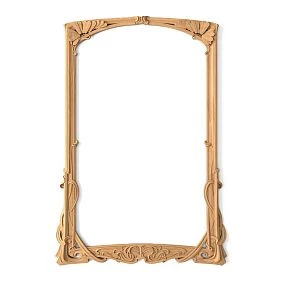
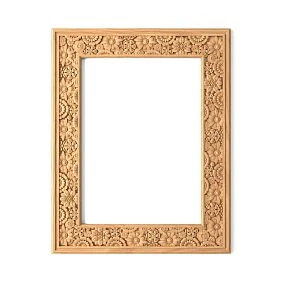
A mirror without framing is a missed opportunity
Ask yourself an honest question: how many mirrors in your home just hang there — on the wall, without a frame, without moldings, without any decorative connection to the space? One? Two? And how do they look? Most likely — like a functional item that is needed "to look at yourself," but which is not part of the interior. It hangs. It reflects. But it doesn't work.
A mirror is one of the most powerful tools in an interior: it enlarges the space, multiplies light, creates depth. But all this works only when the mirror is framed. When it has a frame, context, edging. When it is connected to the wall, to the interior, to the other details of the room.
That's what this article is about. Not just about how beautiful a mirror looks with decor. But about what exactly to buy, how to choose, how to combine stucco molding around the mirror, Moldings made of polyurethane и wooden frame for a mirror so that the result is not just "decoration," but a full-fledged part of the interior.
Let's break down three scenarios — frame, moldings, decorative stucco — and examine each one in detail.




Why a mirror without framing loses
Before moving to solutions, it's worth understanding the problem. Why does a mirror without a frame or decor look 'random'?
It's all about how spatial perception works. When we look at a wall, the brain seeks structure: a beginning, an end, a frame, a contour. If a mirror is simply glued or screwed to the wall without any framing, the brain perceives it as a 'hole in the wall' — an unexpected break in the surface. This creates a feeling of incompleteness, randomness.
A frame or molding framing 'tells' the brain: here is an object, here is an intentional element. The mirror gains a contour, status, weight. It ceases to be a 'hole' and becomes a 'painting' — an object that is part of the interior composition.
The second aspect: a mirror without framing does not 'communicate' with the interior. It exists separately from the walls, furniture, decor. Moldings around the mirror, Stucco decor above the mirror, a wooden frame — all of this creates connections between the mirror and the surrounding space. The mirror fits into the interior.
The third aspect is cost. A mirror in a good frame or molding framing looks expensive. The same mirror without framing looks cheap, no matter how much the mirror glass itself costs. Proper framing literally 'increases the price' of the mirror in the eyes of everyone who looks at it.
Our factory also produces:
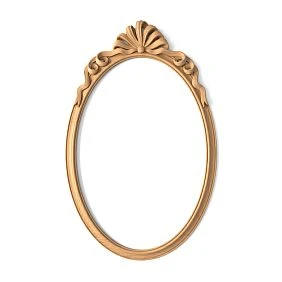
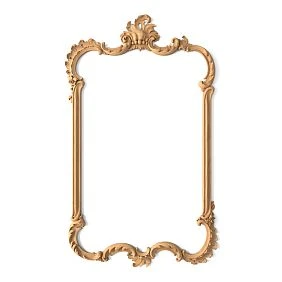
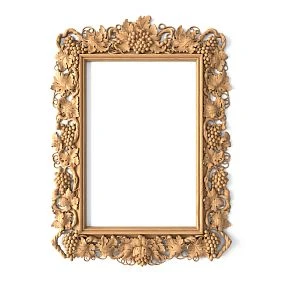
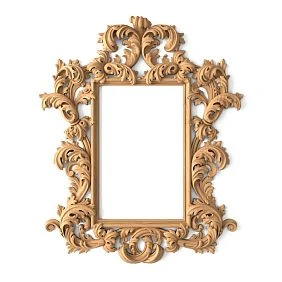
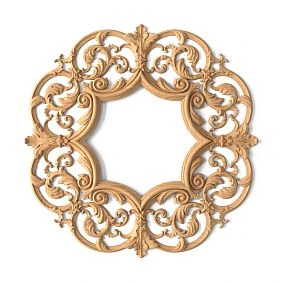
Scenario one: a wooden frame for the mirror
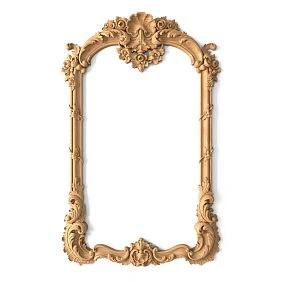
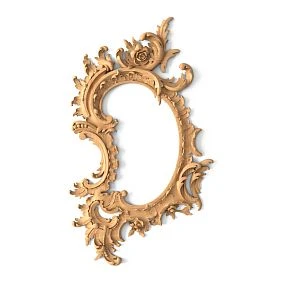
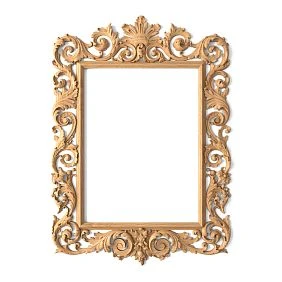
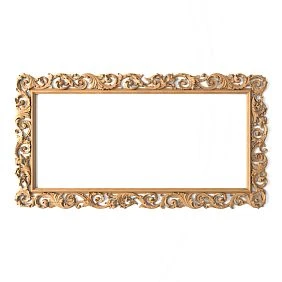
The most classic, most straightforward way to frame a mirror is mirror frame made of wood. It is a separate item: a profiled wooden contour that surrounds the mirror panel along the perimeter, covers its edges, and creates a visually complete piece of furniture — not just "glass on the wall," but a mirror with character.
Get Consultation
What is a wooden frame and how is it different from molding
A frame is a finished product. Four profiled planks joined at 45° angles, forming a rectangle or square. The frame is supplied in a size for a specific mirror or selected according to a standard size.
Molding is a profiled strip that needs to be cut and assembled around the mirror yourself. Molding is more flexible in size selection but requires working with tools.
buy mirror frame — is a ready-made solution for those who want results without installation work. Place it, hang it, done. A solid wood frame is also a separate decorative object: the width, profile, and wood texture make it an independent decor element.
Types of wooden frames by profile
The frame profile determines its character:
-
Flat profile — a minimalist, modern frame. Width 20–40 mm, height 5–10 mm above the mirror surface. For Scandinavian, modern, and loft interiors.
-
Semi-oval profile — soft, classic. Creates expressive shadow, works in interiors of various styles.
-
S-shaped profile — a traditional classic frame profile, well readable in any lighting.
-
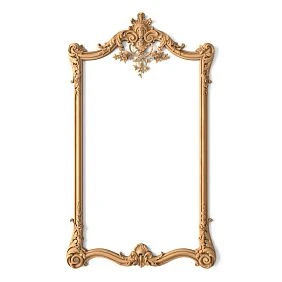
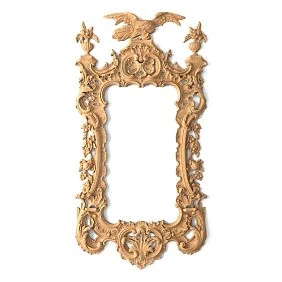
Wide ornamental profile — a frame with a figured relief or ornament. For classic, baroque, neoclassical styles. Width 60–100 mm or more.
The frame width should be proportional to the mirror size. A small mirror in a wide frame — the frame "eats" the mirror. A large mirror in a narrow frame — the frame gets lost.
Practical rule: frame width — 1/10 of the smallest side of the mirror. Mirror 500×700 mm — frame 50–70 mm. Mirror 800×1200 mm — frame 80–120 mm.
Wooden frame: material and finishing
Mirror wooden frame Made of solid oak or beech — a frame with natural texture that accepts paint, oil, or wax well. Wood is a living material, its texture is unique, tactile warmth is felt even visually.
Solid wood frames work well in interiors with wooden accents: wooden floor, wooden furniture, wooden handles. The frame picks up this "wooden note" and enhances it.
Wooden frame finishing options:
-
Uncoated — for subsequent painting to match the interior or oil treatment
-
Primed for painting — the frame is primed and ready for painting
-
With tinting — the wood is tinted with stain or oil, the texture is visible through the tint
For a classic interior — a frame matching the furniture color: cream, white, walnut, dark oak. For a modern one — a frame matching the wall color (monochrome technique) or in a contrasting neutral tone.
Where and how to hang a mirror in a wooden frame
A mirror in a frame is hung so that it works in conjunction with other furniture or decor. A few classic arrangements:
Above a console in the hallway. A mirror above a console is an archetypal solution that works everywhere. The mirror frame should be proportionate to the console width: no narrower than 2/3 of the console width and no wider than the console by more than 30%.
Above a dresser in the bedroom. A mirror above a dresser serves as a vanity mirror. The mirror width is approximately equal to the dresser width. The height is comfortable for viewing while standing or sitting.
Above a fireplace. A mirror above a fireplace mantel is a classic of classics. The frame should be coordinated with the style of the fireplace surround: if the fireplace is classic, the frame is ornamental or with an expressive profile.
On an accent wall in the living room. A large mirror in a wooden frame as the central element of an accent wall — a replacement for a painting. It makes the wall expressive and simultaneously expands the space.
Scenario two: moldings around the mirror
The second scenario is more complex, but also more interesting. Instead of a ready-made frame — a molding surround directly on the wall. Moldings around the mirror are glued to the wall around the perimeter of the mirror and create an 'embedded' effect: the mirror looks like part of the wall, rather than a separate object attached to it.
This is a fundamentally different effect compared to a frame. A frame makes the mirror an "object." Moldings make the mirror a "part of the wall's architecture."
How it works
Moldings are glued to the wall in a rectangular shape around the mirror. There is a small gap (10–20 mm) between the molding and the edge of the mirror, or the molding is flush with the edge of the mirror, depending on the desired effect.
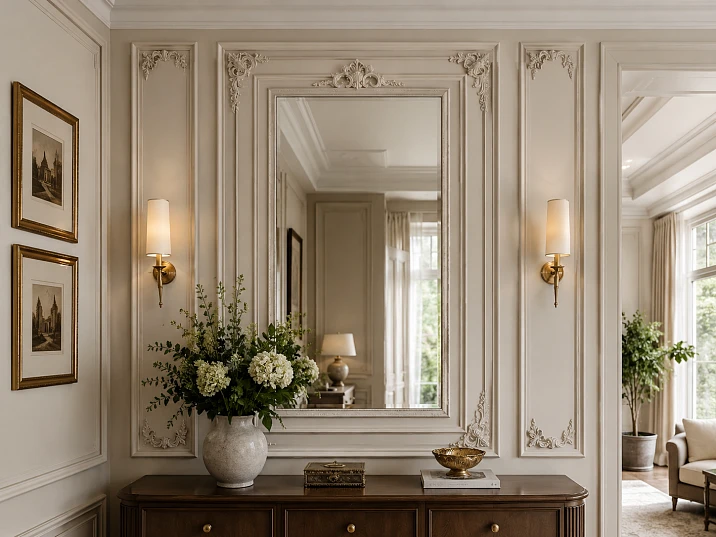
The molding frame is painted to match the wall color. As a result, the mirror looks like a "window in the wall," built into an architectural frame. This is an expensive, very thoughtful technique — this is exactly how mirrors are designed in classic interiors by design studios.
A special effect is achieved when the molding frame of the mirror is coordinated with the molding frames on the walls in the room: wall panel frames, and the mirror as one of the "rectangles" of this system. It fits organically into the rhythm of the wall, without standing out.
Which molding to choose for a mirror
Moldings of different scales work for mirrors, but with a few rules:
For a small mirror (up to 600 mm on the long side) — molding width 15–25 mm. Delicate, does not overwhelm.
For a medium mirror (600–1000 mm) — molding 25–40 mm. Reads well, creates a noticeable frame.
For a large mirror (from 1000 mm) — molding 40–60 mm. The frame size is proportional to the mirror.
By profile: S-shaped or semi-oval profiles give good chiaroscuro. A flat profile is for modern interiors where a clean line without volume is needed.
Polyurethane moldings for mirrors: advantages
buy polyurethane moldings for framing a mirror — the optimal choice for several reasons:
-
Glued to the wall with construction adhesive — no drilling needed, no dowels required
-
Cut at 45° angles in a miter box — precise geometry, minimal joints
-
After painting to match the wall color — they look like part of the finish, not like "glued-on decor"
-
Moisture-resistant — suitable for bathroom areas and hallways with temperature fluctuations
Installation of a molding frame around a mirror: marking with a level, cutting corners with a miter box, applying glue, pressing to the wall, securing with painter's tape until dry. Joints at corners — acrylic sealant, putty, paint. Result — a monolithic frame around the mirror.
Mirror with molding frame in different rooms
In the hallway. The hallway is the first space in the home and one of the best places for a mirror with a molding frame. A mirror with a molding frame above a console or near a coat rack immediately elevates the hallway's level. Add sconces symmetrically on both sides of the mirror — and the hallway transforms into a full-fledged entry zone with architectural character.
In the bedroom. A mirror with a molding frame in the bedroom — behind a vanity table, above a dresser, or on an accent wall. A molding frame in the wall color creates a delicate, calm effect. A molding frame slightly lighter than the wall — a more expressive option.
In the living room. On the accent wall, there is a large mirror with a molding frame that matches the frame panels on the wall. One molding system — walls, frames, mirror. Everything is unified, everything is cohesive.
In the dressing room. A full-length mirror with a molding frame on the side wall transforms the dressing room from a utilitarian space into a designed one. The molding frame emphasizes the verticality of the mirror, making the dressing room appear taller.
At the vanity table. The mirror above the vanity table with a molding frame and sconces on the sides is a classic boudoir solution. The sconces are mounted at shoulder level, symmetrically. Between the sconces and the mirror, there is a molding frame that unifies everything into a single composition.
Scenario three: decorative stucco above and around the mirror
The third scenario is the most expressive. If the frame makes the mirror an object, and moldings integrate it into the wall, then decorative stucco around the mirror makes it an accent — the center of the interior composition, which draws the eye and holds the gaze.
This is the approach of classic palace and mansion interiors: the mirror is not just a functional item, but a decorative object that is crowned with ornamental stucco, surrounded by weaves of acanthus leaves, and finished at the top with a decorative cartouche or shell.
In a modern residential interior, this technique works on a moderate scale — and it works excellently.
Stucco decor above the mirror: top finishing
The most common technique is a decorative element at the top of the mirror frame or directly above the mirror. This could be:
Central cartouche. A horizontal ornamental element above the top molding of the frame. It completes the frame, creating a "cap" over the mirror. A classic technique is a symmetrical cartouche with laurel branches, a shell, or a rosette.
Sandrik canopy. A small horizontal "visor" made of ornamental stucco directly above the mirror. It works like an architectural canopy — this is how doors and windows are designed in classic interiors. On a mirror, this technique creates the feeling of a "portal" — the mirror becomes an architectural statement.
Ornamental garland. A horizontal stucco garland above the mirror — flowers, laurel leaves, weaves. Softer than a cartouche, more natural and lively.
Decorative stucco on the sides of the mirror
Symmetrical decorative elements on the sides of the mirror create a "pilaster" effect: the mirror appears to be inserted into an architectural portal. This is suitable for large mirrors in a hall, entryway, or living room.
Suitable for side elements:
-
Vertical ornamental strips made of stucco decoration — acanthus stems, floral verticals
-
Small decorative overlays symmetrically on the sides at the level of the mirror's center
-
Corner decor in the upper corners of the molding frame
Principle one: symmetry. Everything on the left is also on the right. This is the law of mirror design.
Decorative stucco in the corners of the molding frame
Corner decor — small ornamental elements that are glued at the intersection points of the horizontal and vertical moldings of the frame. This technique has already been described in relation to furniture — here it works the same way.
Corner decor turns the molding frame from a "set of strips" into an architectural detail. The frame gets "locks" in the corners, becoming more saturated and richer.
The size of the corner decor is no more than the width of the molding multiplied by 2. If the molding is 30 mm, the corner decor is no more than 60 mm per side. Otherwise, the decor will "protrude" beyond the frame and disrupt its geometry.
Stucco for a mirror in the hallway: complete composition
The hallway is an ideal place to showcase a complete decorative system with a mirror. Here's how it's built:
-
Console against the wall — functional base
-
Mirror above the console, set into a molding frame
-
Molding frame matching the wall color — the frame is centered on the console
-
Corner decorations at the top corners of the frame
-
Decorative cartouche or ornamental element above the top molding of the frame
-
Sconces symmetrically on both sides of the mirror — at the level of the upper third of the mirror
This is a complete, professional composition that turns the hallway into an architectural space. A small but clearly structured ensemble.
How to style a mirror in different interior styles
Classicism and neoclassicism
For a classic interior — a mirror with a wide wooden frame with an ornamental profile or a molding frame with decorative stucco. Above the mirror — a cartouche with acanthus or a shell. Sconces on the sides with classic lampshades. The frame and stucco match the furniture color — cream, white, ivory.
For classic style, the following work particularly well Mirror Frames made of oak with a profile coordinated with the wooden architraves and moldings in the room. A unified 'wood family' creates stylistic integrity.
Modern Classicism and Neoclassicism
Molding frame made of polyurethane, without ornamental decor in the corners — a pure geometric frame. Above the mirror — a minimalist horizontal element, a geometric cartouche, or nothing at all. The frame matches the wall color or is slightly lighter. This is a modern, laconic interpretation of the classic technique.
Provence and country
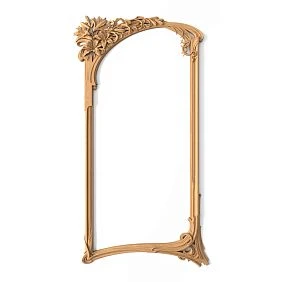
Wooden frame with a soft profile, in white, cream, or bluish-gray. Light "aged" look — wear on the edges, imitation patina. Above the mirror — a small stucco overlay with floral or nature-inspired ornament. No strict geometry.
Scandinavian style
Flat wooden frame in natural color — oak or pine without paint, only oil. No decorative overlays. Molding frame — if present, thin, matching the wall, almost invisible. The mirror speaks for itself, decor is minimal.
Modern interior
Molding frame made of thin polyurethane molding 10–15 mm matching the wall. No ornaments. The mirror is "integrated" into the wall, almost unnoticeable as a separate object. Or — a contrasting dark oak wooden frame on a light wall: the frame as a graphic accent.
Mirror and light: how stucco enhances the light effect
One of the main architectural techniques for framing a mirror is working with light. Relief stucco around the mirror creates shadow, which enhances volume and visual depth. With proper lighting, this makes a strong impression.
Sconces on both sides of the mirror — a classic technique. Sconces provide side light that falls on the relief of moldings and decor, creating expressive chiaroscuro. Ornamental decor above the mirror, lit from above or the side, looks completely different than under general lighting.
Mirror backlighting from below or above — a light contour. The molding frame around the mirror glows along the contour. This works especially in the bathroom area, in the dressing room, in a modern bedroom with a mirror above the dresser.
Ceiling spot above the mirror — directed light from above. The relief of decor above the mirror under directed light creates strong shadows that make the stucco "alive" and voluminous.
When planning mirror framing with stucco, always think about light: how the wall will be lit, where the light comes from, how it will fall on the moldings and decor. This will turn a good solution into an exceptional one.
Mirror size and decor scale: proportion table
| Mirror Size | Frame or molding width | Top decorative element |
|---|---|---|
| Up to 500 mm (shorter side) | 15–30 mm | Up to 100 mm in width |
| 500–800 mm | 30–50 mm | 100–200 mm in width |
| 800–1200 mm | 50–80 mm | 200–350 mm in width |
| From 1200 mm | 80–120 mm | 350–500 mm in width |
The decorative element above the mirror (cartouche, garland, ornament) should not exceed the mirror width. Optimal is 1/2–2/3 of the mirror width.
Element combinations for different tasks
| Task | What to buy |
|---|---|
| Simply and beautifully frame a mirror | Wooden frame of the required size |
| Integrate the mirror into the wall architecture | Polyurethane moldings around the perimeter |
| Make the mirror a focal point in the hallway | Moldings + decorative stucco above the mirror + sconce |
| Classic mirror with rich decoration | Frame + decorative stucco + corner decorations |
| Frame a mirror above a console table | Moldings + decorative cartouche on top |
| Make the hallway more expensive | Mirror + moldings + sconce + console |
| Modern interior, do not overload | Thin molding in the color of the wall without decor |
| Full-length mirror in the dressing room | Molding frame around the perimeter in the color of the wall |
| Provence, country | Wooden frame + light decor with natural pattern |
Practical guide: how to install a molding frame around a mirror
Step 1: Marking. Determine the distance from the edge of the mirror to the inner edge of the molding — usually 0–15 mm. Mark with a pencil using a level. All lines must be strictly horizontal and vertical.
Step 2: Preparing the molding. Cut Polyurethane molding to lengths: two horizontal pieces (top and bottom) and two vertical pieces (sides). Cut corners at 45° using a miter box or miter saw.
Step 3: Dry fit without glue. Lay out all four pieces according to the markings without glue, check the accuracy of the corner cuts. If there are gaps in the corners, adjust the cuts.
Step 4: Installation. Apply polyurethane mounting glue in a zigzag pattern to the back of the molding. Press it against the wall according to the markings, press down, and secure with painter's tape. It's best to start with the horizontal elements — top, then bottom, then sides.
Step 5: Corner treatment. After the glue has dried (24 hours), apply acrylic sealant to the corner joints, smooth it out with a finger or spatula, and let it dry. Sand with fine-grit sandpaper (240).
Step 6: Priming and painting. Prime the moldings with acrylic primer and let it dry. Paint in the color of the wall or a chosen color — 2 coats. Result: a monolithic architectural frame around the mirror.
Mistakes when decorating a mirror
Decorative element too large. Stucco molding above the mirror that is the same size as the mirror itself is overkill. The decor should be an accent, not a competitor to the mirror.
Asymmetrical design. Corner decor in only one corner, a sconce on only one side — this disrupts the balance. Everything related to mirror decoration should be symmetrical.
Inconsistent style. Baroque stucco molding above a mirror in a Scandinavian interior is a style conflict. The mirror decor should be in the same style as the entire interior.
Molding wider than the mirror. A frame made of moldings or a wooden frame should not be wider than the mirror surface. The frame outlines the mirror, not covers it.
Painting without primer. Paint on unprepared polyurethane adheres poorly and peels off. Primer is mandatory.
A mirror not anchored to furniture. A mirror with beautiful framing, but hanging over an empty wall without a console, cabinet, or other furniture anchor — still looks like it's "hanging in the air." The mirror's framing works in conjunction with the furniture below.
Frequently asked questions
How to frame a mirror on the wall if there is no ready-made frame?
The optimal option is polyurethane moldings, cut around the perimeter of the mirror with 45° corner cuts. They are glued to the wall with construction adhesive and painted to match the wall. The result is an integrated mirror frame without a ready-made product.
Which is better: to buy a wooden frame or make a frame from moldings?
A wooden frame is faster, simpler, and does not require wall mounting. A molding frame on the wall is a more interior-oriented solution; the mirror is "integrated" into the wall. If you want a quick solution — go with a frame. If you want an architectural effect — go with moldings.
Can stucco be added above the mirror?
Yes. A decorative element above the mirror works well in the hallway, bedroom, living room, or above a console. The key is proper scale: the decor should not be wider than the mirror and no taller than 1/4 of the mirror's height.
What to buy for framing a mirror in the hallway?
Basic set: moldings around the mirror's perimeter, a decorative element on top, construction adhesive, primer, paint. Additionally — sconces on the sides symmetrically.
Can a full-length mirror be framed?
Yes. A molding frame around the perimeter of a full-length mirror is an excellent technique for a dressing room or bedroom. Molding 25–40 mm, matching the wall color. No decor above the mirror — only a frame that outlines the mirror and makes it part of the wall.
Are corner decorations needed for the mirror's molding frame?
Not necessarily, but desirable for classic and neoclassical interiors. Corner decorations complete the frame and make it richer. For modern interiors — without corner decorations, only clean geometry.
How to paint the molding around the mirror so it looks like part of the wall?
Prime the molding with acrylic primer. Paint with the same paint as the wall, in 2 coats. After drying, you can apply another coat over the molding and a small area of the wall — this creates a complete fusion of surfaces.
About the company STAVROS
All elements for mirror decoration — Mirror Frames made of solid wood, Moldings made of polyurethane for creating frames on the wall, Decorative stucco и Relief Decoration for accent decoration — is produced and sold by STAVROS.
STAVROS is a Russian company with its own production of polyurethane and solid wood decor. The STAVROS catalog includes wooden mirror frames made of oak and beech, a full range of moldings from 10 to 120 mm, over 200 models of decorative overlays and stucco decor for creating any decorative systems around the mirror.
Buy molding for mirror decoration, buy decorative moldings и Mirror Frames available in the STAVROS online store with Contact us to confirm shipping to your destination.