Article Contents:
- Philosophy of wall decor: why walls need relief
- Psychology of space perception
- Historical Context
- Materials and technologies: from polyurethane to solid wood
- Polyurethane: Universality and Practicality
- Wood: prestige and naturalness
- Hybrid solutions
- Types of wall decor: from moldings to self-adhesive tapes
- Moldings: Architecture on a Plane
- Overlays: accents and ornaments
- Three-dimensional panels
- Self-adhesive decorative tapes
- Trends 2026: what's relevant in wall design
- Geometric Minimalism
- Natural materials and textures
- Mix of Styles and Eras
- Accent Walls
- Installation: from preparation to final painting
- Surface Preparation
- Mounting elements
- Sealing joints and painting
- Frequently Asked Questions
- Can wall decor be used in wet areas?
- How much does wall decoration with decor cost?
- How to care for wall decor?
- Can decor be removed without damaging the wall?
- How to match decor style to interior?
- Where to Buy Quality Interior Decor?
- Conclusion: create spaces with character together with STAVROS

You stand before a smooth white wall, freshly plastered, painted with a perfectly even coat of paint. Technically flawless, functionally sufficient, aesthetically... empty. The wall is silent. It tells no stories, creates no rhythm, guides no gaze, establishes no spatial hierarchy. Just a vertical plane separating inside from outside. And here is where the magic beginsinterior decor— when a flat surface transforms into an architectural element, when molding creates the illusion of panels where there are none, when an overlay becomes a focal point attracting attention.
2026 has brought fresh ideas to wall designinterior wall decor. The trend toward minimalism has collided with a thirst for individuality, giving rise to a paradoxical combination — clean forms with expressive texture, simple geometric panels with natural materials, monochrome with relief. The wall has ceased to be a background — it has become an active participant in interior dramaturgy, creating volume where there was plane, shadow where there was light, movement where there was stasis.



Philosophy of wall decor: why walls need relief




Psychology of space perception
The human eye tires of monotony. A perfectly smooth painted wall begins to be perceived as emptiness after a while, causing discomfort, a sense of incompleteness. This is evolutionary heritage — in nature there are no perfectly flat surfaces, there are textures of tree bark, stones, grass. Relief on a wall restores natural perception, creates visual fixation points for the gaze.
interior wall decorIt structures space, divides the wall into logical zones, creates a hierarchy of importance. A panel of moldings above the sofa in a living room automatically becomes a compositional center — the gaze of someone entering fixes on it, perceiving this zone as the main one. Overlays in room corners emphasize geometry, making the space more cohesive, more architectural.
The play of light and shadow on the relief of decor creates dynamism. Morning light falling at a sharp angle reveals every convexity of molding, every recess of ornament. Evening lighting creates soft shadows that soften the relief. The wall lives together with the light, changes throughout the day, doesn't become tiresome.
Our factory also produces:


Historical context
Decorating walls with relief elements has a millennia-long history. Ancient Egyptian temples were covered with bas-reliefs telling stories of gods and pharaohs. Roman villas were adorned with stucco — plant ornaments, mythological scenes, geometric compositions. Gothic cathedrals displayed stone carvings of incredible complexity.
The Renaissance systematized decor, introducing the order system — pilasters, cornices, friezes with clear proportions. Baroque exploded the system with excess — walls dissolved under layers of stucco, gilding, painting. Classicism returned strictness, symmetry, moderation of decor.
The 20th century simplified decor to a minimum — modernism proclaimed 'ornament is a crime,' leaving walls bare. But by the end of the century came understanding — humans need decorativeness, albeit in different forms. Postmodernism returned decor, reinterpreting it through irony, eclecticism, mixing styles.
Today, wall decor balances between minimalism and decorativeness.Stylish interior decor2026 is not the overload of Baroque, nor the emptiness of minimalism. It is the targeted application of expressive elements that create accents without overwhelming the space.
Get Consultation
Materials and technologies: from polyurethane to solid wood
Polyurethane: universality and practicality
Polyurethane revolutionized the industryinterior decor to buywhich is now accessible to everyone. What once required the work of a professional plasterer, weeks of labor, and high cost is now available as a ready-made product, installed in hours.
Polyurethane is a synthetic polymer obtained from the reaction of a polyol and an isocyanate. For decorative elements, a two-component system is used, which foams when mixed and fills the mold. The density of decorative polyurethane is 300-350 kilograms per cubic meter—2-3 times higher than that of construction polyurethane foam, ensuring strength, sharp relief, and absence of deformation.
The advantages of polyurethane decor are numerous. Lightweight—a panel measuring 1000×500 millimeters weighs 2-3 kilograms compared to 15-20 kilograms for plaster. This simplifies installation, does not overload walls, and allows mounting with adhesive without dowels. Absolute moisture resistance—polyurethane does not absorb water, swell, or rot. Polyurethane decor is suitable for bathrooms, kitchens, pools, and saunas.
Polyurethane has higher impact resistance than plaster. An accidental impact does not cause chipping—the material slightly deforms and then restores its shape. Plaster molding crumbles under the same conditions and requires restoration. Exceptional durability—polyurethane does not age, yellow, or crack. Service life is 50+ years while maintaining its original appearance.
Perfect paintability—polyurethane accepts any paints (acrylic, latex, alkyd, silicone). Any color can be created, imitating stone, wood, metal, patina, or gilding. The same molding can become white classic, gray minimalist, or gilded Baroque—all depending on the paint.
Easy installation—polyurethane elements are mounted with special adhesive without heavy fasteners, complex tools, or special skills. A DIY enthusiast can install decorative panels over a weekend.
Wood: prestige and naturalness
Interior stickers for decormade from natural wood—a choice for premium interiors where material authenticity, tactility, and prestige are important. Wood cannot be confused with an imitation—the texture of annual rings, the warmth of the surface, and the subtle scent instantly reveal its natural origin.
Wood species for wall decor are chosen based on decorative qualities and workability. Oak—the king of decorative species, with expressive texture, high hardness, and noble color ranging from light brown to dark chocolate. Beech—delicate pinkish texture, fine-pored structure, ideal for carving. Ash—contrasting striped texture, high strength, expressiveness when brushed.
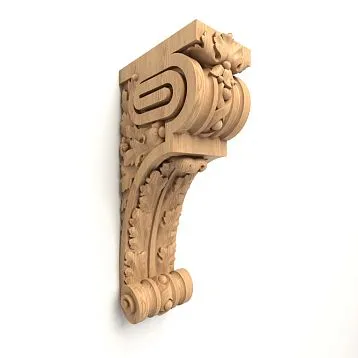
Carved solid wood overlays are created by hand or milled on CNC machines. Hand carving provides uniqueness—each overlay is one-of-a-kind, with individual nuances of the carver's stroke. Milled carving ensures reproducibility—a series of overlays is absolutely identical, which is critical for symmetrical compositions.
Wooden decor requires stable operating conditions. Wood reacts to humidity changes—it absorbs moisture when air humidity increases and releases it when it decreases. This causes dimensional changes and possible deformations. To minimize risks, wood is carefully dried to 8-10% moisture content and coated with protective finishes—oil, varnish, wax.
The cost of wooden decor is 3-10 times higher than polyurethane, depending on the wood species and carving complexity. But for accent elements, this is justified—a carved oak overlay above a fireplace or entrance door creates a focal point, demonstrating status, taste, and commitment to tradition.
Hybrid solutions
The modern approach combines materials, leveraging the advantages of each. The bulk of decor—polyurethane moldings, panels, cornices—creates the architectural structure of the space. Accent elements—carved wooden overlays—are placed at key points, attracting attention and adding prestige.
This approach is cost-effective—main expenses go to affordable polyurethane, while premium wood is used sparingly. Visually, the interior is perceived as expensive, with an abundance of hand carving, even though carving is present only in targeted spots.
Types of wall decor: from moldings to self-adhesive tapes
Moldings: Architecture on a Plane
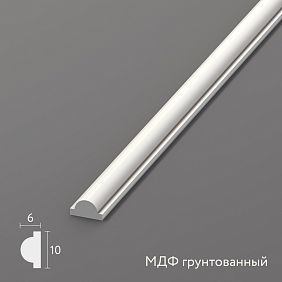
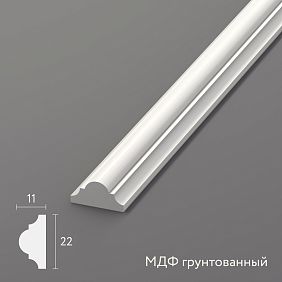
Molding—a strip with a profiled cross-section, a basic element of wall decor. Moldings are used to create frames, panels, door and window trims, and transitions between wall and ceiling. Molding profiles range from simple roundings to multi-level compositions with beads, coves, and shelves.
Molding width is 20-200 millimeters, thickness (projection from the wall) is 10-40 millimeters. Narrow moldings (20-40 mm) create delicate lines and thin frames, suitable for minimalist interiors. Medium (50-80 mm)—a universal option for classic panel compositions. Wide (100-200 mm)—monumental cornices used in high-ceilinged spaces.
The application of moldings is diverse. Panel compositions—rectangular frames made of moldings on a wall create structure, imitating classic panel cladding. Inside the frames—painted wall, wallpaper, contrasting paint. Door framing—molding around the door visually enlarges the opening, adding architectural character. Zone division—a horizontal molding at a height of 80-100 centimeters divides the wall into a lower dark and an upper light part.
Overlays: accents and ornaments
Overlay—a decorative element with a relief ornament, mounted on a flat surface. Sizes vary from miniature 50×50 millimeters (corner rosettes) to large 500×800 millimeters (central panels). Relief thickness of 10-40 millimeters creates an expressive play of light and shadow.
Overlay styles cover all historical and contemporary directions. Classical—acanthus leaves, rosettes, cartouches with plant motifs. Baroque—volumetric compositions with putti, garlands, volutes. Art Deco—geometric stylizations, zigzags, fans. Contemporary—abstract forms, minimalist reliefs.
Interior wall stickers for decorare placed at strategic points. Above a door—a horizontal overlay visually widens the opening, creating a finishing touch. At panel corners—corner overlays emphasize the frame, adding detail. In the center of a wall—a large overlay becomes a focal point, attracting the eye.
Overlay installation is simple—the back side is coated with adhesive, and the overlay is pressed against the wall for 30-60 seconds. The weight of polyurethane overlays is minimal—a large 300×400 millimeter overlay weighs 200-300 grams and holds with adhesive without additional fasteners.
Three-dimensional panels
Three-dimensional wall panels—large-format elements sized 500×500, 600×600, 1000×500 millimeters with volumetric relief. The panel surface is not flat but wavy, textured, creating an illusion of movement and dynamism. Popular reliefs: waves, honeycombs, pyramids, interweavings, organic forms.
Panels are mounted flush or with a minimal 2-3 millimeter gap, creating a continuous textured surface. The joint is practically invisible—the relief blends, forming a unified canvas. One accent wall clad with three-dimensional panels radically changes the perception of a room—flat space gains depth, volume, and expressiveness.
Panel materials include high-density polyurethane, MDF with milled relief, gypsum, and fiberboard. Polyurethane is lightweight, moisture-resistant, and easy to install. MDF is denser, sound-absorbing, and requires a frame for mounting. Gypsum is eco-friendly, breathable, but heavy and fragile.
Painting three-dimensional panels emphasizes the relief. Monochrome painting—all panels in one color—creates a calm uniformity with play of light and shadow. Gradient painting—transition from light to dark across the panel surface—enhances the illusion of volume. Contrast painting—protrusions in one color, recesses in another—makes the relief graphic and accentuated.
Self-adhesive decorative tapes
Interior tape for decoration—a narrow strip with a decorative surface and an adhesive layer on the back. Tape width is 5-50 millimeters, thickness 1-5 millimeters. Materials include PVC, polyurethane, natural wood veneer, metallized film.
self-adhesive interior tape for decoris used for framing mirrors, paintings, furniture fronts, doors, glass inserts. Gold or silver tape around the perimeter of a mirror creates a frame without the need for molding. Wood veneer tape at the junction of different materials (tile and paint in the bathroom) creates a neat transition.
Interior self-adhesive decorative tapeis installed instantly—the protective film is removed, the tape is applied to the surface and pressed. The adhesive layer provides strong adhesion to smooth surfaces—painted walls, glass, plastic, laminate. On rough surfaces (wallpaper, plaster), it adheres less well.
Tapes are flexible, following curvilinear contours. Framing an arched opening, round mirror, or oval medallion on a wall is done with tape without cutting angles—it simply bends along the radius. This is unachievable for rigid moldings, which require special treatment for bending.
Trends 2026: What's relevant in wall design
Geometric minimalism
The main trend of 2026 is geometric compositions of moldings on monochrome walls. Rectangles, squares, hexagons created by thin moldings 20-30 millimeters wide form a graphic structure. Inside the shapes—the same paint as outside, without color contrast. The effect is created solely by relief, play of light and shadow.
The color palette is restrained—white, gray, beige, dusty shades of pink, blue, green. Bright colors are used sparingly—one wall in rich terracotta, the others in neutral gray, with molding geometry on all walls.
Compositions are asymmetrical—not the classic Baroque symmetry, but free placement of rectangles of different sizes, creating dynamic rhythm. Small rectangles alternate with large ones, vertical with horizontal, creating visual movement.
Natural materials and textures
The second trend is the use ofinterior stickers on wallpaper wall decormade from natural materials or their imitations. Wood overlays, panels with stone texture, metal inserts create tactility, materiality, counterbalancing excessive digitalization of life.
Wood is used in natural shades—without painting, with transparent oil emphasizing the texture. Brushed surfaces with pronounced annual ring relief create volume and tactility. Solid oak or ash overlays on white walls—contrast of textures, warm and cold, natural and industrial.
Stone imitation in polyurethane panels—slate, limestone, sandstone—creates the illusion of stone masonry without the weight and cost of natural stone. Painting in natural shades of gray, beige, brown enhances realism. An accent wall behind the sofa, clad in stone-look panels, becomes an architectural element.
Mix of styles and eras
The third trend is eclectic mixing of elements from different styles. Classic moldings with Baroque overlays on a loft-style wall. Minimalist geometric panels in an interior with antique furniture. Modern abstract overlays in a classic space with stucco.
Such mixing requires refined taste and a sense of proportion. The goal is not chaotic accumulation of disparate elements, but a conscious play on contrast, creating a dialogue between eras. A Baroque gilded overlay on a concrete loft wall—a provocation that forces a reinterpretation of both Baroque and loft.
The color palette unites disparate elements. All decorative elements are painted in one color—white, black, gray—regardless of style. This creates visual unity amidst diversity of forms.
Accent walls
The fourth trend is concentrating decor on one wall with minimal decoration of the others. The accent wall is overloaded with decor—three-dimensional panels, numerous moldings, overlays, painting in a contrasting color. The other three walls are smooth, in a neutral color, without decor.
This approach creates a focus, directs attention, makes the space more dynamic. The eye of someone entering immediately fixes on the decorated wall, perceiving it as the main one. This works in the bedroom (wall behind the bed headboard), living room (wall behind the sofa or fireplace), dining room (wall with a sideboard).
The accent wall can be functional—TV wall, wall with shelves, wall with a fireplace. The decor emphasizes the function, making it visually significant.
Installation: from preparation to final painting
Surface preparation
Installation quality is 70 percent dependent on base preparation. The wall must be relatively even—polyurethane decor hides minor defects (small cracks, slight unevenness), but significant protrusions or depressions over 5 millimeters will create gaps between the decor and the wall.
The surface is cleaned of dust, dirt, and peeling paint. Old wallpaper is completely removed—gluing decor onto wallpaper is not allowed, as there is a risk of wallpaper peeling off along with the decor under the element's weight. The wall is primed with deep-penetration primer to improve adhesive bond.
Marking is done with a pencil using a level and tape measure. For panel compositions, precision is crucial—rectangles must be strictly horizontal and vertical, symmetrical relative to the wall center. A laser level simplifies marking by projecting straight lines across the entire wall.
Element fastening
Polyurethane decor is fastened with special adhesive—polymer mounting adhesive like 'liquid nails' or specialized polyurethane adhesive. Adhesive is applied to the back of the element in a zigzag or dots spaced 10-15 centimeters apart. The element is applied to the wall, aligned with the marking, and firmly pressed for 30-60 seconds.
Excess glue that seeps out along the edges should be immediately wiped off with a damp sponge before it hardens. Removing hardened glue is difficult—you'll have to cut it with a knife, risking damage to the decor.
Heavy elements (large overlays, wide moldings) are additionally secured with finishing nails or screws. Fasteners are driven into recesses of the relief where the head is not visible. After the glue has cured (24 hours), the fasteners can be removed—the glue holds sufficiently.
Molding joints are cut at 45 degrees for corners, at 90 degrees for straight connections. Cutting is done with a fine-toothed saw or a miter saw. Cutting accuracy is critical—a gap larger than 1 millimeter is noticeable and spoils the impression.
Seam filling and painting
Joints between elements and gaps between the decor and the wall are filled with acrylic sealant. Sealant is applied from a tube with a thin nozzle, excess is removed with a wet rubber spatula. After drying, the sealant is sanded with fine sandpaper and becomes invisible.
Painting is the final stage that determines visual perception. Polyurethane is primed with acrylic primer to improve paint adhesion. Paint is applied in two to three coats with intermediate drying. For a matte finish, acrylic or latex paints are used. For gloss—alkyd enamels or polyurethane paints.
Painting relief technique requires care. A brush paints the recesses, a roller—flat surfaces. Excess paint in the recesses is removed with a semi-dry brush, otherwise drips form, hiding the relief.
Frequently asked questions
Can wall decor be used in damp areas?
Polyurethane decor is completely moisture-resistant, suitable for bathrooms, kitchens, saunas. Wooden decor requires moisture-resistant varnishing in several layers. Plaster stucco in the bathroom is undesirable—plaster absorbs moisture and swells.
How much does wall decor finishing cost?
Polyurethane moldings—150-500 rubles per linear meter. Overlays—300-3000 rubles per piece. Wooden overlays—1000-10000 rubles. Installation work—500-1500 rubles per square meter of wall. Finishing an accent wall with an area of 10 square meters will cost 15-50 thousand rubles for materials + work.
How to care for wall decor?
Wipe with a dry or slightly damp cloth to remove dust. Clean relief recesses with a soft brush. Painted decor can be washed with mild detergents. Avoid abrasives, stiff brushes, solvents.
Can decor be removed without damaging the wall?
Polyurethane decor glued on is removed with effort—the glue holds firmly. The risk of damaging the wall's finish is high. Plan decor as a long-term solution, not a temporary one.
How to match decor style to the interior?
Classic interior—classical moldings with symmetrical compositions. Modern—minimalist thin moldings, geometry. Loft—industrial forms, metal inserts. Eclectic—mixing styles under the control of a single color scheme.
Where to buy quality interior decor?
From specialized manufacturers with a wide range, own production, and the possibility of custom manufacturing based on individual sketches. Check samples, material density, clarity of relief.
Conclusion: create spaces with character together with STAVROS
interior wall decor—a tool for transforming space from bland to expressive, from flat to three-dimensional, from silent to speaking. Properly selected, quality-installed decor creates an atmosphere, guides the gaze, and speaks of the owner's taste and individuality.
Company STAVROS — leading manufacturerinterior decorin Russia with the richest experience and the widest range. The catalog includes thousands of polyurethane decor items—moldings of all sizes and profiles, overlays from classical to ultra-modern, three-dimensional panels with dozens of relief options, cornices, pilasters, rosettes.
STAVROS production is equipped with modern equipment for pressure casting of polyurethane. The technology ensures filigree detailing of the relief—every line, every curve is reproduced with micron precision. Polyurethane density of 320-350 kilograms per cubic meter guarantees strength, rigidity, and absence of deformation.
The STAVROS wooden decor collection includes hundreds of models of carved overlays made from solid oak, beech, ash. Carving is done by hand by experienced carvers and on the latest generation CNC machines. Custom overlay manufacturing based on individual sketches is possible—any motifs, sizes, wood species.
The stock program in Moscow and St. Petersburg ensures availability of popular items, shipment on the day of request. Custom orders are manufactured in 2-6 weeks depending on complexity. Delivery is organized throughout Russia and CIS with guaranteed safety.
For designers, architects, construction companies, STAVROS offers a partnership program—special prices, a personal manager, technical support at all project stages. STAVROS designers will help develop a wall finishing concept, create 3D visualization, and select elements for a specific interior style.
STAVROS service includes consultations on decor selection, calculation of material requirements, installation recommendations. Video instructions on the website demonstrate the installation technology step by step. Technical support via phone and email answers questions and helps solve problems.
Over the years, STAVROS has implemented thousands of projects—from private apartments to large public buildings, from classical residences to ultra-modern offices. STAVROS products adorn interiors across the country, creating spaces with character, individuality, and soul.
ChoosingStylish interior decorChoosing decor from STAVROS, you choose the quality of every millimeter of relief, material strength, manufacturing precision, and professional support. Create interiors where walls live, breathe, and tell stories, with decor from STAVROS.